
 Jeff Garrison
Skidaway Island Presbyterian Church
Numbers 11:10-15
January 27, 2019
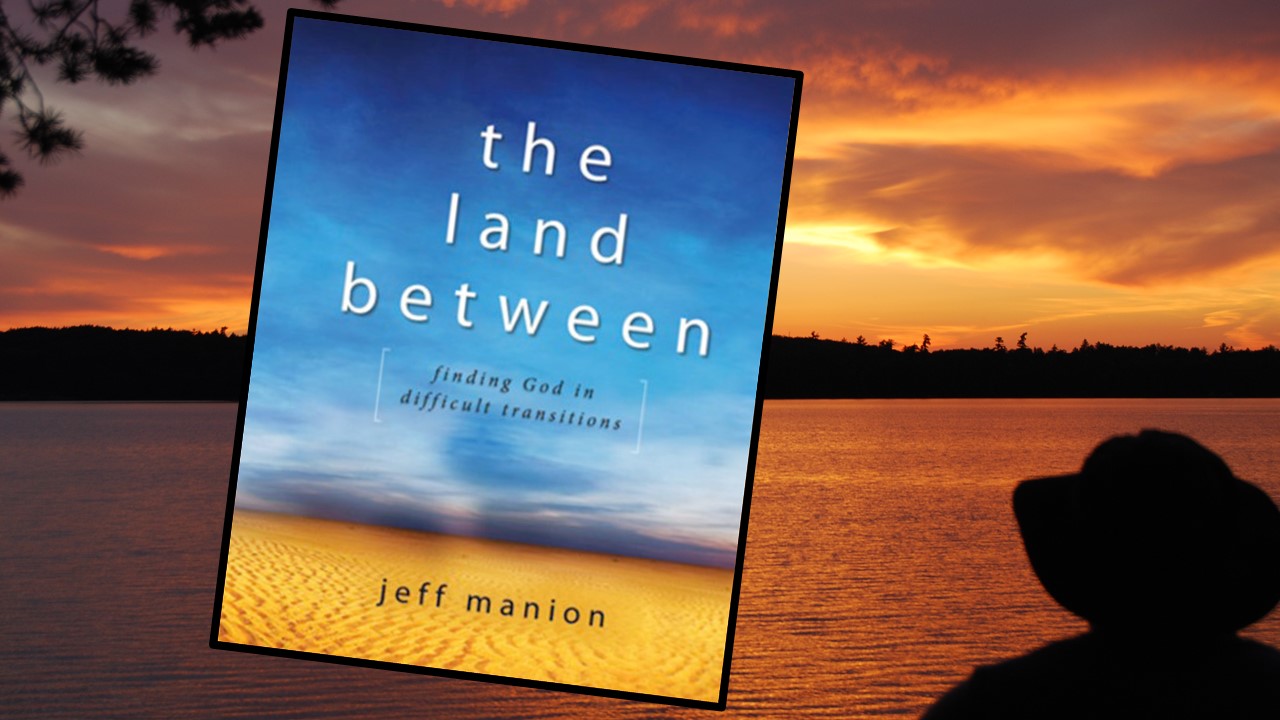
This is our second week exploring the “land between,” that place where we find ourselves between a rock and a hard place. When we are in the land between, it is easy to become exhausted and disheartened. We feel like we cannot go on. We want to give up. But we must remember that God might be preparing us for something. In the wilderness, Israel was trained to trust, to have faith in God, in preparation for becoming a country. In our own journeys, we should ask God what we should learn. Read Numbers 11:10-15
###
 Last week, we saw how the “land between” was a dangerous place. Not only are there the obvious ones. For the Hebrews in the wilderness, such dangers included thirsting, starving, or dying by snake bite. For us, the dangers may be an illness, financial ruin, the loss of a relationship, the death of a loved one. These journeys are stressful. Israel had been called into this place by God, who is trying to teach her to trust him. But what if God doesn’t show up one day? What if God doesn’t provide? Of course, because God has called them into the wilderness, they should trust the Lord. So for two years, they have been trusting God for daily food and during this time, God has not failed them. This leads to the second danger, which we saw last week, which occurs in the land between: complaint. Instead of being grateful, the Israelites become greedy. They bicker and grumble about the quality of food. Such complaints fires up God’s anger, forcing Moses to intercede.[1]
 This week, our text focuses on Moses. He’s the leader of these bickering people. Moses is in his own “land between.” He’s caught in the middle. God is on one side and an ungrateful people on the other. It’s a lonely place. All those complaints are getting to him. He can’t please the people. God wants him to be the leader and the people just want him to do their bidding. He’s God’s servant, but the people are looking at Moses as if he’s their errand boy. 1400 years later, Jesus will remind us that we can’t serve two masters.[2] Moses is a living example of this truth. As a result, he has a meltdown.
In the first class I lead on the book this series is based upon, The Land Between (and I encourage you all to get involved in such a class), the conversation veered into the topic of suicide. The land between is certainly a place where such action may occur. It’s an uncomfortable place. If you reside there too long, despair sets in. One loses hope. One loses perspective. We saw last week how the people suddenly forgot their struggles and cries in Egypt and remembered only the food they enjoyed there—food that was only given to them so that they would have the energy to do the work their Egyptian taskmasters set before them. It’s easy to forget how things really were.
 While we are not told that Moses contemplated suicide, we do witness in today’s text that he’s ready to die. He has certainly thought about death. It seems more desirable than continuing to live in the desert where life is hard enough, but is made unbearable by a bunch of whiners. Death seems better than to live in the middle and be pulled into two different directions at the same time. Moses has had enough. I like how The Message translation handles Moses’ complaint to God:
Why are you treating me this way?
What did I ever do to you to deserve this?
Did I conceive them? Was I their mother?
Why dump the responsibility of these people on me?
Questions after questions, Moses asks God. Moses ends his complaint in this manner: “If this is how you intend to treat me, do me a favor and kill me. I’ve seen enough. I’ve had enough. Let me out of here.” Leadership is often hard, as Moses experiences. You can’t please everyone. Many people are going to second guess you. Most think they know better than you. People will bicker and complain behind your back. You know what, things haven’t changed much in 3400 years.
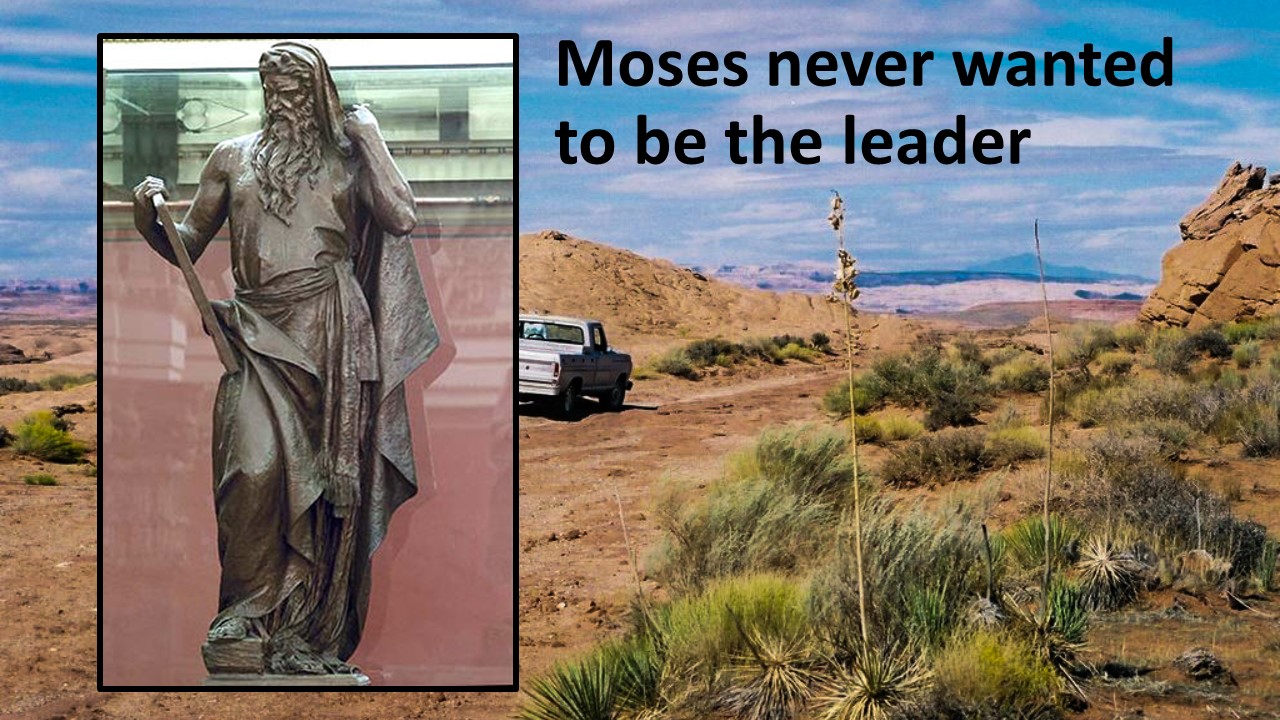 In addition to leadership being hard, often leadership is thrust upon people. Moses never asked to lead Israel out of Egypt. If you remember, he begged God to find someone else. He came up with all kind of excuses. “Lord, they’re not going to believe me.”[3] “God, you want me to address Pharaoh? I don’t talk good.”[4] Often times we are called to step into leadership positions in the church or at work or in our community. And even if it isn’t something we covet, as ones who follow Jesus, we are to do our best and to be honest and ultimately, be faithful to our Lord. And sometimes, just being faithful means we get caught in the land between. Think of prophets like Jeremiah and Ezekiel and the Apostle Paul.
Last week, we saw how God responded to the people. God was ready to incinerate them. Next week, we’ll see how God responded to Moses. But before we learn of God’s response, let’s let it simmer a while. But I assure you the Almighty doesn’t send a lightning to singe Moses and ends his meltdown. God answers, not always immediately, but God hears our prayers and responds.
Let’s ask ourselves this: “if God was ready to incinerate the people, yet responds positively to Moses plea, what’s the difference?” Ponder this: “Why the different response between how God responded to the people and to Moses?” “Why is God ready to be done with the people, yet listens and responds to Moses?”
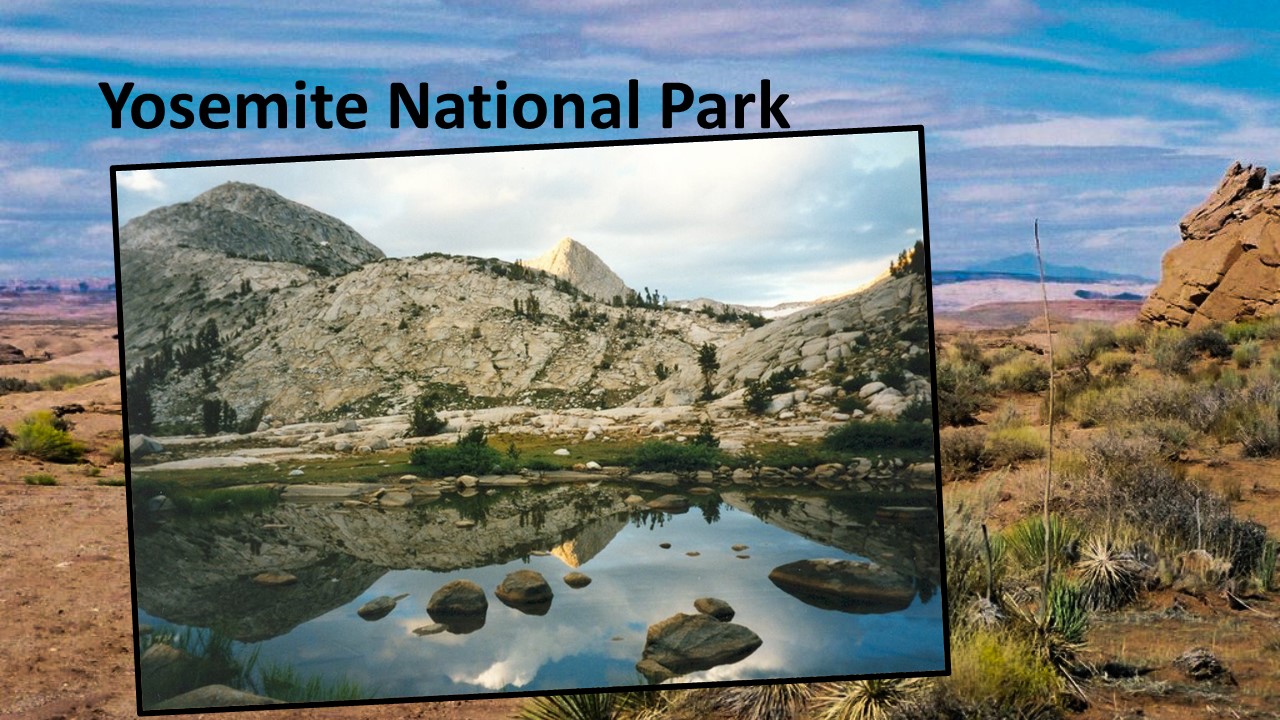
While you are thinking about this, let me tell you about a bear encounter I had while hiking in the High Sierras. A friend and I was hiking the John Muir Trail. One evening, toward the end of the trail in Yosemite National Park, my friend stayed in camp, while I had hiked about a ½ mile to a place with a lovely overlook to the west. There, I watched an incredible sunset. When it was done, I started to head back to our campsite on Cathedral Lake. Once I got back into the trees, it was fairly dark, but I could make out the trail, so I walked without a flashlight. Then, suddenly, I froze. There was a bear coming at me. It quickly stood up on his back legs, just ten feet or so in front of me. I stood straight and waved my arms, trying to look larger than the bear. It looked at me for a second or two, then turned around, dropped to all fours, and took off through the woods. Of course, I was shaking, but realized I was going to be fine. I had responded properly. When you encounter a large wild animal, especially one that likes to chase and hunt, you don’t turn and run. You can’t outrun the beast and it’ll often delight in the chase. Instead, you hold your ground and then slowly move away, never turning your back on the animal. Had I turned and ran, things might have been different.
Israel, instead of confronting God, was willing to run from the Lord. They wanted to high-tail it back to Egypt. They didn’t want anything to do with the mountain where Moses met God. It was scary, all that fire and smoke.[5] If they couldn’t run from God, they would cowered before him. Now, maybe I am pushing it too far to suggest that God is like a wild animal—like a bear or a cougar—in the wild. Or maybe not, for God is metaphorically referred to in Scripture as a lion,[6] another animal that it’s not recommended humans run from.
Instead of running from God, Moses stands up to God and is very honest. Is this dangerous? Of course. God is the Creator who can give and take away life. But it’s less dangerous to stand up to God than to turn our backs on God or to act like God doesn’t matter. Unlike the people who try to run away, Moses relates to God and that’s what God desires. Even though the people had experienced great miracles, they still doubt God’s ability to intercede. Their complaining betray how they question God’s goodness. Rumors are spreading that God might have brought them out into the desert to die. But Moses is different. He never turns his back on God. He’s like a hiker in the wild who encounters a bear or cougar and holds his ground. And instead of complaining behind God’s back, he takes his complaint directly to the Lord.
Eugene Peterson, writing about how Jeremiah argued with God notes that our anger can be a measure of our faith. “Believers argue with God; skeptics argue with each other,” he writes.[7] Get that? “Believers argue with God; skeptics argue with each other.”
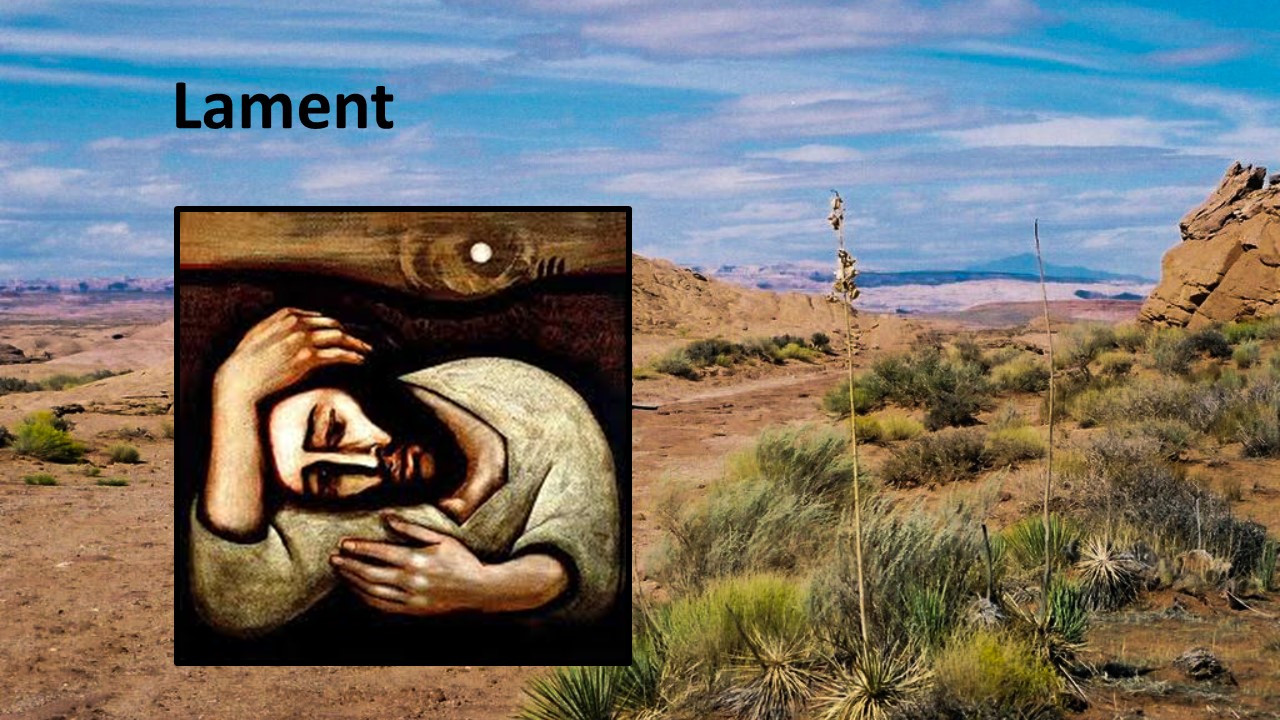
Throughout the Old Testament, one common form of prayer is that of lament. The prophets lamented. Throughout the Psalms, you’ll find laments.[8] In such prayers, and that’s what we have here with Moses, those praying are very honest to God. They confess their challenges. They are not shy about admitting the frustration they feel.
I know when I have been in such places of difficulty, my prayers to God are raw. And God listens. When we are honest about our feelings, God doesn’t get upset with us. God listens. And, as I have often found, if you put your burdens on God’s shoulders, you will feel light enough to get back up and continue on.
Yes, Moses had a meltdown. But God wasn’t mad at him. The next time things seem hopeless, take your burdens to God. Offer up your raw emotions. Don’t try to run and hide. Instead, face your challenges and trust God. Answer Jesus’ invitation to let him take your yoke.[9] He will lighten your load. Amen.
©2019
[1] Numbers 11:1-3.
[2] Matthew 6:24 and Luke 16:13.
[3] Exodus 4:1.
[4] Exodus 4:10-17.
[5] Exodus 19:16.
[6] See Isaiah 31:4, Jeremiah 2:3, 4:7, 5:6, 25:38, 49:19; Hosea 5:14, 11:10, 13:7-8 and especially Revelation 5:5 where Jesus is the “Lion of Judah.” Of course, this is metaphorical as a lion is also used for our enemy as in 1 Peter 5:8 and Revelation 13:2.
[7] Eugene H. Peterson, Run with the Horses: The Quest for Life at Its Best (Downers Grove, IL: Intervarsity Press, 1983), 103.
[8] For more discussion on such laments in Scripture, see Jeff Manion, The Land Between: Finding God in Difficult Transitions (Grand Rapids, MI: Zondervan, 2012), chapter 6.
[9] Matthew 11:28-30.
 Billy Beasley, The Preacher’s Letter. (Little Elm, TX: eLectio Publishing, 2018), 265 pages
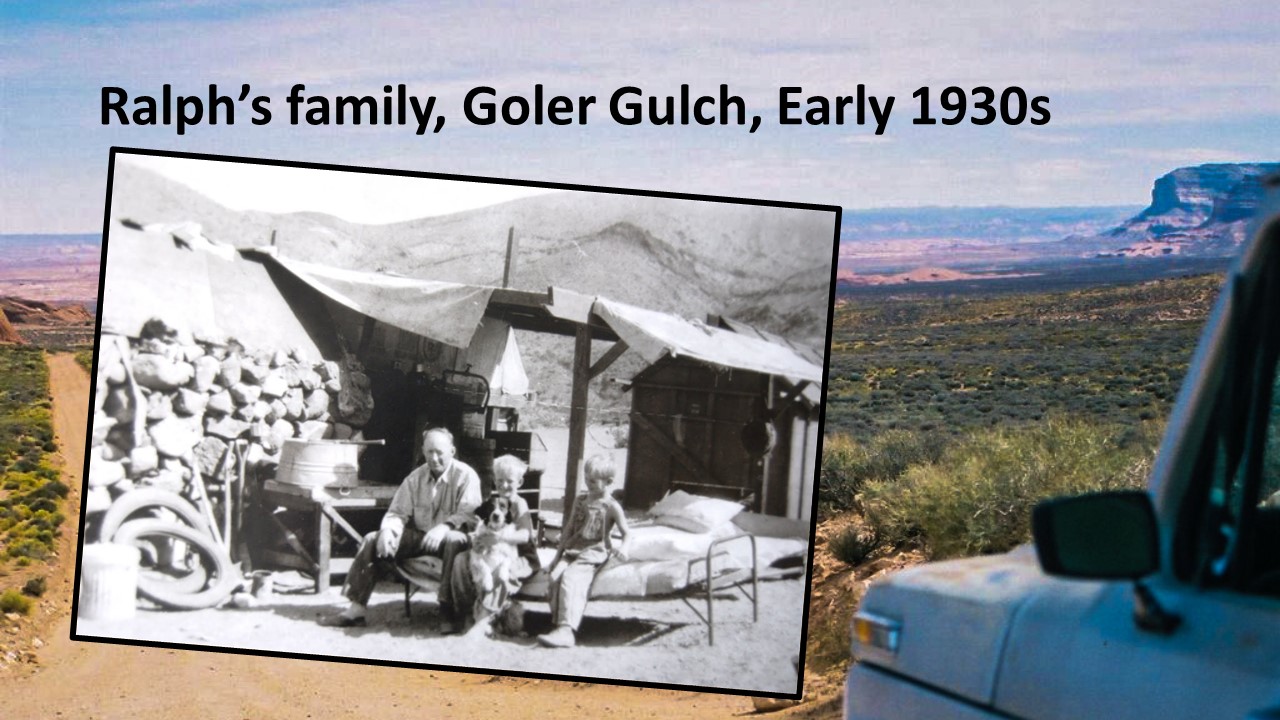 Ralph grew up in Goler Gulch in the Mojave Desert. He escaped that hard-scrabble life thanks to the Army Air Corp, spending the final few weeks of the Second World War in the Pacific. Afterwards, on the GI Bill, he earned a chemistry degree, but having grown in a mining camp, he remained interested in the industry. Because of this, he took a special interest in my dissertation on role of the church in the Nevada mining camps.

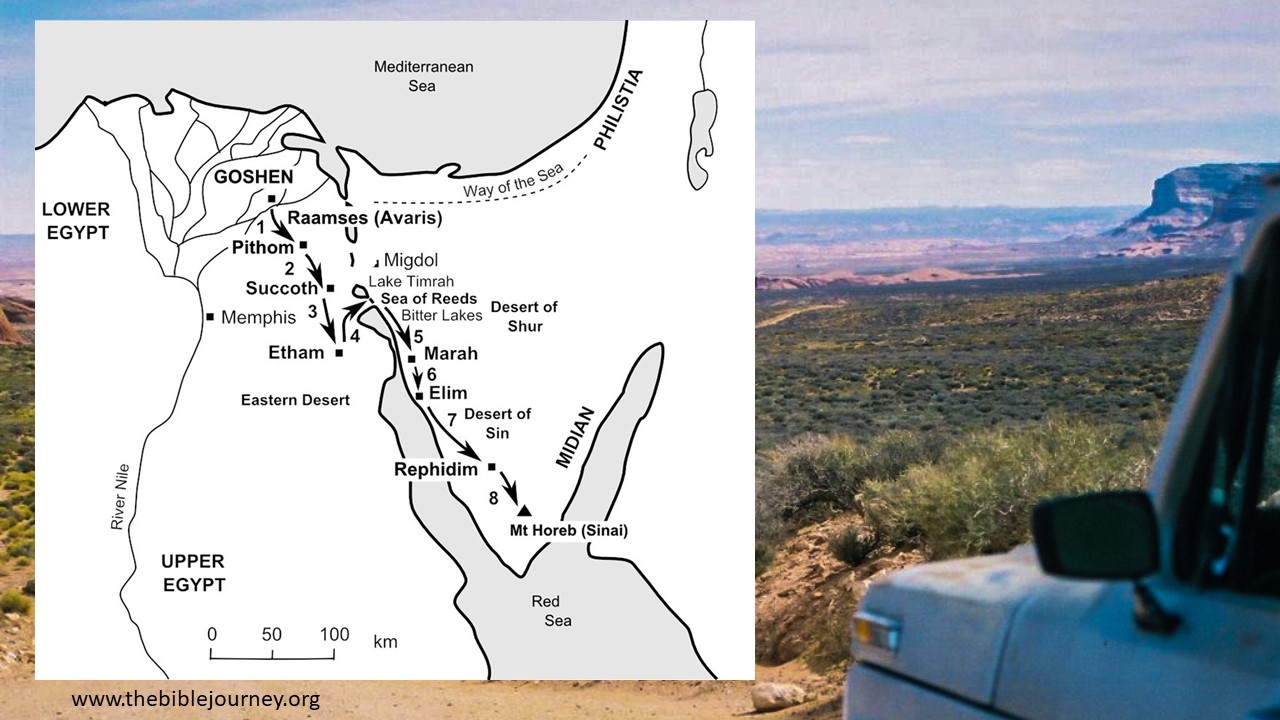
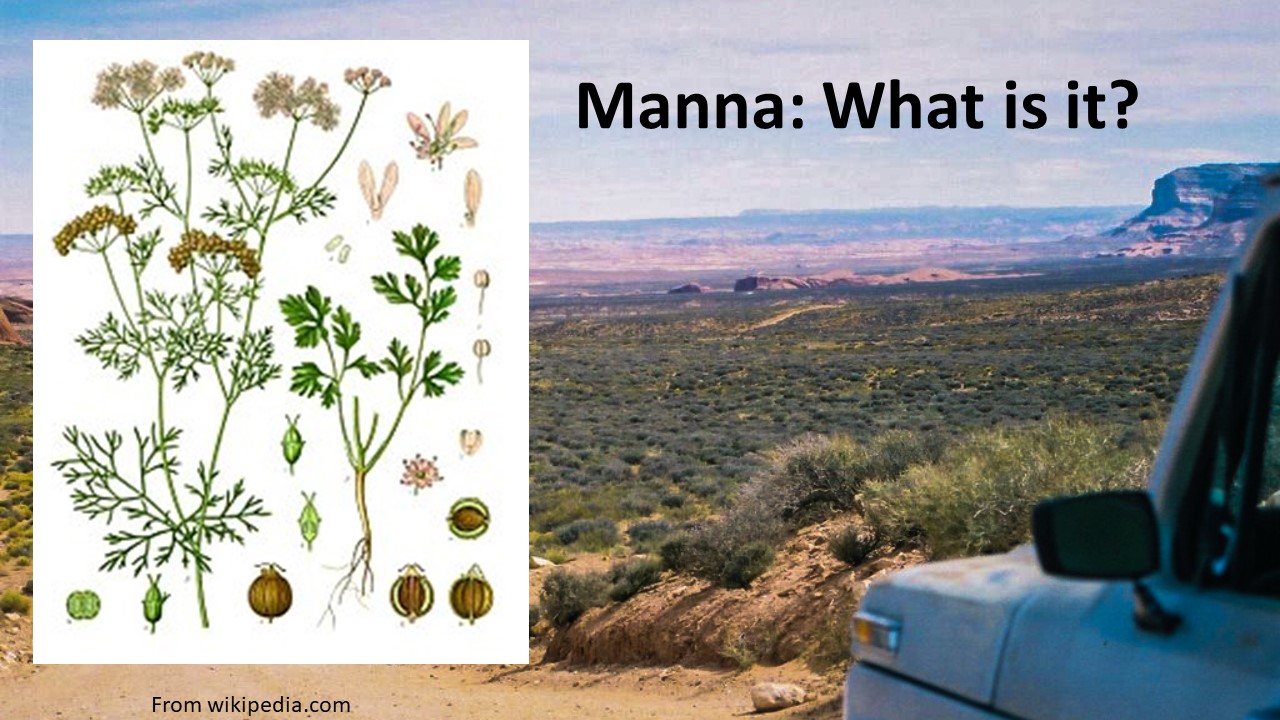 In the Book of Exodus, we’re also told more about manna, the collecting and gathering of this substance. The word manna means, “What is it?” Both books tell us it tasted like coriander seed.
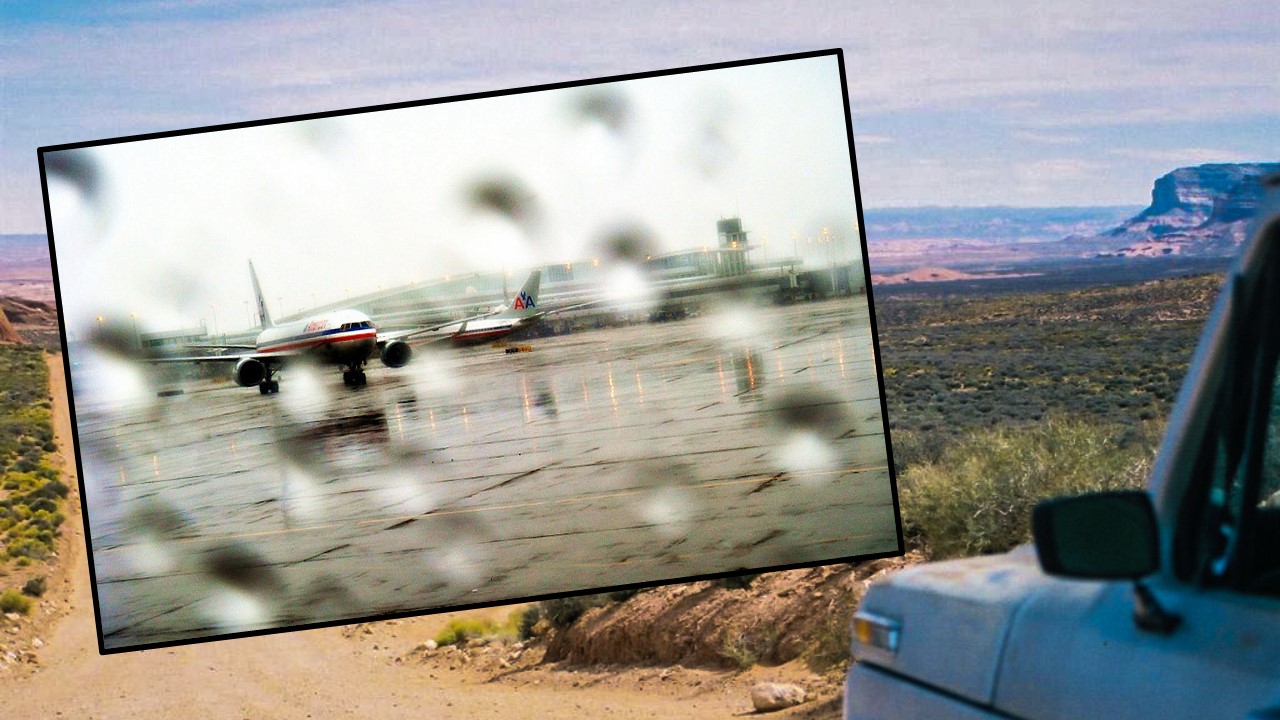
 It sounds like I justified Israel’s anger over their diet, doesn’t it? Certainly, it is not anything we would want to endure, right? But the point is that at some time or another in our lives and in our Christian journey, we’re going to be in the Land Between. We are going to be at the point in which all seems old and bland and that all there is to do is to wait. At such a time, we’re going to think like me in O’Hara: “how much longer can I endure this boredom?” Instead, I should have been thankful I was safely on the ground. It’s easy for us, like Israel, to fall into the trap of complaining. “Oh great, manna again.” Like Israel, it’s easy for us to start blaming. “Moses, why did you bring us out here, we had plenty to eat in Egypt? Did you bring us out here to die?”
 Hear this, the Land Between can be a dangerous place for our souls. As we transition to a new normal, we have to guard our hearts against the spirit of despair. If we go down the direction of despair, we easily end up believing that God is not good. Then we become bitter. Or we give up on God. Instead, we need to be patient and believe that God is preparing us for something better.
 When we enter this Land Between (which we must all travel sooner or later—as individuals and as a part of the communities in which we live), we must look around and give God thanks for the blessings we enjoy. We must be content and patient. We’re Christians, we should be the hopeful ones in the crowd. Israel should have been thankful they were no longer enduring the whips of their former masters and that, even in the wilderness, God was providing for their needs. In the wilderness, where God was actively working to forge them into a new nation, God sustain them. And God will sustain us.
 When you enter a period of transition, don’t be like Israel. Believe in God. Trust in God. Give thanks for that blessings, however small they might be, that you have been given. And wait in hope, because you have faith in God. Amen.



 Upcoming!
 We’ve just finished focusing on Jesus’ humble birth with the celebration of Christmas. Born in Bethlehem, God came into this world in like all of us. This morning, let’s for a moment contrast the humility of Jesus’ birth with a vision of God from the 29th Psalm. This Psalm, which lifts up God’s glory, orients us to the proper way to approach God. In God’s presence, like the wise men and shepherds, we can only stand in awe.
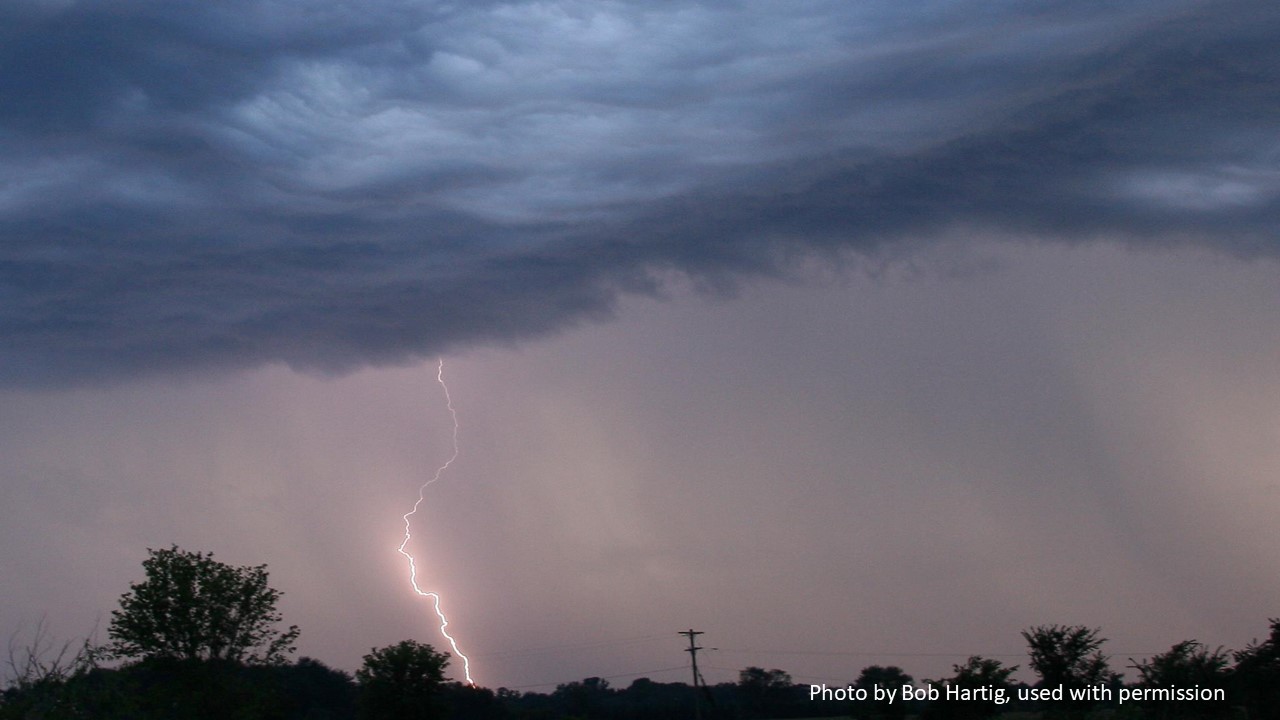 There is nothing like an electrical storm to remind us just how our lives are fragile. I’ve been caught in many such storms: hiking in the forested woods of the Appalachians, backpacking above tree-line in western mountains, in a boat offshore of North Carolina, paddling a kayak in our sounds, and even once—as a kid—playing golf with my grandfather on Pinehurst #2.
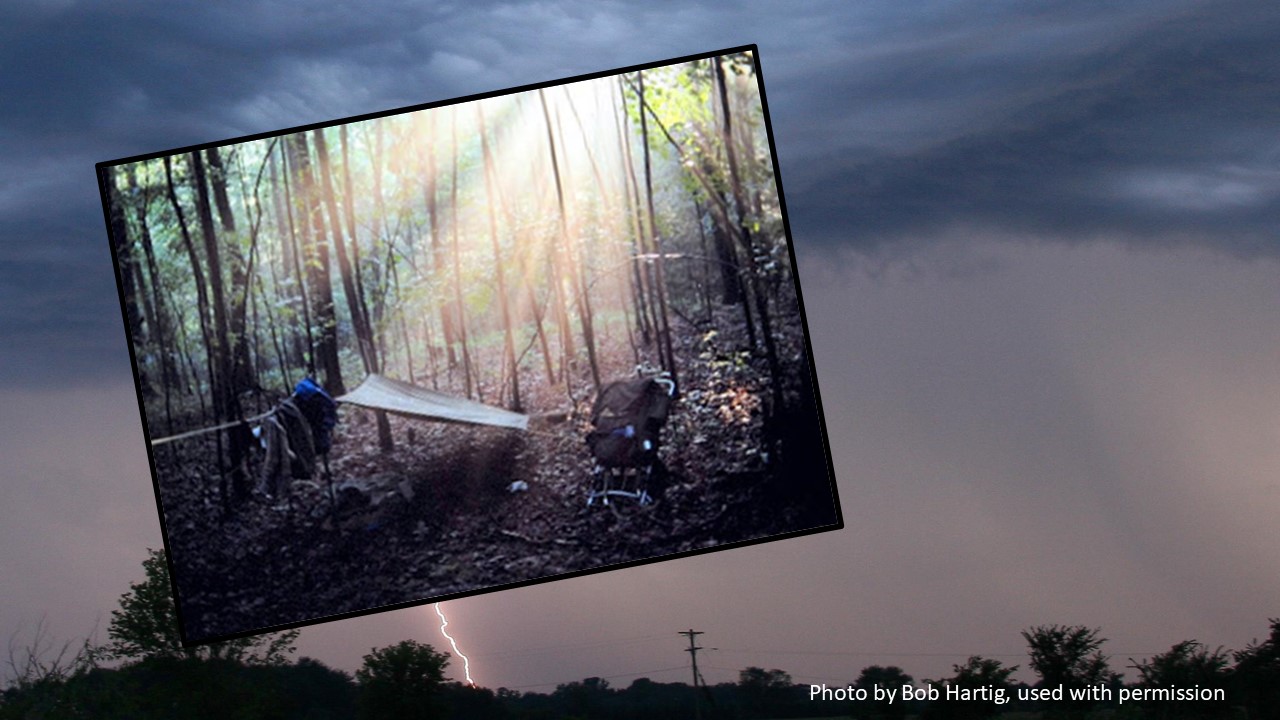 As the storm moves off eastward, each boom of thunder is a little less intense. It’s hard to tell when the rain stops as the leaves keep shedding their water a good thirty minutes after the storm has past, even after rays of sun break through the canopy, which provides another glimpse of awe. In a few minutes, the storm seems to be a distant dream. In camp that evening, you build a fire and attempt to dry out socks and boots as you discuss shared experiences. Everyone was scared, but are glad to have gone through it. Storms are awe-inspiring.
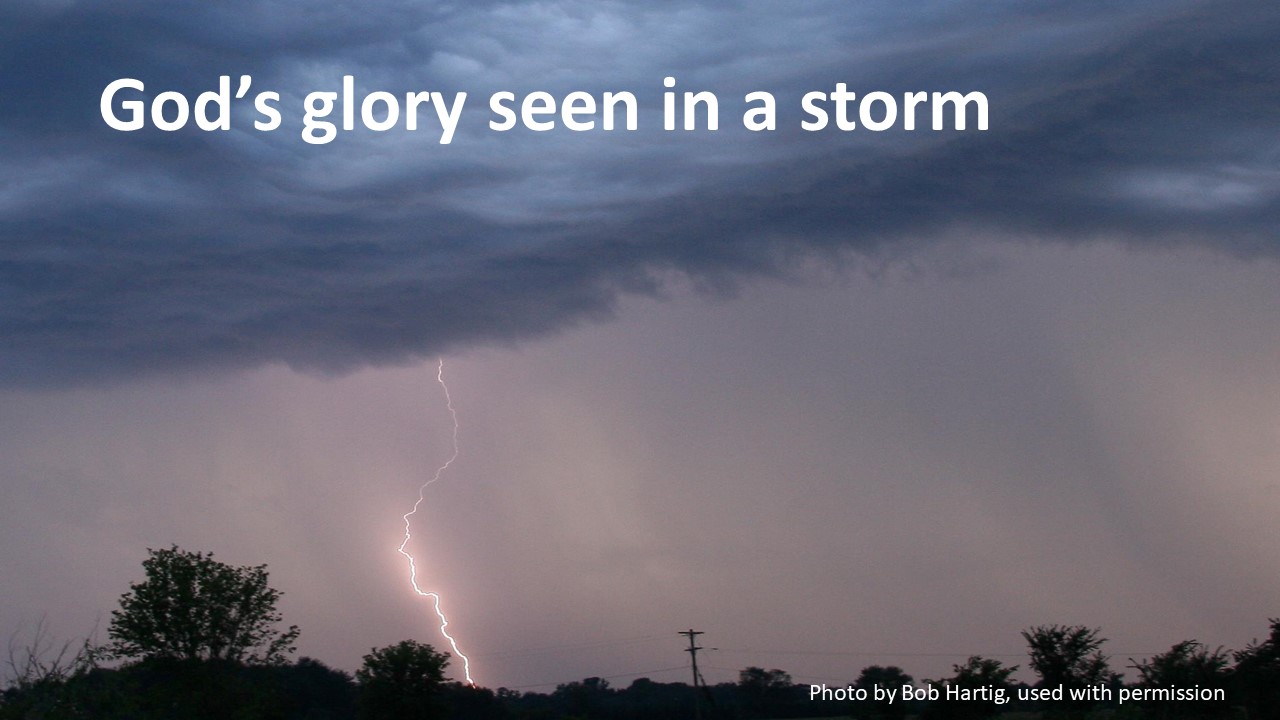 I love this Psalm! We live in a narcissistic world, yet the Psalm reminds us of our limited abilities. In the face of such a storm, in the presence of our God, all stand in awe. The power of this Psalm drowns the choruses of “me, me, me” and “I, I, I” that dominate the sound waves of our lives. We can’t think too much of ourselves when we truly contemplate the power and the glory of our God. When we truly consider the omnipotence of God, a God shown in the 29th Psalm to have power over creation, we are left nearly speechless. The majesty of God drives us to our knees.
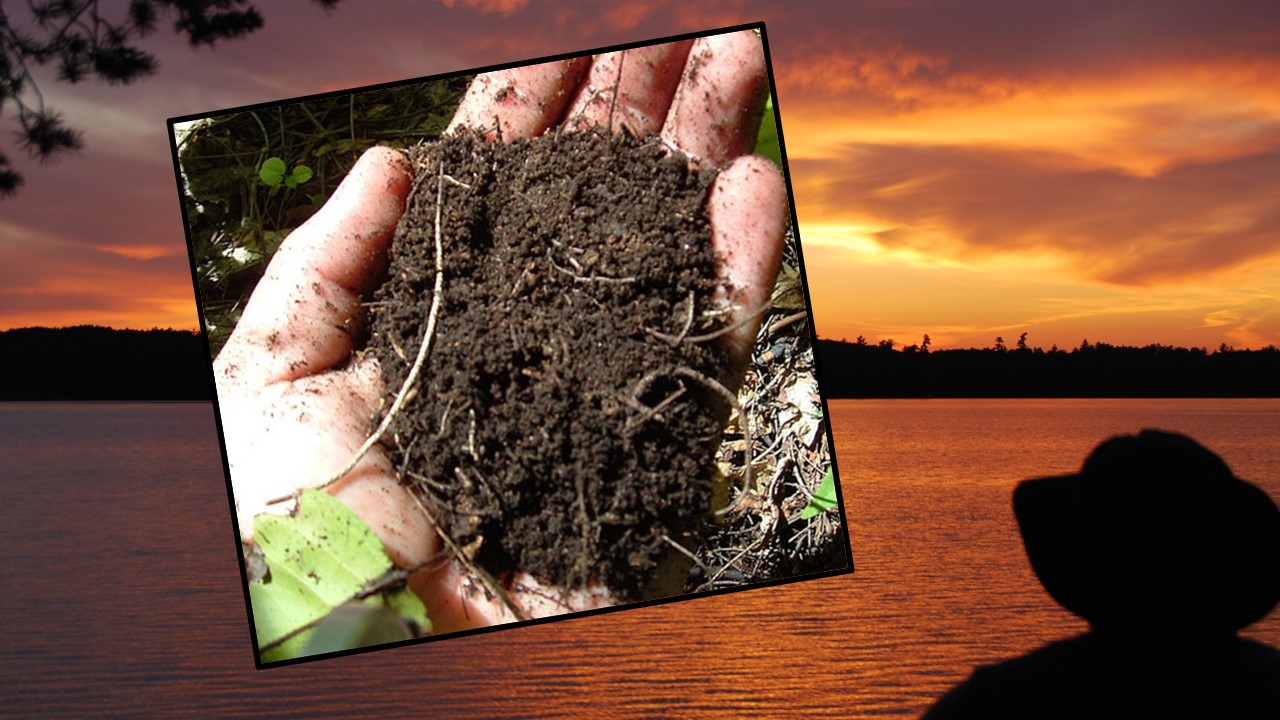 I may have told you before about the cocky scientist who thought it wouldn’t be too hard to create a human being. If God could do it, he could do it, or so he thought. So God issued a challenge. He accepted. On the day of the event, the scientist went down to a creek bank and dug out clay and rich dirt. He then began to mold it into a body. It was looking pretty good. But before he could try to blow life into his body, a lightning bolt shattered this creation and a voice from heaven boomed, “Hey you, Mr. Scientist, go get your own dirt.”
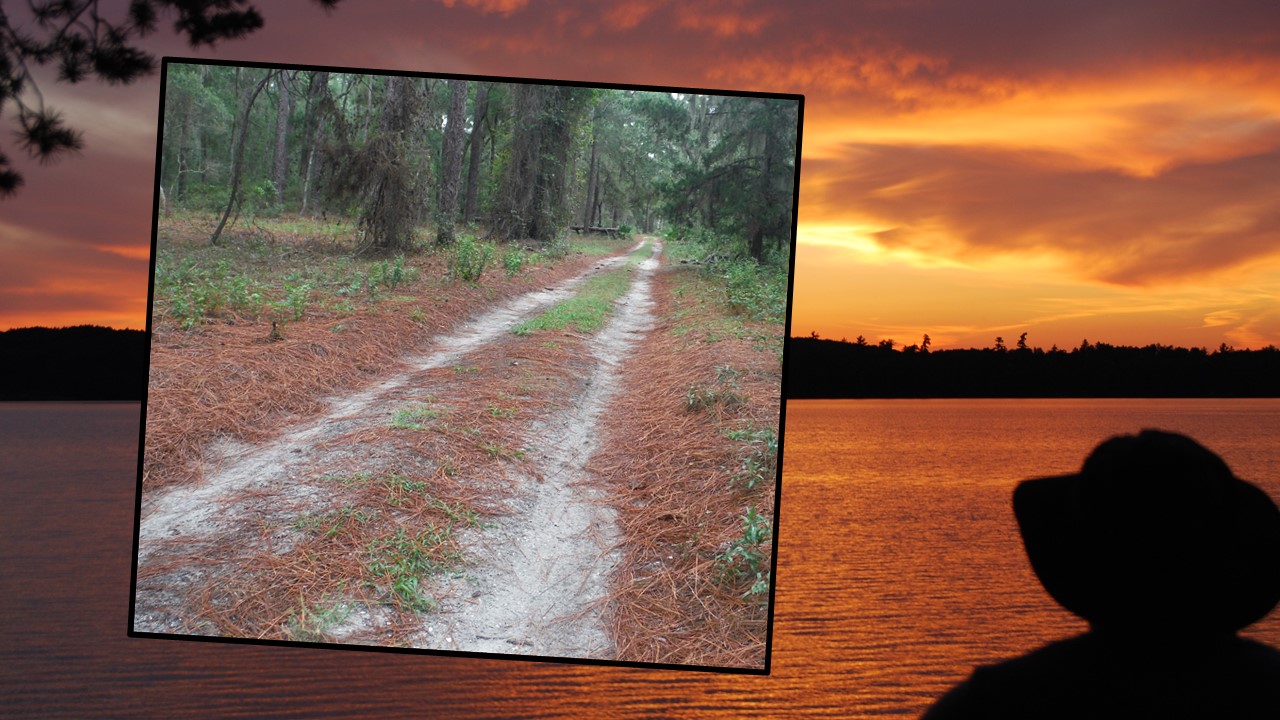 You know, we are all on a journey in this world. We are here for only a short time. And while we are here, God has something for us to do. We refer to this as our calling and those of us in the Reformed Tradition understand this calling to be more than just what we do within the church. In fact, worship is more than just what we do here on Sunday morning. Our whole lives are to glorify God, so our vocation—whether in the church or in the secular world—is important to God and the furthering of his kingdom.
 On Monday, in our Calvin January Series lecture, some of us were blessed to hear Dr. Jimmy Lin talk about the “good news” in the battle against cancer. Those who heard the lecture may have been shocked that before Lin talked about cancer, he discussed his relationship to God, referring to himself as a “scientific doxologist.” As you know, the doxology is a praise of God. Dr. Lin suggested that the most important thing for all of us to do is to praise God. In other words, we are all called to be a doxologists. Yet, we live out our lives in different ways. He is a scientist, so he calls himself a scientific doxologist. When we all think of the labels we place on ourselves for our journey through life, all of us should strive to include the title “doxologists” with our description. “I’m a business doxologist, an engineering doxologist, a banking doxologist, a lawyer doxologist, a retired doxologist, a preaching doxologist…” You get the idea, don’t you?
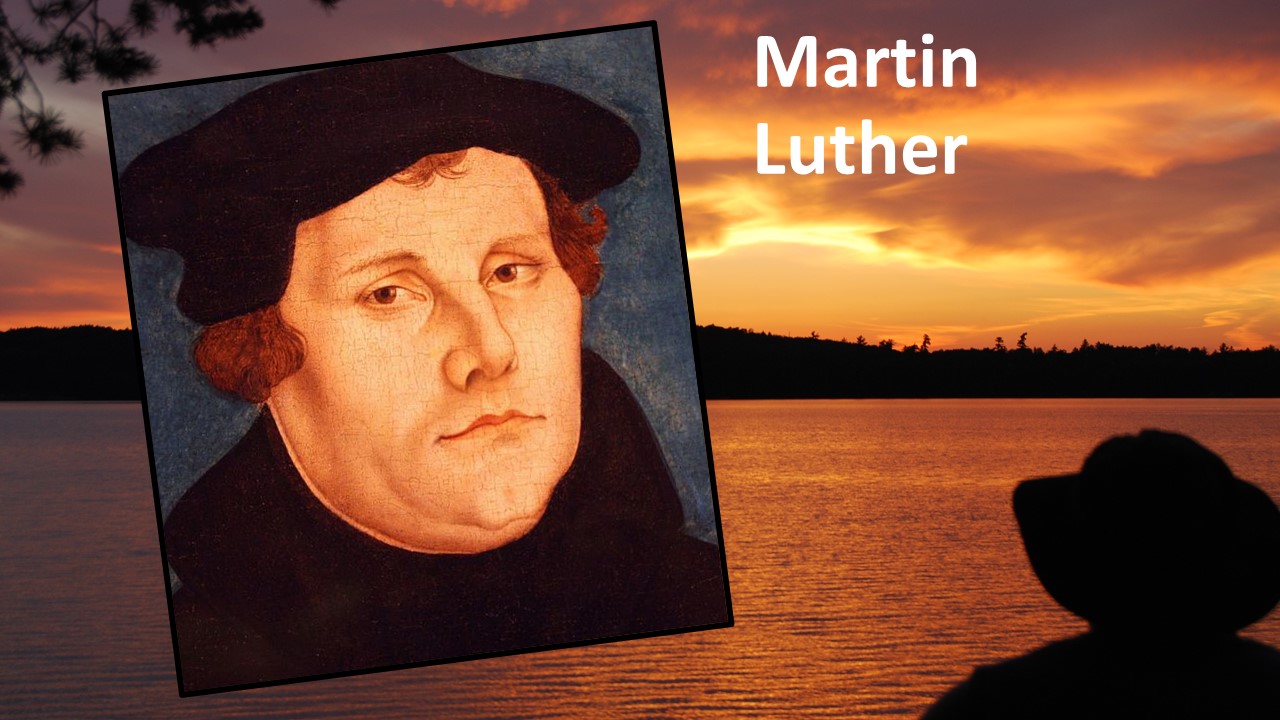 Interestingly, with all this discussion this morning about storms, Martin Luther, the great Reformer, religious vocation began with a thunderstorm. A nearby lightning strike threw him from his horse. Scared, he prayed and vowed that if saved, he would become a monk.

 Olivia Laing, To the River (Edinburgh: Canongate, 2011), 281 pages, a few black and white photos.
 Jeff Garrison
 This Sunday is Epiphany. In the Christian calendar it marks the end of the Christmas season as we see the decorations disappear. Epiphany means a surprise encounter or a manifestation of God. The root is from the Greek word for sunrise or dawn, although the word was also used in reference to an appearance of a god. In the Eastern Church, Christmas is celebrated on this day with an emphasis on the incarnation—the surprising way God came to us, “in the flesh.”
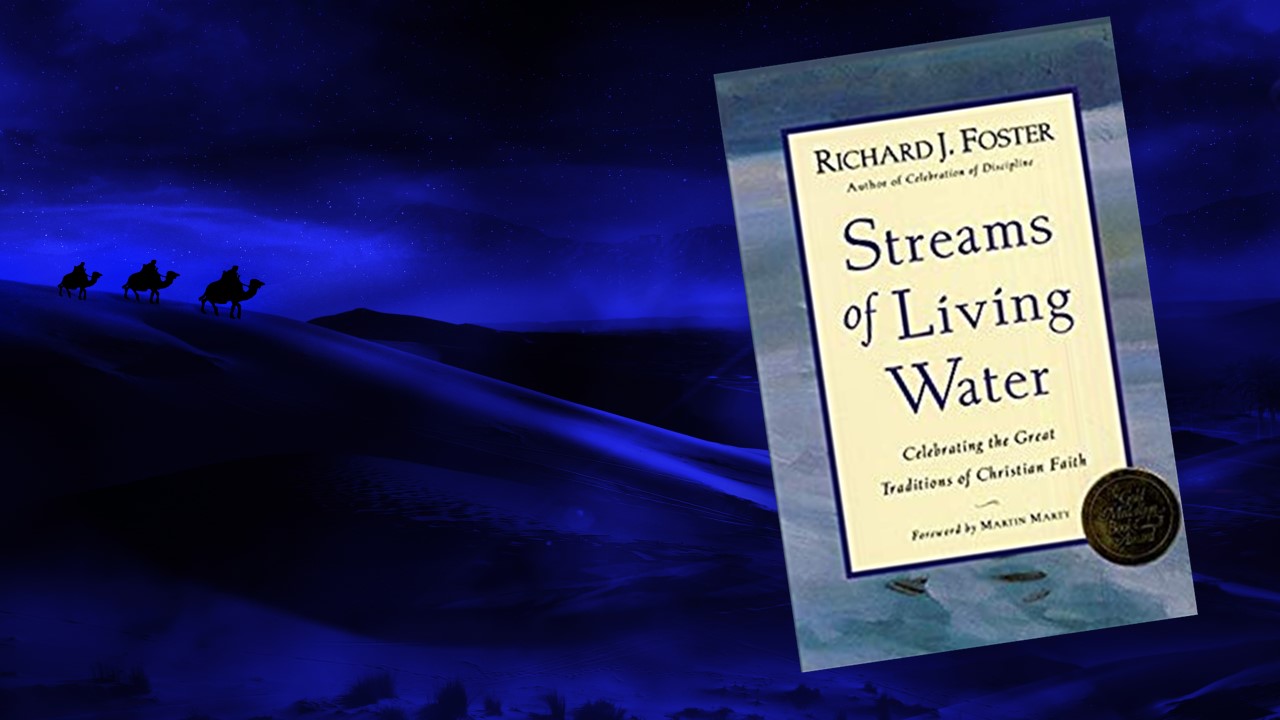 As I have done throughout this Advent and Christmas season (with the exception of last Sunday), we will look at these traditional seasonal passages through the lens of Richard Foster’s book, Streams of Living Water.
 What might we learn from the wise men’s search? They first go to Jerusalem, the holy city, a place of excitement. Herod’s there; the temple’s there. The streets are packed with pious folks carrying out the work at the temple and with pilgrims who have trekked there to worship. But that’s not where they find Jesus. Instead, they are led to a small dumpy town five miles away. A poor suburb, inhabited with shepherds and goat herders. The town supplied meat and animals for the appetites and sacrifices of those in the capital. Flashy isn’t one of God’s traits. God humbled himself by coming to us as Jesus and, I would suggest, we’ll often find Jesus in humble circumstances. To encounter Jesus, we have to be humbled. Being splashy or among those who are popular isn’t a guarantee that Jesus is present. Jesus comes to those who humbly admit their need for a Lord and Savior over their lives.
 Now let’s look at this passage from what it tells us about giving. One of the most important lessons for a Christian is to learn that giving is as much a blessing as it is an obligation. You know, we feel good about ourselves when we give, especially when we give without expecting anything in return. The wise men show the importance of giving without being asked and without expecting anything in return. If you think about it, this is a story of foreigners giving gifts to a child they don’t know. It would be like someone from Romania dropping by the maternity ward at Memorial Hospital and handing out gifts.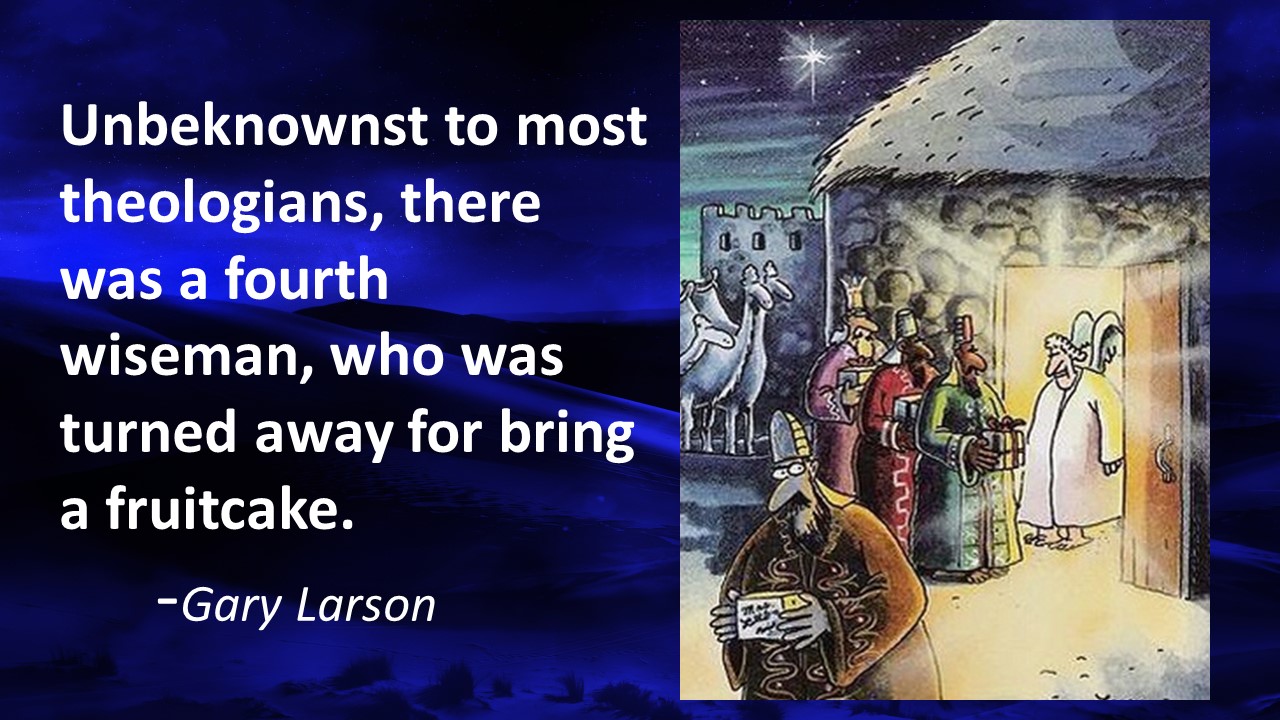
 Finally, think about the loyalty of the wise men to a higher authority. Herod provides a counter-plot to the wise men. He reminds us that even though the Messiah has come, evil remains a threat. Herod’s false humility almost fooled the wise men. But then, after being warned in a dream of Herod’s intentions, they skip out of town without letting Herod in on the secret. The wise men are a reminder that our first loyalty is to God. Although as Christians, we’re called to obey those in authority, our allegiance has its limits and our commitment to God always comes first.
 Now, let’s think of the wise men or magi in the context of the evangelical tradition. This stream within the Christian faith places a high priority on the proclamation of the gospel, the centrality of Scripture, and the confessional witness of the early Christian community.
 I started this sermon with three things we learn from the wise men. I am going to add one additional thing to this. There are four things that I want you to take home today and to ponder throughout the week: Seek Jesus, give graciously, know that God always comes first, and remember that we’re called to spread the Good News of Jesus Christ. Amen.
 Scott Stillman, Wilderness: The Gateway to the Soul (Boulder, CO: Wild Soul Press, 2018), 198 pages.