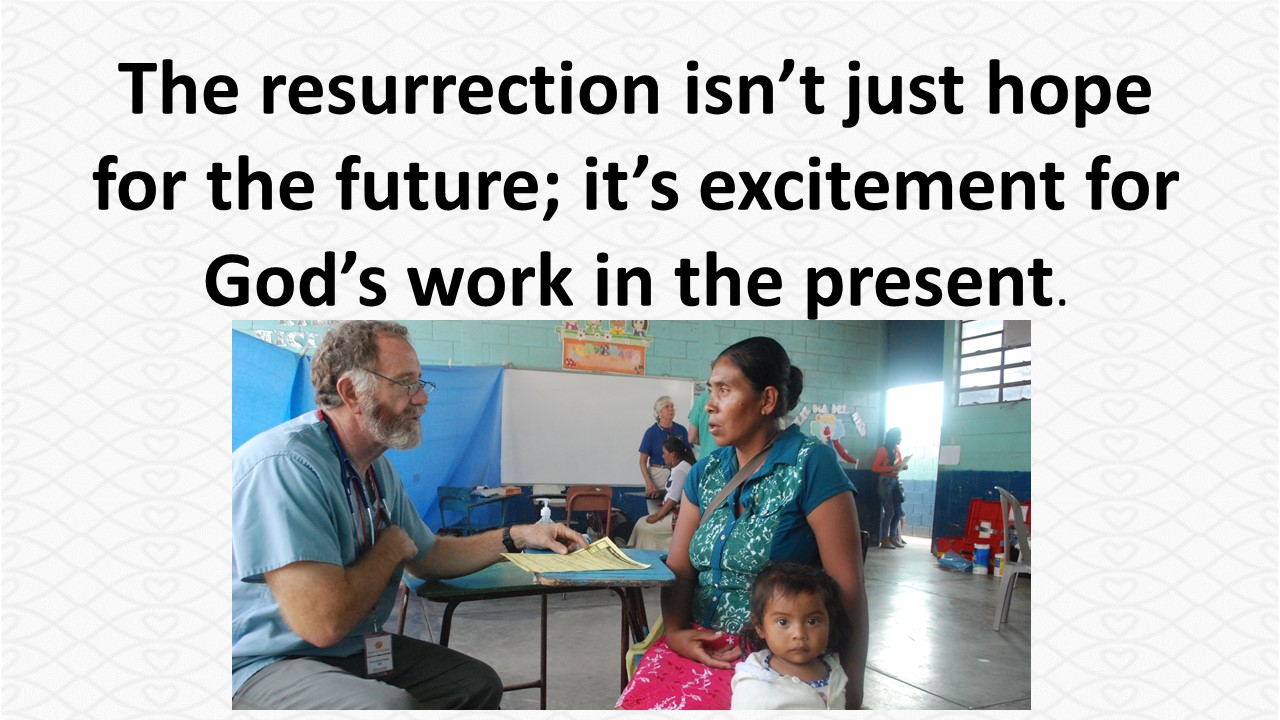

Jeff Garrison
Skidaway Island Presbyterian Church
June 30, 2019
Luke 9:51-59
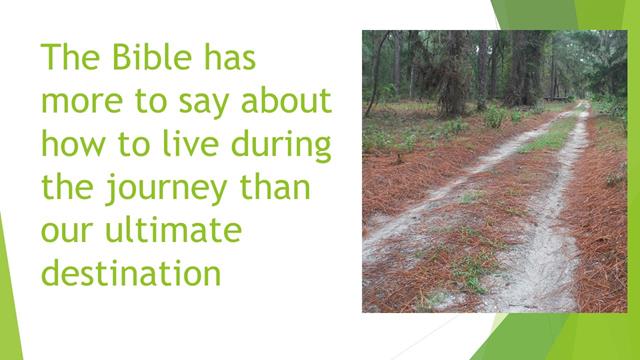
As I was pondering the direction of today’s sermon, I came across this quote: “We do well to remember that the Bible has far more to say about how to live during the journey than about the ultimate destination.”[1] In our passage today, which comes at a turning point in Luke’s gospel, we find Jesus leaving behind his Galilee ministry and heading to Jerusalem. Luke uses this travel narrative as a unifying theme for the middle section of his gospel. [2] Jesus doesn’t arrive in Jerusalem for another ten chapters. During this journey, there are lots of opportunity for Jesus to teach the disciples. Today, we’ll look at one such lesson of how we’re to live during our journeys.
Earlier in this chapter, Jesus with the handful of the disciples experienced the “Transfiguration.”[3] It’s a high point of the gospel, ranking up there with Jesus’ baptism.[4] Interestingly, Luke follows both these “high points” with a story of rejection.[5] Jesus was baptized, then endured forty days of temptation, only to be rejected by his hometown.[6] Jesus was transfigured, seen in his full glory, and then rejected by a Samaritan village. Jesus teaches his disciples about rejection and how discipleship is hard. Are we willing to risk rejection in order to be a disciple? Think seriously about that question as I read this passage. Our scripture is Luke 9:51-58.
###
 When I was hiking the Appalachian Trail, I came into Gorham, New Hampshire for the evening. It’s a small town near the Maine border. I needed to resupply for the trail ahead. I was down to only oatmeal to eat, but I didn’t have enough fuel for my stove to even prepare that.
On my hike I carried with me a multi-fuel stove that could burn regular gasoline. The benefit of such a stove is that I didn’t have to buy gallon containers of white gas, of which I’d only need a liter. It saved me on gas. I’d only spend a quarter or maybe 30 cent to fill up my bottle. It was a lot cheaper than Coleman fuel, and both fuels were cheaper back then. So I stopped at a local Exxon station on the edge of town, set my pack down next to the pump, and pulled out my fuel bottle. As I reached for the nozzle, the cashier ran out of the store yelling obscenities and telling me I couldn’t fill up my bottle.
“Why,” I asked?
“You might spill gas.”
“I’ll be careful. I haven’t yet spilled any and have filled this bottle at least a dozen times.”
“We don’t allow it,” she said.
I was mad. I told her it’s a good thing I didn’t have a car with me, for I would run out of gas before I filled up at her station. Looking back, it seems that even without gasoline, I was able to throw some gas onto what was becoming a fire. She began to curse me and said that she wished all us hikers would go back to where we came. In response, I pulled out my journal, wrote down the name of the station, and asked her for its address. I promised to send letters to the Chamber of Commerce and to Exxon Corporate Headquarters. She had a few more choice words for me as I walked down the street and filled up my fuel bottle at the next station.
 Having been rejected, I found myself steaming. As I left town and hiked north, I began to craft the letters I was going to write… but then I realized I was putting way too much negative energy into this situation. I decided to let it be and I never sent those letters. Had Jesus been among us hikers, I think he’d told me to do just that. Drop it. Harboring such feelings is never good. It just eats at you. We cannot control how other people react to us; we can only control how we react toward them.
 Jesus is heading to Jerusalem, taking the disciples with him. The text that he “sets his face” to go to Jerusalem, a phrase echoed throughout the next ten chapters. On this journey, we learn things not mentioned in the other three gospels. Jesus is not just walking, he’s teaching and healing. But Jesus doesn’t go directly to Jerusalem. If he’d had a GPS and set the destination for Jerusalem, the machine would have been constantly squawking “recalculating, recalculating” as he wanders around. It’s in this wandering we find some of our most beloved parables, such as the Good Samaritan and the Prodigal Son. Along the way, Jesus stops and teaches people about who God is and how they should relate to their neighbors.
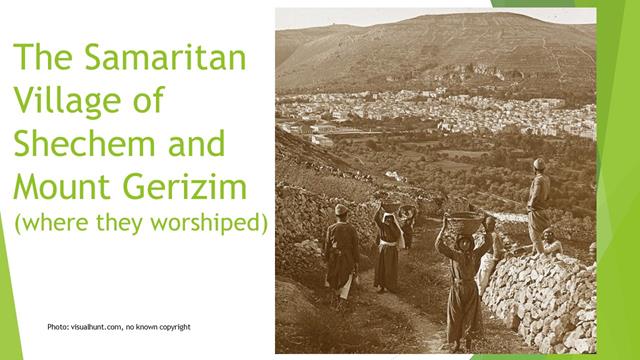 But not everyone is ready to see Jesus. Luke informs us that the Samaritans don’t want anything to do with Jesus because he has set his face towards Jerusalem. The Samaritans, who do not see Jerusalem as holy and who worship on another mountain, have grown weary of self-righteous Jews trampling through their land on their way to Jerusalem.[7] They’re just like the gas station attendant, who was tired of hikers coming through her town. In Biblical times, many Jews from Galilee would take the longer away around Samaria in order to avoid such encounters.
The disciples trying to arrange food and lodging for the journey are upset at the reaction they receive. Likewise, I was upset at the station clerk. “Let’s nuke ‘em!’ “Let’s blow them to smithereens!” “Let’s get them in trouble with their boss, or the corporation.” Ever hear people talk about enemies like that? Two of the disciples, James and John, whom Jesus nicknamed “Sons of Thunder,”[8] ask Jesus if he wants them to do away with this village… “You know, Jesus, just a little fire from heaven to melt their hearts.”
 Jesus doesn’t take rejection personally and encourages the disciples to get over it. Too often we forget that vengeance isn’t ours![9]
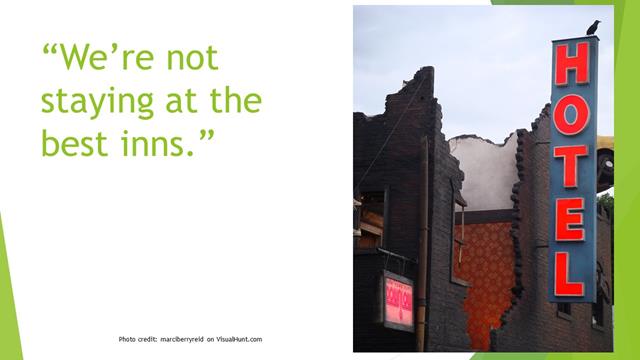
Then there are people wanting to join Jesus on this journey. We’re not told if Jesus turns them away, but he certainly uses no ad agency to sell his trip. “I have no place to lay my head,” he says. The Message translation here has Jesus saying “we’re not staying at the best inns, you know.” Following Jesus isn’t easy. Jesus makes a demand on our lives. “Are you ready to follow me,” Jesus asks? “If you want to follow me, I have to be first and foremost in your lives,” he says. “Nothing can come before me!”
 Do we put things before Christ? Think about your life and the things you value. Are you willing to give it all up for Jesus? Is Jesus at the center of your life? Is he what’s most important?
There is a tension between the first and second part of this passage. In the first part, we’re told not to be so zealous that we forget the mission. Jesus came to save, not to destroy. Among his followers there is not to be revenge against or violence toward enemies.[10] In the second half of the passage, Jesus says that following him is tough, but if we decide to do so, he’ll demand our total allegiance. We can’t jump halfway in, it’s all or nothing.

What does this passage say to us today? One thing we can gleam is this: If we want to be a follower of Jesus, we must be willing to stand up against the contempt that is so prevalent in our society today.[11] Jesus didn’t allow the disciples to have contempt toward the Samaritans, and I don’t think he’s happy about how we treat others.
Contempt for others seems to have started in national politics where groups of people are identified as deplorable or sick or with some other adjective that says we want them to just go away. Thanks to cable news, it’s ubiquitous. These Ad hominem attacks, which is what they are—a basic fallacy in debate, is used to dehumanize others. Ad hominem means “against the man,” and it refers to one not attacking an issue, but belittling the person on the other side of an argument.
Just think about this. When we hear something we agree with, we jump on the bandwagon without thinking. It then becomes easy for us to let our contempt rule. “Let’s call down some fire from heaven.” Sounds good, doesn’t it? It has gotten so easy to wish those we don’t like would disappear or go away.

We not only see this tendency in our national politics, but locally, even in our own neighborhood. Just recall the way the island divided over the issue of incorporation. Many of the harsh words said had nothing to do with the issue, but was an attempt to discredit the other side. And it happens within churches, between friends and even within members of a family. When we know we’re right and assume they’re not only wrong, but are also evil or stupid for thinking that way, we quickly slide into thinking we’d be better off without them. We are showing contempt. We’re like James and John in our story today. Sadly, it’s easy to mouth off. And our words risk creating a larger divide between us and the other. But the Christian faith isn’t about creating divisions. It’s about bringing people together. It’s about standing up for others, even those we may not agree with. It’s about not spouting off at the mouth. It’s about thinking before we speak.
Let me draw your attention to the quote I attached to the flyleaf of the bulletin. Take it home and ponder it this week. If you want to change the way we treat others in the world, don’t wait for our national leaders to take the initiative. It’s up to you, and to me, to live as Jesus taught. We’re to love others, even our enemies.
 Today, I think back to that encounter in Gorham, New Hampshire, so many years ago. I wonder what would have happened if I had gone back to that cashier at the Exxon station and apologized. I wouldn’t have to say she was right, but I could have acknowledged that my response and my thoughts about her were misguided. As humans, we can’t be responsible for what someone else does. We can only be responsible for what we do and how we react. Amen.
©2010
[1]This quote came from a Facebook Meme posted by the Clergy Coaching Network and was attributed to Philip Yancey.
[2] See Fred B. Craddock, Luke: Interpretation: A Biblical Commentary for Teaching and Preaching (Louisville: John Knox Press, 1990), 139-142.
[3] Luke 9:28ff.
[4] Luke 3:21-22.
[5] Craddock, 142.
[6] Luke4:16ff.
[7] Norval Geldenhuys, The New International Commentary on the New Testament: Gospel of Luke (Grand Rapids, MI: Eerdmans, 1982), 292-3
[8] Mark 3:17
[9] Deuteronomy 32:35, Romans 12:19, and Hebrews 10:30.
[10] Geldenhuys, 292.
[11] See Arthur C. Brooks, Love Your Enemies (New York: HarperCollins, 2019).

 Jeff Garrison
  As a music tradition, the Blues rose out of the African American experience of slavery. In song, they cried about their plight as they longed for freedom. The song, “Go Down Moses,” captures this desire for freedom. But this tradition is found throughout scripture. For of all the Blues’ singers that’s lived, Elijah may have been the best.
 “Hot Jezebel!” The queen’s name has found itself on an appetizer made of fruit preserves, horseradish, mustard and pepper.
 Have you ever felt you were all alone in the world? That everyone was out to get you? If so, you can identify with Elijah’s plight. Twice in this passage, once even after he encounters the Lord, Elijah proclaims his righteousness and cries out about Israel’s apostasy and how all the prophets have been killed except him. It was the same cry he made in the previous chapter on Mt. Carmel.
 The Beatles hit record back in the mid-60s, “Yesterday,” comes to mind when I think about Elijah’s predicament. It a kind of a mellow blues tune that goes something like, “Yesterday, all my troubles seem so far away, now it looks like they’re here to stay. O, I believe in yesterday.” Elijah could relate to these words. Perhaps we, too can relate. In the last verse of the song there is the line: “Now I need a place to hide away.” That’s Elijah! And we’ve all been there. The glory of yesterday is gone and we need a place to hide. Elijah flees south into Judah where he’s safe from Jezebel’s reach and then goes off by himself into the wilderness where he finds a bit of shade under a broom tree and lays down to die.
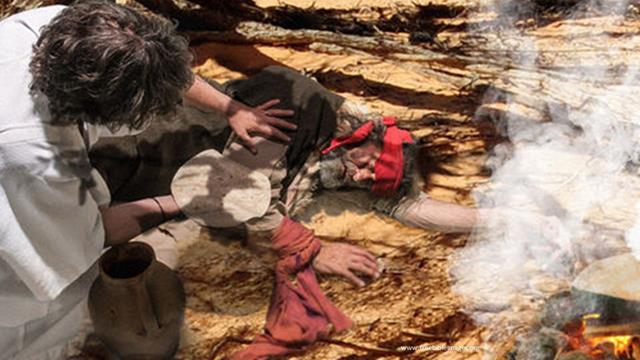 While asleep, an angel brings bread and water for Elijah. Obviously, Elijah assumes this is his “last meal.” He enjoys it and then, awaiting death, goes back to sleep. Again the angel wakes Elijah. Some people just don’t like getting out of bed. Elijah’s informed that he has a long journey so he’d better eat up and get on the road.
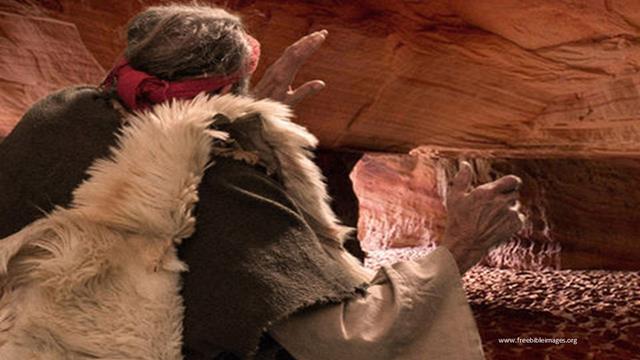 Elijah sets out on a forty day journey to Horeb, the mountain of God. Forty is one of those special numbers used throughout the Bible to indicate a purifying process or a time of preparation. It rained for forty days while Noah was in the ark; the Israelites wandered in the desert for forty years; and Jesus spent forty days in the wilderness preparing for his ministry… Elijah was being prepared to meet God in his forty day journey. Forty, the number that reminds us that our troubles are not always instantaneously solved.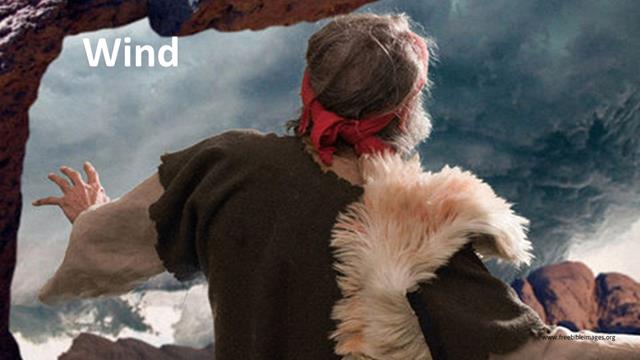
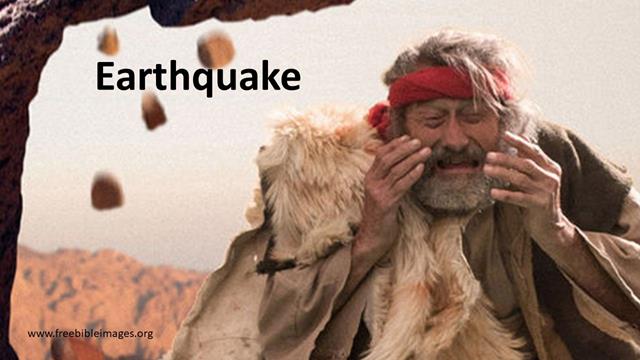

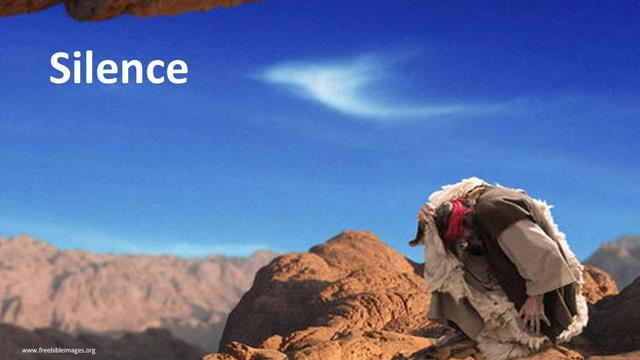 Again, a voice asks Elijah what he is doing on the mountain. Once again, Elijah cries the blues. But the Lord doesn’t grant Elijah sanctuary. Elijah is not told, “Just stay here, I’ll take care of you.” God isn’t finished with Elijah. There is still work to be done, so he’s sent back to Israel through Damascus. Along the way Elijah is to anoint the King of a neighboring nation, an illustration that the God of Elijah cares for and controls not just the events in Israel but throughout the entire world.
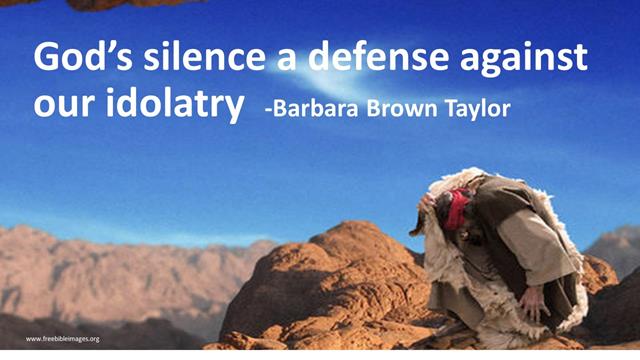 This story is rich in meaning. The eerie silence is often how God reveals himself in the wildernesses of our lives. God tells us, through the Psalmist, “to be still and know that I am God.”
 There is a lesson in this for us. All of our spiritual journeys have ups and downs. There are times we feel close to God and other times we feel as if God is far away and doesn’t care what happens. Elijah is like this. From his spiritual high on Mt. Carmel, when there was no doubt God’s spirit was with him, Elijah slips into a depression and begins to sing the blues. “It’s just me Lord, and there ain’t much I can do.” He feels so sorry for himself that he’s ready to die. So God reveals himself again to Elijah, but in a different manner, in a most common fashion: silence.
 Aren’t we like Elijah? There are those times when we know we’re filled with God’s spirit and we’re on a natural high and the blues seem so far away. These are the times we know God is real—they’re our Mt. Carmel experiences. But then, there are occasions when things do not go right, when we feel sorry for ourselves, and God doesn’t seem to be present. It’s during these times we need to slow down enough to listen for God in the silence. It’s in the silence that we can come to trust that God is with us always. It’s not something we can explain or even demonstrate. Its faith: faith and a longing for that which lies beyond our grasp, that which we cannot control, but without which we can’t live.


 Jeff Garrison
 On the flyleaf of the bulletin, I placed a quote from Brian McLaren, who describes the Trinity as a divine dance.
 “New and improved!” It’s a marketing cliché we hear all the time. Yet, it gets out attention. Whether it is laundry detergent, automobiles, cell phones, computer play stations or soft drinks, our ears perk up and we rush out to buy. This is also be true for churches. We start a new program, there’s a new minister, the music is new, and so forth. We’re drawn to what’s new. By the way, this isn’t anything new! Paul faced this in Greece. The Greeks coming onto the scene. When he was in Athens, Paul was given the podium to speak before the philosophers about his faith.
 Paul presents himself in weakness, in fear and trembling.
 Paul is affirming here the Reformed doctrine of Irresistible Grace, or as it is known in the Westminster Confession “Effectual Calling,” which acknowledges God’s hand in our belief and understanding of the work of Christ.
 As we read in Verse 9, we can’t imagine that which God has arranged for those he loves. God’s love for the world is beyond our comprehension. The beginning of our Christian faith isn’t belief, its love!
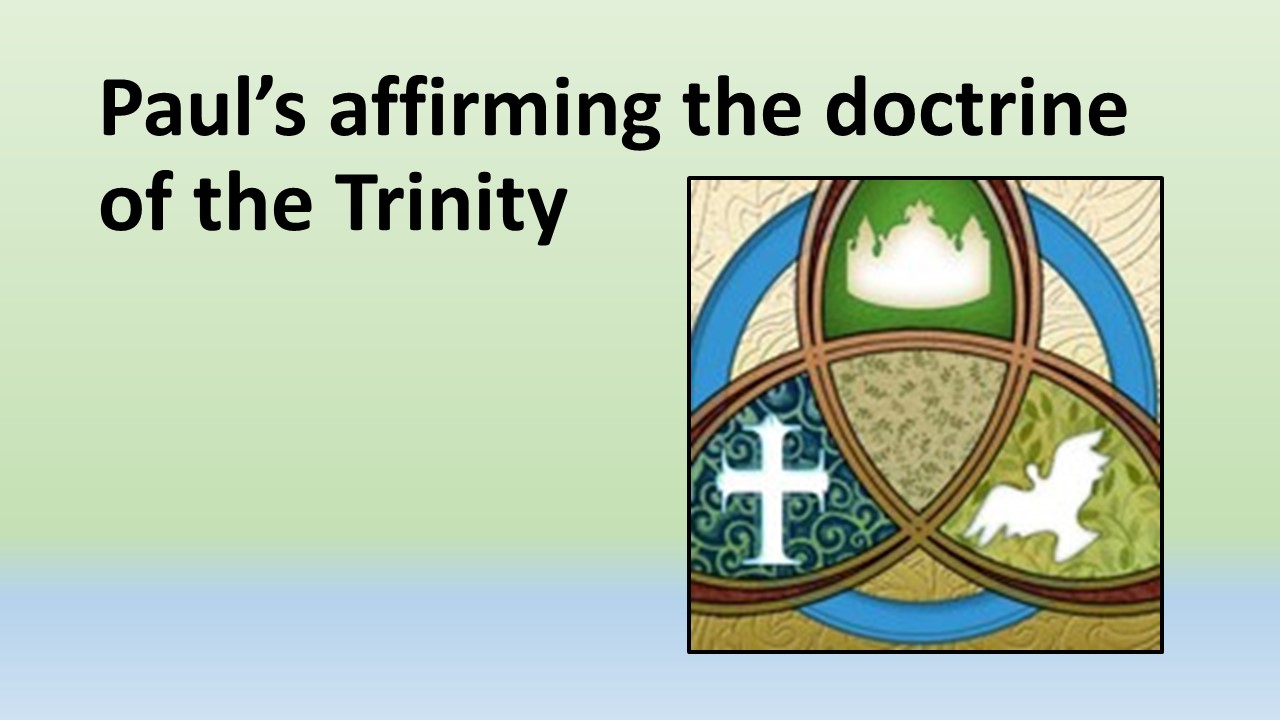 In Ken Bailey’s commentary on 1st Corinthians, he points out how Paul is affirming the doctrine of the Trinity throughout this passage. God the Father has all things under control; in Jesus, God comes to us as a man, in a manner that we might understand; and God’s Spirit, working through our own spirit, reveals this to be true. We see the three persons of the Trinity at work here. Although Paul doesn’t use the term Trinity, through rhetorical exegesis, Bailey cites six occasions in these verses where Paul alludes to the Trinitarian concept. Bailey, who taught most of his career in the Middle East, tells of a time he was a part of a Christian-Muslim dialogue. After dinner, one evening, one of the Muslim scholars questioned him as to the Trinity, asking for his help to understand this Christian doctrine. Bailey took the scholar to this passage and spoke about God’s work as shown throughout these verses.
  One popular phrase among Presbyterians is “The Church reformed, always reforming.” It is often cited as a reason for us to change, but it has nothing to do with that and the way it is often cited leaves off an important part of the phrase that came out of the Reformation and proclaimed, “The Church reformed, always to be reformed according to the Word of God in the power of the Spirit.”
 Essentially what Schmemann goes on to say, and what Paul also says, is that we need to experience a god that is not forced into our secular beliefs, but the God who transcends all so that he might reach out to everyone in love. Paul is referring to a God that is so big he can’t be contained in our human constructs. As believers, we need to be open to God speaking in and through us. And because we love God, we should seek to do that which God loves. For that is why we’ve been created.







 For Hazel Brown
 Jeff Garrison
  Over a period of a few weeks, a minister listened to a parishioners tell the same fish story many times. Each time the fisherman told the story, the fish took on a different dimension. Sometimes he made the fish out to be a whale and other times it seemed to be just a lively bass. Finally, the minister felt he needed to confront this fisherman about his habitual lying… After worship one Sunday, he called the man aside and told him about hearing the same story told in different ways to different listeners… “Well you see,” the fisherman explained, “I have to be realistic. I never tell someone more than I think they will believe.”
 You know, we can only understand and comprehend so much and it seems that in the passage I just read, Jesus overloads his disciples. He attempts to teach them about the unique relationship between him and God the Father, and our relationship to them though the Holy Spirit. From this passage we learn that our knowledge of God comes from our knowledge of Jesus Christ. Through the life of Jesus, we are able to see God. Furthermore, we learn that through prayer, obedience, and the Holy Spirit we are empowered to carry on Jesus’ work and can experience his peace. This is a passage that deals with the work of the Trinity: God as Father, Son, and Spirit. It’s a lot to comprehend, but Jesus knows his time is short and he needs to prepare the disciples for what’s ahead.
 This passage starts off with Philip begging, “Show us the Father and we will be satisfied.” It’s a natural request. Philip’s descendants must have ended up in Missouri, the “Show Me State.” You know, Philip easily answered Jesus’ call at the beginning of his ministry, as John shows us in his first chapter.
 Jesus asked his disciples to believe that he was in the Father and the Father was in him, and that his words were the words of the Father. The disciples, being normal logical people, had a hard time understanding how the Father and the Son could be the same. As they wondered, Jesus tells them to just believe, and if they couldn’t believe because of what he said, to believe because of the works that he performed. In other words, there are two ways for them to engage with Jesus’ special relationship with God. They can accept his word or be moved by his work.
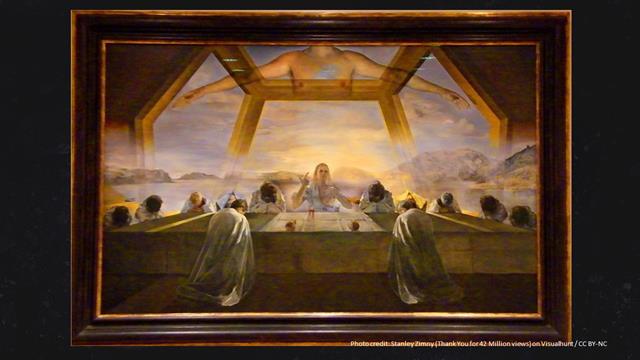 Jesus covers his relationship to God the Father because he wants to get on to what’s going to happen after he departs. After all, this is a conversation around the dinner table the night before the crucifixion. Jesus is preparing the disciples for when he’s no longer going to be present with them.
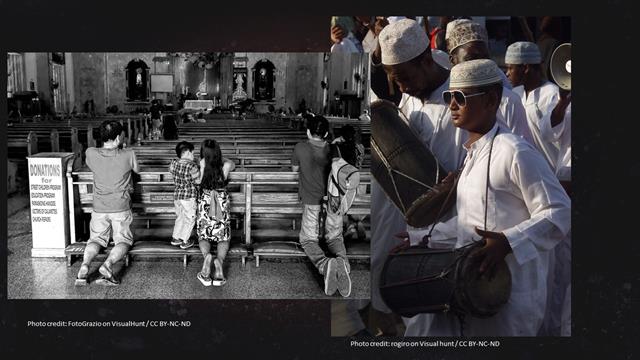 If we pray to Jesus, asking the power to do something that glorifies God, then, he promises, our prayers will be answered. Jesus also promises that God’s Spirit will be with us forever. In other words, we are not abandoned. We are not alone. God is with us. And think about how this has been fulfilled over the centuries. Jesus and his band of disciples made an impact on a small corner of the ancient world, between Galilee and Judea. But within a generation, his followers were planting seeds—from India, to Ethiopia, and to Europe—that would make a significant difference. In 300 years the church would be established all over the region and from there go out into the rest of the world.
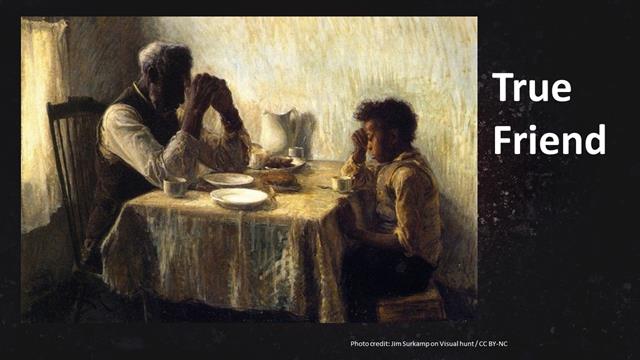 In the 17th verse, Jesus tells his disciples that they’ll be accompanied by a true friend that only they will know. It’s the Spirit that abided with the disciples after Pentecost and now abides with us. In other words, just as the Father is in Jesus and Jesus is in the Father, so we are in the Spirit and the Spirit in us. Knowing he’s not going to be around much longer, Jesus wants to assure the disciples (and us) that they (and we) will be taken care of. Through the Spirit he’ll continue to nourish our souls….
 Let me point out one interesting thing here. The Spirit, as spoken of in verse 17, isn’t to us as individuals. When Jesus says the Spirit abides in you, it’s plural, not singular. In other words, the access to the Spirit is found within the fellowship of the church. It’s within the fellowship that Jesus commands us to love one another, as we abide in God through the Spirit and abide in one another through love.
 The early disciples found comfort in Jesus’ words, and we can too. Though Jesus we can know God, and more importantly, we can be forgiven and found to be righteous so that we can enter God’s kingdom. Furthermore, it is comforting to know God’s Spirit, which was first manifested on Pentecost Day so many years ago, is still with us today, ready to lead the church into the 21st century. As a church, our life must be grounded in the Spirit that abides in us. For this reason, the church always has hope. Despite persecution or indifference from the world in which we live, we have something the world doesn’t. We have God’s Spirit, and we need to trust this gift, because it is all that matters. If we abide in the Spirit, we’ll be okay.
 Rejoice, today is Pentecost. Be bold, for God is with us. Amen.
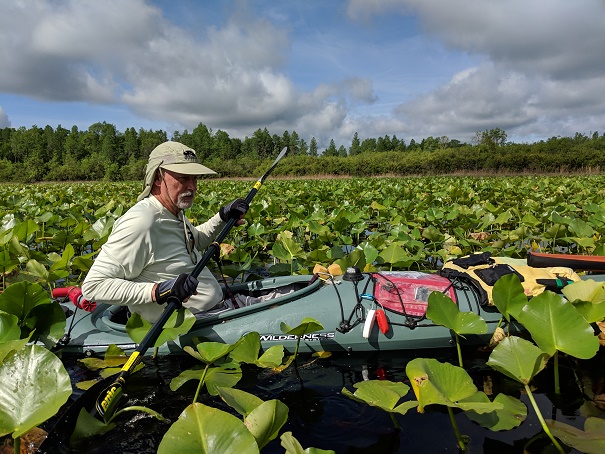
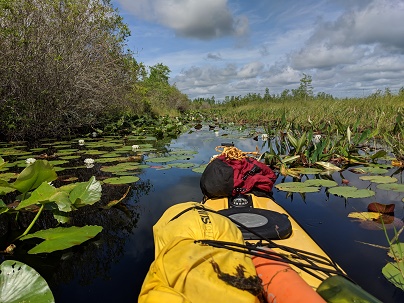

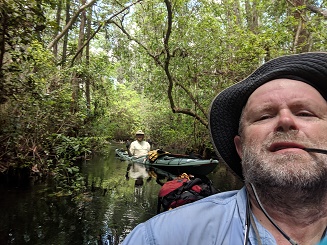






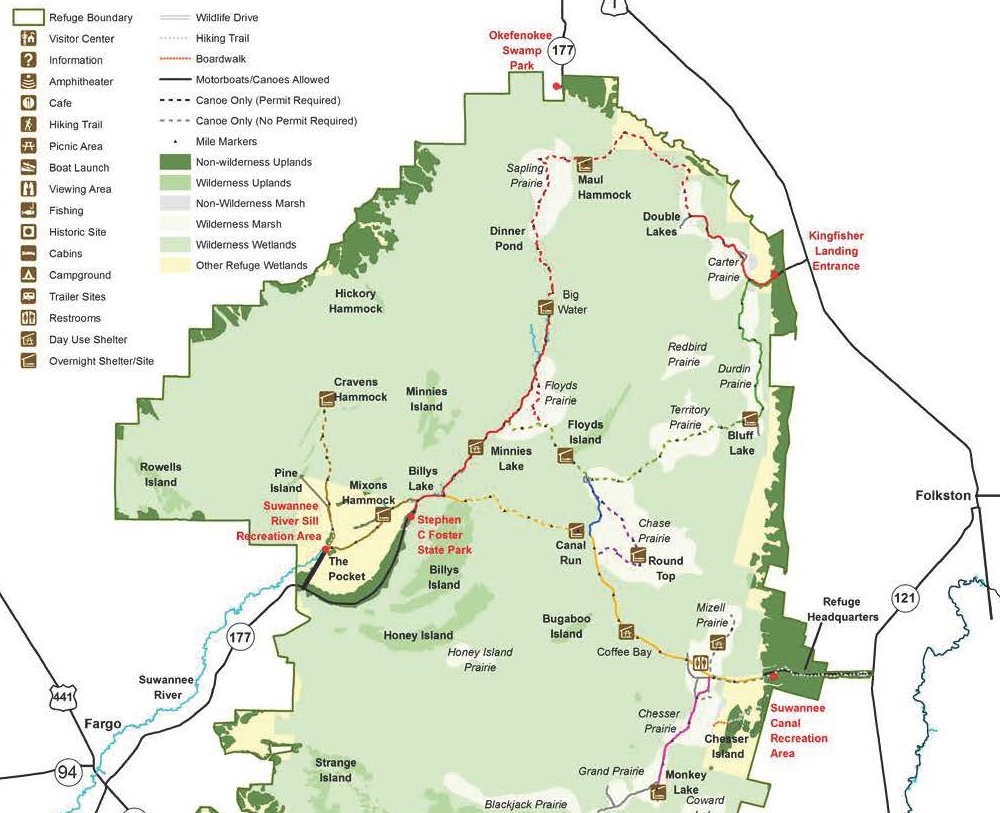
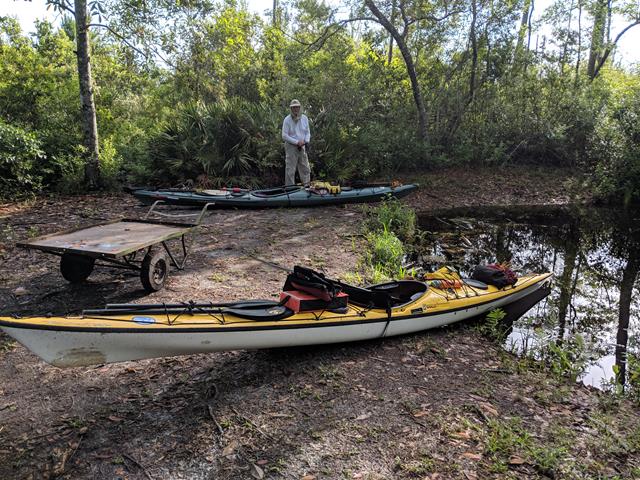
 We eat lunch under the front porch during a downpour. A turkey and a fawn with spots make their way through our camp as we wait for the rain to clear. Later in the afternoon, when the storms have cleared, we move our kayaks, portaging over the quarter mile or so of the island, so that we’d be ready for the next day’s paddle. That evening, we cook over an open fire. The smoke helps deter the biting flies. We enjoy crackers and cheese, party nuts, along with some Johnny Walker Black Label. Again, I’m impressed with Gary’s beverage selection. I’m saving my cheap bourbon. Tomorrow, Gary will paddle out of the swamp while I will stay for another night.
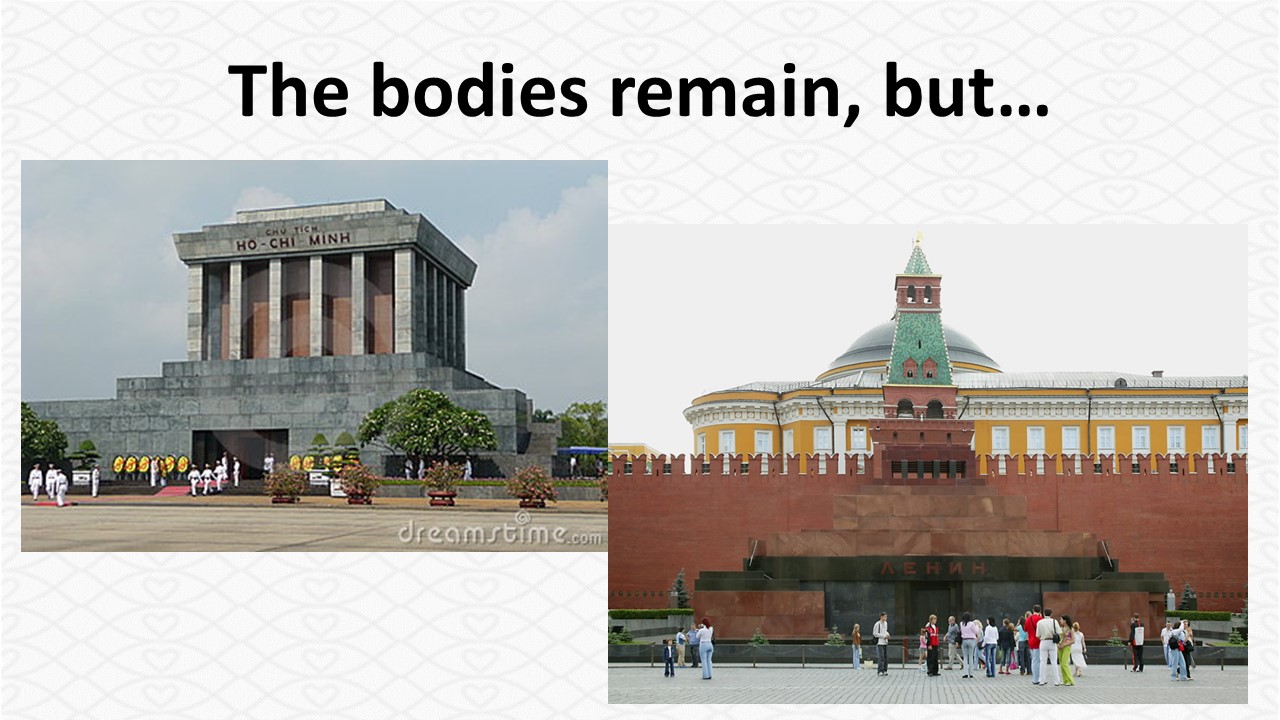 I’ve seen the bodies of Ho Chi Minh in Hanoi and Lenin (not John) in Moscow. Walking pass their preserved flesh, I got chill bumps. It was frigid in the mausoleums. I felt a bit sad for Ho. He wrote specific instructions that his body was to be cremated and the ashes scattered all over Vietnam. But when you’re gone, what happens to your body is no longer in your hands. But there was something else I experienced at these mausoleums. Regardless of what you think of these men who were no saints, they are dead. Sooner or later, we’ll all cease to exist. Our current bodies will become useless and eventually revert back to the dust. But that’s not the final word.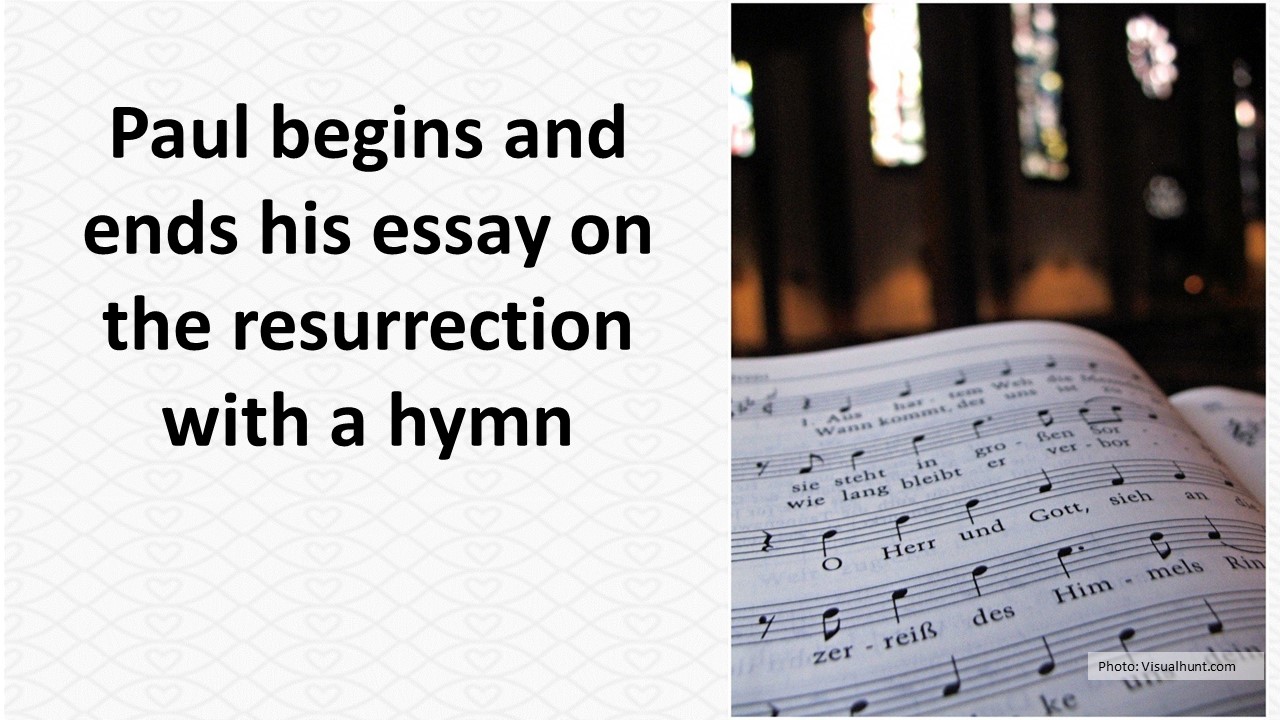
 There are a couple of issues raised in this text that I want us to explore this morning. Paul begins almost as if confiding a secret to a friend, “Listen,” he draws the Corinthians in, “let me tell you a mystery.” Paul is writing about something he admits he doesn’t understand; it’s a mystery, but in this mystery resides hope. “We will not all die, but we will all be changed.” Now, there is a question here about what Paul means when he says we will not all die. Who are the “WE?” Some argue that Paul believes Jesus’ return is going to be soon, during their lives. We see a similar thread in Paul’s first letter to the Thessalonians where he comforts those who are concerned about their friends and family members who have died and what will happen to them after Christ returns.
 In this passage, Paul emphasizes the necessity of change. Nothing can stay the same. We have to give up the familiar, our mortal bodies, in order to be resurrected in a new immortal body. Interestingly, Paul insists we will be clothed with immortality which was not taught in the schools of the day. The Greeks assumed immortality was our natural state and it was covered with our bodies; therefore the ideal was the soul, not the flesh covering it. But Paul challenges this notion, for our bodies are, in and of themselves, good.
 As I noted earlier, it’s interesting how Paul book-ends his essay on the resurrection with fragments of what was most likely an ancient hymn. Paul uses lyrics which were probably sung by congregations in order to connect with something familiar to his readers. Paul’s speaking of a mystery and music has a way to say more to us than just the lyrics, so it is appropriate that Paul incorporates such a hymn as he concludes his treatment of the resurrection.
 As Paul comes to the end of our passage for today, he makes a powerful statement. In the last two verses, he uses the term “Lord” four times. The modern British theologian, N. T. Wright, suggests that “like a warrior triumphing over a fallen enemy, Paul mocks the power that has now become powerless.” The victory is in our Lord Jesus Christ! He is a Lord in a manner that Caesar can never be!
 Paul brings this essay to a conclusion with a final statement in which he calls the Corinthians, “my beloved.” It’s like saying, “My dear friends.” As he’d shown at the beginning of the letter, Paul is fond of the Corinthians even though throughout the letter, he’s been admonishing them for their disunity, their toleration of grievous sin, their lack of order within worship and their mockery of the Lord’s Supper. Yet, Paul still likes these people. He’s not ready to write them off, as we might be. There’s a lesson for us here! Don’t consider anyone beyond redemption! This passage which Paul has been looking into the future ends by bringing the Corinthians back to the present and to what they need to be doing.
 When I was in college I lived in a garage apartment about a mile off campus. It was a nice place, on a side street with just a few homes and this one garage with an apartment above it. There was a porch, with stairs that ran down to the ground. The porch was large enough for a chair and a couple of potted plants. On Saturday mornings when the weather was decent and I wasn’t off paddling a river somewhere, I could be found sitting in a chair, my feet propped up on the railing, reading or just pondering while I had my morning coffee. It was the good life. I enjoyed birds flying by and singing in the trees. It was a dead-end street, so traffic didn’t bother me. It was also a safe neighborhood as the Chief of Police lived at the end of the road.