
Jeff Garrison
Bluemont and Mayberry Presbyterian Churches
December 18, 2021
Luke 1:39-56
At the beginning of worship
It’s the fourth Sunday of Advent. Out waiting is paying off. This week, we’ll celebrate the birth of Jesus. But what does Jesus’ coming mean? What will his return be like? Today, we hear from his mom. Jesus doesn’t just come to provide for about individual salvation. Instead, God is doing something incredibly new in the world. Will we want to participate?
Before the reading of Scripture
When I lived in Michigan, there was always a time, generally in March, that I’d wake to birds singing while it was still dark. It was a sign winter was almost over. Spring was on its way and the birds had made their trip back from their winter home. I imaged them singing a song of thanksgiving.
Luke’s gospel opens similarly. Everyone sings. We’ll almost everyone. Old Zechariah, John the Baptist’s father, was at a loss for words. That is, until he regained his speech. But I bet his heart sang. Joining in his heart’s song is his pregnant wife, Elizabeth. And then Mary, pregnant with Jesus, joins the song. And after Jesus’ birth, angels gather as a chorus. They all understand it’s a new day. God’s promises are about to be fulfilled.
The last two Sundays, we explored John the Baptist. The last of the prophets of the old age, John points the way to Jesus, the one who ushers this new age.[1] Today, we’re stepping back, to when John and Jesus were still in the womb. Our scripture tells of the two mothers, Elizabeth, and Mary, giving thanks to God.
Automobiles and control
I have a confession to make. I like to be in control. Didn’t come as a surprise, did it? I like to know what I’m doing and where I’m going and how I’m going to get there. I don’t like things I can’t control, which is probably why I don’t get excited over cars. I’m not impressed with how much horsepower one packs under the hood or the size of the tires. I just want the contraption to get me where I’m going.
You see, with a car, you can be whizzing down the interstate at midnight with everything in order—cruise control set just a hair above the speed limit, the vehicle’s interior climate comfortable, and just the right tune blaring from the stereo when, suddenly, a water pump breaks. You sit in the middle of nowhere, reminded once again that you’re not in control. A little mechanical gadget that can only be found in an auto-parts store three counties over shatters any allusion of that. Moments before you were happy and content, now you’re cranky and angry. Know the feeling? (That said, I hope none of us have car problems if you’re travelling for the holidays.)
The desire for control is something instilled into our culture. We’re told to pull ourselves up by our bootlaces. We take care of ourselves, or at least we are under the mistaken belief we can take care of ourselves. But we didn’t build the car. Nor did we build the highway or refine the oil to make the car run. We should keep in mind that we always depend on others and ultimately, we depend on God.
The fantasy of control
We need to get this control fantasy out of our heads. The tornadoes to our west over the past two weeks, at the wrong time of the year, certainly reminded folks in places like Mayfield, Kentucky they weren’t in control. That said, we need to accept ourselves for who we are. When we try to make ourselves out to be more than we are, we create an idol out of the self and set ourselves up for a fall. The higher we elevate ourselves, the further we fall.[2]
Yet, control is a desire we all share. But it’s dangerous because it is incompatible with our faith in God. We desire to be rich, famous, powerful, popular, the type of individual who controls his or her surroundings. But it’s a myth. As Christians, our desires should center on pleasing and fulfilling God’s will. If you question this, consider Mary, the women whom God chose to work through to bring about salvation to the world.
Mary and women of the 1st Century
Mary wasn’t rich or famous or powerful or popular. According to worldly standards, she was the most unlikely candidate to be the mother of Jesus, the mother of God. She was young and unmarried, probably poor, from a second-rate town in an obscure corner of the world. As far as we know, she had no education and there was no royalty within her blood. She didn’t seek fame.
Mary depends on others. As with other women of the age, she depends on her father to find her a husband. Then she’ll depend on her husband to provide for her and their children. Later in life, she’ll depend on her children to take care of her. She had no control over her life. Absolutely none. A poor woman, like 1000s of other poor women, in a dirt-poor town in an obscure providence of the Roman Empire.
Mary’s troubles
Yes, Mary was like 1000s of other women, until she’s visited by the angel Gabriel. It almost sounds like a fairy tale story, does it, to be chosen as the mother of God?[3] Except Mary never inherits a castle. Her story goes downhill. She gives birth to her son in a stable, the family flees to Egypt where they live as political refugees, and three decades later she’s there by the cross watching her son die.[4] She is a woman of sorrow, but despite this her song is one of the most beautiful found in scripture as she praises God for what he has done and is doing.
Mary realizes her position. She’s a lowly servant. Her honor comes from God’s action within her life. Everything is God’s doing, not hers. She’s not the cause of redemption; she’s just a vessel God uses to bring the Savior into the world. Mary can’t boast of her accomplishments. She doesn’t line up book deals; she isn’t saying, “look at me, I’m the mother of God.” Instead, as Luke tells us at the end of the Christmas narrative, Mary ponders all that happens in her heart.[5] She’s the model of true humility. She directs her praise, as well as her life, toward God.
God’s operation
Mary’s song gives us an insight into how God operates. God chose her, an unlikely candidate, to be Jesus’ mother. God lifts the lowly while pronouncing judgment upon the powerful—upon those who think they are in control. We Americans should take notice.
God’s blessings are given to those who understand they have no control in their lives; God’s blessings are for those who, in their humble state, fear the Lord. At the same time, those who are not willing to acknowledge God’s sovereignty will not find salvation in Jesus Christ. They’re too busy looking out for themselves and pretending their own resources will save them. Such folks may not even realize they need a Savior.
The poor and dependency
Have you ever wondered why the poor appear to be special in Scripture? Think of the verses: Blessed are the poor.”[6] “It’s easier for a camel to get through the eye of a needle than a rich man to get into heaven.”[7] Why is it easier for the poor to accept Christ and find salvation?
The poor are dependent. Those without money must depend upon others for food. Those without capital must depend upon others for jobs. And this doesn’t just go for the economically poor. “Blessed are the poor in spirit.”[8] Those who are depressed must depend upon others to cheer them up. The poor are dependent on others, they are not in control, and those who acknowledge their dependence have an easier time accepting God’s grace.
All of us need to learn to depend upon God and, by doing so, we need to make Mary’s song our own. Can we prescribe all our praise to God? (Or, do we want to save a little for ourselves?) Can we acknowledge God’s power and sovereignty in this world? (Or, do we believe in our individual grandeur?)
Mary is in no position to help herself, yet she so totally trusts God and sings his praises. Mary accepts God’s call and gives God thanks for choosing her, which is why her song is remembered.
Mary’s model of prayer
Mary’s song provides us a model of a prayer of thanksgiving. If Mary, a woman of sorrow, can sing such a song, if the songbirds who struggle day after day for food and survival and make long journeys across a continent can sing such praise, why can’t we? In all we do, we need to see how God is working in our lives and then give thanks.
We need to take Paul seriously when he says that we’re to be praying without ceasing.[9] And our prayers need to mostly be prayers of thanksgiving, as we praise God for all that he has done for us. When we search our lives for God’s blessings and realize our blessings. Humbled, we become even more dependent upon the loving arms of the Almighty God.
During this festive season, don’t forget to give thanks. Take time to count your blessings. What has God given you to be thankful for? First off, he’s given your life; God’s given you a chance. Secondly, you’re redeemed in Jesus Christ. That’s a lot! And what has God done for our church for which we should be thankful. He’s given us a rich heritage, a church that has served this community for a hundred years,[10] people who work hard in the community to make it a better place for all people. We’re not perfect; for that we’ll have to wait for the Second Advent. But God blesses us to be a part of Jesus’ family and in such a community as this.
Blessedness in a troubled world
Of course, as the news reminds us daily, we live in a world of violence. But so did Mary and Elizabeth. They lived in a world where those who disagreed with the occupying army were crucified and where Roman soldiers enforced the will of Caesar by spear and sword. And yet, they both praised God for what was happening. Both knew what God had done in the past and understood that a new age was dawning. Even John, in his mother’s womb, knew and was excited about what God was doing.
Today, we can be cynical, when considering the violence and injustice in our world. Or we can realize the message of the cross, which is that violence and evil may have their day, but they are not the final answer. Be thankful, for the powers of death could not overcome God’s love for the world. Be thankful, for Jesus will return and establish his rule and every knee will bow in reverence and God will live among us in such an intimate way that he’ll wipe our tears from our cheeks.[11]
Blessings and Hope
And be hopeful. For God works with us to bring about a marvelous eternity. This past week, I listed to Tim Keller talk on hope in a troubling time. Keller is the founder of Redeemer Presbyterian Church in the heart of New York City. Keller also suffers from cancer. (In the footnotes of my written sermon, I posted the link to this YouTube podcast.[12]) Keller reminds us of the depth of our hope. We are not just hoping God will take away whatever trouble we experience today. That’s trivial hope. We place our hope in what God is doing in the world that will be eternal. And that starts with the coming of Christ.
Conclusion
I encourage you in your prayers to be like Mary. Remember what God has done and what God is doing! Paul tells us to rejoice always. When we regularly give thanks to God, we live differently. Our lives will be more positive. We’ll be like the songbirds on a spring morning, sharing God’s hope to a hurting world. Come, Lord Jesus, Come! Amen.
[1] Fred B. Craddock, Luke: Interpretation, A Biblical Commentary for Teaching and Preaching (Louisville: JKP, 1990), 29.
[2] See Isaiah 14:12-14 and Luke 10:18
[3] Luke 1:26ff.
[4] See John 19:26.
[5] Luke 2:19
[6] Luke 6:20
[7] Matthew 19:24, Mark 10:25, and Luke 18:25
[8] Matthew 5:3
[9] 1 Thessalonians 5:17.
[10] Bluemont was 100 years old in 2019. While Mayberry will be a hundred in 2025, it existed as a Sunday School meeting in the school house before then.
[11] Romans 14:11, Philippians 2:10, Isaiah 25:8, and Romans 21:4
[12] https://www.youtube.com/watch?v=iB2rS71FcUM




 Jeff Garrison
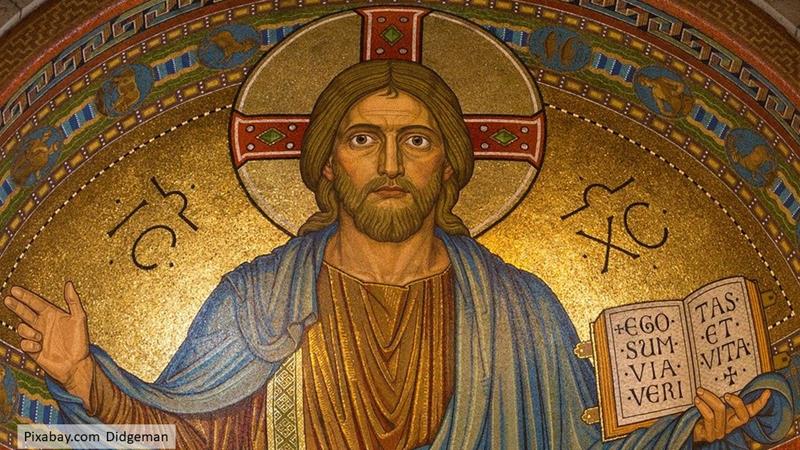 One of the common characteristics of the post-resurrection appearances of Jesus is that no one is looking for him, and no one “finds him.” Instead, Jesus just shows up. The disciples are hearing from the women about Jesus not being in the tomb, reports of him being in Emmaus, and from Simon Peter. But they don’t send out a search party to find Jesus. They’re scared. They lock themselves into a room while discussing what they consider as rumors. And when Jesus mysteriously shows up, they freak out. “It’s a ghost!”
 One of the lessons we should learn from the resurrection stories is that Jesus controls both his and our destinies. It’s not about us going out looking for God, it’s about God looking for us. There are no barriers that we can put up to avoid God. The disciples discovered this when Jesus pops in. This is good news for those of us sheltering and avoiding contact with others in order to stay healthy during this pandemic. While we might not be able to go to church on Sunday mornings, God can invade the privacy of our homes. We can’t keep God out. As Jesus shows us, God is in control. That’s good, because we can screw things up, so we’re a lot better off depending upon the God who surprises us, than depending on our own inability to bring us back into a relationship with the Almighty. This is what the Presbyterian doctrine of election or predestination is all about.
 But before the disciples can understand this, they must realize who this is that has invaded their meeting. In their mind, Jesus is dead. You don’t come back to this life once grasp the idea that he is risen. First, he asks for a bite to eat. It’s been a while since his last supper. It’s important that they see food going in his mouth (see food, seafood, get it?). Jesus then points to his flesh and bones. Luke wants to assure us that Jesus’ appearance to the disciples after his death isn’t just wishful thinking on their part.
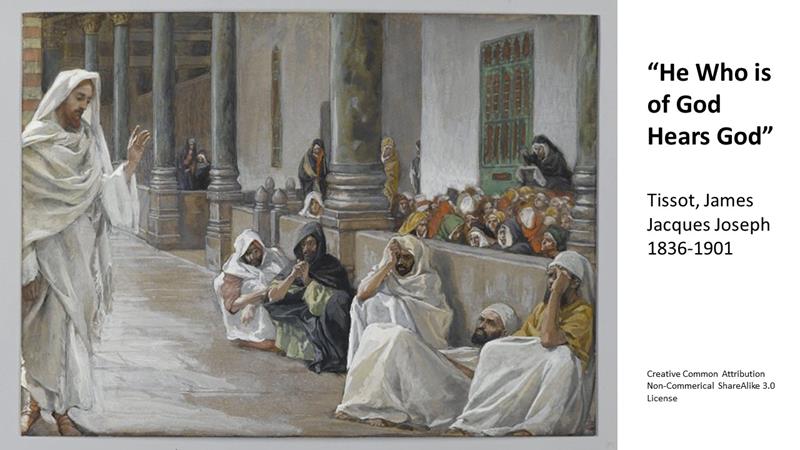 The second thing Jesus does, which is like what he did with those in Emmaus, is to help the disciples understand the scriptures. Jesus wants them to grasp the idea that his suffering, death, and resurrection has been God’s plan.
 Of course, because this is God’s doing, not the disciples’, they will need to be given the strength and ability to carry this mission out. Jesus, in his commission to the disciples in Luke’s gospel, is looking forward to the: coming of the Holy Spirit, to Pentecost, after which the disciples will take Jesus’ message to the end of the world.
 Jesus shows up and calls us because, sooner or later, we are no longer going to be hiding in our home. Life will open back up and when that happens, we need to be ready (just as the disciples were ready on Pentecost) to go into the world and make a difference. Think of this time we’re in as a Sabbath. Like the disciples, we rest today. In a short while, there will be plenty for us to do. As followers of Jesus, we’re to change the world, to make it a kinder more generous and gracious, home. May we catch that vision and live into it. Amen.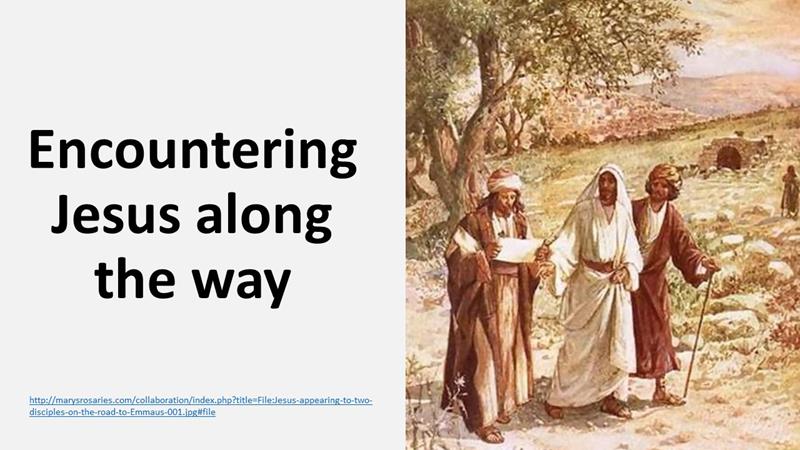
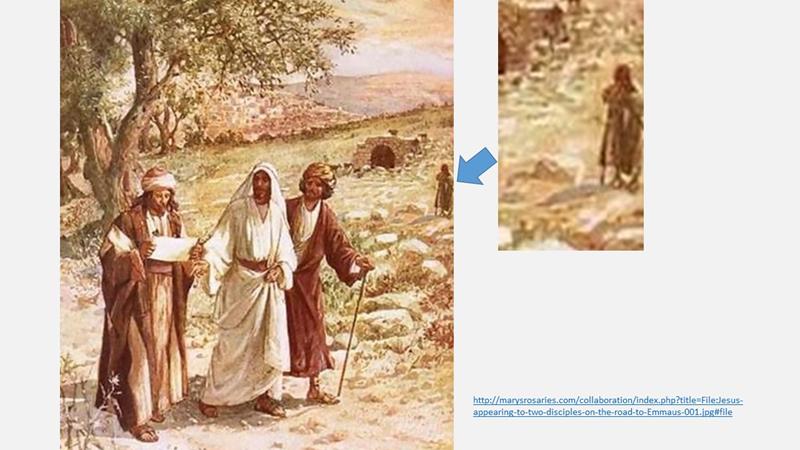 I have a lot of time to think out here, watching the sheep. I see a lot of people coming and going. Jerusalem, the Holy City, is just over the rise, a few miles away. These three were heading away from the city and engaged in a great debate. Even with my back turned, I could hear them a mile away. And as they were talking, the third guy, the one in a white robe, catches up with them. He joins their conversation. They seem rather surprised that he didn’t know what they were talking about. There’s this man, supposedly a king, who’d been crucified. But then he starts asking questions and I can tell they are intrigued. Here, a guy who didn’t seem to know the news, yet knows the scriptures.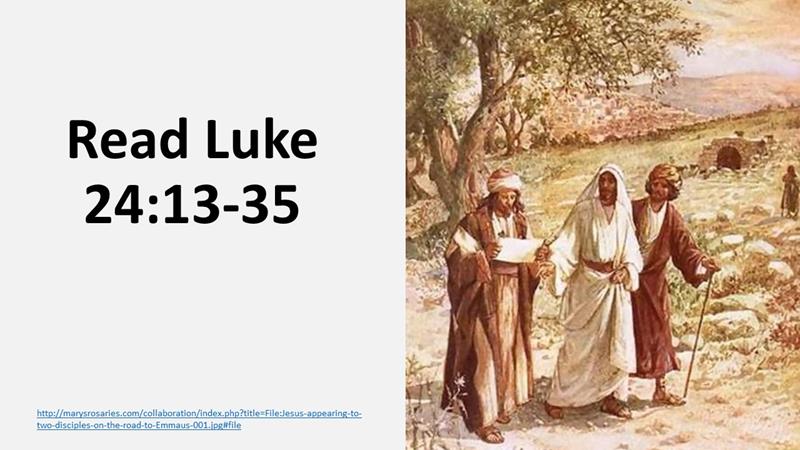
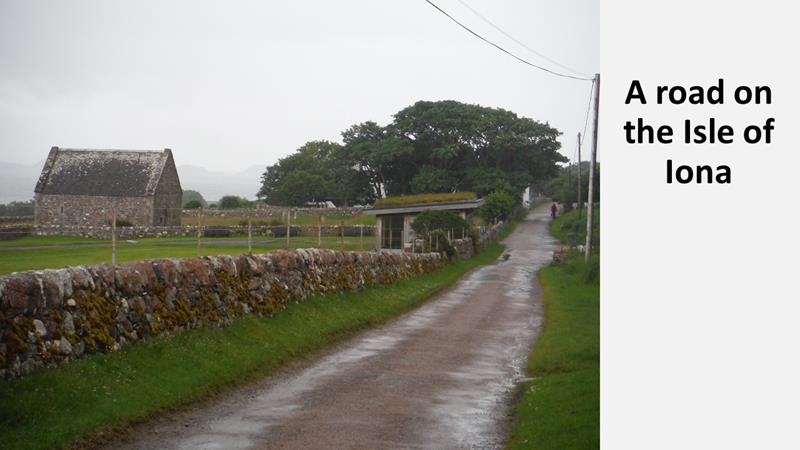
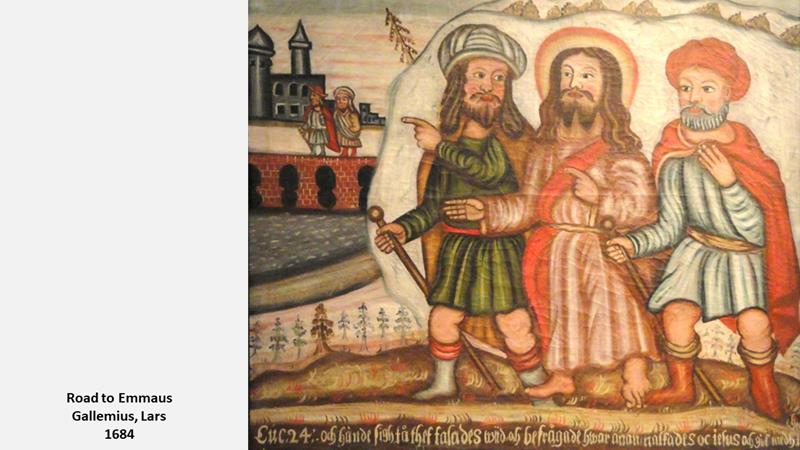 On this occasion, they are walking and discussing the events of the past few days when they are joined by a stranger. This makes sense to me, as I have walked a lot in my life. I recall numerous occasions along the Appalachian Trail where I was talking to someone and a third person comes up behind us and, overhearing what we were talking about, puts his two cents worth.
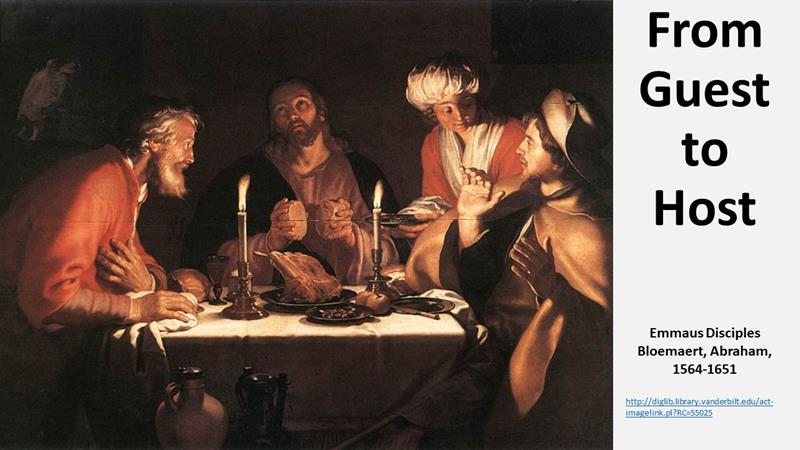 Something else happens. Jesus, at the table, goes from being the guest to the host.
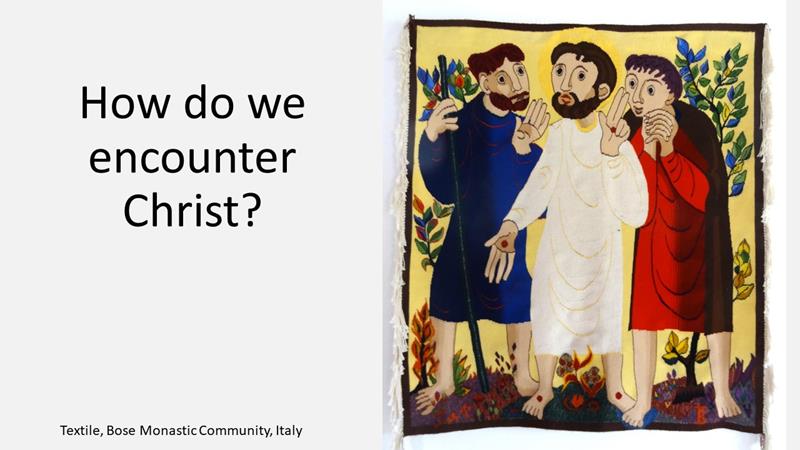 In some ways, our encounters with Christ are probably more like these two disciples walking to Emmaus. There are very few Damascus Road experiences, like that of Paul. It ranks up there with Moses’ burning unburned bush. Most of us experience Christ, like these two, when we realize something someone said caused our hearts to burn, or when someone opens Scripture and we learned the eternal truths of God’s Word. And when something like that happens, we must tell someone. It’s a Truth we can’t keep to ourselves. This is how our faith spreads. We encounter Christ through his word or through someone who speaks to us about Christ and then Christ becomes real to us.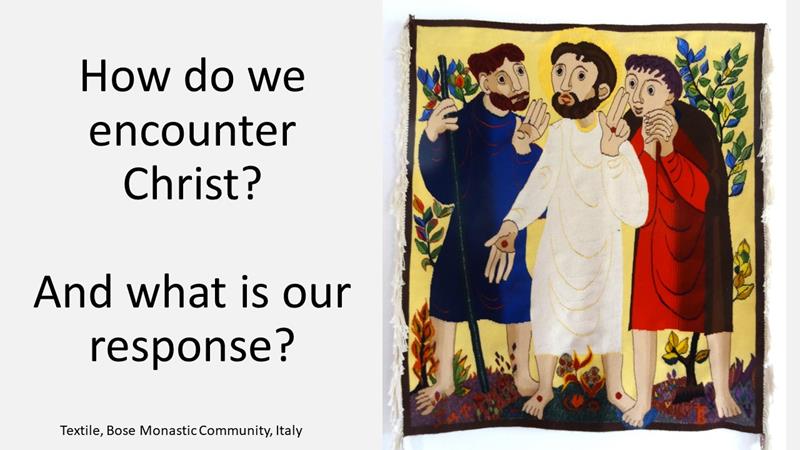
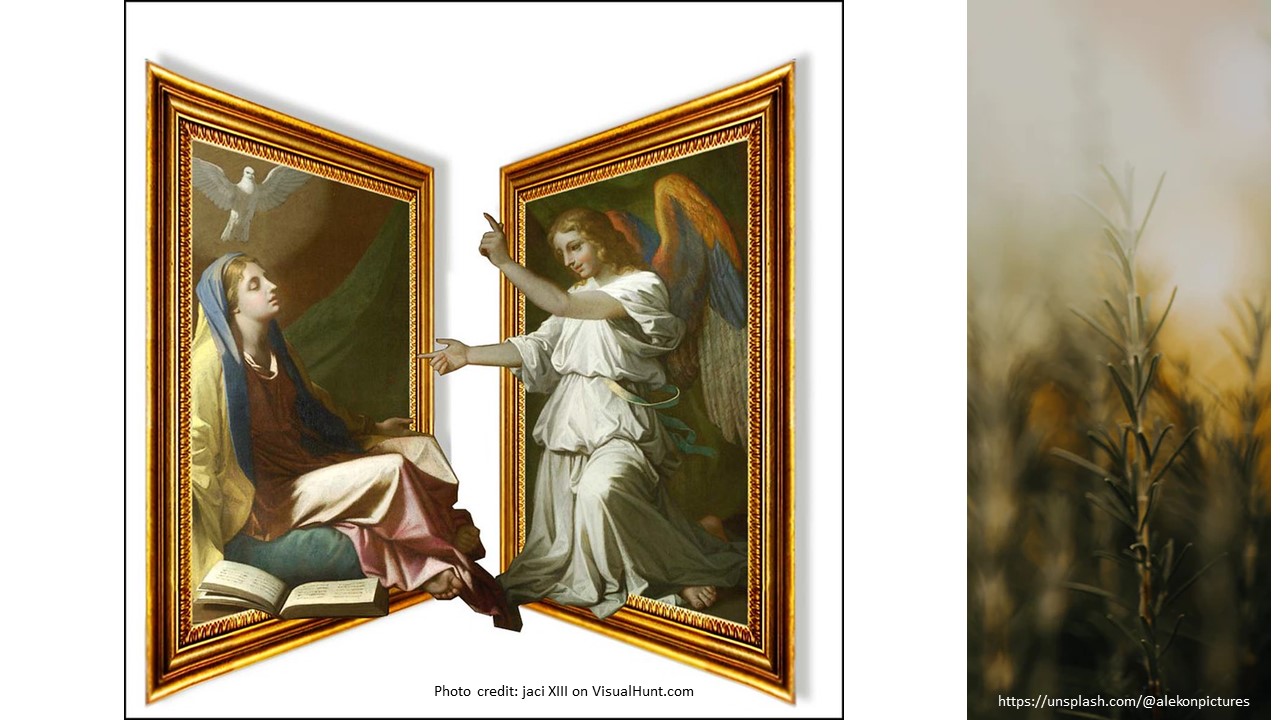 Earlier in the first chapter of Luke’s gospel, the angel Gabriel met Mary in Nazareth to give her the good news. However, I’m not sure that everyone saw this as good news. I am not even sure Mary saw it that way. After all, she was just a young woman. Tradition has it she was only 14 years old, and here’s this angel is talking about all of what this child she’s to carry will do. Mary wonders how it’s to happen and told that the Holy Spirit will fill her, and she’ll conceive. In addition, she’s told that her relative, the old barren Elizabeth, is also pregnant and will bear a son. God appears to be active with the oldest and the youngest.
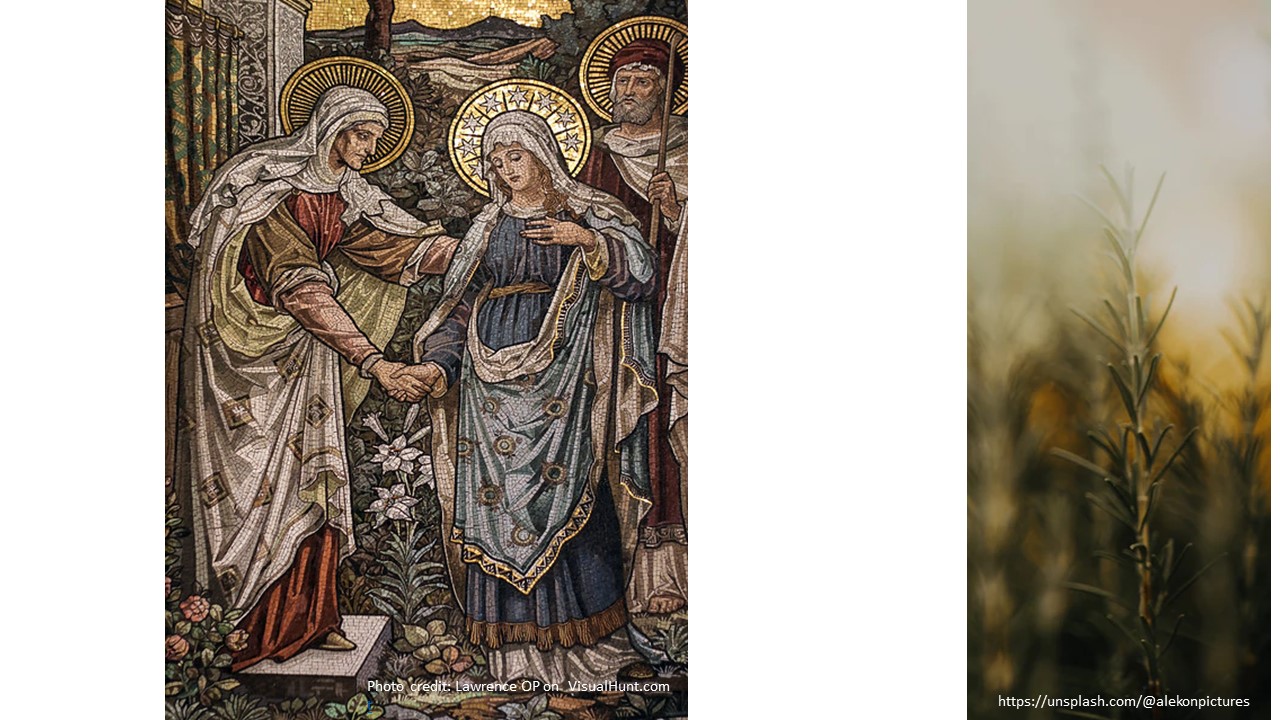 “Girl, how’d you get yourself in this mess?” isn’t how Elizabeth greets Mary. Instead, she starts out praising Mary, wondering what she, Elizabeth, has done to deserve such a visit. She proclaims Mary as the most blessed of all women. Mary breaks out in song. She didn’t sing to Gabriel, at the heavenly encounter she had earlier. She sings when another person, one whom must have known as a kind older woman, confirms her status.
 Mary is joyous, but not in the manner we think of joy. For us, joy is a child experiencing an ice cream cone for the first time or us witnessing the child’s wonder. Joy is a mother watching her son make a home run as a Little Leaguer. Joy is laugher at a good joke, the awe of a beautiful sunset without sand gnats, sitting around a fire telling stories when it’s not too cold, or the Pirates winning the World Series. All these things are great, but is this what joy really is? Or is it something deeper.
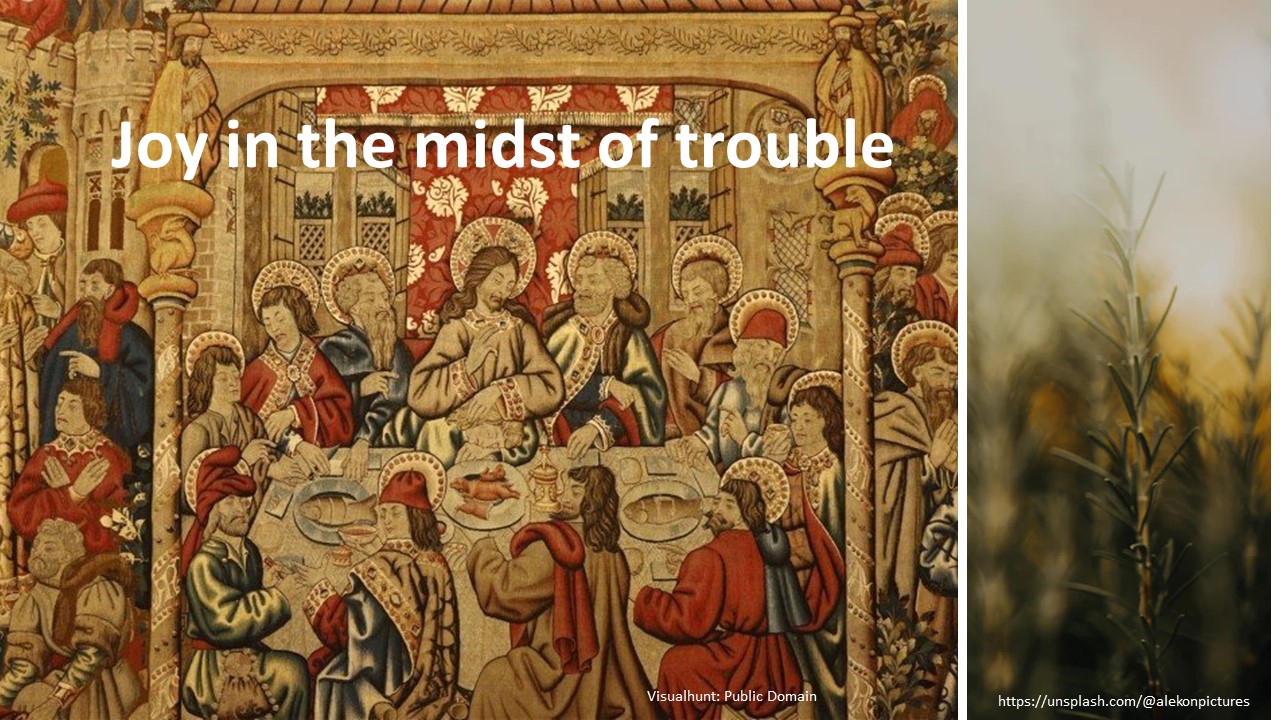 When Jesus was at table with his disciples on the night before his crucifixion, he instructs his disciples and then says he’s telling them all this so that his joy will be in them, and that their joy will be complete.
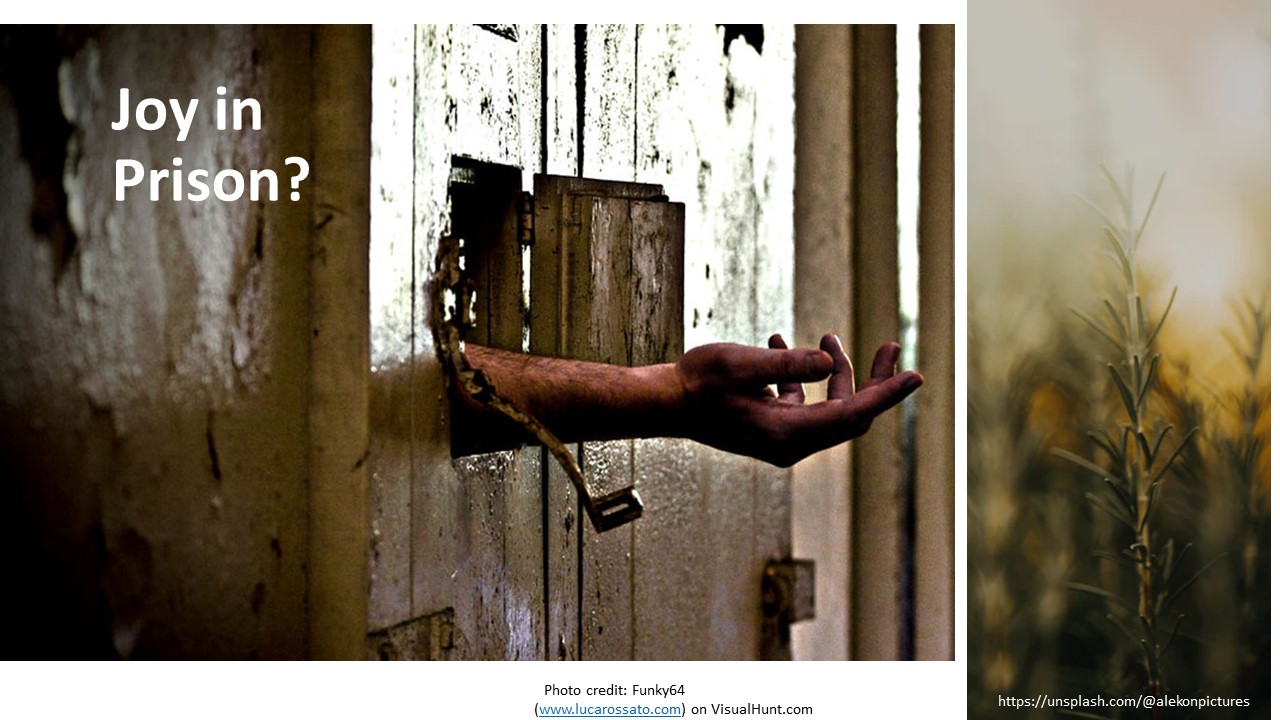 When Paul writes from prison to the Philippians, he tells them how he’s joyous when he prays for them and asks them to make his joy complete by being of the mind as Christ.
 This is unabashed joy; joy regardless of the situation. All is not well in the world, then or now, but we as believers are called to see beyond the present and to have faith in what God’s doing. We are called to be joyous and to have hope and to share our hope with others. In the long arch of history the impeachment of a President, a rogue nation like North Korea having rockets and weapons of mass destruction, and the eruption of a volcano in New Zealand (or heaven help us, if one blew up in Bluffton) isn’t the final word. For we believe God has things under control and even if we screw everything up and blow the planet to smithereens, God will not let that be the final word.
 So, we go back to that young woman, pregnant and not yet married, in a world without social safety nets. You can’t be much more vulnerable than Mary, standing before Elizabeth. Yet she breaks out in this beautiful song that focuses on what God is doing. Mary doesn’t speak of what God is doing for her, personally, except for having chosen her. She’s not thankful for a new house, or car, or clothes or a servant. Her lot is not joyful by most definitions. She has this son that runs away at the age of 12.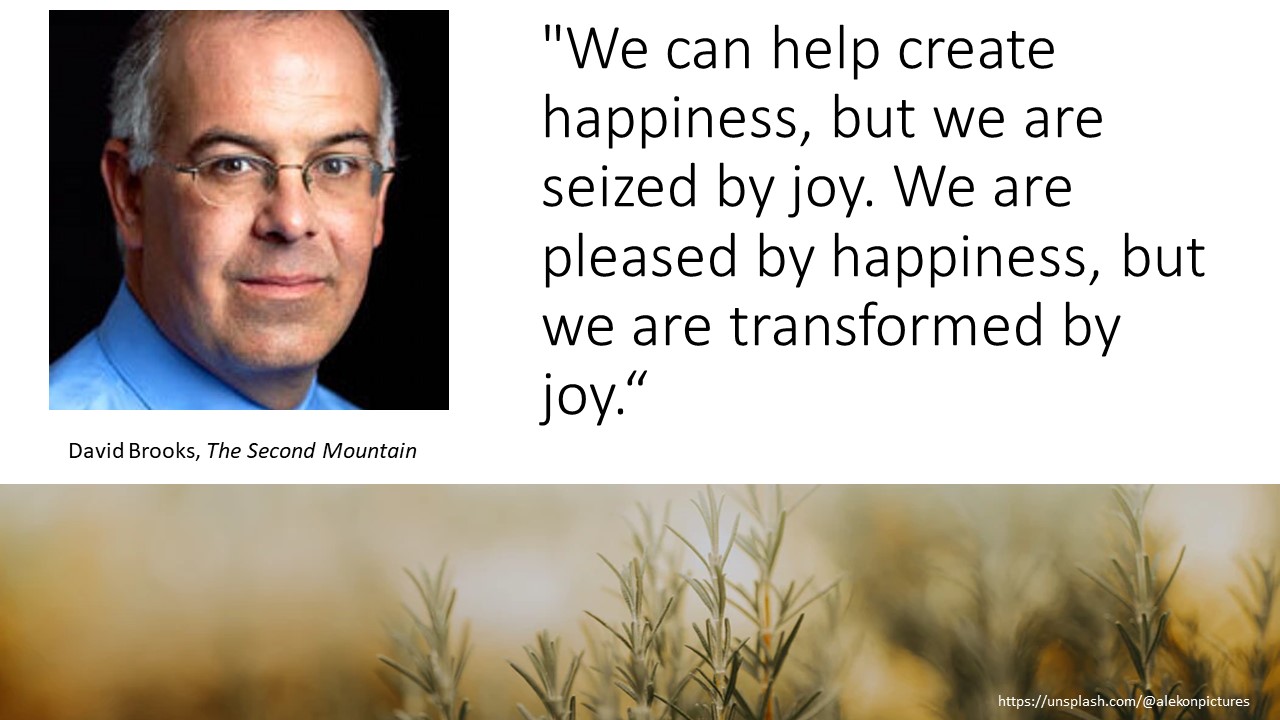

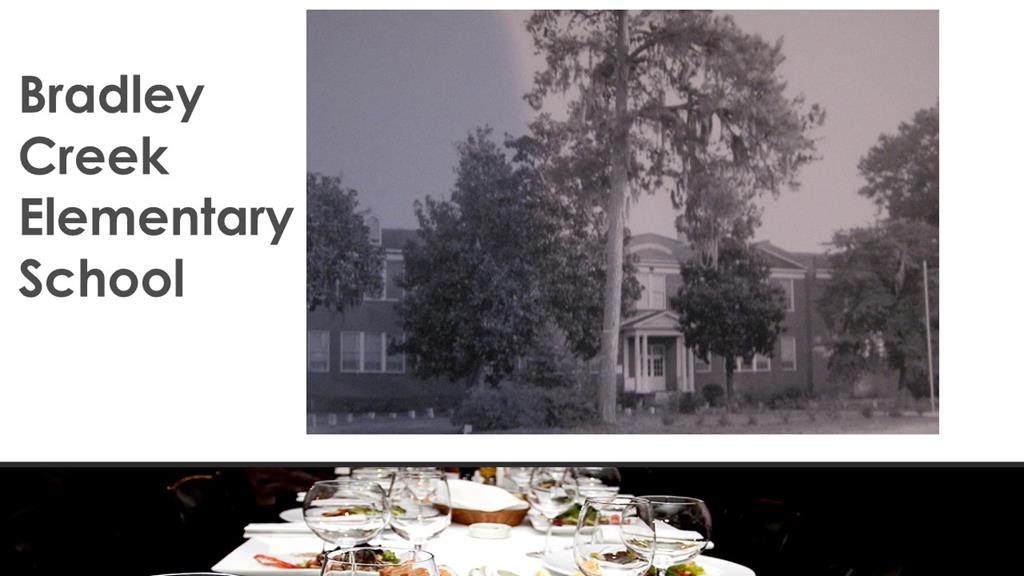 At the end of the sixth grade at Bradley Creek Elementary School, there was a graduation banquet. It was held in the evening, which made it special, and in the cafeteria, which wasn’t so special. I’m sure we had macaroni and cheese. We always had mac and cheese. There must have been a rule that you couldn’t open the cafeteria without mac and cheese. But this was a special meal, so maybe there was a slice of ham or a piece of chicken and a piece of cake that was larger than the one inch cubes they fed us at lunch.
 In the bulletin, I titled this sermon “Humility and Hospitality.” The problem with coming up with a title a few weeks before writing a sermon is that you often have no idea where the sermon is heading. I later decided that a better title might be Banquet Etiquette. But as I continued to study and ponder, I decided to put a question mark at the end. Yes, Jesus expects us to be humble and not pretentious. Such advice will also keep us from being in an embarrassing position. Yes, on the surface, this is about etiquette. But is this what Jesus is driving? Is this Jesus’ attempt to be the Emily Post of the first century? Or is there a deeper message here?
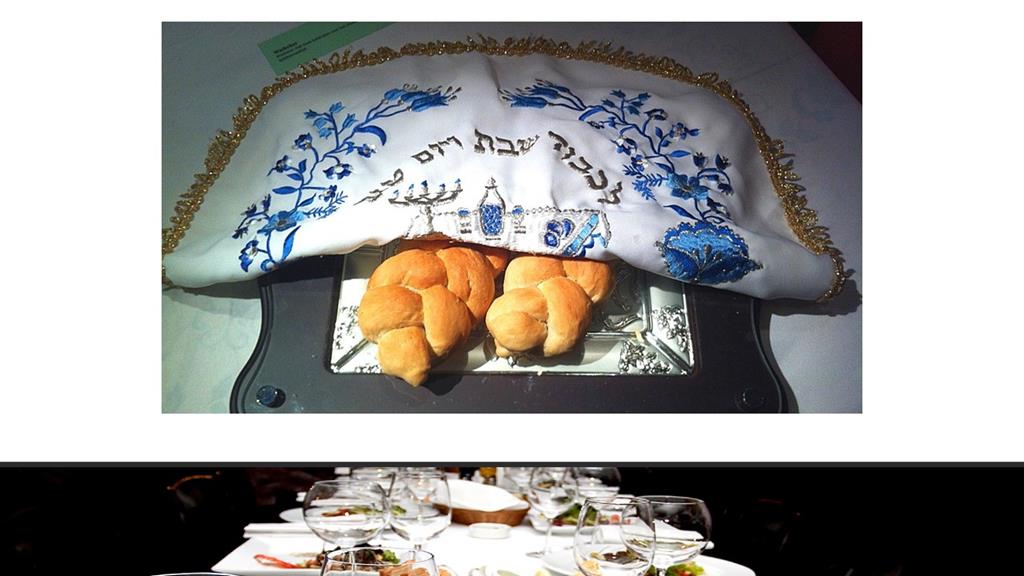 Remember what I said about the Sabbath, before reading this passage? That it was a foretaste of the eternal kingdom. And this section of Luke’s gospel is filled with parables that focus on the kingdom.
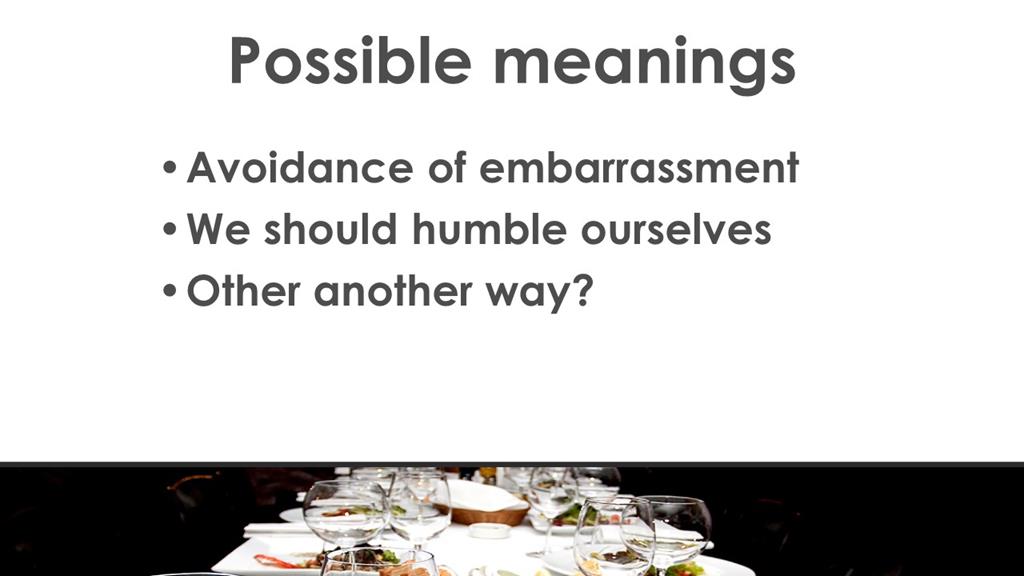 The surface meaning may have to do with avoiding embarrassment. A deeper meaning might be that we should humble ourselves. One of the challenges that Jesus had was his disciples wanting to grab key positions in the coming kingdom.
 But there is another way to look at this parable, which I had not considered until I read a blog post by a pastor in Iowa earlier this week.
 Instead of Jesus wanting us to show humility in the hopes that we might be called up to the head table (as you could read this passage), maybe Jesus is telling us to meet others where we find ourselves. Show hospitality to those less fortunate. If our only goal was to sit at the head table, we could easily display false humility to gain such a blessing.
  But Jesus wants us to long for the kingdom, which isn’t going to be made up of exclusively of those who look, and act like us. Jesus’ vision is for a world where believers cherish their friendship and fellowship with all people. It’s about us showing goodness to those who have no way to repay us for what we can do for them. Ponder what this kind of world might look like.
 You know, none of us know what this week will bring as Dorian churns up the waters. When Hurricane Matthew hit in 2016, I spent a few days in Dublin, GA. There’s a great hot dog shop there, not far from the courthouse, where I found myself drawn at lunchtime. There were the regulars, but there was also those of us in exile: from Savannah, from Hilton Head, from Brunswick and Saint Simons. The place was packed. Friendships were made as we were forced to share tables. Stories were told of shared experiences such as being in gridlock on the highway. There was a lot laughter. I image that’s how the kingdom will be. So, if we evacuate this week, and you find yourself in a strange land for a few days, don’t see it as a burden. Instead, take it as an opportunity to sample the kingdom. That’s what Jesus would have you do. Let us pray: