The Dean and his secretary

Dean Mauser

From the internet (it appears as if it was from the seminary’s directory)

Two weeks ago, I posted a memoir about one of my seminary professors who had been a tank commander in the German army in World War II. I mentioned he wasn’t my only professor who spent time on the other side during that terrible war. The other was Ulrich Mauser, the dean of the seminary. He was a kind and gentle man. I only took one class with him, a New Testament survey class. But when another professor, Dr. Kelly, had medical issues while teaching on the Book of Acts, Mauser took over and finished out the term. I essentially had him as a professor for a term and a half. But I got to know him in other ways, too.

Unlike von Waldow, Mauser didn’t talk about the war, at least not around me. I remember him mentioning his involvement once. We were sitting together in the dining room at lunch. He sat among a group of students and there may have been other professors. Somehow, the topic of the war came up. Mauser recalled being a student in Germany during the war. As Germany needed more and more soldiers, he received a notice every year to report for a physical in preparation for being drafted into the armed forces. But because of health issues and poor eyesight, he always received a deferment and would return to school. However, in late 1944, according to Dr. Mauser, things had gotten so bad they did care that he couldn’t see. With his thick eyeglasses, without which he was nearly blind, they assigned him to an anti-aircraft flack gun on top of a building in Berlin. As most of the air attacks came at night, there wasn’t even a way to aim. They just pointed the guns up into the sky and shot in the general direction of the drone of engines. 

While he wasn’t really involved in combat, the war had an affect upon Dr. Mauser. His family home was destroyed by a bomb. He also became very interested in the Biblical understanding of peace. His last book, The Gospel of Peace, focused on this life-long theme. 

Mauser’s studied at the University of Tubingen in Germany where he received his doctorate, writing a dissertation on Martin Luther. He also spent time at the University of St. Andrews in Scotland, where he met his wife. After his schooling, as a young pastor in post-war Germany, he served in a congregation that mostly consisted of displaced people. 

My best memory of Dr. Mauser came after a disappointing relationship with Debbie, his secretary. Below, I posted a piece I wrote in 2014, after learning of Debbie’s death from cancer. After Debbie became engaged to someone else, Dr. Mauser invited me out to lunch. We went to a restaurant in Shadyside. As if he was my pastor, he was concerned with my emotional state. Ironically, at the time I was on the top of the world, having essentially completed the Appalachian Trail. While he never appeared as an outdoor type of person, Mauser was interested in my experience along the trail. I learned how it tied to his work on the theme of wilderness in scripture. 

When I graduated from Pittsburgh in 1990, Dr. Mauser was winding up his tenure at the school. He had moved to America in 1959, to serve as a chaplain at Oregon State University. In 1964, he began teaching at Louisville Theological Seminary. In 1977, he was appointed a professor of New Testament at Pittsburgh Seminary and became Dean in 1981. Turning 65 in 1990, and he faced mandatory retirement as was the seminary’s practice at the time. So, Dr. Mauser accepted an appoint at Princeton, where he taught six more years before returning to Pittsburgh for his final years. 

I last saw Dr. Mauser at a Presbyterian Coalition meeting in Orlando Florida in the fall of 2001, just a few weeks after 911. I had not seen him since graduation. He appeared delighted to run into me and we later shared a meal together. He died in 2008. 

Ulrich W. Mauser’s obituary in the Pittsburgh Post-Gazette

Debbie, the Dean’s secretary

Written in 2014, after learning of Debbie’s death from cancer: 

A photo I took in May 1987

Debbie was beautiful. She turned heads with her broad smile, big eyes, and hardy laugh. She wore flowing dresses with heels that clicked and gave shape to her calves. And she was the Dean’s secretary. In my first year of seminary, I never thought she would have been interested in me. Then, a month or so before school ended for the summer, she invited me to over for Sunday evening’s dinner at her place. Wanting to make a good impression, I brought along a bottle of wine, Pouilly-Fuisse. I learned she seldom drank, but she seemed impressed and suggested we open the bottle and celebrate. Of course, she had no corkscrew. She suggested she might borrow one for a neighbor, but I told her I thought I had a solution. I ran out to my car. Ever the Boy Scout, I had a Swiss-army knife with a corkscrew attachment in my glove compartment.    

On Easter Sunday, I was invited to dinner with her family on Pittsburgh’s Southside. When we arrived at her parents’ home, her brothers were watching a documentary on a race car driver, Elliott Forbes-Robinson.  Although I had never been a big fan of racing, I knew him. When I was working for the Boy Scouts, he was an assistant Scoutmaster on a troop on Lake Norman. I recalled the story of meeting him, at a scout camp. When he told me he was a race car driver, I asked if he raced at Hickory speedway. Hickory was a step up from the dirt tracks of the South, but most of the drivers were still amateurs. “No,” he said, “I have not raced there.” “Where do you race?” I asked. He started listing off an impressive list of cities with Cam-Am and such races. I stood there thinking, “Yeah, right, and I’m Daniel Boone.” I later learned he really was a race car driver, although at the time he didn’t drive NASCAR. He did drive those fancy cars and was one of the top drivers in the world. He had a boy in scouts and as he wasn’t racing that week, had come to camp with his son’s troop. Telling the story, Debbie’s brothers learned that I really wasn’t a racing fan, but they were impressed that I had personally met one of the greats. 

Over the next few weeks, we began having lunch together in the dining hall and went out every weekend. I suggested a Saturday afternoon baseball game and she was up for it. When I arrived to pick her up, she handed me two tickets! I didn’t know what to say, but as a poor student was thankful. Then I looked at the seats and was humbled. Her brother worked for one of the high-end hotels in Pittsburgh and they had tickets that no one had claimed so he gave them to Debbie for us to enjoy. We sat directly behind home plate, five rows up. I never had such good seats for a major league game. It’s easy to love a girl whose brother arranges to cover the expenses of a date.  

Later that evening, Debbie and I walked up a hill and held hands as we watched the sun set. I felt as if I was the luckiest man in the world.

Debbie was close to her family and on another weekend, she and her brothers had given their mother an evening ride in a balloon across Southwestern Pennsylvania. When the mother got in the basket with a few other sightseers and a pilot, we raced along the countryside following the balloon until they finally set down in a cow pasture and we retrieved her mother. This would be a lot easier today, with cell phones, but this was 1987.

The day I left school at the end of the semester, we had breakfast together at a local King’s Restaurant. I wanted to do something special and had purchased some of her favorite perfume, hoping that as she used it, she would remember me. She seemed pleased and we even talked about her meeting up with me in Delaware Water Gap as I hiked the Appalachian Trail. Although we were not in a committed relationship, we talked about picking up where we were at in September.

After breakfast, I drove to my parents in North Carolina and a week later, started my summer hike from Virginia to Maine. At first, she wrote and seemed excited when I called, but as I continued to hike, I heard less and less from her. I knew something was up. Even though I had started hiking with the thoughts of coming back to her arms, I realized this was not going to be the case. When I arrived back at school, I was on cloud nine, having just finished my summer hike, essentially completing the Appalachian Trail completed (I still had a 25-mile section down south to complete). That first day back everyone seemed concerned about how I was going to take being dropped, but I had given up on her mid-way through the summer. I learned she had connected with someone at a wedding (they may had known each other before) and was engaged. One of the kindness things that happened was the Dean inviting me out to lunch. He, too, was concerned with how I was handling things, but we mostly talked about my hike as my head was still in the mountains. After a summer of hiking, our short romance seemed light-years away.

A few years ago, Debbie sent me a message and a friendship request via Facebook. A quarter century had passed as she left her position as the Dean’s secretary shortly after I’d returned from hiking the trail. We chatted a few times and I learned her marriage had been horrible and she had spent most of her life on her own, but that she was blessed with a couple of boys who are now adults. She apologized for having treated me horribly. I thanked her for the apology but told her my life had continued and was going well. Then she told me about the breast cancer. Over the years since that chat, I would occasionally learn through Facebook about how each new treatment was less effective. But she was strong in her faith and always maintained a positive outlook, but at times she’d ask for prayers, and I would pray. In early May, the disease finally took her, and I found myself shedding tears. She was a beautiful woman who was so proud of her boys (her sons and her brothers). I felt a small piece of their pain.   

We’re called to be farmers

Jeff Garrison
Bluemont and Mayberry Presbyterian Churches
June 19, 2022
Luke 8:1-15

Recorded at Mayberry Church on Friday, June 17, 2022

At the beginning of worship:

Does everyone have their gardens planted? I transplanted eggplants and winter squash this week, which I’d started indoors by seed. That’s the last for my garden until later in the summer when I’ll replant lettuce, turnips, and beets for the fall. Today’s theme is about planting, but not just about putting seeds in the ground. How do we plant the seeds of God’s hope and grace into the minds and hearts of others? 

We all know that Jesus calls disciples to fish for people, right? But that’s just in Matthew and Mark’s gospel. We’re called also to be Sowers of God’s word and that’s in all three synoptic gospels: Matthew, Mark, and Luke.[1] But how do we sow God’s word? Ponder this question this morning. I’d love to hear your ideas. This also might be something to talk about with one another after worship. 

Before reading the scripture:

Last week, we saw a woman break the social customs of the day by crashing a dinner party and anointing Jesus’ feet.[2] Today, as we move into the 8th chapter of Luke, we learn Jesus and the disciples are also accompanied by woman as they travel and teach. Luke focuses on women in Jesus’ ministry. He also often places contrasting stories side by side, as he does here with the story of the forgiven woman followed by women travelling with Jesus and supporting his ministry.[3]

Our reading today is about sharing the gospel. That’s what the disciples, including the women, are doing. And it’s what we’re called to do. Yet, we’re not always successful, as we see in this parable. But that’s okay. We’re called to try in good faith. Ultimately, when it comes to salvation, God is in charge. 

Read Luke 8:1-15

The Call to be a Teacher

If you want to make a difference in the world, there probably no better occupation, calling, or vocation than to be a teacher. Think back on your lives. Parents aside, in our younger years, teachers probably influenced our life more than anyone else. In addition to giving us the knowledge we need to make it through life, good teachers show us they care and instills in us curiosity for the world and compassion for others. 

Ms. Freeman

My family moved during the summer between my third and fourth grade. It was traumatic to leave friends and my old school behind and to start over again at Bradley Creek Elementary School. 

My teacher in the fourth grade, Ms Freeman, made all the difference. I struggled making friends in this new school and did not do well academically. My conduct grades were even more atrocious. Unbeknownst to be, Ms. Freeman got permission from my parents to keep me after school one day. I’ll never forget, when all the kids left class and headed to the bus. I was told to remain behind. I felt rejected. 

But Ms. Freeman won me over that afternoon by going to the teachers’ lounge and fetching us both a Pepsi-Cola. I was a cheap date! We visited about the changes going on in my life. Then she gave me a ride home. I think she had a hot new mustang. If not, it was some spiffy new car. From then on, Ms. Freeman was more than a teacher. She was a friend.

I have not seen or heard of her since I finished elementary school at Bradley Creek a few years later. Hopefully, she knows I and many in the class turned out okay. Others, at least one other that I know of, was big disappointment. He’ll probably spend the rest of his life behind bars. Sadly, that’s how it goes. Some seeds fall in good soil, some don’t. 

Parable of the Sower:

Where do we see ourselves in this parable? I suggest that we’re to be the Sower. For you know, when you bury a seed in the ground, you lose control. We trust the soil. We have faith, as the seed magically dies to come alive in a new plant. 

You know, it was hard for the disciples and those around Jesus to see so many people who did not receive our Savior’s message. They were close to Jesus and saw him change lives. But others seem unaffected. This bothered them.

Jesus answers a lingering question

The question still lingers today. Why do some people accept the Jesus’ message while others ignore it? And then there are those who outright reject it? Many, especially new Christians, become excited about Jesus and wonder why no one else seems to share their excitement. After all, they tasted the bread of life, they’ve realized that their lives have been redeemed, saved. With this new and euphoric experience, they wonder why the world doesn’t embrace Jesus’ message. After all, it would solve a lot of problems. But, as it is, not everyone accepts the gospel.  

The parable of the Sower addresses this lingering question as to why some ignore the gospel, why others seem to accept it only to fall away, and why the gospel message in other blossoms. There’s a crowd of people around Jesus when he tells this story. Many of them, we can assume, were farmers. They knew what it meant to sow seed. 

Farming in the first century:

Farming in the first century was different. They didn’t have fancy farm implements: plows, disks, grain drills, planters, and cultivators. First century farmers didn’t first plow their fields; instead, they literally sowed seed by tossing it over the land. Then they came back and, with a rough prototype of a plow, disturbed the ground a bit, kicking dirt up over the seeds, so that they might sprout and grow. 

Of course, with this primitive style of agriculture, some seeds did fall on the path and were either trampled or eaten by birds before they were covered with dirt and allow to germinate.  Other seeds fell in with the weeds and the nutgrass which overwhelmed the plants before they had a chance to produce. Others fell among the rocks and couldn’t establish solid roots. But there were a few seeds that landed in good soil. They made an incredible harvest.

What’s Jesus’ driving at?

Listening to this parable, I’m sure many wondered what Jesus was driving at. Certainly, they knew what he was talking about, in a literal sense. They’d either sowed many a seed themselves or they’d seen farmers at work. When Jesus interprets the seed in the story to represent the word of God, many who heard the parable probably worried whether they were in good or bad soil. In other words, will the gospel take root in me, or will I turn away in despair? Therefore, they ask Jesus to explain his story. 

Explanation of the parable:

From Jesus’ explanation, we learn the intention of this parable is not for us to worry and wonder about our faith. Instead, the parable addresses the concern Jesus’ followers have about not everyone responding to the gospel.   Not everyone hears Christ’s call—and not everyone who hears takes his word to heart. But just as the Sower continues to plant even though he knows that not every seed will grow into a fruitful plant, we too must continue our work. In other words, instead of worrying about what type of soil we’re rooted in, we should see ourselves as the Sower. We’ve been called to share the gospel, which is to sow the seeds of faith. When we sow such seeds, we can’t control the outcome.

Responsibility to be faithful:

When we see ourselves as the Sower in the story, we understand we have a responsibility. Our task as Christians, is to be faithful, not successful. Because we don’t know when or where a particular seed might germinate, we carry out our tasks and trust God will bless our efforts. This takes a big burden off our shoulders, for we are just laborers in God’s Garden. 

Proclamation and listening required

For the gospel to germinate, it requires two things: People must hear. Believers must tell others. But the other person must hear and understand.[4] We control only our message. It’s up to the listener and the Holy Spirit to ensure the message is heard and understood.[5] We participate in the sowing of seeds and in the harvest, but God is the one who brings about the bounty. Faithfully carrying out our call is all that is asked of us.  

Sowing seeds today:

So how do we sow seeds? Let me suggest two ways. First, if people see us living a godly life, putting our trust and faith in God, then we’re sowing seeds. Sometimes it might go against the grain of who we are to trust in God. We should live within the Platonic idea that it is better for our soul’s sake even to suffer wrong than for us to do wrong.[6] That’s having faith, putting our trust in the Lord. Furthermore, without us bragging or being showy, people should see signs of fruit from our lives as they witness our kindness and gentleness. 

A second way we sow seeds is to tell others about Jesus. We do this by inviting people to church where they can learn about Jesus. But we should also be ready when called upon to give a testimony. What does it mean for us to be a Christian? Can we articulate to others why we place our faith in Jesus? Can we share what it means to us to trust him, to follow him? 

An elevator speech

One thing you might try this week, to help you grow in your faith, is to write out an “elevator speech”? An elevator speech is a brief sales pitch for an idea. It’s short enough to share with someone in the time you have together in an elevator ride. What about your faith that is important to you that you would be willing to share with others? Write it down, keep it short and simple, then if you’re ever called upon to give a testimony, you’ll be ready. Here is my attempt at an elevator speech: 

I’m a sinful man. While I am not worthy of the grace God has shown me through Jesus Christ, I am grateful Christ died for me and called me as not just a disciple but a minister within his church. I am grateful God’s Spirit surrounds me even when I am unaware of such presence. Out of gratitude, I do what I can to bring glory to God though Jesus Christ, my Savior and Lord, by loving God and others. 

If people see us living a godly life, a life of faith, then we’re sowing seeds. If people see us living a life that’s not so godly, one where we don’t put our faith in God, we’ll be sowing weeds rather than seeds. Let’s sow good seeds. Amen.


[1] Jesus call for the disciples to become “fisherman is found in Matthew 4:18-22 and Mark 1:16-20. The Parable of the Sower is found in Matthew 13:1-9, 18-23; Mark 4:1-9, 13-20; and Luke 8:4-15. 

[2] See https://fromarockyhillside.com/2022/06/all-are-in-need-of-forgiveness-the-seemingly-righteous-and-the-obvious-sinner/

[3]Fred B. Craddock, Luke, Interpretation, A Bible-Commentary for Teaching and Preaching (Louisville: John Knox Press, 1990), 106. Another example of Luke placing contrasting stories back-to-back: The blind beggar and rich Zacchaeus (18:35-19:10).

[4] Craddock, 111. 

[5] James R. Edwards, The Gospel According to Luke (Grand Rapids: Eerdmans, 2015), 240. 

[6] Arthur Herman, The Cavet and the Light: Plato Verses Aristotle and the Struggle for the Soul of Western Civilization. (2013). 

Travel with us this summer as we learn what it means to share the good news

Three reviews: Democracy, Beza, & Tides

Anne Applebaum, The Twilight of Democracy: The Seductive Lure of Authoritarianism

(2020: New York: Anchor Books, 2021), 206 pages including notes. No index or bibliography. 

This is an important book for understanding much of what is happening in our world. However, at first, I wondered what I was getting into as Applebaum describes a party she and her husband held on New Year’s Eve 1999. She reveals her guest list and a bit about the menu. Then, as I read deeper into the book, she describes how many of those at the party went in separate directions over the next two decades. She comes back to the dinner party motif throughout the books. Parts of this book felt like a travelogue memoir as she wrote about her connection to well-known names in European politics along with meals she shared with them. But between these personal stories, Applebaum makes important observations. Conservatism has moved from its traditional Burkean views to a fascination with authoritarianism.  

In the United States and the United Kingdom, the new right has broken with the old fashioned Burkean small-c conservatism that is suspicious of rapid change in all its forms. Although they hate the phrase, the new right is more Bolshevik than Burkean: these are men and women who want to overthrow, bypass, or undermine existing institutions, or destroy what exists. (page 20)

Applebaum, an American married to a Polish politician and diplomat, has lives much of her life in Britain and Poland. Once a Reagan Republican, she confesses to have left the Republican party over two issues: Sarah Palin (who kept her from supporting her hero, John McCain), and the use of torture in the war on terror. In this book, she notes how many of those she’s known through her political connections are divided over current politics within the Republican party. However, much of this book isn’t about America. She writes extensively about the politics in Poland, Hungary, the United Kingdom, and lesser degree about what’s happening in France, Spain, Italy, Brazil among other nations. I would suggest that what’s happening in these countries are important, especially since the American Conservative Union’s CPAC just held a meeting in Hungary. There, they were welcomed with wide arms by Viktor Orban, the nation’s authoritarian leader. While America is discussed throughout this book, only in the chapter “Prairie Fires” does she extensively cover what has happened in our nation in the recent past.  

I recommend this book and would enjoy discussing it with others. I wished Applebaum had included an index and a bibliography. This is the second book I’ve read by her this year. In February, as it appeared there would be war in Ukraine, I read her masterful work, Red FamineWhile Twilight is good, and probably pertains more to America’s future, I highly recommend Red Famine to understand what’s happen right now in Ukraine.

Here are some of my takeaways: 

  • Simplicity makes conspiracy theories attractive. Complexity and nuances are difficult for people to accept and understand. (see pages 45 and 106)
  • The optimism of the 90s, after the end of the Cold War, has disappeared
  • Conservativism has lost its optimistic views of the future (example, it no longer buys into Reagan’s “America as a shining beacon,” not as an ideal achieved, but as one to strive to live into)
  • There is nothing exceptional about “American exceptionalism” as it is currently defined.
  • Societies are always in a state of flux (meaning of government, national understanding of a country, etc, must constantly be redefined)
  • As we move beyond COVID, the future is not clear. Can democratic ideals be revigorated or will we move toward authoritarian institutions? (pages 185-186)
  • Although it is difficult work, we must still strive for “apathy” is deadening, “mind-numbing,” and “Soul-destroying.” (!87). 

Shawn D. Wright, Theodore Beza: The Man and the Myth 

(Great Britain: Christian Focus Publication, 2015), 256 pages. Discussion questions after each chapter. No notes, bibliography or index. 

Theodore Beza was John Calvin’s successor in Geneva after the Reformer’s death. Wright wrote this book to refute a popular notion that Beza moved away from Calvin’s teaching as he took the Reformed movement into a more scholastic direction. While I am not convinced that Wright succeeded with his stated purpose, he introduces Beza to a new generation by outlining his life and his major theological positions. For this reason, I am glad to have read Wright’s work. 

Like Calvin, Beza was French. Unlike Calvin, who died long before the St. Bartholomew’s Day massacre (1572), Beza’s Geneva had a front row seat to the autocracies committed upon the Protestants in France. This troublesome event, along with living through plagues, certainly colored Beza’s worldview. 

From what I understand from Wright, Beza had a more vivid “eschatology vision” than Calvin. But, as I just pointed out, his ministry was in a different era. Furthermore, from how Wright presents Beza theology, it appears that the younger pastor in Geneva spent more time dealing with “double predestination” than Calvin. It also appears he wrote more about hell, Satan, and the reprobate than Calvin. Having not actually read Beza, I’m not sure I can state this categorically, but from my reading of Wright, it appears this way. While Calvin certainly accepted the idea of double predestination as a means to maintain God’s sovereignty, I don’t remember him dealing with the topic as much as Wright suggests Beza did. 

There were several insights into Beza’s thought I found useful. His four differences between law and gospel are helpful distinctions. He begins noting that law is natural while gospel is supernatural (91). Beza also appears to have been pastoral in his theology. This was seen in both his work on a Christian response to the plague and in his writings on prayer.  I wish I had read the section on plague before COVID, as it could have been very helpful. He makes the case for doing what we can to protect ourselves and our families as well as acknowledging God’s role in all. 

If you’re into theology, I recommend this book. Otherwise, I might look at my next book. 

Jonathan White, Tides: The Science and Spirit of the Ocean

Don Waren, narrator (2017: Audible, 2017), 11 hours 12 minutes.

While I really enjoyed this book, I’m not sure how to catalog it. It’s part travelogue, as White travels to globe to experience various tide phenomenon. It’s part historical narrative as the author discusses various understandings to tide theory, from the ancient world myths to the present. There’s a part of the book that is an astrological primer, as we learn of the moon and sun’s role in creating tide. But in addition to the pull heavenly bodies, there’s also a discussion of the role of geology, wave theory, and how vibration (resonance) effects tides. And after explaining tide theory, Write discusses ecological issues and how tides can help provide power (as it once did in England where it powered many mills around the seacoast).  

A researcher provided the author an example of how tides slosh around the ocean. It’s not all uniform as if the ocean is a pan where the water moves back and forth, from one side to the other. Instead, it’s like having a table full of pans. When someone kicks the leg of the table, the water in each pan sloshes at different rates. Because of other factors like geology, the ocean doesn’t act uniform with the gravity pull of the sun and moon. Some places experience great tides while other places (especially nearer the equator or in lakes), the tides are barely noticeable. 

I learned many things from this book including that spring tides have no relationship to the season, but to an old Anglo-Saxon word that means “to rise or swell or bust.” Spring tides generally occur at New or Full Moons. The opposition, which occur seven days later, are “neap tides.”

Having grown up near the coast in North Carolina, I’ve been aware of tides my whole life. But the coast in North Carolina has only a tide that averages 3 feet.  I also knew that in South Florida, the tides were much less. When I moved to Savannah, I was shocked to realize that its tides were much higher than those to the north or south (the spring tides often being over 10 feet). Sadly, Wright does not discuss the tides within the blight (indention) along the Georgia coast that creates larger tides by forcing in more water. While he writes about using tide for energy, he doesn’t mention the way rice farmers would use a series of locks and dikes around the coast tidal rivers to flood fields. This practice was done in the American South, and was probably brought into use by the slaves who learned such skill along the African coast.

A ten-foot tide might seem to be a lot, but there are places in the world where tides can be as high as 50 feet! Another interesting phenomenon are tidal bores. Wright travels to the Qiuntang River in China to explore the “Silver Dragon,” a tidal wave that rushes up the river. In another chapter he goes under the ice in the Canadian arctic with an Inuit elder to hunt mussels. With extreme low tides, the natives supplemented their diet by forging under the ice, but they had to be careful to exit the ice caves before they were filled with water. In addition, he explores surfing off California and Hawaii and his own sailing in some of the tidal straits that can be challenging when caught at a time when the tide is running fast. 

Toward the end of the book, he discusses climate change, sea-level rise, and such dangers posed to coastal areas. He visits the Scotland’s Orkney Islands and South Chili to learn about using tides to generate electricity. Interestingly, John Kennedy spoke about using tides in New England to create electricity just weeks before his death.  Kennedy said: 

“The problems of the world cannot possibility be solved by skeptics and cynics whose horizons are limited by the obvious realities. We need people who can dream of things that never was.”

I enjoyed listening to this book and recommend it to anyone interested in the sea. 

All are in need of forgiveness: the seemingly righteous and the obvious sinner

Jeff Garrison
Bluemont and Mayberry Churches
June 12, 2022
Luke 7:36-50

At the beginning of worship:

The first great end of the Presbyterian Church is “the proclamation of the gospel for the salvation of humankind.”[1] In other words, we’re to bring people into a relationship with Jesus Christ for he is the way to salvation.[2] By teaching and sharing Jesus’ story, we participate with God’s work through the Holy Spirit to help people know Jesus. Everyone needs to understand God’s love for the world as demonstration in the sending of a Son, our Savior and Lord.[3]

Think about your role. How can you help people know Jesus? One way is by inviting them to church or to a church function like a Bible study or a fellowship event. We need to get to know people. We should show people that we’re a pretty good bunch of people and that, like Jesus, we’ll accept them and not be judgmental. For we know Jesus accepted us, faults, and all, as he has called us to repentance and offered his grace. Jesus is gracious to us; we’re to be gracious to others. 

Before the reading of scripture

Today we’re beginning a trip through the middle of Luke’s gospel. In these passages, I will highlight why it is important for people to experience Jesus and our responsibility to bring this about. 

Our text is Luke 7:36-50. 

After Scripture

Everlast, “What’s It’s Like”

While I’m not a big rap fan, one rapper I sometimes listen to is Everlast. A “white” rapper, he’s a good musician. Carlos Santana demands such. I became aware of Everlast through music he made with Santana.[4] Like most rappers, his lyrics contain explicit language. But they also contain a message. If you cleaned up the words, his song, “What’s It’s Like” could be an appropriate hymn to go with today’s text. 

We’re all seen a man at the liquor store beggin’ for your change.
The hair on his face is dirty, dreadlocked and full of mange.
He asks a man for what he could spare with shame in his eyes.
“Get a job, you [blankly] slob” is all he replies.

Then comes the chorus. This should make us think:

God forbid you ever had to walk a mile in his shoes
‘Cause then you really might now what it’s like to sing the blues
Then you really might know what it’s like…[5]

This song continues with the story of a pregnant teenager, a drug addict, and other down and out examples. We also hear the abuse they receive. But what would Jesus say? What would Jesus do?  

How would Jesus treat someone who’s down and out?

Our passage today provides a hint at what our Savior might say to the person down and out. The text makes it clear, the sinful woman who busts into the party isn’t appreciated by anyone but Jesus. 

But maybe turn-around is fair play. After all, this is the second dinner party in Luke’s gospel where Jesus finds himself being judged. The first, thrown by Levi, had a bunch of tax collectors. And the pharisees, witnessing this, complain to Jesus’ disciples, wanting to know why Jesus eats and drinks with tax collectors and sinners.[6]

Why is Jesus in the home of a Pharisee?

And now Jesus is in the home of a pharisee. We might wonder why Jesus would go to a pharisee’s home. After all, he had a lot of problems with tax pharisees. But it appears Jesus likes Simon. Besides to be in fellowship with one group and not the other, while you’re teaching about love, would show prejudice.[7]

When we set out to right the world, we’re always in danger of just sticking with those who think like us or look like us. And then, our focus becomes myopic. We see the faults of others, and not of ourselves and those like us. Self-righteousness leads us down the wrong path, as we see with Simon. So yes, Jesus eats with those labeled by society as sinners. But Jesus also eats with those seen as righteous. And, knowing their hearts, he knows both need grace.  

This is an important message. Don’t ever think anyone doesn’t need to know about Jesus and his love and grace. We shouldn’t set those who seem to be righteous on a pedestal nor should we look down on those whose faults are so visible to everyone. We don’t know people’s hearts.

Why did Simon invite Jesus

I wonder why Simon invited Jesus to dinner. Simon, with what we’re told in the text, doesn’t seem to be setting Jesus up for entrapment.[8]That happens with others pharisees and in other places in the gospels,[9]but Simon appears genuinely interested in Jesus. He even refers to Jesus as a teacher, or rabbi, a title of honor in the day. “Maybe Jesus is a prophet,” Simon thinks. “After all, it’s been centuries since Israel had a prophet.”[10] I expect Simon feels blessed to be able to spend some quality time with Jesus, getting to know this interesting teacher who has become somewhat of a celebrity.

While I don’t think Simon was out to entrap Jesus, I do think he had certain expectations of him as a guest in his home. 

Simon’s home invaded

Simon may have wondered if his luck had run out when a woman, a known sinner, interrupts his cozy meal with Jesus and a few of his friends. 

Now, let me say something about the woman’s sinfulness. It doesn’t say in the text that she was a prostitute, but throughout the centuries, that’s been her cast. The loose hair and the expensive bottle of perfume seem dead giveaways. But that’s reading into the text our own values. Unmarried women were not expected to wear their hair up and the alabaster jar, for all we know, may have been an inheritance. Furthermore, Luke doesn’t really address prostitution.[11] The only thing we can be certain of is that she was publicly known as a sinner.

The persistent woman  

The woman’s perseverance reminds me of a tiny enthusiastic flea who can worry an entire dog. She’s determined. She forces herself in someone else’s home and positions herself by the guest of honor. Look at the active verbs that indicate her determination: she learned where Jesus was at, she brought ointment, she stood behind his feet, she weptwhile she washed and wiped, kissed, and anointed his feet.[12] Eight strong verbs illustrate her determination. 

The woman’s grit rubs Simon the wrong way. All the while, Jesus remains calm as she washes his feet using only her tears. She dries them with her hair, kisses them, and anoints them with ointment. After a lot of walking around Galilee, I’m sure Jesus appreciated such care. But Simon now thinks Jesus is a fraud. A prophet would know better and shoo away such a sinful woman. 

Jesus responds publicly to Simon’s private thoughts

Yet, Simon keeps his thoughts to himself. Jesus, knowing Simon’s thoughts, responds with a parable. To put this parable in modern day terms, two individuals owed the bank money. One owed a five thousand dollars and the other a hundred thousand dollars. The text uses the terms 50 and 500 denarii. A denarii was the rate of pay for a day laborer, which is how I came up with my equivalents in today’s dollars. 

The bank forgives both loans. Fat chance, we say, but remember this a parable, a story told as an example, not an actual incident. Bankers weren’t any more forgiving in the first century than today. 

But for illustration, the banker writes off the debt of both. Jesus asks Simon which individual loved the banker the most. Simon answers, the one forgiven the most.

This sets the stage for Jesus to compare the woman with Simon. Simon, whom we assumed had little for which to be forgiven, didn’t perform any acts of adoration upon Jesus. However, this nameless sinful woman worships him with expensive ointments and her own tears. She shows hospitality beyond that which Simon has shown. “Your sins are forgiven,” Jesus says. “Your faith has saved you; you can go in peace.” 

Jesus’ forgiving sin

The folks sitting around the table are amazed by Jesus’ words. After all, only God can forgive sins, they think. And they’re right, but they just don’t yet know Jesus’ identity. 

Interestingly, our text leaves us hanging. The question of forgiving sins is not addressed in this text. Nor do we know if Simon became a follower of Jesus. Maybe he did. We can only hope. After all, another pharisee, one who appears to have been even more self-righteous than Simon, meets Jesus on the Damarcus Road and becomes the greatest Christian missionary ever.[13]

Lessons from the text

What might we learn from this text? How about this: everyone needs grace. This includes the sinful woman and the honored pharisee. One may be forgiven a little, the other a lot, but both stand in need of forgiveness. 

As Christians, we’re in the forgiveness business. This is why Jesus set up the church: to show grace. Which leads me to a second truth from the text. Never belittle the sinful who seek forgiveness. Instead, we’re to be like the angels who rejoices when even one sinner repents.[14]

May our community of faith be known to be gentle and caring, like Jesus. Amen 


[1] Presbyterian Church, USA, Book of Order (2017-2019), F-1.0304.

[2] John 14:6.

[3] John 3:16. 

[4] Everlast and Santana “Put Your Lights On” was released in 1999 and won a Grammy as the Best Performance by a Duo or Group with Vocals at the 42nd Annual Grammy Awards. 

[5] Everlast, “What It’s Like,” on the album Whitey Ford Sings the Blues (1998).

[6] Luke 5:29-30. See James R. Edwards, The Gospel According to Luke (Grand Rapids, MI: Eerdmans, 2015), 226.

[7] Fred B. Craddock, Luke, Interpretation, A Bible Commentary for Teaching and Preaching (Louisville, KY: John Knox Press, 1990), 104. 

[8] Edwards, 226; Craddock, 104. 

[9] Examples: Matthew 12:38f, 15:1f, 16:1f, 19:3, 22:15f; Mark 7:5, 8:11f, 10:2f, 12:13f; Luke 6:7f, 14:1f; John 1:24f.

[10] I’m speaking of a prophet who left writings behind for John the Baptist was a prophet (Matthew 14:5). The last prophet to leave behind writings was Malachi, whose ministry was after Israel returned from Babylonian exile.

[11] Luke’s sole mention of prostitute is 15:30 (Prodigal Son). For more discussion on why we shouldn’t immediately consider her a prostitute, see Edwards, 227-229. Norval Geldenhuys’ considers her a prostitute in his commentary. See The Gospel of Luke NICNT (Grand Rapids: Eerdmans, 1983 reprint), 236 note 4. 

[12] Edwards, 228.

[13] Edwards, 231.

[14] Luke 15:10.

It’s a foggy morning that that doesn’t keep the birds from singing. May our hearts be as joyful.

Remembering Professor von Waldow

“You have a great opportunity here,” Professor Eberhard von Waldow said on the opening day of class. “You get to learn the language of God in a German accent.” And then, pointing the stick he always brought into class at me, he continued, “And you even get to learn it with a Southern accent.” 

“Was that how they spoke in Judea?” I asked sarcastically. He grinned and continued telling us about the richness of the Hebrew language and how the New Testament was just an appendix to the Old. 

This was in the fall of 1987. There were seven of us in the class and we sat around a long oak table in a conference room at Pittsburgh Seminary. All of us were nervous. With his Prussian roots, von Waldow had a reputation for being verbally abusive to the unprepared. But I signed up for his class because I knew it would be small. I would receive individual attention. In addition, the fear of having him humiliate you was enough to make sure I would do the required work. Throughout the academic year, until May, we met in that classroom. Sadly, today, I remember more of his stories than I do about the language. 

As a young man, “Waldo,” as some of us called him behind his back (in person you always addressed him as either Professor or Doctor) had been a tank commander in the German army. Most of the time he spent on the Eastern Front, fighting the Russians. Wounded in 1944, he returned to Germany to recuperate. He ended the war on the Western front. With a rag-tag army of kids and old men, his orders were to to help stop the advance of the Allies. Realizing the absurdity of this, he surrendered to the British.

After the war, he became a pacifist and finished his university studies. Like his father before him, he became a Lutheran pastor and scholar. He would teach at Pittsburgh for over thirty years. Living in a neighbor that had many Jewish survivors of the Holocaust, he had to confront his past. He made friends among the Jewish people. In November 1988, on the 50th anniversary of Kristallnacht, an event in which violence against the Jews broke out across Germany, he spoke in a local synagogue. 

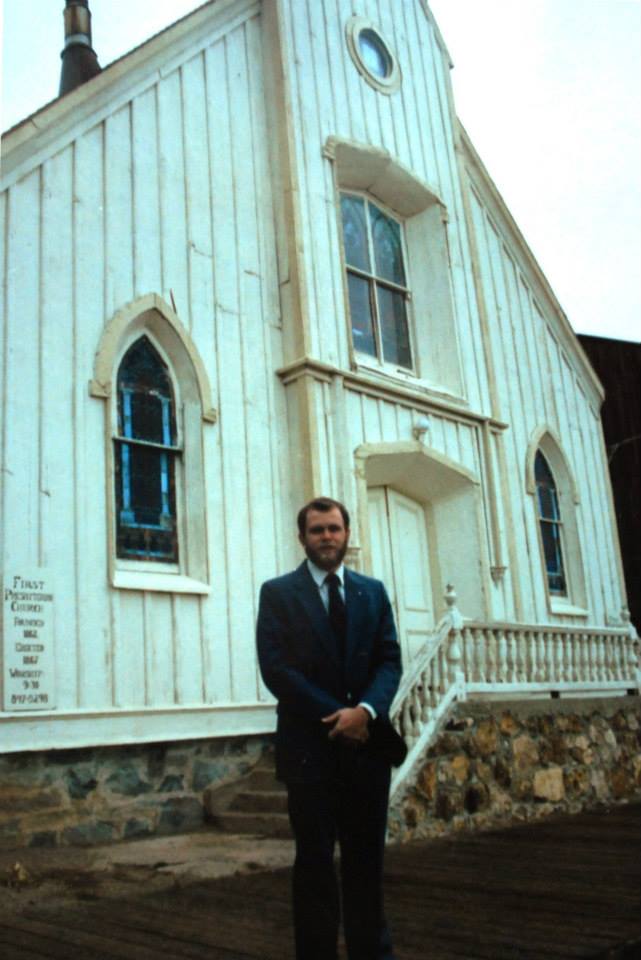
I couldn’t attend his Kristallnacht talk because I was serving First Presbyterian Church of Virginia City, Nevada as a student pastor at the time. However, we occasionally corresponded and he sent me his manuscript (which, over the years, I’ve lost). In it, he describes being in the school at the time when fire fighters stood back and let Jewish synagogues and businesses burn. His father became upset about what was happening. His father would be twice arrested by the Gestapo, but it was a Russian soldier killed him at the end of the war. In his later years, Von Waldow wanted it known that there were Germans who hated all that the Third Reich stood for. Sadly, as a young man out of high school, he had no choice but to report to duty when drafted. 

Eberhard von Waldow occasionally told stories about the war. As an academic, his methodology was steeped in German higher criticism, which many condemn for discounting miracles and divine providence. When asked about his position on miracles, von Waldow told about riding in a tank that had a 500 bomb detonate on the top of the tank’s turret. “I said, “ah, shit” and then couldn’t hear for a few weeks. “But I survived,” he continued. “Some might say it was Krupp armor that saved me, but I know better. Had that bomb landed elsewhere except on the very top of the turret, I wouldn’t be here.”

One day, I wore a pink shirt to class. We were learning about Hebrew vowel points and how certain ones would soften a letter. As a teacher, Von Waldow was quick to come up with illustrations. He pointed to my shirt and said, “Look, Jeff put this white shirt in the wash with a red one and now he has a pink shirt.” I’m sure his conservative Prussian background meant he couldn’t understand a man wearing pink.  

Another time, I made some kind of quip about the German composer Wagner. I knew von Waldow was a classical music lover and a big supporter of public radio, but this didn’t get me any extra points. He went off on a tangent about Wagner. The Third Reich had adopted the music of Wagner and he’d heard enough of this music during the war that he never wanted to hear it again. Now, I wonder if the music might have caused him post-traumatic stress.

The room in which we met had a life-sized portrait of a faculty member from either late in the 19th or early 20th century. Oddly, because this wasn’t really a Presbyterian thing, the guy in the portrait wore a clergy collar. One day, out of the blue, von Waldow came into class and began to berate this portrait for wearing a collar. At this time, several of the Lutheran students at the seminary were wearing collars when they preached or worked in church positions. But von Waldow was too conservative for collars. As a Southerner, I sympathized with von Waldow. Collars were too formal for me. I’ve never worn one. 

Around campus, everyone knew that von Waldow was working on his magus opus, a commentary on the prophet Jeremiah. I took a survey class of Hebrew prophets, taught by Dr. Donald Gowan, another Old Testament professor and prolific author. At the opening of each lecture on a different prophet, Gowan provided a list of commentaries he recommended. The day he lectured on Jeremiah, he confessed he had problems with every commentary available at the time. Then, this man whom I had never heard say anything bad about anyone, said, “When my colleague Eberhard publishes his commentary, I’ll have one to recommend.” He paused and then in almost a whisper continued, “Of course, we’ll all be dead by then.” Sadly, von Waldow never finished his commentary and most of his published writings available today are in German.  

In my second year of seminary, at the time I was studying Hebrew, there was campus debate over how frequently to have communion in chapel. Things became comically heated. As a semi-Calvinist, who leaned toward Zwingli, I found this debate to be fodder for satire. But the seminary President became concern and decided it should be discussed. He called for a community townhall. Faculty were ordered to attend. While von Waldow wasn’t happy about it, he followed orders. 

The day after the long campus meeting, von Waldow marched into Hebrew class, dropped his books on the table, and launched into a tirade about the spectacle. 

“That meeting yesterday was the damnest thing I’ve seen.” Then, contradicting himself, he continued, drawing on his war experiences. “I haven’t seen anything like that since the war. Imagine having a 25-ton tank stuck? We had one buried in mud up to the top of the tracks. You’ve never seen such a mess. But we had the Russians shooting at us and had to do something pretty damn fast. The was the only difference between that meeting yesterday and the war was the shooting. We needed someone shooting to have forced a decision so we could all go home.” 

Eberhard von Waldow would continue to teach at the seminary for a few years after I graduated. He died in 2007 at the age of 83. I’m glad to have known him and while I moved theologically away from his higher Biblical criticism as the only way to approach scripture, I am indebted to his teaching. I probably learned as much about preaching in his Hebrew exegesis class as I did in homiletics. I am also in debt to his story, for it could have gone another way. A man of war became a man of peace. I wish he was here to discuss what’s going on in Ukraine, for there was a time in the 1940s, when he commanded 12 tanks across that terrain. 

Looking back, it’s interesting that von Waldow wasn’t the only faculty member to have served in the German army. Dr. Mauser, our dean, served for a brief period in the German army and I should at some point write about my experiences with him. 

Professor von Walton from clips.substack.com

While the memories above are from me, I found these articles on the internet to be useful and insightful:

Bill Steigerward, “The Nazi Take Commander who became an American Peacenik” (this article originally appeared in Pittsburgh newspaper in June, 1994).

Mark J. Englund-Kriger, “In Memory of Professor Eberhard von Waldow”. A blog post from January 8, 2008.

A letter in Horizons in Biblical Theology.  January 1993, this letter was written at the time of von Waldow’s retirement. 

Obituary, Pittsburgh Post-Gazette, December 19, 2007

Pentecost: Unity in Christ through the Spirit

Jeff Garrison
Mayberry and Bluemont Presbyterian Churches 
Genesis 11:1-11
June 5, 2022

Sermon recorded at Mayberry on June 3, 2022

Thoughts at the beginning of worship: 

Scripture teaches that our lives are grounded in God. Adam was a clump of clay until God breathe life into his lungs. Likewise, for the church, as an organization, would’ve been long dead had not God breathe the Spirit into the disciples on Pentecost. God keeps breathing the Spirit into the church. Today, I want you to understand that our hope is not in our efforts. We find hope in God who wants to partner with us in carrying out his mission in the world. That’s the message of Pentecost.

Before the reading of Scripture:

Worship in an Indonesian Pentecostal Church

I attended a 6 AM worship service when I was in Jakarta, Indonesia in 2011. Between Easter and Pentecost, this congregation hosted daily predawn worship services, praying that when Pentecost arrived there would be an outpouring of the Holy Spirit. Housed in a high-rise building, the congregation leases two floors. I thought this was unique until I learned the high-rise also housed two other churches as well as a mosque.  

We met in the children’s worship room, where we sat around on the floor while a small praise team led us in songs. The music began contemplative, soft, and reflective, but gradually became more energetic. They sang songs in a variety of languages including English and Dutch. That’s not unusual as Indonesia has more languages than any other country in the world. Interspersed with the music were passages of scripture. Of course, I couldn’t understand the readings, but Petra, the pastor who had invited me, whispered to me the passage so I could find the reading and follow along.  

Blended prayer

After about forty-five minutes of singing and scripture, they began to pray. Everyone, at once, prayed aloud. But this didn’t result in the chaos that you might think as the voices blended to create a unique and beautiful sound. A couple of people moved forward as Petra and the other leaders of the church gathered around them, laying their hands on the shoulders as they prayed. One of the women became excited and suddenly fell backwards, only to be caught and gently lowered to the floor. After about fifteen minutes of praying in all kinds of tongues, Pastor Petra pronounced a benediction. We moved to another room where we enjoyed Javanese coffee and nasi timbel (sweet rice wrapped in banana leaves).

Worship focuses on God

When we worship, God is our audience. We gather and we offer our hearts up to God and when we do so, we believe it pleases to the Almighty. If we think about worship in this manner, the experience of hearing all the various voices of prayer mingled together must be very pleasing to God.  For you see, we’re designed and created in a unique manner by a God who delights in diversity yet draws us together in unity in Jesus Christ. 

Pentecost and Babel

We heard earlier the passage from Acts, the story of the church’s birth. The coming together in Acts is often contrasted with the dispersing of humanity at Babel. Today, I want us to look at this passage from Genesis. It occurs at the end of what is known as the “prehistory” in Genesis. 

Genesis’ Prehistory

It’s hard to take this “prehistory” literally as there are contradictions within the text.[1] But the importance is in the stories, for they provide a foundational meaning to how we are to live with God. After the flood, it appears everyone stuck together and there is a general failure to populate the world, as everyone works together to “build a name for themselves.” After Babel, people go their separate ways. In the next chapter, we see God reaching out to Abram. And what is God’s promise to Abram?  God will bless him and make his name great![2] We have a great name, not because of what we do, but because of whose we are.  

Read Genesis 11:1-9

A Retelling of the Babel Story

God blessed them, and God said to them: ‘Be fruitful and multiply, and fill the earth.’  Genesis 1:28

Instead, the people of the earth joined together and in a singular band traveling across the face of the earth until they found a land of promise. There they settled.  It was a rich valley. As there were no stones, they made bricks with which they constructed a city that included a tower reaching high into the heavens. From what we know, this was the ultimate family reunion. Everyone was together, happy and secure.  

God’s visit

One day God came down to earth to visit. The Almighty investigated the first corner of the world and saw no one. So, God looked around the second corner and again saw no one, and neither did God find anybody in the third. This bothered the Creator. Something was wrong. Hadn’t he instructed the people to fill the earth? As God heads to the fourth corner of the world, he hears celebration. A party! God wonders why he wasn’t invited.  

There, in the middle of the city, a huge tower reaches into the sky. So big and high, the people are proud. But to the Creator, it’s not remarkable. In God’s eyes, it’s small, so small the Almighty must come closer to see it. 

God acts

God isn’t threatened by the tower but knows something must be done. Humans, it seems, are too big for their britches… No telling what these people might do next. So, God mixes up the languages. Soon the architects can’t communicate with the construction engineers. The bricklayers and the plumbers and the drywallers speak different tongues.  

Confusion reigns and people began to leave the city. They form new cities where everyone speaks the same language. “Now,” the Creator thinks, “people will learn to depend on me for their security and they will no longer need the protection provided by brick walls which erode away.”[3]

Is the story about a tower?

I retold the story of the Tower of Babel to clear up several hazy points. First, the tower plays a minor role in the story. But we must admit, there is something about towers that intrigue us. As a child, I loved building towers and continued that love as an adult with my own children. The best restaurants are often at the top of towering buildings. Cities like New York, Chicago, Tokyo, and Shanghai boast of their skyline. There’s something about towers. God never says they’re sinful. 

Or is the story about a city?

The story mostly focuses on the city.[4] We have this image of the people building a tower into the heavens so that they can storm heaven, but that vision comes from the active imagination fueled by Jack and the Beanstalk and renaissance artists. The text never gives us the idea an invasion of heaven is imminent or even contemplated. Instead, the tower serves as the unifying symbol for the residents. “We can do this,” they say to one another as they pat themselves on the back.

The humor in the story

If we pause to consider this story for a minute, you’ll see the humor. Imagine ancient people telling the story around the campfire. It brought smiles to their faces, but also taught an important lesson. The God of the Universe must come down from heaven to check on what we’re doing. This giant tower isn’t large enough to be seen from Outer Space! Of course, this doesn’t mean that God doesn’t know what’s happening on earth when he’s in heaven; instead, it is a statement of human inability.  

Sin in the story

Furthermore, the sin in the story isn’t the tower nor the city. The tower and the city are symbols of the people’s sin, as they think their accomplishment speaks well of their abilities. They are proud people who have failed to heed God’s command to fill the earth and have decided they can depend on each other for their needs. There is no need for God. The people in this city never mention God, from what we’re told. They’re going merrily on their way as if they are in control of their own destiny, which in the mind of God is arrogance. 

The division of people into various language groups isn’t just punishment. Instead, the people avoid the potential of a future calamity as God sees to it that the mandate set forth in Genesis is fulfilled.[5]God desires the world to be filled with different people. Diversity is celebrated within God’s kingdom. Unity doesn’t come from human effort but from a common need of all people to look to the Almighty for their security and to worship God for their blessings.  

Jesus Christ, the source of our unity

Unity comes in Jesus Christ who prayed on the night of his betrayal for his disciples’ unity.[6] In the coming of the Spirit on Pentecost, God brings believers into a church that may be split by language, nationality, style, and customs. However, we find unity because we worship the same Lord. 

Language at Pentecost and Babel

We should note a fine difference in the use of language between our stories. In Genesis, the emphasis is on what people can do by communicating together with each other. Such ability enables them to do things on their own without having to depend on God. In Acts, the emphasis isn’t on speaking in tongues (any more than the Genesis story is on the building of a tower), but on people hearing the gospel in their own unique language. These two passages, the scattering of people through language and the bringing together of people on Pentecost, go together. They show our God’s desire for a unity focused on Jesus Christ, not on our own wishes and desires.  

God uses the church to tell the story

On Pentecost, we celebrate the birth of the church, an institution that’s not perfect because God has entrusted it into our hands. Nonetheless, the church is the vehicle God chose to tell the story of his Son to a lost world. We’re a world, as that old song from the 60s goes, “on the eve of destruction.”[7]  

Meaning of Babel

Babel fell into ruin as the people dispersed, but that doesn’t mean that God is against cities or human achievements. The collective ability of humanity is vast as we see in this story. However, we must never forget our limitations and the fact that we need to depend upon the Lord in all things. The word “Babel” means the “gates of God.”[8] We later drew from this word babbling. (What some of you may think I’m doing).

However, far from being a gate of God, in this ancient city from what we know from the text, God wasn’t being considered. This led to their downfall, and it should serve as a reminder to us.  

Conclusion

Giving ourselves the right name isn’t enough; what’s important is how we relate to God. Are we trying to glorify ourselves, or do we live to glorify God? 

Another way to ask this question has to do with our motives. Are we trying to build a name for ourselves or are we content with the name God has given us? Do we give God the glory for our accomplishments, or do we claim them as our own? These questions need to be continuously asked for temptation always suggest we replace God with something else. That’s sinful. That’s idolatry. Amen. 


[1] In Chapter 11, all people live together but in Chapter 10, we learn of Noah’s children going their separate way and starting cities.  

[2] Genesis 11:4 and 12:2.  See Donald E. Gowan, Genesis 1-11: From Eden to Babel (Grand Rapids: Eerdmans, 1988), 118.

[3] For the foundation of this story, see Gowan, 115-120 and Walter Bruggemann, Genesis: Interpretations, a Bible Commentary for Teaching and Preaching (Atlanta: John Knox Press, 1982), 97-104..

[4] Gowan, 115. 

[5] See Bruggemann, 99-101

[6] John 17

[7] “Eve of Destruction” sung by Barry McGuire, 1965.

[8] Gerhard Von Rad, Genesis: The Old Testament Library (Philadelphia: Westminster Press,1972), 150.

These day lilies blowing yesterday beside the house have the color of Pentecost

Gardener Spirituality and Olmstead the Gardner: Book Reviews

Hannah Anderson, Humble Roots: How Humility Grounds and Nourishes Your Soul


(Chicago: Moody Publishing, 2016), 206 pages.

I heard Anderson at the HopeWords Writers Conference I attended in April in Bluefield West Virginia. Another speaker referred this book of hers for its ability to create a sense of place, which is why I chose it as the first of hers to read. Anderson lives with her family on a small farm near Roanoke, Virginia. This book consists of eleven essays that draw on the natural world, especially the rhythms of agriculture. Among the topics Anderson explores include: planting seeds, cultivating grapes and apples, raising honey, appreciating vine-ripe tomatoes, the role of pollinators, and dealing with thorns and thistles. 

In each of these essays, Anderson also explores aspects of our lives and our faith. Some of the themes she explores include having enough and being blessed, trusting God, remaining humble, spiritual maturity, and being an image bearer. Each essay comes back to being humble, a topic she addresses throughout the book. Humility is a challenge for if we think we can accomplish it by ourselves, we have already lost the battle. Just thinking we can overcome pride is prideful. We must depend on God even for our humility, yet we can see how it works through the natural rhythm of life that surrounds us.

A few favorite quotes: 

“Fascinating, while humans were made to rule over the earth, we were also made from the earth. And perhaps even more significantly, we only came alive by God’s Spirit. Without God’s breath in us, we are nothing but a pile of dirt.” (page 65)

When we use fear to persuade a person to decide ‘before it’s too late,’ we make God like a cosmic bully who is just waiting for the opportunity to strike them down.” (page 112)

“The problem with privilege is that we rarely see our own. Because we only know our own experience, we rarely recognize how much we have been given and how much those gifts have smoothed our way.” (page 142)

I would recommend this book to anyone interested in living a worthwhile life, especially those who are interested in our role in the world.  

Others books that I reviewed of authors at the conference:

Makoto Fujimara, Art & Theology

Malcolm Guite, In Every Corner Sing

I still have books to read by Winn Collier and am finishing up a collection of essays by Lewis Brogdon. 

Justin Martin (Richard Ferrone, narrator), Genius of Place: The Life of Frederick Law Olmstead 

(2010, Audible, 2014, 18 hours and 48 minutes). 

Olmstead, A Man of Accomplishments

Frederick Law Olmstead led an incredible life. He started out as a surveyor, then went to sea, traveling from the east coast to China, then with the health of his father became a farmer, a traveling correspondent before entering the new field of landscape architecture with his work on designing New York’s Central Park. While he would continue in this field the rest of his life, he took time out to run the United States Sanitary Commission (a Red Cross forerunner) during the American Civil War and later operated a gold mine in California. While in California, he became enthralled with Yosemite and lobbied for the sight to be saved for future generations years before John Muir.  His travels in the American South changed his mind on slavery and his books on these travels were probably second to Stowe’s Uncle Tom’s Cabin in building abolitionist support. Because of this writing popularity in Great Britain, he’s partly credited with keeping England out of the American Civil War. 

Influence on Landscape Design

But what Frederick Law Olmstead is mostly known for is his landscape designs. He felt parks should be for the people and that they should help our emotional state by allowing city dwellers an opportunity to be in nature. Many of his parks and estates still exist and he influenced generations of landscapers who followed him. Not only does he have Central Park (which he designed with Calvert Vaux) to claim, but Brooklyn’s Prospect Park along with parks in Boston, Chicago, Buffalo, Rochester, and a host of other cities. He influenced park designs in San Francisco and other places. With his work in Buffalo, he helped preserve Niagara Falls (sadly, he came upon this a little late, but it appears it was more of a tourist trap in the 19thCentury than today). His landscape ideas shaped Chicago’s 1893 World’s Fair and he designed the landscape for the grounds of the Biltmore House near Asheville, North Carolina. The later also helped establish forestry as a scientific study in America. 

Failure in his early life

In a way, Olmstead’s early life was full of failure. Thankfully, he had a wealthy father who helped his son out on many occasions, such as buying farms for him and sending him on fact-finding journeys through Europe. These trips helped prepare Olmstead for his career. His life also had its share of sorry, including his brother’s early death and the deaths of friends. He would later marry Mary, his brother’s wife, and adopt their children. Mary would also give birth to several children, two who died young. His adopted brother’s son, John, and his own natural son, Frederick Law Olmstead, Jr, would continue their father’s role as premier landscape architect through the first half of the 20th Century. 

Olmstead was always interested in words and would often look for the right word for a project. Many words we use today came from Olmstead and his associates. His first park in Boston was a marshy area in which he named “the Boston Fens.” Fen is an old English word for marsh and lives on now in baseball with “Fenway Park.” 

Sadly, Olmstead began suffering from some sort of dementia after the Chicago World’s Fair and the creation of Biltmore. He would spend his last years in an institution and died in 1903.

My recommendation

I have been aware of his name for some time. I knew of his work for the Chicago’s World’s Fair from Erik Larson’s The Devil in the White City. I also knew he designed the Biltmore and Central Park. I had some ideas of his additional work through Nick Offerman’s book, GumptionHe led an amazing life, using his influence to save Yosemite, helping to end slavery, and providing a framework for what would become the American Red Cross. I recommend this book! 

Our Gracious Work Christians

Jeff Garrison
Bluemont and Mayberry Presbyterian Churches
Galatians 6:1-10 
May 27, 2022

Sermon recorded at Bluemont Church on Friday, May 27, 2022

At the beginning of worship:

This is Memorial Day weekend. After a week of rain and gray, it appears we’re in a few beautiful days. Enjoy it, but remember, as we will in our prayers today, those who have their lives for our nation. 

Today, think about two things. First, how do we help others with gentleness and humility, especially those who sin and need to get back on the track. Second, in our lives do we sow the necessary seeds to reap an eternal harvest?[1]  

By the way, next Sunday is Pentecost. If you think about it, wear red. It’ll make a statement as we recall those tongues of fire that set the early ablaze. Let us also this week pray for such an outpouring of God’s spirit. 

Before the reading of scripture:

Paul has a problem. We’ve seen this over the past six weeks in his Epistle to the Galatians. Today, I’ll finish our journey through this letter, although I’ll come back in a few weeks and catch a section we skipped. 

Paul needs to help these folks in Galatia get back on track. He refutes the teachings of the false preachers who cause confusion. Again and again, Paul emphasizes grace over the law. But just because you are not saved by the law doesn’t mean you can do what you want.  

Toward the end of the fifth chapter, he warns his readers of the dangerous work of the flesh. Then, as he comes toward his conclusion of this letter, he realizes that some might take what he said and use it as an opportunity to harshly deal with the sins of others. So, Paul offers a few suggestions about how Christians should correct a fellow believer caught in sin. We should consider, from this passage, how we, as a body of believers, are to live graciously and in a way that encourages one another to strive for holiness.  

READ GALATIANS 6:1-10

After the reading of scripture:

There are two themes in this passage: restoring the sinner and humbly doing the work assigned.

The Roman World of the First Century:

Let’s go back into Paul’s world. In a way, the Roman world was an “anything goes” world every bit as much as our own society seems to be heading. While this is the world in which Paul resides, it’s not the world in which he lives. Paul’s not some post-modern, politically correct philosopher who thinks everything is relative and that there are no absolute standards. He doesn’t buy into alternative facts or questions truth. That’s our world; it was, to some extent, the Roman World.[2]However, Paul expects the Christians in Galatia to do its part and encourage their members to live righteously. 

The Danger of Being Overly Zealous

Yet, even here, dangers lurk. Paul understands human nature. He knows there are some who will enjoy pointing out the faults of others. We know such people, don’t we? Those who have the mistaken notion that it makes them look good when another person falls or is humiliated. Such people relish in their own self-righteousness. As Mark Twain quipped, “nothing needs reforming as much as someone else’s bad habit.” It’s this tendency, reforming another’s bad habits while ignoring our own, that Paul tries to nip in the bud.

1. Restoring the Sinner

Paul tells those who have the Spirit of God within them to restore those who have fallen away from the church. You know, our church and our society are not good at restoring the fallen. We’re good at shooting the wounded, but we fail when it comes to reforming people. Two examples: First, look at churches and consider what generally happens after a church fight? Most often, one party and maybe even both leave. The sin of American Protestantism is that we find it easier to go somewhere else than to stick it out and mend fences or lift fallen brethren. The church is to exhibit the Kingdom of God, but do we?    

And if you think church is bad at reforming people, society is even worse. Consider the recidivism rates in our prisons. But Paul isn’t addressing society’s failures here; he’s focusing on the church. The church is to be a community that takes seriously the reformation of individuals. We’re to be a community that instead of shooting the wounded, we restore them to wholeness. 

Of those in the faith who has fallen into temptation

Of course, Paul here is not talking about those who commit great evil.[3] Nor is he referring to those outside the church. Paul acknowledges that we all struggle with temptation, and we all need to be shown grace by other believers, just as God has been gracious with us. So, Paul, here, is not talking about a mass shooter, but someone who has stumbled along the way and needs to be encouraged to come back into the church’s fellowship.[4]  

If we who make up the church are to fulfill our calling to restore those who have fallen away, we’re going to have to be gentle and humble and gracious. It’s a dangerous task as Lesslie Newbigin, a former missionary to India notes. Commenting on human efforts to bring about the kingdom of God, he writes: “The project of bringing heaven down to earth, always results in bringing hell up from below.”[5]

Being a legalist, pointing out the faults of others in a heavy-handed way, don’t cut it. Self-righteous attitudes drive wedges between people, making those in power look good while offending parties are set up for ridicule.  

But more than that, such attitudes also contain the seeds for destruction of the righteous whom succumb to the sin of pride. That’s why Paul tells us in the fourth verse to test our own work on its merits and not to rate ourselves by what our neighbor does and doesn’t do. We’re to hold Jesus as our example, not our neighbors. 

If we want to compare ourselves to another person, we should stand next to our Savior and see how far we fall short of the standard. Standing next to him, we’ll get a crick in our necks looking up. When compared to Jesus, we’re all humbled. But the human preference is for us to pick out some ax murderer or disturbed mass shooter to judge ourselves. It’s easy to be misled into thinking we’re doing a good job because we’ve refrained committed terrible evils.

Jesus’ comments, in the Sermon on the Mount, come to mind. Before we go operating on our brother’s eyes, we should make sure our own eyes are free from obstruction.[6] The only way for us to be clean and free is to accept the forgiveness of the one who washes us in his blood. And we must realize that Jesus doesn’t just clean us up so we can become like the Taliban’s moral police. The gentle way God deals with us serves as our model for dealing with one another.

Bearing One Another’s Burdens

If we’re to seriously take to heart this passage, we should understand this: We who are believers are called to help each other live better and godlier lives. This is a part of our calling as disciples. We bear each other’s burdens. But in fulfilling this task, we must be careful to avoid temptation. 

We’re to be gentle and humble, realizing that even when we’ve dedicated ourselves to righteousness living, the temptation to think more highly of ourselves than we should is present. As Christians, we’re saved by the grace of our Lord Jesus Christ, not by our own hands. As Christians, we’re to share and show such grace to one another. Only then will we live up to our calling

2. Doing God’s Work

The second theme is pleasantly doing the work God has assigned us and not letting it go to our head or to spend all our time focused on and worried about what others are doing.   

Another Story from Jayber Crow

In my first sermon on Galatians, I told you a story about Jayber and Troy in Wendell Berry’s novel, Jayber Crow. Berry uses his novels, set in Port Williams, Kentucky, to give a glimpse into how a community can exist and function in a way that will be beneficial to everyone. 

One of the problems with Troy, in his novel, is impatience. As one of the younger farmers in town, he’s impressed with power and machinery. Debt doesn’t bother him. He considers a part of doing business. Nor is he particularly concerned about the land. He doesn’t even consider himself a farmer, he wants to be thought of as an Ag-businessman. 

Troy receives a gift. His wife, an only child, is heir to one of the larger farms in the township. When her parents retire Troy takes over and immediately begins to do things that worries his wife and his in-laws. He rips out the hedgerows between fields so he can grow more crops. He leverages the land to buy more land. He can’t do all the farming with his old equipment, so borrows heavily for larger tractors and implements. He’s always running, trying to keep up with his expanded operation. Always behind, he no longer enjoys the cycle of the seasons, the periods of hard work and the times of rest. The farm, which would have given him and his wife a good life, becomes a burden. He depletes the land and then loses it all to the bank. By focusing on his need to be important, by constantly wanting more, he squanders the gift.[7]

We’ve all been given gifts. Do we sow them only for ourselves?  If so, we’ll join Troy and countless others in squandering what we’ve been given. But if we use our gifts in a way that will bring honor and glory to our Creator, to sow them in the Spirit, others will benefit and in the long run, we’ll find dividends stored up eternally for us. 

The good of working hard

Remember, work is not a bad thing. Work is good. Our labor connects us to God and to others. It’s through what we do in our world, our daily tasks, we live out our Christian faith. 

Paul assumes the Galatians are working and therefore in danger of weariness. I’m sure if they were not doing anything and in no danger of becoming weary, Paul’s letter would have reflected different concerns. But here, he’s concerned about them wearing themselves out. How might we take measures to avoid allowing our work to lead us into weariness? For if work becomes drudgery, it’ll become something that we despise.

Conclusion 

This Epistle to the Galatians is about grace, and grace should lead to gratitude. We’re not here to work to earn our salvation, we’re to receive it as a gift and then use it to live making this world a better place. Accept what Jesus has done for us and then let him live in you so that your life might bear fruit. Amen. 


[1] Adapted from Ronald Y. K. Fung, The Epistle to the Galatians (Grand Rapids, MI: Eerdmans, 1988), 284

[2] This was certainly true of the Greek city of Corinth, which was the “Vegas” of the day, where things you did in Corinth should stay here. 

[3] Consider how Paul addresses such evil within the church of Corinth. See 1 Corinthians 5:1-3. 

[4] This sermon is to be preached after a terrible mass shooting resulting in the deaths of 19 students and 2 teachers, along with many injuries, at an elementary school in Uvalde, TX. 

[5] From Lesslie Newbigin, Foolishness to the Greeks, (Grand Rapids: Eerdmans, 1986), 117;  as quoted by Philip Yancey, What’s So Amazing about Grace? (Grand Rapids: Zondervan, 1997), 234.

[6] Matthew 7:3-5.

[7] Wendell Berry, Jayber Crow (Washington DC: Counterpoint, 2000)

The beginning of a beautiful day…

Rebuilding in Kentucky

Photo by KREM, from the internet

On the evening of December 10th, a storm system produced terrible tornadoes in mid-America. The storm began in Arkansas and moved northeast into Missouri and Kentucky. By Sunday morning, when the clouds cleared and the sun rose, a destructive path, at places a mile wide and over 250 miles long, remained. 89 people dead and nearly 700 injured. 74 of these deaths occurred in Kentucky, 13 in Dawson Springs where nearly 60% of the structures in the town were beyond repair. Just east of the town, the tornado swept an empty coal train, including its engines, off the tracks. It is unusual for a storm to strike so late in the year and to remain on the ground for so long. This storm will go down in history. 

A few days after the storm, Libby Wilcox asked about us doing a mission trip to help those who had lost so much.

Looking south, were homes used to stand

On Sunday, May 15th, after worship, a group of us from Bluemont and Mayberry, two of the rock churches along the Blue Ridge Parkway, headed to Kentucky to volunteer to work. The heavy clean-up was over. Now, where there used to be homes, one can only see the outline of foundations. Those participating in the work group included Libby, Fred and Ann Tanner, Shep Nance, Danny Miller, and me. In addition, we collected towels and sheets to give given to families who had lost everything. Before we left that Sunday, someone gave Libby money to buy our lunches on the drive to Kentucky.  People are generous.

We traveled to Madisonville, where we stayed at First Presbyterian Church while volunteering to help rebuild in Dawson Springs. Before the pandemic, First Presbyterian hosted the “Great Banquet,” a three-day spirituality retreat similar to Cursillo or Walk to Emmaus. With COVID, they suspended the retreats. After the storm that struck just south of Madisonville, they decided to utilize their retreat space for outside groups working to help rebuild. The church was a wonderful host, with not only bunk rooms, but shower rooms and a full-sized kitchen. Not only did they feed us on Wednesday night, but they also had an ice cream chest which was open and available when we came back from the worksites. 

Fred and Danny wiring in basement

Having been on several such trips, I have learned that each one is different. One must be flexible. Our first day was spent at a home which was on the north edge of Dawson Springs. While the home wasn’t destroyed, it required major renovation. Just south of this house, destruction was total. Looking across the valley, where there had once been homes, it was now empty except for a few rebuilding projects. 

On Monday, we rewired a basement (which had been partly destroyed by the storm and required metal posts every few feet long the foundation, that held the house to the ground). Several of us rewired while others helped clean up upstairs behind a Methodist team that was working at the site. 

Our remaining four days were spent working on a new home a mile north of Dawson Springs. This house replaced one that was totally destroyed. It was for an older woman, and her new home was built next to her daughter’s house. An Amish group framed and roofed two “tiny houses.” Placed together, making a “T”, one section consisted of the kitchen and living area, the other section the bedrooms and a bathroom.  We completed the wiring (we were officially working under an electrical contractor, who was responsible and would do the final connections to the panel box). In addition to running wires, we installed insulation and put in blocking so that the next group could commence installing drywall. 

With the home owner (left to right: Danny, Libby, Homeowner, Shep, Me, Ann, Fred)

While we made our lunch each day. On Tuesday, we even celebrated Ann’s birthday with chocolate cake and ice cream. Then, starting Thursday, the chef from Operation Blessings, treated us to lunch. This group related to the 700 Club in Virginia Beach, supplied the supplies for the house we worked on. Interestingly, Nechama, a Jewish group, donated their tool trailer. We couldn’t believe the amount of food the Operation Blessings chef provided(Spaghetti and meatball or meatball sandwiches and cookies on Thursday. Barbecue chicken, macaroni salad and brownies on Friday). With the church’s ice cream, this was probably the first mission trip ever where, despite the heat and sweat, we gained weight. 

Chef fixing us spaghetti and meatball sandwiches
our part is done!

After five days of work, we cleaned up and a group of us went out to Greens Steakhouse in Madisonville. This was a delightful restaurant in an old part of town. We sat upstairs in a balcony, overlooking a piano, where a local musician supplied background music. On Saturday morning, we headed back to the Blue Ridge. The work in Kentucky will take years! It was good to see so many different groups including Habitat for Humanity, Mennonites, Amish, Methodists, Baptist, Jewish involved in rebuilding.  

What does it mean to be a Christian?

Jeff Garrison
Bluemont and Mayberry Presbyterian Churches
Galatians 5:1-15, 22-23
May 22, 2022

Thoughts at the beginning of worship:

Sermon recorded on Friday, May 13, 2020 at Mayberry Church. This was before heading to Kentucky for a mission trip.

What does it mean to be a Christian? This week I came across a meme that I thought was insightful and a bit challenging. 

Geocide is biblical.
Loving your enemy is biblical.
Only one is Christ-like. 

Slavery is biblical.
Chainbreaking is biblical.
Only one is Christ-like. 

Patriarchy is biblical.
Counter-cultural elevation of women is biblical.
Only one is Christ-like.

Retributive violence is biblical.
Grace-filled restoration is biblical.
Only one is Christ-like.

Segregation is biblical.
Unity is biblical. 
But only one is Christ-like.

Christ transforms, not the Bible. Be wary of those who know one but not the other.[1]

Yes, there are a lot of things, some horrific, you can support from the Bible, but we’re called to first and foremost to follow Christ. What does that mean? What does it mean to be a Christian? I hope you wrestle some with this question this morning as we look at how it was debated in the first century.

Before the reading of scripture:

As I pointed out at the beginning of worship, what it means to be a Christian has been debated over the years. Some things we’ve gotten over, such as arguing over circumcision. But that was the big theological debate in the first century. Paul talks about it a lot in his letter to the Galatians, but we also find it discussed in Romans and Acts. 

While we may not concern ourselves with circumcision anymore, the topic of what it means to be Christian continues to be debated.

Tying this debate together, J. B. Lightfoot, a 19th Century Anglican theologian, says this:

Circumcision is the seal of the law.  He who willingly and deliberately undergoes circumcision (I should note, for a religious reason), enters upon a compact to fulfill the law… He cannot plead the grace of Christ; for he has entered on another mode of justification.[2]

As Christians, our seal into the faith is baptism. It’s a seal showing that we depend on what Christ has done for us for our salvation, and nothing else. Grace alone, as the Reformers proclaimed.

Today, Paul finishes up the middle part of the book, where he continues making the case for justification by faith. Then, he shifts in verses 12, and speaks of the implications of our faith.  How should we live our lives since our salvation is secure by grace? 

Read Galatians 5:2-15, 22-23

After the reading of Scripture:

Last week, I told you about reading Kidnapped by, Robert Lewis Stevenson. In staying with the Scottish theme, let’s talk about the Scottish Reformer, John Knox.   

The Reformed Reformation: 

Knox’s idea of church reform, like the Swiss Reformers, went beyond what Martin Luther in Germany and Thomas Crammer and other English reformers wanted. I’ve heard these two views of church reformed described as how one cleans out their dresser drawers.[3]

Luther’s method and, in a similar manner but with different issues, the English, are similar. They open their drawers and straighten things up. They place their dark socks in one drawer, the light ones in a separate one, and fold up t-shirts and place them in the middle drawer. On the floor would be a small pile of stuff destined for Goodwill. Get the picture? We end up with neat drawers; nothing too disturbed. 

Those from the Reformed tradition, such as Zwingli, Calvin and Knox, were more radical. They pulled the drawers out of the dresser, dumped their contents on the bed, and then only put back into the drawers that which they could find a reason in scripture for keeping. Instead of tidying up, they do a spring cleaning. An immense pile of stuff for Goodwill grows on the floor. 

Knox and the English Prayer Book

Knox, after his first exile, lived in England and served within the Church of England. There, he kept getting in trouble for his refusal for using the Prayer Book. It wasn’t that he had a problem with praying (he wrote his own prayers), but he felt that having to be bound to this book was an imposition not warranted by scripture. It trapped people into a false sense of security that they placed in a book that wasn’t the Bible.[4]

In case you’ve wondered why we Presbyterians don’t have prayer books we’re required to use in worship, this is it. Some might call it Scot’s stubbornness, but’s it’s an issue of freedom.  Knox cherished his freedom, just as Paul insisted the Galatians live in the freedom they have in Jesus Christ and not find something else to which they could enslave themselves.

Paul’s emphatic on circumcision:

The Message translation captures the spirit in which Paul wrote this section of the letter. “I am emphatic about this!” he says as he goes on about the reason to avoid submitting themselves to circumcision or other systems of rules that squash their freedom. It’s beyond Paul ability to understand why they would want to live under such a system when Christ offers grace so freely.  Maybe Paul is naive. This is a human problem. Think about it. We tend to be willing to give up our freedom willingly. We’d much rather have security and prosperity, even if it means being enslaved.

Dostoevsky and freedom: 

There is a section in the center of Dostoevsky’s humongous work, The Brothers Kamarvoz. The chapter’s entitled, “The Grand Inquisitor.” Russian novels are so long, so if you don’t read it all, you can at least be provided with an insight into his thoughts. 

In this section, one of the brothers wrote a short story about Jesus returning to earth. He comes back to Seville, Spain during the height of the inquisition. Immediately, people flock to Jesus, but when the inquisitor gives them a dirty look, they flee just like Peter and the disciples fled when they arrested Jesus 

Jesus, in the story, is taken into a dark cell. Under the cover of night, the inquisitor enters and questions Jesus. In a fashion like Pilate’s interrogation, Jesus remains silent as the inquisitor asks questions and makes bold statements. “Why did you come back?  The people are happy. They don’t want freedom. We give them what they need, we give them bread, and they are content.”[5]

Think about it. Do we really want freedom?

Living by our own ideas, we’re cut off from Christ: 

As Paul points out in verse four, “when we attempt to live by our own religious plans and projects, we are cut off from Christ.” And then he reemphasizes, to quote the New Revised Standard translation, “The only thing that counts is faith working through love.” Faith is where it is at, and we express our faith with love.   Another way of translating the end of verse 6 is “faith active in love.” Paul is not making faith and love perquisites of grace. By faith we are saved, but our faith is lived out through loving one another.[6]

Galatians doing well until agitators showed up

In verses 7 through 12, Paul returns to his overall theme, pointing out how the Galatians were doing so well until these agitators came along and created confusion. They have sown their yeast of discontent and, as Paul reminds them, it only takes a bit of yeast to cause the dough to rise. Where is discontent sown in our world today? What do we require of others that’s not implicitly required by Jesus?

At the end of this next section, Paul shows a very human side of himself. He’s frustrated. He’s had it up to here. We can see this in verse 12, when he makes a crude remark, sarcastically suggesting that they turn their imzels (the knife used for circumcision) on themselves.  

Freedom

Then, in verse 13, Paul moves back to the discussion of freedom.  It’s important to note that for Paul, freedom does not mean that we can do what we want. Nor can we do whatever won’t harm someone else, as we like to think. While Paul wants the Galatians to enjoy their freedom, he wants them to understand that true freedom has limits. They are free to become servants to Jesus and to one another. We are free to love, as in working for the well-being of others.   

The gift of Christ: grace

In this middle section of this letter, Paul is concerned that we realize the gift we’ve been given is Jesus Christ. It’s a gift; it’s grace; it’s not something we must earn. This gift results in an incredible freedom from the law, but it doesn’t mean that we can do whatever we want. Paul’s desire is for the Galatians to love one another and, as he speaks of later in the chapter, to cultivate the fruits of the Spirit.

Virtues verses Rules:

Paul Woodruff, a philosopher, wrote a wonderful book titled Reverence: Renewing a Forgotten Virtue.  Woodruff makes the case that it helps for us to base our ethics (or how we live) on virtues and not rules. His reasoning is that rules are hard to separate from the culture in which they rise.[7]   

Although this isn’t Paul’s argument here, I think it applies. Many of the old rules that came from Israel’s desert wanderings and her life in the Promised Land would be difficult to justify in other parts of the world. What’s important, the essence of the matter, is that we accept by faith what Jesus has done and then, with a gracious heart, bear a harvest of fruits: love, joy, peace, patience, kindness, generosity, and faithfulness. When we are assured of our salvation in Christ, such fruits should come more naturally. 

Evaluate our lives by the fruit we bear:

Think of it this way. If you want to evaluate how you’re doing in following Jesus, don’t beat yourself with the law and how you fall short. Instead, evaluate your life by the fruits of the spirit. Even Jesus calls for us to show fruit in our lives.[8] Do you love others? Celebrate joy? Live peacefully as possible? Show patience, kindness, generosity, and faithfulness. Examine yourself. Does your life display fruit?  Amen. 


[1] Attributed to Jordan Harrell. The point of this meme is to show that just because one can find where people did something in the Bible, doesn’t make it right. What would Jesus have us do?

[2]J. B. Lightfoot as quoted by Ronald Y. K. Fund in The Epistle to the Galatians (Grand Rapids: Eerdmans, 1988), 223.

[3] This illustration was used by Jack Rogers in a video on the Essential Tenets of the Presbyterian Church USA.  

[4] Jane Dawson, John Knox (2015), 72-75, 92-96.  

[5] This is my paraphrase from memory of what the Inquisitor asked Jesus in The Brothers Karamazov. 

[6] See Fung, 221 & 230.

[7] Paul Woodruff, Reverence: Renewing a Forgotten Virtue (New York: Oxford, 2001), 159. 

[8] See Matthew 7:15-20, 12:33, 13:22, 21:43. See also Luke 13:6-9 and John 15:1-17. 

The crew on a mission trip in Dawson Springs, KY (we worked on a new home for the woman in the center).