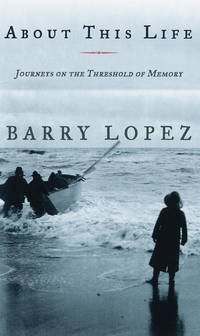
Barry Lopez, About This Life: Journeys on the Threshold of Memory (New York: Random House/Vintage Books, 1999), 273 pages.
This is a wonderful collection of essays. I listened to an abridged edition as well as read the essays. The Audible version of the book was wonderful because the late Lopez read his work.
The collection (in the book and on audible) begins with a memoir essay titled “A Voice.” In this wonderful piece, Barry tells the story of his young life, from his early years in New York, to moving and living much of his school years in California, and then back to New York for a few years before he headed off to Notre Dame. During this time, Barry experienced the world (often through his mother’s husbands and boyfriends). He even gets a first-hand view (although a somewhat skewed view) of what the writing life is about as he meets John Steinbeck at a summer camp. Steinbeck’s boys were at the same camp. I came away with the appreciation that Lopez never lost his childhood curiosity and these early experiences helped him develop a voice that has made him a beloved storyteller. This is the second book I’ve read of Lopez. Many years ago, I read River Notes.
One of the unifying themes running through these essays is the journey. While many of the essays highlight travels to faraway places (Hokkaido, the Arctic, Antarctica, Galapagos), others focus on the journey itself. In “Flight,” he jets around as a passenger on air freight planes while collecting information for a story. One day in Asia, the next Europe or South Africa, and then he’s back in the States. The whirlwind of travel informs the reader about modern commerce, but we also see how Lopez was intensely interested in everything, from walking the streets of Seoul in the early morning hours to learning from the pilots.
The essay “Apologia,” focuses on bits of travel around the United States as he stops to remove dead animals from the highway. This is not just a good deed as he has interest in each of the animals.
In “Speed,” he drives his brother’s Corvette from Chicago to the Amish Country of Northern Indiana, taking a friend who is scouting out locations to film a documentary. But the shooting location is a side-story. The main story centers on driving this muscle car on rural backroads. I found it intriguing that one known as an environmental writer would enjoy speeding in a Corvette, but then remembered stories of Edward Abbey tossing beer cans out of the window of this truck.
The essay, “Murder” finds Lopez driving from Sante Fe to a summer job in Wyoming. In Moab, Utah, he meets a woman who asks him to kill her husband. He quickly flees, racing through the sagebrush of the America West.
Another common theme About This Life are the skills displayed by others. Whether it is the building and flying of airplanes in “Flight,” or the firing of pottery in a dragon kiln in “Effleurage: The Stroke of Fire,” or the gracious naturalist author in Hokkaido, Lopez appreciates talent. He also is constantly aware of his natural setting, whether it’s hearing the occasional “staccato cry of a pileated woodpecker” or the change in the air in the summer of ’76 in New York. As the nation celebrated the bicentennial, his mother was dying. Lopez always catches the details.
“The American Geographies” was my favorite essay in the collection. Part incitement of our lack of knowledge of geographies, Lopez acknowledges the “local nature” of geography. Few people have the time or opportunity to full appreciate the diversity of America’s landscape. He invites us to be more intimate with our surroundings, knowing the geology and the natural world from firsthand experience.
Now I want to pull River Notes off the bookcase and reread it along with other books by Lopez.
Recorded at Bluemont Church on Friday, Feb. 19, 2021
Thoughts at the beginning of worship
Today as we continue working through the Book of Hebrews, I want to get off on the right foot and remind you of the doctrine of Total Depravity. There’s no place better to start than at the bottom. We can work our way up. This doctrine of the Reformed Tradition helps us understand our need for a High Priest.
I’m reminded of the old theologian who had enough humility to thank God for the doctrine of total depravity. His students were shocked, especially when he acknowledged it to be the only doctrine of the church he could admit to having lived up to.
We are flawed with sin which breaks our relationship with our Creator. We need of someone to plea our case and represent us before God, the best advocate we can find. That’s why it’s good to have Jesus as our High Priest. Think of Jesus as our lead counsel in a high-profile legal proceeding.
What is Total Depravity?
That said, the doctrine of total depravity doesn’t mean we’re as bad as we can be. Sadly, we can always be worse as is often demonstrated. What this doctrine means that sin has tainted everything in our lives and world.
Paul, in his letter to the Romans, acknowledges this when he speaks of creation itself groaning from the bondage and decay it’s under because of sin.[1] Our only hope to get out of the mess we’re in is to have a Savior like Jesus. Jesus pulls us up out of the muck, pleas our case before God, and covers us with his own righteousness. This sums up the message of Hebrews. It sums up the gospel. Our faith is all about Jesus. We trust in him. We follow him.
Insight into Hebrews
In today’s text we learn about several things which have already introduced.
Melchizedek
First, we have this dude named Melchizedek, a mysterious figure who takes up a few verses in Genesis. He also appears once in the Psalms.[2]That’s all we know about him until we get to Hebrews.[3]
Perhaps because much of Melchizedek’s history is shrouded in the past, he’s an intriguing character. We know from literature of the New Testament era, Melchizedek was frequently mentioned in Jewish rabbinical teachings.[4] This means, those who first heard this message, would likely to have been familiar with him. In Hebrews 7, the author spends a third of the chapter writing about old Mel. But even here, this isn’t a chapter about Mel. The author wants to exalt Jesus and Mel becomes an archetype for Jesus’ priesthood.
The second theme already introduced to us earlier in this book is Jesus’ role as a high priest (Click here to read the first sermon on this topic). We might recall that the author mentioned this earlier (in the 4th chapter[5]). But the topic was lightly covered. Think of it like drinking milk[6]. Now he develops this role of Jesus more fully. He’s grilling steak. We’re getting into the solid food, now.
High Priest
Today we’re looking at the first two-thirds of Chapter Chapter 7. I’m going to read the text from The Message translation, to give you a new way to hear this passage. I would encourage you to listen to it being read. If you think about it, Scripture was first heard as most people couldn’t read. So, listen. As we get into the text, use you Bibles or the sheets in the bulletin to follow along.
One day, Calvin (the boy who used to be in the comic strips) stood before a mirror. Wearing only underpants, he admires his physique. Pumping his biceps, he proclaims, “Made in God’s own image, yes sir!” Hobbes, lounging on the floor, looks up and mutters, “God must have a good sense of humor.
I like Hobbes. He keeps us from taking ourselves too seriously. The truth is, although created in God’s image, we have digressed from God’s original intention. Thankfully, God provides a way for the stain of sin to be removed through the saving work of Jesus Christ.
Christ: Prophet, Priest, & King
As I’ve shared before, the church teaches that Christ has three positions: Prophet, Priest, and King.[7] As King, he has ultimate authority over our lives and the world. The other two positions, Prophet and Priest, complement each other.
Think of it this way. The prophet is like God’s transmitter, broadcasting God’s word to the people. The priest is like God’s receiver, collecting the people’s concern to present to God. As prophet and priest, Jesus is like a transceiver, a radio that does both functions. Today our focus is on Jesus as priest.
Jesus as High Priest
As I pointed out at the beginning, this is the second time the Preacher in Hebrews delves into the role of the High Priest. On January 31, the sermon you had to watch or read online because of the snowstorm we were experiencing, I spoke about how as High Priest, Jesus was our advocate. Because he’s lived among us, he knows our weaknesses and identifies with us.
The Non-Linear Nature of Hebrews
As we’ve already heard about Jesus as High Priest, let me say more about the structure of Hebrews. The author often introduces a subject, sometime even deals with it on one level, then returns to it later for a more detailed treatment.
We see this at the end of today’s passage with the mention of a better covenant. But the author doesn’t pick up this theme until the next chapter. This scattered style can drive those of us educated in the West crazy. We’re used to linear arguments. This book, to us, seems scattered. One theologian writing on Hebrews makes this useful analogy:
Hebrews has been compared to an intricate crocheted piece which picks up a new thread again and again, but then carries all the threads through the piece, weaving them into the pattern. Thus, to take hold of one thread is to have hold of the whole piece. Those schooled in the ways of Western literature and seeking an ordered progression of ideas will seek in vain in Hebrews. What is always true of the Bible is emphatically true here: texts must be read in context.”[8].
Old Testament background
To fully understand Christ’s role as our High Priest, we must spend some time in the Old Testament and grasp what the priesthood meant to the Hebrew people. We almost get the idea that someone spoke during this sermon, asking how Jesus could be a High Priest. After all, Jesus was from the tribe of Judah. The priests were Levites (which, by the way, had nothing to do with wearing jeans).
The Levites received the assignment of all priestly functions for Israel.[9] So, Jesus, who was not from the Levite clan, the preacher insists, belongs to a higher priesthood. This is where King Melchizedek comes in. He was identified in Genesis as a priest of the God Most High.[10]
Melchizedek’s role
Melchizedek becomes an archetype for Jesus’ priestly role for several reasons. First of all, he received a tithe from Abraham, a tenth of the spoils of war that Abraham had collected after he had released Lot and his family who were hostages of war. Second, the author points out Melchizedek’s name, which implies righteousness. And his city is named for peace. Peace and righteousness are attributes of Jesus. And he notes that he has no genealogy.
You know, genealogy is important in Scripture. Even Jesus, at the beginning of Matthew’s gospel, has a genealogy.[11] This may seem to conflict with what we are told in Hebrews. But the preacher in Hebrews, at this point, is focusing on the divinity of Christ. He’s already made the case for the timeliness of Jesus, who was at creation.[12] We have seen throughout this book how Jesus leaves heaven and comes to earth and then returns, which emphasizes his eternal reign, instead of his life as his earthly son of Mary and Joseph.
The role of the tithe
Interestingly, the preacher in Hebrews even shows how this priesthood of Melchizedek is superior to the Levite priesthood because through Abraham, Levi gave a tithe to Melchizedek. We may see this as a stretch. Levi’s father is Jacob, which makes Abraham his great-grandfather. In other words, Levi won’t be born for a couple of generations. But since he comes from Abraham’s line of descendants, the author makes the case that Levi was in Abraham’s loins.
Limitation of Levite Priests
The second reason for the superiority of Christ’s priesthood is the limitations of the Levite priests. They die and have to be replace. They are sinful and have to make extra sacrifices for their own sins before they can take care of others. But Jesus, as our High Priest, is eternal and sinless. He can focus on our needs.
What this has to do with us:
Sooner or later, we’re all going to die and will have to answer for our lives and what we’ve done with them. We have a choice. We can defend ourselves, but you know the old adage, “A man who is his own lawyer has a fool for a client.”
Or, we can try to find some ambulance chaser, but remember, they’re only in for the money. They won’t have a reason to help us after death. Our only hope is to accept the gracious offer of the best counselor available. We let Jesus him defend us with his own righteousness. His offer is the only one that makes sense.
Let us pray:
Almighty God, we know we are sinful. Sin has crept into our world and taints our lives. Unable to pull ourselves out of this state, we depend on Jesus Christ, our lead counsel, our High Priest, who covers us with his righteousness. Freed of sin, help us to we live for him. Amen.
[3] He’s already been introduced. See Hebrews 5:6, 5:10 and 6:20.
[4] Luke Timothy Johnson, Hebrews: A Commentary (Louisville, WJKP, 2006), 181-183. In Excursus 4, Johnson provides detail into the Jewish writings on Melchizedek.
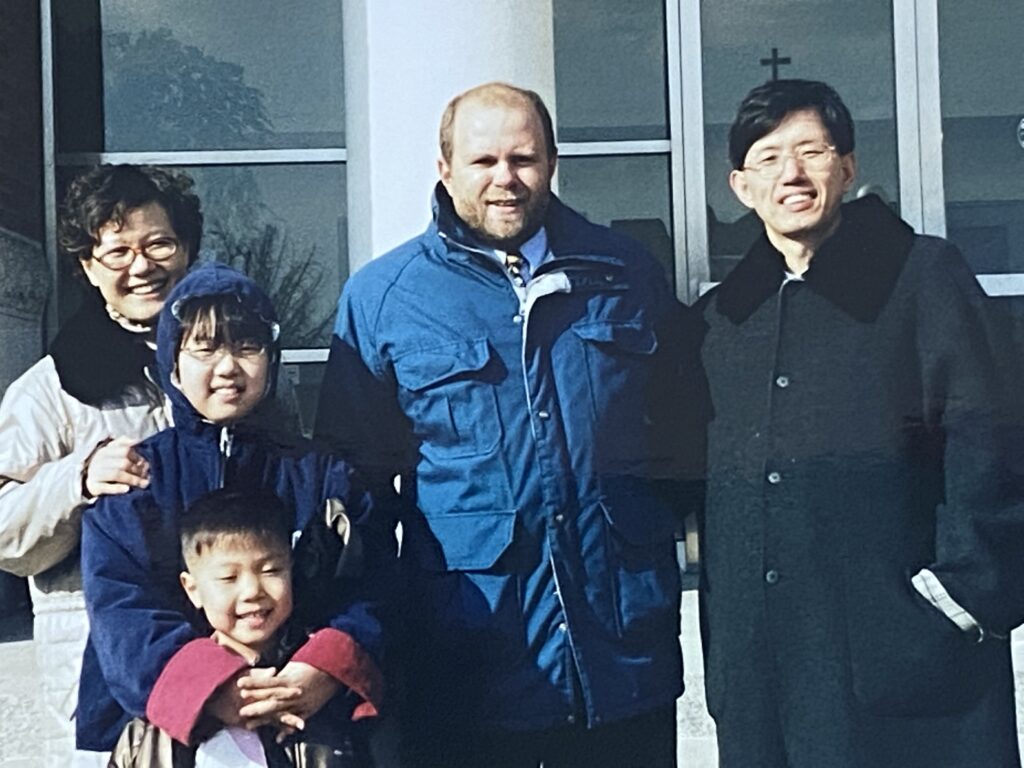
Last week, I wrote about my last day in Korea. This week, I’m resurrecting another story about that wonderful trip. I had taken a bus from Seoul to Wonju early on Sunday morning. Seung Hwan met me at the bus station. I preached to his congregation at the medical college in Wonju, then we spent the afternoon with a number of clergy in the area. One, I remember, was much older than us and had fled from the north before the Korean War. That evening I stayed in a retreat center east of Wonju.
That’s me with Seung Hwan and family
Monday morning, 4 AM
The sounds of the bell tolling down off the mountainside wake me. I turn on my flashlight. It’s 4 A.M. For a few moments, I lay on my back, the warmth of the floor soothing my body. Seung Hwan had told me the floor would stay warm throughout the night. I had my doubts, but it’s still warm even though when I sit up, the air above me is quite chilly. The caretaker had built a small fire with just a half dozen pieces of split wood in the hearth under the flooring late yesterday afternoon. And now, 12 hours later, long after the coals have died out, the floor retains the heat.
I pull on socks and my pants and thrown on a coat. Stepping out of the sleeping room, I slide on my boots in the bathroom. I don’t lace them up. While I don’t plan to be gone long, I want to be outdoors. The air is cold. My breath, when I exhale, appears as smoke. I walk over to a ledge in front the lodge, hoping my movement will ward off the chill. In the distance I hear a train making its way through the valley. Wonju lies to the west, still sleeping. The sky is clear, the rain and snow of the day before has moved out.
Orion stands, perched high above Wonju, just above the western horizon. I make out several other winter constellations setting in the west before I turn and look toward where the sound from where the bell tolled. The mountain is dark; it’s a couple of hours to dawn. I imagine the priest at the temple, in the cold darkness of morning, getting up daily for their prayers. I, on the other hand, am ready to get back in my warm bed. Sleeping on the floor has never been this good. My bed is on the floor, on top of a rice matt and between two thick quilts. I crawl in. It’s still warm. Immediately, I fall back asleep, only to awake when the sun pierces through a small window.
Inside the sleeping room at the lodge
In Wonju, Korea
I am on a two-week trip through South Korea. Yesterday, I had preached in Seung Hwan’s church at the Medical College.
He’d arranged for me to stay in this retreat lodge located just out of town, up in the foothills of the mountains. He’d given me the option of staying in a western hotel or traditional style lodging. I chose the traditional.
There are only a few others staying here, and none of them seems to speak English. We’re each assigned our own quarters consisting of a small bathroom with a toilet and sink attached a raised sleeping room. There are showers in the main lodge. There are no beds. The raised room has low ceilings, barely six feet high. The walls are mud. The floor is also mud with, I presume, slate or some kind of rock underneath. In the front of each sleeping chamber is a hearth. The fire in this hearth, which runs under the sleeping room, heats the floor. Once warm, the floor maintains its heat through the night.
Catching a bit of the Superbowl
Seung Hwan arrives shortly after daybreak. We have breakfast. It’s Monday morning and as we eat, we catch a bit of the Superbowl being played back in the States. St. Louis is playing Tennessee at the Georgia Dome. I try to explain the game to him. When it is over, we head out. We have a long climb ahead in Ch’iaksan National Park. We drive to the south end of the park, leave the car behind. Our packs contain heavy coats and crampons.
The Climb
We begin our climb on a dirt two track road. While the cities have modernized, rural Korea doesn’t appear to have changed much in centuries. We pass several small farms. Chickens run loose and dogs are penned behind the homes. After a few kilometers, the dirt road ends. We begin climbing a small path up into the mountains. The climb is steep, and we often have to stop and catch our breaths. Soon, the dirt and mud give way to packed snow and ice. We strap crampons onto our boots and continue climbing. It’s a long way up. Occasionally we hear trains making their way through the valley. There is a circle tunnel just south of us where the train makes a loop as it climbs into the mountains. There are few birds, but its winter. Although these are the Magpie Crags, I don’t see any magpies.
We take a break and eat lunch at a spring located below Sangwona Temple. Seung Hwan explains that pilgrims stopped here to bath and purify themselves before going to the temple to pray. The water is cold and refreshing. The wind comes up. We both pull on heavy coats, keeping in them on for the final climb.
The Temple
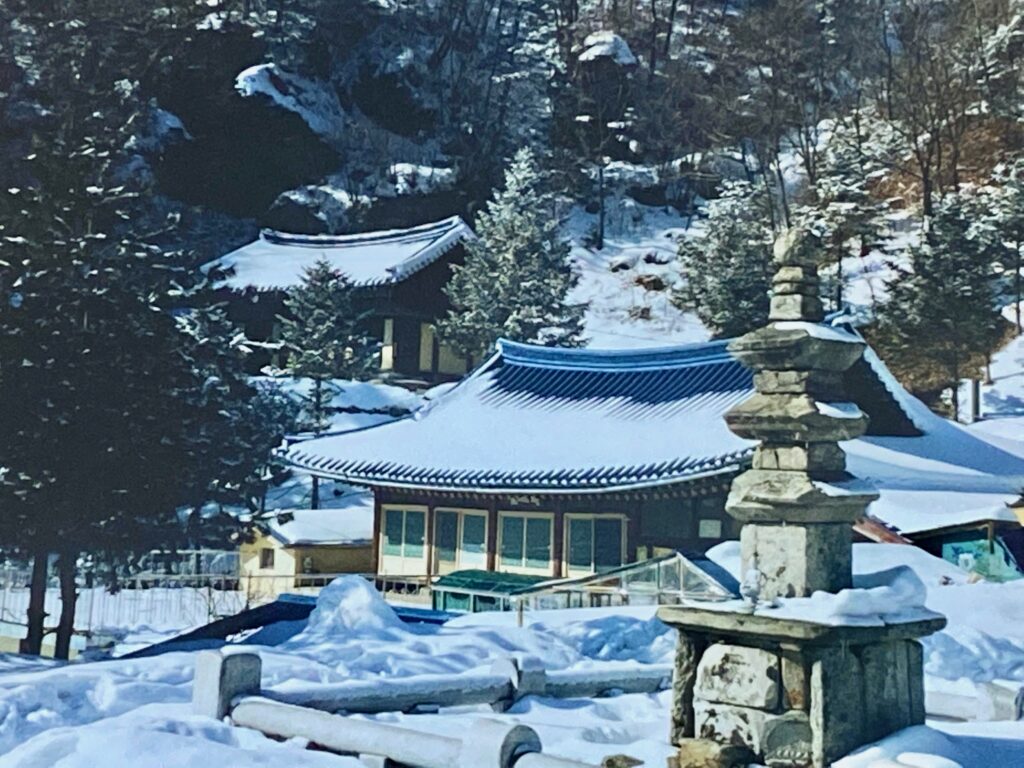
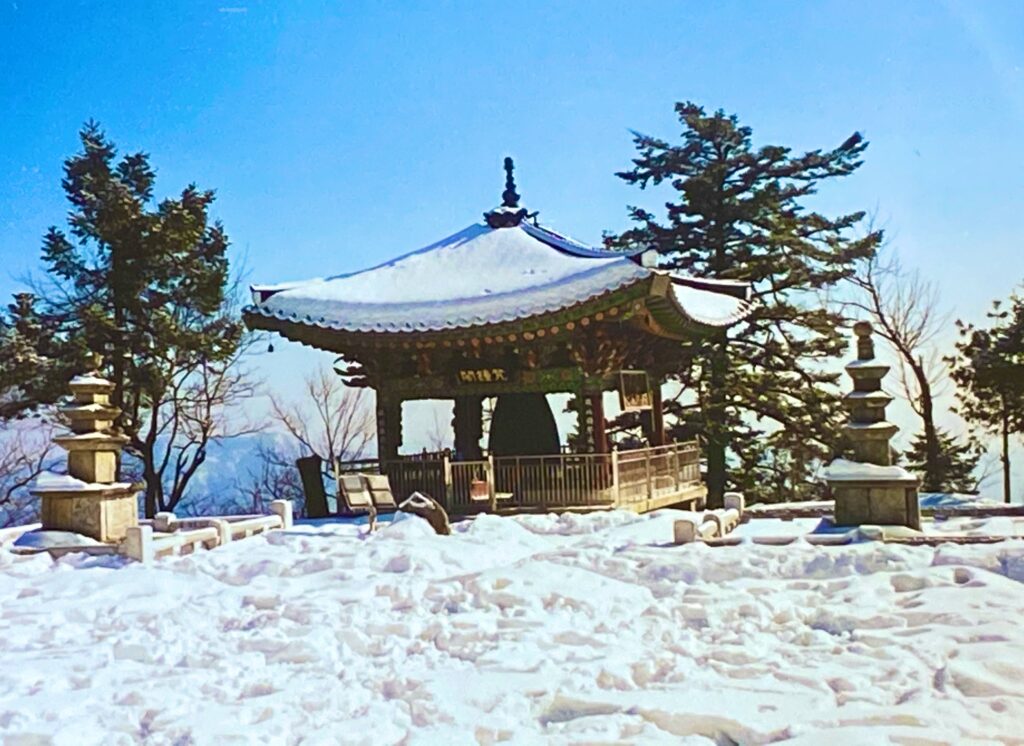
The temple appears to be deserted, although it’s well-kept. We see only one monk, walking away. The most notable feature of the grounds is the bell. Cast out of bronze, it’s as tall as me and mounted on the side of a ledge that looks out to the South. A large log, suspended from two chains, is used to strike the bell. The monks have taken precautions and have padlocked the bell so that tourist like us won’t ring it at an inappropriate time. I ask Seung Hwan if this is the bell I heard in the morning. “Probably not,” he said. “There are many temples in these mountains.” The bell I heard most likely was from the Ipsoksa Temple, located on the flanks of Mount Pinobong.
We take our shoes off and go inside the temple area. Several beautifully cast statues of Buddha are on display. Although we’re both Presbyterian, we are respectful and reverent. There is a holy aura about the place. I could stay here a long time, but we don’t want to be caught out in the dark.. Going down is easy. The spikes on our boots hold our feet on the icy spots. As we walk, I ask Seung Hwan about the temple and its bell. This is rugged country; it took a Herculean effort to build such a temple. I can’t imagine hauling the statues and wonderful bell up this incline.
The temple grounds
The Legend of the Magpies
Seung Hwan tells me the temple was built late in the Shilla Dynasty, at a time when Confucianism was taking root in Korea. Soon thereafter, under the Yi Dynasty, Buddhism was seen as an enemy of the people. Many of the temples were closed due to the lack of priests. Then he tells me a story.
Once Confucianism became entrenched in Korea, anyone desiring in a government position had to take a national exam at the capital. One day, a man passed along the mountains in which we’d been climbing, heading to take the exam. A kind man, as he made his through the valley in the shadow of the mountain we’d been climbing, he heard a bird cry for help. Looking around, he saw a snake squeezing the bird that would soon be its dinner. Feeling compassion for the bird, the man shot an arrow into the snake, killing it but freeing the bird.
Shortly afterwards, as it was getting late, the man came to a home. He knocked on the door and a beautiful woman answered. He asked for lodging and she agreed. She even prepared him a wonderful dinner. But after dinner, the woman turned into a snake and wrapped herself around the man, telling him that he’d killed her husband and now she was going to do the same to him. He begged for his life and the snake, playing with the man, said that if the bell rings three times before dawn, he’ll be spared. Otherwise, she’ll kill him in the morning.
This was a cruel reprieve. Both the snake and the man knew there were no monks living in the mountains to ring the bell. So, the man spent the night embraced by the snake, waiting for a fateful sunrise. But right before dawn, the man and the snake were surprised to hear the bell ring. The first time, it was very loud. Then it rang a second time, a bit weaker. Then they heard a very weak third ring.
The snake kept her word and allowed the man to go free. Instead of heading on the capital, he decided to climb the mountain and to see who it was that rang the bell. Sure enough, the temple was empty. But there under the bell was the bird that he’d saved the day before, its beak shattered from having flown into the bell three times. To this day, the bell is known as the “Compassion Bell.”
Another restful night
That night, back at the retreat house, a light breeze jingles the wind chimes along the porch. Tired and sore after climbing in the mountains, I immediately fall asleep upon the warm floor. Again, I wake at 4 AM with the toll of the bell. It’s more muffled than the morning before. I’m surprised I’m not sore from the climb. This sleeping arrangement is magical. And again, as with the morning before, I get up and go outside. A light snow falls, dusting the ground.
Jeff Garrison Bluemont and Mayberry Churches Hebrews 6:13-20 February 14, 2021 c2021
Sermon recorded on Friday, February 12th at Mayberry Presbyterian Church
At the Beginning of Worship: Today, as we continue working our way through the book of Hebrews, we’re reminded of the certainty of God’s promise. Christians are people of hope because God has given us his word. Our hope is not in our own doing, it is in Jesus Christ. As I’ve said all along, this book is about Jesus’ superiority in all things, including our hope. In the early days of the World Council of Churches, they expressed our Christian hope with this statement:
The hope of which we speak is something different from what [people] usually means when they speak of hope. In common speech “hope” means a strong desire for something which may be possible but is not certain. What is spoken of here is something that we wait for expectantly yet patiently, because we know it can never disappoint us.[1]
As faithful followers of Jesus, we place our hope in him and not in our own works or actions. We know of the promises God has made. We are securely anchored in such hope by our faith in Jesus Christ. That’s our message for today, and every day.
After the Reading of Scripture:
When I was younger and working for the Boy Scouts of America, I was involved with a national team to increase high adventure activities in council camps. Our goal was to encourage older scouts to return to camp by providing them an interesting program. Named Project COPE. (for Challenging Outdoor Physical Experience), we developed high ropes courses and taught the scouts the basics of rock climbing and teamwork. Of course, with scouts, safety was foremost. Having a scout climb up a vertical wall or cross over a two wire bridge some thirty or forty feet in the air involves risk.
On Belay
Such risk can be mitigated by using a top belay. A belay is a rope attached to harness of a climber. This rope will catch the scout if he falls. For beginning climbers, you always use a top belay, in which the safety rope runs directly above the climber so that the belayer can keep the rope taut. Often, if climbing on a short cliff, the belay rope would run around a stout tree and back to the ground below climber. There, the belayer watched and was ready if the climber slips. By keeping the rope tight and running it through a braking device, if the scout slips, he wouldn’t fall far.
For you see, if the scout weighed 125 pounds fell 10 feet, he’d create 1250 pounds of pressure. That’s a lot of stress on the rope, on their insides (where the harness is attached), and onto the belayer. It’s enough force to cause serious injury. But if the belay line is taut, the climber should not fall more than a few inches. They won’t experience extreme pressure and should be able to continue with their activities.
Belayed to God
There is a comfort to being belayed when there is a danger of a fall, whether climbing on rock or a roof. Metaphorically, this can also be applied to living faithfully as a disciple. The Preacher of Hebrews speaks of our souls being anchored to God. If God holds us, we should fear nothing. As the Psalmist proclaims:
For God alone my soul waits in silence, for my hope is from him. He alone is my rock and my salvation, my fortress; I shall not be shaken.[2]
Jesus Christ is our hope. Jesus is our belayer. There is no one else in whom we can place our trust. Yes, ever a good friend can disappoint us. If the one we trust to belay us in this life gets distracted, we can be in peril. But there is certainty about God’s promise as shown in Jesus Christ.
Confirmed with an Oath
Before getting to the part about the anchor to our soul being secured to God, the Preacher in Hebrews begins with a promise God made to Abraham. This was God’s third promise to Abraham, made after Abraham showed his willingness to sacrifice Isaac.[3] Speaking to Abraham, God secures his oath by his own name, because there is nothing higher.
When we think of someone making an oath, we raise the bar of what we expect from them. We often take an oath on a Bible, as with someone being called to testify in court or someone being installed into a position of authority. The one making the oath promises truthfulness or faithfulness. An oath taken with God’s name means that if we do not live up to our commitment, God can and should deal with us. For this reason, scripture warns us not to take such an oath lightly. It’s serious business.[4]
God, in order to comfort Abraham, takes an oath on his own name. As mere mortals, we make our oaths on God, that which is larger than us. But there is nothing above God. Hence, he makes the oath in his own name.
God wants Abraham to know that his word is good. By this point in his life, Abraham is up in his years. He has a twelve-year-old son, Isaac. God promises that through Isaac, a nation will be born. This is Abraham’s hope. He can go to his grave knowing that God will see through on his promise.
Oaths in our world
In our world, especially in Western Culture, we often have a much shorter timeframes than Abraham. It would be over 400 years before Abraham’s nation would be realized. We always want things to happen immediately, and easily forget that God plays the long game. The promise will be kept, the Preacher of Hebrews proclaims. But God has his own timeline.
God holding our anchor
The important thing is to remember that we’re secure in Jesus Christ. The anchor rode which safeguards our soul runs behind the holy of holies. Jesus, himself, has secured our anchor behind the veil. God holds our anchor.
You know, on a boat, when you drop anchor, you have to check and make sure it’s secured on the bottom. Most times, the water is not clear enough for you to see where your anchor is secured on the bottom. You only see the rope descending into the depths of the water. You tug the rope to makes sure the anchor is secure and you look at the angle of the line to makes sure it’s at the appropriate angle to best hold. And you have faith.
With our spiritual anchor rode running behind the veil, or into heaven, faith is also required. However, we can trust that we’re secure because we know Jesus, our high priest, who went behind the veil, has set our anchor.
Anchors are more important in inclement weather
Of course, just because we’re secured doesn’t mean that we’ll not have problems. The purpose of an anchor is to hold a boat in all kinds of weather. Likewise, with our spiritual anchor, God promises to hold onto us despite whatever happens to us in this life. Our hope isn’t that we’ll have no problems. Our hope is in Jesus Christ, who know the trouble we endure. Set your sights on Jesus, let him secure your soul so that regardless of what trial or temptation you encounter, your soul is secure.
Jesus our pathfinder
In the last verse of this passage, we’re told that Jesus is our forerunner. He’s paving the way for us. So, Jesus not only holds us securely, but he also cuts the path for us to follow.
Last week, in the previous passage where I spoke about motivation, I talked about a special campfire when I was a Boy Scout. What I didn’t say then, but you probably knew, is that these campfires included a bunch of silly songs. One had to do with the various ways you can’t get to heaven:
Oh, you can’t get to Heaven in an old Ford car, ‘Cause an old Ford car won’t go that far.
Oh, you can’t get to Heaven on roller skates, You’d roll right by them Pearly Gates…
And you can’t get to heaven in a limousine, ‘Cause the Good Lord ain’t got no gasoline…
There are an unlimited number of rhyming lines and throughout the summer, others would be added. But toward the end of the song, there were these lines:
If you get to Heaven before I do, Just cut a hole and pull me through.[5]
Conclusion
Of course, such a song is silly. This idea of someone pulling us into heaven is wishful thinking at best. But there is one who can “cut that hole and pull us through.” It’s our Lord, who has us on belay as we travel this world, holding us tight. We can have confidence in God’s promises made in Jesus Christ. For that, we should be grateful, and live our lives in hopeful expectation. Amen.
[1]”Christ: The Hope of the World,” report of the Advisory Commission on the main theme of the Second Assembly of the World Council of Churches (1954), in The Christian Hope and the Task of the Church. Quoted by John H. Leith, Basic Christian Doctrine (Louisville, KY: WJKP, 1993), 286.
[3] God made promises to Abraham three times. In Genesis 12:1-3, he promised him a great nation, In Genesis 15:5-6, God promised Abraham as many descendants as the stars. In Genesis 22:15-18, God (through an angel) promises Abraham that his descendants will be more than the stars and the sands on the seashore. Here, God swears the oath by his own name, as there is nothing higher.
In early 2000, I spent a two weeks in Korea, preaching and visiting friends and my parents (my father’s company had assigned him to a Korean factory making power plants near Pusan). I preached at a couple of churches, one of which had nearly 2000 in attendance at one service, which is the largest congregation to which I’ve preached. This tells of my last day in the country, as I took the train up the Korean peninsula to Seoul and then caught a plane for San Francisco.
Morning train to Seoul
It’s still dark when I board the morning express in Masan, heading toward Seoul. This far south, in this port and industrial city, the weather is chilly and wet but not really cold. I find my seat, stow my two bags overhead (a backpack and a suit bag) and push my jacket up against the window as a pillow. A pretty Korean woman sits next to me. She looks to be in her mid-20s and wears a dress and heels. We smile but when I speak, she shakes her head and says, “No English.”
Shortly afterwards, a whistle blows. The train jerks and my journey begins. I lay my jacket against the window, and my head upon it, alternating my time between looking and reading a book on Korean history and culture. Outside, fog mysteriously shrouds the streets lights.
Dark clouds hid the sunrise; all is gray. As we rush north toward Taegu City, we pass through many rural villages that seem the anti-thesis of Korea’s modern cities. Instead of concrete high-rise apartments, rural homes appear to have changed little over the past century. Most have small courtyards, protected by a high concrete walls. The house sits inside the courtyard, built out from the side of one of the walls. Smoke puffs from the clay pipes above these humble adobes. They use either coal, charcoal or wood fires to heat and to cook. All around the villages are fields for rice or vegetables, onions and cabbage and peppers. At Taegu, the woman next to me gets off.
After pulling out of Taegu, the train heads in a northwestwardly direction to Taejon City. This is mountainous country, but the hills are old and worn, like the Appalachians, not rugged and young like the Rockies. With the trees bare of leaves, I can make out the large nests of magpies.
Burial customs
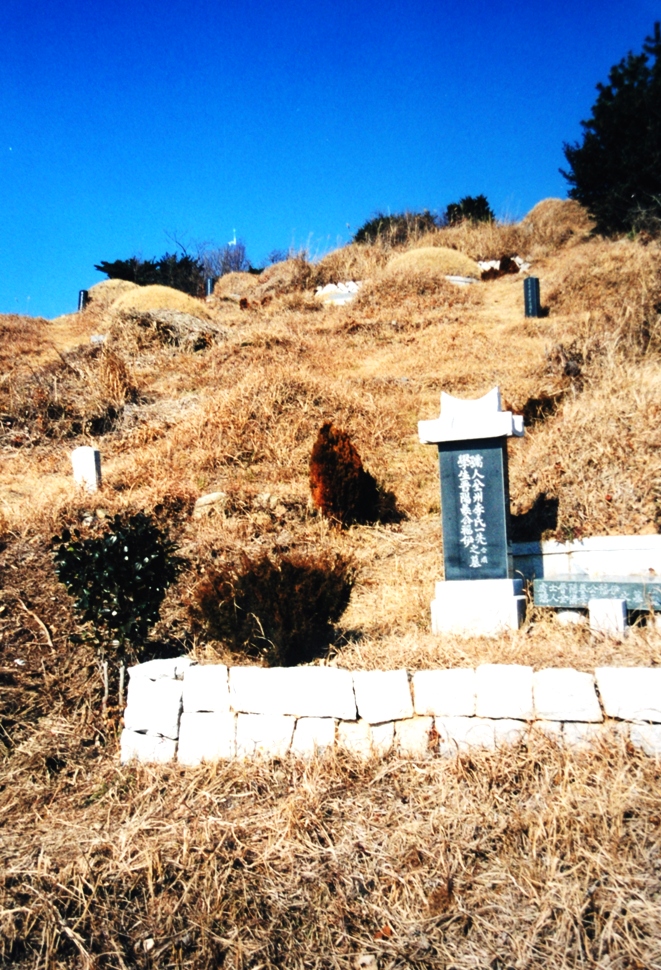
These were not the graves I saw from the train, but graves on Kojeto Island (where they seldom receive snow)
Dotting the hills in the rural areas are many mounts representing burial sites. They place coffins on the ground. Stones and dirt are piled up around it. The government banned this practice because it takes up too much land in a country where land is precious. However, I’m told some people still bury their dead in this manner. Only today, they do it at night, in order not to attract attention.
Yongdong atrocity
Here, snow covers the ground. The roads are icy. At a crossing, just beyond the railroad gate, catch a glimpse of two cars in the ditch and a wrecker working to pull one back onto the highway. Along this section, we pass Yongdong. Near here, during a hasty retreat during the Korean War, scared American soldiers opened fire on civilians, killing many, in a tragedy of the war. Although I am not sure exactly where the site is at, I think about as it’s been in the news recently.
From Taejon, the train races north toward Seoul, traveling through a highly populated area that’s mostly industrial and suburban. High-rise apartments dot the landscape and there are many factories. The train pulls into the station at Seoul a few minutes early. I retrieve my bags and head up an escalator to the main station, worried how I’ll be able to find my ride with so many people. There, at the top of the escalator, I’m pleasantly surprised to see Chanrank and Chang waiting for me. They suggest we stop and have lunch at a café across from the college where Chanrank teaches.
Chop Head Hill
After lunch, as we have four hours before I need to be at the airport; Chang asks if I still want to visit Chop Head Hill. When I had arrived in Korea two weeks early, I had asked Chanrank and her husband about this place. I immediately worried that I had insulted them, but her husband told me more about the place. As he was required to be at the university where he taught this day, Chang came along to take us there. Yes,” I said. I would like an to visit the site.
The three of us seemed to be an odd pair to tour this site scared to Korean Catholics. Like me, Chanrak is Presbyterian. Chang is Buddhist. We wind through the narrow streets north of the Han River in Chang’s car till we finally arrive at the the infamous bluff overlooking the river.
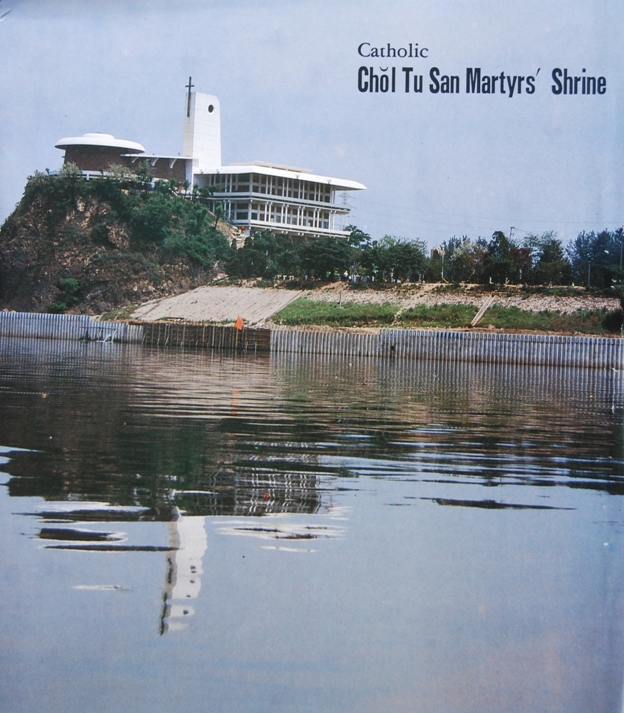
For years, this hill was the site for executions, where the heads of the condemned rolled down into the river. One of the artifacts is a round stone, looking somewhat like a millstone, which was used in the beheadings. The condemned had a rope tied around his or her necks. The rope ran through the hole in the middle of the stone. One of the executors would pull the head of the condemn through the stone while the other used an ax to remove the head from the body.
In the middle of the 1860s, the French tried to gain a foothold in Korea. Sending a gunboat up the Han River, they shelled Seoul. The emperor, seeking a way to cleanse his country of the foreign devils, ask his shaman what to do. They suggested the execution of all Christians in Korea.
Catholic massacre in 1866
In 1866, the Korean emperor ordered the extermination of Korean Christians. At the time, almost all Korean Christians were Catholics. Priest from China converted most of these Christians. Members of churches were bound in chains and dragged across the nation to this place, where they were executed by beheading.
After a decade of tension, in the late 1870s, the French and Korea signed a treaty that guaranteed religious freedom for Korean citizens. In the aftermath of this treaty, Protestants missionaries—especially Presbyterians and Methodist—flooded into the country. In all of Asia, only the Philippines have more Christians than Korea. About 40% of the population claim to be Christian, half of which are Presbyterian. Another 40% of the population is Buddhist. On the hundred anniversary of the martyrdoms, the Catholic Church built a shrine in the honor of the martyrs. Known today as Chou Du San Martyrs’ Shrine or it’s English equivalent, “Chop Head Hill.”
Yongdo Full Gospel Church
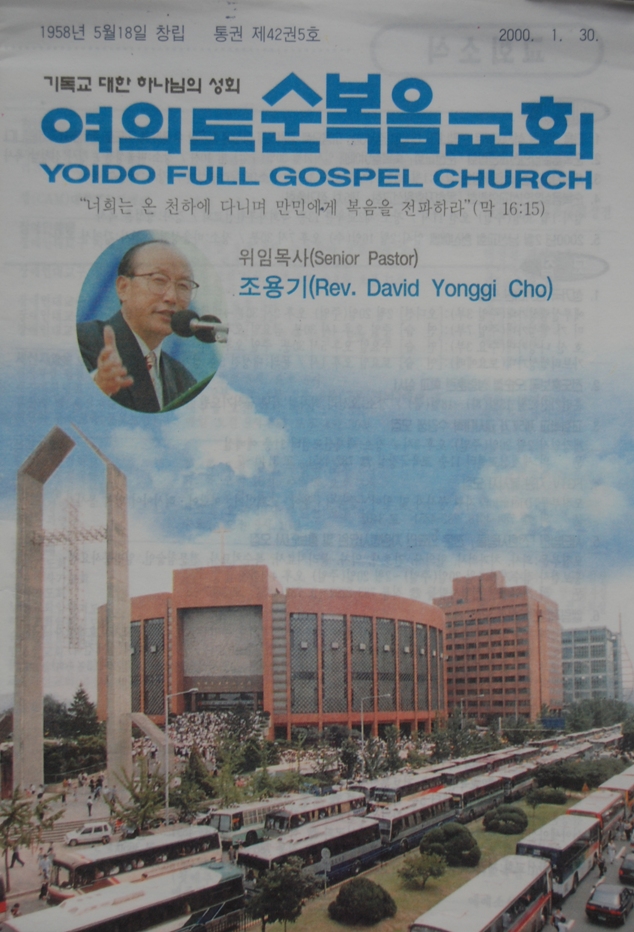
As we still had two hours before we had to be at the airport, we swung by the Yongdo Full Gospel Church. An independent Pentecostal Church with roots in the Assembly of God, they claim to be the largest congregation in the world with 750,000 members. We quickly tour the church. Chang, a Buddhist, seems especially proud of the idea that his country has the world largest church. The sanctuary looks a look like a basketball area and seats nearly 20,000. Although large, I’m left to wonder where everyone worships. Even with their five worship services on Sunday, they would only be able to have 20% of their members member’s present.
After visiting the church, we rush to the airport. After checking bags, we have time for a cup of tea before I have to go through security. I shake Chang’s hand and hug Chanrank, then head through security. In an hour, I’m flying east and sleeping the night away on a Singapore Air flight to San Francisco.
Jeff Garrison Bluemont and Mayberry Churches February 7, 2021 Hebrews 5:11-6:12 c2021
With the possibility of more bad weather tomorrow, I am posting this earlier and including an outline of the bulletin along with announcements for both churches. -Jeff
Sermon taped on Friday, Feb. 5, 2021 at Bluemont Presbyterian Church
At the beginning of worship
In our worship today, I want you to ponder a question. What does it take to be motivated? And I want us to grapple with this question in light of a Christian truth. As Christians, we’re called to move.[1] We’re not to be couch potatoes.
In the Book of Acts, one of the early names of our faith, even before being called Christian, is “The Way.”[2] In the Gospel of John, Jesus speaks of himself as the way, along with the truth and life.[3] The Christian life is a journey. John Bunyan named his classic allegory of the faith, “Pilgrim’s Progress.” As Christians, it’s not enough to just be “born again,” and to leave it at that. We are called to grow in faith.
In our Reformed Tradition, the theology of the Presbyterian Church, we speak of “reformed yet always reforming” as we’re guided by scripture and the Holy Spirit.[4] As Christians, living in this world, we’re not to rest on our laurels. We’re to strive to better ourselves and to strengthen our connection to God. As long as we’re in this life where sin is prevalent, we can improve. So how do we get motivated to grow in our faith?
How do we motivate?
We motivate dogs with treats. We speak of dangling carrots to encourage someone to reach a goal. Some people use fear to motivate others, which may get results and may also cause resentment. Employers use bonuses to motivate employees. Groups call for teamwork to get everyone doing their part. There’s lots of ways to motivate people, but what’s the best way to get us focused on “the Way of life?”
We’ll see in the Book of Hebrew this morning that motivation isn’t a new problem. The preacher in this book uses what we might call “reverse psychology” to encourage his listens to get their butts in gear. This week, I’m reading the scripture in The Message translation. Read Hebrews 5:11-6:12
After the reading of scripture:
One of the proudest moments of my life occurred at Camp Tom Upchurch, which I attended when in Boy Scouts. The Wednesday night campfire was a big deal. As the light drained from the sky, a staff member would light an arrow that had been wrapped in cloth in the campfire. He’d then draw back a bow, sending it flying up in the sky only to fall like a meteor into the waters of the lake. Then, in the distance, we’d hear drums. Out on the lake, as if coming out of a mist, appeared a canoe. An Indian chief stood in tall in the center, illuminated by a lantern in the bottom of the canoe. Two braves paddled. Everyone wore native ceremonial dress. We watched, spellbound.
When the canoe pulled ashore, the chief danced into the crowd of scouts. Turning quickly, he tapped on a shoulder of a boy and lifted him up. One of the braves took him out front to stand. This happened a number of times. When the chief got to me, I was startled when he turned and tapped on my shoulders. He lifted me up off the bench and one of the braves whisked me to the front with the others. We had been selected to become a part of the Order of the Arrow.
I wasn’t really sure what was happening. I didn’t know I had been chosen from all the scouts in my troop until the moment the chief turned in front of me. But this was only the beginning of a journey. Yes, we had been chosen. But to be inducted in this fraternal organization, we had to endure an ordeal.
The Ordeal
A few weeks later, I was back at camp. The ordeal started Friday night with a campfire. Those of us who were to undergo the ordeal could only bring a blanket, poncho, and knife with us. We were put under an order of silence, for 24 hours, then taken out into the woods where we spent the night by ourselves, accompanied only by mosquitoes. We were ordered to stay at our assign spot till morning. And before we were picked up, we had to carve an arrow.
It was a miserable night with mosquitoes swarming and the distant flashes of lightning threatening rain that never came.
The next morning, they gathered us. We were given a string for our arrow to be tied around our necks. If we talked, a notch was carved into the shaft of our arrow. Three notches and you were out. They served us a runny egg on a piece of white bread for breakfast, along with some juice. Then it was time to work.
Somehow, I ended up on the crew to repair some gullies along the lakeshore. We hauled old mattress springs and staked them into the gullies to deter erosion. Then half of us went to a sand pit where we shoveled dirt into the back end of trucks. The other half of the group unloaded the dirt into the gullies.
Occasionally, we had a water break. It was hot. Lunch was a slice of bologna between two pieces of bread. There were no condiments.
The Reward
That evening, after the work was over, we were allowed to shower and put on our dress uniform. Starved, I enjoyed the best meal I ever had in a scout dining hall. We still couldn’t talk, which was fine because our mouths were busy being stuffed with food. Then there was another campfire. We were given our sashes and welcomed into the fellowship. I was proud.
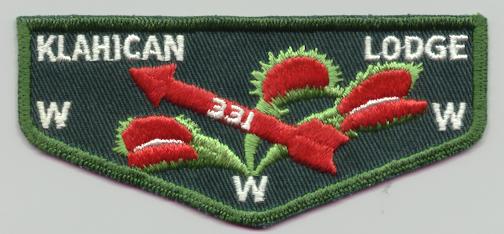
Our Order of the Arrow Lodge Flap
When I got back home, I told my mom about the ordeal. She couldn’t believe it. “You mean, all I have to do to get you to work around here is to promise you a reward if you keep your mouth shut and work hard? My pride was tempered.
Ongoing progress
But you know, there was motivation involved because I wanted to be a member of the Order of the Arrow. I still look back fondly on that experience, but like the Christian journey, it didn’t stop there. There were further levels to go as I moved up in the organization and was able to shepherd others into the fellowship.
Exploring the text: Reverse psychology
The preacher in Hebrews has a problem. How can he encourage his audience, some of whom are tempted to leave the faith? How can he rally the troops? You know, we should all desire to please God, but it doesn’t always work that way. Sometimes we need motivation.
The writer of Hebrews knew this. He first tries a form of reverse psychology, shaming his listeners. He knows they can be better but suggests that they’re just like infants. They need milk, not solid food. To borrow a term from boxing, that’s a low blow. But as he berates them, he also notes they should, by now, be teachers. They should have the foundation of their faith in Jesus Christ laid and be building up it. So, he encourages them to get busy because he has high hopes for them.
A warning
But then, after encouraging, he lays out a warning in verses 4 to 8. If they have experienced God’s goodness, if they have a taste of heaven, and then turn their backs on the faith, they will be lost. As a shepherd of the faithful, the preacher of Hebrews undoubtedly knows the tragic feeling of having those who are under his care and guidance, lose their faith and slip away. It hurts. He realizes this just doesn’t burden him, as they metaphorically “re-crucify” Jesus.
The preacher then moves to a new topic, at least for him. Agriculture metaphors are common in scripture. Jesus speaks of how we’ll be known by the fruit we bear.[5] If our harvest is of weeds, God’s not going to be impressed! We get the sense here of a warning that is similar to the unpardonable sin, the sin against the Holy Spirit.[6] If we ignore God’s call to turn around, sooner or later it’s too late. We won’t have a harvest to show for our discipleship.
The Preacher’s hope
The good news in this passage is that our author/preacher doesn’t think this will be a problem for his listeners. He senses that the God who knows all will see their love as shown in how they care for the needy. For this reason, they should have hope and continue on the course they’re on.
The need for truth about our condition
This passage may seem harsh, in places, but we need to understand the truth about ourselves and about God if we want to enjoy life to its fulness. The Russian writer Anton Chekov, in his notebooks wrote, a person “will only become better when you make him see what he is like.”[7]
There are times when we need to hear the truth. The wake-up call that the preacher gives his audience in Hebrews hopefully is enough to make them sit up in bed and ask, “What should I do.” Not only is the wake-up call harsh, but there is also a high expectation. However, this is tempered with a confirmation that the preacher believes they rise to the occasion. The judgment is tempered with encouragement and hope.
Hopefully when we hear the truth from someone, it will be done as gracefully as we have in these verses. Furthermore, if there is someone whom we need to give a truthful message to, we should make sure our message is as gracious as the preacher from Hebrews. Amen.
[1] Thomas G. Long, Hebrews (Louisville: WJKP. 1997), 72.
[2] In Acts 9:2, those following Jesus were said to belong to “the Way.” The use of the word “Christian” is first mentioned in Antioch in Acts 11:26.
[6] See “The Second Helvetic Confession,” Chapter XIV, “Errors” (5.102)in Presbyterian Church USA, The Book of Confession.
[7] Ideas and quote from “William H. Willimon, Sinning Like a Christian: A New Look at the Seven Deadly Sins (Nashville: Abingdon, 2013), x-xi.
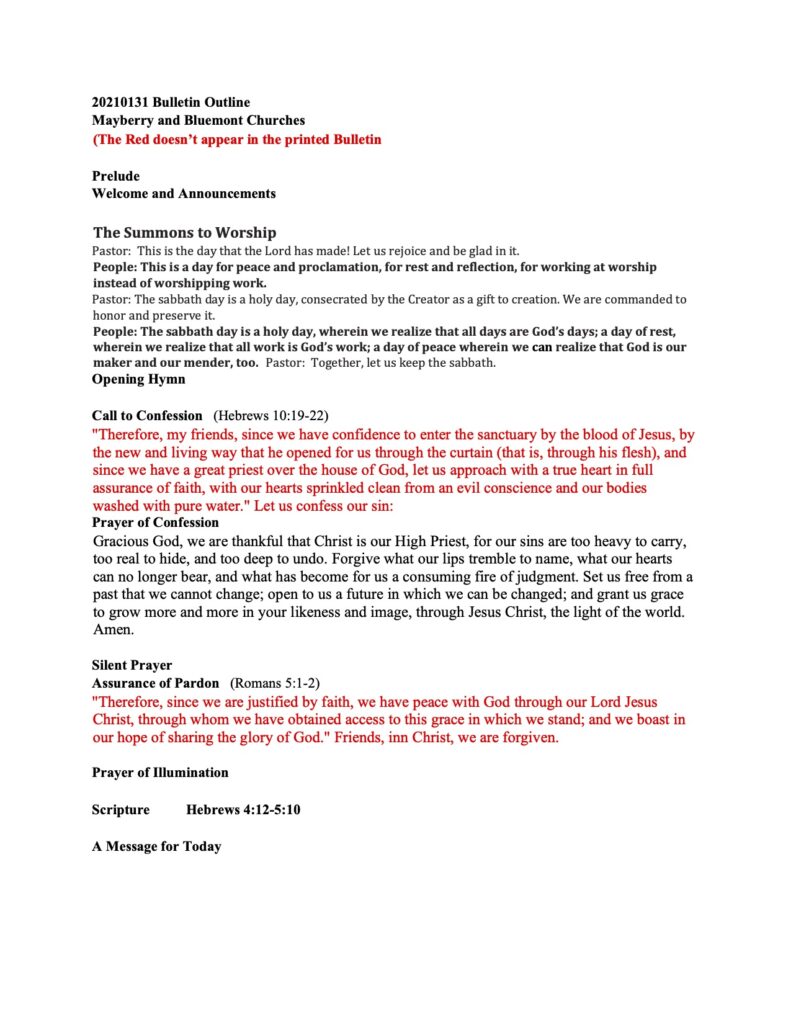
Bulletin outline
Announcements Bluemont Church
Sunday School is each Sunday at 9:30 a.m. in Fellowship Hall.
Calendars for February are in the narthex.
Continuing on Monday, February 8, at 1:00 p.m., the pastor will hold the “Zoom” Bible study of the previous week’s sermon along with the upcoming week’s scripture readings. It will only be available virtually. On Monday mornings, you will receive an email with an invite for the Bible Study. To attend, please send an email to the pastor at parkwayrockchurches@gmail.com.
The Session will meet following the worship service on Sunday, February 14.
Communion will be observed on Sunday, February 14. Everyone is invited to participate.
Note: The date for the Souper Bowl collection for Carroll County Social Services, which provides medicine and fuel for the elderly, will be rescheduled.
For bulletin announcements, please contact Lil Puckett by Thursday of the week at 276-398-2238 or email her at lillianpuckett@outlook.com.
If you have a need to contact Rev. Dr. Jeff Garrison, you may reach him on his cell number 269-804-9793 or email him at parkwayrockchurches@gmail.com. His mailing address is: P. O. Box 140, Laurel Fork VA 24352. Visit Pastor Jeff’s blog at https://fromarockyhillside.com .
Announcements Mayberry Church
Today’s bulletin insert describes God’s Souper Bowl “Multiplication Miracle” … Please take a moment to read about its … Presbyterian beginnings, astonishing growth, remarkable impact upon hunger across America, and history here at Mayberry … Then join with members and friends of Mayberry who have generously supported this effort for 20 consecutive years. Please use the envelopes found in today’s bulletin … and make it 21 yearsa!
Monday (2/8) – Zoom Bible Study – 1:00-2:00 pm
Tomorrow, Pastor Jeff … will be leading our second “Zoom” Bible Study. Each Monday participants receive an invitation from Jeff that enables them to make the “Zoom” connection. The invitation also includes questions that will guide discussion of …
(1) yesterday’s sermon and (2) next Sunday’s scripture passage.
What’s unique about this approach? Well, we receive a deeper understanding of Sunday’s sermon, and we get ready to receive next Sunday’s sermon messages.
The “Zoom” discussion begins at 1:00 pm and lasts up to an hour. To sign up … please send an email to Pastor Jeff at parkwayrockchurches@gmail.com indicating you’d like to be involved and you’ll be “good to go”! Those who signed up for last week’s study … need not send an email.
Monday (2/8) – Addiction Recovery Support Group – 7:00 pm
Persons fighting addictions gather on Monday evenings for prayer and mutual support to strengthen their use of the AA’s 12-step discipline. Somebody you care about may be fighting an addiction that is limiting the blessings their life with the Lord will bring them. Call Deborah Reynolds, at 276-251-1389, for more information.
Tuesday (2/9) – Session Meeting – 1:00 pm
Lots to do for the Lord See the next announcement for the kinds of things that your session will be grappling with as it continues to deal with balancing our health and our spiritual needs. Please share thoughts you may have with Pastor Jeff,
or any of our elders – Richard, Mary, Shep, Martha, or Rick.
February’s Calendar – Lenten/Easter Season
February’s Calendar is included in this morning’s bulletin. The Lenten Season begins next Sunday (2/14) … Ash Wednesday follows on (2/17) … Palm Sunday and the beginning of Holy Week on (3/28) … and Easter Sunday on April 4th.
The Session has not yet mapped out our full set of plans for 2021’s Lenten/Easter Season, and is considering how Covid will impact our Easter celebrations. For example, do Covid restrictions prevent our normal Imposition of Ashes service on Ash Wednesday? Can we add an Easter Sunrise Service to our Easter Sunday celebrations? Stay tuned … decisions are on the way!
Meadows of Dan’s January 27th Blood Drive Results
A nice turnout at our January 27th Blood Drive produced 34 units of Blood. We’re told by the Red Cross that those donations will have a lifesaving impact on 102 persons needing medical care.
The Red Cross also tells us that they have received nearly 300,000 fewer donations since Covid infections surfaced last March. Our next blood drive will be March 24th. We hope you will join us that day. More important we hope you will call
1-800-RED-CROS and schedule your time for donation. You can do that beginning as early as March 1st.
Fishes & Loaves God’s Multiplication Miracle
This morning … for the 21st consecutive year Mayberry is again participating in the Souper Bowl of Caring’s hunger offering. Over that span of time, $6,234 has been received from folks who worshipped at Mayberry on those Super Bowl Sundays. And, again this year, gifts received today will shared with hunger ministries right here on the mountain.
This nationwide “one–Sunday-only” hunger relief effort has Presbyterian roots. 26 years ago a prayer by Brad Smith, the youth group leader at Spring Valley Presbyterian Church in Columbia, SC, gave birth to the idea to use the Super Bowl weekend to collect gifts of food and money for hungry neighbors. Spring Valley’s youth group invited 22 other church youth groups in Columbia to join their effort. And …“Fishes & Loaves! … God’s Multiplication Miracle!“
Those kids raised $5,700 to fight hunger.
Since then, the idea of fighting hunger on Super Bowl Sunday has become a nationwide movement. Today church youth groups are joined by entire congregations, unions, businesses, and more; and, in its 29 years of existence, the Souper Bowl of Caring has raised over $100,000,000 for local hunger charities such as back pack programs, food banks, soup kitchens, food box distributions and more.
As we have done in the past, won’t you share your blessings today with nearby neighbors in our mountaintop communities? Envelopes are in today’s bulletin; and your gifts may be placed in the offering plate as you leave worship.
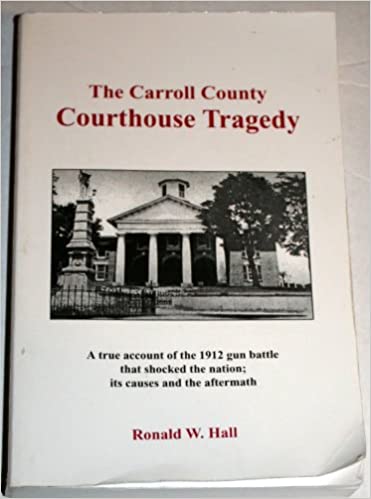
Ronald W. Hall, The Carroll County Courthouse Tragedy (2013 printing, Hillsville VA: Carroll County Historical Society,1998). 272 pages including sources and a few b&w photos.
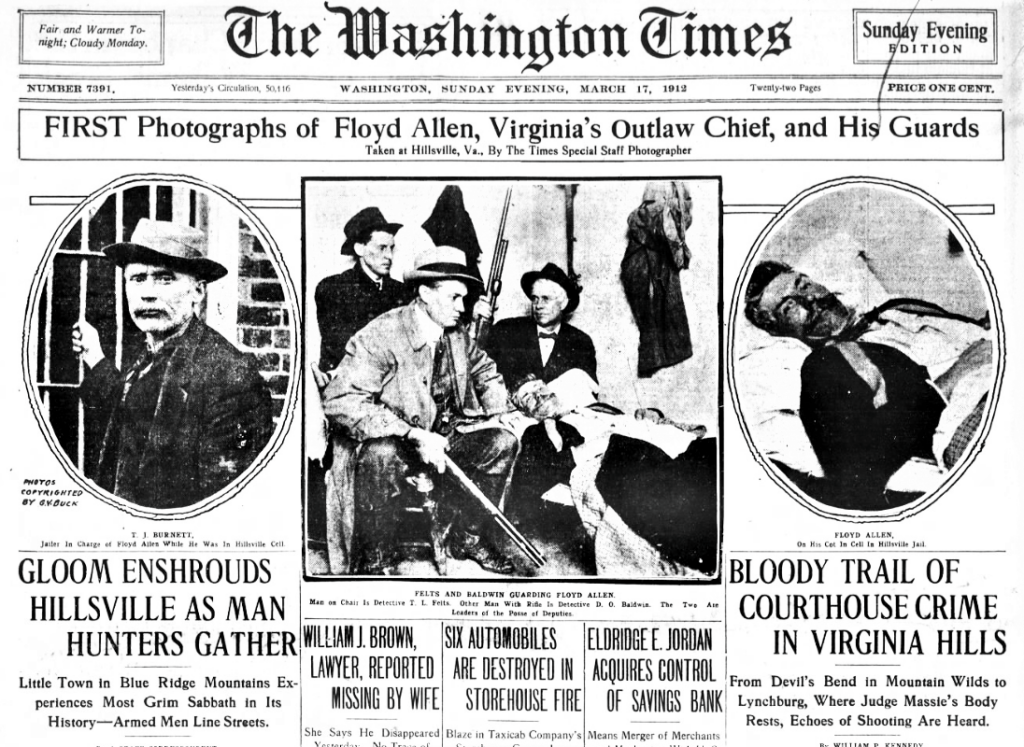
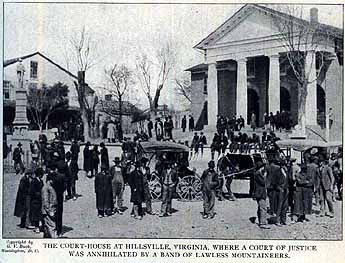
This is another book that I’ve read in order to learn about my new locale. In March 1912, there was a shooting at the Carroll County, Courthouse in Hillsville, Virginia. When all the smoke cleared, there were five dead, seven wounded. Two were executed and a number went to prison for their part in the tragedy. For a while, Hillsville was at the top of the nation’s newspaper. It would take another tragedy, the sinking of the Titanic, to remove the focus from Carroll County.
The shooting
The shooting began after the jury had found the defendant, Floyd Allen, guilty of forcefully releasing two prisoners (his sister’s sons) from law enforcement as they were bringing the prisoners back from Mt. Airy, North Carolina. The sentence would have had Floyd do time. Supposedly Floyd said, as the Sheriff and the Clerk of the Court approached to take him into custody, “I’m not going.” The shooting then started. There is still question as to what happened and who shot first. Was it Floyd’s son Claude? His brother, Sidna? Or the Clerk of Court Dexter Goad, who seems to have first pulled a gun? In the confusion there was a lot of shooting. Floyd, with a concealed pistol, began to shoot, but only after the mayhem began. When it was over the judge and the sheriff laid dead. Floyd had been seriously wounded. Those involved on the Allen side ran away. Some later turned themselves in. Others were captured. Two of whom, Sidna and his nephew Wesley, in Des Moines, Iowa where they were starting a new life.
What led up to the shooting
There are many questions as to what led up to this event, but it seems to have begun with Wesley Edwards getting a “red ear of corn” at a corn shucking. To find the “prized ear” meant he could kiss any girl there. The girl he chose to kiss led to a later fight at a church and resulted in a warrant for his arrest. The author also hints there were issues between the Democratic Allens and the Republicans who made up much of the “courthouse crowd.” If that’s the case, those against the Allens saw a way to get back at them. Family loyalty also played a role as the Allen/Edwards family stuck together to protect the Edward boys and later Floyd.
After the Edwards were charged with assault, they fled across the North Carolina border to Mt. Airy. The sheriff in Hillsville had the boys arrested there and handed over to his deputies at the state line. However, no extradition order was issued. As the deputies were taking the Edwards back to Hillsville, Floyd “released” the boys from custody. There are even questions as to what happened here. Did Floyd force their release or were they released into his custody? After all, he agreed he’d have the boys in court? Floyd even paid their bail.
newspaper copy from the Carroll County Historical Society website
The aftermath
The police of 1912 were not exactly professional. Officers often had a violent past. And forensic science was almost non-existent, at least in rural areas. No one secured the courthouse as a crime scene. Soon afterwards, folks dug bullets buried in the walls as souvenirs. Such tampering hindered the ability to link bullets to the guns fire or the direction from which they came.
With the death of the Sheriff and so many of the Allens on the loose, the state sent help. It also hired Baldwin-Felt hired detectives (a group like the Pinkertons). These mostly came from recent labor disputes in coal country and their mannerism didn’t endure them to anyone, it seems. Some of the detectives bragged about how many miners they’d killed. As if entitled, they took what they wanted or needed. In one case, after having ridden their horses to death, two of them took a man’s mules from his plow in the middle of the field.
After the shooting, because of the number of Allens in Carroll County, they housed the prisoners in Roanoke. Their trials took place in Wytheville. Convicted on capital murder, both Claude and Floyd were sentenced to death. Other members of the family received long sentences. There was a massive effort for the governor to commute the sentences of Claude and Floyd, including a petition with over 100,000 signatures. But the governor refused. The execution of father and soon occurred in 1913. The remaining prisoners received pardons (from a different governor) in the 1920s.
My recommendations
This is an interesting story of a time long past. There are still questions to be answered, but they probably never will be answered. The author is honest and at many times in the book admits we won’t know for sure what happened. Hall has done an outstanding job researching this subjectt.
I enjoyed the book even though it took me a while to get into it. The book begins with character sketches of the various parties involved. Not knowing all the details, I wasn’t sure what to do with this information. However, once the story began, it flowed better. This story could have been written in a Creative Non-Fiction genre. Doing so, the “opening details” could easily be incorporated into the larger narrative. Also, there were places where the author seemed to go out onto a tangent, such as explaining how electrocution became a means of capital punishment used on Floyd and Claude. This sideline didn’t add to the story. That said, I am glad to have read the book and I’ve learned more about this area.
From the Carroll County Historical Society website
As we are expecting bad weather tomorrow, with snow overnight topped by freezing rain early in the morning, worship services at Bluemont and Mayberry Churches are cancelled. I have included copies of the bulletins and announcements from each church at the bottom. Stay safe!
Sermon recorded on January 29 at Mayberry Church
Jeff Garrison Mayberry and Bluemont Churches January 31, 2021 Hebrews 4:14-5:10 c2021
At the beginning of Worship
We’re continuing our study of the Book of Hebrews today. As I have reinforced each week we’ve been in this book, its central theme is the superiority of Christ. Today, we will read that Christ is our high priest, but this is just a way to say that Jesus is superior to the priests of the temple during Jesus’ day. Priests served as the link between a holy God and a sinful people. But as the High Priest, Jesus replaces the need for other priest and opens the door that we all might be in fellowship with the divine. To say this another way as we’ve seen in Hebrews, Jesus adopts us into God’s extended family.
Let me say give you another tidbit about how Hebrews is constructed. I’ve talked before about how the author builds on what’s already covered to make his case. Another trick the author uses is to drop hits as to where he’s going. While this section is about the role of Jesus as a high priest, he’s already mentioned this role of Jesus twice before.[1]Furthermore, in this section, with Melchizedek, the author drops hints about where he’s heading. He’ll come back to him in the 7th chapter.
After the reading of the Scripture
Let me start with an interesting footnote on this section of scripture that I just read. I’ve pointed out before that chapters and verses were not originally a part of the scriptures, that they were added centuries after the text were written as a way to help us find things. Because of this, verses and chapters can be somewhat arbitrary. This section, which begins with the 14th verse of the 4th chapter is such a case. Some older translations including Tyndale’s English translation and Luther’s German translation began Chapter 5 with verse 14.[2] This is a reminder that the new chapters don’t always mean new thoughts, as we see here.
A True Story
Let me tell you a true story. When I was sixteen, four months after passing the driver’s test and getting my license, I was in an accident. It was early Sunday afternoon. My father was working this day, so mother took us kids to church. On the way home, she let me drive. I felt so big. It was also a blessing that mom was with me, right beside me in the front seat. This mean she knew I wasn’t to blame for the accident. Had she not been there, I’m sure it would have somehow been my fault.
We were driving down Shipyard Boulevard, which had three lanes heading east. I was in the far-right lane as my turn was only a few streets ahead. Suddenly, a car in the far-left lane made an immediate right-hand turn. The woman driving must have realized she was about to miss her turn. She cut across two lanes of traffic.
I slammed on the brakes and T-boned her car in the front quarter-panel. This was in 1973. I was driving a car built in 1969, before cars came with shoulder straps. I remember flying through the air, then the waist belt caught me. I was then thrown forward and hit my head on the steering wheel hard enough to crack it. See, I now have an excuse. Any mental challenges I can blame on that accident.
I was knocked out. A policeman and an ambulance came. I was whisked away to the emergency room. With me gone, our neighbors who were leaving their church, happened to drive by. They gave my mother and siblings a ride home. My mother called my father where he was working. He came to the hospital to check on me. As we were leaving, the police officer came to the hospital with a citation. He charged me with “following too close.” I was furious. I told the cop he was crazy. My father immediately grabbed me and told me to be quiet.
Dad then asked the officer about the accident and the position of the cars. After explaining that I hit her car in the front passenger quarter panel, my father, very calmly said, “Jeff’s right. There’s no way he could have been following too close.” The officer said, “Well, that’s my findings.” My father response was, “We’ll see you in court.”
The Neighbor to the rescue
Now, remember the neighbors who picked up my mother and siblings. The father just happened to be a State highway patrolman. When he heard I was charged with the accident, I think he was even more incensed than my father. That afternoon, he took my father and me to the scene and we measured everything off and took pictures. Then we went to where they’d towed the cars and took more pictures. Then he drew up on a large sheet of paper the accident and wrote up his findings. Because he worked for a different agency, he did not feel he could take this information to the police department. Instead, he told my dad to give to an attorney. And he said if the attorney had any questions, to call him.
Now, I was a bit upset over the reason he told my dad to obtain an attorney. “You don’t want a sixteen-year-old on the witness stand by himself,” he said. “The DA and the officer could get him (that’s me) confused and the trial might not go well.” So, my father hired an attorney. We met with him for maybe 15 minutes. He took all the drawings and photos and said, “I think I can take care of this.” I didn’t even have to appear in court. Her insurance paid for the accident and the citation was thrown out.
The Need for an Advocate
While I was a cocky 16-year-old, who didn’t think I needed an attorney, there’s something good about having an advocate, one who can help plea your case. This goes both in a courtroom and before God. That’s why, in the Old Testament, you had a high priest. This dude was to take the petitions and our confessions of the people to God. The high priest was to seek mercy on our behalf.
Last week, we learned that the Book of Hebrews encourages us to “take a break.” We have the Sabbath which serves as a foretaste of paradise, an eternal rest. We can rest because God is active in our lives and world. Where this activity is best seen is in the life and work of Jesus Christ. Not only can we trust ourselves to take a break because Jesus watches over us, but Jesus has us eternally in his hands.
What is our confession?
Because of whom Jesus is and what Jesus has done, the author/preacher of Hebrews calls on us in the first verse of our reading to hold fast to our confession. Now, when we think of our confession, we might think of the Apostles’ Creed, or the even older Nicene Creed. While these creeds flesh out our knowledge about Christ, especially our understanding of the incarnation (God with us) and the Trinity, there’s an even older creed that we see in the writings of Paul. “Jesus is Lord” is perhaps the first basic Christian Creed.[3] Such a creed fits right into Hebrews emphasis on the superiority of Jesus Christ.
By affirming this creed, that Jesus is Lord, or Jesus is superior, we acknowledge our relationship to Jesus, but we are also acknowledging that Jesus does something for us no one else can do. We get into this special work of Jesus as we look at the work of the High Priest.
Jesus as the High Priest
There are a number of essential characteristics of the High Priest that’s outlined in the first ten verses of Chapter 5.[4] Such a priest must sympathize with our weakness. This highlights the importance of the incarnation. Jesus had to become one of us, in order for him to understand what we must endure in this life. The High Priest must be a mortal. Jesus, by becoming human, fulfills this. But unlike the High Priests of the temple, who had to do special sacrifices to purify himself before he could offer the sacrifices for the people’s sin, Jesus sinless state allows him to make that sacrifice for us. The author will go into more detail about the sacrifice later in the book.
Another characteristic is that High Priest position isn’t something for which one can strive. It is a position that must be chosen by God. The Preacher of Hebrews highlights this with two quotes from the Psalms. The first quote, from Psalm 2:7, “You are my son, today I have begotten you.” We’re already heard this quote in the opening paragraph of Hebrews and the opening of this quote is similar to what was heard from heaven when Jesus was baptized by John.[5] In the second quote, from Psalms we’re told that Jesus is a priest forever and we’re reintroduced to this guy from way back at the time of Abraham, Melchizedek.[6] The author of Hebrews doesn’t make a big deal out of Melchizedek at this point. Instead, he’s drops a teaser. We’ll learn more about Melchizedek later, but for now we are shown that Jesus’ role as High Priest was bestowed on him by God the Father.
Our Need for a High Priest
The important thing we learn from this passage is not how Jesus became high priest or his qualifications for the assignment. For us, the important thing is that we have a high priest. We have someone who has been where we are in life and knows what we endure, someone who empathizes with our struggles. Because Jesus is our high priest, we can approach him honestly in our prayers, laying our burdens and concerns out before him. We can be assured that Jesus will listen to us and represent us before God the Father. But unlike an earthly advocate, like that attorney my father hired for me, Jesus doesn’t just make sure our side is told. As we dig deeper into this book, we’ll see that Jesus covers us with his own righteousness and pays any penalty we own for our transgressions.
As a high priest, Jesus offers us more than any earthly priest. Jesus is Lord. That’s our confession. Believe in him. Follow him. Love and worship him. Amen.
[4] Different scholars outline these characteristics differently. Bruce, 94, splits it into two: 1. Divine appointment and 2. Ability to sympathize with His people. Johnson breaks it down into 12 parts: 1. Taken from among humans, 2. Behalf of humans, 3. In matters pertaining to God, 4. To offer gifts and sacrifices, 5. For sins. The High Priest must also 6. Deal gently with ignorant and wandering people, 7. Share their weakness, 8. Offer gifts for himself, 9. As well as the people. The High Priest must also 10. not chose himself, 11. But be chosen by God, 12. As was Aaron. See. Luke Timothy Johnson, Hebrews: A Commentary (Louisville, KY: WJKP, 2006)), 137.
[5] Matthew 3:13-17, Mark 1:12-13, Luke 4:1-13. At the baptism, the word from heaven is “This is my Son, the Beloved, with whom I am well pleased.
[6] Genesis 14:18. Melchizedek was this mysterious “King of Salem” to whom Abraham offered a tithe to.
Bluemont Announcements
Starting Monday, February 1, the pastor will be holding a “Zoom” Bible study looking at the previous week’s sermon along with the upcoming week’s scripture readings. The study will begin at 1 p.m. and last up to an hour. It will only be available virtually. To attend, please send an email to the pastor at parkwayrockchurches@gmail.com. On Monday mornings, you will receive an email with an invite for the Bible Study.
The Souper Bowl offering for the Carroll County Social Services for medicine and fuel for the elderly will be taken on Sunday, February 7. Envelopes will be provided.
If you have a need to contact Rev. Dr. Jeff Garrison, you may reach him on his cell number 269-804-9793 or email him at parkwayrockchurches@gmail.com. His mailing address is P. O. Box 140, Laurel Fork VA 24352. Visit Pastor Jeff’s blog at https://fromarockyhillside.com .
Mayberry Announcements
This Morning – “Two Cents-A-Meal” Offering
Mayberry’s monthly hunger offering (which addresses hunger right here in the mountains of southwest Virginia) will be received this morning. Based on Mayberry’s grant applications, the Meadows of Dan Back Pack Program, and Harris Chapel’s Food Distribution ministry have previously received grants from the Presbytery’s “Two Cents” hunger program. Gifts may be placed in the offering plate using the envelopes found in today’s bulletin.
Monday (2/1) – Zoom Bible Study – 1:00-2:00 pm
Something Brand New … Tomorrow, for the first time, Pastor Jeff will be holding a “Zoom” Bible Study looking at the previous week’s sermon … and … the upcoming week’s scripture readings. The study will begin at 1:00 pm and last up to an hour.
It will only be available virtually. To sign up … please send an email to the pastor at parkwayrockchurches@gmail.com. Then each Monday morning, participants will receive an email from Jeff with the “invite” for that afternoon’s Bible Study.
Monday (2/1) Addiction Recovery Support Group 7:00 pm
Persons fighting addictions gather on Monday evenings for prayer and mutual support to strengthen their use of the AA’s 12-step discipline. Somebody you care about may be fighting an addiction that is limiting the blessings their life with the Lord will bring them. Call Deborah Reynolds, at 276-251-1389, for more information.
February’s Calendar – Ash Wednesday – Lent – Easter, etc.
February’s Calendar is included in this morning’s bulletin. The Lenten Season begins on the 1st Sunday in Lent (2/14) … Ash Wednesday follows on (2/17) … Palm Sunday and the beginning of Holy Week on (3/28) … and Easter Sunday on April 4th. The Session has not yet mapped out our full set of plans for 2021’s Lenten/Easter Season – it is considering how Covid will impact our Easter celebrations. For example, do Covid restrictions prevent our normal Imposition of Ashes service on Ash Wednesday? Can we add an Easter Sunrise Service to our Easter Sunday celebrations? Stay tuned … decisions are on the way!
Meadows of Dan’s January 27th Blood Drive Results
A nice turnout at this past Wednesday’s Blood Drive produced 34 units of Blood. We’re told by the Red Cross that those donations will have a lifesaving impact on 102 persons needing medical care. The Red Cross also tells us that they have received nearly 300,000 fewer donations since Covid infections surfaced last March. Our next blood drive will be March 24th. We hope you will join us that day. More important we hope you will call
1-800-RED-CROS and schedule your time for donation. You can do that beginning as early as March 1st.
I have a love affair with maps. It started in childhood when we lived in Petersburg, Virginia for a few years. As a third grader, I studied the maps of my home area during the Civil War. A couple years later, as a Boy Scout and living near the coast of North Carolina, I began to draw maps. I drew woods behind our home along with favorite camping areas. There were also the creeks and the islands around me. Gradually, I moved into larger maps and imagined trips to far flung places in the world. I have boxes of maps covering highways, railroads, topographical and geological maps.
While it doesn’t compare to traveling and exploring, I spend hours poring over maps. They tell us a lot about our world. I prefer that maps that cover a wide view of the landscape instead of strip maps, which just show the area traveling.
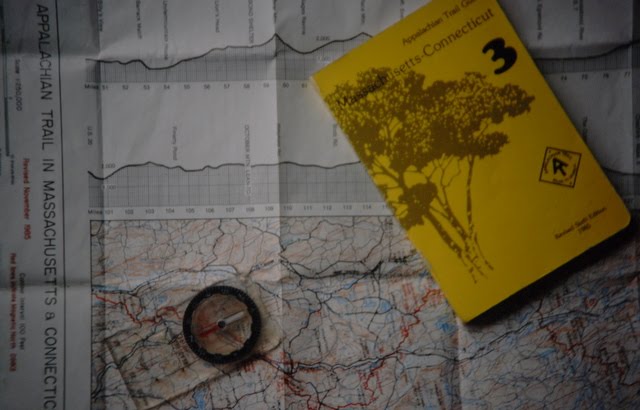
A set up shot showing strip trail maps (including elevations) along with my compass and a guidebook
Most of the maps used when I hiked the Appalachian Trail were strips. I often found myself wanting to know what was just off the map. At night, I might look at distant cities lights below and wonder what city, but it was off your map.
The same is true with the old American Automobile Association’s TripTik maps. They were fine for showing you what was on the roads you intended travel. But what if you decided to take a detour? Of course, they also had state maps that provided such detail.
My favorite maps are the old 7.5- and 15-minute quadrangle topographical maps. When hiking out West, I often used such maps. Standing on one peak, I could pick out the other peaks. With such maps and a good view of the terrain, I would orient myself without even pulling out a compass.
The sad future for maps
Sadly, maps are going out of style. We now navigate more and more by GPS and google or Apple maps. The electronic version, seen on a 3 inch screen, makes the old TripTiks seem full of detail. I also find it much harder to dream using an electronic gadget. The linear strips of maps focus us just on where we are at and where we are going. We fail to see ourselves in the world. These medieval maps remind us that world is complex when we add the spiritual realm. I ordered the book. When it arrived, I skipped over other books on my TBR pile to delved into Deam’s medieval world.
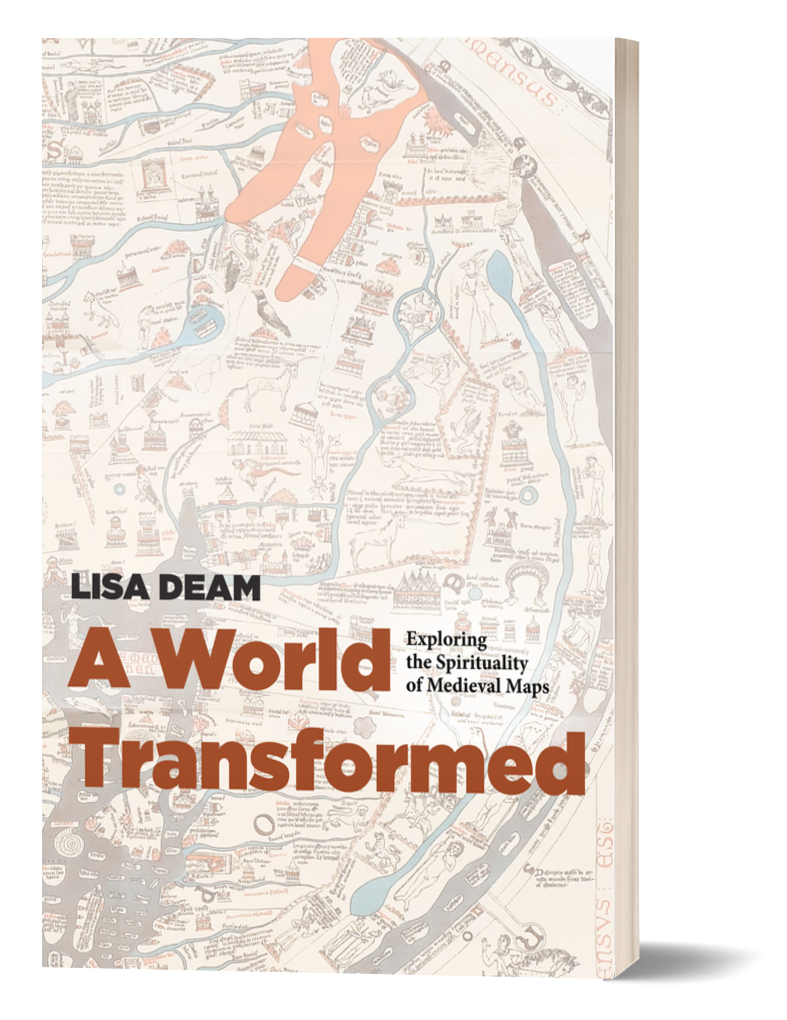
Lisa Deam, A World Transformed: Exploring the Spirituality of Medieval Maps
(Eugene, OR: Cascade Books, 2015), 142 pages including notes, drawings and photos.
Lisa Deam has a PhD in art history. Torn between the study of art and religion, she found a way to blend the two with medieval maps. These old maps are not the equivalent of the gas station maps I grew up studying. Such maps were works of art. Most of these maps centered the world by placing Jerusalem, the locale of Christ’s atoning death and resurrection, in the middle. Everything else in the world flowed there, including the three known continents of the pre-enlightened world.
Some of these ancient maps also had Christ behind the world, with his hands and feet holding the world up. Often the edges of the maps contained monsters and were scary places. But with Christ’s hands and feet the medieval travelers were reminded they were not alone when travelling. God’s protection was present.
These maps also contained a lot of information. Of course, some of the monsters were fantastical, but the map contained bits of history beyond what happened in Jerusalem. Interestingly, one of the themes were the conquests of Alexander the Great. Of course, one studying such a map in the 1300s would have no idea or first-hand knowledge of these places where Alexander or even Jesus walked.
The Hereford Map, produced around the year 1300, receives the most attention from Dean. This four-foot map resides in the cathedral has great detail. She also spends time with the Ebstorf Map and a small “Psalter Map.” Unlike the other two, the Psalter map was designed for private devotion.
Recommendation
Dean does not set out to write a history of cartography. Instead, we’re taken into the world of the era and invited to think of how their worldview and beliefs were seen through these maps. In addition, questions at the end of each chapter invites us to contemplate about our own lives and worldview in relation to God. While the book contains much new knowledge of maps in the 13th and 14th Centuries, it’s really written as a devotional guide.
I enjoyed reading this book. I only wish it included a 4-foot square copy of the Hereford Map that I could have spent lots of time poring over as I read the book. It does include a small version of the map and a few large, detailed sections of the map for the reader to see with their own eyes what the author is describing. I recommend this book.
Today is Robert Burns Birthday, the poet from Scotland. It’s also Virginia Woolf’s birthday, but for some reason Burns draws more interest. It’s probably the whisky. After all, Woolf is English and who’d want to drink gin when you can have the water of life. In honor of Burns, I’m pulling this post from my old blog, which is a talk I gave back in 2018.
I gave this Burns Night talk to the St. Andrew’s Society of the City of Savannah on January 26, 2018
Addressing the Haggis
Wow! In our program tonight I am identified as a Rector. I’m not sure how to take this. Should I be honored? After all, the word comes from an old English meaning “to rule.” Or perhaps, because I’m in a crowd of Scots, I should be afraid. As you know, Scots are independently minded. I can assure you that you will not find a minister within the Church of Scotland, the mother church of all Presbyterians, referred to as Rector. You may find the headmaster of a school referred to in that way, but as for the Kirk, that’s way too English, way too Anglican.
Let me take this moment to share with you a bit of history. In the 17thCentury, following the Scottish Reformation, the people of Scotland signed the National Covenant, which adopted a Calvinist theology and a Presbyterian form of government. This placed Scotland not only in opposition to the Roman Church, but also to the Episcopal form of government as advanced by the Anglicans.
There were a number of battles over these issues. The Scots don’t like being told what to do. They didn’t like being told that had to pray in a particular manner so they resisted the Anglican prayer book. The clergy didn’t like being told they had to dress all fancy when leading worship which led to the adoption of the Geneva robe. And the Scots had a problem Bishops and clergy vested with lots of power, so they adopted a system of government that shares between the clergy and lay elders.
As you can imagine, this didn’t go over well with the crown. They liked the idea of having loyal bishops who could help it control the Kirk. The church fought back and eventually a compromise was achieved. The Crown would be Anglican when they were in England, and when in Scotland, they’d be Presbyterian. In Scotland, the Queen has no Bishops to do her bidding and there are no rectors within the Kirk.
Now on to matters at hand—our remembrance of Mr. Burns. Sadly, I never studied him while in school. In college, the only poets of interest to me were musicians. Steely Dan was a favorite. They had some immortal lines back in the seventies and eighties, one of which comes to mind this evening. It’s from their hit song, “Deacon Blue,” and you may know it. “Drink Scotch Whisky all night long and die behind the wheel.” A great line, but please, don’t try to live it out. We could say the same for he same for many of Burn’s ideas and examples.
I was in Scotland this summer. As you’ve heard, I scheduled a couple days around Edinburgh with a friend of mine, Ewan. He’d taken time off to be with me, but as it happens in our calling, people are not always considerate as to when they die. On our second day together, I could go to a funeral for a woman I didn’t know or spend the day tramping around Edinburgh on my own. After that hospital visit, I chose the latter.[1]
I started out my morning by the castle which dominates Edinburgh’s skyline. Having toured it before, I wanted something without long lines. In the shadow of the castle, I’d learned of a Writer’s Museum and, fancying myself as a wannabe writer, decided to visit. Besides, the admission is free which warmed my Scottish blood.
But the museum is hard to find. I had to humble myself and ask for directions. Not only did I have to do this once, but several times as it appears not many people know of the museum. Finally, someone pointed me to a small alley and said I’d find it up there. There were no signs, but the alley opened up into a square and there was the museum. It’s housed in a very old but unique home with wonderful wooden spiral stairways. There are large exhibits on Robert Louis Stevenson, Sir Walter Scott and the man of the night, Robbie Burns. As a kid, I’d read Treasure Island, so I spent most of the time in the Stevenson’s section, while quickly running through the other parts. Had I known that I was going to be expected to talk about Burns, I would have lingered a little longer…
Leaving the museum, I worked my way across the city. One stop you’ll have to make is the Scott Monument, named for the author not the people. If you’re not claustrophobic or afraid of heights, I recommend you climb it. From the top is the most incredible views of Edinburgh. I think it’s even more striking than the views from Arthur’s Throne. So the next time you’re in Edinburgh, if you are in reasonably good shape, have five pounds to spare and a few more to lose to exertion, and enjoy the snugness that comes from being confined in a straightjacket (as the stairwells are smug), check it out.
Don’t worry, I’m getting closer to Burns… By mid-afternoon I’d made my way to Canonsgate Church. It’s the burial site for Adam Smith and I wanted to pay my respect and do a Facebook selfie to dispel any rumors that I have socialist leanings. While there, chatting with a guide, I asked if there were others buried in the church yard that I might be interested in. “Oh yes,” she said, “On the other side of the church is the grave of Robert Burn’s lover, Clarinda.”
I’ve told you that I’m not a Burn’s scholar, right? But I knew enough about the man to know that he had more than a few lovers across Scotland. “I’m sure you’re not the only church in Scotland claiming a grave of a Burn’s lover,” I said. She took offense at my sarcasm and reminded me that Clarinda was special. What does that make his other lovers?
In Garrison Keillor’s novel, Wobegon Boy, the protagonist writes a poem for his wife as a wedding gift. Reading it she embraces him and it suddenly dawns on him why men have been writing poems all these centuries: “to impress a woman with the hopes she will sleep with you.”
Our friend Robbie wrote many such poems for Clarinda. The two of them lured each other with their poetry and correspondence even though they likely never consummated, in a physical manner, their relationship. But their letters and poems are to be cherish. Clarinda is the reason we have “Ae Fond Kiss” and “Clarinda, Mistress of My Soul.”
Of course, Clarinda wasn’t her real name. That was Agnes, but everybody called her Nancy. That is everyone but Burns, who gave her this beautiful nickname that is much softer sounding than Agnes and less common than Nancy. And, with this secret name, it was a safer way for Burns to correspond with a married woman.
We can speculate as to why Clarinda maintained her purity while Burn’s promised to conquer her “by storm and not siege.” Their relationship got off to a slow start because after first meeting, Burns had to cancel their next due to an accident that put him on crutches and in bed. But there were other reasons.
Clarinda was pious and religious and even though her husband had run out on her, she wasn’t going to do the same. She would later travel to Jamaica in an attempt to win him back. And then there were a few other details. At the time they were flirting with each other, Robbie had already planted his seed with Jean Armour. When Clarinda resisted Burn’s advances, the poet set his eyes on her servant, Jenny Clow. Ms. Clow would also give birth to the poet’s child. Only a fool would be lured into his bed with the thought she’d have a long-lasting relationship with the man whose seed was germinating all over Scotland. Clarinda was no fool.
Clarinda and Burns were attracted to the others use of language. Both were gifted, and Clarinda was nearly Burn’s equal with the pen as these few lines illustrate:
Go on, sweet bird, and soothe my care, Thy cheerful notes will hush despair; Thy tuneful warbling, void of art, Thrill sweetly through my aching heart. Now choose thy mate, and fondly love.
Although Clarinda probably never allowed Robert to take her to bed, the words the two of them exchanged were certainly intimate and salacious. As an old woman, she looked back fondly on their relationship and said she hoped to meet him in heaven. Of course, that’s assuming Burns made it… The Rev. John Kemp, Clarinda’s pastor, certainly had his doubt as to Burns eternal destination. Maybe he and Burns share eternity together. Later, the Good Reverend was discovered to have three wives at the same time! Had Burns’ lived, he would have enjoyed the satirical wit that situation offered.
Clarinda, Jenny, Jean (not to mention Mary and a few others)… What would be Burns’ fate if he lived in today’s “Me Too” climate? I mentioned Garrison Keillor and we know what happened to him, along with a long line of other popular folk whose sexual indiscretions have come back to haunt them. I don’t know how this would affect Burns. It may not have had any impact. In his day, more than one minister chided Burns for his behavior. He didn’t seem to let their scolding’s worry him.
Poets are often great lovers. Their command of language is such that they can take words and draw our minds into new places and possibilities. Think of King David, a poet from the Bible. Many of the Psalms are attributed to him and, we’re told, he was a man after the heart of God. And like Burns, he wasn’t always honorable. This is speculation, but can you image the love note he sent down to Bathsheba? Of course, we know the pain that little affair caused. Poor Uriah. But we remember David, with his frailties, because we all have had our own shortcomings. David gives us hope and shows us the wideness of God’s mercy.
Burns may not have had the same desires for God as David, but we still appreciate him. In his day, he brought humor to a serious society and pointed out social inequalities and hypocrisy. And today, he us still reminding us to look for beauty. Furthermore, Burn’s collection of poems and songs in the Scottish dialect provide identity to those of us whose ancestors left those rocky shores. Our hearts are still warmed by the beauty of heather blooming in the crags. And, even better, we can easily plagiarizer his poems when we court our sweethearts.
I did visit Clarinda’s grave that afternoon. It was covered with flowers—fresh flowers. She’s buried next to her cousin, Lord Craig. His grave looks like it was last attended to during the Boer War. It’s been nearly two centuries years since her death and there are people who not only remember her, yet think highly enough of her to regularly place flowers on her grave. That’s quite an honor. Here’s to you, Clarinda.
Thank you.
Feb. 1, 2021: I recently came across this article on Burns:The Scotsman
Sources Consulted:
_________, Robert Burns in Your Pocket (Glasgow: Waverley Books, 2009).
Brauer, Jerald C., editor, The Westminster Dictionary of Church History (Philadelphia: Westminster, 1971).
Dawson, Jane, John Knox (New Haven: Yale, 2015).
Douglas, Hugh, Robert Burns: The Tinder Heart (Gloucestershire, UK: Alan Sutton Publishing, 1996).
Herman, Arthur, How the Scots Invented the Modern World (New York: Random House, 2001).
MacCulloch, Diarmaid, The Reformation: A History (New York: VikingPenguin, 2005).
[1] I had this story used in my introduction (The story came from the Chic Murray Facebook site and was “adapted” for this occasion:
This past summer, our speaker was visiting the Rev. Ewan Aitken, a friend of his in Scotland. Ewan asked if it was okay for him to run in and see someone at Edinburgh General Hospital.
“No problem,” Jeff said, and asked if it was okay if he went in, too.”
“Come on.” Ewan said. While Ewan was making his pastoral visit, Jeff decided to see what he could do to cheer up some of the patients. He stepped into a ward and went up to a bed and said hello.
The man looked up and said, “Far far yer honest sonsie face great chieftens o the puddin race a boon them aw you tak..
Oh for goodness sake, Jeff said and moved on to the next bed
“WEE courin timid beastie wad caused this panic in tha breastie…..” the patient mumbled.
Shaking his head, Jeff moved to the next bed.
“Some hae meat and canna eat and some hae nane and want it…”
At this time, Ewan was ready to leave and came over to Jeff who asked if this was the insane ward.
“Oh no,” Ewan, said, “this is the SERIOUS BURNS UNIT.”