
Joe’s Fork

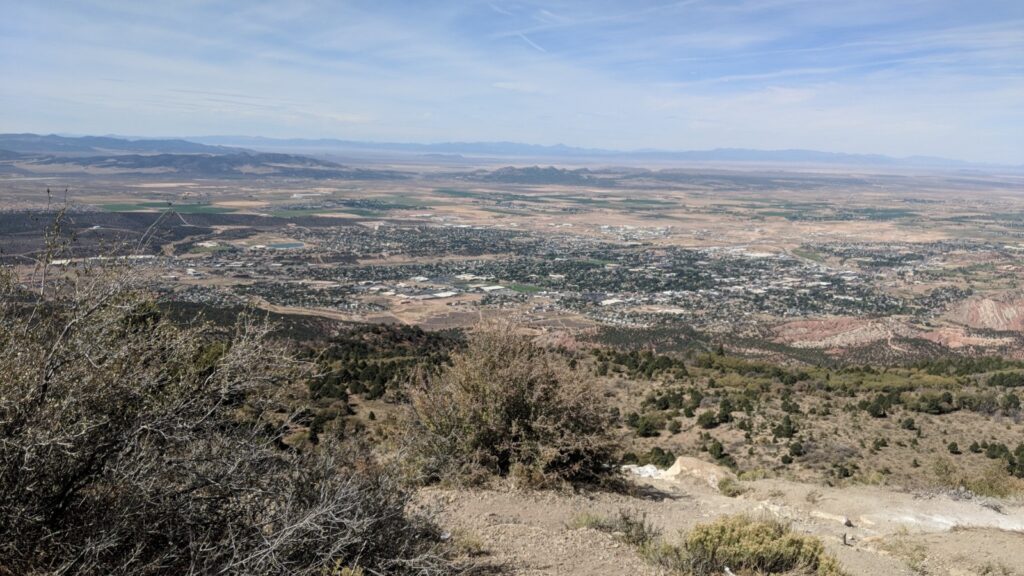
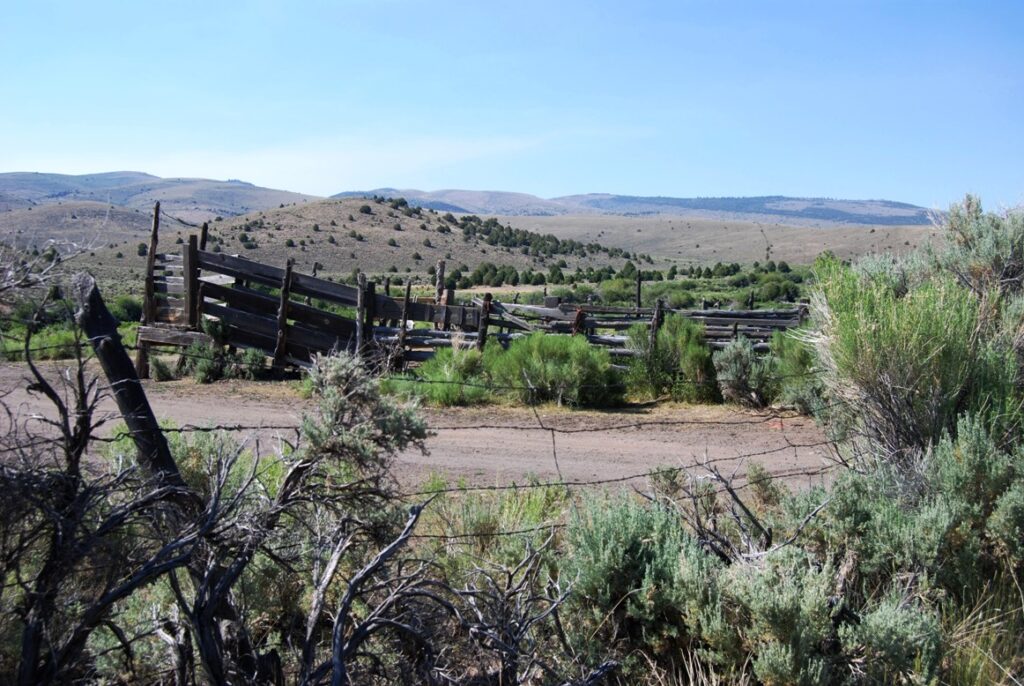
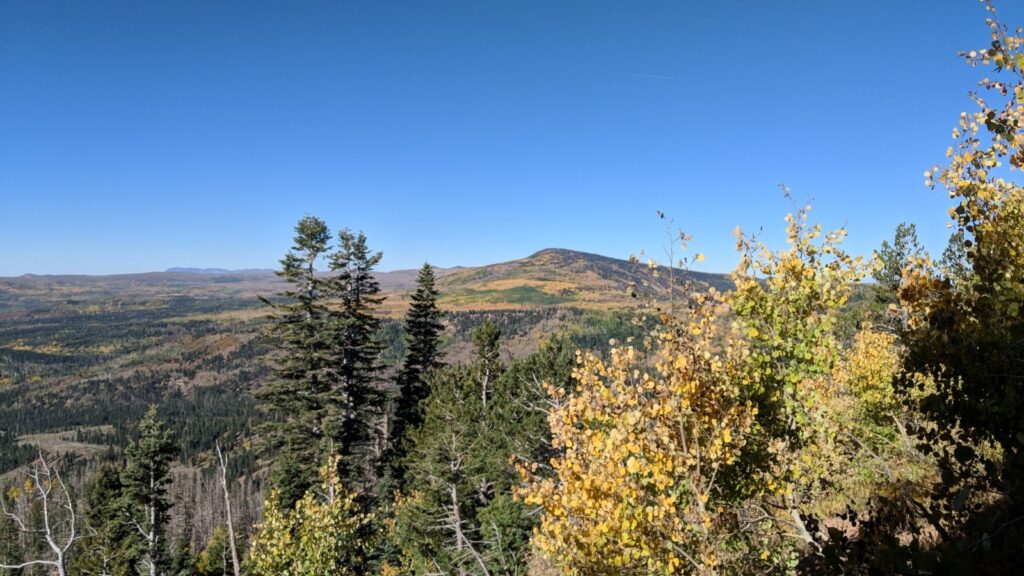
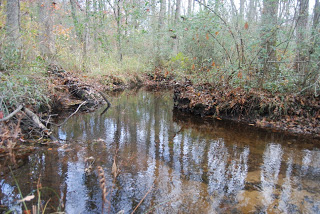
Joe’s Fork, about a mile upstream from the old mill

“Were you able to dig us some worms?” Granddaddy asked as he got out of his truck. 

“Yes sir,” I said, “some nice ones.” 

He smiled.  We head into the house.  Dinner is ready.  He stops in the bathroom to wash his hands and removes his cap as he sits at the table.  Grandma is across from him, and I sit between them.  We bow our heads. Granddaddy prays:

“We thank thee for the food we’re about to receive. Bless it to the nourishment of our bodies and us to thy service.  Amen.  

Grandma passes around the food. Fried chicken, field peas, corn on the cob, squash, and biscuits. The vegetables all come from her garden. We eat in a hurry. When finished, I run back into my room and change into long pants. I strap my knife to the belt. Granddaddy collects the rods and placed them in the back of the truck along with tackle boxes and the can of my recently dug worms. As we climb into the cab, Grandma berates us to use plenty of bug spray. Granddaddy turns the ignition, then pops the clutch. The truck springs forward. He pulls out onto the highway, heading east. About a mile later, the road snakes down into a hardwood swamp. We cross Joe’s Fork on a small bridge. Looking down, I realize we could wade across without getting our knees wet. As we begin the climb on the other side of the bridge, granddaddy turns right, onto a two-track dirt road that leads back into the woods.

“Where are we going?” I ask as we bounced in the truck and bushes swished along the sides of the truck. 

“To McKenzie Mill Pond.”

“What kind of fish will we catch?”

“There should be some nice bream, maybe a jack or a bass.”

“Is the mill still there?”

“No, it burned.” 

“How? When was that?” I ask.

“I’m not sure.” 

“But the pond is still there?”

“Yeah, the beavers damned the stream back up.”

“When you were a boy, did you ever go to the mill? 

“No, it was before my time.” 

Realizing I not going to learn anything about the mill, I think I’ll see if there was anything to know about the current residents. “When did the beavers dam the stream up?”

“In the late forties, I think. Your dad was a boy when they reintroduced beavers to this area.” He slows down, then turns hard, pushing the pickup into brush by the side of the two-track road. I realize he didn’t want to block the road, but it didn’t seem to matter. The road with this much overgrowth didn’t appear to be well traveled. 

“You sure ask a lot of questions,” my granddad says as he turned the engine off. Getting out, we spray ourselves with bug juice. Granddad puts a wad of Beechnut chewing tobacco in his mouth, then we grab our rods and stuff and walk toward the dam which the beavers had restored.  

On the edge of the dam, we drop our gear. The vegetation is thick around the pond. Granddaddy wouldn’t be using his Browning fly rod here, I realize. We’ll both be fishing with worms. I tie a hook to the line on my rod, placed a small weight just above the hook, and attached a bobber about 2 feet up the line. The pond is shallow. Once my rod is rigged and baited, I step out on the edge of the dam and cast into the middle of the pond, just shy of a water moccasin bathing on a log in the waning sun. Granddaddy heads around the pond and finds a place where he could cast his line out and be freed of more questions. 

My bobber floats undisturbed, as I swatted mosquitoes and deer flies which swarmed around my head, pausing occasionally to wipe the sweat from my brow. It’s a hot and steaming. No air moves along the creek bottom.  After a few minutes with no action, boredom sets in. I slowly reel in the line, and cast it again, right beside that big snake. My cork doesn’t faze it, but neither did anything nibble on my worm. I pull my line in again. 

“If you don’t leave your hook in water, you won’t catch any fish.” Granddaddy yells over at me. He normally didn’t say much when fishing. He doesn’t want the fish to be spooked with our talk.  

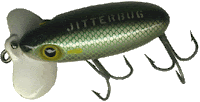
A jitterbug lure

I cast again, this time dropping the hook just inches in front of that big old moccasin’s head. I wait: ten seconds, twenty seconds, thirty seconds, a minute. Nothing bites. I didn’t come out here to wait. I reel my line in again and made another cast and then another. The whole time that water moccasin sits on his log position. I wonder if it is dead, but I know better. Is it mocking me? The snake just lies on the log. It is getting on my nerves. I retrieve my line again. Looking in my tackle box, I pull out a large jitterbug, a top floating lure that works wonders on the bass right around dark. Taking off the hook and bobber, I tie the jitterbug on my line, and cast it toward the snake. It fell just short of the moccasin. I reel it in, the lure jittering back and forth across the water.  

“What are you doing fishing with that?” my granddad ask.

 “Nothing’s taking the worms,” I answer as I make another cast. This one sails across the moccasin and lands in the water, a few feet beyond the snake. It doesn’t move, even with the line lying across its back. I slowly reel, bringing the lure up beside the log upon which the snake has perched itself. I pause. Then I jerk the rod back hard and snag the snake in the back with the lure’s treble hook. The snake snaps around at its unseen assailant, its cottonmouth angrily exposed. It slides off the log with and starts swimming away with my lure, its head high above the water. I let it have some line while tightening the drag. 

“What did you do that for?” My grandfather yell, as he beats a path over to me. “That snake wasn’t bothering you.” 

The snake turned. Instead of fighting the line, it started swimming toward us, its head propped up like the Loch Ness monster. I stopped reeling as I could see no reason to hasten the encounter.

“What are you going to do now?” Granddaddy asked.

I pulled out my knife and hold it in the same hand as my rod.

“What are you going to do with that?” 

“I’ll stick him,” 

“Put that knife away,” he yells as he picked up a stick that was maybe five feet long. “Use this.” He hands the stick to me. “You hooked him, take care of him.”  

It seemed like a good idea, but now I’m not so sure as this is one large angry and deadly poisonous snake. But then, thankfully, when about twenty feet away, the snake shakes free of the lure. It then turns, and swims in another direction, disappearing in the brush. I reel my lure in. I’d been saved from an angry snake, but now had to contend with an angry grandfather.

“We’re done fishing,” he says, packing up his gear.

As we walk back to the truck on the trail that was near the brush where I last saw the snake, I keep my eyes peeled for a moccasin out for revenge. It was not to be seen. I hear distant thunder. A cloud is building that might bring relief to this hot day. I step into the passenger side of granddaddy’s truck. I know better than to ask any more questions. We drive in silence.   

There are no ice cream and Pepsi floats before bed this night. It takes me a while to fall asleep as I worry if hell ever take me fishing again. Grandma has turned off the air conditioning and opened the windows. The curtains fly like ghosts in the cooling wind of the approaching storm. Lightning bolts quickly followed by thunder and each strike fill the room with light. Then the rain comes. Finally, the rain stops, and the lightning and thunder became further apart as the storm moves east. I fall asleep to the drip of water off the roof. 

The air smells fresh the next morning. As I come out for breakfast, Granddaddy looks up from the News and Observer he’d been reading and asks if I want to go fishing again.  

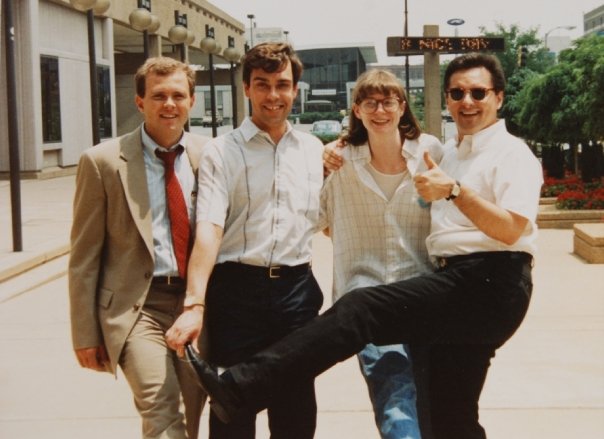
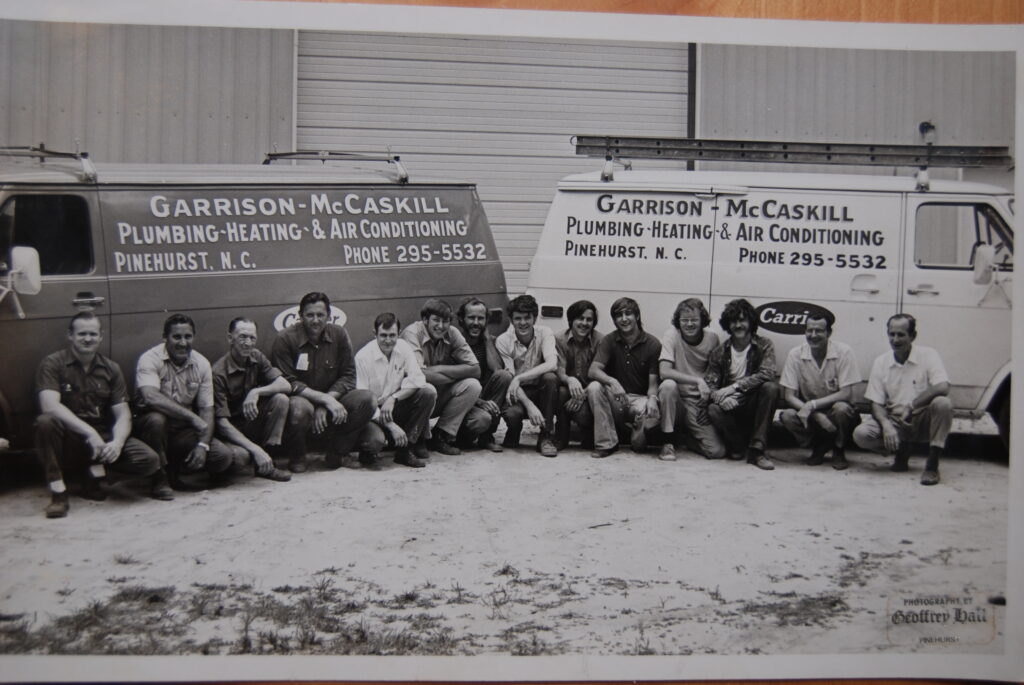
A copy of a photo of my grandfather’s company. He is second to the right. This photo was taken sometime in the early 70s. He died in January 1977.

###

Mark Brown: Another Williston Memory

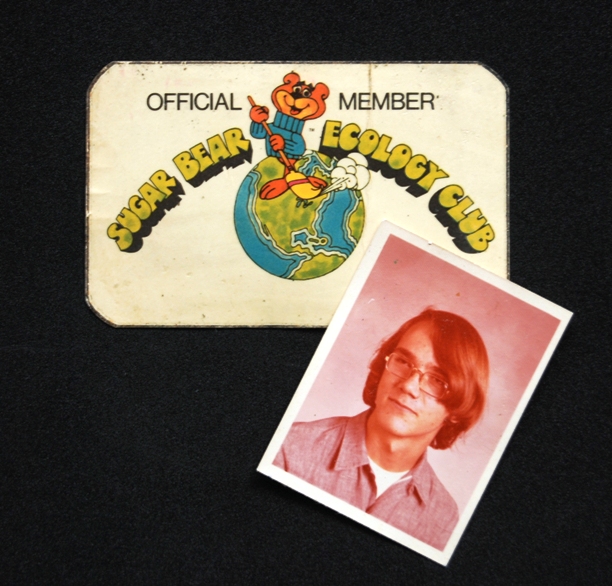
I still have Mark’s photo and my “Sugar Bear Ecology Club” card.

The Christmas break from school was just beginning. My church youth group celebrated with a progressive dinner. We travelled around to different homes, one for appetizers, another for a salad, another for the main dish, then the last home for dessert. If we were adults, there might have been a stop for drinks, but being a 10th grader, I knew little of such a world. 

We were at the manse, where the preacher and his family lived, for dinner. In the kitchen, the television aired the local news. Although we could hear it, we pay no attention, as Mrs. Jennings, the pastor’s wife prepared the main dish. Suddenly she came into the room. She was quite upset and shaking as she asked if any of us knew a Mark Brown, a student at Hoggard High School, where most of us attended. Everyone turned to me as she told us he’d been killed that afternoon. While Mark and I no longer shared classes and had gone in different directions at Hoggard, everyone knew we had hung out a lot at Williston, the year before.

Mark reminded me of John Lennon with his long stringy brown hair. He wore tinted wire glasses and often an army fatigue jacket upon which he’d drawn pictures in ink. He looked like a hippie. Mark was a year older than me, having lost a year in elementary school. A car had hit him one day, leaving him with weeks in the hospital and even more time in recovery. By the time he returned to school, he was so far behind that he had to repeat the grade. 

Although Mark was old enough to drive, I don’t remember Mark doing so. Instead, he rode his ten-speed everywhere. Once he received a warning ticket on his bike. If I recall, he was riding on Arlie Road. With no other cars in sight, Mark wove in and out of the dotted center lane. A police officer, sitting in a parked car in a driveway, observed this. He pulled Mark, in his bike, over and issued the ticket. Mark didn’t make a big deal out of it, but it was funny to hear him tell the story.

Mark was quiet and mostly a loner. We’d become good friends the year before at Williston’s Ninth Grade Center. Every day before school, Mark could be found at the top of the north stairwell. He would squat between the two bars of the railing, his feet on the bottom bar and his thighs pressed up against the top. He’d then lean forward and hug his knees, perched over the stairs like a gargoyle. Sometimes he’d read; mostly he’d stare. He was often alone. The north stairwell, along with the adjacent boy’s bathroom and breezeway was the domain of those of us who had attended Roland Grice the year before. Although Mark had recently moved to Wilmington from up north (New Jersey, I think) and never really ran around with the pack, his presence in the stairwell provided me the opportunity to get to know him.

Mark’s philosophy was to bother no one. If someone taunted him, he’d ignore them and walk away. He was the gentlest guy I knew, and I respected him for it. At a time when everyone was running around in gangs and the school and city were in turmoil, Mark refused to join in. Instead, he began his own little counter-cultural gang, inviting folks to join his Sugar Bear Ecology Club. Those accepting his offer received membership cards harvested from cereal boxes. We had to pledge to the “Clean Code.”

Clean up our world
Liter hurts everyone
Each member must do his share
Animals are our friends
Nature belongs to all of us

(©1971 by General Foods Corp)

As far as I know, there were only three members of the club: Mark, a guy named Joe, and me.

Later in our ninth-grade year, after watching a man climb and hang in slings on the flagpole while painting it, Mark had an idea. His lunch was 4th period, the same time I was in Ms. Gooden’s class. He told me to keep an eye on the flag that day when he was at lunch. I did. Looking out the window wasn’t anything unusual for me, although probably less so in Ms. Gooden’s class as I, along with most of the other boys in the class, had a crush on her. Our class was on the second floor, over the offices with the flagpole right out in front.

Sure enough, Mark climbed the pole that day. On the top, he was eye level with me. He held onto the top like a monkey and swung around the pole, the flag flapping around him. Students flocked to the windows and to the front of the school to witness the spectacle. Mr. Howie and Mr. Barrett, the principal and one of the assistants, ran to the scene. They demanded him to come down immediately.  I thought for sure he’d be suspended, but they let him off with a stern warning. At a time of turmoil, climbing a flagpole seemed to be a relatively minor offense.

My dad took me to Mark’s funeral. It was a day or two before Christmas 1972 and held at the Catholic Church on Wrightsville Beach. It was stormy and the tide high. When we crossed the causeway, the waves lapped at the few boats still in the water that late in December. This was my first time in a Catholic Church. Much of what happened seemed strange, except for the crying. Everyone cried. Even my father, who’d only met Mark once or maybe twice, seemed visibly moved.

Mark’s death didn’t seem fair. Mark had been riding on the back of his brother’s motorcycle. Someone ran a red light at the intersection of Oleander Drive and Independence Boulevard, hitting the bike. His brother was able to hold onto the bike and ride it down. Mark was thrown off the back and across two lanes of traffic. He’d beat death once before, but not this time.

Frank and Roosevelt and the making of bread

Masonboro Island

I am currently taking a week off and spending it at my dads. It’s hot here, but we have been out paddling kayaks in the morning. The wind has been too strong for us to go out into the ocean fishing, so we’ve been paddling kayaks over to Masonboro Island in the morning before the wind rises. There will be no sermon this week as someone is preaching for me. Below is another of my bakery memories:

Former Bakery Stories:

Linda and my beginning at the Bakery

A College Boy in the Bakery

Harvey and Ernest (Oven Operator and Pan Stacker)

Frank and Roosevelt (Bakery, Part 4)

Like Ernest and Harvey, I also inherited Frank and Roosevelt when I began my stint as the night shift supervisor at the bakery. For nearly a year, I came in first at night. I had about thirty minutes to review the day’s orders and set the schedule. Then Roosevelt reported. He took my schedule, we discussed it a few minutes, then he headed back to the mixing room.

Roosevelt’s work

Roosevelt’s first task was to weigh up buckets of ingredients for the various breads we would make in the morning. As the mixer held nearly 3000 pounds of dough, the ingredients he measured were small in quantity and generally fit into a five-gallon pail. This included salt, whey (a milk substitute), enrichment, and preservatives. Sometimes another bucket contained alternative sweetener such as brown sugar, honey, or molasses. After shifting, white flour blew into hopper on top of the mixer, which had a scale to weigh the flour. Gravity then fed the flour to the mixer. Whole wheat, cracked wheat, and rye flour came in 100-pound sacks. Corn syrup, shortening, and fermentation brew (the yeast) were also added mechanically. 

Huge 65 horsepower motors turned the mixer. Water cooling sleeves formed a metal jacket around the bowl which kept the dough cool From what I remember, it took about 10 minutes to mix a batch of dough. Time varied slightly basked on the the strength of the flour and the ingredients used. When ready, Roosevelt tilted the giant bowl, dumping the dough into a trough.

Frank’s work

From the bottom of the trough in front of the mixer, a pump pulled the dough to the make-up area. There, Frank oversaw the operation. A divider cut the dough into six portions of the proper weight. Then it dropped into the rounder, a spinning pot that formed the dough into a ball. After that, the dough balls rose a bit before running through the sheeter that flatted them (like a pizza dough). A machine rolled these flat portions into the shape of the bread. At the end of the process, they dropped into a pan. When things ran smoothly, it was a marvel to watch. For things to smoothly operate, the machines had to be properly set and the dough the right consistency.

Roosevelt’s background

A seaman earlier in his life, Roosevelt had served as a cook on an oil tanker. He once talked about working on a ship hauling oil from North Sea to Philadelphia. In a storm, the ship’s hull split. The ship was in danger of sinking. Two ocean going tugs reached the ship and helped it limp into Jacksonville, Florida. This took eight weeks instead of their normal week-long crossing. During this time, Roosevelt slept with his life vest. Reaching port, the captain told Roosevelt the ship would be ready to sail in about ten weeks, but he decided that his days on the sea were over. Although he still had his seaman papers, he came back home and took a job at the bakery. Roosevelt proclaimed himself to be a Black Muslim, but he wasn’t a radical. He certainly didn’t appear to mind having a white supervisor. Since he also smoked pot and drank alcohol, I wondered how devoted he was to his proclaimed faith. 

Frank’s problems


A dependable worker, Roosevelt made my job easier. Frank wasn’t so dependable and sometimes made my job a living hell. He often came in late. Several times he reported in a condition in which he wasn’t capable of working. This became a problem as it’s hard to find a last-minute replacement at 2 AM. I often had to do his job, too. One night he didn’t show up. When Bobby, who ran the slicers and wrappers, reported three hours later, he found Frank passed out in his car. I sent him home. He cried to the personal manager later that day, who reinstated him. I could only place another written warning in his personal file. 

A few months later, the personal manager regretted his actions. Frank, while on break one morning, had gone over to the slicing and wrapping area. When the bread entered the slicing area, the outside was firm and crust. This allowed it to be sliced easier. It also allowed the loaf to be carved upon. Joking around, Frank scratched with a knife on the bottom of a loaf, “Fuck You.” After showing it around as if it was a joke, he placed the loaf back onto the conveyor. Normally, this wouldn’t have been a problem. Our regular bags were red on the bottom. Unfortunately, at the time, we were bagging the bread in a special “private label” bag that had a clear bottom. This bag found itself on a shelf of a store in South Carolina and then in a family’s home. The family didn’t appreciate Frank’s handiwork. A day later, our General Manager received an angry call from the head of the grocery chain. They dropped their contract with us. We lost several thousand dollars a day in sales. The chain reaction began. The personnel manger and I were informed to find out who did it and to fire them on the spot. As Frank had shown this loaf to several employees, it only took a few questions to pin it on him. We called Frank into the office. When confronted by the General Manager, the Plant Manager, the Personal Manager and me, he admitted he had done done the “deed” as “a joke.” Frank was fired. I had the task of walking him to his locker to see that it was cleaned out and to escort him to the door.

Sad endings


I ran into Frank a few years later. Bitter, he complained that we “couldn’t take a joke.” I shook my head and said “whatever,” realizing he hadn’t learned anything from the consequences of his actions. 

I never saw Roosevelt after I left the bakery, but a decade later, I ran into another supervisor from the plant told me the sobering news. Roosevelt had returned to the sea. Sometime later, Roosevelt’s body was found floating next to his ship. He had been stabbed, The assumption was that a drug deal went bad. My heart grieved over his demise. I had enjoyed working with Roosevelt. I can still see him laugh, with a prominent gold tooth in the front of his mouth. 

Williston Ninth Grade Center: Ms. Gooden

Background

2021 marks fifty years since cross-town busing began in Wilmington, NC. That spring, those of us in the eighth grade at Roland Grice Junior High, left school thinking about the fall. Having paid our dues as seventh and eighth graders, were ready to be “king of the hill” as ninth graders. However, due to court rulings that few of us understood, things changed that summer. Instead of staying at Roland Grice, we were bused across town to the former African American high school, Williston. Each school, instead of drawing on the neighborhood makeup, was to be 70% white, 30% black, which was the county make-up at the time. Racial tensions were high that fall as 9th graders from three formerly Junior High Schools (Williston—which had become a Jr. High after it stopped being a High School, along with Sunset Park and Roland Grice) were merged into one school. While I am not sure I learned much in class that year, I learned a lot about life. This is one of my stories (which I wrote many years ago and have edited it for this blog post). 

Photo take in 2010 (the blinds in the 2nd story classes look in better shape than they were in 1971).

4th Period

Walking into my fourth period class at Williston Ninth Grade Center, I couldn’t believe my eyes. A new girl sat in a desk to right of me, in the back corner by the window. A blonde, nicely dressed as if trying to impress her classmates on her first day at school, she smiled. Stumbling for words, I introduced myself and welcomed her to my corner. I attempted to impress her by telling a few things that went on in the back of the class. Then Mike, who also sat in the corner, took his place, and joined the conversation. We were in competition, each vying for the new girl’s attention. We tried to outdo the other with our stories. She smiled, even blushed a bit. So intent we were to impress, we didn’t give her time to say anything. The bell rang, the teacher stepped up to the front, class began, and reality sat in.

Our latest test was returned. I quickly took mine and put it under some other papers, shielding it from the new girl. “She looks smart and wouldn’t be impressed with my grade,” I thought. We reviewed the test, and I saw where I’d made my mistakes in calculations. Then she handed out our report cards. Again, I snatched the card quickly and stuck it in a book. The new girl was the one person other than my parents that I didn’t want to see my grades. I promised myself I’d study harder and do all my homework this next term. She deserved such sacrifices.

As the class wound down, I tried to think of a good line to use after the bell, as we herded down the hall to the cafeteria. But a few minutes before the bell, the principal, Mr. Howie, stepped in. He’d never been in this class, and I thought this was strange as we’d been well behaved that day. Politely, our teacher yielded to the floor to Mr. Howie. He informed us that our teacher was being promoted to an assistant principal. At his clue, we clapped. None of us were sure what this meant. By this point in my academic career, assistant principals weren’t on my radar. I was the type of kid who bypassed the assistant’s office and head straight to the big guy’s door. After only six weeks at Williston, Howie and I were on a first name bases.

A new teacher


After giving accolades to our teacher, the principal, as if he was introducing a political candidate, said it gave him great pleasure to introduce our new teacher. Then turning to the back corner, he said, “Ms. Gooden, will you stand.” 

The new girl in the class stood and stepped forward. Mike and I slid under our respective desks. I swear, as she introduced herself to the class, she smirked every time she looked over our way. This was going to be a long year.

Like most schoolboys, there had been a few teachers who, because of their looks or kindness, had encouraged my fantasies. Miss Freeman, my fourth-grade teacher once brought me a Coke. I was a cheap date and impressed. And then there was a seventh-grade math teacher who had ten dresses and I could tell the day of the week by her dress. Of course, two of these dresses were quite short and showed lots of leg. Yet, fantasies about these teachers remained where they belonged, deep in my psyche. I never said anything inappropriate. But now I found myself with a new teacher who was beautiful, and I’d already played my cards to impress her to be mine. 


Ms. Gooden was fresh from college. She was probably twenty-two but could have easily passed for fifteen. I’m sure if she went out for a drink, the waitress would have carded her. And now she knew who, in her class, to keep an eye on. 

Her fiancé

Perhaps to make the point that she was no “Mrs. Robinson,” Ms Gooden fiancé drop by one day. A Marine officer, he stood at attention in the front of the class, decked out in his dress uniform. On his side was an engraved sword that said to me, “hands off my girl.” As he greeted us, he kept looking over at my corner. I’m sure he knew all about us. 

More to come…


I should say that nothing ever happened, but that wouldn’t be quite true. Certainly nothing romantically happened, but there were adventures to come in this fourth period class. I’m sure nothing in Ms. Gooden’s teacher training prepared her to have a class like ours at such a time in history. 

Harvey and Ernest in the Bakery

Series introduction

In the summer of 1976, I began working at Fox Holsum Bakery in Wilmington, NC. I had just finished my first year of college. For the summer, I had a job traying bread. At the end of the summer, as I wrote about last week, the plant manager asked if I would be interested in continuing to work on second shift. This allowed me to work full time, while also attending college. During my senior year of college, they promoted me to supervision. I continued with the banker for almost two years after graduation, when I decided to take a major pay cut and go to work for the Boy Scouts of America. 

The bakery no longer exists even though the building and the flour silos along the railroad tracks were still standing a few years ago when I rode by the plant. I hope to rework a number of essays I’ve written about some of the characters I knew during this period of time. Over the next few months, as I work on them, I will post them here. 

Story 1: Coming of age in the bakery
Story 2: A college boy in the bakery

Harvey and Ernest

I inherited Harvey and Ernest a few days after I graduated from college. With four years of college under my belt and a philosophy degree to hang on the wall, I decided not to even look for other employment. Of course, now that I’d graduated from college, my schedule was more flexible. When they recruited me to stay on after that first summer, they promised to keep me on second shift so that I’d be able to attend school in the mornings. This worked well, but once I’d graduated, they wanted me on the night shift. I had to pay my dues. Harvey was my oven operator and Ernest ran the pan-stackers. Although they were as different as night and day, I liked both of them. 

Ernest also went by “Rerun” This was based on the character played by Fred Berry on the popular 70s TV show, “What’s Happening.” Both Ernest and Berry were comical, overweight, and Africa-American. Harvey was a skinny, aging, white-guy, clueless about the world. As their 22-year-old supervisor, I was almost as clueless as Harvey.

A night in the bakery

My day began around mid-night, when I came in the plant and spent the first hour developing schedules. Then the first part of my shift reported. In the mixing room was Roosevelt on the mixers and Frank running the make-up equipment that took the dough, shaped it, and placed it into pans. Ernest and Harvey worked in the background, which comprised about half the plant with just the two of them. Ernest ran the panstackers, while Harvey oversaw the operation of the oven and proof box, each the size of a house. 

The machinery Ernest managed placed the pans on the conveyor that transported them into the mixing area. Havery’s first hour was more laidback. He turned on the steam into the proof box and lighted the oven’s burners (the oven had about forty burners in it). 

For the next three hours, it was just the five of us. Roosevelt would start mixing the dough while Frank set up the equipment. In the back room, Ernest kept count of the number of pans needed for each size and type of bread. When the first dough dumped from the mixer (which had a capacity of 2400 pounds), the operation started. The plant was mostly automatic. A pump drew the dough out of the trough and into the divider, that cut the dough into loaf sizes. From there, the rounder snapped the dough into a ball. Then, running through sheeters and moulders, to create a loaf. The dough dropped into a pan and conveyed over to the proof box.

This automation continued as a conveyor ran the pans from the proof box to the oven, then out of the oven and through a depanner. From there the bread went through a cooler, while the pans returned to the mixing area for more dough. 

At four in the morning, Bobby and his crew came in to run the slicers and baggers. Timing was everything. A few minutes after four, bread that had been cooled enough to be sliced, marched on the conveyors out of the cooler and toward the slicers. Afterwards, the bread was stuffed into bags. If all ran well, the first-time human hands touched the product was when the wrapped loaves were placed on trays and sent to the shipping department. We could produce 5000+ pound loaves or 4200-pound-and-a-half loaves of bread an hour. 

Ernest sleeping on the job

The one similarity Ernest and Harvey shared was solitude. For the most part, they wanted to do their job and be left alone except for an occasional break to smoke a cigarette. They were both good at what they did. Once Ernest had things running smoothly, he’d lean against the machinery and rest. From then on, his role was to clear jams and troubleshoot problems. I knew he’d developed the skill of sleeping upright against the machines. Any change in vibration would immediately wake him. He’d fix the problem and then return to his nap.

Of course, Ernest insisted he never slept. I wasn’t troubled by it for I knew Ernest always got his job done. But for some reason, I also felt I had a point to prove. One morning, while he was napping and the machines humming smoothly, I found a piece of twine and some fabric and fashioned a tail, much like you make for a kite. I tied it to a belt loop on the back of his pants. Ernest snoozed. Once he woke, he couldn’t see it; he was too big. Over the next several hours, quite folks in the plant all made a trip back to his area to see his “tail.” 

Ernest wasn’t too happy with me when I asked if he grew the tail while sleeping on the job. Thinking back, it wasn’t a very nice joke. It was also dangerous considering the equipment we worked with. In time he forgave me, and I stopped hounding him about sleeping.

The education of Harvey

Harvey worked in the most isolated part of the plant. Ernest was located near the receiving docks, so he’d often see people walking by. Few people walked by Harvey’s workstation. Except for the supervisor or a mechanic, one either wanted to see him, were lost, or were trying to hide. Harvey oversaw the most automotive section in the plant. As I wrote in the last piece, when things worked properly, it was a breeze. When something went wrong, such as a jam in the oven, Harvey just didn’t call for help. He hit a button. This set off a horn heard throughout the bakery, summoning mechanics, and me to drop whatever we were doing and run back to the oven. A major malfunction at that point in production meant we had only a couple of minutes to get things going before losing thousands of loaves of bread. Luckily, things kept humming most of the time.

The mechanics often spent time with Harvey, making minor adjustments, watching to make sure things were running okay, and at times, avoiding other work. A couple mechanics took it upon themselves to educate Harvey, something that nearly six decades of life had failed to do. Pornographic magazines, often very graphic, were utilized as textbooks. I was spared their instruction, being in management, but I always knew when Harvey had received a lesson. He’d be beside himself and would start babbling to me about it. “You wouldn’t believe what that girl was doing,” he’d say. “Why would someone do that,” he asked? Although I don’t think he was a religious man, the general depravity of the human race greatly troubled Harvey.

Working on Ernest’s Cadillac

Another memory I have of Harvey and Ernest happened early one morning. We’d been having trouble with people breaking into cars parked outside the plant, especially older vehicles which didn’t have hood latches inside the car. On these vehicles, the thieves didn’t have to get into the car to pop the hood and steal the battery. Ernest drove a big old dark-green Cadillac. To keep it safe, he’d park on the street, right next to the loading dock and under a streetlight. This morning, about 1 AM, as I was going over the schedule with Ernest, telling him how many of what type of pans we’d need, Harvey went out on the loading dock for a smoke. When he returned, he asked Ernest, without sensing anything wrong, “Who’s working on your car this time of night?” Ernest took off out the door like a locomotive, cussing and screaming. The guys stealing his battery dropped their tools and took off. Harvey had no clue; Ernest gained a pair of pliers and a wrench.

I talked to the police. They told me to mark the batteries. A battery with identifying mark indicating its owner made it difficult to be sold. Salvage yards had police to check such batteries. I purchased an engraver and offered to write the license plate numbers on top of my employees’ car batteries. Word about this quickly spread around the neighborhood. I don’t remember any more batteries stolen afterwards.

Thinking back, 40 years later

I worked the night shift for a year and would stay at the bakery for another year after that. I still think about those guys and wonder whatever happened to Ernest and Harvey.

A College Boy in the Bakery

This is the second story in my bakery saga. Unlike the first story about Linda, which I wrote years earlier and revised, this is a new story. While the bakery was always hot, this post isn’t nearly as steamy as the first one. It also has more technical detail that’s required to fully understand what I’m talking about.

Summer’s End

As the summer of 1976 wrapped up, I called into the plant manager’s office. That morning I’d given my two-week notice. My plan was to leave the bakery as I returned to college. I would also work in the fall part-time at a Wilson’s Supermarket on Oleander Drive, where I had worked for several years. Even during this summer at the bakery, I still put in six or eight hours a week there, mainly ordering and tending the cigarette aisle. It’d been a busy summer, and I had no idea why the plant manager wanted to see me. 

 “I’d like you continue working here,” he said. “In a few months, I think you’ll be a supervisor. And I promise to keep you on second shift, if you can arrange your schedule to take morning classes.”

He also noted that for the time being, I would be the second shift operator for the bread slicers and baggers. I had already spent some time that summer learning and running this equipment due to an accident earlier in the summer. 

Roy’s accident with the wrapping machine

One hot day, a major breakdown occurred in the proof box. This meant we didn’t have bread to package for several hours. After cleaning up our workstations, there was little for us to do until they got the operation back running,. We hid out on the loading deck. Roy was the second shift operator for the slicers and wrappers. He proceeded to smoke a couple of joints. By the time the bread production resumed, he was feeling pretty good. But his thinking wasn’t very clear, nor his reflexes fast. 

In other that your thinking will be clearer, let me explain the process. As a loaf of bread approached the bagger, a shot of compressed air blew up a bag. This signaled an arm to shoot, out, catching the loaf of bread and sliding into the bag. As the arm retreated, the bread was inside the bag and dropped onto another conveyor. It then moved through a machine that sealed the open end of the bag with a twist tie. The arm that caught to bag was sharp and shiny, made of stainless steel. This was so it could easily slide into and out of the bag. If the bag didn’t open, there was a switch that would stop the machine. There was also a metal lattice grate that protected the operator from the arm. If the grate wasn’t fully extended, there was another switch that kept the machine from operating. 

On this day, the wrapping machines were having problems. This often happened on really hot days as the bag would stick, or when the bags were old. Roy was constantly having remove stuck bags. To expedite things, he tapped down the switch that kept the machine from operating when one’s hands were inside the grate. Then, when cleaning up some bad bags that had jammed the machine, he accidently tripped the switch that indicated the bag had blown open. The metal arm shot out to catch the loaf and sliced into the flesh on Roy’s forearm. Blood went everywhere. He required 20 or so stitches. 

That evening, Paul, the supervisor began teaching me how to operate the machinery. The next day, instead of traying off bread, I ran the machines. They kept Bobby, the first shift operator over to help train me and until we had no more change overs. I worked for a few days as an operator, but then went back to bagging when Roy returned. 

Roy would only work another week or so before he quit. I never completely understood him. He had left the army after 10 years, which he had worked primarily as a cook. He learned the baking trade in Vietnam, where he worked in an American built field bakery supplying troops in the country. I never knew why he left the bakery and I never saw him again. From this point on, I was operating the equipment, even though I was still making the wage of a bread trayer. But my summer was almost over and It was a week or so later I was in the plant managers office. 

Two job offers

I asked time to think about the offer. The grocery store I was working for had also offered me a similar position. They were opening a new store near Monkey Junction. Bert, the manager who had hired me, was being moved to the new store and offered me to come along as the “third man,” essentially the second manager, who main job would be to close the store several nights during the week. It was tempting, but in the end decided I would stick to the bakery. Having worked in the grocery store through high school, I’d done most of the jobs throughout the store except for in the meat department. The bakery was still a mystery, so I accepted the offer. When classed resumed, I left the grocery store and began to work fulltime on second shift at the bakery. 

Operating the slicers and baggers

About a month later, the plant manager left. I was never sure if he quit on his own or if he was fired, but I would not be a supervisor for nearly three more years (and two plant managers later). 

While I was not a supervisor, I was the lead on a four-person operation. This was especially true after some remodeling of the plant. When I was hired, the bread traying operation occurred in the shipping area (and faced Linda’s work station). There, two conveyors from the wrapping machines brought the bread through a wall. This was the position was just behind the roll wrapping area, providing me with Linda. At the end of the summer, they cut out the wall and moved the bread trayers next to the wrapping machines. This allowed for the wrapping operator to be able to interact more easily with the trayers.  

The process

The bread came into the wrapping area from the cooler, where it had spent approximately an hour cooling to where the outside was crusty, but the inside was still warm. This was necessary for the bread not to mash up in the slicers. This bread came out on a single conveyor, which split into two before going through the slicers. A woman generally worked at this position, making sure the operations ran smoothly. Whenever one of the machines were down, she would take off the excess bread and place it on waiting trays. Then, she would feed it back in when things ran well. 

The slicers were large bandsaws, but instead of a single blade, there were sixteen or so blades. Each blade was circular and five feet or so in diameter. Inside the machine, the blades twisted in a figure eight around two drums. This allowed the cutting surface of each blade to face the incoming bread and resulted in two slices per blade. A few extra blades were stored on the drums of each slicer. This allowed for the operator or a mechanic to quickly move blades over to replace a broken one. The razor sharp blades were dangerous. The equipment remained closed, except for where the bread entered and departed. If one of the doors on the machine opened, a switch shut the saw down down. A broken blade flying free would be deadly. 

From the slicers, the bread traveled by a conveyor, maybe ten feet long, to the bagger. This conveyor had sides that were set to the bread to keep the slices from falling. After bagging and tying the loaves, they were placed on to trays and racks, which the shipping department then handled. In some ways, this was an easy job, when things went well. This was especially true after all the changes that came with morning variety bread. Once we started with the pound and a half white bread, which was so popular back in the 70s, we only changed the bags. During the summer busy season, we’d often bag 60 or 70 thousand loaves of white pound and a half bread at a rate of 4200 loaves and hour.

I became friends with Bobby, who was the morning operator. He’d often punch out and then come back over and talk. On a few occasions, on our days off, we went out rabbit and squirrel hunting. He had several uncles and cousins with beagles who lived on farms just inside Pender County. At the time I didn’t think about it, but I now wonder what some people would have thought to see a white guy running around several African Americans, all of us armed with shotguns or rifles.  

While everyone in management remained silent about me becoming a supervisor, I was honored during this time as the company’s outstanding employee for the first quarter of 1977-78. In addition to a nice plaque, the management treated outstanding employees and spouses to wonderful dinner at the Hilton on the Cape Fear River. (Looks like I should clean up my plaque!).

My minor injury

I did have one injury while running the bakery machines. As a promotion, we were placing game cards inside each of the loaves of bread. This required a separate machine to sat next to the conveyor between the slicer and bagger. It was always creating problems when the placement of the card wasn’t perfect. At one point, a card was near the bag opening, which jammed up the tying machine. In trying to free the bags, I pulled out a pocketknife. Leaning over the equipment, I supported my weight on my left hand as I cut out the bag and card with my right hand. When the knife slipped, and the blade went into my left hand, requiring a couple of stitches. The scar is still visible. 

My learning from this event happened in the emergency room. I joked that I’d been stabbed. They followed their procedure and called the police. I attempted to clarify. It was truthful, I had stabbed myself. But it was an accident. The hospital visit would be filed on a workers compensation claim. And, to make me look innocent, I wore a white bakery uniform sprinkled with bits of crust from the bread.

Oven operator

After about a year as an operator of the wrapping and bagging machinery, I was asked if I would like to move over to the bread oven. This was a solo job, but it came with another pay raise and a lot more responsibility. Mainly I oversaw the operations of about a 1/3 of the production area. One main task involved continually monitoring the temperature in the oven and the humidity in the proofer. This was in addition to making sure everything ran smoothly. The size to the equipment in my area was similar to a house. Since there were three major pieces of equipment, my work area represented the size of a small neighborhood.

Oven operations

The bread came back to my area on a long conveyor from the make-up room. There, the dough was placed into strapped together pans that held four loaves. The bread first entered a proof box. The temperature in the box was kept around 110 degrees with nearly 100% humidity. Automatic arms pushed the bread pans, ten four loaves pans at a time) onto racks. Windows into the proofer provided a glimpse at how the bread was rising. When the dough rose to the top of the pan, another arm pushed the pans onto a conveyor. From there, the bread travelled to the oven.

Between the proofer and the oven, a machine placed lids onto the bread if we were making square top loaves. The operator had to place the lids onto the conveyors at the beginning. That was easy as the lids were cool. After that, the lids recycled until the end of the day. As second shift ended the workday, I had to pull off the lids. These were hot and more than a few times I burned my forearms.

The oven worked liked the proof box with arms pushing and pulling the pans onto and off of racks. The oven consisted of seventy-some burners, which needed to occasionally be checked. Sometimes burners had to be scraped out to get them to relight. In addition there were 6 temperature zones. If the bread wasn’t tall enough, I’d reduce the temperature in the first zone to allow it to rise a bit more. If it was too tall, I could increase the heat to kill the yeast faster. Each zone had gauges that checked continually.

Leaving the oven, the pans went through a machine that first removed the lids (if used). Then, by suction cups, the loaves were lifted from the pan and placed on a conveyor for the cooler. The loaves would remain in the cooler until it was time for them to go to the slicers. The entire process, from arriving at the proof box till leaving the proofer, took approximately 2 1/2 hours.

The pleasure and perils of being an oven operator

I had the horn if case there was a problem. It could be heard throughout the plant. If I blew it, the supervisor and the mechanics on duty immediately ran to my aid. Even a break down of a few minutes could cause us to lose upwards of 6000 loaves of bread. In later stories, I’ll share some horror stories.

But running smoothly, I was left alone with my thoughts, as I continually checked on things. When taking classes at the university in which I had to memorize lots of stuff, I would keep index cards in my pocket. Then I would run the cards occasionally throughout my shift. 

I would continue working as the oven operator until my last semester in college, which was when I was moved into supervision. While it seemed long, I had just turned 22 years old. I had been at the bakery less than three years.

Coming of Age at the Bakery

Introduction

Image from Pinterest

In the summer of 1976, I began working at Fox Holsum Bakery in Wilmington, NC. I had just finished my first year of college. I was hired for a summer job, to tray off bread. At the end of the summer, the plant manager asked if I would be interested in continuing to work on second shift. This would allow me to attend classes in the morning. He promised to work with me while I was in college. I stayed on at the bakery, moving up to running the bread slicers and baggers. Next, they promoted me to oven operator. Sometime in my senior year of college, I became a supervisor. I continued with the banker for almost two years after graduation, when I decided to take a major pay cut and go to work for the Boy Scouts of America. 

The bakery no longer exists even though the building and the flour silos along the railroad tracks were still standing a few years ago when I rode by the plant. I hope to rework a number of essays I’ve written about some of the characters I knew during this period of time. Over the next few months, as I work on them, I will post them here. 

Linda and the Summer of ’76

The intoxicating smell of yeast overwhelmed me the week after I finished my freshman year in college. It was our nation bicentennial year and I had accepted a summer job in the bakery—traying bread. If ever there was an entry level position, this was it. Bread came out of the bagging machine, 70 or 80 loaves a minute, and I put the loaves on trays or in tubs. Ten pound and a half loaves per tray or tub, twelve-pound loaves each. I placed the full trays, 30 to a rack. Bread going into tubs I stacked fifteen high. When I filled a rack or completed a stack, a guy from the shipping department hauled them away and placed another rack or stack of tubs for me to fill. Eight or more hours a day, another guy and I handled the bread. The nation’s bicentennial summer promised to be long and hot.

But there was a bright side. My work station faced the roll packing line and there, maybe thirty feet away, was Linda. In her mid-30s, she was a hot blonde fireball. She wore a short white uniform skirt that showed off her tanned legs. Her uniform top hugged her body and showed off her curves. She wore slip-in mules on her feet with two-inch heels, as was as high as allowed within the plant. Her hair, she pulled into a bun, a requirement for working around food. Little ringlets stuck out from under her hat.

From where I stood, I could see Linda’s backside. Being short, she had to rise up on her toes, her heels leaving her shoes as she reached across the conveyor, a process she’d complete a dozen or so times a minute. Each time, her muscles tensed just enough to display her well-shaped calves and thighs. For the first week or so, I watched Linda in awe, from the safety of my station. 

Loud, Linda could just as easily tell a joke as to cuss out a supervisor. Her job was every bit as boring as mine, but making the best of it, she entertained everyone. She and Virginia, her co-worker, stood where the hamburger and hotdog buns came off the cooling conveyor. Her job was to lightly place four or six rolls into a slot on another conveyor. Virginia would then place another set of rolls on top and a pocket conveyor would take them through the bagging process. 

Linda always said hi when I walked by the roll line, but we never talk during my first few weeks on the job. Then it happened. Virginia got sick. Having proved I could pick up basic skills quickly, and since I was done early this day, a supervisor asked if I would take Virginia’s place. For the next three hours, I stood by Linda, as together we packed rolls. She was flirty and funny and seemed to take as much delight working next to me as I did of being beside her.

Harold, one of the mechanics, also had an eye for Linda.  I didn’t particularly like him, primarily because he always called me “College Boy.” As we worked into the night hours that evening, Harold came by chatting. He was sipping a Mountain Dew and offered Linda a drink.  She took a sip and handed it back to him.  

“Here, College Boy, you thirsty?” I thought this offer was strange, but also saw my chance to get back at him. I took the can, tossed my head back and began to chug. It wasn’t Mountain Dew, at least not the soft drink variety. There I stood with a mouth full of rut-gut bourbon and all eyes were on me. Everyone assumed I knew it was liquor. It was part luck, part willpower, that I didn’t baptize the rolls with bourbon. My throat burned as I down my mouthful. For the rest of the evening, things were a lot sillier.

I don’t remember much about the Bicentennial that summer, except that I went down to the river with my girlfriend on the night of July 4th. The fireworks, to be launched from the deck of the battleship across the river, promised to be the largest display ever in the city. It rained and the display wasn’t very impressive. We were disappointed, but there were a lot of things to be disappointed over during ’76.  Although the horrors of Vietnam were over, there was a sense we’d failed. The economy was shot and interest rates were going through the roof. Gerald Ford was in the White House, due to the moral failings of Nixon and Agnew. People were suggesting the American era was over, which was daunting prospect for a kid about to leave his teen years behind. But in this dark era, Linda brought a little light to the world.

“Why don’t we go out tonight?” she’d ask when I walked by her work station. Or, “When are you coming over to my apartment?” she’d yell in front of everyone. I shunned Linda’s suggestions, but ate up the attention. I felt like a king the night I worked a double shift and she came back, unexpectedly, with dinner. She had prepared it herself. I don’t remember what she fixed, but we ate in the break room. Linda sat across the table from me, smiling the whole time, proud of her efforts.

When Linda quit the bakery the next year, she threw a big party. Naïve as always, I didn’t realize the party was Linda’s last attempt to woo me. At 10:30 PM, everyone suddenly left her apartment. She’d set this up. I was in the kitchen with Linda when people started heading out.  Soon, everyone was gone except for a shipping dock worker who was stoned and sleeping on the couch. Linda stepped in front of me, rose up on her toes and wrapped her arms around my neck. Her perfume was strong. I sat my glass down on the counter and wrapped my arms around the small of her back. Then she surprised me when her mouth found mine. She gave me a deep passionate kiss. It seemed to last forever. We had to stop to breathe.

“Does your girlfriend kiss you like that?” she asked as she looked up into my eyes.  I smiled, but didn’t answer.

“Why don’t I help you clean things up,” I said after a pause. I backed away and began to collect glasses. We joked around and talked of memories at the bakery as we gathered and washed dishes. When done, I woke the guy sleeping on the couch and offered him a ride home. He nodded and headed out. At the door, I turned and said goodbye. Linda leaned close. She kissed my cheek and whispered, “Why don’t you come back?” 

It was tempting, but we both knew I wouldn’t.

Other Bakery Stories:

A College Boy in the Bakery

Harvey and Ernest

Frank and Roosevelt

The Perils of Working on the Christian Sabbath

A Memoir from the Bakery and a Book Review

Recent article

If you’re interested in other writings of mine, here is a recent piece written for the Carroll County News in Hillsville, Virginia. The article looks at Easter, from Friday through Saturday to Sunday. Click here.

My Mom

Today, we buried my mother. My father asked me to write this obituary for him and my mother a few years ago. This appeared in an edited version, but I am posting it at its full length.

Mom in the mid-1950s

On July 26, 1937, Barbara was born on a farm outside of Pinehurst, North Carolina to Pete and Gladys Faircloth. She grew up mostly in Moore County, except for a few years during World War II, when her family moved to Wilmington so that her father could work in the shipyards. While a student at Pinehurst High School, she was a cheerleader and began dating her future husband when they were both in the tenth grade. In 1955, she graduated from high school and later that summer, three days after she turned 18, she married Charles Albert Garrison. The couple would have four children, Charles Jeffrey (1957), Warren Albert (1958), Sharon Kay (1959) and David Thomas (1966). After having children, she no longer worked outside of the home, but occasionally kept children for others, which also provided her own children with additional playmates. Barbara was a devoted mother who was willing to sacrifice much for her children. Her strength was evident early on, when she maintained sanity throughout a summer in the early 1960s when her three children (all under the age of five) experienced mumps, measles, and chicken pox in a manner of months.

My mother, Barbara Jean Faircloth Garrison died on October 4, 2020.   She loved her husband Charles, all children, and cleanliness. She taught her children to respect all people, insisted they attend church even when on vacation, and to always travel with Lysol (and this was pre-COVID). She loved to laugh and had a huge heart that accepted everyone. She loved birds and flowers and all of God’s creation (with the sole exception of snakes). She leaves behind her husband of 65 years, four children, seven grandchildren, and six great-grandchildren along with many nephews and nieces. Her parents and two sisters (Betty Ann and Clara) preceded her in death.

In 1963, the family moved to Petersburg, Virginia and in 1966, to Wilmington, North Carolina. Barbara would live most of the rest of her life in Wilmington. She loved the beach.  In the late 1970s, she joined her older children in college, but after a year put her studies on hold as she moved with her husband and younger son to Japan. Returning to Wilmington, she continued her studies and graduated with a social work degree from the University of North Carolina at Wilmington in 1985. She worked in this field for a few years but quit when she realized it kept her from traveling with her husband for his work.  She and Charles again moved overseas in the late 1990s, to Korea, coming back to Wilmington to retire.  Her love for children was seen with her volunteer work while overseas. In Japan, she taught English in an orphanage, and while in Korea taught English to children at a program in Korean churches.  After her children left home, Barbara became more active volunteering at Cape Fear Presbyterian Church, where she served as a Deacon and as a leader of the Young-at-Hearts program.

In the summer of 2005, just before she and Charles celebrated their 50th wedding anniversary, she was diagnosed with Alzheimer’s. Over the next few years, her memories began to fade. Her husband cared for her at home until 2014, when she moved into Autumn Care of Myrtle Grove.

The family would like to thank all the care givers who tended to Barbara’s care during the last years of her life.  A private graveside memorial service will be held at Oleander Memorial Gardens, officiated by the Rev. Jonathan Watson, Pastor of Cape Fear Presbyterian Church.

Lessons from Dad

As Father’s Day is this weekend… 

Fishing off the jetty at Cape Lookout on a foggy day

It’s not true that I’m crazy about fishing. I enjoy it, but mostly I enjoy being outdoors and fishing is one way to fulfill such a desire. My father, however, is crazy about fishing. Most of what he taught me about life came through the lens of this sport.

We moved “Down East” when I was nine years old. “Down East” in North Carolina means on or near the coast. My parents had always wanted to live near the ocean and when my father got an opportunity to transfer to the area, he took it. Dad quickly learned the art of fishing for flounder and taught my brother and me. We spent hours on the rising tide, fishing for flounder at Masonboro Inlet. Although such fishing may not be as graceful as using a fly rod, it requires at least as much skill.

My father, as a teen, fishing on the Linville River


Dad taught us to tie our own rigging, using an 18 inch piece of light wire with a triple hook on one end and a one ounce torpedo sinker on the other. The rigging was attached to the line of a lightweight spinning rod. A live minnow, which we generally caught with throw nets (another acquired skill), was hooked through the lips. Walking in knee deep water armed with a light spinning rod we’d cast the line out into the depths, searching for holes where a flounder might be hidden. The line was slowly retrieved, the weight keeping the minnow near the bottom where flounders lay. You carefully felt for tell-tell bumps on your line, indicating a flounder taking the bait. When that happened, you’d loosen the drag and give the flounder about a minute to take the minnow into its mouth, before yanking the line in order to set the hook. If you prematurely yanked the line, you’d pull the minnow out of the mouth of the flounder. From such fishing, we learned patience. Hurrying only caused you to miss fish.

Fishing off the jetty at Wrightsville Beach ~2010

Shortly after we moved to the area, Dad brought a 14 foot johnboat with a six horsepower Evinrude outboard motor. For years, that was the only boat he had and it was perfect for navigating the creeks running behind Masonboro Island, a nine mile long barren strip of beach that stretched from Masonboro Inlet to Carolina Beach Inlet. He’d take us fishing on the beach for founder on the rising tide and for Bluefish during the fall run. The island became like a second home. Since the creeks only have water in them on high tide, a fishing trip that was more than an hour or two committed you for at least half a day. Often, we’d make a two day trip, camping overnight. In the fall, at low tide, we’d collected oysters and in the evening roast them over coals. At times, breakfast consisted of roasted bluefish.

At the helm while fishing offshore, 2010

On one of our overnight fishing expeditions, my dad hooked a huge fish on a heavy surf rod. For nearly an hour he fought the fish, as he’d get it almost up into the surf only to have it run back out into the ocean. Finally, he beached the largest Red Drum I’ve seen. The tide had already dropped and there was no way we could get the fish back to the mainline till the next morning. My dad knew the fish might be close to a record, but since he couldn’t get it to a weight station, and since our cooler wasn’t large enough to hold it, he gutted the fish, stuffed ice in its hollowed cavity, and buried it in the sand. The next morning, we dug the fish up and took it to be weighed. Even after being gutted and drying out a bit overnight, the fish still weighed 47 pounds, just a couple pounds shy of the season’s record. My father stoically accepted fate. If he had been able to get the fish to the marina the day before, he might have set the record. However, if it bothered him, he never let on to it. Another lesson taught by action, you don’t complain about things you have no control over. This, by the way, included mosquitoes and sand gnats and the weather. There was no need to complain about the obvious.

Paddling in the Okefenokee. A good son would have warned his dad instead of waiting to catch a photo of when he discovered the alligator

My father seldom spoke of the beauty of it all, but the times I spent on the beach with him instilled in me an awe of creation. I’ve seen more sunrises and moonrises on the ocean that I can count. I’ve watched many sunsets behind the marsh grass of the Myrtle Grove Sound. I taught myself early the names of the stars, especially the autumn sky, since fishing was best in the fall. There’s nothing more majestic than watching Orion’s belt rise above the ocean on a moonless night. Enjoying the outdoors was something he taught silently.

My dad and mom on Gun Luke in Michigan, 2008


Over the past fifteen years, I’ve seen another new side of Dad as he cared for his wife, my mom, as her mind and mobility slowly disappeared due to Alzheimer’s. Mom and Dad were sweethearts in high school and have been together ever since. He goes down to the nursing home where my mother lives to feed her breakfast every morning. While they have restricted most guests because of the COVID-19 pandemic, they still let my father come in and feed my mom even though she no longer acknowledges him or anyone. In these latter years, my father, through his commitment, is silently displaying grace and love and is an example for all who are around him.

A few years ago with my sister presenting my father a cake at his 80th (or was it his 08th?) birthday dinner at the Pirate’s Table in Wilmington, NC.

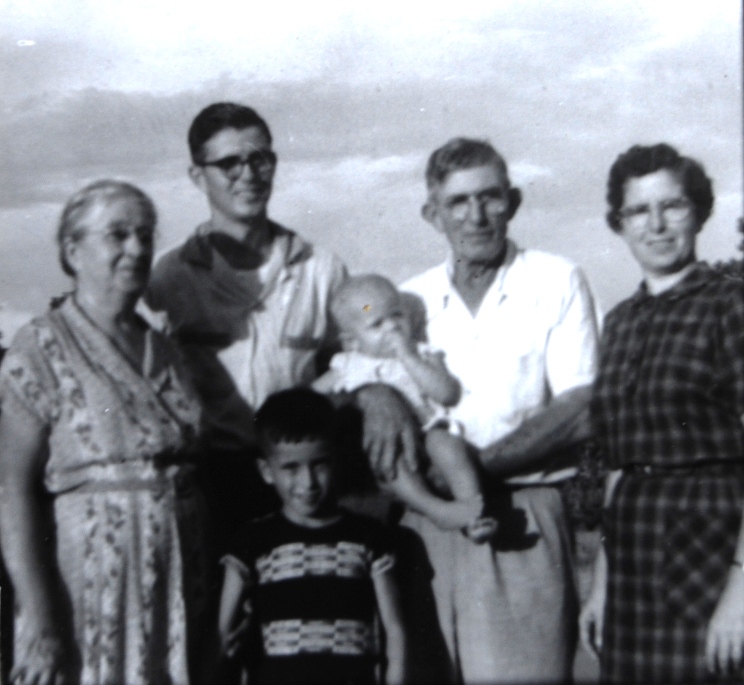
Granddaddy Faircloth

Granddaddy Faircloth holding me when I was an infant (1957)

Granddaddy Faircloth
Christmas Day, 1966
Jeff Garrison

I’m now ten years older than you were
when I snapped that photo,
a nine year old boy on Christmas morning
with his new camera, a Kodak Instamatic.

It took some persuasion for you to get up
and step outside, but my grandmother coaxed
and with the camera you’d given me
I snapped a slightly crooked shot.

Mom said it was probably the last photo taken of you,
in a dress shirt beside your tall skinny bride, adorn in a white dress,
the two of you standing like sentinels by the holly bush
just off the front stoop where, in summer, we grandkids killed flies.

That photo has been lost for half a century,
but it’s still etched in my mind
your grin and crew cut hair,
and your arm around your wife, my grandma.

I wonder what you were thinking?
Did you want to get back inside to take a drag off your Lucky Strike?
Or sip dark black coffee from your stained cup?
Or ponder when we youn-ins (that rhymed with onions) would be quiet?

Perhaps, though, more was on your mind
as you thought how, in another month, you’d be preparing beds
in order to set out tobacco seed,
but that would be weeks after you took your last breath.

There’s much about you I’m curious to know,
things that’s been lost over the years.

When you visited us that fall of ‘66,
shortly after we moved to Wilmington,
you joked that we now needed a maid since we had a brick house
with two bathrooms.

Later that afternoon, we walked in the woods out back,
and you told of hunting among those pines during the war
when you were a welder at the shipyard,
and how they cut the bottom of your shirt off for missing a deer

Did you ever shoot a deer with that old Savage Stevens,
or did I avenge your bad luck,
when, as a seventeen year old, I downed a six pointer in Holly Shelter Swamp,
the only deer I ever had in that double-barrel (or any barrel’s) sights?

And I like to have an opportunity to see you once more
work in a tobacco field with your mule, Hoe-handle, pulling the plow,
or perched up on top of that orange Allis-Chambers tractor,
pulling a sled of Bright Leaf up to the barn for curing.

But what I’d really like to experience is a night with you at the barn,
keeping the fires hot by feeding wood into the heaters
under a sky filled with stars and lightning bugs
and the flickering kerosene lantern that now sits on my mantel.

On those evening, swapping stories with friends,
did your mouth water for something to quench your thirst,
something smooth that you’d long sworn off,
but the desire, I expect, was still there?

It must have taken quite a bit of strength,
to give up the drink and break with some of your brothers
as you strove to live a straight life
and earn the respect of your mother-in-law.

But I will never know, in this realm at least, any of this
and must be content of my memories of that Christmas,
in the home that belonged to the women around you,
your mother-in-law, your wife and your daughters.

You’d cut a beautiful red cedar that year,
decorated it with white lights, red bulbs,
and an abundance of icicles with presents for your grandkids
filling the floor around the base of the tree.

After our presents were opened,
you called us back to your bedroom where,
with boxes of fruits and nuts you stuffed bags for everyone,
contents that’ll have to last a lifetime.

Granddaddy’s lantern: I have often used this when fishing or camping at night for it doesn’t blind you like a Coleman lantern