Riding Coach from South Bend to D.C.

Title slide with photos of the train in South Bend and Savannah

I planned to finish up my tales from my Michigan trip, but the week has been too busy, so I bushed and edited a piece I wrote back in 2017. On the trip, I was coming home (to Skidaway Island) from a conference at Calvin College (now University) in Grand Rapids, Michigan.  The route from Pittsburgh to Cumberland paralleled the bicycle trip I took in May with my brother. Click here to read about that trip.


The train arriving in South Bend

I wake up, realizing the guy in the seat next to me is gathering his stuff. Looking out the window, I see we’re running alongside a river. It must be the Ohio. I pull out my iPhone to check the time. It’s 4:45 AM, we’re approaching Pittsburgh.  

“Getting off in Pittsburgh?” I ask.

“Yeah,” he answered. He was asleep last night when I boarded the train in South Bend. I was tired myself and had quickly fallen asleep. I vaguely remember train stopping at Elkhart, and totally missed Waterloo, along with longer stops in Toledo and Cleveland and several quick stops in smaller towns. We pass the Emsworth Lock and Dam. I’ve been here many times before. I’m surprised to see the barges are still running on the first of February, but then it’s been a warm winter.

“Live in the ‘burgh?” I ask.

“No,  Philly.”

“But you’re getting off here?”  I resisted the temptation to make a disparaging remark about the Phillies and Eagles.

“Yeah, I gotta catch another train. I have a two-hour layover.  You from here?”

“Nah, but I lived here for three years when I was in school back in the ‘80s.  It’s a great city.”

We talk for a few minutes. The train slows down and then pulls away from the river. I learn he’s a long-haul truck driver.  They found a beer in his truck when it was being serviced. He said it was left over from New Years, but it’s a violation and they terminated him. But it’s okay, he says, as he’s already has another job lined up with another trucking company.  

As he talks the train swings to the right and soon, we on a bridge across the Allegheny River.

“The Three Sisters,” I say, pointing out the identical yellow bridges below us. The train slows, stopping at the Pittsburgh Station underneath the massive building which used to house offices for the Pennsylvania Railroad. The conductors and engineer change crews here, providing a fifteen-minute break. After all the passengers depart, I get off and walk for a few minutes along the tracks enjoying the fresh air. Most passengers remain asleep, but a few shuffle around on the platform enjoying an infrequent smoking break. It’s odd to be outdoors in the predawn hours on the first of February without a coat.  When the conductor shouts, “All Aboard,” I step back onboard and take my seat. Soon, I’m back asleep.  

I’d boarded the train the evening before in South Bend, Indiana.  I’d taken the train up from Savannah the week before to attend a conference at Calvin University. While I could have taken the train into Grand Rapids, it would have required an extra day each direction with a long wait in Chicago. Instead, I got off in South Bend and rented a car from Enterprise. They picked me up early in the morning on my arrival.

The evening before, I had to turn the car by 6 PM, to get a shuttle back to the station. The train was scheduled to arrive a bit after nine. I had brought a sandwich for dinner and ate it in the station while I waited. It wasn’t a very fancy meal, but sufficient. I would have preferred to eat in the dining car on the train, but suspected it would be closed by the time I boarded. 

Taking up a seat along the back wall, I pull out my book, Robert Harris’ Pompeii. This is the original train station and the seats are heavy, old, curved oak benches. While they look like church pews, they more comfortable. Every few minutes when the crossing gates just outside the station would begin to ring in announcement of another train. The ringing was followed by the horn of a train coming closer until it whisked by, followed by the waning sound of the horn and the clacking of the wheels. This was the main line serving trains heading from Chicago east to New York, Pittsburgh and Philadelphia. The station was never very busy and only a half dozen of us who board in South Bend when my train, the Capitol Limited, arrived.

I wake up a little after seven and in the dark can make out a river that parallels the tracks.  According to the timetable, we must have already stopped in Connellsville and are beginning the long slow climb over the Alleghenies. The river appears deep and slow, with just a few rocks, but I know that’ll change as we gain altitude. Snow dusts the ground. The trees are barren. Occasionally I’ll spot a pine or cedar, frosted with snow, but the trees are mostly hardwoods of some variety. In the dark, it’s hard to tell the specie. I take my book and notebook up to the snack car for breakfast, ordering a breakfast burrito and coffee. Sitting at a table, I eat, while watching the scenery change. As we gain elevation, cedars appear, and the water runs faster between eh rocks. Snow covers the ground with more falling. 

The train slowly winds its way up the tracks, its wheels at time squeaking against the rails. We reach the village of Confluence. The morning is gray, foggy, and wet. Only a few cars are on the roads. As we gain more elevation, the river becomes smaller and swifter. We run through the first tunnel.  On the top of the hills are many windmills. Mountain laurel covers the hillsides.  

We enter another tunnel, a longer one, and when we come out, I notice that the river has changed directions. We’re heading downhill, but the engineer holds the train back, going as slowly downhill as we did uphill. The sun attempts to burn off the fog. Its golden reflections reflect from the ripples of the creek below. As we lose altitude, there is less snow on the ground. The train picks up speed. By the time we reach Cumberland, the snow is gone. We’re a bit early, so I step off the train and enjoy the fresh air. It feels more like spring than deep winter.   

On my bicycle trip on the GAP, I saw these same windmills.


After Cumberland, I head back to my seat.  The train runs quickly along the Potomac River.  I continue reading Pompeii, picking up where I left off last night. A little over an hour later, we make a short stop in Martinsville, West Virginia, a neat looking old town. An old, abandoned roundhouse sits on the north side of the tracks. The business district runs along the south side. 

Our next stop is in Harpers Ferry, West Virginia. I look for the old hotel where I stayed when I was here while hiking the Appalachian Trail. The stop is short and soon we’re crossing the river and heading into a tunnel.  

Harper’s Ferry

Below Harper’s Ferry, the train parallels the C&O canal. The canal seems to be filled with stagnant water covered in a green slime. The train makes its last stop in Rockville, before pulling into Union Station fifteen minutes early. I head for the food court for a quick lunch, before heading out to the National Gallery for the afternoon. I’ll be back at the station in time to board the train to Savannah. I’ll have better accommodations for this leg as I’ve booked a sleeper.

Arriving in Savannah

Worship: It’s Not About Us

Title slide for sermon for Mayberry & Bluemont Churches on Sunday, July 27, 2024. Text: Revelation 4. Slide shows photos of the churches.

Jeff Garrison
Mayberry & Bluemont Churches  
Revelation 4
July 28, 2025

At the beginning of worship:
In Barbara Brown Taylor’s, An Altar in the World, she writes about Francis of Assisi building a church on the ruins of an old one. Francis employed his labor from the people of the town. Quoting Taylor: 

to most of the people helping Francis in the construction: building the church became more important than finishing it. Building it together gave people who were formerly invisible to each other meaning, purpose, and worth. When completed, Francis’s church did not stand as a shelter from the world; it stood as a reminder that the whole world was God’s House.[1]

The focus of our scripture today is worship. And while we worship here on Sunday mornings and occasionally at other times, we shouldn’t forget that all the world stands as an altar to God. Paul reminds us to pray without ceasing.[2] Our lives should also be worshipping God without ceasing. 

Before reading the scripture:
We’ll spend the next two Sundays in the 4th and 5th chapters of Revelation. Both chapters go together and center on worship in heaven. In Chapter 4, the focus is on God’s throne. Chapter 5 focuses on the slain yet resurrected lamb who now rules, Jesus Christ. Much of the language here is poetic and metaphorical. It reminds the readers of similar visions of Isaiah and Ezekiel.[3]

These two chapters go with the previous two chapters where Jesus addressed the seven churches. One of the themes running through those chapters is the coming persecution. The reader of Revelation will hear more about the troubles on earth. But before going there, John gives a counter vision, one which reminds his readers of God’s control despite the troubles they face.

In Revelation, each new part of the book begins with a scene of heavenly glory.[4] Even during our troubles, we’re to keep God in focus. 

While we have a description of God’s throne, John doesn’t provide a vision of God. We know God through Jesus Christ, God’s revelation to us, not from any vision given to the Biblical witnesses. God, hidden since the curse in Genesis 3, remains hidden. Only at the end of Revelation, after the removable of the curse, does God again live intimately with his creation. Let’s hear what John saw there on the Isle of Patmos:

Read Revelation 4

A Rabbi on his deathbed, surrounded by his disciples, was asked to express his most profound wish. He said: “I hope that the day will come when people learn to fear God as much as they fear each other. This shocked his students. “How is it possible that people would fear each other more than God?”

The dying rabbi looked up at his students and said: “When someone does something wrong, they often say: ‘I hope no one sees.’ But they never say ‘I hope God does not see’ because they know God watches. Imagine a world where people lived with an awareness of the Almighty throughout their daily lives. Such awareness would affect their interactions with other people, their business dealings, and their public and private moments.”[5]

Our topic for today is worship.  We were made for worship. Everyone worships something. As Bob Dylan sang, “you gotta serve somebody.” It’s just that many people worship and serve the wrong things. It may be money, it may be intellect, it may be power, and it may be a philosophy or an idea or even another person. But nothing we worship, outside of God, can satisfy our deepest longings. As with the story of the rabbi, worship reminds us of God’s presence.

Worship is more than just music or a sermon or prayers or chanting or any of the other corporate stuff we might do together. Worship, in a Biblical sense, is our attitude before God. However, this doesn’t mean that corporate worship isn’t important, as we see in today’s text.  

John, on the Isle of Patmos, a rocky outcrop reserved for those deemed to be troublemakers within the Empire, is a prisoner for preaching the gospel.[6] Isolated from his family, his friends, and his church community, he’s given a vision of heaven.

When we think of Revelation, we often conjure up frightful visions of riders on horses and multi-headed beasts rising out of the sea. And all that is in this book.  One of the problems many people have with Revelation is they think they must (and can) understand it all. They look for keys to interpret. Certainly, the book is confusing and has its share of blood and guts. Yet, God’s faithfulness and victory at the end remains the overarching theme. Interestingly, before getting to the horrific visions, we have a vision of heaven and the worship which occur there. 

This implies that while the earth is in turmoil, in heaven the focus is on worshipping the Creator. God is in control. This reminder prepares John for what’s ahead by reminding him who’s in charge. We should choose worship over worry.[7] In John’s world, there is turmoil and in heaven there is worship. In our world, when we worship, we leave our worries behind because we realize God is in control.  

The fourth chapter of Revelation is where the apocalypse-proper begins. It follows the opening chapters which contain a series of letters to seven churches. The last letter, to the lukewarm church of Laodicea, includes a simple vision. “Listen, I am standing at the door knocking,” Jesus tells them, “If you hear my voice and open the door, I will come…”[8]

Interestingly, the fourth chapter begins with a vision of an open door, providing John with a glimpse of worship in heaven. Our doors may be shut, but God’s door is open. A voice from inside the door calls John to come on up and he’s immediately caught up in the spirit, or as another translation renders this passage, “caught up at once in deep worship.”[9] In this state, John sees the glory of God’s throne.

God’s throne is referred to 40 times in the Book of Revelation.[10]The constant appearance of the throne reminds us that even though chaos reigns on earth, all remains well in heaven. God is sovereign and in control and will in time (as you’ll see if you read to the end of this book) restore order and do away with sin and evil and death. Here, in this vision of worship, the throne gathers and unifies all creatures in worship.[11]

In the old New England Churches, which also served as a place for town meetings, the architecture was intentional. They raised the pulpit high, often requiring the pastor to navigate narrow steps to get into it. The proclamation of the word of God came from above the congregation. However, the churches would also have a lectern on the level of the people. From here, the business of the town was conducted. The architecture of the building reminded everyone—especially elected officials—that they stood under God’s word and God’s watchful eyes. 

The throne is what centers everyone in John’s vision. However, John doesn’t describe God. Seeing God would be fatal according to Jewish thought. The mortal, the sinful, cannot withstand looking directly at God. This is why the incarnation is necessary. Jesus needed to come in the flesh. Here, instead of seeing the Almighty, God’s glory is reflected in precious stones which radiate the brightness reflecting off the throne. Jasper, carnelian, and emeralds dominate the scene. Furthermore, lightning and fires protrude from the throne and thunder peals out from it. It’s an awesome and frightful sight.

Surrounding the throne are those who worship God, day and night. We’re told of the twenty-four elders in white robes with gold crowns. There is debate on how to interpret these elders, but one possibility is that they represent the old and the new: Israel’s twelve tribes and Jesus’ twelve apostles.[12] In addition are the four six-winged animals with eyes bursting out of their heads, who lead the 24 Elders and the multitude of people who have gathered around the throne. Certainly, there are symbolic meanings to these four beasts representing the noblest, strongest, wisest and swiftest in creation.[13]

Another thing we should understand looking around the throne is that our God shares his leadership and glory. The beast who leads worship and the elders who surround the throne are examples. God isn’t a power-hungry emperor like the dude in Rome, but one who wants us to participate with him in creation and recreation. But as we join in his endeavor, we’re not to claim glory for ourselves but attribute it to God. 

The beasts cry out: “Holy, Holy, Holy, the Lord God the Almighty, who was and is and is to come.” Responding, the elders fall flat on their faces, casting their crowns toward the throne. In other words, the elders are not taking any of the glory for themselves; it’s all given to God. And they sing: “You are worthy, our Lord and God, to receive glory and honor and power, for you created all things, and by your will they existed and were created.” Through this continual reiteration, they act out what is eternally true. This is the heart of worship—reminding ourselves of God’s role and our roles in life.

In front of the throne is a glass sea, like crystal, the still waters that remind us of baptism, of our cleansing that allows us to come before the throne. The waters of the sea are perfectly still, reminding us of Jesus calming the storm. When water is calm, it’s like a mirror. In John’s case, the sea reflects the glory of God’s throne…

What can we learn from John’s vision? How can our attempts at worship reflect what’s going on at the throne? 

We’re to worship God in a way that helps us and others who worship get through life by knowing and affirming God’s sovereignty. Worship must focus on God and not us. It’s not about us, it’s about God. 

Worship is a duty in which we voluntarily engage because we are grateful for what God has done and is doing. Examine yourselves. What does our attitude in worship say about our trust and belief in God? 

The time you spend here on Sunday morning is very important. Throughout the week, we’re constantly bombarded with messages from advertisers saying it’s about you, that they can help you be fulfilled. But in this hour, we’re reminded once again, week after week, that those selling products lie. It’s not about us; it’s about God. In this hour, we re-center ourselves. We’re reminded once again of what’s truly important and eternal.  Amen.


[1] Barbara Brown Taylor, An Altar in the World: A Geography of Faith (New York: HarperOne, 2009), 10.

[2] 1 Thessalonians 5:17.

[3] Isaiah 6 and Ezekiel 1.

[4] M. Eugene Boring, Revelation: Interpretation, A Bible Commentary for Teaching and Preaching (Louisville, KY: John Knox Press, 1989), 101. 

[5] Michael Siegel, Reflections on Fear” as used by Rev. Eugenia Gamble in her message on “30 Good Minutes,” first broadcast February 2008.  

[6] Revelation 1:9

[7] Rick Warren, “Live your Calling: What On Earth Am I Hear For?” (Part 2), 2-15.  

[8] Revelation 3:20. See https://fromarockyhillside.com/2025/07/20/whats-wrong-with-being-lukewarm/

[9] Revelation 4:2, The Message 

[10] Robert H. Mounce, The Book of Revelation, (Grand Rapids, Eerdmans, revised 1997), 119.

[11] Eugene Peterson, Reversed Thunder: The Revelation of John and the Praying Imagination (HarperSanFrancisco, 1988), 59-60.

[12] Peterson, 61.  For a different view, see Mounce, 121-122.

[13] Peterson, 62, Mounce, 124.

Completing my trip around Drummond Island

title slide with photos around Drummond Island

Wednesday, June 25, 2025

To read part 1, click here.

My well worn map of Drummond Island
The fossil ledges which are found on the north and northeastern side of the island.

After the windy evening, the morning turned out calm. The calm mornings are normally the pattern, with the exception being on Thursday. But on Wednesday, I woke early, fixed coffee and oatmeal, read and wrote in my journal before beginning my paddle along the north shore of Drummond.  Much of the paddling this morning was along the fossil ledges, where the alvar limestone meets the lakeshore.

For the first few miles, there was no one else in sight, but a couple of miles from Chippewa Point, I began to run into boats fishing just offshore. Chatting with two of the boats, I learned that no one had caught any fished. One said this was the worse for fishing that he recalled. Normally there were a couple of inland lakes along the north side which one could explore, but the lake was so low that wasn’t possible.  I also saw two bald eagles during the morning.

I stopped for lunch on a rock bar between Chippewa Point.  The wind was blowing out of the east, just strong enough to keep the bugs from bothering me. After lunch, I headed due south, across the wide waters of Potagannissing Bay. The bay is filled with islands. I kept my sights on Bald and Grape Island, setting a course between the two which would land me back on the mainland approximately where Pine Street met the water. I wasn’t exactly sure where I was heading as an address doesn’t do much good on the water, but I knew it was just east of H&H Boat Launch. 

Approaching Chippewa Point

After three days of paddling, my arms were tired. I had considered exploring Harbor Island, which has a large inside lake which creates a safe harbor, but since I had been to the island a few years earlier when a member of the DeTour Union Church took me out on his boat, I decided against it. I paddled on, between islands and could make out the marina.

After about an hour of paddling, I found myself just east of the marina. There was a woman out with a toddler. I asked her if she knew the Ledy’s. “You must be Jeff,” she said and introduced herself as Irma. The toddler was her granddaughter. I pulled my kayak up on their sandy beach and spend the next couple of hours talking to her and her husband Clayt, while enjoying a tall Long Island Iced Tea.  Clayt, a contractor, had spent time building mission projects in Ethiopia. His stories were fascinating. 

That night, I joined them, along with Dave and Sandy for dinner.  Dave and Sandy had brought the meal which included tender pork chops which were a lot better than anything I could have fixed. While their cabin was full, they invited me to camp on their porch. I decided my hammock strung between trees would be more comfortable and I could get up earlier in the morning and be on my way. 

Thursday morning, June 26

The rain came at 4 AM. Not expecting it, I crawled out of my hammock and pitched out my fly to keep the water from seeping in. I checked the weather. Off and on showers through the morning, but winds only 6-8 mph.  It’d be a good day to paddle.  Soon, I was back asleep. 

At 6:30 I woke. It’d been light for nearly an hour, but the dark low hanging clouds made it seem earlier. I wanted to get a good start to the day, as I was going to complete my circumnavigation around Drummond Island. I needed to be back on the mainland in time to clean up before driving over to St. Ignace to pick up my friend, Bob. 

Quickly packing my stuff., most of the gear I stored in a shed where, the night before Clayt, said I could I could store anything I didn’t want to carry. Since I wasn’t camping, I dropped most of my gear in the shed, taking only what I needed for the morning paddle. Then I ate a couple granola bars but decided to forgo coffee to get out earlier on the water. 

A little after 7 AM, I was ready to push off. I noticed that the wind seemed to be blowing a lot more than forecasted, but it didn’t seem too bad. Heading out a way into the water, I turned due west. The wind blew out of the northeast, helping me make good time. Quickly passing Sandstone Point, I set my sights on Sims Point, some three miles away.

This course took me across the mouth of Sturgeon Bay. I noticed the water looked choppier than expected. As I moved further from the islands that I’d paddled through the day before, the wind picked up. About a 1/3 of the way across the mouth, I found myself in gale force winds. The waves built and the wind kept pushing me southeast, into Sturgeon Bay, I had to fight to stay on course, dropping my skeg (a small keel) and surfing at a 45-degree angle across 2- and 3-foot swells. The water foamed from the whitecaps. 

Paddling with my life jacket zipped up (After crossing the lee of the island)

There were no boats out this morning. I wore my life vest over my rain jacket. Most of this trip, I only snapped the jacket at the bottom, but now I quickly zipped it up tight. In my jacket was a marine radio, in case I got into real trouble, along with snacks and bug spray. The later wasn’t needed this morning. Whatever happened to those 6-8 mile per hour breezes?  Paddling became exhausting, but my boat handled the waves well. About a quarter mile from Sim’s point, I slipped behind an unnamed and uninhabited island for a break. 

I rested for a good half hour. At least, I thought, I was done with the open water piece. From now on, I’d be along the shoreline, with roads and cabins if I got into trouble. I set back out paddling, with a half mile more to go till I would be on the lee side of Drummond. The waves grew taller as the wind pushed around the islands. A few waves appeared to be nearly 4 feet tall. Several times, I would miss a stroke as I crested a wave, with the water too far below the paddle.

Shelter on the lee side of an island. It’s hard to see the white caps in the photo.

Once, a wave caught me sideways and I almost rolled the kayak. At the last second, using a high brace, I pulled myself back upright and over the swell. This was scary. While continuing to paddle hard, I prayed for God to protect me and give me strength. Then, after another hundred yards, I passed Dix Point and turned my boat south, paralleling the island. The water calmed. I watched an ore freighter make its way north toward the Soo in the St. Mary’s River The current pushed me south. I relaxed. 

waiting for the ferry to clear the dock before passing the terminal.
Limestone quarry loading docks

For the next hour, I paddled south along the west side of Drummond. The only obstacle was the ferry, which I decided to wait for it to leave instead of trying to race across it’s bow as it made its way back and forth from DeTour Village.  Since there were no ships loading at the limestone quarry dock, I was able to see the operation up close as crush limestone falls into piles based on its size and use. Some of the rock is used in the steel making process, other is used in construction and agricultural. 

Soon, I was at the southwestern end of the island. I thought I could skirt through the gap between Barbed Point and Crab Island but found that because of the low water in the Great Lakes, the channel was closed. Across the rocky bridge, waves were beating on the other side. I realized my challenge wasn’t quite over. I paddled around Crab Island and headed northwest, with the wind in my face. For a few minutes I was able to rest behind Arnold Island, but as I headed back northeast the wind howled. There was nothing to do but to keep paddling as I was taken back out into open water. But paddling into the wind is just tiring, not as dangerous as when the wind is coming across the boat. After about two miles I was finally in the tributary where Fort Drummond Marina was located. Once there, the last mile was a little easier as the shoreline blocked the wind. 

Fort Drummond was named for the British General during the War of 1812 who controlled British troops in Southern Canada. At the time, the British held Mackinac Island. After the war, they gave it up. At first, Drummond moved his solders to the island that now bears his name.  Later, they would move back into Canada, which was just north or east of the island. 

Thursday morning, back where I started on Monday

I arrived at the marina a little before noon. After loading my boat on the top of the car, talked to the guy at the marina, then drove over to the Ledy’s to pick up my gear. I had to wait a few minutes for the ferry, but by 1 PM, I was back on the mainland, setting out my gear to dry in the garage.  I had lunch, took a nap, and late in the afternoon set out for St. Ignace to pick up Bob. 

What’s wrong with being lukewarm?

Title slide for sermon with photos of Mayberry and Bluemont Churches

Jeff Garrison
Mayberry and Bluemont Churches 
July 20, 2025
Revelation 3:14-22

At the beginning of worship: 

Back in the 80s, during the dark days of apartheid in South Africa, a wealthy black South African joined the nonviolent movement against apartheid. There weren’t many such people in the country—wealthy blacks that is. One of his white friends asked him why he risked all he had—his wealth, jail time, his life—to fight against this system. 

This South African replied he had a greater fear. He feared judgment day, when he would stand in front of the Lord’s throne and be asked to show his scars. And if he had no scars to show, the great judge might ask him, WHY? “Why do you have scars? Is it because there was nothing down there worth fighting for?” He decided it was time to stop looking out for himself and to start serving his brothers and sisters.[1]

When we’re comfortable in life, we become risk adverse. We want to sit back and take it easy. But Christ calls to take a stand, to fight for what is right, good, and noble. Do we? 

Before reading the Scripture:

We’ll finish our tour through the seven churches of Revelation with a stop at Laodicea. The city was located about 40 miles southwest of Philadelphia. It’s 100 miles east of Ephesus, where we began our somewhat circular route a couple months ago. If you convert your hand to a map of Asia Minor, you’ll find Laodicea down around the knuckle of your ring finger. Before getting into the passage, let’s run through the seven churches and consider what the overwhelming message was for each church. 

We began in Ephesus, a doctrinally correct church who lost their love. Next, we have Smyrna, a city with a church which has a lot going for it but facing persecution. Next, we have the church in Pergamum, which compromised its doctrine. In Thyatira, we have a church that has compromised its morals. The Sardis church is spiritually dead. In Philadelphia, we have a poor church striving to hold on. And today, we’ll look at the lukewarm church, Laodicea.  

As we’ve seen in all these letters, knowing something about the city gives insight into Jesus’ words. 

Here’s a bit of background for Laodicea. It was a very wealthy city, a center of banking as well as an area with fertile soil and great grasslands for grazing sheep. In addition to banking and farming, textiles were also an important occupation. Founded at a crossroads, water had to be brought in by a series of stone pipes and aqueducts. This is an important clue as we’ll see. There’s a medical school and a pharmaceutical industry in Laodicea, the latter producing a salve for the eyes that was important across the empire.[2] Let’s listen to what Jesus has to say.  

Read Revelation 3:14-22.

This passage is an indictment, an accusation against the lifestyle of the Christians in Laodicea. It may well be an indictment of our lifestyle. Christ stands at the door knocking; will we let him in?

This message to the church in Laodicea is like the one to Sardis. Both churches think they are alive but are fooling themselves. Jesus, the faithful, true, and eternal one, knows their works. He knows what they’ve been up too and ain’t happy. “You’re lukewarm,” Jesus says, “neither hot nor cold.” 

This opening charge against the Laodiceans has been applied to many churches throughout the ages. But before we get too general with our interpretation, let’s consider some of the background here so we can understand the context for Jesus’ words. After all, why would Jesus say he’d rather have them cold rather than lukewarm? If we’re not careful, we may misinterpret Jesus’ intentions.

A series of hot springs sat across the valley from the Laodicea. Seen as a place of healing, the hot mineral waters provided a cleansing bath and an unpleasant drink. Many used these waters when ill. These springs left mineral deposits which could be seen from Laodicea. 

On the other hand, in Colossae, to the northeast, a cold spring poured out delicious water. It was treasured for its refreshing taste. Laodicea, however, had no such springs. Its water came from these distance sources. A series of stone pipes transport the water to the city. By the time it got to Laodicea, the water was warm. With its strong mineral content, the water was hardly fit to drink. 

Understanding this background, we can see that the church in Laodicea, as one commentator noted, provided neither “refreshments for the spiritually weary nor healing for the spiritually sick.” They were not doing what they were supposed to be doing and as a result they left a bad taste in Jesus’ mouth. Jesus wants to spit ‘em out, just as the Laodiceans wanted to spit out their local water.[3]   

It’s important we understand this. I want to make sure you don’t go away thinking that it’s better to be a “cold Christian” than a lukewarm one. That’s not Jesus’ message. Instead, he’s saying, “Do something worthy of the gifts you’ve received. Be refreshing cold or provide healing warmth. Don’t sit on the fence.”

As I said earlier, Laodicea was a wealthy city. They had so much money that when the city was destroyed by an earthquake in 60 AD, they rebuilt it and didn’t blink. Rome and other cities offered help. Remember, Rome helped Philadelphia rebuild. But Laodicea didn’t need or want help. They were proud of the fact that they could build a new city on their savings. “We’re wealthy,” they thought, “We don’t need any handouts.”

Though the city was wealthy, it was not being judged for its riches. The sin of Laodicea was pride. The city boasted that it was rich; “ah, look at us, we can rebuild without help from Rome.” In addition, they probably want to be indebted to Rome. 

The people of the city, and this must have included the Christians, proclaimed their own glory. They saw themselves as ones who’d pulled themselves up by their own sandal-straps. They had created their situation in life; they had built their own fortune and took pride in their accomplishments. This pride kept the city’s inhabitants from seeing their own spiritual poverty.  

The other cities in Revelation are condemned for tendencies toward idolatry and were warned to stay away from the idols and the “thrones of Satan.” But Laodicea’s censure is harsher than the others, perhaps because when a people believe they are so great and powerful, they create a god out of themselves. This idolatry can be more destructive than believing in a god of metal or stone or even worshiping Caesar. 

Christians in cities like Ephesus and Sardis had a problem with their neighbors enticing them to worship a false god. In Laodicea, there is no evidence of the people believing in anything other than themselves. John instructs the congregation of Laodicea to spend some of their riches, to invest their treasure by buying from Christ pure gold, white linen and ointment for their eyes.  

Laodicea indictment shows the real poverty of the city. True wealth comes only from Christ. With him, we can store our wealth in heaven, where it won’t rust, be eaten by moths, or be stolen.[4]Only Christ, who is standing outside their door, can restore their sight.

Does this sound like us?  Do we take pride in our own accomplishments? You bet. Do we think we’re self-sufficient? Yep. And you know what; God may have a surprise for us. 

I remember talking to a guy once, who was dying. He complained that all this money made no difference. Having been the boss all his life, starting as a young officer during World War 2, he had remained in control of others. He told other people what to do, but in his final couple years he learned the idea of being in control is a myth. When it comes down to our end, our only true security is with God.  

We should understand Jesus calls the Laodiceans to do more than nod respectfully at him. After all, that’s all Caesar required; Jesus, however, requires commitment.  He wants them, and us, to be either the hot healing waters or the cool refreshing waters. He wants the church not to think too highly of itself, instead to love and minister to others. 

Too often we Christians seem to think that just because we’ve been saved, we receive a get into heaven-free card and don’t have to worry about anything. That’s true to a certain extent, but it’s not the purpose behind God’s salvation. God isn’t trying to fill up empty rooms in heaven, God calls us through Jesus Christ because there is work to be done and as Christ’s body on earth, we’re his hands and feet and mouths.  

While the Christians in Laodicea will not have to spend any of their treasure to obtain these wondrous gifts from Jesus; it will cost them their fortune. The price Jesus demands is their pride, he demands for the city to stop boasting on how they made themselves rich, instead he demands their lives. They are to live for him; they are to put his concerns at the forefront of their lives; and they are to credit God for whatever successes they enjoy. 

As with the other churches, Jesus promises great things to those in Laodicea if they would just open the door and let him in. If they repent, if they change their ways, if they invite Jesus into their lives, he will come in and eat with them. This promise reflects the gracious hospitality of the culture—eating together was considered an honor. Furthermore, Jesus tells them they will have a place on his throne! That’s quite a promise. 

Unlike the churches in most of the other cities, Laodicea was financially well off. But they had become too cozy, nothing was worth fighting over. I hope that’s not the case for us. Jesus Christ calls us to do more than just to go to church; he calls us to be his disciples, to be his ambassadors in the world. Jesus calls us to take a stand; he calls us to strive to make the world a better place. Salvation is more than a one-time experience of being born again.[5] That’s just the beginning. 

Jesus stands at the door knocking, but the Laodiceans celebrate their glory. With the loudness of the celebration, will they hear the knock? Our Savior also stands metaphorically at our doors, knocking. Do we hear him, or are we too preoccupied? Will we receive him? Or will he have to go down the road and knock on another door?  Amen.  


[1] I used this story in a sermon in the 90s.  I think it came from Alan Boesak, The Finger of God: Sermons on Faith and Socio-Political Responsibility (Maryknoll, NY: Orbis, 1984).  

[2] For background on Laodicea, see G. B. Caird, The Revelation of St. John the Divine (New York: Harper & Row, 1966), 56-57; and Robert H. Mounce, The Book of Revelation, NICNT revised (Grand Rapids: Eerdmans, 1997), 106-108.

[3] Mounce, 109.

[4] Matthew 6:19-20.

[5] When I think about salvation as a journey, I think about Peter who was “converted” over and over again as Jesus expanded his vision of what it meant to be a disciple.  

The Pulpit and Politics

Title Slide, "Politics and the Pulpit" showing two pulpits and empty sanctuaries

I was going to publish the second half of my solo paddle around Drummond Island this week. However, a governmental ruling on the role of the pulpit made me decide to put that hold. Here are my thoughts on the slippery issue of politics and the pulpit. God willing, I’ll be back to paddling around Drummond next week.

The Pulpit and Politics

Last week an Internal Revenue Service decision allowed clergy and churches to endorse candidates for elected office.[1] I do not plan to make such endorsements. I think this is a bad idea. The pulpit should not be used for political purposes. Jesus himself refused to allow his earthly ministry to become political, telling Peter to put away his sword. Why should we think we’re any different than Peter? 

The purpose of the pulpit is to proclaim God’s word and to point to Jesus Christ as the Savior of the world. Some politicians run on platforms suggesting they have what it takes to save their community or country. But all politicians, like all people, fall short of God’s glory.  Christians should scrutinize politicians’ words, for we proclaim a different Savior.  

Politicians may do good work, but none, not even the best, are without sin. When seeking power, it’s easy to justify doing whatever. Winning becomes everything. He or she can no longer articulate personal shortcomings. The allure to succeed at all costs is great. Few can withstand the temptation. Once a politician believes they have all the right answers and sees their opponent as wrong or evil, they’ve gone against the teachings of Christ.    

Pulpit with quote, "Sir, We would see Jesus" (John 12:21, KJV)
Pulpit with the quote from John 12:21 in the King James Version

Inside many pulpits, for the preacher and no one else to see, to see, is a quote. “Sir, we would like to see Jesus.” It comes from John 12:21, where a group of Gentiles approach the disciples about meeting Jesus. This quote reminds the preacher of his or her purpose, to make Jesus known. We weaken our message when we conflate Jesus’ teachings with political rhetoric. Endorsing candidates will not serve the gospel. It will only serve those seeking political office. 

However, this does not mean political discourse has no place in the pulpit. There are times in which preachers must challenge what’s happening in the world. I felt this was necessary a few times in my ministry, which made some people mad. However, the church must stand up for the integrity of the gospel and insist all people be treated fairly and compassionately. 

Anytime those in or wanting to be in power co-opt the gospel, the church should push back. I have seen this recently in a social media Homeland Security commercial in which they show armed men in tactical gear on a helicopter. A voice quotes from Isaiah 8, “Here I am, send me.” By plagiarizing the prophet, the ad attempt to sanitize the behavior of Custom and Border Patrol and ICE by making it seem they’re doing God’s work.[2] The Biblical passage, in which Isaiah speaks to God, is totally taken out of context. Both Testaments of Scripture attest to our need to care for the alien and the friendless in our midst.

The pulpit should discourage Christians from dividing people into “us” and “them” groups. This is especially true when we demonize the “thems.” While the church shouldn’t be involved in partisan politics, we should push back against blasphemy (using God’s name and word for human intentions), and intentional cruelty.  Our purpose is to hold up a vision that all people are created in God’s image and to seek God’s will on earth. We acknowledge our own sinfulness and accept the sinfulness of others as we strive to lead them to experience the love of Jesus.  

As followers of Jesus, the church has a longer view of history than election cycles. Furthermore, we recognize our true citizenship is in God’s kingdom. Here on earth, to borrow a phrase coined by theologians Stanley Hauerwas and Will Willimon, Christians live as “resident aliens.” This doesn’t mean we shouldn’t care what happens in politics. Instead, as the Prophet Jeremiah implored the people of Israel when heading into exile in Babylon, we’re to seek the welfare of the city (or country) in which we’re exiled (Jeremiah 29:7). 

While the church should shun partisan politics, we should be concerned about the society in which we live. We are to be especially concerned about those unable to help themselves.  We should be a conscience for society, offering up a vision of a peaceful and more just world. 

One of the best documents the church has produced in opposition to what was happening politically around them was the Barmen Declaration.[3] In 1933, the Nazi Party co-opted many of the German Churches. But a group of German pastors and theologians, longing to be faithful to Jesus Christ, challenge the direction of the nation. The document avoids discussing Nazism or Hitler. Instead, it makes a clear statement. Jesus is Lord and we’re to place our trust in him and no one else. That’s the message needing to be heard from the pulpit. 


[1] https://www.usatoday.com/story/news/politics/2025/07/11/irs-churches-johnson-amendment-politics-endorsements/84537752007/

[2] https://x.com/i/status/1942362217795510273

[3] https://creedsandconfessions.org/barmen-declaration.html

100 Years of Transitions

title slide for Mayberry Presbyterian Church's 100 anniversary featuring 4 pictures of the church in different seasons.

Jeff Garrison
Mayberry Presbyterian Church  
100th Anniversary ServiceJune 13, 2025
Joshua 5:8-12

NOTE: Because of the special celebration concluding Mayberry’s 100th year, I will only be preaching at Mayberry today. Elder Karen Motsinger will preach at Bluemont. Mayberry began its 100th year last September as we celebrated our 100th year as a congregation meeting in the Old Mayberry School House. We end the celebration today, recalling our 100th anniversary of moving into the church building in July 1925.

Sermon recorded at Mayberry Church on Friday, July 11, 2025.

At the beginning of worship:

100 years. That’s a long time ago. None of us were here in 1925 when the congregation moved into this building.100 might be the age some inspire to live, but only a few make it. I’m sure those who built this church building a 100 years ago couldn’t comprehend us celebrating their achievements today any more than we can comprehend such a gathering in 2125.

But in some ways, 100 years doesn’t seem that long ago. Our nation is nearly 250 years old. When our spiritual ancestors moved into this building, our nation’s centennial was a distant memory and probably few remembered it. And our Christian faith is 2000 years old, 8 times older than our nation and 20 times older than this building. In light of eternity, 100 years ain’t even a drop in the bucket. 

Time keeps marching on. Over the past year, with our Mayberry moments,[1] we have learned more about our congregation’s history. Our beginnings went back before this building, from a gathering under a brush arbor to a Sunday school meeting in the old schoolhouse which used to sit in what’s now the parking lot of our community building. We’re heard about the nearby farm boys running up to church early on winter mornings to light a fire in the potbelly stove. There were difficult years after the 2nd World War. Attendance declined and the building became a chapel under Slate Mountain Presbyterian. Then, in the 1970s, we regained momentum and became independent again. 

In 100 years, we’ve had ups and downs. A lot of good people have joined the church. We’ve had joyous weddings but also sad funerals. But through it all, God has been with us. We’re not to take credit for any success, but to give credit to the Almighty. 

Before reading the Scripture:

We’re going to go back into the Old Testament today. Our passage comes at the point when Israel enters the Promised Land. The Hebrew people recall who they are and to whom they belong. It’s a transition, an occasion for religious rituals and feasts. The fifth chapter of Joshua begins with the circumcision of the men, resuming a practice that had not happened during the wilderness. Then they celebrate Passover.

Interestingly, there are six major Passover celebrations recorded in the Hebrew Scriptures.  The first is in Egypt, right before they left. The second is a year later, at Sinai, with the giving of the law. This is the third celebration. The fourth and fifth celebrations come with King Hezekiah and Josiah as they try to reform Israel. The sixth celebration is at the rebuilding of the temple after the Babylonian exile. Each of these events marks a significant point in Israel’s history.[2]

If you want to play with numbers, the number seven in Scripture is holy. We’ve seen that recently in my sermons on Revelation. Jesus celebrated the Passover with the disciples and reinterpreted it. Jesus then becomes the sacrificial lamb, as God passes over our sins for which Jesus paid the price. Jesus’ Passover makes seven.

As I’ve said, our morning text comes at a time of transition, the ending of the Exodus and the entry into the Promised Land. There will be no turning back. God has led them this far, now they are having to do something for themselves. The manna from heaven has come to an end. God calls them into the future. Likewise, God calls us into the future, into our second hundred years. 

Read Joshua 5:8-12

All of us go through transitions—as individuals and as communities. One day we’re happy in school and the next we’re working 9 to 5 (or 11 to 7 in my case, for when I finished college I went straight onto the night shift). One day we’re enjoying our mom’s cooking and the next we’re eating burnt toast and running eggs prepared with our own hands. And one day we’re going to work and the next we’re retired. One day people walked or rode a horse to church and now everyone arrives in cars. Life is full of changes: always has been, always will be.

The Hebrew people went through a significant transition. After 400 years of slavery and 40 years of wandering in the desert, they finally enter the land promised to Abraham and his descendants. Now they’ve come to their new home, two things happen. They are weaned from God’s daily providence of substance and once again required, as we’re told in the third chapter of Genesis, to make a living from the sweat of their brow.[3]

Second, they’re finally able to freely institute religious rituals without being harassed by their masters’ or prohibited from doing due to their wandering in the desert. This transition is marked by the reinstitution of circumcision and the celebration of Passover.

Today, the church in America and the Western World faces changes. We must relearn what it means to be a follower of Jesus in a new and radically different world from which we’ve known. We must learn how to share Jesus in a new way which will reach a new generation who approaches life differently. Yes, we’re facing transitions. But the one thing that never changes is the love of God and the command to love others.

You remember, I’m sure, the story of how Israel got to where she’s at in our reading. After the freeing of the Hebrew people from slavery, they cross the sea, which closes in and drowns the pursing Egyptian army. But even after that, they remain in a precarious position. 

Yes, they’re free, but how do you feed a nation in a barren wilderness? In Egypt, they’d filled their stomach on grains and meat but in the desert, the pickings are slim. There aren’t that many mountain goats and fried cactus for dinner doesn’t go over very well. There’s this small problem of having toothpicks hidden in the entrée.  

But God isn’t going to lose his redeemed people, so he provides for their nourishment. A bread-like substance called manna falls from the heavens onto the ground. In the mornings they gather enough for that day, but if they try to hoard any extra, it spoils. It’s not a commodity to be saved and traded with others. The only day they can “collect” an extra measure is the day before the Sabbath, when they need enough for two days.[4]

Yet, they soon tire of eating this stuff. So, God provides quails for meat.[5] And so, for forty years, their diet consisted of manna and quail, provided through an ultra-efficient food delivery system, fresh right outside their tents every morning. Life isn’t hard and they get used to it.

But all things must come to an end and so it is with the manna and quail. Upon entering the Promised Land, the Hebrew people hold a Passover feast and from then on work for their daily bread. God’s ultimate welfare system is replaced, and everyone is required to follow a plow or chop weeds. God provides fertile soil and rain, but God also wants us to grow to where we can take responsibility and do our part in working within creation.  

Erich Fromm wrote a wonderful philosophical treatise titled, The Art of Loving. I assure you; the book isn’t as risqué as it sounds. Fromm draws from scripture as he writes about “motherly love.” God creates the world and humanity. Within the world God provides our basic needs, but God goes further and declares, “It is good.” This corresponds with “motherly love” by providing for our needs and helping us to experience the joy of life. With the Promised Land, flowing with milk and honey, we have additional signs of motherly love—milk to nourish and honey to remind us of the sweetness of life. God says to Israel through the Prophet Isaiah, “As a mother comforts her child, so I will comfort you.”[6]

Yet, motherly love is built on inequality. The infant child is totally dependent on the mother. Motherly love must grow and change as the child grows. If the child is to become a separate human being and able to express love to others, the mother can’t continue to provide for all his or her needs. In addition to motherly love, Fromm speaks of brotherly and erotic love which, unlike motherly love, exists in its finest form between equals.[7]

God provides for the Israelites in the wilderness in a very special way. But the free food wasn’t to continue. For once God provides them with a homeland, they’re required to participate with God as co-creators as they toil to raise their food. Of course, God doesn’t lead them into the land and abandon them, just as God doesn’t abandon us. God remains at their side. Having protected and provided for them during the wilderness, they can now fulfill the role which God had destined for them.  

God wants us to mature, to get to a point we can be responsible and take care of ourselves and fully participate with him in the role assigned to us.  When God carries us, as he did with the Hebrew children in the Exodus, we learn we are to depend on God. When God leads us to a new place where we can be productive, we shouldn’t forget that lesson but instead give God thanks for giving us the means to take care of ourselves.

Those of us here at Mayberry have seen evidence of God providing and being with us throughout the past century.

But God doesn’t call us to rest upon our laurels. So, this morning we should ask how we can use what God has given us to continue partner with God. We have been blessed and for that we should give God thanks as we serve as a blessing to others. As the church moves into our second century, let’s remember to work not just for our own wellbeing, but for the wellbeing of those within our community, near and far. God has provided what we need. It’s up to us to make a difference. Amen. 


[1] To read these moments, check out the Mayberry Presbyterian Church’s Facebook page. See https://www.facebook.com/littlechurchdoingbigthings

[2] E. John Hamlin, Joshua: Inheriting the Land (Grand Rapids: Eerdmans, 1983), 36-37.  Text for the other five celebrations in the Old Testament:  Exodus 12:27-29, Numbers 9:5, 2 Chronicles 30, 2 Kings 23:21-23, Ezra 6:19-20

[3] Genesis 3:19.

[4] See Exodus 16 and Numbers 11.

[5] Exodus 16:13 and Numbers 11:31

[6] Isaiah 66:13

[7] Erich Fromm, The Art of Loving (1956, Harper&Row, Perennial Library, 1974), 41-44.

A Solo Paddle Around Drummond Island, Days 1 & 2

title slide with photos of Drummond Island

Tuesday afternoon and evening, June 24, 2025

Campfire in Raynolds Bay

Rounding Raynolds Point, the northeastern corner of the island, the situation changed. I was no longer on the lee side of the island. The wind was in my face and much stronger. Swells suddenly appeared, breaking over my bow and attempting to push me onto the rocky ledges around the shore. Dark clouds gathered.  I headed out away from the ledges and paddled harder. Having already covered approximately 19 miles, I was tired. As rain pelted me, I decided to head into Raynolds Bay. The wind helped this decision. I was not sure what’s public and private land, but there were no signs of human activity. The bay provided enough protection for me to safely come ashore. After thirty minutes of excitement, I was exhausted. This was the first bit of difficulty on my trip, but it would not be the last. 

Beaver’s Work

I walked along the cobblestoned beach that’s sprinkled with fossils. There is also evidence of beaver activity, but wonder what they might attempt to dam up here. A dam on these waters would be beyond the Army Corp of Engineers ability. Finding a nice place where I could pitch my hammock and with a good view of the shore, I move my kayak.

Fossils

Again, as the previous night, I found a rock out near the water where I set up my kitchen.  After dinner, I gathered wood for a fire along the beach. The skies cleared. As the daylight fades, I read and write by the water. Then I build a fire and fix a pot of tea. I hope to see the northern lights., but don’t see them. As darkness falls, I see distant lights of navigation markers and Canadian radio towers. I also pick out cabins by their lanterns on islands on the Canadian side of the water. Twilight seemed to last forever. I crawled in my hammock at 11 PM, after making sure the fire was extinguished. The stars had just begun to appear. 

Sunset from Raynolds Bay. The waves are now much calmer than when I came ashore.

Monday, June 23, 2025 

My trip started on the previous morning. I take the 7:50 AM ferry from Detour Village to Drummond Island. Arriving at the Fort Drummond Marina at 8:15 AM, shortly after they opened, I unloaded my boat from the top of the car and stowed my gear into the hatches. While I plan for a three-night, four-day trip, I bring extra food in case the weather deteriorates.  After loading my boat and moving my car to where it’ll be out of the way. I then leave a float plan with the operator.

Easy paddling

I’m on the water at 9 AM, paddling south out of the tributary where the marina is located. At first I paddle rather slowly as I finish my thermos mug of coffee. Then paddle much faster as I reach Whitney Bay and set my course between Bird and Garden Island. Once I clear Garden, I’m in the upper ends of Lake Huron. From here, I can watch freighters coming up from the south. I turn east and round Anderson Point, then aim between Bootjack and Espanore Island. Next, I head southeast toward Cream City Point. At 11 AM, I pull up on the backside of Gravel Island in Huron Bay for a rest and lunch.  I’ve covered 8 miles in two hours of paddling. 

Today’s lunch is fancy. I have a left-over steak over from Saturday night dinner. Placing the steak inside a hoagie bun, I eat it while watching another freighter make its way from below the horizon towards the Soo. I then take care of a few messages I received on my phone. One is from my brother and I snap and send him a photo of my kayak resting on the cobblestones. Another is from Dave, a friend on Drummond, who invites me to dinner at a friend’s place on the third night. He asks if I can make it. I think I can. This will be the last reliable cell service until I have paddled around most of the island. For the rest of the day, I leave my phone on airplane mode to save battery. 

Gravel Island

After lunch, I paddle around the north side of Gravel Island, and set my course for the distant Traverse Point, 2 ½ miles away. My course takes me further from land. Having paddled by several points, I realize I must give these points wide berth to avoid the rocks which often sit at or just below surface.

After Traverse Point, I head due east toward Scammon Point. This route takes me far from the shore as I pass Canoe Point and Scammon Cover. There are also fewer cabins along this isolated part of the shore. Most of this land is managed as a Michigan State Forest. Leaving Scammon Point, I am tempted to head into Big Shoal Cove, where there is a sandy beach. Having been there before, several years ago, I decide against it. I head southeast toward Long Point, the third of four points I can see (the last is an island). 

I arrived at Long Point around 4 PM and paddle around both sides of the point. After looking around, I decided to camp on the west side, a 100 or so yards inside a small bay. The beaches were covered with cobble stones. As I had done at lunch, I paddled close to the water’s edge and get out of the boat while it’s still in about a foot of water. I lift the boat up, to avoid most of the rocks. After unloading and my boat was lighter, I carry the boat up onto dry land. 

Before setting up camp, I take a brief swim. The water in the shallow bay was cool, but not cold. Then I put on long pants, socks, a clean long sleeve shirt. 

I find two cedar trees at the edge of the woods, where I hang my hammock. Around it, I felt I am in a garden with purple irises, buttercups, Indian paintbrush, and other flowers. On a large rock about 75 feet away, I place my stove and pot along with my folding chair.  After everything is up, I update my journal before preparing dinner. This consists of a beef stew which just had to be heated along with two tortillas and some apple sauce in a squeeze container. Paddling allows for heavier food than backpacking.

After dinner, I hang my food between two trees and explore the shoreline. Afterwards, I fixed a cup of tea. Sitting down, I sip my tea as I watch the sun set and a thunderstorm build south of me. For the next half hour, I observe the storms moving east, just south of me. Huge lightning bolts strike the water a mile or two to my south. These are followed with delayed rolls of thunder. As darkness falls I am treated with a display of synchronous fireflies. Each of these bugs, along the woods, emits four or five quick blinks of light. This is followed by 10 seconds or so of darkness before another set of blinks. To the west, I caught glimpses of the new moon hang between the clouds, low in the west. 

Sunset from my camp on Long Point

I fell asleep to the waning sound of thunder. About 3 AM, I wake and crawled out from my hammock to take care of business. The skies have cleared and to the south I see the pincher stars of Scorpio above the horizon. Moments later, I snuggle back in my hammock home and fall back asleep. 

Tuesday, June 24, Morning to Midafternoon

Perking coffee

When I wake again, a mosquito buzzes just outside my netting. The sun rays are lighting the trees on the other side of the bay. I get up and fixed breakfast. This consists of oatmeal and perked coffee. Then I packed up everything, and spend some time reading and writing in my journal.

By 9 AM, I am again on the water. I paddle east, crossing to the outside of Shelter Island and the points on each side of Bass Cove. Afterwards, I turn northeast as I reached the eastern side of the island. Unlike the day before, where the island consisted of many points of land the eastern side is smoother. There are only a few jagged points extending into the water. Around Bass Cove, I pass many cabins, As I paddle north, I see fewer cabins. Most of this land is owned by the state. With Drummond Island just a hundred yards to my left, Canada is less than a mile to my right. 

Unlike the day before in which, after leaving Whitney Bay, I saw no boats (except for distant freighters), I passed a large sailboat heading east. The boats sails are furled, and it motored on. I later see a few boats come down through the False Detour Passage that links the Northern Passage to Lake Huron. 

South of Marblehead

I planned to make my first stop at Marble Head, a rough outcrop of limestone at the eastern most point of Drummond Island. Who knows why they named this place Marblehead. Drummond, as far as I know, has no marble. It is mostly limestone and the mine on the island produces shiploads of limestone every week, which is used in steelmaking, cement, and agriculture. I suppose the name had a nautical sound. I crossed by Marblehead and pulled ashore on the north side. Stepping out of the boat, the biting flies started. I grabbed snacks for lunch and bug spray. I sprayed my bear legs, where the flies seemed drawn (I wore a long sleeve sun shirt which seemed to provide some protection from the flies. But the spray didn’t deter these buggers, and I spent lunch swatting them away. 

I had planned to hike up to Marblehead, but the bugs seemed just as nasty inside the forested canopy, so I returned to my boat and slowly continued to work my way north toward Stigraves Bay. I’d also planned to paddle into Pilot Harbor, which has a narrow entry that opens into an inland lake, but decided against it. I paddled north around Glen Point and into Glen Cove. It was only 1:30 PM. 

map of the northeast side of Drummond

Most people who paddle around Drummond Island spend their second night at Glen Cove, but since it was too early to stop, I decided to continue north. In the distance, I see a rock that looks like a giant bald eagle sitting. Getting closer I see the white part is from bird poop. But, as I pass this rock, I do see a bald eagle soaring above.

The weather was delightful with a breeze out of the northwest, keeping me cool when I stayed offshore. When I came in close, to explore the limestone ledges which began appearing north of Marblehead, the shore blocked the wind and the bugs would attack.  I assumed once I crossed Raynolds Point, 6 or 7 miles ahead, the wind would blow the bugs away. 

My decision to continue also was influence by the invitation to have dinner with Dave, Sandy, and their friends on Wednesday night.  Except for the bugs, I find the northeast side of Drummond delightful. Much of the shoreline consisted of flat ledges, table-like limestone, a few feet above the waterline. The “tables” appeared properly set with wildflowers growing in cracks. In most places, a second ledge extended out six or 12 inches below the water line.

Getting ashore isn’t difficult, as I exit the boat in six inches of water and climb upon the ledge. It would have been more difficult to have camped along the shoreline north of Glenn Cove, as one would have to load and pack the boat in the water and then lift the boat up onto the higher shelf to keep it safe at night. I decided to camp west of Raynolds Bay. Furthermore, most of this land is privately owned. However, only a few cabins dot the shoreline. 

To continue, click here.

Map of Drummond Island. See https://www.visitdrummondisland.com/di-heritage-water-trail.html
Map from the website of the Drummond Island Tourist Association. Click on the map to be taken to their webpage about paddling around the island.

Philadelphia: A Church who kept their eyes on Jesus

Title slide with photo of two churches

Jeff Garrison
Mayberry and Bluemont Churches
July 6, 2025
Revelation 3:7-13

Sermon recorded at Mayberry on Saturday, July 5, 2025.

At the beginning of worship:

From the beginning of the printing press through the Enlightenment, a popular devotional Christian literature flourished known as Ars moriendi or the “Art of Dying.” Death often happened suddenly and few understood diseases. Protestants and Catholics didn’t talk much to each other during those centuries. But both penned these tracks to help the faithful prepare for the time of death. 

Erasmus, the great satirist, who also collected the Greek New Testament used by Luther and Calvin, wrote one of these books titled Preparing for Death. In his book, Erasmus recalled a hypothetical dialogue between a dying man and Satan. Knowing he can’t attack the man’s faith directly, Satan attempts to undermine his hope, pointing out how he can’t possibly expect God to forgive him for his deeds. Repeatedly Satan question the man, but the man remains firm. He trusts in God, not because of what he’s done, but because of his Savior.[1] We should also be so faithful. Our hope in this life and the next is in Jesus Christ. As the Heidelberg Catechism reminds us, “our only comfort in life and in death is that we belong—body and soul, in life and in death—not to ourselves but to our faithful Savior…”[2]  

Before reading the Scriptures:

Today we stop at Philadelphia, our sixth city in our tour through the seven churches of Revelation. It’s appropriate we’re here on the weekend of Independence Day, for it was in our own Philadelphia the Continental Congress signed the Declaration of Independence. 

The name, Philadelphia, derives from the Greek word for “brotherly love.” Unlike our own Philadelphia, I doubt you’d find any cheese steak sandwiches there. You might have to be content with some hummus on pita bread. The ancient Philadelphia is approximately 28 miles southeast of Sardis. 

As a city, Philadelphia was known for the grapes grown in the rich volcanic soil. The dormant volcano still caused earthquakes. Early in the first century, before Jesus began his adult ministry, the city crumbled as the earth shook. Due to the generosity of the Roman emperors, the city was rebuilt. Philadelphia expressed it gratitude by even changing its name for a time to New Caesarea and Flavia to honor the Romans. 

The city was known for its many temples and religious festivals, the chief of their worship being the god Dionysus. A hundred and some years after this letter, the city built a temple for the imperial cult. They were given a Roman title meaning, “warden of the temple.” With so many ruined temples around, by the fifth century, the city picked up the nicknamed “little Athens,”[3]

Out of the seven messages, Philadelphia and Smyrna are the two cities whose churches receive only praise. Yet, the church in Philadelphia, much like the church in Smyrna, is poor and persecuted. Let’s listen to what Jesus has to say…  

Read Revelation 3:7-13.

From what we learn in this letter, the church in Philadelphia must have been struggling. Like most of the Christians of the first century, they are poor and powerless. Yet, they live in a wealthy city. It’s also a new city; it’s the youngest of all the cities in which letters are addressed. Besides being so young, the city has been recently rebuilt after an earthquake in the year 17. With all this new building and opulence in Philadelphia, one question we might ask of the church there is how they remained faithful when everything seems to be against them. They didn’t get a chance to enjoy the good life. 

As I’ve noted before, each of the letters begin with a description of Jesus that gives us indication of the message coming. In Philadelphia’s case, Jesus is seen as a gatekeeper. He holds the key of David and can open and lock doors at will.  We know from John’s gospel, Jesus controls access to God the Father.[4] Here, he’s setting before them an open door that no one can shut. Perhaps the Christians of Philadelphia have been excommunicated from the synagogue, referred to as a Synagogue of Satan. [5] Having been barred from the building for worship, Jesus reassures them that there is one door open that none of their peers or those in power on earth can close. They may be shut out of a place of worship here on earth, but those who deny them here will find themselves humbled in the end. Again, it’s a case of the last shall be first.  

Jesus makes several promises to the Christians in Philadelphia. First. because of their patience, Jesus will keep them safe in the upcoming persecutions. Some argued this means the church will be pulled out of the world before the great tribulation, but the thrust of the verse indicates this is not the case. Instead, the church is spiritually protected from the evil one.[6]

Yes, there’s going to be martyrs, as we see throughout Revelation, and although the evil one can take our lives, he cannot destroy us.[7] Jesus encourages them to hold on to their crowns while tested. Afterwards, when Christ comes, they will have God’s name written on them. They’ll also bear the mark of of the new city of Jerusalem, a city newer than Philadelphia, which they will inherit.  

In addition to becoming citizens of the new city, the Christians in Philadelphia are told God will make them a pillar in the temple of God. This metaphorical language recalls the number of pillars for temples which exist in Philadelphia. Of course, at the end of Revelation, we’re told there’s no need of a temple in New Jerusalem for God is always present.[8] Instead of thinking of a temple as a building, think of it as the collective church, holding fast to their Savior. 

Let me suggest a few things we might learn from the church in Philadelphia. First, the two churches doing the best in the eyes of Jesus are poor. They were maligned and under attack. I bet at the meeting of the West Asia Minor Presbytery, these two churches remained sidelined. Yet, according to Christ, they are the successful ones because they are the most faithful. Often, our priorities become mistaken when we try to evaluate our faith and our effectiveness of our churches.

Eugene Peterson, in his book on Revelation, notes that much of our anger and disappointment with the church arises from failed expectations.

We expect a disciplined army of committed men and women who courageously lay siege to the world powers; instead, we find some people who are more concerned with getting rid of crabgrass in their lawns. We expect a community of saints who are mature in the virtues of love and mercy, and find ourselves working on a church supper where there is more gossip than casseroles… At such times it’s more important to examine and change our expectations than to change the church, for the church is not what we organize but what God gives…It is God’s will that we have the church[9]

Being successful in the ways the world defines success is not what we’re called to be. We’re called to be faithful and to be trusting in God who is working all things out to his purposes. In whatever situation we find ourselves, it’s important we remained focused on the one who can bring the dead to life. Nothing else matters. Maybe that’s why the two poorest churches get such a pat on the back. They know they are not in charge; they know their success has nothing to do with their abilities; it’s all attributed to their Savior and Lord. 

Consider, however, the difficulty of remaining faithful when nothing seems to go your way. How did the Christians in Philadelphia continue when persecuted? How did they hold their heads up high, when they worked in occupations where, because they were Christians, they were passed over for promotions? 

You know, it’s easy to grow weary of being last! It’s hard to stand fast, waiting for the glory we hope to see in the next life. It’s hard to keep hoping when you’re constantly pushed down. We’d like a taste of glory; we’d like it now.  

So how do we keep our faith when nothing seems to go our way? What kind of courageous strength did the Philadelphians have which allowed them to continue to be faithful when faced with persecution I suggest their only strength, and our only strength, is in the righteousness of our Lord Jesus Christ. The only thing they did was to focus on Jesus and to trust in his promises. Anything else would be to put the burden on their backs. 

As I reminded you early from the Heidelburg Catechism, “Our only comfort in life and in death, is in Jesus Christ.” If we follow and trust in him, things will work out. Amen.

This sermon was edited from one preached on May 20, 2007 at First Presbyterian Church of Hastings, Michigan. 


[1] Christopher P. Vogt, Patience, Compassion, Hope and the Christian Art of Dying Well (Lanham, MD: Rowman & Littlefield, 2004), 21.

[2] Book of Confessions, 4.001 (my paraphrase to make it plural.)  

[3] Robert H. Mounce, The Book of Revelation, revised, NICNT  (Grand Rapids: Eerdmans, 1997), 98-99.

[4] John 14:6

[5] See Mounce, 101.

[6] See Mounce, 103, G. B. Caird, The Revelation of St. John the Divine (NY: Harper & Row, 1966), 54.

[7] See Matthew 10:28, Luke 12:4

[8] Revelation 21:22

[9] Eugene Peterson, Reversed Thunder: The Revelation of John and the Praying Imagination (New York: Harper Collins, 1988), 55.

Books Read in June 2025

Title slide with book covers
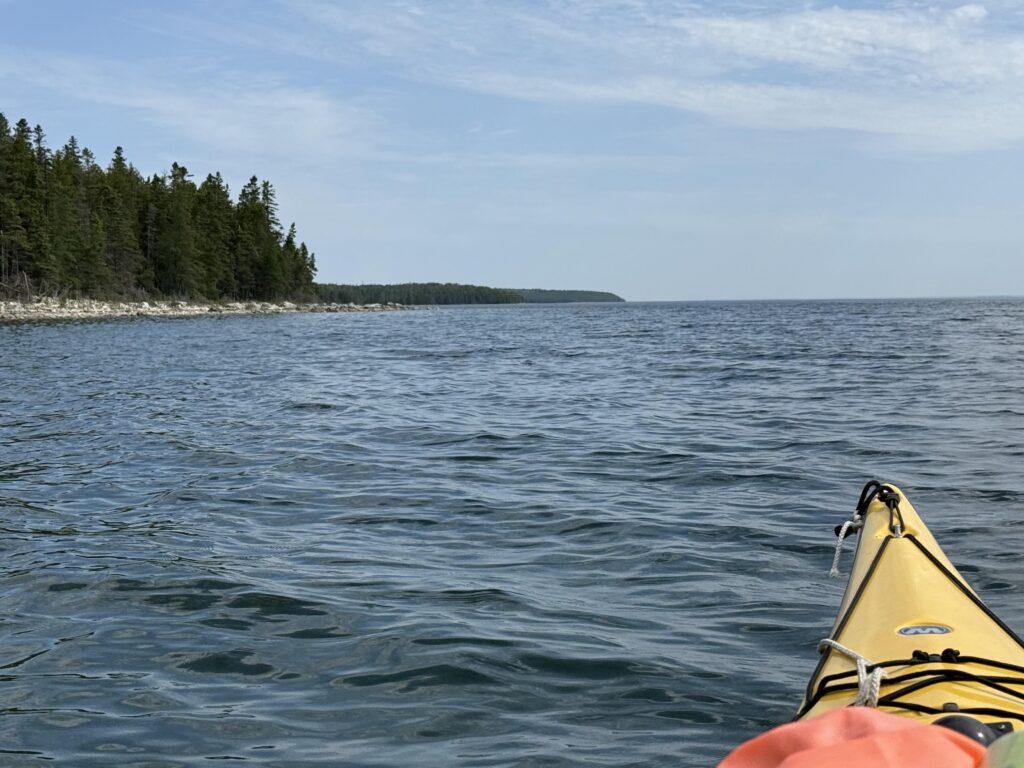
Kayak off Drummond Island
Paddling around Drummond.

I have been in the Upper Peninsula of Michigan for the past two weeks with limited internet and not very active in blogland. I’ll write more about my time there, including a 50+ mile paddle around Drummond Island over the next few weeks. Here are the reviews of the books I read or listened to and completed in June. The long drive to the UP allowed me to listen to two of these books.


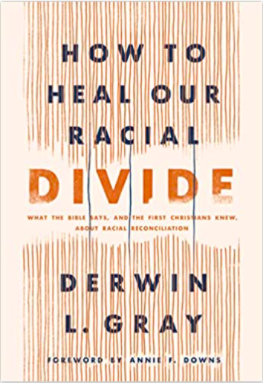
Derwin L. Gray, How to Heal Our Racial Divide: What the Bible Says, and the First Christians Knew, About Racial Reconciliation

book cover for How to Heal our Racial Divide

 (Tyndale, 2020), 281 pages including notes.

Gray was an African American defensive back who played football for Brigham Young University and later for the Indianapolis Colts and the Charlotte Panthers. After several seasons of professional football, he was led by a teammate to accept Jesus. Later, with his wife, he started Transformation Church in Charlotte, North Carolina. His church is an intentionally mix-race congregation. Gray was a speaker at this year’s HopeWords Writer’s Conference

 In the introduction and opening chapter, Gray discusses why he talks about race so much in his sermons. God has created the world with a variety, a kaleidoscope of colors. God loves diversity and longs to bring us all together, through the church, into one family. However, our churches are often less diverse than most our secular world. 

After the first chapter, Gray launches into a Biblical overview, where he starts with Abraham and discusses why he believes that God’s purpose from the beginning was to create a multi-racial family.  While he mentions that concept of humanity being created in God’s image, he begins his survey of scripture with Abraham’s promised family. While I might have started at creation itself, by tying together Abraham’s story with the vision of Isaiah, the teachings of Jesus, and the writings of Paul, Gray makes the case that God’s desire is for a multi-racial family. Of course, like all families, in this sin-filled world it will be messy. But in the life to come, we will experience it in fulness. 

In the second part of the book, Gray discusses what he has learned at Transformation Church and offers ideas for how we can forge relationships across color barriers. For white readers, he explains the differences in how blacks see the world from our perspective. 

I appreciate Gray’s interpretation of God’s vision. This book would make a great study for a church group. Chapters are short and ends with a beautiful Trinity-focused prayers followed by highlights, questions, and ways to implement what is being taught. 

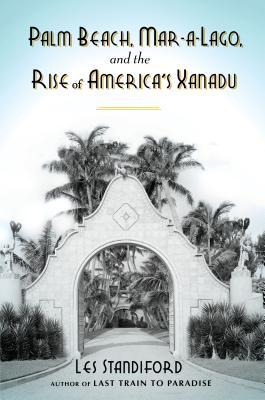
Les Standiford, Palm Beach, Mar-a-largo, and the Rise for America’s Xanadu

Book cover for Palm Beach, Mar-a-Largo and the Rise of America's Xanadu

narrated by John McLain,(Tantor Audio, 2019), 8 hours and 11 minutes. 

I have been a fan of Les Standiford since I first read his book on the Florida East Coast Railway, Last Train to Paradise. Since then, I have enjoyed his book on Charles Dickens and the writing of the Christmas Carol, The Man Who Invented Christmas, and his book on business partnership of Andrew Carnegie and Henry Clay Frick, Meet You in Hell.

Palm Beach, Mar-a-largo, and the Rise of America’s Xanadu picks up the story of the visionary builder, Henry Flagler, whom Standiford introduced in Last Train to Paradise. In this book he mostly focuses on Flagler’s hotels and personal life instead of his railroads. Flagler first arrived in what would become Palm Beach in 1893. Soon, he was building resort hotels. After his wife was committed to an asylum (she thought she was engaged to the Russian Czar), Flagler obtained a divorce. Later, at age 70, he married a 34-year-old-woman from a wealthy North Carolina family, Mary Lily Kenan. Many North Carolina colleges have buildings named for the Kenans). The Kenans still control the Breakers, the five-star hotel Flager built on Palm Beach. 

Early on, Palm Beach was a resort for the newly rich. These who people not accepted into the “old money society” of Newport and other locations. In time, with the likes of sewing machine heir/developer Paris Singer and architect Addison Mizner, Palm Beach became an exclusive place with Mediterranean styles.  Standiford ponders if the high walls of the mansions and resorts were designed to keep out those who didn’t belong or to hide the scandal occurring within. 

After Flagler, Standiford focuses on the Post family. C. W. Post, who established Postum Cereal Company, doted on his daughter Marjorie Merriweather Post. In her 20s, she inherited much of her father’s estate and expanded the business (even into frozen foods). Marjorie was the one who built Mar-a-lago (which means from the lake to the sea as the property goes from Lake Worth on the backside of Palm Beach to the Atlantic). One of the interesting marriages in her long life was to E. F. Hutton, the New York stockbroker. Marjorie, the richest woman in American, and was the “senior partner” in that relationship. During the Great Depression their marriage broke up, partly for political reasons. Margorie was a supporter of Roosevelt’s “New Deal” while Hutton felt FDR was a socialist and preferred “trickle-down economics.”

In the early 1960s, Marjorie even offered Mar-a-largo was a winter White House, but it was decided the building was too expensive to maintain and impossible to safely secure the president. 

After Mar-a-lago had been shuttered for a decade, Donald Trump purchased the property at a basement price. From the beginning Trump ownership came with controversy. He bragged about paying more for the property until the tax bill came in at the higher rate, then he sued to get them to tax it at a much lower rate (from 13 million to 7 million). Finally, he worked out a deal to make the property a private club which provided him with tax favors and allowed him to share the burden of owning the property with others. 

This is a fascinating story. I enjoy how Standiford weaves together the stories of interesting characters around Palm Beach. 

George Saunders, A Swim in a Pond in the Rain in Which Four Russians Give a Master Class on Writing, Reading, and Life

Book cover for "A Swim in a Pond in the Rain"

Narrated by the author and others. (Random House Audio, 2021), 14 hours and 44 minutes.

Over the past decade, I have read and listened to several of Saunders’ collections of short stories. Saunders teaches at Syracuse University. This book is based on one of his favorite classes in which he uses Russian authors. Those he draws upon wrote during a creative period of Russian history (between Napoleon’s invasion and the Bolshevik Revolution). Each section of the book begins with the story. In the audio version, a different voice reads the story, followed by Saunders’ discussing it. Many of the stories are about simple every day and even mundane events. Saunders helps his students and readers see how such a setting can make a great story. The stories include: 

Anton Chekhov, “In the Cart”
Ivan Turgenev, “The Singers”
Anton Chekhov, “The Darling”
Leo Tolstoy, “Master and Man” 
Nikolai Gogol, “The Nose”
Anton Chekhov, “Gooseberries”
Leo Tolstoy, Alyosha the Pot”

Some of the stories like “The Nose” are quite funny and many of the others, especially “Alyosha the Pot” are sad. This book would be helpful for anyone wanting to improve their writing, especially if they are working with fiction!  It is also a good introduction into Russian literature. Before reading this book, I had read some of Chekhov and Tolstoy’s stories, but not the others in the collection. 

Alex Pappademas, Quantum Criminals: Ramblers, Wild Gamblers, and other Sole Survivors from the Songs of Steely Dan

book cover for Quantum Criminals

 audio book narrated by Michael Bulter Murray (Tantor Audio, 2024), 7 hours and 15 minutes. 

The rock group Steely Dan blended jazz and weird lyrics into some memorable rock tunes. Donald Fagen and Walter Becker were the band’s mainstays. The two met in the late 60s at Bard College. Both loved jazz. In an earlier band in college, Chevy Chase (the comedian), played the drums. Over the years, Fagen and Becker drew on numerous other musicians to meet the needs of the sounds they sought, but the two remained the mainstay of the band until Becker’s death from cancer in 2017.

The band is known for mellow jazz-like tunes mixed, at times, with outrageous lyrics. Their songs feature those who down and out or on the other side of the law. These characters, which include drug dealers, violent or dirty old men, and a kid about seeking “cop suicide” as he yells, “don’t take me alive.”  Other songs involve love triangles. And then there’s the desire for inappropriate relationships. “Rikki Don’t Lose that Number,” was about Fagen trying to date the wife of a college professor at Bard.

Mostly, the extreme lyrics are presented without moral evaluation. The music behind the lyrics mellows the songs. Fagen and Becker often refused to interpret the songs, leaving them for the listener to figure out or if not, just to enjoy. It’s not surprising that the band’s name came from sexual object in Wiliam S. Burrough’s novel A Naked Lunch. 

Quantum Criminals runs through the discography of Steely Dan, while providing insights into the lives of Becker and Fagen. Those who enjoy the music of the band might enjoy this book. Or you might prefer to skip the book and just listen to their jazzy music without knowing all the secrets imbedded into the lyrics. The print book includes artwork by Joan LeMay depicting the characters in the songs of Steely Dan.