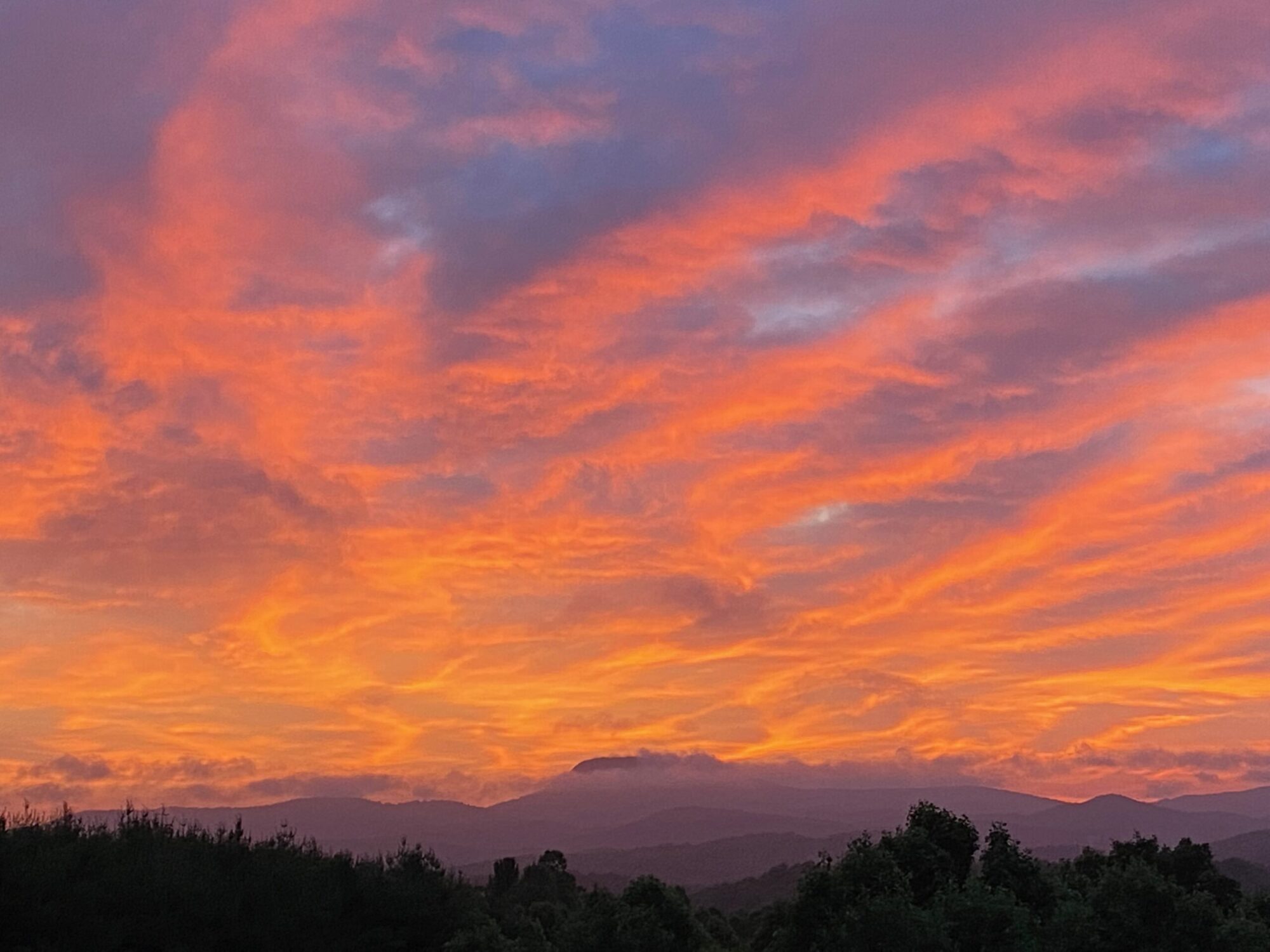
I’m currently back in the North Carolina Mountains, at Montreat at a Board of Pension retreat, as I finish writing about a trip I made down here last month
The smoke poured across the eastern half of the country in mid-July. I was on vacation for a week and planned to work to do in the garden a few days. Then, on the weekend, we were to head north and spend some time in Staunton, visiting Woodrow Wilson’s library and exploring the Shenandoah Valley. Unfortunately, as bad as the smoke was Southwest Virginia, it was worse further north. We cancelled hotel reservations and set our sights south.
The plan had been to stay in the Nuway Inn in Burnsville. I had spotted this place last fall when I was on a mission trip helping rebuild homes in the area. The Nuway Inn is the oldest hotel in state in continuous operation. With no rooms available, I found another interesting place, the Blue Ridge Boutique Hotel in Spruce Pines. With a place to stay for a few nights, I pointed the car south, driving along the Blue Ridge Parkway, and stopping for lunch at the Bluff’s Restaurant in Doughton Park. While I had never eaten in this restaurant, I have enjoyed their food many times as they cater for concerts at the Blue Ridge Music Center. I recommend their meatloaf!
This area of the parkway just recently opened as several bridges had to be rebuilt and it has been closed most of the time since I moved to the mountains. Thankfully, it’s back open, but due to Hurricane Helene, there are still a section with bridges out around Grandfather Mountain. The re-route took us through the Blowing Rock. Whatever happened to the quaint little town I used to spend time in 40 years ago when I lived just down the mountain in Hickory? The traffic was terrible.
After getting back on the Parkway, we drove a little further south before exiting at Spruce Pine. I often wondered about the name of this town. Spruce and pines are two types of trees. While both are evergreens, the needles on pine trees are softer and connected together in groups of two to five needles. Spruce (and firs) have individual needles. I found no one who could answer my question about the town’s name. Since both species of trees grow in the town, it works. The town is nestled along both banks of the peaceful North Toe River. The water was nice, but when Hurricane Helene visited the stream became a nightmare. Raging waters submerged the lower part of the town.
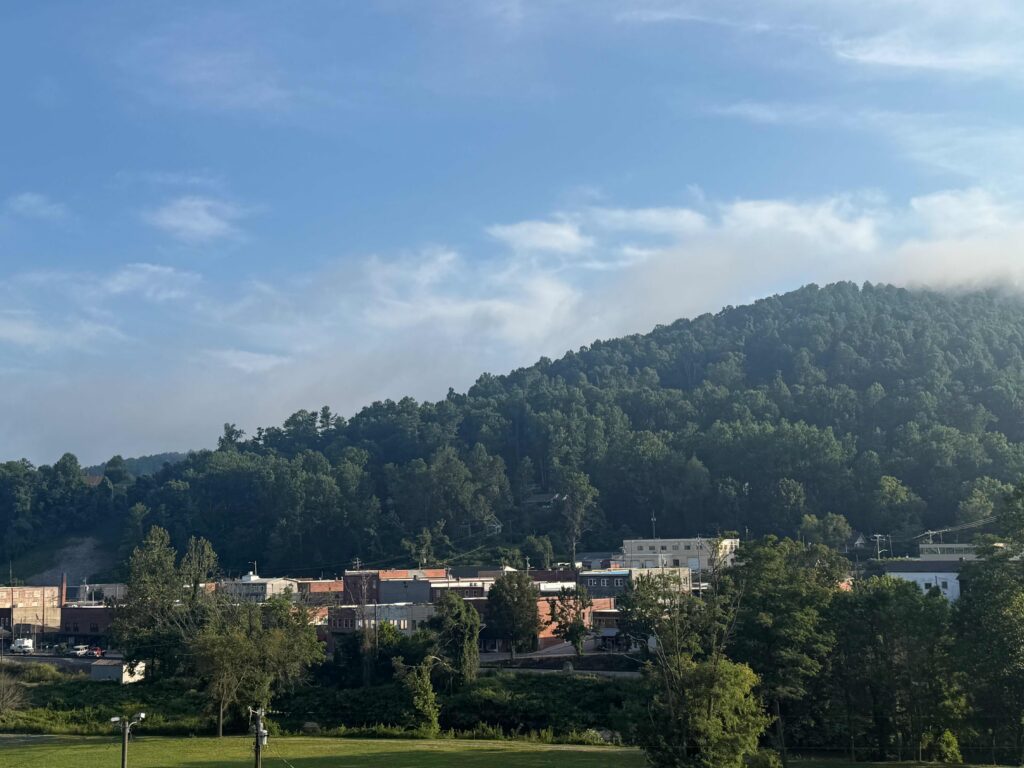
We checked into the hotel, which was an old elementary school built in the 1930s, on a bank high above the river. The rooms were tastefully done and nice. However, walking the hardwood halls between rooms felt a bit haunted. I had nightmares of being transported back to my childhood at Bradley Creek Elementary School. Both schools dated from a similar time period.
Not finding anything we wanted to eat for dinner in Spruce Pine, I suggested we try Burnsville, which is just down the road. We had a great dinner and good beer at Homeplace Beer Company, eating outside under an awning. While we ate, a light rain fell as thunder rolled through the mountains. I love that sound..
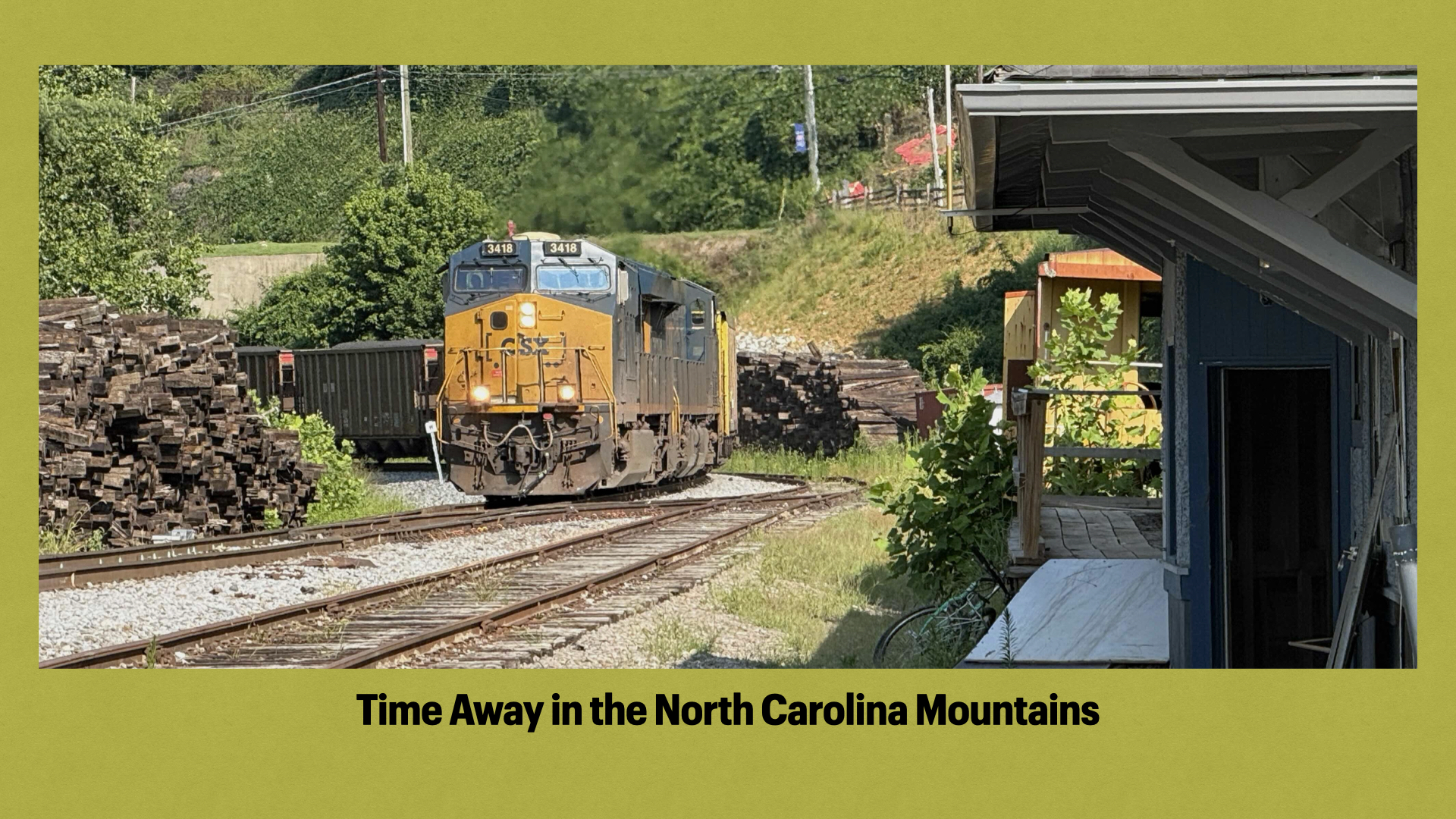
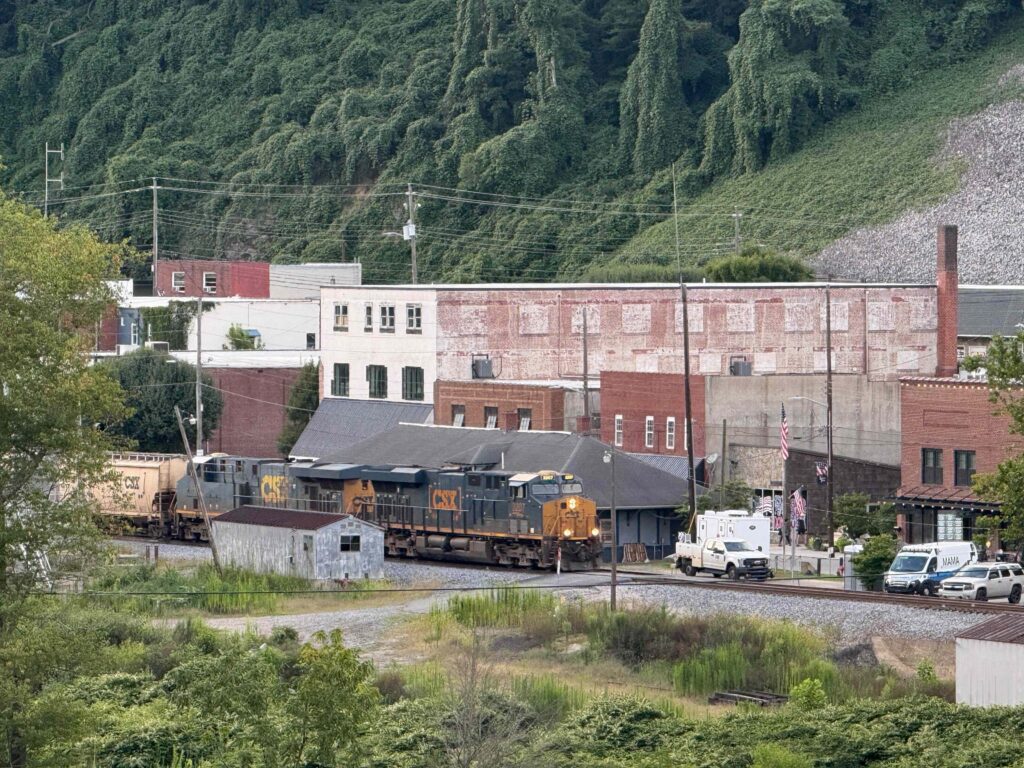
Saturday morning, we stopped at TJ Blue Ridge Cafe for a very filling breakfast. We ate on the sidewalk, watching CSX coal trains make their way through town heading south. This is the same line which runs through Camp Bud Schiele, he last camp I directed for the Boy Scouts before going to seminary. That summer, at camp, I stayed across the tracks from the camp . On two occasions missed the morning flag ceremony due to waiting for a coal train to pass. Hurricane Helene did a lot of damage to this line, known as the Clinchfield Route. Along the tracks were stacks of old railroad ties, obviously collected from the rebuilding projects along the line.
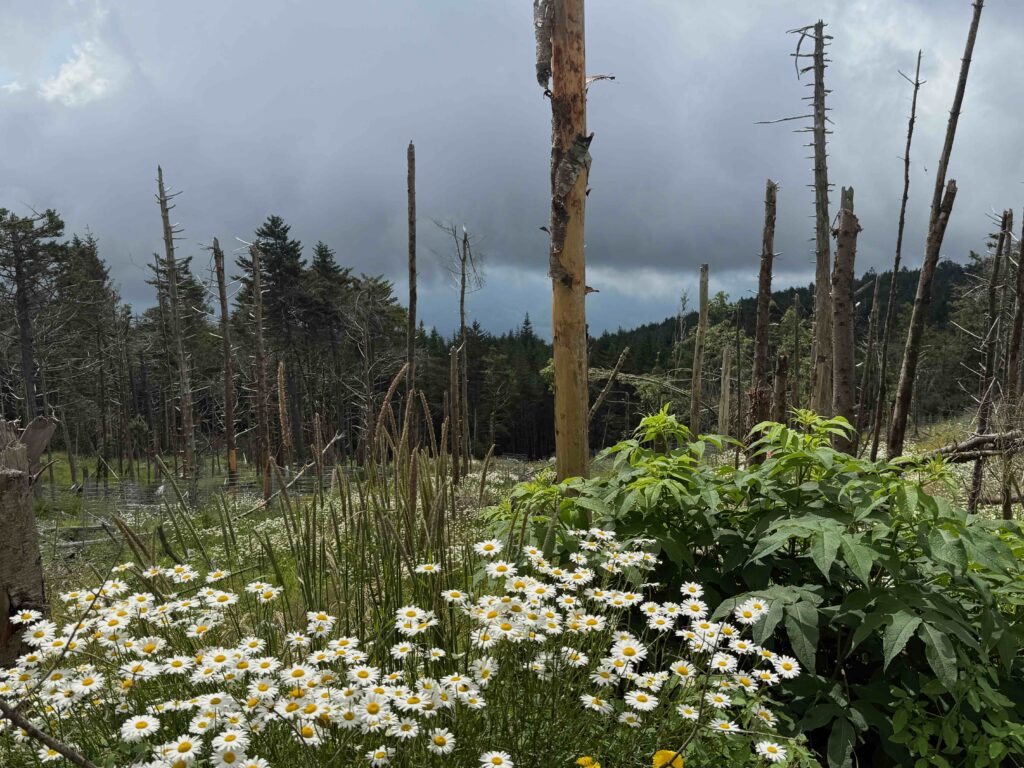
After breakfast, we headed up to Roan Mountain with plans to do some hiking. Sadly, we were a bit late for the rhododendrons in bloom. This was the first section of the Appalachian Trail I hiked. I would go on to complete the trail during the first summer break from seminary. It was May 1983 and four of his hiked from the Hot Springs to Highway 19e. It was rainy coming up Roan Mountain. We camped at a shelter near the top of the peak. The next morning was beautiful as the clouds filled in the valleys below.
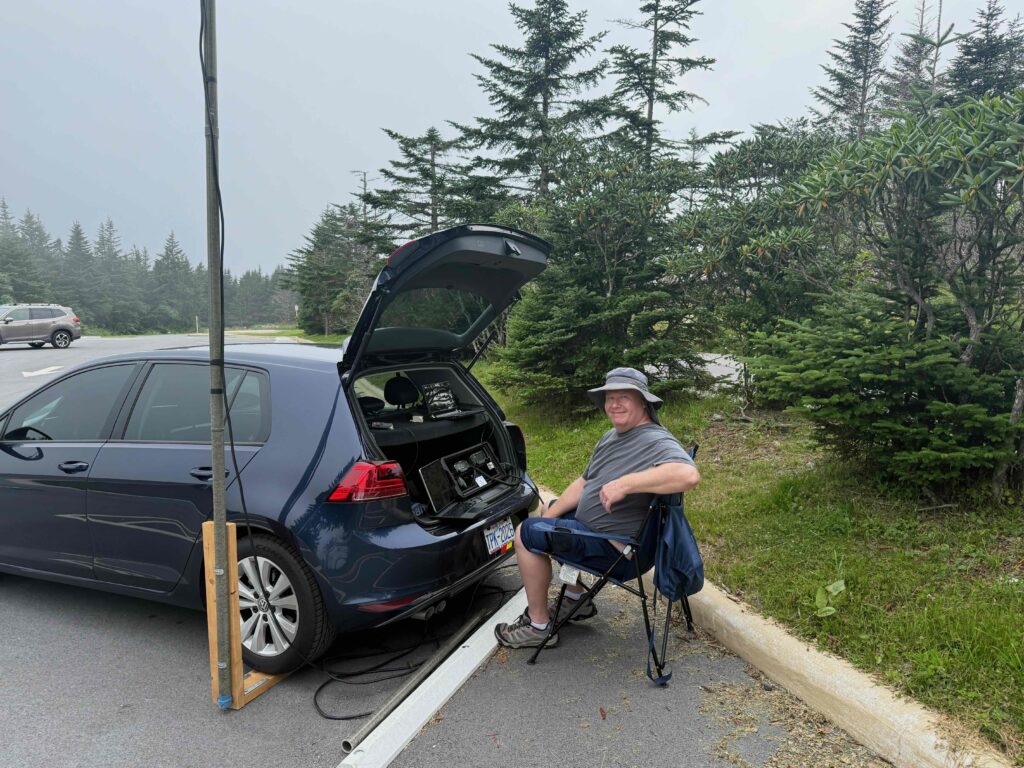
This was my first time back to Roan Mountain since that magical day. With storms all around, we didn’t do much hiking. Stopping at a pull-off, II spotted a guy with an antenna up near his car, working a radio. I assumed he was working POTA (Parks on the Air). This is where someone sets up an amateur radio station remotely and makes contacts. There are people who log these contacts, trying to collect contacts from National and State Parks across the country.
Instead, I was surprised to learn he was participating in working the “Appalachian Trail.” A group of 12 or so individuals or clubs staged themselves along the trail at high points. They passed information from Georgia to Maine using the 2 meter VHF band. He kept an eye on the storms. He knew if they came too close, he’d need to take the antenna down and seek shelter inside his car. Thankfully, the storms stayed far enough away, he could continue forwarding messages as we talked about our radio experiences.
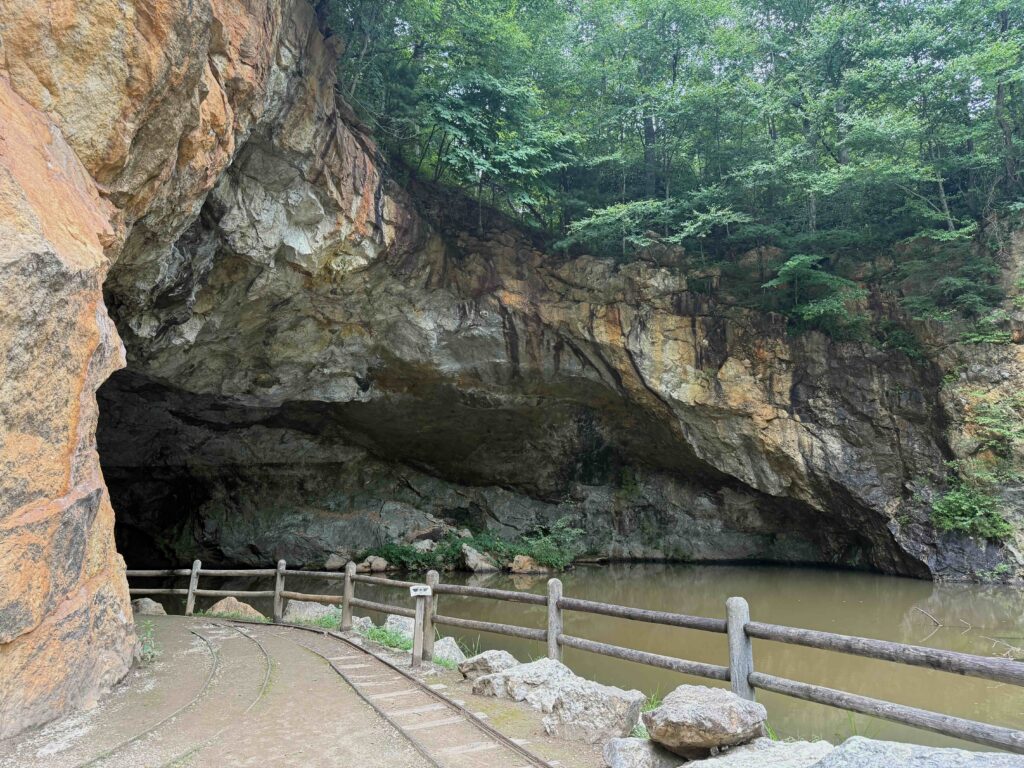
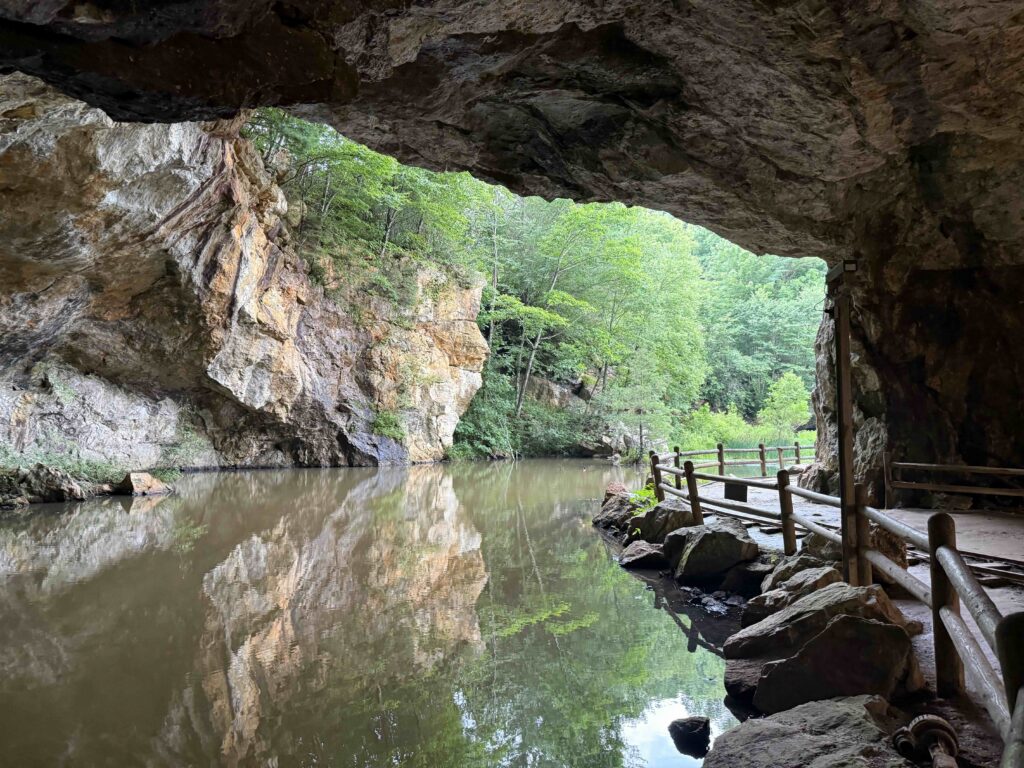
Looking for a place where we could stay dry, we headed to the Emerald Village, which sounds as if it was the place which became a city in the Wizard of Oz. On one side of the highway was a museum at an old feldspar mine which, which crushed, provided the abrasive for BoAmi, a household cleanser. The mine displayed various pieces of equipment used in the extraction of the rock.
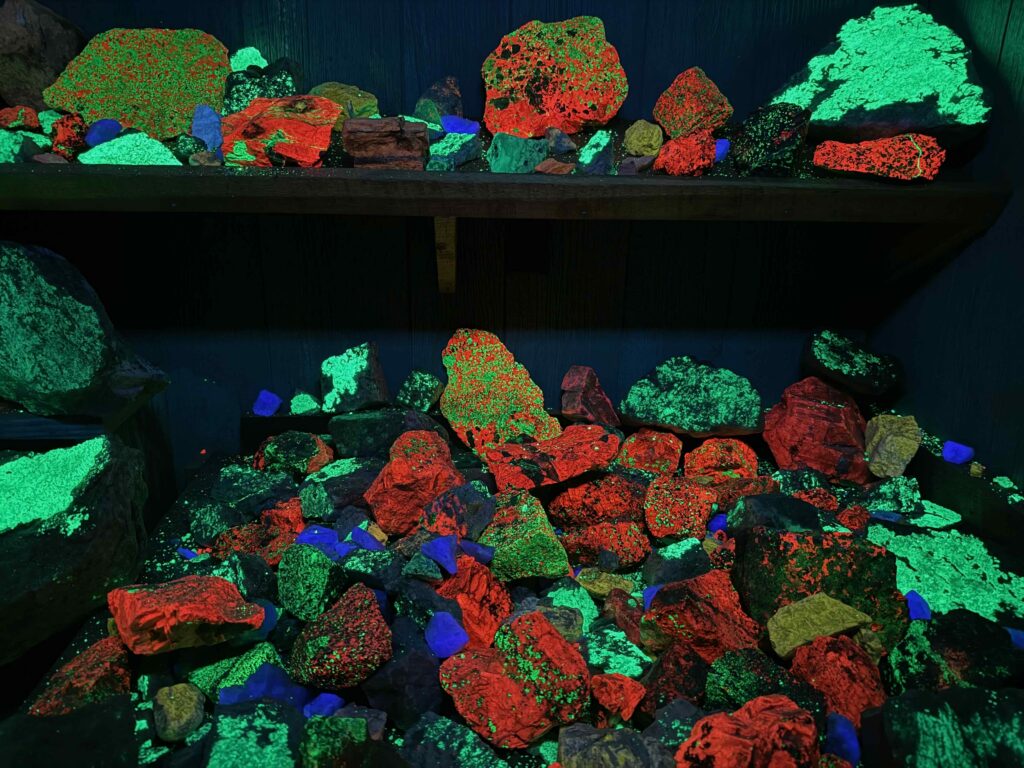
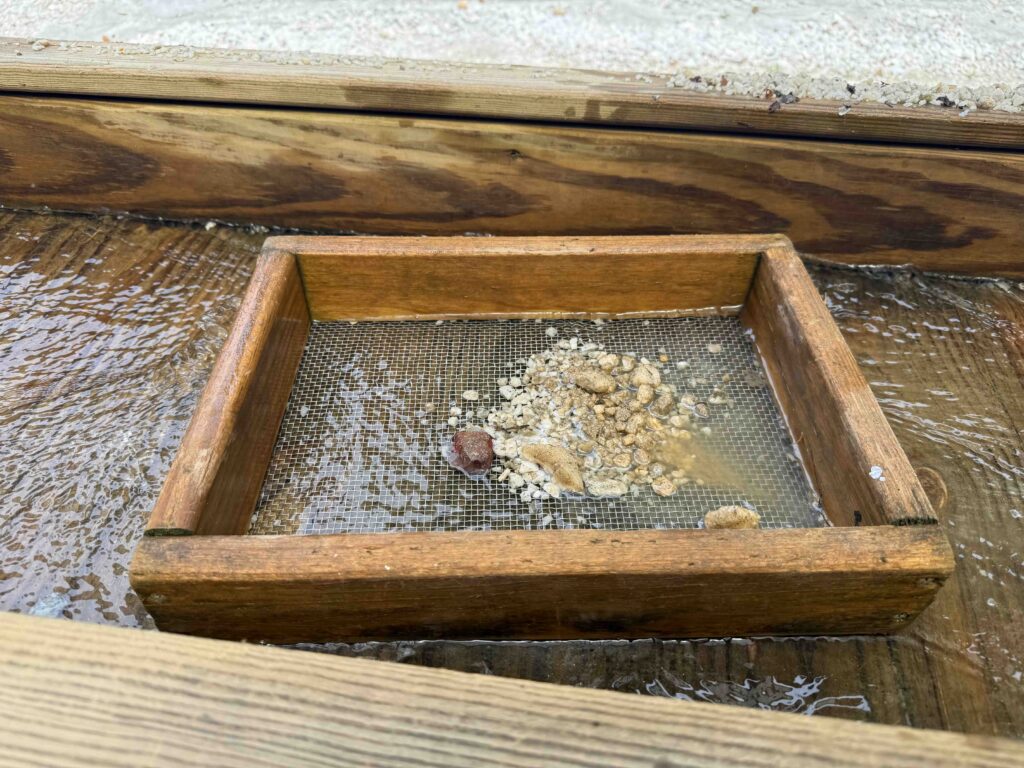
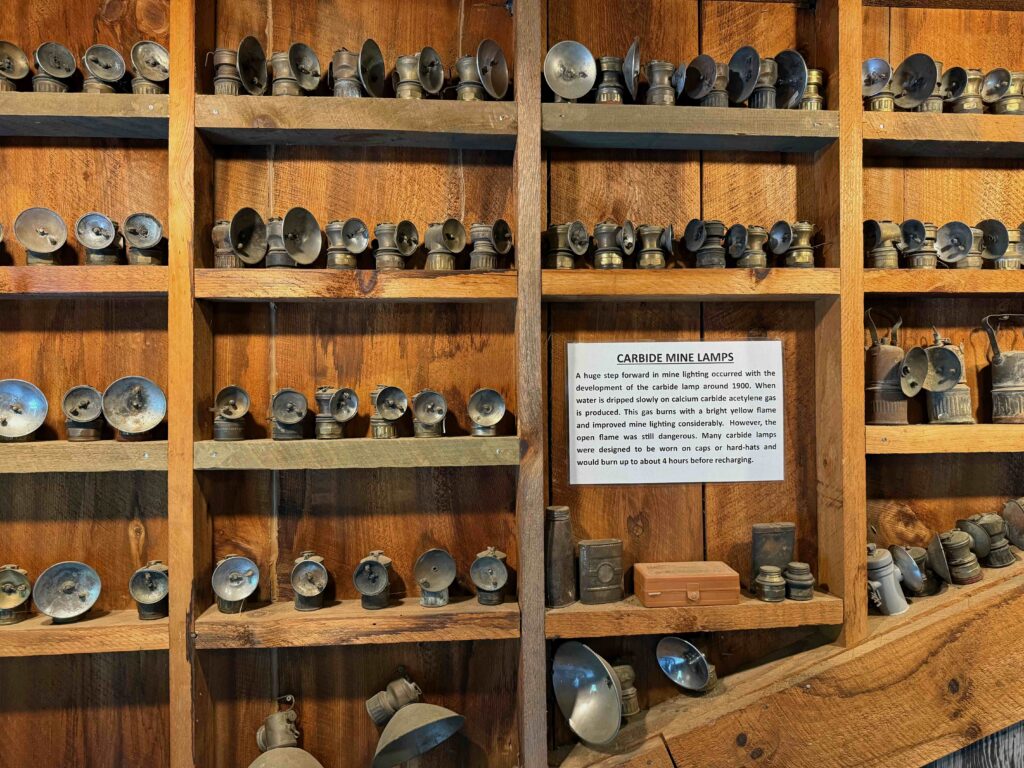
After the mine tour, we headed across the street where there was another museum and a place where one could shift through ore for gemstones. The museum was interesting, featuring a great collection of carbine headlamps worn by miners before battery power lights were available. There were also dark areas where black lights brought local gems to light. After touring through the museum and going through a bucket of ore, we left with a bag of gems which included emeralds, amethyst, smoky and rose quartz, Calcite, pyrite, topaz, opals, and garnets.
On the way back to hotel, we stopped by Little Switzerland, visiting an old bookstore before eating dinner at the Switzerland Cafe. I had salmon which was excellent, along with a local beer. Back at the hotel, we walked a path along the river, visited a community garden, and then sat on the patio reading and watching the light fade from the hills.
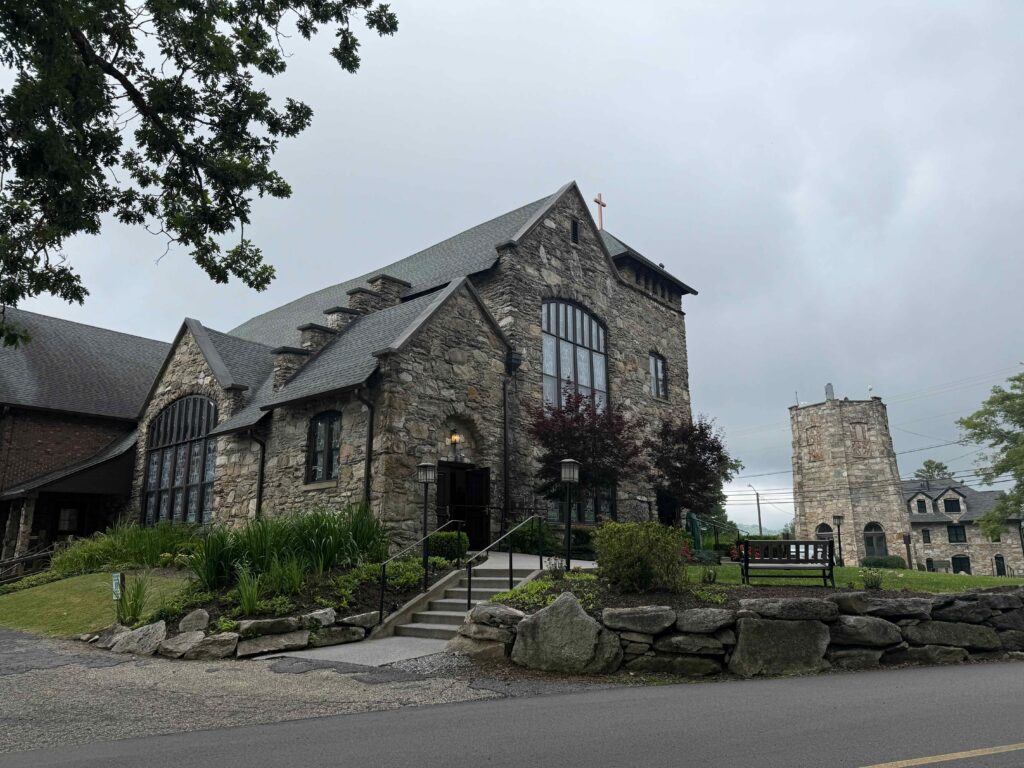
On Sunday, we drove the backroads up to Banner Elk, where we worshipped at the Presbyterian Church. The Pastor preached his first sermon in a series on the Beatitudes, which made me smile as I had just finished a series on 17 sermons on the Sermon on the Mount, which includes the Beatitudes. Afterwards, we drove back through Boone, another town that has lost its quaint charm in the decades since I lived in Western North Carolina. From there, we followed the New River home, stopping and checking out places like Todd, which I haven’t seen since the early 1980s. Arriving at Fries (pronounced Freeze), we stopped in a park for ice cream and listening to the river. I finished reading Louis L’Amour’s memoir, Education of a Wandering Man. Leaving Fries, another thunderstorm caught up with us as we approached Laurel Fork.
It was great to get away for a few days and to be out of the pulpit for a Sunday.
Well, even though the weather caused problems you had a good few days away.
I did enjoy seeing your photographs and especially liked the one looking out of the mine.
All the best Jan
Beautiful photos, especially the one looking out of the mine. That’s interesting about the radio operator. No… I wouldn’t want to be anywhere near a storm with a big antenna sticking up next to me!
Did you see how he had his antenna fixed. He had a wooden “L” with the antenna attached to the long side of the “L”. The short part he drove over and used the weight of his car to stabilize the antenna.
I did notice that and thought it was pretty clever to stabilize it that way!
A fantastic trip report, Jeff! The spontaneous pivot down the Blue Ridge Parkway sounded like a great adventure—especially the stop at Emerald Village to sift for gems and that rainy evening dinner at Homeplace Beer Company.
Running into the radio operator working the 2-meter trail relay was a great find, and it’s always special to revisit spots like Roan Mountain that hold decades of memories. Nothing beats good mountain weather and a restful Sunday morning.
It was a nice get-away. I need to get back and re-hike some of the Appalachian Trail.
I’ve not been to that part of NC, but now, It beckons me!
You should go and visit, the mountains are beautiful and rough.
Interesting post as usual. I was surprised that bridge hadn’t been rebuilt after its destruction from Hurricane Helene, but I know little about bridge building (though I did a toothpick bridge once with my kids). How long does that take? Here in CA, the homes destroyed by the Palisades fire are all caught in red tape, unable to rebuild. But that’s California.
I’ve read a lot about the Appalachian Trail. Those folks who volunteer to help along the way–angels.
They had to replace a number of bridges–most of these were over deep ravines. The section of the parkway around Grandfather Mountain was the last to be constructed (it opened in 1986, I think), 50 years after the work began. It had to do with the terrain. This is some of the roughest mountains in the east.
Hurricanes can really do some damage. Looks like you saw some really interesting things on your trip though.
It is amazing how much damage Helene did this far from the coast. We even had a lot of damage around us, and the storm came into the coast 100s of miles south of here, from the Gulf of Mexico.