Jeff Garrison
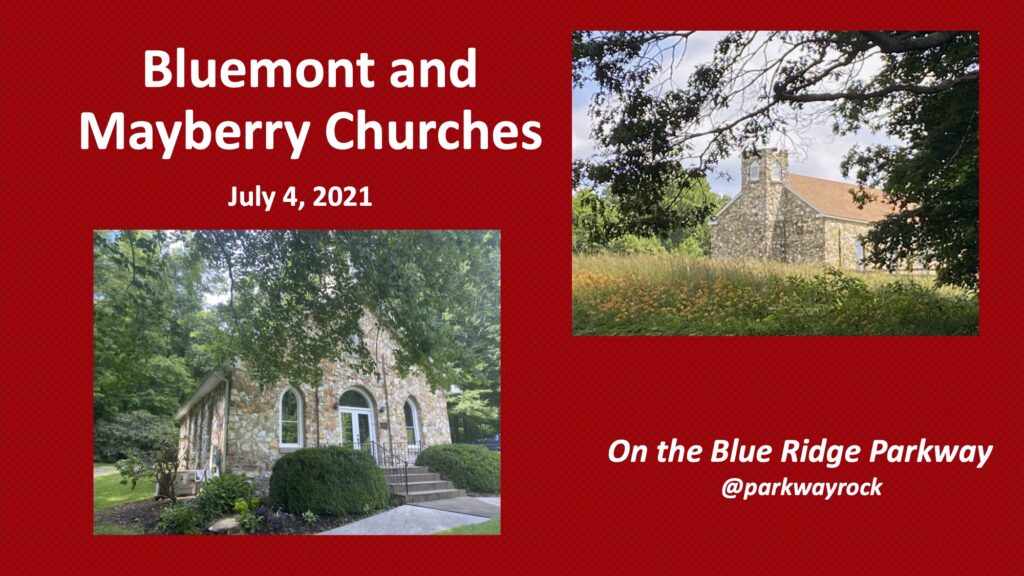
Mayberry and Bluemont Presbyterian Church
August 1, 2021
John 6:25-40
At the beginning of worship:
I want to thank Libby Wilcox and Mike Nyquist for preaching the last two weeks. The texts they used—from Matthew and John’s gospel, both spoke of Jesus’ feeding of the multitude. In John’s gospel, there is a follow up to this story. When word spreads about Jesus having free bread, crowds multiply.
Jesus wants to teach a deeper lesson. He equates bread with God’s word. This isn’t anything new. It’s in the Old Testament. In Deuteronomy, we are reminded we live not by bread alone, but by the word of God. Lady Wisdom in Proverbs invites all to come and eat of her bread and drink of her wine. The prophet Amos speaks of a coming famine. But he’s not talking about a shortage of bread, but of the word of God.[1]
Bread is an appropriate symbol of God’s word. Bread made of grain sustains our bodies; bread as the word of God sustains our lives. Bread that is old becomes stale; it needs to be constantly refreshed. So does our faith, which is refreshed as we study God’s word.
After the scripture
Jesus wants to give the crowd so much more than a few crumbs which will soon be consumed or mold. But the crowd, some whom benefited from Jesus’ dramatic feeding of the multitude the day before, don’t get it. They want food.
The climax of this passage comes in verses 34 and 35. Then the crowd asks Jesus to give them bread always and Jesus responds, “I am the bread of life.” These guys are talking to Jesus, God incarnate, and all they can think about are their stomachs.
Coming down hard on the crowds
It’s easy to come down hard on the crowd. Yes, we know, they’re greedy. But then, are we any different? When I consider my prayer life, I know how I’m much more likely I am to pray when I am in need or trouble. “Lord, I just want…, Lord, I just need…” Am I any different than the crowd? Are you? If I’d been there, not only would I have wanted such bread, I’d wanted it hot and fresh and with a tad of butter and a bit of jam? Out taste buds draw us in.
Jesus attempts to pound through their heads that bread, made of flour and water, isn’t what’s most important. Bread molds. Remember, Jesus’ advice about not worrying about storing up riches that rust or can be stolen?[2] Ultimately, things aren’t important. Jesus is important. Jesus Christ, God incarnate. Jesus gives and sustains life. But the temptation to think otherwise is overwhelming!
When you’re hungry and your stomach is gnawing, a loaf of bread looks pretty good. When you’re feeling blue, the idea of feasting on a rich meal or drowning your sorrows in well-aged bourbon or rich ice cream is tempting. We all suffer from a spiritual hunger and try to fill this void with stuff.[3] On TV we’re told, in not-so-subtle terms, that new cars and certain beverages will help us to enjoy life to the fullness. But it doesn’t work; we end up even hungrier.
Yes, it’s too easy to come down too hard on the crowd. Sure, they’re greedy. But we are no different! It’s just that the economic scales have changed. We no longer crave simple bread; we’d want a croissant or at least raisin bread with a tad of peanut butter. Think about it. Bread is such a basic food; we take it for granted.
For us, bread is cheap
How many of you don’t eat the end pieces of a loaf? Let’s see hands. At best, I bet, we crumble them up and feed them to the birds. At worst, they end up in the landfill feeding the seagulls. And why should we eat the end pieces when we can run to the store and pick up a fresh loaf.
Bread is cheap. Even someone making minimum wage earns enough to buy a loaf in 15 minutes.
Now, I’m neither an economist nor an anthropologist, but I’d venture to guess those in the ancient world labored a lot more than a quarter of an hour for their daily bread. Think of all involved. The planting and harvesting of wheat, the grinding of the grain by hand, the mixing and kneading and shaping of the dough, and building of the fire in the oven, the proofing and baking. They couldn’t rush down to the store and buy a loaf using the spare change lying on their dashboard. Bread had value. They’d seen Jesus break a few loaves of bread and fed 5,000 folks. They’d feasted at Jesus’ table and wanted more!
My bakery experience
I worked in a wholesale bakery for five years. It started as a summer job between my first and second year in college. They liked me. When promised to work with my college schedule if I stayed on, I agreed. For the next three years, I went to school in the mornings and went to work in the afternoon.
I still remember the first time I entered the plant and was overcome with the aroma. The smell of yeast bread baking seemed heavenly. It didn’t last. Pretty soon, I didn’t notice the smells anymore and the excitement of watching the loaves rise and bake waned. It became a job; I took it all for granted, kind of like the crowd taking Jesus’ miracles for granted.
I quickly worked up the ranks and during my senior year of college, I was also a production supervisor. With seven employees and a lot of modern technology, I oversaw the production of 6,000 to 7,000 pounds of bread an hour. A lot of dough!
If you figure a ½ pound of bread a person, technology has caught up with one of Jesus’ great miracles. Jesus and the disciples fed 5,000 people—we could have done the same in about twenty minutes. Of course, we needed a few ingredients like a rail car of flour, tank cars of sweetener and shortening, pallets of yeast and salt along with lots of electricity and natural gas. In Jesus’ day, it would have taken quite a production to produce that much bread which makes his miracle even greater!
One of my claims to fame as a baker was throwing away more bread than anyone else in the history of the plant. In one hot summer afternoon, we threw away 24,000 loaves of pound and half bread—that’s 36,000 pounds or 18 tons.
The bread this day rose nicely in the proof box. But when it came onto the conveyor between the proofer and oven, it dropped flat as a pancake. By the time we realized we had a problem and checked everything, we had all the loaves for that batch in the system. The only thing to do was to bake the bread and then dump the loaves out of the pans, by hand, for they were too small to be picked up by the depanner. As the loaves accumulated on the floor, a forklift equipped with a scoop, picked it up and took it the loading dock.
It was humbling to watch that much bread go to waste. This was especially true for me, the guy in charge. I had no idea what the problem might be. We tried everything. Finally, after nothing helped, we did something radical. We changed all our ingredients, going to new manufacturing lots. This meant hauling pallets of fresh ingredients from the warehouse and changing the silo from which we drew the flour. After six hours, the bread returned to normal.
I could finally breathe a sigh of relief even though a cloud hung over my head. It took a few days, but after having a lab test our bread and the ingredients we were using, the mystery was solved. The enrichment, those vitamins and stuff you add to flour to replace that which is lost in the milling and bleaching process, had way too much iron.
The extra iron was the problem. My neck was saved. Our ingredient supplier reimbursed us for the cost of the wasted bread—I suppose you could say he brought dinner for thousands of hogs in eastern North Carolina, as that’s how we disposed of most of the bread.[4]
We take bread for granted
Bread, for us, is not as special as it was for our ancestors. They couldn’t image throwing away that much bread! To the ancient ones, bread was considered a gift from God. It was to be used and not wasted. For some Jews, you don’t waste even a bite of bread. This custom has its roots in the wilderness experience where they had to depend daily upon God’s manna from heaven.
In our modern world, we need to consider the work that goes into bread and cherish it as a gift. Like Jesus conversation about water in John 4, here he takes a common item and makes it holy. God is encounter through the ordinary!
Encountering Jesus in the ordinary
Kathleen Norris has a little book titled The Quotidian Mysteries: Laundry, Liturgy and “Women’s Work.” Quotidian is a sixty-four dollar word that means ordinary. In this book she brings out how the divine can be encountered through ordinary events of the day. Quoting another author, she recalls an “Ah-ha” moment: “I had never thought about the obvious fact that preparing a meal can be a sign of caring and loving communication because food just has never been an avenue of communication for me.”[5]
Jesus uses the bread to communicate a more sustaining truth about himself! Norris goes on to suggest that our daily ordinary tasks, if approached reverently, can save us from the trap that religion is merely an intellectual exercise of “right belief.”[6] Our God is Lord of all and therefore concerned with all aspects of our lives.
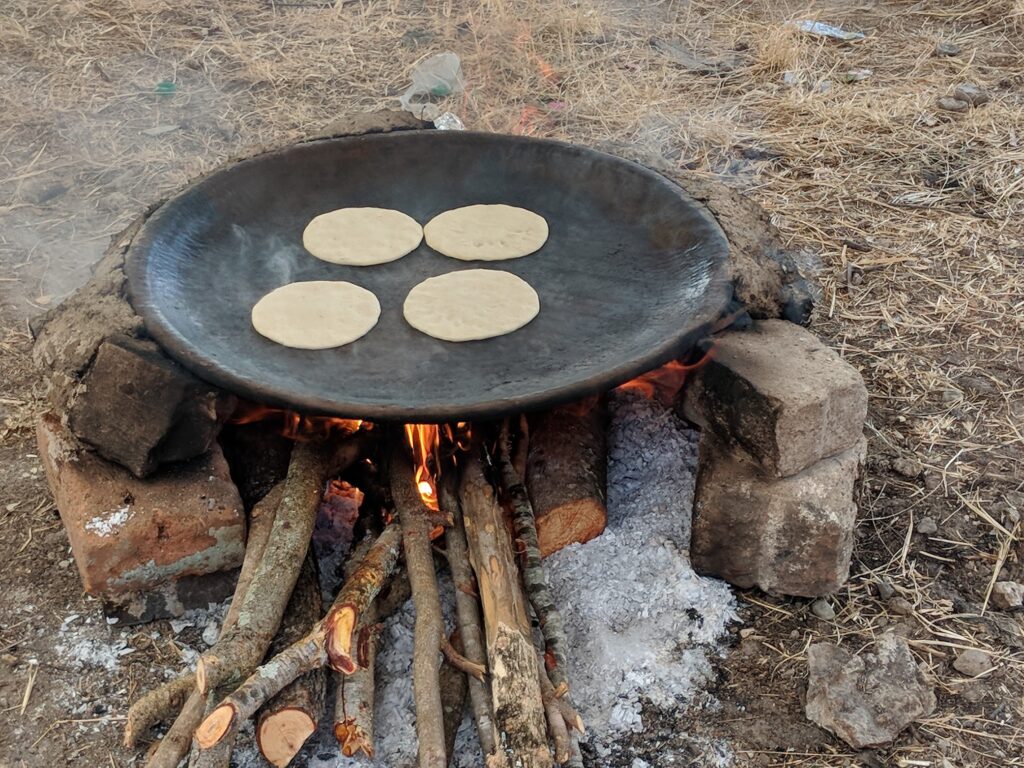
Even though bread is so common for us that we take it for granted, we should not lose sight that it’s not that way for many people in the world. Bread, in the form of tortillas, is still the basic food of survival in many countries to the south of us. Watching women make tortillas in Honduras, a daily task, reminds us that we’re to pray for our daily bread. Even though bread may represent only a fraction of our budgets, we need to consider its value and treat it with respect.
Seeing bread as a valuable gift, we link the bread that sustains our bodies and the bread that sustains our lives. One loaf nourishes our bodies and the other our souls. Both are ultimately from God. Together they make us whole and for both we should give thanks
Wouldn’t it be wonderful if we thought of Jesus throughout the day, whenever we encountered bread? At breakfast as we butter toast, we give thanks. At lunch, as we slather peanut butter and jelly between two slices of bread, we give thanks. At dinner, as we chew on freshly baked biscuits or yeasted rolls, we give thanks.
If we could just pause a moment before consuming another slice of bread, and think about Jesus, we’d begin to appreciate bread and all the hands that go into making it. And we’d also begin to sense just how important Jesus is to our lives… Amen.
[1] Deuteronomy 8:3; Proverbs 9:5-6; Amos 8:11ff
[2] Matthew 6:19-20.
[3] Craig Barnes addresses this spiritual hunger in many of his books. See especially Yearnings: Living Between How it is and How It Ought to Be (Dowers Grove, IL: Intervarsity Press, 1991) and Sacred Thirst (Grand Rapids: Zondervan, 2001).
[4] I provide more details of this fiasco in this blog post: https://fromarockyhillside.com/2021/07/another-bakery-story-the-perils-of-working-on-the-christian-sabbath/
[5] Kathleen Norris, The Quotidian Mysteries: Laundry, Liturgy and “Women’s Work.”(New York: Paulist Press, 1988), 73.
[6] Norris, 77.