A lot of students have fantasies of having teachers locked up. For my 5th grade teacher, it wasn’t a fantasy, it was a horrific experience. As a Marine embassy guard in China, which was behind enemy lines when the war began, he spent the entirety of the 2nd World War as a POW. This is a review of a book he later wrote about this experiences.This review originally appeared in my other blog and has been slightly edited.

Chester M. Biggs, Behind the Barbed Wire (1995, Jefferson, NC: McFarland & Co, 2011), 224 pages, some photos and maps.
On the morning of December 8, 1941, the Marine guards at the American consulate in Peiping (Beijing), China woke up behind enemy lines. Overnight (on the other side of the International Date Line), the Japanese had attacked Pearl Harbor. The Japanese had invaded China several years earlier and the American consulates in China were now inside territory held by the Japanese army. Although it was a tense situation in the Far East and war was not out of the question, the Marines were caught unaware. They were in the process of packing up and were days away from being withdrawn from China (many of the military members and diplomats of other consulates such as Britain had already been withdrawn). As the war began, the ship sailing to North China to pick up the Marines turned south and those left behind were prisoners of war. They would spend the entire war as POWs. One of these Marines, PFC Chester Biggs, the author of this book, was also my fifth grade teacher. Mr. Biggs would spend 20 years in the Marine Corp (1939-1959). The latter half of his life he spent in education. And, until his death, he would spend time teaching and answering questions at the Special Forces POW classes taught at Fort Bragg. He died in December 2011 at the age of 90.
The book begins by describing the events of December 8, 1941. Only hours before the Marines awoke, Japan attacked Pearl Harbor. The Marines have no idea what is happening or that the day meant war. The Japanese surround the compound, disarm the sentries and forced their surrender. Biggs, a young man of 20, finds himself as a POW. The next two chapters, Biggs describes life in Peiping before the war. China had been at war with Japan for years and the area of the consulate had been securely controlled by the Japanese. The situation in the countryside, where there were Chinese guerrillas fighting the Japanese, was tense and movement by American personnel there was limited. However, inside the city, where there was quite large contingent of foreigners, life continued as normal. Peiping, at least in the international section, was a cosmopolitan city with Europeans, Russians and Americans living there. During this time, there were fancy parties and even premiers for movies such as “Gone with the Wind.” There were some tension with Japanese soldiers, but with the exception of a few incidents, it appears much was done on both sides remain calm. After the one incident, US military personnel were restricted to a few clubs near the compound.
At first, after the surrender, the main change that the Marines noticed was a loss of freedom of movement, the loss of their Chinese workers (they had Chinese laborers that did many of their task from laundry to shoeshines to manicures) and a reduction in food. Even though they were confined to the compound, one Marine who had girlfriend in the city slipped out and then came back undetected. The NCOs tried to impress upon the Marines of the serious of such actions, but two others slipped out and were caught. Although the Japanese had said anyone caught attempting to escape would be shot, they were not. As Biggs noted, the Japanese could and would be brutal, but their behavior wasn’t always consistent, and at times they surprised everyone. At the end of January 1942, the Marines in Peiping were transferred to Tientsin and were later transferred to a POW camp near Shanghai. Before the transfer, the Japanese allowed a Marine from Tientsin to marry his English fiancé before they were moved to Shanghai. During Christmas 1942, the Japanese allowed an American restaurateur who ran a famous establishment in the city to prepare a Christmas dinner for the POWs. This was the last great meal they enjoyed. Before the next Christmas, all expats in the city including this man were confined to concentration camps by the Japanese.
At first the Marines who had been on diplomatic duty were hopeful they would be exchanged and freed. The diplomats in China were exchanged six months into the war. Such hope began to wane as they were placed into a POW camp in Shanghai that included Marines and civilian contractors from Wake Island and British sailors on a ship captured in a Chinese port at the beginning of the war among others. Interestingly, in 1943, they were joined by Italian Marines stationed in China. As a part of the Axis powers, they we left alone. But once Italy surrendered and declared war on Germany, members of the Italian military in China found themselves as POWs bunking with Americans and British POWs. In the Shanghai area, the Marines were held in two different camps. They were worked hard and the Japanese capturers could be incredible brutal. The POWs did what they could to keep their spirits up and Biggs tells many incredible and sometimes humorous stories of survival and endurance. There was even a radio which provided a little news of the war (which was spread via rumor for no one was to know about the radio).
In 1945, the POWs were locked into rail cars and shipped north and then down through Korea. Their travel was hard. In Pusan, they were placed on a ship bound for southern Japan. Once on Japanese soil, they were shipped by train north. Although they could see only a little (the Japanese had covered the windows of the trains) there were enough cracks through which they realized the devastation done to Japanese cities from American bombings. They knew the war couldn’t last much longer. The Marines were taken north, to Hokkaido, where they were put working inside coal mines. This was brutal work and from the book I have the sense it was the worse time of Biggs’ entire imprisonment. The Americans were split up and sent to smaller camps where they worked in teams with a Korean miner underground. After the Japanese surrender, the POWs stayed at the camp as American planes dropped supplies. It was well into September that Biggs had his first airplane flight in his life as he was being moved from Hokkaido to Yokohama. However, bad weather forced the plane to turn back. He would later take a ship south and then on to Guam where the POWs were seen by doctors and navy intelligence officers who record their experiences. From Guam, they were flown across the Pacific, with stops for hospital visits at Honolulu (to be checked for infectious diseases and parasites) and then on to a hospital in San Francisco.
Mr. Biggs was 18 when he left his home in Oklahoma for the Marine Corps training base in San Diego. He was 24 when he returned home on an extended leave after having been a POW for over 3 ½ years. I found this book to be well written and to give great detail of everyday life in a POW camp. I wish I had read it while Mr. Biggs was still alive.

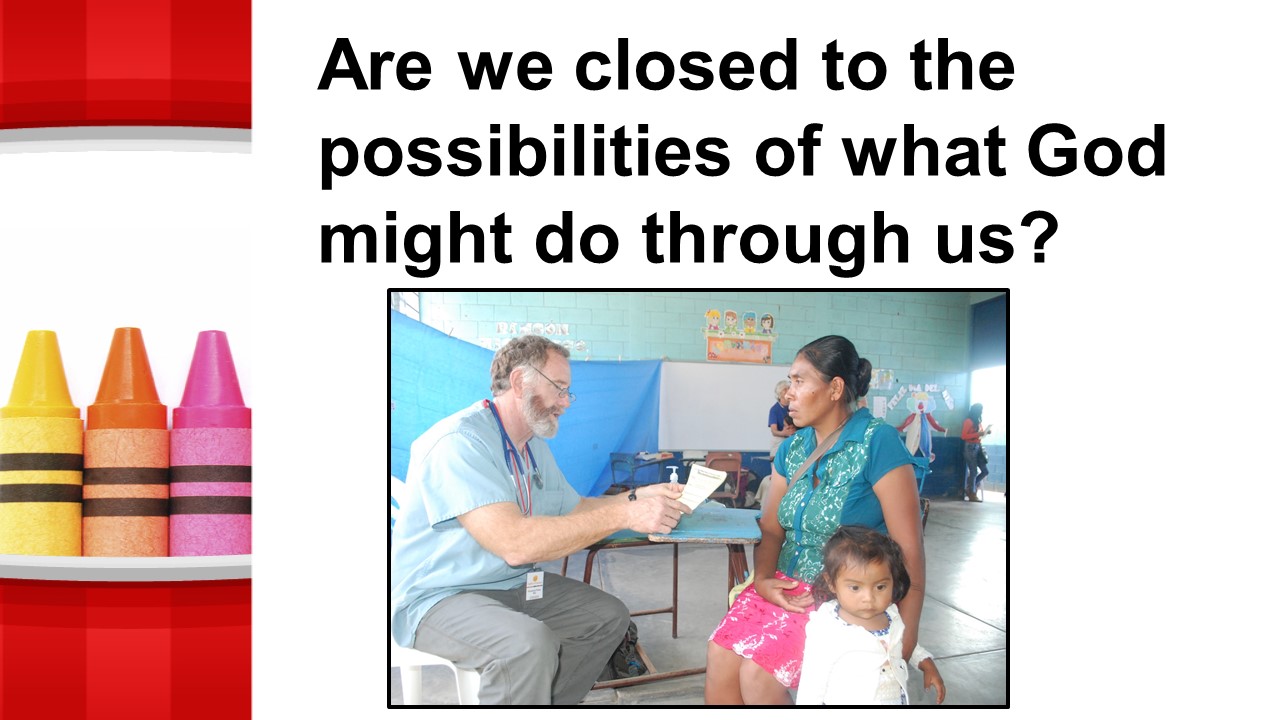 Are we like that? Are we closed to the possibilities of what God might do through us? Are we resistant to the abilities of Almighty God, who can do more than can imagine? Perhaps, like the man in the story, we want to keep God hidden, focusing on ourselves, even though we don’t (by ourselves) have the ability to do miracles? But, you know, when we don’t care who gets the credit, great things can happen. And if it is happening with God, even greater things can happen.

 Our reading from the Apostle Paul’s letter to the church in Ephesus is a prayer. Paul prays his brothers and sisters in Ephesus will find strength in God’s spirit and that Christ might dwell in their hearts through faith rooted and grounded in love.
 By the way, this isn’t the only place where Paul emphasizes the importance of love. Yesterday, in the Men’s Saturday morning Bible Study, we looked at 1 Corinthians 13, which is known as the love chapter. There, Paul is insisting that the various factions within the Corinthian Church love one another. God loves us, as shown in Jesus Christ, and we are to love one another. It’s as simple as that. Even Sigmund Freud, who isn’t known for his Christian sympathies, said that we must love in order that we will not fall, and if we can’t love, illness will take over us.
 Maybe we, as Christians, need to do more daydreaming about what it means to be the people of God. That’s what this four week study is about. God has endowed in us an ability to image new worlds. But are we willing to join with God in creating them? Or do we limit God by our own lack of imagination. We need to free God to work miracles in our lives, within our congregation and community and within our world. If we trust God, and ground ourselves in agape love, which is the type of love that calls us to work for the best of others, there’s no limit to what might be accomplished. If we trust in God’s power and are willing to creatively join God in working for a better world, there is no telling what might come out of our efforts. But if we act like things depend on what we can do and have no imagination, we risk a dark dystopia future.

 The Israelites in exile were told to seek the wellbeing of the community in which they were living and we’re to do the same.










 Few ponder freedom more than those in prison with long days and nothing to do. Although few succeed, some spend their time creatively, attempting to obtain freedom. There were these two dudes at the Texas Correction Facility in Huntsville, who planned and watched and finally figured out if they could just crawl into the back of a delivery truck, they could possibly make it out. From observations, they learned there was this one truck that wasn’t checked as thoroughly as others. They jumped in the back, hoping they weren’t seen. Soon, the truck was beyond the walls of the prison and rolling down the highway. They waited until the truck stopped and parked. They slipped out. To their horror, this discovered they were inside the walls of another Texas prison.
 Our passage begins with Jesus in the presence of some folks who had believed in him.
 Of course, Jesus is not speaking of political or physical freedom. And those who are listening don’t understand this. He’s using the word metaphorically, to show the power of sin to control and enslave us. In order to redirect their focus, Jesus tells them that everyone who sins is a slave to sin!

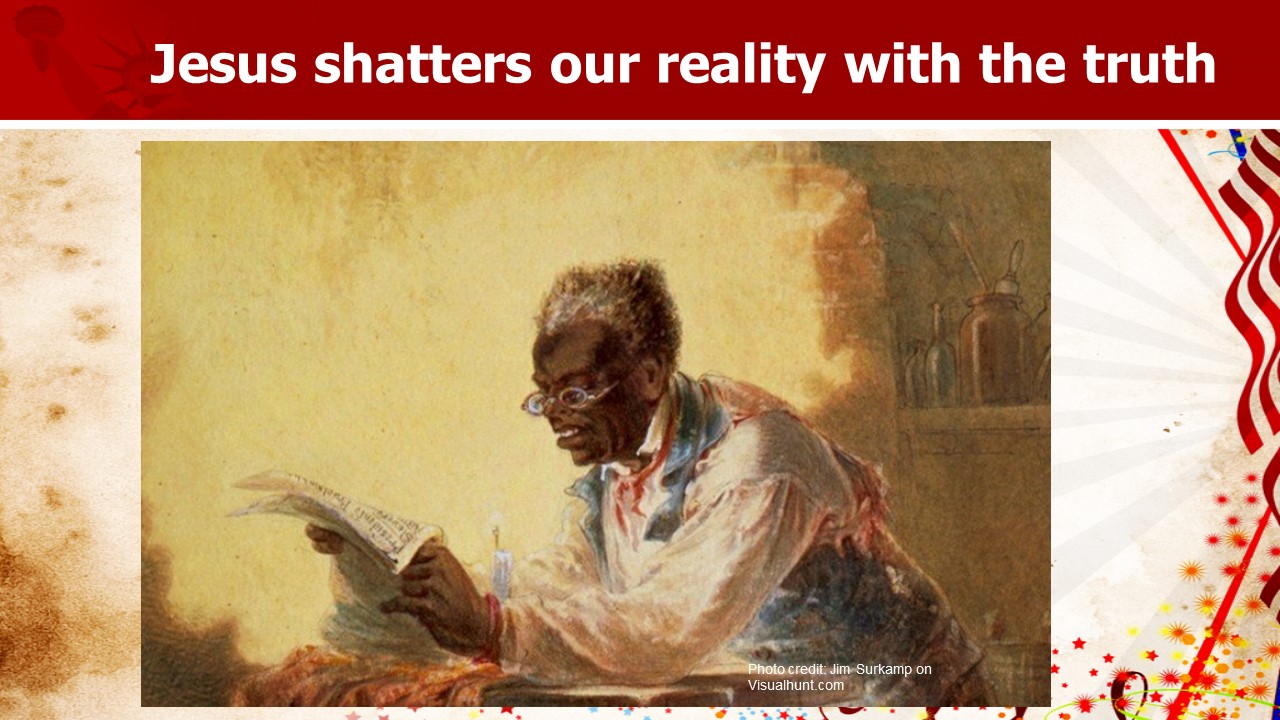 Jesus tries to get people to see beyond their own self-interest by shattering our reality. He represents the truth which is not bound by anything in our material world. Jesus represents a greater reality, but can we accept him? If we accept him and live as if he is the most important thing, those things that ensnare us and entrap us may still be a threat, but they no longer have any power. If we accept Jesus and hang with him, we know that whatever happens to us, in life and in death is going to be okay for we belong to Jesus Christ.
 You know, if we accept Jesus into our lives, we must still pay the bills, go to work, and take out the trash. After all, God created us for work. It’s important that we do what we can to earn our daily bread and to offer up our labors for God to bless. Doing so, we’re freed from thinking what really matters are those things we worry about day in and day out. In the grand scheme of things, they don’t matter. We’re freed from looking out upon the world and seeing it as something to be conquered or earned. That’s not Biblical. Instead, we’re free to look out upon the world and accept it as a gift from a gracious God. And most importantly, we’re free from the guilt and shame of our past. Sin no longer eats at us because we’ve been accepted by Jesus. And, unlike our freedom, Jesus’ offer is something no one can take away.
 I picked up this book after learning that Joy Harjo has been appointed poet laureate for the United States. It’s exciting because she’s the first Native American to serve in this position. In addition to being a poet, Harjo is also a jazz musician. Her poetry blends music with longing for a home that seems evasive. In different poems, the reader is taken an “Indian school” in Oklahoma, to the hunting grounds of the Inuit people in northern Alaska, and through airports and other locals in between. She alternates between more free-form poetry to “prose poems.” Many of the poems draw the reader into the experience of modern Native Americans, who, having lost a homeland, are not sure where they belong. We also are reminded of the realities within Native communities of alcoholism and suicide. Yet, a thread of hope weaves through these poems, as we (as well as all creation) are encouraged to be blessing to others. I find her poems accessible and easy to understand. I’m sure I will reread many of them as I continue to ponder their messages. .
 In this short book, the former poet laureate of South Carolina, Archibald Rutledge, writes a memoir of his parents. His father had been the youngest colonel in the Confederate army. His father joined the war in North Carolina (the family kept a mountain home to escape to in the summer). He was wounded three times, involved in many engagements and served as best man for General Pickett, when he married. Archibald was the youngest child of the family (for which, his father often called him Benjamin, for Jacob’s last son). He was born in 1883, nearly twenty years after his father’s military experience had ended. Rutledge was in awe of his father, whom he saw as a kind, gentle, and loving man. His father shared with him the love of all things wild-hunting and fishing and just walking in the woods. He also shared his love of the creator whom he saw revealed in nature. His mother, the colonel’s lady, was also a kind but strong woman. As her husband was often away, she had to take control as she did directing the successful efforts at fighting a fire in the great house (when water had to be drawn from the river by buckets) and shooting to scare away intruders who were looking to steal from their rice barn. She also impressed the young Rutledge with her love of books and her care of others (she often served as a medical resource in a community that often had to go without physicians).

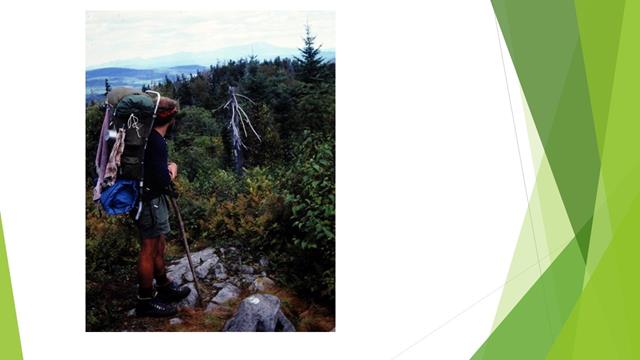 When I was hiking the Appalachian Trail, I came into Gorham, New Hampshire for the evening. It’s a small town near the Maine border. I needed to resupply for the trail ahead. I was down to only oatmeal to eat, but I didn’t have enough fuel for my stove to even prepare that.
 Having been rejected, I found myself steaming. As I left town and hiked north, I began to craft the letters I was going to write… but then I realized I was putting way too much negative energy into this situation. I decided to let it be and I never sent those letters. Had Jesus been among us hikers, I think he’d told me to do just that. Drop it. Harboring such feelings is never good. It just eats at you. We cannot control how other people react to us; we can only control how we react toward them.
 Jesus is heading to Jerusalem, taking the disciples with him. The text that he “sets his face” to go to Jerusalem, a phrase echoed throughout the next ten chapters. On this journey, we learn things not mentioned in the other three gospels. Jesus is not just walking, he’s teaching and healing. But Jesus doesn’t go directly to Jerusalem. If he’d had a GPS and set the destination for Jerusalem, the machine would have been constantly squawking “recalculating, recalculating” as he wanders around. It’s in this wandering we find some of our most beloved parables, such as the Good Samaritan and the Prodigal Son. Along the way, Jesus stops and teaches people about who God is and how they should relate to their neighbors.
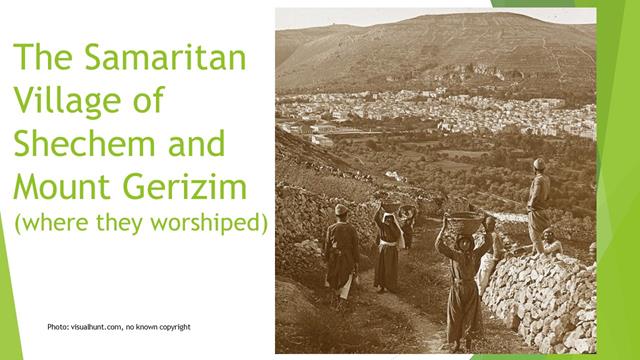 But not everyone is ready to see Jesus. Luke informs us that the Samaritans don’t want anything to do with Jesus because he has set his face towards Jerusalem. The Samaritans, who do not see Jerusalem as holy and who worship on another mountain, have grown weary of self-righteous Jews trampling through their land on their way to Jerusalem.
 Jesus doesn’t take rejection personally and encourages the disciples to get over it. Too often we forget that vengeance isn’t ours!
 Do we put things before Christ? Think about your life and the things you value. Are you willing to give it all up for Jesus? Is Jesus at the center of your life? Is he what’s most important?

 Today, I think back to that encounter in Gorham, New Hampshire, so many years ago. I wonder what would have happened if I had gone back to that cashier at the Exxon station and apologized. I wouldn’t have to say she was right, but I could have acknowledged that my response and my thoughts about her were misguided. As humans, we can’t be responsible for what someone else does. We can only be responsible for what we do and how we react. Amen.
 Jeff Garrison
 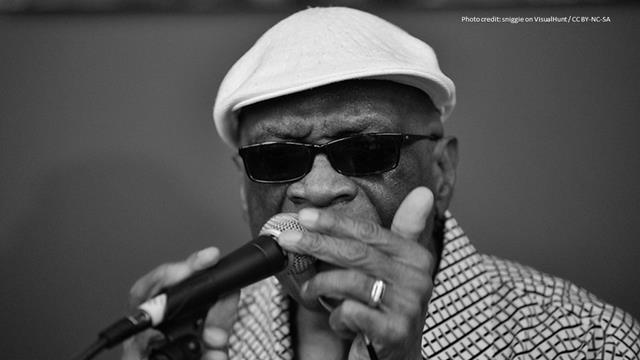 As a music tradition, the Blues rose out of the African American experience of slavery. In song, they cried about their plight as they longed for freedom. The song, “Go Down Moses,” captures this desire for freedom. But this tradition is found throughout scripture. For of all the Blues’ singers that’s lived, Elijah may have been the best.
 “Hot Jezebel!” The queen’s name has found itself on an appetizer made of fruit preserves, horseradish, mustard and pepper.
 Have you ever felt you were all alone in the world? That everyone was out to get you? If so, you can identify with Elijah’s plight. Twice in this passage, once even after he encounters the Lord, Elijah proclaims his righteousness and cries out about Israel’s apostasy and how all the prophets have been killed except him. It was the same cry he made in the previous chapter on Mt. Carmel.
 The Beatles hit record back in the mid-60s, “Yesterday,” comes to mind when I think about Elijah’s predicament. It a kind of a mellow blues tune that goes something like, “Yesterday, all my troubles seem so far away, now it looks like they’re here to stay. O, I believe in yesterday.” Elijah could relate to these words. Perhaps we, too can relate. In the last verse of the song there is the line: “Now I need a place to hide away.” That’s Elijah! And we’ve all been there. The glory of yesterday is gone and we need a place to hide. Elijah flees south into Judah where he’s safe from Jezebel’s reach and then goes off by himself into the wilderness where he finds a bit of shade under a broom tree and lays down to die.
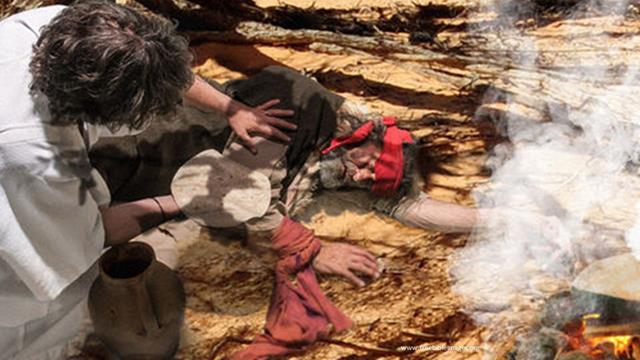 While asleep, an angel brings bread and water for Elijah. Obviously, Elijah assumes this is his “last meal.” He enjoys it and then, awaiting death, goes back to sleep. Again the angel wakes Elijah. Some people just don’t like getting out of bed. Elijah’s informed that he has a long journey so he’d better eat up and get on the road.
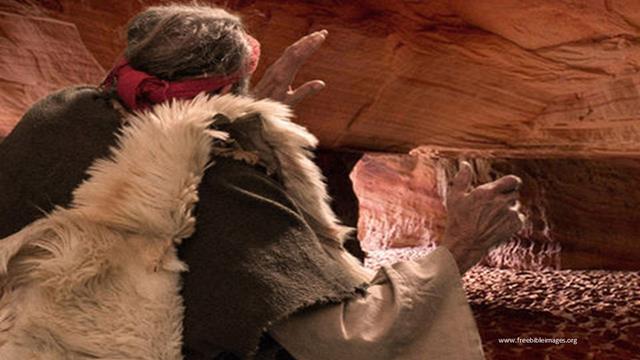 Elijah sets out on a forty day journey to Horeb, the mountain of God. Forty is one of those special numbers used throughout the Bible to indicate a purifying process or a time of preparation. It rained for forty days while Noah was in the ark; the Israelites wandered in the desert for forty years; and Jesus spent forty days in the wilderness preparing for his ministry… Elijah was being prepared to meet God in his forty day journey. Forty, the number that reminds us that our troubles are not always instantaneously solved.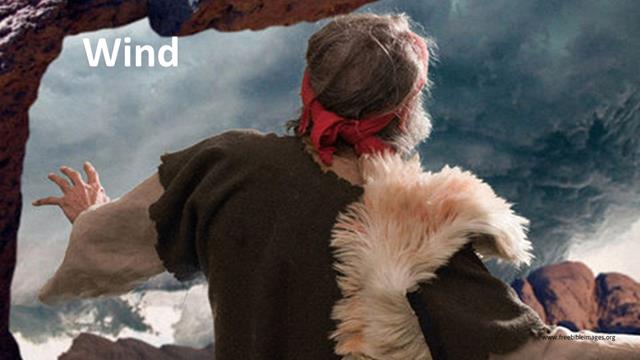
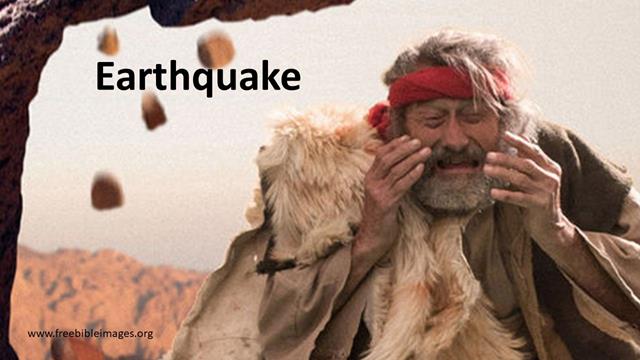
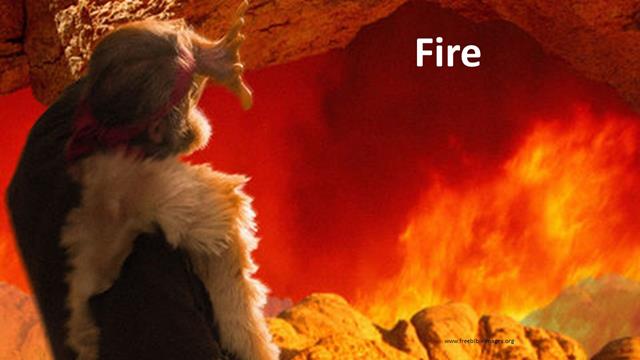
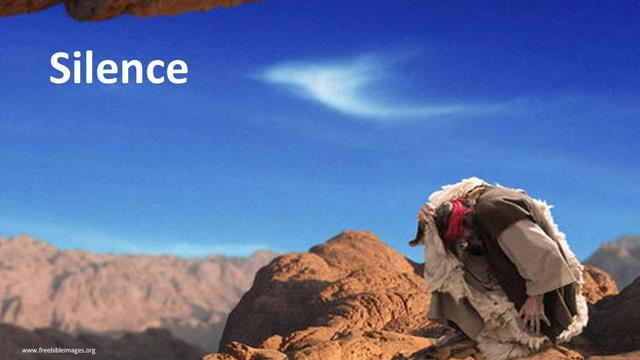 Again, a voice asks Elijah what he is doing on the mountain. Once again, Elijah cries the blues. But the Lord doesn’t grant Elijah sanctuary. Elijah is not told, “Just stay here, I’ll take care of you.” God isn’t finished with Elijah. There is still work to be done, so he’s sent back to Israel through Damascus. Along the way Elijah is to anoint the King of a neighboring nation, an illustration that the God of Elijah cares for and controls not just the events in Israel but throughout the entire world.
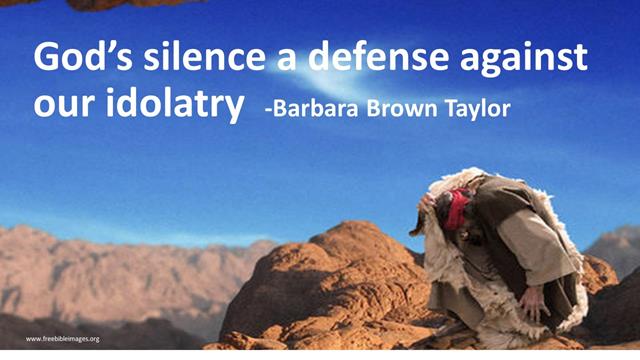 This story is rich in meaning. The eerie silence is often how God reveals himself in the wildernesses of our lives. God tells us, through the Psalmist, “to be still and know that I am God.”
 There is a lesson in this for us. All of our spiritual journeys have ups and downs. There are times we feel close to God and other times we feel as if God is far away and doesn’t care what happens. Elijah is like this. From his spiritual high on Mt. Carmel, when there was no doubt God’s spirit was with him, Elijah slips into a depression and begins to sing the blues. “It’s just me Lord, and there ain’t much I can do.” He feels so sorry for himself that he’s ready to die. So God reveals himself again to Elijah, but in a different manner, in a most common fashion: silence.
 Aren’t we like Elijah? There are those times when we know we’re filled with God’s spirit and we’re on a natural high and the blues seem so far away. These are the times we know God is real—they’re our Mt. Carmel experiences. But then, there are occasions when things do not go right, when we feel sorry for ourselves, and God doesn’t seem to be present. It’s during these times we need to slow down enough to listen for God in the silence. It’s in the silence that we can come to trust that God is with us always. It’s not something we can explain or even demonstrate. Its faith: faith and a longing for that which lies beyond our grasp, that which we cannot control, but without which we can’t live.


 Jeff Garrison
 On the flyleaf of the bulletin, I placed a quote from Brian McLaren, who describes the Trinity as a divine dance.
 “New and improved!” It’s a marketing cliché we hear all the time. Yet, it gets out attention. Whether it is laundry detergent, automobiles, cell phones, computer play stations or soft drinks, our ears perk up and we rush out to buy. This is also be true for churches. We start a new program, there’s a new minister, the music is new, and so forth. We’re drawn to what’s new. By the way, this isn’t anything new! Paul faced this in Greece. The Greeks coming onto the scene. When he was in Athens, Paul was given the podium to speak before the philosophers about his faith.
 Paul presents himself in weakness, in fear and trembling.
 Paul is affirming here the Reformed doctrine of Irresistible Grace, or as it is known in the Westminster Confession “Effectual Calling,” which acknowledges God’s hand in our belief and understanding of the work of Christ.
 As we read in Verse 9, we can’t imagine that which God has arranged for those he loves. God’s love for the world is beyond our comprehension. The beginning of our Christian faith isn’t belief, its love!
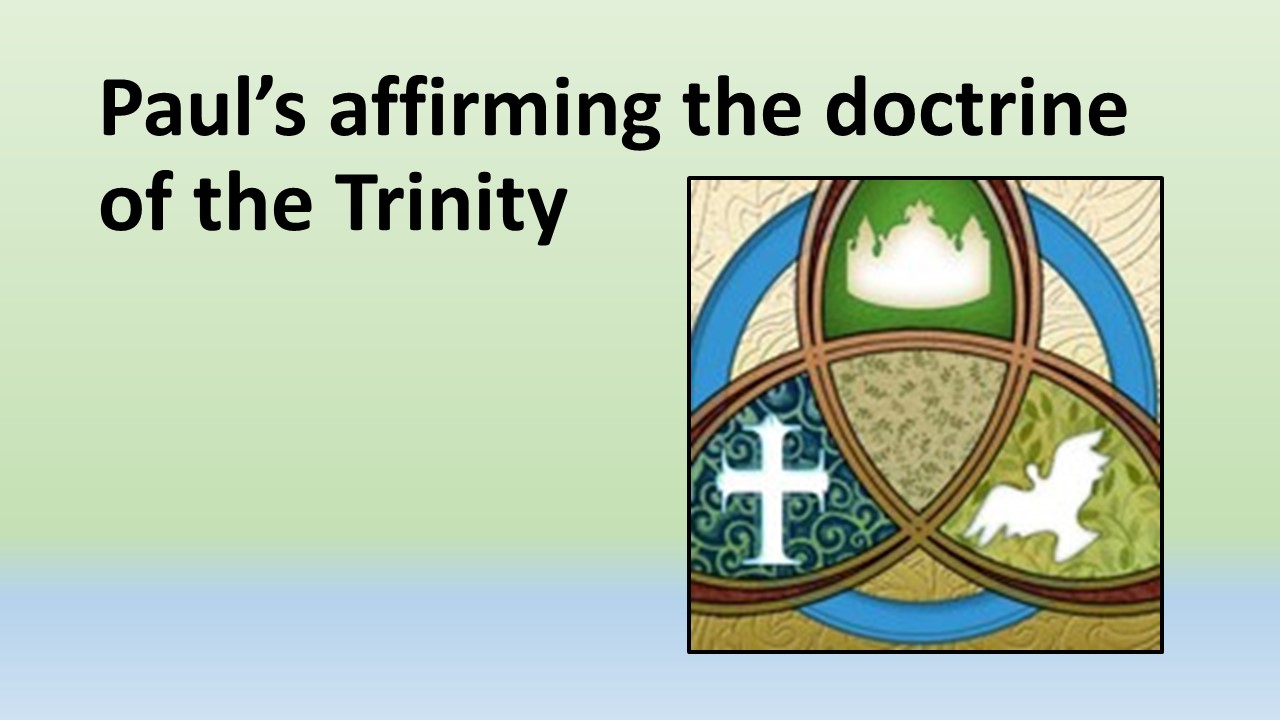 In Ken Bailey’s commentary on 1st Corinthians, he points out how Paul is affirming the doctrine of the Trinity throughout this passage. God the Father has all things under control; in Jesus, God comes to us as a man, in a manner that we might understand; and God’s Spirit, working through our own spirit, reveals this to be true. We see the three persons of the Trinity at work here. Although Paul doesn’t use the term Trinity, through rhetorical exegesis, Bailey cites six occasions in these verses where Paul alludes to the Trinitarian concept. Bailey, who taught most of his career in the Middle East, tells of a time he was a part of a Christian-Muslim dialogue. After dinner, one evening, one of the Muslim scholars questioned him as to the Trinity, asking for his help to understand this Christian doctrine. Bailey took the scholar to this passage and spoke about God’s work as shown throughout these verses.
  One popular phrase among Presbyterians is “The Church reformed, always reforming.” It is often cited as a reason for us to change, but it has nothing to do with that and the way it is often cited leaves off an important part of the phrase that came out of the Reformation and proclaimed, “The Church reformed, always to be reformed according to the Word of God in the power of the Spirit.”
 Essentially what Schmemann goes on to say, and what Paul also says, is that we need to experience a god that is not forced into our secular beliefs, but the God who transcends all so that he might reach out to everyone in love. Paul is referring to a God that is so big he can’t be contained in our human constructs. As believers, we need to be open to God speaking in and through us. And because we love God, we should seek to do that which God loves. For that is why we’ve been created.