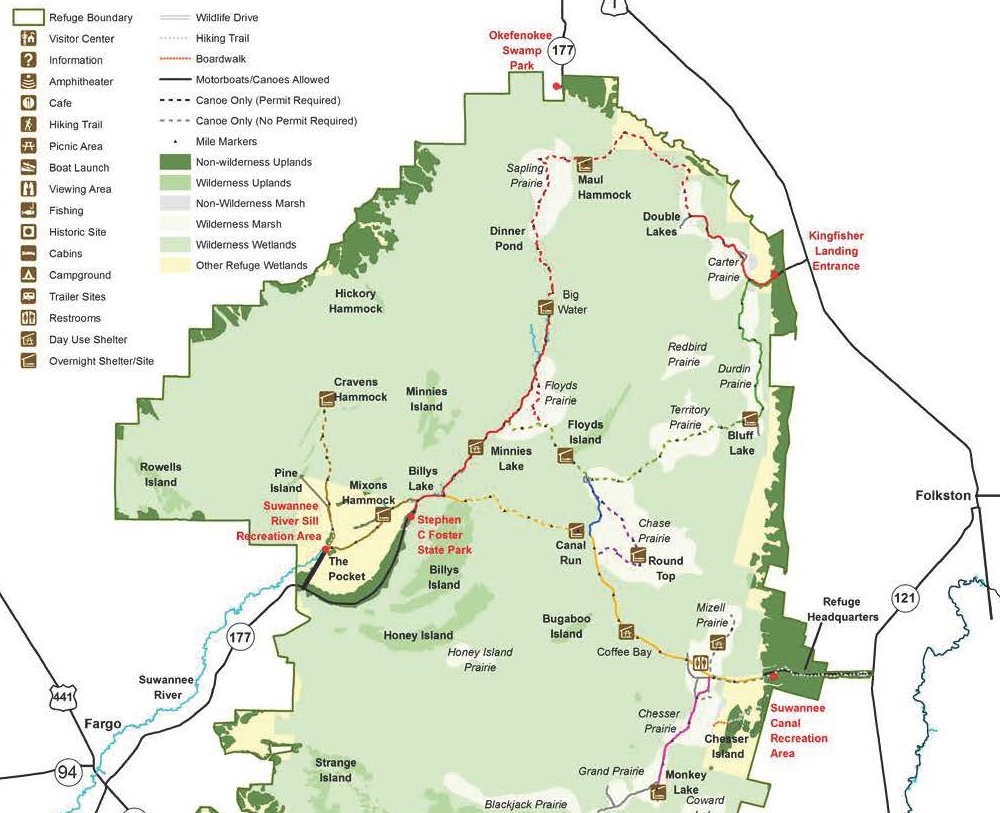
This is my third and final post about a 5 day, 4 night paddle in the Okefenokee Swamp. The map shows our route as we started at Kingfisher and paddled to Maul Hammock platform. I wrote about this on my post for Day 1. From there, we paddled to Big Water on Day 2 and to Floyd’s Island on Day. This is covered my post on Days 2 & 3. Counting the extra miles I paddled on Day 4, I paddled a little over 50 miles in 5 days, covering a variety of wilderness settings.
The storms clear out early Sunday evening while we camp on Floyd’s Island. After dark, we can see the stars overhead, through the trees, along with hundreds of lightning bugs, more lightning bugs than I’ve seen since I left Michigan. Of course, there are also mosquitoes and biting flies. In fact, the biting flies are so bad that when away from the fire, I find myself wearing a bug net over my head. But things are fine once I crawl into my hammock where I read and catch up with my journal before falling asleep. On Monday, we plan to make it an early start as Gary needs to get back home in order to be at a meeting on Tuesday morning.
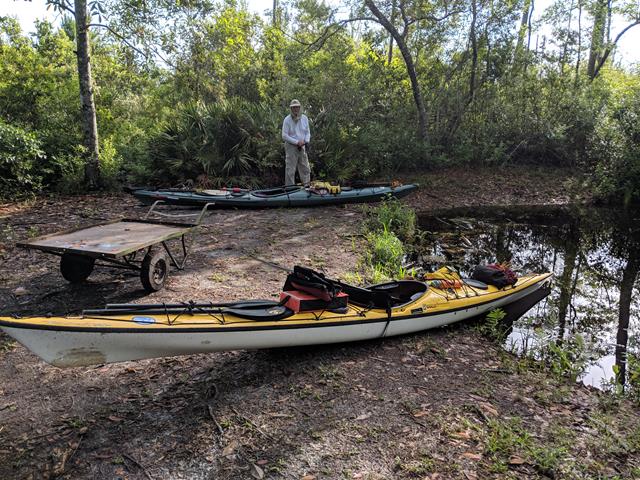
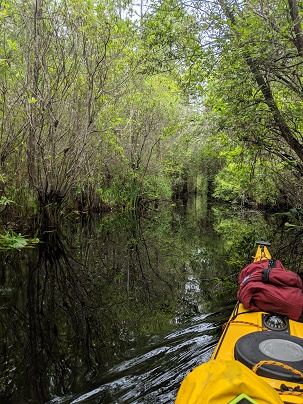
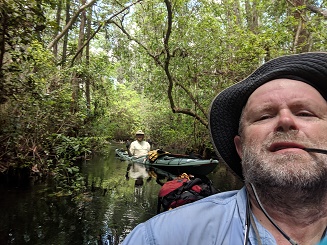
We wake early and begin to pack up our gear. As we’d portaged our kayaks across Floyd’s Island the day before, we quickly eat some fruit and granola and haul our gear down to the boats. After loading up, we cast off into a narrow trail clogged with cut chunks of logs. The last time I was here, this trail wasn’t even open. A hurricane several years earlier had clogged the trail with down trees. It appears as if someone came through with a chainsaw, cut the down trees into firewood lengths of logs, and left them floating in the water. Because the logs are small, we can pushed them under the bows of our boats or push them off to the side. While it is hard work, it’s doable. After a hundred or so yards of difficulty, the path clears from logs
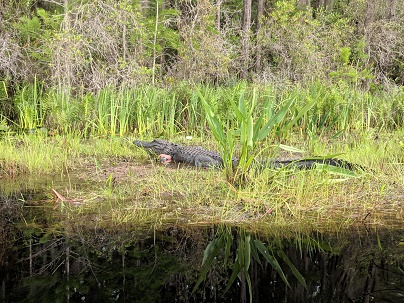
Like the path into the island from the west side, the east side was fairly narrow, but is only a mile or so long. It’s also fairly shallow and we follow (chase?) a rather large alligator (13-14 feet) for a while. He’ll come up, look at us, and then swim fast for a ways, before stopping. I’m pretty sure it’s male, for females don’t generally grow this large. As we paddle straight ahead, we soon close back in on him, and he takes off again. He does this several times until he finds a place to leave the channel for the swamp. All I can figure is that water is too shallow to dive and let us pass over top, which is what the alligators normally do.
After thirty minutes of paddling, the heavy vegetation departs as we entered Chase Prairie. A few hundred yards later, we came to the point where the trail runs back up through Bluff Lake to Kingfisher Landing (where we had started our paddle on Friday). I have been to this spot a few years before, on a solo trip with an overnight on Bluff Lake platform. But instead of turning north, we turn south toward the Suwannee Canal, 2 1/2 miles away. Along the way we pass the turn off for Round Top platform, where I plan to camp for the evening. It’s just three miles down the purple trail. I decide to go around the long way to make sure that Gary finds the Suwannee Canal, which will take him back to the main entrance to the swamp.
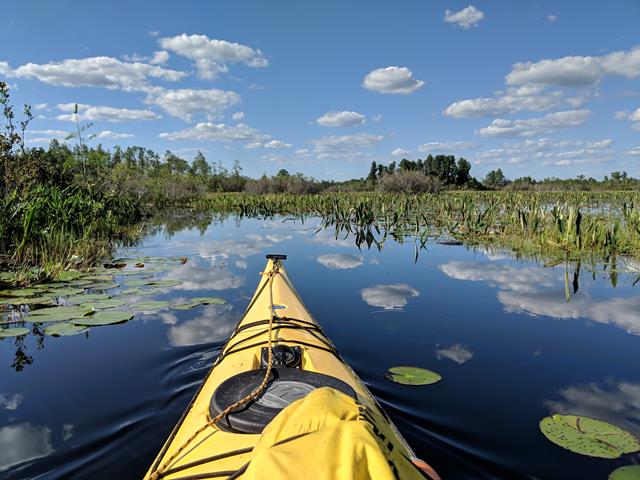
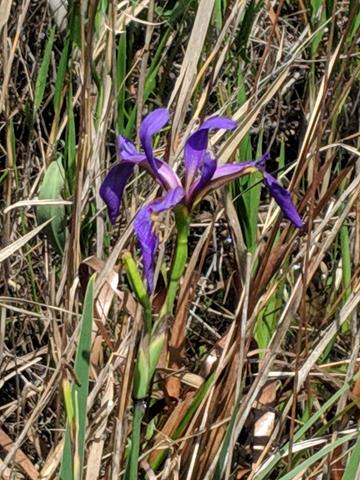
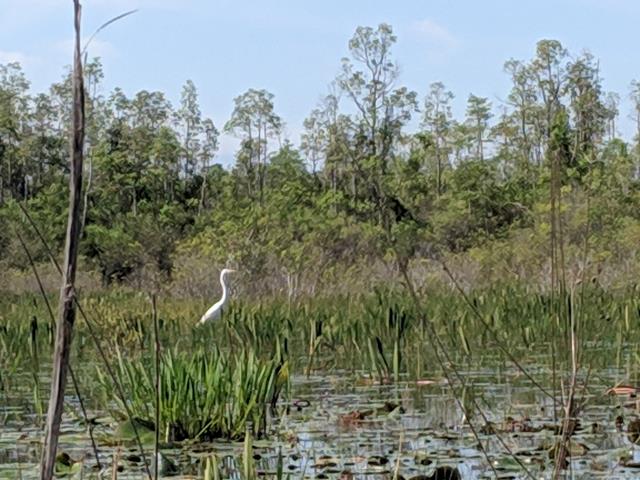
This is my third time in Chase Prairie and, like the other times, there are plenty of alligators around. The prairie is fairly open with lots of pitch plants and irises in bloom. There are also a number of egrets and herons around. In the distant, I can hear the calls of a sandhill crane.
When we reach the canal, the path opens up with the tall trees forming a nice canopy blocking the sun. We paddle south, and shortly after the 9 mile marker (the mileage to the main entrance where Okefenokee Outfitters is located), Gary and I say goodbye. He continues paddling on straight, while I slip through a channel that takes me back into Chase Prairie. I have a reservation for one more night at Round Top platform, which is about two miles back into the prairie. The sun is up and its warm, but the paddling is easy and a little before 11 in the morning, I arrive at the platform. I’d stayed here once before and it is by far my favorite place to camp in the swamp as it has nearly 360 degree views of the swamp. Getting out, I set up camp, fix an early lunch and then catch up with my journal. Later I start reading. I’m only half way through David Halberstam’s The Fifties and with nearly 400 pages left, I have plenty to do to occupy my time.
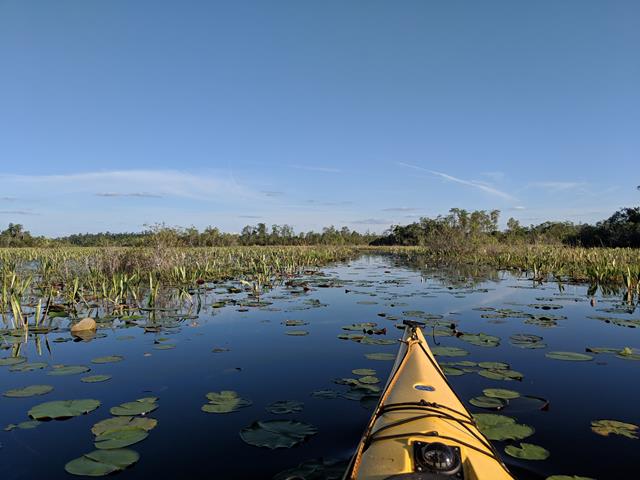
After an afternoon of reading and napping (I found myself enjoying two nice naps), I put the kayak back in the water and paddle north on the purple trail which takes me, after three miles of paddling, back to where we had been earlier in the morning. I had not paddled this section before and am glad I decided to make the effort for its beautiful, especially as the light softens late in the day. On the way down, I see an alligator catch a duck by the tail. The duck is flapping and the gator, which is in very shallow water, drags the duck toward the channel, where I am located. Seeing me, the gator pauses and the duck quickly flies away. I assume the gator had planned to drown the duck in the deeper water and enjoy duck for dinner. I also spot a pair of sandhill cranes.
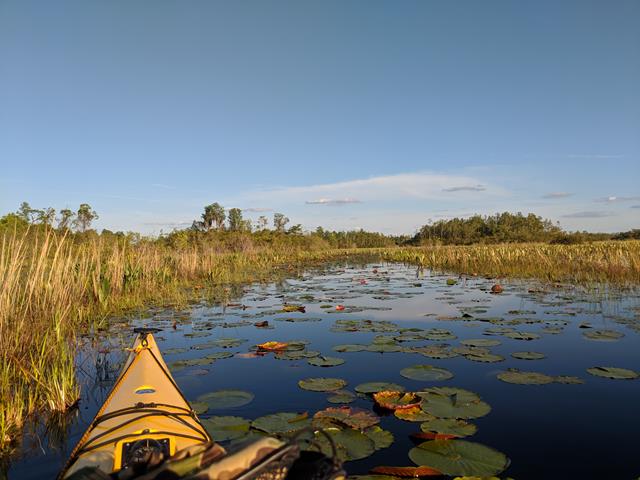
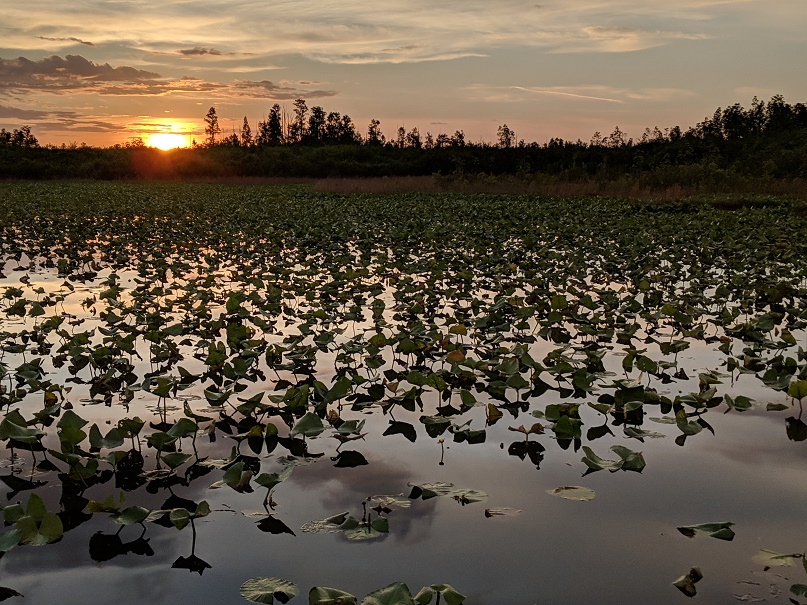
As I come back after a six mile paddle (three up and three down), I notice the crescent new moon is in the west. Most of this trip was in the dark of the moon, but not that I could tell it as the clouds had pretty thick. In the east, the sun sets as I snap a few photos. Then it is time to fix dinner, some noodles and canned pork. Twenty minutes after the sunsets, the mosquitoes appear as soon as I can finish my dinner and clean up, I crawl into my hammock, under the safety of my bug net. I wake up in the middle of the night and step to relieve myself. In the south, Scorpius and Sagittarius are just above the horizon. But the mosquitoes soon find me and I crawl back into my hammock.
Around 3 AM, I wake again, as I was the first night, to what appears to be the sound of a chainsaw attempting to be started. Soon, all over the prairie, alligators are bellowing and making this weird sound. I listen off and on, between snoozing. They are so loud (one sounds as if it might be underneath the platform), that I can’t hear the mosquitoes buzzing just outside my netting. They continue on till dawn, and by the time I get up, they are quiet.
In the morning, I fix coffee and oatmeal for breakfast and enjoy eating slowly, taking in the sights. I leave around 9 AM and paddle to Coffee Bay platform, where I stop and rest, taking time to read a few chapters in my book, before resuming my paddle. I don’t see anyone until I run into a couple fishing in a jon boat a mile or so from the entrance into the swamp. They are the first people I’ve seen well over 24 hours. I am back to entrance at 1:30 AM. After loading my gear in the car and putting my boat on top, I am soon heading north to Savannah.
 For Hazel Brown
 Jeff Garrison
 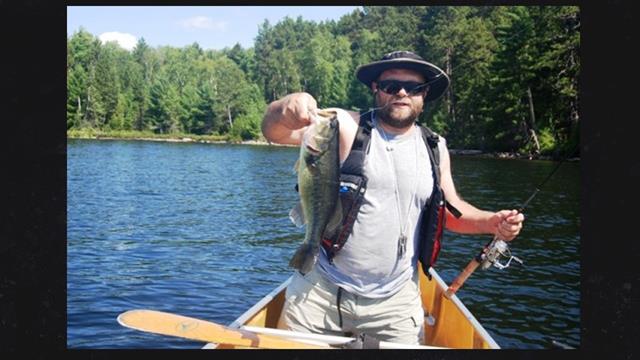 Over a period of a few weeks, a minister listened to a parishioners tell the same fish story many times. Each time the fisherman told the story, the fish took on a different dimension. Sometimes he made the fish out to be a whale and other times it seemed to be just a lively bass. Finally, the minister felt he needed to confront this fisherman about his habitual lying… After worship one Sunday, he called the man aside and told him about hearing the same story told in different ways to different listeners… “Well you see,” the fisherman explained, “I have to be realistic. I never tell someone more than I think they will believe.”
 You know, we can only understand and comprehend so much and it seems that in the passage I just read, Jesus overloads his disciples. He attempts to teach them about the unique relationship between him and God the Father, and our relationship to them though the Holy Spirit. From this passage we learn that our knowledge of God comes from our knowledge of Jesus Christ. Through the life of Jesus, we are able to see God. Furthermore, we learn that through prayer, obedience, and the Holy Spirit we are empowered to carry on Jesus’ work and can experience his peace. This is a passage that deals with the work of the Trinity: God as Father, Son, and Spirit. It’s a lot to comprehend, but Jesus knows his time is short and he needs to prepare the disciples for what’s ahead.
 This passage starts off with Philip begging, “Show us the Father and we will be satisfied.” It’s a natural request. Philip’s descendants must have ended up in Missouri, the “Show Me State.” You know, Philip easily answered Jesus’ call at the beginning of his ministry, as John shows us in his first chapter.
 Jesus asked his disciples to believe that he was in the Father and the Father was in him, and that his words were the words of the Father. The disciples, being normal logical people, had a hard time understanding how the Father and the Son could be the same. As they wondered, Jesus tells them to just believe, and if they couldn’t believe because of what he said, to believe because of the works that he performed. In other words, there are two ways for them to engage with Jesus’ special relationship with God. They can accept his word or be moved by his work.
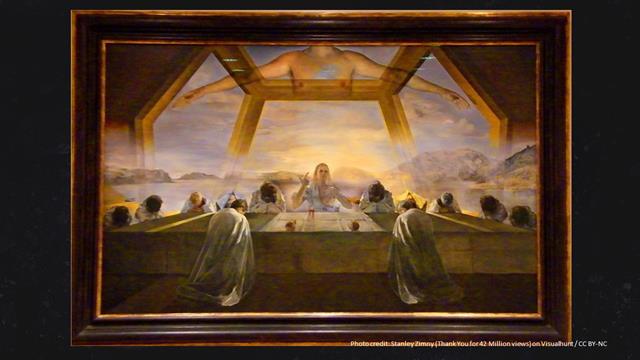 Jesus covers his relationship to God the Father because he wants to get on to what’s going to happen after he departs. After all, this is a conversation around the dinner table the night before the crucifixion. Jesus is preparing the disciples for when he’s no longer going to be present with them.
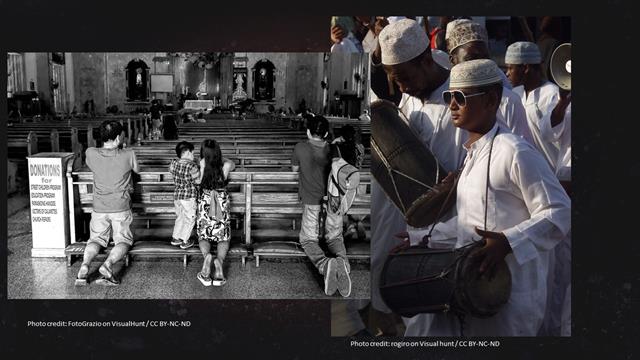 If we pray to Jesus, asking the power to do something that glorifies God, then, he promises, our prayers will be answered. Jesus also promises that God’s Spirit will be with us forever. In other words, we are not abandoned. We are not alone. God is with us. And think about how this has been fulfilled over the centuries. Jesus and his band of disciples made an impact on a small corner of the ancient world, between Galilee and Judea. But within a generation, his followers were planting seeds—from India, to Ethiopia, and to Europe—that would make a significant difference. In 300 years the church would be established all over the region and from there go out into the rest of the world.
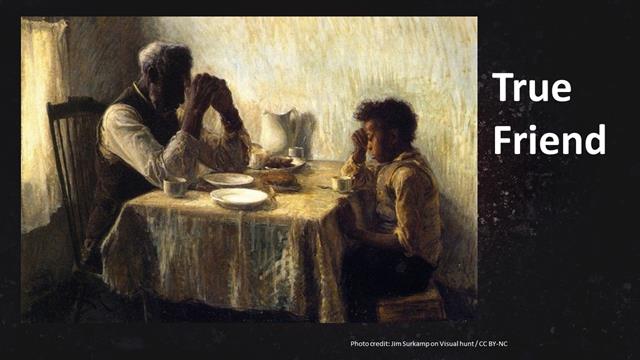 In the 17th verse, Jesus tells his disciples that they’ll be accompanied by a true friend that only they will know. It’s the Spirit that abided with the disciples after Pentecost and now abides with us. In other words, just as the Father is in Jesus and Jesus is in the Father, so we are in the Spirit and the Spirit in us. Knowing he’s not going to be around much longer, Jesus wants to assure the disciples (and us) that they (and we) will be taken care of. Through the Spirit he’ll continue to nourish our souls….
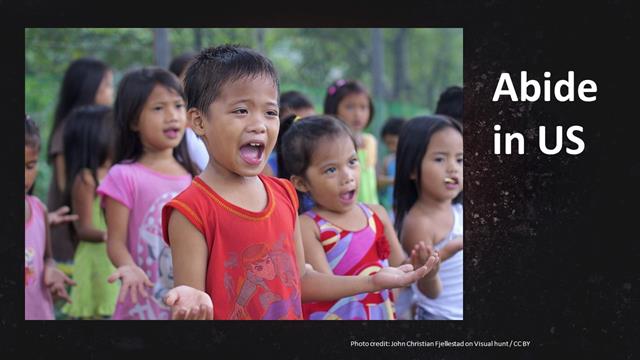 Let me point out one interesting thing here. The Spirit, as spoken of in verse 17, isn’t to us as individuals. When Jesus says the Spirit abides in you, it’s plural, not singular. In other words, the access to the Spirit is found within the fellowship of the church. It’s within the fellowship that Jesus commands us to love one another, as we abide in God through the Spirit and abide in one another through love.
 The early disciples found comfort in Jesus’ words, and we can too. Though Jesus we can know God, and more importantly, we can be forgiven and found to be righteous so that we can enter God’s kingdom. Furthermore, it is comforting to know God’s Spirit, which was first manifested on Pentecost Day so many years ago, is still with us today, ready to lead the church into the 21st century. As a church, our life must be grounded in the Spirit that abides in us. For this reason, the church always has hope. Despite persecution or indifference from the world in which we live, we have something the world doesn’t. We have God’s Spirit, and we need to trust this gift, because it is all that matters. If we abide in the Spirit, we’ll be okay.
 Rejoice, today is Pentecost. Be bold, for God is with us. Amen.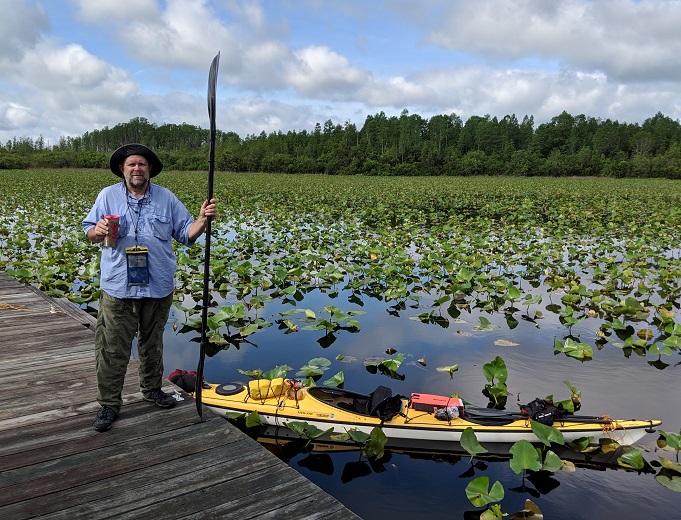
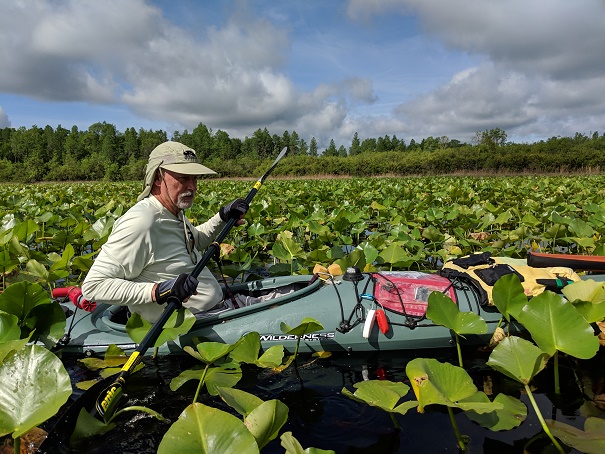
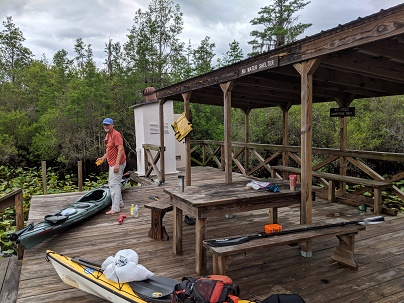
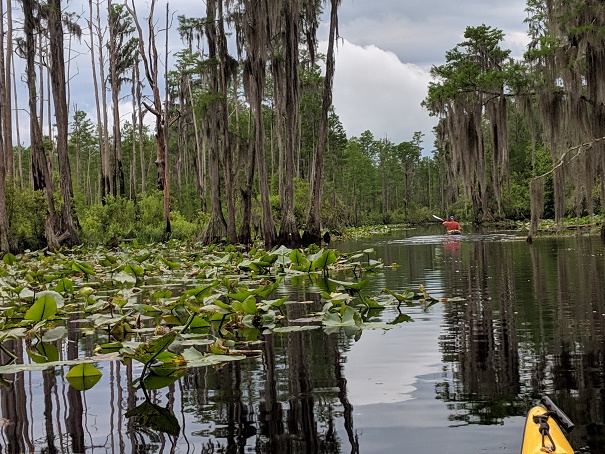
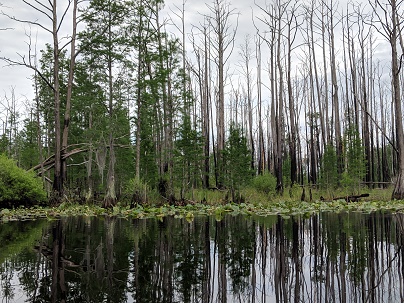
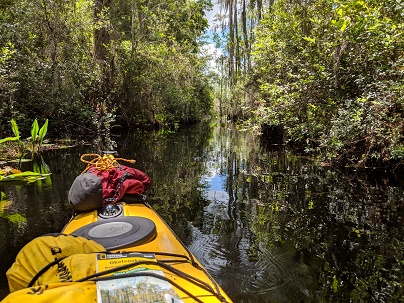
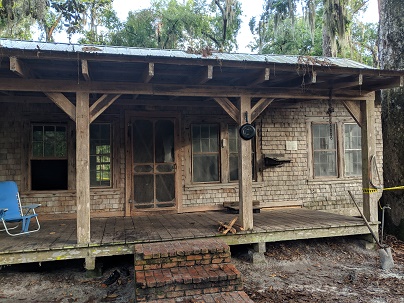
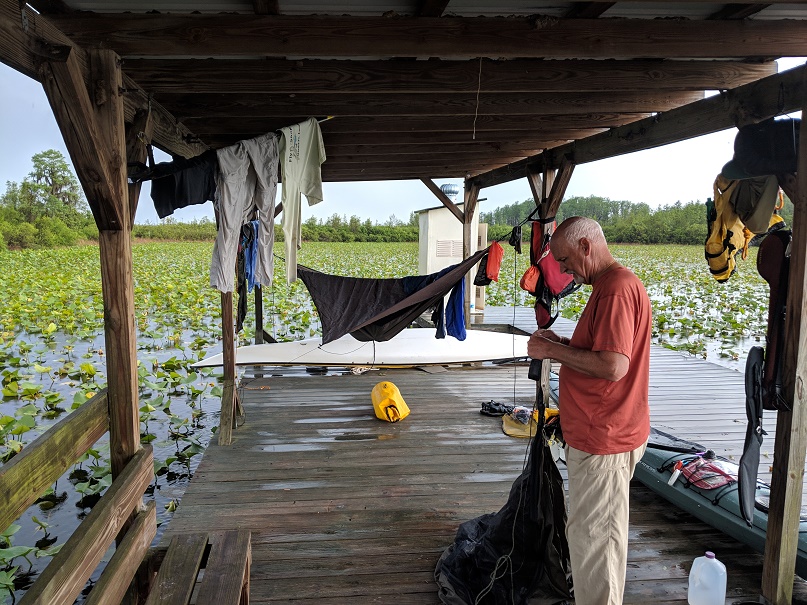
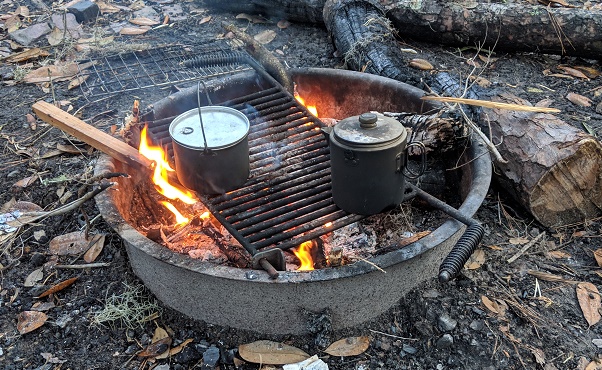 We eat lunch under the front porch during a downpour. A turkey and a fawn with spots make their way through our camp as we wait for the rain to clear. Later in the afternoon, when the storms have cleared, we move our kayaks, portaging over the quarter mile or so of the island, so that we’d be ready for the next day’s paddle. That evening, we cook over an open fire. The smoke helps deter the biting flies. We enjoy crackers and cheese, party nuts, along with some Johnny Walker Black Label. Again, I’m impressed with Gary’s beverage selection. I’m saving my cheap bourbon. Tomorrow, Gary will paddle out of the swamp while I will stay for another night.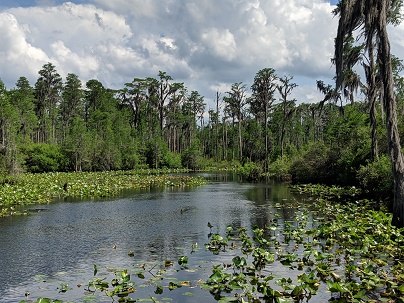
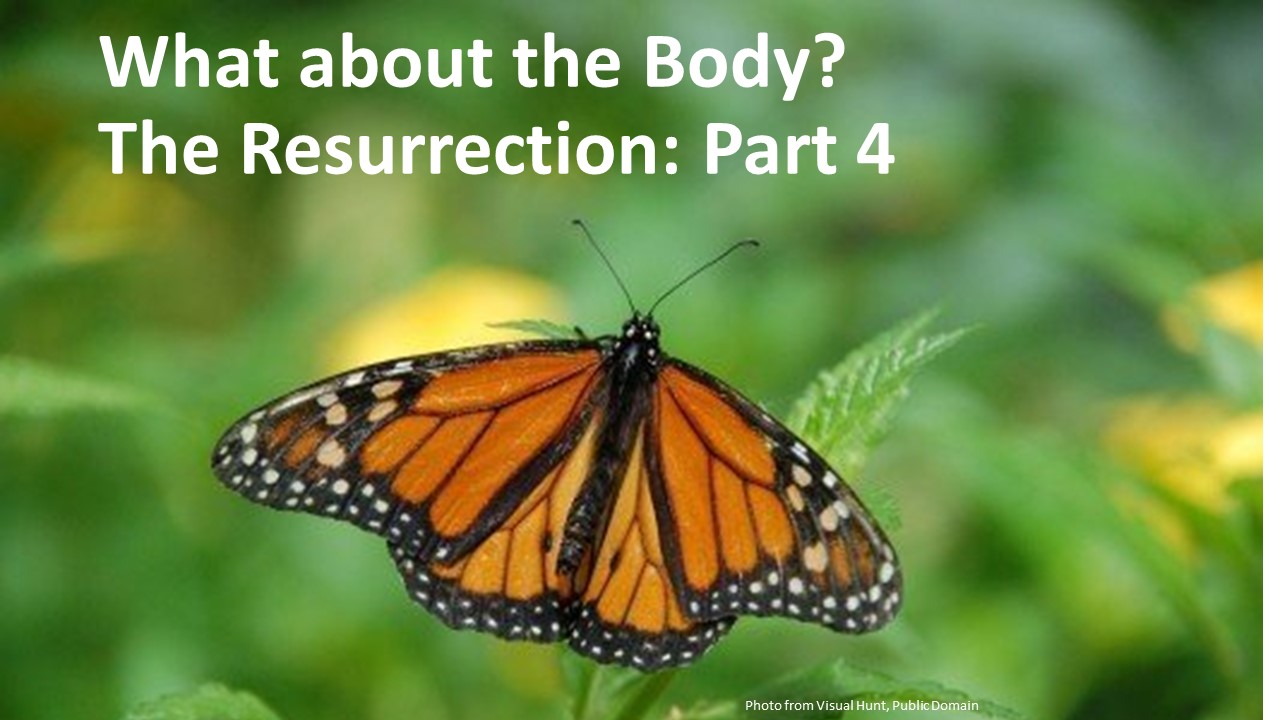
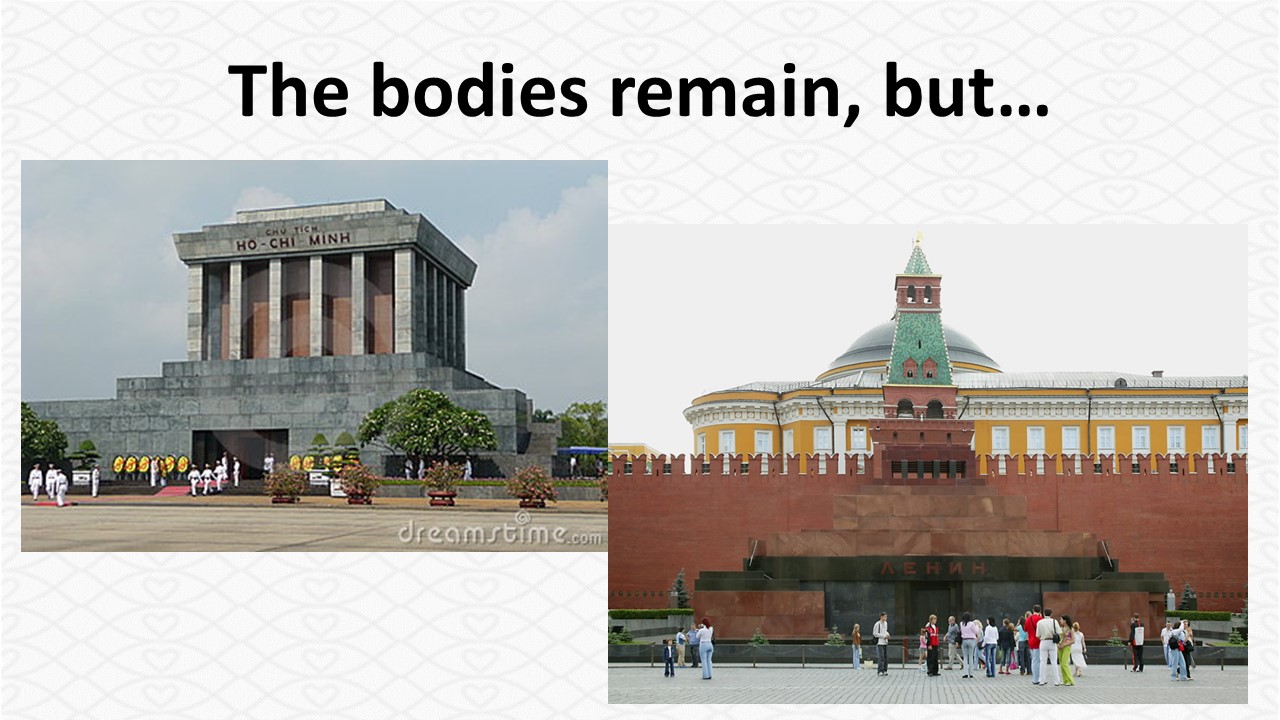 I’ve seen the bodies of Ho Chi Minh in Hanoi and Lenin (not John) in Moscow. Walking pass their preserved flesh, I got chill bumps. It was frigid in the mausoleums. I felt a bit sad for Ho. He wrote specific instructions that his body was to be cremated and the ashes scattered all over Vietnam. But when you’re gone, what happens to your body is no longer in your hands. But there was something else I experienced at these mausoleums. Regardless of what you think of these men who were no saints, they are dead. Sooner or later, we’ll all cease to exist. Our current bodies will become useless and eventually revert back to the dust. But that’s not the final word.
 There are a couple of issues raised in this text that I want us to explore this morning. Paul begins almost as if confiding a secret to a friend, “Listen,” he draws the Corinthians in, “let me tell you a mystery.” Paul is writing about something he admits he doesn’t understand; it’s a mystery, but in this mystery resides hope. “We will not all die, but we will all be changed.” Now, there is a question here about what Paul means when he says we will not all die. Who are the “WE?” Some argue that Paul believes Jesus’ return is going to be soon, during their lives. We see a similar thread in Paul’s first letter to the Thessalonians where he comforts those who are concerned about their friends and family members who have died and what will happen to them after Christ returns.
 In this passage, Paul emphasizes the necessity of change. Nothing can stay the same. We have to give up the familiar, our mortal bodies, in order to be resurrected in a new immortal body. Interestingly, Paul insists we will be clothed with immortality which was not taught in the schools of the day. The Greeks assumed immortality was our natural state and it was covered with our bodies; therefore the ideal was the soul, not the flesh covering it. But Paul challenges this notion, for our bodies are, in and of themselves, good.
 As I noted earlier, it’s interesting how Paul book-ends his essay on the resurrection with fragments of what was most likely an ancient hymn. Paul uses lyrics which were probably sung by congregations in order to connect with something familiar to his readers. Paul’s speaking of a mystery and music has a way to say more to us than just the lyrics, so it is appropriate that Paul incorporates such a hymn as he concludes his treatment of the resurrection.
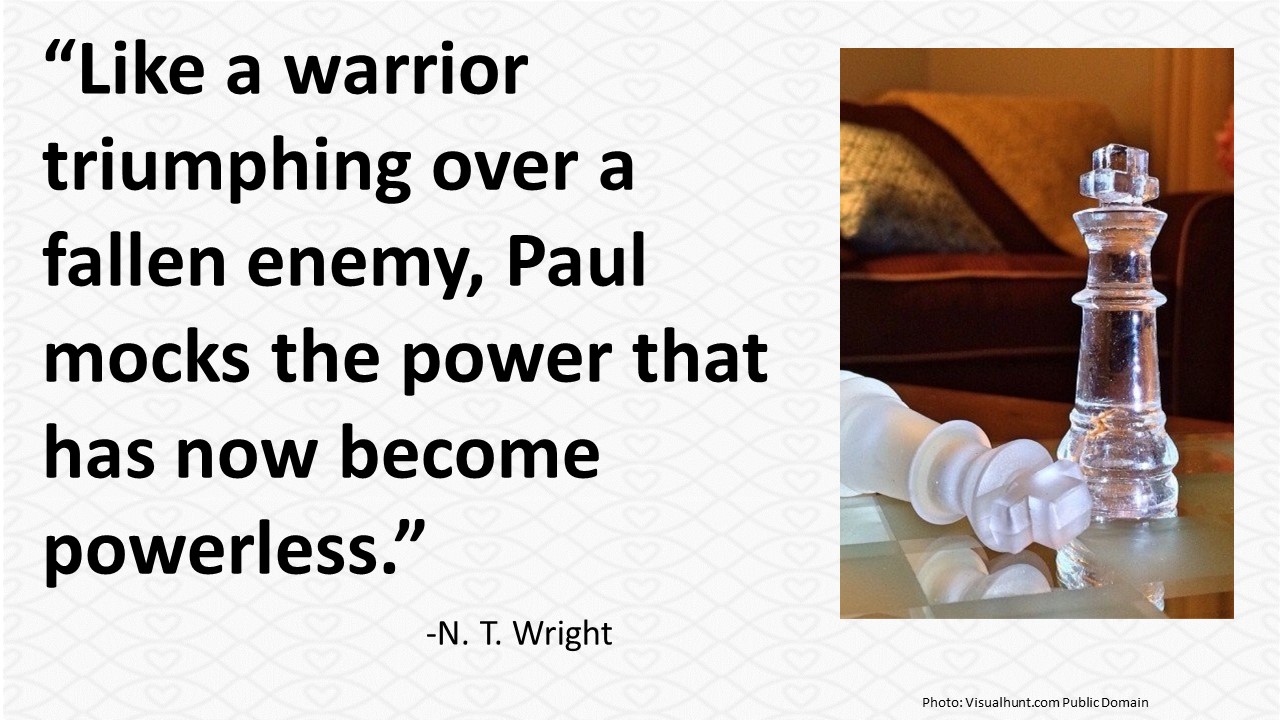 As Paul comes to the end of our passage for today, he makes a powerful statement. In the last two verses, he uses the term “Lord” four times. The modern British theologian, N. T. Wright, suggests that “like a warrior triumphing over a fallen enemy, Paul mocks the power that has now become powerless.” The victory is in our Lord Jesus Christ! He is a Lord in a manner that Caesar can never be!
 Paul brings this essay to a conclusion with a final statement in which he calls the Corinthians, “my beloved.” It’s like saying, “My dear friends.” As he’d shown at the beginning of the letter, Paul is fond of the Corinthians even though throughout the letter, he’s been admonishing them for their disunity, their toleration of grievous sin, their lack of order within worship and their mockery of the Lord’s Supper. Yet, Paul still likes these people. He’s not ready to write them off, as we might be. There’s a lesson for us here! Don’t consider anyone beyond redemption! This passage which Paul has been looking into the future ends by bringing the Corinthians back to the present and to what they need to be doing.
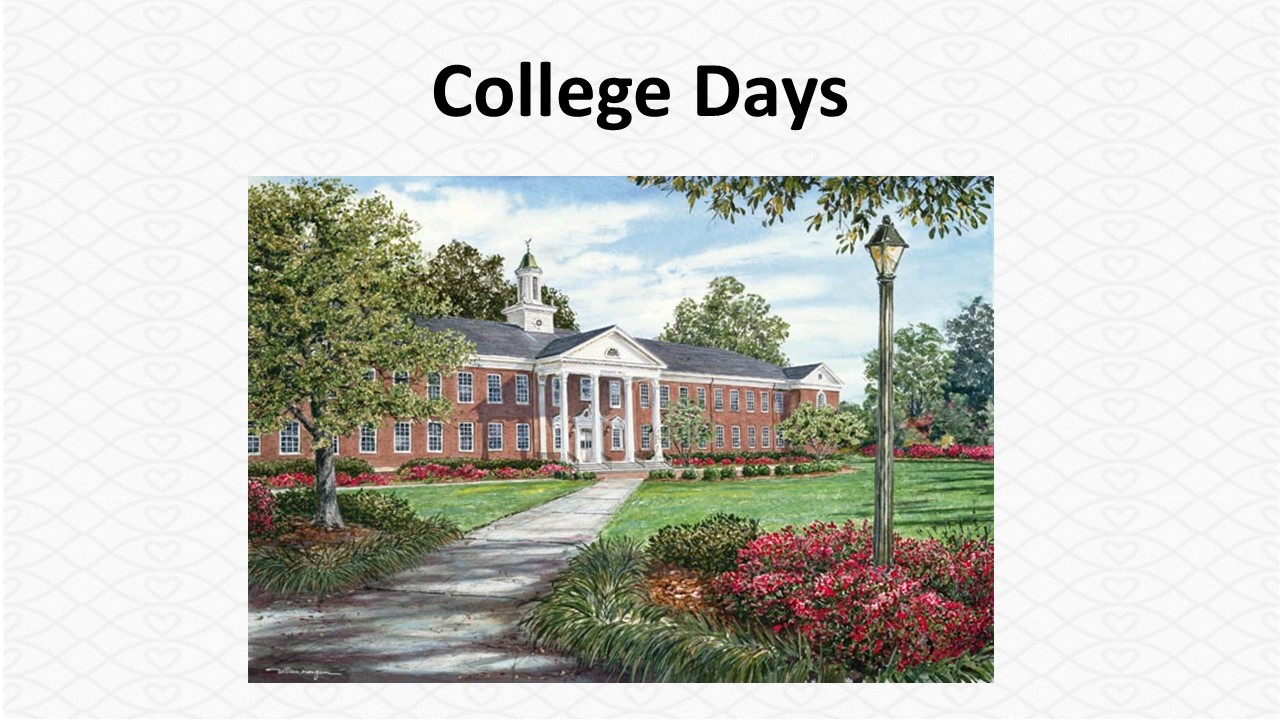 When I was in college I lived in a garage apartment about a mile off campus. It was a nice place, on a side street with just a few homes and this one garage with an apartment above it. There was a porch, with stairs that ran down to the ground. The porch was large enough for a chair and a couple of potted plants. On Saturday mornings when the weather was decent and I wasn’t off paddling a river somewhere, I could be found sitting in a chair, my feet propped up on the railing, reading or just pondering while I had my morning coffee. It was the good life. I enjoyed birds flying by and singing in the trees. It was a dead-end street, so traffic didn’t bother me. It was also a safe neighborhood as the Chief of Police lived at the end of the road.
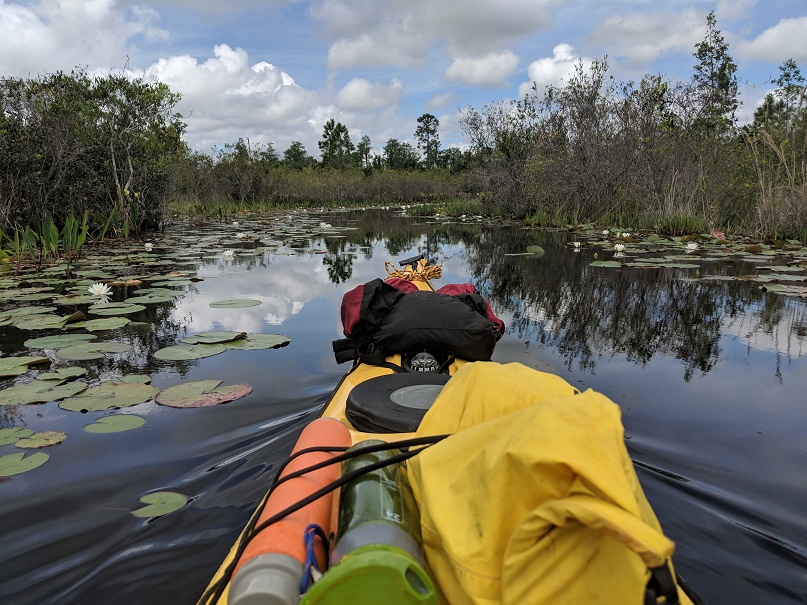
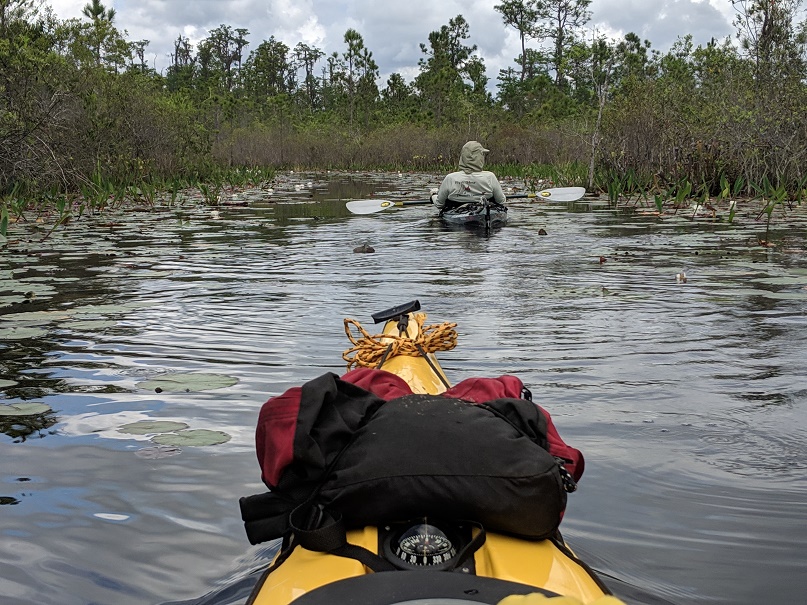
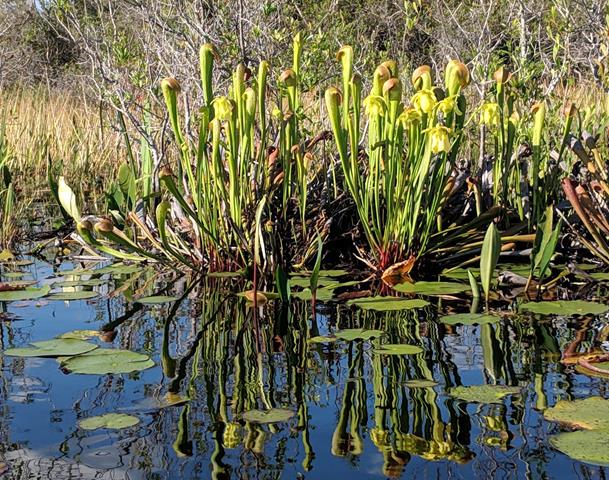
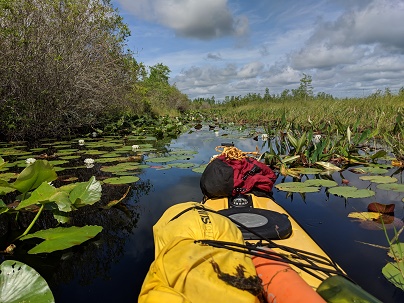
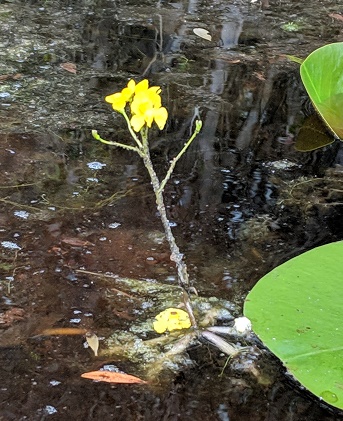 It’s good that we didn’t explore because after the turn-off to Double Lakes, the trail becomes more difficult. In places, lily pads and other weeds fill the channel and often seem to grab and hold on to your paddle. It’s a workout, but we keep paddling. The lily pads include the elegant blooming white lotus plants and some of the more bland yellow blooms. Along the sides of the path, where it is open, are hooded pitcher plants, purple swamp irises and pickerel weed with its purple torch-like flowers. At places, bladderworts, odd flowering plants that grow in water, are seen. Like the pitcher plants, they too are carnivorous. With so many insect eating plants, you’d think bugs wouldn’t be a problem. The abundance of these plants are an indication of the poor soil, so they have evolved to obtain nutrients from other sources. And there seems to be plenty of mosquitoes and biting flies to feed these plants, as we’ll later experience.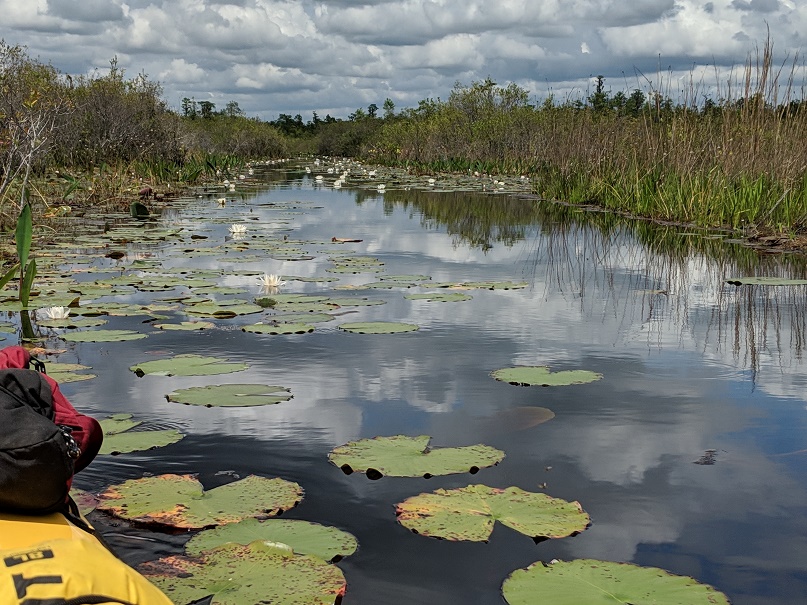
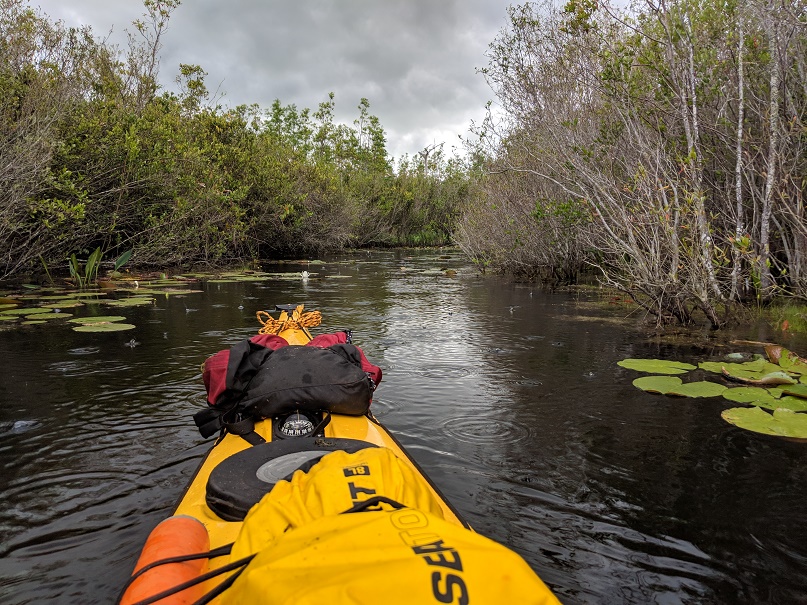
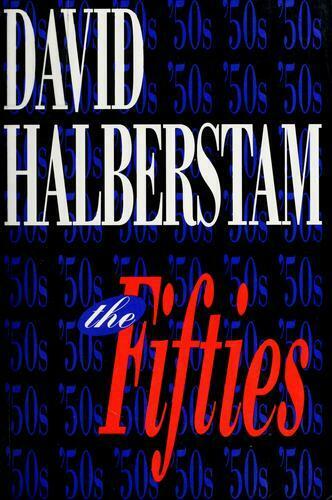 David Halberstam, The Fifties (1993, New York: Ballantine Books, 1994), 800 pages including index’s and notes, plus 32 pages of black and white prints.
 Jeff Garrison
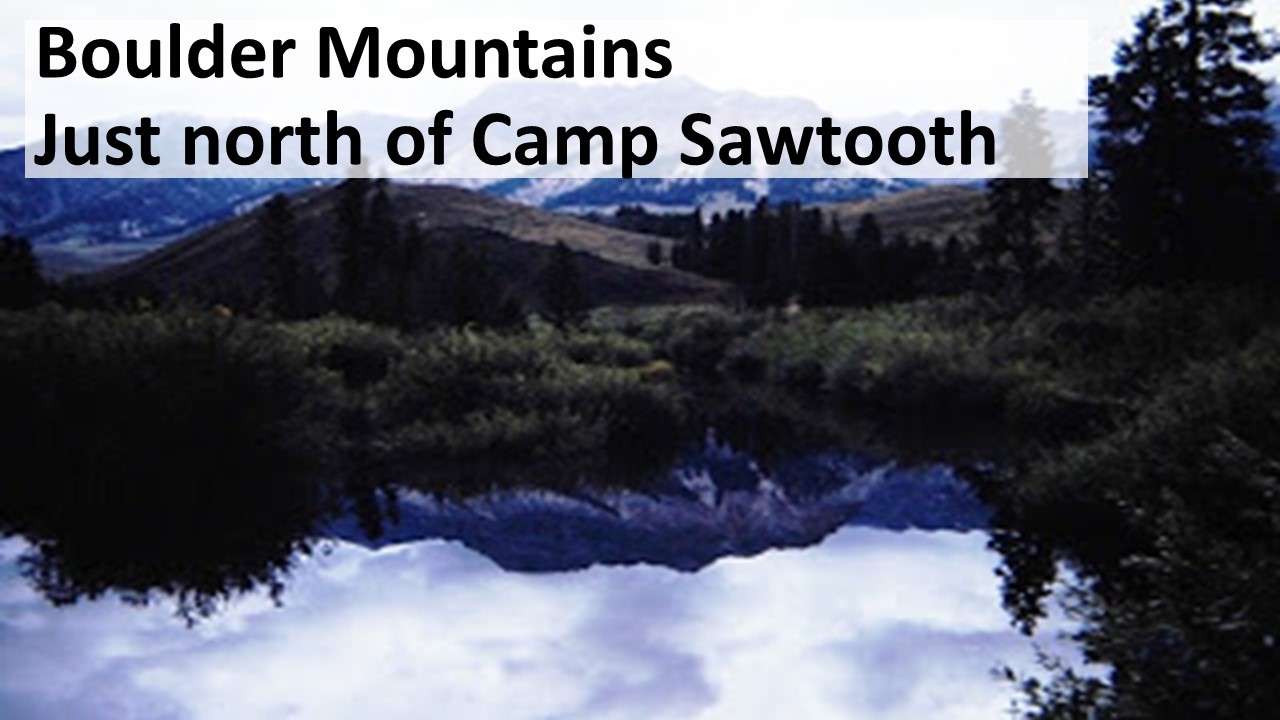
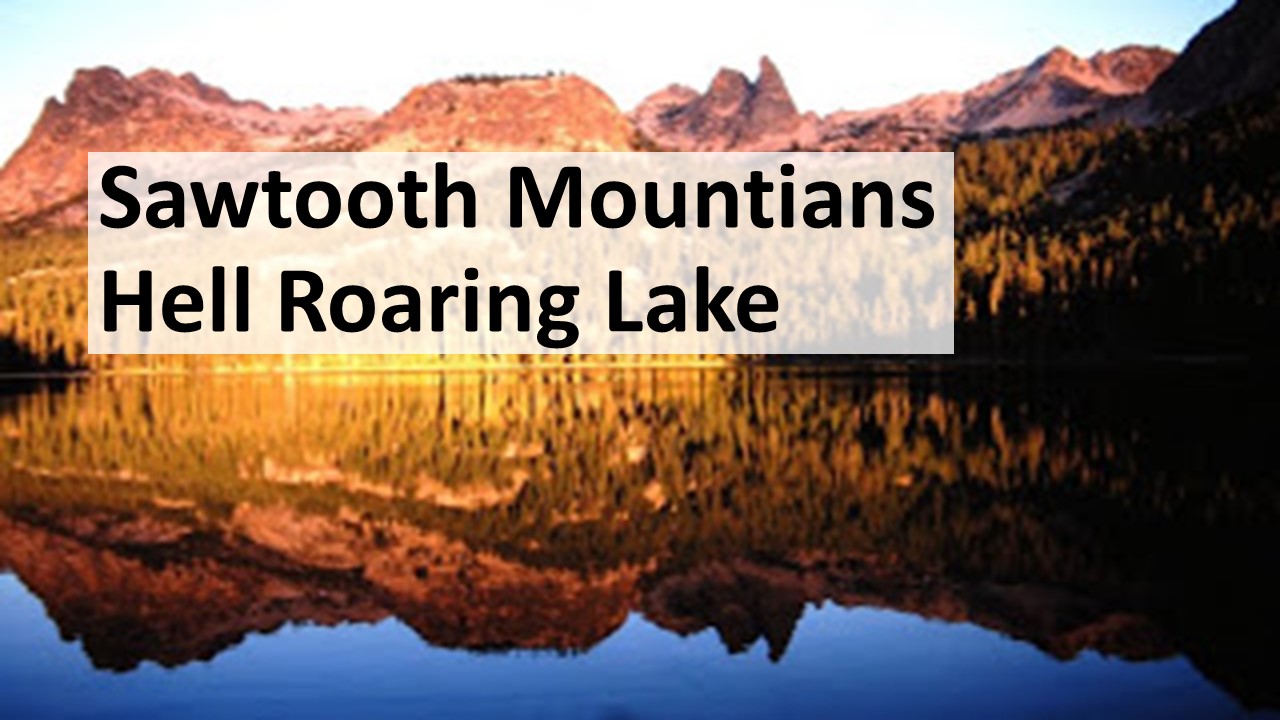 I woke up at 6 AM to the sounds of the Star Spangled Banner blaring from the radio. It was the day after Labor Day, 1988. KECH with its whopping 58 watts of amplification began the day’s broadcast up and down the Wood River Valley. The station was off air between midnight and 6 AM, so instead of setting an alarm clock, I just left the radio on at night. I went to sleep to music and woke feeling patriotic. I had become accustomed to getting up in this manner during the summer at Camp Sawtooth in the Boulder Mountains of Idaho. As the music played I’d wash up, brush my teeth, dress, and head down to the dining hall where I’d build a fire to ward off the morning chill. Throughout the summer, when I came into the dining hall, the cooks would already be in the kitchen, fixing breakfast. The smell of coffee perking and bacon frying would fill the air. It had been a near perfect summer. But this morning was different.
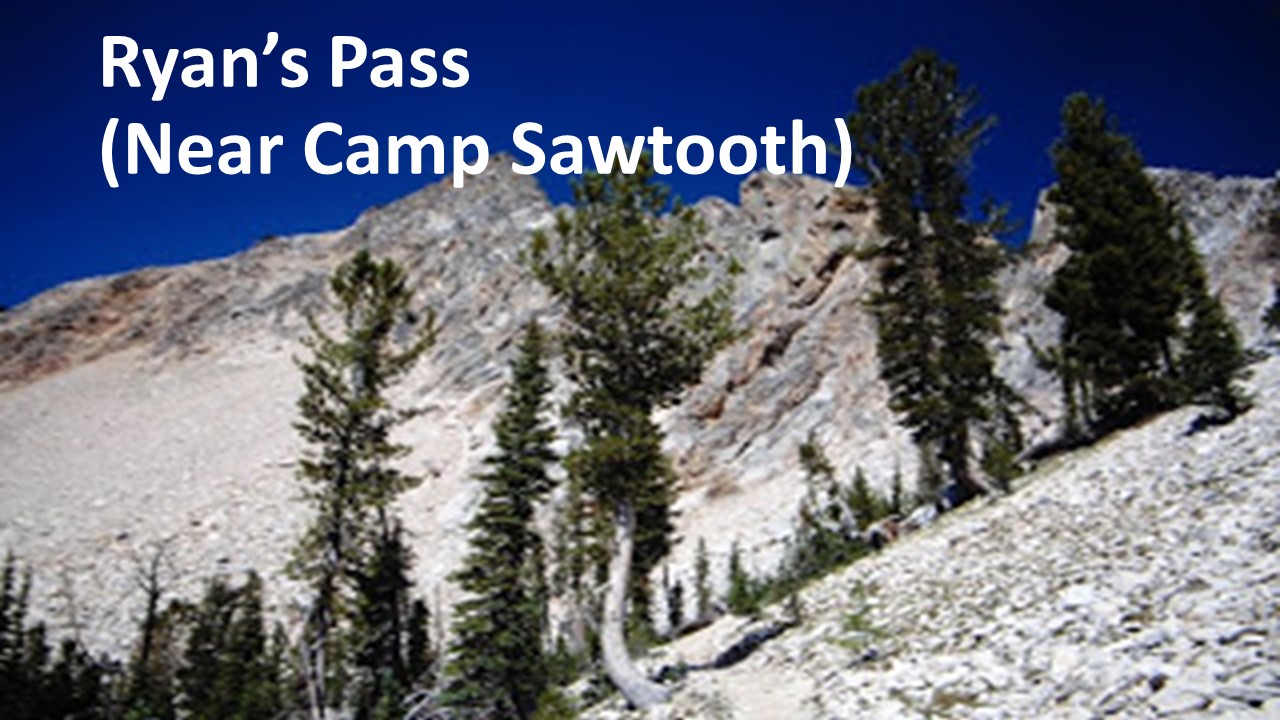 I dreaded getting out of bed. The cooks were gone for the season. I had to fix my own coffee. Yesterday, the last weekend group for the summer had left and camp became eerily silent. If you have ever worked at camp for a summer, you’ll know the feeling I’m expressing. There were only three of us left in that canyon, and we’d all be heading out after lunch. The morning would be busy draining pipes and closing up the camp for winter. When it came time to leave, we’d lock the buildings and gates and our summer in the valley under the tall lodgepole pines between even taller mountains would be over.
 After listening to the news and the weather (it was below freezing in the mountains, but would warm up and be another sunny day in paradise) I reluctantly crawled out of bed. I made coffee for Jack and Evelyn, our caretaker and his wife. I laid a fire in the wood stove one final time.
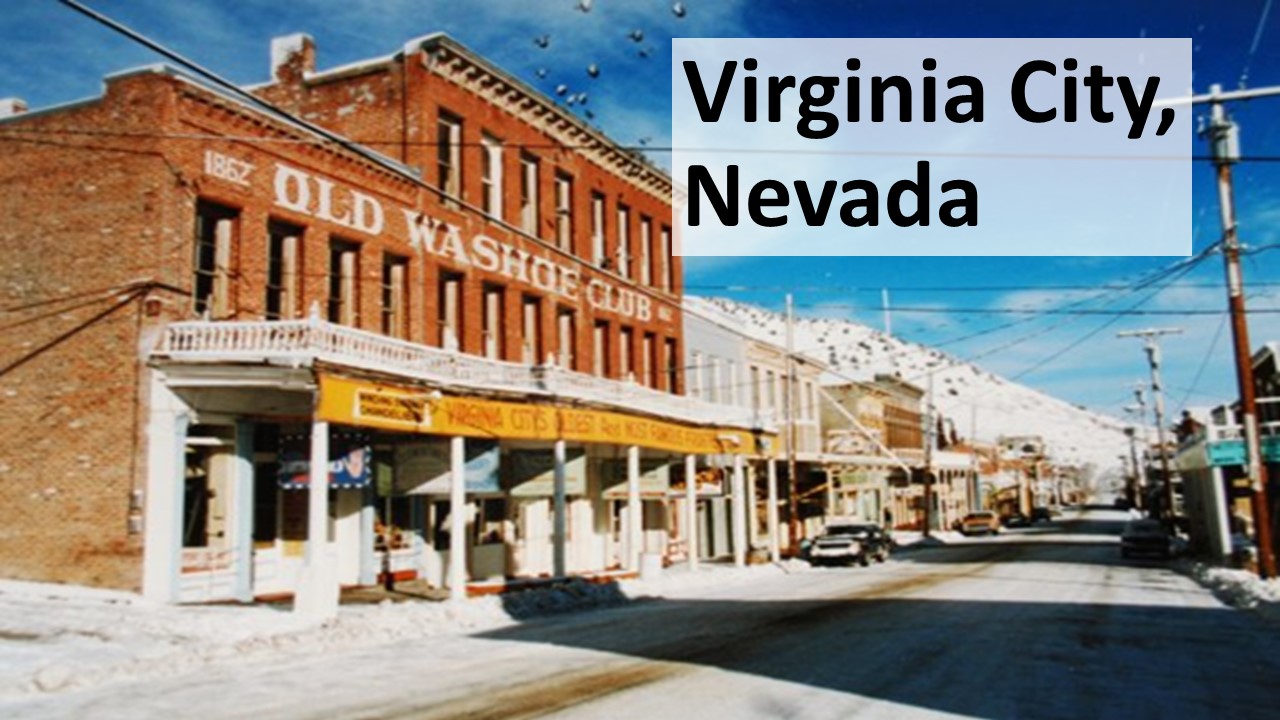 Furthermore, Storey County, in which Virginia City sits, had legalized prostitution, a troublesome idea that made me wonder how I’d relate as a pastor, a public representative of God. Finally, even the drive to Virginia City seemed daunting. Much of it was on two-lane roads through mountainous deserts. The last leg included the infamous forty-mile desert where there isn’t a drop of water to be found. I’d just read a book on this stretch the pioneers dreaded and even though I’d be flying through that part of the trip at freeway speeds, there was something about going through this desert that made me nervous. It didn’t get any better the next morning, when I stopped in Lovelock at the edge of this desert and noticed one of my tires going flat. I took it to a shop and sure enough there was a nail in the rubber. It was good I found it when I did; however, it seemed a bad omen. Have you ever been there where you just dreaded what’s next?
 We have a God who loves to surprise us. Ours is a God who invites those at the back of the line to come to the front. He’s a God of love who’s willing to forgive and to allow us a chance to start afresh. He’s a God of protection and refuses to abandon us. He’s a God of glory who shares his majesty through the beauty of a sunrise or a rainbow after a thunderstorm. God can take what we dread and provide a memorable experience. And the resurrection is the ultimate example.
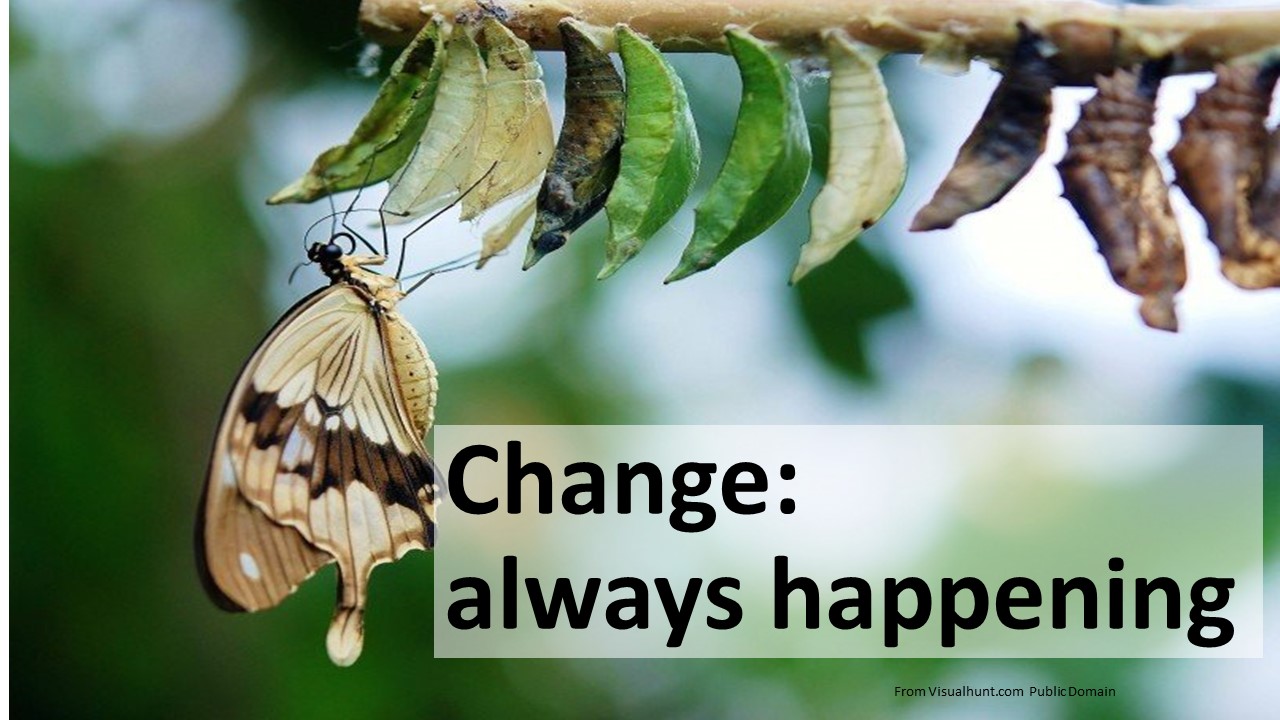 We all dread death, don’t we, but our hope is in the resurrection, which can only be experienced after death. In the resurrection, God reverses our fortune and we’re changed from dead to eternal. Just don’t ask me how. It’s just God’s way. But before I go to what Paul has to say, I should note that such dread of change can be an issue in all areas of our lives. We even find ourselves having such feelings in the church. As people, it seems we like to resist change even though it’s the only thing certain in life… Yet, we’re always nervous about the future. This shows our lack of trust in others (which can be expected, for we’ve all been let down at one time or another). But it also displays a lack of trust in God. We seem to forget that God has things under control; it’s not really up to us.
 As I said before reading this passage, Paul begins asking what probably had been a follow-up question by those who were denying the resurrection. “Just how are the dead raised, Paul? What kind of body will they have?” Paul doesn’t mince his words here and replies with a passionate response, “Fool.” You can’t be much more emphatic than that! He continues by noting what is planted as a seed has to “in essence” die (as it’s buried in the earth) in order to come to life as a new plant. He also notes there are different kinds of flesh and different kinds of bodies as he points to other animals and even to the heavens… We live in a wonderfully unique world.
 Next, Paul returns to the topic he’d brought up earlier in the chapter: Adam and Jesus. Adam is the man of dust. God created him as God created us. If there was any question about Christians believing in reincarnation, Paul negates such ideas here when he insists there is no spiritual beginning for us. This idea was no doubt prevalent in Corinth as it is found in Platonic thought. At the end of Plato’s classic work, The Republic, he describes how spirits leave one world to be born in this world.
 But there is one who transcends the dust, the one who in Revelation is known as “the alpha and the omega, the first and the last, who is and who was and who is to come.”
 As followers of Jesus, we shouldn’t spend too much time fretting and worrying about the future. “Don’t worry about tomorrow,” Jesus tells us.
 Jeff Garrison
  The Sermon on the Mount begins in the fifth chapter of the Gospel of Matthew and continues for three chapters. We’re told Jesus is on a hill and the disciples and other followers have gathered around him. He begins teaching with a series of nine beatitudes: blessed are the poor in spirit, the meek, the peacemakers, and so on. Then, there’s a bridge between the beatitudes and the commands that fill out his sermon. This is the “you are” section, from which we will read today. There are two “you ares”: salt and light. I should also note that the “you” here is plural. Jesus is saying, “You folks,” or as we say down here, “y’all.” Y’all are the salt and the light. This isn’t only for individuals. This is a community task, it’s the role of the church, as we’ll see.
 What does it mean today to be a light to the world? And what did this mean to those in the first century?
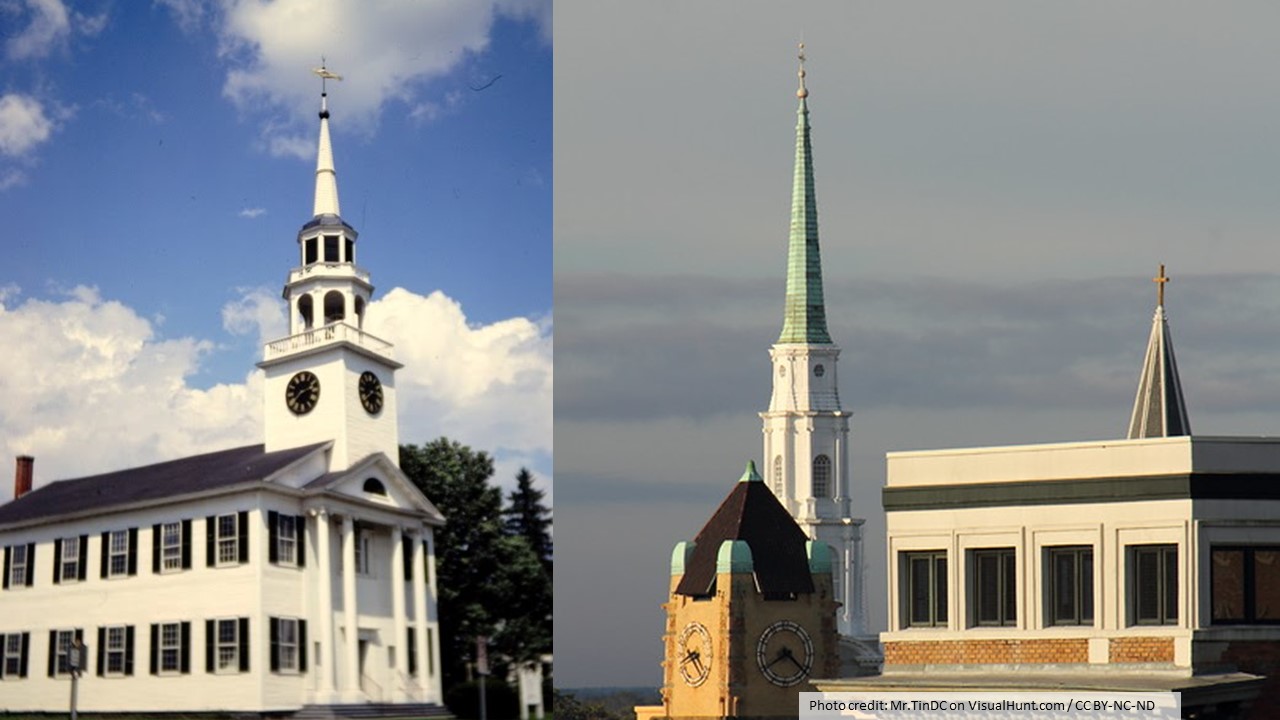 The Koreans borrowed this idea from the West. In the old villages in Europe, a church and its steeple was the center of town. You could see the steeple from far off. In America, we adopted such ideas. Consider a New England village with the tall steeple in the middle. Or look at the downtown Savannah skyline, with large steeples rising high over the trees, providing visibility and, in many cases, a maintenance nightmare. The purpose is to keep everyone mindful of the church as the center of our lives, where together we focus and praise God. Jesus talks of a city built on a hill that can’t be hidden, so if you build a city in a valley, you put up a steeple to make it more visible.
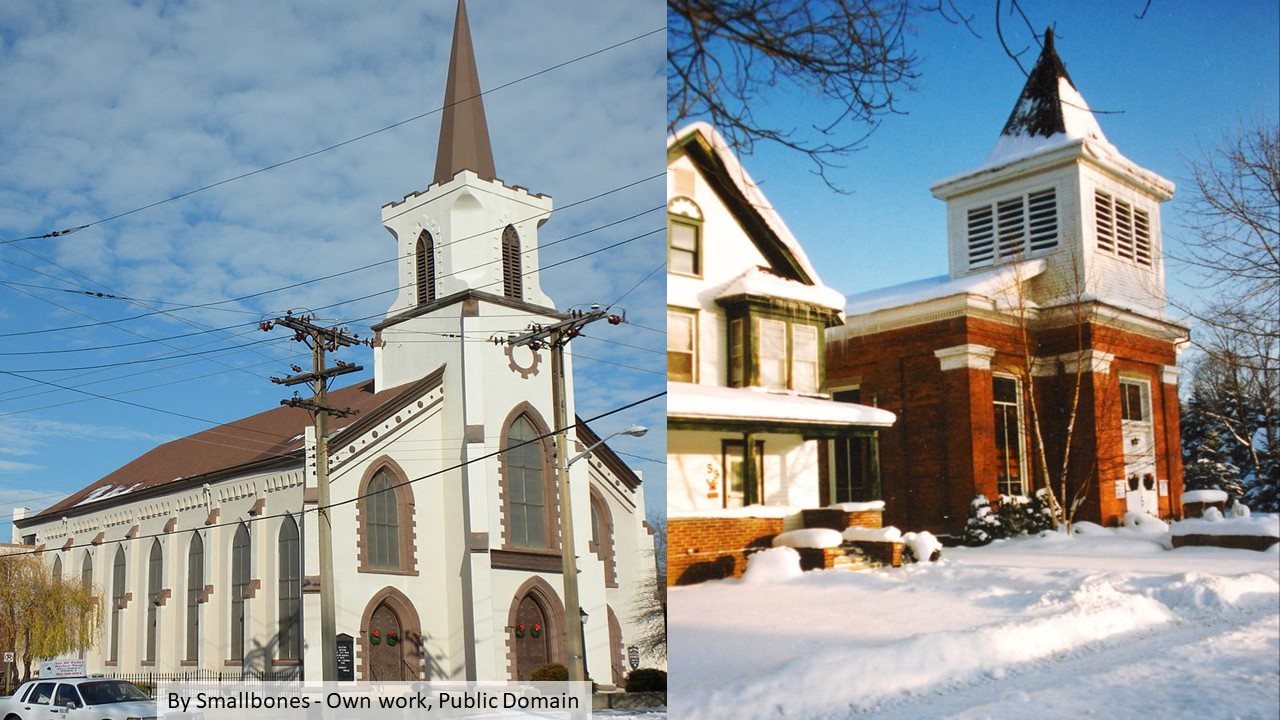 I’ve told you before about our family’s exile from North Carolina when I was 6 years old and how I spent the first three years of school in Virginia. I still remember one of the churches we attended there—Second Presbyterian Church in Petersburg. It was an old church in the downtown area that had endured much. During the Civil War, its tall steeple was hit by a Union canon ball.
 As I pointed out, Jesus is making a transition from the blessings he’s offered to the more instructional part of the sermon. I encourage you to read these entire three chapters to see what’s happening. In a way, he’s giving this humble and struggling collection of people a great compliment. They are to be his light in the world. God chooses the marginal. The poor and the powerless are instilled with an important mission. Jesus, the light of the world, takes such a motley group and sets them off on an important assignment. Through our good deeds (we’re a part of this group), others watch and hopefully are impressed and seek out God. They, and we, are not to do good works to be praised, but so that our heavenly Father will be praised.
 Note this: Jesus makes a point to say, “your heavenly Father.”
 In our Old Testament reading, we hear the story of the “fall.” In the story of the Adam and Eve eating the forbidden fruit. It wasn’t that they picked a bad piece of fruit, it was that they were trying to be like God as they disobeyed a direct command from the Almighty. Much of our knowledge is morally neutral. It becomes problematic only when we use it in the wrong manner or for the wrong reasons, such as playing God. Technology is full of examples. Nuclear energy can be used to treat cancer and produce power and it can be used to blow the planet up. The same can be said for the internet. It’s a great tool for research, but we can also spread untruths and confusion. And social media, it’s a great tool to connect with others, but we can also use it to spread gossip. We can use these tools to be a light to the world or, as there’s always a downside, to cast darkness.
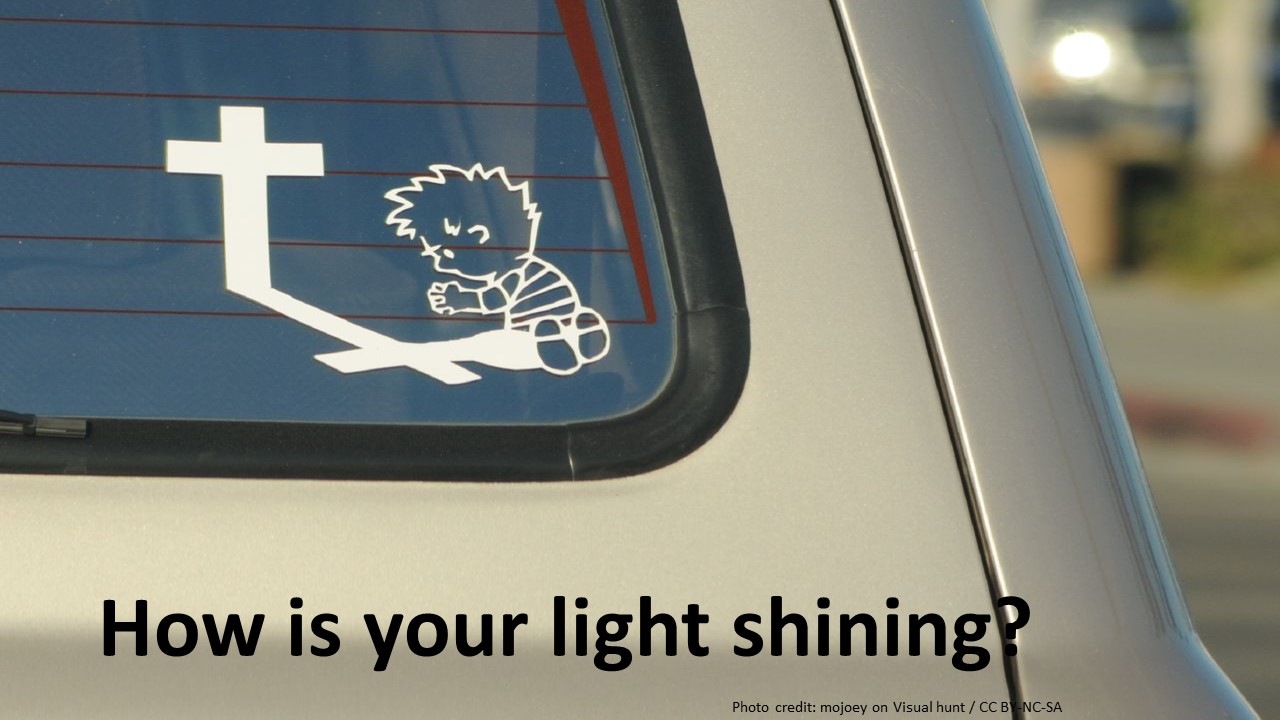 You don’t won’t to like the guy who was pulled over, arrested, and hauled off to jail for stealing a car. He protested continually. After an hour of checking his story, the police apologized. “I couldn’t believe it was your car,” the officer said. “You have all these bumper stickers about loving Jesus and following you to church. After you gave the finger, shouted obscenities, and laid on your horn at the driver who was obviously lost, I just assumed you had stolen the vehicle.”
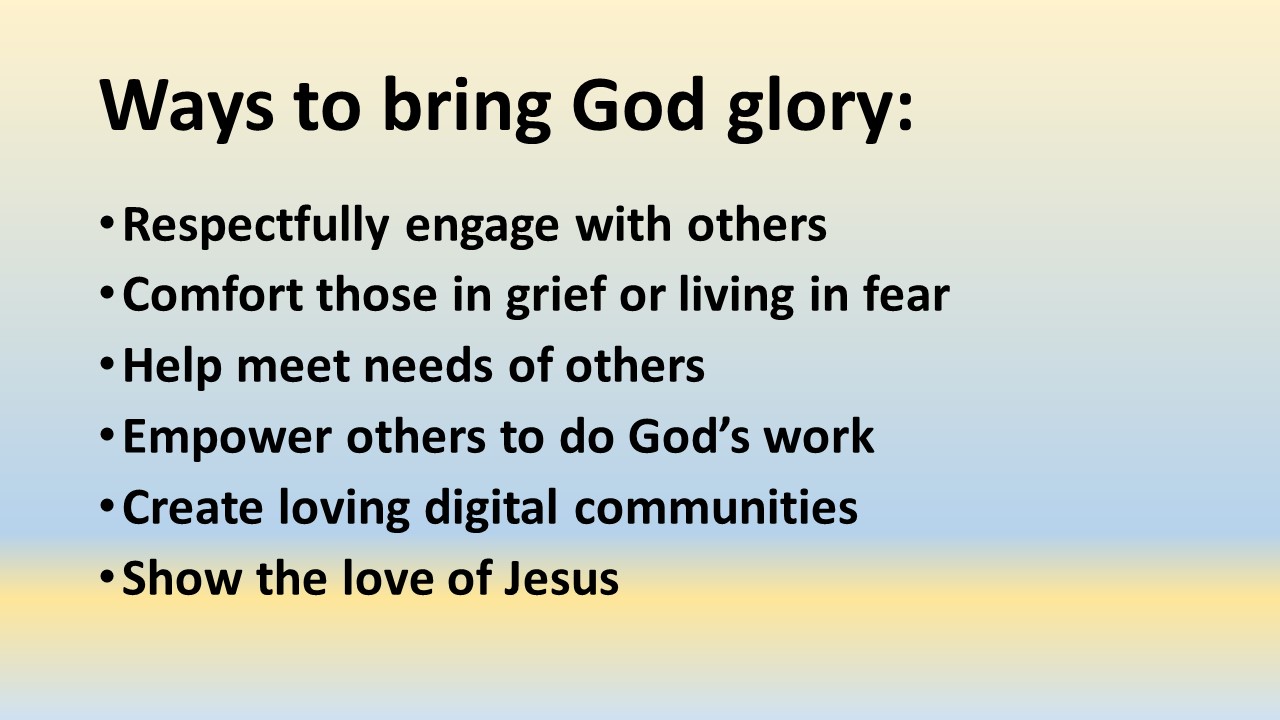 As the church enters the technological world in which we live, I also encourage you, if you use such technologies, to do so in a way that will help further our light in the world. Online, we Christians can respectfully answer questions about our faith, we can offer comfort to those who grieve or live in fear, we can help meet the needs of others, we can help empower others to further God’s work, we can help create loving digital communities, and show the love of Jesus in a compelling ways.
 Just “liking” or “sharing” posts about our church helps us share our message with others. Don’t let this new world scare you. And there’s more you can do. Help a neighbor who is homebound reconnect with church through our streaming services. Feel free to share a gleaming you gathered from a sermon, or tell of your feelings of a piece of scripture, or how a hymn or choir anthem spoke to you. But whatever you do, do it in a way that will bring a smile to Jesus’ face and help us reflect his face in a positive way to the world. Remember, as we heard in the chancel drama, Jesus has no online presence, but yours. No blog, no Facebook page, but yours.