
Jeff Garrison
Skidaway Island Presbyterian Church
Luke 14:7-14
September 1, 2019
The fourteenth chapter of Luke’s gospel opens with Jesus attending a dinner party at the home of a leading Pharisee. It’s the Sabbath, so it’s a special gathering with food that had been prepared earlier. As the sun sets and the Sabbath begins, Jews put on their finest robes and light their best candles. The Sabbath is important; one Jewish scholar describes the whole week as a pilgrimage to the Sabbath which is a foretaste of the eternal Sabbath.[1] But, as we know, there was a lot of debate in Jesus’ day over the meaning and purpose of the Sabbath. Jesus taught that the Sabbath is created for us, not us for the Sabbath, as some taught.[2]
Luke creates tension by telling us in verse two that all the eyes are on Jesus. There’s a man suffering from dropsy, an illness swells the body with water. Today, it might be called “Congestive Heart Failure.[3] He’s right in front of Jesus. Is Jesus being set up? Jesus asks the gathered crowd if it’s right to cure on the Sabbath. He receives no answer, so he cures the man. The he justifies his actions by asking them if they would intervene if they had an ox or a child fall into a well on the Sabbath. The crowd remains quiet.
This dinner party must have been the quietest on record. Normally, as everyone gathers, people mingle around with cocktails and greet one another. There’s a lot of talking. People offer their opinions about the day’s ballgame or the hurricane offshore or the Treasury’s inverted yield curve. But that doesn’t seem to be the case here. Everyone is quiet, so Jesus takes the stage and teaches with a series of parables. Today, we’re going to look at the first parable. Read Luke 14:7-14.
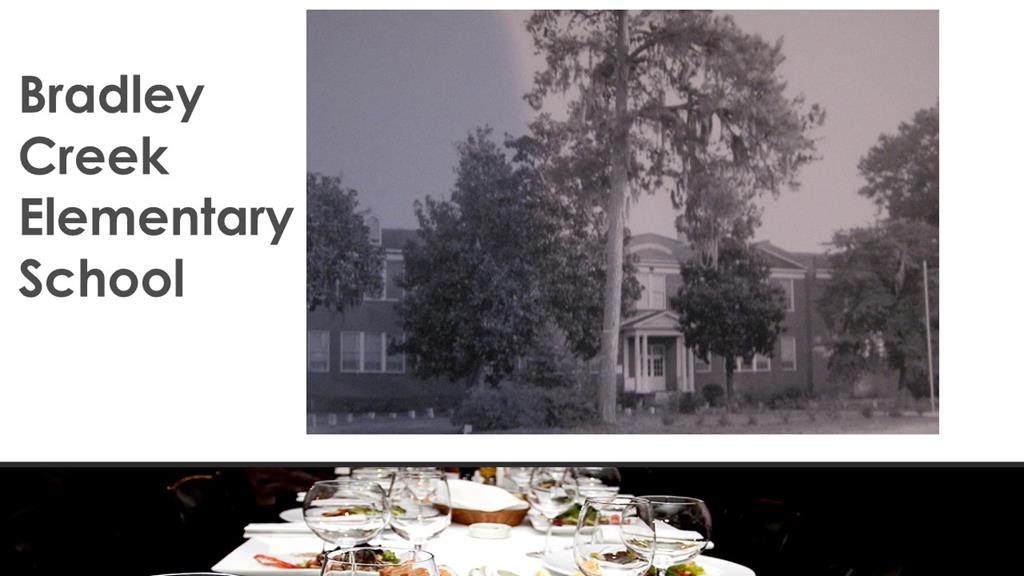 At the end of the sixth grade at Bradley Creek Elementary School, there was a graduation banquet. It was held in the evening, which made it special, and in the cafeteria, which wasn’t so special. I’m sure we had macaroni and cheese. We always had mac and cheese. There must have been a rule that you couldn’t open the cafeteria without mac and cheese. But this was a special meal, so maybe there was a slice of ham or a piece of chicken and a piece of cake that was larger than the one inch cubes they fed us at lunch.
While I don’t remember exactly what we ate, there’s another memory from that evening that haunted me for years. I assumed our parents were invited to this banquet. I encouraged my parents to come. I am not sure where I got this idea, for there no other parents there. I’m not even sure why I thought it would be a big treat for my parents to eat cafeteria food. I was embarrassed, even though they graciously slipped out. Instead of eating cafeteria mac and cheese, they went to Wrightsville Beach for a seafood dinner.
Knowing the feeling of having invited someone who wasn’t invited, I understand some of what Jesus is driving at in this passage. Don’t make assumptions. It’s always better to be called up to the head table, than to be told you need to go to the back of the room. It’s simple banquet etiquette.
 In the bulletin, I titled this sermon “Humility and Hospitality.” The problem with coming up with a title a few weeks before writing a sermon is that you often have no idea where the sermon is heading. I later decided that a better title might be Banquet Etiquette. But as I continued to study and ponder, I decided to put a question mark at the end. Yes, Jesus expects us to be humble and not pretentious. Such advice will also keep us from being in an embarrassing position. Yes, on the surface, this is about etiquette. But is this what Jesus is driving? Is this Jesus’ attempt to be the Emily Post of the first century? Or is there a deeper message here?
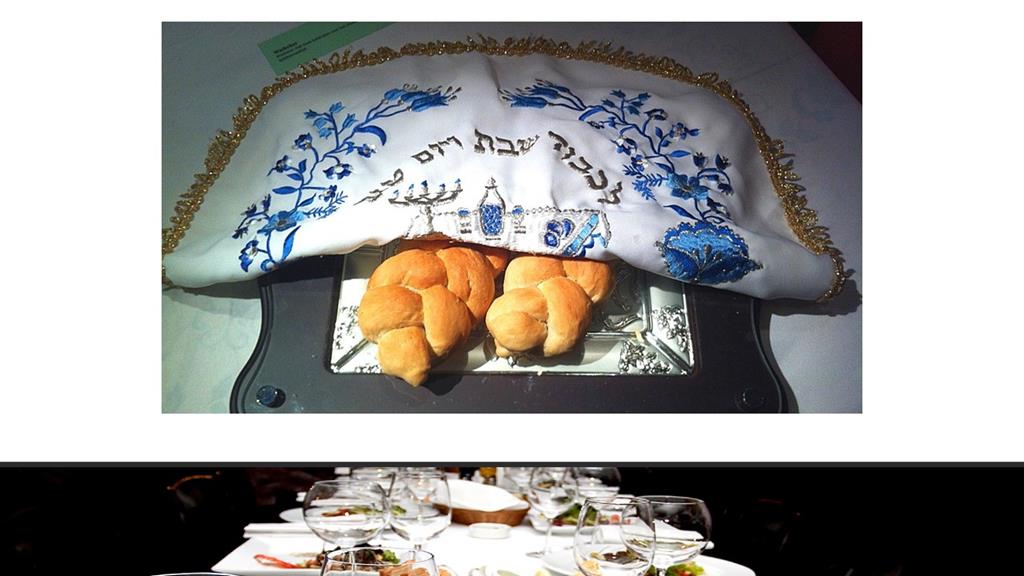 Remember what I said about the Sabbath, before reading this passage? That it was a foretaste of the eternal kingdom. And this section of Luke’s gospel is filled with parables that focus on the kingdom.[4] Parables generally operate on more than one level. They often, as Ken Bailey describes in his work on parables, contain a “play within a play.”[5] Each level has a different meaning. While the obvious meaning of our text today is about being humble and not pretentious, the deeper meaning of the parable has to do with God’s kingdom. What is Jesus envisioning here?
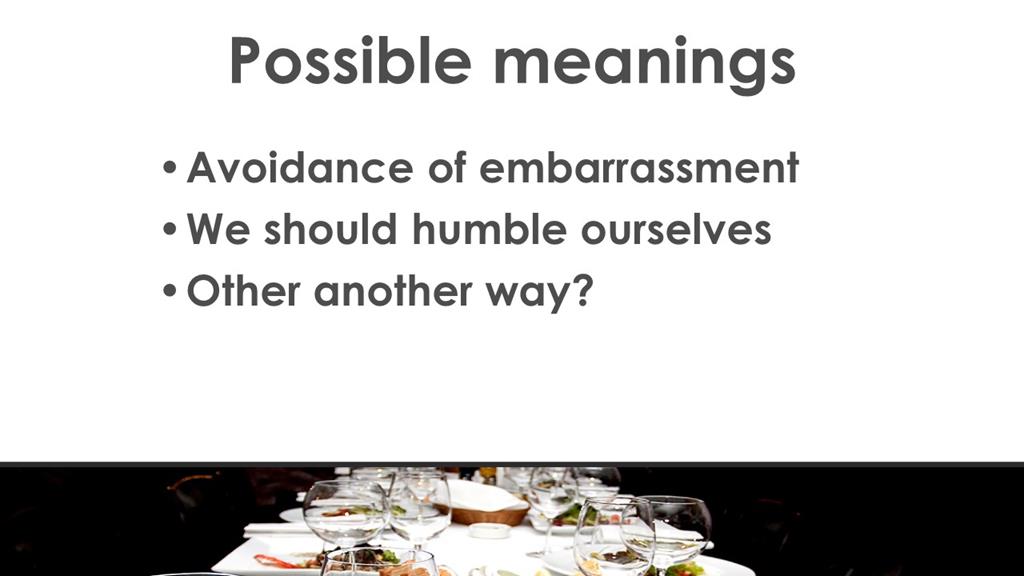 The surface meaning may have to do with avoiding embarrassment. A deeper meaning might be that we should humble ourselves. One of the challenges that Jesus had was his disciples wanting to grab key positions in the coming kingdom.[6] Two of the dudes when so far as to ask their mom to intervene with Jesus on their behalf.[7] This is a deeper meaning of the parable. Don’t get caught up in all the fuss over where you’re going to be seated at the heavenly banquet (or even an earthly ones).
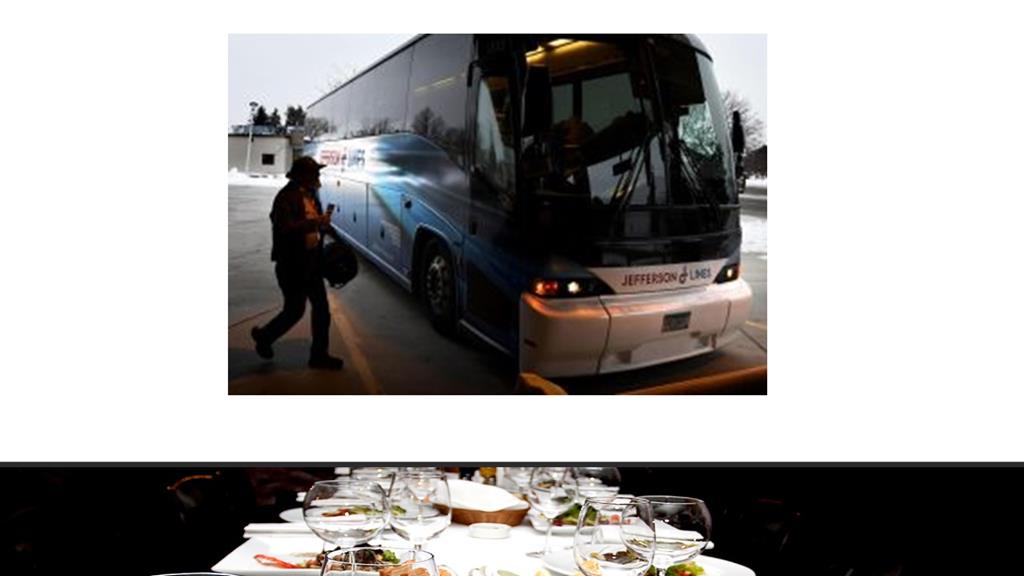 But there is another way to look at this parable, which I had not considered until I read a blog post by a pastor in Iowa earlier this week.[8] He found himself needing to get to Minnesota where his wife was at with one of their cars that he needed to drive back to Iowa. He took the bus, which meant leaving Des Moines at 5 AM. Taking a bus can be an experience as most of the people on the bus are not like us. We drive or fly. I know what he means by taking a bus because 25 years ago, Donna and I had taken the train out west. It was a summer with a lot of floods and since train tracks are often right by rivers, they were flooded. Coming back, we ended up being on a bus for part of our journey. On this trip, from Iowa to Minnesota, the blogger realized the blessings that can come for being among those who were not like him—those with darker skin, many of whom spoke Spanish. Blessings can be experienced even when sitting at the back of any banquet.
 Instead of Jesus wanting us to show humility in the hopes that we might be called up to the head table (as you could read this passage), maybe Jesus is telling us to meet others where we find ourselves. Show hospitality to those less fortunate. If our only goal was to sit at the head table, we could easily display false humility to gain such a blessing. [9] Image a Monty Python skit where everyone is trying to outdo one another in humility in order to be seen as most humble just so they could be exalted.
 But Jesus wants us to long for the kingdom, which isn’t going to be made up of exclusively of those who look, and act like us. Jesus’ vision is for a world where believers cherish their friendship and fellowship with all people. It’s about us showing goodness to those who have no way to repay us for what we can do for them. Ponder what this kind of world might look like.
 You know, none of us know what this week will bring as Dorian churns up the waters. When Hurricane Matthew hit in 2016, I spent a few days in Dublin, GA. There’s a great hot dog shop there, not far from the courthouse, where I found myself drawn at lunchtime. There were the regulars, but there was also those of us in exile: from Savannah, from Hilton Head, from Brunswick and Saint Simons. The place was packed. Friendships were made as we were forced to share tables. Stories were told of shared experiences such as being in gridlock on the highway. There was a lot laughter. I image that’s how the kingdom will be. So, if we evacuate this week, and you find yourself in a strange land for a few days, don’t see it as a burden. Instead, take it as an opportunity to sample the kingdom. That’s what Jesus would have you do. Let us pray:
God of the wind and waves, the earth and the sky, we know of Jesus calming the storm. Calm our hearts as Dorian approaches and keep us safe. We pray for the people in the northern Bahamas, who are experiencing the worst of a natural disaster. Be with them, and with us. Where ever we find ourselves, whether we are at the head table or in the back corner, help us to be the people who show kindness. Amen.
©2019
[1] Abraham Joshua Heschel, The Sabbath (1951, New York: Farrar, Staus, & Giroux, 1979), 90-91.
[2] Mark 2:27. See also Luke 6:1-5.
[3] https://www.medicinenet.com/script/main/art.asp?articlekey=13311
[4] In Luke 13, Jesus tells two parables of the kingdom (verses 18-19: Parable of the Mustard Seed, and verses 20-21, Parable of the Yeast). After this parable, he tells another parable of the great banquet, which is also about God’s coming kingdom.
[5] Kenneth El. Bailey, Through Peasant Eyes, (Grand Rapids, MI: Eerdmans, 1980), xiii.
[6] I. Howard Marshall, New International Greek Testament Commentary: Commentary on Luke (Grand Rapids, MI: Eerdmans, 1981), 581.
[7] Matthew 20:20.
[8] https://blog.reformedjournal.com/2019/08/27/my-bus-ride/?utm_source=Email+Subscribers&utm_campaign=ef7c65f61a-RSS_EMAIL_CAMPAIGN&utm_medium=email&utm_term=0_6195eefb80-ef7c65f61a-111355499
[9] See Fred B. Craddock, Luke (Louisville, KY: JKP, 1990), 176-177. Craddock reminds his readers that the word in the New Testament that’s translated as hospitality literally means “love of a stranger.” Hospitality isn’t just rolling out the red carpet for important guests but welcoming those who may be on the margin.
 Zach Powers, First Cosmic Velocity (New York: Putman, 2019), 340 pages.
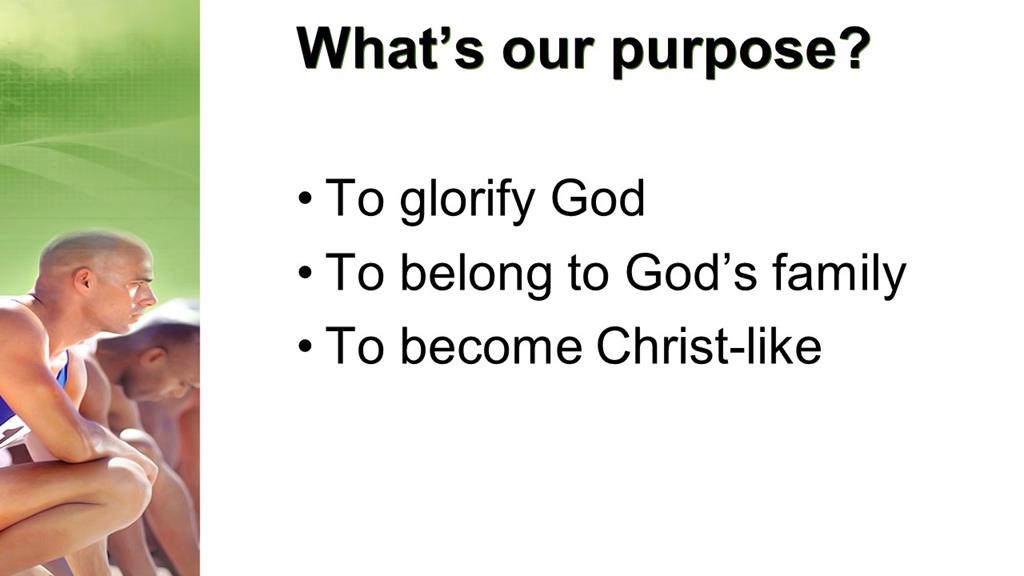 Why do we exist? What is our purpose in life? The Westminster Confession says we’re to enjoy and glorify God. That’s succinct. In Rick Warren’s best seller, The Purpose Driven Life, he expands this into five purposes. First, we are to love God. God wants us to open our lives up so that we might experience and be overwhelmed by divine love and in turn we might show our love to God. We call this worship. Our second purpose is that we’re created to belong to God’s family, which we know as the church. Within this new family, we are to be nurtured and to mature. This morning, I want us to consider our third purpose: to become like God’s Son. A big word for this is sanctification. We’re to become Christ-like. The fourth and fifth purposes are that we’re shaped to serve God and are made for a God-given mission.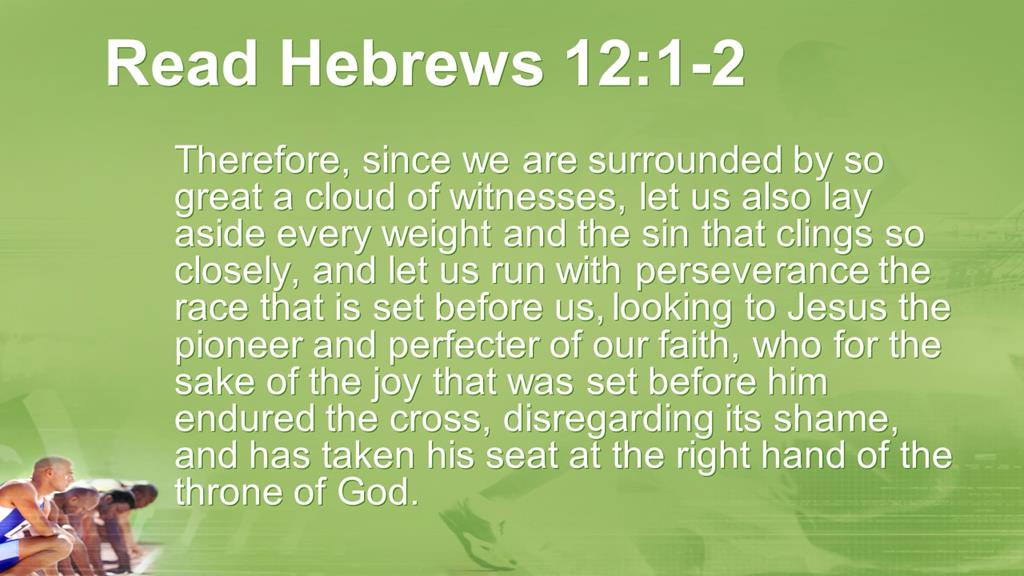
 Last weekend, Donna and I were in Cumberland Gap, a significant place in American history even through it is mostly overlooked these days. This gap was the easiest place for settlers from the Carolinas to Southern Pennsylvania to make their way across the Appalachian Mountains. Today, we breeze through those mountains on engineered roads, but in the late 18th Century, those mountains stood like barricades, keeping people out. Then along came Daniel Boone, who built the Wilderness Road through the mountains and for the next hundred years, it was the easiest way to get into Kentucky and Tennessee and further west. It felt good to be there, riding bikes over the same terrain that Boone cut the road that began western migration. I’ve always liked Daniel Boone.
 My first lunch box had a photo of Fess Parker who played Daniel Boone in the TV show that was popular back during my childhood years. And you bet I watched it. When I was in the second grade, we had an opportunity to buy books from a flyer sent home from the school. It was fundraiser designed to raise money for the school and help get books into the hands of children. My parents allowed me to buy a book. I looked through that catalog and knew right away that the book I wanted. It was a biography, written on a child’s level, of Daniel Boone. On the day that it came, I looked through the book, but found many words I did not know so I took it to my mom, and she helped me read. One of the words that I seemed to have a hard time learning was “enemy.” I just couldn’t get it out. I had a mental block against this word and had to ask several times what the word was. Hard to imagine ever being that innocent, isn’t it?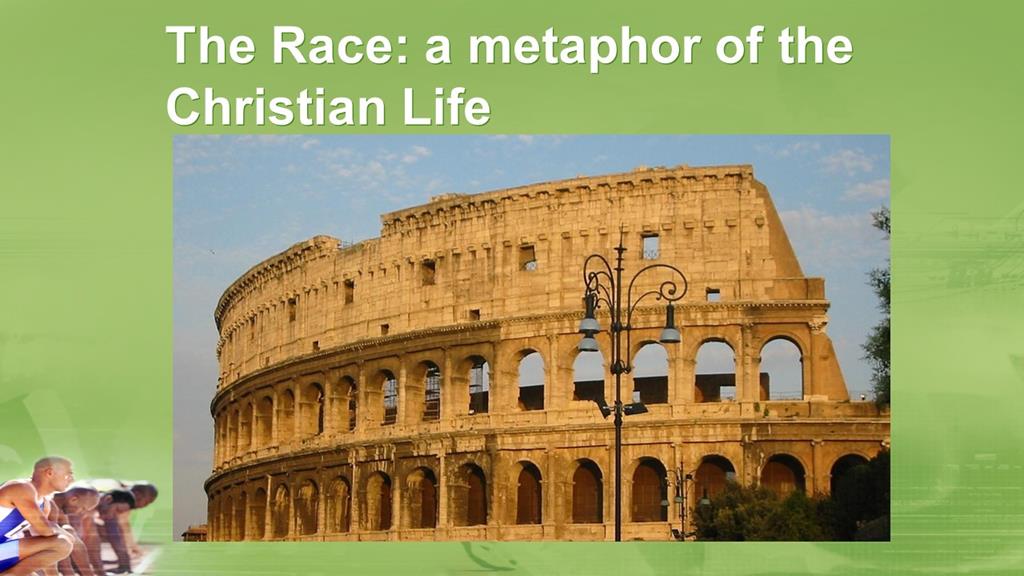

 How might we become more Christ-like? As I’ve already covered, the writer of Hebrews first suggests we strive to unburden ourselves of sin. As a runner, anything that holds us back can be a burden; so we should make sure we are not overwhelmed. We free ourselves of burdens so that we might run faster. Secondly, we’re to persevere. We are not perfect: there will be times we’ll trip, there will be times we fall, but like a good athlete, we brush ourselves off and continue. We must pace ourselves for it’s a life-long race. We don’t give up for we are after the prize. When our time here is up, we want to stand boldly before God’s throne.

 Jeff Garrison


 But how many of us truly live life without worry? I fall short of the mark. I worry about a lot of things, just like you. We worry about our loved ones, our jobs, our retirement portfolios, our safety, our health, the health of our animals (that’s a big one for most of us don’t have them insured). The list goes on and on. We worry about the economy and the violence that seems too prevalent in our society. We worry about international politics, climate change, and sea level rise. As people, we worry. But the phrase often heard throughout scripture, whenever God or a representative of God is present, is “do not be afraid.”
 As I said, our passage starts out with a wonderful promise from God about how God wants to give us good things, then it’s followed with two stories about the end of time. Our first story is based on a wedding banquet. The slaves await their master’s return so they can open the door for him and welcome him home. This is a positive parable, for those who aren’t dozing find themselves recipients of the master’s hospitality. He’s in a jolly mood after the wedding, so even though he returns in the middle of the night, the master pulls up his gown and ties it off around his waist, like a servant who needs to have freedom of movement to do his tasks. Then he has his slaves sit down and serves them dinner. This is odd behavior. The master, in the middle of the night, assuming the role of a slave in order to serve his servants. Who has ever heard of such a thing? This story, instead of encouraging us to be afraid of the Second Coming, should make us look forward to it. God wants to reward us by serving us. In scripture, the heavenly banquet is often used as a metaphor for the here-after. If we are doing God’s work when he returns (or when he calls us home), we’re promised good things.
 The second parable is about a thief coming in the night. This parable is a bit more of a threat, for we are reminded of the uncertainty of when things will happen. Jesus reminds us that if the owner of a house knew when a thief was coming, he or she would remain awake. We’d probably be sitting in a chair, with a good view of the door, with a shotgun across our lap, ready to properly greet the intruder. But since we don’t know when a thief will pay us a visit, we must take precautions. We lock the doors. We latch the windows. We safely store valuables and pay insurance premiums.
 These two parables complement each other. In one, we’re told to be awake, to be alert, for the Lord is coming. In other words, we’re told to be busy, doing God’s work. The second parable reminds us that we need to prepare ourselves for we don’t know when our Lord will return.
 Okay, you’re thinking. The church has been expectantly waiting for two millennia and Christ hasn’t yet appeared in glory. But I believe he will. Preparing for his coming is paramount. Furthermore, it doesn’t matter if we’ll be the one to see Christ come in the clouds or if we meet him on our deathbed or when we accidently step in front of a dump truck, the time will come that it will be too late. Preparation for our earthly demise is necessary. We’re to make our peace with God so we’ll be justified before the throne on the Day of Judgment. Furthermore, we’re then to use our talents to further God’s glory in the world as we strive to be more Christ-like.
 What should we take from this passage and apply to our lives today? Sure, we’re reminded, as the cliché goes, to get our ducks in order. We need to make peace with God while there is still time—before the master returns. But we also need to see there is no need to fear the second coming. The coming isn’t seen as a fearful event, but one of excited expectation, of God’s blessings!
 The first parable reminds us that we need to be ready to use what God has given us, our talents, to further the master’s work in the world. We’ve all been given talents and skills that we can use to build up the body of Christ, just as we all had different talents yesterday on the job site. Are we ready? Do we put our skills and abilities to use? Or do we sit back with the hope someone else does our part? If we chose the latter, we’re no different than the servants who played around and were not ready for the master’s return. But if we’re doing our part, then we’re promised that when Christ calls us home, we’ll find a place set for us at the table.
 Even though these passages encourage us to be alert and active, we need to keep in mind as we do the work of a disciple, we are not buying ourselves into heaven nor are we striving to get a better room in the sweet bye-an-bye. We are called, as Christians, to respond to God’s grace, not to earn it. And we respond to God’s grace by creating a life that honors God and furthers the kingdom’s work in the world. Jesus, our Lord, died for us. He was the obedient servant. Through his sacrifice, our sins are forgiven, and we are freed to go out and work on the behalf of others that they too might come to experience his love. The Christian life is about forgiveness and service. It’s also not worrying about tomorrow, trusting in God’s providence and longing to experience the joy of being in God’s presence.
 When things look tough in the world, when we struggle throughout our lives, remember the promise that God wants to give us the kingdom. Amen.
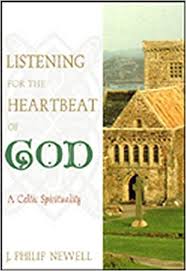 J. Philip Newell, Listening to the Heartbeat of God: A Celtic Spirituality (New York: Paulist Press, 1997), 112 pages.
 Jeff Garrison
 Did any of you get nervous as the end of a reporting terms approached when you were in school? Be honest. I certainly did. The idea of receiving a report card that had to be signed by parents was troubling, especially if I didn’t do well in a subject. It was even more troubling if I received anything less than a satisfactory mark in conduct. Personally, I never saw anything bad with my conduct, but my teachers had different expectations. It was often reflected with a “needs improvement” or “unsatisfactory” marks on my report card. I’d go home and if I only had a “needs improvement” mark would discover a few new chores. If it was an “unsatisfactory” mark, I’d find myself grounded for six weeks. Maybe Paul’s claim that freedom is not an opportunity for self-indulgence was meant for me.
 Our passage today is about the God’s expectation for our lives. Paul provides us with guidance on practical Christian living. Such a life should show the evidence of spiritual fruit that centers on love. Paul begins this section by reminding us that we have been called to be free, but we should not use our freedom for our own self-indulgence. Instead, through love, we become slaves to others. Paul speaks of love as way of looking outward, always wanting what is best for the other person. It may be idealistic, but if we all lived this way, we the world would be a better place. Are we making the world better or worse? What kind of report card would you receive?
 Paul draws a comparison between the types of work that come from our own desires and that which shows evidence of God’s Spirit working in our lives. The flesh can lead us down the wrong path, whether it is sexual immorality, idolatry, or creating discord within our communities. We’re to avoid such things, as Paul highlights in verses 16-22. Then, Paul provides a contrasting list of what the fruit of our life in the Spirit should look like: love, joy, peace, patience, kindness, generosity, faithfulness, gentleness, and self-control.
 In this series, we’re reminded of our call to use our creativity to become better disciples of Jesus. As a disciple, the end goal isn’t to convert the world (that’s God’s work), but to be witnesses which means exhibiting such characteristics in our lives. If we were to receive a report card from God, it could have these nine items listed. How would we do? Would our grades be high enough to make our parents proud?
 Before we get into the individual items, let me suggest that they are to be taken as a whole. We don’t have nine different fruits of the spirit, like you might have apples and pears, bananas and pineapples. Instead, we are to have “fruit of the spirit.”
 Now let’s look at each of these traits. Love: It’s been said that love always implies a personal investment in the object of love.”
 The second trait we should be showing is joy. This is a hard one for we tend to think about joy as the person always smiling and laughing, forgetting the truth of that old Smokey Robinson song, “The Tears of a Clown.” We think of joy when the war is over and everyone celebrates in the street or when your favorite team wins the World Series, but such joy is fleeting. Paul encourages us to have joy even in times of trouble and persecution.
 The third trait we’ll show, if we are fruitful, is peace. Again, as with joy, peace is often misunderstood. Without war is what we think peace is, but the Biblical concept is much deeper. Peace has to do with a wholeness within ourselves. It’s a state of mind that keeps us from being overwhelmed when chaos (and war) surrounds us. Peace is an outcome of knowing and trusting God.
 The next trait is patience. Again, think about how we often act. We want what we can get as soon as possible. When we want to go to the store or the club or wherever we’re going, and we are impatience when we get behind a slow driver or a driver who’s lost and looking at mailbox numbers. But as a believer, we should take a deep breath. We should realize the source of our frustration, such as the slow driver, may need a break. We don’t know what is going on in his or her life. Besides, what’s the worst that might happen? We’ll be a minute late? Give the person a break and be patient is the Christian response, but one in which many of us struggle.
 Kindness goes without saying. Again, God has shown kindness to us and calls us to show kindness and mercy to one another.
 Next comes generosity. Again, in giving His Son, God has been generous with us, and we are to therefore be generous to one another.
 Gentleness is another godly trait. Remember the parable of the forgiven servant that Jesus taught?
 Going with gentleness is self-control. Self-control implies the discipline of an athlete; a metaphor Paul uses to describe the Christian faith.
 We have witnessed God displaying all these traits that make up the “fruit of the Spirit.” Now it’s our turn to learn from life of Jesus and to show such grace to others. Doing so will make this world a better place for all God’s people. Amen.










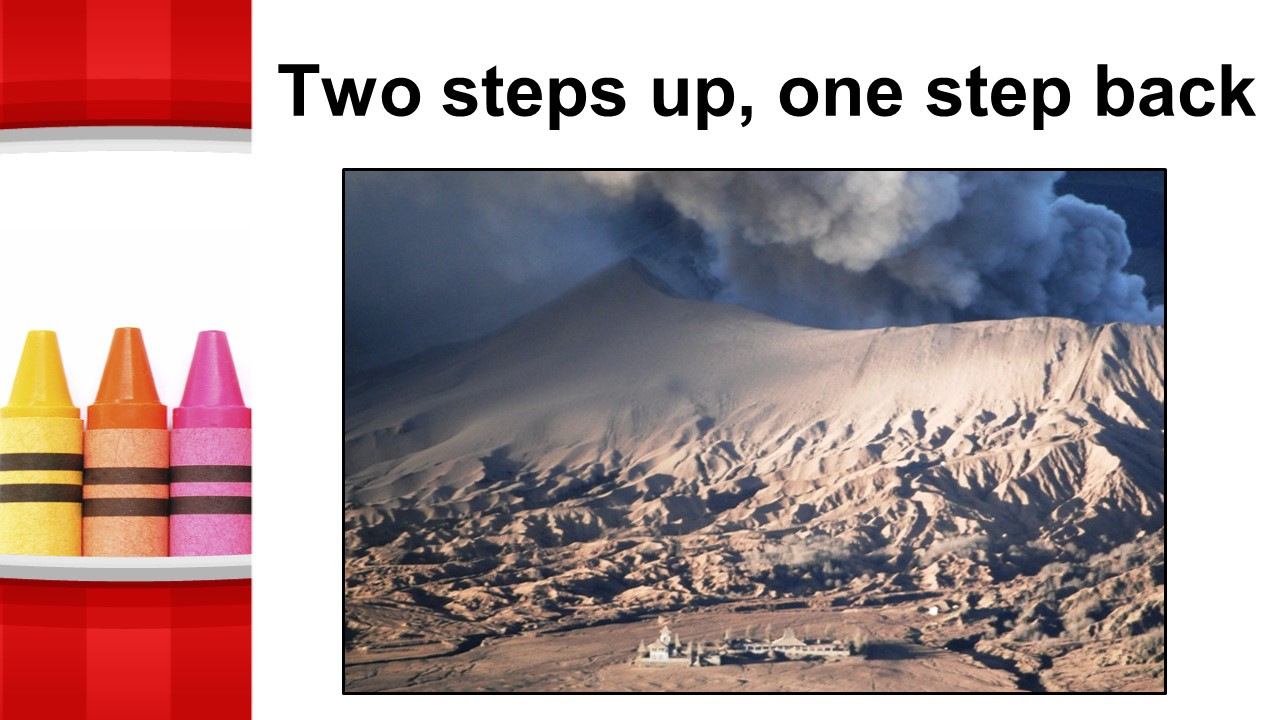 Have you ever felt like you’re taking two steps forward and one step back? Sometimes life’s that way. It’s like climbing a cinder cone volcano. The ground is made of ash and is so unstable that you literally take two steps up and then slide back. You just hope to make progress. A 700-foot climb can take forever. But isn’t that how much of life is?




 Instead of letting the world shape our thoughts and actions, we’re to renew our minds by focusing on God. In John Ortberg’s book, the me I want to be (which I believe our Serendipity class studied a few years ago), we’re reminded of the power of a habit and how our thought patterns are as habitual as brushing our teeth.
 In Colossians, Paul encourages us to focus our minds on things above, not earthly things.
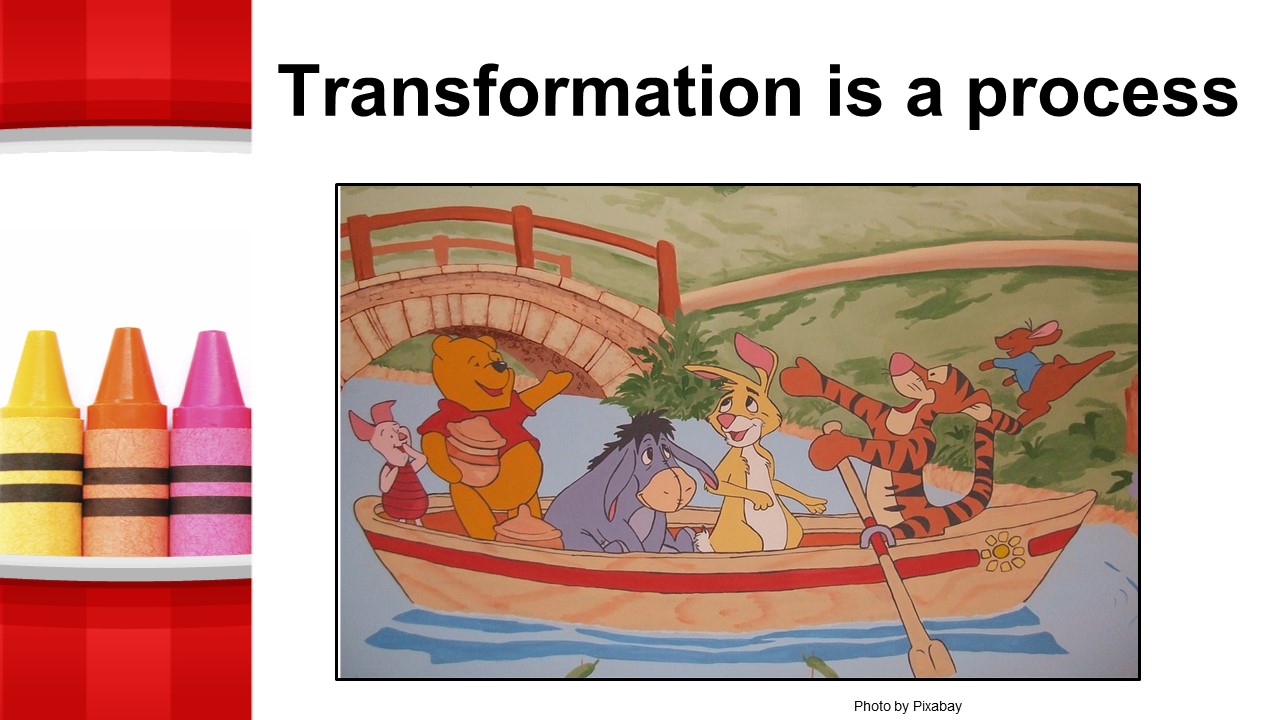 Paul isn’t suggesting here that we have an instant change, that all of a sudden go from being Eeyore to Winnie the Pooh, from being a sourpuss to the life of the party, from being depressed to hopeful. We’re to “be transformed.” Transformation implies a process. We don’t create habits overnight, so we can’t recreate new and better habits overnight.
 We need to embark on an effort to renew our minds. We need to drink deeply from the Scriptures as we read and study the Bible, individually and in groups. We need to ask God’s Spirit to guide, fill and help us learn to discern what God is doing in the world and how we can be a part of it. But we can’t just stop there. We’re not just to read the scriptures, we’re to “do something.” We practice living the life Jesus demonstrated. Unfortunately, as John Ortberg whom I quoted earlier, notes, we often debate doctrine and beliefs, tradition and interpretation, than do what Jesus said… “It’s easier to be smart than to be good.”
 We read God’s words, we learn God’s nature by discussing the Word with others, and we apply it to our lives… Read, Learn and Apply. Don’t be conformed to this world, but be transformed by the renewing of your minds so that you may discern the will of God. Amen.
 Jeff Garrison
  In her book, Sailboat Church, Joan Gray writes: “the church’s divine nature is not always easy to see. Sometimes it takes great faith to believe that the church as we know it is the body of Christ. Sin is all too evident in our midst.” Sounds depression, doesn’t it? But Gray continues, assuring us it’s God’s way as she continues: “the church was never meant to be a group of holy people who are in themselves morally superior to everyone else.”
 Let me say something that might be a bit controversial. Sin abounds within the church, within Christ’s body on earth. I used to think we should try to root it out, but I no longer do. Instead, maybe we should learn from the parable of the weeds and the wheat, and not risk rooting out the weeds less we also damage the wheat.
 I wonder what our life of faith might look like if we, instead of referring to God as love, referred to God as compassionate. Both are correct. God is love, but in the English language, the word “love” has lost much of its power. As many of you, I’m sure, know, the Greeks had several words for love, erotic love, brotherly love, and compassionate love. We only have one word for love and apply that word too many things. We can love our spouse, our children, a sport team, a car, a sunset, good ice cream, a pair of shoes, a song on the radio… The list continues.
 It’s often pointed out that “love” should be a verb. It should lead us to action toward that for which we have affection. It’s not just a static or emotional feeling, but is something that manifested itself in action for the wellbeing of the other. In that way, it’s like compassion, being moved to work for the benefit of the other. God is compassionate as shown in sending us his Son, to offer the human race a chance to free itself from the muck which keep us stuck and bogged down in sin. Those of us who have experienced this compassion from God are to show such compassion to others.
 The word compassion, in English, implies an awareness of another’s distress, with a desire to help alleviate that distress in some manner. It has a deeper theological meaning, as it is linked to God’s actions. In the New Testament, the word compassion is used to describe Jesus or, used by Jesus to refer to God. Paul is the one who makes the link between the compassion of God, as we see in revelation of God in Jesus Christ, to our own call to be compassionate.
 A modern writer defines compassion as “the knowledge that there can never really be any peace and joy for me until there is peace and joy finally for you too.”
 Paul begins this section of his letter to the Philippians with a series of “if” clauses. This repetitiveness is tricky to translate, for we often use “if” to imply a dream. “If only this was real.” “If only this had happened…” But Paul’s use of the conditional cause doesn’t demonstrate a lack of certainty. Paul uses this litany of clauses to drive home a point. “If you believe this and if it’s made a difference in your life as it has in mine, then do this!” “If you have gotten anything out of following Christ, being in his Spirit-filled community, if you have a heart or an ounce of care, then you should act in this way.” Verse one is the lead up to how we should live as disciples, which is covered in verses 2 – 5.
 I love (there’s that word again) how The Message translates verse four: “Forget yourself long enough to lend a helping hand.” Paul’s talking about compassion. And then he drives this home as he tells us to be like Christ, the compassionate one. Starting with verse sixth, Paul appears to be quoting an early church hymn about Christ and he encourages us to imitate Christ’s compassion and humility. Instead of pushing and shoving and demanding that we get our “fair-share,” we’re to be Christ-like which means we lower ourselves in order to help others. In difficult situations, humility helps de-escalate tension.
 You know, our lives tell a story. Whether we like it or not, how we live, what we care for, how we treat others, where we invest our talents and money, all combine to tell our story. As followers of Christ, our story will either compel others to check out our faith or it will repel them. If we realize this, it’s important that we strive to live in a way that will honor Jesus and show our trust in the Almighty. And that means to live compassionately. As one writer commented on this, “It’s not wise to name yourself as a Christian unless you are actually embodying the way of Messiah Jesus.”
 How might we be compassionate? We can look at the life of Jesus and live as he did? Or we might think of some of our contemporaries. Since last Sunday, we have lost a good one, a compassionate man. Jim Fendig was humble and soft spoken and concerned for others. And there are others like him within our community.