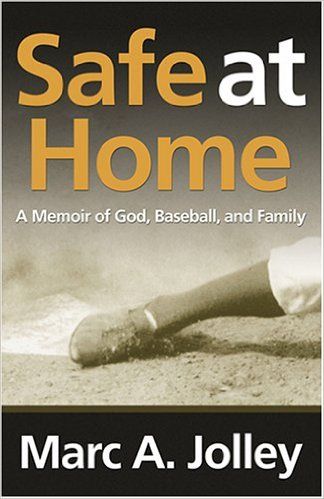

Mini-Reviews of recent books I’ve listened to on Audible

picture of five books included in this review

This are some of the books I have listened to (while walking or driving) since July:

Ben McGrath, Riverman: An American Odyssey

book cover for Riverman

narrated by Adam Verner (2022), 8 hours and 36 minutes. 

McGrath, a writer for the New Yorker, met Dick Conant through his neighbor. Conant was paddling the Hudson River and had tied up his canoe along his neighbor’s seawall. Learning that the odd canoeist, who paddled an cheap over-stuffed boat, was heading to Florida perked McGrath’s interest. He wrote a short piece on him for the New Yorker. He thought that was it until a few months later when he received a phone call from a wildlife officer in North Carolina. 

Conant’s canoe had been found overturned in the Albemarle Sound. They never recovered his body. The officer discovered McGrath’s phone number in the mass of stuff in the boat and called for clues as to who had lost the boat. McGrath sets off scouring the country looking for clues as to Conant’s identity and what happened to him. 

Conant didn’t look like a canoer. He wore over-all’s. Conant brought cheap canoes (often Colemans) which he overloaded. After an adventure, would sell the boat. He didn’t carry river maps or guides, but a road atlas. He had an odd way of preserving meat (hot dogs in pickle juice).   

Those he met along the way, he would tell of the woman he loved and was to whom he was faithful, a woman he met (only once and briefly, it appears) in Montana. Conant would live in Bozeman, Montana between adventures. Conant covered quite a bit of territory, paddling the Yellowstone into the Missouri and then down the Mississippi. Another time he started out new his childhood home in New York State, paddling the Allegheny into the Ohio and down the Mississippi. Essentially, Conant eked out a homeless existence on American rivers. 

McGrath’s research is amazing. He reached out to the people Conant touched over the years to paint a better portrait of this lone canoer.

Robert Ruark, The Old Man and the Boy

book cover for The Old Man and the Boy

narrated by Norman Dietz (1957, audible 2017), 10 hours and 41 minutes. 

This collection of stories I first read as a student at Roland Grice Junior High in Wilmington,  NC. Most boys my age read this book at that time. And why not, as the author grew up in our hometown. Ruark would go on to become a well-known author writing about outdoor adventures in exotic places like Africa. But this collection of stories focuses on him and his grandparents, who lived across the river in Southport, NC in the years between the Great War and the Depression. Ruark spent a lot of time with his grandparents. From his grandfather, he learned not only outdoor skills, such as hunting and fishing, but about getting along with others and even wildlife conservation (never kill off an entire covey of quail, leave some birds for the future). 

There are a few things in the book that would be considered taboo today. Poaching turtle eggs is now a crime, but in the 1920s, no one knew better (and because there was little development on the coast, there were more turtles). Another is the Old Man’s patriarchal manner of relating to African Americans. But at least the old man insisted they be treated as humans and despised those with racist attitudes. Besides, this allowed him access to hunt quail on some of African American farms. However, most of these stories stand the test of time. This was my first time listening to the book, but I had already read it three time and may listen to it again, just for the delightful stories. The narrator does a wonderful job of bringing the book to life. 

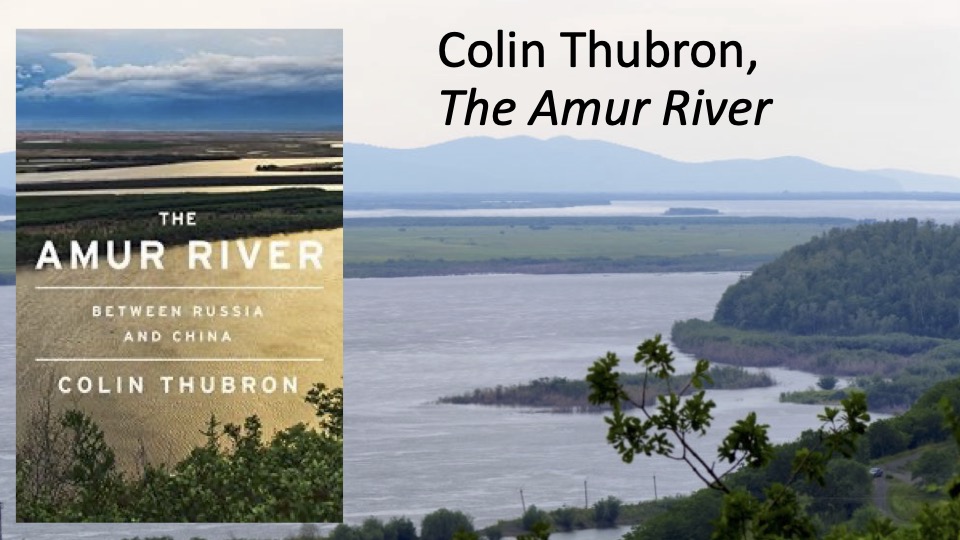
Dominic Ziengler, Black Dragon River: A Journey Down the Amur River at the Borderlands of Empires

narrated by Steve West (2015), 14 hours and 6 minutes.

The Amur, the world’s ninth longest river, is also the most unknown rivers among the world’s great rivers. The river’s headwaters rise in Mongolia, not far from the birthplace of Genghis Khan, and flows to the Pacific, mostly along the border of Russia and China. So much is unknown about the river that for much of history, both Russia and China claimed the river’s origin. A joint Soviet and Chinese scientific expedition set out to settle the dispute. They discovered the river’s headwaters were in Mongolia. 

The author sets out to travel, as much as possible, the entire river. However, it’s not as easy as one might think. Heading out on foot, by train, boat, and car, he makes his way down the river, mostly sticking to the north (Russian) side. Because the river is an armed border, the opportunity to float it is limited. 

As he travels, we learn of the history of the region, from the Khans to Russian eastern migration. As with the mountain men in the American West, Russia eastward expansion was first based on fur trade. Later would come mineral exploration and prisons. Also, like the American West, it includes bloody campaigns to conquer. We learn about the this as well as the conflicts between Russia and China along the river, which has raged for hundreds of years. Such conflicts are ongoing. A month after I listened to this book, China published new official map claims total ownership of an island in the Amur over the two nations fought over as recently as the 60s. 

Ziengler also informs the readers about the natural history of the river. It’s a great breeding grown for swans and other birds. The river also teams with fish. Sadly, the Siberian tigers are disappearing due to the lost of forests. The environmental issues along the river’s watershed are also covered. 

While the travelogue part of this book is lacking (because of the author’s limited access to much of the river), the book contains great stories and is packed in the history of Europe’s eastward expansion. 

Sara Seager, The Smallest Lights in the Universe

book cover for Smallest Lights in the Universe

 narrated by Xe Sands (2020), 9 hours and 37 minutes. 

Seager, an astrophysicist at MIT, looks for exoplanets in distant galaxies. These are planets in the “goldilocks’ zone,” where it is not too hot and not too cold. Such places hold the possibility of life. Because they are so far away to be observed, astrophysicists have devised new techniques such as registering a small drop of light as the planet crosses in front of its sun. Her work is amazing, and she describes it in a manner that can make it more understandable. 

But this is not a science book, it’s a memoir. We also are taken into the author’s life, from her first interest in the sky as a child growing up in Canada, to the academic politics today (such as having one’s findings stolen by another scientist). We also learn about her personal life. In addition to being interested in the sky, we are taken along with her on canoe trips to remote parts of Canada with a man who would become her husband and the father of her children. Then, we are told about his illness and death from cancer. This part of the book is tragic, which came as her career as a scientist was ascending. Later, she meets a new man, at a talk given for amateur astrometry club, and they marry eventually marry. She also comes to understand her own life with Asperger’s. 

I enjoy this book, especially her insights into her scientific work. However, at times I felt the book was a too personal. I certainly enjoyed some of what she wrote about her personal life (especially, because I’m me, long canoe trips in northern Canada). But wondered if she had ended her personal struggles with her first husband’s death, leaving the reader wondering what’s next, might have made a stronger book. Instead, it seemed this was a “lived happily ever after” type of ending.  

Robert MacfarlaneUnderland: A Deep Time Journey

Book cover for Underland

Narrated by Matthew Waterson. (2019).  12 hours and 3 minutes.

After reading about deep space, I jumped into this book about the underworld. It’s interesting to think how we know more about space (as in the book above) than we do about what’s underground. In this book, Macfarlane sets out to explore the unknown, mostly by traveling through caves and mines and the underground network of tunnels in cities such as Paris.

Macfarlane also explores what’s just underneath our feet. Dig down and you’ll find a great world of bugs and worms along with roots and various types of soil. As he makes such pilgrimages, Macfarlane muses about our uses of the earth (burying the dead to that which is dangerous, like nuclear waste). He frequently draws on literature and mythology about the underworld. In Junior High, when I was into a Jules Verne kick, I read Journey to the Center of the Earth. However, I didn’t realize that in the 19th Century, there was a sub-genre of exploration into the earth.  

I found this book fascinating and look forward to reading and listening to more of Macfarlane’s work. Two years ago, I read Macfarlane’s The Old Ways. He’s a British author and explorer that draws on a vast knowledge as he shares his explorations.  As in all the books above, rivers also appear in this book, they’re just underground . 

Godly grief leads to repentance

Sermon title slide showing clouds of an approaching storm

Jeff Garrison
Mayberry and Bluemont Churches
September 10, 2023
2 Corinthians 7:5-16

At the Beginning of Worship

There’s a quote I remember from a book I read forty years ago. “It’s not stress that kills us, it’s the adaption to stress that allows us to live.”[1] I don’t remember all that much about the book, but that quote has struck with me for well over half of my lifetime. At times, we get worked up about the stress we experience. If we are under too much stress, physicians will tell us it may have a negative effect on our health. Stress causes issues with our hearts. 

But what would we be like if we had no stress? Stress is often what causes us to make positive changes, to grow and mature, and learn new things. Stress (along with worry and shame) can bring us to repentance, as we’ll see in today’s sermon. Paul calls this “godly grief.”

Before Reading of the Scriptures

Last week we completed a long section in Paul’s Second Epistle to the Corinthians, where he defends his ministry. Paul is now ready to begin preparing the church in Corinth for him to visit once again. 

There is an abrupt shift in chapter seven, verse five. Paul returns to the anxiety he expressed in chapter two; about a letter he wrote to the Corinthians. After he mailed it, it began to brother him. Ever do that? You mail a letter and then you wonder if you might have made matters worse? This letter, probably one that was lost to history, Paul harshly condemned the Corinthians. It then appears Paul sent Titus to Corinth to check things out and, if necessary, smooth things over. He had hoped Titus would have returned before now, but he didn’t find him in either Troas or Macedonia.[2]

Paul, bothered by what might have been the reaction of the Corinthians to us letter, went off on a tangent in Second Corinthians, defending his ministry. Now in the seventh chapter, he returns to his original discussion because Titus has shown up. 

It seems obvious that 2 Corinthians wasn’t written in one setting. Paul wrote a bit, then put it away, and now he continues writing. The situation has now changed. In today’s passage, he speaks of the joy the news Titus brought back caused Paul. 

Read 2 Corinthians 7:5-16

Do you remember the Beatles 1963 song on their second album, “Please, Mr. Postman”? It had already been a hit by the Marvelettes in 1961, and later would be recorded by The Carpenters. The lead singer in the song repeatedly asks “Mister Postman” to wait and to see if there is letter in his bag, as he hasn’t heard from his girl in a long, long time. 

The song harkens back to the age before instant email, to a day when long distant relationships were strained by the slowness of the postal service. And if it was bad in the 1960s, think about how much worse the wait was 1900 years earlier, with Paul wandering around in Macedonia, worrying, as he longed to hear from Corinth. Such wait creates anxiety. Paul experienced such as he hoped he had not burned his bridges with Corinth.  

Our section begins with Paul describing his situation (which he’s already mention several times so far in the letter). “Our flesh had no rest, but we were afflicted in every way—disputes without and fears within.” His internal anxiety must have been causing arguments with others, which is something I’m sure we can identity. 

Often, at least with me, when I am torn up over on the something inside, I can unintendedly express it in hurtful ways to others…  I know I’m not the only one. When I discuss marriage with a couple planning a wedding, I’ll bring this up. Often couples have fights over things that have nothing to do with the other. You have a bad day at work, you take it out on your spouse. You feel bad, you take it out on your spouse. I wonder if this is what Paul means when he speaks of his disputes with others while having internal fears? After all, Paul is mortal and human. And, like us, he can make mistakes and sin.

But Paul found relief, to which he credits to God who consoles the downcast, for seeing to it that Titus has reappeared. Even better than reconnecting, Paul’s heart rejoices in the good news Titus brings. He feared the worst, that the Corinthians were upset with him, but learns otherwise. The church in Corinth longs to see Paul; they mourned and burn with zeal for him.

Again, isn’t that the way it often is? Have you ever been afraid of something, fearful of going forward, and then discover things are okay. Our fears of the unknown, if we let them, will cause us grief. They’ll haunt us. But as followers of Jesus, we are called to move forward in faith. No one knows what the future holds, but as Paul will later confess to the Corinthians, the Lord’s grace is sufficient.[3]

After expressing the joyful the news Titus brought, Paul admits how he has grieved because he felt he had damaged his relationship with the Corinthians. But his joy is even greater, for now he knows that the harsh words he had with the Corinthians led them to repent, which is the first step in salvation. Paul calls this godly grief and separates it from worldly grief. Godly grief leads us toward repentance. Worldly grief can only bring death, for there is no escape or way out. But with godly grief, we can experience forgiveness and salvation. 

Paul then begins to praise the members of the Corinthian Church, a church that has found consolation in Paul’s instruction. Solace is everywhere in the last half our of passage. Joy abounds. Paul is happy, the Corinthians are happy, Titus is happy.  

You know, sometimes we must hear some harsh words to get our lives back on track. Without them, we’d continue down the wrong path. Think about hiking. You think you’re on the right path, but someone comes along and suggests otherwise. If you don’t listen to them and at least check your map, you might find out the path you’re on comes to a dead end. But if you listen, you can have even more joy and be indebted to the one who came to your aid. 

Or think of navigation aids. When you enter a channel, especially a narrow one like you often have along the Carolina Coast, you pass the sea buoy. From there, out, you can assume there is deep water. Beyond the sea buoy, you can maneuver at will. But when you come inside that buoy, you must keep a close eye on path. Red, right, returning: a saying every sailor knows. As you enter the channel, the red buoys are on your right while the green ones are on your left. And you need to stay in the center. If you’re at the helm and start to stray, it’s best for someone to speak up and point out your error, otherwise you may run aground and wreck the boat. 

Paul is like the deckhand who speaks up and informs the skipper of the boat of their dangerous course. When the Corinthians repent and return to their main course, all are happy. No one is put to shame, they rejoice. 

This is why Paul can be so joyous at the end of our reading this morning. Titus brought good news and Paul is relieved and hopeful. 

What about you? Have you ever found yourself in need of being corrected? How open were you to listening to the criticism and changing your ways? We often go off on tangents. We need people like Paul to point us in the right direction, down the path Jesus trod. And when we experience such change, whether in ourselves or others, like Paul, we should rejoice. May we all experience such joy. Amen. 


[1] Melvin Konner, The Tangled Wing: Biological Constraints on the Human Spirit (1982).

[2] 2 Corinthians 2:13.  See https://fromarockyhillside.com/2023/07/02/willingness-to-forgive/

[3] 2 Corinthians 12:9.

A Sunday afternoon drive to Gerlach

Title Slide for "A Sunday Drive to Gerlach, Nevada, showing the Southern Pacific tracks cutting through the Black Rock Desert

Gerlach and the Black Rock Desert have lost a lot of their appeal. Over the past couple of decades, tens of thousands of people head there every Labor Day. It’s the sight of the Burning Man Festival. This year, because of some rain, 70,000 people became struck in the mud outside of Gerlach. Here’s my adventure in the Black Rock Desert long before it became so famous.  The photos are copies from slides.

The Appeal of the Black Rock Desert
Tracks running through Gerlach

I’m not sure what drew me to this dot on a map. Gerlach is a hundred and some miles north of Reno. I knew few people, even in Western Nevada, who’d been there. The only person I knew who had lived in the town was Norm and Missy. They’d lived and worked there before moving to Virginia City. Another attraction that drew me to this dot on the map were hot springs. I’ve taken road trips all over the Intermountain West in search of a good soak.

There was another reason I was interested in Gerlach. I’d watched their high school basketball team play that winter. The Virginia City Muckers creamed them. Our high school boys, used to playing in the thin air of 6300 feet, ran these lowlanders to death. Making it worse, the Gerlach team had only seven players. A couple of these guys were so uncoordinated that I felt sorry for them. I could have been a star on this team. By the end of the game, they only had five players left, and they were all on the court. Their best two players fouled out. The Muckers second string, guys who normally sat on the bench, played, and had no problem running up the score. For some reason I wanted to see this team’s town.

A Sunday drive

In the late spring of 1989, after preaching on Sunday (the service was at 9 AM), I was on the road by 10:30 AM. I drove to Reno and picked up Carolyn, a woman I was dating at the time. We ate a quick lunch and headed off. Taking I-80 east, out of Reno, we followed the Truckee River to Wadsworth, and then staying by the river, took Nevada 447 due north.

the Truckee River and Pyramid Lake
Pyramid Lake, Nevada
Pyramid Lake, Fall 1988

The road took us toward Nixon and the Pyramid Lake Indian Reservation. We stopped along the south end of the lake. It’s a barren looking body of water, essentially a retention pond. The pristine waters start out as snow in the Sierras. The snow melts into Lake Tahoe, and flows out of the north end of the lake. From there, the waters cascade down the Sierras. The river flows through downtown Truckee and Reno, and then through the River District of Storey County. In the 80s was home of the infamous Mustang Ranch, where there were no cattle, but prostitution was legal. At Wadsworth, the river turns north, and flows toward Pyramid Lake.

Over time, the hot desert sun evaporates the water in the lake. The high mineral content of the water when it reaches the lake leaves behind tufa formations as the lake level falls depending on the water level. Because the water is now so saline, there is little life around the lake. 

Meeting Carolyn

I had met Carolyn the previous fall on another trip to this lake. A mutual friend invited us both out on an expedition in search of fall colors, which in the American West mostly comes from Aspen and Cottonwoods turning yellow. There would be pockets of cottonwoods in canyons, with bright yellow leaves flickering in the breeze, along with yellow rabbit brush mixed into the sage. The later, through beautiful, is the bane of allergy suffers. Aspen grows at a higher elevation. At one point, late in the day, when the light was soft and warm, Carolyn caught me taking her picture of her admiring the crescent moon hanging in the western sky. She smiled approvingly. We started seeing each other soon afterwards. Although nostalgic, our stop on the south shore of Pyramid Lake was brief, for we had another 80 miles to go to get to our destination, Gerlach.

Truly the Loneliness Road in America

In the 1950s, Life Magazine dubbed Highway 50 through Central Nevada as the “Loneliness Road in America.” It’s not. It’s not even the loneliness road in Nevada. Nevada 447, north of Nixon, is one of a dozen or so blacktopped roads in the state with a much lower traffic count. We saw only one car heading south as we drove north, and when we returned that evening, we saw no cars. There’s not a lot out here.

The west side of the road is the Piute Reservation; on the east side is Winnemucca Lake, which is dry. Along the way, we pass a couple of ranches and a few scattered cows. This harsh land takes 40 or more acres to support a cow. As the afternoon progresses, the wind begins blowing and at places it sounds like the car is being sandblasted. Five miles south of Gerlach is the only other town around, Empire. It’s a company owned town at the site of one of the nation’s largest gypsum mines and, besides the railroad, is a main source of employment in the region. A spur rail line hauls out cars of the powdery dust. Five or so miles north, along the Southern Pacific lines (the Feather River Route) is Gerlach. 

the Town of Gerlach
railroad signal in Gerlach

The town is small and sits on the edge of the Black Rock Desert which stretches northeast as far as one can see. We ask about the hot springs and learn they’re not currently open due to construction. A little disappointed, we walk around town and the rail yard and spent some time hiking beside the tracks out into the desert playa.  The ground is barren, white, and chalky. Having seen it, I can understand why it became a quagmire after only a half inch of rain during this year’s Burning Man festival. 

There’s one main establishment in Gerlach, Bruno’s Country Club. It’s a gas station, casino, restaurant, bar, and hotel. I laugh at it being called a Country Club, for there isn’t a blade of grass in sight and certainly no golf courses. If they decided to add a golf course, I assume it’d be like the one in Gabbs, Nevada, a nine-hole course played on clay. Although not a golfer, I image your ball would get nice long bounce on such a surface. 

internet photo of Bruno's Country Club
Photo from the internet

After our walk, we head to Bruno’s and enter the dining room that’s across from the casino. The casino isn’t much, just a handful of slot machines, along with a bar and maybe a table for cards. The establishment isn’t fancy, but we enjoy a home-style meal. The staff and the locals having Sunday dinner at Bruno’s are friendly. As tourist, we stick out, and they seem glad to see us and are curious as to what brought us to town. After dinner, the light of the day begins to fade as the sun sets. We take another walk around town. The air cools and the fierce wind of the afternoon has died down. 

Heading home

After walking around, we get back in the car. There’s nothing more to do than to drive home through the night. The car’s headlights pierce the darkness of the black ribbon of highway. At a couple of places, I slow down as we drive through six-inch-high mounds of sand across the highway. These were deposited by the afternoon wind. The stars are bright. Overhead and to the Southwest, Orion sinks toward the western horizon, as does waxing new moon. I point it out to Carolyn. She reminds me of the crescent moon on the horizon on that first trip to Pyramid Lake. An hour later, the moon has set, and we’re left with the stars and a lonely strip of asphalt. It’s late when I drop Carolyn off at her home. It’s even later when I make it back up on the Comstock.

Other Nevada Adventures

Arriving in Virginia City

Doug and Elvira

Matt and Virginia City

Riding in the cab of a locomotive on the V&T

Christmas Eve

Paul’s Last Attempt to Reconcile

Title slide showing wildflowers

Jeff Garrison
Mayberry & Bluemont Churches
2 Corinthians 6:14-7:4
September 3, 2023

Sermon recorded at Mayberry Church on Saturday, September 2, 2023

At the beginning of worship 

As Christians, should we separate ourselves from the world? 

There are some who think such separation is necessary. Going back to the 2nd Century, monks fled into the desert to live in intentional Christian communities. In 19th Century America, utopian Christian communities were popular in the American Northeast and Midwest. Most were short lived. 

Even in recent times, such communities have appeared. Outside of the Amish, they tend to have a limited lifespan. Most fall apart. A few self-destructed in a horrific manner. Think of Jonesville, which started out as a community who took care of the poor in the Bay Area. After moving to South America, it ended with poisoned Kool-Aid. Or Heaven’s Gate, whose members thought that by dying they’d somehow hop a ride on the Hale-Bopp comet. 

Fleeing the world is not necessarily a good idea. Even though our citizenship resides in heaven, we have been called to do tasks here on earth. As we’ve learned from 2nd Corinthians, we’re to be Jesus’ ambassadors.[1] While we shouldn’t try to flee the earth, there are things we should avoid. We’ll discuss that today. 

Before the reading of Scripture:

For the last several months, we have heard Paul repeatedly defend his ministry to the church in Corinth. I am sure some of you will be glad to know that today, we’re at the end of Paul’s defense. You can think of today’s passage as the defense’ summation to the jury. Next week, we’ll be onto new topics as Paul prepares the Corinthians for his visit. But there are still a few verses for us to cover before we get there. 

Our text is difficult. Some scholars question if Paul wrote it, thinking that a good part of today’s readings doesn’t really fit with Paul’s other themes in the letter. I disagree. Remember, I have pointed out several places in this letter where Paul diverts from his primary theme and then returns to it. He does that here. 

Was Qumran a source for Paul?

The other question scholars raise is that this section of the letter seems to draw of different sources, some think perhaps from the Qumran Community from which the Dead Sea Scrolls come.[2]But we can’t be sure. Since Paul returns to his topic of defending his ministry and reconciliation with those who are estranged from him in Corinth, I hold that this all belongs to Paul even if he borrowed some ideas from others. 

Read 2 Corinthians 6:14-7:4

Paul finally comes to the end of his defense, which he does by making a final plea for reconciliation with those estranged from him in Corinth. But before he makes his final plea, he has a few more ideas to convey. 

Do not be yoked with unbelievers

“Do not be mismatched (or yoked) with unbelievers,” Paul says at the beginning of this passage. This often has been used a passage to discourage marriage between believers and non-believers (and in certain churches, between their members and questionable believers of other churches). But is that what Paul speaks of here?[3] I don’t think so.

Paul has already covered the marriage with non-believers in his first letter. There, Paul encouraged those married to non-believers to remain faithful in their marriage if they spouse want to stay married. He even suggests this might be an opportunity for the believing spouse to lead their partner into the faith.[4]  Has Paul changed his mind? No.

Paul wanting his listeners to avoid Idolatry


Paul may be thinking about business arrangements which could involve a believer in the pagan world. Corinth (and most of the Roman world) was thoroughly saturated with paganism. Such beliefs penetrated business life and other areas of the city. “Flee from idolatry,” Paul told the Corinthians in his first letter.[5] That applies here, too.

Rhetorical questions

Instead of coming right out about the meaning of his advice with previously given information, Paul asks five rhetorical questions. These give us an idea of what he means. These questions build, crescendo-like, to the fifth, which indicates Paul’s concern with idolatry. Believers must draw a line between themselves and the pagan world. Let’s look at these questions briefly. 

1. Righteousness and lawlessness

“What do righteousness and lawlessness have in common?” Here Paul refers to God’s law. As believers we must show the world that we’re right (or trying to be right) with God.

2. Light and dark

“What partnership is there between light and darkness?” Jesus is the light of the world, we proclaim.[6] Paul wants the believers in Corinth to stand in the light, not in darkness, which here represents evil. He provides similar advice to the church in Ephesus, where he tells them to have no fellowship with darkness.[7]

3. Christ and Beliar

What agreement exists between Christ and Beliar? This is an interesting one as the term Beliar is not used in the rest of scripture. Obviously, he refers to Satan, but why didn’t Paul use the more common name for the evil one? Paul uses Satan elsewhere in his writing.[8] While Beliar is not found in scripture, it was a common term for Satan or those opposed to God in the intertestamental period (the time between the completion of the Old Testament and the New). It was also a term used in the Qumran community.[9] What can we take from this? Obviously, those opposed to God have no agreement with Christ. 

4. Believer and unbeliever

Next, Paul asks what a believer shares with an unbeliever. Clearly, there are things that all humans share together, but I expect Paul means more to where our hope lies. Elsewhere, Paul refers to those who are believers have been adopted into God’s family, which makes us different from others.[10]

5. God’s temple and Idolatry

Paul’s final question hits the nail on the head and reminds us of a problem facing Christians living in a world of idols. Previously, in 1st Corinthians, Paul made the case for our bodies serving as God’s temple.[11] Here, he reminds them of this truth. And as temples of the living God, we must avoid association with idolatry. 

Idolatry in the 1st Century

Living in the ancient world, where none of the pagan deities required exclusive worship, one could worship many gods.[12]Such practice was held in high esteem. Pagan temples were commonplace. This setting required Christians to walk carefully to avoid giving the impression they condone idols.

Fleeing idolatry in the 21st Century

While we may not have to deal with the same kind of idolatry in our world, we still deal with idols. We should be aware of implying that we put our faith in anything but God. For to do so, we fall into idolatry. For this reason, I avoid reading horoscopes and can’t imagine going to a fortune teller or carry a good luck charm. But it’s also important in other ways. 

I was reminded in a meme on Twitter this week of the Bible’s instruction on politics. It comes from the Psalms. “Do not put your trust in princes, in mortals, in whom there is no help.”[13] We might replace princes with politicians (of whatever stripe). While they have a high calling, they are still mortal and ultimately, will fail us. They can be helpful, but they are not our Savior. We already have a Savior, and it is to him we’re to worship. 

God’s promises and our call

After asking these rhetorical questions which, I suggest, emphasizes living in a manner that avoids idolatry, Paul quotes a variety of Old Testament scriptures to remind us of God’s promises and our calling to stand apart from the world. 

The first passage is from Leviticus, in which we’re reminded that God will be with us, and we are to be God’s people.[14] This is like the beautiful reminder we have in Revelation of the life to come, where God will wipe away our tears.[15] Because we’re God’s people, we’re to separate ourselves from that which is unclean, Paul insist, drawing on a passage from Ezekiel.[16]Then, quoting from Samuel, he returns to the promise of God as our Father and we as God’s children.[17]

Because of this promise from God, Paul issues a call to the Corinthians to cleanse themselves and, as he called on them last week, to make room in their hearts for Paul and his companions. 

Paul ends with praise of the Corinthians

As he closes this section, Paul uses the affectionate term, “Beloved” to express his feelings for the Corinthians. Paul then continues, reiterating what he’s said so many times in this letter, that he and his coworkers are innocence of the charges brought against them. They have wronged no one, corrupted no one, or taken advantage of no one. Paul wants to reconcile so that they might, in life and in death, be together.

Paul ends this section of the letter, appropriately, on a high note. He reminds the Corinthians of the pride he has in them. We could all use a bit of praise, right? Paul didn’t want the Corinthians to think he was just beating them up, for he did really cares for them and wanted to reconcile with those to whom were estranged. 

What we should take away

As we come to the end of this section of Paul’s letter, we should ask ourselves how far we would be willing to go to reconcile ourselves to other believers. You know it is hard to reach out when you’ve been hurt. But it’s a part of our calling. In addition to avoiding the appearance of idolatry, we should willingly take the risk and to reach out in love to reconcile ourselves to those estranged from us. Amen. 


Notes

[1] 2 Corinthians 5:20. See https://fromarockyhillside.com/2023/08/20/because-of-jesus-we-look-at-the-world-differently/

[2] Paul uses ideas and language here that similar to those used in Qumran. See C. K. Barrett, A Commentary on the Second Epistle to the Corinthians (1973, Hendrickson Publishers, 1987), 195-199.

[3] For a discussion of how we might misuse the passage, see Ernest Best, Second Corinthians: Interpretation, A Biblical Commentary for Teaching and Preaching (Louisville, John Knox Press, 1987), 67-68.

[4] 1 Corinthians 7:12-16.

[5] 1 Corinthians 10:14. 

[6] John 8:12.

[7] Ephesians 5:11. Darkness is often used to represent evil. Jesus speaks of the outer darkness as a place away from God (example: Matthew 8:12, 25:30). Paul refers to the dark rulers of the world (Ephesians 6:12 and Colossians 1:13). 

[8] Paul uses the term Satan in ten times (Romans 16:20; 1 Corinthians 5:5 and 7:5; 2 Corinthians 2:11, 11:14, & 12:7; 1 Thessalonians 2:8; 2 Thessalonians 2:9; and 1 Timothy 1:20).  Five of the ten usages of this term were in his writings to the Corinthians! 

[9] Paul Barnett, The Second Epistle of the Corinthians (Grand Rapids, MI: Eerdmans, 1997), 347-348.  See also C. K. Barrett, 198. 

[10] See Romans 8:15, 8:23, 9:4; Galatians 4:5; and Ephesians 1:5. 

[11] 1 Corinthians 3:16-17, 6:19-20. 

[12] Best, 65-66. 

[13] Psalm 146:3. 

[14] Leviticus 26:11-12 (Paul rough quote is from the Septuagint, or the Greek translation of the Old Testament). 

[15] Revelation 21:4. 

[16] Ezekiel 20:34 (again, the quote comes from the Septuagint). 

[17] 2 Samuel 7:14. 

Wildflowers (July 2023)

This is the day to live for God

Title slide for sermon: "This is the day to live for God!"

Jeff Garrison
Mayberry and Bluemont Churches
2 Corinthians 6:1-11
August 27, 2024

Sermon recorded at Bluemont on Friday, August 25, 2023

At the beginning of worship: 

Without looking in your Bibles which I hope you have with you, can any of you recite Psalm 118:24? Anyone want to try? I bet if I started the verse, many of you could finish it. 

The verse begins, “This is the day the Lord has made.” I often use it at the beginning of worship. And how does the verse end? “Let us rejoice and be glad in it.

I occasionally like to use this Psalm at the opening of worship on a less than picture perfect day. Of course, if the day is nice (clear skies, with a Goldilocks’ temperature-not too hot, not too cold, just right), Psalm 118:24 makes sense. But what about when the skies open and everything is wet? Or when a cold wind blows? Or it’s steamy hot? Can we, with the same vigor, recite, “This is the day the Lord has made, let us rejoice and be glad in it.” 

I hope you can, for everyday is another day for us to praise and worship our God. We should find something to praise every day and every moment that we have a breath. 

Before reading of the Scripture:

Last week, as we looked at the end of the 5th chapter of 2 Corinthians, we heard Paul calling his hearers to be a part of God’s team working for reconciliation within the world. Today, we’ll see examples of how he strived for reconciliation among his distractors in Corinth. This is all part of Paul’s effort to defend his ministry to the believers in Corinth. His defense is an important context for us to understand what he means in this passage, as I’ll show later. It is always important to take a passage of scripture in context to remain truthful to the Scriptures. 

Read 2 Corinthians 6:1-13

I remember a sign on Carolina Beach Road, south of Monkey Junction, back in the late 1960s. It was old by then, I bet it was put up in the 40s, sticking up in that white sugar-like sand dotted with wire grass, longleaf pines and blackjack oaks.. The sign featured a simple design. A white background with bold black letters spelling out, “Get Right with God.” As a kid, it seemed to serve as a wake-up call. It might soon be too late, I’d worry, as I said a prayer. 

While the advice is good, I’m not sure of its intention nor effectiveness. Yes, we need to “get right with God,” but it’s not a one-time prayer or something to be done out of fear. Instead, those of us who follow Jesus are called to journey. Before the word church came into regular use, those who followed Jesus were known as people of “the Way.”[1] Paul himself speaks of us working out our salvation. But if we sense the goodness of God, we work it out without fear. We’re on “the way,” every day, enjoying the benefits God bestows on us. 

Paul is still defending his ministry

While Paul has been defending his ministry throughout much of what we have explored in 2nd Corinthians, he now changes how he addresses the Corinthians. He’s been talking to them (including himself) using the pronoun “we.” Our first verse begins like this, too. “As we work together with him (or God). But beginning in the second half of the first verses of the sixth chapter, Paul shifts. He addresses the Corinthians personally and directly. “You” he says, should not “accept the grace of God in vain.”[2]

An Acceptable Time

Then, quoting from Isaiah,[3] he reminds them of God saying that he has heard us at an acceptable time, and on the day of salvation has helped us. Next, Paul immediately reminds his listeners that now is the acceptable time, now is the day of salvation. 

One could easily mistake the meaning of this text if taken out of context. It could be effectively used as an altar call with the preacher saying, “now is the time, you better get up here and repent.”[4] It’s kind of like that old sign on Carolina Beach Road, before it rotted and fell or succumbed to construction. But that’s not Paul’s meaning here. First, Paul writes to believers in Corinth. Second, he is defending his ministry against some of their complaints. So, this passage isn’t about getting right with God today, although that is never a bad idea. Instead, he wants the Corinthians to return to their original love and beliefs in Jesus Christ and to follow him. 

Paul sees salvation as a process. It’s not just us intellectually confessing that Jesus as Lord. That’s just the beginning. Instead, by admitting Jesus is our Lord, the one in whom we find life and meaning, means we live for him and not for ourselves. Paul makes this point clear throughout this letter. 

So, what is the acceptable time? What is the day of salvation of which Paul speaks? He’s quoting from Isaiah, who speaks of the day when God releases Israel from exile. But Paul, whose understanding of what God is now doing, expands this concept. It’s not just about the temporal salvation of the Israelites. All of God’s creation are included. Even gentiles, like us. This day, the day Paul refers to, is the time between the Christ’s ministry and his return. We’re living in this day and need to make the best of the time we have on hand as we join with God in the work of reconciliation.

No obstacles

In verse three, Paul speaks of how he and his fellow disciples have not placed any obstacles in front of the Corinthians (or others, to whom he has preached). Think of Paul’s ministry. He stood up for the rights of the gentiles.[5] He didn’t see the need for them to become Jews first: to be circumcised, or to observe dietary laws.[6] God’s grace is freely given, they could just accept it and out of gratitude follow Jesus. Wanting to reconcile the gentile world to God, Paul will do what he can not to create barricades. 

Nine sufferings

Next, Paul moves on to further defend his ministry with a series of what he and his fellow missionaries have done on behalf of those with whom they’ve ministered. He lists nine sufferings they’ve endured: 

  • afflictions, 
  • hardships, 
  • calamities, 
  • beatings, 
  • imprisonments, 
  • riots, 
  • labor, 
  • sleepless nights, 
  • and hunger. 
Despite suffering, showing inward traits

Following Jesus wasn’t the easy option for Paul. Then he lists seven “inward” traits they’ve shown:[7]

  • purity, 
  • knowledge, 
  • patience, 
  • kindness, 
  • holiness of spirit, 
  • genuine love, 
  • truthful speech, 
  • and the power of God. 

If we’re following Jesus, we must strive to live in a way that our lives show such traits even when enduring difficulties. People need to experience our patience, kindness, and love. We need to be known for telling the truth, even when it may be easier to color the truth a bit. Since we’re to live for Christ and not ourselves, like Paul, we can’t take the easy way out. 

Peacefully armed

Paul then includes a military analogy. He’s armed with the weapons of righteousness, one in both hands. Following this right after mentioning the power of God, I think Paul refers to such weapons metaphorically, as he does when he speaks of the armor of God in Ephesians.[8]

Certainly, Paul doesn’t equate such weapons as offensive, after having just listed traits which would go against such an idea. Yes, he has weapons, but they are from God, and they are not used to bring vengeance on those who have mistreated him. Instead, he’s given power to continue despite such misfortune as he’s already endured. 

antitheses

Paul then shifts into providing several antitheses that demonstrate his status as a missionary. 

  • He’s treated as an imposter but he’s true. 
  • He’s seen as unknown, but is known (especially to God, as he pointed out in the last chapter[9]). 
  • He’s seen as dying, yet he’s very much alive. 
  • He’s viewed as punished, but has not been killed, sorrowful yet rejoicing, 
  • poor yet making others rich, 
  • having nothing yet owning it all.   
Speaking as to children

This section concludes with Paul reminding the Corinthians of his frankness in speech and how his heart has been open to them. While there is no restriction from his position, he finds some in Corinth, with those who challenged his ministry. He encourages them to open their hearts. Paul speaks simply as to how we might speak to children. This might sound strange at the end of such a plea, but as Jesus says, for us to enter the kingdom of God, we must do so as a child.[10]

While many in Corinth have questioned Paul’s intentions, the Apostle doesn’t write them off. Instead, he strives to reconcile himself to them, with a vision of them together working for God’s kingdom. As for how we apply this text to our lives, let me suggest a couple of ways. 

worthy of RECONCILIATION

First, if we feel we’re done with church, we should know God doesn’t write us off. God loves us. And hopefully, within the church, there are folks those like Paul who strive to reconcile with us and bring us back into the fold. 

Perhaps some of us are being called to be Paul and to work for reconciliation with those who are estranged within our community. As Paul shows, such work can be difficult, but it’s godly labor.

Paul as an example

Finally, we should use Paul as a model, as an example of faithfulness. Paul endured a lot, yet he maintains his Christ-like traits. And we should do the same. Just because we’re attacked or abused by others, doesn’t mean we need to go low and resort to their tactics. We’re not to seek revenge. Instead, as followers of Jesus, those who are on the Way, we’re to take the high path. We show the virtues of our Savior, who willingly gave his life so that we might have life everlasting.  Amen. 


[1] Acts 9:2. Followers weren’t known as Christians until later in Antioch, see Acts 11:26. Jesus declares himself to be “The Way” in John 14:6.

[2] Paul Barnett, The Second Epistle to the Corinthians (Grand Rapids, MI: Eerdmans, 1997), 315-316.

[3] Isaiah 49:8.

[4] Barnett, 319.

[5] See Galatians 2:11-14. Paul rebukes Peter for how he treated gentiles.

[6] Paul spends much of his letter to Galatians insisting they didn’t first need to become a Jew. He also has proclaimed in his first letter to the Corinthians that they ’don’t need to be circumcised or observe the dietary laws. 

[7] Ernest Best, Second Corinthians: Interpretation, A Bible Commentary for Teaching and Preaching (Louisville, KY: John Knox Press, 1987), 61.

[8] Ephesians 6:10-20. 

[9] 2 Corinthians 5:11. 

[10] Mark 10:13-15 and Luke 18:16-17. 

My first job…

title slide for blog post showing two pictures. One of a Wilsons Grocery bag and another of an aisle in a grocery store.
Wilsons Supermarket bag
Bag posted on the Facebook Page, Hometown memories of Wilmington, NC

I became a Country Boy a few months after I turned sixteen. I’d gone with Mom to the Wilson’s Supermarket on Oleander Drive, the “home of the Country Boys.” Mom pointed out the manager. He stood in the front of the store, watching everything. Garnering courage, I walked over and asked him for a job. 

“You have to be sixteen,” he said, obviously not thinking I was quite there. Admittedly, I was small for my age. 

“But I am,” I responded, “I can show you my driver’s license?” 

He looked at it and nodded his head in approval. 

“You’ll need a social security card,” he said. “Can you work four or five hours on Thursday and Friday afternoons and eight hours on Saturday?”

“Yes Sir,” I said.

I had my first job. Of course, I had worked before but it was just mowing yards for neighbors or babysitting. But this was my first regular job, with a paycheck and deduction for taxes…

That next Thursday afternoon, with a tie around my neck, I reported to work. Two of us were to start our grocery careers that day. Tom, the other kid, was from New Hanover High School, popularly known by those of us who attended Hoggard High as “New Hang-over.” His bright red hair and his twitch in his neck when he talked caused lots of people to consider him weird, but he worked hard. Wilson’s Supermarket would his only job. 

They trained us that first day to bag groceries. Bert, the manager who hired us, assigned each of us to a more experienced bagger. For an hour or two, we learned the fundamentals of bagging groceries. Don’t put can goods on top of bread or on cartons of eggs. If you have a lot of cans, double-up your bag for strength. This was the era of only paper bags, no plastic ones. You separate the cleansing supplies from the meat and produce. 

We also learned if the cart was loaded down, we could jump up onto it and ride it out the door and through the lot, saving energy. Soon, we were on our own, taking out groceries and always saying, “Thank You, Ma’am,” as we slammed the trunk lid. Another lesson we’d later learned was to recognize the big tippers and hustle especially hard for them. This became a game for some, although Tom and I tried to give our best to everyone.

It now seems like a distant dream. In a way, I suppose, it was the beginning of the end. So far, I have never been without a job except for three months I took off to finish hiking the Appalachian Trail. I would have another four-month break for work, but it was a sabbatical, so I still had a job. But back in 1973, I had school along with 15 to 18 hours a week of work. As I found high school boring and wasn’t very motivated, having a job provided dignity. 

Sign for Wilsons Grocery store
I don’t know how many times I posted the week’s special on a similar sign. Photo from the Facebook page, Hometown Memories of Wilmington, NC

Each day, when I showed up for work, I’d put on a tie. It was expected of all of us “country boys.” While the ads might have had us looking like hillbillies, we were expected to be dressed properly. Beforehand, I’d only worn a ties on Sundays for church, an ideal I still maintain. But unlike most of the newcomers at the store, I didn’t wear a clip-on tie, which they sold on a rack at the end of one of the aisle. I think they were there mostly in case we forgot to bring a tie.

As a 16-year-old, I knew how to tie a Double Windsor. Back in the 70s, with ties wide enough to serve as bibs, tying a big knot like a Double Windsor was quite a feat. Before the week was out, I was teaching Tom and others how to tie one. When you’re a runt, it helps to have a skill. Tom and I began to hang out and became good friends. Six months after I left the store for good, during my second year of college, Tom died from a brain tumor. 

Bert, our boss, served as a second father to both of us. Whenever I had problems, especially with girls, questions I’d never think about asking my own dad, I’d ask him. Looking back, I don’t know why? He was easy to talk to, but his martial record certainly left room for improvement. While I didn’t know it when I started, Bert was the father of a elementary school friend of mine, Nicky Pipkin. While Bert had his own troubles with relationships, he always gave me good advice.

I stayed at Wilsons through my first year of college doing a variety of jobs: bagging groceries, stocking the shelves at night, running a cashier, counting money, mopping and waxing the floors late on Saturday night and into the wee-morning hours of Sundays and, thanks to being a non-smoker, managing the cigarette aisle. The pay was never very good, but I enjoyed my time there. It’s rewarding and noble to serve people. 


A version of this story appeared in a older blog of mine.

Photo of a Jerry Garcia designed tie
These days, when I need to wear a tie, I try to wear nice ones like this tie, designed by Jerry Garcia (of the Grateful Dead)

Because of Jesus, we look at the world differently

Title slide showing mountain sunrise with fog in valley

Jeff Garrison
Mayberry and Bluemont Presbyterian Church 
August 20, 2023
2 Corinthians 5:11-21

At the beginning of worship:   

A dozen years ago, John Ortberg published a book titled the me I want to be: becoming God’s best version of you”[1] The title turned me off. It sounded as if went against my theology of focusing more on God and not ourselves. But I read the book. While a catchy title, the book goes deeper than I had expected and has some good insights. 

God created a diverse world. We’re all different. Looks, shapes, the hue of our skin and hair, our abilities. We’re all unique. The goal of the church shouldn’t be to create a cookie-cutter version of a Christian. If that was even possible, we would create a boring organization. And we wouldn’t be effective! God calls us for a purpose. If we all looked, talked, and acted the same, if we all liked the same things, we would alienate ourselves from the rest of the world. 

But that’s not what God’s wants. God created us as irreplaceable individuals. Consider Jesus’ original disciples. They were all unique: you had fishermen and tax collectors, a physician and a revolutionary, devoted followers and skeptics. We’re all unique and beautiful. We’ve been created by the Master Artist who designed us with a purpose and a vision for the future. 

Before reading the scripture

Last week, we saw how Paul ended the section with a reminder that all of us, including himself, will face judgment for what we’ve done in our bodies. As we continue with 2nd Corinthians, in today’s reading, Paul moves to an appeal for the reason he shares the gospel and focuses on God and not himself. 

Read 2 Corinthians 5:11-21

Because of our focus as believers of Christ, Paul teaches four truths here. 

  • We can have life in Christ.
  • We should look at other people through Jesus’ eyes.
  • We work as companions with Christ in God’s mission of reconciling himself to the world.
  • And, in Christ, we can become more righteous. 

I recently listened to the book, Big Hair and Plastic Grass: A Funky Ride Through Baseball and America in the Swinging 70sThe 70s brought great change to baseball. Players began to look like the rest of America with long hair. AstroTurf took over ballparks. The designated hitter became a reality. But it was also a good decade for baseball if you were a Pirate’s fan. They were almost always in contention and won the World Series in ‘71 and ‘79.  

The ‘79 series featured Willie Stargell, a great ball player. A few years later, when I would sit in the cheap seats in the upper deck of Three River Stadium, there would be stars marking where he smacked home runs. Stargell was the spark for that team, but he always insisted on giving credit to the rest of the players. Yet, his teammates always gave the credit back to him. 

“He taught us how to take what comes and then come back,” Dave Parker, another player on the team said. “He taught us how to strike out and walk away calmly, lay the bat down gently, then get up the next time and hit a home run. From him we learned not to get too high on the good days or too low on the bad days, because there are plenty of both in this game…” 

I’m going to go out on a limb and suggest that Paul would have been a fan of the ’79 Pirates. At least he’d like their attitude. Don’t boost about yourself, Paul insists. Others can boost about you. And the only ones that really matters is God, who knows all, as well as our own conscience. We should ask ourselves, “Are we doing our best?” 

For Paul, the focus is always on Christ, the one who died for us, so that we might have life in him. And for Paul, this life is not just in the world to come, but in the present. Because Christ gave his life, we are to live not for ourselves, but for him. 

Because we live for Christ, we are to look at the world differently. We don’t look at one another from a strictly human point of view. We must see others as Christ sees us, overlooking their flaws and seeing their God-given potential. This means we don’t look at others with envy or disdain, but with compassion and love.

“Comparison kills spirituality, John Ortberg wrote in the book I mentioned earlier.[2] If we compare ourselves to one another, whether we look up to or down on them, we’re doomed. For God didn’t create me to be you or you to be me. God creates us unique and the only comparison that we’re to make is to compare ourselves to our Savior, a mirror in which we will all see our shortcomings. 

But thankfully, we will also all experience the accepting and loving smile of a forgiving Savior. Yes, he wants us to improve our lives, but doesn’t want us to be burdened with guilt or to make us into something we’re not.  

So, Paul suggests we not evaluate people from a human point of view or, as translated in The Message “by what they have or how they look.” But you know, that’s not an easy lesson to learn.

One of the wonders of Facebook is that it has allows us to renew old friendships of people we’ve not seen or talked to in decades. For me, some of these people became good friends even though we weren’t close when we were younger. We knew each other but didn’t hang out a lot. Yet, now we’re all older, we find things we have in common. 

Joseph was one such guy I got to know better, who sadly died four years ago. When visiting my parents, we’d often together for coffee or over a beer and talk. I confessed to him once that when we were in Junior High, I was envious of him and his friends in the band. He couldn’t believe it and went on to say, to my shock, how he was envious of me and me and those I ran around with. Truth be known, we’d both been better off if we hadn’t worried about others and just been ourselves. But that’s a hard lesson when you’re a teenager. But as we mature as disciples, it is a lesson we must learn. For we must see people as Jesus sees them.

Paul’s second point also needs to be considered. Not only are we not to judge others by human standards, but we’re also to realize that we’re not who we should be.  That’s the purpose of comparing ourselves with Christ; for in Christ, we see our shortcomings and our need for both mercy and change. Looking at Christ, we see the need for conversion, to change into something new. 

There must be a new creation, something we can’t do ourselves. Only God has such power to wash us clean and to change us. It’s important we see the tie Paul makes here between Christ and a new creation for we can’t recreate ourselves. I can change clothes or find a hair piece, but that’s not what Paul means. We must be recreated in Christ!  

We can’t recreate ourselves; we need God’s help if we’re going to find new life in Christ. In Christ, we’re made new because we are reconciled with God. Our sins are not held against us because Christ takes them on himself. 

In coming to Christ, we are made right with God, but it doesn’t end there.  Remember, there is a purpose in all this… We’re made right with God, not just to get into heaven. Surely, that’s important, but it’s not the primary purpose. We’re made right with God first, then we’re to go out and reconcile others to ourselves. We become an extension in God’s work of reconciliation; it starts with Jesus and then flows through us into the world. God wants us to join in his work. That’s our call as Christians.

In verse twenty, we learn we’re Christ’s ambassadors. An ambassador is a good description, for an ambassador doesn’t represent his or her own interest; but the interest of his or her country. When the President appoints an ambassador to another country, they are not told to go and do what they think is best. They’re to represent our interest and our values to a foreign country. Likewise, as followers of Jesus, we represent not ourselves, but his kingdom! We are to show a foreign world the values of the heavenly kingdom to which we belong. 

This means that our work as Christ’s disciples isn’t limited to what we do here, on Sunday morning. Our work is to be about showing godly values—in our families, our places of work, at the marketplace, or with our neighbors. Wherever we find ourselves, we are to be a living example of what it means to be a new creation in Christ.

And finally, in our last verse, Paul suggests all of this—our new lives in Christ, our seeing others in Christ’s eyes, our work of reconciliation—is a part a greater plan of us becoming more righteous. As we focus on Christ, we become more like him. That’s what the gospel is about. 

“To Jesus Christ, who loves us and freed us from our sins by his blood and made us to be a kingdom, priest of his God and Father, to him be the glory and dominion forever and ever.[“3] Amen.  


[1] John Ortberg, the me I want to be: becoming God’s best version of you (Grand Rapids: Zondervan, 2010).

[2]Ortberg, 25.

[3] Revelation 1:5-6.


Dutch Oven Cooking and Lime Pickles

Title slide showing cooking in Dutch ovens and pickles in jars

I have been asked recently for recipes for my pickles and my Dutch oven feast of which I did two this summer, one in June and the other in August. Here’s a how-to. All you need are a half dozen Dutch-ovens, an ice cream maker, a bunch of cucumbers, a few other things, and a fair bit of time on your hands (and let’s hope your hands are clean!)….

Dutch Oven Dinner

Chicken
Chicken cooked in a dutch oven

10 pounds chicken legs and thighs
Milk 
Bread crumbs
Fine bread crumbs
12 inch Dutch Oven pot

Wash and cut off excess fat on the chicken. If the thighs are still attached to the legs, cut them into two pieces (so they can pack better in the oven).

On griddle or in a cast iron skillet (I use a large camp stove with a griddle over the burner), heat oil. Dip chicken in milk, then roll in breadcrumbs and brown on the griddle in batches.

As you finish browning the chicken, pack the pieces tightly into a Dutch Oven. 

Place a dozen or more coals under the oven, and another dozen on the top (use more if it is windy!) 

Cook for 45-50 minutes (I use a meat thermometer to make sure the chicken is well over 175 degrees) 

If it is windy or to get a quicker start, heat the Dutch Oven on the gas grill before placing it on the coals. Once the cast iron is hot, it’ll be easier to keep hot. 

Barbecue Ribs

6 -8 pounds of spare ribs
Sauce (I make my own using mostly vinegar, hot sauce, pepper, salt, lemon squeezing. If you like it sweeter, add some ketchup).

Pack ribs in oven and pour sauce on top. Place of top of chicken and add another dozen or so coals on top. Cook 45 minutes to an hour. Test meat with the thermometer to make sure it’s north of 165 degrees. 

Dutch Oven cooking
Showing off the ribs
Western-styled Dutch Oven Potatoes
Serving dinner

8 pounds of potatoes
4 pounds of onions
Pound of bacon
spices of choice (basil, oregano, salt, pepper, chopped chives, etc)

Wash potatoes well (I leave the skins on) and then slice into ¼ thick slices

Slice onions into thin slices

Lay out ½ of the bacon on the bottom of a Dutch oven (I generally use a 12 inch deep one)

Place a layer of potatoes, onions, then sprinkle spices. Continue layers until the over is so full, you must push down on the ingredients to close. Then add the rest of the potatoes in strips. 

Cook about 45 minutes with coals above and below, until you can easily push a folk through ingredients.  

Sweet Potatoes

5 pounds of sweet potatoes
2 sticks of butter
Cup of brown sugar
¼ flour
Cup or more of chopped pecans
Cinnamon 
2 eggs
Vanilla 
Deep 10-inch or a  regular 12-inch Dutch Oven

Cook potatoes in oven until they are well done. Take the pulp out of the skins and place in a bowl. Add whisked eggs, ½ cup brown sugar, cinnamon, a tablespoon of vanilla, and ¾ stick of butter. Mix well. Take ¼ stick of butter and coat the oven. Then add the potato mix.

Mix flour, pecans, ½ cup of brown sugar and butter (that’s been chopped into small pieces). Add to the top of the potatoes. Bake with a dozen coals under and above for 30-45 minutes. The potato mixture should bubble up into the nut topping. 

Cobbler

 (I’ve done a lot of cobblers over the years. This is the easiest, but my favorite is a cherry chocolate, but it’s too much if you’re also making ice cream). 

4-15 ounce cans of cherry pie filling
Box of yellow cake mix
2 sticks of butter 
12 inch shallow oven

Coat bottom of over with butter. Pour on the cans of pie filling. Sprinkle the yellow cake mix on top. Take a stick of butter and cut it into small pads and place them around the top. Bake for approximately 30 minutes (the pie filling will rise and give moisture to cake mix. 

Crowd ready to eat
The early crowd at Mayberry’s dinner in June (we ended up with around 38 people in attendance, but these folks were early so they could be first in line)
Homemade Ice Cream (Philly style—6 quart freezer) 

3 quarts half and half
1 pint whole cream
Salt (1/2 teaspoon)
2 tablespoons Vanilla 
2 cups sugar 
20 pounds of ice
1/3 box of ice cream salt 

Mix all the ingredients together, making sure the sugar is dissolved. Pour into chilled freezer container. Turn on motor and make sure it’s running before you start to add ice around the freezer container. Add ice about 1/3 up, then a cup or so of salt. Do this again and again until the container is covered with ice.  Keep adding ice until container stops. If you have freezer room, I take the container out and put it in freezer. If not, pack ice around it and let it sit for an hour or so to harden.  Enjoy as it is so good. 

Eating under a picnic shelter
Enjoying the food at Bluemont in early August

Lime Pickles 

two cucumbers
Dasher II & Slicing Cakes

10 quart or 20 pint canning jars and rings and new lids
2 food grade plastic containers (4.5 gallon containers that look like what drywall mud comes in, but I would buy the food grade variety and not try to clean out a construction bucket) 
Cucumbers (I like them to be 1-2 inches thick. My garden includes Japanese Climbing, Slicing, and Dasher II Cucumbers)
2 cups pickling lime (not the green fruit, but the powdery kind that goes everywhere if not careful)
Pickling spices (either make your own or use Ms. Wagers, I’ve done both)
Cloves (I add more than are in the spices)
Non-ionized salt
1 1/2 Gallons of Vinegar
20 cups sugar Sugar

Cucumbers in a lime bath

Day 1: Wash and slice a half bushel of cucumbers. If you use a food processor, be careful to cut them as thick as possible-up to ¼ inch thick-or they may turn into mush!  Add two gallons of water to each plastic container along with a cup of line to each. Mix well and add pickles. Let sit for at least 12 hours (I normally let them sit for 24 hours).

Day 2:  Drain the cucumbers (I do this outside as I don’t want lime clogging my drain lines). Rise 3 times, pouring water outside. Then add ice water and let them sit for 3 hours. 

Mix up 2 gallons of vinegar with 16 cups of sugar and two tablespoons of salt. Drain cucumbers and add sugar vinegar to cucumbers. Let sit overnight. 

Day 3: Bring large canning pot of water to boil.  Put jars into pot, wash the rings and the lids in warm soapy water, making sure they are well rinsed. 

Drain sugar vinegar into a large pan. Add in cheesecloth pickling spices and a tablespoon of cloves and bring to a boil. Turn down and boil lightly for 30 minutes. 

Pack cucumbers tightly into hot jars. Add enough vinegar mixture that so that you have 3/8-to-1/2-inch gap from the top of the lid. Wipe the rim of the jars with a clean paper towel. Place lids into rings and screw a ring tightly onto each jar. Place jar in boiling canning water and process (15 minutes for pints, 20 minutes for quarts) 

Remove from bath and let sit undisturbed for 24 hours. When ready to eat, refrigerate to chill and enjoy. 

Disclaimer

The author of this blog is not responsible for ingredients forgotten or left out. Nor his he responsible for your dirty hands contaminating the food. Nor is he responsible for any food you burn. And finally, he’s just not very responsible. 😉

Cooks showing off Dutch Oven cooking
Scott the fire keeper and me showing off what’s for dinner

Finding Confidence

title slide, background showing a hickory tree with clouds at sunset

Jeff Garrison
Mayberry and Bluemont Churches
2 Corinthians 4:16-5:10
August 13, 2023

Sermon recorded at Bluemont on Friday, August 11, 2023

At the beginning of worship

Where do we find confidence? Where do we get the strength to continue with life? Some may think they can dig deep inside themselves and find strength, but what happens when that fails? The confidence we need is best described in the opening of the Heidelberg Catechism. Our only comfort in life and death is that “I am not my own, but belong, body and soul, in life and in death, to my faithful Savior, Jesus Christ.”[1]

Jesus gives us confidence to live each day to the fulness of our abilities. As we’ll see today, Paul offers similar thoughts to the Corinthians. We do what we can in this life to bring God glory, knowing that in the life to come God will clothe us in eternity. 

Before reading the Scriptures: 

Last week in our scripture and sermon, we were reminded of the troubles Paul faced.[2] In 2 Corinthians 5:8-9, he recites a litany of troubles: afflicted, perplexed, persecuted, and struck down. Paul is counter cultural. These are not the kind of things one would generally advertise if you hoped to gain converts to the Christian faith. But through them all, Paul prevails. Paul’s hope, his confidence, is in God as revealed in Jesus Christ. Even when facing death, Paul doesn’t worry. He knows that in his Savior has something greater in store for him, which gives him the confidence he needs to continue in his ministry despite suffering for his beliefs.  

Our passage today is one that is frequently read during funerals. I hear echoes within these verses of Paul’s words to the Romans: “If we live, we live to the Lord, and if we die, we die to the Lord; so then, whether we live or whether we die, we are the Lord’s.”[3]

Read 2 Corinthians 4:16-5:10

What is this passage about?  Faith? Hope? Confidence? Judgment? Death? The life to come? Discipleship? The glory of God?  You could make the case that each of these themes are present in these dozen verses of scripture, which is perhaps why one commentator refers to this passage as “notoriously difficulty.”[4] But let’s explore these verses and see what we might learn.

Paul begins this section with a refrain he used at the beginning of the fourth chapter, “We do not lose heart.”[5] When he first wrote this refrain, he discussed the trials he endured as a missionary. Now, he does what he often does in this epistle, he goes off on a tangent that touches on death and resurrection, hope, and judgment. Paul, in his previous epistle to the Corinthians, dedicated a long chapter to the resurrection, the most detailed account of this doctrine found in Scripture.[6] Now Paul gives another detailed account. 

Of course, Paul doesn’t describe or anywhere, in detail the life to come. Instead, he speaks of the hope and the confidence we have in a future with God. 

Inner and outer nature

Paul begins this section discussing our outer and inner nature. While our outer nature wastes away, our inner nature is being renewed. Here, Paul perhaps is trying to make his point understood by Greeks, especially non-Christians, who were more familiar with such philosophical concepts advanced by Plato and his disciples.[7]

While Paul isn’t saying the outer body is bad and we need to escape from it to some idealistic plane, he places our confidence in God working through our inner nature. While we live our lives in faith in this body, our ultimate hope is in the eternal future God has planned for us. 

We will see clearly in the life to come

As he wrote in 1st Corinthians, where Paul spoke of us looking through a mirror dimly,[8] he now reminds his readers that we can’t see our hope. We live by faith in that which cannot be seen. This life, in which we live in faith, is temporary. The life to come, when we see God face to face, is permanent. 

Three metaphors: Tent, House, Clothes

Paul then continues this thread as he uses three different metaphors: a tent, a house, and clothes. The tent would have reminded the Jewish readers of the tabernacle, that tent which reminded them of God’s presence during the Exodus, when their ancestors traveled through the wilderness.[9] But later, once settled in the promised land, they built a temple, a house for God, that was more permanent.[10]

Likewise, we are now on a journey, so we live in metaphorical tents. But in the life to come, God will provide us a permanent home. In the present, we groan, knowing there is something better. Here again, we hear echoes of Paul’s letter to the Romans, where he reminds us that all creation is groaning with us in labor pains as we await redemption.[11]

Next, Paul speaks of us being fully clothed. Again, the Jewish Christians who listened to Paul’s letter would have immediately realized he was speaking of a reversal of the fall and the curse. For when the man and woman in Eden broken God’s commandment, they realized they were naked. They tried to hide their nakedness, but God despite cursing them also took pity on them and provided clothes.[12]

Instead of envisioning going back to Eden, Paul looks forward to a future in which God clothes us in a manner that does more than hide our nakedness. Instead, we are totally remade with a new outfit. Furthermore, this life isn’t bad. After all, we’ve been given a “down payment” on the new life through God’s Spirit indwelling within us. 

God’s Spirit provides confidence

God’s Spirit provides confidence even while we are still in these frail mortal bodies. Paul returns to the topic he began, where we must walk by faith and not sight. In this body in which God has given us in this life, we are to have confidence in God’s future, knowing God is with us now and will be with us in the future. Again, as Paul has reminded his readers in this letter, he repeats that our aim in this life is to please God. But this time he adds a twist. In the end, we will all appear before the judgment throne. 

Judgment

We don’t like to think about judgment, do we? Some may think that because we are saved in Jesus Christ, we avoid judgment. But Paul contradicts such an idea here.[13] All of us, Paul says, will appear before the judgment throne and will be judged based on what we’ve done with our life in this body, whether good or evil. Paul includes himself in this universal judgment. Paul isn’t worried about his eternal state. He has confidence in his Savior. But Paul expresses concerned that there may be things he’s done on earth that wasn’t as pleasing to God as he’d like.[14] His concern and ours, as Christians, should be if we live up to our calling? 

Summary

So, what is this passage about?  Faith? Hope? Confidence? Judgment? Death? The life to come? Discipleship? The glory of God?  It’s all here, and it’s all important. We must not lose hope. We must continue to be confident in our Lord Jesus Christ. Yes, Paul reminds us that we’ll stand before his throne of judgment. But don’t lose heart, for as he tells the Romans, not only does Jesus condemn us, but he also intercedes for us and that there is nothing that can separate us from his love.[15] Live in such grace. Amen. 


[1] “The Heidelberg Catechism Question 1,” Presbyterian Church USA, Book of Confessions

[2] https://fromarockyhillside.com/2023/08/06/our-value-is-from-god/

[3] Romans 14:8. 

[4] C. K. Barrett, A Commentary on the Second Epistle to the Corinthians (1973, Peabody, MA: Hendrickson Publishers, 1987), 150.

[5] 2 Corinthians 4:1. See https://fromarockyhillside.com/2023/07/30/doing-what-is-right-because-it-is-right/

[6] 1 Corinthians 15. In 2019, I preached a series of sermons on this text. See https://fromarockyhillside.com/2019/06/02/the-resurrection-a-hymn-of-victory/ and go back from there to read these sermons. 

[7] Barrett, 146.

[8] 1 Corinthians 13:12. 

[9] See Exodus 25-27. 

[10] For an understanding of the temple, see 2 Chronicles 2-7. 

[11] Romans 8:18-25, especially verse 22. 

[12] Genesis 3, especially verses 10, 21)

[13] See also 1 Corinthians 3:13-15, Romans 14:10-12. 

[14] Ernest Best, Second Corinthians: Interpretation, a Bible Commentary for Teaching and Preaching (Louisville, KY: JKP, 1984), 48-49. 

[15] Romans 8:34-35. 

looking east at sunset with hickory tree I foreground and painted clouds at sunset following a storm
Photo taken late July, looking east toward my hickory tree at sunset (after a storm)

Our Value is from God

Title slide showing full moon rising over a cemetery

Jeff Garrison
Mayberry and Bluemont Presbyterian Churches
2 Corinthians 4:5-16
August 6, 2023

Sermon recorded at Mayberry on Friday, August 4, 2023

At the beginning of worship

Are we valuable? Somewhere I remember hearing that each of us contain about two and a half bucks of valuable minerals. It might be a bit more if you have silver or gold fillings or a titanium joint. Two and a half bucks isn’t bad. After all, the Bible tells says we’re dust.[1]

The body’s real value

Doesn’t sound like our bodies are very valuable, does it? If you think about the body in an economic way, you might decide it’s best to escape the body so that the soul might ascend to heaven.[2] Yet, the Creed reminds us of the resurrection of the body. So, the body is importance, not only in this life but in the life to come. 

The Bible also says that God created us as a body, from the dust of the ground and blew life into our nostrils.[3] The Divine getting down on his knees and taking the time to shape us into a body made in his image provides us value.[4] Think of yourself as artwork, created by the Master Artist. Furthermore, it is in these bodies God came among us in Jesus Christ. In the body, we also experience God. Thanks to the work of Jesus Christ and the Holy Spirit, we are transformed into a valuable member of God’s family. When you are down and out, don’t think you’re not valuable. For all who trust and believe in Jesus are a member of the King’s family. 

Before reading the Scripture

Today, we’re continuing our work through Second Corinthians. It’s an overwhelming task, but we’ll finish before Advent. Of the letters we have in the New Testament, Paul wrote more to the Corinthians than to any other church. He also spent a year and a half in Corinth, ministering to the people there. 

Paul’s problem

Paul has been held in high esteem over the centuries. He’s responsible for much of the New Testament. But if you read his letters, you get the sense that not everyone appreciated him during his lifetime. We joke about Paul putting people asleep during his sermons, but then I’m sure most of you would be asleep if I tried to preach through the night and into the early morning hours.[5] There were others who questioned Paul’s authority. While he was called by Jesus on the Damascus Road,[6]Paul did not meet Jesus personally during our Savior’s ministry on earth. But he did meet him later. Of course, there were also tension between Jewish believers and Paul,[7] who was called to the Gentiles, as well as tensions between Paul and other missionaries.[8]   

We’ve seen evidence of the unknown conflicts which Paul faced over the past few sermons. These conflicts must have been painful to Paul and to some within the church.[9] But Paul’s main concern, as we saw in last week’s passage, is the glory of God. For Paul, we don’t take slights and attacks personally, for in doing so could diminish God’s glory. Everything is to be done with God in mind. This is why Paul makes such a strong case for depending on God’s strength. As humans, we’re limited. We are frail. We fail. 

None of us are perfect, including Paul

Like Paul realized in his own situation, there are times you say the wrong things. I’m sure I have said and done the wrong things to some of you… If so, I’m sorry. I say that not as an excuse, but as a realization it’s a part of who we are as creatures. We’re not perfect, which is why we are not to be boastful about what we’ve done, only about what God has done and is doing through us. Humility must be in the forefront of a Christian’s life. 

Now Paul continues, talking about his and our role in helping others experience the gospel.

Read 2 Corinthians 4:7-15

Clay jars are for storage

In the seventh verse, Paul speaks of treasure in clay jars. In Paul’s day, clay jars or pots along with baskets were the main thing people had to store stuff in. Today, we have cardboard boxes—I’m not sure how many cardboard boxes are in my basement nearly three years after moving. Like the clay vessels of Paul’s day, cardboard boxes are not valuable. They’re cheap and expendable (but let’s recycle them). Cardboard boxes protect that which is inside, which may be valuable: keepsakes, books, and the china.

A metaphor for the flesh

Paul uses clay jars (and we could use cardboard boxes) as a metaphor for the flesh. Boxes and pots, like our bodies, can be easily broken and destroyed. And by themselves, they’re not valuable—two and a half bucks or a little more… This doesn’t mean our bodies are not important or that Paul wants to escape his body and be united with Christ.[10]

God created our bodies in his own image. Second, it is in the body that we can experience God’s grace and glory. Just as it was in the flesh that Jesus came to us. As frail as we may be, and as flawed as we may be, God sees something of value within us and works through us. The treasure that Paul speaks of is the light of the knowledge of the glory of God that we’ve encountered through Jesus Christ.[11] This isn’t something that comes with the body, but through the indwelling of God’s Spirit. 

Value and ability from the Creator

Anything worthwhile we do, isn’t because of our own power and strength, knowledge, and wisdom. It’s because our Creator bestows us with such abilities. Paul’s point is that anyone looking at him would not think he was capable of being the world’s greatest missionary, and they’re right. He was not capable, but with God working through him Paul was able to do incredible things.[12]

Challenges overcome

After speaking of clay jars, Paul moves into a powerful set of contradictions in verses 8 and 9: 

  • afflicted, but not crushed, 
  • perplexed but not driven to despair, 
  • persecuted but not forsaken, 
  • struck down, but not destroyed.

Paul leaves no doubt that any success he’s enjoyed did not come from him, but from God! Paul may have said this because other teachers have come along and claimed to be superior or to have better gifts than Paul. But Paul isn’t having any of that. He can do what he can do, because of God working through him.[13]

The Christian life isn’t easy

Furthermore, from this list of comparison, Paul wants us to know that the Christian life isn’t a cakewalk. Pressures do not get Paul down because God’s power enables him to endure.[14] It’s a hard life, but because of God working through us, it’s a worthwhile life. 

Long section in the letter where Paul defends himself

This long section of the letter, which began back in chapter 2 with Paul saying he forgave whoever it was that had abused him, now comes back to the idea of God and God’s mission of which Paul, like us, is just a vessel. My purpose here, as it has been at every congregation I’ve served as a pastor, is not to proclaim my greatness. As a pastor, I’m humble myself before you and God and point to God as revealed in Jesus Christ as our only hope in life and death.[15] And you’re to do the same in your life. We are to strive to glorify Christ. 

But Paul speaks for everyone

In verse 16, Paul moves from his defense of himself, to include everyone when he says, “So we do not lose heart.” Paul’s not just writing about himself here, he’s writing about us all. And he reminds us that our hope isn’t in this life, which is temporary, but in the life to come, a life with God who is redeeming heaven and earth. Paul would never say that our work here is not important. It is because we are working with God to redeem a fallen world. And it’s not our abilities that makes our work important, but our Creator, the one who has redeemed us and who works through us to spread this message. 

Conclusion

Keep your eyes focused on Jesus. Be a light and a beacon for him. May your actions be worthy of him, and your words be uplifting and loving. Yes, we live in a mixed-up world with lots of trouble, but that’s no excuse for bad behavior, for while we live in this world, we live for the world to come. Love everyone, extend grace to all, be quick to forgive, and humble yourselves before the God who has created you, who redeems you, and who sustains you. Amen.


[1] Genesis 3:19.

[2] This is the gnostic heresy, and also an idea from Platonic thought, where the ideal is beyond the body (and this life). 

[3] Genesis 2:7.

[4] Created in God’s image comes from the first creation account. Genesis 1:27.

[5] Acts 20:7-12.

[6] Acts 9:1-18.

[7] See Acts 15. 

[8] For an example, see 1 Corinthians 1:10-17.

[9] See 2 Corinthians 2:5-8.

[10] Ernest Best, Second Corinthians: Interpretation, A Bible Commentary for Teaching and Preaching (Louisville, KY: John Knox Press, 1987), 42.

[11] Paul Barnett, NICNT: The Second Epistle to the Corinthians (Grand Rapids, MI: Eerdmans, 1997), 229. 

[12] Charles Barrett, HNTC: The Second Epistle to the Corinthians (1973: Peabody, MA: Hendrickson, 1983), 138. 

[13] Barnet, 231. 

[14] Best41. 

[15] See the Presbyterian Church, Book of Confessions, Heidelberg Catechism, question 1. 

moonrise behind Nester's Cemetery in Laurel Fork, VA
August 1, 2023. Moonrise behind Nester’s Cemetery in Laurel Fork