

Wednesday night campfire at Camp Tom Upchurch in Hope Mills was the highlight of the week. Families gathered with their scouts. On this night, my grandparents had driven over from Pinehurst, which was a lot closer than my parents coming up from Wilmington. Grandma brought a picnic dinner consisting of fried chicken, rolls, potato salad, fresh tomatoes, deviled eggs, and a jug of ice tea. We all devoured the food which was a welcome relief from that they served in the dining hall.
About an hour before dark, a bugle called us to the campfire circle. We sat on wooden benches, the scouts in front, each troop sitting together, with family members sitting behind. The campfire circle was really a semi-circle which faced the lake, with two fire pits between the benches and the water. The air was still, warm and humid, when we arrived. Mosquitoes buzzed and, in the distance, we could hear the roll of thunder. Or maybe it was artillery from Fort Bragg, which wasn’t far away. Be prepared was our motto and we all carried ponchos and had doused ourselves with some deet-ladened insect repellant.
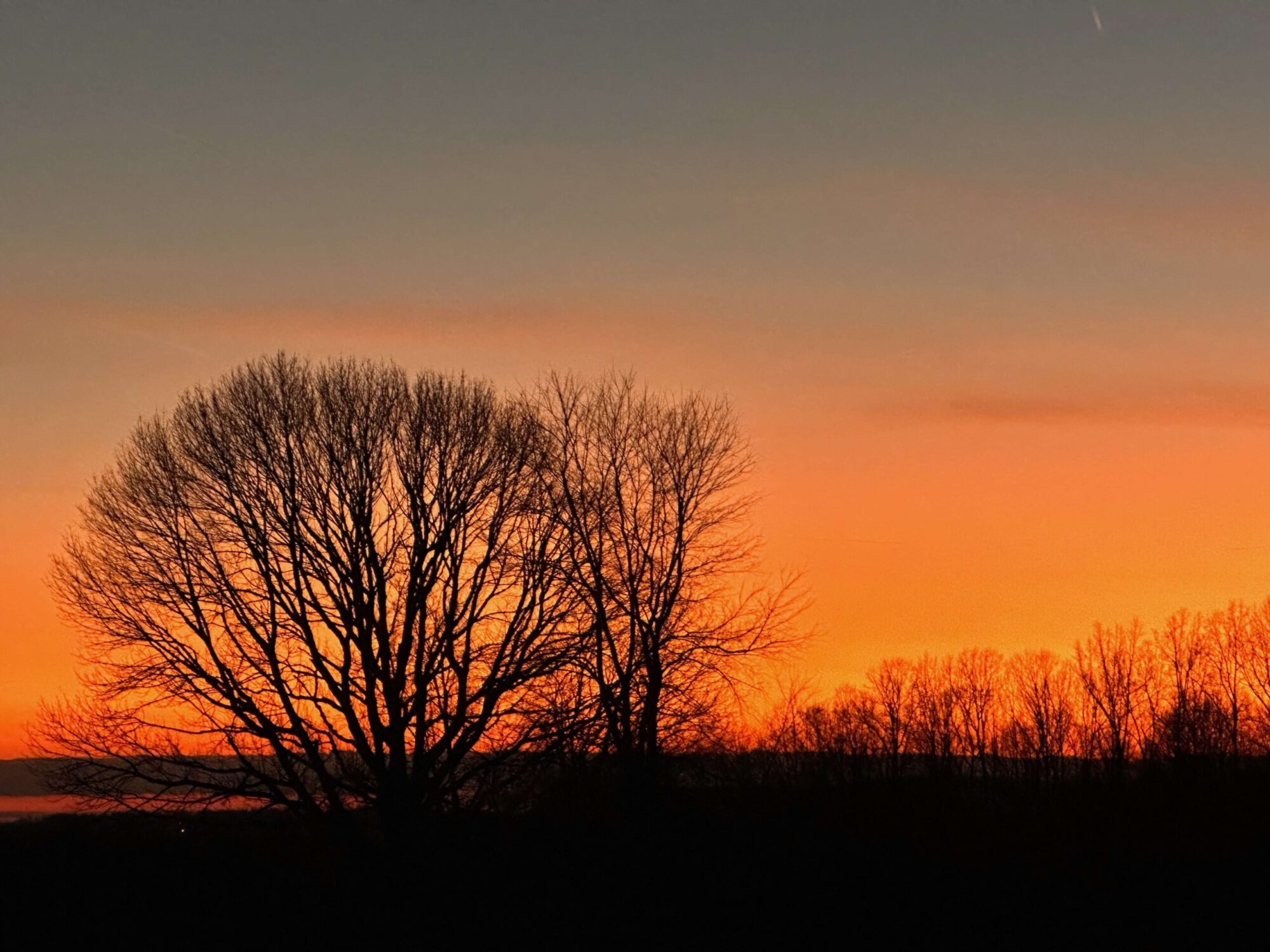
As soon as everyone found a seat, a staff member dressed as an Indian warrior from the Plains called down the fire. Arrows flew into each pit, igniting the wood. It seemed a miracle, but it really as the church camp song goes, “it only takes a spark to get a fire going.” This is especially true when the wood has been soaked with some kind of petroleum products. With the fires burned brightly as we sang songs, watched corny skits and listened to stories. As the light drained from the sky, a chorus of frogs threatened to drown us out. When it was finally dark, the mood became somber, and we sang the song of the voyageurs.
Our paddles keen and bright, flashing like silver; swift as the wild goose flight, dip, dip, and swing.
Dip, dip, and swing them back, flashing like silver; swift as the wild goose flight, dip, dip and swing.
Repeatedly, we sang the song, each time softer. Soon, we whispered the words and could hear fish jump in lily pads near the water’s edge. We started another round and then he appeared. In the middle of the lake the chief stood in a canoe, his arms folded across his chest, a full bonnet of feathers surrounding his head and hanging down his back. A lantern sitting in the bottom of the canoe illuminated him as two other scouts, dressed as braves, paddled quietly. We watched in awe. The canoe beached and several other staff members, dressed as Native Americans, joined the canoe at the show to help the chief out of the boat.
A distant drum began to beat as the warriors danced around the dying flames. Then the Chief joined in, dancing across the front and then up into the benches where he crossed back and forth in front of the sitting scouts, just inches away. We sat, entranced. When he came to me, he stopped, turned, slapped my shoulders, and then lifted me up. Before I comprehended what was happening, happening, one of the braves whisked me to the front. He had me stand by the fire, with my arms crossed over my chest. Several other scouts soon joined me. After a while, the Chief led us away as the campfire closed with the singing of the scout vespers.
Softly falls the light of day, as our campfire fades away. Silently each Scout should ask, “Have I done my daily task? Have I kept my honor bright? Can I guiltless sleep tonight? Have I done and have I dared, everything to be prepared?”
I had just been tapped out for the Order of the Arrow, the brotherhood of honored campers. That night, the Chief told us we’d been elected by our peers to be a part of this elite fellowship, but before we would be welcomed into the group, we’d have to pass an ordeal scheduled later in the summer. I was excited, yet nervous about what I’d have to endure. I’d heard about the ordeals: a night alone in the woods, a day of little food, hard work and silence.
When he told us we could go back to our troops, I set out to find my grandparents. I could tell they were proud of me. Granddaddy asked me to walk with them to their car and once we got there, I spied on the floorboard of the back seat, one each side of the drive train hump, two watermelons. Granddaddy gave me one and he took the other and we walked over to our troop site. My grandma carried a butcher knife and a saltshaker. She cut up the melons on a picnic table in the center of our campsite, sprinkled salt on them, and gave everyone a thick wedge. I sure the watermelons came from Coy McKenzie’s farm. Coy was grandma’s nephew. In addition to growing and curing some of the best bright-leaf tobacco in the county, he was well-known for his watermelon patch.

How thrilling. I’m glad I continued to read backwards, and learn what the tap-out was.
It was a highlight of my younger years.
What special memories! I like the watermelon ending, too. We put salt on watermelon when I was a child, but I never do that anymore.
I’m like you. I haven’t put salt on a watermelon since I was a kid.
I’ve never been in any kind of group like that. Sounds fun though.
Wait till I describe the Ordeal
I was always worried about how I would act when it came to be my time to be tapped out in scouts. As it turned out due to circumstances beyond my control, I never would get far along in the ranks to reach the point of getting tapped out. But I still remember my awe at the ceremony, much like what you described.
If it is done right, you don’t know what’s happening. I expect, however, my father told his parents, but the camp was a couple of hours from Wilmington and only 30 minutes from my grandparents.
That was delightful.
Thanks, Jacqui.