Jeff Garrison
Bluemont and Mayberry Churches
August 7, 2022
Luke 9:18-28
At the beginning of worship
What are the two natures of Christ?
From the early church, the belief has been held that Jesus Christ is one person with two natures: Divine and Human. Or God and Man. It’s a mystery how they go together, but it explains a lot of what we’ve seen over the past couple months as we worked through the middle section of Luke’s gospel as Jesus, a man, does God-like things.
What the Confessions tell us
Jesus’ dual nature is professed in the Apostles’ and Nicene Creed. Both speak of Christ, who is one with the Father, becoming human through the incarnation by the work of the Holy Spirit in the life of Mary. For a more technical definition, The Westminster Larger Catechism explains it this way:
“It was requisite that the Mediator should be God that he might sustain and keep the human nature from sinking under the infinite wrath of God, and the power of death….” And then in the next paragraph: “It was requisite that the Mediator should be man; that he might advance our nature, perform obedience to the law, suffer and make intercession for us from our nature, have a fellow feeling of our infirmities; that we might receive the adoption of sons, and have comfort and access with the boldness unto the throne of grace.” Going on, the Confession says: “It was requisite that the Mediator who was both God and man, and this in one person; that the proper works for each nature might be accepted of God for us, and relied on us, as the works of the whole person.”[1]
-Westminster Confession of Faith
Today, I’ll talk some about the dual nature of Christ. As God, Christ gives us access to the divine. As a human being, he can identify with our struggles. We need both and together, it’s good news.
Before reading the Scriptures:
Two weeks ago, we ended our scripture reading with Herod essentially asking, “Just who is this guy doing the healing and teaching out in the villages?” As I pointed out last week, Luke often let’s such questions linger a while. Instead of giving an immediate answer, he gave another example of Jesus’ power with the feeding of the 5,000. Today, we’ll see that Jesus and the disciples have finally escaped the crowds, which allows Jesus to ask the disciples about who the crowds understand him to be.
Good leadership
A good leader wants to know what others think and understand. Sometimes they may not like what they hear. Knowing what others think, may or may not change what a leader does. But if the leader doesn’t know how others understand their message, they could be moving into a minefield. So today, Jesus asks the disciples what people say about him. And he receives essentially the same answer Herod received. But Jesus pushes deeper, which leads to Peter’s confession and a chance for Jesus to begin some in depth teaching with the disciples.
This story in Matthew in Mark
This story also appears in Matthew and Mark, where we’re given more details. Unlike Luke, in those accounts, we’re told it was in Caesarea Philippi,[2] which would be an area away from Galilee. Luke, instead of telling us where this occurs, just says it was in private, after prayer. All three gospels may be correct, but Luke’s holds out special significance. Jesus first prays! We can learn from this.
Read Luke 9:18-28
Quick summary of text
We learn a lot from this passage about prayer, the nature of Jesus, the need for trust, and living in God’s kingdom. Let’s look at what this text teaches.
Role of prayer in Jesus’ life
Luke has already shown us the importance of prayer in Jesus’ life. Jesus has been known to slip away in private to pray.[3] He heads up on the mountain to pray before naming the 12.[4] Luke later tells us about Jesus’ harsh criticism about prayer done for public display and admiration. Jesus condemns the Pharisee who makes a show of his prayer in the temple but elevates the tax collecting sinner who humbly begs for forgiveness.[5] Jesus isn’t against public prayer. He defends the temple as a house of prayer while condemning the impropriate use of the space.[6]
Importance of prayer
Luke shows the importance of humble, private, and sincere prayer. Prayer is not to be an occasion to grandstand. We can only image what Jesus would say about praying on the 50th yard line after a high school football game. Prayer is personal, as Jesus shows by slipping off into the hills. It is between us and God. As Jesus shows in the Lord’s Prayer, prayer focuses on God’s will, not our desires.[7]
Some see prayer as the answer to problems. When we can do nothing, we say, “I’ll pray for you.” Sometimes that sounds insincere. Certainly, if we can do something to change or help, we should.
Others have blamed the failure of our schools on the lack of prayer. But the lack of prayer is not the problem. There has always been prayer in school. It’s mostly private prayer when students (and I was one) pray for a test for which we hadn’t prepared. Such prayers weren’t often answered, or at least not in the way I’d hoped.
The problem arises when we think of prayer as providing God a shopping list of things to correct without working with God to make things better.
Prayer as an intimate conversation with God
Prayer, as we see here, is intimate conversation with God. While there is a place for public prayer, most prayer needs to be done alone. It’s especially important for us to pray privately. This fall, I plan a six-sermon series on prayer, but before then think about your prayers in the light of how Jesus prayed. Do you get away to talk to God privately? It’s an important part of our discipleship.
Jesus’ question
We don’t know what caused Jesus to ask the question to the disciples, only that it came out of prayer. When finished praying, Jesus went to the disciples and asked, “Who do the crowds say that I am?” Their answer parallel’s the answer given to Herod as to who it was out in the countryside doing this work: a resurrected John the Baptist, Elijah, or one of the prophets.[8] This answer shows that Jesus’ message is getting traction and that people are taking him seriously. Except for John the Baptist, whose death at the hands of Herod was only recent, the others have been gone for centuries.
Jesus then turns to the disciples and asks them point blank, “Who do you say that I am.” It’s not how others identify Jesus that is ultimately important. It’s the role Jesus plays in our lives.
Peter’s confession
Hearing this question, Peter jumps up and says, “You’re the Messiah of God.” Good work, Peter. Of course, knowing this doesn’t mean that Peter will always be faithful. We know he’ll deny Jesus. But for now, Peter is the man of the hour. He gets who Jesus is, but like us he will struggle the rest of his life to follow Jesus in a worthy manner.
The hard truth of God’s Messiah
The disciples now understanding Jesus’ nature, that he’s not just a man; he’s also God’s Messiah. Then Jesus seemingly pours cold water on their heads as he informs them of the difficulties ahead. The Son of Man will be rejected and killed yet rise on the third day.
I’m sure the disciples didn’t see this coming. This wasn’t their idea of the Messiah.
Expectations of disciples
Jesus continues, teaching not just about what will happen to him but his expectation from his disciples. A disciple must deny him or herself and follow Jesus down this hard road. We live within a paradox. Discipleship can be counter intuitive. If we want to save our lives, we must be willing to lose our lives. We can’t be a disciple for ourselves. As a disciple, we belong to Jesus, alone. He goes on to warn us of being ashamed of him.
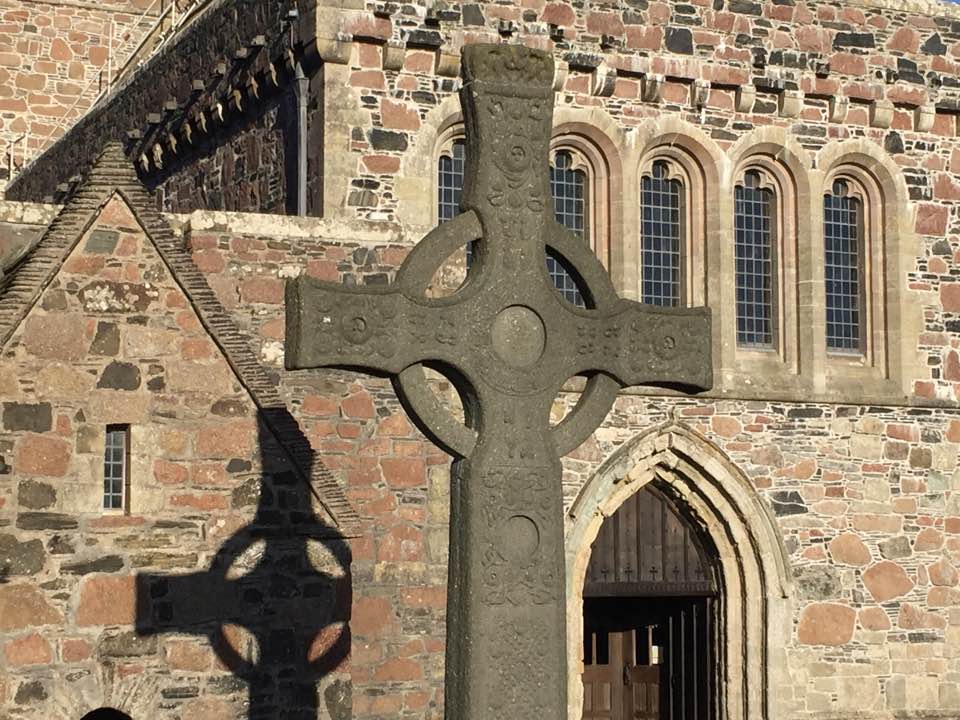
We know the cross was the ultimate symbol of shame in the Roman world, yet Jesus glorifies the cross. The disciples, then and now, may suffer. But will we stand with Jesus at the cross or will we hold on to worldly values and turn away in shame?
Seeing the Kingdom
Finally, Jesus ends his teachings by letting people know there are those who will not taste death before they experience the kingdom of God. This last saying has created confusion over the years because way too many people try to interpret it through end time scenarios. By the time Luke wrote his gospel, according to what Jesus says, the kingdom was already here. The kingdom begins with the resurrection.[9] Of course, it may not have come in its fulness and we still long for heaven, but those who follow Jesus are called to into the kingdom in the present.
These reverse values which Jesus presents, such as gaining life by losing it, begins now. Our total allegiance and our devotion are to God’s kingdom. We live and trust in Jesus. And Jesus is not some distant God. Because Jesus has been here, and lived a life like us, he knows what we’re going through. The dual nature of Jesus allows him to sympathize with our weakness and encourage us in our temptations. He understands our prayers.
Conclusion
I saw a sign the other day that read, “Prepare to meet thy God.” And while we should prepare to meet God, we shouldn’t do it in fear. If we’re following Jesus and have a regular and honest prayer life, there is no need to fear. For we already know God.[10] We’ve already met God. Instead of worrying about meeting God, we can look forward to that face-to-face meeting with joy and anticipation. Until then, keep praying and keep your eyes on Jesus. Amen.
[1] Presbyterian Church USA, Book of Confessions, The Westminster Larger Catechism, Questions 38-40 (or 7.148-150)
[2] Matthew 16:13-23 and Mark 8:27-33.
[3] Luke 5:16.
[4] Luke 6:12.
[5] Luke 18:9-14.
[6][6] Luke 19:45-46.
[7] Luke 11:1-4, especially verse 2, “Your kingdom come.”
[8] See Luke 9. Also see my sermon on this section: https://fromarockyhillside.com/2022/07/building-relationships/
[9] I. Howard Marshall, Commentary on Luke: New International Greek Testament Commentary (Grand Rapids: Eerdmans, 1978), 379.
[10] John 14:8-14.