
 Jeff Garrison
Skidaway Island Presbyterian Church
John 21:1-14
May 17, 2020
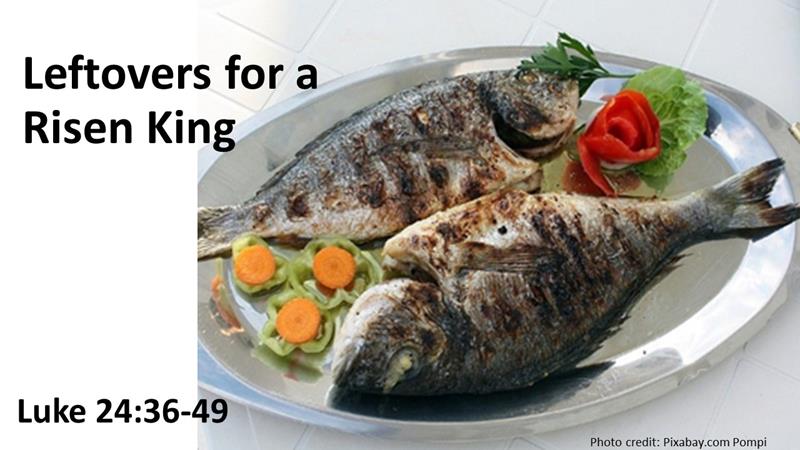
Today and next Sunday, we are going to explore Jesus’ last post-resurrection account in John’s gospel.[1] Two weeks ago, when I preached last, we discussed Jesus eating left-over fish for dinner.[2] Today, the disciples eat fish and bread for breakfast on the lakeshore.
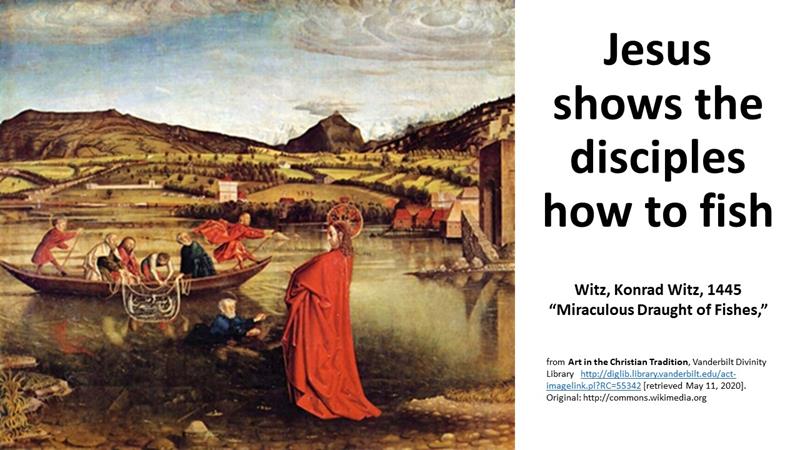
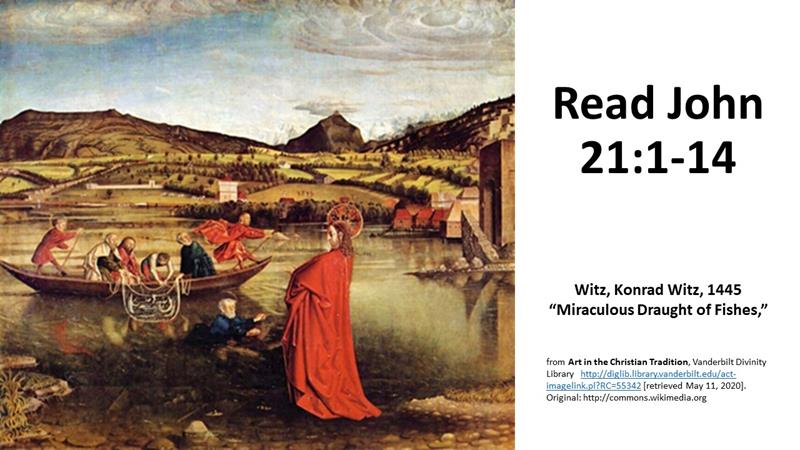
As we’ve done throughout this series, we have a classical painting, this one from the 15th Century, to help us get into the story. This artist, I doubt, ever saw the Holy Lands. He images Jesus and the disciples on a European stream. But he gets some things right. There are seven disciples in the picture, Jesus is showing them how to fish, and Peter is so excited he’s swimming to shore to be with Jesus. But more importantly, he shows Jesus coming to the disciples! Place yourself into the painting, just downstream. Think about all this. You have this landlubber giving instructions to the men in the boat who haven’t caught a fish all night. Suddenly, there’s more fish than they know what to do with? Is it a miracle or a lucky guess? What do we make of this story? What can we learn? Listen as I read from John 21, reading from The Message translation.
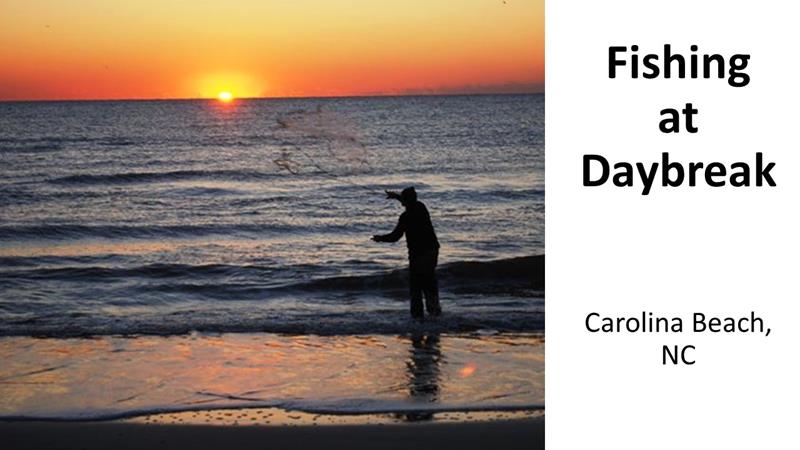 The best fish are fresh from the water. Even greasy bluefish make a great breakfast when grilled over a charcoal fire on the beach. I was probably 10 or 11 when I first had such a treat. We were fishing on Masonboro Island. It was in the fall, when the bluefish run. We got up when it was still pitch dark and chilly. My dad started a charcoal fire, which helped us stay warm. But instead of sitting around the fire, we soon had lines in the dark water, casting out into surf. In darkness, we fished with bait. On the end of the line, we had a rig with a weight and two hooks, each containing a strip of mullet. When the fish hit, we’d yank the rod to set the hook, then reel hard. Soon, if lucky, a flapping fish could be made out from the distant light of the lantern. We’d have to bring the fish into the light in order to safely get out the hook.
 Leaving our fish on sand, we rebait our hooks and again cast out into the surf. Slowly, the sky changes. The stars began to extinguish themselves. A ribbon of light appears on the horizon, and it gradually growed. We began to be able to make out the beach and could see where the waves were breaking. Soon afterwards, the sun would slowly rise, its rays seemingly racing across the water toward me, as if they whose rays were destined just for me.
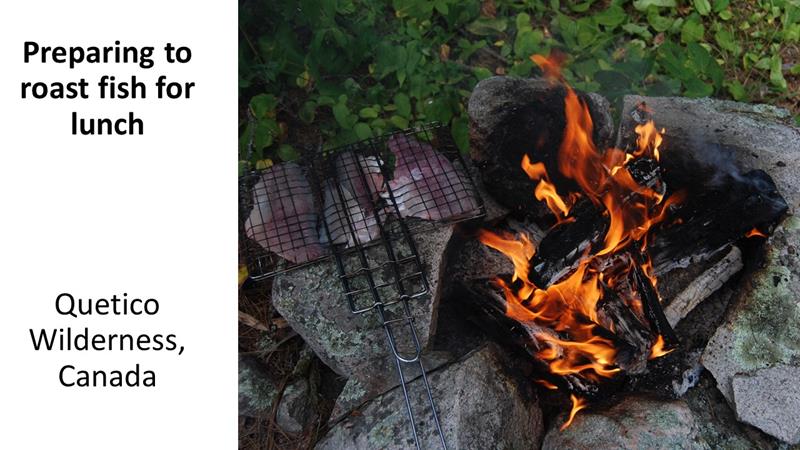 When there was a lull in the action, we’d stop and clean a few fish, washing them off in the surf, and then lay them on a grill over the coals. In a few minutes, we’d be “eatin’ good.” Afterwards, we’d change the rigging on our rods to plugs and spoons and head back to the water’s edge. Good memories of good times.
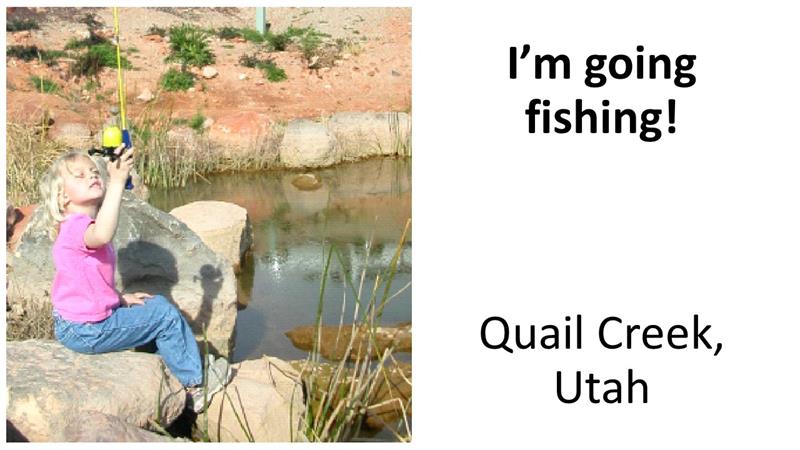 Perhaps it was because I grew up in a home where fishing ranked just below church attendance in priority that Peter’s statement, “I’m going fishing” seems normal. And to the six disciples with him, it sounds like a plan. They head to the water and fished the night. They had terrible luck. That happens. Some mornings there are no bluefish for breakfast.
These men, before becoming disciples, had been fishermen. But this isn’t a story about fishing, even though surprisingly we’re told exactly how many fish they caught. Instead, it’s a post-resurrection story, about Jesus coming to the disciples.
 As I’ve emphasized in these sermons on Jesus’ resurrection, the disciples learn a true lesson. They are not in control. Jesus is in control. We often have this image of going to Jesus, but in truth, Jesus first comes to us. In today’s story, Jesus knows where many of his disciples are. They’re by the lakeshore, fishing, because that’s what they know how to do. So, like when he first called them, he returns to call them again. Next week, we’ll look at how Jesus sends out Peter with a mission, but before we go there, I want us to spend some time in this story.
Imagine, having spent the night fishing with nothing in the bucket. Then along comes someone on shore, 100 yards or so away, far enough away you don’t recognize him. This someone greets you and asks that question that fishermen despise on a bad day. “Have you caught anything?” A loaded question. If you out on a pier and ask that question to a fisherman, his response will probably depend on how well the fish are biting. If there’s only one pinfish in the bucket, you’ll get a grumbled answer that essentially tells you to keep moving. But if the fishing has been good, the fisherman may open the cooler and let you look with awe on his catch.
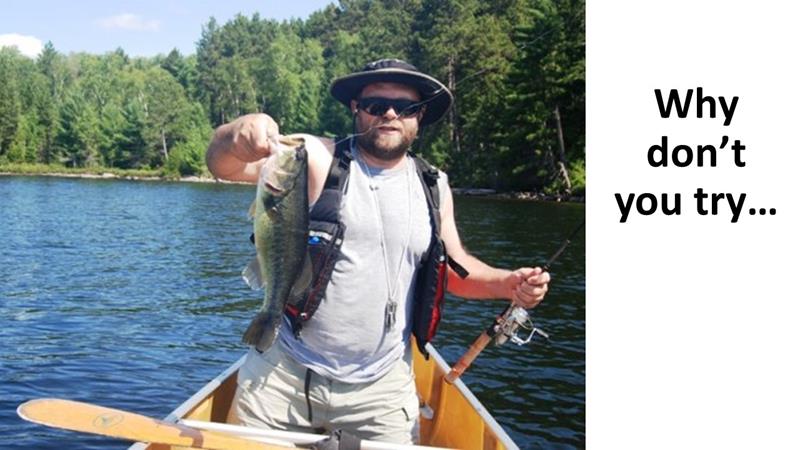 On this night, the fishing hadn’t been good. Jesus then does something else that goes against fishermen etiquette. “Why don’t you fish from the other side?” That’s like suggesting a different lure or fly. “Take off that spinner and put on a jitterbug; or get rid of that wooly bugger and put on a popping bug.” But Jesus’ advice pays off as they catch so many fish the net is about to break. Only then does the Beloved Disciple realizes it’s Jesus. Before he can act, Peter throws on some clothes, jumps in and swims toward shore.
Peter, whose nickname was “the Rock,” obviously had learned to swim since that earlier occasion when he tried to walk on water and sank—like a rock.[3] The disciples struggle to pull in the net and when they get to the beach they realize Jesus has already prepared breakfast. But Jesus doesn’t just let those good fish go to waste. He encourages the disciples to bring some of them over and add them to the fire. Jesus uses what we offer to make the banquet table even larger—there’s a message here.
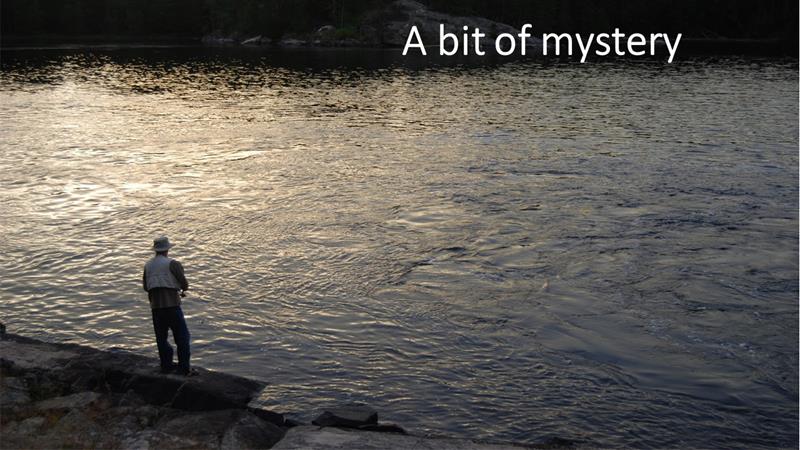 Like the other post-resurrection appearances, there’s also bit of mystery. Why do we even have verse twelve? After Jesus calls them in for breakfast, we’re told that no one dared to ask, “Who are you?” They knew it was Jesus, but the text leaves us wondering what’s going on. Furthermore, they don’t recognize Jesus right off. It’s only when they follow his suggestion that they encounter him. There’s probably a lesson in that, too. When we listen to Jesus and do what he says, our relationship grows.
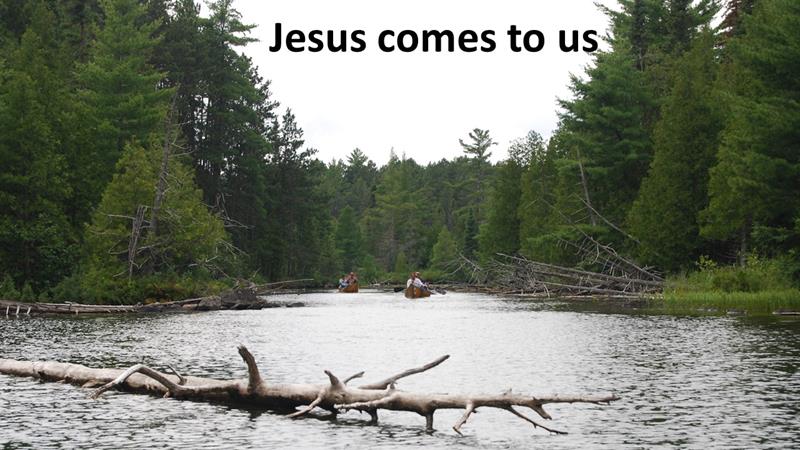 There are three things that happen to the disciples in this passage that we should take to heart. First, Jesus comes to us. Jesus shows up at the most unexpected places. In these stories, he doesn’t show up at church or the synagogue or the temple. Instead, it’s at work, after or before visiting hours. Think about the post-resurrection appearances. Except for meeting the disciples on the road to Emmaus, Jesus always shows up on the shoulders of the day (at daybreak and in the evening). In this case, Jesus arrives as the disciples are finishing up their night shift at a job that wasn’t going to be paying much this day. As followers of Jesus, we must be ready for whenever our Savior decides to pop by. Jesus is not just Lord over Sunday or over religion, he is Lord of all, and can meet us wherever we find ourselves. This is good news in a time that many of us find ourselves prisoners in our own homes! Yes, Jesus can show up even there, you’ll just have to let him in.
A second thing we learn is that Jesus doesn’t just give us all we need. Yes, Jesus had the fire going with fish and bread being prepared, but notice he doesn’t say to the disciples: “We don’t need those 153 fish, throw ‘em back.” That would have belittled their efforts. Jesus doesn’t even take credit for helping with the catch. Instead, Jesus invites the disciples to bring some of what they caught and to place them over the coals. Jesus uses what we have and expands it.
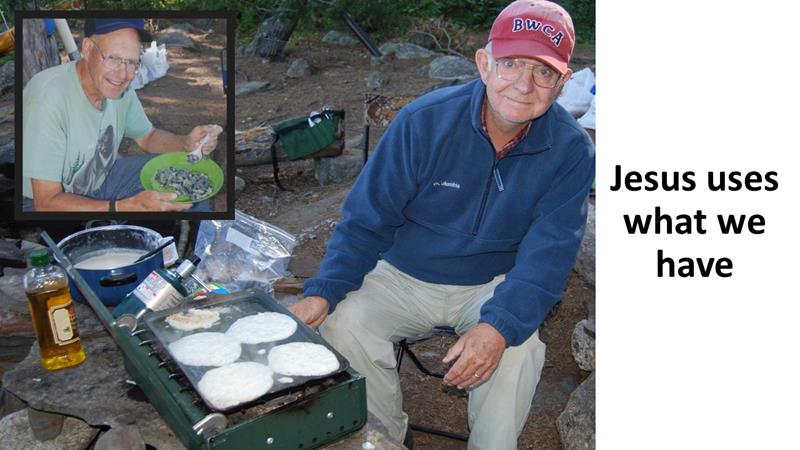 Let me tell you a story to illustrate this. Many of the photos I’ve using today came from a 2008 trip into the Quetico Wilderness in Western Ontario. The guy at the camp stove you see now is Doc Spindler. One morning, he was talking about having pancakes and so proud of himself for prepacking everything he needed. To be helpful, Jim Bruce (who visited us here at SIPC in February and seen in the picture with the full plate) and I went out early that morning, braving the bears as we picked a quart of so of blueberries. We brought them back and Doc was so happy to have blueberries to mix into pancakes. You use what you’re given. Doc knows this. Although a great guy, however, Doc isn’t Jesus. Instead of the baggie with pancake mix, he used a package of meal for frying fish and the blueberry pancakes ended up coming out like goulash. But with a little syrup and butter and an empty stomach, it was still good.
Jesus takes our gifts, our talents, and employs them in manners beyond what we ever imagined. We just need to be willing to share our blessings. What have we’ve been blessed with that we could offer Jesus for his use in the building of his kingdom?
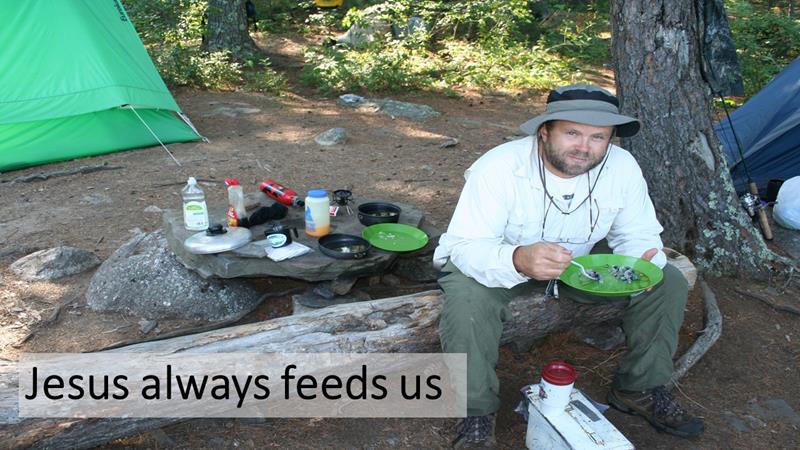 Finally, Jesus feeds us. In this case, he fed the disciples a hearty breakfast of fish and bread. But Jesus, who calls all who are weary to accept his yoke, will restore our tired souls and feed our minds and bodies with his presence and comfort.[4] We know, that with him, we have nothing to worry about, for his love is greater than death. When we’re burdened, and let’s face it, we’re all burdened these days as we worry about what’s going to happen, we should call on and depend upon Jesus. He’ll stand by us when no one else will. Amen.
Commentaries Consulted:
Brown, Raymond E., The Gospel According to John XII-XXI: The Anchor Bible ( Garden City, NY: Doubleday, 1970
Bruner, Frederick Dale, The Gospel of John: A Commentary (Grand Rapids: Eerdmans, 2012).
Sloyan, Gerald, John: Interpretation, A Biblical Commentary for Teaching and Preaching (Atlanta: John Knox Press, 1988).
©2020
[1] Next Sunday, we’ll look at the last half of John 21.
[2] Luke 24:36-49.
[3] Matthew 14:28-30
[4] Matthew 11:30.
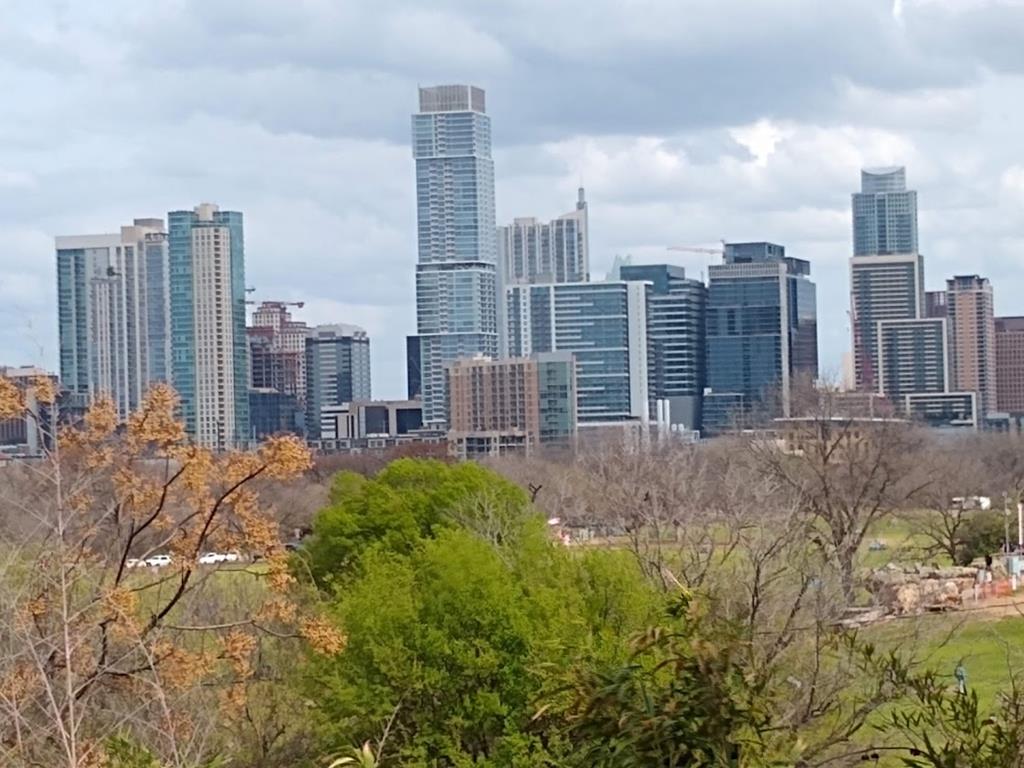

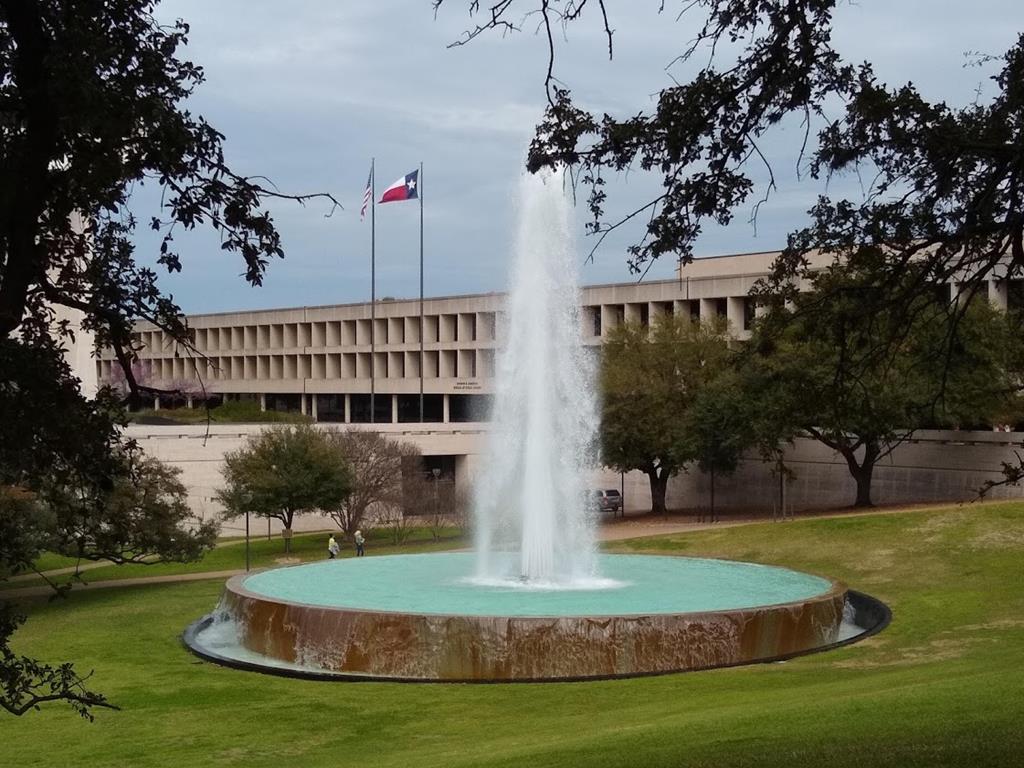



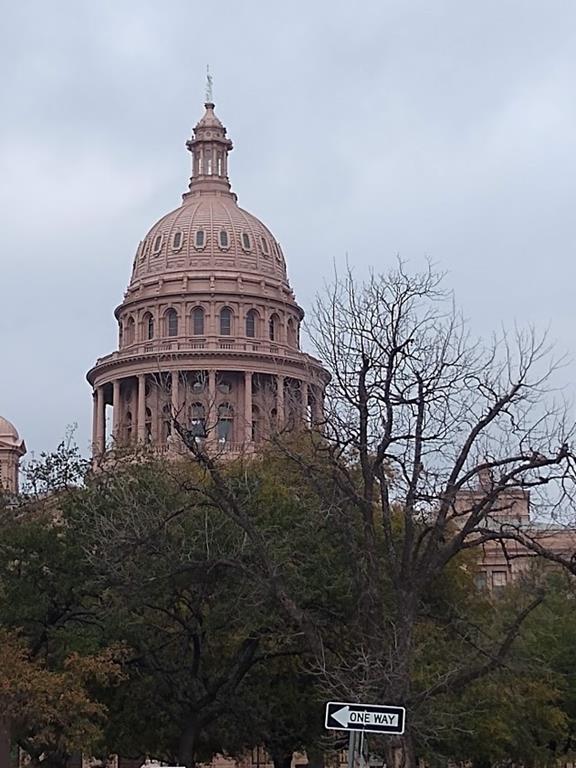

 After a few hours of walking through the gardens and some time to write and read, I began my walk back along the river, watching several rowing crews practice on the water. Then I cut back over to Barton Springs Road, where I’m shocked at the line at Terry Black’s. I was told it was a 45-minute wait. If folks are waiting that long it must be good, I thought, and joined the line. It was. I had some of their pork and a brisket, both which were good. The banana pudding was passable.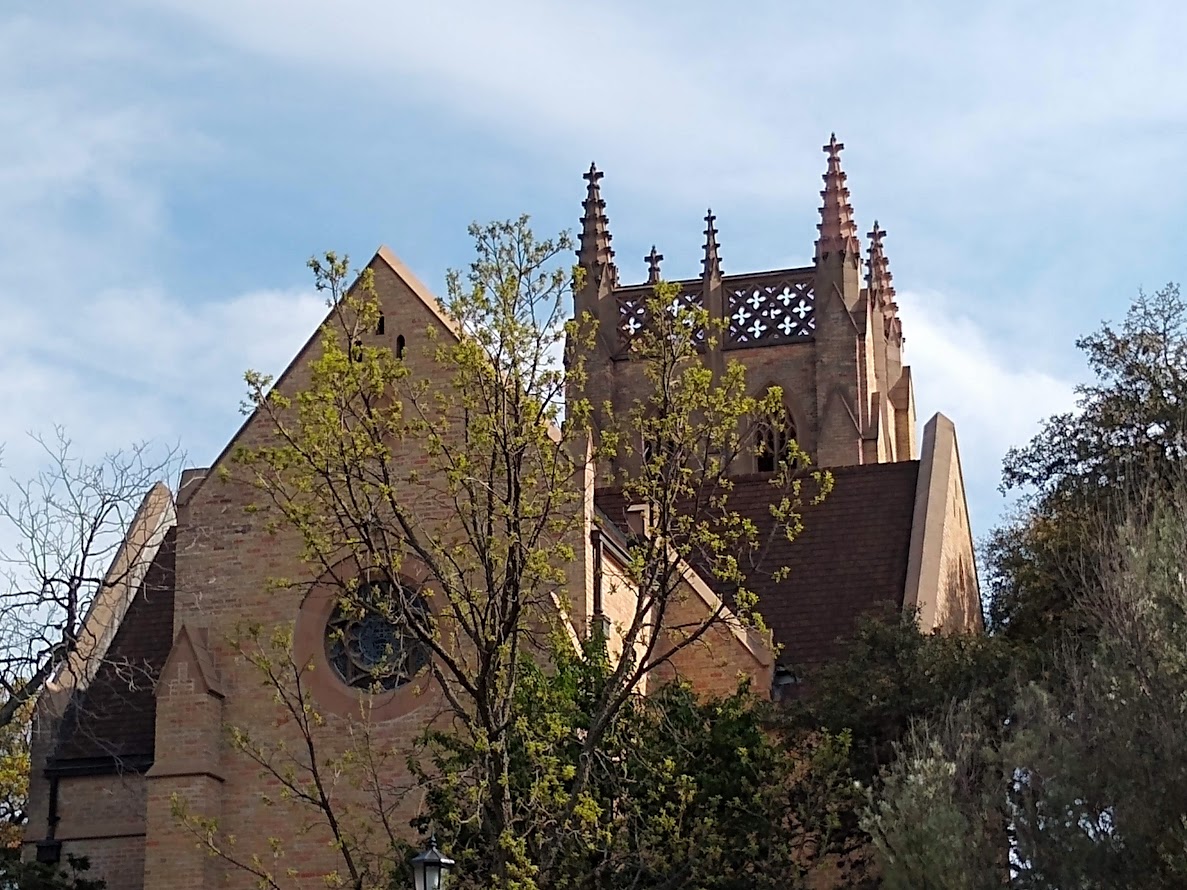
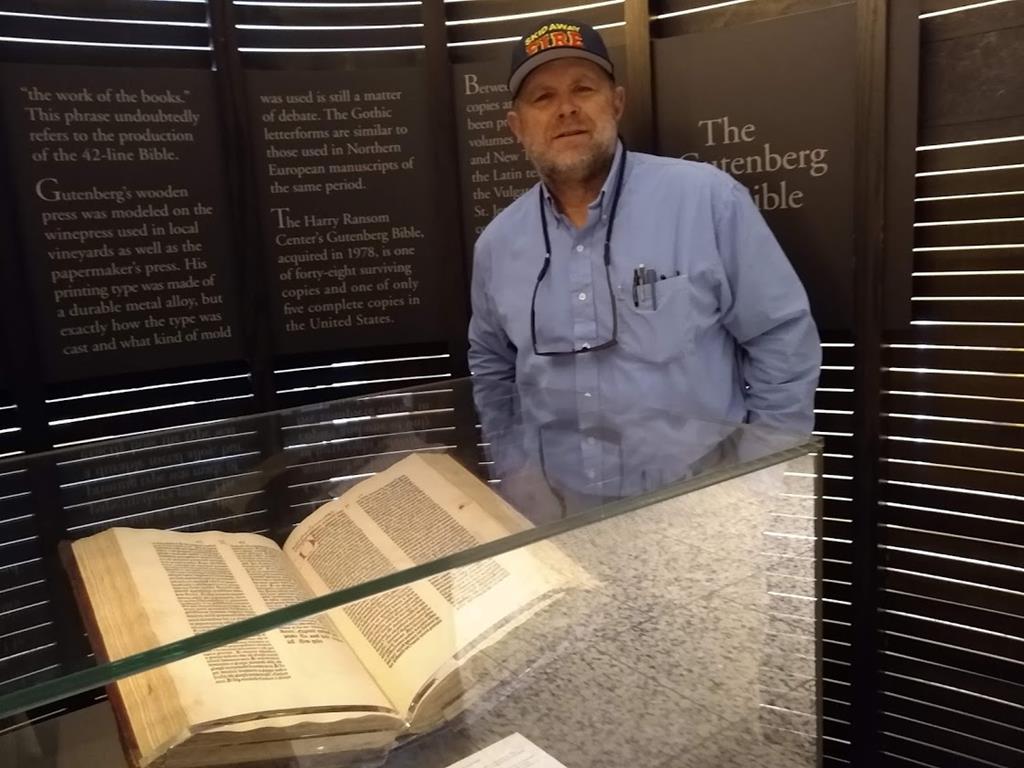
 Eric Goodman, Cuppy and Stew: The Bombing of Flight 629, A Love Story (San Francisco: IF SF Publishing, 2020), 220 pages with a few photographs.
 High tide last night was at 9 PM. I went out around 8 PM, catching the last of the sunset and then watching the moonrise, paddling around Pigeon Island (approximately 5 miles). The tide was very high and I could easily go through the marsh. Here’s a poor quality photo taken with a smart phone from a kayak that was slightly rocking from the gentle waves. The photo doesn’t do the view justice. It was an incredible sight and the paddle was delightful
 Jeff Garrison
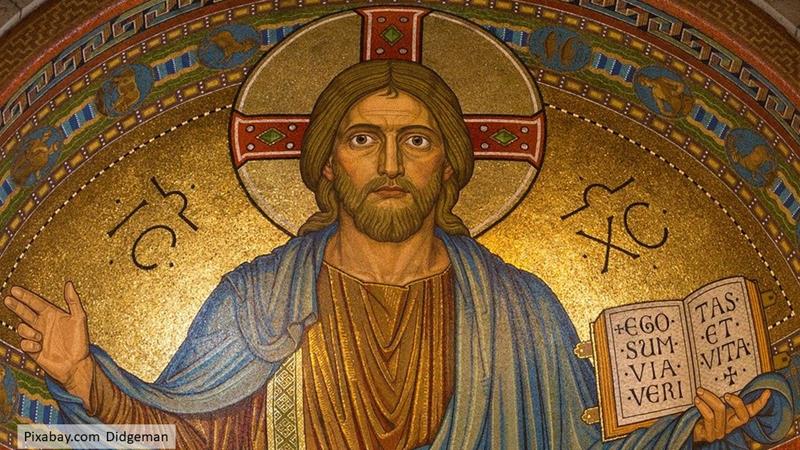 One of the common characteristics of the post-resurrection appearances of Jesus is that no one is looking for him, and no one “finds him.” Instead, Jesus just shows up. The disciples are hearing from the women about Jesus not being in the tomb, reports of him being in Emmaus, and from Simon Peter. But they don’t send out a search party to find Jesus. They’re scared. They lock themselves into a room while discussing what they consider as rumors. And when Jesus mysteriously shows up, they freak out. “It’s a ghost!”
 One of the lessons we should learn from the resurrection stories is that Jesus controls both his and our destinies. It’s not about us going out looking for God, it’s about God looking for us. There are no barriers that we can put up to avoid God. The disciples discovered this when Jesus pops in. This is good news for those of us sheltering and avoiding contact with others in order to stay healthy during this pandemic. While we might not be able to go to church on Sunday mornings, God can invade the privacy of our homes. We can’t keep God out. As Jesus shows us, God is in control. That’s good, because we can screw things up, so we’re a lot better off depending upon the God who surprises us, than depending on our own inability to bring us back into a relationship with the Almighty. This is what the Presbyterian doctrine of election or predestination is all about.
 But before the disciples can understand this, they must realize who this is that has invaded their meeting. In their mind, Jesus is dead. You don’t come back to this life once grasp the idea that he is risen. First, he asks for a bite to eat. It’s been a while since his last supper. It’s important that they see food going in his mouth (see food, seafood, get it?). Jesus then points to his flesh and bones. Luke wants to assure us that Jesus’ appearance to the disciples after his death isn’t just wishful thinking on their part.
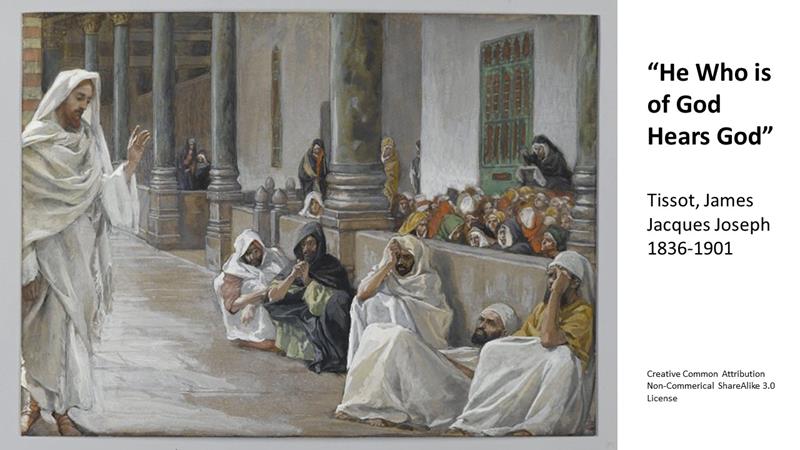 The second thing Jesus does, which is like what he did with those in Emmaus, is to help the disciples understand the scriptures. Jesus wants them to grasp the idea that his suffering, death, and resurrection has been God’s plan.
 Of course, because this is God’s doing, not the disciples’, they will need to be given the strength and ability to carry this mission out. Jesus, in his commission to the disciples in Luke’s gospel, is looking forward to the: coming of the Holy Spirit, to Pentecost, after which the disciples will take Jesus’ message to the end of the world.
 Jesus shows up and calls us because, sooner or later, we are no longer going to be hiding in our home. Life will open back up and when that happens, we need to be ready (just as the disciples were ready on Pentecost) to go into the world and make a difference. Think of this time we’re in as a Sabbath. Like the disciples, we rest today. In a short while, there will be plenty for us to do. As followers of Jesus, we’re to change the world, to make it a kinder more generous and gracious, home. May we catch that vision and live into it. Amen.



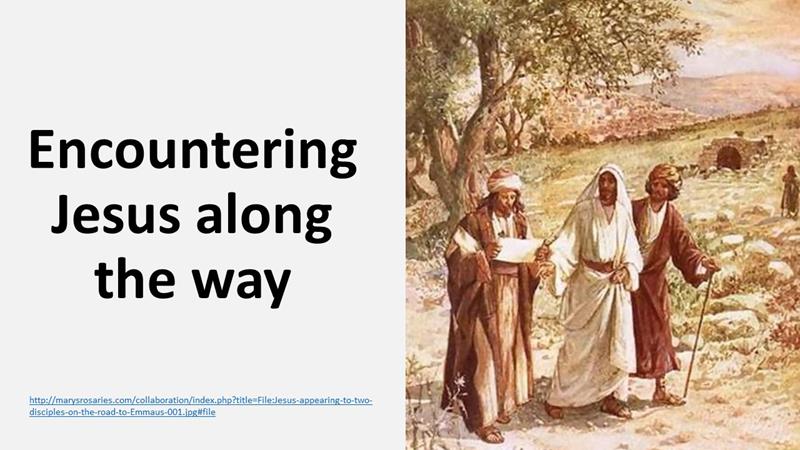
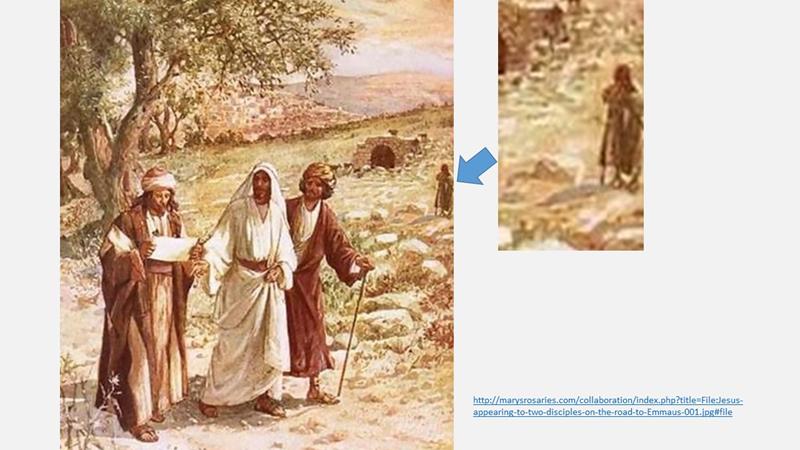 I have a lot of time to think out here, watching the sheep. I see a lot of people coming and going. Jerusalem, the Holy City, is just over the rise, a few miles away. These three were heading away from the city and engaged in a great debate. Even with my back turned, I could hear them a mile away. And as they were talking, the third guy, the one in a white robe, catches up with them. He joins their conversation. They seem rather surprised that he didn’t know what they were talking about. There’s this man, supposedly a king, who’d been crucified. But then he starts asking questions and I can tell they are intrigued. Here, a guy who didn’t seem to know the news, yet knows the scriptures.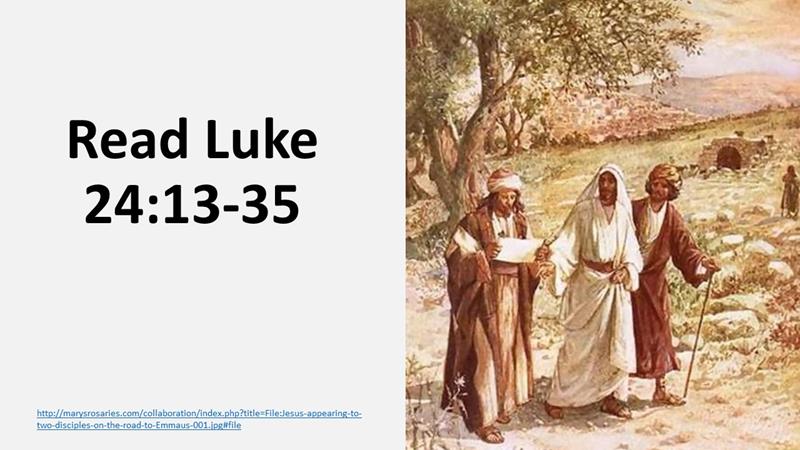

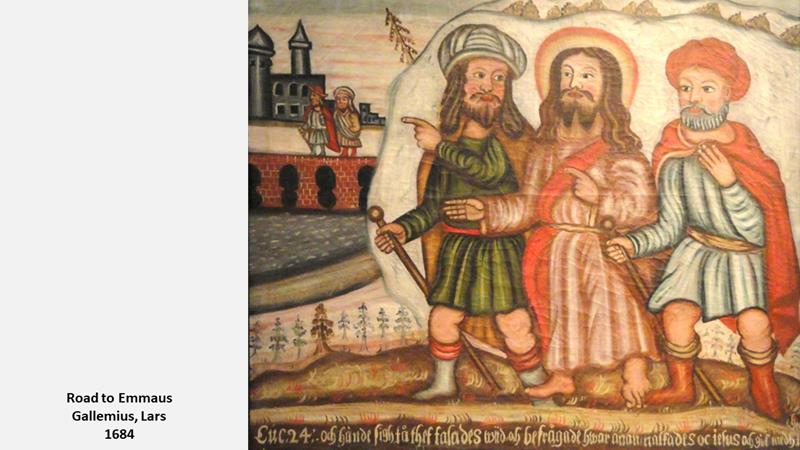 On this occasion, they are walking and discussing the events of the past few days when they are joined by a stranger. This makes sense to me, as I have walked a lot in my life. I recall numerous occasions along the Appalachian Trail where I was talking to someone and a third person comes up behind us and, overhearing what we were talking about, puts his two cents worth.
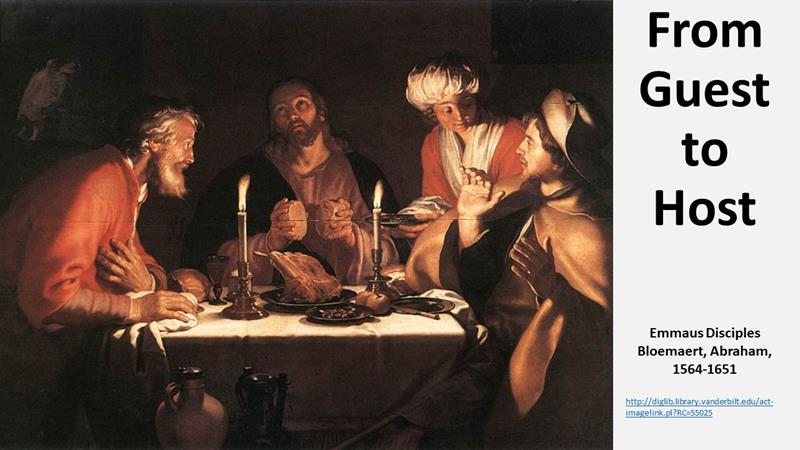 Something else happens. Jesus, at the table, goes from being the guest to the host.
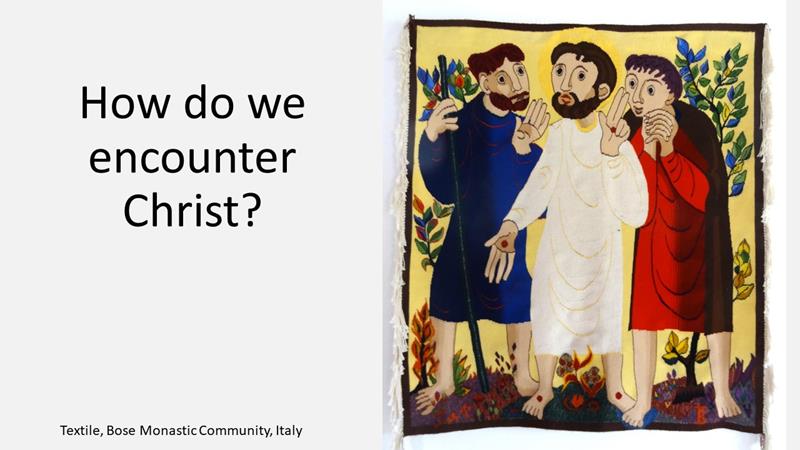 In some ways, our encounters with Christ are probably more like these two disciples walking to Emmaus. There are very few Damascus Road experiences, like that of Paul. It ranks up there with Moses’ burning unburned bush. Most of us experience Christ, like these two, when we realize something someone said caused our hearts to burn, or when someone opens Scripture and we learned the eternal truths of God’s Word. And when something like that happens, we must tell someone. It’s a Truth we can’t keep to ourselves. This is how our faith spreads. We encounter Christ through his word or through someone who speaks to us about Christ and then Christ becomes real to us.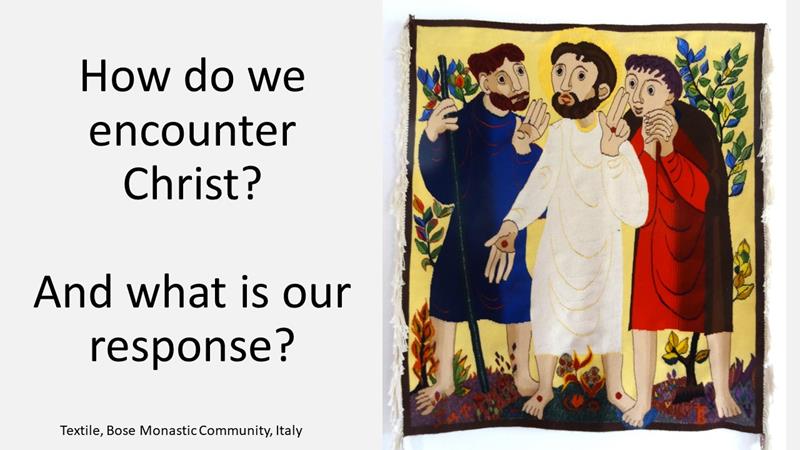

 N. T. Wright, Surprised by Scripture: Engaging Contemporary Issues (New York: HarperOne, 2014), 223 pages including a scripture index.
 Jeff Garrison
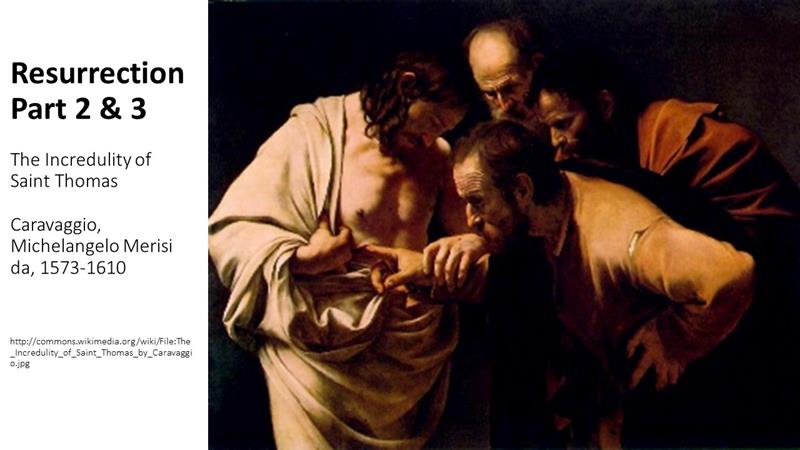
 Like Thomas, I also have doubts. I was just not willing to speak up. Can this really be Jesus? After all, his body was so broken when they pulled him off the cross. Yet, he’s now in front of us. Jesus insists that Thomas, who doubted when they said Jesus had risen from the dead, stick his finger into his wound. I’m watching. Thomas is reluctant, but Jesus grabs his wrist and pulls his hand toward the wound. Can this really be the same Jesus, that just a little over a week ago, hung on a cross? And is he the same Jesus we followed throughout Galilee? Will people believe us when we tell what we’ve experienced? I no longer understand what is happening, but I know that nothing will ever be the same.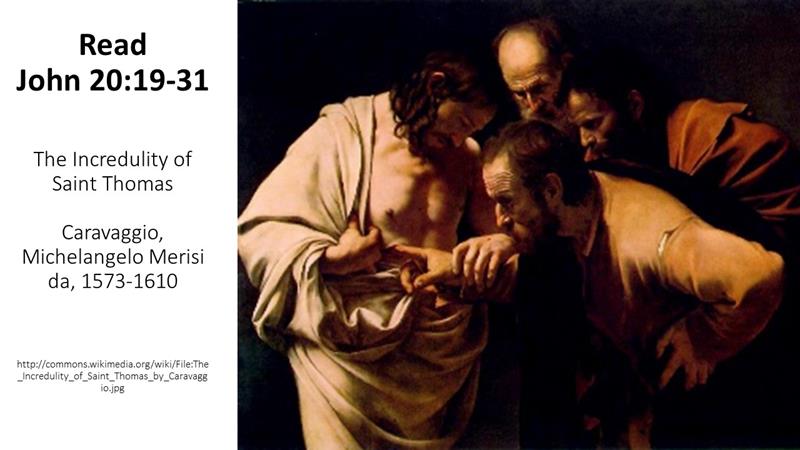
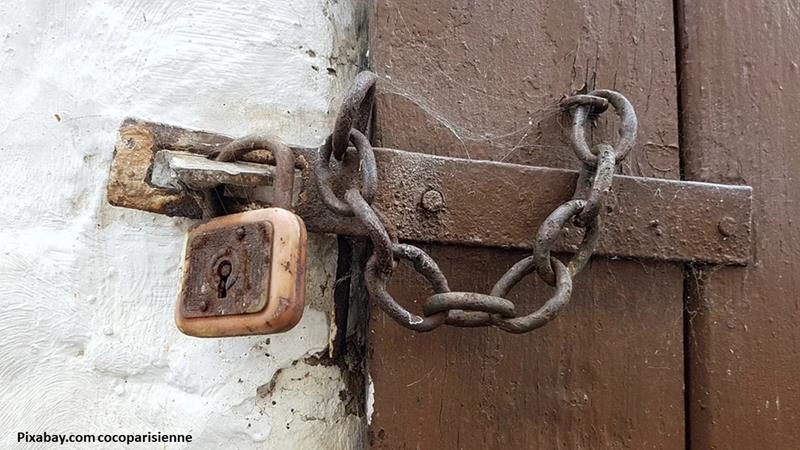 What a week it. From the Parade to the cross and now on the evening of the first day of a new week, the disciples gather in secret. The doors are locked. Everyone is exhausted. Fright and fatigue show on their faces. After three years, they only have each other. And now there’s a rumor going around, started by Mary Magdalene, that Jesus is alive. Some think it possible, but others believe it’s just idle tale?”
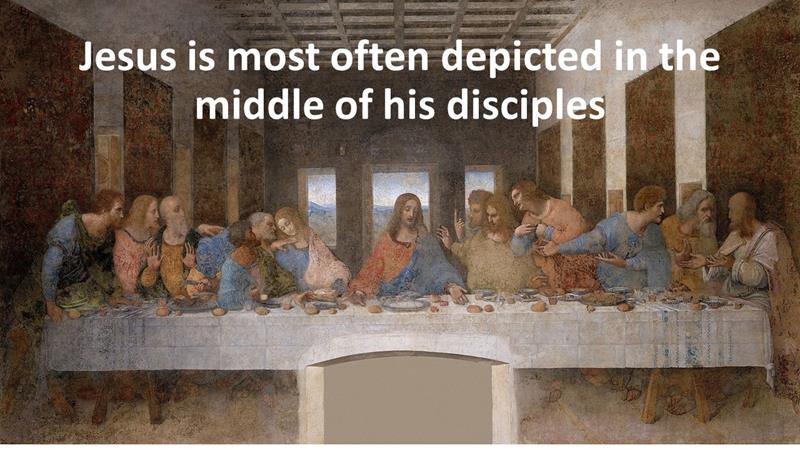 And then suddenly, as the sun sinks in the West, Jesus appears. How did he get through the locked doors? But here he is, when he belongs, in the middle of the middle of the gathered disciples. Jesus was the one who unites the disciples. He’s always in the middle. He was even in the middle of those crucified on Friday. The middle is where Jesus belongs.
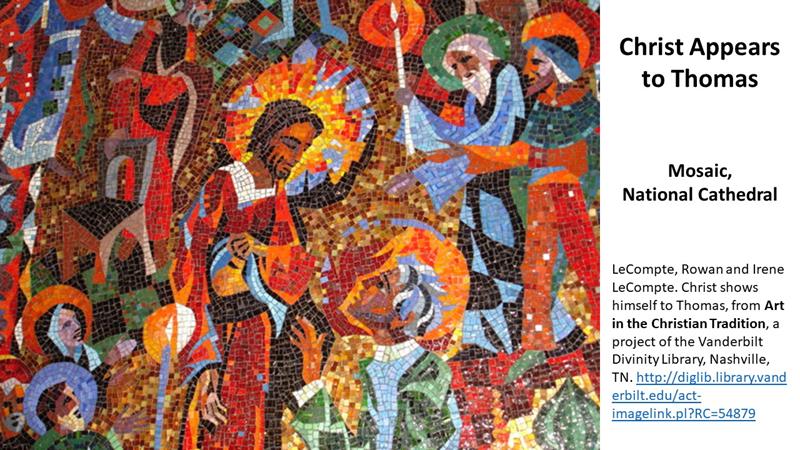 We could argue that this is the climax of John’s gospel. “My Lord and my God,” acknowledges that Jesus is more than the Messiah. We get a whiff of this in Matthew’s gospel where we’re told the women at the tomb worshipped Jesus.
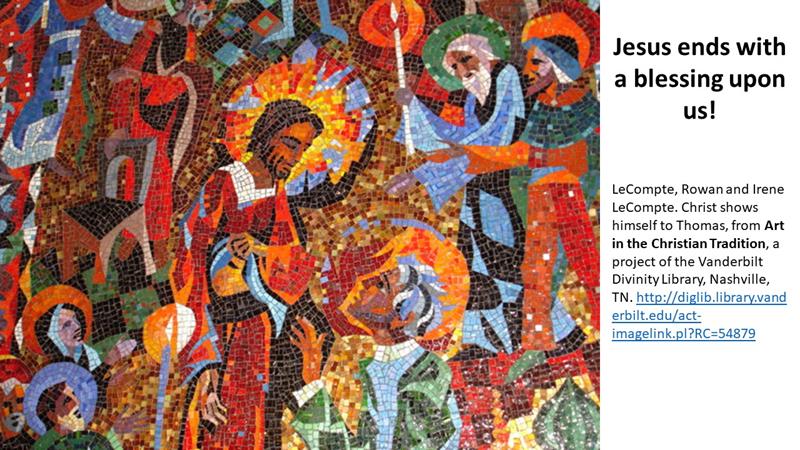 What all this means to us, today, two millenniums after the resurrection? Jesus’ last words in this passage are interesting. It’s a blessing on us. “Blessed are those who have not seen and yet have come to believe,” Jesus says. Did you hear that? He’s talking about you and me; he’s blessing those of us who have not had an opportunity to stick our fingers into his wounds. Instead of seeing, we believe due to the presence of the Holy Spirit and the testimony of others who have felt Jesus’ presence in their lives. And because we have faith in Jesus Christ, we’re to listen to his teachings and to live lives that strive to glorify him. That’s the challenge we have, as individuals, to listen to Jesus and to live faithful.
 Furthermore, as a community of believers, we’re able to offer forgive sins. That’s quite a task. You know, there are a lot of good things that the church does in the community that other groups can also do, and in some cases these groups can even do it better than the church. But there is one thing that no other group can do. The government can’t do it, civic clubs can’t do it, political parties can’t do it—and that’s forgive sins. As God, Jesus has this power and he grants it to his church. For this reason, the church is an essential business. But the church isn’t a building; the church is wherever God’s people are at, which now, hopefully, is in the safety of our homes.
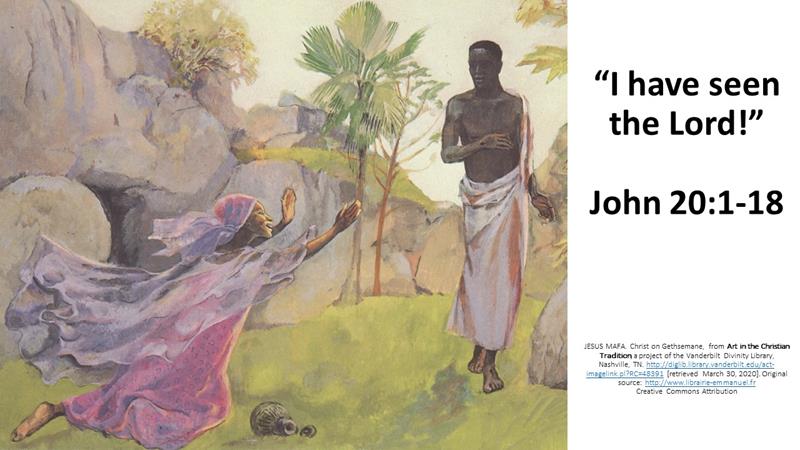
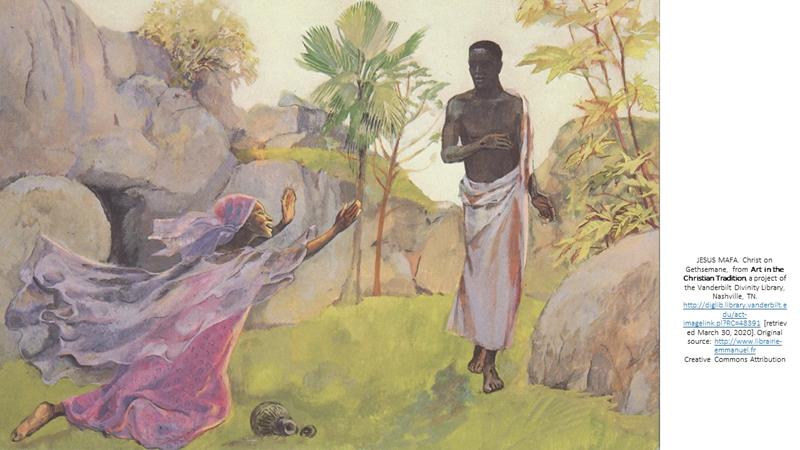 I’ve stuck by Jesus ever since I encountered him that day on the road, long before we came to Jerusalem, when he freed me of those seven demons that had tormented me.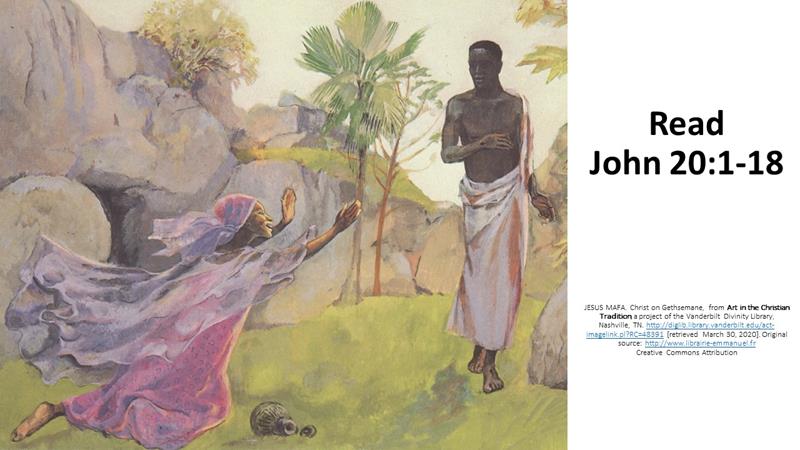
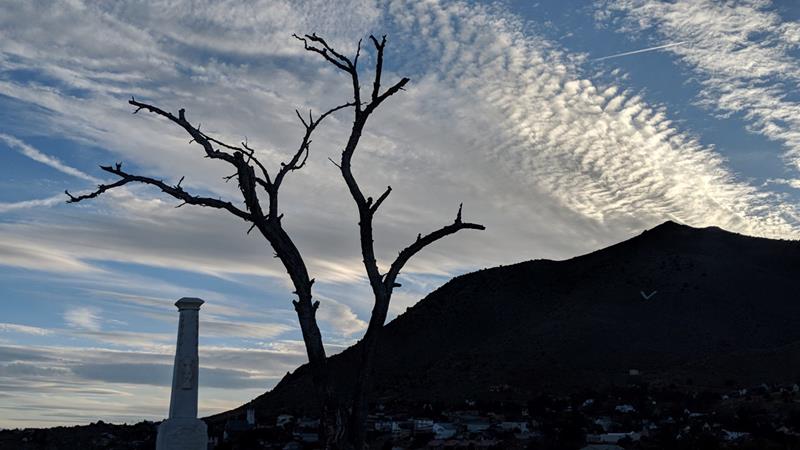 We have spent all of Lent looking at the last week of Jesus’ earthly ministry: From the entry into Jerusalem on what we call Palm Sunday, to the teachings at the temple and the various dinners and then the betrayal that led to Jesus’ death. On Friday, we appeared to be the end of the story. Jesus is dead. His lifeless body is sealed in a tomb as the sun is going down on the day for preparing for the Sabbath. Everyone returns to their homes or where they’ve been staying. I’m sure Caiaphas, the chief priest, and Pilate, the Roman governor, along others in leadership positions are glad to be done with this rabble-rouser. They may have even rested well on the Sabbath. Others, like the disciples and those who had followed Jesus were troubled. But they, too, felt it was over. They saw Jesus’ limp body be taken from the cross. But, as we know, the story doesn’t end.
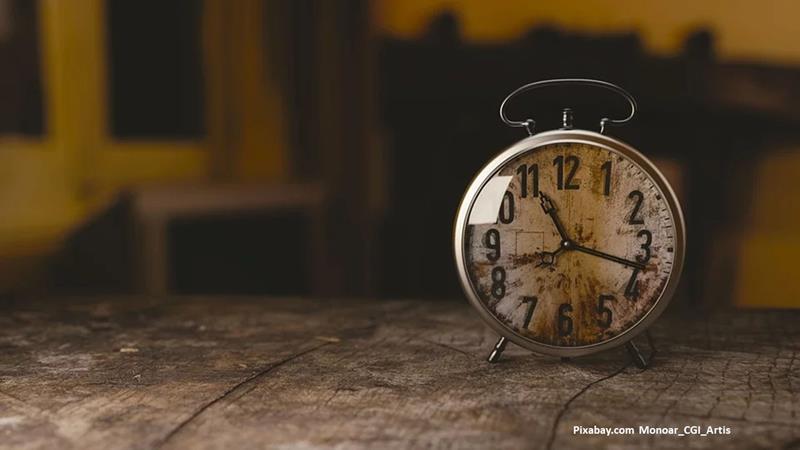 John begins the 20th Chapter with several statements about time. It’s early. It’s the first day of the week. In the first chapter, John’s gospel has an echo of Genesis. Both start the same way, “In the beginning…” John takes that well-known phrase from the opening chapter of Scripture and applies it to Jesus. Jesus, the Word, was with God at the beginning of creation. God is doing something new. As in the seven days of Creation, when God created heaven and earth, we now have a new week. In the first week of Creation, God created humanity, the crown of creation, on day six. Now, on day six, God once again does his triumphant work, reconciling a sinful humanity with the divine through the sacrifice of God’s Son. That’s Good Friday. God rests on the seventh day, the Sabbath, our Saturday. And then, on the first day of the new week, in those early morning hours, God begins a new age.
 As Paul proclaims, Christ is the first fruit of those who died.
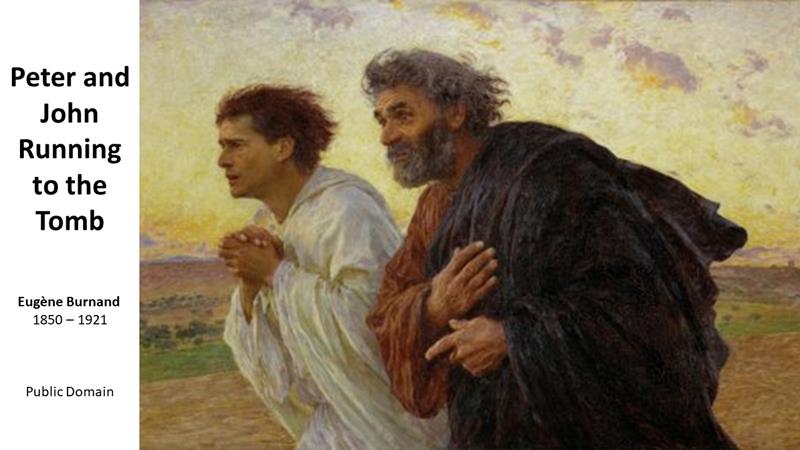 The reports of this new era start with a restless Mary Magdalene going to the tomb while it’s still dark and seeing that it’s open. Of course, her experience, as is ours, is that once you are dead, there’s no coming back. So she runs to tell the disciples. Two of them, Peter and probably John, race each other back to the gravesite.
 Mary hangs around. We get a sense of what she is thinking when she answers the angels who want to know why she’s crying. “They’ve taken away my Lord, and I don’t know where they laid him.” Mary Magdalene still believes that Jesus is dead. She assumes, because she can’t imagine otherwise, that some grave robber broke into the tomb and took the body away. In her mind, this is a terrible deed. It would be a terrible deed. You don’t mess with dead bodies. Even our military prosecutes soldiers who desecrate enemy dead. After all, once they are dead, they no longer pose a threat and are no longer enemies.
 This is an Easter unlike any we’ve experienced before. Instead of being together, wearing new clothes, bringing flowers to decorate the cross afterwards while kids hunt Easter eggs, we’re all separated as we strive to stop this virus that has unleashed death upon the earth. In some ways, we’re like the disciples, who were essentially hiding on that first Easter. Yes, Mary was out, as well as Peter and John for a short period, but once they saw Jesus’ body is gone, they head back to where the rest of the disciples are hiding. In fact, if you keep reading, you’ll see the disciples were not only hiding, they were behind locked doors.
 This is the meaning of this “great pause” we are living through right now.
 Jeff Garrison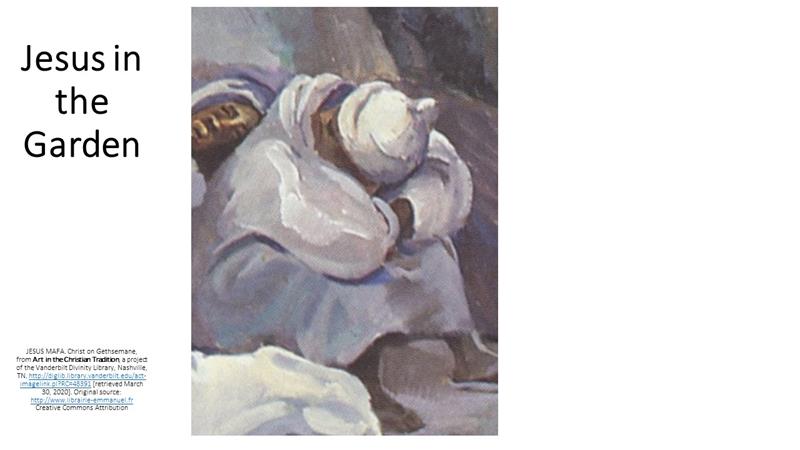
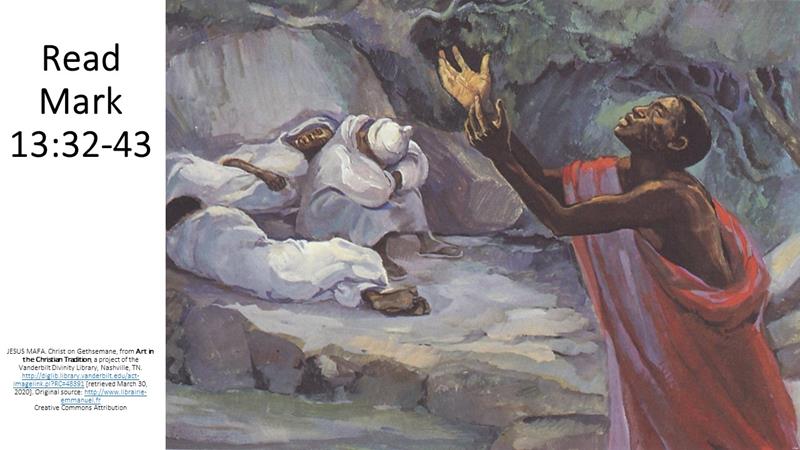
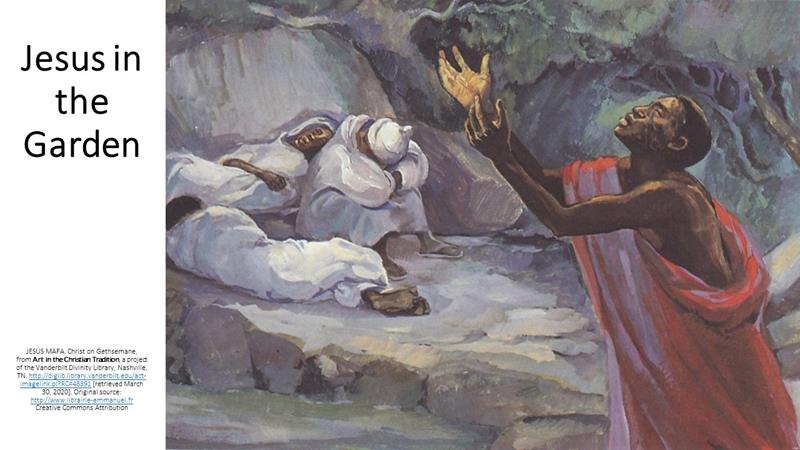
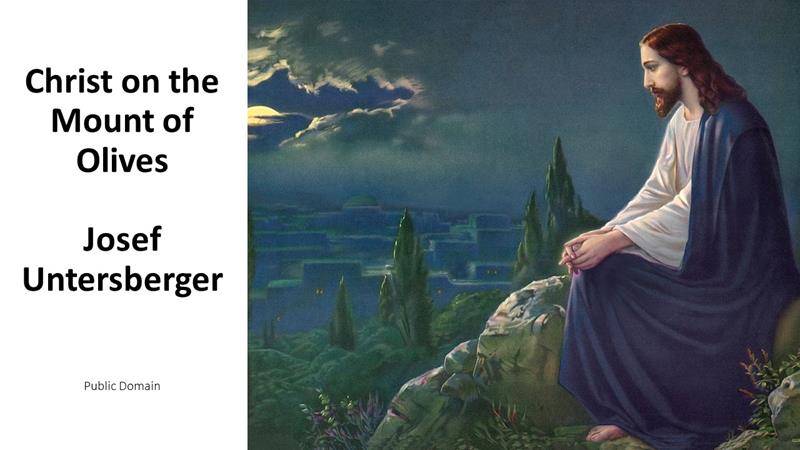 There are many paintings of Jesus praying in the garden in addition to this one from Cameroon. One of my favorites hung in the Session room in the congregation I served in Utah. I always felt it was an appropriate picture for a board room. Board rooms often have photos of the company founders, or the company president. Such paintings remind us of our heritage. Having Jesus in a church board room reminds us of who’s really in charge. It’s not the Session. Jesus Christ is the head of the church.
 Leaving the bulk of the disciples behind, Jesus takes the three disciples that consist of his inner-core and heads into a garden. For those steeped in Scripture, a garden recalls the perfect adobe of Adam and Eve, but also the temptation that occurred there.
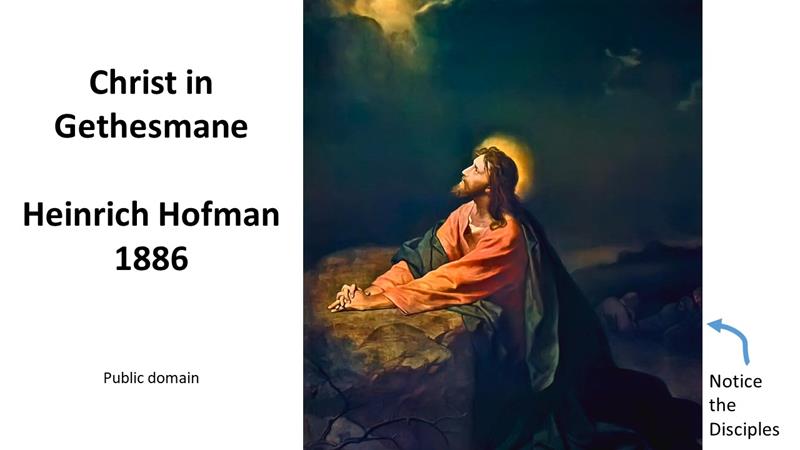 Jesus positions the three disciples close by. While he wants to be alone with the Father, he also wants to be close to friends. He asks them to stay awake. Yet, they immediately fall asleep. Was it the wine? Was it the exhausting schedule? Are they worried and depressed and the only way they can shut their brains off is through sleep? Jesus steps away and prays, then comes back to check on the disciples. He does this three times. Each time, they’re asleep. This compounds his troubles. He will have to go through the experience all alone. After his third trip back to the disciples, he arouses them and announces the arrival of the betrayer.
 What can we learn from this story? Let me suggest three things. First, to prepare ourselves for trouble, we need to take our concerns to God in prayer. Prayer is important even when we know the answer we’ll receive might be no.
 A second thing we can learn from this story is that there is a benefit of being supported in prayer. While God will hear our prayers, there is something to be said about having others praying with us. Like they were in the garden, separated by some distance, and like us now dealing the COVID-19 and being separated by six feet, we need to remember that we don’t have to lay hands on one another for our prayer to be effective. We must be willing to ask or to be asked to pray. And when someone asks us to pray for them, we should consider it an honor and fulfill their request. It helps to be supported in our prayer.
 And finally, we learn that even when we fail come through (and we’re all human and won’t always do what we should), we should remember that God doesn’t abandon us for petty failures. Look at the disciples. None of them could keep their eyes open on this most important night of their lives, but Jesus didn’t throw them under the bus. Instead, he faithfully kept his promise and even though Peter would go on to deny him, Jesus would use him to build his church. In fact, these three—Peter, James and John—would all become major players in the church following the resurrection. So even if we fail, don’t lose hope. Keep going and trust that God is with you.