
I am in North Carolina, taking a few days off and sitting inside watching it rain… Here’s my last post of the year as I review two recent books I’ve read. I hope everyone has a wonderful New Year’s Eve and a prosperous 2020 (and please, no more eye jokes)!

John Kasich, It’s Up to Us: Ten Little Ways We Can Bring About Big Change (Hanover Square Press, 2019), 237 pages.
John Kasich was the last Republican in the running against Donald Trump during the 2016 primaries. This little book makes me wonder how much better things might be in America had he succeed in his quest for the White House. While definitely conservative (certainly he is truer to conservative principles than Trump), Kasich also appears to be a good guy. And, at least from what I gleam in this book. He appears willing to listen to all people and not resort to ad hominem attacks upon those who challenge his position. In fact, he seems to seek out those with opposing opinions as well as having a more open view about those who think differently than him. He’s a man of deep faith who draws upon his religious belief in how he treats others and views the world.
Kasich encourages his readers to make a difference in the world by offering “ten little ways.” However, “little” is a marketing word, for some of his suggestions are big undertakings. He begins suggesting we start a movement, with examples that are not so “little.” He begins by recalling the work of Greta Thunberg (his book was published before Trump got into a twitter war with the 16-year-old Swedish climate activist). He discusses the youth from Douglas High School in Parkland, Florida and their efforts at being to the forefront the need for sensible gun control legislation. He discusses those involved in Special Olympics and (as if he was speaking to me directly) recalls the work of his (and my) childhood hero, Roberto Clemente. Where Kasich conservative principles show is where he suggests that all great movements rise from the people, not the government.
While starting a movement seems to be a big thing, Kasich follows it with an encouragement to start local and to “be the change where (we) live.” Again, as he does with all his suggestions, he offers examples such as a janitor who supported the Children’s Hospital Free Care Fund to the tune of over $200,000. “Find a hole in our community and fill it,” he suggests (78). Another suggestion is to “Be Prepared to Walk a Lonely Road,” reminding us that often those who are on the forefront of any worthwhile change are ridiculed and often persecuted. He encourages us to “Slow Down” with the 3 T’s [time to think (115)] and quoting race car driver Bobby Rachael who said: “You can’t go racing into things all the time. You have to step back and see where you are going” (124). Others in his list of ten include “Bounce Back,” “Love Thy Neighbor,” “Get Out of Your Silo,” “Put Yourself in Someone Else’s Shoes,” “Spend Time Examining Your Eternal Destiny,” and “Know that You are Mad Special.”
At the beginning, Kasich said he wrote the book because he didn’t want people to think they could only change world is through politics. This book highlights many people who are changing the world for the better without seeking notoriety. The book is easy to read and for those of us who have a heart for Pittsburgh, many of his stories comes from the area. Kasich grew up in McKees Rocks, Pennsylvania. He also draws on the music of the Baby Boomer generation, opening the book with the line from The Who’s “Won’t Get Fooled Again,” suggesting that often the votes do get fooled again and again.
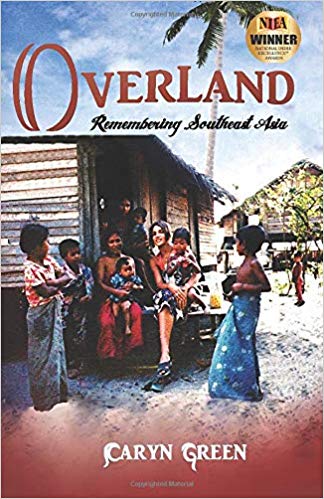 Caryn Green, Overland: Remembering Southeast Asia (Chicago, IL: Manitou & Cedar Press, 2018), 241 pages.
A few weeks before reading this book, I had responded to a request of a blogger about my most spectacular train journeys. I listed several including the ride across the island of Java in Indonesia, from Jakarta to Jogjakarata. Shortly afterwards, someone else echoed my comment about the Indonesian train ride being one of her favorite. When I looked at her profile, I saw that she had recently published this book on her journey across Southeast Asia. I ordered a copy. I’m glad I did.
Caryn Green was a 24 year old woman from Chicago when she decided to hit the trail, traveling to Indonesia and then making her way overland from Bali to Jakarta, on to Singapore and into Malaysia and then to Bangkok and around Thailand. She even made it into Burma. My trip didn’t take me into Burma, as I hung a left in Thailand and headed into Cambodia and then Vietnam, before running north and traveling on to Europe. That wasn’t an option for Green, as she did her travels in the winter of 1975-76, shortly after the fall of Cambodia and Vietnam. Those countries were definitively off-limits at the time. It was an interesting time to travel as the recent American presence in Asia was evident and American travelers were often berated and drawn into unpleasant conversations.
Green wonderfully describes her travels and the people she meets. She mostly hangs out with fellow travelers, many from Australia and Germany, but also meets many natives along the way, especially those who provide housing and services. She is taken with the children. I was also impressed with how much of the languages she learned, more than just being able to say thanks or to ask for the bathroom or where to find beer. Some reading the book might be taken back by how honest she was about her relationships with a few of the men she met along the journey (although nothing is too graphic) as well as how she occasionally enjoyed drugs. She did draw a line at the use of harder drugs. Reading this, I found myself wondering if the airport in Indonesia had large banners in several languages reading, “death to drug runners,” on the concourse in 1975 as you entered the country as they did when I traveled.
Perhaps the most exciting part of her trip comes at the end, when she travels with a guy filming a documentary on the Karen resistance in Burma. The Karen are tribe in northeastern Burma who have long wanted to separate from the rest of Burma. They passed over into Burma in a remote part of the country, from Thailand. I knew some of the conflict with the Karen from Pascal Khoo Thue’s memoir, From the Land of the Green Ghost: A Burmese Odyssey.
I felt a little cheated that she was able to take a ferry from Jakarta to Singapore. Back then, ferries were more available. When I made the trip, it was only running once or twice a week and, even then, didn’t go to Singapore, but to an island south of the city-state, where you had to take another ferry into the city. The other place that we both spent time on was on the island of Penang in northern Malaysia. While I had a Malaysian blogger friend to show me around, she hung out in beaches on the north part of the island where lots of young people gathered. Today, these beaches have been “gentrified” as places where lots of wealthy Arabs hand out.
Green is Jewish, which provides an interesting point of view for the variety of religions within this part of the world. She spends Christmas in Singapore, a city that has Buddhist, Muslims, and Christians. She was drawn into the celebration by hanging out with a retired FBI agent on Christmas Eve. When she leaves Asia, after three months, she flies on to the Middle East in order to spend time in Israel.
In ’75, Green journey was the end of what had been known as the “Hippie Trail” which lead overland from Europe to Southeast Asia. Interestingly, at that time, the trail Overlanders were taking went south because of the political issues of traveling across the Soviet Union and China. These days, those making such a journey as I did in 2011, travel further north through China and Russia in order to avoid places like Pakistan, Iran and Iraq. It’s interesting how things change.
This book is a quick read, and I enjoyed it because of the comparisons I was able to make with many of the places we both travelled (36 years apart). I would recommend the book for those who have experienced this part of the world. Another book that deals with overland travel in Asia during the mid-70s that I found enjoyable is Tiziano Terzari’s A Fortune-teller Told Me: Earthbound Travels in the Far East.



 The holiday stands in contrast to the birth of the Prince of Peace, as it was with a woman shopping in one of those big city department stores. It was a multi-floored building, with escalators and elevators and an entire floor devoted to toys. To her four and six-year-olds, it seemed like heaven. The mother was reminded of another place. Her kids kept singing the “I want this” song over and over. On every aisle they discovered a new “I gotta have” toy. Frazzled and about to come unglued, the lady finally paid for her purchases. She dragged the bags and her two kids to the elevator. The door opened. She and the kids and the presents squeezed in. When the door closed, she let out a sigh of relief and blurted, “Whoever started this whole Christmas thing should be found, strung up and shot!” From the back of the elevator, a calm quiet voice responded, “Don’t worry, madam, we already crucified him.”


 The glue that holds this passage together is the Holy Spirit. In a way, the Holy Spirit is like divine matchmaker. The Spirit impregnates Mary, bringing life into her womb and setting off this genesis, this new beginning. The Spirit also works on the other side of the equation, with Joseph, getting him to buy into the plan. Through the dream, Joseph is informed of Mary’s righteousness and of God’s plan for the child she carries. And when Joseph awakes, he decides not to dismiss Mary, but to go ahead with the wedding. They’ll marry and together raise this child and participate in God’s plan for reconciling himself to a fallen world. It’s a good thing Joseph listened to God in this dream.
 Joseph’s dream shows us the importance of listening to God and when we listen to God and follow his path, we will often find peace. Let me clarify. I don’t think listening to God means trying to understand all the dreams of our sleep. Often our dreams are a way that our minds sort out stuff. Instead of investing large amounts of time trying to understand what our dreams are telling us, we need prepare ourselves to hear God’s voice by studying Scripture, by praying and by being open to hear God by whatever means he comes to us. God’s word can come many ways: in our sleep, through a thought we have while walking or driving, or in a conversation. What’s important is that we know God’s word enough to make sure what we hear is from God. Notice in our account today how Joseph is reminded of the prophecies in Scripture. For him, that was assurance God was behind this.

 Earlier in the first chapter of Luke’s gospel, the angel Gabriel met Mary in Nazareth to give her the good news. However, I’m not sure that everyone saw this as good news. I am not even sure Mary saw it that way. After all, she was just a young woman. Tradition has it she was only 14 years old, and here’s this angel is talking about all of what this child she’s to carry will do. Mary wonders how it’s to happen and told that the Holy Spirit will fill her, and she’ll conceive. In addition, she’s told that her relative, the old barren Elizabeth, is also pregnant and will bear a son. God appears to be active with the oldest and the youngest.
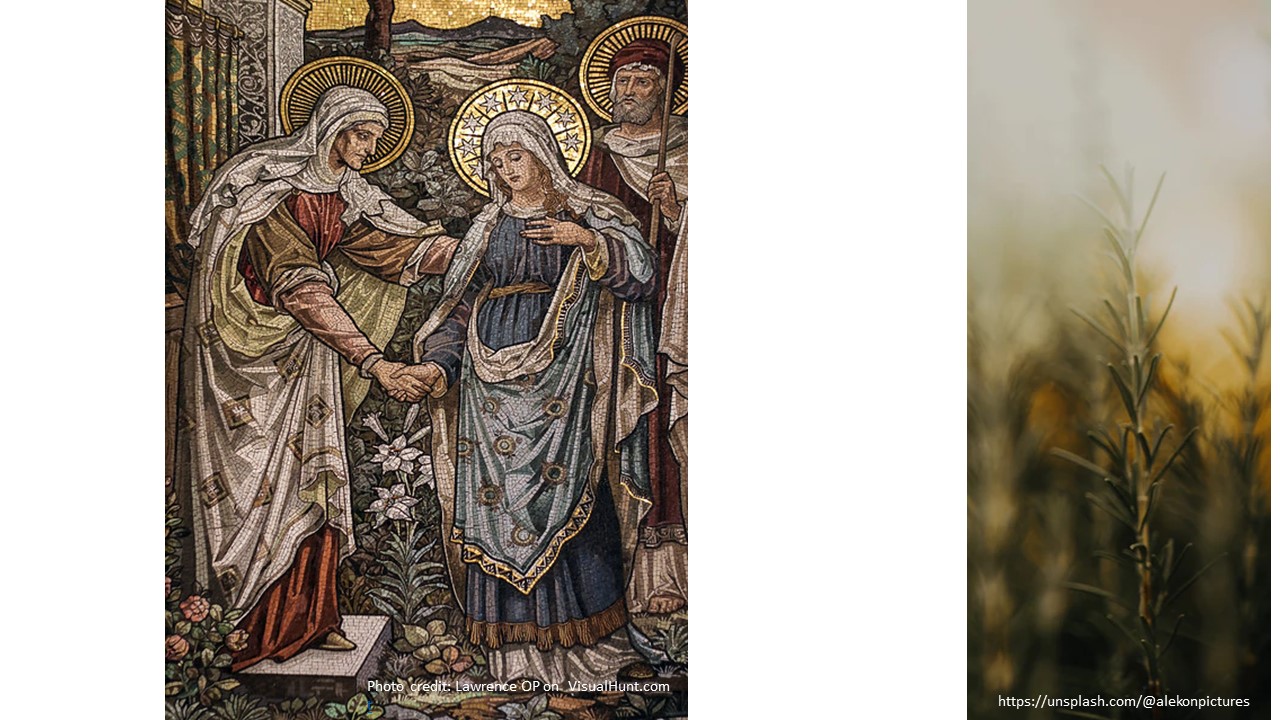 “Girl, how’d you get yourself in this mess?” isn’t how Elizabeth greets Mary. Instead, she starts out praising Mary, wondering what she, Elizabeth, has done to deserve such a visit. She proclaims Mary as the most blessed of all women. Mary breaks out in song. She didn’t sing to Gabriel, at the heavenly encounter she had earlier. She sings when another person, one whom must have known as a kind older woman, confirms her status.
 Mary is joyous, but not in the manner we think of joy. For us, joy is a child experiencing an ice cream cone for the first time or us witnessing the child’s wonder. Joy is a mother watching her son make a home run as a Little Leaguer. Joy is laugher at a good joke, the awe of a beautiful sunset without sand gnats, sitting around a fire telling stories when it’s not too cold, or the Pirates winning the World Series. All these things are great, but is this what joy really is? Or is it something deeper.
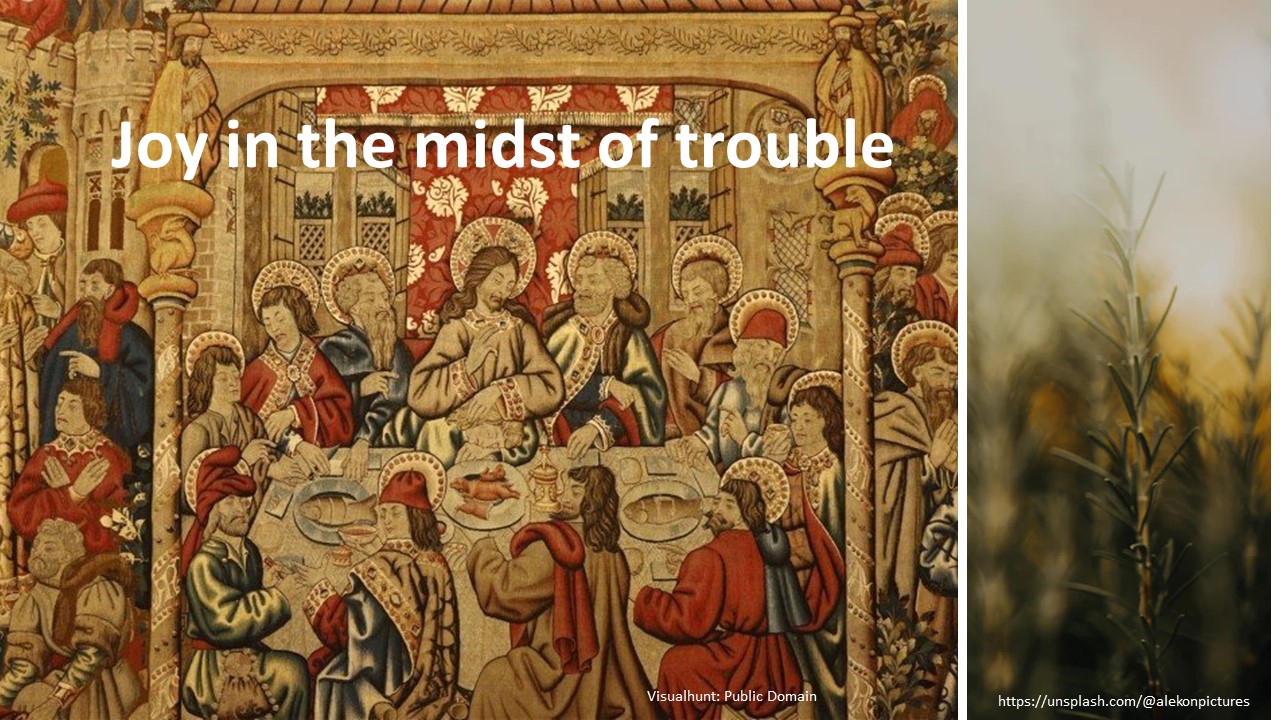 When Jesus was at table with his disciples on the night before his crucifixion, he instructs his disciples and then says he’s telling them all this so that his joy will be in them, and that their joy will be complete.
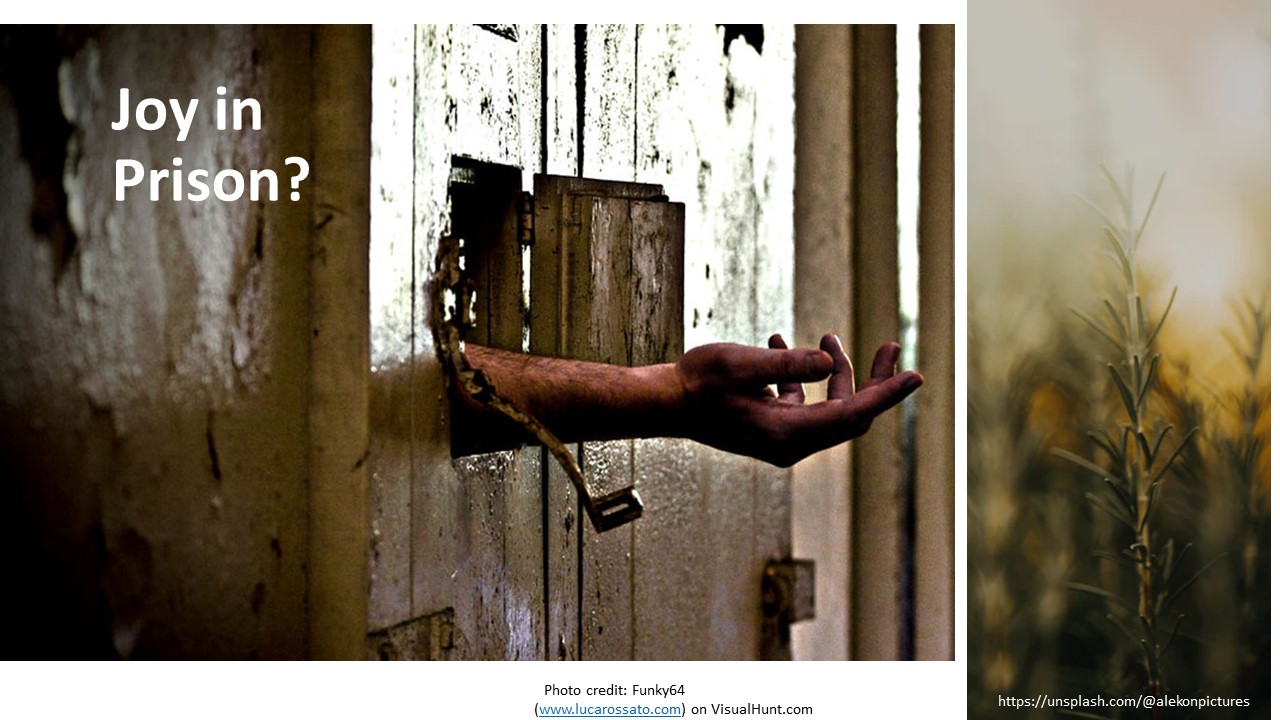 When Paul writes from prison to the Philippians, he tells them how he’s joyous when he prays for them and asks them to make his joy complete by being of the mind as Christ.
 This is unabashed joy; joy regardless of the situation. All is not well in the world, then or now, but we as believers are called to see beyond the present and to have faith in what God’s doing. We are called to be joyous and to have hope and to share our hope with others. In the long arch of history the impeachment of a President, a rogue nation like North Korea having rockets and weapons of mass destruction, and the eruption of a volcano in New Zealand (or heaven help us, if one blew up in Bluffton) isn’t the final word. For we believe God has things under control and even if we screw everything up and blow the planet to smithereens, God will not let that be the final word.
 So, we go back to that young woman, pregnant and not yet married, in a world without social safety nets. You can’t be much more vulnerable than Mary, standing before Elizabeth. Yet she breaks out in this beautiful song that focuses on what God is doing. Mary doesn’t speak of what God is doing for her, personally, except for having chosen her. She’s not thankful for a new house, or car, or clothes or a servant. Her lot is not joyful by most definitions. She has this son that runs away at the age of 12.

 John Lane
 There were two preachers who, on their day off, enjoyed fishing. They were at a river next to a highway. Before sitting on the bank, where they’d watch their corks in the hope they’d be the tug of a fish on the line, they posted a sign. It read, “The end is near! Turn yourself around before it’s too late.”
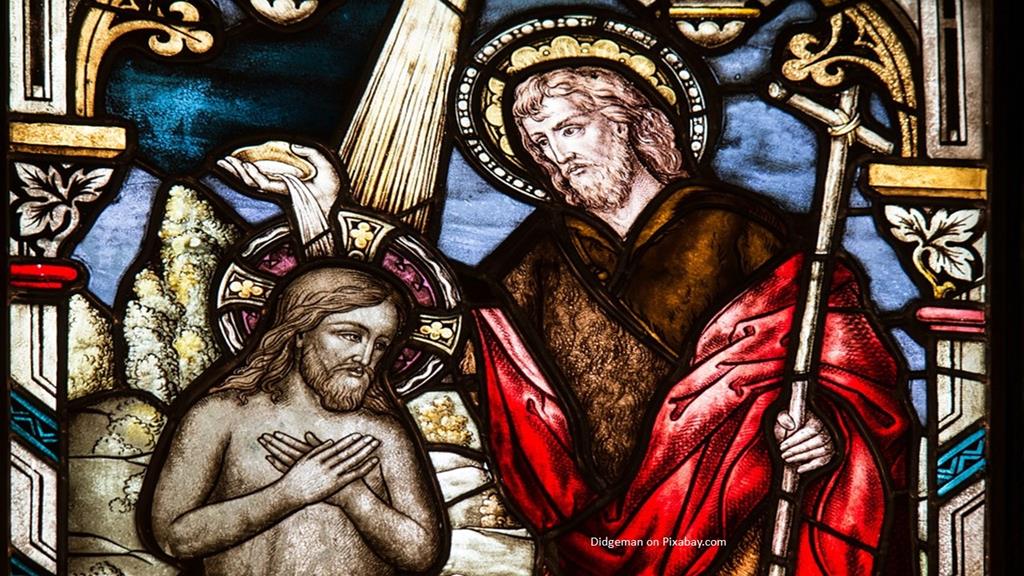 I wonder about John’s message. It’s so harsh, maybe he should have toned down his words. Repeatedly, he talks of fire, and not the warming flames of a campfire, but the ominous fire like those recently experienced in California and Australia. “You brood of vipers,” he calls the religious leaders of the day. That doesn’t sound very loving, does it? Jesus would never say that, would he? Actually, he does; twice in Matthew’s gospel.
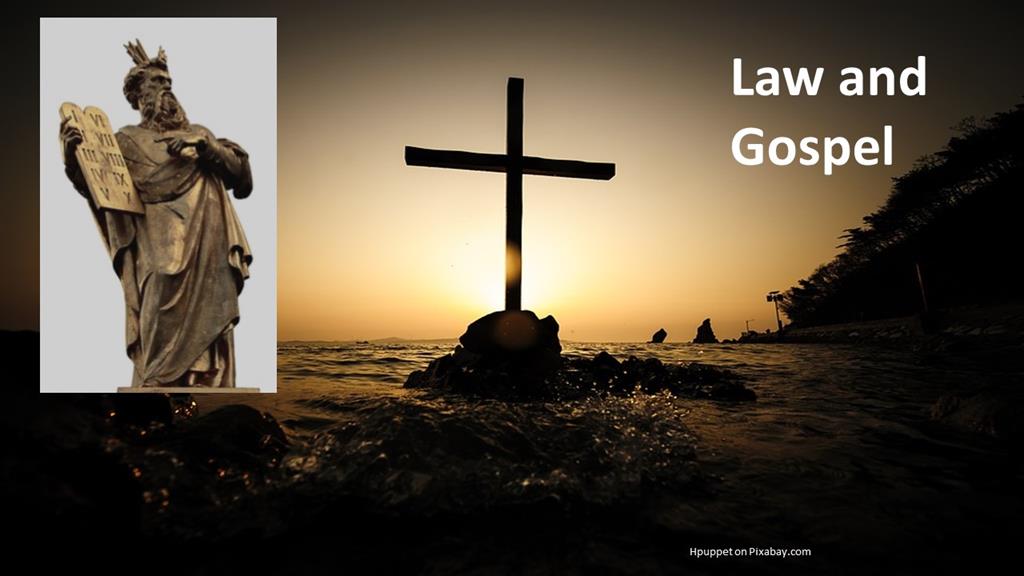 Law and gospel, they go together. To understand the story of scripture, we can’t just push off the “law” parts of the Bible and only focus on the gospel. The gospel makes no sense without the law. The gospel is about how God saves us from our failures, our sin. Those who listened to and were moved by John’s preaching were left with no choice but to confess their sins in order to begin the process of repentance, a word that means to turn around or to start in a new direction. They had to leave sin behind as they joyfully accept what God was doing in their midst.
 But it all comes back to this. God is doing something new. With John the Baptist, God was paving the way for his Son to come on the scene and to teach people a new way to live and to be human. In order to prepare for something new, people must admit their own sinfulness and to realize that they long for something better. Of course, if we don’t think we need to be better, there’s a warning here. Judgment that comes from transgressing the law is a reality. So, do we ignore our sinfulness and die to the law? Or do we accept and confess our sinfulness and embrace the grace that Jesus’ offers? Those are our choices.
 Advent is the time for us to prepare for the loving tenderness shown by Jesus. If God is redeeming this world, if God is promising a new heaven and a new earth, then we should want to be ready to receive this gift. But to receive the gift, we must leave the past behind. We have to be willing to examine deep within our souls and to offer up all that’s not godly so that we might be both cleansed of our sin and have the room to accept Christ into our hearts. We must be willing to allow ourselves to be transformed into something new and better. For Advent is a time not only to remember that Christ came, but that he will come again, and we must be ready.
 We must not just prepare ourselves; we should prepare the church, which is, in the final events of history, to be the bride of Christ.
 Is there loving joy in this passage that will lead to us “repeat the sounding joy”? Yes, there is, but we must get beyond the call to prepare, which John focuses on, and realize that God is doing a new thing. We trust in a God of resurrection. Even if the world destroys itself, God won’t let that be the final word. God wants to remake us. John’s role is to prepare us. Our role is to respond to John’s call to repentance so we might be open to what God is doing in our lives and in our fellowship. Confession and repentance may not in favor in today’s secular world, but in the church, it’s where we begin. All of us need to take a deep look at ourselves and then turn to God and fall on our knees… Amen.


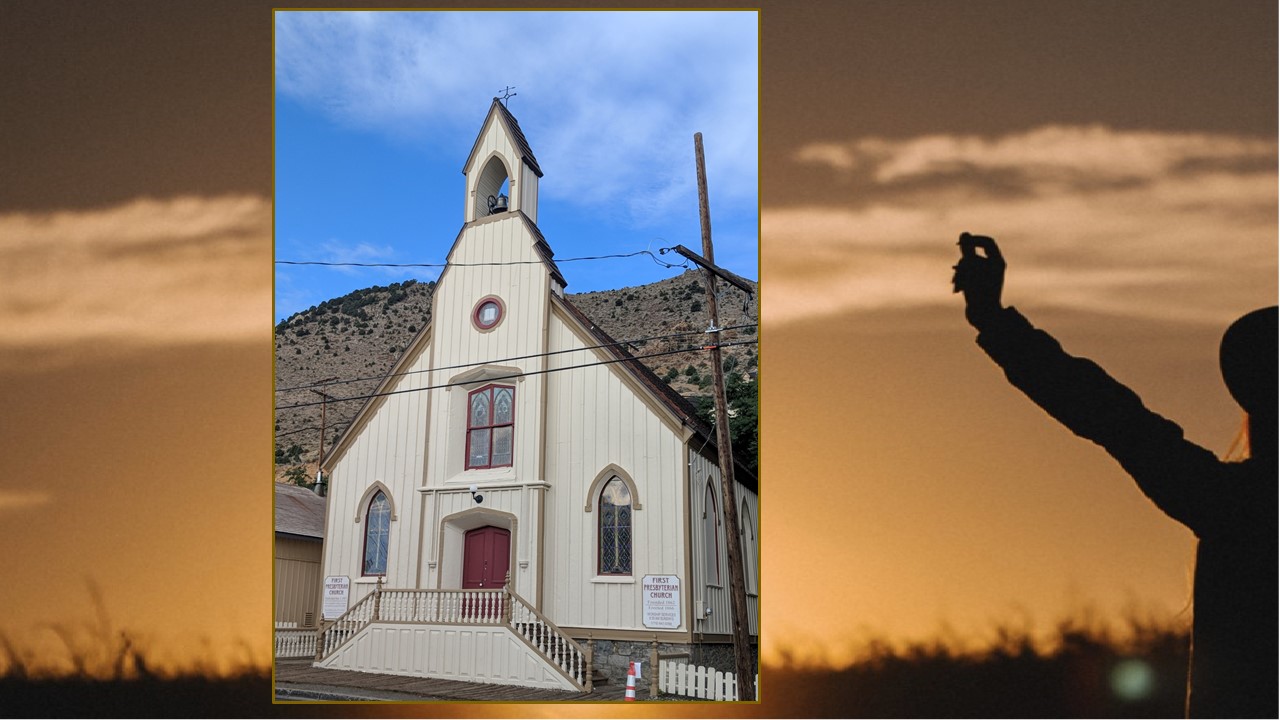 I will always be indebted to the congregation in Virginia City, Nevada, a place where I first experienced ministry on my own as a student pastor for a year. The church on the Comstock, at least in the modern era, has always been small. But there was something about the fellowship of that group that made it an attractive place for all kinds of people. The people in the church worked hard together, keeping the church going, which was quite a task in a wooden building built in 1866. But they also worked hard to help one another. And they tried to help others, sending clothes to an orphanage in Mexico and collecting food for a pantry in Carson City.
 The congregation Luke describes here near the beginning of the book of Acts wasn’t spectacular. It wouldn’t be considered particularly successful according to modern business practices. The fellowship didn’t include the leading folks of Jerusalem. Everyone was poor and marginalized. They didn’t have any glitzy advertising or even a fancy sign out front. After all, they tried to blend in and not stand out because there were those didn’t appreciate their message. But, despite all this, there was something magnetic about this community. They were generous and gracious. They were willing to help each other and to forgive others for the wrongs they’ve done because they’d experienced forgiveness in Jesus Christ. It was this magnetic appeal that drew folks to the church. Why else would someone risk persecutions and isolation by becoming a Christian?
 I recently read an article on why we need to make a weekly commitment to attend church. I’ll post this article I my next e-news. It was written by a young widow who describes the church as “the sweetest fellowship this side of heaven.” Her husband died suddenly one night after having been taken to the hospital by an ambulance for shortness of breath. She was left with seven kids. Before leaving the hospital, she called a friend from church. By the time she was home, the friend was there to sit with her. Others came in to grieve, to bring meals, to help clean the house, fix broken appliances and cars, and to minister to and pray for her and her children. The church is not always perfect, she notes. At times, the church can be even cruel. But when we live up to our calling to reflect Jesus’ face to the world, we demonstrate what was described in our passage today. The church can be the sweetest fellowship this side of heaven.
 Friends, today we receive our estimate of giving offerings for 2020, which is a sign of one half of that last question—how generous we are. We are encouraged to grow in generosity. As Vic Bell suggested last week, we’re to take a step toward being more generous, as we strive to become the church described in Acts. I pray that you will be generous and continue to take steps in this direction. But just as important as generosity is, don’t forget to be graciousness. On your walk with Christ, show grace to one another, just as God has been gracious with us. Realize what God has done and commit yourselves to do what? Say it after me… To be more being generous and gracious. Amen.