 Jeff Garrison
Skidaway Island Presbyterian Church
July 5, 2020
Matthew 11:16-19
To watch this service, click here. To watch the sermon, fast forward to 20:00 minutes in the stream.
Opening of Worship:
How many of you remember Calvin and Hobbes, the comic strip? I always identified with that kid. There was a time when Calvin was writing a self-help book. O Great, you might think, just world needs, another self-help book. But Calvin saw a fortune to be made, as he confides to Hobbes. His strategy is to convince people there’s something wrong with them. It’s rather easy, because advertising has already conditioned us to feel insecure about our weight, looks, social status, sex appeal, and so on… “Next, he’ll convince people that the problem is not their fault.” This, too, is easy because nobody wants to be responsible.
 Having prepared the way, Calvin feels he can sell folks on his expert advice and encouragement. He’s on to something. We long for satisfaction and we expect someone to show us where to find it.
But the answers are not so simple. For followers of Jesus, we must admit that we don’t have simple or easy answers for life’s problems. You know, the early church was known as “The Way.”[1] That was because they didn’t give out pat answers, instead they point to the only enteral truth they knew—Jesus Christ. The church was the way people learned about Christ and is the vehicle God uses to share the gospel to the world. Think about it…
Back to that comic strip, Calvin decides he’ll help people get over their addiction to self-help books. His book is titled, Shut Up and Stop Whining: How to Do Something With Your Life Besides Think About Yourself.”[2] Actually, there’s some truth in that title. Sometimes we are too serious. We need to lighten up. We need to learn to play and enjoy life. That’s the theme of my message on this 4th of July weekend: enjoy life and play!
Sermon (After Scripture Reading):
There was a congregational meeting in which the topic of money (or the lack thereof) came up. An elderly statesman of the church stood up and complained about the lack of commitment. “We need to be willing to pull our share; the Christian life is one of suffering and sacrifice.” He concluded his speech, pleading “We need members who are willing to pick up their cross.” Many nodded their heads in agreement, but there were a few who were uncomfortable. A younger woman stood timidly and challenged the older member with Jesus’ words: “I come so you might have life and have it abundantly.”
Do you feel the tension between these two positions? The older member demands sacrifice while the younger member wants to enjoy the life promised by our Savior. Both positions can be “proved” by scripture. Both are valid. We must live within the tension of the two.
This is a beautiful world God has created. We’ve been placed here to enjoy it. Think about all the good things we enjoy. We should relish life, each other, and our Lord. Life is a joyful dance and we should make the most of it. Of course, that doesn’t mean that we shouldn’t sacrifice, but there should be joy in our giving since God has given us so much.
Children, if given a half a chance, know how to enjoy life. Even in poverty, you see kids laughing. Have you ever watched a child act like they were mowing the yard when you were out sweating and pushing a mower? The child pushes their own Fisher-Price popcorn mower back and forth, just like you’re doing under the hot sun. Perhaps you remember being like this as a kid? I couldn’t wait until I was old enough to mow the yard. That desire lasted about three weeks after I was old enough to mow. At that point, I decided growing up wasn’t such a big deal.
Kids play games. It’s fun. Think about your childhood. You could be a real cowboy without having to shovel manure. You could be soldier without being shot at or a nurse without having to dump bedpans. Children have a wonderful view of the world. They enjoy acting like grown-ups, and that’s okay. The problem arises when it goes the other way.
The way children act like they are “grown-ups” sheds light onto this parable of Jesus. In the passage, Jesus refers to a game played by kids in a village marketplace. The kids act like adults at a wedding or at a funeral. If it’s to be a wedding, one child plays a flute and the rest dance together in a circle. Or, if they act out a funeral, they cry and pound on their breasts in mourning.
Jesus said that people of his generation were like children who refused to join the game. Imagine the marketplace. Sometimes, you know, children refuse to get involved. Maybe because they don’t know the other children, or they’ve been picked on. It’s a sad thing to see a child standing to the side watching other kids enjoying themselves. And yet, once these children get into the game, something magical happens. They forget their apprehensions and have a great time. Jesus tells us that those who refused to hear his call are like children who refuse to get involved. By not participating, they missed out on the fun. We adults can be like this when we take things too seriously.
Jesus goes on to say that John the Baptist, the guy who lived off insects in the wilderness and dressed like a “deadhead,” is rejected as being a demon. John lived a rigorous life and people don’t want to hear about that. Sin and repentance are never been popular topics. So along comes Jesus who enjoys life. Jesus, it appears, never turns down an invitation to a party… Think about the weddings and banquets Jesus attends. Jesus enjoys the company of people and the pleasures of food and drink. This leads some people to call Jesus a glutton and drunkard. And they criticized him for the friends he hung around: tax collectors like Matthew and other obvious sinners like the fallen woman who dried his feet with her hair. Talk about a way to develop a reputation. Imagine the gossip when word got around about that scene.
There is a “Catch-22” situation here. Folks reject John because he lives without comfort and they reject Jesus because he enjoys life. Most people of Jesus’ generation wanted nothing to do with either one. They are too busy in their own little worlds to join the dance. But Jesus invites us all to join him. He invites us to live and really experience life. Are we ready for it? Are we willing to cast away our doubts and our troubles and to enjoy what we have been given?
In Joseph Girzone’s parable of Jesus, titled Joshua, he writes:
Jesus came to earth to try to free people from the kind of regimented religion where people are threatened if they don’t obey rules and rituals… Jesus came to teach people that they are God’s children and, as God’s children, they are free, free to grow as human beings, to become beautiful people as God intended. That can’t be legislated. Jesus gave the apostles and the community as a support to provide help and guidance and consolation. Jesus did not envision bosses in the worldly sense. He wanted his apostles to guide and serve, not to dictate and legislate like those who govern this world.[3]
This passage encourages us to enjoy life—something we tend to do around Independence Day. We need to have fun, enjoy the summer. We should live that first beautiful statement in the Westminster Catechism, which defines our purpose as “enjoying God forever.” Horace Bushnell, a 19th Century American theologian wrote during the dark days of the Civil War, “Religion must be a form of play—a worship offered, a devotion paid, not for some ulterior end, but as being its own end and joy.”[4] Yes, we need to be concerned for sin, but not too concerned. Jesus came to free us up to live.
Now, let me talk a bit about sin. You know, there are basically two kinds. If you were present here in the sanctuary and I could ask you to name some sins, you might begin your list with the favorite sins of your neighbors: adultery, stealing, murder, greed, not wiping your feet before entering the house, forgetting an anniversary, and so on. But all sin can be grouped into two categories. The classical form of sin is that of pride which comes from our desire to be God. That’s Eve eating the fruit because the serpent told her she would have the knowledge of God. It’s the same sin we all commit when we live as if we are the ultimate authority. We’re all guilty.
The other kind of sin is the opposite. The first type of sin was trying to be God, the second type is not living up to our God-given potential. In other words, we do not become the person God created us to be. Not enjoying the life that God has given us falls into this category of sin. In the parable, this is the child who doesn’t join in the game the children are playing.
So, let’s all be playful and enjoy God. Don’t sit on the sidelines. Join in the dance. Enjoy life and live up to the potential God has given us. Doing so, we fulfill our purpose. Not only do we bring God glory, I expect we bring a smile to God’s face. Think about it, God, like a parent, smiling while watching his child play with others. Amen.
[1] Acts 9:2.
[2]“Calvin and Hobbes” this comic appeared on June 6, 1993.
[3]Joseph F. Girzone, Joshua: A Parable for Today (NY: Macmillan, 1987) pp. 73-4.
[4] Horace Bushnell, Work and Play; or, Literary Varieties (New York: Charles Scribner, 1861), 21-22. As quoted by Leonard Sweet, The Jesus Prescription for a Healthy Life (Abingdon, 1996), 52.
 Jeff Garrison









 When Jesus sends the disciples, he insists they go light. No extra clothes, no extra gear, no extra food, and no extra cash. They go by themselves, taking only the blessing Jesus bestowed upon them. They are to learn first-hand that Jesus is sufficient—he has given them power over evil as well as the ability to bring healing to those who are sick and to bring to life those who are dead. Going out without possessions, they will be continually reminded that they are dependent upon God and the generosity of others. Furthermore, they would be continually reminded that they are working for Jesus.
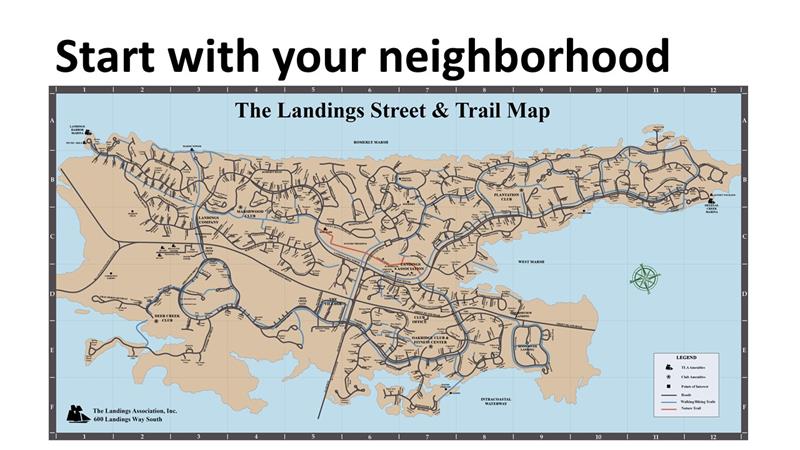 Jesus advice to the disciples is to start in their own neighborhoods. The mission to the Gentiles will come later; they first must take the message to the Jones and Smiths who live down the street. As they travel, they’re to live modestly and with the people. They are to be gracious and content with what they’re offered. They’re to “be courteous.” They’re not out to bring judgment or to browbeat folks, they’re just to go about helping people and sharing with them the good news that the Savior has come. If they’re not welcomed, they’re not to make big deal about it, they’re just to move on to the next neighborhood, not taking it as a failure. They’re not to mope around showing disappointment.
 Another thing we learn that the world isn’t how it should be. We know this is true. If there was any question about it, the last few months dispelled our doubts. But at this point in the First Century, Rome had beaten all its enemies, and those who thought world peace had come. Of course, Jesus sees problems. There are people suffering. Jesus is compassionate. He realizes the struggle many face, especially the poor and slaves. Many are battling demons and the powers of evil. Many are grief-filled, or hurting physically and emotionally. Jesus’ plan is to turn the world upside down, offering grace and hope that can only come from God.
 A final truth I want us to consider is that mission involves more than just telling people about Jesus. You know, Reuben and I could have spent all day telling Paul about how much fun we had backpacking and it wouldn’t have made any difference. It was only by helping him go through his gear and showing him how to lighten his load were we able to help. It’s the same with our calling as disciples. We’re not to just share the good news; we’re to demonstrate godly values in our lives and to show others how it can make a difference. That famous saying attributed to Francis of Assisi, “preach the gospel, if necessary, use words,” comes to mind. As the 18th verse reads, “you’ve been treated generously, so live generously.” Doing is just as important as telling, as Jesus makes clear in this passage. He didn’t give the disciples golden words to woo people; he gave them the ability to minister, to heal, and to confront evil.
 This is still our goal. Live simply and generously, ministering to the needs of others. In other words, let the love of Jesus flow from your hearts, and be gracious. These days, the world can use a little help. Let’s flood it with grace. Amen.
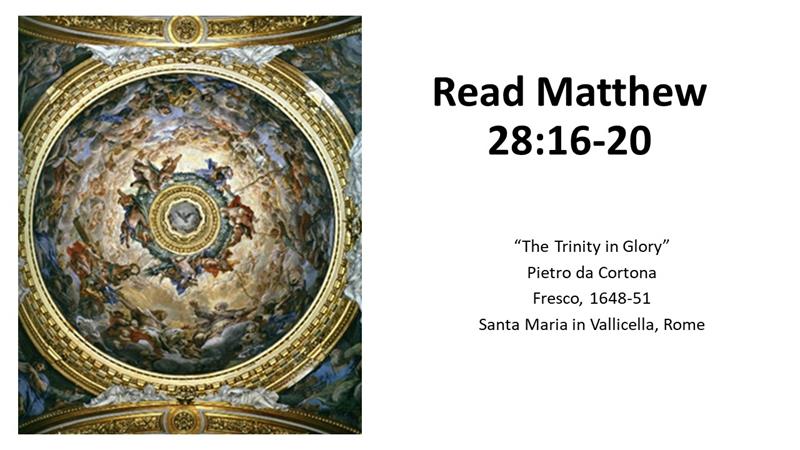

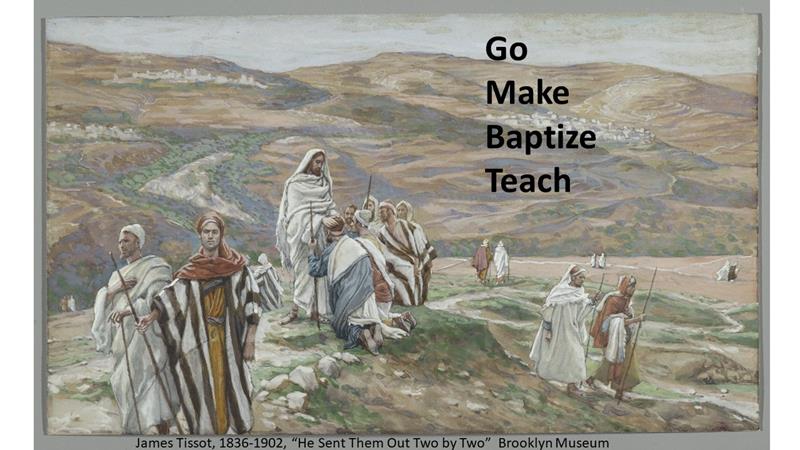


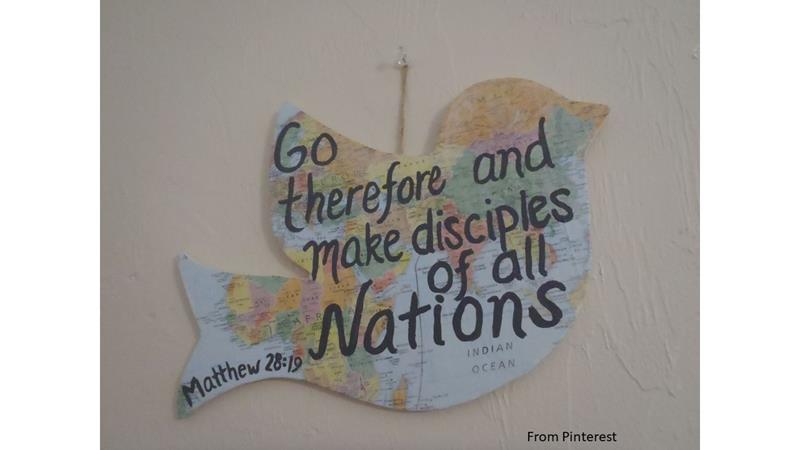

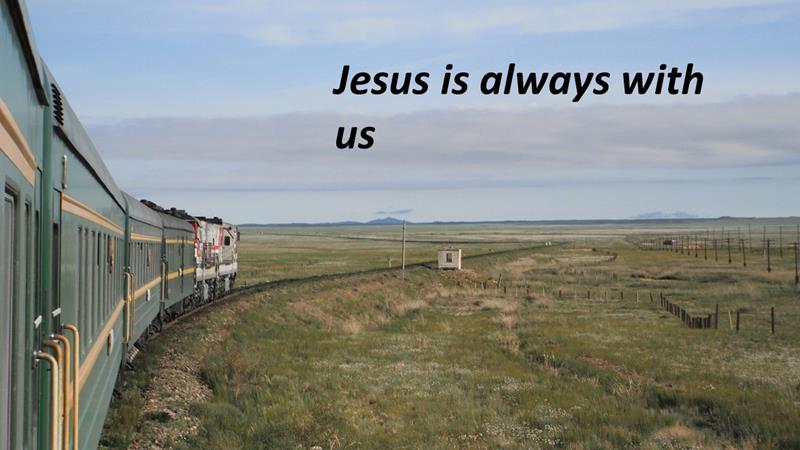 We’re living in trying times, but there is hope in this passage. In the last verse, after telling us that it’s our responsibility to make and baptize and teach disciples, Jesus reminds us that he will be with us till history comes to an end. Jesus is going to be with us wherever we go in this world to do the gospel’s work. That’s the hope we take with us as we challenge such injustice. We’re not alone. We’ll get through this trying time of pandemic and racial tensions if we can just remember the two essential things Jesus taught: Love God and love your neighbor.
 You know, I love my neighbors, but I also love a good tomato sandwich. During this time of the year, when I have tomatoes on the vine, I eat a tomato sandwich every day. I peel the tomatoes and then slice ‘em thick. They are juicy and messy. I take two slices of wheat bread, cover a side of each with Miracle Whip, grind some pepper over it, then lay on the tomatoes and create a sandwich. If I want to be uptown, I might add a little celery seed or some provolone cheese. Its good eating and I tell you this because our passage can be envisioned as a sandwich.
 In closing, let me encourage you to do two things. First, go to the Savannah Presbytery website and read our recent statement on racism.


 There was an elderly woman who came home from a Bible study one evening and discovered a burglar in her home. In the darken house, she yelled at the intruder, “Stop, Acts 2:38.” The thief turned and she yelled again, “Stop, Acts 2:38.” He froze. He raised his hands as she calmly called the police. After the officer had handcuffed the man, he asked why he’d surrendered to a woman shouting out a Bible verse. “A Bible verse? I thought she had an axe and two 38s”.
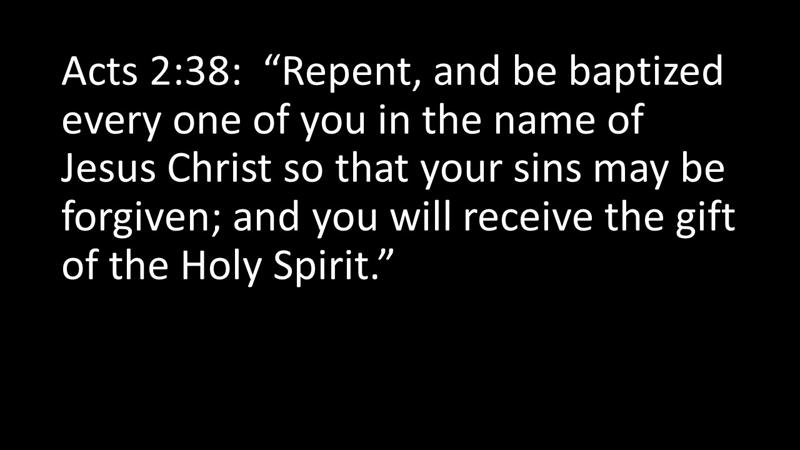 Peter, after his great sermon, that follows the account we’ve just read, called on those within his hearing to “Repent, be baptized, every one of you in the name of Jesus Christ so that your sins may be forgiven and you will receive the power of the Holy Spirit.” Acts 2:38.
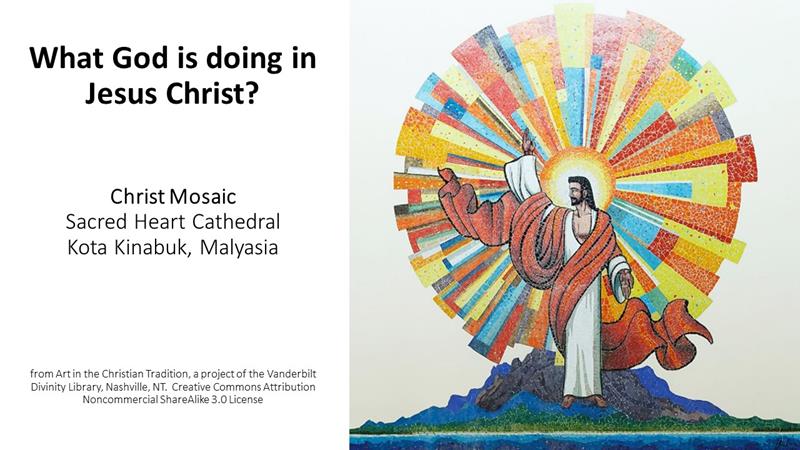 oo often, we think we need force to back up our words, or as in the joke, the possibility of force. But Scripture constantly reminds us our hope is not in what we do or what we have, but in what God has done and is doing in Jesus Christ. We see this with Pentecost, when those flames of the Spirit poured out on a motley group. God takes the initiative. Without God, our efforts are in vain.
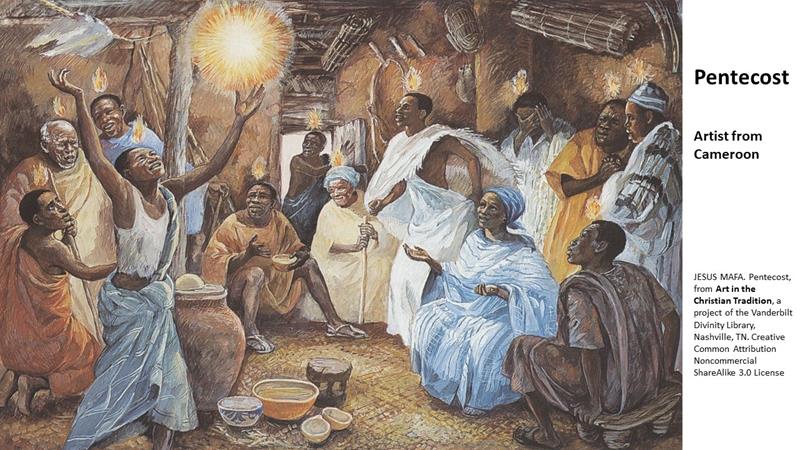 These men and women are not the type of people you’d think could change the world. They’re marginalized. And, to be honest, they don’t change the world. That’s part of the point of the story. God’s the primary actor. Without God’s intervention, nothing would have happened. And the same is true in our lives. God can use us; we don’t have to be sophisticated or multi-talented. The disciples were not great leaders or thinkers, government officials or military heroes. What God needs are people who are faithful. These believers displayed their faithfulness. Many of them were faithful even unto death. With God, all things are possible.
 The final aspect of Pentecost for us to consider is how this event serves as a model for God’s intention for the world. Consider the group who’d gathered on this morning. They were all Palestinian Jews. First century Judaism was more multi-cultural than they were. They gather, a homogeneous lot, without an idea as to what will happen. Soon a violent wind destroys the morning calm. Luke describes the coming of the Spirit as a gale blowing into the house. Picture the curtains blowing, as they used to do in the days before air conditioning when a storm was rising. It was frightening. “What’s happening,” they wonder? Luke goes on to say that the wind was like tongues of fire; like a wildfire that gains momentum consuming all that’s around. And those who had gathered begin to speak, in all different kinds of languages.
 Friends, we live in an uncertain time. We must place our faith in God as revealed in Jesus Christ, and live humbly and compassionately, showing the world a different way to live with one another. Violence isn’t the answer. Love is. God loves this world and calls on his church to love the world. When we marginalize others, when we turn our heads at injustice, we fail to live up to our calling.
 Let me tell you a story. I was in Ulaanbaatar, the capital of Mongolia and was walking with other tourists in the business section of the city. Across a four-lane road, coming toward us, was a man and woman. They were arguing. Then the man pulled back and hit the woman with his fist to her head, knocking her down. In shock, we looked at each other. Others had seen it, too, but no one except us-a group of English-speaking tourist-seemed fazed. We were outraged, yet never felt so helpless. If it had been an English-speaking country, we’d all been on the phone with the police. But here, few knew English and we couldn’t speak Mongolian. We needed those tongues of fire!
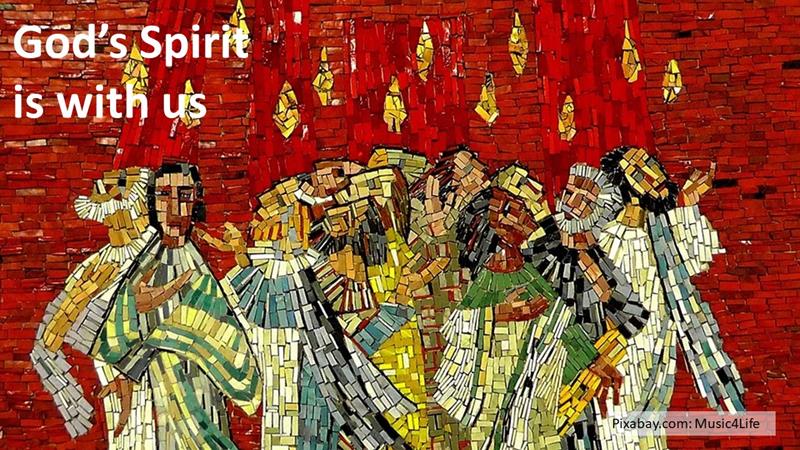 Pentecost shows us that not only does God show up, God gives us the tools needed to do the work for which we’re called. That motley group of disciples are able to preach in the languages of those gathered in Jerusalem. Today, we no longer have to wait for God to show up. God’s Spirit’s with us. Unlike Mongolia, in our country, in our neighborhood, most people understand us. We have no excuse. We must be compassionate toward those suffering from COVID-19. We should grieve the deaths of over 100,000 of our citizens, we need to do our part to keep the virus from spreading further, and we need to speak out against racial injustice. At Pentecost, God gave us a vision of the nations and people being brought together. It’s now our turn. We must help make the vision a reality. Amen.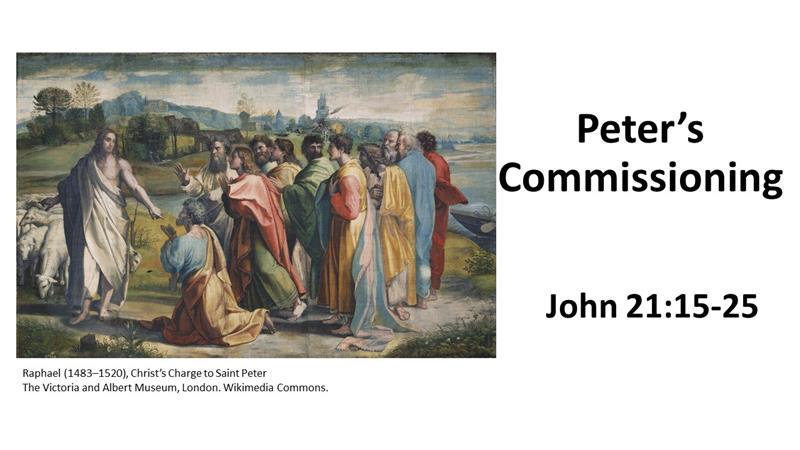
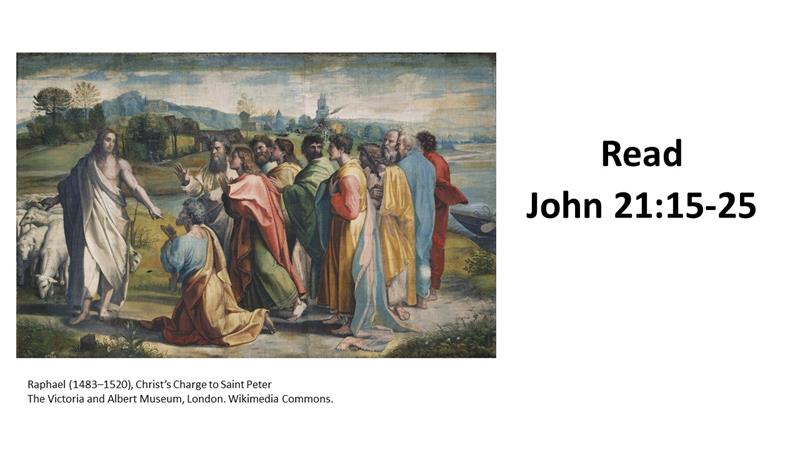
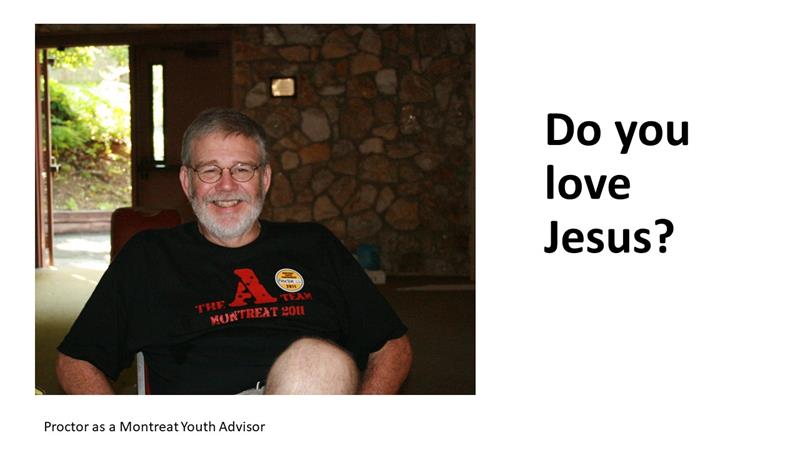 Some of you may know the Reverend Proctor Chambless. He’s a retired minister member of the Savannah Presbytery, and has served a number of congregations within our presbytery and across the South. When I came to this presbytery, Proctor was serving an interim position in another presbytery upstate. He wasn’t here. During the first person examined for ordination as a Minister of the Word and Sacrament at Presbytery, someone stood up and said that since Proctor wasn’t present, he was going to ask Proctor’s question. The question: “Do you love Jesus?” The presbytery, as a body, snickered. I realized I wasn’t in on the joke. I asked someone about this and was told that Proctor always asked that question. When Proctor returned, I figured out who he was before I met him. We had another candidate to examine and Proctor stood and asked this question. It’s kind of a fun thing. The rest of us are thinking probing questions to prod the examinee on the fine points of Reformed Theology, as Proctor, with his deep southern drawl, asks the essential question. “Do you love Jesus?” That’s the question Jesus asks Peter three times. And it’s a question we’re all to ask ourselves. Furthermore, as we’re going to see when we delve into this text, there is one way of knowing that we love Jesus. Do we care for others?
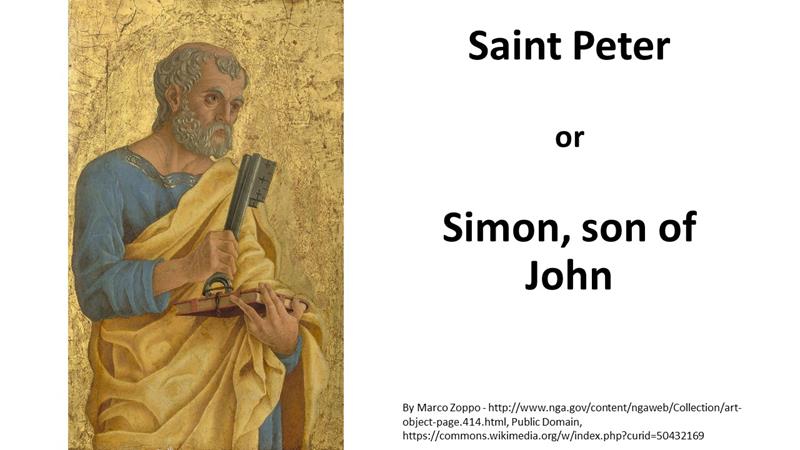 Jesus uses his full legal name. “Simon, son of John.” Did any of you have parents, or maybe a teacher, who when you were in trouble, would use your full name? “Charles Jeffrey!” I would hear that and immediately knew I had done something wrong. Was Peter in trouble? I don’t think so. But Jesus emphasizes the importance of his questioning. When someone uses your full name, it grabs your attention. Jesus asks Peter if he loves him more than these. We can assume Jesus is pointing over toward the other disciples. We’re told that Peter, in two of the gospels, brags at the Last Supper about how much more he loves Jesus than the others, so much so that he’ll never abandon Jesus.
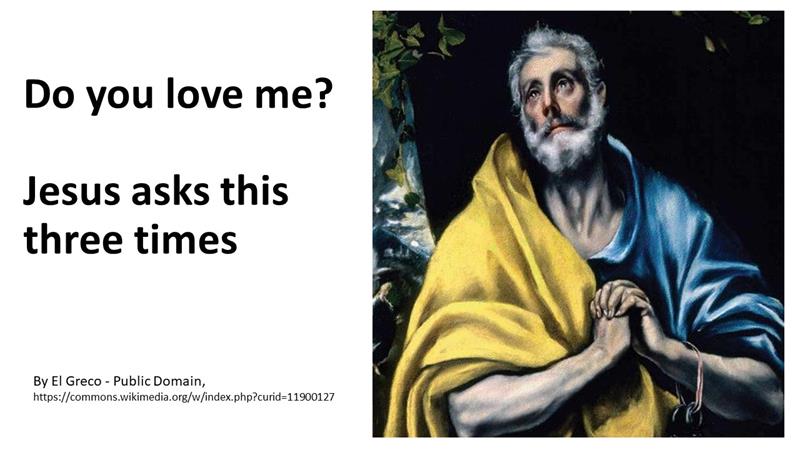 Now, after everything that has happened—the betrayal, the crucifixion, the resurrection—Jesus asks if Peter really does love him and, of course, Peter responds positively. “Yes, Lord, you know that I love you.” Jesus then tells Peter to feed his lambs. This questioning goes on for three times, with just slight variations.
 We’re not given a sense of just how this prediction of Peter’s death was received, but Peter must have pondered it, for he asks about another of the disciples. Jesus tells Peter a great truth. “Don’t worry about him and his death.” It’s almost as if Jesus is saying, “You have enough troubles. Don’t worry about what God seems to give someone else to worry over.” In other words, accept God’s gift as grace and be thankful.
 Here we are, fifty or so generations Peter.
 During these trying times, when we are hiding out in our homes, we might wonder how we can help anyone. There are ways. The Session, at the request of the Mission and Benevolence Committee, has called for a special offering to help care for the homeless in our community. Do what you can to help. The homeless ministries of Savannah are struggling to meet the needs of those who live under the bridges and on the streets.
 Jeff Garrison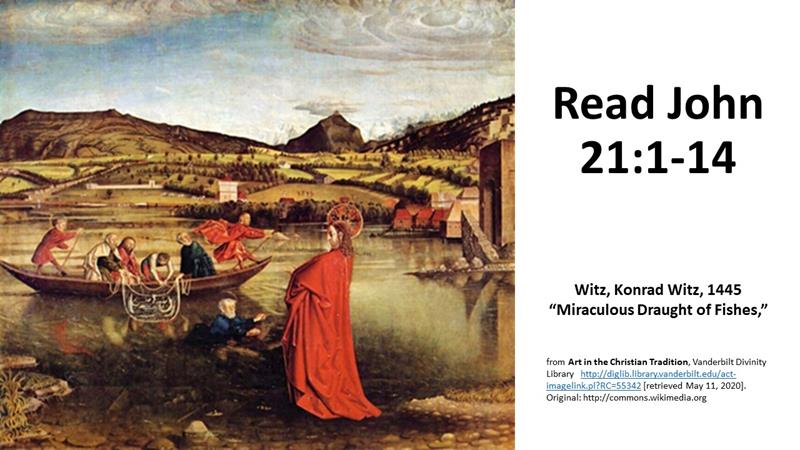
 The best fish are fresh from the water. Even greasy bluefish make a great breakfast when grilled over a charcoal fire on the beach. I was probably 10 or 11 when I first had such a treat. We were fishing on Masonboro Island. It was in the fall, when the bluefish run. We got up when it was still pitch dark and chilly. My dad started a charcoal fire, which helped us stay warm. But instead of sitting around the fire, we soon had lines in the dark water, casting out into surf. In darkness, we fished with bait. On the end of the line, we had a rig with a weight and two hooks, each containing a strip of mullet. When the fish hit, we’d yank the rod to set the hook, then reel hard. Soon, if lucky, a flapping fish could be made out from the distant light of the lantern. We’d have to bring the fish into the light in order to safely get out the hook.
 Leaving our fish on sand, we rebait our hooks and again cast out into the surf. Slowly, the sky changes. The stars began to extinguish themselves. A ribbon of light appears on the horizon, and it gradually growed. We began to be able to make out the beach and could see where the waves were breaking. Soon afterwards, the sun would slowly rise, its rays seemingly racing across the water toward me, as if they whose rays were destined just for me.
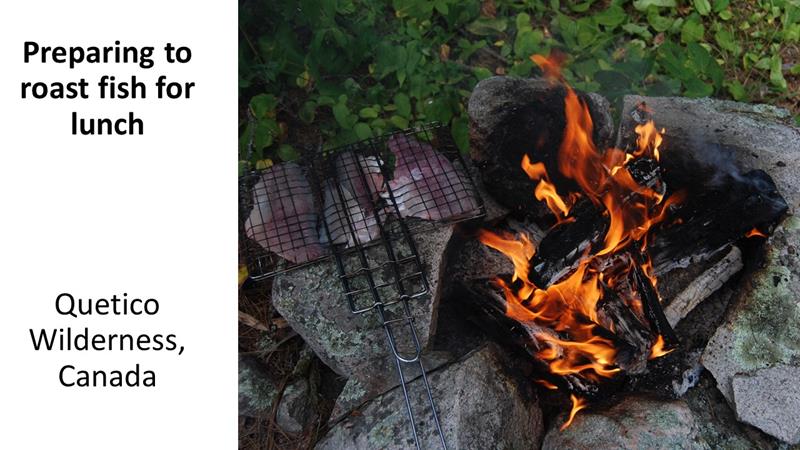 When there was a lull in the action, we’d stop and clean a few fish, washing them off in the surf, and then lay them on a grill over the coals. In a few minutes, we’d be “eatin’ good.” Afterwards, we’d change the rigging on our rods to plugs and spoons and head back to the water’s edge. Good memories of good times.
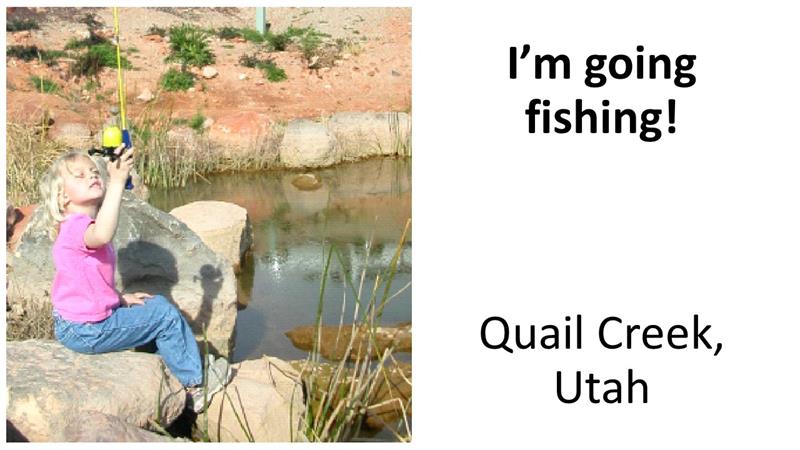 Perhaps it was because I grew up in a home where fishing ranked just below church attendance in priority that Peter’s statement, “I’m going fishing” seems normal. And to the six disciples with him, it sounds like a plan. They head to the water and fished the night. They had terrible luck. That happens. Some mornings there are no bluefish for breakfast.
 As I’ve emphasized in these sermons on Jesus’ resurrection, the disciples learn a true lesson. They are not in control. Jesus is in control. We often have this image of going to Jesus, but in truth, Jesus first comes to us. In today’s story, Jesus knows where many of his disciples are. They’re by the lakeshore, fishing, because that’s what they know how to do. So, like when he first called them, he returns to call them again. Next week, we’ll look at how Jesus sends out Peter with a mission, but before we go there, I want us to spend some time in this story.
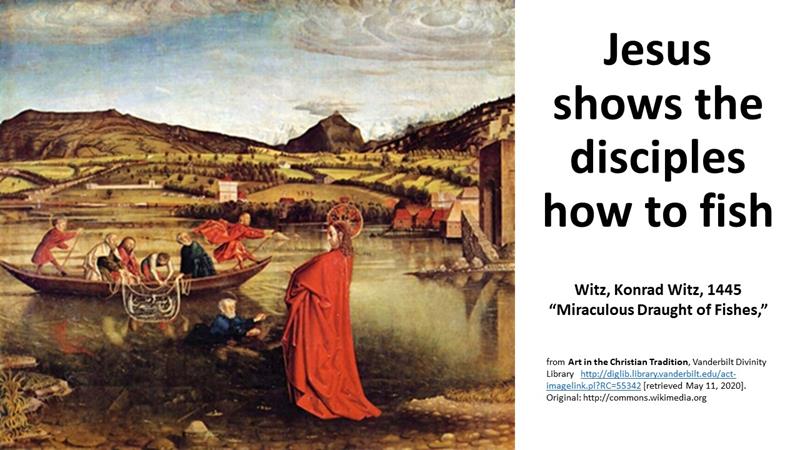
 On this night, the fishing hadn’t been good. Jesus then does something else that goes against fishermen etiquette. “Why don’t you fish from the other side?” That’s like suggesting a different lure or fly. “Take off that spinner and put on a jitterbug; or get rid of that wooly bugger and put on a popping bug.” But Jesus’ advice pays off as they catch so many fish the net is about to break. Only then does the Beloved Disciple realizes it’s Jesus. Before he can act, Peter throws on some clothes, jumps in and swims toward shore.
 Like the other post-resurrection appearances, there’s also bit of mystery. Why do we even have verse twelve? After Jesus calls them in for breakfast, we’re told that no one dared to ask, “Who are you?” They knew it was Jesus, but the text leaves us wondering what’s going on. Furthermore, they don’t recognize Jesus right off. It’s only when they follow his suggestion that they encounter him. There’s probably a lesson in that, too. When we listen to Jesus and do what he says, our relationship grows.
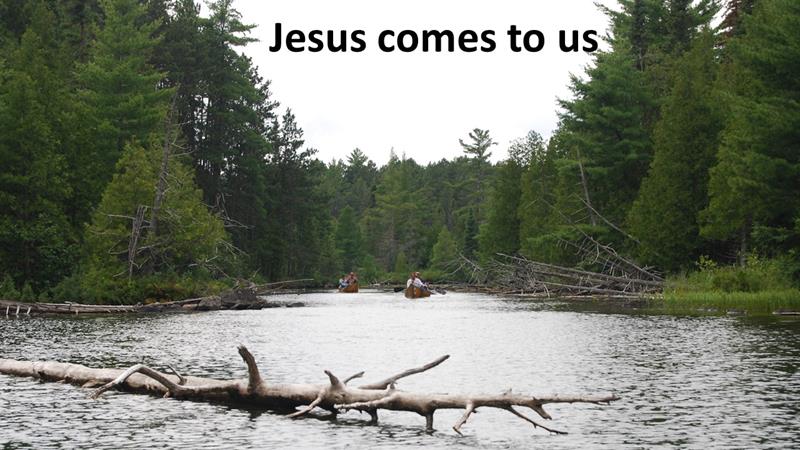 There are three things that happen to the disciples in this passage that we should take to heart. First, Jesus comes to us. Jesus shows up at the most unexpected places. In these stories, he doesn’t show up at church or the synagogue or the temple. Instead, it’s at work, after or before visiting hours. Think about the post-resurrection appearances. Except for meeting the disciples on the road to Emmaus, Jesus always shows up on the shoulders of the day (at daybreak and in the evening). In this case, Jesus arrives as the disciples are finishing up their night shift at a job that wasn’t going to be paying much this day. As followers of Jesus, we must be ready for whenever our Savior decides to pop by. Jesus is not just Lord over Sunday or over religion, he is Lord of all, and can meet us wherever we find ourselves. This is good news in a time that many of us find ourselves prisoners in our own homes! Yes, Jesus can show up even there, you’ll just have to let him in.
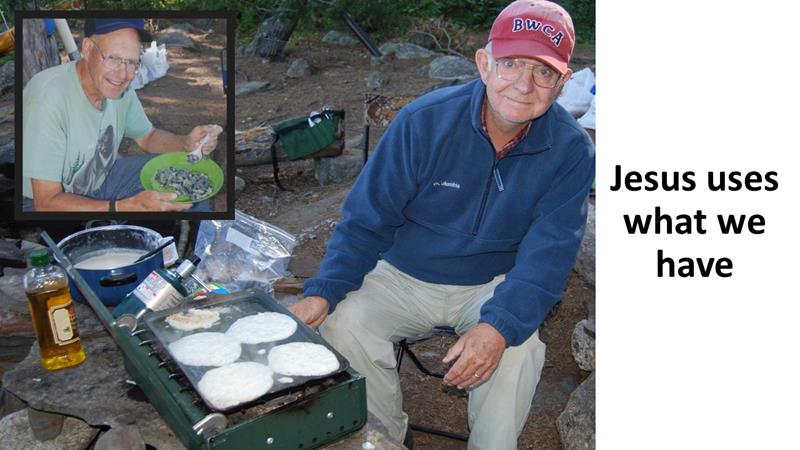 Let me tell you a story to illustrate this. Many of the photos I’ve using today came from a 2008 trip into the Quetico Wilderness in Western Ontario. The guy at the camp stove you see now is Doc Spindler. One morning, he was talking about having pancakes and so proud of himself for prepacking everything he needed. To be helpful, Jim Bruce (who visited us here at SIPC in February and seen in the picture with the full plate) and I went out early that morning, braving the bears as we picked a quart of so of blueberries. We brought them back and Doc was so happy to have blueberries to mix into pancakes. You use what you’re given. Doc knows this. Although a great guy, however, Doc isn’t Jesus. Instead of the baggie with pancake mix, he used a package of meal for frying fish and the blueberry pancakes ended up coming out like goulash. But with a little syrup and butter and an empty stomach, it was still good.
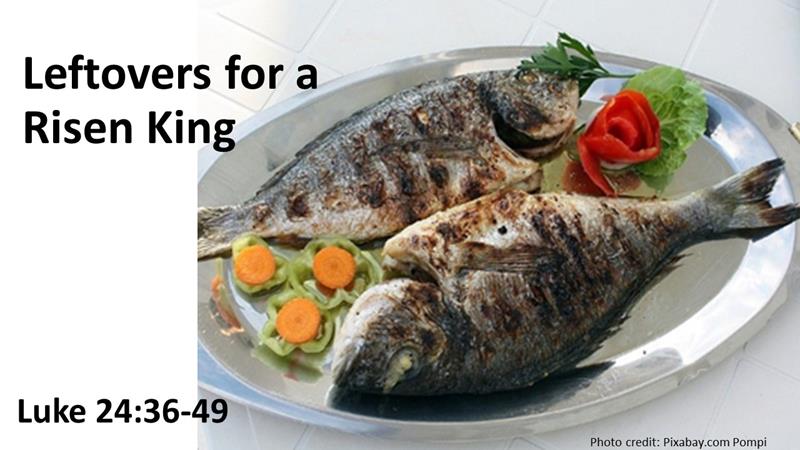
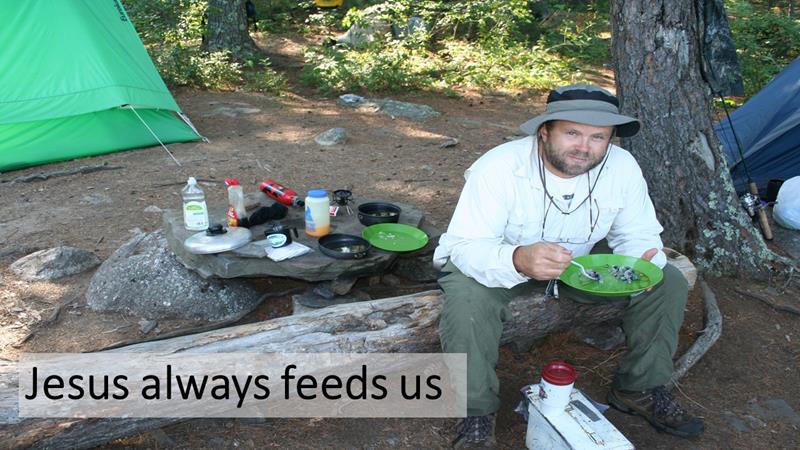 Finally, Jesus feeds us. In this case, he fed the disciples a hearty breakfast of fish and bread. But Jesus, who calls all who are weary to accept his yoke, will restore our tired souls and feed our minds and bodies with his presence and comfort.
 Jeff Garrison

 One of the common characteristics of the post-resurrection appearances of Jesus is that no one is looking for him, and no one “finds him.” Instead, Jesus just shows up. The disciples are hearing from the women about Jesus not being in the tomb, reports of him being in Emmaus, and from Simon Peter. But they don’t send out a search party to find Jesus. They’re scared. They lock themselves into a room while discussing what they consider as rumors. And when Jesus mysteriously shows up, they freak out. “It’s a ghost!”
 One of the lessons we should learn from the resurrection stories is that Jesus controls both his and our destinies. It’s not about us going out looking for God, it’s about God looking for us. There are no barriers that we can put up to avoid God. The disciples discovered this when Jesus pops in. This is good news for those of us sheltering and avoiding contact with others in order to stay healthy during this pandemic. While we might not be able to go to church on Sunday mornings, God can invade the privacy of our homes. We can’t keep God out. As Jesus shows us, God is in control. That’s good, because we can screw things up, so we’re a lot better off depending upon the God who surprises us, than depending on our own inability to bring us back into a relationship with the Almighty. This is what the Presbyterian doctrine of election or predestination is all about.
 But before the disciples can understand this, they must realize who this is that has invaded their meeting. In their mind, Jesus is dead. You don’t come back to this life once grasp the idea that he is risen. First, he asks for a bite to eat. It’s been a while since his last supper. It’s important that they see food going in his mouth (see food, seafood, get it?). Jesus then points to his flesh and bones. Luke wants to assure us that Jesus’ appearance to the disciples after his death isn’t just wishful thinking on their part.
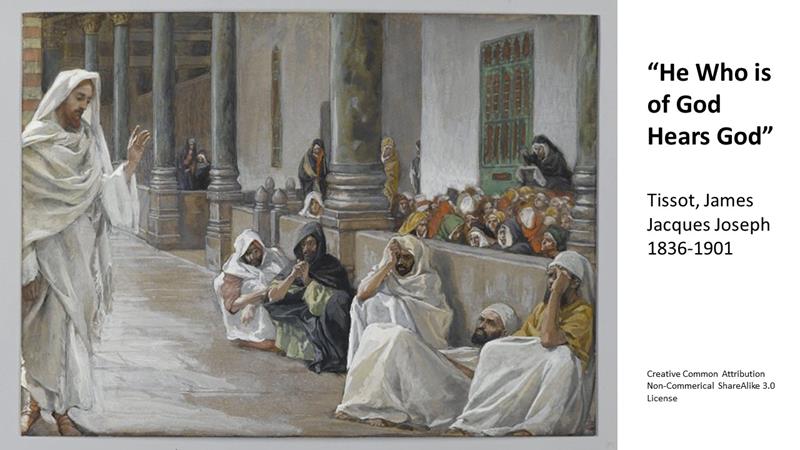 The second thing Jesus does, which is like what he did with those in Emmaus, is to help the disciples understand the scriptures. Jesus wants them to grasp the idea that his suffering, death, and resurrection has been God’s plan.
 Of course, because this is God’s doing, not the disciples’, they will need to be given the strength and ability to carry this mission out. Jesus, in his commission to the disciples in Luke’s gospel, is looking forward to the: coming of the Holy Spirit, to Pentecost, after which the disciples will take Jesus’ message to the end of the world.
 Jesus shows up and calls us because, sooner or later, we are no longer going to be hiding in our home. Life will open back up and when that happens, we need to be ready (just as the disciples were ready on Pentecost) to go into the world and make a difference. Think of this time we’re in as a Sabbath. Like the disciples, we rest today. In a short while, there will be plenty for us to do. As followers of Jesus, we’re to change the world, to make it a kinder more generous and gracious, home. May we catch that vision and live into it. Amen.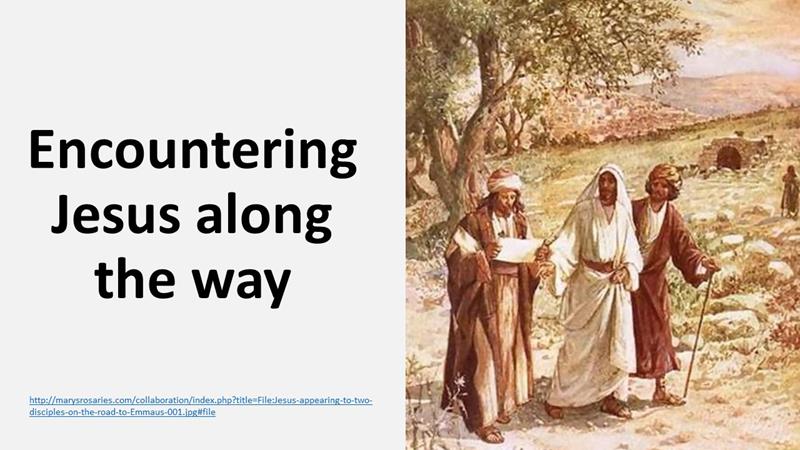
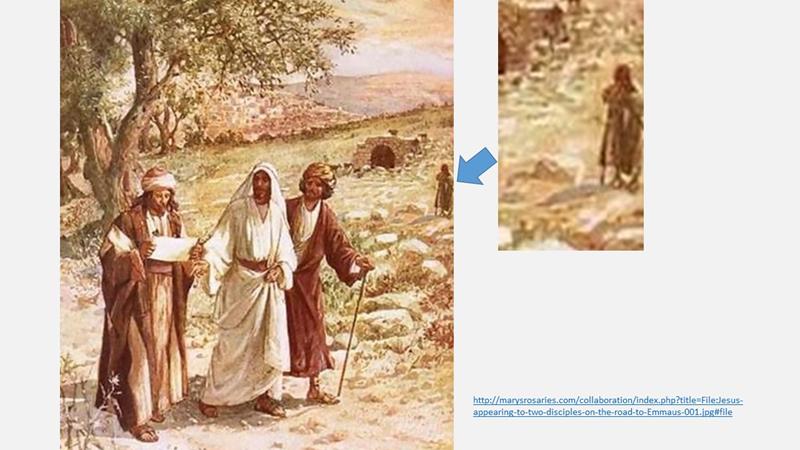 I have a lot of time to think out here, watching the sheep. I see a lot of people coming and going. Jerusalem, the Holy City, is just over the rise, a few miles away. These three were heading away from the city and engaged in a great debate. Even with my back turned, I could hear them a mile away. And as they were talking, the third guy, the one in a white robe, catches up with them. He joins their conversation. They seem rather surprised that he didn’t know what they were talking about. There’s this man, supposedly a king, who’d been crucified. But then he starts asking questions and I can tell they are intrigued. Here, a guy who didn’t seem to know the news, yet knows the scriptures.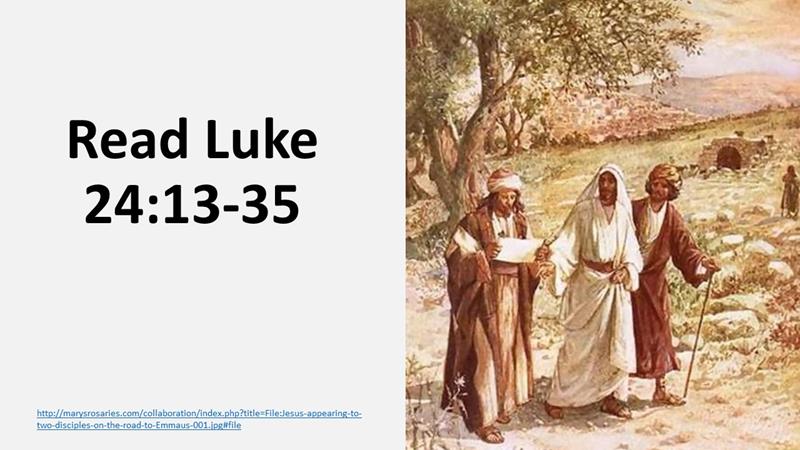

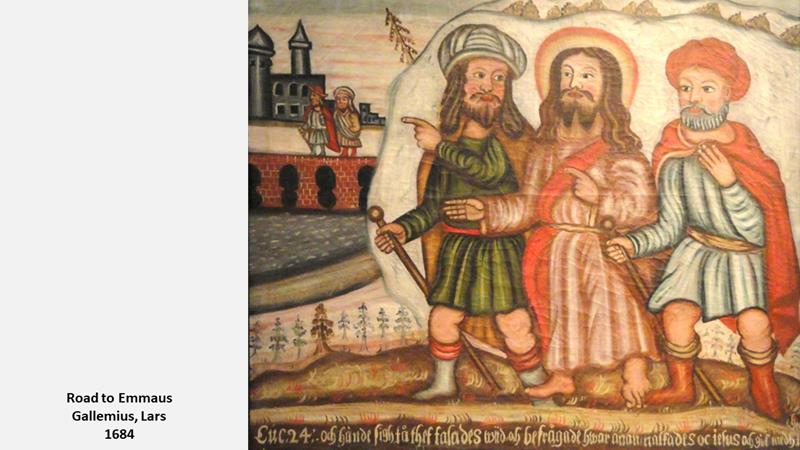 On this occasion, they are walking and discussing the events of the past few days when they are joined by a stranger. This makes sense to me, as I have walked a lot in my life. I recall numerous occasions along the Appalachian Trail where I was talking to someone and a third person comes up behind us and, overhearing what we were talking about, puts his two cents worth.
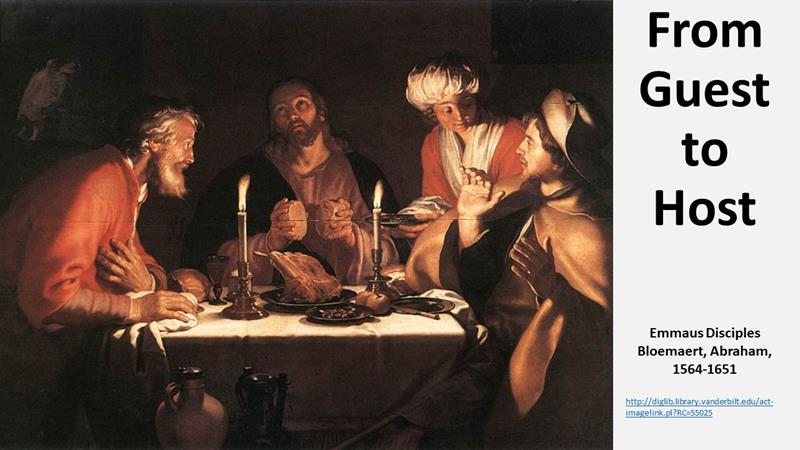 Something else happens. Jesus, at the table, goes from being the guest to the host.
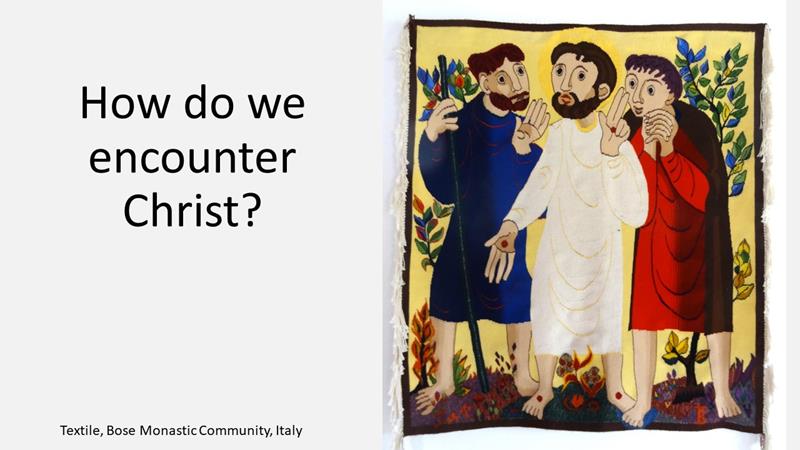 In some ways, our encounters with Christ are probably more like these two disciples walking to Emmaus. There are very few Damascus Road experiences, like that of Paul. It ranks up there with Moses’ burning unburned bush. Most of us experience Christ, like these two, when we realize something someone said caused our hearts to burn, or when someone opens Scripture and we learned the eternal truths of God’s Word. And when something like that happens, we must tell someone. It’s a Truth we can’t keep to ourselves. This is how our faith spreads. We encounter Christ through his word or through someone who speaks to us about Christ and then Christ becomes real to us.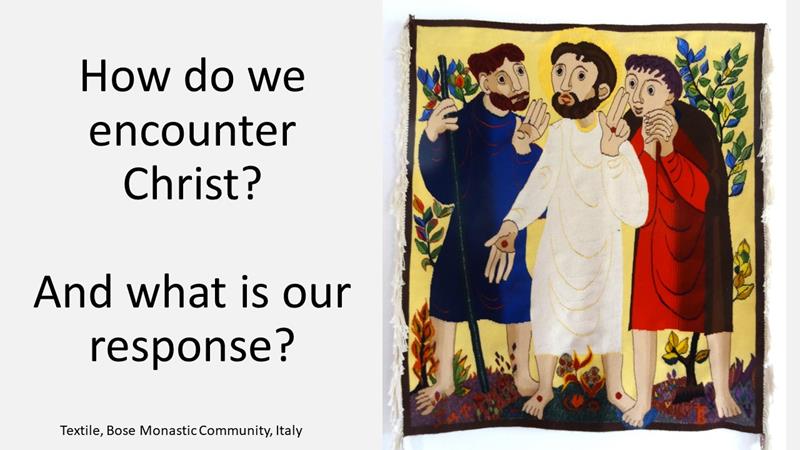
 Jeff Garrison
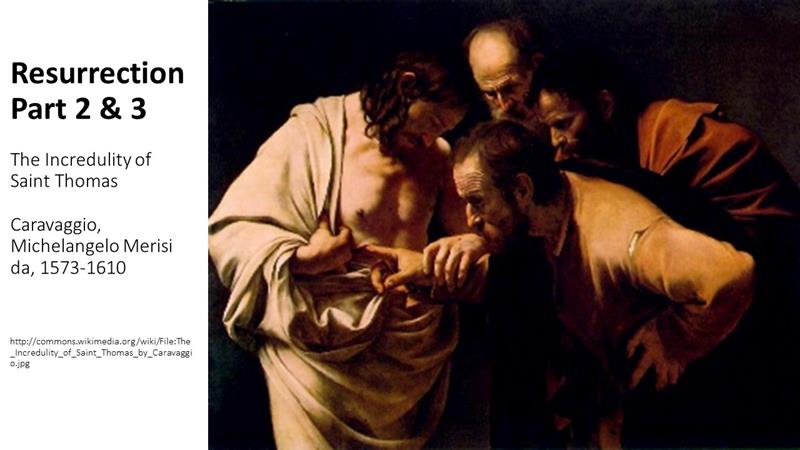
 Like Thomas, I also have doubts. I was just not willing to speak up. Can this really be Jesus? After all, his body was so broken when they pulled him off the cross. Yet, he’s now in front of us. Jesus insists that Thomas, who doubted when they said Jesus had risen from the dead, stick his finger into his wound. I’m watching. Thomas is reluctant, but Jesus grabs his wrist and pulls his hand toward the wound. Can this really be the same Jesus, that just a little over a week ago, hung on a cross? And is he the same Jesus we followed throughout Galilee? Will people believe us when we tell what we’ve experienced? I no longer understand what is happening, but I know that nothing will ever be the same.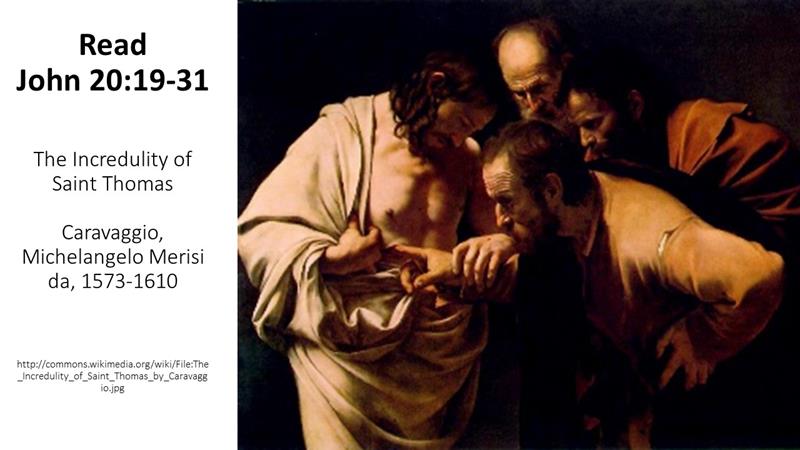
 What a week it. From the Parade to the cross and now on the evening of the first day of a new week, the disciples gather in secret. The doors are locked. Everyone is exhausted. Fright and fatigue show on their faces. After three years, they only have each other. And now there’s a rumor going around, started by Mary Magdalene, that Jesus is alive. Some think it possible, but others believe it’s just idle tale?”
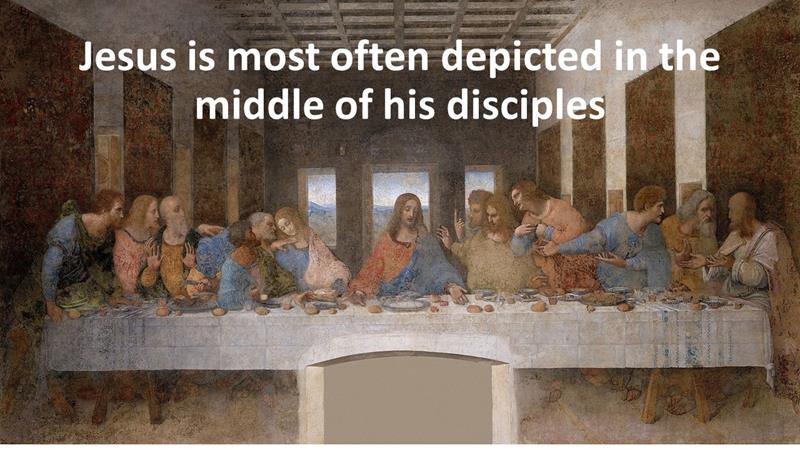 And then suddenly, as the sun sinks in the West, Jesus appears. How did he get through the locked doors? But here he is, when he belongs, in the middle of the middle of the gathered disciples. Jesus was the one who unites the disciples. He’s always in the middle. He was even in the middle of those crucified on Friday. The middle is where Jesus belongs.
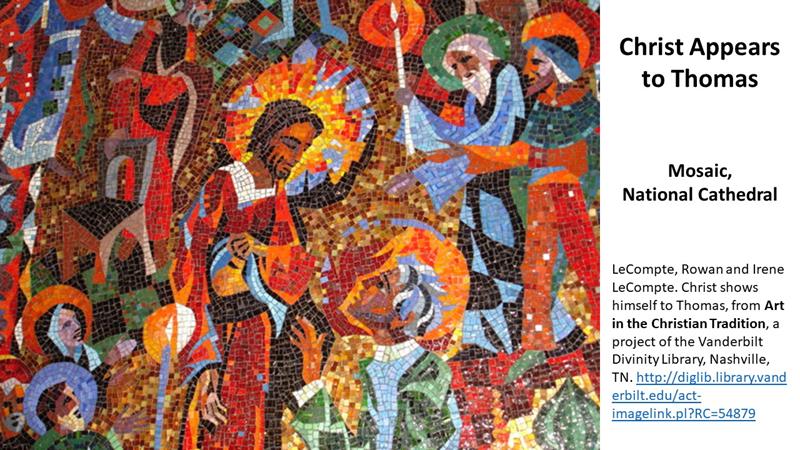 We could argue that this is the climax of John’s gospel. “My Lord and my God,” acknowledges that Jesus is more than the Messiah. We get a whiff of this in Matthew’s gospel where we’re told the women at the tomb worshipped Jesus.
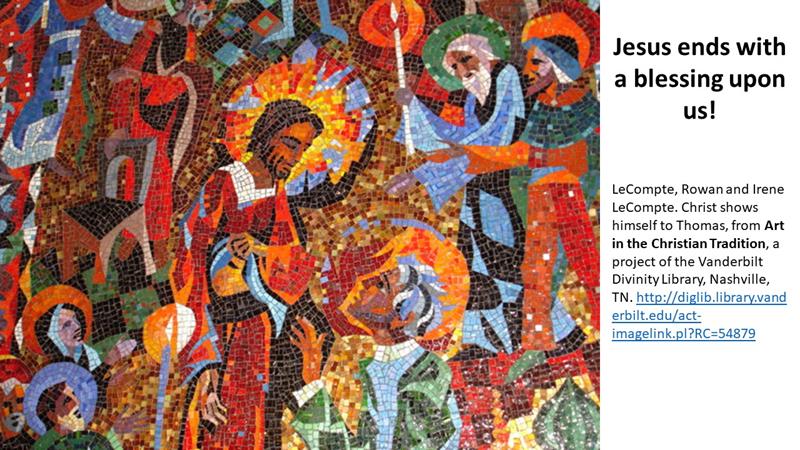 What all this means to us, today, two millenniums after the resurrection? Jesus’ last words in this passage are interesting. It’s a blessing on us. “Blessed are those who have not seen and yet have come to believe,” Jesus says. Did you hear that? He’s talking about you and me; he’s blessing those of us who have not had an opportunity to stick our fingers into his wounds. Instead of seeing, we believe due to the presence of the Holy Spirit and the testimony of others who have felt Jesus’ presence in their lives. And because we have faith in Jesus Christ, we’re to listen to his teachings and to live lives that strive to glorify him. That’s the challenge we have, as individuals, to listen to Jesus and to live faithful.
 Furthermore, as a community of believers, we’re able to offer forgive sins. That’s quite a task. You know, there are a lot of good things that the church does in the community that other groups can also do, and in some cases these groups can even do it better than the church. But there is one thing that no other group can do. The government can’t do it, civic clubs can’t do it, political parties can’t do it—and that’s forgive sins. As God, Jesus has this power and he grants it to his church. For this reason, the church is an essential business. But the church isn’t a building; the church is wherever God’s people are at, which now, hopefully, is in the safety of our homes.