
At the bottom of the sermon, I have the opening of my pastoral prayer for the day as I reflect on the atrocities our nation experienced yesterday and early this morning in El Paso, Texas and Dayton, Ohio.
 Jeff Garrison
Skidaway Island Presbyterian Church
Galatians 5:13-23
August 4, 2019
This is our last worship experience in the series, “Image the People of God. Today, we’re reflecting on the fruit of our imaginations as we long for the kingdom of God—the family of God—to be fulfilled with good and right relationships. What does it look like to be a community who is “believing, receiving, becoming God’s love,” and who can sing with exuberance, “we are your people, O God!” Our scripture from Galatians provides an image of what this looks like. We’re to make a “loyal commitment” to this vision.[1] Read Galatians 5:13-24.

 Did any of you get nervous as the end of a reporting terms approached when you were in school? Be honest. I certainly did. The idea of receiving a report card that had to be signed by parents was troubling, especially if I didn’t do well in a subject. It was even more troubling if I received anything less than a satisfactory mark in conduct. Personally, I never saw anything bad with my conduct, but my teachers had different expectations. It was often reflected with a “needs improvement” or “unsatisfactory” marks on my report card. I’d go home and if I only had a “needs improvement” mark would discover a few new chores. If it was an “unsatisfactory” mark, I’d find myself grounded for six weeks. Maybe Paul’s claim that freedom is not an opportunity for self-indulgence was meant for me.
 Our passage today is about the God’s expectation for our lives. Paul provides us with guidance on practical Christian living. Such a life should show the evidence of spiritual fruit that centers on love. Paul begins this section by reminding us that we have been called to be free, but we should not use our freedom for our own self-indulgence. Instead, through love, we become slaves to others. Paul speaks of love as way of looking outward, always wanting what is best for the other person. It may be idealistic, but if we all lived this way, we the world would be a better place. Are we making the world better or worse? What kind of report card would you receive?
 Paul draws a comparison between the types of work that come from our own desires and that which shows evidence of God’s Spirit working in our lives. The flesh can lead us down the wrong path, whether it is sexual immorality, idolatry, or creating discord within our communities. We’re to avoid such things, as Paul highlights in verses 16-22. Then, Paul provides a contrasting list of what the fruit of our life in the Spirit should look like: love, joy, peace, patience, kindness, generosity, faithfulness, gentleness, and self-control.
 In this series, we’re reminded of our call to use our creativity to become better disciples of Jesus. As a disciple, the end goal isn’t to convert the world (that’s God’s work), but to be witnesses which means exhibiting such characteristics in our lives. If we were to receive a report card from God, it could have these nine items listed. How would we do? Would our grades be high enough to make our parents proud?
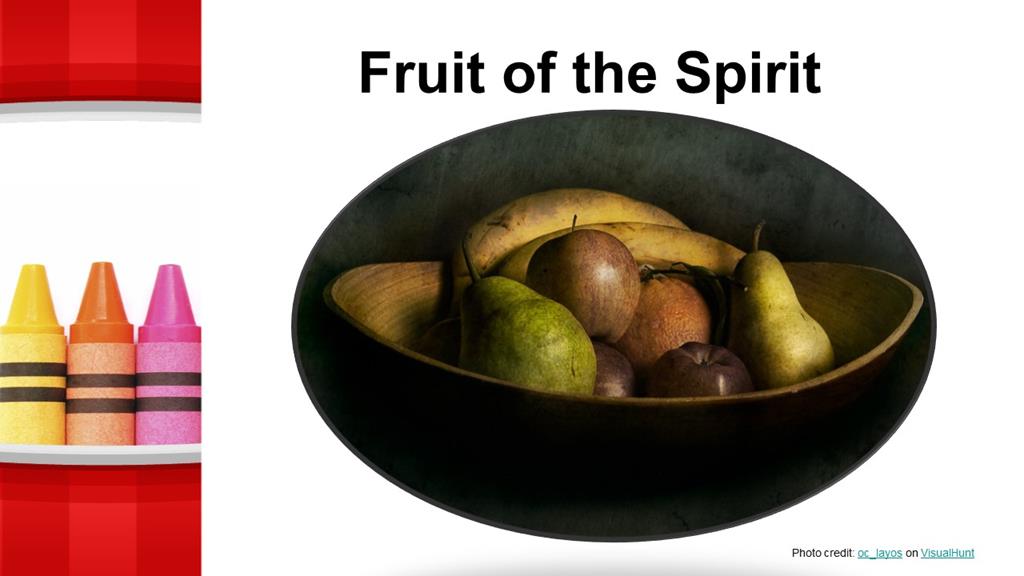 Before we get into the individual items, let me suggest that they are to be taken as a whole. We don’t have nine different fruits of the spirit, like you might have apples and pears, bananas and pineapples. Instead, we are to have “fruit of the spirit.”[2] Fruit is singular. And such fruit is witnessed in nine areas within our communal lives. If each of us were living by ourselves, without anyone else, on a deserted island, there would be no need for such fruit and no way to observe if we are fruitful (unless, I suppose, we suffer from a multiple personality disorder). It’s when we come into contact of others that these traits come into play.
 Now let’s look at each of these traits. Love: It’s been said that love always implies a personal investment in the object of love.”[3] Your check book probably says more about what you love than anything else. Where do you invest your resources? We experience this in God’s love for us through Jesus Christ. God gave it all. Love is outward focused, not inward. It’s the first of the traits because the love of God and of one another is the summary of the law. If we don’t love, we are not making the grade!
 The second trait we should be showing is joy. This is a hard one for we tend to think about joy as the person always smiling and laughing, forgetting the truth of that old Smokey Robinson song, “The Tears of a Clown.” We think of joy when the war is over and everyone celebrates in the street or when your favorite team wins the World Series, but such joy is fleeting. Paul encourages us to have joy even in times of trouble and persecution.[4] Joy is not the absence of something undesirable, but is that which gives us hope that our suffering is not the end.[5] God has something better for us, which is why Paul and Silas could sing hymns when they were in chains after having been beaten.[6] With God as the source and object of our joy, we can be joyous despite disappointments because we know that God got this. Our eternal salvation is secured.
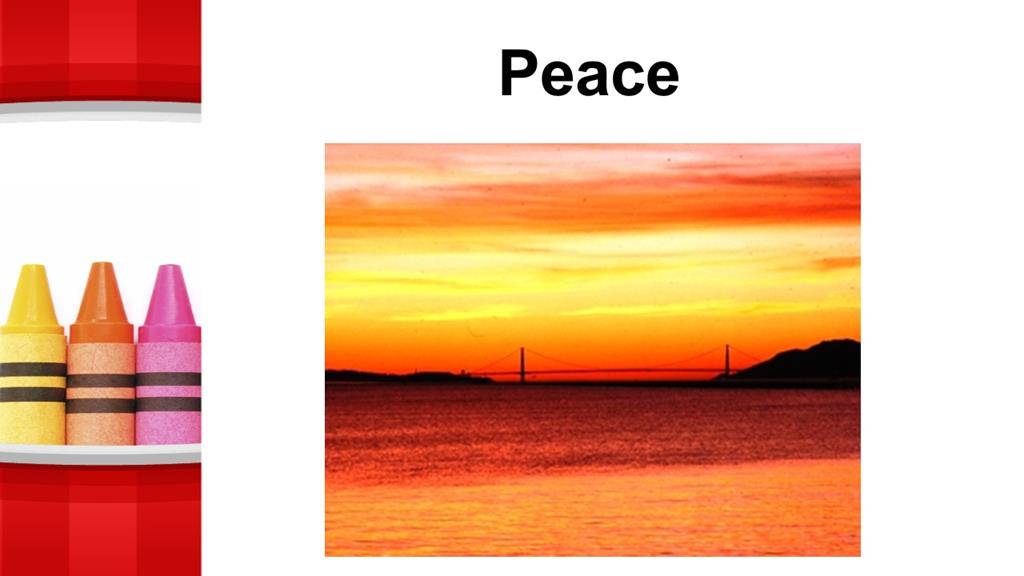 The third trait we’ll show, if we are fruitful, is peace. Again, as with joy, peace is often misunderstood. Without war is what we think peace is, but the Biblical concept is much deeper. Peace has to do with a wholeness within ourselves. It’s a state of mind that keeps us from being overwhelmed when chaos (and war) surrounds us. Peace is an outcome of knowing and trusting God.
 The next trait is patience. Again, think about how we often act. We want what we can get as soon as possible. When we want to go to the store or the club or wherever we’re going, and we are impatience when we get behind a slow driver or a driver who’s lost and looking at mailbox numbers. But as a believer, we should take a deep breath. We should realize the source of our frustration, such as the slow driver, may need a break. We don’t know what is going on in his or her life. Besides, what’s the worst that might happen? We’ll be a minute late? Give the person a break and be patient is the Christian response, but one in which many of us struggle.
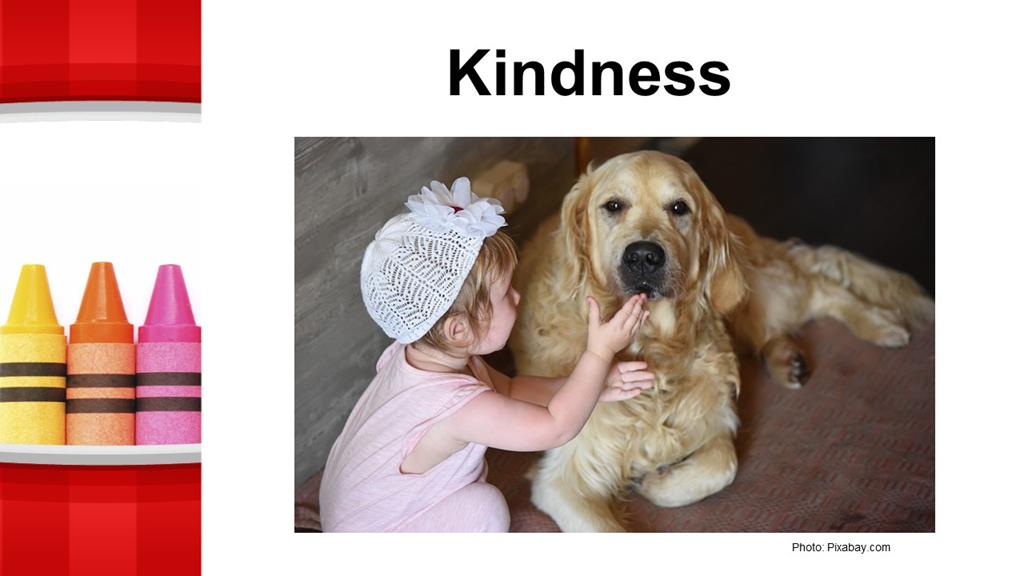 Kindness goes without saying. Again, God has shown kindness to us and calls us to show kindness and mercy to one another.[7] Kindness helps restore relationships, as God’s kindness demonstrates.[8] We’re taught in Proverbs that the one who shows righteousness and kindness will find life and honor.[9] Proverbs also teaches that kind words will bring life, but cruel words will crush another.[10] Do we show kindness to all?
 Next comes generosity. Again, in giving His Son, God has been generous with us, and we are to therefore be generous to one another.
Next is faithfulness. Remember, God has been faithful to us, even when we’ve been unfaithful. Therefore, we should be faithful with one another and not promise that which we will not do. In our world where people get easily offended and then break relationships, we see that faithfulness is in short supply. We need to change this. God stuck with us through thick and thin, and we need to stick with one another.[11]
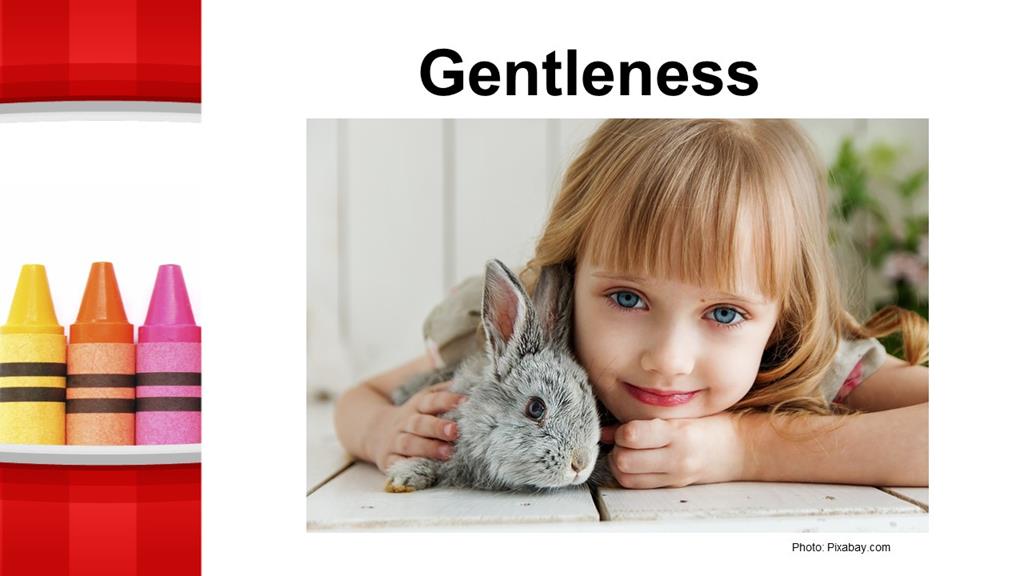 Gentleness is another godly trait. Remember the parable of the forgiven servant that Jesus taught?[12] The one forgiven a great debt, but then he puts the squeeze on another servant who owed him a minor debt. If God has been gentle with our great indebtedness, then we should be gentle with those who have wronged us. In a way, strength makes gentleness necessary. God could easily crush us, but his gentleness calls for another response. Likewise, we’re to be gentle, especially when we are in positions of power.
 Going with gentleness is self-control. Self-control implies the discipline of an athlete; a metaphor Paul uses to describe the Christian faith.[13] We don’t make rash decisions or lash out without thinking about what we’re doing. We don’t hit “Send” to forward an angry email without first sleeping on it. We don’t make obscene hand gestures when someone cuts us off in traffic. We don’t make snide remarks about those who hold different political views to ours. Instead, we show maturity by reining in our emotions and acting responsibly/
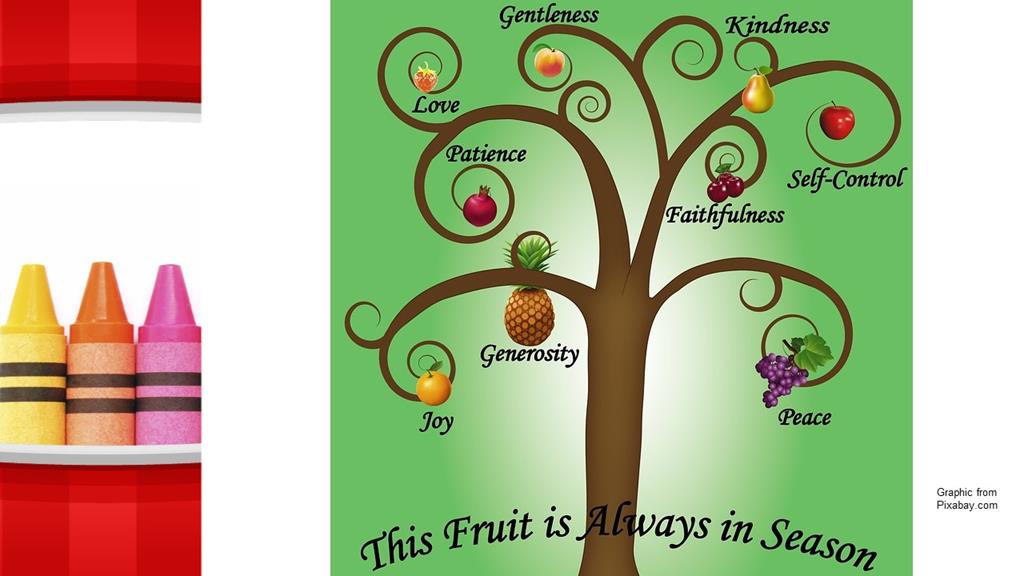 We have witnessed God displaying all these traits that make up the “fruit of the Spirit.” Now it’s our turn to learn from life of Jesus and to show such grace to others. Doing so will make this world a better place for all God’s people. Amen.
©2019
[1] “Imagine the People of God” is a series outlined by worshipdesignedstudio.com.
[2] Ronald Y. K. Fung, The Epistle to the Galatians (Grand Rapids: Eerdmans, 1988), 262.
[3] Don. M. Aycock, Living by the Fruit of the Spirit (Grand Rapids: Kregel, 1999), 17.
[4] 1 Thess. 5:16-17, Philippians 1:24.
[5] Philip D. Kenneson, Life on the Vine: Cultivating the Fruit of the Spirit in Christian Community (Downers Grove, IL: Intervarsity Press, 1999), 62.
[6] Acts 16:16ff.
[7] Zechariah 7:9.
[8] Aycock, 69.
[9] Proverbs 21:21.
[10] Proverbs 15:4.
[11] Aycock, 103.
[12] Matthew 18:23-35.
[13] For example, see 1 Corinthians 9:24 and 2 Timothy 4:7.
20190804 Pastoral Prayer
Almighty and most merciful God, we gathered on a beautiful day, but we’re troubled, for we live in a violent world. We’re worried about what is happening to us as a people. The news is frightening with two mass shootings in one day—in Texas and Ohio—followed by other such events this past week in California and Mississippi. On the world stage, protests rage again in Hong Kong and in Moscow. In the Persian Gulf, Iran has captured another oil tanker. Closer to home, we worry about the church and how we’ll survive as fewer people show interest. More and more people don’t see the need of religion in their lives. We worry about our health and the health of loved ones. We worry about the lack of civility in the public square. As we navigate these dangerous and dark times, we need you more than ever. Give us a vision of a world that reflects your values, not ours. Help us to use our minds to creatively work to build a better world, one in which we enjoy the ripe fruit of your Spirit. May we live in a manner that we’ll be part of the solution instead of contributing to the problem. May we live in a manner that will be faithful to our Lord’s calling, until we are called to our true home, where we will be united with you.
Hear our prayers as we pray…










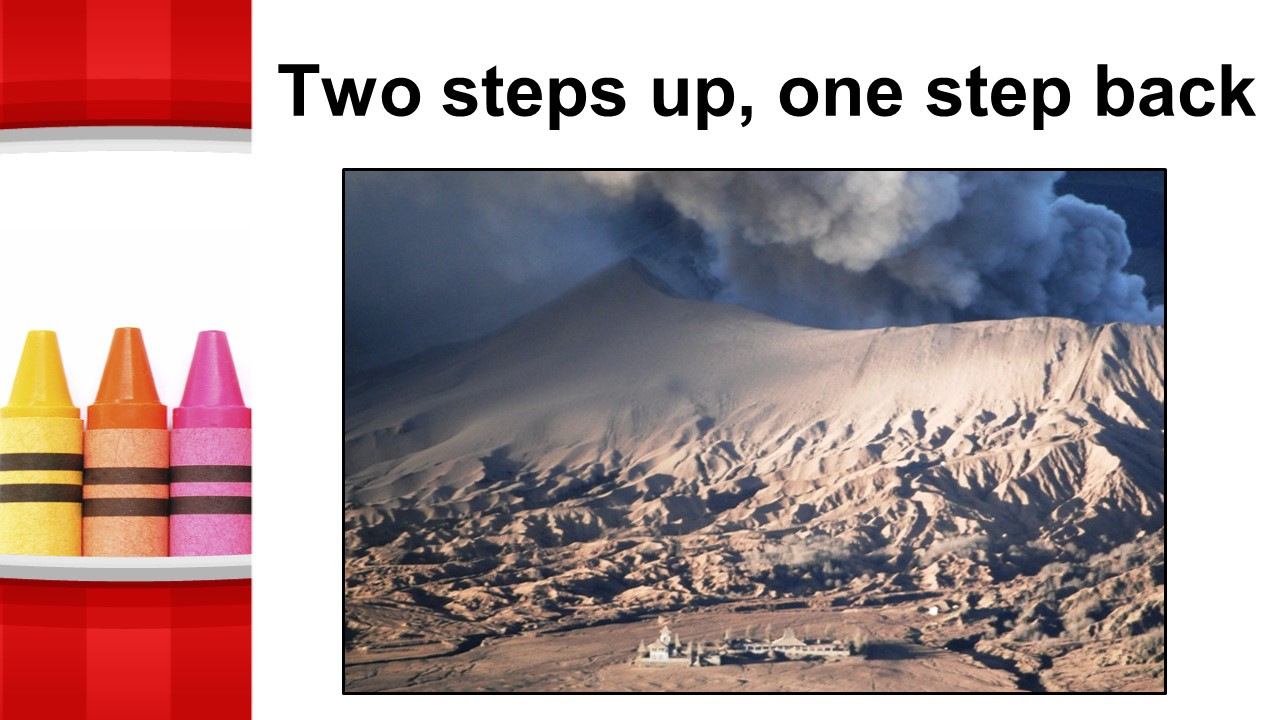 Have you ever felt like you’re taking two steps forward and one step back? Sometimes life’s that way. It’s like climbing a cinder cone volcano. The ground is made of ash and is so unstable that you literally take two steps up and then slide back. You just hope to make progress. A 700-foot climb can take forever. But isn’t that how much of life is?



 Instead of letting the world shape our thoughts and actions, we’re to renew our minds by focusing on God. In John Ortberg’s book, the me I want to be (which I believe our Serendipity class studied a few years ago), we’re reminded of the power of a habit and how our thought patterns are as habitual as brushing our teeth.
 In Colossians, Paul encourages us to focus our minds on things above, not earthly things.
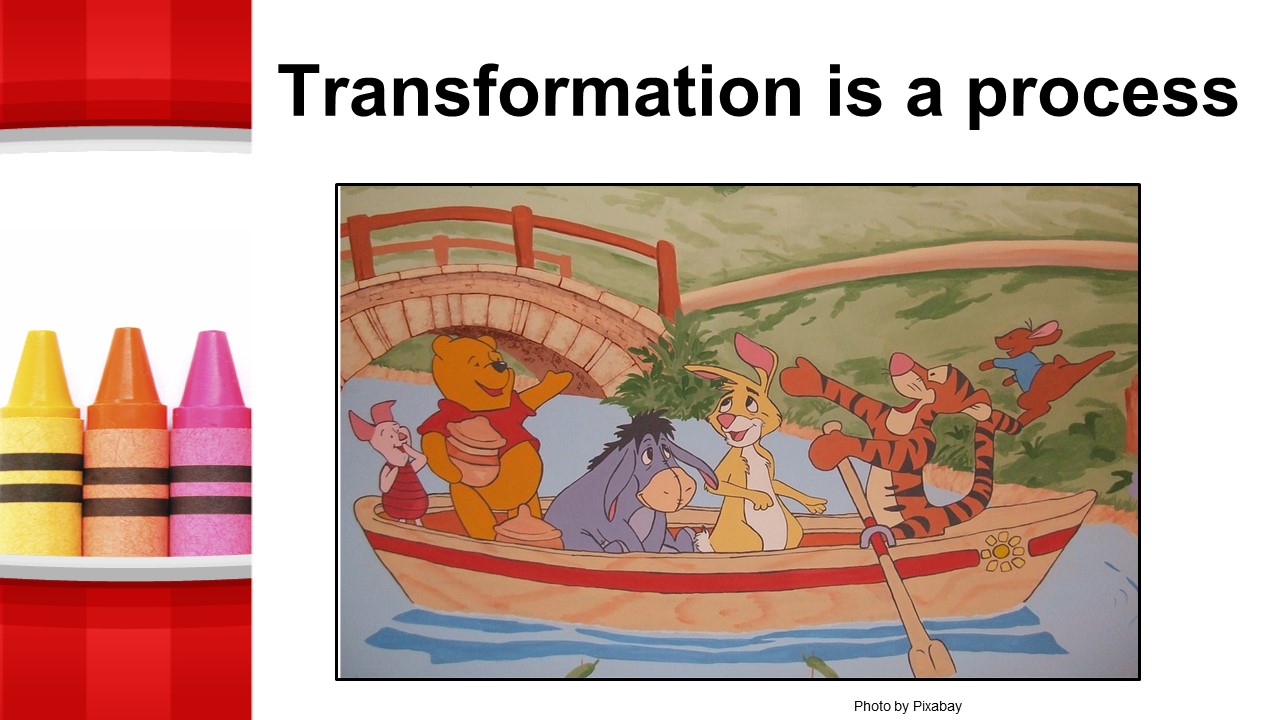 Paul isn’t suggesting here that we have an instant change, that all of a sudden go from being Eeyore to Winnie the Pooh, from being a sourpuss to the life of the party, from being depressed to hopeful. We’re to “be transformed.” Transformation implies a process. We don’t create habits overnight, so we can’t recreate new and better habits overnight.
 We need to embark on an effort to renew our minds. We need to drink deeply from the Scriptures as we read and study the Bible, individually and in groups. We need to ask God’s Spirit to guide, fill and help us learn to discern what God is doing in the world and how we can be a part of it. But we can’t just stop there. We’re not just to read the scriptures, we’re to “do something.” We practice living the life Jesus demonstrated. Unfortunately, as John Ortberg whom I quoted earlier, notes, we often debate doctrine and beliefs, tradition and interpretation, than do what Jesus said… “It’s easier to be smart than to be good.”
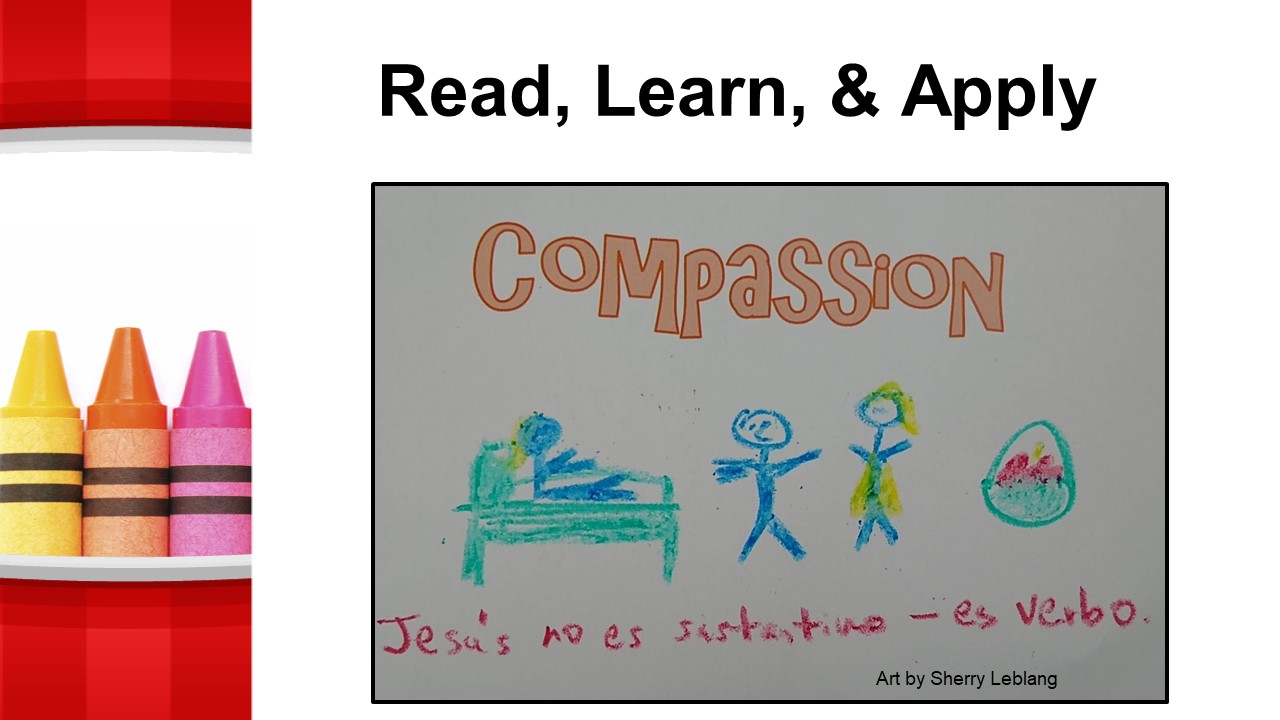 We read God’s words, we learn God’s nature by discussing the Word with others, and we apply it to our lives… Read, Learn and Apply. Don’t be conformed to this world, but be transformed by the renewing of your minds so that you may discern the will of God. Amen.
 Jeff Garrison
  In her book, Sailboat Church, Joan Gray writes: “the church’s divine nature is not always easy to see. Sometimes it takes great faith to believe that the church as we know it is the body of Christ. Sin is all too evident in our midst.” Sounds depression, doesn’t it? But Gray continues, assuring us it’s God’s way as she continues: “the church was never meant to be a group of holy people who are in themselves morally superior to everyone else.”
 Let me say something that might be a bit controversial. Sin abounds within the church, within Christ’s body on earth. I used to think we should try to root it out, but I no longer do. Instead, maybe we should learn from the parable of the weeds and the wheat, and not risk rooting out the weeds less we also damage the wheat.
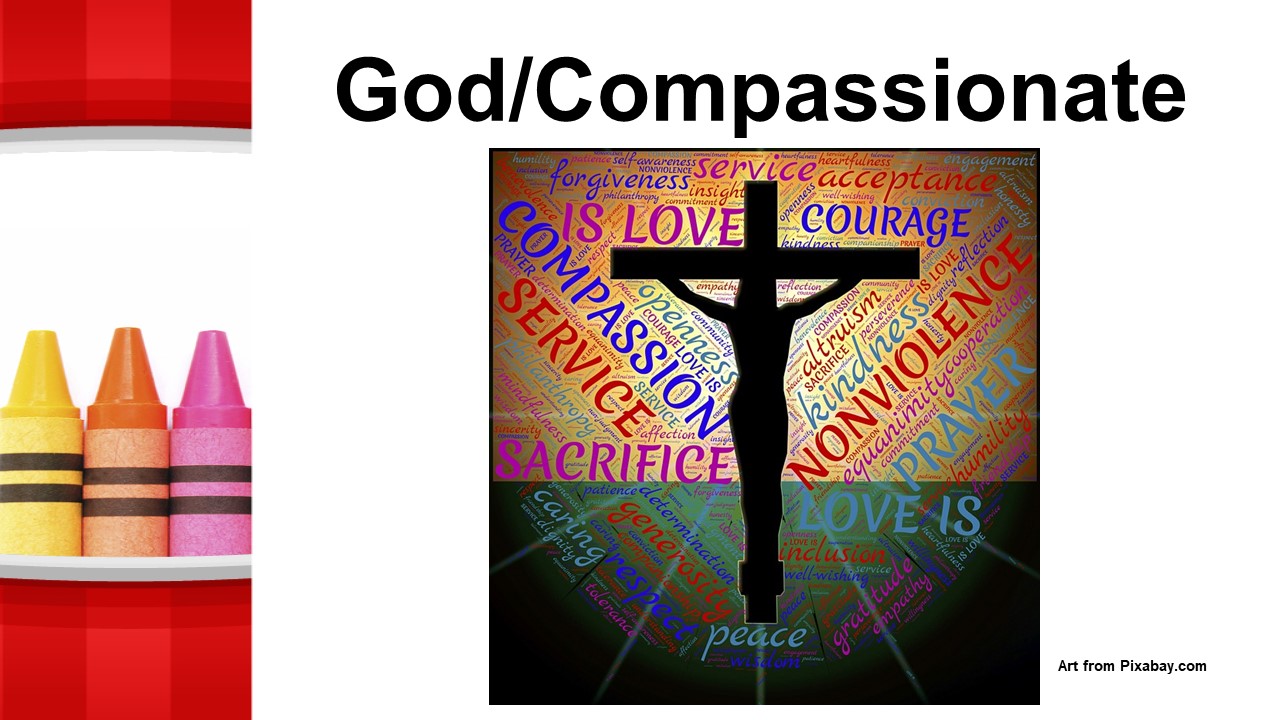 I wonder what our life of faith might look like if we, instead of referring to God as love, referred to God as compassionate. Both are correct. God is love, but in the English language, the word “love” has lost much of its power. As many of you, I’m sure, know, the Greeks had several words for love, erotic love, brotherly love, and compassionate love. We only have one word for love and apply that word too many things. We can love our spouse, our children, a sport team, a car, a sunset, good ice cream, a pair of shoes, a song on the radio… The list continues.
 It’s often pointed out that “love” should be a verb. It should lead us to action toward that for which we have affection. It’s not just a static or emotional feeling, but is something that manifested itself in action for the wellbeing of the other. In that way, it’s like compassion, being moved to work for the benefit of the other. God is compassionate as shown in sending us his Son, to offer the human race a chance to free itself from the muck which keep us stuck and bogged down in sin. Those of us who have experienced this compassion from God are to show such compassion to others.
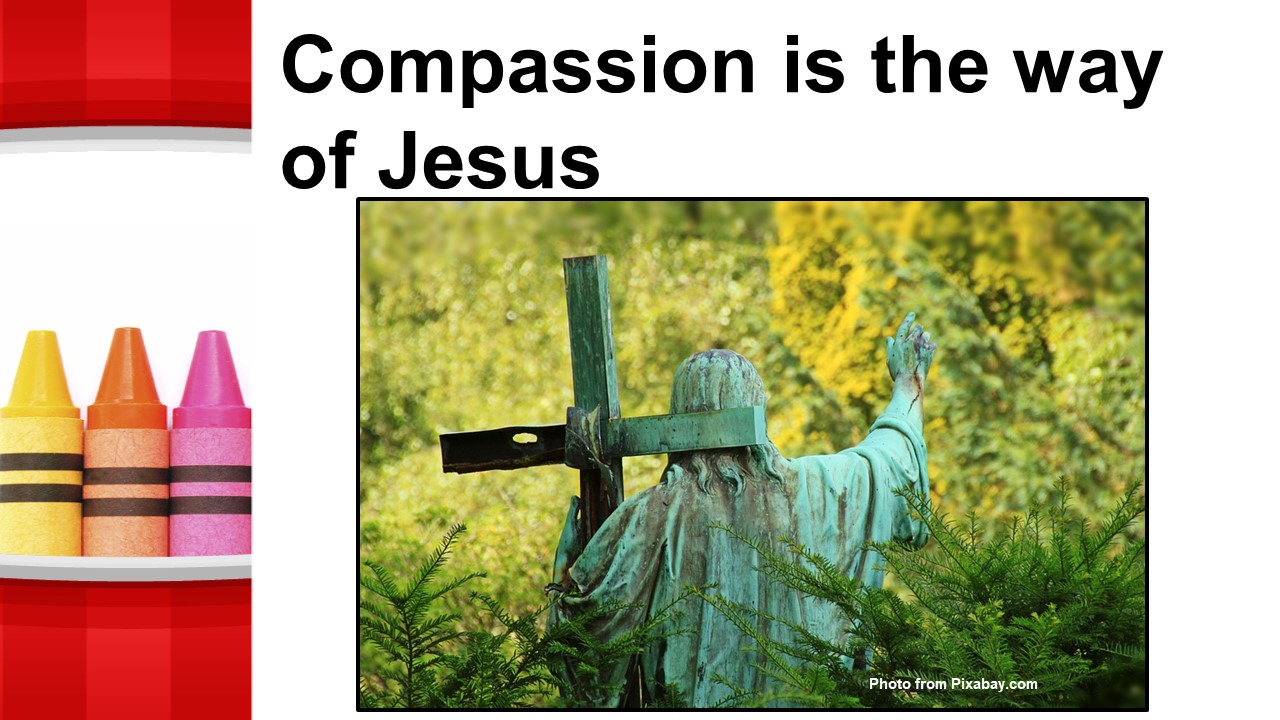
 The word compassion, in English, implies an awareness of another’s distress, with a desire to help alleviate that distress in some manner. It has a deeper theological meaning, as it is linked to God’s actions. In the New Testament, the word compassion is used to describe Jesus or, used by Jesus to refer to God. Paul is the one who makes the link between the compassion of God, as we see in revelation of God in Jesus Christ, to our own call to be compassionate.
 A modern writer defines compassion as “the knowledge that there can never really be any peace and joy for me until there is peace and joy finally for you too.”
 Paul begins this section of his letter to the Philippians with a series of “if” clauses. This repetitiveness is tricky to translate, for we often use “if” to imply a dream. “If only this was real.” “If only this had happened…” But Paul’s use of the conditional cause doesn’t demonstrate a lack of certainty. Paul uses this litany of clauses to drive home a point. “If you believe this and if it’s made a difference in your life as it has in mine, then do this!” “If you have gotten anything out of following Christ, being in his Spirit-filled community, if you have a heart or an ounce of care, then you should act in this way.” Verse one is the lead up to how we should live as disciples, which is covered in verses 2 – 5.
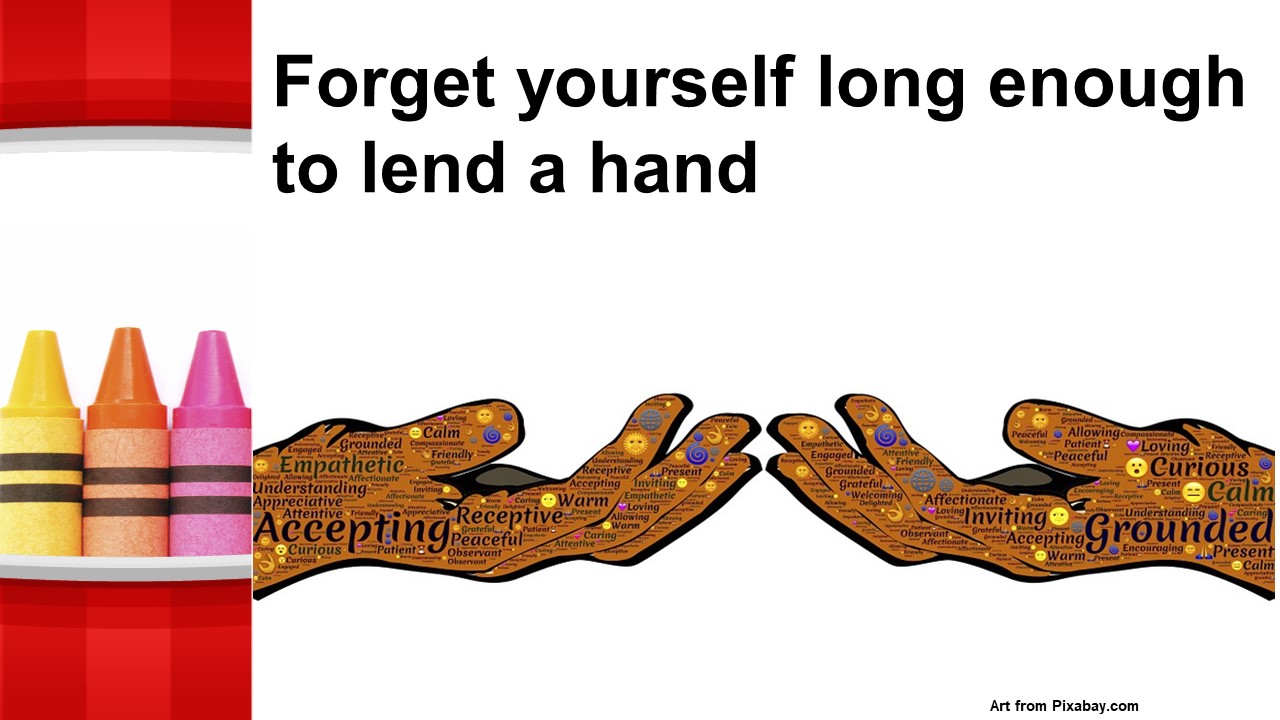 I love (there’s that word again) how The Message translates verse four: “Forget yourself long enough to lend a helping hand.” Paul’s talking about compassion. And then he drives this home as he tells us to be like Christ, the compassionate one. Starting with verse sixth, Paul appears to be quoting an early church hymn about Christ and he encourages us to imitate Christ’s compassion and humility. Instead of pushing and shoving and demanding that we get our “fair-share,” we’re to be Christ-like which means we lower ourselves in order to help others. In difficult situations, humility helps de-escalate tension.
 You know, our lives tell a story. Whether we like it or not, how we live, what we care for, how we treat others, where we invest our talents and money, all combine to tell our story. As followers of Christ, our story will either compel others to check out our faith or it will repel them. If we realize this, it’s important that we strive to live in a way that will honor Jesus and show our trust in the Almighty. And that means to live compassionately. As one writer commented on this, “It’s not wise to name yourself as a Christian unless you are actually embodying the way of Messiah Jesus.”
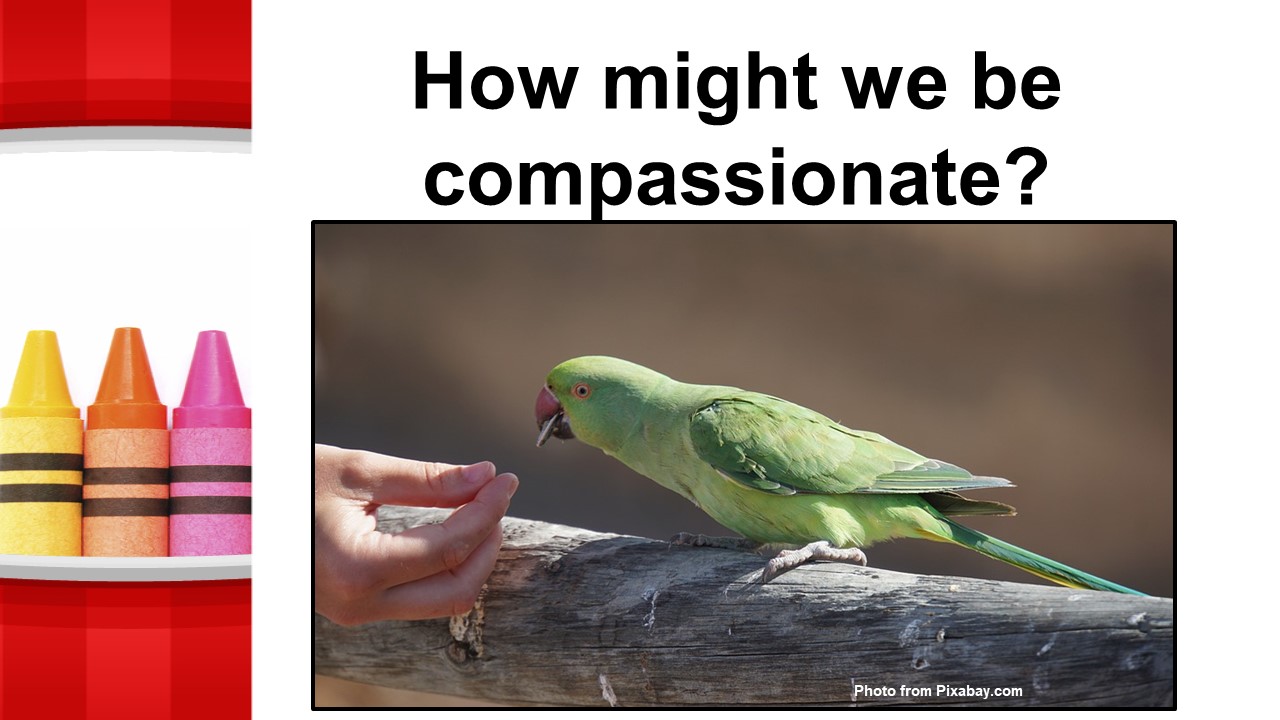 How might we be compassionate? We can look at the life of Jesus and live as he did? Or we might think of some of our contemporaries. Since last Sunday, we have lost a good one, a compassionate man. Jim Fendig was humble and soft spoken and concerned for others. And there are others like him within our community.


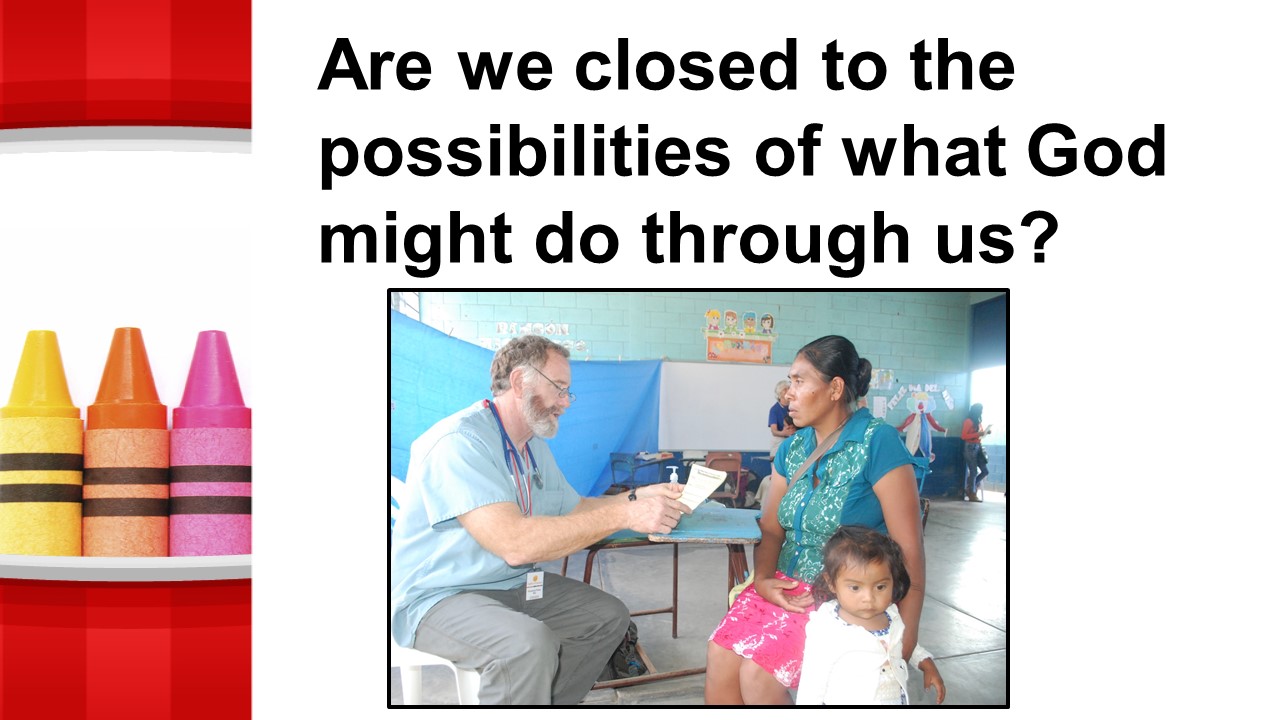 Are we like that? Are we closed to the possibilities of what God might do through us? Are we resistant to the abilities of Almighty God, who can do more than can imagine? Perhaps, like the man in the story, we want to keep God hidden, focusing on ourselves, even though we don’t (by ourselves) have the ability to do miracles? But, you know, when we don’t care who gets the credit, great things can happen. And if it is happening with God, even greater things can happen.
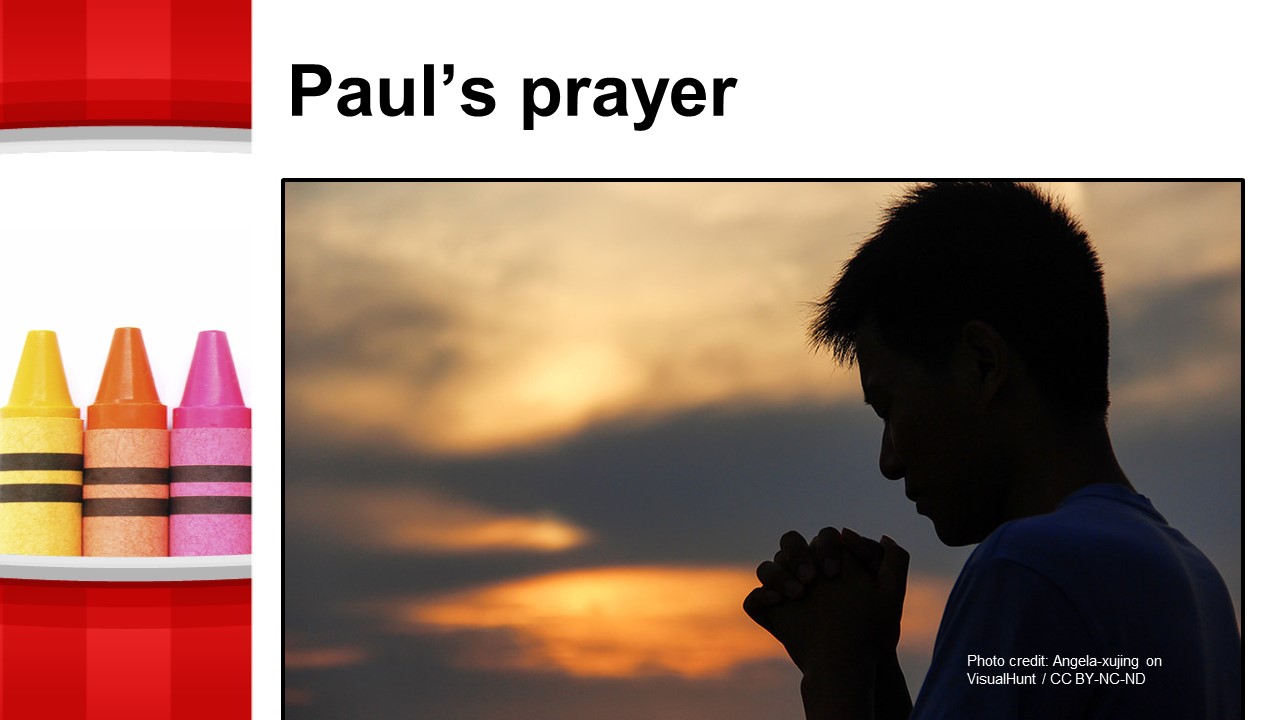 Our reading from the Apostle Paul’s letter to the church in Ephesus is a prayer. Paul prays his brothers and sisters in Ephesus will find strength in God’s spirit and that Christ might dwell in their hearts through faith rooted and grounded in love.
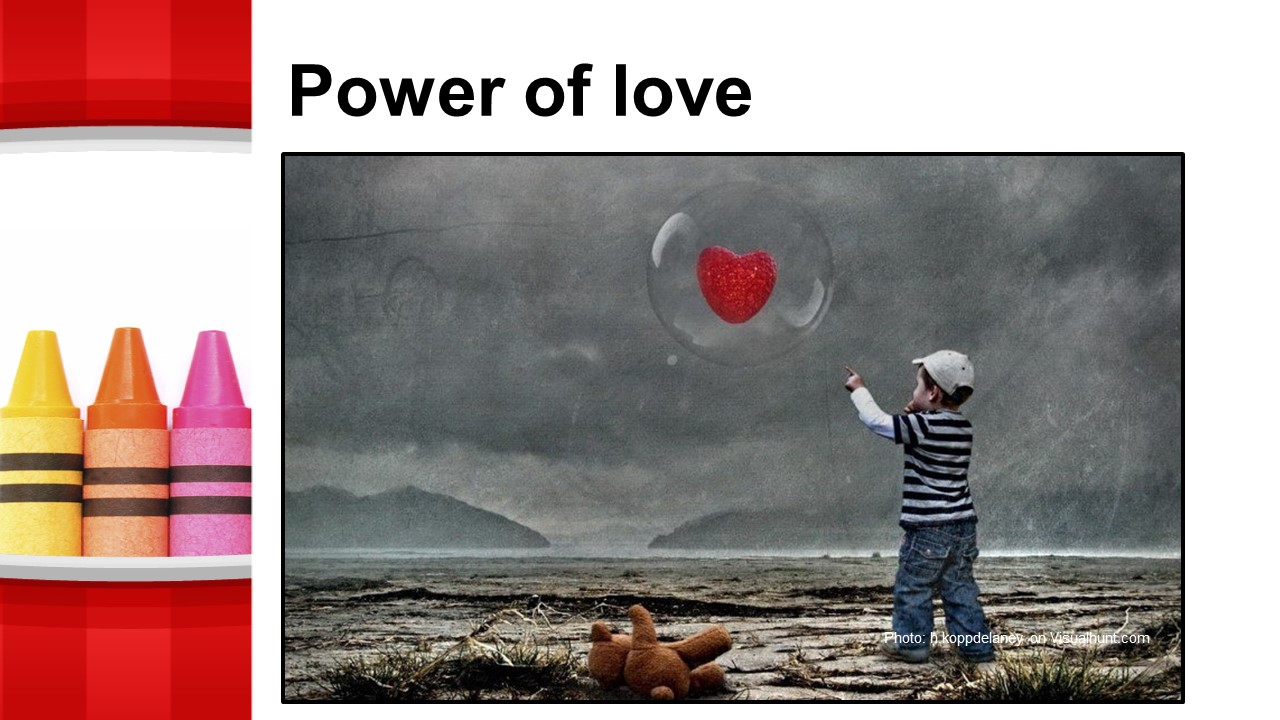 By the way, this isn’t the only place where Paul emphasizes the importance of love. Yesterday, in the Men’s Saturday morning Bible Study, we looked at 1 Corinthians 13, which is known as the love chapter. There, Paul is insisting that the various factions within the Corinthian Church love one another. God loves us, as shown in Jesus Christ, and we are to love one another. It’s as simple as that. Even Sigmund Freud, who isn’t known for his Christian sympathies, said that we must love in order that we will not fall, and if we can’t love, illness will take over us.
 Maybe we, as Christians, need to do more daydreaming about what it means to be the people of God. That’s what this four week study is about. God has endowed in us an ability to image new worlds. But are we willing to join with God in creating them? Or do we limit God by our own lack of imagination. We need to free God to work miracles in our lives, within our congregation and community and within our world. If we trust God, and ground ourselves in agape love, which is the type of love that calls us to work for the best of others, there’s no limit to what might be accomplished. If we trust in God’s power and are willing to creatively join God in working for a better world, there is no telling what might come out of our efforts. But if we act like things depend on what we can do and have no imagination, we risk a dark dystopia future.
 The Israelites in exile were told to seek the wellbeing of the community in which they were living and we’re to do the same.










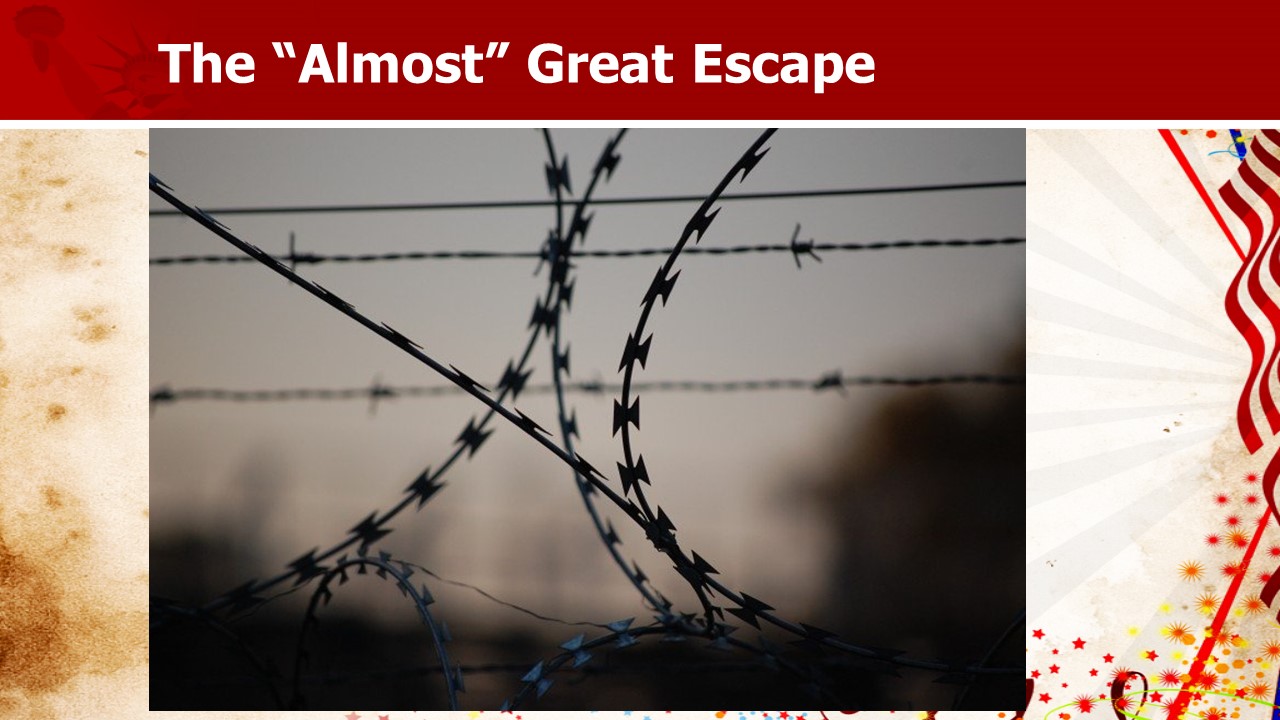 Few ponder freedom more than those in prison with long days and nothing to do. Although few succeed, some spend their time creatively, attempting to obtain freedom. There were these two dudes at the Texas Correction Facility in Huntsville, who planned and watched and finally figured out if they could just crawl into the back of a delivery truck, they could possibly make it out. From observations, they learned there was this one truck that wasn’t checked as thoroughly as others. They jumped in the back, hoping they weren’t seen. Soon, the truck was beyond the walls of the prison and rolling down the highway. They waited until the truck stopped and parked. They slipped out. To their horror, this discovered they were inside the walls of another Texas prison.
 Our passage begins with Jesus in the presence of some folks who had believed in him.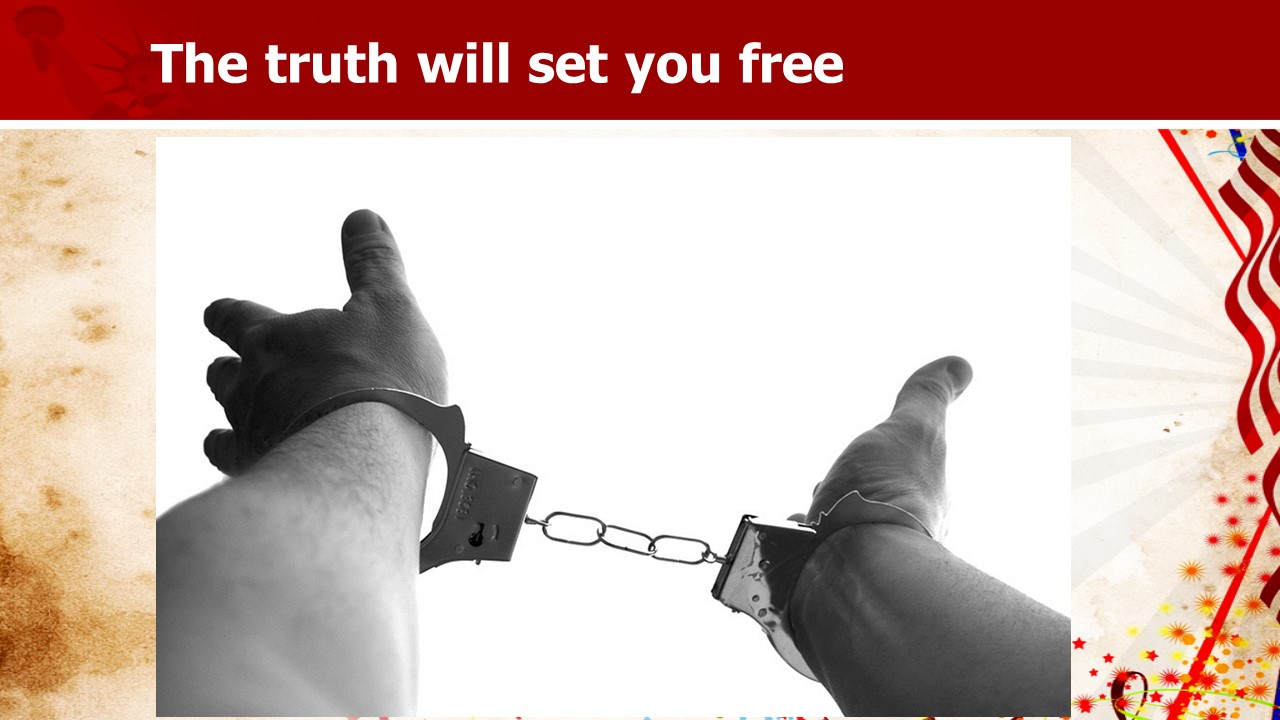
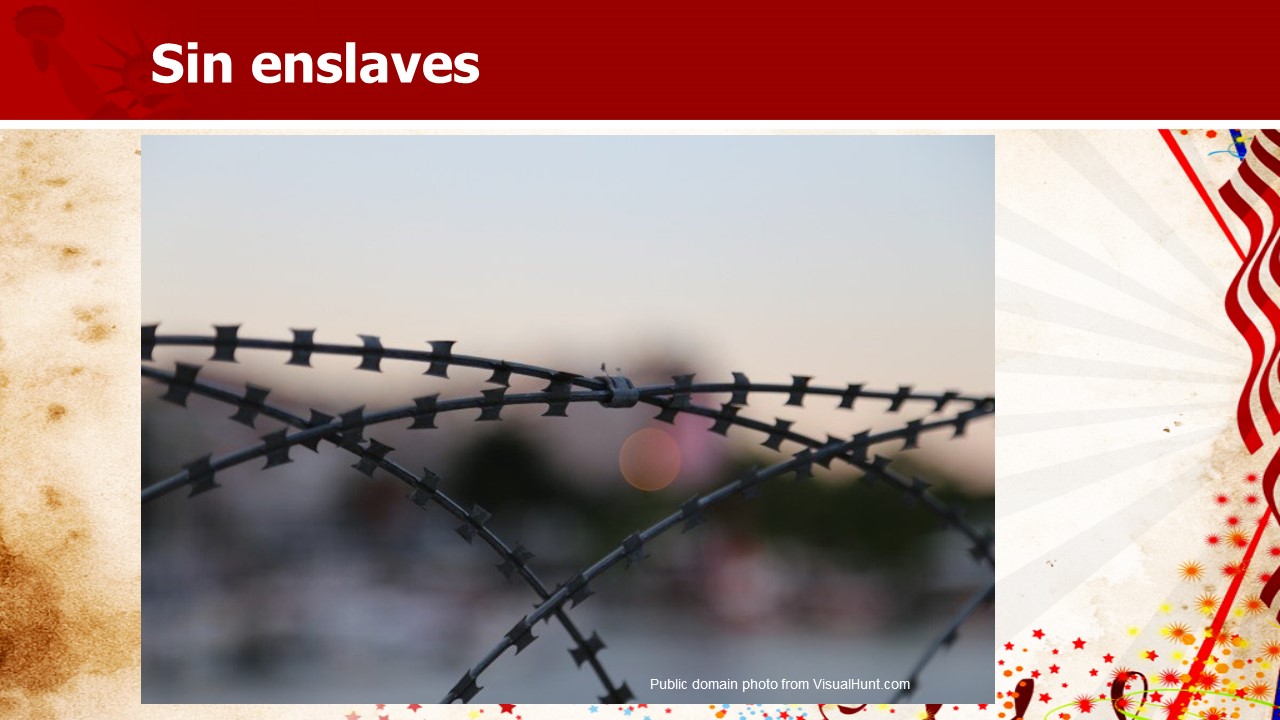 Of course, Jesus is not speaking of political or physical freedom. And those who are listening don’t understand this. He’s using the word metaphorically, to show the power of sin to control and enslave us. In order to redirect their focus, Jesus tells them that everyone who sins is a slave to sin!
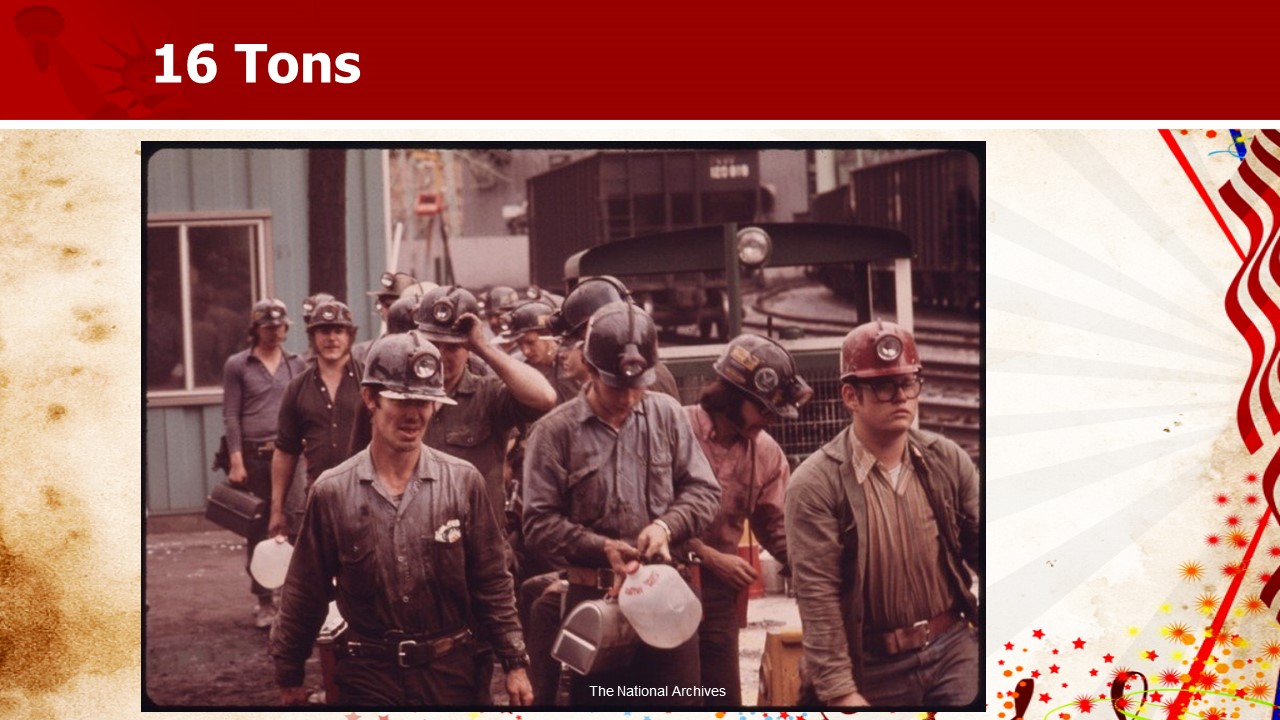
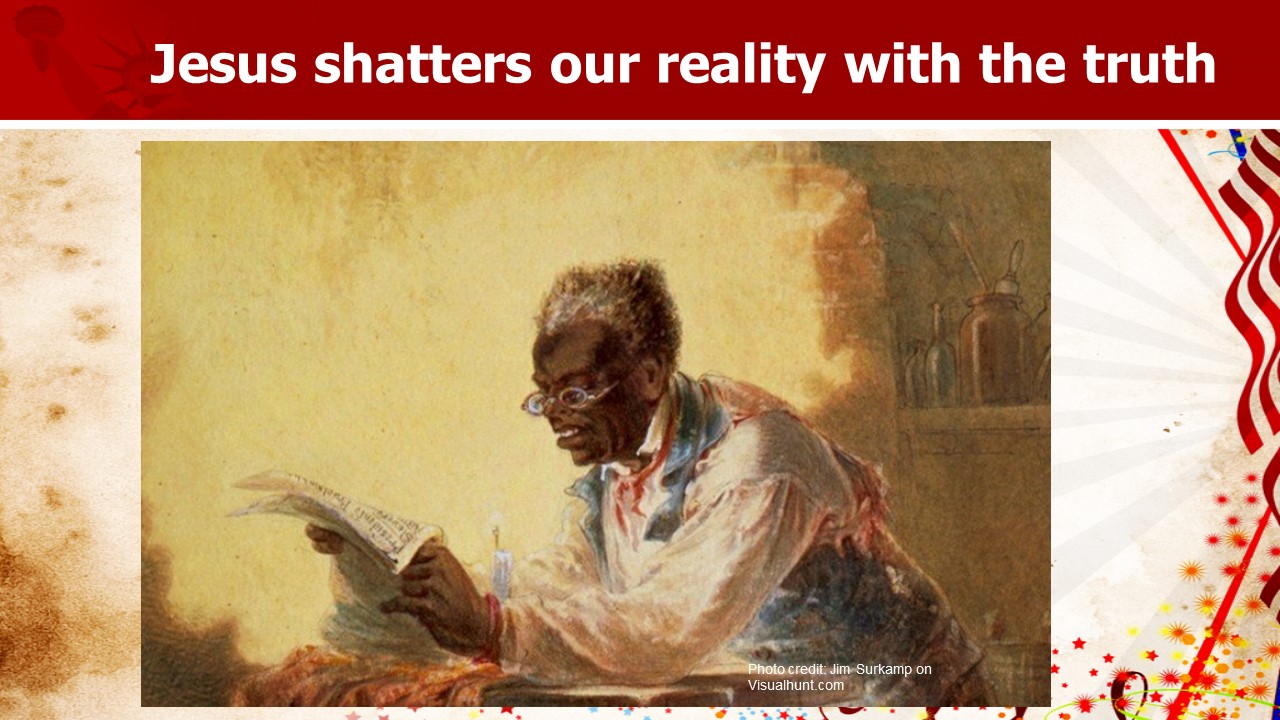 Jesus tries to get people to see beyond their own self-interest by shattering our reality. He represents the truth which is not bound by anything in our material world. Jesus represents a greater reality, but can we accept him? If we accept him and live as if he is the most important thing, those things that ensnare us and entrap us may still be a threat, but they no longer have any power. If we accept Jesus and hang with him, we know that whatever happens to us, in life and in death is going to be okay for we belong to Jesus Christ.
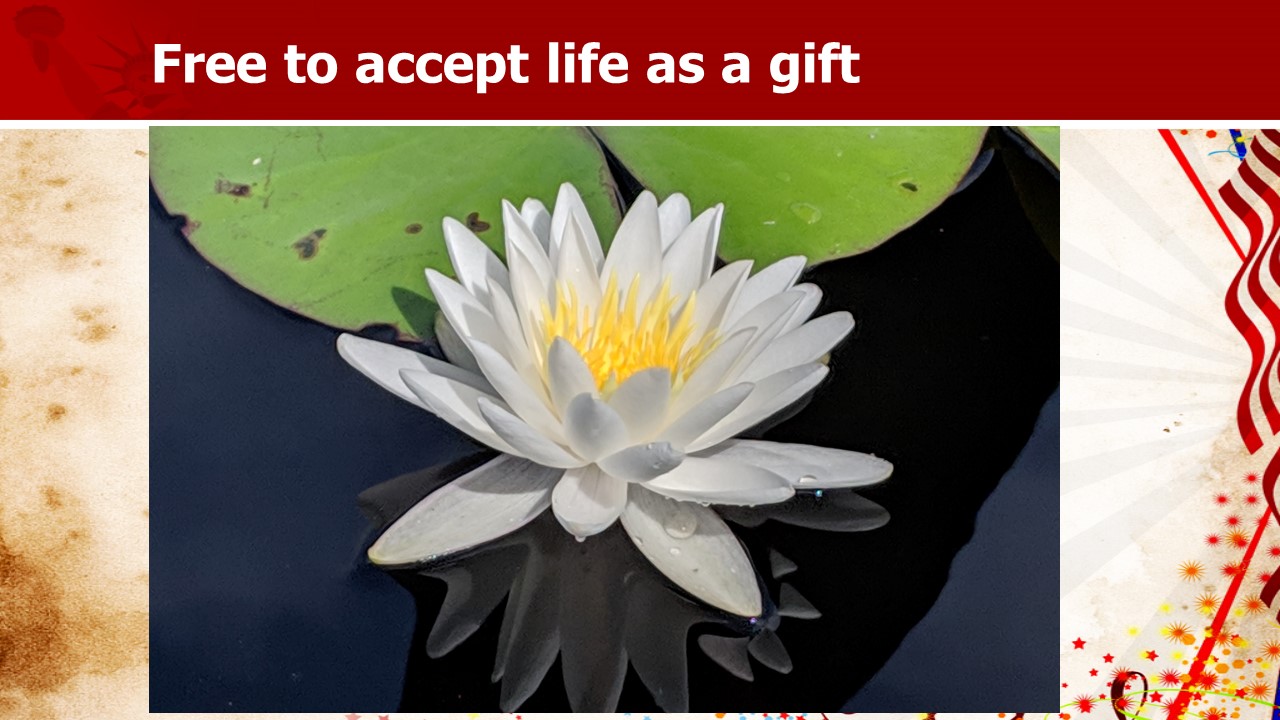 You know, if we accept Jesus into our lives, we must still pay the bills, go to work, and take out the trash. After all, God created us for work. It’s important that we do what we can to earn our daily bread and to offer up our labors for God to bless. Doing so, we’re freed from thinking what really matters are those things we worry about day in and day out. In the grand scheme of things, they don’t matter. We’re freed from looking out upon the world and seeing it as something to be conquered or earned. That’s not Biblical. Instead, we’re free to look out upon the world and accept it as a gift from a gracious God. And most importantly, we’re free from the guilt and shame of our past. Sin no longer eats at us because we’ve been accepted by Jesus. And, unlike our freedom, Jesus’ offer is something no one can take away.
 I picked up this book after learning that Joy Harjo has been appointed poet laureate for the United States. It’s exciting because she’s the first Native American to serve in this position. In addition to being a poet, Harjo is also a jazz musician. Her poetry blends music with longing for a home that seems evasive. In different poems, the reader is taken an “Indian school” in Oklahoma, to the hunting grounds of the Inuit people in northern Alaska, and through airports and other locals in between. She alternates between more free-form poetry to “prose poems.” Many of the poems draw the reader into the experience of modern Native Americans, who, having lost a homeland, are not sure where they belong. We also are reminded of the realities within Native communities of alcoholism and suicide. Yet, a thread of hope weaves through these poems, as we (as well as all creation) are encouraged to be blessing to others. I find her poems accessible and easy to understand. I’m sure I will reread many of them as I continue to ponder their messages. .
 In this short book, the former poet laureate of South Carolina, Archibald Rutledge, writes a memoir of his parents. His father had been the youngest colonel in the Confederate army. His father joined the war in North Carolina (the family kept a mountain home to escape to in the summer). He was wounded three times, involved in many engagements and served as best man for General Pickett, when he married. Archibald was the youngest child of the family (for which, his father often called him Benjamin, for Jacob’s last son). He was born in 1883, nearly twenty years after his father’s military experience had ended. Rutledge was in awe of his father, whom he saw as a kind, gentle, and loving man. His father shared with him the love of all things wild-hunting and fishing and just walking in the woods. He also shared his love of the creator whom he saw revealed in nature. His mother, the colonel’s lady, was also a kind but strong woman. As her husband was often away, she had to take control as she did directing the successful efforts at fighting a fire in the great house (when water had to be drawn from the river by buckets) and shooting to scare away intruders who were looking to steal from their rice barn. She also impressed the young Rutledge with her love of books and her care of others (she often served as a medical resource in a community that often had to go without physicians).
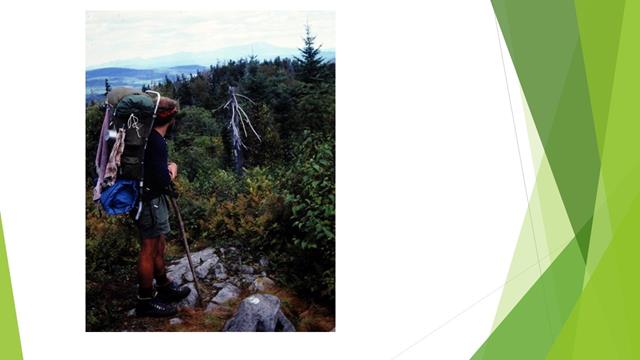 When I was hiking the Appalachian Trail, I came into Gorham, New Hampshire for the evening. It’s a small town near the Maine border. I needed to resupply for the trail ahead. I was down to only oatmeal to eat, but I didn’t have enough fuel for my stove to even prepare that.
 Having been rejected, I found myself steaming. As I left town and hiked north, I began to craft the letters I was going to write… but then I realized I was putting way too much negative energy into this situation. I decided to let it be and I never sent those letters. Had Jesus been among us hikers, I think he’d told me to do just that. Drop it. Harboring such feelings is never good. It just eats at you. We cannot control how other people react to us; we can only control how we react toward them.
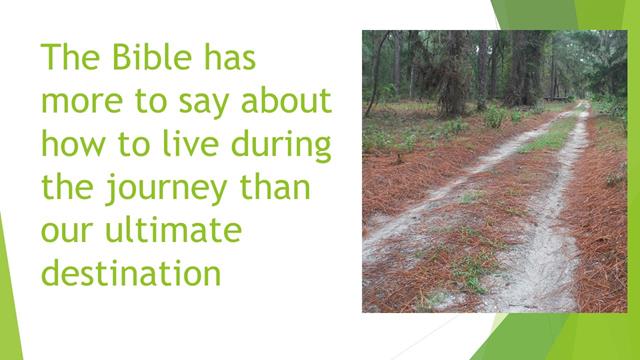
 Jesus is heading to Jerusalem, taking the disciples with him. The text that he “sets his face” to go to Jerusalem, a phrase echoed throughout the next ten chapters. On this journey, we learn things not mentioned in the other three gospels. Jesus is not just walking, he’s teaching and healing. But Jesus doesn’t go directly to Jerusalem. If he’d had a GPS and set the destination for Jerusalem, the machine would have been constantly squawking “recalculating, recalculating” as he wanders around. It’s in this wandering we find some of our most beloved parables, such as the Good Samaritan and the Prodigal Son. Along the way, Jesus stops and teaches people about who God is and how they should relate to their neighbors.
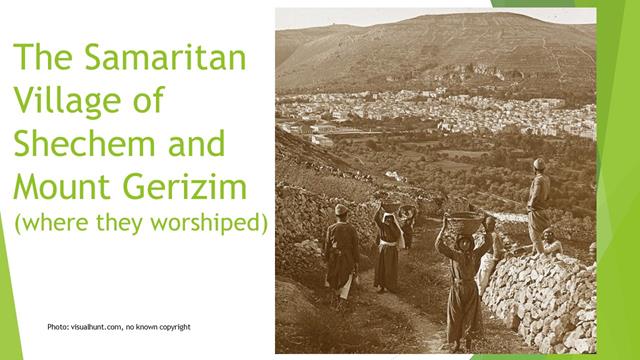 But not everyone is ready to see Jesus. Luke informs us that the Samaritans don’t want anything to do with Jesus because he has set his face towards Jerusalem. The Samaritans, who do not see Jerusalem as holy and who worship on another mountain, have grown weary of self-righteous Jews trampling through their land on their way to Jerusalem.
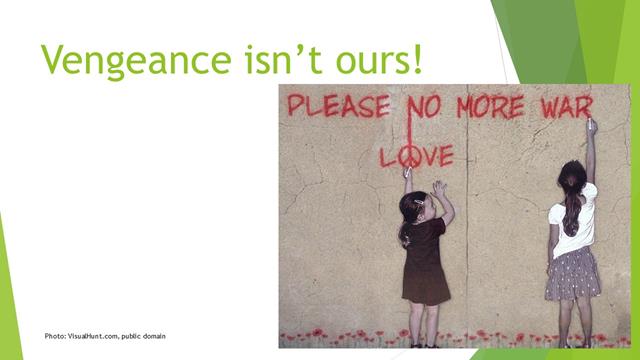 Jesus doesn’t take rejection personally and encourages the disciples to get over it. Too often we forget that vengeance isn’t ours!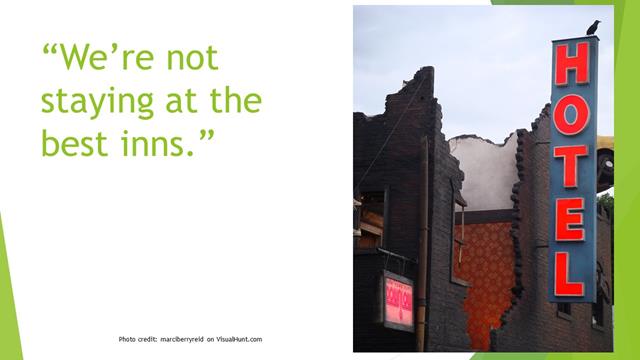
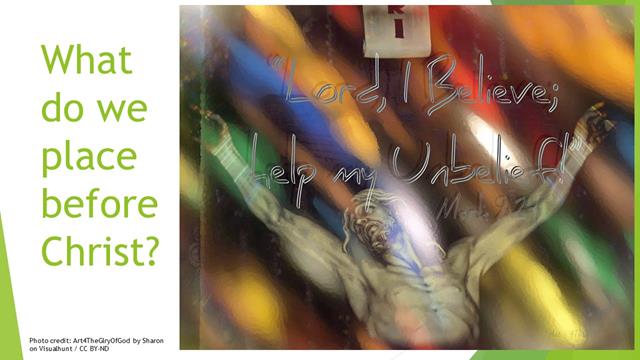 Do we put things before Christ? Think about your life and the things you value. Are you willing to give it all up for Jesus? Is Jesus at the center of your life? Is he what’s most important?
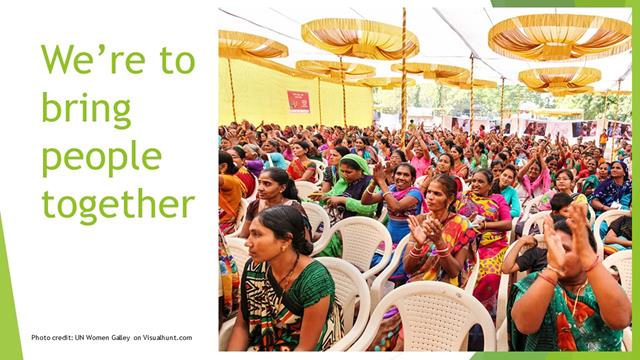
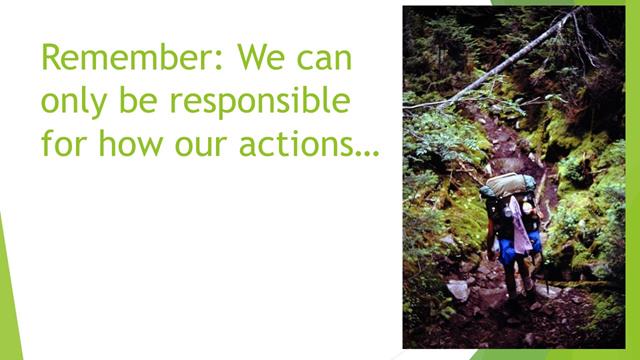 Today, I think back to that encounter in Gorham, New Hampshire, so many years ago. I wonder what would have happened if I had gone back to that cashier at the Exxon station and apologized. I wouldn’t have to say she was right, but I could have acknowledged that my response and my thoughts about her were misguided. As humans, we can’t be responsible for what someone else does. We can only be responsible for what we do and how we react. Amen.