

Jeff Garrison
Skidaway Island Presbyterian Church
June 14, 2020
Matthew 9:35-10:15
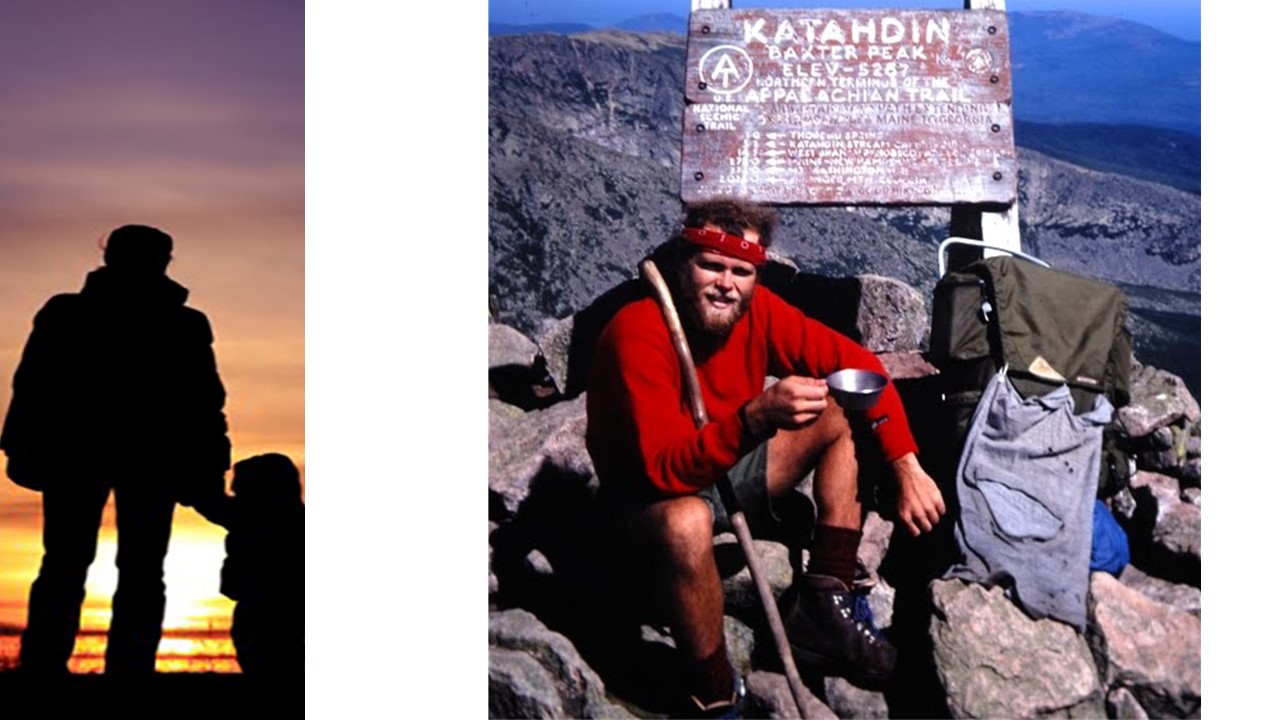
We made Blood Mountain Shelter on our third day of hiking. Reuben and I had started at Springer Mountain in North Georgia. After resting a bit, we set out to fix dinner. By this point, we’d hiked 100s of miles together and formed a well-oiled team. I hauled water from the spring while Reuben got out the stove and started to assemble it. In a large gallon Ziploc bag, I poured the contents of instant pudding, powdered milk, and water. I kneaded the bag by hands till the lumps were gone and then walked back to the spring to place the bag in the cool water to set up. Reuben started boiling water as I opened soup packs for each of our cups. He started the noodles and we chatted and enjoyed a drink while they cooked.
About this time another hiker came to the shelter. Paul looked to be an old man, but he was much younger than I am now. He’d been on the trail for six days, covering the distance we’d covered in two and a half days. He’d gotten lost earlier this day which explained why we hadn’t meet him when we passed along the trail. His pack was heavy; his knees were killing him. He didn’t look like he was having fun. Paul plopped down and began to prepare his dinner as he watched us. Reuben poured the water from the noodles into the cups, so that we had soup. We mixed in the ingredients for mac and cheese, which we ate next, followed by pudding for dessert. As we ate dessert, we put another pot of water for tea and clean up. We used our tea bags to scrub out our bowls. Paul watched in amazement, we had only what we needed and nothing was wasted.
Paul was a schoolteacher from Oregon and planned to spend his summer hiking. He’d done a little camping in his life, but had never backpacked. Gathering what he thought he needed and had taken a flight to Georgia and was walking through the woods with a 70-plus pound pack on his back, twenty or twenty-five pounds more than what we were toting.

The next morning when we set out, Paul asked where we were going to camp for the night. For us, it was going to be an easy day, even though there wasn’t anything easy about the trail in Georgia. There’s little ridge line in the southern part of the Appalachians; although the hills aren’t tall, you are either going up or down. We gave him our destination, a campsite by a stream about 13 miles north. We said goodbye and thought that’d be the last we’d see of him. We were surprised later that day when he hobbled into camp. That night we went through our dinner routine again and Paul started asking more questions. Before the evening was done, Reuben and I had given him tips on hiking, on food, and most importantly dug through his pack and showed him how to lighten his load by a at least fifteen pounds. To our amazement, he was carrying a hatchet and a folding saw, yet had not built a single fire. It was too hot. He had a stove. Scalping, I assured him, was no longer in vogue, so the axe could go. He had extra clothes and cooking utensils and all sort of stuff that he could get by without. The following day, when we were met by friends for a food drop, we arranged for Paul’s extras to be mail home. With his load lighter, Paul began to enjoy hiking.
The ninth chapter of Matthew’s gospel ends with Jesus telling the disciples that the fields are ripe with the harvest, but the laborers are few. “Ask the Lord,” Jesus says, “to send laborers out into the harvest.” Mission begins in prayer. This plea is answered in the tenth chapter where the Master’s plan is set in place with Jesus commissioning the disciples to go out on their own and do the work of the kingdom. For the past five chapters, Jesus had been preparing the disciples. Now, their apprentice ends. They’ll get a chance to live out their call to be fishers of men and women (although Jesus’ shifted metaphors as they are sent as farmers reaping the harvest).
 When Jesus sends the disciples, he insists they go light. No extra clothes, no extra gear, no extra food, and no extra cash. They go by themselves, taking only the blessing Jesus bestowed upon them. They are to learn first-hand that Jesus is sufficient—he has given them power over evil as well as the ability to bring healing to those who are sick and to bring to life those who are dead. Going out without possessions, they will be continually reminded that they are dependent upon God and the generosity of others. Furthermore, they would be continually reminded that they are working for Jesus.
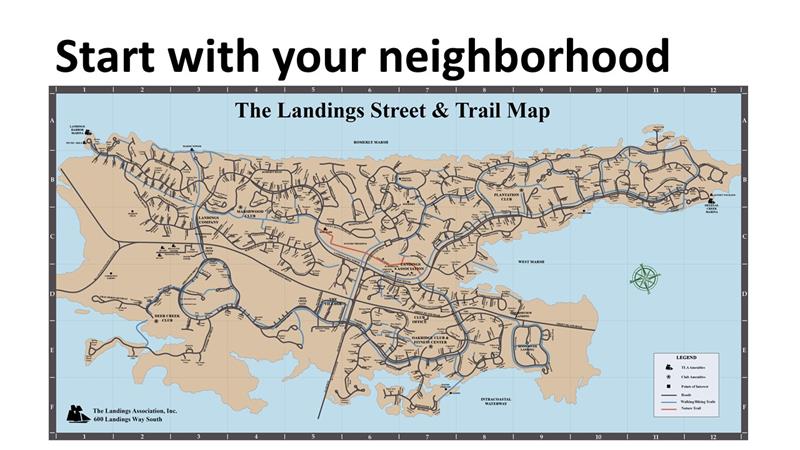 Jesus advice to the disciples is to start in their own neighborhoods. The mission to the Gentiles will come later; they first must take the message to the Jones and Smiths who live down the street. As they travel, they’re to live modestly and with the people. They are to be gracious and content with what they’re offered. They’re to “be courteous.” They’re not out to bring judgment or to browbeat folks, they’re just to go about helping people and sharing with them the good news that the Savior has come. If they’re not welcomed, they’re not to make big deal about it, they’re just to move on to the next neighborhood, not taking it as a failure. They’re not to mope around showing disappointment.
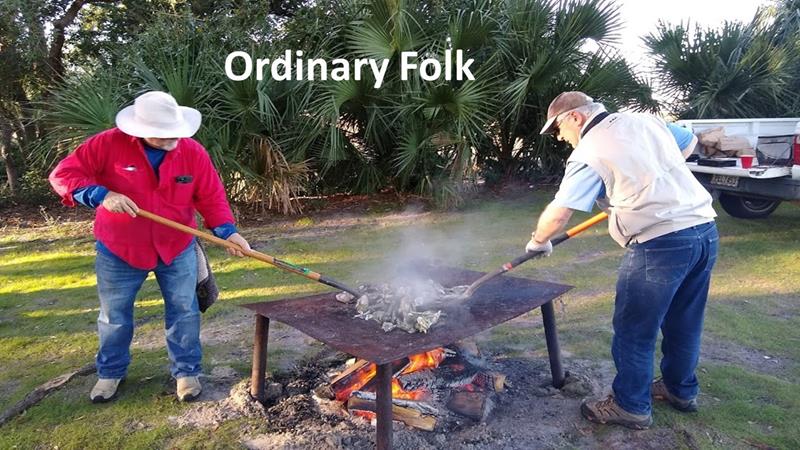
There are many things we can learn about mission from this story. First, it’s interesting who Jesus has called. The twelve disciples are all ordinary folk, including as our text points out, the one who would betray Jesus. They are not going out on their own skills, but with Jesus’ blessings, which makes the difference.
 Another thing we learn that the world isn’t how it should be. We know this is true. If there was any question about it, the last few months dispelled our doubts. But at this point in the First Century, Rome had beaten all its enemies, and those who thought world peace had come. Of course, Jesus sees problems. There are people suffering. Jesus is compassionate. He realizes the struggle many face, especially the poor and slaves. Many are battling demons and the powers of evil. Many are grief-filled, or hurting physically and emotionally. Jesus’ plan is to turn the world upside down, offering grace and hope that can only come from God.
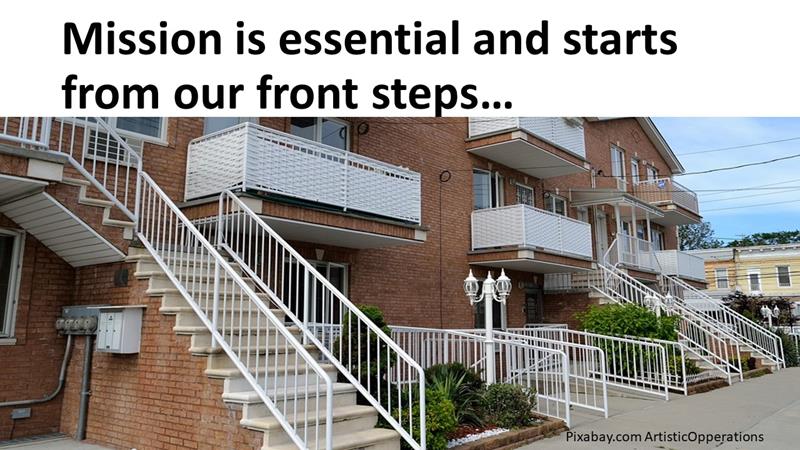
We also learn here the importance of mission for the church. It’s essential. It’s our purpose. We’re not here just to praise God, although that’s important. We’re not just here to sooth folks concerns by proclaiming forgiveness through Jesus Christ, although that’s important. We’re not just here to provide a safe haven for Christians to gather and be in fellowship (when there’s no pandemic), although that’s important. The church is called onto the mission field. For a few of us, that means going to exotic places. As we see here, the mission field starts at our doorstep. Jesus first sends the disciples into their own neighborhoods, to their own people. It’s not that Jesus isn’t interested in other people, but first he wants to solidify his base. As we saw last week, Matthew ends his gospel with Jesus commissioning the disciples to go to the ends of the world. Mission starts locally but extends globally. As Christians and followers of Jesus, we can’t ignore either group. To say that we only do mission locally is just as much of a travesty as to say mission is only what we do for those who live across salt water.
 A final truth I want us to consider is that mission involves more than just telling people about Jesus. You know, Reuben and I could have spent all day telling Paul about how much fun we had backpacking and it wouldn’t have made any difference. It was only by helping him go through his gear and showing him how to lighten his load were we able to help. It’s the same with our calling as disciples. We’re not to just share the good news; we’re to demonstrate godly values in our lives and to show others how it can make a difference. That famous saying attributed to Francis of Assisi, “preach the gospel, if necessary, use words,” comes to mind. As the 18th verse reads, “you’ve been treated generously, so live generously.” Doing is just as important as telling, as Jesus makes clear in this passage. He didn’t give the disciples golden words to woo people; he gave them the ability to minister, to heal, and to confront evil.
 This is still our goal. Live simply and generously, ministering to the needs of others. In other words, let the love of Jesus flow from your hearts, and be gracious. These days, the world can use a little help. Let’s flood it with grace. Amen.
Works consulted:
Bruner, Frederick Dale, The Christbook: Matthew 1-12 (Grand Rapids, MI:
Eerdmans, 2004).
Gundry, Robert H., Matthew: A Commentary on His Literary and Theological Art (Grand Rapids, MI: Eerdmans, 1982.
Hare, Douglas R. A., Matthew: Interpretation, A Commentary for Teaching and Preaching (Louisville: John Knox Press, 1992).
©2020 Jeff Garrison
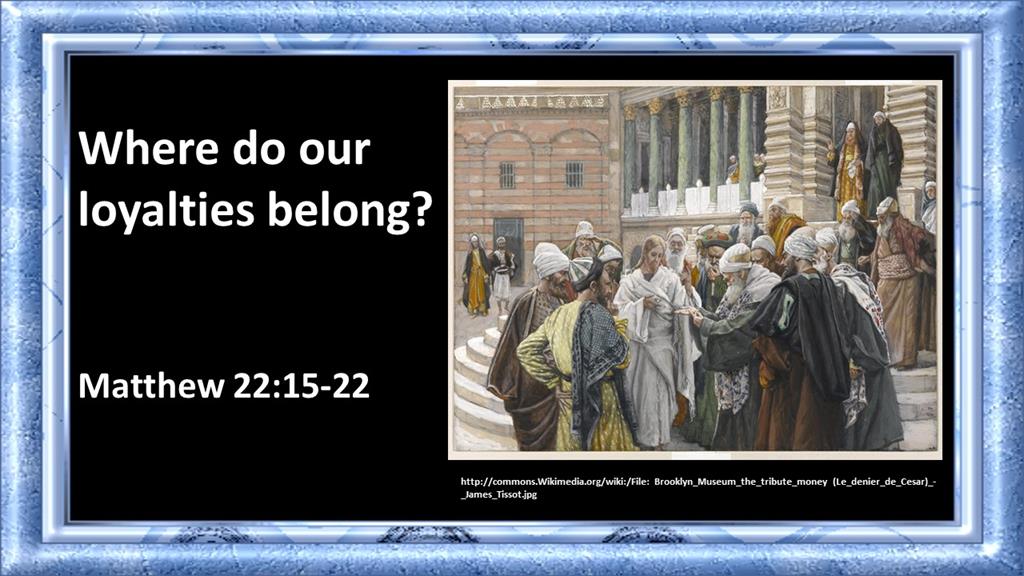
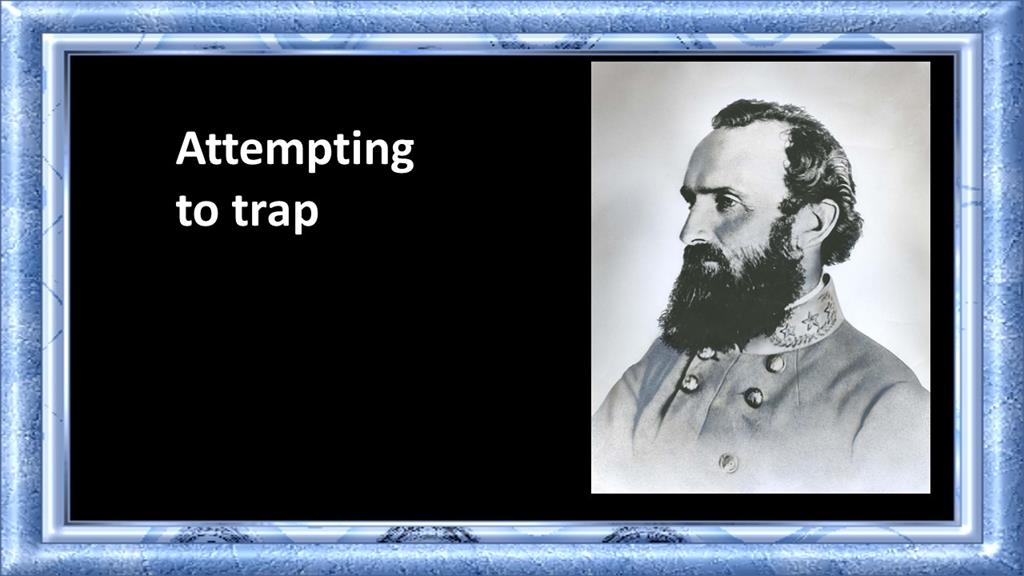 If you read the entirety of Matthew 22 (and with the extra time we may be having on hand as everything is being cancelled because of the Coronavirus, it’s not a bad idea), you’d witness a masterful campaign to trap Jesus. But Jesus isn’t so easy to catch. He’s kind of like Stonewall Jackson in the Valley Campaign in the spring of 1862. Jackson faced much larger armies who wanted to trap and do him in.
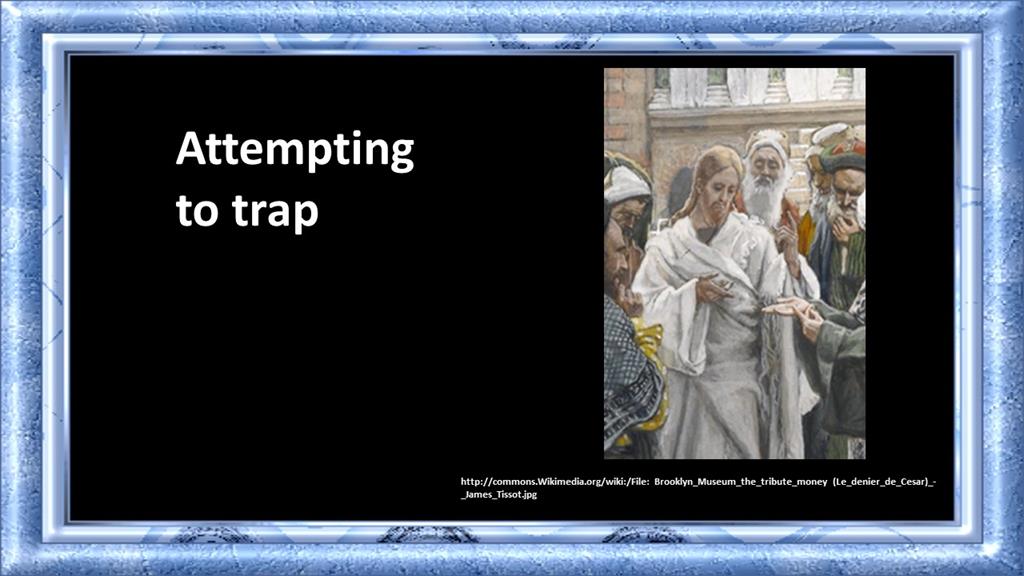 What’s happened is that unlikely groups join together to challenge Jesus. The old cliché, “politics make strange bedfellows,” rings true. Groups who wouldn’t normally give each other the time of day have come together to take on Jesus. They sense that Jesus is challenging the existing order. You have a few Herodians, who are Jews who believe they’re be better off cooperating with the Romans. They take their name from Herod, who had Jewish blood but worked for the Empire. And you have the Pharisees; a group of seriously committed religious leaders who believe in the resurrection. Theologically, they’re most like Jesus, but Jesus constantly challenges them and exposes their hypocrisy.
 What we read this morning could be described as one movement in a tag-team wrestling match. The Herodians and the Pharisees team up on Jesus.
 So what is Jesus telling us in this passage? Do you remember those big posters that use to sit out in front of the Post Office and government buildings with Uncle Sam pointing his finger and saying: “I want you!” I believe we could easily surmise this text into a big poster of God saying: “I want you!”
 “Tell me,” they ask, “Is it lawful to pay taxes to the emperor, or not?” Jesus has to be careful. Last week you heard Deanie preach about the revolutionary act of Jesus cleaning the temple. Now they want Jesus to make a revolutionary statement against the civil authorities. If Jesus says they should not pay taxes, the Herodians could have him arrested for treason. But then, if he says to pay the taxes, the Pharisees can attack him for not being a patriotic Jew.
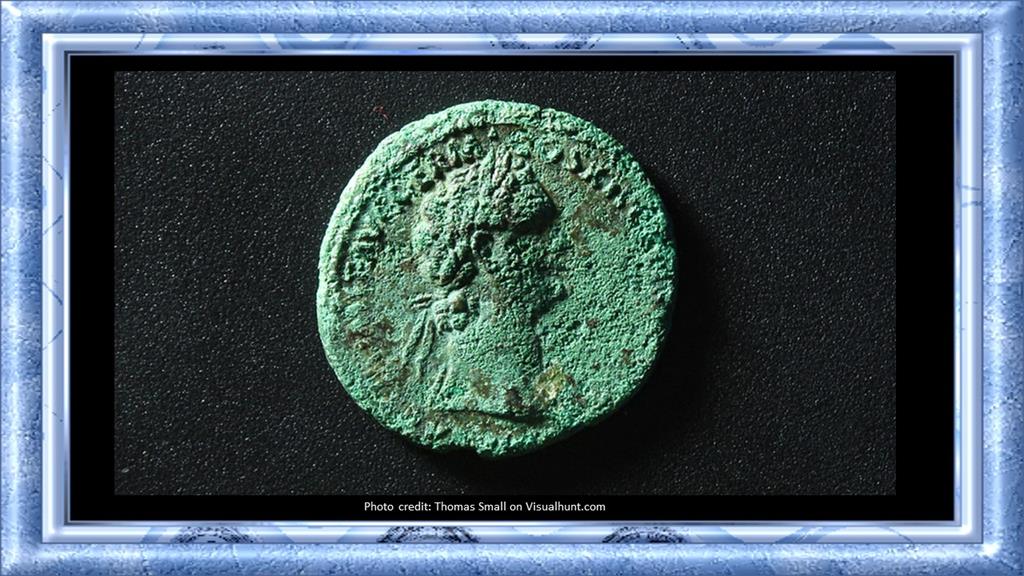 Jesus asks them for a coin. Unlike us, he didn’t have to worry about where that’s coin has been or picking up some a virus from its surface. However, Jesus still has to be careful. The disciples, we know, had a common purse and he could have gone there to fetch a coin, but then the Pharisees might have charged him with toting around an engraved image of the emperor.
 Give to God what is God’s. This phrase is often overlooked. We tend to get hung up on what is Caesar’s and what is ours. We get hung up on the petty details and we miss the important question. What does it mean for us to give ourselves to God?
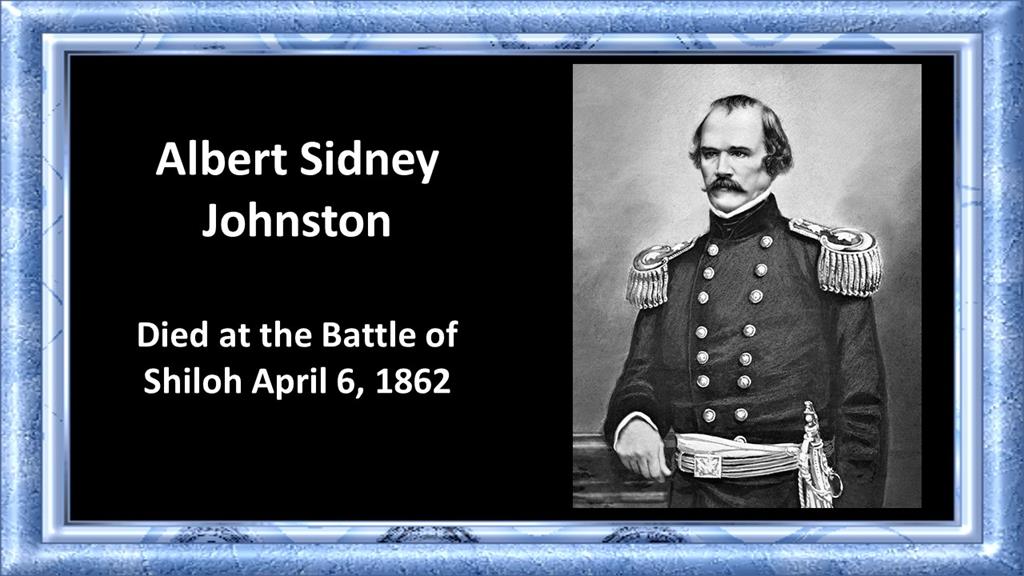 Earlier I mentioned Stonewall Jackson, whose biography I’m currently reading. But let me tell you two other Civil War stories, they’re both short, and demonstrate this point. At the Battle of Shiloh in the spring of 1862, Albert Sidney Johnson led the Confederate troops as they overwhelmed the Union forces near Pittsburg Landing along the Tennessee River. It was a bloody day and the Union lines were broken in places. During a lull in the first day of battle, Johnson, seeing a number of wounded Union soldiers in need, ordered his surgeon to set up an aid station and to tend to their needs. According to Shelby Foote in his novel about the battle, his surgeon, Dr. Yandell protested. Johnson cut him off saying “These men were our enemies a moment ago. They are our prisoners now. Take care of them.” A few minutes later, a stray bullet struck Johnson’s leg and without medical aid, he quickly bled to death.
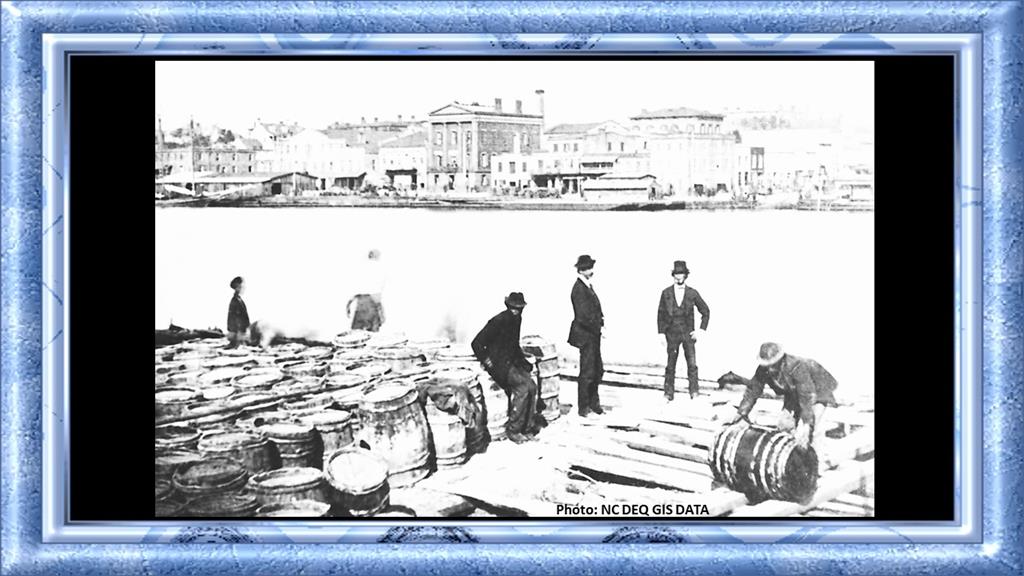 A second story comes from the city of Wilmington during the Civil War. In 1862, a blockade runner that had come in from the Caribbean brought Yellow Fever to the town. Those who could fled to the country, but several of the pastors and the leading citizens of the town stayed behind, feeling it was their Christian obligation to help out the victims. Over 400 people died of Yellow Fever that fall, including many of those who intentionally stayed to care for the dying.
 Give to God what is God’s, is the message here. So yes, we should pay our income tax. And when you write that check this April, we might remember that giving Caesar his due can be a lot easier than giving to God what is his. For our whole life belongs to God. But then, God’s given us life and in Jesus Christ has redeemed us to be his people. That’s a debt we can’t repay, nor is such repayment expected. As the old hymn goes, “Jesus paid it all.”
 The holiday stands in contrast to the birth of the Prince of Peace, as it was with a woman shopping in one of those big city department stores. It was a multi-floored building, with escalators and elevators and an entire floor devoted to toys. To her four and six-year-olds, it seemed like heaven. The mother was reminded of another place. Her kids kept singing the “I want this” song over and over. On every aisle they discovered a new “I gotta have” toy. Frazzled and about to come unglued, the lady finally paid for her purchases. She dragged the bags and her two kids to the elevator. The door opened. She and the kids and the presents squeezed in. When the door closed, she let out a sigh of relief and blurted, “Whoever started this whole Christmas thing should be found, strung up and shot!” From the back of the elevator, a calm quiet voice responded, “Don’t worry, madam, we already crucified him.”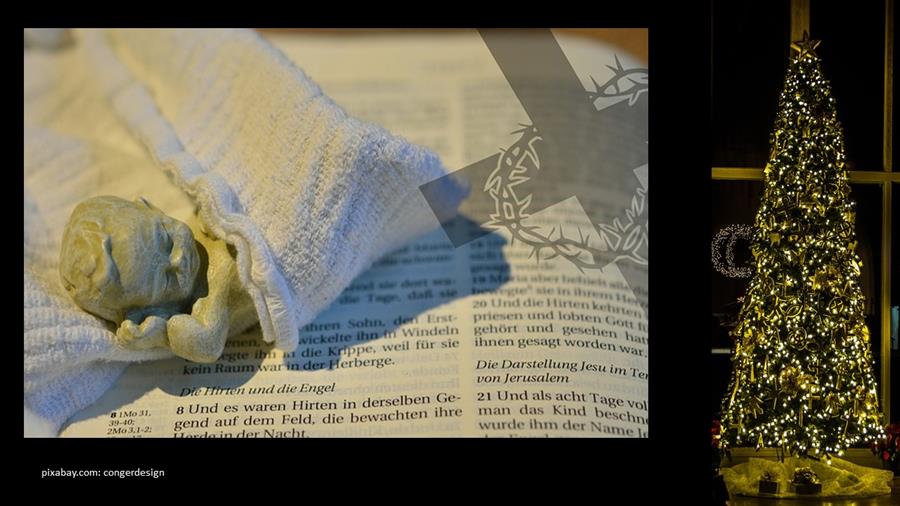


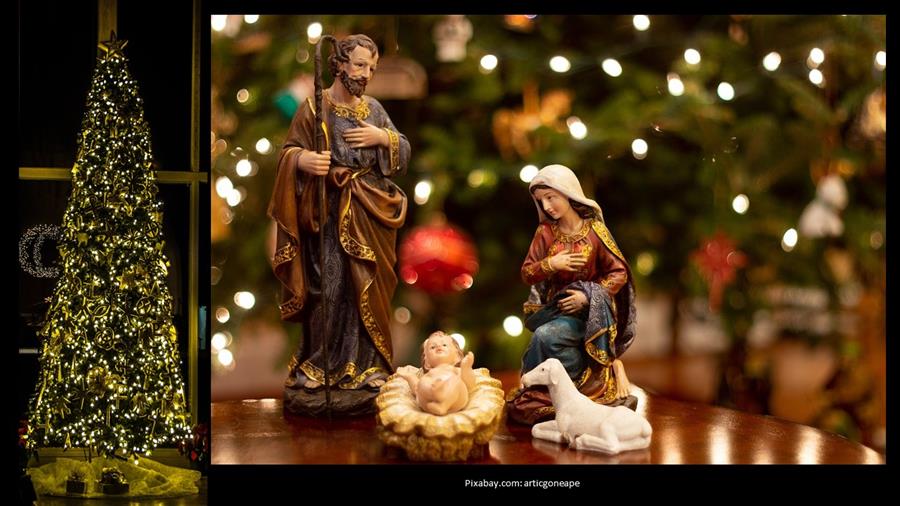
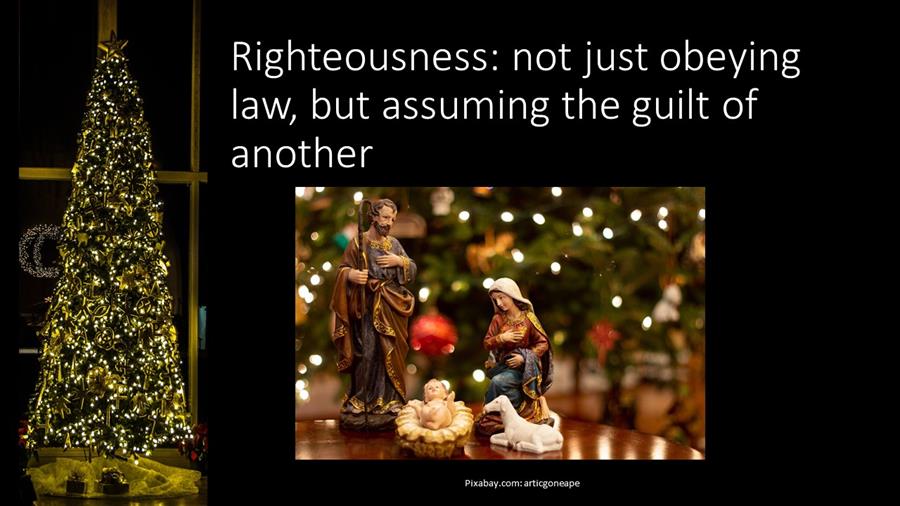
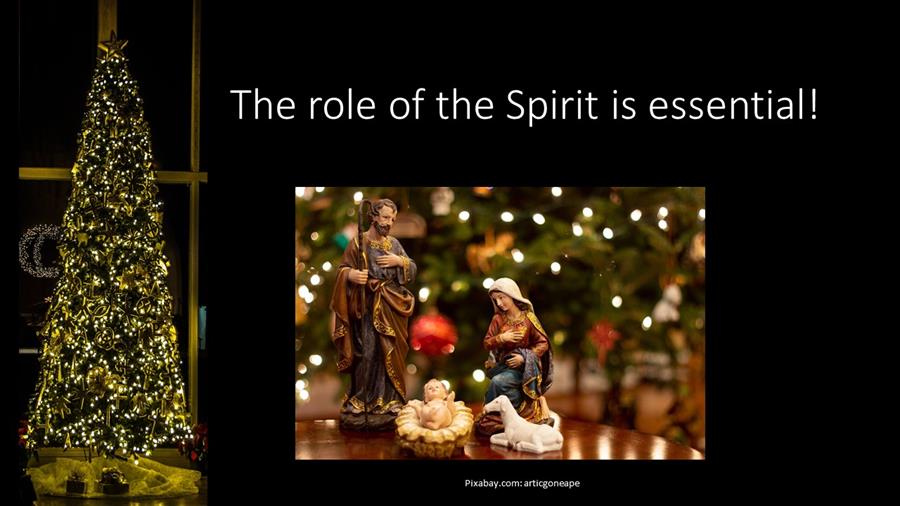 The glue that holds this passage together is the Holy Spirit. In a way, the Holy Spirit is like divine matchmaker. The Spirit impregnates Mary, bringing life into her womb and setting off this genesis, this new beginning. The Spirit also works on the other side of the equation, with Joseph, getting him to buy into the plan. Through the dream, Joseph is informed of Mary’s righteousness and of God’s plan for the child she carries. And when Joseph awakes, he decides not to dismiss Mary, but to go ahead with the wedding. They’ll marry and together raise this child and participate in God’s plan for reconciling himself to a fallen world. It’s a good thing Joseph listened to God in this dream.
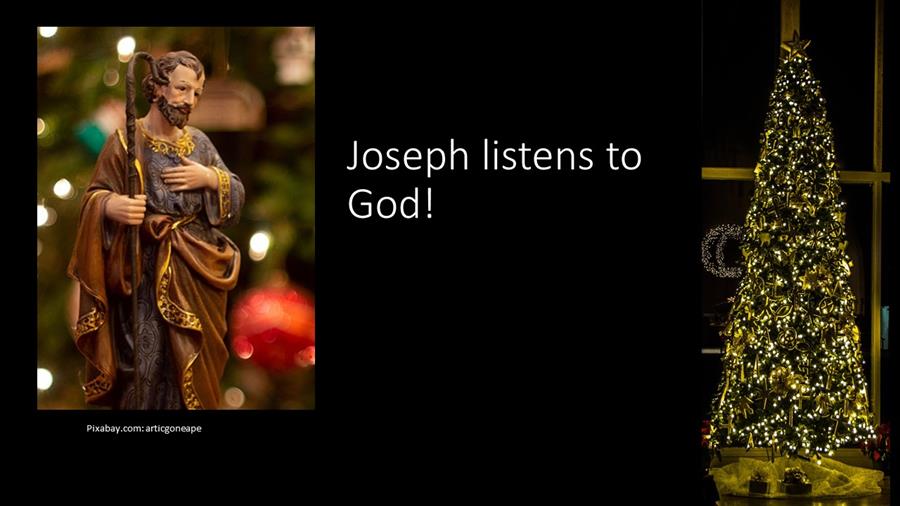 Joseph’s dream shows us the importance of listening to God and when we listen to God and follow his path, we will often find peace. Let me clarify. I don’t think listening to God means trying to understand all the dreams of our sleep. Often our dreams are a way that our minds sort out stuff. Instead of investing large amounts of time trying to understand what our dreams are telling us, we need prepare ourselves to hear God’s voice by studying Scripture, by praying and by being open to hear God by whatever means he comes to us. God’s word can come many ways: in our sleep, through a thought we have while walking or driving, or in a conversation. What’s important is that we know God’s word enough to make sure what we hear is from God. Notice in our account today how Joseph is reminded of the prophecies in Scripture. For him, that was assurance God was behind this.
 There were two preachers who, on their day off, enjoyed fishing. They were at a river next to a highway. Before sitting on the bank, where they’d watch their corks in the hope they’d be the tug of a fish on the line, they posted a sign. It read, “The end is near! Turn yourself around before it’s too late.”
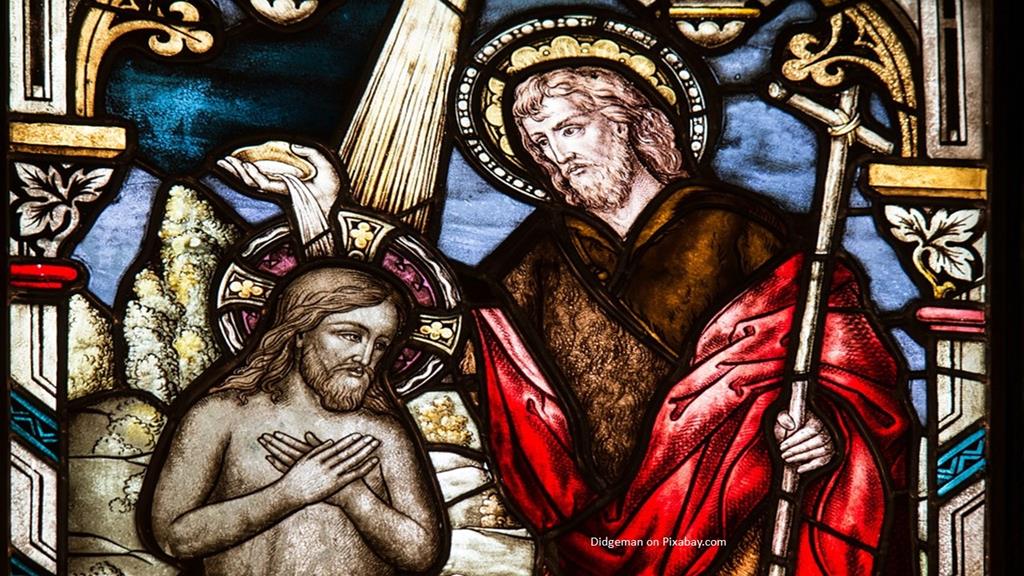 I wonder about John’s message. It’s so harsh, maybe he should have toned down his words. Repeatedly, he talks of fire, and not the warming flames of a campfire, but the ominous fire like those recently experienced in California and Australia. “You brood of vipers,” he calls the religious leaders of the day. That doesn’t sound very loving, does it? Jesus would never say that, would he? Actually, he does; twice in Matthew’s gospel.
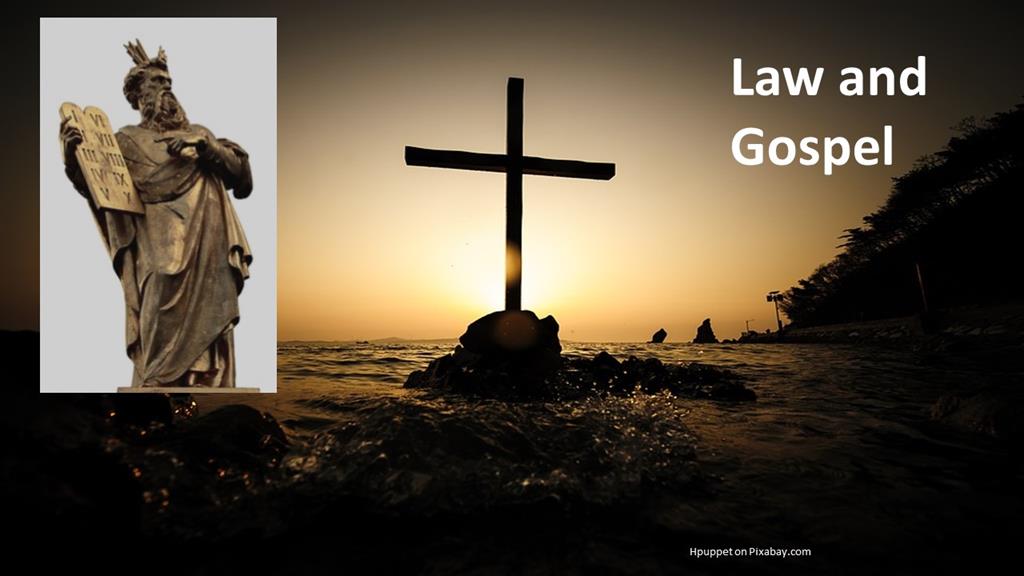 Law and gospel, they go together. To understand the story of scripture, we can’t just push off the “law” parts of the Bible and only focus on the gospel. The gospel makes no sense without the law. The gospel is about how God saves us from our failures, our sin. Those who listened to and were moved by John’s preaching were left with no choice but to confess their sins in order to begin the process of repentance, a word that means to turn around or to start in a new direction. They had to leave sin behind as they joyfully accept what God was doing in their midst.
 But it all comes back to this. God is doing something new. With John the Baptist, God was paving the way for his Son to come on the scene and to teach people a new way to live and to be human. In order to prepare for something new, people must admit their own sinfulness and to realize that they long for something better. Of course, if we don’t think we need to be better, there’s a warning here. Judgment that comes from transgressing the law is a reality. So, do we ignore our sinfulness and die to the law? Or do we accept and confess our sinfulness and embrace the grace that Jesus’ offers? Those are our choices.
 Advent is the time for us to prepare for the loving tenderness shown by Jesus. If God is redeeming this world, if God is promising a new heaven and a new earth, then we should want to be ready to receive this gift. But to receive the gift, we must leave the past behind. We have to be willing to examine deep within our souls and to offer up all that’s not godly so that we might be both cleansed of our sin and have the room to accept Christ into our hearts. We must be willing to allow ourselves to be transformed into something new and better. For Advent is a time not only to remember that Christ came, but that he will come again, and we must be ready.
 We must not just prepare ourselves; we should prepare the church, which is, in the final events of history, to be the bride of Christ.
 Is there loving joy in this passage that will lead to us “repeat the sounding joy”? Yes, there is, but we must get beyond the call to prepare, which John focuses on, and realize that God is doing a new thing. We trust in a God of resurrection. Even if the world destroys itself, God won’t let that be the final word. God wants to remake us. John’s role is to prepare us. Our role is to respond to John’s call to repentance so we might be open to what God is doing in our lives and in our fellowship. Confession and repentance may not in favor in today’s secular world, but in the church, it’s where we begin. All of us need to take a deep look at ourselves and then turn to God and fall on our knees… Amen.


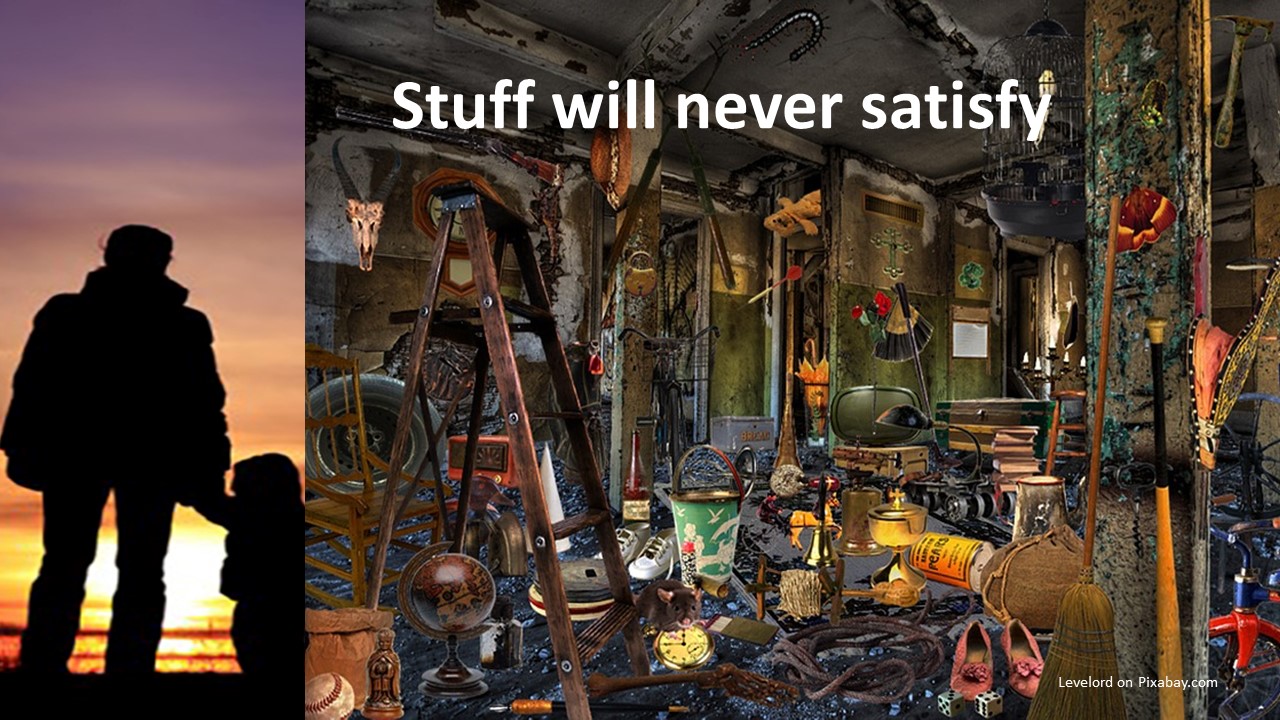
 This passage is about us looking deeply and getting our priorities right. There are three connected proverbial thoughts here, which Jesus uses to encourage his listeners to evaluate their lives and to see where they are placing their trust. First, we’re not to trust worldly treasures for they have a way of disappearing. A fine wardrobe can be destroyed by moths, objects crafted out of metal can rust, and what’s to stop someone from stealing them when we’re not looking. Notice, however, Jesus doesn’t say that having nice things is bad. He just says we can’t trust them to always be there and that the problem with such niceties is that when we place too much trust in them, we risk not trusting God. Ultimately, our treasurers are going to fail us.
 The second proverbial through is about a “healthy eye.” My father just had cataract surgery this week and was telling me on Friday about how bright the colors are now that his eye is healthier. But Jesus isn’t making a pitch for eye surgery. Jesus listeners would have known right away what he was talking about when he mentioned an unhealthy or evil eye. They understood that an evil eye referred to an envious, grudging or miserly spirit, while a good eye connotes a generous and compassionate attitude toward life. One of my professors from seminary, in his commentary on Matthew, says it’s as if Jesus’ says: “Just as a blind person’s life is darkened because of an eye malfunction, so the miser’s life is darkened by his failure to deal generously with others.”
 The next statement by Jesus concerns serving two masters. A slave would be run ragged if he had to answer to two masters. Likewise, if we try to serve both God and money, we find ourselves with two masters and the latter, money, makes a harsh master. There can never be enough. We need to place our priorities in order. We need to stick with God.
 It sounds too simple. “Store up your treasures in heaven; don’t worry about things here on earth.” Easier said than done, right? We all worry about having enough for tomorrow—and the day and the year and the decade that follows. We must admit that our prayers for daily bread seem unnecessary when we have a pantry full of food. When we have too much, it’s hard to depend upon God.
 How might we learn not to store up our treasures here on earth? First, “Enjoy things, but don’t cherish them.” God created this world good and wants us to enjoy life and the blessings provided, but God gets angry when we see such blessings as being ours or being worthy of our worship. Second, “Share things joyfully, not reluctantly.” If it bugs you to share something you have with someone who needs it, you should then know that item has gotten a hold on you. It’s an earthly treasure, an idol. Finally, “Think as a pilgrim, not a settler.” “The world is not my home, I’m just passin’ thru,” the old gospel song goes.
 Look inside yourself and use these thoughts to evaluate what you have: Enjoy, Share, and think like a pilgrim. A pilgrim is like a backpacker. Remember, you don’t want your pack to weigh you down. Amen.
 The characters in “It’s a Wonderful Life” provide us with archetypes for the many different ways we relate to life and we handle money. The book that goes with this series, Integrating Money and Meaning, uses these archetypes to explore our spiritual relationship with money.
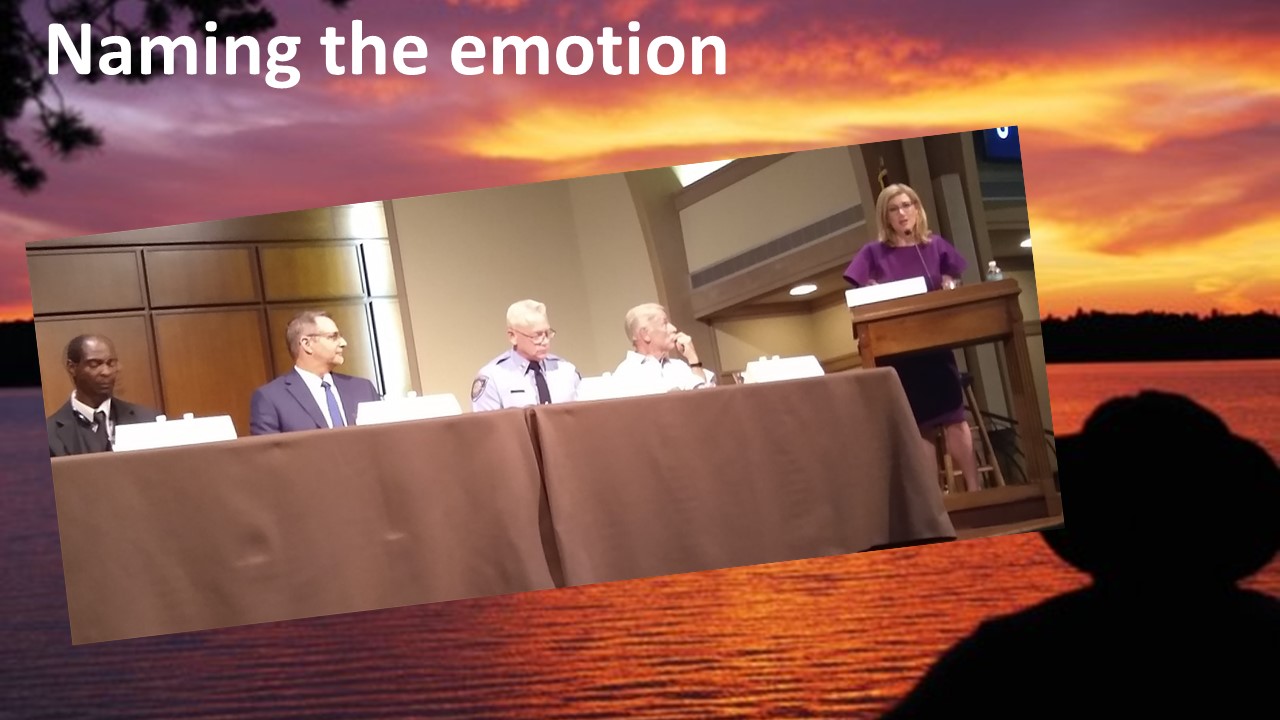 At our first forum on civility, Dr. Robert Pawlicki told of an incident when he was a psychiatrist and professor at a Medical School. A patient had gotten into an argument with a resident and he was called in by a nurse who was concerned the confrontation might become physical. Stepping between the two, he said to the patient, “You’re really angry, aren’t you?” By giving a name to what was happening and the emotions the patient showed, he opened a channel that helped the patient calm down. The situation de-escalated. This is good advice. Sometimes we need to go to the heart of the matter and, without increasing the confrontation, name the issue. But this is not what the Pharisees and the Herodians do in our morning text.
 It’s hard to understand this passage without explanation. The Pharisees are plotting to entrap Jesus, we’re told. How does Jesus know this? We could say that because he’s God, but that explanation doesn’t uphold the human side of Jesus. Instead, I think Jesus knew something was up when he saw the Pharisees walking hand to hand with the supporters of Herod.
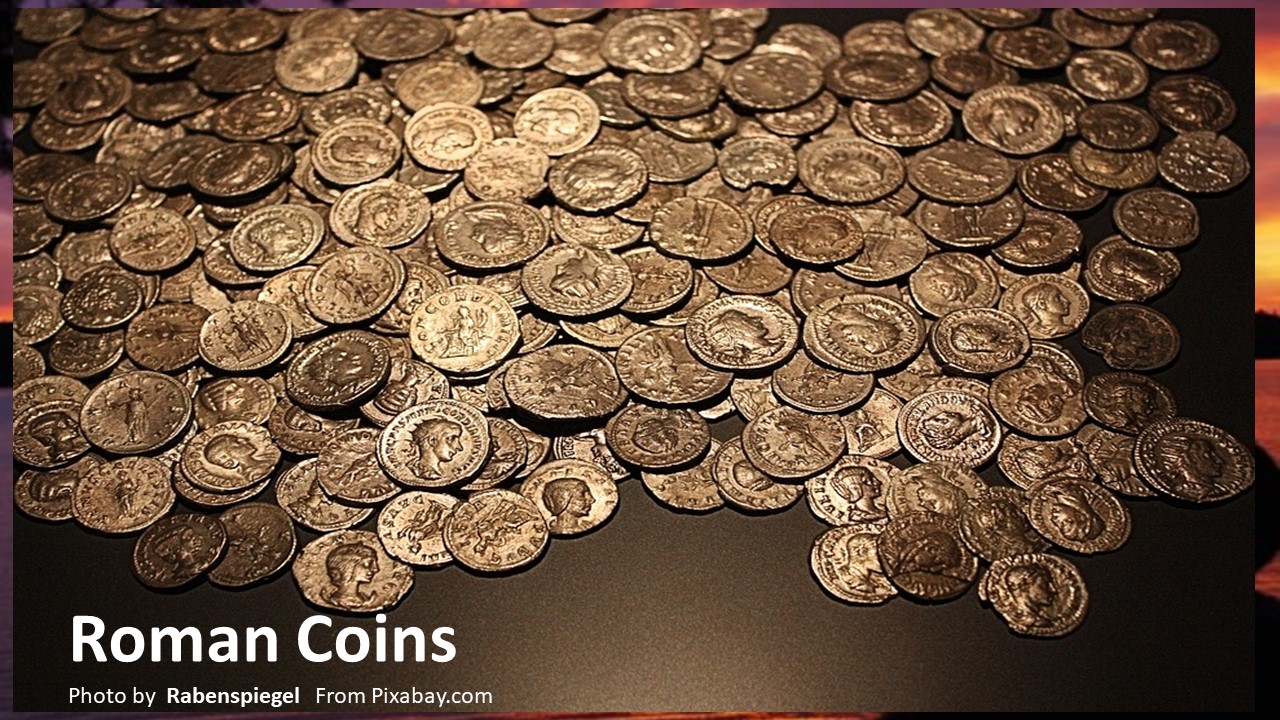 Jesus asks to see a coin. He has to be careful here. He doesn’t want the Pharisee’s to charge him with toting around an engraved image of the emperor. So Jesus has them to look at a coin they are carrying, and he asks them whose picture is on it…. They reply, “Caesar’s.” Jesus then tells them to give Caesar what is Caesar’s, and to give God what is God’s. The little band of tempters are astonished. Amazed and not knowing what to say, they leave…
 The coin had an image on it, Caesar, therefore give it to him. But remember, we’re created by God, in the image of God. The coin belongs to Caesar, it has his image; our lives belong to God, they contain God’s image. Caesar may have a lien on our possessions, but God has a lien on our total being. God is calling us to dedicate our lives to himself. God, in Jesus Christ, is like those old recruiting posters found the post office, with Uncle Sam saying, “I want you.” And you, and you, and you (point at myself last).
 What Jesus does here is demonstrate the delicate balance that exists in our use of money. Money is necessary. It’s what we trade for the necessities of life. But, as is taught in the book Integrating Money and Meaning, we need to understand the power of money. If we don’t understand its lure in our own lives, it can bring out the worst in us. There’s a shadow side to money that’s pointed out in scripture. “The love of money is the root of evil,” we read in the First Letter to Timothy.
 Over my next four Sunday’s (we will skip next week with a guest preacher), we’ll look at how we spiritually relate to money. How do we balance things like paying taxes, buying what we need, and giving to God through the church? How much control does money have in our lives? What would we do if we experienced a windfall of money? Or what would you we do if suddenly your money was of no value? These are questions we should all be wrestling with as we come to understand, as Jesus taught, that money isn’t anything to fear. We’re not to fear money, but we’re warned that it contains power. If not understood, money can overtake our lives and become a dreadful master. Look back in your lives and ponder this question, “How do you spiritually relate to money?” “What kind of power does it play in your lives?”
 Jeff Garrison
 You know, when it comes to religion, we often think it’s about being good, or good enough. We think we need to be like Jig in one of his purifying stages. We see religion as hard work which is why many people don’t want to be bothered with it. We forget about the joy of salvation.



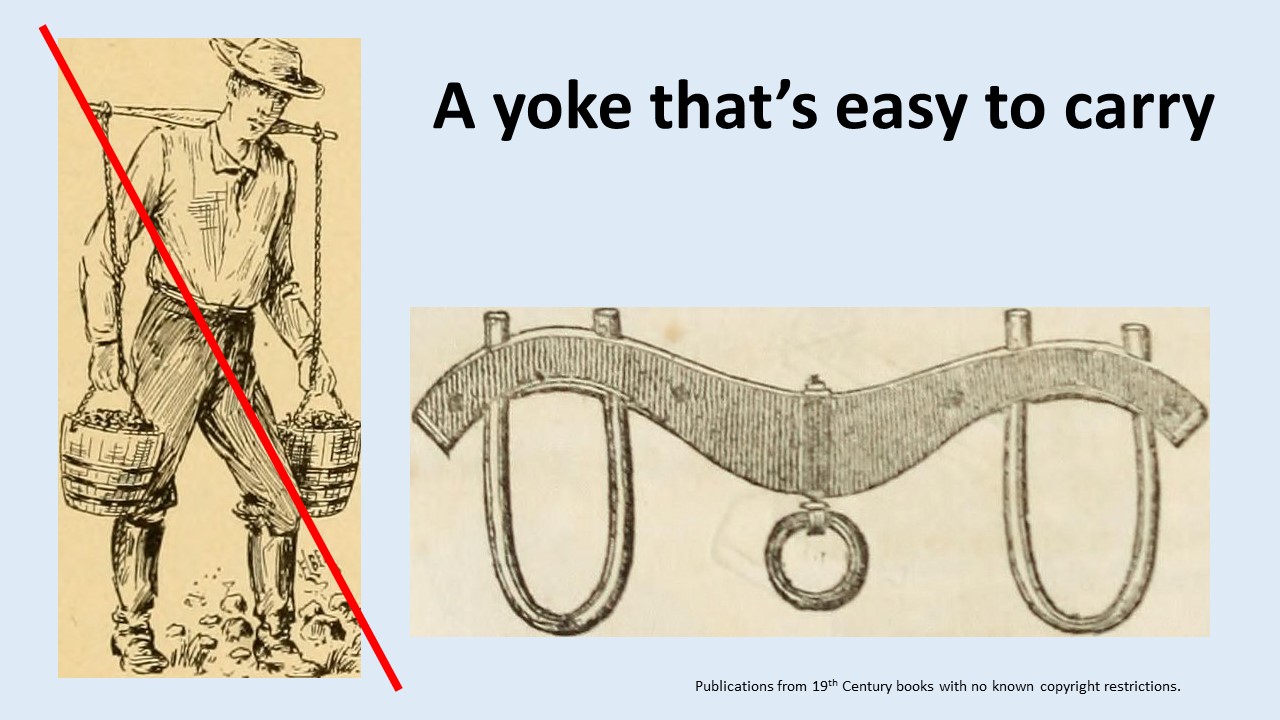 So Jesus invites us saying, “Come to me; take my yoke.” He’s not talking about a single yoke, one that he gives us and we wear around so that we might haul a heavy load. Instead, I think he offers a double yoke, one that he helps share the load. One in which we are able to watch him and learn how to live graciously, to appreciate beauty and to give thanks for the blessings of life. Our translation tells us Jesus’ yoke is easy, but it could also be translated as kind
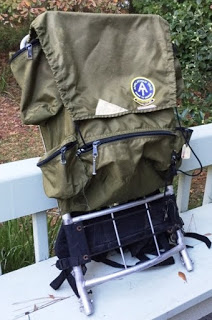
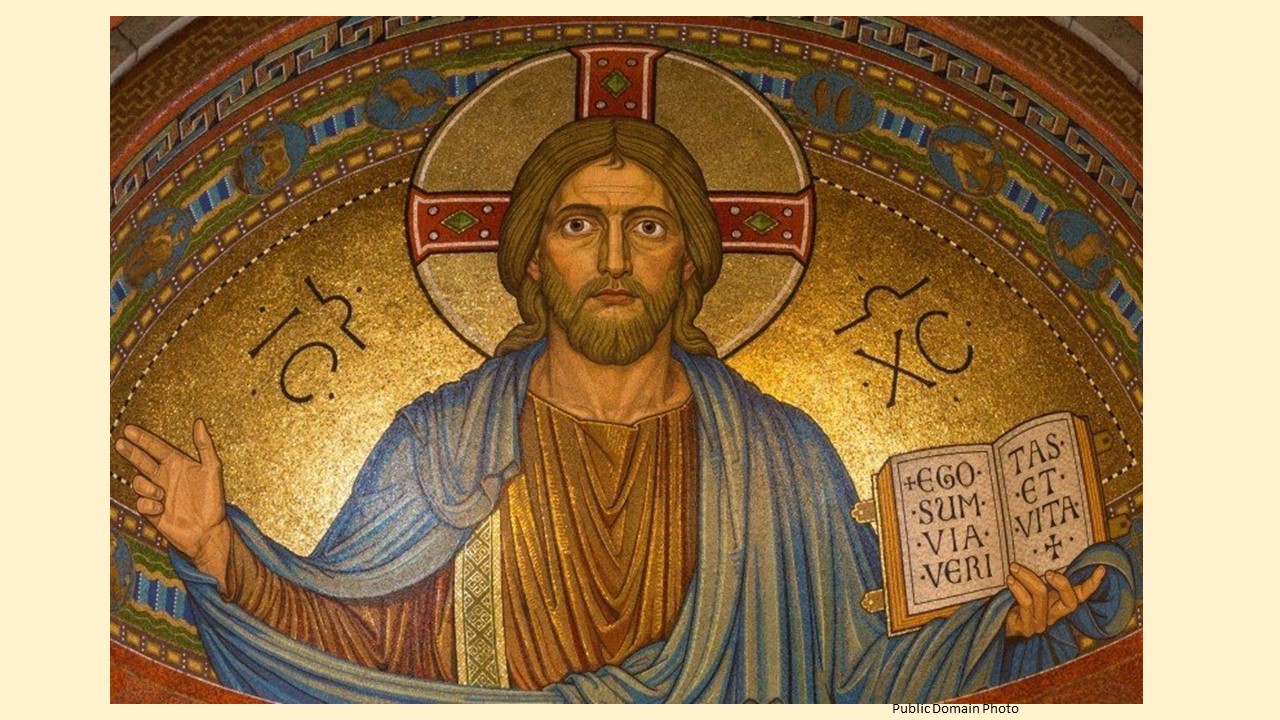 esus calls us to come and learn from him how to enjoy life. He calls us to relearn our priorities, to set the right tempo. Instead of having to work hard to earn God’s grace, we accept it and thereby joyously labor not for God’s grace but to praise God for having been so good to us. We don’t have to be so rushed, because we know God is in control. We don’t have to do it all, for we trust in God’s providence. We don’t have to pretend to be God. Let that burden go!
 Take care of yourself. Reorient your life to a new perspective, one with Jesus, as the face of God
 Jeff Garrison
 This Sunday is Epiphany. In the Christian calendar it marks the end of the Christmas season as we see the decorations disappear. Epiphany means a surprise encounter or a manifestation of God. The root is from the Greek word for sunrise or dawn, although the word was also used in reference to an appearance of a god. In the Eastern Church, Christmas is celebrated on this day with an emphasis on the incarnation—the surprising way God came to us, “in the flesh.”
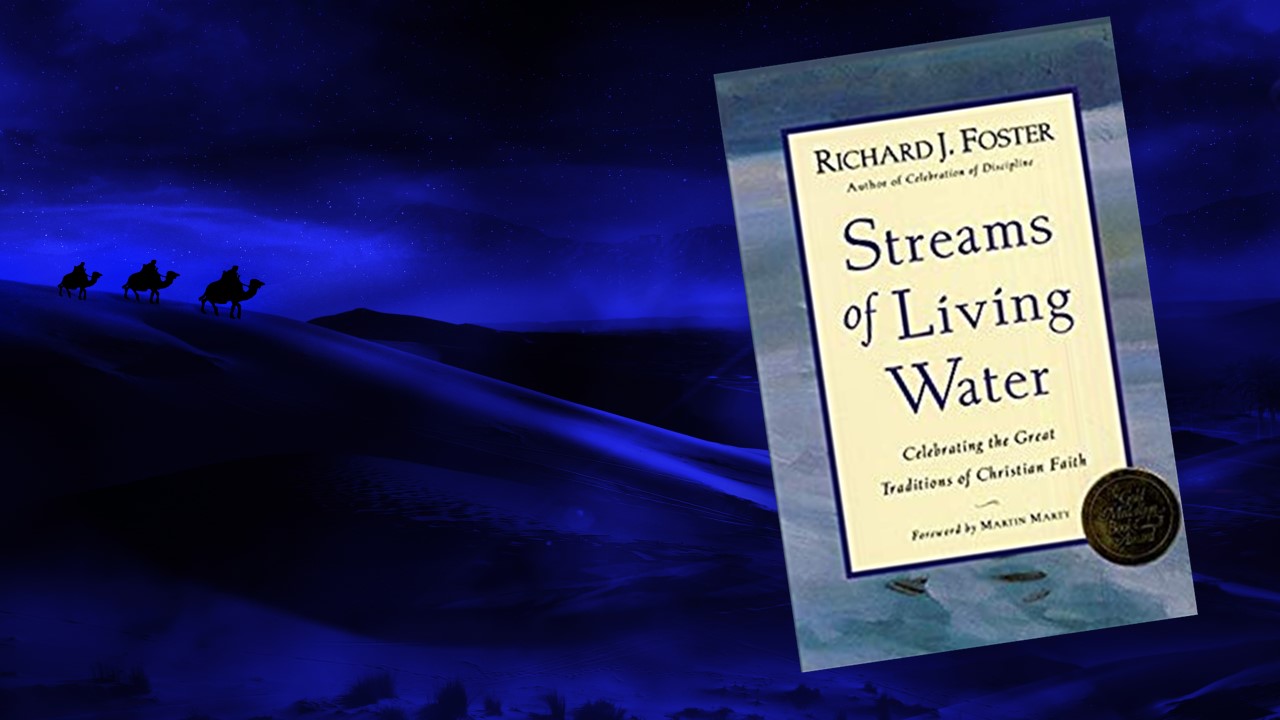 As I have done throughout this Advent and Christmas season (with the exception of last Sunday), we will look at these traditional seasonal passages through the lens of Richard Foster’s book, Streams of Living Water.

 What might we learn from the wise men’s search? They first go to Jerusalem, the holy city, a place of excitement. Herod’s there; the temple’s there. The streets are packed with pious folks carrying out the work at the temple and with pilgrims who have trekked there to worship. But that’s not where they find Jesus. Instead, they are led to a small dumpy town five miles away. A poor suburb, inhabited with shepherds and goat herders. The town supplied meat and animals for the appetites and sacrifices of those in the capital. Flashy isn’t one of God’s traits. God humbled himself by coming to us as Jesus and, I would suggest, we’ll often find Jesus in humble circumstances. To encounter Jesus, we have to be humbled. Being splashy or among those who are popular isn’t a guarantee that Jesus is present. Jesus comes to those who humbly admit their need for a Lord and Savior over their lives.
 Now let’s look at this passage from what it tells us about giving. One of the most important lessons for a Christian is to learn that giving is as much a blessing as it is an obligation. You know, we feel good about ourselves when we give, especially when we give without expecting anything in return. The wise men show the importance of giving without being asked and without expecting anything in return. If you think about it, this is a story of foreigners giving gifts to a child they don’t know. It would be like someone from Romania dropping by the maternity ward at Memorial Hospital and handing out gifts.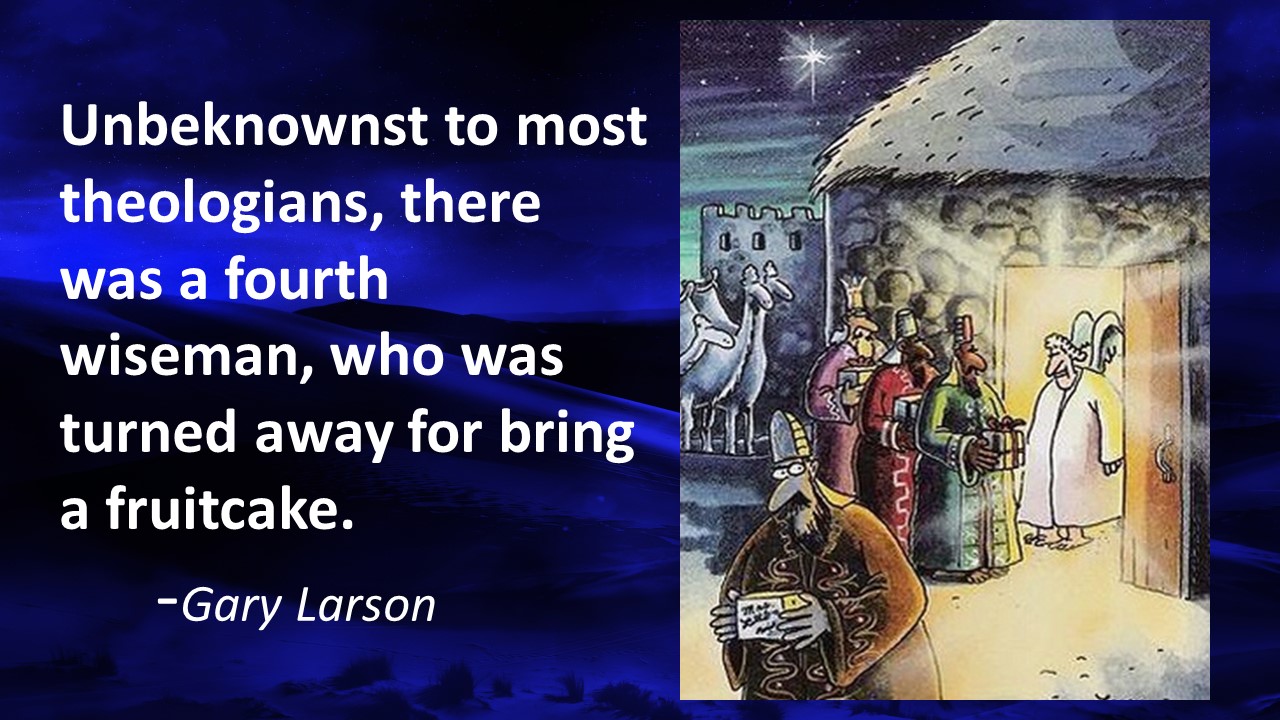
 Finally, think about the loyalty of the wise men to a higher authority. Herod provides a counter-plot to the wise men. He reminds us that even though the Messiah has come, evil remains a threat. Herod’s false humility almost fooled the wise men. But then, after being warned in a dream of Herod’s intentions, they skip out of town without letting Herod in on the secret. The wise men are a reminder that our first loyalty is to God. Although as Christians, we’re called to obey those in authority, our allegiance has its limits and our commitment to God always comes first.
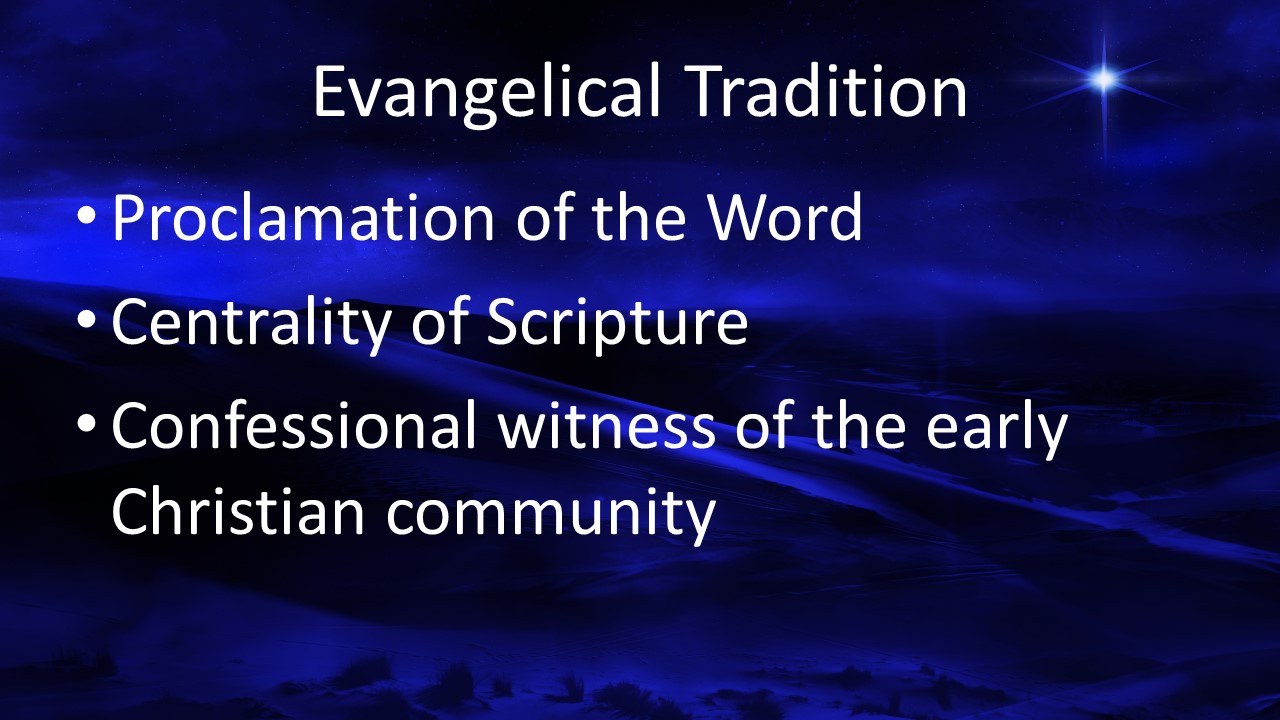 Now, let’s think of the wise men or magi in the context of the evangelical tradition. This stream within the Christian faith places a high priority on the proclamation of the gospel, the centrality of Scripture, and the confessional witness of the early Christian community.
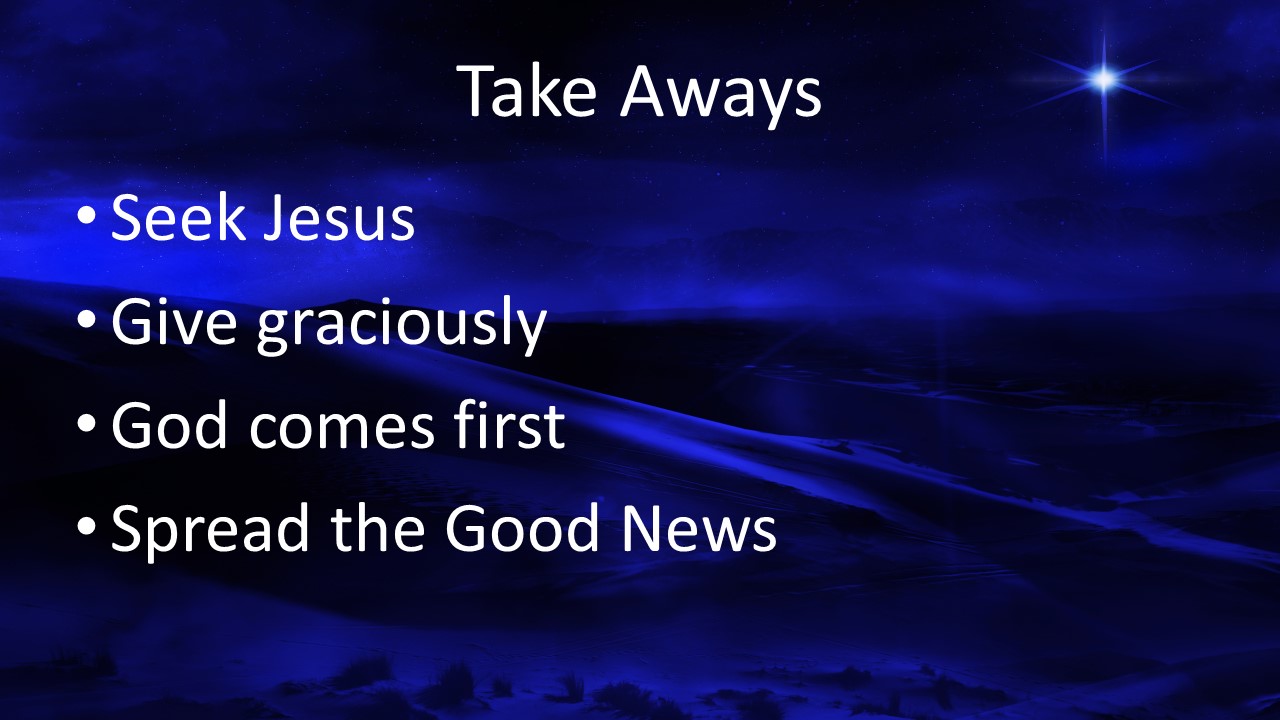 I started this sermon with three things we learn from the wise men. I am going to add one additional thing to this. There are four things that I want you to take home today and to ponder throughout the week: Seek Jesus, give graciously, know that God always comes first, and remember that we’re called to spread the Good News of Jesus Christ. Amen.