

I have been hibernating the past few days as I nurse this case of COVID. But I’m feeling a bit better, with a mild headache and some stuffiness and coughing. Hopefully that will soon pass.
Cormac McCarthy, Blood Meridian, Or the Evening Redness in the West
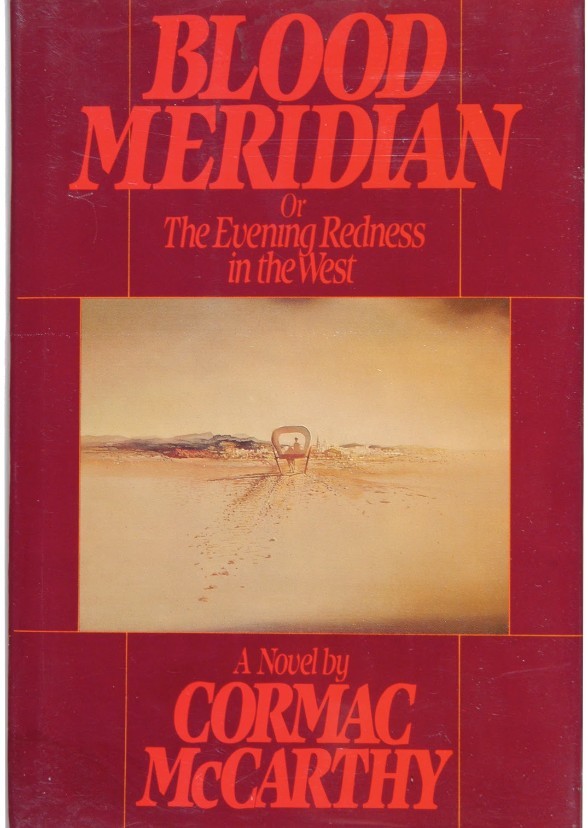
(New York: Random House, 1986), 351 pages
I don’t know I would recommend this book for anyone to read. Violence fills the pages. Yet, despite the darkness, the writing is compelling and in places beautiful. The landscape of the Southwest (and northwest Mexico) becomes a major feature of the book. The story is set in this borderland, in 1849-1850. It’s a brutal land for a boy, known as “the kid” to find himself. But he’s not a stranger to violence, having already been shot for no apparent reason in New Orleans after working a flatboat down the Mississippi.
Aside from the Kid, Judge Holder is the most interesting character. A brilliant man, fluent in many languages and always making observations in his notebooks, the Judge seems to be void of a conscious.
The boy first encounters the judge under a revival tent in the rain in Nacogdoches. Interrupting the sermon, the Judge informs the crowd of all sexual perversion of the preacher he’d learned from where he’d come. According to the judge, he raped a 12 year old girl and held “congress” with a goat,. A lynching party gathers to take care of the “reverend.” Later, in a saloon, the judge admits he’d never laid his eyes on the preacher. The kid should have known right then to be weary of the judge. In that bar, he also meets Toadvine, another shady character who appears throughout the book. Another interesting character is Tobin, the former priest, the only one who seems to both understand and to challenge the judge.
After being robbed, he aligns himself with a military group looking to claim more Mexican territory with the promise of riches. They ride out, but are encounter Comanches who kills most of the men. Those who survive join the Glander Gang, who have contracts with Mexican towns to kill the Indian population. Their paid depends on the scalp. Riding with them is the Judge, who curiously explores plants and animals and talks above everyone’s head. Eventually, the gang goes rouge, killing anyone. At one point, the kid finds himself in a Mexican prison, but escapes. He makes his way to San Diego. Again in prison, but he’s released. He travels through California and is back in Los Angeles where he watches Toadvine’s hanging. Page after page after hundreds of pages, the violence continues.
At the end, the book jumps ahead to late in the winter of 1878. The kid, now a man in his 40s, camps and encounters a group of orphan boys, the oldest being 15. The oldest argues with the man and threatens to kill him. When he comes back in the middle of the night, the man is not by the fire. When the man identifies where he’s at, the teenager shoots and misses. The man, seeing the boy in the firelight, shoots back and kills the older boy (who was just a bit older than he was when he came Wests).
Later, in town, the former kid encounters the judge again in a bar with a dancing bar. By the end of the evening, the bear is dead and we’re left to ponder what happened between the kid and judge in the jake (outhouse). All we’re told is that the scene is gross. But the judge lives. He returns to the bar where he dances nude.
In the book, most everyone ends up dead, except for Judge Holder, who claims at the end he will never die. As the reader, I pondered if he represents Satan. He continues to live but brings death to everyplace he crosses. From an early description of the judge, I found myself envisioning him as Lee Van Cleef, “the Bad,” in the movie The Good, the Bad, and the Ugly. Certainly the judge was an evil character and everything he touches dies, probably even the kid in the closing scene in the outhouse.
I know the borderlands between Mexico and Texas were violent during the 19th Century, but in this book, the violence seems never to end. It is overwhelming. But, as in all of McCarthy’s books, the writing is crisp and clear. The text is void of extra words. Despite the blood, there is a strange beauty in McCarthy’s writings. The descriptions of the place the Kid traveled make you feel as if you’re there, in the deserts, up on the mountains, the amazing skies at sunrise and even at night with the stars moving overhead.
If any of you have read the book, I’d like to hear your take on it. If you decide to read it because of my review, just be forewarned.
Becca Stevens, Love Heals

(Nashville, TN: Thomas Nelson, 2017), 200 pages.
Oddly enough, this is the only non-fiction book I read last month, but I’ll make it up next month if I get thought the biography I’m reading on Genghis Khan. Stevens is founder and president of “Thistle Farms,” an organization dedicated to helping trouble women (former prostitutes, drug attics, etc) gain control of their lives. This book, a devotional, draws on the stories of the women she has helped over the years. Each of the 14 chapters discovers a different aspect of how love helps us heal from past traumas. Each chapter begins with a poem written by the author, then a narrative which draws on the stories of residents of Thistle Farms, and closes with ideas, exercises, or a prayer. This book would make a nice gift and mine came as a Christmas gift. Stories of hope fill the book.
Lee Smith, The Last Girls: A Novel
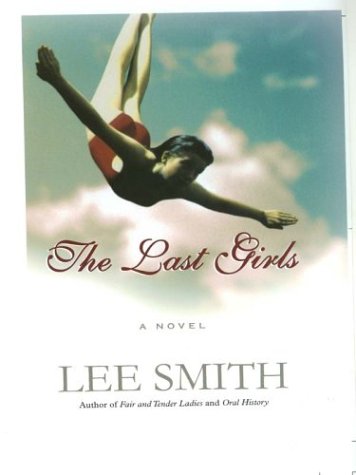
(Chapel Hill, NC: Algonquin Books, 2002), 384 pages
I feel little like having been a victim of a bait-and-switch scam. Several months ago, when leading worship at the Wild Goose Christian Fellowship in Indian Valley, I used an illustration from a book I was reading, Life on the Mississippi: An Epic American Adventure. Immediately three women insisted I need to read this book.
Lee Smith is from Southwestern Virginia. And when she was a student at Hollins College in Roanoke in the mid-1960s, a group of women students along with a captain, took a flatboat down the Mississippi. Having read a number of books about the Mississippi, it peeked my interest. I didn’t realize until I got the book that it was a novel. While Smith did travel the river with classmates in the mid-60s, there are only a few glimpses into that trip in this book. But I stuck with the book and as I seem to do every decade or so, I tipped my toes into the genre of chick-lit.
Thirty-five years later, four of the girls who made the journey reunite in Memphis, Tennessee, at a Peabody Hotel (where Mississippi begins, according to a quote possibility from Faulkner). From there, the four embark down the river to New Orleans on a riverboat. They were brought together by the husband of a fifth girl, Baby Ballou. He asked them to take the trip and to spread Baby’s ashes into the river. So the four former classmates who hadn’t stayed close, meet for a week on the river.
The story is mostly told from Harriet Holding’s point of view. She has never married, although not because of a lack of opportunity. Instead, she taught school. This trip, for her, bring back lots of memories from school and the river trip. She wonders why she even agreed to take the trip. As it was in school, it seems as if “Baby” still runs her life.
Then there is Courtney Gray, who lives a charmed life on the outside. She married wealth and lives like a Southern Belle But her husband has always been unfaithful and now she’s having an affair with a high school classmate, who is overweight and whom everyone assumed was gay. Her husband a successful lawyer is also beginning to have medical issues.
Anna Todd is a world famous romance novelist who has been married several times, And the one she didn’t marry, but loved and was happy with, dies. She escapes her unhappiness by writing stories, one of which she writes while on the river. And then there is Catherine Wilson, a famous sculptor, who finally finds a husband she likes, Russell. He also gets on her nerves. Russell joins them on the trip, which makes the conversations interesting and somewhat trying. We also learn some of his story, on the boat, such as when the women ditch him for a side trip. He stays on the boat watching sports in the bar when a fellow passenger sitting next to him dies from a heart attack. Other than to show how close death might be, I’m not sure that sideline added to the book.
As they travel south on the riverboat, we learn the women’s backstories, what they were like in college and afterwards, and in Harriet’s case, before college. They take side trips when the boat stops, as Harriet tries to figure out if she will take up the Mark Twain impersonator, a widower, invitation to spend the weekend in New Orleans. Courtney also has to decide if she will meet her lover, who wants her to leave her unfaithful husband, or if she should go back and take care of her unfaithful but sick husband. On the final night, as the ship sails into New Orleans, they hold a ceremony with Baby’s ashes. In the box with the ashes is a letter from her husband explaining what happened. Most of the girls had assumed it was suicide and not a car accident.
The book was okay. I would have still liked to heard more about the river trip the women took as college students. Unlike McCarthy’s novel, where the land is a part of the story, the river in this book seems to be a prop.
I read Letters From the Farm by Becca Stevens eleven years ago. We have a “Magdalene House” ministry here modeled on her Thistle Farm program. I have a tee shirt that says “Love Heals” sold as a fundraiser.
Hope you’re feeling better!
Thanks, I’m not back at 100% but feel a bit better.