Remembering a well-lived farmer

title slide

In reading C. Lee McKenzie’s Wednesday fiction post (Click here), which she said was inspired by a recent book review of mine on Chasing the Powhatan Arrow, I recalled this poem I wrote in November 2005. I wrote this poem after having written the funeral homily for Howard, a man who was a member of First Presbyterian Church of Hastings. At the end of the poem, I’ll say a bit more about Howard and give some clues to the ideas behind the poem.

I am out-of-the-pulpit for the next two Sundays. The next sermon will be posted, God willing, on October 11.

A Soliloquy for Howard

Meticulous and proud,
Howard bragged they’d never been an auction
in the 133 years the family had the farm
His grandfather, Caleb Dean,
a driver on the Battle Creek stage line,
facing competition from newly laid track,
purchased the property back in ’73.
At first, they lived in town,
driving the cows out to pasture each morning
‘till they finished the house that still stands upon the hill,
with hand-hewed floor joists, bark left on one side,
still visible in the Michigan basement he’d dug.


Much has changed in 89 years.
when the world was young and more innocent
before the Great War, the Depression and more wars.
In the Spring of ’16, his mother brought forth life
in the house on the hill overlooking the lower fields,
the road to Grand Rapids and the Michigan Central
with its coal-fired hogs pulling freight and passengers
along the banks of the Thornapple.
For those holding the reigns of a mule,
the train served as a siren,
its whistle reminding them of a larger world
luring some, but not all.

Though he traveled around the globe,
following the lines of the highway,
the whistle of the train and the contrail of jets
off to India, Africa, New Zealand with winters in Arizona
Howard never really left Rutland Township.
He lived in the same house,
attending a one room school until high school,
when he went into town where he met his wife Kathryn,
who commuted to school each morning from Shultz,
on the old C, K & S, christened the Chicago, Kalamazoo & Saginaw
(though it never made it to either end)
and locally dubbed the Cuss, Kick and Swear.

After marriage, he continued with his daddy,
farming the high ground south of the Thornapple:
milking Guernsey, raising beef, growing corn
and always tending a large garden
whose bounty, sealed in Mason Jars, were saved for winter.
Together, he and his dad brought one of the first tractors in these parts,
a ‘39 General, made at the Cleveland Tractor works.
As the seasons came and went
he dabbled in politics and farmed less,
but always kept his equipment as good as new
and for anyone who’d stop by, he’d tell stories
about working with oxen or plowing behind a mule.

Each fall, Howard harvested black walnuts,
primarily because they were there and that’s what you do,
when the Good Lord gives you a harvest.
As the years wore on, he came to depend upon others,
but with an eye to detail, he demanded that those who assisted
follow his instructions precisely:
husking the nuts through a corn shucker,
washing ‘em in an old cement mixer
and drying ‘em in racks in the barn,
then a keeping ‘em a week or so in the basement by the furnace
‘till the nuts neatly cracked open and the meat fell
into a cake or a batch of homemade ice cream.

In November, 2005, with walnuts drying in the basement,
harnesses and an oxen yoke still hanging in the barn,
Howard called his son to come quick and donned a fresh shirt,
for a trip to the hospital.
Heading toward the highway, where the two-track end,
out by the grape-vines,
he heard the distant wail of a train long pasted.
Kathryn had gone on ahead, but he knew the whistle,
and could hear the engine chugging through the swamps south of town,
as before,
carrying the girl he loved and who become his wife,
Listening, Howard gasped and breathed his last,
in sight of the house in which he was born
on the land he loved
where his family farmed
for 133 years.

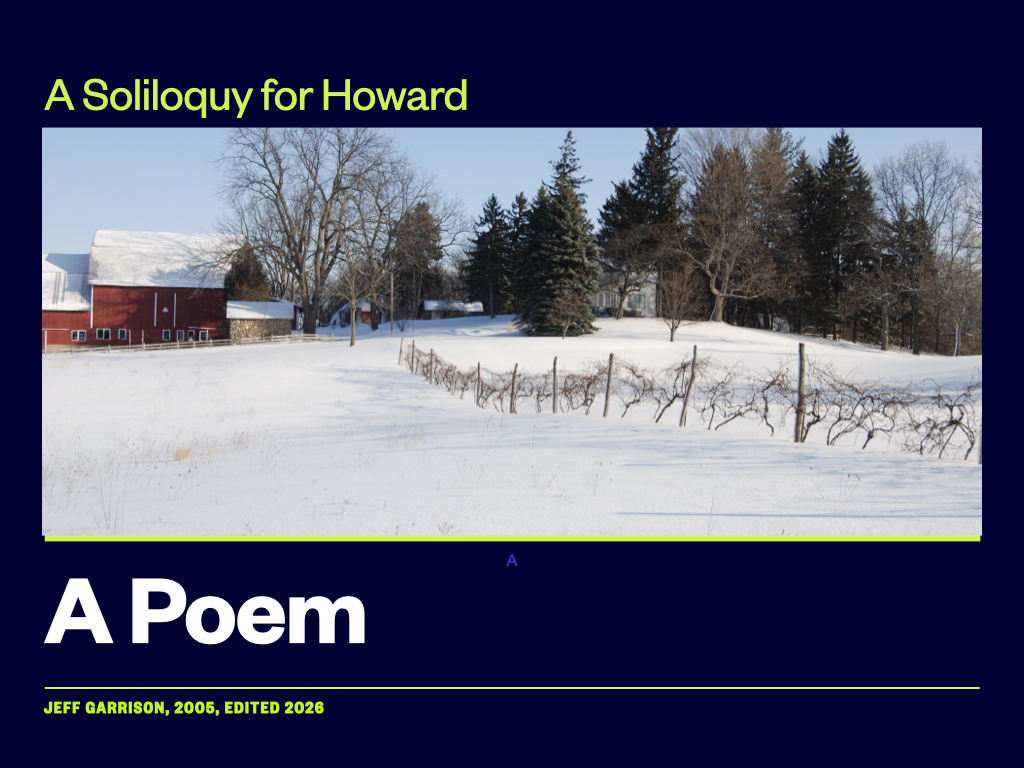
Howard Ferris' farm, 2008

Insights into the poem

Howard Ferris lived in the house his grandfather built late in the 19th Century. The farm sat in the northeast corner of the junction of Michigan Highways 37 and 43. Until his death, the big red barn stood proud while the house remained somewhat hidden behind white pines. The two track which ran up to his house paralleled the grape vines which grew down by the highway. In the photo, which was taken a few years after his death, the two-track is covered with snow. The house and barn have both been removed since that photo was taken in 2008. 

One day, a few weeks after I arrived in Michigan, Willard Curtis, a retired pastor from the church who lived outside of Kalamazoo, came up. We spent the day riding around, as he showed me where people lived. I knew at the time the church, which sat on less than an acre of land in Hastings, needed to expand. We passed this farm, and I asked Willard who owned it, saying it’d be a wonderful place for a new church. “You might be in luck,” Willard said. “It’s owned by Howard Ferris and he’s a member of your church. You haven’t met him yet, because he’s in Arizona for the winter. Before Howard came home that spring, I learned he’d already sold his property to the hospital, but retained a lifetime lease. 

Over the next two years, I learned a lot from Howard about the community. Everything in the poem comes from things he told me. Early in the Depression, as they were building Highway 37 toward Grand Rapids, Howard’s father hired him and a team of oxen out to help grade the road. That road runs by the new church which now sits about half a mile north of Ferris’ home (he died before we purchased the property). Howard’s son gave the yoke to the church, where it is on display in the entry way.. Not only did it help grade the road in front of the church, it’s a reminder of Jesus’ call for us to share his yoke (Matthew 11:28-30).  

A Michigan basement indicates a dirt basement (no solid walls) and the floor joist were often logs squared off on one side, with the rest of the log left with its bark on. 

Sadly, Hastings no longer has a railroad. The CK&S went bankrupt during the Depression (I think 1937). However, in downtown Hastings, its trestle across the Thornapple remains as a walking bridge. The Michigan Central was later sold and resold, but continued to serve as a railroad in the 1980s. Today, much of the track is enjoyed by bicyclists, walkers and runners as a rail trail. 

Howard did travel to the places listed. In addition to farming and county politics, he was active in Farm Bureau and with the Agriculture program at Michigan State. Most of these travels were to learn or to share agricultural knowledge.  

Great Blue Heron over the Thornapple River during the fall of the year
Great Blue Heron takes flight over the Thornapple River during the fall of the year.

Psalm 10: Our Wicked World

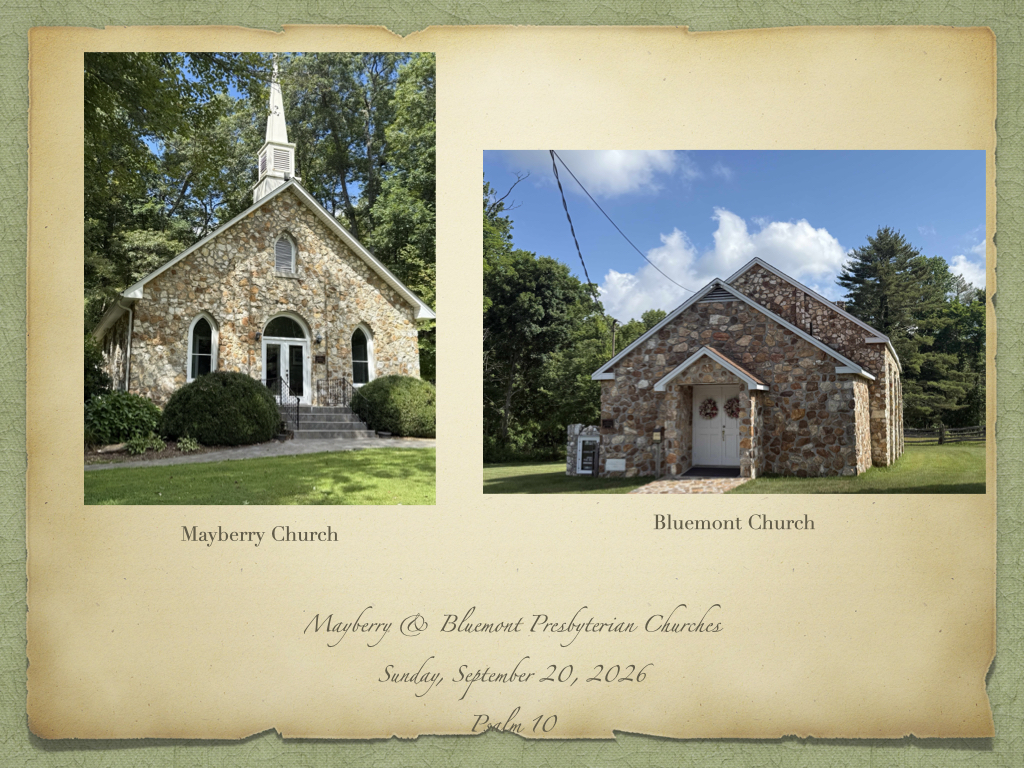
title slide with photo of Mayberry and Bluemont Churches

Jeff Garrison
Mayberry & Bluemont Churches
September 20, 2026
Psalm 10

Sermon recorded at Mayberry Presbyterian Church on September 18, 2026

At the beginning of worship:

This week there was an article in Wired Magazine, which contains articles on computers, networking, and stuff. This article featured Maddie, a student at the University of Florida. She made a bad decision. Photographed naked, this photograph and others, some photoshopped, started appearing around the internet. 

I had never heard of the “burnerverse,” which is “a loosely connected online community of sports fans.” Many of these accounts are anonymous. And some of these “burners” set out to destroy the lives of women, and by doing so they promote their own internet presence. The article primarily dealt with issues at universities of Florida and Mississippi, but acknowledges the problem exists elsewhere.

Why would someone want to intentionally destroy someone’s reputation, especially someone they don’t even know. It becomes a game from them as they seek more hits and more followers on their internet sites. But it’s wrong; it’s evil. Thankfully, Maddie had a supportive family with research abilities which allowed them to expose the anonymous men involved. Three face serious criminal charges. But that’s not always the case and often those who commit such evil deeds remain anonymous and continue to destroy lives. 

We live in a wicked world. It can be very cruel. But that’s nothing new as we’ll see in our scripture for today. 

Before reading the scriptures: 

Today we’re going to look at Psalm 10. Perhaps I should have preached first on Psalm 9 first, but I will save that one for closer to Thanksgiving. Psalm 9 & 10 probably went together at one point, but they remain separated in the Hebrew text. However, the Septuagint (the Greek Old Testament), and  Latin Bibles, join the two chapters together. This is because the two psalms complete an acrostic poem, with every other line starting with the next letter in the Hebrew alphabet. 


Psalm 9 begins with a Thanksgiving, then slowly moves into a lament. Psalm 10 is all lament. A part of the power of this Psalm is the Psalmist willingness to come before God swinging. He demands action. Long before Rabbi Kushner wrote, When Bad Things Happen to Good People, the Psalmist asks the same question. 

People often use the existence of evil to challenge the concept of God being good. But Scripture remains honest. Evil exists in the world despite God’s goodness. However, God assures us of this: evil will never have the final word. 

Read Psalm 10

Have you ever felt God wasn’t there for you? What did it feel like? Was it scary? And what does it take to feel so abandoned. 

I know there have been times on wilderness trips where I have been lost or at least was unsure of my location. But at such times, I felt free to talk to God and never felt abandoned. 

Barbara Brown Taylor, in her book An Altar in the World, points out how “God does some of God’s best work with people who are truly, seriously lost.” (73). So if you feel lost, don’t give up hope. God’s there with you even when you don’t feel God’s presence.

This is the situation for the Psalmist. He deals with evil people who lack a conscience. They do whatever they want to destroy others. The Psalmist feels they have his number. He could relate to Maddie in the Wired article I spoke of earlier. As he finds himself hunted down, he wonders where God hides. 

Starting with verse 2 and running through verse 11, the Psalmist list the traits of the wicked who attack him. They persecute the poor for the fun of it. They have schemes to separate people from their possessions. There are no guardrails on their desires which come from them either thinking God’s far away and does care or that God doesn’t exist. Both remove God out of the picture of what’s right and wrong. 

In verse 5, we see their arrogance. Feeling freed from morality and restraint of the Almighty, they don’t think they’re being watched. They prosper by their wickedness. They see themselves above the law and brag on their evil ways. 

Starting in verse 8, we learn how they hid. They sit in ambush in the village. They keep a lookout for those who are helpless and lurk as a lion, waiting to seize the poor. We’re reminded of what those with evil intent say in Proverbs (1:11), 

“let us lie in wait for blood;
     let us wantonly ambush the innocent.”

We must avoid such people. They do their deeds in the dark, hidden from others, thinking they’ll get away with their actions for, in their understanding, God nor the authorities sees what they do. 

The Psalmist has had enough of the ways of the wicked. In verse 12, he returns to God, calling on the Almighty to wake up, to look out and see what’s happening. As in Psalm 5, which we looked at last week, the Psalmist attempts to shame God into maintaining his reputation. He makes sure God understands how his enemies mock God. They think they’ll get off free. But that’s not the case. As we see in verse 14, deep down in his heart, the Psalmist knows God sees and takes notes on what’s happening.

God might not alway intervene in the affairs of the human race, but that doesn’t mean God isn’t interested. God sees and, sooner or later, people will be brought to account for their evil ways. This is especially true for the evil ones who abuse those who cannot help or defend themselves. This Psalm signals the orphan for God care, but throughout the Old Testament, three groups are repeated lifted up for concern: widows, orphans, and foreigners. All these people have no one to look out for their interest. But not only does God takes special interest in them, God demands his people to care for them. Our calling involves doing God’s work in the world.

In verse 15, we see the rage of the Psalmist as he calls on God to break the arms of the wicked, to hunt them down till they no longer exist. Notice, the Psalmist doesn’t seek to break bones of his persecutors himself. He leaves vengeance in God’s hand. After getting his anger off his chest, the Psalmist praises God, who remains king for all of us. God is eternal, while we-including nations-are not. Sooner or later we’ll pass from earth, but God rules forever. 

The Psalm closes with a glimpse of the world to come. The Psalms of lament always hold out hope. Here, we learn God hears the prayers of the meek. God strengthens their hearts and encourages them to seek justice. Hope abounds, for in the future, there will be no more terror from these beasts.

So, what might this Psalm say to the church and to those who attempt to follow Jesus today? First of all, it provides an honest assessment of the world. Evil exists. We live in a fallen world. As Jesus tells the disciples in Matthew, “I am sending you out like sheep into the midst of wolves, so be wise as serpents and innocent as doves.” We still live in such a world, but we should not embrace or condone it. Nor should we accept it. We strive for innocence. We help the oppressed. And, under no circumstances, should we exploit them. 

Finally, while we may not experience full justice in this life, take hope. God isn’t hidden nor does God ignore what happens. We have a vision of a future with God where justice for the oppressed with be realized. Such a vision may come as terror for those who ignore God’s justice in this life, but the oppressed and abused find relief. While we continue to see justice in this life, we are assured that in the life to come where justice will prevail. 


In this Psalm, God reminds us that being on the right side of history may, at times, seem futile in this evil world. But that will not be the case in the world to come. Amen.

Sources:

Alter, Robert, The Book of Psalms: A Translation with Commentary. New York: W. W. Norton,  2007.

Dickson, EJ, “A College Girl was Exploited on Camera. A Network of Anonymous Ment Got to Work,” Wired, September 14, 2026. 

May, James L., Psalms: Interpretation, a Biblical  Commentary for Teaching and Preaching. Louisville: John Knox Press, 1994.

Taylor, Barbara Brown. An Altar in the World: A Geography of Faith (New York: HarperOne, 2009).

Weiser, Artur, The Psalms: A Commentary. 1959. Philadelphia, Westminster Press, 1962. 

Riding the Taksaka: from Jakarta to Yogyakarta

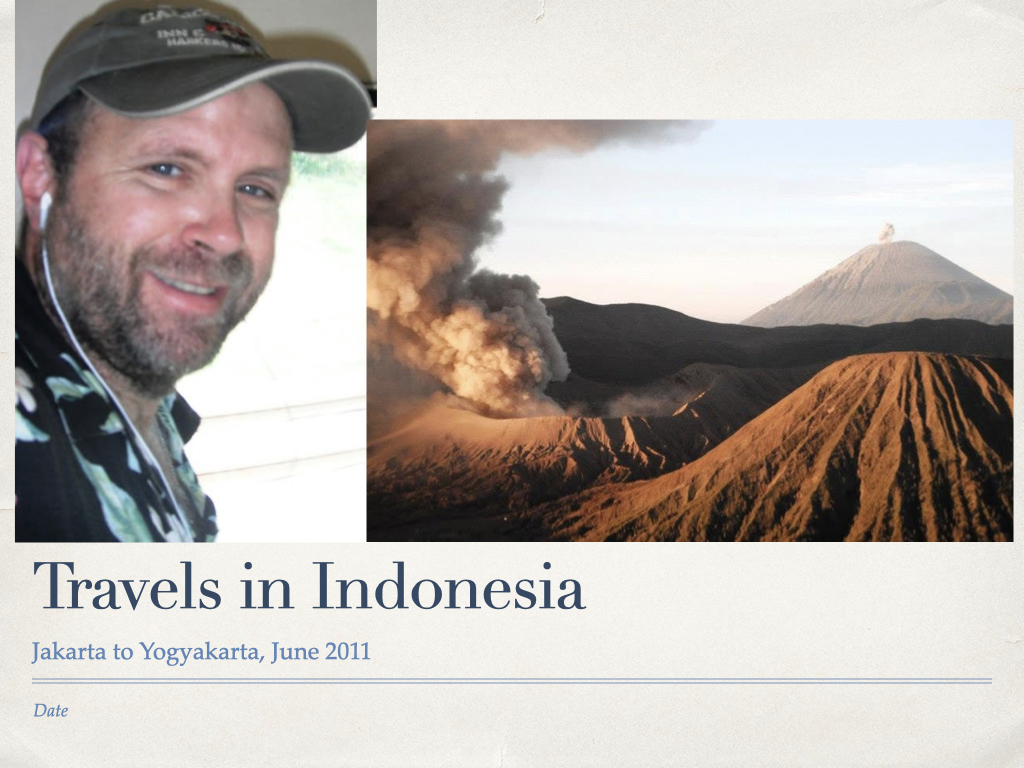
title slide

I’ve edited this post from one published in an old blog in 2011.

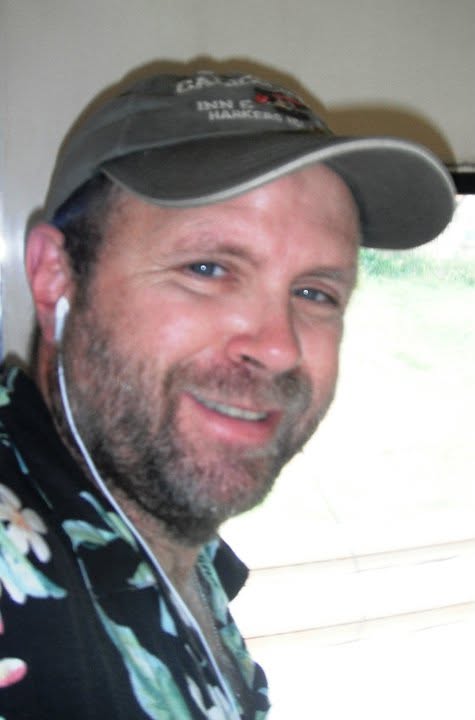
selfie on the train
Aboard the train

The heat and humidity is stifling. Even in an air conditioned coach, a bead of sweat runs down my beard. I could pull the curtains as the sun pours in through the crack glass, but I want to seethe countryside. So I sit with sweat beading on my forehead. The sweat soaks back of my shirt which clings to the vinyl seats. I take another swallow of water from my bottle as I we race past vast rice fields in different stages of production.  

Although large, each field is divided into manageable plots, which are separated by dikes which allow for flooding of the paddies. Here, six degrees below the equator, it’s endless summer and the fields produce two crops a year. In some paddies, the green rice is tall.

rice paddies with workers planting rice

Occasionally I spot a farmer wandering through the rice with a backpack, spraying what I assume is insecticide.  Other paddies remain muddy with bundles of rice laid out waiting for the workers, mostly women working halfway up their calves, to replant. In other paddies, they harvest the rice, cutting the stalks and feeding them into a thresher or, in some cases, beating the stalks on the ground, separating the seed from the stalks. And then there are the paddies in which the harvest has occurred. Some of these fields have been burned. They remain charred. A few still smolder. I can smell the smoke in the train.

I am riding the Taksaka, the train which runs across the island of Java, having left Jakarta’s Gambir Station in the morning, heading to Yogyakarta. We left the capital nearly an hour late. For the longest time, we roll through the sprawling city. Poverty abounds. Trash is everywhere and the canals are filthy. I’m blessed to travel executive class. My ticket cost a bit over twenty dollars, but that’s a lot of money in Indonesia. And this is probably the only first-class train in the world with cracked windows and cracked vinyl seats.

Slums in Jakarata

We pass trains in which the only way people can enjoy air conditioning is to climb to the top of cars. They sit just below high voltage electrical lines, a dangerous position for if they start to slip off and grab one of the lines, they’d be instantly electrocuted. This is a country of great contrast with a few who are extremely wealthy yet most live in dire poverty and unspeakable conditions. For many of the people, the filthy canals being their only source of water for bathing.

train window showing rice fields
view from a train window

Slowly we begin to leave the city behind and move into the tranquil countryside. Farms with elaborate irrigation systems line both sides of the tracks. Along the coastal plain the land is flat, but mountains rise in the distance.  We race pass small stations where, as we approach, the station master steps out in front in an immaculate uniform. They hold red and yellow flags and remains at attention as we speed by. Our first stop is Cirebon. As the train approaches the station, a host of merchants jump onboard the slow moving cars, selling food and drinks and other goodies. Women carry a thermos of hot water and cups and instant packages of coffee and chocolate. Others sell baked and fried goods, fruits, packaged snacks and chips. Outside, other merchants knock on windows and bargain with those of the train.  

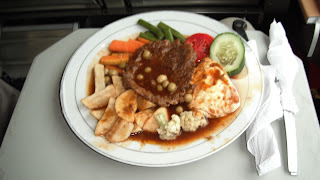
It’s almost lunch time and I ask an older Indonesian gentleman sitting next to me what I should eat. He suggests I order a steak from the dining car. I take his advice. It arrives as we leave Cirebon. The plate consists of ground steak, some egg, boiled potatoes, carrots, and green beans. It costs 30000 IRD, a little over three dollars. I ask my traveling friend from where he thought the beef came. Laughing, he said, “Probably Australia.”

After lunch, the tracks turn southward and snakes up the ridge of mountains which form the backbone of Java. Rice remains the main crop as we climb higher. More fields appear ready to be harvested. Many other vegetables also grow. There are a few cows along with sheep and goats. I’m impressed with the fields, and how along the top of the dikes are staked green beans and cassava.  There are also plots of corn, sugar cane, and melons.

The scenery enchants me. In contrast to Jakarta, everything appears clean. The irrigation works are even more elaborate here, the water running through masonry channels.  The neat houses, all roofed with red tile, stand in contrast to the green fields. Tall palm trees many loaded with coconuts, shade the residents.

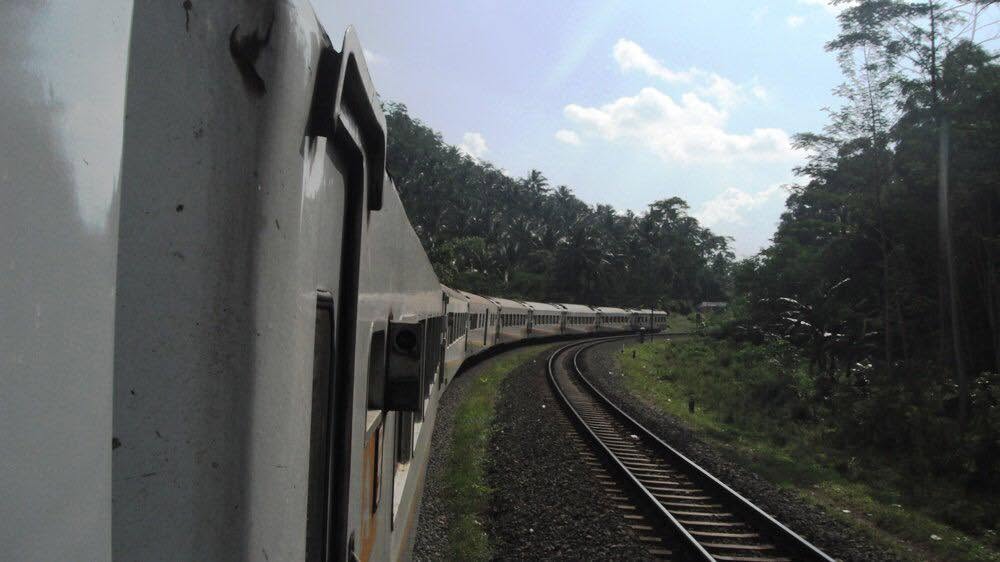
I walk up to the front of the car and stand by the door, between coaches, trying to get a better angle for a shot of the back of the train as we move through the turns.  An attendant sees what I’m attempting and opens the door for me, allowing me to stick my camera out and photograph the back end of the train. I’m careful, realizing how dangerous such a stunt could be. You’d never be allowed to pull such a stunt in the United States and most other countries.  

train in Indonesia
The back of the train.

I remember once, riding the Coast Starlight from Oakland to Los Angeles. I stood at the door in the bottom of the double stacked car as we raced along the Pacific coastline. Another traveler with a camera opened the window on the door. The car attendant was furious with him! Here, in the mountains of Java, I stay in the doorway for a long time, enjoying the cooler breeze of the mountain air and the ability to photograph without having to shoot through dirty and cracked glass.  

Although the car, with many cracked windows, doesn’t look like what I might expect from “executive class,” I am impressed with the tracks.  Here in the steep section of the line, line is mostly double tracked with welded ribbon rail and there appears to be new ballast under the concrete ties.

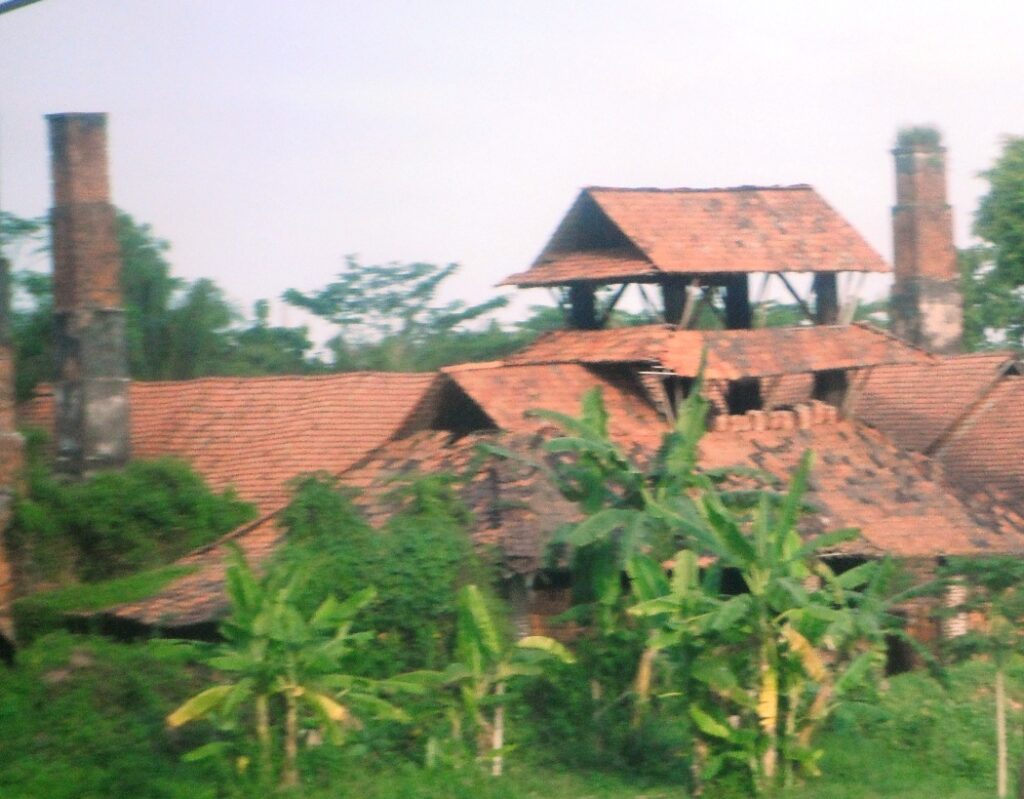
tile factory

After passing the town of Bumiayu, nestled in the shade of the forest stand scores of small factories devoted to the manufacture of tiles for roofing.  By each kiln are stacks of wood for the fires and the open air buildings have two levels of roofs, allowing for smoke to rise and clear the work area. The train begins to pick up speed.  Soon, we’re out of the mountains and along the coastal plain of the Southside of Java. We stop in Purwokerto, the second station stop of the trip. Afterwards, we’re back in large fields of rice, racing on toward Yogyakarta  It remains rural for a while, then we began to enter an urban area. My traveling friend tells me we’re only a few minutes from the station. 

We arrive at 5:20 PM, about 50 minutes late. I look for the Kiko restaurant, where I’m to meet a driver from the Green Gardens Bed and Breakfast. He’s not there, but as I turn around, a man runs up to me with my name written on a piece of cardboard. At least I won’t have to worry about finding a place to stay for the evening. 

We hop on his oversized minibike. It doesn’t seem so large with the two of us, me with my backpack. Somehow we fit, but tightly. We take off through the streets. Along the way, at an intersection, he says he needs gas. We pull over, but there are no pumps. He buys two former soft drink bottles filled with gasoline. He pours them into the tank, and hands the empty bottles back to the proprietor. Then we’re on our way to my home for the next four days. 

Other Train Trips:

Riding Coach from South Bend to D.C.

First transcontinental train trip:
Part 1, Reno to Pittsburgh
Part 2: Pittsburgh to NC
Part 3: NC to Reno via Seattle

Danville to Atlanta, 2020

Getting to Springer Mountain on the Southern Crescent: Gastonia NC to Gainesville, GA

Coming home to Pittsburgh, 1987

Doubly late to West Palm Beach, 1986

Riding on the City of New Orleans, 2005

Edinburgh to Iona, 2017

Riding in the Cab of the V&T, 2013

Bangkok to Seim Reap, 2011

Riding the International: Georgetown to Bangkok, 2011

Malaysia’s NE Line: The Jungle Train, 2011

Coming Home on the Southwest Chef, 2012

Psalm 5: Taking Our Troubles to God

title slide with photos of Mayberry & Bluemont churches

Jeff Garrison
Mayberry & Bluemont Churches
September 13, 2026
Psalm 5

The sermon was recorded at Mayberry on Friday, September 11, 2026.

At the beginning of worship: 

Mozart’s greatest opera, Don Giovanni, tells the Don Juan story. Don Giovanni has three passions: food, drink, and women, especially women named Donna. He attempts affairs with Donna Elvira and Donna Anna. Through his attempt to seduce the latter, he’s challenge by her father. He kills him. At the end of the opera, the father returns as a statue from the graveyard, to claim Don Giovanni’s life. He’s urged to repent before it’s too late. To do so, he must renounce his life. He can’t do it and the opera ends with him being dragged by demons into hell. In his mind, the torments of hell are better than giving up what he enjoyed in life. 

Hopefully, most of us don’t begin our theology with hell. If truth be told, we don’t want to think about hell. And, I suggest, spending too much time thinking about hell is dangerous. We’ve been too conditioned to think of hell by Dante and the like. But perhaps there is a reason for hell. 

What would heaven be like for Donna Anna and Donna Elvira if Don Giovanni showed up? It seems to me it would be less than paradise. Some people’s presence, without great purification, would have the ability to destroy heaven. Actually, and this is important to remember and should keep us humble, we will all need some form of sanctification or purification to come face-to-face with God. And, as I’ll explore in today’s sermon, only by God’s grace will we arrive.

Before reading the text:

As I did during the fall of last year, I plan to mostly preach from the the Book of Psalms this season. I will use Psalms which I have not yet preached on over the past 40 years. I have preached on over half of the Psalter, but that still leaves me a lot from which to choose. Today, we’ll look at the 5th Psalm. 

This is a personal lament. The Psalmist, and this is the third Psalm attributed to David, complains to God about people telling lies about him. He ask God to intervene on his behalf. But while this is a personal lament, the Psalm itself was proclaimed within the community at worship. We should remember the Psalms were Israel’s hymnal. They were sung and prayed in worship. And while this Psalm centers around the complaint of an individual, it ends incorporating the entire community. 

As I preach through the Psalm, it could be helpful to keep your Bibles open and to follow along. Don’t just follow in the reading, but use it as a reference for my interpretation of the passage.

One more thing. This Psalm also nicely follows up to my sermon of a few weeks ago when I preached on the 9th Commandment: Thou shalt not bear false witness against thy neighbor. 

Read Psalm 5:

Let me suggest from the beginning, the good news from this Psalm applies to one enduring slander, bullying, and deceit. It seems depressing, filled with judgment and consequences. But not if we understand the Psalm from the one bullied or facing slander and lies. The Psalm addresses the oppressed individual’s needs and offers hope for those who strive to live righteous lives.

I think many within our nation felt this way back on 911. Remember that day twenty-five years ago when it seemed our world fell apart. We knew we were attacked but didn’t understand why or what was happening. It was a scary time. This Psalm addresses such a time, especially within our personal lives. 

Our Psalm begins with an appeal to God. We might also call it a Call to Worship, as we do when we gather on Sunday mornings. The Psalmist demands an audience with God. His, assuming David wrote this Psalm, troubles are so great that only God can help. Twice this Psalm demands God to listen. Such repetition emphasizes the demand. The sad words come as a sighing, a cry, a prayer, offered at worship in the morning. Of course, if David was the original author, some changes occurred to the Psalm as it appears the Psalm was adapted for use in the temple, which didn’t exist during David’s reigns. But let’s not dwell there. 

We should focus instead on David’s anguish. He must have had a sleepless night. He worries about those who spread false rumors. Have you ever heard a rumor about something you supposedly did or said, and then had a hard time turning off the tape within your brain which plays the accusation over and over? That’s must be what’s happening within David’s mind as he worries about his reputation.

This psalm does not inform us of God’s reply. But the Psalmist obviously thinks God listens, for he continues into the second part of the prayer. Perhaps faith draws David forth, Starting in verse 4, he acknowledge God’s traits. God despises wickedness. Evil cannot exist in God’s presence. 

This leads the Psalmist to assume those whose tell the destroying lies will not enjoy God’s presence. For the bloodthirsty and deceitful will never stand before the Lord. God is holy and those polluted will never find an audience with the Almighty. 

A shift then occurs in verse 7. The Psalmist feels called into God’s presence. Notice, it’s not because of the Psalmist’s righteousness. Rather, the God who cares for the meek of the earth, invites the Psalmist in through God’s steadfast love. The Psalmist enters in awe, with head bowed, perhaps knowing he’s not worthy.

In the next verse, the Psalmist asks for supplication. “God, lead me through my enemies, make your path straight for me.” When we are in trouble, we may find ourselves with no one but God who can help. It’s also important we don’t try to take things in our hands. If we do so, we might make a bigger mess of things. Vengeance is mine says the Lord, a passage found in both the Old and New Testament. We are not to seek revenge, instead we’re to ask God to show us how to live into the future. 

Next, in verses 9 and 10, comes the Psalmist complaint. Earlier, when he acknowledged God’s goodness, the Psalmist established God as one who despises wickedness. Now he brings before God those can’t stand before the Almighty. They lie and plan destruction. Their mouths are like open graves, they can flatter but can also kill. Standing them

 before God, the Psalmist wants to assure they pay the price for their treachery. Yet, notice their fall isn’t because of God. Their own counsel tripped them up. Having rebelled against God, they find themselves cast out from God’s presence. As with Donna Anna in Mozart’s opera, the deceitful one must be banished before she can enjoy life. 

With the concern of those who slander and make his life difficult off the Psalmist chest, we move to close the prayer. The Psalmist prays for the righteous within the community. While this is a personal lament, it also applies to the community of faith, those who seek refuge in God. The Psalmist asks for protection upon the community. May those who are innocent be covered with God’s favor. 

The Psalmist, in a way, prays for God’s kingdom to be fulfilled. “They will be done, thy kingdom come,” we pray. Such a kingdom, according to the Beatitudes, consist of those who are poor in spirit. It also includes the meek, those who long for righteousness, who show mercy, who have pure hearts, who seek peace, and have been persecution for righteousness’ sake. The Psalmist fits within many of these traits. 

We’re shown in this psalm how to take our troubles to God. We can bring God our concerns and seek out God protections when threatened. 

But I want to address one other thing. It seems this song divides the world into the good and bad. However, we must be careful of such dual thinking. After all, as the Apostle Paul reminds us, we’ve all have sinned and fallen short of the Glory of God. In Romans 3, the Apostle Paul draws from this Psalm among others to indict all people of our sinfulness. Even David, to whom the Psalm is attributed, did things which did not please nor bring God glory. This was especially true with him setting up Uriah’s death so that he could cover up his adultery with Bathsheba. 

So, if we’re all guilty, how can we come before God? We find the answer back in verse 7. We can only come before God by God’s steadfast love. That’s grace. God answers the prayers of those bullied in life, but God will also answer the prayers of the bully, if they repent of their behavior. But that’s the topic for another sermon. 

So when you are beaten down by life, let’s take your troubles to God. And while we try to live and do what is right, we know we are not always so innocent. God will help us when we are bullied, as in the case of the Psalm. But we should also remember this: God looks out for those we bully.  Amen. 

Sources:

Alter, Robert, The Book of Psalms: A Translation with Commentary. New York: W. W. Norton,  2007.

Mast, Stan. “Psalm 5:1-8 Commentary for Sunday,  June 12, 2016” 

May, James L., Psalms: Interpretation, a Biblical  Commentary for Teaching and Preaching. 
Louisville: John Knox Press, 1994.

Weiser, Artur, The Psalms: A Commentary. 1959. Philadelphia, Westminster Press, 1962. 

A Stop at Trout Lake

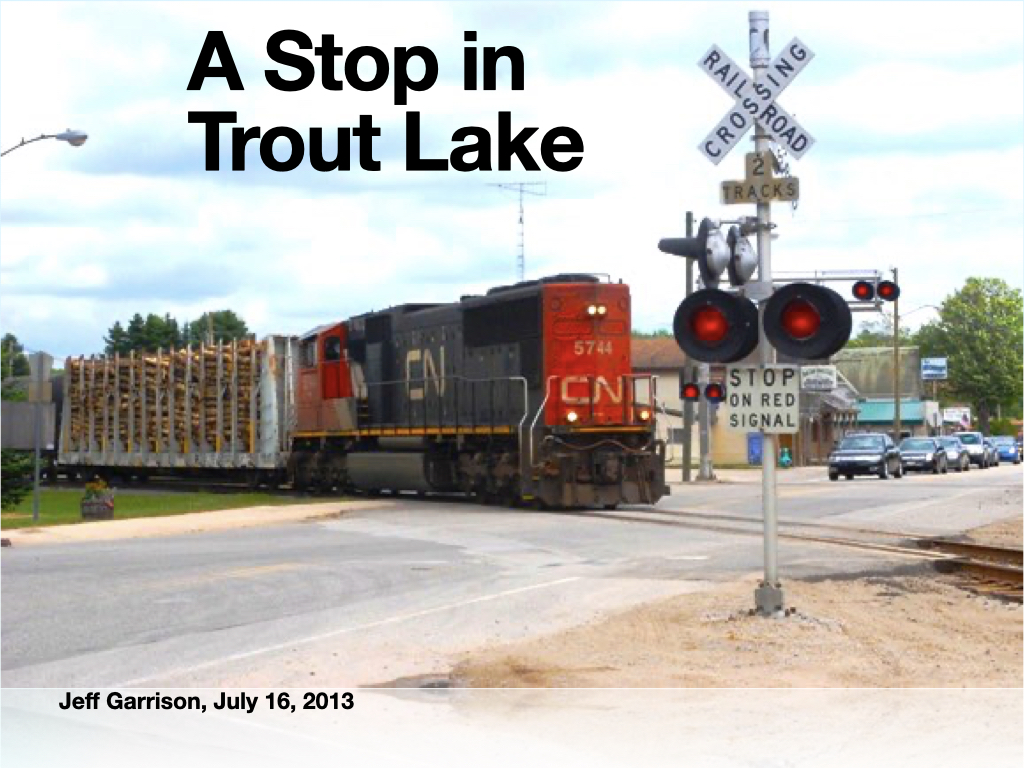
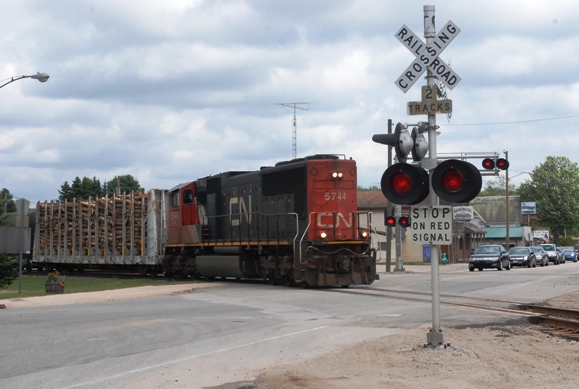
title slide with CN engine moving through Trout Lake, MI
Train moving through Trout Lake MI
train moving through the Y at Trout Lake

This is a piece I wrote in 2013. I focus on a stop during an eight hour drive. I drove up the length of Michigan, then halfway across the Upper Peninsula. It also appeared in a post in “The Trackside Photographer” in 2018.


Crossing the Big Mac into Michigan’s Upper Peninsula, I pay the four dollar toll at St. Ignace for the privilege.   But I don’t follow US 2 which runs along Lake Michigan shoreline nor I-75 which rushes to Sault St. Marie. Instead, I opt for Michigan 123 which runs into the heart of the UP.  The road follows the former roadbed of the Duluth, South Shore and Atlantic Railroad. Ernest Hemingway rode this line a few years after the Great War. He and some friends traveled to a fish camp along the East Branch of the Fox River outside of Seney, Michigan. That adventure provided the fodder for his classic short story, “The Big Two Hearted River.”  In those days, one crossed the Straits of Mackinac by ferry. In 1957 the bridge opened, spanning the straits.

It’s getting late in the afternoon when I stop at Trout Lake.  There is a small IGA here with wonderful sandwiches, piled high with sliced meats.  As I plan to have dinner with friends once I arrive in Marquette, I choose instead a cone of hand-dipped black cherry ice cream.  Waiting for the clerk, I look around the store for a minute.  In addition to groceries and a deli, they have fishing and camping gear and some hardware. The store seems to be a place from the past, which is why I like stopping here.

Stepping outside, the bells of the railroad crossing clang. I walk around the building to watch a CN engine pulling a mixed assortment of log and tank cars in from the Sault. The engineer stops at the “Y”, just shy of the road crossing. The brakeman steps off, unlocks and then turns the switch. The train proceeds. Its diesels rumble and cars sway, as it makes its way through the junction. After crossing the highway, the train takes the tracks which runs toward Seney. Eventually, I assume, it’s destination is the paper mill at Munising.  I watch it rumble down the tracks for a few minutes, then get back in my truck and continue driving.

I’ve stopped at Trout Lake many times, but have never lingered more than a few minutes.  But I like the area and the IGA with its wonderful ice cream and homemade sandwiches.  There’s a nice lake here, a few hundred years south, as I can see through the pines. Today, this area seems so isolated, mainly a place for fishermen on the lake to replace tackle or buy beer and for snowmobilers to fill up in winter as they race through on their cross-country runs across the UP.  It’s not always been this laid back.  

A 100 years ago, Trout Lake was a small but bustling community at  the crossroads of the Eastern UP.  The Duluth, South Shore and Atlantic Railroad which ran across the South Shore of Lake Superior crossed the Soo Tracks here as it headed toward St. Ignace.  The Soo ran from Ontario, through Sault Ste. Marie and past Trout Lake to Naubinway and along the North Shore of Lake Michigan through Manistique, Gladstone, into Wisconsin and eventually to Minneapolis. 

Today, the old Duluth line only runs from this point to Munising, mainly servicing a paper mill and a lumber yard. The old Soo line is still intact, but the track gauge is light as is the amount of freight rumbling along the line. Over the years these railroads have gone by a number of names and an equal number of owners. Today, they’re operated by the Wisconsin Central (it’s an old name but a new corporation which handles a collection of lines own by the Canadian National). Sadly, the Duluth and Boston Express and other passenger trains along this line stopped running long before my birth.

I drive west, crossing the lines of the old Duluth, South Shore and Atlantic several times as I head across the UP on Michigan 28, passing through the quiet towns of McMillan, Seney, Shingleton and Chatham.  

The Tenth Commandment: No Coveting

Jeff Garrison
Mayberry and Bluemont Churches
September 6, 2026
The Tenth Commandment

The sermon was recorded at Mayberry Presbyterian Church on Thursday, September 3, 2026

At the beginning of worship:

How many of you have seen the movie, “The God’s Must Be Crazy?” Released in 1980, I think consider it one of the funniest films of all times. When the movie opens, you think you’re watching a documentary produced by the National Geographic Society. A serious narrator introduces a primitive tribe in Africa. Everyone lives in perfect harmony as they share everything. These folks have not had contact with the outside world. They’ve not been corrupted; they’re happy and content. But all that changes. 

One day a bush pilot flies over their meager village and after chugging down a bottle of Coke, he drops the empty bottle out of the window. Those on the ground think the empty soda bottle is a gift from the gods. And their lives improve for they find many uses for the bottle. It serves as a hammer. The sun reflects through the glass allowing them to build fires. You get the idea; the bottle quickly becomes a handy tool. Soon, since there’s only one bottle, the tribes harmony breaks apart. They fight over who has the right to use the bottle. 

Finally, the elders gather and decide the gods must be crazy to have sent such a dangerous gift. They choose one man to take the bottle back to the gods—in other words back to civilization. The movie continues with his journey and you’ll have to watch it to find out what happens. But to tie this into our theme for today, covetousness leads to disharmony.

Before reading the scripture:

We’ve come to the end. Or at least the last of my sermons on the Ten Commandments. It’s been a long summer and I’m sure you’re ready for something else.

Today, we’re looking at the 10th Commandment, the sin of coveting. This may even be the first sin we commit. It’s a sin which could go by many names such as jealously, envy, lust, or “keeping up with the Jones.” Today, I’ll read through the commandments. Remember, they’re all important.  

Read Exodus 20:1-17

Coveting, that desire to have what doesn’t belong to us, has always been a problem. It’s the foundation of the original sin. In the garden, Adam and Eve enjoyed everything they needed to have a happy life. Only one thing in the garden remained off-limits, the tree of knowledge. We often interpret this to be an apple tree, although the story doesn’t identify a specie. However, think of it this way. If the tree was an apple, they could have eaten their fill of oranges, pears, apricots, and peaches. Just one tree that they had to avoid, but they couldn’t do it. 

Like a magnet, they’re draw straight for the forbidden tree. It became too tempting. Listening to a serpent, Eve takes a bite and offers it to Adam and they enjoy the fruit. Maybe it was a juicy apple so when they took a bite, the juices dripped from the corners of their mouths. They disobeyed God because they wanted what did not belong to them.

We learn to covet at an early age, or maybe it is instilled into us, either way, it’s wrong. We see covetousness manifesting itself in children, which is why I think it might be one of the first sins we commit. A child, when very young, learns the word “mine.” If he or she doesn’t want to let another child play with a toy, the toddler will clutch the toy in his or her arms. If another child has a toy they want, they’ll grab it and shout, “mine.” And as a child matures and learns to follow directions, they’ll get to the age when they are always testing the limits. At this stage in their development, the easiest way to get a child do something is to declare it off-limits. Tell a kid it’s off-limits and like Adam and Eve in the Garden, they’ll be doing it in a heart-beat. 

Coveting starts early; we want what does not belong to us and it seems we’re easily seduced by the forbidden. When I was right out of seminary and serving a church in Ellicottville, New York, I remember an overpass on the road heading toward Buffalo. Someone wrote on the concrete, in graffiti, “I don’t want it all; I just want your half.” There’s a lot of truth to that statement. It’s coveting at its best. 

The problem of coveting has always been with us. As I’ve shown, it was there in the Garden of Eden, but I wonder if it didn’t become worse in the 20th Century with catalogs like Sears and Roebuck, J. C. Penny, and Montgomery Wards. It’s strange to think of those catalogues being a thing of the past, but now we have Amazon. We can shop and drool over the keyboard. Now, acquisition in and of itself isn’t bad. But the motives which drive us to want what others have can be a problem. For we find ourselves focusing, as Christ warns, not on treasures in heaven, but on storing up that which rots and rust, that which thieves can steal.

As a kid, the only good thing about going back to school was the arrival of the Sears Christmas Catalog, or The Wishbook as it was known. The catalog should have been called the coveter’s handbook. It arrived in the mail early in September, right after school resumed. I still remember the excitement felt the day we came home on the bus and discovered catalog sitting on the kitchen table. Its arrival created a war between my brother and sister and I. We’d all argue about who got to look at it first, and over the next several days, we’d spend hours looking at all the neat toys and making our lists for Christmas. “I want, I want” it’s an early phrase we learn as a child. Looking at the pictures of the kids on the pages of the catalog, playing in a toy utopia, caused our mouths to water. And by having a brother and sister meant that I got to break this commandment in two ways. Not only did I covet the toys in the catalog, I coveted the catalog itself, when in the hands of my brother or sister. The catalog encouraged a double violation of this sin.

There’s been a lot of discussion about the tenth commandment ­probably starting right after the Hebrew people broke camp and moved away from the mountain. It is often pointed out that the commandment doesn’t fit with the other commandments on the second table of the law which deal with our relationship with one another. After all, murder, adultery, theft and false witness are all sins that involve an action. But covetousness, desiring something that belongs to someone else—be it their wife (or their husband if you’re a woman), their servants, their possessions, their land—isn’t a sin that can be seen. It resides in our heart. No actions required.

We can hide our desires and go around life with a poker face and fool people. We can be praise for our good deeds when, in reality, such deeds may have been done for less than honest reasons. The desire to have something which belongs to someone else, is the root sin which may only becomes visible when one of the other commandments are broken. Think about it, psychopaths aside, people don’t go around murdering because they enjoy it. Murder generally occurs because one protects, or thinks he or she protects, one’s self interest. The same is true with adultery, stealing and bearing false witness, sins which are committed because we put our own interest above that of the community. All of this is a result of coveting. Our wants and desires lead us down a dangerous path of thinking we’re more valuable than others. 

John Calvin, in the Institutes of the Christian Religion, suggests that instead of focusing on our desires, we do the opposite: that we focus on our neighbor’s good. Such a technique will help us control our urges to want what we do not have and, as the commandments are so designed, will result in a healthier community. These laws help strengthen our relationship with God and with one another.

I want to suggest a danger of misinterpreting and wrongly applying the tenth commandment. If we’re not careful, we can use the command to condemn others who desire to improve their lives. Perhaps the best example of this would be to criticize of a group of oppressed people who desire freedom to live a life of dignity and provide for their families. To use this commandment as a way to condemn, we cover our butts, not wanting them to have what we have. Such response breaks the intention or the spirit of the commandment. God gave us these rules for the betterment of all people, and to use it as a means of oppression dishonors God. After all, Israel was an oppressed people in Egypt. Perhaps in such a case, instead of criticizing, we should heed the Jesus’ words, “Judge not.”

The sin of coveting is something only we can identify within ourselves. Jesus desires our hearts be pure and when we spend all our time focusing on our neighbor’s possessions, we lose the ability to be grateful and generous. We then tend to focus on our own desires and slowly turn away from our Savior and our neighbor.

The tenth commandment makes a great ending to the laws given to Moses. He start out with the warning not have any other gods. God is all-sufficient. We end the commandments with a prohibition against dwelling on what we don’t have. When it comes to stuff, we can never have enough to satisfy our desires. This is why coveting can be so dangerous, for our desires will keep us from being grateful to God for what we have. Our desires will eventually set us at odds with our neighbors. It’s a hard command to keep for temptation abounds, for we’re always being reminded by advertising of what we need (even if we never knew we needed it. We’re also reminded of what everyone else has (even if they don’t have it). Therefore, we feel we’re left out. Such messages, when we believe them, are deadly lies which undermine our dependence upon God. 

Do we worship the God who can satisfy our longings, or worship stuff that leaves us hungry for more? The choice is ours. Amen.

Sources:
Calvin, John. Institutes of the Christian Religion, Ford Lewis Battles,
translator (1559)
______. Sermons on the Ten Commandments, Benjamin W. Farley,
translator (Grand Rapids, Baker, 1980),
Childs, Brevard S. The Book of Exodus: A Critical, Theological
Commentary (Philadelphia: Westminster, 1974), 419-421.
Christensen, Duane L, Deuteronomy 1-11: (Word Biblical Commentary
Waco: Word, 1991).
Davidman, Joy. Smoke on the Mountain (1955, London: Hodder &
Stoughton, 1963).
Garrison, Jeff. “Sermon on the 10th Commandment at First Presbyterian
Church of Hastings, Michigan. “(September 2, 2007).
Hauerwas, Stanley and William Willimon, The Truth About God: The Ten
Commandments in Christian Life (Nashville: Abingdon, 1999).
Miller, Patrick D. The Ten Commandments: Interpretations, Resources for 
the Use of Scripture in the Church (Louisville, WJKP, 2009)

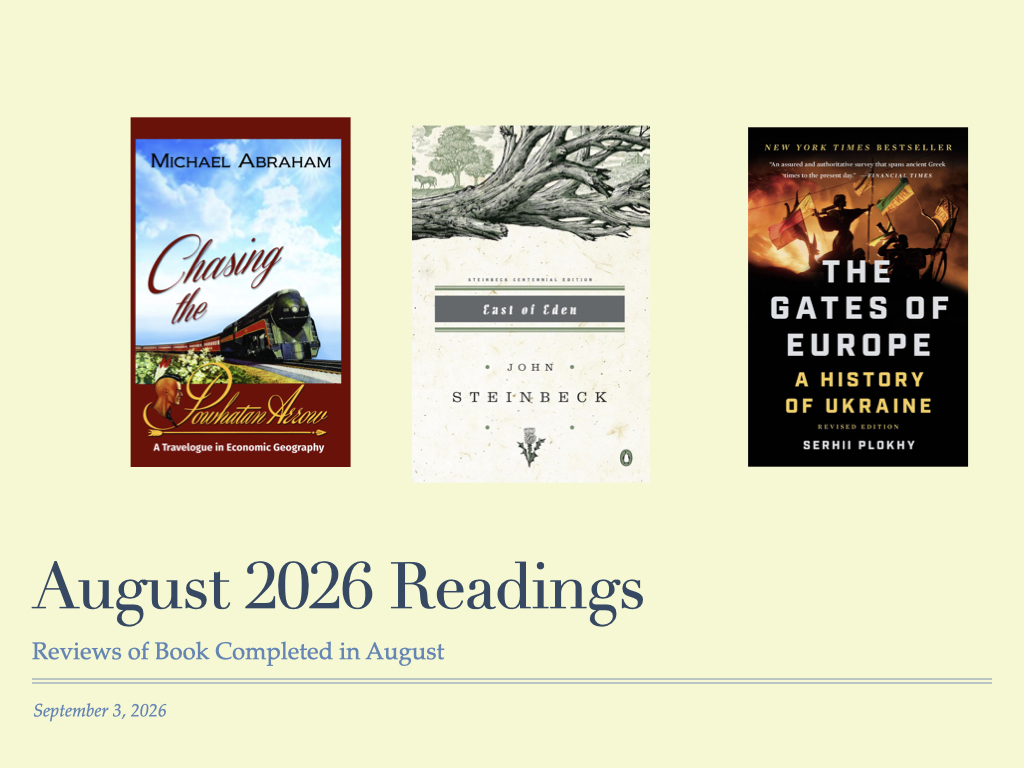
Reviews of books I completed in August 2026

TItle Slide with photo of book covers

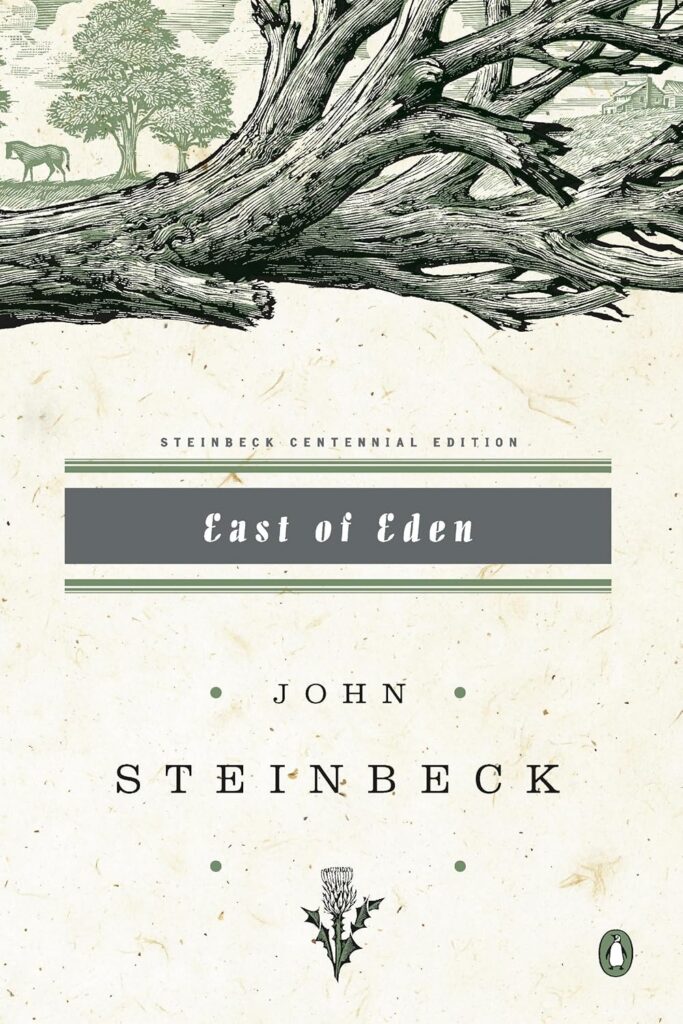
John Steinbeck, East of Eden,

East of Eden cover photo

(!952, Penguin, 2002), 601 pages.

This is an epic novel which follows the family of Cyrus Trask, mostly through his son, Adam. Cyrus was a Civil War veteran who remade himself into a hero in his son’s eyes and in the eyes of the country as he became a leader in the Grand Army of the Republic after the war. The book is set in the later years of the 19th Century through World War I. 

Cyrus’ son Charles stays behind and farms. At his insistence, his son Adam joins the army and fights in the Indian Wars. Afterwards, Adam struggled to find himself. When he reconnects to his brother, he learns of his father’s death and the fortune left behind. He later heads west with his new bride, Cathy Ames. Cathy has a dark side which Adam overlooked, only seeing her as an abused woman whom he could protect. We hear nothing more of Charles until years later, when Adam receives a letter from an attorney announcing his brother’s death. He split his inheritance between Adam and his estranged wife.

Arriving in the Salinas Valley of California, Adam buys a farm. He has great plans. But his pregnant wife, doesn’t want anything to do with domestic life. She gives birth to twin boys, Caleb and Aaron, both Biblical names like their dad. Shortly afterwards, even before naming the boys, she tries to leave Adam. When he encourages her to stay, she shoots him in the shoulder. Adam lives, saved by his Chinese servant, Lee, and Samuel Hamilton and his family, who are neighbors. He then becomes depressed. Lee mostly raises the boys.

The boys grow up. Cal (Caleb), partnering with Samuel Hamilton’s son, does well as a farmer, especially with a war going on in Europe. He’s also more worldly and discovers that his mother, who now goes by the name Kate, runs a notorious brothel in Salinas. She also sets up leading men who frequent her establishment for blackmail. Aron (Aaron) heads to school to become an Episcopal priest. He’s also in love with Abra. During a fight within the family when he is home from college,, Cal takes his brother to the brothel to see their mother. It’s too much for Aron and he joins the army and dies in Europe.  Kate commits suicide, and leaves her inheritance to Aron. 

Much of the book centers around a discussion between Lee (who for a Chinese-American servant is well-education),  Samuel Hamilton, and Adam on the story of Cain and Abel in Genesis. Lee suggests a different way for understanding the text. He mistranslating the Hebrew verb timshol for timshel, changing the meaning from “you must rule” to “thou mayest rule” over sin (Genesis 4:7).  Lee thinks the meaning of the latter allows humans freedom to flourish.

The book ends with Adam dying. He suffers a stroke upon learning of his son, Aron’s death. On his deathbed, at Lee’s encouragement, he forgives and accepts his son, Cal. 

One of the major themes of the book is the relationship between fathers and sons. We see this with both Adam and his father, Cyrus. In both generations, one son stirves to “buy” their father’s love. We also see this relationship within the Hamilton family, who seemed better at showing love to all their children. Another theme is evil. Obviously, the Cathy/Kate character represents evil. Everything she touches dies, often at her hand as she had killed her parents as well as the madam of the brothel, which she later ran. Inheritance is also an important theme. Adam and Charles wonder if their father’s wealth was honestly gained. I found the character, Lee, to be interesting. At first he’s speaks a highly accented English and only when he befriends Samuel Hamilton does he speak without an accent. Lee was born in America. He’s the best educated within the cast of characters, yet works as a servant. 

If my memory remains sharp, this is the eighth book I’ve read by John Steinbeck. The others include (in order of reading): The Pearl, The Moon is Down, Travels with Charlie, Cannery Row, Sweet Thursday, Grapes of Wrath, and The Log from the Sea of Cortez. Most of his books I’ve enjoyed which is why I keep reading them. 

Michael Abraham, Chasing the Powhatan Arrow: A Travelogue in Economic Geography 

Chasing the Potowan Arrow cover photo

(Blacksburg, VA: Pocahontas Press, 2017), 483 pages, some photos. 

The Powhatan Arrow was Norfolk Western’s flagship train which ran from Norfolk, Virginia to Cincinnati, Ohio from the 1940s to 1971. You could board the train in Norfolk at 7 AM and arrive in Cincinnati at 10:45 PM, covering almost 700 miles.For the first twenty years of its history, the streamlined J-units built in N&Ws’s shops in Roanoke, pulled the train. One of these trains, J-611, is still in service and one of the best known steam locomotives in existence. After 1960, diesel units pulled the train. 

I found myself with a love/hate relationship with this book. I started reading it two years ago, but put it down. I finally picked it back up and had to once again start from the beginning. However, I appreciate the idea of an “economic geography.” Abraham does a wonderful job providing insight into the towns which the Powhatan Arrow traveled. We learned of their history, how their economy has changed and continues to evolve. Some cities, like Norfolk, Lynchburg, Roanoke,  Blacksburg, and Cincinnati have rebuilt themselves. Others, like Petersburg, Christianburg, Bluefield, and a slew of towns in Southern West Virginia and along the Ohio, struggle. As I was also interested to learn the existence of an east/west train in Petersburg when we lived there (from 1963 to 1966). And having spent time in Farmington this summer, and living near Roanoke, Christianburg, (Abraham’s hometown), and Blacksburg, made the book more personal. 

My hate relationship with the book came from thinking it could have been shorter. Some stories are told multiple times. Furthermore, his frequent use of sarcasm seemed overdone. Several times he went off in one direction, then redirect saying, “that’s a lie,” which I felt was a bit juvenile. 

However, the reader gains a great understanding about the history of Virginia and West Virginia.  From the port at Norfolk to the tobacco plantations along the Coastal Plain and the Piedmont, we learn about the role of Virginia during the Civil War, and current race relations. In Lynchburg and Roanoke, we learn of two cities who have become major education and industry. Roanoke, like many cities along the route, was built by the Norfolk Western and suffered when it merged with the Southern Railroad to become Norfolk Southern in 1982.

In the first half of the book, we learn of Abraham’s background as a Virginia Tech graduate in Mechanical Engineering.. He does a wonderful job of describing the role rails play and also describing how a steam train works. The J engines used on this route were the last generation of steam trains built in American were engineering marvels. 

Bluefield, a city which was also built by NW, was built to serve the coalfields in West Virginia. From there, the train travels south through small towns and cities. We learn types of coal, the dangers of working underground, and the coal wars in the early 1920s which lead to the United Mine Workers union. We also learn of the hazards of living in such places where floods wreck havoc and wells contain poisoned water.  

The Powhatan Arrow came to an end in Cincinnati, a city which had s famous railroad history with many trains such as the B&O, C&O, L&N converging. It’s a city with many Fortune 500 companies including Proctor and Gamble.

If you’re interested in this part of the world, I recommend this book. I love the old names for trains and am thankful Amtrak keeps up the tradition with names for trains instead of just using the impersonal numbers like those used by airlines. 

Serhii Plokhy, The Gates of Europe: A History of Ukraine

The Gates of Europe title cover
r

Revised edition (2015, New York: Basic Books, 2021), 407 pages including a historical timeline, a ‘Who’s Who in Ukrainian History, Glossary, list of further reading suggestions, and index.  Audible books, 2022, 15 hours and 21 minutes. Ralph Lister, narrator. 

The area which forms the country we now know as Ukraine has a long history. The first mention of settlements in the area came from the Greek historian Herodotus five centuries before Christ. This was the edge of the known world, but the Greeks established cities in Crimea and the Pontic Steepes. Over the next 2500 years, this land was often conflicted between the powers to the north (the Vikings and later Poland and Lithuanian), to the south (Byzantium, Ottomans, Muslims), to the west (Poland France, Austria Hungary, and Germany) and the east (Mongols and later Russians). The idea the Vikings had come through Ukraine in the 8th Century to establish outposts on the Black Sea surprised me. The Vikings referred to the area as “Rus”, which latter morphed into Russia.  After the establishment of Russia, Ukraine was often referred to as Little Rus.

While we think of America as a melting pot, but that’s also a feature of Ukraine. The nation consist of many different people and religions. There are Cossacks who inhibited the central part of the nation and Tartars (until expelled by the Soviet Union) lived in Crimea. Many Germans, Poles, and Czechs settled in the area, as did many Russians especially after the large number of deaths from the Soviet caused famine in Ukraine during the 1930s. In addition to many different peoples, the nation also has a variety of faith traditions. The main faith groups include the Russian and Ukrainian Orthodox Churches, Roman Catholics, and Uniates (loyal to Rome but uses the Greek/Orthodox liturgy). There are also a significant number of Jews, a few Protestants, and those Tartans who remain are mostly Muslims. Plokhy notes the role Ukraine played in the 15th and 16th centuries in reforming Orthodoxy, partly spurred on by Calvinists!

As we moved closer to the present, the history became more understandable. As World War 1 broke out, the nation was divided between the Austrian Hungarian empire and Russia. After Russia pulled out of the war, the territory was fought over by Germans and the Bolsheviks as well as the white Russians. Only after the Bolsheviks took control of the land, Ukraine was made a separate nation within the USSR. Of course, Moscow remained in control, but Ukraine could have its own athletes in the Olympics and after World War II, a seat in the United Nations.   Ukraine also provided leadership for the Soviet state. Khrushchev’s father moved his family to Ukraine when he was a child and Brezhnev was from Ukraine. After World War II, there was an attempt to separate Ukraine from the Soviet state with guerrilla fighters who had formerly fought against the Nazis remaining active until the early 1950s. The disaster at Chernobyl Nuclear Power Plant hastened Ukraines desire to break from the Soviet Union. Being such a large state, Ukraine lead to the breakup of the USSR. Without Ukraine, the Russian faction of the USSR would have been overshadowed by Muslim state members to the south. 

Ukraine has struggled since its independence. It suffered from the corruption endemic in the USSR. But the people are more united, with even the Russian speaking population in Ukraine voting to be independent. This unity of the country only grew after Russia invaded Crimea and the Donbas. The book was published just after the first invasion and before the all-out war which began in 2022. 

At the opening of the book are a series of maps which show how the people of the region has changed over the centuries. Kiev always played a major center for the Ukrainian people. Through much of the history, Lviv was Polish territory and was added on to Ukraine following Russia’s pact with Germany to divide up Poland. The Crimea was added to Ukraine in the 1950s. 

 I listened to this book, but purchased a copy as there is too much to comprehend by just listening.  There are so many names and the area we know as Ukraine expands and shrinks and is divided up so many times I lost count. Still, I found the book informative and hope to dig into it deeper now I have a paper copy.