 J. Philip Newell, Listening to the Heartbeat of God: A Celtic Spirituality (New York: Paulist Press, 1997), 112 pages.
I have some problems with this book, but I’m glad I read it. I did like the last chapter where I found myself in agreement with the author on the need to draw from a broad theological base. He labels these two theological camps for disciples: John (the emotional) and Peter (the rational). While I agree with this,he overstates his case when trying to separate the two camps within church history.
My problem is that Newell sets Augustine theology (along with the Protestant Reformation), in conflict with a more ancient Celtic theology. He grounds Celtic theology in the thoughts of Pelagius (a lay theologian who is thought to have come from the British Isles and declared a heretic by the church in the 5th Century). Augustine was the theologian who challenged Pelagius’ thoughts, especially on free-will and original sin. Little is actually known about Pelagius’ thought outside the response of his opponents (this may well be the case of the winners writing history). In fact, so little is known about Pelagius that makes me wonder about Newell’s claims. He suggests that Pelagius may have come back to the “Celts” after his conflict in Rome, but it appears he traveled on East, where he had a conflict with Jerome who was living in Palestine. Then Pelagius disappears from history.
Newell is correct in pointing out problems with Augustine’s theology, especially linking the fall and original sin, which he saw as being passed on generation to generation through sexual reproduction. Then he sets up a “straw man” by linking Calvin and Calvinist thought to such views. Calvin and others struggled with this concept (See Jane Dempsey Douglass, Women, Freedom & Calvin, chapter 4). Furthermore, while Calvin realized sin was a real issue, he never felt the imago dei was completely wiped away from humans who had been “created in God’s image” (see John Calvin, Institutes, I.15.4 and Charles Partee, The Theology of John Calvin, 126ff.). Newell’s argument rests on his belief that within Augustine/Calvin thought, there is nothing in creation that can help us understand God. That God’s image had been totally purged by sin. While Calvinist thought certainly suggests that because of the fall, we cannot obtain the knowledge of salvation on our own, it also maintains that God has implanted an “awareness of the divinity within the human mind” (Institutes I.3.i) and that the “knowledge of God shines forth in the fashioning of the universe and the continuing government of it” (Institutes I.4).
It is my opinion that Newell sets up a false dichotomy within Calvinistic thought, where the world is seen as totally evil and contrasts this with the Celtic thought where the world was seen as good. The idea of the physical being evil is more of a gnostic idea than Augustine/Calvinistic thought. As I showed in the previous paragraph, Calvin never saw the world as totally evil. Yes, creation is good, but because of our sin, it has been tainted and we can’t fully know God through it. We need to experience the revelation of God in Jesus Christ, which is given to us through the Scriptures.
Newell also conveniently ignores the Calvinistic concept of “common grace,” the idea that God implants grace into all of humanity, even those who are not believers, for the purpose of helping all people. Could not such “common grace” allow everyone to enjoy creation and benefit from it? As Jesus says, it rains on the just and unjust.
Another area that I took issue was the lay centered leadership with Celtic thought verses the clergy leadership of the church. While the clergy certainly dominated the Roman Church, the protestant reformation sought to solve this issue with the concept of “the priesthood of all believers.” This thought balances the power of the laity and the clergy and insists that Jesus is the only priest needed. The clergy/laity separation seems to be another area that Newell is reaching to show the benefits of the Celtic ways. While this would remain true for Roman (and even Anglican) theology, it does not fit with non-Anglican Protestant thought, such as the Presbyterians.
While I agree with Newell in the importance of creation displaying the glory of God’s handiwork, I don’t think the followers of Augustine or Calvin would necessarily disagree. We live in a world that was created and declared good. Yes, as Newell points out, the Celtic ways had ties to pre-Christian beliefs, but that’s not necessarily a problem. You can make the same argument with early Roman Christianity, too.
As for this book, I recommend reading the last chapter, which applies us today. When we strive to work out our own salvation in fear and trembling (Philippians 2:12), we do so by involving the emotional sides of our brains along with the rational side. One final comment, the fear and trembling quote comes from Paul, which I don’t believe Newell even mentions.

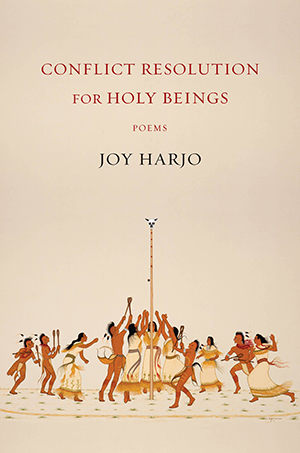 I picked up this book after learning that Joy Harjo has been appointed poet laureate for the United States. It’s exciting because she’s the first Native American to serve in this position. In addition to being a poet, Harjo is also a jazz musician. Her poetry blends music with longing for a home that seems evasive. In different poems, the reader is taken an “Indian school” in Oklahoma, to the hunting grounds of the Inuit people in northern Alaska, and through airports and other locals in between. She alternates between more free-form poetry to “prose poems.” Many of the poems draw the reader into the experience of modern Native Americans, who, having lost a homeland, are not sure where they belong. We also are reminded of the realities within Native communities of alcoholism and suicide. Yet, a thread of hope weaves through these poems, as we (as well as all creation) are encouraged to be blessing to others. I find her poems accessible and easy to understand. I’m sure I will reread many of them as I continue to ponder their messages. .
 In this short book, the former poet laureate of South Carolina, Archibald Rutledge, writes a memoir of his parents. His father had been the youngest colonel in the Confederate army. His father joined the war in North Carolina (the family kept a mountain home to escape to in the summer). He was wounded three times, involved in many engagements and served as best man for General Pickett, when he married. Archibald was the youngest child of the family (for which, his father often called him Benjamin, for Jacob’s last son). He was born in 1883, nearly twenty years after his father’s military experience had ended. Rutledge was in awe of his father, whom he saw as a kind, gentle, and loving man. His father shared with him the love of all things wild-hunting and fishing and just walking in the woods. He also shared his love of the creator whom he saw revealed in nature. His mother, the colonel’s lady, was also a kind but strong woman. As her husband was often away, she had to take control as she did directing the successful efforts at fighting a fire in the great house (when water had to be drawn from the river by buckets) and shooting to scare away intruders who were looking to steal from their rice barn. She also impressed the young Rutledge with her love of books and her care of others (she often served as a medical resource in a community that often had to go without physicians).
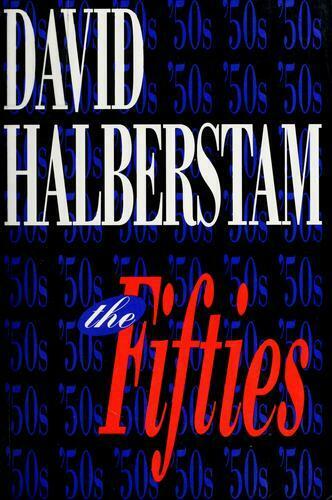 David Halberstam, The Fifties (1993, New York: Ballantine Books, 1994), 800 pages including index’s and notes, plus 32 pages of black and white prints.
 Chimamanda Ngozi Adichie, Purple Hibiscus (2003, New York: Random House/Anchor, 2004), 309 pages.
 Rick Bragg, The Best Cook in the World: Tales from My Momma’s Table (2018), 19 hours and 17 minutes on audible.
 Jack Kelly, The Edge of Anarchy: the Railroad Barons, the Gilded Age, and the Greatest labor uprising in America (2019) 11 hours and 15 minutes on Audible.
 Arthur C. Brooks, Love Your Enemies: How Decent People Can Save America for the Culture of Contempt (HarperCollins, 2019), 243 pages, index and notes.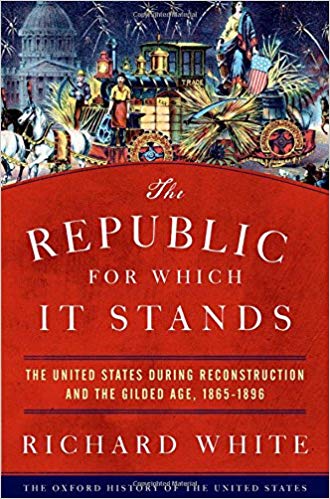
 Belden C. Lane, The Solace of Fierce Landscapes: Exploring Desert and Mountain Spirituality (Oxford University Press, 1988), 282 pages including notes, index, and some photos included within the text.