I’ve edited this post from one published in an old blog in 2011.
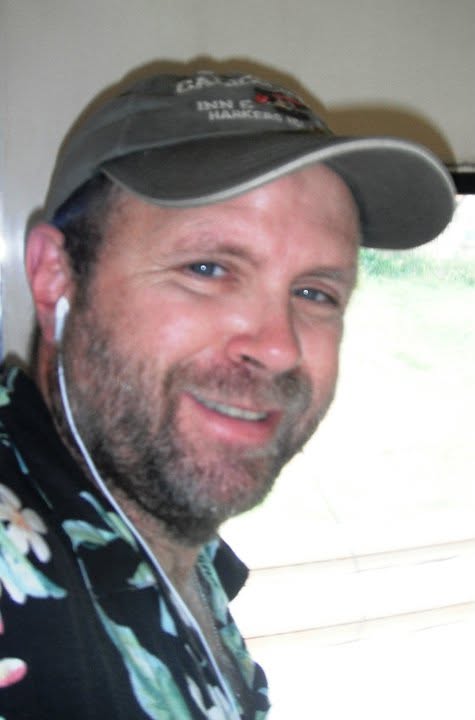
The heat and humidity is stifling. Even in an air conditioned coach, a bead of sweat runs down my beard. I could pull the curtains as the sun pours in through the crack glass, but I want to seethe countryside. So I sit with sweat beading on my forehead. The sweat soaks back of my shirt which clings to the vinyl seats. I take another swallow of water from my bottle as I we race past vast rice fields in different stages of production.
Although large, each field is divided into manageable plots, which are separated by dikes which allow for flooding of the paddies. Here, six degrees below the equator, it’s endless summer and the fields produce two crops a year. In some paddies, the green rice is tall.
Occasionally I spot a farmer wandering through the rice with a backpack, spraying what I assume is insecticide. Other paddies remain muddy with bundles of rice laid out waiting for the workers, mostly women working halfway up their calves, to replant. In other paddies, they harvest the rice, cutting the stalks and feeding them into a thresher or, in some cases, beating the stalks on the ground, separating the seed from the stalks. And then there are the paddies in which the harvest has occurred. Some of these fields have been burned. They remain charred. A few still smolder. I can smell the smoke in the train.
I am riding the Taksaka, the train which runs across the island of Java, having left Jakarta’s Gambir Station in the morning, heading to Yogyakarta. We left the capital nearly an hour late. For the longest time, we roll through the sprawling city. Poverty abounds. Trash is everywhere and the canals are filthy. I’m blessed to travel executive class. My ticket cost a bit over twenty dollars, but that’s a lot of money in Indonesia. And this is probably the only first-class train in the world with cracked windows and cracked vinyl seats.
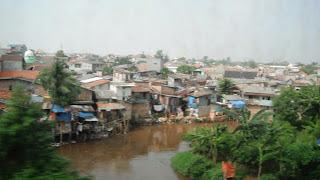
We pass trains in which the only way people can enjoy air conditioning is to climb to the top of cars. They sit just below high voltage electrical lines, a dangerous position for if they start to slip off and grab one of the lines, they’d be instantly electrocuted. This is a country of great contrast with a few who are extremely wealthy yet most live in dire poverty and unspeakable conditions. For many of the people, the filthy canals being their only source of water for bathing.
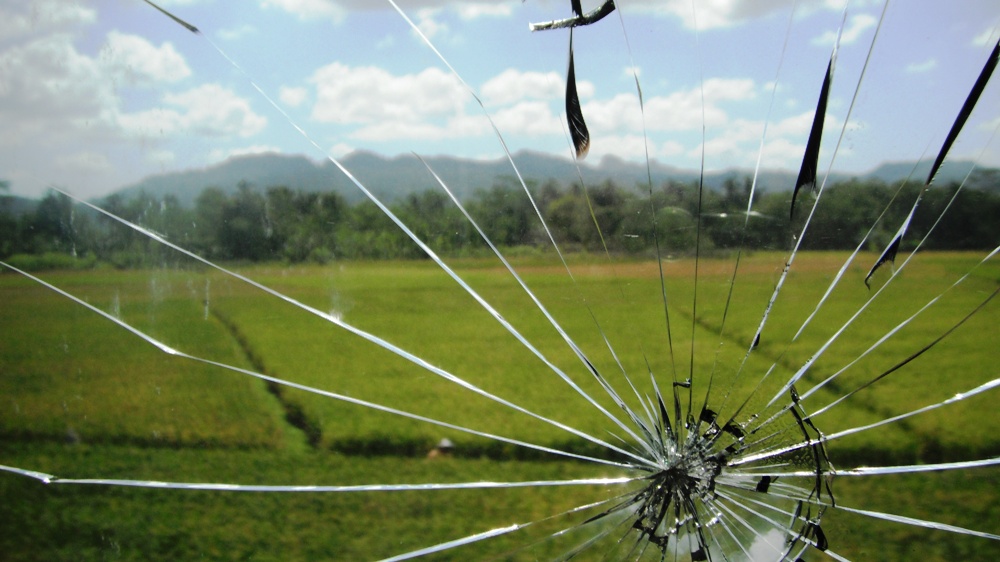
Slowly we begin to leave the city behind and move into the tranquil countryside. Farms with elaborate irrigation systems line both sides of the tracks. Along the coastal plain the land is flat, but mountains rise in the distance. We race pass small stations where, as we approach, the station master steps out in front in an immaculate uniform. They hold red and yellow flags and remains at attention as we speed by. Our first stop is Cirebon. As the train approaches the station, a host of merchants jump onboard the slow moving cars, selling food and drinks and other goodies. Women carry a thermos of hot water and cups and instant packages of coffee and chocolate. Others sell baked and fried goods, fruits, packaged snacks and chips. Outside, other merchants knock on windows and bargain with those of the train.
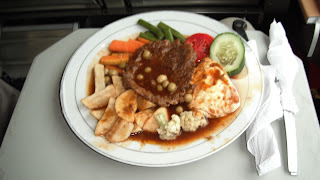
It’s almost lunch time and I ask an older Indonesian gentleman sitting next to me what I should eat. He suggests I order a steak from the dining car. I take his advice. It arrives as we leave Cirebon. The plate consists of ground steak, some egg, boiled potatoes, carrots, and green beans. It costs 30000 IRD, a little over three dollars. I ask my traveling friend from where he thought the beef came. Laughing, he said, “Probably Australia.”
After lunch, the tracks turn southward and snakes up the ridge of mountains which form the backbone of Java. Rice remains the main crop as we climb higher. More fields appear ready to be harvested. Many other vegetables also grow. There are a few cows along with sheep and goats. I’m impressed with the fields, and how along the top of the dikes are staked green beans and cassava. There are also plots of corn, sugar cane, and melons.
The scenery enchants me. In contrast to Jakarta, everything appears clean. The irrigation works are even more elaborate here, the water running through masonry channels. The neat houses, all roofed with red tile, stand in contrast to the green fields. Tall palm trees many loaded with coconuts, shade the residents.
I walk up to the front of the car and stand by the door, between coaches, trying to get a better angle for a shot of the back of the train as we move through the turns. An attendant sees what I’m attempting and opens the door for me, allowing me to stick my camera out and photograph the back end of the train. I’m careful, realizing how dangerous such a stunt could be. You’d never be allowed to pull such a stunt in the United States and most other countries.
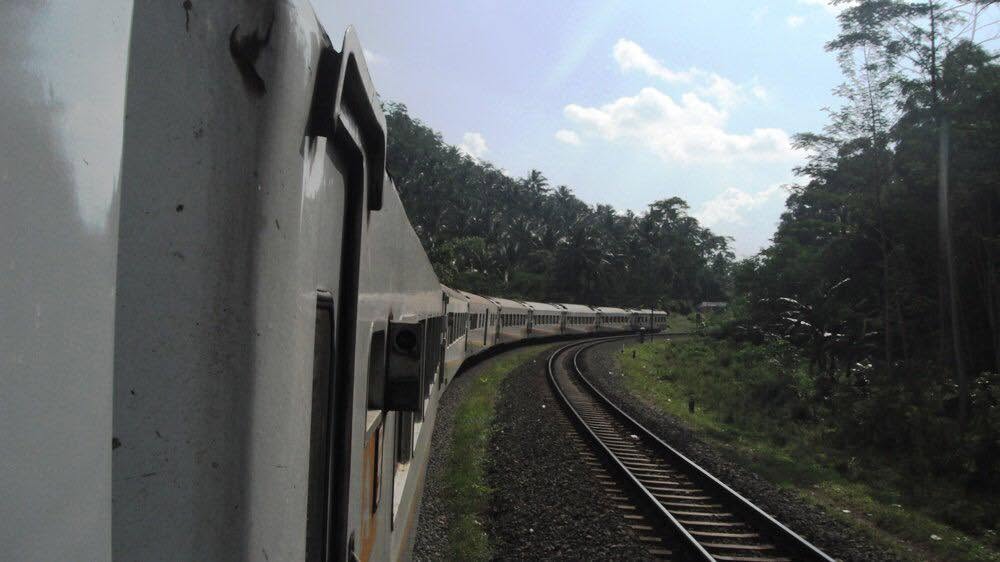
I remember once, riding the Coast Starlight from Oakland to Los Angeles. I stood at the door in the bottom of the double stacked car as we raced along the Pacific coastline. Another traveler with a camera opened the window on the door. The car attendant was furious with him! Here, in the mountains of Java, I stay in the doorway for a long time, enjoying the cooler breeze of the mountain air and the ability to photograph without having to shoot through dirty and cracked glass.
Although the car, with many cracked windows, doesn’t look like what I might expect from “executive class,” I am impressed with the tracks. Here in the steep section of the line, line is mostly double tracked with welded ribbon rail and there appears to be new ballast under the concrete ties.
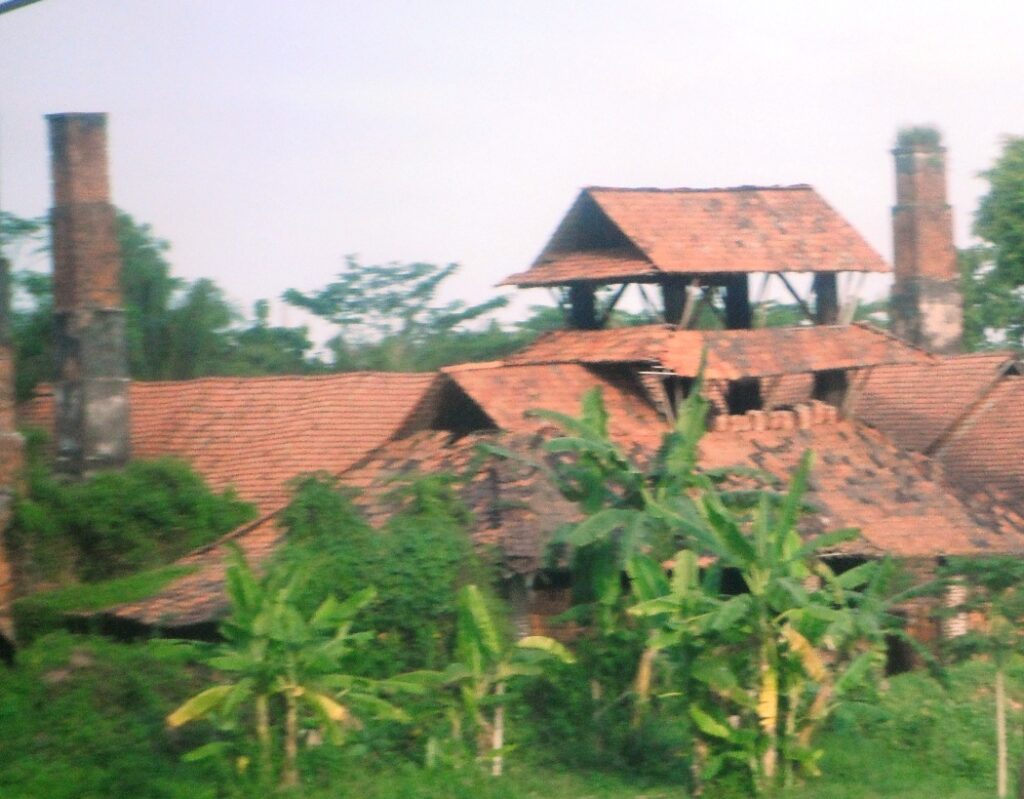
After passing the town of Bumiayu, nestled in the shade of the forest stand scores of small factories devoted to the manufacture of tiles for roofing. By each kiln are stacks of wood for the fires and the open air buildings have two levels of roofs, allowing for smoke to rise and clear the work area. The train begins to pick up speed. Soon, we’re out of the mountains and along the coastal plain of the Southside of Java. We stop in Purwokerto, the second station stop of the trip. Afterwards, we’re back in large fields of rice, racing on toward Yogyakarta It remains rural for a while, then we began to enter an urban area. My traveling friend tells me we’re only a few minutes from the station.
We arrive at 5:20 PM, about 50 minutes late. I look for the Kiko restaurant, where I’m to meet a driver from the Green Gardens Bed and Breakfast. He’s not there, but as I turn around, a man runs up to me with my name written on a piece of cardboard. At least I won’t have to worry about finding a place to stay for the evening.
We hop on his oversized minibike. It doesn’t seem so large with the two of us, me with my backpack. Somehow we fit, but tightly. We take off through the streets. Along the way, at an intersection, he says he needs gas. We pull over, but there are no pumps. He buys two former soft drink bottles filled with gasoline. He pours them into the tank, and hands the empty bottles back to the proprietor. Then we’re on our way to my home for the next four days.
Other Train Trips:
Riding Coach from South Bend to D.C.
First transcontinental train trip:
Part 1, Reno to Pittsburgh
Part 2: Pittsburgh to NC
Part 3: NC to Reno via Seattle
Getting to Springer Mountain on the Southern Crescent: Gastonia NC to Gainesville, GA
Coming home to Pittsburgh, 1987
Doubly late to West Palm Beach, 1986
Riding on the City of New Orleans, 2005
Riding in the Cab of the V&T, 2013
Riding the International: Georgetown to Bangkok, 2011
This was a wonderful repost, and a train ride you’ll obviously savor many times. I could feel the heat you described, and I loved the images of the landscape you swept past. We need more about trains and the adventures they take us into.
I agree that we need more trains and more adventure!
I can see it all in my minds eye. Thank you for being so descriptive. I love sharing your travels.
I’m glad I can bring people along on such travels!
It’s always sad to see such poverty. The scenery is lovely, though.
And the poverty there is as worse as I’ve seen.
What an interesting place. Traveling on top of the trains and trying not getting electrocuted is not something I would imagine many people are trying to do but who knows.
Somewhere I have some photos of those riding on the roof of the train. I was being tongue in cheek about it being for air conditioning. For many of them, it’s a way to avoid paying for a ticket.
What an experience. I enjoyed my train trip cross country. My son, not so much!
Train travel is not for everyone, but I’ll the train any day over flying.
You know you are in a third world country when you starting thinking about all the safety violations that are occurring that wouldn’t be thinkable back home.
It is amazing their population continues to grow… They do lose people who fall off trains. I’m sure we’d all be dead if we had to use the canals to wash–our immune systems would throw in the towel.