Remembering Ralph on his 100th Birthday

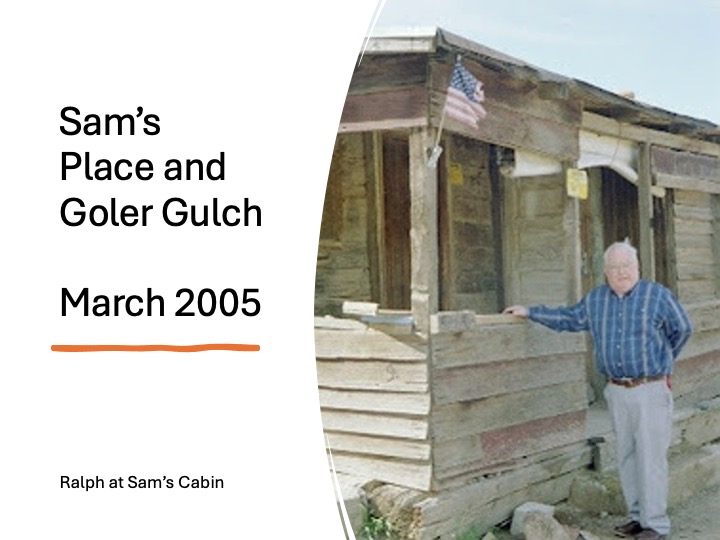
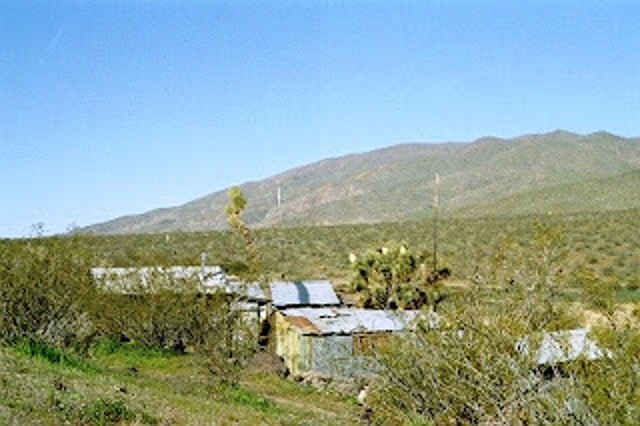
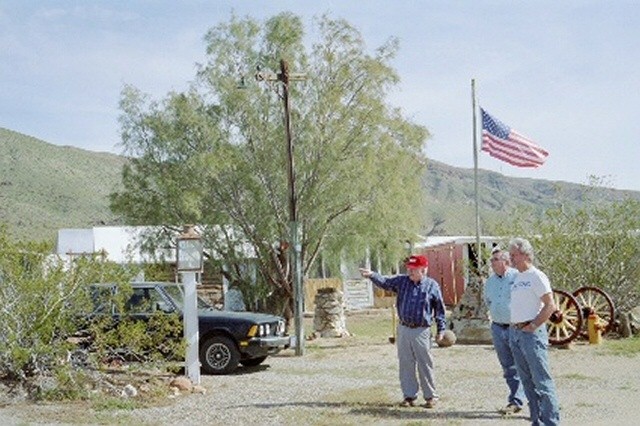
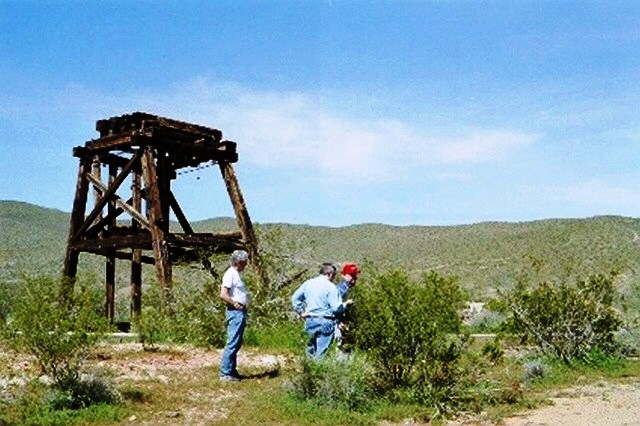
title slide with photo of Ralph in California Majove Desert and his truck near Hamilton, Nevada

bottle of scotch with a glass of scotch on ice

Last Thursday, February 12th, Lincoln’s birthday, was also the 100th birthday of a late friend of mine, Ralph Behrens. That evening, his son (Rob who lives in Northern Utah) and I each had a Scotch in memory of his dad. 

Ralph and I met at a potluck dinner for Boy Scouts Troop 360. It was late 1993 or early 1994,, shortly after I moved to Cedar City, Utah. Sometime that evening we started talking. Ralph learned of my interest in mining towns as I had written a few journal articles on the Comstock Lode. At the time, I was considering returning to school for another degree. My hope was to write a dissertation focusing on the role the church played in mining camps.

I learned that Ralph grew up in Goler Gulch, a mining community in the Mojave Desert of California. It was a rough place to live during the Depression. Ralph graduated from high school in 1944 and joined the Army Air Corp. He arrived in the South Pacific near the end of the war, but earn a combat ribbon because, as he was fond of say, “some General wanted another metal so they loaded up a bunch of bombs on a 100 airplanes and we flew and blew the hell out of a handful of Japanese on an island we didn’t deem important enough to invade.” 

Shortly after that potluck dinner, Ralph and I started taking regular trips out into the desert. I’m not sure exactly how many trips we made, but we did at least a dozen or so trips in Utah, Nevada, California, and along the Arizona Strip. I even helped Ralph cut and haul wood for several years to heat his house. One trip we didn’t get to make when I was in Utah, but had discussed, was to the Hole in a Wall. In 2006, a couple years after having left Utah, I flew back and the two of us set out to visit this spot. While not an overnight trip, this was the last big trip we took. The next few times I visited, Ralph’s health had declined to the point he could no longer able to travel in such a manner. Ralph died in 2010. 

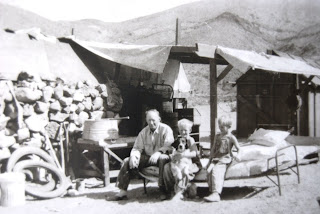
Ralph, his dog, brother, and father around 1930 in Goler Gulch, CA
Ralph’s dad, Ralph with his dog, and his brother. Goler Gulch, CA, around 1930

The story below I wrote in 2006. I’ve edited it and republished it here. 


We arrive in Escalante around 11 AM. This must be one of the strangest towns in Utah. A few years ago, the Mormon influence remained so strong you had a hard time finding 3.2 beer. Interestingly the town isn’t named after a saint, but a Catholic priest. Father Escalante came through here a century before the Mormons settled this area. He searched of a faster way from Santa Fe to the California missions. At that time only a few small bands of Paiutes lived in this hostile environment, descendants of the Anasazi whose culture flourished here until abruptly disappearing around 700 years ago. As Escalante discovered, travel in canyon country is difficult. It’s easier today, but by modern standards is still difficult.

I hadn’t been in Escalante for five or six years. The town appears prosperous; almost negating the doom predictions of the naysayers who predicted President Clinton’s creation of the Grand Staircase National Monument would be a catastrophic event. The town now has sidewalks with classic streetlamps, several new businesses and a new high school. Ralph pulls up in front of the Golden Loop, a diner. The logo has a cowboy standing tall in the saddle, with the “golden loop” of his lasso falling over the neck of a calf. As it’s not quite time for lunch, we hit the Roan Pony Bookstore next door first. I know right away things have changed in Escalante. 

“Don’t sell too many books to locals, do you?” I quip sarcastically to the salesclerk.

“We sell a few children books,” she replies, “but not many to adults.”

“I bet not,” I say while reading through the titles of books critical of the Mormon faith. She has a couple copies of Fran Brodie’s, No Man Knows My History. It’s a good biography of Joseph Smith, the faith’s founding prophet, and written by a granddaughter of Brigham Young, the faith’s second prophet. It’s been over fifty years since this book came out. Its publication got Brodie excommunicated and the book placed on the church’s blacklist. There are other books critical of the Mormon Church including a few titles by people who have left the church, encouraging others to follow in their footsteps. In another section of the small store are the works by Michael Moore, Calvin Tillian, Al Franklen, and other liberal thinkers. Not only is this Mormon country, but this is also Republican country, and these titles won’t gain her any friends. 

The Roan Pony also features a section reserved for environmental writers, Abbey and McPee and a host of others. The only thing worse than a liberal in this country is an environmentalist. Pick-up trucks all sport bumper stickers critical of environmentalists and nature lovers. “Hungry: Eat an Environmentalist,” reads one. Not too far from here, over on US 89, more than one effigy of Robert Redford has dangled in a noose. It’s obvious the Roan Pony isn’t marketing itself to the locals, but there are now plenty of tourists now flocking in to see this rugged country. I admire the owner. She’s a brave soul. Just having this bookstore in Escalante is akin to Jeremiah of the Old Testament standing up and telling King Zedekiah and his court what they didn’t want to hear. Of course, Jeremiah got thrown into a well.


The Roan Pony advertises a 20% off sale. She’s preparing to close for winter in a few weeks. I pick up a book that’s been on my reading list, Paul Theroux Dark Star Safari, figuring with a 20% markdown, I can support the local economy.

After the bookstore, we enter the restaurant and sit at a table. It takes a few minutes for the waitress to get to us. I order a hamburger and iced tea. Ralph asks for chili and coffee. After a few minutes more she brings out drinks. Then the waiting really starts. After a good fifteen minutes, after I’ve finished my tea and he’s drunk his coffee, Ralph quips: “If they keep up at this pace, we can make it dinner.” Not very happy at the service, I nod in agreement, saying something about them having to catch a cow before they can butcher it. But then the meal comes and the burger is tasty. This isn’t any corn fattened cow, its range fed and you can taste the difference.


As we’re finishing up with lunch, Ralph tells me the problem he’s been having with the lights on the truck. He can’t remember if he got ‘em fixed. I’m sure there was a speck of horror on my face. Ralph doesn’t use this truck much anymore, but he’s always keeps it in good running order. Seeing that we’ve lost an hour between the bookstore and diner, and there is little chance we’ll get back before dark, I heartily agree that we should check the lights out before we leave town. They work!

Ralph then tosses me the key and asks me to drive, complaining of his shoulder. As I maneuver out into the street, I ask if we should top off the tank. He doesn’t think so since the truck has a full 18 gallons reserve tank. We have plenty of snacks and water, just in case. We leave the town and civilization behind.

Just out of Escalante, we take the graveled “Hole in a Rock Road,” which runs southeast. Its fifty-four miles from the point we leave the pavement until the trail dead-ends on an overlook at the Colorado River. In the 19th Century, Mormons used this road to migrate into the Arizona Territory. It was a long and punishing trip. Once they got to the “Hole in a Rock,” an opening in the mountains above the Colorado, they lowered their wagons with ropes down to the ford in the river. The ford is gone; the Glen Canyon dam has flooded this part of the river to create Lake Powell.

Imposing cliffs rise to the right of the road, with bands like chevrons of different colored sediment running nearly the fifty miles. To the left, the country drops off into canyons that lead down into the Escalante River. There are a few signs noting points of interest along the way. There are also a handful of mileage signs which aren’t consistent. After ten miles on the road, a sign says its 51 miles to the end. Then, after only a mile, another sign says its 42 miles, which is about what we expect. Yet just a few miles beyond that sign, another one says we got 46 more miles. 

“You driving backwards, Ralph asks? We don’t place any confidence into the signs.

Hole in the Wall Road, Utah

The first thirty miles of the road is good; or as good as gravel roads in this country get. This is high desert; as far as one can see there are pinion and juniper trees, yellow rabbit brush, and sage. Just off the road, to the west, are acres of unique rock formations known as the Devil’s Garden. Large beige columns of mushroom like sandstone cover the area.

Afterwards, the road continues to lose elevation, and fewer trees are seen until somewhere under 4500 feet, they become non-existent. However, there are flowers: Orange Mellow, Sego Lilies, Snakeweed. It’s a pleasant surprise to find so many flowers blooming this late in the season, but the area has recently had rain as evident by the muddy bottoms in the ravines. Yucca plants are also prevalent, their spring blooms long dried by the sun and wind. Cottonwoods grow in a few washes, an indication of water in this barren land.

at the beginning of the Hole in a Rock road

As we approach the end, the cliffs and the canyons draw closer and the road snakes down into washes, only to wind steeply out of them. Driving is a challenge. The truck has no power steering, and I fight with the wheel while constantly downshifts to keep from burning out the brakes. On a few occasions, I even double clutch the truck into low, to get enough power to climb a steep embankment. We’re swung around at every bend. Driving, I recall the chase seen across slickrock in Edward Abbey’s Monkey Wrench Gang. But we’re not being chased by the Sheriff out of Moab, so I slow down.

It’s getting late in the afternoon, and we both begin to worry about getting back to the pavement before nightfall. Around 4 PM, after having covered maybe 2 miles in the past thirty minutes, we give up. We’re at least 4 miles from the “hole.” I was willing to continue, but I’d been there about 10 years earlier. Ralph had never been out this far. After swearing that it’s the worst road he’s ever been on (and he grew up in the desert Southwest), Ralph suggests we turn around.


Coming out goes faster than going in even though we’re driving into a north wind blowing sand down the road. Whenever we stop and get out, the sand stings my bear legs. As the sun drops closer to the Kaiparowits Plateau, we have one final adventure. I tell Ralph we’re low on fuel in the main tank and he instructs me on how to change tanks. I do and a minute or so later, the truck runs out of fuel. We stop to check things out. The switch has broken. 

“What are we to do now,” I ask? 

“Don’t worry,” Ralph says. “I’ve got my Oklahoma Gas Card,” as he pulls out a flexible tube from behind the seat. Although a toddler when his family left Kansas for the desert, Ralph somehow retained a prejudice against the southern neighbors of his infancy. 

Cliffs with pocket of water from recent rains

For the time being, I switched back over to the main tank and drove cautiously. The needle pegged empty as the sun slips below the mountains. I let out a sigh of relief when we turned back onto the blacktop of Utah Highway 12. A few minutes later, we’re back in Escalante and I pull in under the lights at a gas station. Filling up the main tank, I calculate we had less than half a gallon left in the tank. Had we continued on to the hole in a rock, we’d been out of gas and siphoning it from the other tank before we got back to civilization.

Once back on the highway, I watch the stars appear as we head west, arriving back at Ralph’s home in time for a late but wonderful dinner of short ribs, prepared by Pat, Ralph’s wife. Ralph fixes himself a martini and offers me a Scotch. 

Other stories of traveling with Ralph

Great Basin Mining Trip 

Camp Bangladesh (A humorous look at the two of us as summer camp Scoutmasters)

Goler Gulch (where Ralph grew up)

A 94 year old red head and the mother of Ralph’s childhood friend
Randsburg and a 94 year old redhead

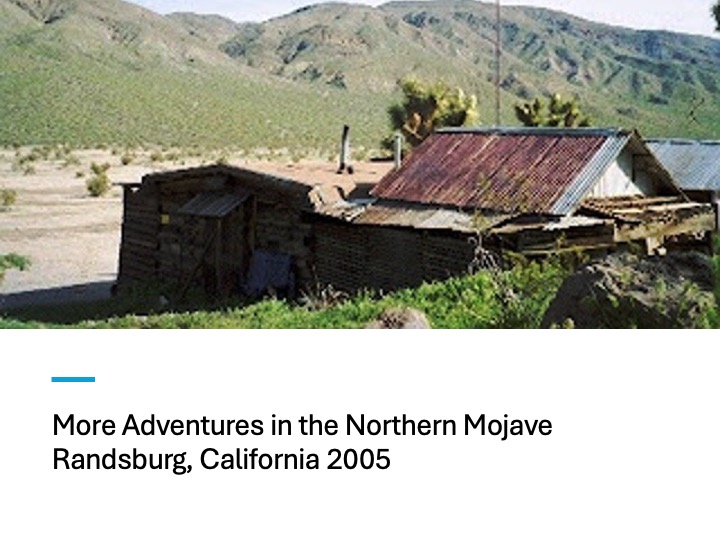
Photo of old cabins in the Mojave

This is a second post on a trip I took with Ralph to the northern Mojave in California. Click here to read about the morning at Goler Gulch.

Olga’s the first 94-year-old redhead I’ve met. I’m sure she has some artificial help; even so, her hair shows spunk. She gets around well and lives by herself. “I wouldn’t have it any other way,” she confesses. She still runs “The Joint,” pulling a regular shift, tending bar. When things are not busy, she steps out front and pull weeds from the flower bed. That’s where we first saw her. Ralph and I along with Bill and his friend had stopped in Randsburg for a late lunch after our tour of Goler Gulch. As we headed to a restaurant, Ralph mumbled something about it can’t Olga pulling flowers. He recognized the woman who none of us had seen. 

Ralph and Olga in "The Joint" in Randsburg, CA

After lunch, Ralph and I walked down to “The Joint,” a bar in Randsburg. Olga’s washing glasses as we enter. She stops and turns to take our order. Olga doesn’t recognize Ralph, so he introduces himself. She looks at him for a minute, then smiles and comments about how much she misses his brother. He lived in the area and died a couple of years earlier. The two chat for a minute about Olga’s son, who was Ralph’s age. The two of them went off to war together in 1944. Ralph asked how long she’s been tending bar at “The Joint.” We learn she and her late-husband brought the establishment in 1955. “I’ve had honest work ever since,” she tells us. I was curious about what kind of work she’d done before but decide not to interrupt their reunion. 

Selling booze in a mining town was lucrative business. Selling anything liquid use to be lucrative business as water in these parts was expensive, even as late as the ‘40s. Today, there is little mining and its mostly tourists who stop in want something alcoholic. The establishment is open from Wednesday through Sunday and they close in the evening when they are no longer busy. “The Joint” is in the heart of Randsburg’s business district and one of the original structures in town. The building was first a bakery. In the 30s, it was converted to a bar and a pool hall.

Ralph and I both order a couple of Mojave Greens, a local beer made in Inyokern and named for the famous rattlesnake of the Mojave. Ralph, who grew up in this area, said he’d only seen two of these snakes in his life. She pulls us two bottles out of the cooler, opens them, and ask if we want a glass. Ralph, always the civilized one, takes a glass and slowly pours his beer into it. I shake my head, grab the bottle and tip it up to drink. Ralph and Olga continue talking until Olga pauses to fix another drink for the woman sitting at the other end of the bar.

Its then I notice Faye, who’s sitting a few stools away and looking for a refill. I’m not sure why I hadn’t noticed her earlier as she wears a barely ample halter displaying more than ample breasts. She’s attractive or certainly could be. With her tight mini-skirt and heels which must be five inches high, I wonder what kind of business she’s in. We chat for a few minutes and learn she’s the proprietor of the Silver Dollar Saloon in Red Mountain. This is her day off. 

The day before, when we drove through Red Mountain, Ralph had told me earlier about the red-light district there. It was a hoping place when he was a schoolboy before the war. The saloons in Red Mountain lined the west side of the street and featured backroom gambling. Gambling was illegal in California, but this wasn’t exactly on the main highway and most people looked the other way. On the east side of the street were “cribs,” where prostitutes who free-lanced in the bars and around the gambling dens, led their clients. It was a cozy arrangement, and local authorities did little to discourage business. 

But then World War 2 came along. The Navy built a base on China Lake. Since there’s not enough water in China Lake to float a canoe most years, they used the base to train pilots. Naval authorities found that after a night of drinking, gambling and whoring, the drive over the mountain was too difficult to negotiate. They lost many pilots before they had a chance to sight in on a Japanese Zero. The Navy called in the FBI, who shut down the gaming establishments and ran the women off.

A few minutes later, Faye’s partner at the Silver Dollar joined us at the bar. While I’d enjoyed glancing over at Faye as we talked, I now divert my eyes. This guy is scary. His bare skinny legs end within fancy black leather cowboy boots, with pointed toes, and scroll threading. Personally, I think wearing cowboy boots without long pants should be a misdemeanor. Wearing cowboy boots with super tight short shorts, the kind which hadn’t been seen since the 80s, should be a felony! This guy’s pants are shorter than his partner’s mini skirt.

I’m glad I’m not alone in the bar with him. Had it just been me drinking and he came in, I think I’d wallowed over to the Methodist Church and take the temperance pledge. But he joins the conversation and seems to be an okay. However, he and Faye, to say the least, are one unique couple.

Ralph and I finish our beers and head out. The darkness in the bar forces our eyes to squint as we adjust to the bright desert sky. We take the long way back to Ridgecrest, through Inyokern. I tell Ralph about my one other trip to Inyokern. It was approaching midnight. I was with Eric, another friend of mine who Ralph knows. We’d been looking for a place to stop for the night. We were on our way to do a week hike from New Army Pass, to the Pacific Crest Trail and then up the backside of Mt. Whitney, and then north along the John Muir Trail to Onion Valley. And we wanted to get an early start the next morning so we kept driving late into the night. 

Eric sighted a spotlight for an airport. As a pilot, he suggested we head there and camp, telling me about camping under his plane at such places. There was no one to stop us. I slept on one side of the car and Eric on the other. The night was warm. I laid out my pad and sleeping bag and slept on top. I must have been exhausted for I don’t remember anything else until 5:00 AM, when a loudspeaker rudely awaken me as it called out for those boarding the 5:30 AM flight to LAX. Shortly afterwards, we were on the road.

Ralph, who always had a way with words, quipped something about how Eric and I must not of been living right. Ralph and I had camped out when in the wilderness. But he felt if we’re going to stay in civilization, we should, at least, find a motel. 

We drive back into Ridgecrest as the light softens. The shadows of the barren peaks provide definition to the distant hills in the low warm light. It’s nearly dark when we arrive. Unlike Randsburg, Ridgecrest is a new town, built during World War II. The purpose of the town is to serve the China Lake Naval base. We drive around, looking for a place for dinner. In our search, as we navigate ubiquitous four-way stop signs, But what amazed me of the town was to see not only had a dollar store, but also a 99-cent store and, for those who that’s even too much, a 98-cent store. Every place needs to be known for something. 

Goler Gulch, March 2005

Ralph at Sam's Cabin in the Majovie, near Randsburg, CA

An early morning drive in the desert

Last week, I told a story about an adventure with Ralph into Central Nevada. This week, I rewrote a piece I wrote in 2010, shortly after Ralph’s death. This trip I spent more time jotting down in my journal some of Ralph’s unique bits of wisdom. Hopefully, you’ll get a better view of my friend who died 15 years ago.

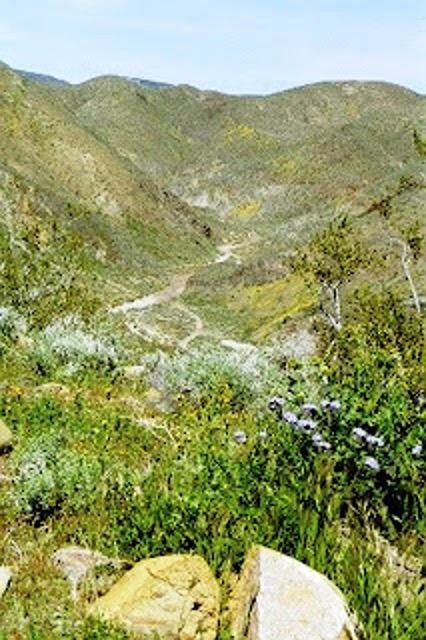
Flowers in Goler Gulch

Ralph and I stayed the night in Ridgecrest. Before heading out for the desert early in the morning, we stopped at a grocery store to pick up fruit and pastries along with coffee and juice. Dawn broke as we drove along the highway toward Goler Gulch. In the soft morning light, the carpeting of highway shoulder with flowers amazed me. The wet winter had given growth to white and yellow asters, daisies and bluish heliotropes. Even beyond the road, the flowers grew under clumps of greasewood. 

It was March 2005. I had flown out west the day before so I could officiate at a wedding. I picked up a rental car in Las Vegas. As I had a few extra days before the celebration, Ralph took a bus down from Cedar City and met me in Vegas. We then headed over into the Southern California desert, to see where he grew up. We’d talked about doing this trip several times while I lived in Utah, but had never gotten around to it. 

Our next stop this morning was Sam’s Cabin, located just off the highway. Arriving, we sit outside on a picnic table and ate our breakfast while watching the changes in the morning light across the El Paso Mountains to our north. “You can find any kind of mineral up there in those mountains,” Ralph noted. “Just don’t start a mine, because whatever your digging will quickly disappear.” It was the words of one who knew a bit about the folly of mining. 

Sam’s Cabin

I’d heard a lot about Sam, who’d built this cabin seventy-some years ago. Once, I met his daughter, who’d recently died in her mid-nineties. Sam was an old-time miner. He’d worked in Nevada and as a young man headed up to the Klondike in 1898. He supposedly made enough money up north that he didn’t have to do much work the rest of his life. In the 1930s, he showed up in the Mojave, working as a caretaker for a mining firm. It didn’t take much to live like he did. He had a wife, who lived over on the coast. Sam would go visit her a couple times a year and occasionally she’d come out to the desert, that being the extent of their marriage. 

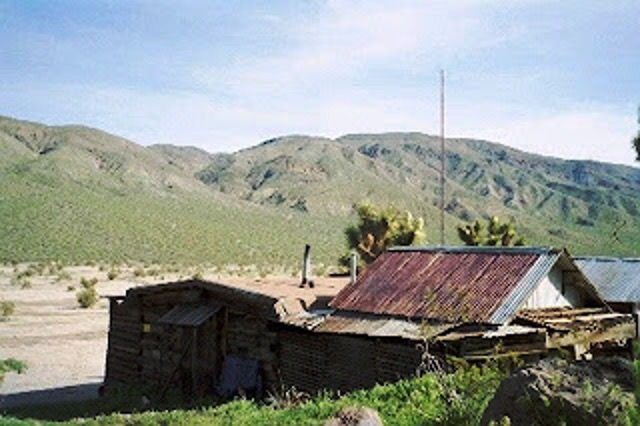
Sam's homestead in the Mojave Desert
Sam’s homestead

My favorite story of Ralph and Sam was their trip to Death Valley in Ralph’s family Model T truck, taking it across China Lake early in the World War II, before the government converted the dry lakebed to a Naval Aviation bombing site. Ralph had fond memories of the trip, including meeting Scotty of Scotty’s Castle in Death Valley. Today, this trip would be impossible because the bombing range is still in use. 


We discovered Sam’s cabin in a state of “arrested decay.” The BLM keeps it from blowing down and one can rent it for up to two nights. Sam died in 1965, in his early 90s.

After breakfast, we looked around the old cabin while waiting for Bill, a friend of Ralph’s from Southern California to arrive. Rocks and boulders of all shapes, colors and sizes dot the yard. Ralph pointed to many of them and told me which gulch from which they’d been taken. Most of the rocks had been hauled in by Sam with the help of Ralph and his brother Charlie. 

Sam's place in the Mojave
Another view of Sam’s homestead

Ralph’s family homestead in Goler Gulch


Bill arrive a few minutes later, driving a huge Suburban SUV. We decide to take his Suburban and leave my rental car at Sam’s Cabin. We climbed in and Ralph began the tour of Goler Gulch. The gulch has always been a placer mining district, meaning the ore is found in sediment washed down from the mountains. Attempts have been made to find the ore body from up in the mountains, but no one has ever identified the source. When Ralph was a kid, old miners held to the belief the gold had been pushed down during the last ice age, by glaciers. Of course, there is no evidence of glacier activity this far south. Another popular theory, according to Ralph, who reported this with a straight face, is that the gold came from Alaska.

Old Behren homestead in the Mojave
Ralph showing us around the old Behren homstead

Ralph’s family’s Model T

Ralph was born in Kansas. When he was an infant, his parents moved to California. They added a bed to their Model T coupe, making it into a truck in which the family made the journey. After a short stint in Los Angeles, they headed into the desert, where his dad worked as a miner and a cook. Interestingly, the Model T still runs. Ralph has driven me around in it and even let me drive it.

Ralph told about his brother Charlie and him taking the Model T on trips through the desert. In the spring or after rains, when the water would be raging in the gulch, they’d stop the car on one side of the stream, take off the fan belt and drive through the water, hooking the fan belt back up on the other side. The car seemed to go anywhere; you just had to know the tricks. If the fan was spinning, it would kick water over the distributor cap and short out the electrical system. The engine could take a little more heat than the electrical system could take water. 

Behren homestead around 1930
The homestead around 1930 with Ralph, his father and his brother and pet dog. They often slept outdoors, especially in the summer.


Ralph’s family homestead includes a collection of buildings. Ralph pointed to a building he and Sam had built at the beginning of the war for some women from Pasadena who wanted a place to flee when the Japanese invaded. “They were sure the Japanese were coming to rape them,” Ralph said sarcastically. They hired him and Sam to build them a home in the desert. Another building Ralph rescued from the Navy, who’d set up operations at China Lake during the war. Abandon as surplus, he brought it and hauled it home so he could have his own room when he returned from the Pacific.

The Old One-Room School House


We made another stop at the site of the old one room school. Ralph and his brother attended school here with eight or ten other kids from 1932, when the schooled opened, to 1936 when they were bused into Randsburg. He told us about his first-grade teacher who’d just celebrated her 100th birthday. Ralph pointed up stream and said that the girl’s outhouse was up there, and the guys were downstream. “Why didn’t they just have a unisex bathroom with a lock,” I asked, “since there were never more than a dozen students.” Ralph, in all seriousness, responded. “I assume the school board had concerns about mixing urine.” 

We saw the shaft for the Yellow Aster mine, one of the larger mines in the district. As we explored, Ralph picked a leaf of Indian Tobacco and talked about as a kid he’d harvest it and sell it to an old miner. The other miners forbid the old miner from smoking it underground because it stank. He also found an “Indian pickle,” a plant with a long stem and an open chamber on the end where you could place your tobacco as you drew the smoke up the stem. The “Indian pickle” made a perfect bong. He also showed how the new growth on a greasewood (also known as Creosote bush) could be crushed and smoked for a “natural high.” “This also stinks, which is what you’d expect from such a plant,” Ralph informed us. None of us wanted to try it out for ourselves.

Heading up the gulch

Yellow Aster Mine framing


We next headed into the gulch itself, a canyon where much of the mining took place. There were five shafts dug down into the dirt, named Fine Gold Number 1 though 5. Only Fine Gold #1 had a traditional gallows frame, the others being pick and shovel operations with a windlass. In time, the miners discovered that the gold was mostly deposited in the sand within a few feet of bedrock, some eighty feet down. They’d sink a shaft then work out following the bedrock as they made their way up and down the gulch.

Old miners Ralph knew


As we drove up the gulch, Ralph told us about miners he’d known growing up the desert. One was a kid, just 18, who discovered enough gold to buy himself a brand new ’36 Ford with an 85 horsepower V8 engine. Another was a guy named Happy, who was the first pot-head Ralph knew. This was before the Second World War. Happy came looking for work and the miners wanted him to work with them. So, he asked where he might find a place to prospect. One of the old-timers, to be done with him, sent him to the most unlikely place around. Happy discovered a 14-ounce nugget. He remained happy for some time thereafter.  

Some of the miners were more adapt at mining outsiders, an ancient trick of the mining trade. Curly would pull out his pan anytime he saw a tourist driving by. They’d get to see him work out some nuggets from his washings. He’d tell him he dug the ore at his mine, Eagle’s Roost,” up in the mountains. It they seemed interested, he’d ask if they’d like to buy a few inches or feet of the mine from him. During the war, Curly talked to a man from Kansas. Ralph’s father, who was from Kansas, warned the man not to trust Curly. Curly moaned to the man about how everyone talked bad him and were always saying that he was dishonest because they were jealous. So, the man brought from Curly a bunch of land that wasn’t worth much and most of it, Curly didn’t even own. Afterwards, Ralph said, “Curly went into Randsburg and brought war bonds and became a hero.”

Turning around and heading for lunch


The creek ran strong, and the ground softened before we reached the end of the gulch. Bill said he had a shovel in the back if we wanted to keep going, but none of us were excited about using it. We turned around and headed back to Randsburg for lunch. That’s a story I’ll have to share at another time. 

Postlude


Ralph lived in the Gulch until he graduated from High School in 1944, at which time he joined the Army Air Corp. He was hoping to become a pilot, but they had enough so he became a crew member of a B-24. He made it to the South Pacific in time for the war to end. Ralph received a combat citation, and just so no one thought of him as a hero, he loved telling the story about how some General thought he should have another medal, so the General sent several hundred airplanes into the sky to blow the hell out of some island a few Japanese soldiers had the misfortune of being marooned on as their island had been leaped over in our drive toward the Japanese homeland. “We blew the hell out of them,” Ralph said. His second mission was to drop supplies, mostly boots, into POW camps after the surrender. After the war, Ralph attended school on the GI bill and became a chemist. He spent the rest of his life in the Southwest. Ralph died in 2010. Two weeks ago, on his birthday, he would have been 99 years old. 

Other Ralph Stories:

Camp Bangledesh: Ralph as my assistant scoutmaster the summer I was the summer camp scoutmaster for Troop 360

Treasure Hill: Ralph and I exploring Central Nevada