
Jeff Garrison
Mayberry and Bluemont Churches
Hebrews 1
January 3, 2021
At the beginning of worship, in preparation:
Today, I’m beginning a series of sermons on the Book of Hebrews. My plan is to preach through this book, with a break around Easter, and complete the study in April or May. I enjoy preaching through longer sections of scripture, for each sermon builds on the previous one. We can dig deeper into scriptures and to catch passages ignored by the lectionary.[1]
Role of Hebrews
Hebrews is an important book within the New Testament cannon. Sadly, in over 35 years, I have only preached from a half a dozen of its passages. Yet, this book grounds our Christological, our understanding of Jesus Christ. While the writing seems somewhat complicated, the message is simple. It’s all about Jesus Christ. Through him, God is doing something new and wonderful in the world. Prophets and priest and angels played an important role in how God communicated in the past, but now God has spoken in a new way, though his Son.
It is essential for us, as Christians, to understand that if we have Christ, we don’t need to have anyone or anything else. Too often, even the faithful succumb to the temptation of looking for a savior in all the wrong places: a political figure or party, a spouse, a friend, a job, or even a hobby. The book of Hebrews reminds us that Jesus is all we need. Any other want-a-be saviors will result in disappointment.
Importance of Christology
As Christians and as the church, if we long to be faithful, we must have a solid Christology. We must be grounded in an understanding of what God has and is doing in Jesus Christ. I hope you’ll enjoy this journey through his interesting book.
After the reading of Scripture
A Story of Christmas
This is the second Sunday of Christmas, there’s time for another Christmas story.
There was a farmer who was a good man, but he had a hard time accepting the faith. That’s okay, you don’t have to have faith to be good. This man allowed his wife to attend church with the kids. He enjoyed his Sunday mornings at home, putting around the barn.
One Christmas Eve, his wife tried to get him to attend church with her and the kids, but he refused. I’ll just sit and read a book and wait for you to return, he said. When she insisted and wanted to know why he wouldn’t attend, he said it is because the story is nonsense. “Why would God lower himself to come to earth as a man?” he asked.
The family left, disappointed, as he began to read his book. Outside it snowing and cold. The light was draining from the gray sky. Immersed in his book, he was shaken when he heard a thump. Then another thump. He looked out the window and saw a flock of birds around the house and realized they were flying into the window in an attempt to escape the cold.
“They must have been migrating,” he thought, “and got caught in the storm.”
He worried about the birds. Finally, he had an idea. Pulling on his boots and putting on his coat and hat, he went into the storm that was becoming a blizzard. He made his way over to the barn and opened the door thinking that the birds could seek shelter there. But none of them would fly in that direction. He tried to shoo them into the barn, but they scattered. He went back inside and grabbed some bread and crumbed it up and sprinkled it on the ground. The birds began to eat, so he made a path toward the barn, but they stopped short.
There must be another way, he thought.
“Do you want to just sit out here and freeze to death,” he asked the birds in desperation. “Why don’t you follow me?” Of course, the birds didn’t answer. They sat in the snow, their feathers puffed out for warmth, picking at whatever crumbs were left.
“If only I was a bird,” he thought. “I could come among them and guide them into the barn.”
The story’s conclusion: knowing why Jesus came
As soon as he said this to himself, the distant church bell began to ring. He could hear it faintly above the wind, but it was clear enough that he recalled how he questioned why God would come to us in the flesh. Suddenly he understood what Christmas was about; why Christ had to come.[2]
It would be a mistake to see ourselves as the farmer in this story; we start out as one of the birds. We need a savior, like us, to come and show us the way into the barn.
Jesus is God’s revelation
Jesus is the complete revelation of God. He came to show and display divine love. He came to help us understand who God is and who we are in relationship to God. Jesus came to cleanse us from sin so that we might come into God’s presence without fear. Jesus came, as the Gospel of John reminds us, to show us the way to the Father.[3]
The “Letter” to the Hebrews
This passage is from the “Letter to the Hebrews.” But this isn’t a letter or an epistle like others in the New Testament. The writings of Paul and Peter, James and John, have the hallmarks of letters. Hebrews is different. Some suggest it may have originally been a sermon,[4] for instead of beginning with the greeting and niceties of a letter, the author starts with the one premise that makes all the difference in the world: God has spoken!
The author of this sermon reminds his readers that God had been speaking to their ancestors all along, through prophets. But now God has spoken in an even better way, through a Son. God realizes, like that farmer, that the way to reach people is to come as one of them. This is the purpose of Jesus coming.
Superiority of Christ
One of the themes of Hebrews is the superiority of Jesus Christ to both human servants of God (prophets) and divine servants or messages of God (angels). While Jesus is a messenger, showing us the way, he’s more than that!
Historically, the church has spoken of Christ holding three offices: prophet, priest and king. In all three, Christ surpasses human prophets, human priests, and human kings.[5] Throughout this book, the author goes into great detail to show Christ’s preeminence which he proclaims here at the beginning with a sevenfold confirmation of Jesus superiority:
1. He is appointed heir of all,
2. The is the creator of the world,
3. He is the refection of God’s glory,
4. He is the exact imprint of God,
5. He upholds all things by his power,
6. He purifies our sin and
7. He sits at God’s right hand.[6]
Revealing the Divine Nature
God, by coming to us in Jesus Christ, reveals the nature of the divine in a way we can understand. That’s why Jesus name is more excellent than all other names, as we’re told in verse 4. Jesus Christ, our prophet, our priest and our king, came to show us God’s glory. Christ also forgives and frees us to be God’s agents in the world.
The role of angels
After this elegant opening of this book, the preacher begins the first of his polemics. The Son, Jesus Christ, is superior to angels. Now, we hear a lot about angels during the Christmas season. They inform Mary and Joseph of the plans, they call the shepherds to the stable, they warn the wisemen to avoid Herod. So just what is an angel? In the biblical sense, angels are messengers, nothing more.
In a sermon about the angel who met the women at Jesus’ tomb, Alyce McKenzie, a professor at Perkin’s School of Theology, relates the angels in Matthew’s gospel to her UPS man. They’re both focused on their job: delivering a package or delivering a message. Think of your UPS driver. He’s not there to be your buddies, or to sell you something, or open your package. He hands you the package and, if needed, obtains a signature, thanks you, and goes on his way. Angels are like that. They give their message and then it’s up to us.[7]
Jesus’ superiority to angels
Now, any message from God is important, but we are not to make angels out to be the end-all. The preacher’s first task in Hebrews is to make this clear. Jesus, the Son, the second person of the Trinity, is superior to the angels. He’s worshipped by angels. The son is eternal. Everything else (and we can infer this includes angels) are created beings. Angels weren’t there at the beginning, they have no status over our savior, and they won’t have that cherished seat at the right hand of the Father.
However, angels have an important role to play in God’s plan of salvation. As the last verse indicates, God uses them to lead the chosen into salvation.
So, while God may speak to us through an angel (and the preacher later admits that sometimes we entertain angels without knowing it[8]), they themselves are not nearly as important as the message they bring.
Knowing God
So how do we know God? While angels may give us insight into what God wants us to do, or point us in the right direction, their message is limited. The way we know God, as pointed out in the beginning of this book, is through God’s divine revelation in Jesus Christ. Jesus, the more excellent way, is how God makes himself known.
During the Christmas season, which is coming to an end, we celebrate what happened at the stable in Bethlehem so long ago. God came into the world and through Jesus showed the world his love.
Knowing God means…
But the story doesn’t end in Bethlehem or at the cross or even at the empty tomb. With Jesus now in our hearts, we are to be the ones reflecting his love to the world so that all people might experience the joy of salvation and have hope.
I will end with a poem by Howard Thurman, titled, “The Work of Christmas.”
When the song of the angels is stilled,
When the star in the sky is gone,
When the kings and princes are home,
When the shepherds are back with their flocks,
The work of Christmas begins:
To find the lost,
To heal the broken,
To feed the hungry,
To release the prisoner,
To rebuild the nations,
To bring peace among the people,
To make music in the heart. [9]. Amen.
ã2021
[1] As an example, the lection links the first four verses of Hebrews with the opening of the second chapter and omits the section (1:5-12) on angels.
[2] I’m not sure where I first heard this story.
[3] John 14:6.
[4] See Hugh Montefiore, A Commentary on the Epistle to the Hebrews (New York: Harper and Row, 1964), 33 and Thomas G. Long, Hebrews(Louisville: John Knox Press, 1997), 2-3. Another thory is that it was written as a letter to be read to congregations. See Luke Timothy Johnson, Hebrews (Louisville: WJKP, 2006), 10, 33. .
[5] See the Westminster Confession of Faith, Chapter 7 and the Westminster Larger Catechism, Questions 152-155.
[6] F. F. Bruce, The Epistle to the Hebrews, (Grand Rapids: Eerdmans, 1964), 3-8.
[7] Alyce M. McKenzie, Novel Preaching: Tips from Top Writers on Crafting Creative Sermons (Louisville: WJK, 2010), 137-138.
[8] Hebrews 13:2.
[9] Poem published in The Mood of Christmas and Other Celebrations, published by Friends United Press. I found the poem at https://mypastoralponderings.com/2020/12/31/the-work-of-christmas-by-howard-thurman/?c=1119#comment-1119

 Jeff Garrison
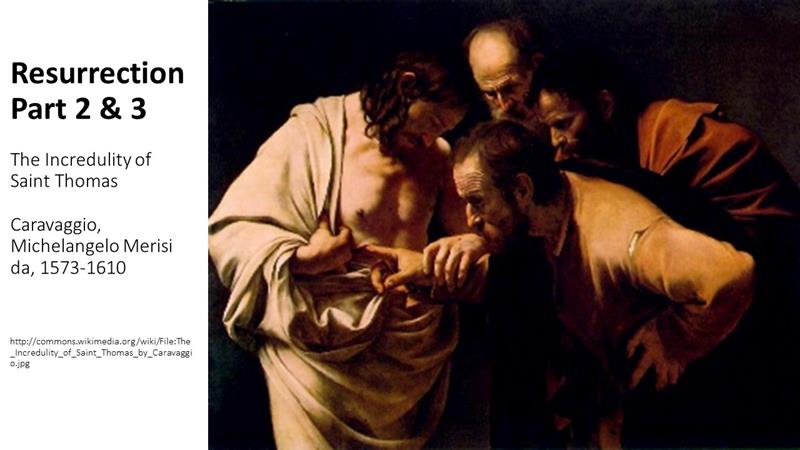
 Like Thomas, I also have doubts. I was just not willing to speak up. Can this really be Jesus? After all, his body was so broken when they pulled him off the cross. Yet, he’s now in front of us. Jesus insists that Thomas, who doubted when they said Jesus had risen from the dead, stick his finger into his wound. I’m watching. Thomas is reluctant, but Jesus grabs his wrist and pulls his hand toward the wound. Can this really be the same Jesus, that just a little over a week ago, hung on a cross? And is he the same Jesus we followed throughout Galilee? Will people believe us when we tell what we’ve experienced? I no longer understand what is happening, but I know that nothing will ever be the same.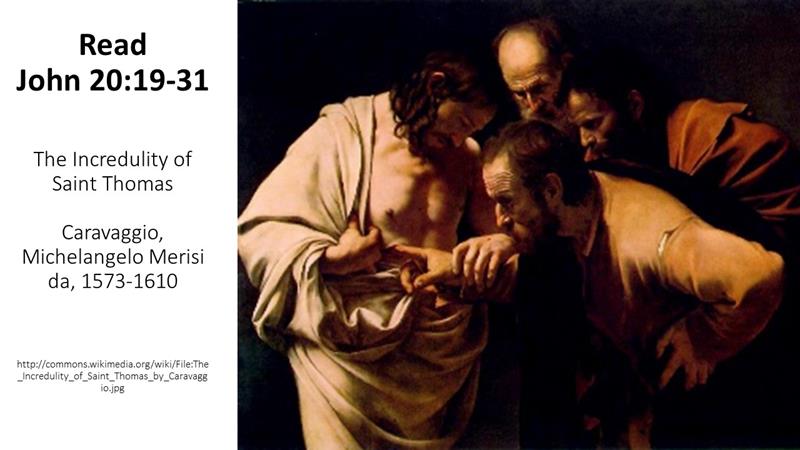
 What a week it. From the Parade to the cross and now on the evening of the first day of a new week, the disciples gather in secret. The doors are locked. Everyone is exhausted. Fright and fatigue show on their faces. After three years, they only have each other. And now there’s a rumor going around, started by Mary Magdalene, that Jesus is alive. Some think it possible, but others believe it’s just idle tale?”
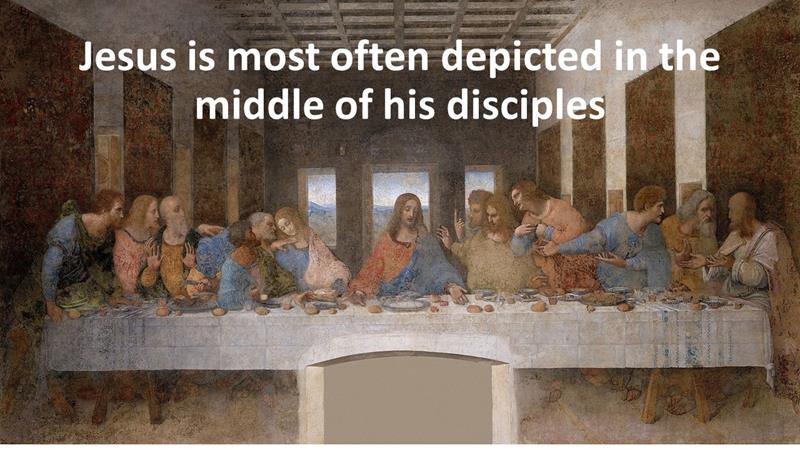 And then suddenly, as the sun sinks in the West, Jesus appears. How did he get through the locked doors? But here he is, when he belongs, in the middle of the middle of the gathered disciples. Jesus was the one who unites the disciples. He’s always in the middle. He was even in the middle of those crucified on Friday. The middle is where Jesus belongs.
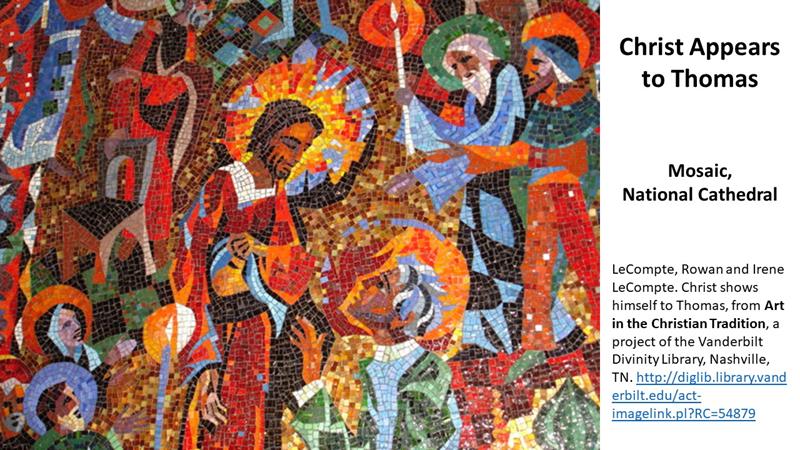 We could argue that this is the climax of John’s gospel. “My Lord and my God,” acknowledges that Jesus is more than the Messiah. We get a whiff of this in Matthew’s gospel where we’re told the women at the tomb worshipped Jesus.
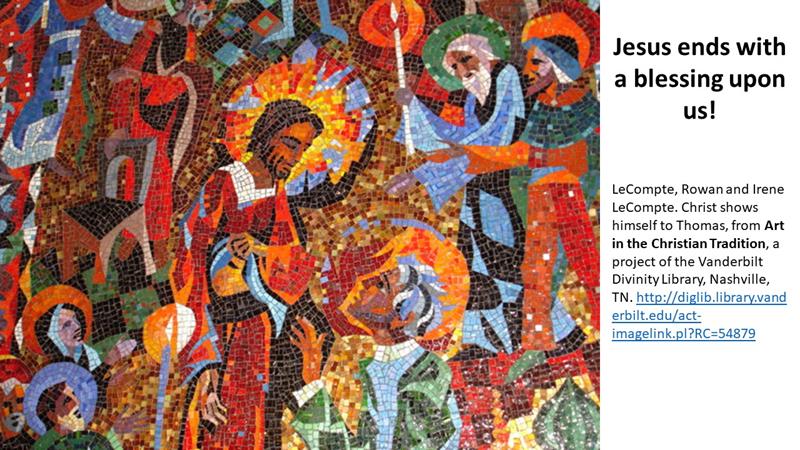 What all this means to us, today, two millenniums after the resurrection? Jesus’ last words in this passage are interesting. It’s a blessing on us. “Blessed are those who have not seen and yet have come to believe,” Jesus says. Did you hear that? He’s talking about you and me; he’s blessing those of us who have not had an opportunity to stick our fingers into his wounds. Instead of seeing, we believe due to the presence of the Holy Spirit and the testimony of others who have felt Jesus’ presence in their lives. And because we have faith in Jesus Christ, we’re to listen to his teachings and to live lives that strive to glorify him. That’s the challenge we have, as individuals, to listen to Jesus and to live faithful.
 Furthermore, as a community of believers, we’re able to offer forgive sins. That’s quite a task. You know, there are a lot of good things that the church does in the community that other groups can also do, and in some cases these groups can even do it better than the church. But there is one thing that no other group can do. The government can’t do it, civic clubs can’t do it, political parties can’t do it—and that’s forgive sins. As God, Jesus has this power and he grants it to his church. For this reason, the church is an essential business. But the church isn’t a building; the church is wherever God’s people are at, which now, hopefully, is in the safety of our homes.
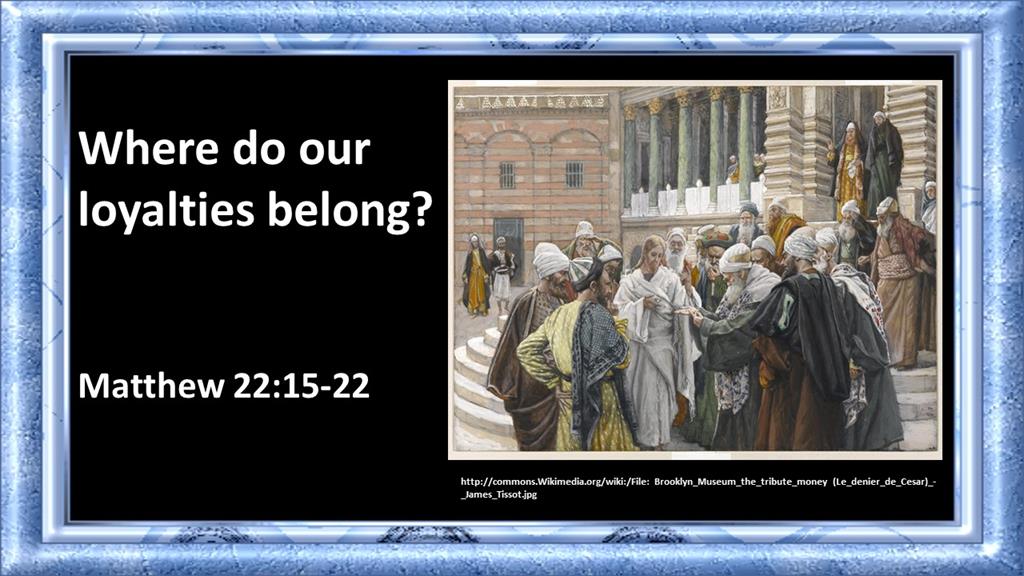
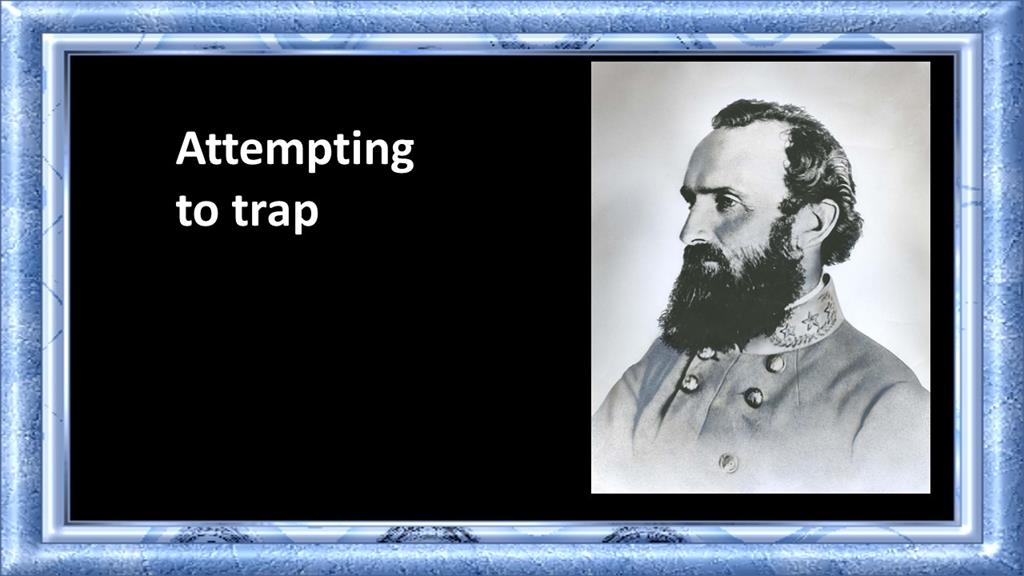 If you read the entirety of Matthew 22 (and with the extra time we may be having on hand as everything is being cancelled because of the Coronavirus, it’s not a bad idea), you’d witness a masterful campaign to trap Jesus. But Jesus isn’t so easy to catch. He’s kind of like Stonewall Jackson in the Valley Campaign in the spring of 1862. Jackson faced much larger armies who wanted to trap and do him in.
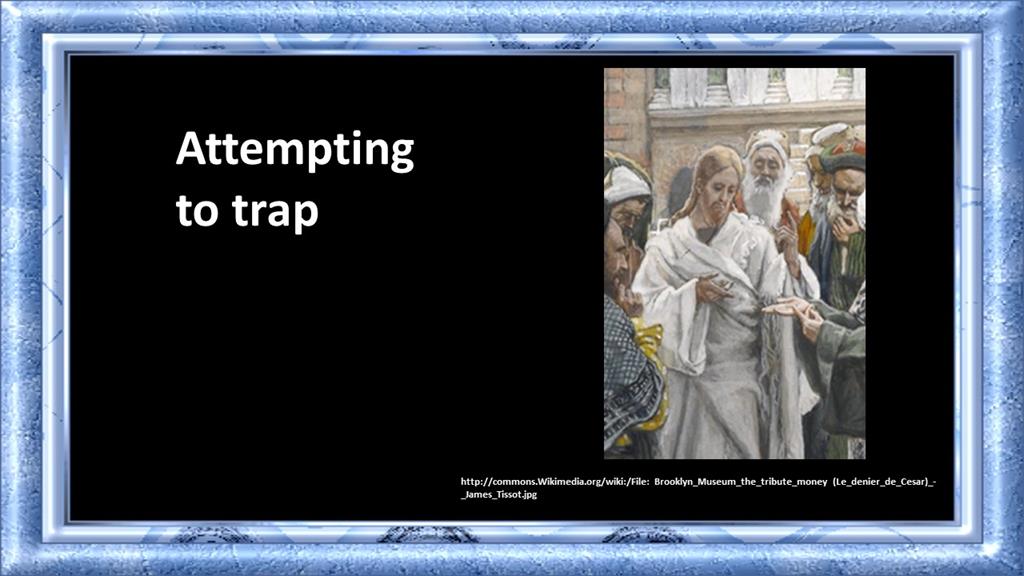 What’s happened is that unlikely groups join together to challenge Jesus. The old cliché, “politics make strange bedfellows,” rings true. Groups who wouldn’t normally give each other the time of day have come together to take on Jesus. They sense that Jesus is challenging the existing order. You have a few Herodians, who are Jews who believe they’re be better off cooperating with the Romans. They take their name from Herod, who had Jewish blood but worked for the Empire. And you have the Pharisees; a group of seriously committed religious leaders who believe in the resurrection. Theologically, they’re most like Jesus, but Jesus constantly challenges them and exposes their hypocrisy.
 What we read this morning could be described as one movement in a tag-team wrestling match. The Herodians and the Pharisees team up on Jesus.
 So what is Jesus telling us in this passage? Do you remember those big posters that use to sit out in front of the Post Office and government buildings with Uncle Sam pointing his finger and saying: “I want you!” I believe we could easily surmise this text into a big poster of God saying: “I want you!”
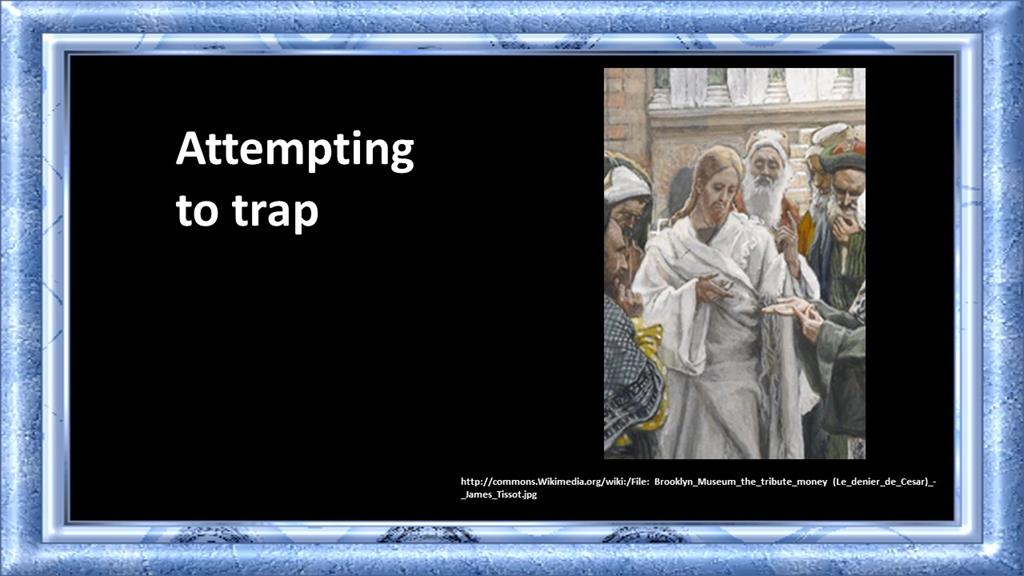 “Tell me,” they ask, “Is it lawful to pay taxes to the emperor, or not?” Jesus has to be careful. Last week you heard Deanie preach about the revolutionary act of Jesus cleaning the temple. Now they want Jesus to make a revolutionary statement against the civil authorities. If Jesus says they should not pay taxes, the Herodians could have him arrested for treason. But then, if he says to pay the taxes, the Pharisees can attack him for not being a patriotic Jew.
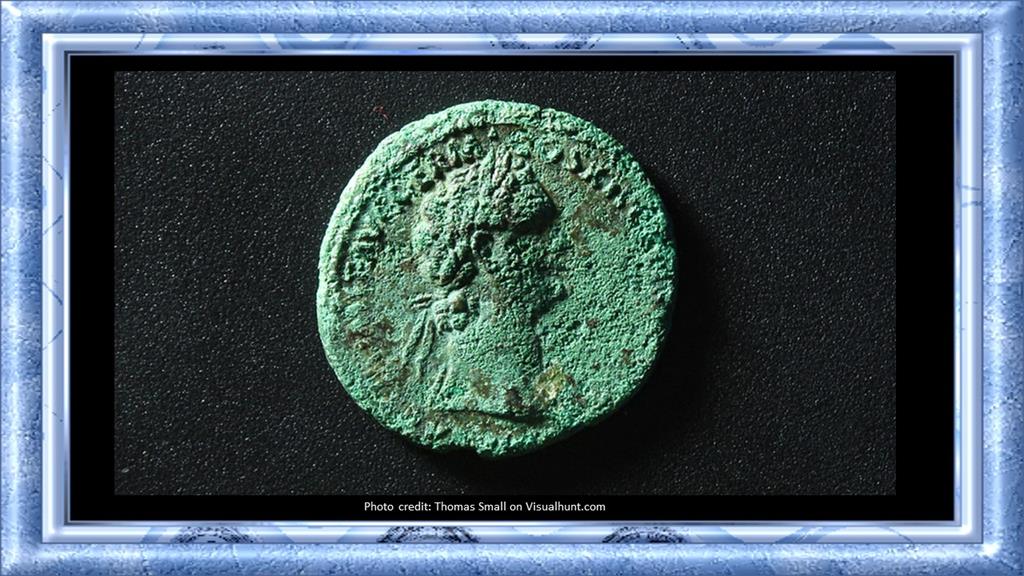 Jesus asks them for a coin. Unlike us, he didn’t have to worry about where that’s coin has been or picking up some a virus from its surface. However, Jesus still has to be careful. The disciples, we know, had a common purse and he could have gone there to fetch a coin, but then the Pharisees might have charged him with toting around an engraved image of the emperor.
 Give to God what is God’s. This phrase is often overlooked. We tend to get hung up on what is Caesar’s and what is ours. We get hung up on the petty details and we miss the important question. What does it mean for us to give ourselves to God?
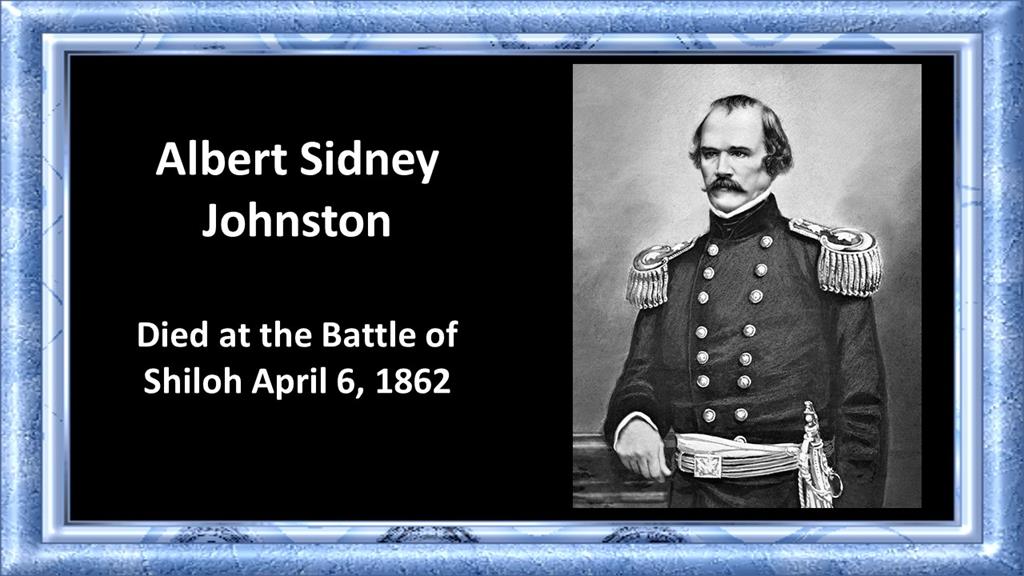 Earlier I mentioned Stonewall Jackson, whose biography I’m currently reading. But let me tell you two other Civil War stories, they’re both short, and demonstrate this point. At the Battle of Shiloh in the spring of 1862, Albert Sidney Johnson led the Confederate troops as they overwhelmed the Union forces near Pittsburg Landing along the Tennessee River. It was a bloody day and the Union lines were broken in places. During a lull in the first day of battle, Johnson, seeing a number of wounded Union soldiers in need, ordered his surgeon to set up an aid station and to tend to their needs. According to Shelby Foote in his novel about the battle, his surgeon, Dr. Yandell protested. Johnson cut him off saying “These men were our enemies a moment ago. They are our prisoners now. Take care of them.” A few minutes later, a stray bullet struck Johnson’s leg and without medical aid, he quickly bled to death.
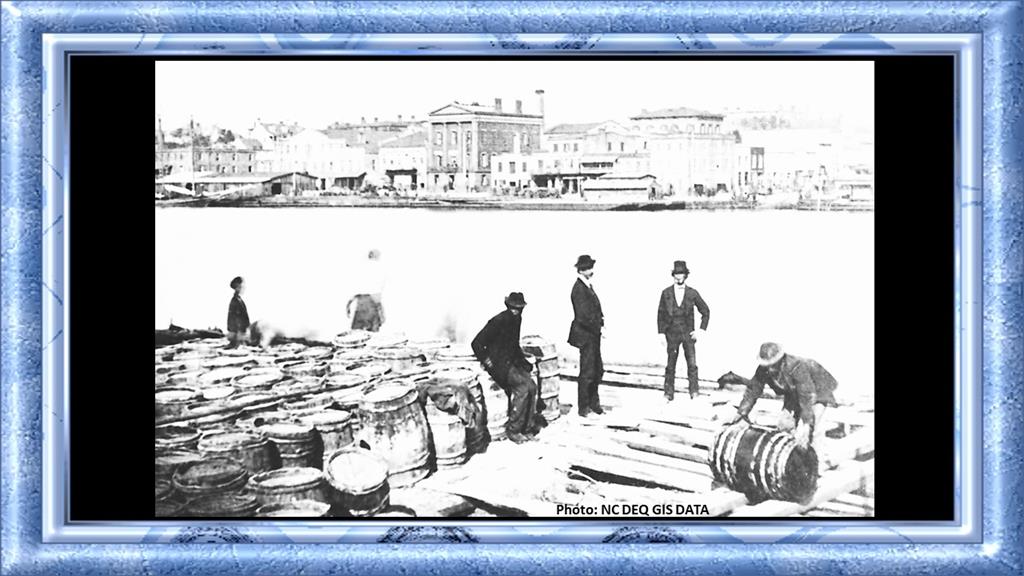 A second story comes from the city of Wilmington during the Civil War. In 1862, a blockade runner that had come in from the Caribbean brought Yellow Fever to the town. Those who could fled to the country, but several of the pastors and the leading citizens of the town stayed behind, feeling it was their Christian obligation to help out the victims. Over 400 people died of Yellow Fever that fall, including many of those who intentionally stayed to care for the dying.
 Give to God what is God’s, is the message here. So yes, we should pay our income tax. And when you write that check this April, we might remember that giving Caesar his due can be a lot easier than giving to God what is his. For our whole life belongs to God. But then, God’s given us life and in Jesus Christ has redeemed us to be his people. That’s a debt we can’t repay, nor is such repayment expected. As the old hymn goes, “Jesus paid it all.”
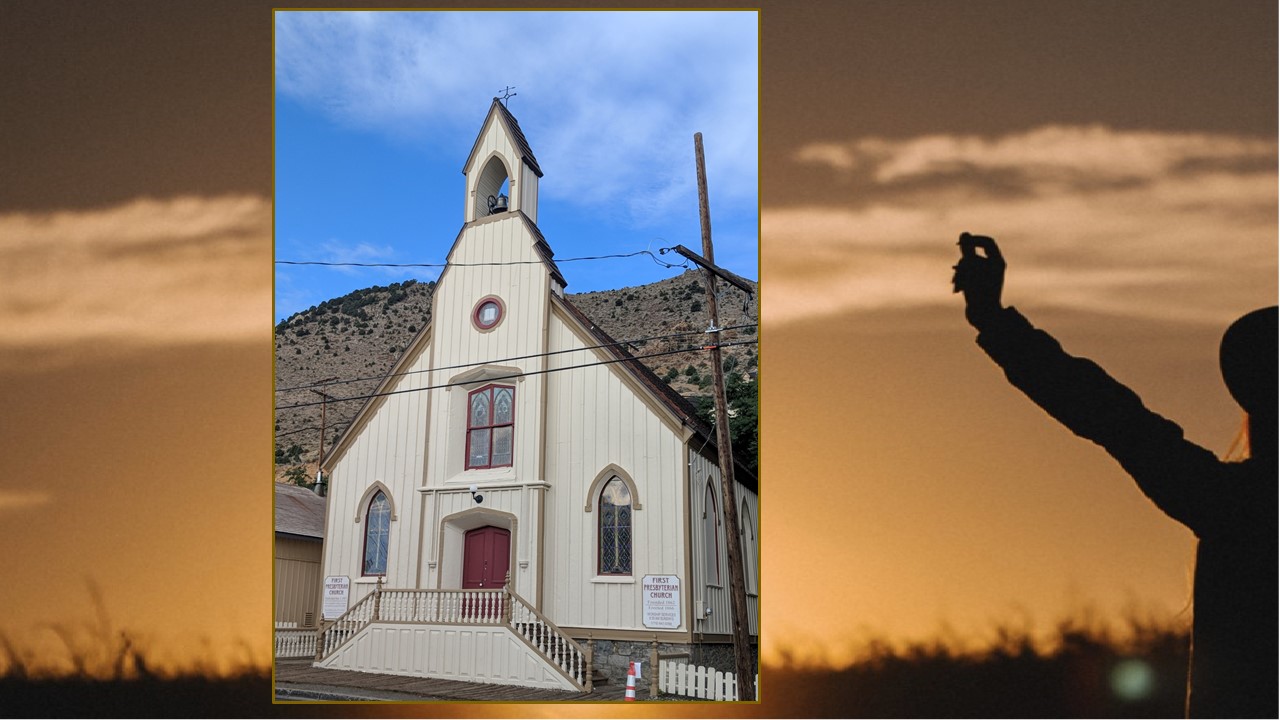 I will always be indebted to the congregation in Virginia City, Nevada, a place where I first experienced ministry on my own as a student pastor for a year. The church on the Comstock, at least in the modern era, has always been small. But there was something about the fellowship of that group that made it an attractive place for all kinds of people. The people in the church worked hard together, keeping the church going, which was quite a task in a wooden building built in 1866. But they also worked hard to help one another. And they tried to help others, sending clothes to an orphanage in Mexico and collecting food for a pantry in Carson City.
 The congregation Luke describes here near the beginning of the book of Acts wasn’t spectacular. It wouldn’t be considered particularly successful according to modern business practices. The fellowship didn’t include the leading folks of Jerusalem. Everyone was poor and marginalized. They didn’t have any glitzy advertising or even a fancy sign out front. After all, they tried to blend in and not stand out because there were those didn’t appreciate their message. But, despite all this, there was something magnetic about this community. They were generous and gracious. They were willing to help each other and to forgive others for the wrongs they’ve done because they’d experienced forgiveness in Jesus Christ. It was this magnetic appeal that drew folks to the church. Why else would someone risk persecutions and isolation by becoming a Christian?
 I recently read an article on why we need to make a weekly commitment to attend church. I’ll post this article I my next e-news. It was written by a young widow who describes the church as “the sweetest fellowship this side of heaven.” Her husband died suddenly one night after having been taken to the hospital by an ambulance for shortness of breath. She was left with seven kids. Before leaving the hospital, she called a friend from church. By the time she was home, the friend was there to sit with her. Others came in to grieve, to bring meals, to help clean the house, fix broken appliances and cars, and to minister to and pray for her and her children. The church is not always perfect, she notes. At times, the church can be even cruel. But when we live up to our calling to reflect Jesus’ face to the world, we demonstrate what was described in our passage today. The church can be the sweetest fellowship this side of heaven.
 Friends, today we receive our estimate of giving offerings for 2020, which is a sign of one half of that last question—how generous we are. We are encouraged to grow in generosity. As Vic Bell suggested last week, we’re to take a step toward being more generous, as we strive to become the church described in Acts. I pray that you will be generous and continue to take steps in this direction. But just as important as generosity is, don’t forget to be graciousness. On your walk with Christ, show grace to one another, just as God has been gracious with us. Realize what God has done and commit yourselves to do what? Say it after me… To be more being generous and gracious. Amen.