Nevada 375 and Rachel, Nevada

Title slide with photo of dry rain along Nevada 375
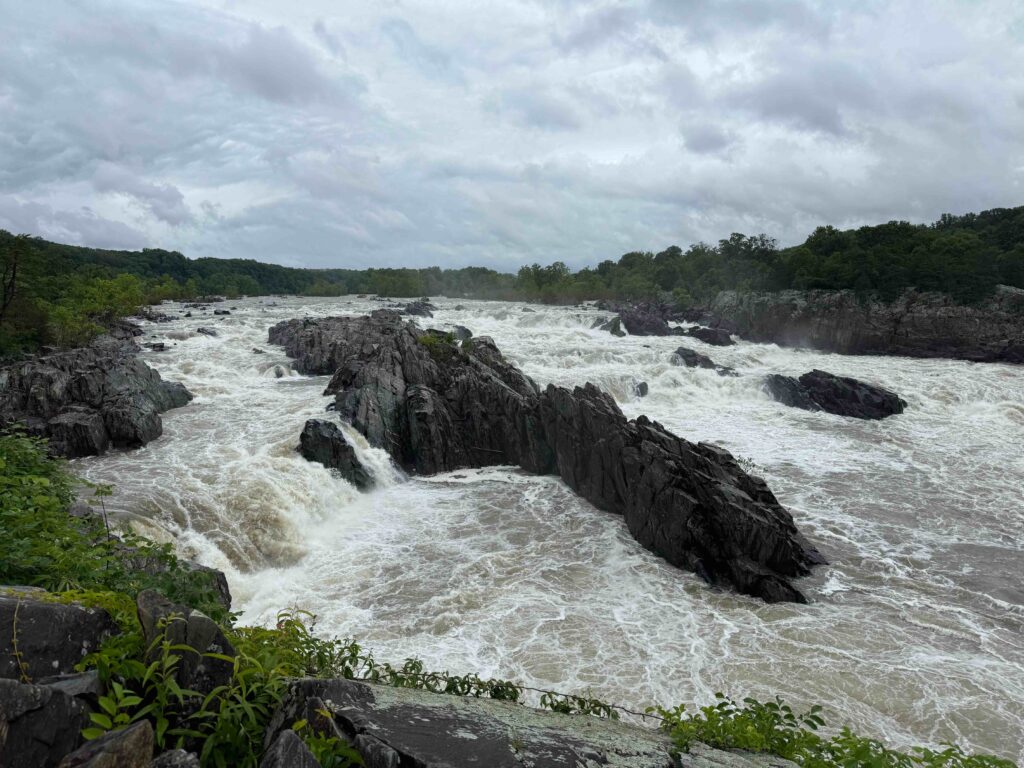
One house we worked on was located near here, where the road is still washed out.

I’ve been away this week, working on a Helene rebuild mission out of Burnsville, North Carolina, so I don’t have time to write anything new. I wrote this piece many years ago and some of you may have read it in another blog. I tried to update and clean up the language a bit before reposting it. Recently, I learned another friend had spent time working around Tonopah, Rachel, Caliente, Nevada on a government contract. He, too, was surprised that not only did I know of these places but had been there many times. Thinking of him, I thought I’d republish it.

The last time I was in Rachel was in 2010, as I drove across Central Nevada, heading from Death Valley to my old stomping ground in Cedar City, Utah.


Rachel, NV during daylight. Photo from the internet


I see the lights of Rachel a good ten miles away, soon after crossing Queen City Summit. “The bar will be open,” I say to myself, “I’ll grab a cup of coffee and stretch my legs and take in some of the night air.”

It’s after ten, early September 1995. I still have two hundred miles to drive to get home, having spent the past two weeks backpacking along the John Muir Trail in the Sierras. When I got off the trail, I learned my parents were driving in the next day, which meant an all-night drive. In the hundred miles since Tonopah, I’ve only passed a couple of vehicles. I roll my windows down and stick my head outside, trying to stay awake and alert. I pop cassette tapes in and out, playing them loudly and trying to find something to keep me awake. Nothing comes in on the radio, except some distant AM talk station from Los Angeles. 

I try to stay awake for nobody’s likely to see if you run off the road in this country. Making it more dangerous, this is open range. I share the road with cows. They’re hard to see at night and often seek the blacktop for warmth. If I run into one of these beasts and die, my estate will get to pay for the cow. 

“Thank God for Rachel,” I mumble, thinking about how this is one of two stops in the next two hundred miles where I can get coffee. I topped off my tank in Tonopah. Experience taught me the few gas stations along this stretch will close before I drive through.

Entering town, I pull off at the “Little A”le’Inn,” the center of Rachel’s night life. I’m shocked to see so many cars and people mulling around. Normally, there might be a car and a pickup or two out front. Tonight, I must search to find a parking place. The line to the bar starts at the front door.

What’s going on?” I ask the guy in front of me. 

“It’s Labor Day weekend,” he says, “people come from all over on Labor Day and Memorial Day weekends to check out the UFOs.” I’d noticed just outside the front door, mounted on a tripod, a parabolic listening device. These people are serious. Many of them have cameras and binoculars dangling from their necks. At the booth closest to me a guy cleans the lens for their cameras I consider telling him not to bother, as I’ve yet to see picture of a UFO taken through a clean lens. But I hold my tongue. 

“Do you think they’re really UFOs out here?” I ask the guy in front of me.

“I’m not sure, but you see some strange things,” he says, adding that he mostly comes up from Vegas to enjoy the party.

I look around at the eclectic crowd. There are dudes with pencil protectors in their shirt pockets talking to guys with tie-died t-shirts. Some look college-aged. Others probably have great-grandchildren. Many appear to have been strung out on drugs since the 60s. A few may have come straight from a desk job at IBM. It looks like a lot of fun, and I imagine myself as a reporter for the Rolling Stones, getting to know these people and writing about their shindig. Unfortunately, I must get back home.

 It takes me a while to get up to the bar and then I must wait for the bartender to make another pot of coffee. Then he fills my Maverick[1] insulated cup. I head outside, climb into the car and drive eastward into the darkness, over Coyote Summit and across Tikaboo Valley. It’s sad to leave the lights behind, for even if they don’t see a UFO, they’ll going to have a good time.

In my travels between California and Utah, I stopped at Rachel a dozen or more times. In the late 90s and early 2000s, there were only two businesses in town. The gas station sat on the east end. It includes a store which would make a 7-11 appear to be a supermarket. I’ve never seen it open after dark and their hours seemed to be irregular, another reason why I topped off my tank before heading this direction.

The Little A’Le’Inn sat on the west end of town. A combo restaurant, bar, casino, and motel, it reminds me of a scaled down version of Bruno’s Country Club in Gerlack, Nevada. The Inn seemed thrown together and wouldn’t make the Triple A Guidebook. But people come here because Rachel is the closest town to the supersecret Area 51, where some believe our government holds intergalactic aliens as POWs. Others think the government made a secret pack with some space race to dominate the world. I don’t believe it, but there are strange things seen in the skies along this highway. 

Driving along this stretch of highway, I’ve been scared out of my pants when a jet, flying what seemed to be 50 feet above my car came up behind me. I first noticed the. shadow. Because of his speed, I didn’t hear him until he’s gone.

Once, while checking out the mining sites in the Timpahute Range northeast of Rachel with Ralph, we watched several jets in apparent dogfight. I’ve never seen such aerial maneuvers, as they turned and swirled back and forth. One jet climbed almost straight up like a rocket, only to turn and come back to earth at supersonic speeds. When the jet disappeared behind the mountain, we looked for a fireball. We assumed it crashed. Then, to our surprise, the plane pulled back up and climb again as two jets made the same maneuver. Neither of us could believe that a plane could perform like that. 

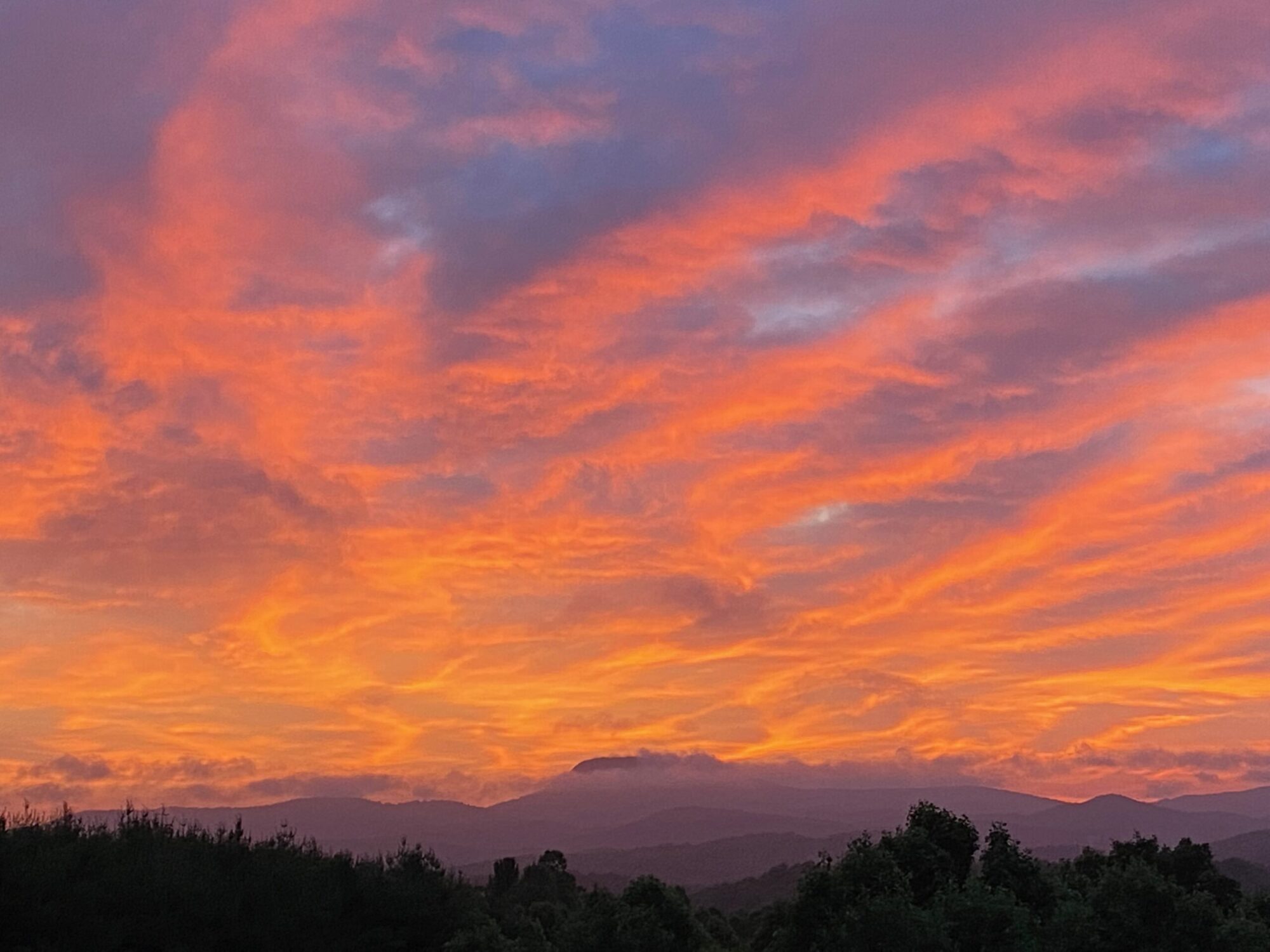
Sun setting amongst Joshua Trees in Central Nevada


This is barren country. The government controls all the land land south of Rachel. This is a training ground and bombing range for Nellis Air Force Base. They tested stealth fighters and bombers here. The vast area also contains the Nevada Test Site, where nuclear weapons used to be regularly tested.

Rachel is a relatively new town. In the 1860s, the town of Tempiute grew up around a vein of silver to the northeast. That petered out. Later, a tungsten deposit was discovered. Until the 1980s, Union Carbide ran a mine there. Most of the miners lived in Rachel. A few ranches dot the countryside along 375, but it takes a lot of this poor arid soil to produce enough grass to feed a cow.

Every time I stopped at the “Little A’Le’Inn” I meet interesting people. Once there was a family from Germany who came to see UFOs. Another time there were several young adults from the Netherlands. One evening, there was a couple at the bar who had driven up from Las Vegas. They were nearly out of gas. The gas station had already closed for the day (and the owners had headed to Vegas for dinner), so the couple rented a room at the motel and made the best of the evening by drinking heavily. They probably saw some good sights that night as well as some bugs on the wall in the morning.

The bartender is always willing to offer advice as to the best places to supposedly see UFOs. And the walls of the place have pictures and clippings about UFOs and even a signed photograph of Spock from Star Trek. In the mid-1990s, Nevada 375 became known as the “The Extraterrestrial Highway,” a move which helped draw in the curious to support Rachel’s businesses. 

I’m sure most people who drive across Nevada 375 think it’s the worst road to travel, but I find comfort in the desolation. US 50 crosses Nevada way to the north. In the 1960s, Life Magazine dubbed US 50 the loneliness road in America. Compared to Nevada 375, Highway 50 is a crowded freeway. 

Each end of Nevada 375 is located at a hot spring. The road begins at the site of Warm Springs along US 6. A gas station with a swimming pool sat at the junction, but by the 90s had closed. You can still stop and soak your feet in the warm sulfur smelling water as it runs through a ditch. Crystal Springs is at the other end of the 98-mile highway, at the junction with US 93, which leads south to Vegas and north to Ely. The springs are huge, with deep pools of warm water creating a large wetland and bird sanctuary which never freezes.

For those interested, there are other hot springs in the area. Just south on US 93 are the communities of Ash and Alamo, both of which have hot springs. Further to the east is Caliente, another town with hot springs located in cement pools at one of the towns 1950ish hotels. 

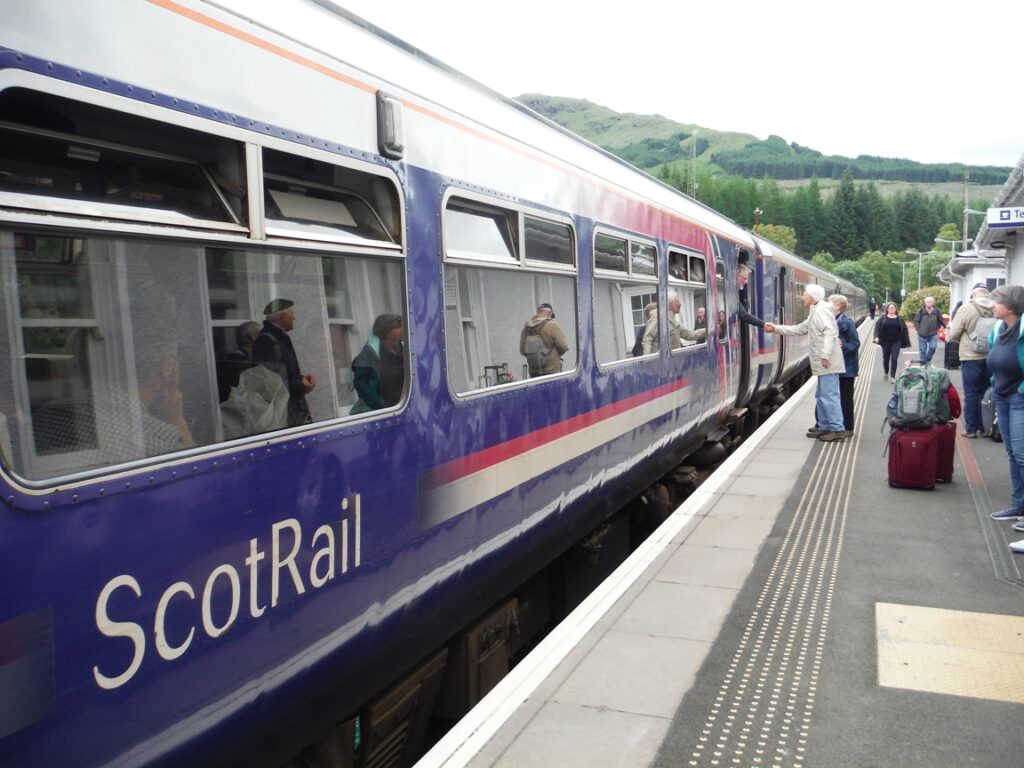
trains passing through Caliente, Nevada

If you travel this road, be prepared. It’s a long way to help. Limited services can be found in Tonopah (108 miles west of Rachel) and Caliente (98 miles to the east of Rachel). The nearest city is Las Vegas, 140 miles south of Rachel, on the other side of the government’s testing area which is closed off to the public.


[1] Maverik is the name of a chain of gas stations and convenient stores.


Other Nevada Adventures:

Great Basin Mining Adventure

Reno to Pittsburgh (April 1989)

Sunday drive to Gerlach

Driving West in ’88

Matt, Virginia City 1988

Doug and Elvira: A Pastoral Tale

Christmas Eve 1988

Easter Sunrise Services (a part of this article recalls Easter Sunrise Service in Virginia City in 1989)

The Revivals of A. B. Earle (an academic paper published inAmerican Baptist Historical Society Quarterly, part of these revivals were in Virginia City in 1867) 

Eddie Larson, a good shepherd (he ran his sheep on BLM land in Eastern Nevada during the winter).

Riding in the cab of a steam locomotive

More good and bad stories from the bakery


Looking back over the five of posts I wrote about my experiences in the bakery, it seems a lot of bad things that happen. That’s not true, but the challenging days do stick in my memory more than the regular “good” days. That goes for most of our lives. 

A few weeks ago, I told you about the challenges which happened at night. But sometimes bad things even happened during the day, as was the case one hot afternoon. I was over at the oven talking to John Z, when things started going crazy. All a sudden, the oven, proof box and cooler stopped. But the conveyors kept running. The de-panner was also running, but there was no vacuum and the bread wasn’t being pulled out of the pan. As John started pulling pans off the conveyor, I hit the horn and a mechanic came running. Both of us agreed it appeared we had lost air. 

We headed down to the compressor room. Sure enough, none of the compressors were running. By this time, there were calls coming over the intercom throughout the bakery with other people having problems. Not finding the problem, we ran back up into the plant and were shocked to see several conveyor motors with flames coming out of them. I started shutting down everything (as soon as the power to the conveyors were killed, the motors stopped burning) as the mechanic went to find the maintenance engineer. Coming out of the shop, the engineer realized immediately that we no longer had three phase electricity and pulled the main circuit breaker coming into the building. 

Everything went dark. A call was placed to Carolina Power and Light. It took them about thirty minutes to have the problem fixed and we had a mess to clean up. While production stopped, the bread waiting in pans in the proof box and along conveyors continued to grow. The bread in the oven continued to bake. We had a long night of cleaning up the proof box and getting the dough off the racks with steam cleaning before we could began making bread. If the dough remained on the racks, it could easily fall into a loaf of bread, creating a discolored hard lump within a loaf. We didn’t finish our work and return to production until the first shift crew returned, meaning that most of us worked 16 hours. 

But our mess wasn’t nearly as big as the one in the front office. They drew power off the same circuit. This was around 1980, and they had one large computer. When the engineer pulled the power switch into the bakery, they also lost power and data. It took them several days to get everything restored. 

Not long after this, the company forked over big bucks to the power company and had them to feed the plant from two directions so if we lost power from one substation, another station would take over. This ended the problems with blimps in power which created havoc with the ovens as I wrote about before. Not being an electrician, I’m not sure if it also protected us from “single phasing,” but we never had that problem again. The compressors and the ovens and equipment with big motors stopped because those motors had protection which shut them down if there was an issue. But there were too many small motors which pulled conveyors. Since it was a lot easier (and cheaper) to replace a ¾ horsepower motor than a 20 or 60 horsepower one, they didn’t have such protection. 

Another problem we had to deal with at the bakery was bad yeast. One summer, we changed from Fleischmann’s to a new brand, Dixie yeast. Supposedly the family owning the bakery had a stake in Dixie Yeast, so we were expected to use this product. At first, things went along smoothly, but after a few weeks, we started having problems primarily with the dough-maker bread. And the problems became worse in the afternoons, when the temperatures soared inside the plant. The bread wouldn’t brown nicely and would have large holes in it, appearing as if it had been over-mixed. Most of us suspected the yeast, but the owners were reluctant to agree. They brought experts who were unable to pinpoint the problem. Finally, someone convinced management to go back to the old yeast and things cleared up. When the “experts” checked the processing at the yeast plant, they learned they used fiberglass tanks which couldn’t be cleaned like stainless steel. Over time, they built up some kind of growth which affected the yeast. For a while, we went back to the yeast we had been using while Dixie Yeast worked out these kinks.

But life at the bakery wasn’t always one problem after another. There were also good times. Although we came from a lot of different backgrounds, we were a family. I enjoyed listening to the old timers tell stories about their career at the bakery or their lives growing up. I don’t remember his name, but the oven operator on the roll line talked about working on an old kerosene oven when he was young, which blew up. He also had a hearing aid and when management came around yelling, he’d turn it off. Several of the people who worked on the roll line had spent a lifetime in the bakery. Harvey, whom I wrote about earlier, had managed a dairy, which had closed when he came over to the bakery.

Scotty, who worked in sanitation, lost an arm in an accident in the Wilmington shipyard during World War II. I asked him if he knew my grandfather who also worked in the shipyard, having left the tobacco farm of North Carolina behind during the war. He said he did,but I think he tried to be nice. When I pressed for information about him, as my grandfather died in 1967, he could recall no real memories. I’d later learn that the shipyard at its peak employed 21,000 people. While Scotty was always nice to me, he had one of the most vulgar minds in the bakery and often said the nastiest things to women. Thankfully, he retired a year or two after I started working at the plant and before I had a chance to supervise him. However, I still called him on his comments, and he agreed it was inappropriate. But it didn’t stop him. 

At break, we’d crowd into the air-conditioned lounge for cold drinks. The air would soon become stale from cigarette smoke. I was one of the few who didn’t smoke, but that was okay for everyone knew I was different. I was the “college boy.” 

Sometimes our friendship extended outside the plant. There were at least half a dozen parties during the years I worked at the bakery (like Linda’s, which I wrote about earlier). Looking back on these, it’s interesting that the parties (at least the ones I attended) had only white folks. Another shock was the number of supervisors who were ten or twenty years older than me who would smoke joints during these parties. As one who eschewed drugs, I found this odd. But in the late 70s and early 80s, smoking pot was common. I expected it at school and with the younger employees, but not among older ones. 
Racial lines were crossed at the annual company picnic and some of us did get together to play basketball in the projects across the street from the plant. While working there, I hunted deer, rabbits and squirrels with Bobby, an African American who ran the bread slicing and wrapping area on first shift. 

Often, we’d have to work on holidays and at Thanksgiving and Christmas. On these days, the company would supply turkeys which were roasted in the back of the roll oven. They also provided the other parts of the meal included mashed potatoes, gravy, vegetables, and brown and serve rolls which we’d be making for weeks before the holiday. On these days, everyone got to pig out on their lunch breaks. 

One of my favorite treats of working night shift occurred shortly after the first bread left the oven. We’d split up a loaf of freshly baked bread, slather it with hot butter (which we had available for the butter-top loaves) and then add honey or molasses. Of course, we worked hard and in heat, so we didn’t have to worry as much about the extra calories.

Upcoming: I have one more post planned I which I will discuss leaving the bakery and it’s demise several years later. 

MORE BAKERY STORIES

More Bakery Stories: Bad Things Happen at Night

Coming of Age in a Bakery: Linda and the Summer of ’76

A College Boy in the Bakery

Harvey and Ernest

Frank and Roosevelt

The Perils of Working on the Christian Sabbath

Remembering Charlie

Bakery Stories: Bad Things Happen at Night

title slide with loaf of Holsum bread

The Horrific

During my five years at the bakery, it seems bad things often happened at night. Shortly after I started, a woman working the night shift on the roll line was raped in the women’s locker room. I never knew her, don’t even know if I ever saw her, but she never came back to work. The rapist slipped into the plant and hid in the women’s locker room. I don’t even know if they ever caught the man. 

This incident forced the company to develop more stringent security around the plant, including a card reader at the entrance. It was probably long overdue.

A Neighborhood Shooting

A year or so later, on a hot sticky night when I was working night shift during my summer break from classes, I drove up to a surreal scene. Police and ambulances with their lights flashing were parked in front of the plant. The chalk outline of two bodies could be seen on the sidewalk. Yellow police tape ran from the corner by the entry door and across the front of the plant along 13th Street. They were loading two body bags into the waiting ambulance as I arrived. 

I wondered if I should even go to work that evening. It was eerie entering the plant as I no idea what had just happened. Obliviously, people died. As soon as I got inside, co-workers told me about the few exciting seconds. Several versions of stories spread around the plant. The only thing anyone could be sure of was that no one from the bakery had been involved in the shooting. 

It turned out, as we learned the next day in the newspaper, the shooter was a jealous husband who lived in a housing project across the street from the bakery. He hid in shrubbery out in front the bakery waiting for his wayward wife and her lover to walk by. When they did, he stepped out and shot her. He then took aim at her lover but missed. As the man ran for his life, the husband turned the gun on himself.

Riding a bicycle to work

I often rode my bicycle to work, especially when I lived in an apartment on Greenfield Lake, about five miles from the bakery. During my first year out of college when I worked the night shift as a supervisor, I had a small office, just large enough to store my bike. I got into the habit of only driving a car when the weather was inclement or on Saturday night. With the housing projects across from the plant, I felt it too risky as a white guy to ride a bike through the neighborhood at midnight on Saturday night.

During the warmer months, I would often leave the bakery in the morning and ride out to Wrightsville Beach and sleep on the beach and do a little swimming before riding home. Then, I’d stay up for a while, going back to bed around 6 PM to catch a few more hours of sleep before returning to work.

Almost burning the bakery down

During the year I worked as a supervisor on the night shift, I was nervous going to work at night, but had only one small disaster. This happened on a rainy night. Harvey, my oven operator, was on vacation. John, who had taken over the second shift oven operator job from me when I was promoted to supervisor, worked Harvey’s shift. This night, I was short staffed in the mixing area and was pitching in when I got a desperate call over the loudspeaker from John telling me that he was having problems raising the temperature on the oven to the proper setting. I checked my watch. It was still 30 minutes before the bread would begin leaving the proof box for the oven. 

As soon as I could, I headed back to the oven with a mechanic. About the time we got to the oven, one of the truck drivers who hauled bread to the warehouses around eastern North and South Carolina, came running back yelling that the roof was on fire. Something clicked. I knew immediately the problem. The dampers on the oven had not been closed. As the mechanic headed to the roof with a fire extinguisher, I told the driver to call the fire department as I ran back to the oven. 

Fixing the problem

Sure enough, the dampers were the problem. Lighting the oven, which was about the size of a house, required that one first open the dampers and purge the oven with air. This made sure there was no gas present and reduced the risk of an explosion. Only after purging could you open the gas valves and begin to light the burners. There were around 70 burners, and each had to be lighted individually, but with an electrical ignition. As soon as all the burners blazed, you closed the dampers. John forgot that part. 

What happened is that thermostats kept calling for more heat. The flames grew larger and drawn into the dampers. Obviously, as we discovered the hard way, the dampers hadn’t been cleaned in some time. Grease built up in one of the dampers, catching fire. As soon as John and I shut the dampers, I grabbed another fire extinguisher and headed to the roof where the mechanic had already extinguished the fire. The rain kept the fire from spreading, but there was a small section of the roof which needed repair. The fire department arrived and checked things out, and the night returned to normal. Thankfully, the rain help prevent a disaster. 

Dealing with mechanics

As the night shift mechanics often found places to hid and sleep, I resorted to walking around with a pair of channel locks, an adjustable wrench, and a screwdriver in my back pocket. I quickly gained the skill necessary to do minor adjustments to keep things running. Inexperience became another problem with night mechanics. Most would spend a week or two on day shift, where they worked with an engineer before being moved to night shift. I often knew more about the equipment. 

Of course, there could be worse things than an inexperience mechanic sleeping on a job. We began to use a lot more granulated sugar than we should have as most of our sweetener came in liquid form. We received corn sweeter from tank trucks. Honey and molasses came in 55-gallon barrels. We even used more brown sugar than granulated, both of which came in 50-pound bags. Our inventory showed we were using almost twice the amount of granulated sugar than we should have been consuming. It turned out one of the night mechanics would park his truck by the loading dock. When no one was around, he would place a few bags in the back and cover it up with a tarp. We assumed he stole the sugar to supply a liquor still. Of course, he lost his source of free sugar when he was fired. 

Replacement workers

Working the night shift, especially as a supervisor, had its challenges. It was always difficult to find a replacement when someone called in sick. There weren’t too many qualified replacements and even fewer available at 2 A.M. All new hires had to go through the Personnel Department, which kept 9 to 5 business hours. I’d be given a name and number when a new hire was coming in. 

You’ve already met Frank, one of my problem employees. A month after I had tried to fire him and personnel overruled my decision; he was fired after an “expensive joke.” The next night, a new employee showed up.

The new hire was an attractive young woman just out of high school. That evening, while attempting to teach her how to do the job, I had to shoo away guys from other parts of the plant. Everyone wanted to flirt with her, and she enjoyed the attention. Being new, she hadn’t been issued a uniform. The next night, she came dressed like Daisy Duke, of the Dukes of Hazard, which was a popular show at this time. The girl wore short-shorts and a halter top. I sent her home to get more appropriate clothes, which made her mad. She never returned. The next night, I started to train a guy who I knew from high school, and he worked out.

Mostly monotonous

Despite the stories above, the night shift was mostly monotonous. I became good at anticipating sunrise and a few minutes before, when not cloudy, I’d grab a cup of coffee and head out to the loading dock. Standing on the side of the platform, caressing my cup in my hands, I could look back toward the east and watch for the sun to rise between the plant and the flour silo across the street. I knew my time was almost up and soon my worries would be over, and I’d be in my bed sleeping.

Other Bakery Stories:

Coming of Age in a Bakery: Linda and the Summer of ’76

A College Boy in the Bakery

Harvey and Ernest

Frank and Roosevelt

The Perils of Working on the Christian Sabbath

Remembering Charlie

1957: The Year of My Birth

title slide with photos of the author and his family from 1957 and 58

I arrived at the Moore County Hospital, just outside of Pinehurst, on a Wednesday morning in the middle of January 1957. The highways through the Sandhills of North Carolina were paved by then, but many of the county roads were still dirt. Longleaf pines surrounded the golf courses around Pinehurst and small farms dotted the rest of the county. Bright-leaf tobacco, cured in barns heated by wood, was the cash crop. It was a simpler time. 

The national average family income had doubled since World War II, rising to just above six thousand dollars a year. Of course, per capita income was lower in the South. But on paper Moore County appeared prosperous thanks to its numbers being inflated by rich Yankee golfers. Six thousand went a long way as the average house cost $12,000. However, furnishing it with a pair of Rembrandt portraits remained out of reach for most. A pair of his portraits sold for an even half a million dollars later in the year. 

For non-golfers in the Sandhills, such as my relatives from the Highlands of Scotland, tobacco remained king. People considered the leaf safe and when the markets opened in late summer, it sold for 59 cents a pound. North Carolina raised nearly a half million acres of the crop, producing over 1700 pounds an acre. You can do the math.  

The year began with a meeting of African American pastors who formed the Southern Christian Leadership Conference. We’d hear more about them in the next decade, but integration moved into the forefront. A year after the last veteran from the war which ended slavery died and three years after Brown verses Board of Education ruled segregated schools unconstitutional, it took the military to desegregate Little Rock Central High School in Arkansas. Things appeared to move slowly in the right direction, but I’d be in the 9th Grade before schools were completely integrated. In Congress, the Senate under the leadership of Lyndon Johnson passed the first (mostly benign) civil rights legislation since the Reconstruction. We’d be hearing more about civil rights and Johnson in the years ahead.  

Two days after my arrival, three B-52s made the first non-stop around-the-world flights. General Curtis LeMay bragged we could drop a hydrogen bomb anywhere in the world. New Mexico became the one place we did drop one that year, accidentally. Thankfully, it didn’t detonate which is why no one knew about it.  The military exploded bombs in Nevada but said everything was safe. No one knew differently except for the sheepherders whose flocks lost their wool and began to die off. There were other nuclear accidents in ’57 in the US and UK, but no one talked about them. What you don’t know won’t hurt you, right? And we all knew our government would never do anything to harm us. That myth died before I graduated high school.

Although there were no major wars going on, the world remained tense. The Suez Crisis and the threat of a Soviet nuclear attack loomed. Our government, working with the Canadians, established the DEW line in the arctic to provide us a six-hour warning before the first Soviet bomb could be dropped on an American city. Canadian cities would have a little less time to prepare. By the time the Dew Line became operational, they reduced the margin to three hours as Soviet jets had doubled their speed. In a few months it all became extraneous as the Soviets launched the first intercontinental ballistic missile.

Later in the same year, the Soviets launch Sputnik, and we’d spend the next decade in a space race. Amidst the space race, some yo-yo created the first plastic pink flamingo. The end was near as prophesied by Nevil Shute in On the Beach, his post-nuclear war novel, published in 1957. I’d read it in high school.

To save us from calamity, we placed our faith in Ike, the President. Many thought I resembled as I, too, had a bald head. Ike wasn’t Herod and didn’t see himself as a king. Nor did he waste any time worrying about a newborn impostor as he perfected his golf swing while supposedly preparing himself for a second term as the leader of the free world. 

Jack Kerouac published On the Road in 1957. People headed out on the road sporting a new line of fancy cars with high fins and excessive chrome. The ’57 Chevy would become an icon of the era as Ike announced the building of interstates to connect the cities of our nation. Off the radar was a little-known Japanese company, Toyota. They loaded a ship with their first vehicles for the US market.

People began flying more and taking the train less. New York City abandoned its trolley cars in 1957. Shortly afterwards the Brooklyn Dodgers (originally the Brooklyn Trolley Dodgers) announced their move to Los Angeles. They took the last of Las Angeles trolleys out of service six years later as I started the first grade. Now people think the Dodgers must either be named from their ability at dodging wild pitches or an obscure reference to an artful Charles Dickens character. 

In other sporting news, the University of North Carolina beat Kansas in the NCAA basketball finals.  These teams have remained at the top throughout my life. The Milwaukee Braves led by a young Hank Aaron beat the New York Yankees in the World Series. As a junior in high school, I watched TV as Aaron surpassed Babe Ruth’s home run record. The Milwaukee Braves faded over the next decade and high-tailed it to Atlanta. The Detroit Lions, a team whose demise parallels the city, won their last NFL championship.

Ayn Rand published Atlas Shrugged in 1957.  Almost seven decades later, “Who is John Galt?” bumper stickers are occasionally spotted on American highways. In the theaters, The Ten Commandments became the top box office success. For a country which seems so religious, the last commandment about not coveting appears overlooked. Rand launched a frontal assault on this commandment with her godless “look out for me” philosophy. Other commandments were also being broken as the movie “Peyton Place, which debuted in theaters, reminded us.      

Radios in ‘57 played the music of Elvis, Buddy Holly, Debbie Reynolds, the Everly Brothers, Pat Boone and Sam Cooke. In Philadelphia, love-stuck teenagers danced for the first time on American Bandstand as more homes acquired televisions. And in England, two chaps named Lennon and McCarthy met and would go on change music as we know it. Humphrey Bogart died just two days before my arrival, but it was still a good year for Hollywood. Not only was Moses selling, but so were dogs. Children everywhere cried watching Old Yeller. Hollywood also released The Bridge over the River Kwai. It inspired whistlers with its catchy theme music (an old British army tune). That tune would later be used in a commercial for a household cleanser which inspired one of the great ditties of my childhood: 
Comet – it makes your teeth turn green.
Comet – it tastes like gasoline.
Comet – it makes you vomit.
So, buy some Comet, and vomit, today!


Even today, I have a can of Comet stashed under my kitchen sink. Some things change, and some don’t. 

Michigan Ramblings (June 16-July 3)

Title slide with photos from northern Michigan

I spent the last half of June mostly in the Upper Peninsula of Michigan. While I have already written about my solo kayak trip around Drummond Island, I thought I’d share some of my other adventures. 

Jim at Richies Koffee Shop

I arrived in Michigan on June the 18th, staying with my friends Bruce and Katie on Jordan Lake. We enjoyed dinner and sitting out by the lake, along with a late evening boat ride around the lake. The next morning, I headed early into Hastings to have breakfast with my friend Jim, at Richies Koffee Shop, a place I often ate breakfast when I lived in Hastings. As I drove up, Dave and John were at the table by the front window. They wondered who pulled up with a sea kayak on top of their car. When I got out, John said to Dave, “Oh, it figures, it’s Jeff.” I talked with them along with Sandy, my favorite waitress, until Jim arrived. Then I moved over to a booth and caught up with my old canoeing partner. 

I left Hastings a little before 9 so I could make it to the Upper Peninsula (UP) by 2 PM. It rained most of the way, but I made good time.

Me, Gary, Ron at Snows Bar and Grill

At 2, I had lunch with Gary and Ron. Gary and I were in the fire department on Skidaway Island and paddled together several times in the Okefenokee Swamp. I hadn’t met Ron before, but he also lives on Skidaway during the winter and on an island outside of Cedarville, Michigan in the summer. Gary and his wife were traveling through, visiting friends in Michigan before going on into Canada. We met at Snow’s Bar and Grill in Cedarville, a great place for white fish and walleye. It enjoyed catching up with Gary, who grew up in Michigan.  We said goodbyes at 4:00 PM. I stopped by Cedarville’s grocery store and arrived in Detour Village a little after 5 PM. 

On Thursday, I rested and checked out my gear for my trip around Drummond. I realized I had forgotten to bring a battery pack to recharge my cell phone. On Friday, I paddled around Detour Point early in the morning. Then I headed to Sault St. Marie for Walmart, where I picked up a battery pack and the rest of what I needed for my trip.  Afterwards, I decided to travel over to Point Iroquois Lighthouse. 

Point Iroquois Lighthouse

I’d been here once before but forgotten the reason why it was named after a native American tribe found much further east. In the 17th Century, facing pressure from European settlers, the Iroquois tried to extend their territories further west.  Here, on the east end of Lake Superior, the Chippewa, the native tribe of the Great Lakes Region, stopped the Iroquois advancement after a bloody battle. Then, in honor of their dead foe, the Chippewa named this point along the lake, Iroquois. With all the talk about changing or not changing names to make it more “American,” I had to salute the Chippewa graciousness. The next week, I would learn that Drummond Island was named for the British General in charge of northern Michigan. At the end of the War of 1812, he was ordered to move his garrison back into Canada.  

On my way back that Friday, I stopped for dinner at Cozy Corners in Barbeau. I’d eaten at this place before, but never on a Friday night. The place was packed. I sat at the bar, talking to my neighbors, watching the Detroit Tigers play on TV, while also catching glimpses of two southbound freighters.  I ate fish tacos made with walleye. 

The Manse

On Sunday, in exchange for staying at the church’s manse, I preached at the Union Presbyterian Church, using a sermon I had preached a few weeks early at home.  On Monday morning, I headed over on an early ferry run for my paddle around Drummond. 

If you didn’t read about my Drummond Island circumnavigation, you can catch up here: Days 1 & 2,  and Days 3 & 4

I came back to Detour from Drummond Island around 2 PM on Thursday. I laid out my gear in the garage and the sunporch to dry, showered, and took a nap. Around 5:30 PM, I got up and drove over to St. Ignace to pick up Bob, a friend of mine from Hastings. He took a bus up to the UP from Grand Rapids. He was scheduled to arrive at 10:10 PM, so I decided to go over early and eat dinner.  

Of all the times I have been across the Mackinaw Bridge, which crosses at St. Ignace, I have never been into the town. I exited I-75 at Castle Rock and drove through the town and realized soon it was a mistake. The place was packed. I found myself at the end of a parade of old cars, not knowing that this was the first night of a four-day car rally. All the restaurants were packed.

I stopped at a grocery store to pick up a few supplies, then decided to try the St. Ignace Truck Stop. It, too, was busy, but by 9 PM had slowed down as patrons left. I sat at the bar and ordered walleye. I was finishing my meal at 9:45 PM, when Bob called. The bus arrived early. Thankfully, he was only a couple of blocks away. I picked him up and we headed back to Detour Village. 

Friday was wet and foggy. I spent the morning reading while Bob, who’s an editor, worked on a project. Occasionally, Bob shared his frustration at the book he was editing. He felt he had to rework too much of the author’s words. But he had been hired by the publisher to get the book ready for print, so he kept at it. Around 2 PM, we took a break and headed over to the Detour Village Inn for one of their great hamburgers. 

The Village Inn is a baseball themed park. Tim Grisdale (Grizz) started the inn after he hung up his glove having played minor league baseball in the Detroit Tigers organization. In addition to running a bar and grill, he was a big supporter of baseball and softball in the town. He died in 2018, before I started coming up to Detour Village, but his memory lives on. There’s the Grizz burgers and lots of photos and newspaper clippings posted on the walls. 

Whitefish Sandwich at Snows

After lunch, we headed to a preserve off Prettiss Bay, where we stayed exploring till almost sunset. Plants seen included wood lilies, thimbleberry, yellow coreopsis, yellow lady slippers, shrubby cinquefoil, red osier dogwood, along with irises, columbines, and shinleaf. Then we drove over to Cedarville and I had a whitefish sandwich for dinner at Snows Bar and Grill.

You might think that Snows gets its name from the extreme winters of the UP, but that’s not the case. There is a “Snows Cut,” which runs between the islands, just south of the joint. I have always found this interesting since I grew up just north of “Snows Cut,” where the Intracoastal Waterway cuts from Myrtle Grove Sound to the Cape Fear River, just north of Carolina Beach. That cut was named after the engineer who directed digging this part of the waterway in the 1930s. 

Bob playing the Sax on Drummond

On Saturday, after a morning of reading and editing, we took the ferry over to Drummond Island and met Dave and Sandy, who took us to a potluck dinner hosted by Lighthouse Church. The dinner was outside. Bob, who is an excellent saxophonist, did a short concert. 

On Sunday, I again preached at the Union Presbyterian Church and Bob supplied special music. He had come up with me in April 2024, so folks on the island knew him and enjoyed his music. Afterwards, we were invited to join a group at the Mainsail Restaurant for Brunch.  

Botanist Bob

In the afternoon, after a nap, we explored the fins along Lake Huron, just east of Albany Creek. A fin is a wet boggy area. In this case, it’s separated from the lake by a series of dunes. This place is rich of wildflowers, especially carnivorous plants. While Bob has worked much of his life in the publishing business, he is the best botanists I know. Not only does he know the names of all the plants, but he also knows most of their Latin names.

Al

Albany Fin

Plants seen: Northern Pitcher Plant, Butterwort (rare), round leaf sundew, linear leaf sundew (rare), horned bladderwort, rose pogonia (orchid), and pitcher thistle (rare). 

After exploring the Albany fin, we came home and fixed steak for dinner. Monday, we lounged around reading and editing. On Tuesday, we packed up and headed over to the Detour Village Inn for lunch before driving south. On our way south, we stopped at Wilderness State Park to look for some rare plants which Bob had seen there years earlier. He found the plants, but it was after they’d bloomed. I stayed at Bob’s Tuesday night. 

Wednesday morning, before leaving Hastings, I had breakfast with “Doc,” my former associate at First Presbyterian Church. Now confined to a walker, “Doc” or Jim, cares for his wife who struggles with dementia. But Doc still gets around some and remains in good spirits. Then I started the long drive home.  

Selfie at Hocking Hills

I decided to spend one more night out in the woods, so I headed to Ohio’s Hocking Hills. I’ve heard about this place before and wish I could have spent more time there. The hills are beautiful with some interesting rock formations around the creeks. I slept in my hammock and enjoyed dinner at the lodge as I watched the sun set. I arrived home on Thursday afternoon, after racking up almost 3,000 miles over 16 days. 

On the way back, I discovered Southern Ohio is filled with Covered Bridges. I’ll have to explore these some other time.

Riding Coach from South Bend to D.C.

Title slide with photos of the train in South Bend and Savannah

I planned to finish up my tales from my Michigan trip, but the week has been too busy, so I bushed and edited a piece I wrote back in 2017. On the trip, I was coming home (to Skidaway Island) from a conference at Calvin College (now University) in Grand Rapids, Michigan.  The route from Pittsburgh to Cumberland paralleled the bicycle trip I took in May with my brother. Click here to read about that trip.


The train arriving in South Bend

I wake up, realizing the guy in the seat next to me is gathering his stuff. Looking out the window, I see we’re running alongside a river. It must be the Ohio. I pull out my iPhone to check the time. It’s 4:45 AM, we’re approaching Pittsburgh.  

“Getting off in Pittsburgh?” I ask.

“Yeah,” he answered. He was asleep last night when I boarded the train in South Bend. I was tired myself and had quickly fallen asleep. I vaguely remember train stopping at Elkhart, and totally missed Waterloo, along with longer stops in Toledo and Cleveland and several quick stops in smaller towns. We pass the Emsworth Lock and Dam. I’ve been here many times before. I’m surprised to see the barges are still running on the first of February, but then it’s been a warm winter.

“Live in the ‘burgh?” I ask.

“No,  Philly.”

“But you’re getting off here?”  I resisted the temptation to make a disparaging remark about the Phillies and Eagles.

“Yeah, I gotta catch another train. I have a two-hour layover.  You from here?”

“Nah, but I lived here for three years when I was in school back in the ‘80s.  It’s a great city.”

We talk for a few minutes. The train slows down and then pulls away from the river. I learn he’s a long-haul truck driver.  They found a beer in his truck when it was being serviced. He said it was left over from New Years, but it’s a violation and they terminated him. But it’s okay, he says, as he’s already has another job lined up with another trucking company.  

As he talks the train swings to the right and soon, we on a bridge across the Allegheny River.

“The Three Sisters,” I say, pointing out the identical yellow bridges below us. The train slows, stopping at the Pittsburgh Station underneath the massive building which used to house offices for the Pennsylvania Railroad. The conductors and engineer change crews here, providing a fifteen-minute break. After all the passengers depart, I get off and walk for a few minutes along the tracks enjoying the fresh air. Most passengers remain asleep, but a few shuffle around on the platform enjoying an infrequent smoking break. It’s odd to be outdoors in the predawn hours on the first of February without a coat.  When the conductor shouts, “All Aboard,” I step back onboard and take my seat. Soon, I’m back asleep.  

I’d boarded the train the evening before in South Bend, Indiana.  I’d taken the train up from Savannah the week before to attend a conference at Calvin University. While I could have taken the train into Grand Rapids, it would have required an extra day each direction with a long wait in Chicago. Instead, I got off in South Bend and rented a car from Enterprise. They picked me up early in the morning on my arrival.

The evening before, I had to turn the car by 6 PM, to get a shuttle back to the station. The train was scheduled to arrive a bit after nine. I had brought a sandwich for dinner and ate it in the station while I waited. It wasn’t a very fancy meal, but sufficient. I would have preferred to eat in the dining car on the train, but suspected it would be closed by the time I boarded. 

Taking up a seat along the back wall, I pull out my book, Robert Harris’ Pompeii. This is the original train station and the seats are heavy, old, curved oak benches. While they look like church pews, they more comfortable. Every few minutes when the crossing gates just outside the station would begin to ring in announcement of another train. The ringing was followed by the horn of a train coming closer until it whisked by, followed by the waning sound of the horn and the clacking of the wheels. This was the main line serving trains heading from Chicago east to New York, Pittsburgh and Philadelphia. The station was never very busy and only a half dozen of us who board in South Bend when my train, the Capitol Limited, arrived.

I wake up a little after seven and in the dark can make out a river that parallels the tracks.  According to the timetable, we must have already stopped in Connellsville and are beginning the long slow climb over the Alleghenies. The river appears deep and slow, with just a few rocks, but I know that’ll change as we gain altitude. Snow dusts the ground. The trees are barren. Occasionally I’ll spot a pine or cedar, frosted with snow, but the trees are mostly hardwoods of some variety. In the dark, it’s hard to tell the specie. I take my book and notebook up to the snack car for breakfast, ordering a breakfast burrito and coffee. Sitting at a table, I eat, while watching the scenery change. As we gain elevation, cedars appear, and the water runs faster between eh rocks. Snow covers the ground with more falling. 

The train slowly winds its way up the tracks, its wheels at time squeaking against the rails. We reach the village of Confluence. The morning is gray, foggy, and wet. Only a few cars are on the roads. As we gain more elevation, the river becomes smaller and swifter. We run through the first tunnel.  On the top of the hills are many windmills. Mountain laurel covers the hillsides.  

We enter another tunnel, a longer one, and when we come out, I notice that the river has changed directions. We’re heading downhill, but the engineer holds the train back, going as slowly downhill as we did uphill. The sun attempts to burn off the fog. Its golden reflections reflect from the ripples of the creek below. As we lose altitude, there is less snow on the ground. The train picks up speed. By the time we reach Cumberland, the snow is gone. We’re a bit early, so I step off the train and enjoy the fresh air. It feels more like spring than deep winter.   

On my bicycle trip on the GAP, I saw these same windmills.


After Cumberland, I head back to my seat.  The train runs quickly along the Potomac River.  I continue reading Pompeii, picking up where I left off last night. A little over an hour later, we make a short stop in Martinsville, West Virginia, a neat looking old town. An old, abandoned roundhouse sits on the north side of the tracks. The business district runs along the south side. 

Our next stop is in Harpers Ferry, West Virginia. I look for the old hotel where I stayed when I was here while hiking the Appalachian Trail. The stop is short and soon we’re crossing the river and heading into a tunnel.  

Harper’s Ferry

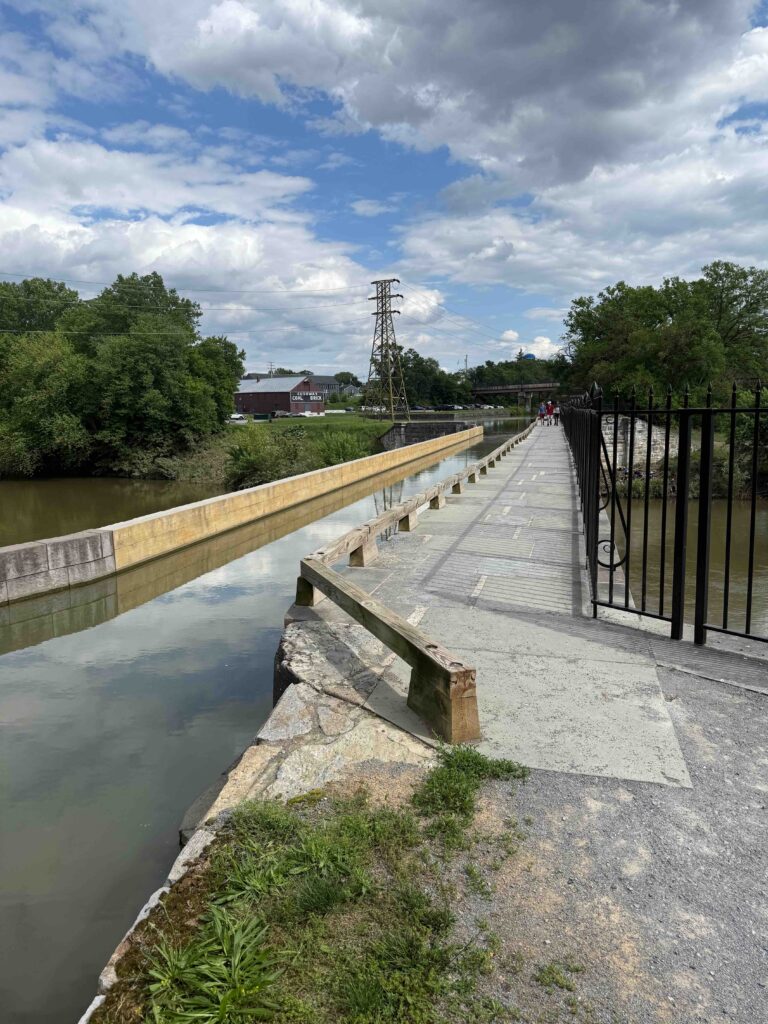
Below Harper’s Ferry, the train parallels the C&O canal. The canal seems to be filled with stagnant water covered in a green slime. The train makes its last stop in Rockville, before pulling into Union Station fifteen minutes early. I head for the food court for a quick lunch, before heading out to the National Gallery for the afternoon. I’ll be back at the station in time to board the train to Savannah. I’ll have better accommodations for this leg as I’ve booked a sleeper.

Arriving in Savannah

A Solo Paddle Around Drummond Island, Days 1 & 2

title slide with photos of Drummond Island

Tuesday afternoon and evening, June 24, 2025

Campfire in Raynolds Bay

Rounding Raynolds Point, the northeastern corner of the island, the situation changed. I was no longer on the lee side of the island. The wind was in my face and much stronger. Swells suddenly appeared, breaking over my bow and attempting to push me onto the rocky ledges around the shore. Dark clouds gathered.  I headed out away from the ledges and paddled harder. Having already covered approximately 19 miles, I was tired. As rain pelted me, I decided to head into Raynolds Bay. The wind helped this decision. I was not sure what’s public and private land, but there were no signs of human activity. The bay provided enough protection for me to safely come ashore. After thirty minutes of excitement, I was exhausted. This was the first bit of difficulty on my trip, but it would not be the last. 

Beaver’s Work

I walked along the cobblestoned beach that’s sprinkled with fossils. There is also evidence of beaver activity, but wonder what they might attempt to dam up here. A dam on these waters would be beyond the Army Corp of Engineers ability. Finding a nice place where I could pitch my hammock and with a good view of the shore, I move my kayak.

Fossils

Again, as the previous night, I found a rock out near the water where I set up my kitchen.  After dinner, I gathered wood for a fire along the beach. The skies cleared. As the daylight fades, I read and write by the water. Then I build a fire and fix a pot of tea. I hope to see the northern lights., but don’t see them. As darkness falls, I see distant lights of navigation markers and Canadian radio towers. I also pick out cabins by their lanterns on islands on the Canadian side of the water. Twilight seemed to last forever. I crawled in my hammock at 11 PM, after making sure the fire was extinguished. The stars had just begun to appear. 

Sunset from Raynolds Bay. The waves are now much calmer than when I came ashore.

Monday, June 23, 2025 

My trip started on the previous morning. I take the 7:50 AM ferry from Detour Village to Drummond Island. Arriving at the Fort Drummond Marina at 8:15 AM, shortly after they opened, I unloaded my boat from the top of the car and stowed my gear into the hatches. While I plan for a three-night, four-day trip, I bring extra food in case the weather deteriorates.  After loading my boat and moving my car to where it’ll be out of the way. I then leave a float plan with the operator.

Easy paddling

I’m on the water at 9 AM, paddling south out of the tributary where the marina is located. At first I paddle rather slowly as I finish my thermos mug of coffee. Then paddle much faster as I reach Whitney Bay and set my course between Bird and Garden Island. Once I clear Garden, I’m in the upper ends of Lake Huron. From here, I can watch freighters coming up from the south. I turn east and round Anderson Point, then aim between Bootjack and Espanore Island. Next, I head southeast toward Cream City Point. At 11 AM, I pull up on the backside of Gravel Island in Huron Bay for a rest and lunch.  I’ve covered 8 miles in two hours of paddling. 

Today’s lunch is fancy. I have a left-over steak over from Saturday night dinner. Placing the steak inside a hoagie bun, I eat it while watching another freighter make its way from below the horizon towards the Soo. I then take care of a few messages I received on my phone. One is from my brother and I snap and send him a photo of my kayak resting on the cobblestones. Another is from Dave, a friend on Drummond, who invites me to dinner at a friend’s place on the third night. He asks if I can make it. I think I can. This will be the last reliable cell service until I have paddled around most of the island. For the rest of the day, I leave my phone on airplane mode to save battery. 

Gravel Island

After lunch, I paddle around the north side of Gravel Island, and set my course for the distant Traverse Point, 2 ½ miles away. My course takes me further from land. Having paddled by several points, I realize I must give these points wide berth to avoid the rocks which often sit at or just below surface.

After Traverse Point, I head due east toward Scammon Point. This route takes me far from the shore as I pass Canoe Point and Scammon Cover. There are also fewer cabins along this isolated part of the shore. Most of this land is managed as a Michigan State Forest. Leaving Scammon Point, I am tempted to head into Big Shoal Cove, where there is a sandy beach. Having been there before, several years ago, I decide against it. I head southeast toward Long Point, the third of four points I can see (the last is an island). 

I arrived at Long Point around 4 PM and paddle around both sides of the point. After looking around, I decided to camp on the west side, a 100 or so yards inside a small bay. The beaches were covered with cobble stones. As I had done at lunch, I paddled close to the water’s edge and get out of the boat while it’s still in about a foot of water. I lift the boat up, to avoid most of the rocks. After unloading and my boat was lighter, I carry the boat up onto dry land. 

Before setting up camp, I take a brief swim. The water in the shallow bay was cool, but not cold. Then I put on long pants, socks, a clean long sleeve shirt. 

I find two cedar trees at the edge of the woods, where I hang my hammock. Around it, I felt I am in a garden with purple irises, buttercups, Indian paintbrush, and other flowers. On a large rock about 75 feet away, I place my stove and pot along with my folding chair.  After everything is up, I update my journal before preparing dinner. This consists of a beef stew which just had to be heated along with two tortillas and some apple sauce in a squeeze container. Paddling allows for heavier food than backpacking.

After dinner, I hang my food between two trees and explore the shoreline. Afterwards, I fixed a cup of tea. Sitting down, I sip my tea as I watch the sun set and a thunderstorm build south of me. For the next half hour, I observe the storms moving east, just south of me. Huge lightning bolts strike the water a mile or two to my south. These are followed with delayed rolls of thunder. As darkness falls I am treated with a display of synchronous fireflies. Each of these bugs, along the woods, emits four or five quick blinks of light. This is followed by 10 seconds or so of darkness before another set of blinks. To the west, I caught glimpses of the new moon hang between the clouds, low in the west. 

Sunset from my camp on Long Point

I fell asleep to the waning sound of thunder. About 3 AM, I wake and crawled out from my hammock to take care of business. The skies have cleared and to the south I see the pincher stars of Scorpio above the horizon. Moments later, I snuggle back in my hammock home and fall back asleep. 

Tuesday, June 24, Morning to Midafternoon

Perking coffee

When I wake again, a mosquito buzzes just outside my netting. The sun rays are lighting the trees on the other side of the bay. I get up and fixed breakfast. This consists of oatmeal and perked coffee. Then I packed up everything, and spend some time reading and writing in my journal.

By 9 AM, I am again on the water. I paddle east, crossing to the outside of Shelter Island and the points on each side of Bass Cove. Afterwards, I turn northeast as I reached the eastern side of the island. Unlike the day before, where the island consisted of many points of land the eastern side is smoother. There are only a few jagged points extending into the water. Around Bass Cove, I pass many cabins, As I paddle north, I see fewer cabins. Most of this land is owned by the state. With Drummond Island just a hundred yards to my left, Canada is less than a mile to my right. 

Unlike the day before in which, after leaving Whitney Bay, I saw no boats (except for distant freighters), I passed a large sailboat heading east. The boats sails are furled, and it motored on. I later see a few boats come down through the False Detour Passage that links the Northern Passage to Lake Huron. 

South of Marblehead

I planned to make my first stop at Marble Head, a rough outcrop of limestone at the eastern most point of Drummond Island. Who knows why they named this place Marblehead. Drummond, as far as I know, has no marble. It is mostly limestone and the mine on the island produces shiploads of limestone every week, which is used in steelmaking, cement, and agriculture. I suppose the name had a nautical sound. I crossed by Marblehead and pulled ashore on the north side. Stepping out of the boat, the biting flies started. I grabbed snacks for lunch and bug spray. I sprayed my bear legs, where the flies seemed drawn (I wore a long sleeve sun shirt which seemed to provide some protection from the flies. But the spray didn’t deter these buggers, and I spent lunch swatting them away. 

I had planned to hike up to Marblehead, but the bugs seemed just as nasty inside the forested canopy, so I returned to my boat and slowly continued to work my way north toward Stigraves Bay. I’d also planned to paddle into Pilot Harbor, which has a narrow entry that opens into an inland lake, but decided against it. I paddled north around Glen Point and into Glen Cove. It was only 1:30 PM. 

map of the northeast side of Drummond

Most people who paddle around Drummond Island spend their second night at Glen Cove, but since it was too early to stop, I decided to continue north. In the distance, I see a rock that looks like a giant bald eagle sitting. Getting closer I see the white part is from bird poop. But, as I pass this rock, I do see a bald eagle soaring above.

The weather was delightful with a breeze out of the northwest, keeping me cool when I stayed offshore. When I came in close, to explore the limestone ledges which began appearing north of Marblehead, the shore blocked the wind and the bugs would attack.  I assumed once I crossed Raynolds Point, 6 or 7 miles ahead, the wind would blow the bugs away. 

My decision to continue also was influence by the invitation to have dinner with Dave, Sandy, and their friends on Wednesday night.  Except for the bugs, I find the northeast side of Drummond delightful. Much of the shoreline consisted of flat ledges, table-like limestone, a few feet above the waterline. The “tables” appeared properly set with wildflowers growing in cracks. In most places, a second ledge extended out six or 12 inches below the water line.

Getting ashore isn’t difficult, as I exit the boat in six inches of water and climb upon the ledge. It would have been more difficult to have camped along the shoreline north of Glenn Cove, as one would have to load and pack the boat in the water and then lift the boat up onto the higher shelf to keep it safe at night. I decided to camp west of Raynolds Bay. Furthermore, most of this land is privately owned. However, only a few cabins dot the shoreline. 

To continue, click here.

Map of Drummond Island. See https://www.visitdrummondisland.com/di-heritage-water-trail.html
Map from the website of the Drummond Island Tourist Association. Click on the map to be taken to their webpage about paddling around the island.

Charlie Wallace: A Man with a Positive Disposition

Title slide with a photo of train tracks and a picture of a loaf of Holsum Bread

“We’ve lost a good friend, Jeff,” Terry said. It was late in the spring of 2010. I stopped by to see my Uncle Frank on his farm just north of Carthage. Terry, Frank’s oldest son, heard I was around and dropped by to see me.

I’d forgotten my cousin knew Charlie. Terry runs a company which rakes and ships straw from longleaf pines over the East Coast. Charlie’s wife had inherited a track of land, and my cousin harvested the straw off it. Terry told me about the old homestead near Cowpen Landing on the Northeast Cape Fear. Although I’d heard about the place, I’d never been there. My cousin told me the old house had fallen in, but the chimney still stood upright. Charlie had pointed out an indention in the brick where his mother-in-law sharpened the blade of her butcher knife. She ran the blade along the course brick till the blade was sharp. Then she would walk out to the smokehouse to cut off a slap of meat for dinner. Over the years, the metal of the knives carved into the brick.

I met Charlie at the Holsum Bakery. I hired on the summer I was nineteen, between my freshman and sophomore years of college. Charlie would have been almost sixty then. He spent most of life working for the bakery. You could always count on him to lighten things up with a good joke and you knew that any joke he told would be clean. Charlie worked hard but laughed even harder.

One afternoon, there wasn’t much to do as we’d run out of flour and the railcar, which was scheduled to be delivered that morning, had been delayed. We sat out near the loading dock where we could look down the tracks. Charlie came by and told us of growing up next to the railroad tracks, out north of the Green Swamp, east of Wilmington.

His daddy had been a section foreman for the Atlantic Coastline, maintaining the rails and water tower along a section of the mainline between Delco and Bolton. It may not look like much to those who speed by these days on the four-lane highway, US 74-76, but it’s a magical place. The land is as flat as a pancake and grows some of the most interesting plants on earth including the Venus flytrap. In some high sandy areas, higher by only inches, stately longleaf pines, and huge live oaks grow. In wetter areas, tupelo or black gum grow, often capped with mistletoe. And on the edge of swamps, often standing in water, are cypress, their sparse limbs dangled in Spanish moss. On cleared land in these parts, farmers raised tobacco and grew peanuts, along with strawberries and blueberries. 

This is black-water country, water darkened by the tannic acid produced by the tupelo and cypress. Often, in the evenings when the air cools, fog develops over the waters, making it even more mysterious.

“Charlie,” I asked, “have you seen the lights?” 

Just down the tracks from where Charlie grew up had been Maco Station. There, just a couple years after the Civil War, at a time the line was known as the Wilmington and Manchester Railroad, a brakeman named Joe Baldwin rode in a caboose. His car decoupled from the rest of the train and started to slow down. When Joe realized what happened, he grabbed a lantern and ran out on the back deck of the car. There, he swung his lantern back and forth, a universal sign on the railroad for trains to stop. He knew the schedule. Another train followed them.

Joe hoped to signal the engineer in time. But in the foggy swampland, the engineer didn’t see the signal until it was too late. The engine collided into Joe’s caboose, destroying it. Joe died; his head severed from his body. As they cleaned up from the accident, they never found the head and Joe’s body was buried without it. Most just assumed the head had rolled down the embankment and into the black waters filled with cottonmouths and an occasional alligator.

Shortly after Joe’s death, people started reporting a strange light moving in the swamps near the Maco sidings. Some suggested it was Joe’s lantern swinging along the tracks. A legend developed that Old Joe still looked for his head. People often went to these parts to walk the tracks to see the lights, but the tracks were removed in the late 1970s and not long afterwards, the highway expanded, and the lights fades away. 

Charlie had seen the light, but he didn’t believe it to be Joe’s lantern.  If I remember correctly, he brought into one popular theory that the lights were caused by swamp gas.

photo of old railroad tracks
I don’t have any photos of the line near Charlie’s house. This is the Aberdeen, Carolina and Western Railroad in northern Moore County, North Carolina

Living by the railroad tracks, hearing that lonesome cry from the engine pierce through the night as freight rolled toward the port in Wilmington must have been sealed in Charlie’s memory. But that lonesome wail can also bring sadness, as Charlie shared with us.

A year into the Great Depression, when Charlie was still just a boy, finishing up grade school, the lonesome wail wasn’t heard as much. There was so little freight moving that the railroad laid off every other section foreman. Charlie’s dad lost his job. The next day, Charlie went with his dad into Wilmington to look for work. But there were none to be found. Coming back home, late in the day, discouraged, they noticed smoke over the distant pines. As they got closer, they realized their house was totally engulfed in flames. The family lost everything. 

Charlie’s life was forever changed. He went to live with family in Wilmington, where he worked hard and earned a little until the war came and he joined the Navy.

You’d think that after such hardships, Charlie would have been bitter. But there wasn’t a bitter bone in his body. He was one of the most joyous and positive individuals I’ve known. He wasn’t a bellyacher. Even when he had good reason to complain, he just shrugged it off. 

About a year before I left the bakery, I was called into the General Manager’s office. I wasn’t sure what was up. When I entered, Charlie was there, along with the general manager, plant manager, and the president, who owned the bakery with his brother. It was obvious, they had been talking for some time to Charlie. At this point, Charlie’s responsibility included sanitation, receiving, and building maintenance. I was a production supervisor.

In the past six months, we had several problems in sanitation and receiving. When I entered, they informed me changes were being made. They assigned me Charlie’s responsibilities. Thankfully, they kept Charlie employed. He would continue to handle building maintenance but even there would report to me. It seemed strange for Charlie was nearly three times my age. I felt sorry for him, but he never showed any bitterness toward me. 

Thinking about Charlie, I’m left to wonder why some people endure tragedy and disappointment and yet can still be joyful. He continued to maintain a positive attitude. In Charlie’s case, this partly had to do with his faith. Charlie knew he was loved by God. He found joy in creation, in life, in laughter, and in good friends.

My cousin met Charlie long after I had left the bakery “Charlie thought a lot of you,” Terry said. “He was always asking about you.” 

Two weeks before Easter, 2010, and a month before Terry and I talked, Charlie died at the age 91. Hearing of his death, it seemed as if a part of my past died with him. Charlie was the one person from my time at the bakery whom I would occasionally see. After he retired, Charlie found a home in the church in which I grew up. Whenever I visited my parents, I would attend church on Sunday. Afterwards, Charlie and I would talk about old times. 

Oh, how I wish I could talk to him again.


I haven’t yet been able to find any photos of Charlie. I wrote this in 2010, but edited and significantly expanded it for this post.

More Bakery Stories:

Coming of Age in a Bakery: Linda and the Summer of ’76

A College Boy in the Bakery

Harvey and Ernest

Frank and Roosevelt

The Perils of Working on the Christian Sabbath

Baking Memories and a review of a book on “White Bread”

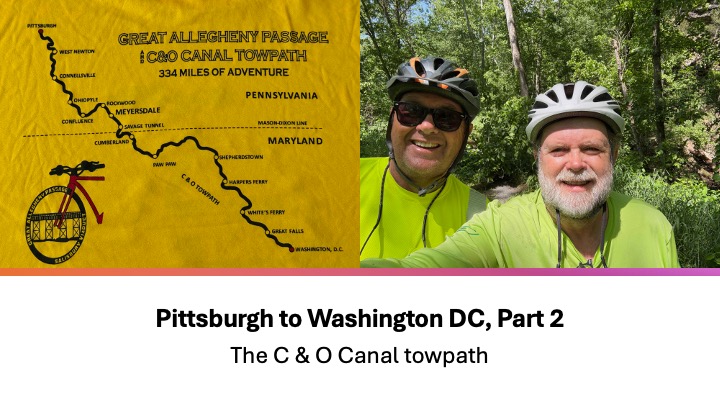
Pittsburgh to Washington DC, Part 2

Title slide with a photo of the author and his brother

For Part 1, click here.

My brother becomes a hero 

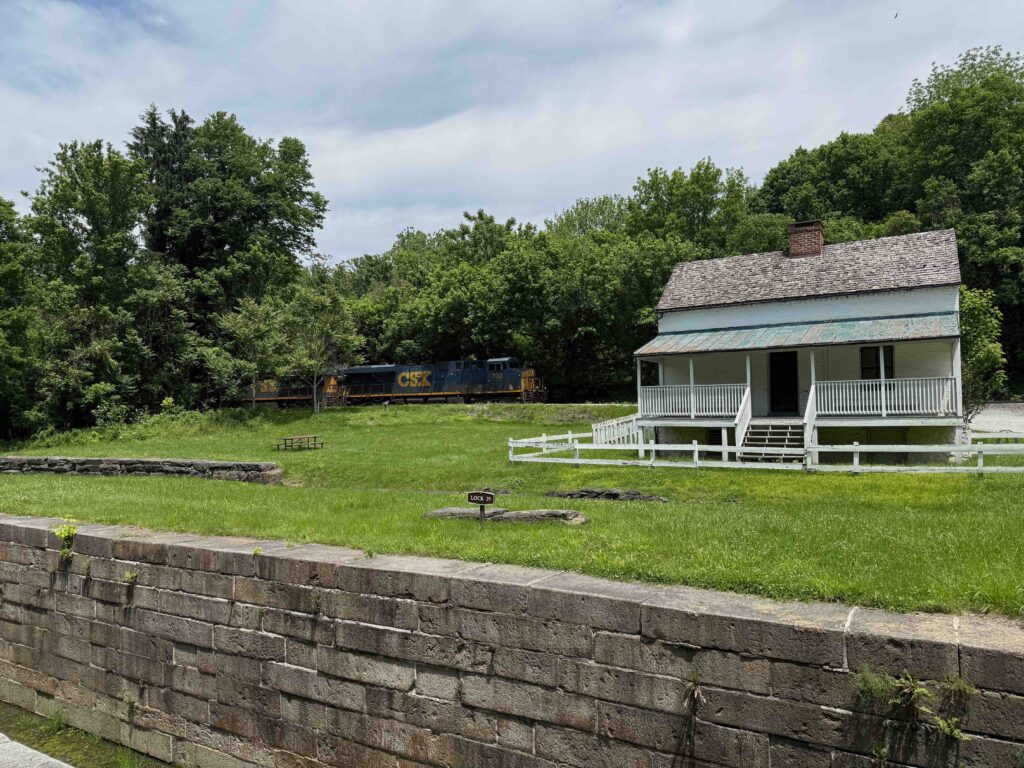
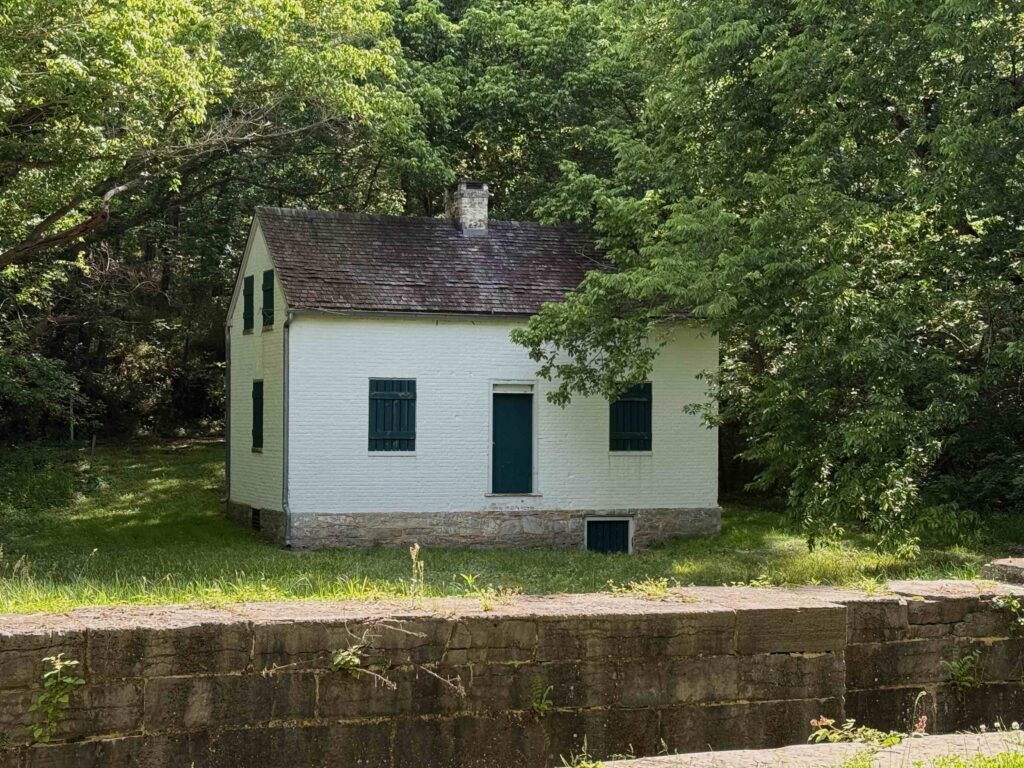
Lock and lock house
Lock and a lock house. Some of the lock houses can be rented for those traveling on the C&O.

A couple of miles from the Paw Paw tunnel, we came around a bend and noticed bicycles thrown on the ground and several people kneeling over one of them. I peddled faster, thinking someone was hurt.  When we pulled up, we saw Max and three women cyclists. No one was hurt, but one of the bikes had been taken apart. She’d had a flat. Max, seeing the stuff on the ground from the bike, said he threw up his hands and said, “there’s some engineers just behind me who can help.”  At dinner the evening before, Max and Warren discussed various metals used in bicycles. From the discussion he learned my brother was a mechanical engineer. For some reason, he thought I was one, too. The women greeted us like saviors. When I shook my head at not being an engineer and pointed to my brother, they dropped interest in me and lauded praise on his arrival. 

Warren to the rescue

We spent the next 30 minutes trying to get the bike back together. They had removed the entire back sockets and de-railer. While Warren and the woman with the broken bike worked finding what goes where, Max and I talked to the other women. They were all serious cyclists. When asked what they do when there’s a problem, they pointed to the woman whose bike was torn apart. “We call her husband. He’s a serious racer and knows everything about bikes and can walk us through what needs to happen.” Sadly, for them, we were in an area without cell service. 

Once the bike was back together, we had the owner get on it and ride it a ways, making sure everything worked. It did. We ran into them again, late in the afternoon at the bicycle shop in Hancock. This was after 30 some miles of riding. One of the employees went through the bike and confirmed everything was back as it should be. The only issue was the tire pressure was a little low, but that’s to be expected with those emergency pumps which go on bicycles. 

As they rode away, my brother joked about telling his wife how he had satisfied three women this morning. 

Saturday, Cumberland to Hancock  (61 miles of which we rode roughly 40)

Potomac River
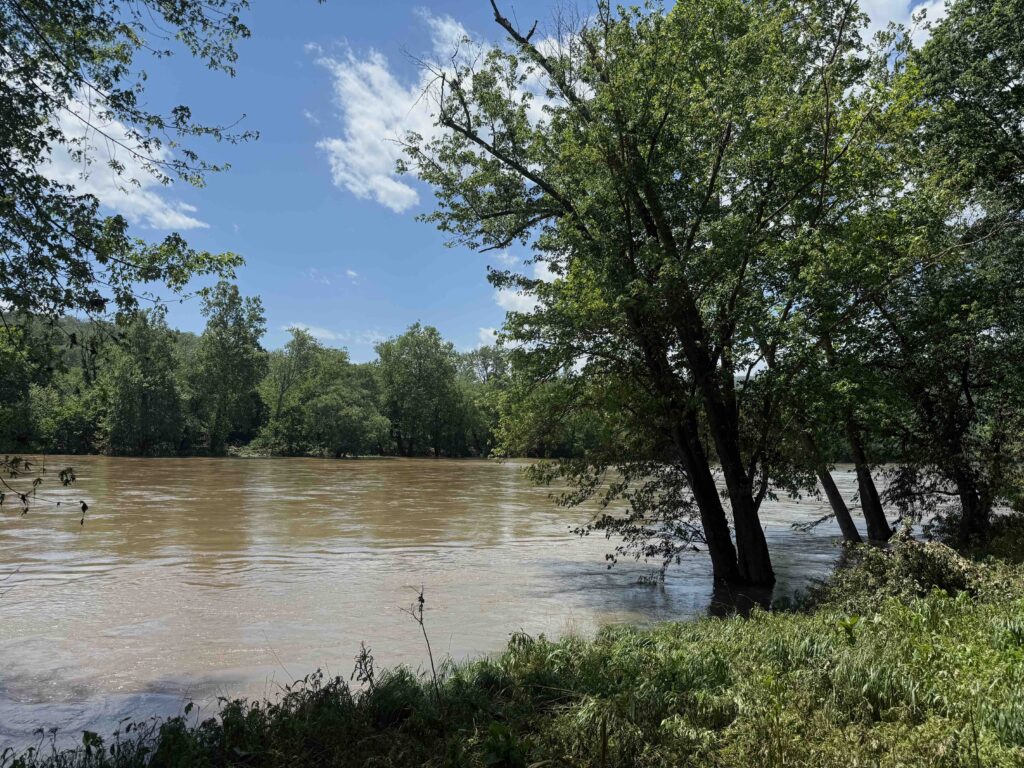
Potomac RiPonver, having fallen but still well out of its banks

This was to be the big day, 61 miles. The only problem was knowing there was a section of trail washed away in the floods about ten miles away. The National Park Service said there was no acceptable detour. We also learned from the bike shop that the road around this section was narrow, curvy, and unsafe to ride because of tractor trailers. So that morning, we arranged a shuttle for us and for Max, whom we’d talked to at breakfast. We had them drop us off at Paw Paw, cutting out about 25 miles of trail and the section that had been washed out.  

Paw Paw Tunnel

Paw Paw Tunnel walkway
Paw Paw Tunnel (My bike is pointing the wrong way)

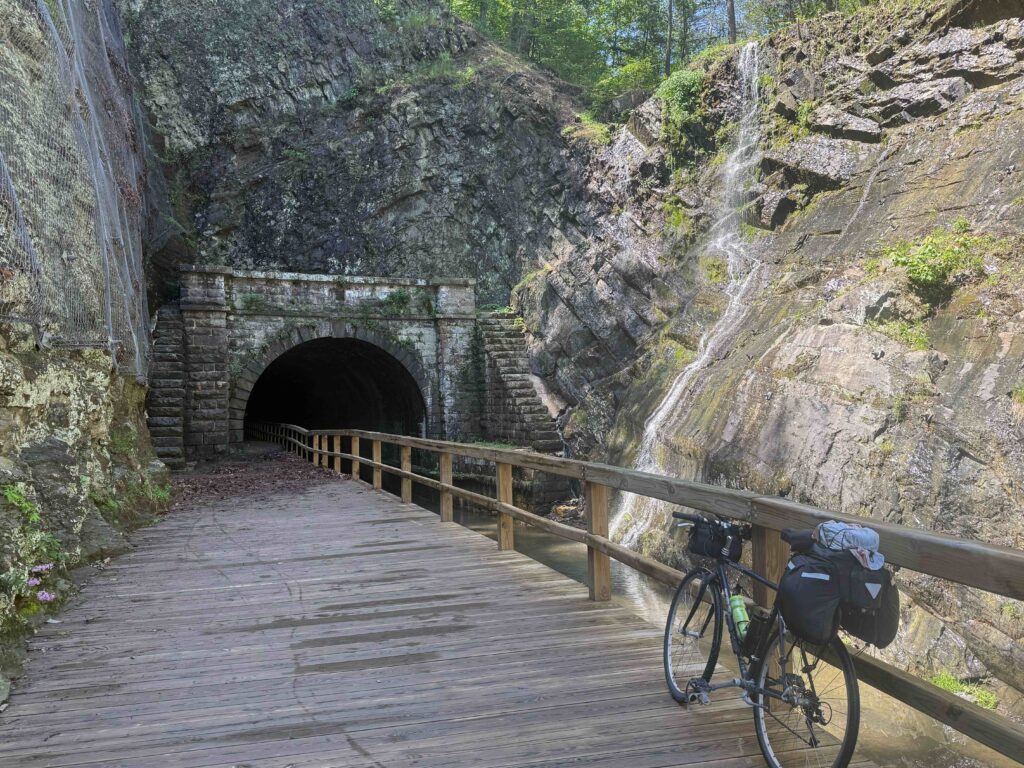
The highlight of the day was the Paw Paw tunnel, an engineering marvel for the early 19th Century. We entered the tunnel just a mile or two from where the shuttle dropped us off. Bricks lined the walls of the tunnel. Bicycles (and mules in the day) travel on a wooden walkway that was so unleveled and bumpy we quickly heeded the warning to walk and not ride our bikes. Besides, the railing was only three foot tall, making it easy to tumble over if your bike fell. I attached the light to my handlebars and began the dark cool journey through the 3118-foot tunnel. 

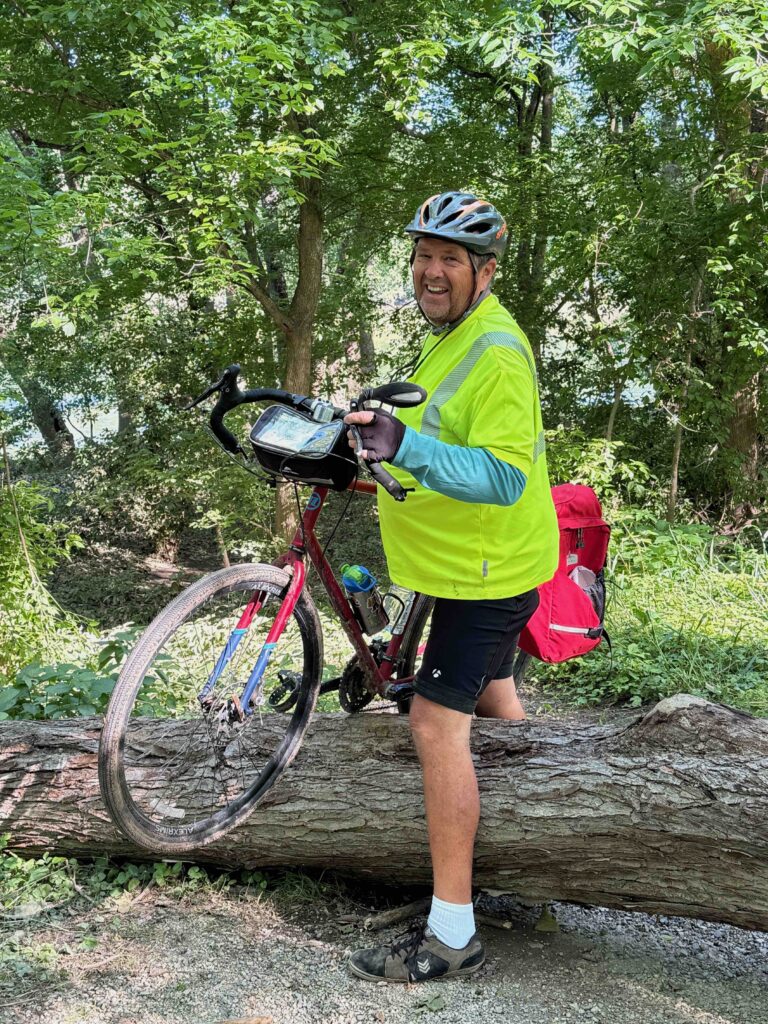
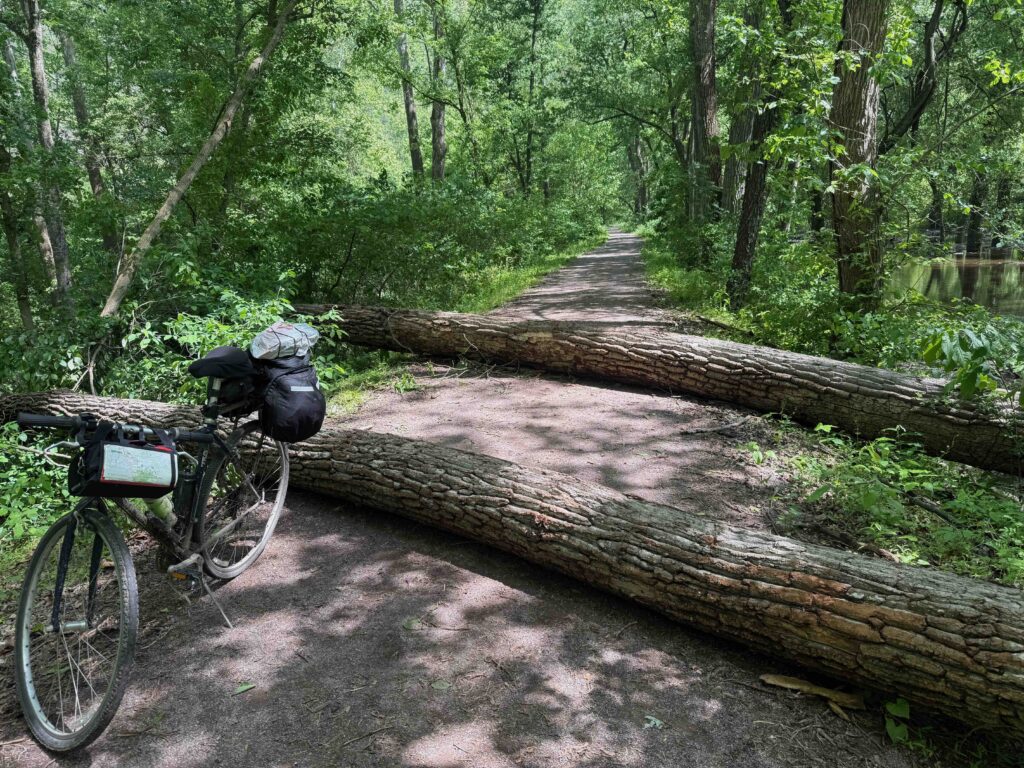
Author's brother pulling his bike over a tree
Warren pulling his bike over a tree

Little Orleans

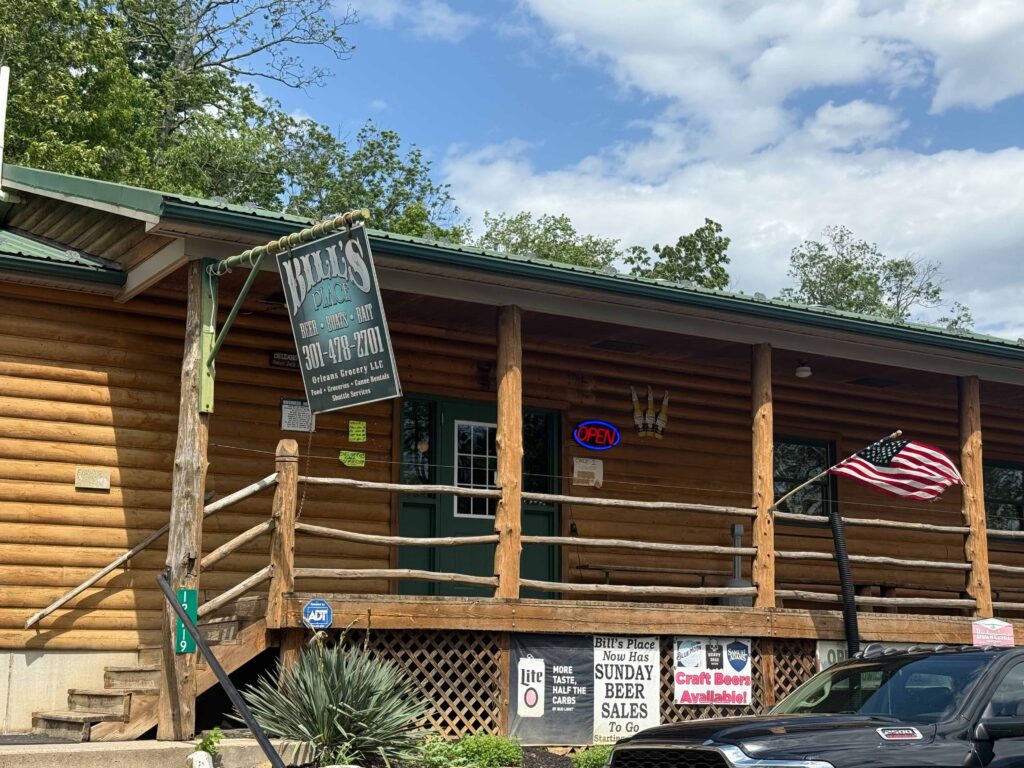
Bill's Place

The trail appeared better than we expected. While there were places with mud and many trees had fallen, requiring us to dismount and lift our bikes over them, it wasn’t as bad as some of the other places we’d heard of. We ate lunch at the Devil’s Alley Campground. When we came to Little Orleans, we left the trail and headed to Billy’s Place for ice cream. The place was a bar that served food. They advertised in large letters, “Beer, Boats, Bait.” In smaller letters the sign mentioned food, groceries, and shuttles. While we’d just had lunch, the burgers they’d fixed for a man and his wife we met outside of the establishment were enticing. 

It didn’t take long this day before my left foot became sore. Over the past couple of days, the soreness would manifest itself late in the afternoon. The evening before I realized the area around the Achilles tendon had swelled. This slowed my pace and made me want to take more frequent stops, sometimes even walking my bicycle. 

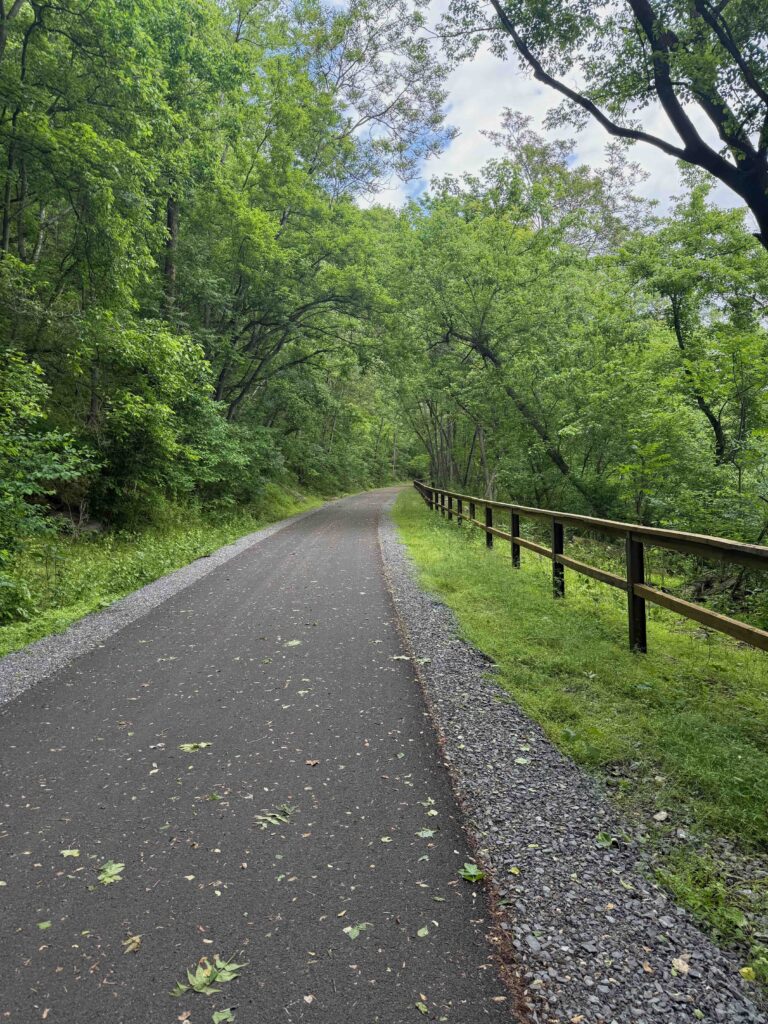
Western Maryland RR bike trail
Western Maryland Railroad bike trail.

The Western Maryland Trail begins at Little Orleans. While this path parallels the C&O canal, it’s high above the river and is paved. This old rail bed, which we’d ridden on from Connellsville on the GAP, was a welcome relief to the mud of the C&O. It was nice to bel able to ride on pavement, even though we still had trees to pull over. We rode it all the way to Hancock, except for one detour for about a mile onto the C&O as there is a tunnel that hasn’t yet opened. About three miles outside of Hancock, we came upon a group of trail workers from the Maryland Parks clearing trees which had fallen during the recent storms. 

Arriving back in Hancock

We arrived at Hancock at 5 PM, riding to the Presbyterian Church where I had left my car on Tuesday. We loaded our bikes and drove to Motel 8, where I had made reservations. On Monday night, I had stayed at the Potomac River Hotel, which looked like a bedbug haven. While it seemed to be free of bugs, the hotel had the ambiance of the 1940s. About half the lights were missing bulbs and the bathroom was small and the tub dirty. After discussing it, we decided to try the only other hotel in town. At least the bathroom was clean and larger, but the floors between the bed were soft and I wondered if one of us would fall through. 

After cleaning up, we met Max at the Potomac River Grill, across from the hotel of the same name. The food was excellent, and the place crowed. It appears to be owned by the same folks at the hotel. At least they’re doing something right. I had a wonderful burger with a salad and a Stella beer. 

After we got back to the hotel, Warren called his daughter, a physical therapist. She had me do a few moves and said she didn’t think my tendon was torn, but thought my tendon and muscles were angry and I may be suffering from Achilles tendinitis. She also recommended taking it easy, icing my ankle after walking or biking, taking ibuprofen for the swelling, and stretching in the morning. While riding, she suggested that while riding not to use toe-caps and to move my foot forward on the peddle so that I weight would be more on the arch of the foot.

Sunday morning, May 18

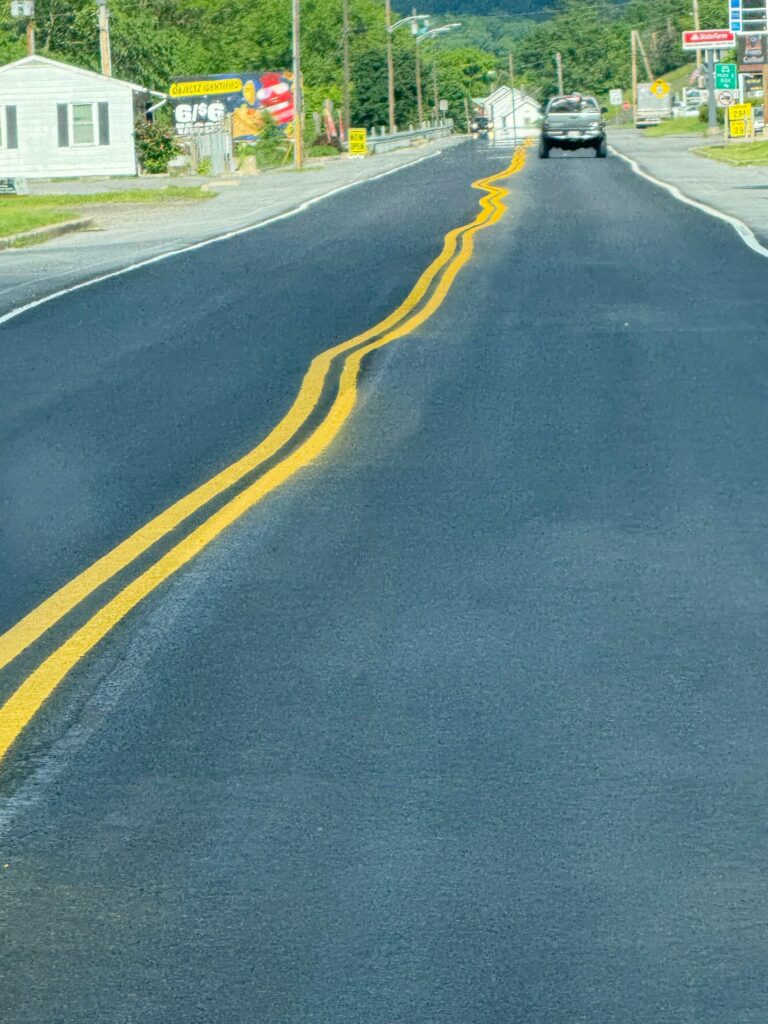
curvy lines on a straight road
Not an illusion

As Super 8s don’t provide breakfast, we drove to the IHOP on the east side of town, near the interstate. Coming back, I noticed some of the most creative line painting on a highway I’ve ever seen. Obviously, the Maryland line painters believe in drinking on the job! 

Then we worshipped with the good people at Hancock Presbyterian Church. I met Pastor Terry on Tuesday, when I left my car in the church’s parking lot. The 1845 sanctuary reminded me of the church where I was ordained as a Presbyterian minister, the United Church of Ellicottville in New York. Both brick sanctuaries featured high ceilings and a square design with cathedral style windows. While the United Church (formerly First Presbyterian) served as a stop on the Underground Railroad, the Hancock Church suffered damage during the Civil War when Stonewall Jackson’s men shelled the town. 

This morning the service honored the church’s graduates and featured a musical trio (soloist, keyboard, and bass) from Fredrick called “Solid Ground.” They lead the congregation in singing and sang several songs themselves. Afterwards, the congregation had a wonderful potluck lunch which they do once a month. If you’re ever in Hancock on the potluck Sunday, don’t miss it! 

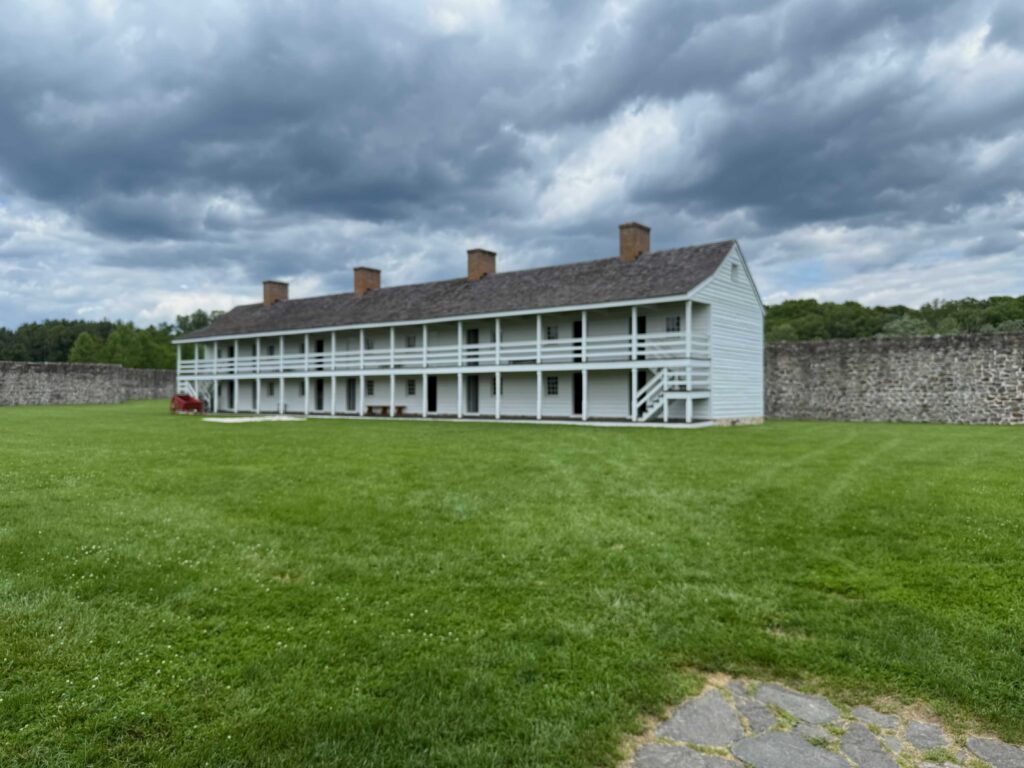
Fort Frederick

Inside Fort Frederick
Ft. Frederick

Taking my niece’s advice, I decided not to ride on Sunday, which had been scheduled for our shortest day on the C&O, only 27 miles. Instead, I drove to Fort Frederick. The British governor had the rock-walled fort built during the French and Indian Wars to protect the frontier. In the American Revolutionary War, the fort housed British POWs. It never experienced the tragedy of a battle. Overtime, much of the fort had fell into disrepair, but the CCCs rebuilt it in the 1930s. Today, it’s a Maryland State Park. I toured the fort and reconnected with Warren as the C&O passes by the site of the fort. Then I moved on to Williamsport waterfront, where I waited to pick up Warren later in the afternoon. Williamsport features an aqueduct, where the canal (and its water) crossed a local creek, which was amazing to see. 

Williamsport’s Acqueduct

That night, we stayed at a Hampton Inn in Hagerstown. For dinner, I had a pecan chicken salad and sausage chili at Bob Evans, which was across the street from the hotel.

Monday, May 19.  A free day of touring the area

The First Washington Monument
First Washington Monument

We had planned a day off, since I had a car in the area and was wanting to see the Antietam battlefield. Leaving early, we first drove to the nation’s first Washington Monument along South Mountain. This monument was built in 1827 by the people of Boonsboro, Maryland. In 1862, the people living in the valley used the site to watch the battle of South Mountain and Antietam. I first visited the monument in 1987, while hiking the Appalachian Trail. In our few minutes at the site, I met several section hikers on the trail. 

fish tacos
Fish tacos

After the Washington Monument, we headed to Point of the Rocks, to look at the C&O trail. We had seen Facebook posts of riders who became bogged in mud between Brunswick and Point of the Rocks and, talking with a bike shop owner, learned several had busted their de-railers by trying to ride through the muck.  Then we drove along roads which parallel the trail, across from Harper’s Ferry and then across the Potomac to Shepherdstown, the oldest community in West Virginia. We had lunch in this quaint town at Marie’s Taqueria, where I had three delicious fish tacos. 

Antietam

Sunken Road at Antietam
Sunken road, sight of fierce fighting, taken from observation tower

After lunch, we headed to the Antietam battlefield, first stopping at the visitor’s center to watch a movie introducing us to the battle and exploring the museum. September 17, 1862 is the bloodiest day in American history. While more died at Gettysburg, that battle lasted three full days. Lee had assembled his troops between the town of Sharpsburg (some still refer to the battle as Sharpsburg) and Antietam Creek.  Fighting began that early that morning in a cornfield north of town. It continued in several different locations over the next twelve hours, before coming to an end. Strategically, the north won the battle. They forced the South to retreat into Virginia. But the price was heavy on both armies. The significantly larger northern army lost more soldiers than the south.  Dinner for the evening was picked up at a grocery store that had a hot food and a large salad bar. 

Tuesday, May 20 (36 miles)

down trees across path

With the reports of muddy and nearly impossible sections of the trail, we decided a new plan. We would start where we planned in Williamsport and ride as far east as possible before the mud became too deep.  Leaving Williamsport, we peddled east. The two days’ rest made my ankle and Achilles feel better. I also stopped wearing my toe clips and moved my foot further up on my pedals.  I wouldn’t have problems with my ankle until later in the afternoon. 

As I was leaving Williamsport, I came up on a man walking his dog. “On your left,” I yelled, to warn him of my passing. He jumped, looked around at me, and started cussing me out. Here, I had tried to be polite and not scare him and instead, I both scared and upset him. 

Lock, lock house, and train
Competing modes of transportation: Lock, lock houses and train

At first, our only challenge was stopping every little bit to pull our bikes over trees. This area is filled with history as we passed where Lee and his army were held up by a flooded Potomac as they retreated from Gettysburg, a year after Antietam. After about 7 miles, the path started to become muddier. After another half mile, we decided to turn around and head back to my car. On our way, just after we passed a huge down tree, in which we’d each be on a different side of the tree and hand bikes over, we met a park service crew cutting fallen trees.  The last half of the ride back to my car was much easier.

Afternoon ride

Then we headed to Brunswick. We had hoped to peddle here today, but knowing there were sections of the trail out, we set out and road east to Point of the Rocks, stopping for lunch on the trail about halfway to our destination. Our thoughts were that this would give us only 48 miles to Washington on Wednesday. I appreciated seeing this site in the afternoon. The day before, still early in the morning, had the sun behind the unique train station. 

Point of Rocks

Point of Rocks station

The original Baltimore and Ohio (B&O) tracks tracks ended at Point of Rocks, Maryland . Here, the railroad and the canal locked in legal wrangling over right away. It was eventually settled, with the railroad building a tunnel, which allowed them to move the lines westward. The railroad also began building a line eastward, to serve Washington DC. In the 1870s, where the two tracks converged, forming a wye, they built a station. Today, the station closed and owned and used by railroad. The Maryland commuter rail that runs into DC boards just west of the old station. 

I waited to catch a photo of the station with a train that was slowly approaching. The train was going slow and I could have easily jumped aboard as a hobo, but then I noticed that this unit train on open containers marked with the symbol of Republic Trash Service. Dirty water poured from the containers and a rotten smell filled the air. The stench encouraged me not to take up hoboing.

Harpers Ferry

Harpers Ferry
Harpers Ferry

After riding back to Brunswick, we continued west on the trail to Harpers Ferry. This also washed out but was temporarily patched with gravel. In 1987, the afternoon before visiting the Washington Monument, I had hiked along part of this section who also serves as the Appalachian Trail. Across from Harper’s Ferry, we locked our bikes up and walked across a pedestrian bridge. My Achilles ached and I mostly hobbled along. We explored a little of the Lower part of Harpers Ferry.  Then we rode back to my car, loaded up our bikes and headed to our hotel, where I could ice my ankle. With only two hotel options in Brunswick and no B&B available, Warren had booked us in the closest hotel to the trail, a Travelodge, 1.7 miles away from the C&O.  To reach this hotel on bicycles required a hard climb (as did the other hotel which was further away). 

Hotel in Brunswick

We feared the hotel might be a repeat of the Super 8 night, but it was quite nice. It seemed odd to have a hotel like this off a major road or interstate, but we quickly surmised the hotel primarily customer to be the railroad. They even had a lounge only for CSX employees and featured a 1950s style dinner that was open 24 hours a day. A local taxi company shuttled train crews back and forth to the railroad.

A great ending dinner

Chicken and lamb shawarma

That evening, we decided to forgo the diner and try the Potomac Street Grill near the railroad tracks. They advertised both American and Middle Eastern dishes. It was a good decision. I had a delicious combo shawarma platter, with both chicken and lamb, a wonderful mediterranean salad, and a local beer for $24. 

Wednesday, May 21, 2025           zero miles on bike/350 in the car

The night before, we watched the news and weather channels for what the next day would bring. Everyone was saying 100% chance of rain, with rains heavy in the morning and again later in the afternoon. It poured as we walked over to the diner for breakfast. We decided to quit. Having already had gaps in our travels along the C&O, we could come back and do the C&O again. Besides, my Achilles hurt. 

Our plan had been to ride into DC, stay with my brother’s sister and brother-in-law, then the next day, Warren would bring me back to my car and we’d head home. Now, we’d both be home a day early. 

Great Falls
Great Falls on the Potomac, just outside Washington DC

We left Brunswick at nine, in the pouring rain, hoping to miss the worse of the traffic.  As we approached DC, the rain slowed to a drizzle. We stopped at Great Falls to witness the power of the Potomac at high water levels. Amazing rapids! A few minutes after leaving the rapids, we arrived at Hitch’s home, where we transferred my brother’s bike to his car. A few minutes later, we took off on our separate paths. For me, it rained most of the way home. 

Ankle Update

I was checked out on Tuesday. While I didn’t tear any tendons, I have angered a few. The recommendation is that I not do any bike riding or long walks for a few weeks while it heals. In addition, I will do a few weeks of physical therapy to strengthen the muscles in my ankles.

A Week on Iona

Photo of author on the isle of Sraffa

To read about my journey from Edinburgh to Iona, click here. The trip involved two trains and two ferries!

Iona Abbey from the water
The abbey from the ferry (on the day we left)

Grasping the rail to hold steady, I stand on the starboard catwalk looking out across the waters. I pull up the hood on my rain jacket.  I could go below, but I want to face the angry sea.  The engines roar and black smoke puffs from the stack as the ferry pulls away from the Flonnphort’s dock.  Moments later, we are in open water.  The north wind whistles through the channel separating Mull from Iona. The pilot steers the boat into the wind, but the waves and tide push us southward.  He increases speed as I spread my legs apart in order to remain upright. The boat rolls back and forth in the waves. 

North end of Iona looking toward Mull
North end of Iona, looking toward Mull

In a few minutes, we’re well out into the channel. The Abbey is clearly visible, standing tall in the shadow of Dun I, the high point on the island.  We’re just the latest travelers, joining a hoard of pilgrims reaching back to the sixth century.  I have no idea what the week will bring, but the roughness of the channel reminds me of the island’s isolation.  The ferry pushes harder as we approach the landing. The pilot steers the boat up into the wind then lands on the ramp.  There is no natural harbor in Iona.  The pilot keeps the engines engaged, keeping the boat in position as the crew lowers the bow ramp.  The two cars onboard are allowed to drive off first, then the two dozen or so of us passengers follow.  The first off the boat get wet when a wave breaks and crashes over the ramp.  The rest of us learn to time our departure, waiting till a lull to move out on the ramp and to quickly make our way to shore.  We’re on Iona.   

The Abbey on Iona with a large Celtic cross

On Pentecost, 563, an Irish abbot named Columba and a group of twelve disciples landed on a pebble covered cove on the south end of Iona. They found on this small island what they were looking for and established a religious community.  At this time, sea travel was easier than traveling overland on non-existent roads. The small island became a center of faith and learning that extended throughout the mainland of Britain and Ireland and surrounding islands.  Some scholars believe the Book of Kells was originally produced here.  Others think the large standing Celtic crosses, so common in Scotland and Ireland, were first carved on this island. 

looking toward Mull
Looking across toward Mull

The religious community thrived on Iona for the next couple hundred years.  People would travel by sea, making a pilgrimage to the island of the saint known as Columba. Scottish Kings sought out the island for burial.  Legend has it that even MacBeth, of Shakespeare’s fame, is buried here.  

Around the tenth century, hostile visitors from the north, the Vikings, arrived.  With their art and wealth, churches and monasteries were attractive targets.  After several raids and the deaths of scores of monks, Iona was abandoned as a center of learning.  Most of the monks moved back to Ireland. 

Augustine nunnery
Augustine nunnery

By the twelfth century, the Viking threat had faded.  The Benedictine Order reestablished the monastery on Iona, building the current Abbey.  They were joined by an Augustine nunnery, whose ruins are just south of the Abbey.  These two continued to thrive till the Scottish Reformation in 1560. Afterwards, the site began to crumble.  But pilgrims and visitors continued to come.

In 1829, Felix Mendelssohn visited and although the seas were rough and he suffered from sea sickness, he was inspired to compose the Hebridean Overture on the nearby island of Staffa.   A “Who’s Who” of British authors also made the trip including John Keats, Robert Lewis Stevenson, naturalist Joseph Banks, Dr. Samuel Johnson, James Boswell, Sir Walter Scott and William Wordsworth

After the abandonment of the monastery, the property came under the control of the Duke of Argyll.  Over time, with the harsh wet climate of Iona, the trusses rotted and the roof caved in. In the 19th Century, George Douglas Campbell, the eighth Duke of Argyll, began restoring the Abbey. Although a devout member of the Church of Scotland (Presbyterian), he allowed a number of different denominations (Presbyterians, Scottish Episcopal and Roman Catholic) to use the site for worship.  Before his death, he deeded the grounds to the Iona Trust which has responsibility today for maintaining the site.  The site is open to all denominations.  Since the 1930s, the site has been operated by the Iona Community which uses it to hold ecumenical worship and to train people to work with the poor around the world.   

puffins
Puffins on Staffa

Those who wish to participate with the community today are expected to spend a minimum of a week on the island.  Guests live as a part of the community, staying in dormitory rooms (six or eight people of the same sex per room). The guests help with the cooking and the cleaning, and participating in morning worship and evening prayers.  The community strives to bring people together from all over the world as a way to foster a better understanding of one another.  Groups meet together for Bible Study as well as to discuss other topics, with plenty of free time to explore the island or to take boat trips around the island or to other islands.  Staffa, a small island with unique geology, known for puffins that nest there in the summer and “Fingal’s Cave” is a popular destination.

Straffa
Straffa landscape

I spend my week on Iona meeting with a group led by two professors of British Universities.  Both are poets.  One teaches English while the other teaches in a seminary.  As for my chores, I am in the kitchen, mostly chopping vegetables.  Although the food is not exclusively vegetarian (we had meat three times during the week), we ate lots of wonderful vegetarian dishes that included roasted root vegetables and thick soups, all prepared from scratch.  

With my spare time I hike around the island.  Daily, generally around sunset (10:30 PM), I hike to the top of Dun I, the high point of the island.  The sunsets are incredible. At night, I can see distant lighthouses. One of the lighthouses was built by Robert Lewis Stevenson’s father in the early nineteenth century to warn boaters of Torran Rocks. This is also the site Stevenson’s chose for the shipwreck in. his book, “Kidnapped.’  I also gaze out on other islands in both the Inner and Outer Hebrides chain.  Twilight seems to go on forever and provides some of the most beautiful light on the island and sea.

Sunset from Dun I, on Iona

Friday is my last day and I, along with many other pilgrims, are leaving on the 8:15 AM ferry.  Its drizzling rain, but calmer than the day I’d arrived. The Iona staff gather at the dock to wish us a safe trip.  Once the ferry lands in Fionnphort, there’s no time to waste.  A bus waits. We load up and ride across the Ross of Mull and Glen More, to Craignure, where we meet another ferry.  It’s nearly an hour over to the mainland, to Oban, where we board a waiting train.

Worship in the Abbey

Most of those whom I’d spent time with on Iona continue on to Glasgow and home.  But not me.  At Crainlarich, where the Oban branch merges onto the Northwest Highlands mainline, I say my goodbyes to friends and step off the train. Thirty minutes later, I board a northbound train, taking me through Fort Williams and over the Glenfinnan trestle (made famous in the Harry Potter movies), and on to Mallaig where I catch the ferry to the Isle of Skye.  

Magazine cover of Skinnie Magazine in which this story first appeared.

This story originally appeared in The Skinnie, a magazine for Skidaway Island, on September 22 , 2017.

 ScotRail

Cl