Lessons from the Wisemen

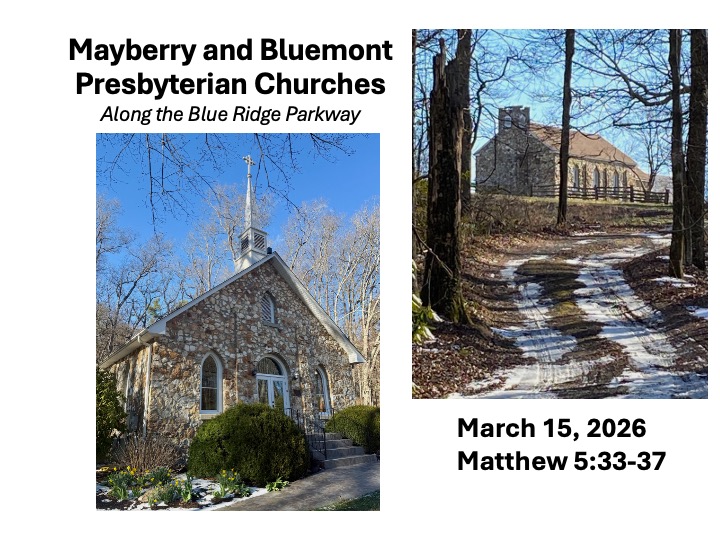
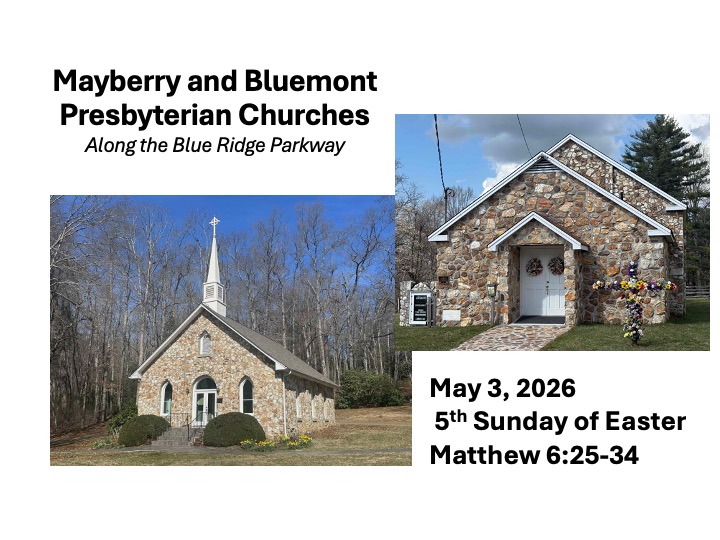
title slide with photo of the two churches at Christmas

Jeff Garrison
Mayberry and Bluemont Churches
December 28, 2025
Matthew 2:1-12

Sermon recorded at Mayberry Church on Saturday, December 27, 2025

At the beginning of worship:

There has often been speculation about a fourth wiseman. Gary Larson’s “Far Side,” depicted him rejected at the manger because of his gift, a fruitcake. I happen to like a good fruitcake, so I don’t think that’s as funny as others. 

Henry van Dyke wrote a short story about a fourth wise man.[1]Artaban, like the other three wisemen, saw a star in the east. He, too, collected gifts, his being gems and pearls, and set out to meet the other wisemen for the journey to find the newborn king. Artaban’s compassion caused him to become sidetracked, which resulted in a longer journey. He barely began his trip when he came across a sick man. Unable to leave him in the road to die, he cared for him and then gave him a sapphire so he could buy medicine and care for himself. The other three are now way ahead of Artaban, but he continues. 

He arrives in Bethlehem around the time of Herod’s killing the innocent boys. He uses another precious stone to bribe the soldiers not to go into a home where a young boy lives. Artaban wonders if he’ll have any presents left when he reaches Jesus. He continues searching and helping those in need. He goes to Egypt as Jesus and his family heads to Nazareth. Artaban keeps looking for Jesus but is always too late. He searches for 33 years. 

Finally, he’s in Jerusalem. Jesus has been led out to Calvary, but even here he stops to help others. He pays the ramson for a slave. Now penniless, he feels he failed, only to meet the risen Christ, who thanks him for his kindness. “What you did for the least of these, you did to me,” Jesus said. Artaban achieved his goal without knowing it. 

Before the reading of Scripture:

As I’ve been doing since Advent, I’m following Matthew’s gospel.[2] Last Sunday, we heard Matthew’s rather brief reporting on Jesus’ birth. Now, we learn of those who are drawn to Jesus. Luke, in the passage we listened to on Christmas Eve, points to the shepherds. Matthew tells us of the coming of the wisemen. This passage, which brings foreigners to the baby Jesus, foreshadows the ending of Matthew’s gospel where Jesus sends the disciples with his message out to the ends of the earth. 

In his mammoth work, The Birth of the Messiah, the late Raymond Brown, a Roman Catholic New Testament scholar, tells about how after the Protestant Reformation, the Roman Church continued to lift up the tradition of the Magi while we in Protestant Churches focused more on the Shepherds.[3] While an interesting thought, we should remember Scriptures give equal weight to the shepherds and magi. Both are unlikely candidates to celebrate the birth of a King, just like Mary and Joseph, poor Jewish folk, are unlikely candidates to be the parents of Jesus. God works in mysterious ways.   

Read Matthew 2:1-12

There are several angles I could take to point out the truths contained in the story of the wise men. Let me highlight three and suggest how they apply to our lives:

1. The wise men make it a priority to seek out Jesus.

2. Finding Jesus, they respond giving gifts of thanksgiving, without expecting of anything in return. 

3. Having encountered Jesus, they know their loyalty is to a higher power and ignore the demands of King Herod.

Let’s look at each one. We don’t know why the wise men choose to follow a particular star. We don’t even know who these guys are. It’s generally assumed they’re from Persian. Some scholars suggest Zoroastrian priests who spent time studying the stars. God placed that star, or the conjunction of planets, or an unfamiliar comet, or a supernova, or whatever it was into the skies to catch their attention and to draw them to Judea.[4]

It’s obvious they are not Jewish; otherwise, they’d know to head to Bethlehem. But whoever they are, they knew something’s up and feel obliged to check it out. This meant taking a long journey to a distant land. It’s important to find Jesus, so they take the risk to seek him. 

Finding Jesus should be that important to us. Responding to Jesus’ call is the most important decision we will make. It should over-ride all our wants and desires. When we decide to seek Jesus out, like the wise men, we’re called on a journey of which we have little control. We’re no longer our own; we belong to our Lord.   

What might we learn from the wisemen’s search? They first head to Jerusalem, the holy city, a place of excitement. Herod’s palace and the temple are there. Pious people pack the street, carrying out the work of the temple. Pilgrims trek there to worship. 

It seems natural to assume Jerusalem would be the place for the birth of a king. But that’s not where they find Jesus! Instead, they’re led to a small dumpy town, five miles away. A poor suburb, inhabited with shepherds and goat herders, supplying meat and animals for the appetites and sacrifices of those in the capital. Flashy isn’t one of God’s traits. God humbled himself by coming to us as Jesus. We often find Jesus, in humble circumstances. To encounter Jesus, we must be humble. Being splashy or hanging out with the popular crowd isn’t a guarantee of Jesus’ presence. Jesus comes to those who humbly admit their needs for a Lord and Savior over their lives.

Now about giving. One of the most important lessons for a Christian to learn is that giving is as much a blessing as it is an obligation. And it’s not just giving money, although the Scriptures are clear the faithful should regularly give our resources for God’s work in the world. But we are also called to be generous with our time and abilities, helping not only the church but also one another. We feel good about ourselves when we give, especially when we give without expecting anything in return. 

Furthermore, when someone does something nice for us, we feel compelled to respond. We may do this simply by saying “thank you” or we may go out of our way to do something nice for the other person. We should also teach our children to be gracious. It’s an important trait for nothing is sadder than someone who is unable to give or acknowledge what someone did for them.

The story of the three wise men shows the importance of giving without being asked and without expecting anything in return. Think about it. A group of foreigners present gifts to a child they don’t know. 

Now let’s now examine our story closely: Contrary to the popular carol and the ubiquitous nativity scenes, we don’t know for sure that there were only three wisemen. Instead, we’re told that they were three gifts and so it’s natural to think of three bearers of the gifts, but they may have been more, that fourth wiseman suggested by Gary Larson and Henry van Dyke. 

Over the years a lot has been made about the three gifts. We naturally associate gold with kings. Fragrant substances, often imported from distant lands, seem fitting for royalty. Myrrh, used in the anointing oil for a priest, aligns with the Messiah, the “anointed one.” Frankincense, used with prayers in the temple, may imply Matthew saw the gift foretelling a time when the baby Jesus would be worshipped as God. However, this is speculation. The gifts may have just been those considered worthy of a King.[5]

The wise men know they need to worship something greater than themselves. They need to worship God who considers us so precious that he comes in the flesh. In coming, they fulfilled the passage from Isaiah, about the light of Israel arising and the nations and kings coming to see the glory. In fact, from the Isaiah passage, we get the transformation of the wise men into kings.[6]

In the Old Testament, light often symbolizes the presence of the Lord and salvation. Israel was to be a light to the nations because she had a special relationship with God. The coming of God in Jesus Christ fulfilled Israel’s ability to be that light to all people. The foreign Magi heralded the fulfillment of this prophecy by being the first to worship Jesus.

There is a saying that God cannot pour his blessings into a tight fist.[7] The wise men were able to be blessed because they came with open hands. But Herod, and the people of Jerusalem, afraid of this thing happening in Bethlehem, were tight fisted. And they missed the glory of Bethlehem.

The wise men express love to the baby Jesus. It was a gamble to go into a foreign land and search out a new king not born in the palace. They take their chances and are remembered today. At the same time, Herod and those in Jerusalem also had a chance to worship the newborn Messiah. But concerned with what they might lose, they lose the opportunity to worship God in the flesh. We remember them, but not for the same reasons. The wise men, who made gifts without expecting anything in return, remind us of our calling as Christians. We’ve been given a great gift. In return, and without expectations, we’re to be generous.   

Finally, consider the loyalty of the wise men to a higher authority. Tying the story of Herod together with the wise men provides us with a counterplot. We’re reminded that even though the Messiah has come, evil remains a seductive threat in the world. Herod’s false humility almost thwarts God’s plan as the wise men, at first, appear to believe his sincerity. The threat of evil is genuine. We can easily find ourselves looking for a Savior in all the wrong places.

Evil has as much power as we give it. Hitler would have never been able to take over Germany and do what he did without the support of others. Nor would any of the other horrific giants in history. They started as wolves in sheep clothing and because not enough people spoke up, soon enough, they carried out their reign of terror.

Of course, God’s Spirit helps the wise men discern Herod’s true intentions. The Magi find the child in Bethlehem, worship and give him gifts. When they leave, they take the bypass around Jerusalem. They remind us that our loyalty is first and foremost to God.[8] Although as Christians, we’re called to obey those in authority, our allegiance has limits. Our commitment to God always comes first.  

Three things to take home and ponder: Seek Jesus, give graciously, and remember that our loyalty to God trumps all human allegiances. Amen.


[1] William White, Stories for the Journey (Minneapolis Augsburg, 1988), 110-114.

[2] This is one of the areas the lectionary drives me crazy. It places the flight into Egypt and the killing of the innocent children around Bethlehem this week and the coming of the wisemen on Epiphany, to fall into the 12 days of Christmas. I prefer to preach continually through a passage (Lectio Continua) and so I’m following the Matthew passage on the birth which runs from Matthew 1:18 through chapter 2.  

[3] Raymond Brown, The Birth of the Messiah (New York: Doubleday, 1993), 197-198.

[4] Raymond Brown, 167-173, goes into detail about the origin of the wise men and the star.

[5] Douglas R. A. Hare, Matthew: Interpretation Commentary (Louisville: John Knox Press, 1993), 14.

[6] See Isaiah 6:1-6 (especially verse 3).  Also see Psalm 72:10-11.  Brown, 187-188, has a detailed account on how the wise men or Magi were transformed into “kings.” 

[7] John Guest, Beating Mediocrity: Six Habits of the Highly Effective Christian (Grand Rapids: Baker, 1993), 154.

[8] See Romans 13.

Christmas Eve 2025

title slide with photo of candles leading into sanctuary

Jeff Garrison
Christmas Eve 2025
Mayberry Presbyterian Church

The sermon was recorded the morning of Christmas Eve.

A few years before I moved up here on the Blue Ridge, I lived on an island outside of Savannah where you could have the Wall Street Journal delivered every morning before sunrise. One morning, a few days before Christmas, I picked up the Journal and began to scan the headlines. One title caught my attention. “The Salvation of the Napalm Girl.” 

I knew immediately who the article was about. She’d never sought fame, but her photo was captured on film when I was a Junior High student. I expect many of you may also remember the tragic photo of her, a young girl with her clothes burned off, running and screaming. It became an iconic image of the Vietnam War. Napalm burns and leaves the victim, if they survive, scarred for life. She became bitter. I read the article almost 50 years after the tragic events. She still requires treatment for her burns.

Her name is Ms Kim. A decade after the photo was snapped, when she was 19, she attended a small church in Vietnam on Christmas Eve. She heard the pastor deliver a Christmas message which would be familiar to us. Christmas is not about gifts carefully wrapped and placed under a tree. Christmas is about the gift of Jesus Christ; God wrapped in human flesh. A change came over her life and for the first time she experienced peace. 

The story we heard tonight for the umpteenth time has that kind of power, the power to change lives. And the story is about people every bit as overlooked as Ms Kim. 

Bethlehem wasn’t known as a thriving town. The village sat off the beaten path. It’d seen its better years as Jerusalem grew and became the place to be. When you entered the city limits, there might have been a commentative sign acknowledging their favorite son, David, who went on to be the King of Israel. 

There may have been some who still harbored ill feelings toward David. After all, he was the one who put Jerusalem on the map, which would soon eclipse Bethlehem. David positioned the Ark of the Covenant on the spot where Solomon would build the temple and the rest is history. Since those two, David and Solomon, almost a 1000 years earlier, Jerusalem prospered while Bethlehem slipped into obscurity.

Bethlehem was the type of town easily by-passed or driven through without taking a second glace. It might have had a blinking stoplight, or maybe not. It’d be like the towns we pass through when we get off the interstate and head down an old highway.

Bethlehem could have been a setting for an Edward Hopper painting. Hopper is mostly known for “Nighthawks,” a painting of an empty town at night with just a handful of lonely people hanging out in a diner. It’s often been parodied in art, with folks like James Dean, Marilyn Monroe, and Elvis Presley sitting at the counter. This sparse painting creates a sense that time has passed the town by. 

Or maybe the town could be a setting for a Tom Wait’s song—the scratchy roughness of his voice describing lonely and rejected people, struggling through life.

In many ways, Luke sets up Bethlehem by placing the birth of the Prince of Peace in a historical context. In Rome, we have Augustus, the nephew of Julius Caesar. Some twenty-five years earlier, he defeated his enemies, and the entire empire is now at peace. The glory of Rome far outshines Jerusalem and makes Bethlehem seem like a dot on a map. Yet, Caesar’s power reaches out to places like Bethlehem, even though he probably never even heard of the hamlet. And, of course, the peace Rome provides is conditional. It’s maintained at the sharp points of its Legion’s spears and swords. Those who would like to challenge the forced peace face the real possibility of crucifixion. Luke also tells us Quirinus is the governor of Syria, another Roman, a foreigner, who control events of the region.

Those rulers in high places dress in fancy robes, eat at elaborate banquets, and live in lavished palaces. They aren’t bothered by the inconvenience their decrees place on folks like Mary and Joseph. This couple is one of a million peons caught up in the clog of the empire’s machinery. If the empire says, jump, they ask how high. If the empire says go to their ancestral city, they pack their bags. It’s easy and a lot safer to blindly follow directions than to challenge the system. So, Mary and Joseph, along with others, pack their bags and head out into a world with no McDonalds and Holiday Inns at interchanges. For Mary and Joseph, they set off south, toward Bethlehem.

If there were anyone with even less joy than those who lived or stayed in Bethlehem, or those who made their way to their ancestorial home, it would be the shepherds. These sheepherders remained at the bottom of the economic ladder. They spend their time, especially at night, with their flocks grazing. The sheep are all they have. They must protect them. They can’t risk a wolf or lion eating one of their lambs. So, they camp out with the sheep, with a staff and rocks at hand to ward off intruders. They don’t even like going to town because people look down on them and complain that they smell.

You can’t get much more isolated than this—a couple who can’t find proper lodging in Bethlehem, with the wife who’s pregnant, and some shepherds watching their flocks at night. But their hopelessness quickly changes as Mary gives birth and places her baby in a manger. There is something about a baby, a newborn, which delights us. Perhaps it’s the hope a child represents. Or the child serves as an acknowledgement that we, as a specie, will live on. While birth is a special time for parents and grandparents. An infant child also has a way to melt the hearts of strangers. We smile and make funny faces and feel especially blessed if the mother allows us to hold the child for just a moment.

This child brings joy. Joy comes not just to the parents, but also to the angels. The angels share the joy with the shepherds. The shepherds want in on the act, so they leave their flocks and seek out the child. All heaven sings and shares the song with a handful of folks on earth. The shepherds also are let on the secret that, so far, only Mary and Elizabeth and their families share. This child, who is to be named Jesus. His name is the same as the Old Testament is translated as Joshua. Joshua saved the Hebrew people after Moses. Jesus saves the world. Soon, in a few generations, Jesus’ message will spread around the known world.

And for this night, the sleepy hamlet of Bethlehem, a stable is filled with joy. The darkness cannot hide the joy in the hearts of this young mother and father and the shepherds. Something changed. Yes, a child has been born. But more importantly, God is incarnate in this child. God comes in the flesh; in a way we can understand. God comes in a way to relate to all people, from lowly shepherds to the oppressed people living on the edge of an empire, and to all the world. This child, whose birth we celebrate, brings joy to the world.

And now, for this moment, although they don’t realize it, Bethlehem eclipses the important towns like Jerusalem and Rome. Truly, in God’s economy, the last will be first. 

Friends, as we light candles and recall this night in song, may you be filled with the joy of hope which comes from placing our trust in Jesus, who was born in stable. He would grow and teach and heal. The only crown he’d wear would be one of thorns as he was being mocked on his way to his execution. But death couldn’t hold him. His kingship continues. It survives all earthly kings. We continue to worship him long after the Caesars of the world have been forgotten. Amen.

Jesus’ Birth in Matthew: A New Beginning

title slide showing photos of the inside of Mayberry and outside of Bluemont, decorated for Christmas

Jeff Garrison
Bluemont and Mayberry Churches  
Matthew 1:18-25
December 21, 2025

Sermon recorded at Bluemont on Thursday, December 18, 2025

At the beginning of worship:

The holiday stands in contrast to the birth of the Prince of Peace, as we used to witness in the chaos of shopping. Today, it’s a little less hectic today as we do most of our shopping online… We’ve just pushed the chaos off onto postal and delivery workers.

Several years ago, a woman shopped in one of those big city department stores. A multi-floored building, with escalators and elevators to whisk you from floor to floor. One floor was devoted just to toys. Her four and six-year-old kids considered it heaven. The mother thought it another place. 

Her kids sang the “I want this” song repeatedly. Not the exactly the same as the “repeat the sounding joy,” we hear in “Joy to the World.” On every aisle they discovered a new “I gotta have” toy. 

Frazzled and about to come unglued, the lady finally paid for her purchases. She dragged the bags and her two kids to the elevator. The door opened. She and the kids and the presents squeezed in among everyone else. As the door closed, she let out a sigh of relief. Then she blurted, “Whoever started this whole Christmas thing should be strung up!” 

From the back of the elevator, a calm but a bit sarcastic voice responded, “Don’t worry, madam, we already crucified him.”[1]  

The Christmas story is all a part of a larger drama of God’s directing. Christmas celebrates God coming to us in a way we can understand. It’s a genesis, a new beginning. In that child born of Mary, a peaceful joy enters to the world. We can now experience forgiveness and to be reunited with God. There’s a link between Christmas, Good Friday and Easter. 

Before reading the Scripture:  

Surprises fill the Gospel of Matthew. It begins with a genealogy of Jesus. That seems innocent enough, but within the names, we find scandals. Four women appear, none of whom met the Jewish holiness standards. Two are foreigners, and there’s a prostitute, an adulterer, and one involved with her father-in-law…[2] Matthew drives home the point. God works in mysterious ways and can use anyone to further the kingdom. 

Following the genealogy, we learn of Jesus’ birth. While he’s given the name “Jesus,” he’s also given another name, Emmanuel, which means “God’s with us.” That’s the whole story of Jesus in a capsule. Let’s listen to the text. 

Read Matthew 1:18-25.

Christmas often doesn’t seem peaceful. Pressure builds as we strive to find the right gifts for our loved ones, or fix the perfect meal, or attend all the events and concerts and plays. 

Birth is always an exciting time, for when a child is born there is no telling what might come from his or her life. But for this child, the child Mary carries, there’s something even more special about him. He’s the Messiah. But not the Messiah folks expect. He’s not going to be a great military leader wiping our enemies. He’s not going to be a pretentious king sending decrees out from his throne in Jerusalem. A carpenter who later in his life, becomes teacher and a healer. Instead of providing earthly rewards, he erases the gap between us, citizens of earth, and God. He comes to save us from ourselves, from our sins, and from our failures at trying to be our own gods.  

God certainly chose a unique way to bring the Messiah into the world. Our text begins simply: “the birth of Jesus took place in this way.” Interestingly, the word for birth used here literally means “the genesis.”[3] With Jesus, there comes a genesis, a new beginning. If you look at the opening chapter of John’s gospel, you’ll see John drawing upon the images of creation as recorded in the first chapter of Genesis. Likewise, Matthew reminds us that this isn’t just an ordinary birth. God is starting anew. 

This is a new beginning, a genesis. In Romans 5, Paul makes this analogy, comparing the works of Adam, who brought death into the world, with the works of Christ, who brings new life.[4] With Christ, our history with the Almighty, with our Creator, a history marred since Adam, starts over.

This new beginning starts with a young woman, not yet married, yet pregnant. Her fiancé, we’re told, is a righteous man. It’s not easy to be an unwed mother today, but an unwed mother in the first century was in a real pickle. She didn’t have the social services we enjoy today to help such individuals and in a harsh religion which frowned on moral failure, such a woman had few options. She and her child would always be a social outcast. But Mary wasn’t just any woman with an out-of-wedlock pregnancy. She was carrying the Messiah… Yet, her situation is precarious considering the pivotal role she plays in salvation history.

As expecedt, this shocks her fiancé We’re told he planned to quickly dismiss Mary which may sound harsh, but not in the culture of that era. He could have gone public and humiliated Mary and, at the same time, made himself look righteous. Because Joseph would have been wronged yet so righteous, his sad eyes would have drawn women. They’d fall at his feet. But instead of boosting himself at Mary’s disgrace, he decides to quietly dismiss her. Joseph would now have to take the heat. It was an honorable thing to do, for he would protect Mary from crowds (after all, there might have been those willing to stone her).

From this story, we learn something about the true nature of righteousness. It’s not just doing what is right according to the laws or customs. It means taking on, at the expense of oneself, the guilt of another. Christ does this for the world. To a lesser but still significant manner, Joseph’s does this for Mary. It’s no longer Mary against the world, but Mary and Joseph and, of course, God. 

The glue holding this passage together is the Holy Spirit. A divine matchmaker, the Spirit impregnates Mary, bringing life into her womb and setting off this genesis, this new beginning. The Spirit also works on the other side of the equation, with Joseph, getting him to buy into the plan. Through a dream, an angel informs Joseph of Mary’s righteousness and God’s plan for the child she carries. When Joseph awakes, he decides not to dismiss Mary, but to go ahead with the wedding. They’ll marry and together raise this child and participate in God’s plan for reconciling himself to a fallen world. Joseph listened to God message in this dream. 

As I’ve shared before, when I was considering seminary, I had several dreams affirming my decision. I’m not sure I would have been as willing and ready to quit a job, sell a house, and move four states away had it not been for those dreams. In one, I found myself asking if it was worth it as I didn’t really think I was cut out for all this. But in this dream, I heard a very distinct voice saying, “Go ahead and go, and when you’re done, you’ll know what you’re to do.” Notice that I did not know where I was going or what it was that I’d be doing. I had to step out in faith, just as Joseph’s decision still required faith. But these dreams gave me the confidence I needed to pack up and head to seminary.  

Joseph’s dream shows us the importance of listening to God and when we listen to God and follow his path, we find peace. Let me clarify. I don’t think listening to God means trying to understand all our dreams. Often our dreams are a way our minds sort out stuff. Instead of investing large amounts of time trying to understand what our dreams tell us, we need prepare ourselves to hear God’s voice by studying Scripture, praying, and being open to hear God by whatever means the divine comes to us. 

God’s word can come many ways: in our sleep, through a thought we have while walking or driving, or in a conversation. It may be spoken through a sarcastic voice in the back of an elevator in a crowded department store. What’s important is that we know God’s word enough to make sure what we hear is from God. Notice in our account today how the angel of the dream reminds Joseph of the prophecies in Scripture. For him, that formed the assurance he needed to know God was behind this.

A second clarification needs to be made is about the meaning of peace. Obviously, if you read beyond the first chapter of Matthew, which we’ll do on the Sundays after Christmas Day, you’ll see that peace eludes Mary and Joseph. They flee as refugees to Egypt to escape Herod. The peace they had, in that little bundle of joy they protect, comes from knowing they’re doing God’s will. God’s Spirit guided them, providing the strength they desperately need. God’s peace doesn’t mean the absence of conflict, but the assurance of God’s presence. As the Psalmist reminds us, it’s the peace that overwhelms us even in the “shadows of death.”[5]   

This passage is about the work of the Holy Spirit, guiding and directing mere mortals, like you and me, to help bring in God’s kingdom. Life is like this. It’s not about us; it’s about God. As for us, today, we, too, need to be open to experiencing that prod from God to take the risk before us. We need to be prodded to step out in faith. God’s Spirit gives us new life. In our prayers, in our Bible Study, in our mediation time, in times of quietness which may only come when we’re asleep, we need to be open to hearing God’s invitation to participate with him in bringing about the kingdom. 

We learn in the first chapter of Matthew that God works through ordinary people. In It’s Up to Us. John Kasich writes, “Leadership comes in all shapes and sizes, but it almost always starts at home and grows from there.”[6] Well, sometimes, it starts in a manger. And it starts when we respond to God’s call, for God can do great things through us, sometimes frightening things, but almost always things we wouldn’t dreamed of doing on our own. 

When we hear God’s call and we answer, God gives us the peace to know that he’s with us and will guide us so that we might do whatever small part we’re called to do to bring about God’s kingdom. Joseph listened to God. Will we? Amen.  


[1] I have told this story several times. I read the story and modified it from one used in a sermon by Dr Clayton Cobb, St Peter’s by the Sea Presbyterian Church, Rancho Palos Verdes, CA.

[2] Tamar (Genesis 38), Rahab (Joshua 2), Ruth (the Moabite with her own book in the Bible) and Bathsheba (2 Samuel 11)

[3] Dale Brunner, The Christbook, Matthew 1-12 (1992, Grand Rapids, Eerdmans, 2004), 23.

[4] Romans 5:12-21

[5] Psalm 23.

[6] John Kasich, It’s Up to US: Ten Little Ways We Can Bring About Big Change (Hanover Square Press, 2019), 108.

Advent 3: The Doubts of the Faithful

Jeff Garrison
Mayberry and Bluemont Churches
December 14, 2025
Matthew 11:2-15

Sermon recorded at Mayberry on Friday, December 12, 2025

At the beginning of worship:
The Chinese have a legend about a man who strayed into the Land of the Fools. In this new country he witnessed a strange sight. People fled in terror from a field at harvest. “A monster,” they yelled. Seeing nothing alarming, the man ventured into the field and discovered the object of everyone’s fear: an overgrown watermelon. 

The stranger offered to kill the monster. He walked into the field and bravely drew his knife and cut the melon from its vine. Lifting the object of their fear for all to see, he cut it in half. Then he dug out some of the center of the melon and ate it.

The people assumed if this man would eat a monster, he’d eat them too. They grabbed their pitchforks and torches crying, “He will kill and eat us, unless we get rid of him. They drove the man from town.

Later, a second man came into the Land of Fools and the same thing happened. But instead of offering to take care of the monster, this man listed to the people. He tiptoed away from the monster, respecting their fear. Slowly, he gained their confidence. He spent time in their homes teaching them. In time, they lost their fear of melons and even began to cultivate them.[1]

Which of these two visiting strangers acted the most like Jesus? 

Before reading the Scripture:
Last week I reminded you the lectionary, which I am preaching from for a few months, devotes two weeks during Advent to John the Baptist. In Matthew’s gospel, the first week is John’s ministry of preparation before Jesus began his ministry. The second week is devoted to a time near the end of John’s life. A few years have passed and John’s in prison. With a lot of time on his hands, he wonders if he got things right. He claimed Jesus to be the Messiah, the coming one, but now he’s not so sure.  

Even saints have doubts and it’s easy to become depressed when you lose control of your life and can do nothing to wait. We need to remember that we’re judged based on our faith, not our doubts, for if we are so sure of things, there would be no need for faith.

Read Matthew 11:2-15

As an unborn child, in his mother’s womb, John recognized the embryotic Jesus in Mary’s womb. We’re told John kicked with joy when Mary, Jesus’ mother, visited Elizabeth.[2]  

On the banks of the Jordan, where John prepared people for the coming of the Messiah, he spots Jesus from a distant and calls out to him. And when Jesus wants to be baptized, John questions the propriety of such an action. After all, he claims not to be worthy to untie his shoes.[3]

But things change. Reports of Jesus activity spreads across the land. It even reaches John, who sits rotting away in prison. With lots of time on his hands, his mind begins to wander. Is Jesus really the one?

As we saw last week, looking at Matthew 3, John expected the Messiah to come in a fury. He would raise his winnowing fork like a sword, ready to separate the chaff from the grain. John depicts a wicked world filled with snakes and sinners in need of repentance. John sees the Messiah’s job to clean up the Israelite’s act. I’m sure he hopes, like most Jews of the time, the Messiah will kick out the Romans and assumes leadership on David’s throne. But the reports out of Galilee depict a gentle man addressing the needs of the people. So, John sends some of his disciples to Jesus to find out if he’s the one. 

This question from John has caused problems for Biblical scholars and theologians for the last two thousand years. After all, those deemed holy shouldn’t have doubts, should they? Did John forget what he said about Jesus?[4] From Origen in the second century, to Augustine in the fourth, and on to Luther and Calvin in the 16thCentury, theologians have pondered this request. They assumed John knew who Jesus was. After all, John picked Jesus out of the crowd. In this understanding, the sending of his disciples to ask this question was to boost John’s disciples’ faith, not his.[5] But such an interpretation makes a lot of assumptions which are not in the text. 

Instead of theologians, maybe we should turn to poets. 

There lives more faith in honest doubt, 
Believe me, than in half the creeds.

The line comes from a poem by Alfred Lord Tennyson.[6] Faith lives in doubt, not certainty.

You know, John the Baptist was a strange bird. He spent most of his life out in the wilderness, away from the religious and government establishments and the centers of powers. Out there, on the Jordan River, John freely did his ministry. The powers in Jerusalem happily allowed John to continue his ranting if he dealt only with the sins of the common folk. But when John started talking about the sins of those in power, condemning Herod Antipas for marrying his brother’s wife, he went too far.[7]

Challenging the morals of leaders is dangerous. John ends up in prison. Soon, John will be executed. But now he waits, wondering… “Did I do the right thing?”

Like I said, John may have been like most Jews of his day who saw the Messiah as a militant leader pushing through his agenda and not withholding the use of the sword. Maybe he hoped Jesus would raise a band of men and free him from jail. So, we must wonder about Jesus less-than-direct answer to the question on his identity. Jesus tells John’s disciples to go back and tell them what they see: the blind see, the lame walk, the lepers are cleansed, the deaf hear and the dead raised… This list echoes a list from Isaiah and the teachings from Jesus’ Sermon on the Mount.[8]  

There’s something interesting thing to note in this list of things Jesus recites as proof as to his identity. Such a list, we assume, goes from minor to major miracles. Jesus starts off with the blind seeing, the lame walking and builds toward the dead being raised. But then, he talks about preaching to the poor. It seems the later would be easier than all the others, but Jesus places it in the place of prominence. Perhaps evangelizing the poor is more important than everything else.[9] This is something we, who make up the church, should ponder.

After John’s disciples leave, Jesus heaps praise on John to the crowd around him. He begins in his classic way of asking a rhetorical question. “What did you go out into the wilderness to see? A reed shaken by the wind, or a man in fancy clothes. The reed may be a reference to Herod Antipas, who had a palace on the Dead Sea and had coins printed with the image of reeds. If this is the case, Jesus’ metaphor of the reed may have contrasted the weak reeds of political leadership with John, the one who spoke truth to power.[10]

Jesus suggests John is a prophet, but even more than that as he represents Elijah. And don’t forget, Elijah spoke the truth to power as he addressed the sins of Ahab and Jezebel.

If you recall, instead of dying, a fiery chariot swept Elijah off his feet and whisked him away.[11] Many Jews, to this day, leave an empty seat at Passover for Elijah. Jesus suggests John’s role is like Elijah, preparing the way for the Messiah.

Probably the most difficult part of this passage to understand is verse 12. Our text reads, “From the days of John the Baptist until now, the kingdom of heaven has suffered violence, and violent people take it by force.” But the passage can also be translated as “From the days of John until now the kingdom of heaven has been coming violently.”[12]

This translation could be referring to the many violent revolutions occurring before and after Jesus’ life. The revolutionaries attempted to throw off Roman bondage and reinstitute a Jewish state. They finally succeeded in 66 AD, the year Herod’s temple was finally finished. But it was short-lived. The Romans returned in in 70 AD, defeating the Jews and destroying the temple. 

But violence wasn’t in Jesus’ plans, as he makes clear in his response to John’s question. Maybe John, sitting in prison, hoped Jesus would change his mind and pick up the sword, but Jesus sends back a message which focused on his mercy and kindness. 

As we wait during the season of Advent, we need to remember why Jesus came. The Prince of Peace, he avoided violence, even at the end by telling Peter to put away his sword.[13] He spent time connecting with people. Like the stranger in the Chinese legend I shared at the beginning of worship, he gently taught people what’s important. 

During Advent, we long for the cosmic Christ to return and do battle with the forces of evil, but we shouldn’t forget that our Lord’s greatest strength comes from his gentleness and his love. And as his followers, we’re to emulate his behavior as outlined in his reply to John. Amen.


[1] William R. White, Stories for the Journey (Minneapolis,  Augsburg Press, 1988), 107-108.

[2] Luke 1:41.

[3] Matthew 3:13-17. See also Luke 3:16-17 and John 1:29-30.

[4] Douglas R. A. Hare, Matthew: Interpretation, A Biblical Commentary for Teaching and Preaching (Louisville, KY: John Knox Press, 1992), 120.

[5] Frederick Dale Bruner, The Christbook: Matthew 1-12 (1987, Grand Rapids: Eerdmans, 2004), 506

[6] Alfred Lord Tennyson, In Memoriam, XCVI, as quoted by Malcom Guite, Waiting on the Word (London: Canterbury Press, 2015), 50.  

[7] Matthew 14:3-6

[8][8] Isaiah 61:1 and 35:5. Hare,121 and Bruner, 507.

[9] Bruner, 508.

[10] Hare, 122.

[11] 2 Kings 2:1-12.

[12] Robert H. Gundry, Matthew: A Commentary on his Literary and Theological Art, (Grand Rapids, MI: Eerdmans, 1982), 209.

[13] Matthew 26:52, Luke 22:49-50, and John 18:10-11. John’s gospel identifies the disciple who drew his sword as Peter. 

Advent 2: The Preaching of John the Baptist

title slide with photo of churches decorated for Christmas

Jeff Garrison
Mayberry & Bluemont Churches
Matthew 3:1-12

December 7, 2025

At the beginning of worship:

Two preachers on their day off, fished at a river by a road. Before sitting on the bank, where they watched their corks with hope a fish would be soon tugging, they posted a sign by the road. It read, “The end is near! Turn yourself around before it’s too late.” 

A few minutes later a car flew by. Seeing the sign and the preachers, the driver yelled out, “Keep your religion to yourselves, you fanatics.” He hit the gas, sending rocks flying and dust swirling as he rounded the curve. 

A moment later, braking tires crunched over the gravel. Then came a big splash. 

One of the preachers looked at the other and said, “Maybe we should have just written, ‘Bridge Out’?”

The lectionary, on the second and third Sundays of Advent, focus on John the Baptist. At a time, we’re getting excited about Christmas joy, we hear the rantings of a crazy prophet calling us to repentance. 

Before reading the scripture:

Why do we only find the story of Jesus’ birth in two of the gospels, while the story of John the Baptist preparing the way for the Messiah shows up in all four of the gospels? And all four gospels link back to Isaiah, that voice howling out in the wilderness.[1]Scripture demands we contend with the story of John the Baptist, even more so than the birth stories of our Savior. What are we being told here? How does the fire and brimstone preaching of John the Baptist prepare us for the loving message of Jesus? 

If we want to get to the good news, we must face the bad. Before we can accept a Savior, we must comprehend our own issues. We’re sinners. So, let’s listen to what John has to say to us. 

Read Matthew 3:1-12

I wonder about John’s message. It’s so harsh, maybe he should have toned down his words, like the two fishing pastors I told you about at the beginning of worship. Repeatedly, John talks of fire, and not the warming flames of a campfire, but the ominous fire like those recently experienced in Hong Kong where numerous high rises burned.[2] John’s dangerous fire consumes and purifies. 

“You brood of vipers,” John calls the religious leaders of the day. That doesn’t sound very loving, does it? Jesus would never say that, would he? Actually, Jesus’ does. Twice in Matthew’s gospel.[3] What does this phrase, which Matthew liked so much that he recalled it three times, mean? And how does this relate to a loving God? 

Law and gospel must go together. In scripture, law came at Sinai during the Exodus and the gospel came roughly1400 years later with the exemplary life, atoning death and glorious resurrection of Jesus. John is the last in a series of prophets who show our failure of abiding by the law as he calls us to clean up our acts. God is doing something new and marvelous. We need to be ready! All this talk about fire and calling people snakes catches their attention. It also catches our attention. We’re forced to examine our own failings so that we might repent and follow Jesus. 

Law and gospel, go together. To understand the story of scripture, we can’t just push off the “law” parts of the Bible and only focus on the gospel. The gospel makes no sense without the law. The gospel is about how God saves us from our failures, our sin. John provides those listening to his preaching with a choice. They can confess their sins and begin the process of repentance. Repentance means to turn around or to start in a new direction. They had to leave sin behind as they joyfully accept what new God activity within their midst. 

So, why does John call the religious teachers and leaders of the day a brood of vipers? That’s a harsh term. It conjures up nightmares, a den full of snakes, a place for Indiana Jones but not the rest of us. In the desert, you must be careful trying to find shade under a rock overhang or in a grotto or cave. Snakes tend to gather in such places to avoid the heat of the day. You might not want to mess with them. By using snakes as an illustration, John implies their words are poisonous. 

Consider this: both the leaders of the day and John took seriously the sins of the people. But the difference is that the leaders of the day taught that people must justify themselves before God through an elaborate system of sacrifices, whereas John twists the concern of sin around to where people confess their sins, so that they might be washed of them as symbolized in baptism.[4]

All this comes back to God doing something new. With John the Baptist, God paves the way for his Son to come on the scene and to teach people a new way to live and to be human. To prepare for something new, people must admit their own sinfulness and to realize they long for something better. Of course, if we don’t think we need to be better, there’s a warning here. Judgment for transgressing the law hangs over our heads. If we ignore our sinfulness, we die to the law? Or, we accept and confess our sinfulness and embrace the grace that Jesus’ offers? Those are our choices.

Advent is the time for us to prepare for the loving tenderness shown by Jesus. If God redeems this world, if God promises a new heaven and a new earth, we should want to be ready. But to receive God’s gift, we must leave the past behind. We must be willing to examine deep within our souls and to offer up all that’s not godly so that we might be both cleansed of our sin and have the room to accept Christ into our hearts. We must be willing to allow ourselves to be transformed into something new and better. For Advent is a time not only to remember that Christ came, but that he will come again. We must be ready.

Your assignment for this week (and every week) is to examine yourself, your words, your thoughts, your actions. What have you done that’s not been Christ-like? Have you harbored bitterness or showed unkindness or said things which twisted the truth or belittled another? We all do such things. But we need to bring our guilt to God. That’s what John encourages. Get rid of the darkness by bringing it to the light. 

We must not just prepare ourselves; we should prepare the church, which, in the final event of history, becomes the bride of Christ.[5]That means the church must confront all we’ve done that’s not holy, and there’s been a lot. From the crusades to the inquisition and witch-hunts, from the support of slavery and conquest to our tendency to huddle into crowds of similar people and turn our backs on the world for which Christ came and gave his life. The earthly church has not always been holy. 

We need to confess this! John’s call to the religious establishment of the day still holds. Are we willing to confess our shortcomings and to be open to what God is doing in the world? That means we must give up control, for this enterprise known as the church isn’t about us. It’s about God. It’s about us bringing glory to God as we serve as the hands and the feet of our Lord in the world. 

Is there joy in this passage? Yes, but we must get beyond the call to prepare, which John focuses on, and realize God’s activities which occur in the background. We trust in a God of resurrection. Even if the world destroys itself, God won’t let that be the final word. God wants to remake us. John’s role is to prepare us. Our role is to respond to John’s call to repentance so we might be open to what God is doing in our lives and in our fellowship. Confession and repentance may not be in favor in today’s secular world, but in the church, it’s where we begin. All of us need to take a deep look at ourselves and then turn to God and fall on our knees… Amen. 


[1] Isaiah 40:3-5. Frederick Dale Bruner, The Christbook, Matthew 1-12 (Grand Rapids: Eerdman, 2004), 88. 

[2] ttps://abcnews.go.com/International/death-toll-climbs-146-hong-kong-high-rise/story?id=127977217

[3] Matthew 12:34 and 23:33.

[4] Bruner, 89.  Bruner attributes this idea of a shift from justifying to accusing to Matthew Henry’s Commentary (1721).

[5] Revelation 21:2.

Advent 1: Be Prepared

Title slide with photos of Mayberry Church window decorated for Christmas and Bluemont Church outside decorated

Jeff Garrison
Mayberry and Bluemont Churches
November 30, 2025

Matthew 24:36-44

A crisis looms. The days grow shorter. Time is of the essence. There’s only four more weeks till Christmas. Sometime on Christmas Eve, if you haven’t gotten all your presents, the stores lock their doors—which for some stores is the only time the doors will be locked all year—and it will be too late. You’ll be left empty handed. 

A crisis looms. Sadly, for many people, Advent is about avoiding the crunch by shopping early. Of course, there are those of us who don’t shop early. We may be like Garrison Keillor’s family: “Sanctified Brethren” who didn’t shop early because they felt Christ’s return was imminent. It wouldn’t look right to have a bunch of presents around as if we weren’t expecting him to come so soon. 

Others of us don’t shop early for a myriad of reasons, but mainly procrastination. We get to spend Advent worrying about how to procure this year’s hot gifts for loved ones. 

Advent reminds us to be ready, but not for gifts. As Christmas focuses on Jesus’ first coming, we prepare ourselves for his return, whether in person or at the end of our lives. 

Before reading the scripture: 

For the next few months, I plan to preach from the Revised Common Lectionary. The gospel reading for today, the first Sunday of Advent, reminds us to be ready for Jesus’ coming. Four times in these verses from Matthew 24, we’re told that either the Son of Man or the Lord is coming. This passage warns us. Be prepared. But, this passage also reminds us of the futility of predicting his return. Instead, we’re to live with hope that while things may be rough, as Jesus outlined earlier in this chapter, it won’t last forever.[1]

Read Matthew 24:36-44

I love to be outside during the predawn hours of morning. All nature, at least all nature that’s not locked up in a house, anticipates dawn. In warmer months, birds sing while it’s still dark. If any of your neighbors have chickens, roosters crow. Deer and other animals make a last trip to their watering hole. Even in winter, when the air is the coldest in the predawn, you sense nature anticipating the dawning of a new day.

This is the end of the good fishing season along the coast of North Carolina. From early October through mid- December, fishing is at its best. Growing up there along the coast, we did a lot of camping on barrier islands during the fall. We’d fish late in the evening and then get up before sunrise. Crawling out of our sleeping bags, someone would light the lantern and stove. Soon, coffee perked as we pulled on clothes and waders. After quickly downing coffee and devouring a Little Debby’s oatmeal cookie or two, we gathered our rods and walked across the dunes to the edge of the surf.  

At first, the darkness required you to bait your hooks with a flashlight. Unable even to see your line, you casted blindly into the surf, set your line, and waited for a strike. Generally, it’d start slow. We watched the eastern sky grow brighter. One by one the stars disappeared. Sirius was the last to go, followed shortly by the planets Jupiter and Venus, if they happened to be in the morning sky. Slowly the eastern horizon became lighter, while we shivered. But we kept fishing. We knew the best time to catch a mess of fish was in those moments between night and day which Francis Scott Key labeled the “dawn’s early light.” We had to remain diligent. On mornings when bluefish or trout were running, your line would suddenly squeal, often occurring in the minutes right before the sun’s rays raced across the ocean.  

For some reason, the action slowed down as soon as the sun was fully up. Then it’d be all over and time to leisurely head back to camp for more coffee and to roast a fresh bluefish over the coals for breakfast.

The Apostle Paul said in his letter to Romans: “Salvation is nearer to us now than when we first became believers. The night is far-gone. Day is near. Let us lay aside the works of darkness and put on the armor of light.”[2] We need to be ready.  When fishing, if you weren’t ready, you’d miss the chance to catch the big one. The same is true with Christ’s return. We don’t want to miss the opportunity to be reunited with our Lord.

There are two things Jesus makes abundantly clear in this text. No one knows where he will return. When he does returns, many people will be so immersed in their own lives they’ll not be ready.

Jesus says his return will be like the days of Noah. People eat and drink and marry and so forth. In other words, they won’t pay attention to what’s happening around them until it’s too late. We might imagine all kinds of bad and evil things people were doing in Noah’s day. But that may not be the case. It sounds as if they just lived their lives. These things are not necessarily bad, unless it kept them from paying attention to God. 

Jesus doesn’t say the people in Noah’s day were any worse than they were during the first century or even today. Jesus isn’t referring to evil deeds here. The Bible doesn’t say we can’t or shouldn’t do these things. We must eat if we want to live. Scripture condemns gluttony but not eating. Drinking isn’t necessarily drunkenness, which is condemned. Marriage certainly isn’t adultery or lust, which is condemned.  

In this verse, Jesus parallels eating and drinking, marriage and giving in marriage in a way like how we might say fishing and hunting, or dining and dancing. He’s not saying they’re wrong. The exception is when people became so preoccupied with performing these tasks they’re not aware of what’s going on around them. They’re preoccupied with themselves! They are concerned for their own needs, their own lives and the lives of their families that they neglect their spiritual needs. They don’t prepare themselves for eternity.

Starting in verse forty, we have an image of two people in a field. One is taken; another left behind. Two women grind grain. One is taken; another left behind. Put this passage together with one from First Thessalonians and you can come up with a best-selling work of fiction, the Left Behind Series.[3] But instead of running off in that direction, we need to consider what Jesus is talking about here. 

The middle part of this passage, verses 40 to 42, is inserted between two short parables which serve as bookends. The first is about those in Noah’s day not being aware of what was happening. The second parable is about a homeowner who, if he knew when a thief was coming, would remain awake. Of course, you can’t stay awake all the time, so we prepare to stop the thief before he comes.  

This passage isn’t really about Jesus’ return. Hear me out. We’re given no foresight in these verses into how Jesus will show up. Instead, it’s a reminder of our need to prepare for his return. To put it in another context, we prepare to return home, for earth is not our true home. You know, we do a lot to prepare for the holidays. Baking, decorating, wrapping presents, and so forth. But what do we do to prepare ourselves for meeting our Creator?  What do we do to prepare ourselves for eternity? This passage reminds us that God has a claim on us. When we fail to take this claim seriously, we act foolish. For we don’t know when we must give an account of our lives. Jesus may return this today, or he may hold off another thousand years, we don’t know. As individuals, we may live to be a hundred or we may walk in front of a truck this afternoon, we don’t know. Therefore, it’s foolish to put off making things right with God.

Now let me address an issue that may arise in some of your minds. Just as this passage is more about preparing ourselves for meeting Jesus, whether he returns or when we die, likewise the passage isn’t about the hereafter. Don’t become, as the cliché goes, “so heavenly minded that you’re of no earthly good.” This isn’t Jesus’ intention. 

Such ideas run counter to the Sermon on the Mount recorded earlier in Matthew’s gospel. “Do not worry about your life, what you’ll drink or eat or wear… Consider the lilies of the field…  Don’t worry about tomorrow…  Today’s trouble is enough for today.”[4]Jesus encourages us not to worry about those things we can’t control. Since we can’t control when Jesus returns, we certainly shouldn’t worry about it. Instead, be prudent. Be prepared.  

We should take inventory of our lives. Where are we not reflecting God’s glory. We’re to confess our sins, we’re to repent and change our ways. We’re to forgive one another and restore relationships with our brothers and sisters. And we’re to accept the love God shows us through Jesus and live as his disciple. If we live in such a manner, there is no reason to worry.  

Don’t put off the important stuff. If you need to reconcile with God, do it now. Don’t let important things slide. That’s the message of Advent! Amen.


[1] See Matthew 24:1-28.  Frederick Dale Bruner, The Churchbook: Matthew 13-28 (1990, Grand Rapids, MI: Eerdmans, 2004), 522. 

[2] Romans 13:11-12.

[3] See 1 Thessalonians 4:13-17. “Taken away for salvation” is a better interpretation of rapture. Bruner, 526. 

[4] Matthew 6:19ff

[5] As referred to by M. Craig Barnes in Searching for Home: Spirituality for Restless Souls (Grand Rapids: Baker Books, 2003), 60.  See Dietrich Bonhoeffer, John Doberstein translator, Life Together (New York: Harper & Row, 1954), 26.

Nicene Creed: Article 3, The Holy Spirit

Title slide with photo of Mayberry and Bluemont Churches

Jeff Garrison
Mayberry and Bluemont Churches
John 14:15-31
November 23, 2025

Sermon recorded at Bluemont Church on Thursday, November 20, 2025

At the beginning of worship: 

Just before the battle of Palo Alto in the Mexican-American War, Captain Jack Hayes supposedly prayed:

      O Lord, we are about to join battle with vastly superior numbers of the enemy, and Heavenly Father, we would mightily like you to be on our side and help us.  But if you can’t do it, for Christ’s sake, don’t go over to the Mexicans, just lie low and keep in the dark, and you will see one the of the dangest fights you’ve ever seen on this earth. Amen.[1]

We should remember we’re called to be on God’s side, not to win God over to our side! And God is by our side (maybe not in the way Captain Hayes desired), but God is there as an advocate and friend. And God can remain on both sides.[2] The Almighty is larger than earthly conflicts.

Before reading the Scripture:

Today I’ll finish my series on the Nicene Creed. When the Council of Nicene broke up in 325 AD, the third article of the creed simply said, “We believe in the Holy Spirit.” As I have indicated, the primary conflict 1700 years ago centered around Jesus and if he was God. Future councils felt that just as Jesus Christ is God, so is the Spirit. They expanded the third article to indicate that the Spirit is also God. 

God’s Spirit gives us life. We see this in the garden when Adam was created. The spirit gives us the breath of life. It also provides life to the church. In line with this, the third article of the Creed addresses the church as well as our hope in the future. 

I have made a point through the sermons to highlight how the Creed serves as the unifying document of all Christianity: Protestants and Roman Catholics as well as Orthodox and Coptic Christians. However, there is one slight difference between those of us in the West (Protestant and Roman Catholics) and those in the East. It has to do with one line where we say that the Spirit descends from the Father and the Son. Eastern Churches say he only descends from the Father. 

This change occurred in a Council in Toledo in the 6th Century. Unlike the Council of Nicaea and Constantinople in the 4thCentury, this Council didn’t include all Christendom, which is why it’s not accepted by the Eastern Churches.[3]

Today, we’re following the passage from which I preached on two weeks ago, which if you remember took place around the table on the last night Jesus was with his disciples before the crucifixion. Here, Jesus builds on what he has already covered. Two weeks ago, we learned of Christ’s co-eternal existence with the Father. Last week, we focused on God’s incarnation in Jesus Christ. In this week’s text, we see that Jesus sweetens the deal with the promise that he’ll also be with us, here, on earth 

This week, we’ll learn that the disciples (and this includes all of us) are to be incarnational witnesses to the world as we too are brought into this relationship. God, through the Spirit, comes from the Father at the request of the Son, and resides in believers. This incarnation—God being with us—allows us to be about the work of Christ.  

Finally, this passage that I’m about to read provides the underpinnings for the doctrine of the Trinity, with the teachings of the Spirit which proceeds from the Father and the Son.[4] Within this passage, we’ll also hear the first two of five teachings from Jesus on the coming on the Spirit as told by John in his gospel.[5]This is an important promise, as John emphasizes by quoting Jesus in numerous places speaking about it. Without God’s Spirit, we’d be lost! 

Read John 14:15-31

A true friend is one who sticks with us, regardless of our hair-brained ideas. Most of us, at best, have only a few such friends. But thankfully, when others fail us, Jesus promises us his presence. The promise expands Jesus implies this mystical union in which God is with us, by us, and in us. This presence we’re promised is the kind of friend who will never abandon us. It is also the kind of presence which offers us advice if we are willing to ask and listen, which will hopefully keep us from participating in hair-brained ideas.

“I will not leave you orphaned,” Jesus says. In the ancient world (and in many places today without government safety nets), to be orphaned is to be extremely vulnerable. Orphaned children in places like Southeast Asia often end up in horrific situations such as prostitution. To be orphaned is a scary proposition. This is why the Old Testament repeatedly demands the nation of Israel to care for the orphan, widow, and foreigner in their midst.[6] And when they don’t care for the orphan, they’re condemned.[7] To be orphan leaves you with no advocate. 

God insists his people watch out for those who are vulnerable. It is scary to be alone. Being an orphan isn’t just something experienced by children whose parents have died. Middle aged men who have lost their jobs as factories close and are too old to be retrained in a new field are like orphans. Those abandoned by their spouse or lover and left with young children are like orphans. The elderly, when their spouse dies and their children all live on the other side of the country or globe are like orphans.[8]

We identify with the pain of each situation. Thankfully, Jesus promises his presence. At the same time, we should befriend the orphans around us because we know what God has done for us!

Now let’s go to the beginning of our text today. Jesus starts out with a promise that if we keep his commandments, he will send us a companion. What commandment is he referring to, we might wonder? Is it the commandment to love? Or is it the Ten Commandments. Elsewhere in Scripture, the term translated as “to keep” or “to fulfill the commandments” is used for the Ten Commandments and the word here for commandment is plural, indicating there are more than one of them.[9]  

However, Jesus spent this evening encouraging the disciples to let themselves be loved by God. If you remember, before dinner, Jesus washed the disciples’ feet as a visual example of his devotion and love.[10] Because they are loved by God, they should love one another and to share that love with those who do not yet know the Father.[11] Jesus isn’t saying we must follow a bunch of rules. Instead, he invites us into a community of love.  

If we love Jesus, he promises the Father will send us an Advocate, a companion, a friend, someone to always be with us. The Greek word here, translated as the Advocate, literally means “the One Called Alongside.” Other translations use “the Helper,” the Counselor” or “the Comforter,” all which capture a part of the meaning. This one who comes alongside is like a true friend, who will be there in an emergency, who will help us and vouch for our character.[12]

In verse 17, Jesus identifies this companion as the “Spirit of Truth.” Earlier in this chapter, in verse 6, Jesus referred to himself as the “Truth.” This is an example of how this passage is referring to the interworking of the Trinity. The Father, the Son and the Spirit, works together in a unity beyond our comprehension. 

We see this line of thought continue in verse 18, which we’ve already looked at when I referred to us not being orphaned. Jesus promises to come back, but not in the way the disciples (and we) may desire. This isn’t a passage about the end times, but about the ongoing life of a Christ’s followers. Instead, Jesus continues in verse 19 to hint that the world may not see him, but those who love him and keep his commandments will. This will result in our knowing for sure that he and the Father exist in each other. In addition, and in an incarnational way, they also remain within the faithful. 

This is way too much for the good Judas… I wonder if he changed his name after the bad Judas betrayed Jesus? John distinguished the good Judas from Judas Iscariot. The latter had already left the table to arrange Jesus’ betrayal.[13] Understandably, this Judas doesn’t understand Jesus. Attempting to explain in detail, Jesus speaks of how we, through love, are brought into an intimate working relationship with God. God loves us and we receive such love by obeying Jesus and sharing his love.

We’re to be true to our Savior, to follow him. But let me go off a bit from our text and remind us that although we’re to obey Christ and to do Christ’s work in the world, we need to remember we’re not in charge of the world. If we forget this, we take on too much of a burden and will quickly burn ourselves out. Yes, we love the world, but we’re not here to save it. We’re here to follow Jesus and to show his love and be grateful. Saving the world is God’s business.

In The World is not Ours to Save, the author, who worked for nuclear disarmament, speaks about the time he heard God speak to him. He attended a major disarmament conference at a hotel in San Francisco. There was a lot going on and he stepped into a stairwell to escape, to think, and to catch his breath. There he heard God’s calming voice: “The world is not yours, not to save or to damn. Only serve the one whose it is.”[14] We, too, have such a calling.

Jesus closes our passage anxious about what will happen soon. He’s going to meet the “ruler of this world. And it’ll look like Jesus lost on Friday afternoon, but come resurrection Sunday, we learn of God’s true love for the world. Jesus’ words given on the night of his betrayal continue to provide us hope and encouragement. But more importantly, it’s through the promised Spirit, we experience God’s presence.  Amen. 


[1] This was from a speech by Marjorie Thompson as the Montreat Spirituality Conference, as retold by John Salmon of Portland, OR.  

[2] Abraham Lincoln made this point in his second inaugural address: “The prayers of both could not be answered. That of neither has been answered fully. The Almighty has His own purposes.”

[3] There is more behind this “filioque” clause. See Phillip Cary, The Nicene Creed: An Introduction (Bellingham, WA: Lexham Press, 2023), 185f. 

[4] Presbyterian Church (USA) Book of Confessions, “The Nicene Creed” 1.3

[5] See John 15:26, 16:7-11 and 16:12-15.

[6] Examples:  Exodus 22:22; Deuteronomy 10:18,  24:17-21, 27:19; Psalm 10:18, 82:3, 146:9; Isaiah 1:17, 1:23; Jeremiah 5:28, 7:6, 22:3; Ezekiel 22:7; Zechariah 7:10; Malachi 3:5

[7] See Isiaah 1:23, 102 and Jeremiah 7:6. 

[8]The expanded meaning of orphans came from a sermon by Less Griess, “Always With Us”  from Sermons On the Gospel Readings, Series II, Cycle A,  found at http://www.sermonsuite.com/freebk.php?i=788036753&key=shtqt1bmwEFq5zne in October 2014.

[9] Raymond E. Brown, The Gospel According to John XII-XXI (Garden City, NY: Doubleday, 1970), 638.

[10] John 13:1-11

[11] Frederick Dale Bruner,  The Gospel of John: A Commentary (Grand Rapids: Eerdmans, 2012), 836

[12] Bruner, 834.

[13] John 13:30

[14] Tyler Wigg-Stevenson, The World is Not Ours to Save: Finding the Freedom to Do Good (Downers Grove, IL: Intervarsity Press, 2013), 18.

God Incarnate: Nicene Creed Article 2, Part 2

Title slide with photos of Mayberry and Bluemont Churches

Jeff Garrison
Mayberry and Bluemont Churches
November 16, 2025
Philippians 2:1-11
Nicene Creed, Article 2, Part B

Recorded at Mayberry on Thursday, November 13, 2025

At the beginning of worship:
As a Christian community, our faith is grounded in the life, death and resurrection of Jesus Christ. Without Christ, little that we do here makes sense. Jesus Christ serves as the glue which holds the church together. 

The membership requirements to be a part of the Presbyterian family, at least on the surface, are easily met. All you have to do is to realize your need of a Savior. In other words, admit your sinfulness. Then accept Jesus Christ as your Lord and Savior. 

That sounds simple until we dig into what it means and discover our primary allegiance belongs to Jesus alone: not to ourselves, our families, our bosses, a particular political party, our country, or even our favorite sports team. All those allegiances may have value, but they all take a seat behind Jesus. After all, earthly allegiances are fallible. In the end, only Jesus Christ is infallible and eternal. 

Finally, to join the church, we agree to part of a new family. We’re to pray and support one another and the church as we commit yourself to follow Christ and to study God’s word as you strive to apply it to your life.  

As I said, on paper, being a member of the church sounds easy, and I hope some of you who have not yet united with us in our faith journey will do so. But when we commit to join the church, it’s like joining the military. We sign our lives away. It no longer belongs to us, but to Jesus Christ. 

Before reading the Scripture:

Today, as we continue our celebration of the 1700 anniversary of the Nicene Creed, we’re looking at the second part of the second article. Last week, we looked at the first half where we learned that Jesus is co-eternal with the Father. Once that’s established, the Creed shifts and for the first time deals with us. But even here, it’s not about what we’re to do, it’s still about what God is doing on our behalf. Here, the creed explains our salvation. Jesus comes to save a floundering world. 

Martin Luther regarded the Creed “as a summary of the gospel, the saving word of God that gives us Christ—and in him gives us salvation—to be received by faith alone.”[1] Of course, once we receive salvation by faith, we’re to respond out of love. 

Out text this morning comes from Paul’s letter to the Philippians. Much of this reading draws on a hymn which beautifully summarizes what we believe about our Savior, Jesus Christ. 

Read Philippians 2:1-11

This passage is poetic and beautiful. The chapter begins with Paul making a personal plea for those in Philippi to live out their lives in the way of Christ. This would please Paul, who personally invested in establishing the church there. In a way, Paul has a personal stake in their wellbeing. 

Paul calls on his readers to live with agape love, a love which looks out for the wellbeing of others. It’s a life of humility and as Paul suggests, our example is Christ. 

There have been debate among scholars over the deeper meaning of these words beginning in the sixth verse. It’s widely accepted by scholars, at least going back to the 19th Century, this is an ancient Christian hymn on the incarnation.[2] When we speak of Jesus’ incarnation, we refer to how God embodied himself in a human life. In Jesus Christ, God became a person, just like you and me. It’s a mystery, yet an essential tenet of the Christian faith. 

Now, it’s not important whether Paul wrote this hymn or someone else wrote it. Perhaps Paul just incorporated into his letter like I might allude to a hymn or a popular song in one of my sermons. What’s important is the unique relationship of God through Jesus Christ to us. This is what the second article of the Nicene Creed emphasizes.

However, unlike the Creed, Paul’s main emphasis isn’t theology, its ethics. The Creed shows what God has done for us, not what is expected of us. I think Paul would agree with the Creed. After all, our salvation isn’t about what we do, but what God has done for us. Knowing this, Paul wants us to consider how we live as Christ-followers. “Let the same mind be in you as was in Christ Jesus,” Paul writes. Or as the Message translates begins this passage, “Think of yourselves the way Christ Jesus thought of himself.” Paul presents Christ as the ultimate model for moral action.”[3]

Christ, who is equal to God in that mysterious union of the Trinity, did not exploit his position of power, but became a servant, a slave, to reach and lift us up. If we are Christ-like, we, too, will be so humble.

Pride is a dangerous thing, and we see from this ancient hymn, Jesus shuns pride for obedience. He takes on the human condition yet remains without sin. But he doesn’t brag about his accomplishments, instead he’s crucified for them. Because of his obedience, God lifts him up, restores him back to his divine and glorious state so that at the end of history, all will bow before him in worship and in doing so we will be bringing glory to the Father.

Although this passage shows one of the keys tenets of our theology—that God became a man and lived among us—it also illustrates the truth Jesus taught throughout his ministry: the last shall be first[4] and those who want to be great must first become a slave or a servant of all.[5]

We worship an awesome God who encourages us to strive to be “Christ-like” which means we must serve others… And as important as theology is to get right, it is more important that we live by what we believe. Do we believe what Paul emphasizes in this letter to the Philippians? But a more important question is this. Do we live like we believe it? 

The late preacher Fred Craddock, commenting on this passage, summarizes these verses this way: “The hymn stands in the church’s Scripture not only to define lordship and discipleship, but also, as a judgment upon the kind of triumphalism that abandons the path of service and obedience.”[6] Humility should be a result of our faith, for we know what God has done for us.

As we see in this passage from Paul, Jesus Christ chose to come in the flesh. He could have stayed in heaven and avoided a lot of heartache, but then he couldn’t have shown us the way back to the Father.[7] So we worship a sovereign God who freely came to us. God now calls us through a Son to accept his forgiveness of our sins and then, with the help of the Holy Spirit, encourages us to live a godly life which honors the triune God and furthers God’s kingdom in the world. That, in a nutshell, is the core of the Christian life. It’s all about God and what God has done and can do in our lives. 

This passage, as well as the Creed, lays out what God has done for us. We should celebrate this grace. The question now remains in our hand. Will we accept this grace and follow the path set forth by Jesus? Amen.  


[1] Phillip Cary, The Nicene Creed: An Introduction (Bellingham, WA: Lexham Press, 2023), 103-104.

[2] Gerald F. Hawthorne, Philippians: Word Biblical Commentary #43 (Waco: Word, 1983), 76.

[3] Hawthorne, 79

[4][4] Matthew 19:30, 20:16; Mark 9:35, 10:31; and Luke 13:30

[5] Matthew 20:26, 23:11; Mark 10:43;  Luke 1:48; and John 12:26

[6] Fred B. Craddock, Philippians: Interpretations: A Commentary for Teaching and Preaching (Atlanta: John Knox, 1985), 43.

[7] John 14:6.

The Nicene Creed, Part 3

Title slide with photos of Bluemont and Mayberry Churches

Jeff Garrison
Mayberry & Bluemont Church
November 9, 2025
John 14:8-17

Sermon recorded on Thursday, November 6, 2025 at Bluemont Church

Before the beginning of worship:
At the end of the summer, billboards started appearing around our area. They read: “Jesus is not God: Jesus did not preexist in heaven.” One was on Highway 52, just outside of Fancy Gap. 

This set off a firestorm, and many people became upset. Some complained to the county supervisors to have the signs removed. But the free speech amendment in the Constitution tied the \supervisors’ hands. A few became angry and resorted to vandalism. Some of the signs they spray painted out the “NOT,” so that the sign read, “Jesus is God,” with a black space in the middle. 

While I disagree with the sign, I don’t think we should resort to vandalism of those with whom we disagree. Instead, we should consider this as a challenge. Sometimes, being challenged by ideas with which we disagree helps us sharpen our own faith and understanding. This can be a time for us to dig a bit deeper into our own theology, which is what I hope to do as we continue our exploration of the Nicene Creed this morning. 

Before reading the Scriptures:
Today, in our tour through the Nicene Creek, we’ll begin our exploration of what Jesus the Son means. As I stated two weeks ago, the crisis which led to the Nicene Creed came from a movement within the church known as Arianism. Those who followed this path, led by Bishop Arius of Alexander in Egypt, held that Jesus had been created by God the Father before the foundations of the earth. This clearly put a hierarchy within the godhead. 

Those who disagreed with Arius, pointed out that as a creature, Jesus wouldn’t be very different from us.  The Council of Nicaea was called to work out this dispute, which led to this great creed of the church which established two mysteries, the Trinity and the Incarnation of God in Jesus Christ. 

As I pointed out last week, you can divide the creed nto three articles based on the Trinity. The short first article focused on God the Father, a topic which didn’t require much space as there was no controversy around the topic at this point in history. But the second article, which focuses on God the Son is longer because of the conflict over the nature of Christ. The Council insists that Jesus and God are the same. The Arian position was condemned as a heresy. 

For my text today, I am going to the Gospel of John. We already heard the opening of the Gospel in our call to worship. There, in John’s prologue, we learn that the Word, another name for Jesus who is God’s revelation, has been with God all along, from the very beginning. In the 14th Chapter of John’s gospel, Jesus claims to be eternal with the Father. 

It’s the night of the Last Supper. Jesus and his disciples gather for the final time before his crucifixion. Almost a quarter of John’s gospel focuses on this one night. Jesus begins by telling the disciples he’s leaving and will prepare a place for him. Thomas gets the first question concerning where Jesus is going and how can they go there if they don’t know where he’s going. 

Next, Philip picks up the questioning in relation to the Father which we’ll see in our reading. 

Read John 14:8-17
Over a period of several weeks, a minister listened to a parishioner tell the same fish story many times. Each time, the fisherman told the story, the fish took on a different dimension. Somethings he made the fish out to be a whale. Other times, the fish sounds like just a lively bass. Finally, the reverend felt he needed to confront this fisherman about his habitual lying. That next Sunday, after worship, he called the man aside. He told him about hearing the same story told in a variety of ways to different listeners. He encouraged him to be truthful. 

“Well, you see,” the fisherman explained. “I must be realistic. I never tell someone more than I think they’ll believe.”[1]

You know, we can only understand and comprehend so much. In our passage this morning from John’s gospel, we must wonder if Jesus overloaded his disciples. He attempts to teach them about the unique relationship between him and God the Father along with our relationship to the Holy Spirit. This is enough to cause our heads to spin. This morning, I want us to concentrate on Jesus’ relationship to the Father. From this passage we learn our knowledge of God comes from our knowledge of Jesus Christ, which is why it’s important to study and know him. From Jesus’ life, we can understand God. 

Our passage begins with Philp begging to see God the Father. “Jesus, that’s all we need. Then we’ll be satisfied.” “Show me,” Philip demands. Sounds like Philip’s descendants may have ended up as residents of Missouri, the “Show Me” state.

You know, in the first chapter of John’s gospel, Philip easily answers God’s call.[2] Perhaps now, after having been with Jesus for three years, Philip begun to wonder just what he got himself into. He desires a grand demonstration, perhaps an encounter like Moses experienced at the burning but not burning bush. Such presentations are rare and would not be forthcoming. 

But let us think about Philip’s question. “Show us the Father, and we’ll believe.” We all would like a bit more evidence. I mean, wouldn’t it be great to see God and that be all it took. Then everyone would believe, right? But it doesn’t work like that. Earlier in this chapter, in his questions and answers with Thomas, Jesus said “I am the way, the truth, and the life, that no one comes to the Father except through me.”[3] Faith involves trust and mystery, which is what the Creed is about as it teaches us about Jesus’ incarnation and the mystery of the Trinity. 

It sounds strange but after living with the Master for three years, the disciples still don’t understand the unique relationship between Jesus, the man, and God the Father. And we should be honest. It’s hard to grasp the idea that God and a man are one in the same, which is the mystery of the incarnation which is at the heart of the Creed. 

I think Jesus emphasizes this relationship on his last night with the disciples to prepare them for what’s ahead. They’re not to be abandoned, but God’s through the Spirit will be with them, guiding them and helping them to do even greater things that what Jesus did during his earthly ministry.  Jesus stuck with them for three years, and through the Spirit, in that unique relationship known as the Trinity, he’ll still be with them and us.

As we saw last week, the idea of God the Almighty Creator wasn’t in debate at Nicaea. But they did debate the relationship of Jesus to God and to us.  The first half of the 2nd Article of the Creed deals with the relationship between God and Jesus. Next week, we’ll look at the second half of the second article, which deals with Jesus’ relationship with us and our salvation. But before we get there, the Creed establishes Jesus as God. This is my argument against that billboard which appeared on roads around western Virginia back in the late summer. 

We’re told in the Creed that the Lord Jesus Christ is the only Son of God. But the Creed doesn’t end there. The Creed continues by stating Jesus is eternally begotten. The two may seem similar but by insisting on “eternally begotten,” they imply Christ’s eternal nature with God. This was against the Arians who taught that Jesus was created by God, which would then mean that Jesus is a creature. And we’re not to worship creatures or Creation. We can appreciate creation, as it’s the work of God’s hands, but we only worship God, the Creator. 

Next, the Creed provides a list of parallel traits which may make us wonder. Jesus Christ is God from God, Light from Light, true God from true God… each of these emphasize further the eternal nature of Christ. 

Next, we return to the beginning, where we are again reminded that Jesus Christ is begotten not made. Again, this implies Jesus is not a part of God’s creation. This line continues with Christ being of one being with the Father.

This part of the creed used a Greek word, homoousious, which combines the Greek “Homo” meaning “the same” with the word “ousia,” which stems from the word for means “to be.” The Creed emphasizes Jesus as the very essence of God.[4]

It seems those who wrote the Creed went a little overboard in their linking Jesus Christ and God. But this, like the doctrine of the Trinity, is a mystery. While we may not always understand, we accept by faith that Jesus came to show us the way to the Father and by seeing him, the disciples and first witnesses saw the Father. For this reason, Jesus is to be worshipped and adored.  

One of the great hymns of the church, which we’ll sing in a minute, begins, “Crown Him with Many Crowns, the Lamb upon his throne.”[5] This hymn draws upon the vision John has in the fifth chapter of Revelation. There, John glimpses the eternal glory of Christ, a passage I preached on in the summer.[6] But it also reminds us that Christ does more than teach us about how to live. Christ is to be worshipped. And we can do that because we only worship God. And Christ, in some mysterious way we can’t fully grasp, is God. Amen. 


[1] Snappy Steeple Stories, compiled by Oren Arnold, page 43. 

[2] John 1:43.

[3] John 14:6

[4] See Phillip Cary, The Nicene Creed: An Introduction (Bellingham, WA: Lexman Press, 2023 ), 77

[5] Matthew Bridges wrote the hymn in 1851. The music, Diademata, is by George Job Elvery, written in 1868. 

[6] See https://fromarockyhillside.com/2025/08/03/the-slain-yet-victorious-lamb/

Nicene Creed #2: God the Father

Jeff Garrison
Mayberry & Bluemont Churches
November 2, 2025
Genesis 1:1-5 and Job 38:1-7

At the beginning of worship: 
In her delightful book of essays titled, Things That Are, Amy Leach ponders God.

The people say the word repeatedly, and the more they repeat it, the less I can understand it: listening to words I do not understand is like swallowing stones. With each repetition of the word it is like I am given another stone to swallow… The word refers to someone no one has ever seen. Perhaps this is why people say it over and over, as if repetition of a word can make up for the absence of its referent.[1]

What can we know about God? This question takes us to the doctrine of revelation, which has little to do with the last book of the Bible. Theologically, revelation is how God chooses to be revealed. The ultimate revelation is Jesus Christ, God in the flesh. But you know, God didn’t have to come. God could have stayed hidden. But God loves this world and goes great distances to connect to a fallen humanity. God calls Abraham and Moses. God sends Judges, anointed prophets and kings, and works through ordinary and broken people until finally coming to us as a Son. Jesus Christ reveals God in a way we can know and understand.  

God directs what is revealed and not revealed. There are times God may be silent, especially when we attempt to usurp God’s position. Barbara Brown Taylor, an Episcopal priest and author, provides this explanation: 

Silence becomes God’s final defense against our idolatry. By limiting our speech, God gets some relief from our descriptive assaults. By hiding inside a veil of glory, God eludes our projects. God deflects our attempts at control by withdrawing into silence… When we run out of words, then and perhaps only then, can God be God.[2]

Barbara Brown Taylor and Amy Leach are on a similar page. When we expend a lot of words on God, we find ourselves out over our skis. With skiing, when you get ahead of yourself, just like when you think you know too much about God, you’ll liable to come tumbling down. We need to let God be God, have faith, and trust in God’s love for us. 

In this my second sermon on the Nicene Creed. We’ll explore the first article, on God the Father. 

Before reading the Scriptures: 
The Nicene Creed is divided into articles. There are at least two ways of doing this. One divides the creed up into 12 articles, where the first deals with God the Father, the second through the seventh deal with Jesus Christ the Son, and the remaining articles focus on the Holy Spirit and the work of the church.[3]  A simpler way divides the creed into three articles, which is what I plan to use as we look at the Creed. After all, I don’t have twelve weeks to devote to the Creed. This manner breaks the creed into the three persons of the Trinity: Father, Son, and Spirit.

The first article for both divisions of the creed deal with God the Father. It’s short, just 21 words in the English translation which appears in our Book of Confessions. “We believe in one God, the Father, the Almighty, maker of heaven and earth, of all that is, seen and unseen.”

God is the creator. There are things about God we, as mortal creatures, are unable to know as we’ll see in our scripture this morning. I want us to look at two different texts, the first from the very beginning of the Bible, Genesis 1 and the second and main text from chapter 38 of Job. 

Let me say a bit about Job. He was a righteous man who suffers greatly after a behind-the-scenes contest between God and Satan. Early in the book, Job loses everything: his family, his flocks and herds. He’s reduced to a sick and improvised man. At this point some friends visit him. They come with the best of intentions but a severe lack of social awareness. They try to comfort Job while insists he did something bad for all his suffering. Much of the book consist of a dialogue between Job and his so-called friends. They do a lot of God-talk. At the end, God corrects them all when he speaks out of whirlwind. Let’s see what we might learn about God the creator and the God who dresses down Job from the whirlwind:

Read Genesis 1:1-5 and Job 38:1-7

The first article of the Nicene Creed introduces us to God the Creator. It draws on both passages of scripture. God is “Father Almighty,” a term well known in the ancient world. In the epic poem Aeneid, this term referred to Jupiter, the great God within the Roman pantheon of gods. But the pagan gods of Rome were not Almighty, nor were they the creator of all.[4] So, the Creed reminded those in the 4th Century that the God it speaks of is much more powerful than the gods they worshipped. 

Furthermore, this God has created everything. Older English versions say “all things visible and invisible,” which reminds us that God’s creation includes things we can’t see or understand. This doesn’t refer to things only seen through a microscope or telescope, but things in different realms. 

We’re not privy into the world of heavenly beings, or even demons, those beings who have fallen from grace.[5] All things remind us that everything has been created by God.[6]

This opening article of the Creed, while setting up our understanding of God in opposition to the ancient gods, doesn’t spend much time with God the Father. This is because there was no conflict. Jews and Christians, of all different stripes, believed in one God, the Father Almighty. The conflict came in the understanding of the Son and Spirit, which we’ll look at over the next few weeks. 

When the Almighty speaks to Job and his friends out of the whirlwind, it becomes immediately clear that neither Job (who is later vindicated by God), nor his so-called friends know what they’re talking about. This is why I like the essay I quoted a portion of earlier by Amy Leach. The more we talk about God, the less sense we make.  We will never fully comprehend God and when we encounter the Holy One, we should stand in silent awe. “Be still and know that I am God,” the Psalmist tells us.[7]

God response starts at creation, reminding Job he wasn’t present when God laid out the earth’s foundation. Although God tells Job to be ready to answer, Job finds himself speechless at God’s questions. And we would be, too.

One of the beautiful things about this opening speech is the joy of creation. In verse seven, we’re told the morning stars, and the all the heavenly beings sing joyfully. They accept their position in creation and remain quite content. Imagine the stars singing like birds sing on a spring morning. But we humans tend to focus too much on ourselves. Wanting to be like God, we find it easy to break the Commandments. We’re like Adam and Eve in the garden, delighting in the forbidden fruit. 

“God is Great, God is Good,” the prayer many of us said at the table as children goes. But a great God cannot be controlled. A God in which we can fully understand would be a limited God, which is not God. By definition, God is greater than anything we can manage. There must be a mystery which we accept by faith. The creed calls us to accept this mystery, as we worship God who has creates everything, and as we’ll see next week, loves the world enough to send his only begotten Son to save it. 

A former professor of mine, Donald McCullough, wrote a powerful book titled The Trivialization of God. McCullough points out how we, as a society, tend to cheapen God. We do this because we want to control God. One of my favorite quotes attributed to Mark Twain is that God created us in his image and we return the favor. When it comes to God, we think we know more than we do which leads us into idolatry. McCullough has this to say about backing away from the trivial gods which we surrounded ourselves:

The most important step that could be taken toward removing trivial gods from the altar of devotion and renewing faith in the one true God, the Holy One, would be for the church to rediscover the Bible, to open itself anew to its creative and redeeming Word.[8]

We need to be like Job, speechless before the Lord in a whirlwind. We acknowledge we don’t know everything about God, but we trust that God is good and will work out all things to his glory and our well-being.  Amen. 


[1] Amy Leach, Things that Are: Essays (Minneapolis, MN: Milkweed, 2013), 99-100. 

[2] Barbara Brown Taylor, When God is Silent 

[3] Kevin DeYong, The Nicene Creed (Wheaton, IL: Crossways, 2025), 25. 

[4] Phillip Cary, The Nicene Creed: An Introduction (Bellingham, WA: Lexham, 2023), 25. 

[5] Isaiah 14:12, Revelation 12:7-9.

[6] Cary, 29-30.

[7] Psalm 46:10

[8] Donald McCullough, The Trivialization of God