Jeff Garrison
Skidaway Island Presbyterian Church
Jeremiah 8:18-9:3
October 13, 2019
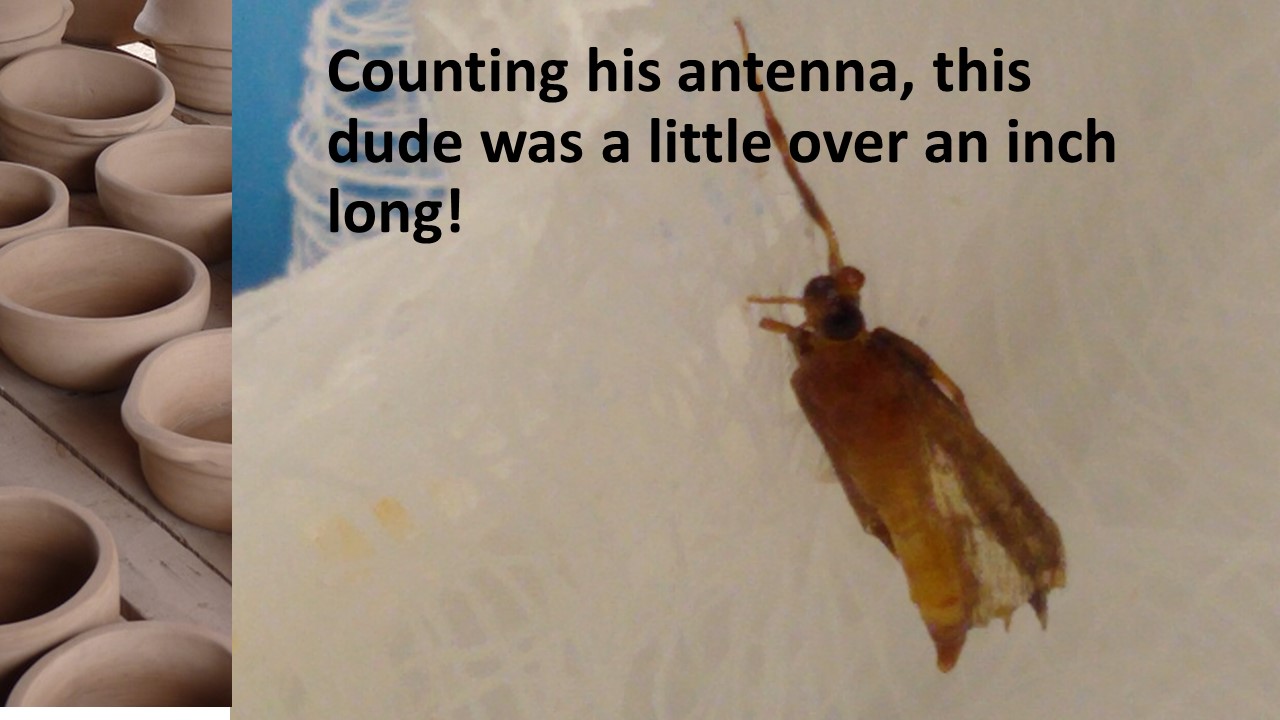 I’d ridden my bicycle down to the marina to meet with some friends late Friday. It was after dark when I left. With a rather bright LED light on my handlebars, I wasn’t worried. But about halfway home something flew into my right ear. The bug dug down deep and as it fluttered its wings. I stopped. I’d always thought the saying, “a bug in your ear,” was a metaphor. Now I was shaking my head and pounding it, in an attempt to free the bug. I was going insane. I rode on home and about every 15 seconds the insect would have saved enough energy to flutter again for a few seconds. Coming into the house, I called out that I needed help. Donna, after checking with the Mayo Clinic website, warmed up some oil and poured it into my ear. It was supposed to flush the bug out, but it never came out. Eventually the bug stopped fluttering. I assumed it drowned. Yesterday morning (which is why I wasn’t in Bible Study), I went to urgent care. They were able to remove the bug. It was a big bug and counting its antenna was over an inch long. That may not sound big until you consider the size of your ear canal.
As a good Calvinist, I’m glad that’s over. That constant fluttering drove me crazy. It forced me into action. I felt a bit like those in Jerusalem did about Jeremiah. This man with his rants drove them crazy, only they didn’t heed his words. But, unlike that bug, Jeremiah had an important message to share.
Today we continue our walk through the book of Jeremiah in our series titled “Prophecies and Pottery.” Listen carefully to our text, for we’ll hear the line of scripture from where the familiar spiritual that we just sang, “There is a Balm in Gilead” comes. The unknown writer of this spiritual answers a question that Jeremiah asks, “Is there no balm in Gilead?” Yes, the Spiritual answer, there is balm and it’s found in the work of the Holy Spirit and the sacrifice of Jesus Christ. This song gives hope to people who had little hope.
 Professor James Cone, writing about the African American musical tradition, said that spirituals do not deny history. They don’t deny that there’s a lot wrong in our world. Instead, spirituals see history leading toward divine fulfillment.[1] Or, as Martin Luther King was fond of saying, the arc of the moral universe is long, but it bends toward justice.
Our faith does not automatically replace all that’s wrong in our lives or our world. Instead, it’s a hope that is ground in the goodness of the Almighty who, in time, will make all things right. Many of us have had to deal with disappointment. Jeremiah is a poet for such a time. Jeremiah reminds us that sometimes it takes tough love for us to be molded and fired into a vessel that’s useful. Let’s listen to God’s word to us today: Jeremiah 8:18-9:3.
 Let’s imagine ourselves in the 6th Century before the Common Era and join Jeremiah. Having left the city, the prophet walks alone, across what should be a grain field. With each step he kicks up dust. The immature stalks of grain, long dried under the desert sun, crunch under his feet. This should be the time of the harvest, but there are no men out swinging sickles nor women gathering sheaves. The grapes and the figs and the olives area also shrivel on the vine. The harvest has failed. There’s going to be hunger. And with Nebuchadnezzar’s army on the loose, there won’t be a chance to trade for food. Jeremiah’s heart is heavy. As he looks back toward the walls of the city, he cries. He images the bloated bellies of the young and the riots when there is no more bread in the market.
The sentry assigned to the tower on the West Wall had just come on duty as Jeremiah left the city. He follows the dust of the prophet. Squinting under the hot sun, he notices Jeremiah’s glance back at the city. “What a crazy man,” he thinks, as he wipes the sweat beading up on his forehead. “It’s good he’s gone.” Unlike Jeremiah, the sentry feels secure behind the strong walls surrounding the city. Yes, he worries about the drought, but the religious leaders have things under control. “Don’t they?” “The gods will provide, won’t they?”
Kicking the barren ground, Jeremiah recalls the promise of the harvest. All the work that went into it, was the plowing and sowing were all in vain? Dust is the only crop that’s in abundance and Jeremiah tastes it with every step. He continues walking. When the city’s walls are finally out of sight, he rips his robe, falls to his knees, beats his chest, and cries out to the heavens. “The harvest is past, the summer is over, and we are not saved.”
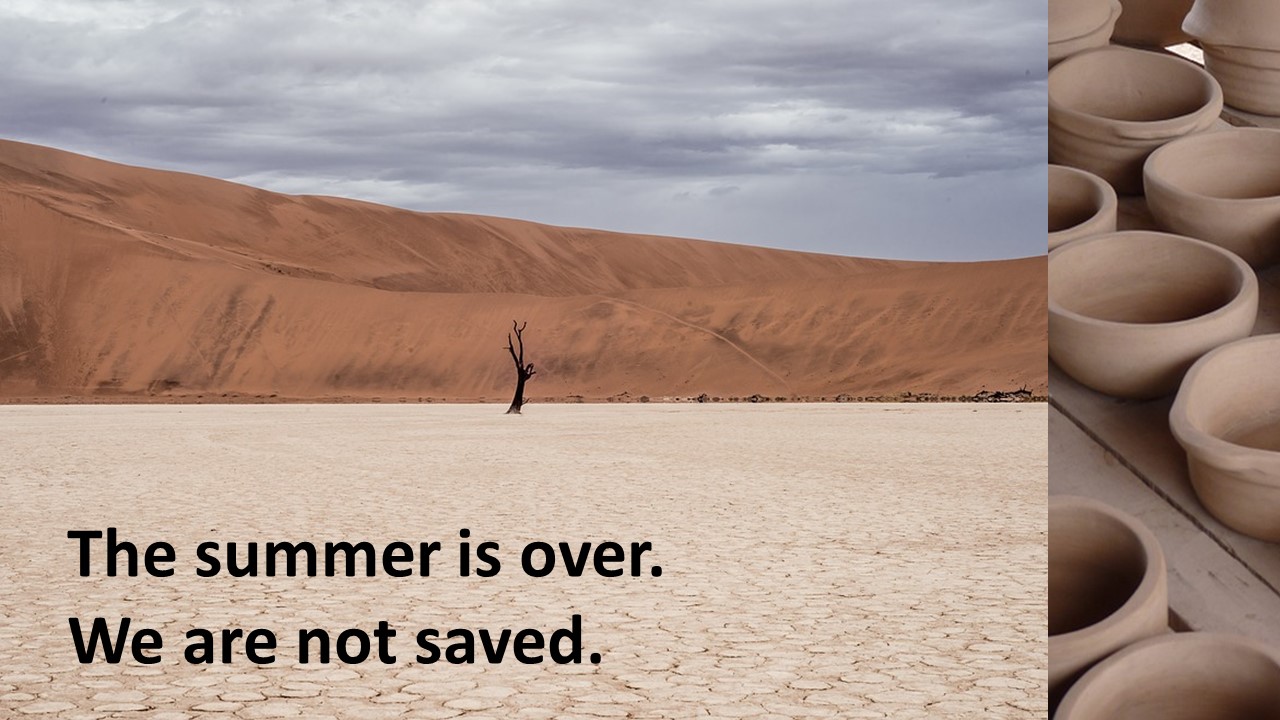 “We are not saved.” What painful words. It’s tough being a prophet, bearing the burdens of a people. Yet, as he cries, he hears something. A voice? Can it be God’s voice? “I’m disappointed. Why have they provoked me to anger with their images and foreign idols?” Yes, it’s God, speaking judgment on the Hebrew people.
It must have been in late August or September when Jeremiah issued the prophecy. In Israel, the grain would have been harvested in late spring or early summer. If that failed, there was still hope for in July and August, the grapes, figs and olives were harvested. If that, too, failed, the people were in a pickle, for there would not be a chance for another harvest until the next spring.[2] “The summer is over, and we’re not saved,” implies the hopelessness of Jerusalem.
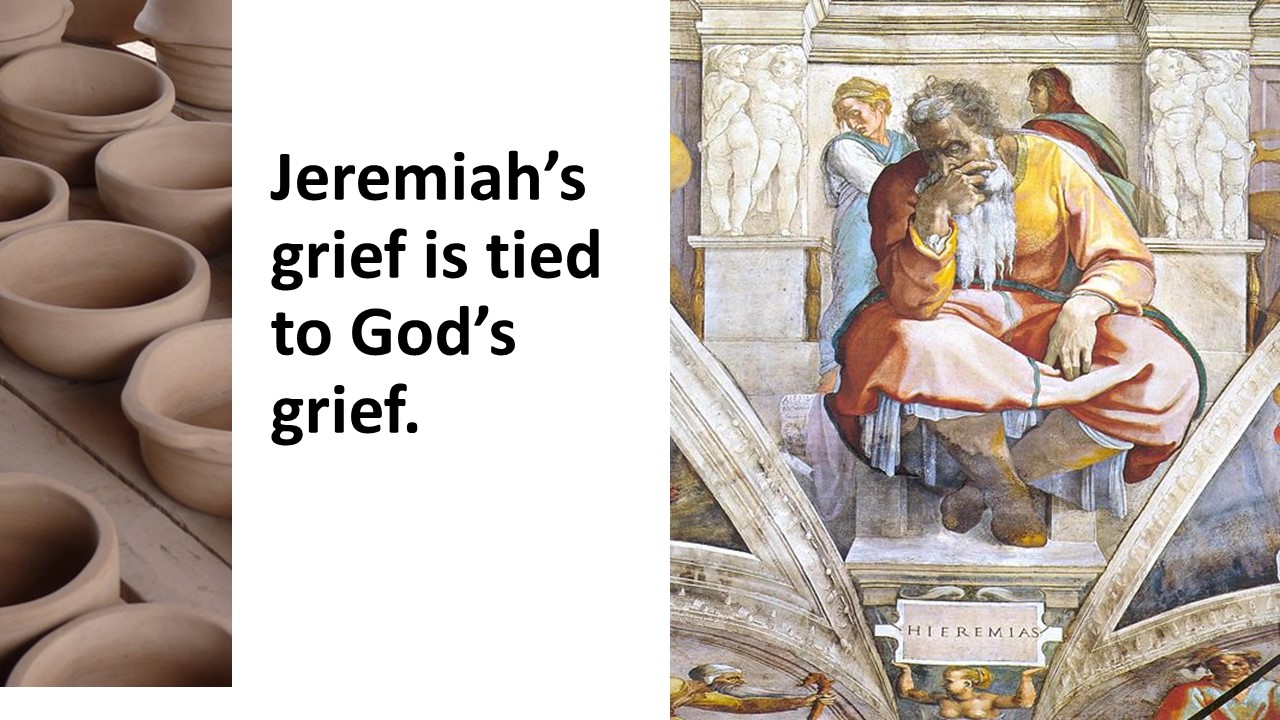
Our passage shows us how Jeremiah’s emotions are tied up with God. His joy is gone. He is in grief, as is God who we are shown grieving as a spurned spouse might grieve upon the divorce. Ezekiel, who was a contemporary of Jeremiah, has a vision of God leaving Jerusalem and allowing the Hebrew people to reap the fruits of their idolatry.[3] Essentially this is what Jeremiah envisioned. God has become so flustered with his people, that God abandons them. What we see here is a harsh example of tough love.
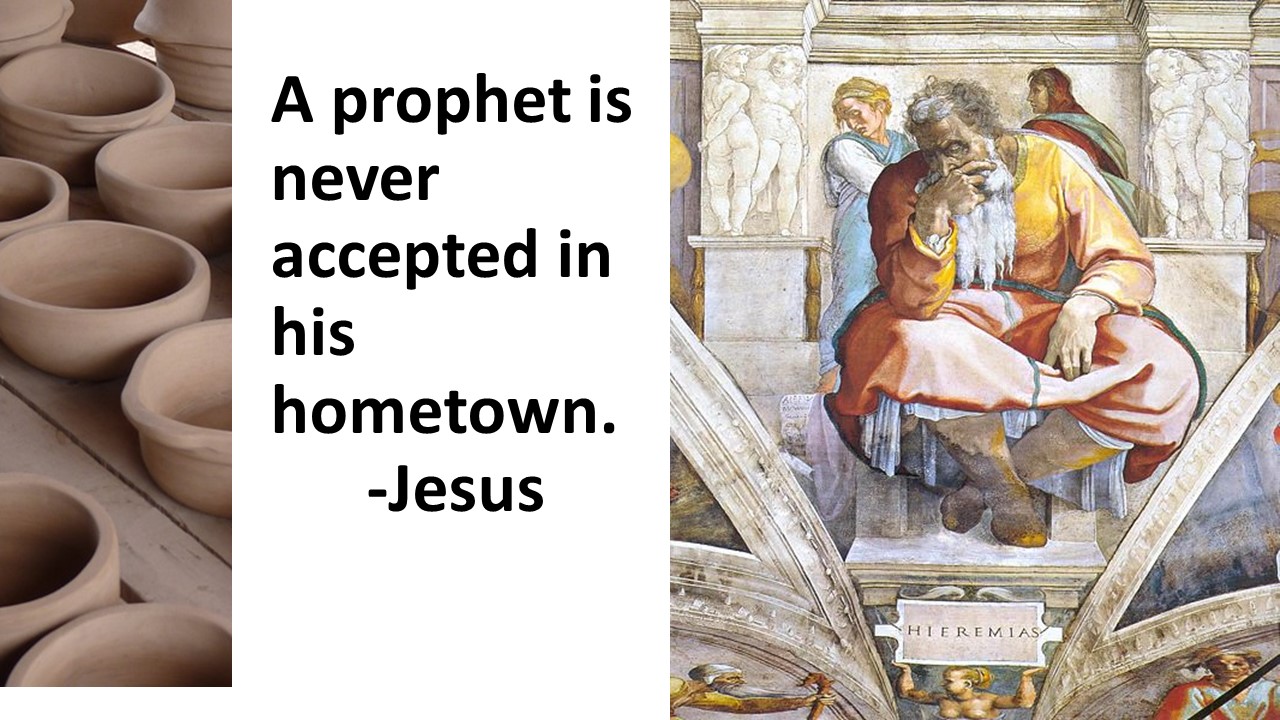 Jesus told those in the synagogue in Nazareth that a prophet is never accepted in his hometown.[4] Certainly, this was the case with Jeremiah, who cried bowls of tears as his people not only continued to ignore God, they also abused him. At the beginning of chapter 9, he wishes that his head was filled with water and that his eyes were a fountain for he could cry day and night. What an image of a prophet who loved his people and who, yet, feels so helpless.
During his life, Jeremiah was considered a traitor. He challenged the king, the ruling authorities, the priests, and the military leaders. He was a thorn in their side, always speaking out for justice and for true worship of the one true God. In Scripture, we are not told what happened to Jeremiah, except that he was taken to Egypt with some who escaped there after the fall of Jerusalem.[5] One legend has it that Jeremiah kept on with his prophecies and rants and finally people had enough, like I did with that bug, and they stoned him.[6]
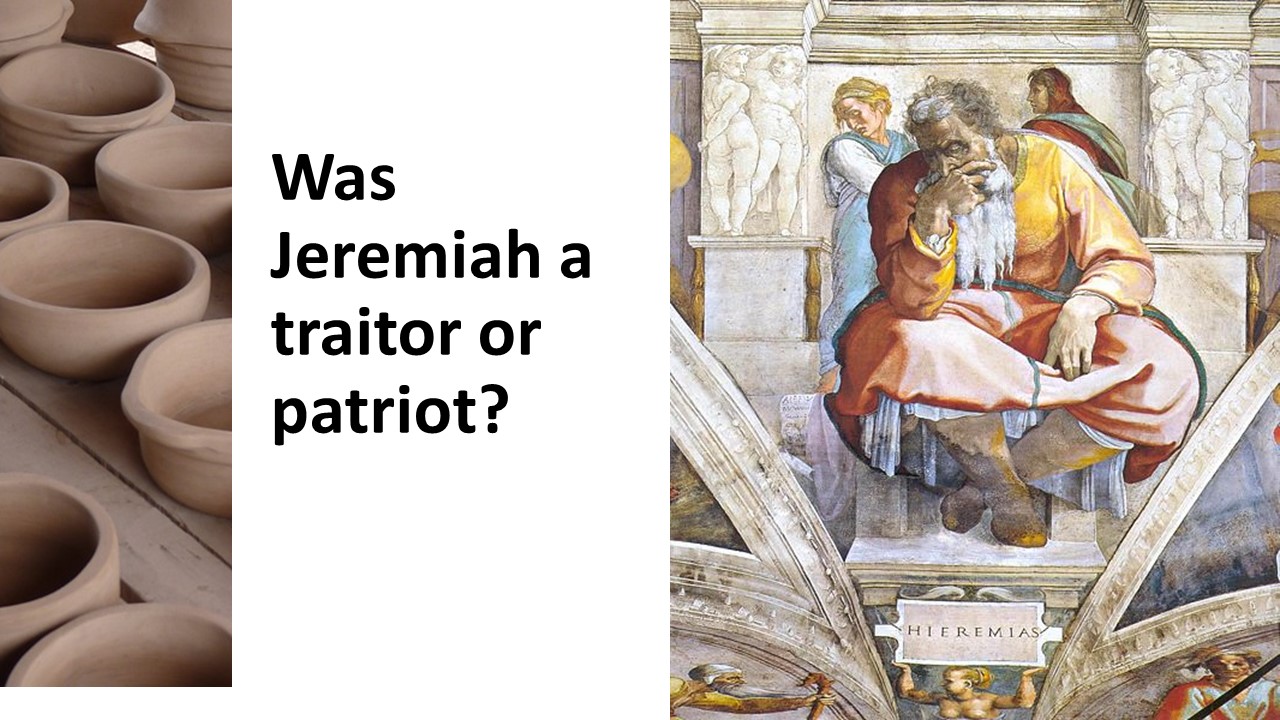 While Jeremiah was considered a traitor in his life, looking back we cannot help but to see that he was a true patriot. God’s people are not called to be loyal to a king or even to a nation. Our first loyalty always belongs to God and when we fail to put God first, we risk hardship, judgment, and perhaps even defeat. Do we have the faith and the perseverance of Jeremiah? Are their Jeremiahs in our society today? If so, do we listen? Or do we tune him or her out, or worse, mock and abuse?
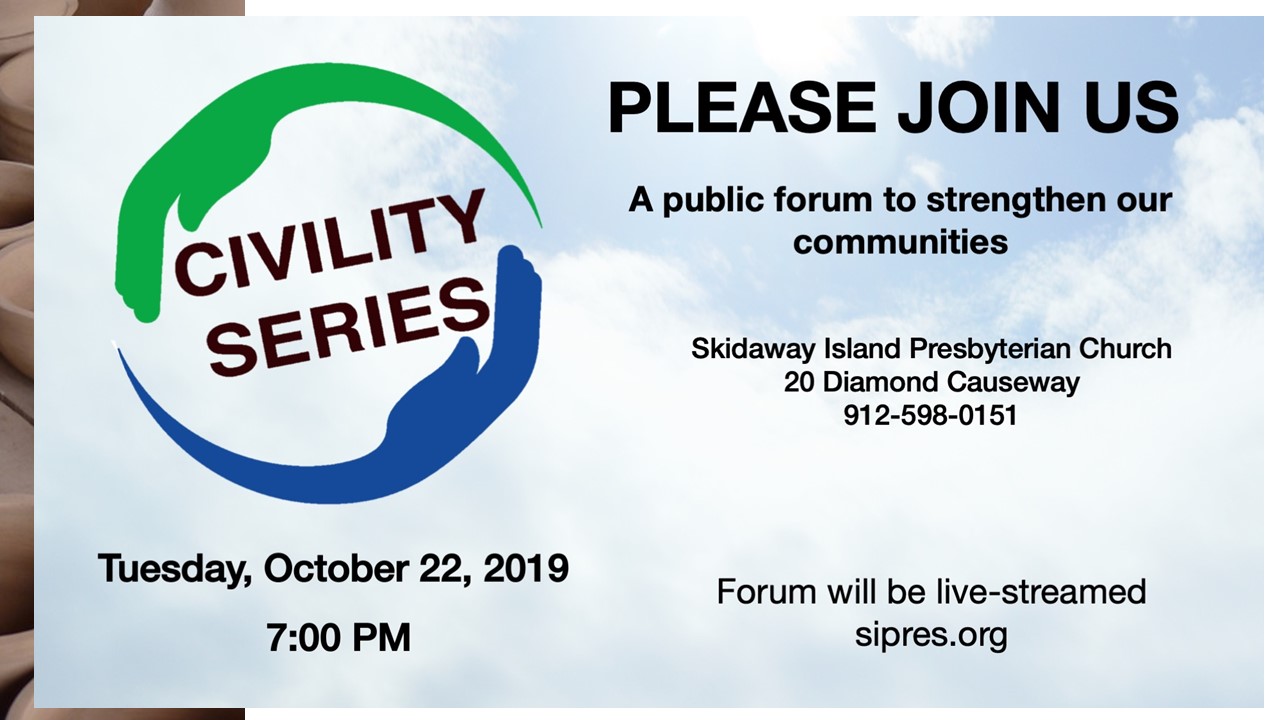 You know, on the 22nd, we’re going to have our first community forum to discuss civility. If we want to build a better society, which is one of the goals of the church as we are to be a part of building God’s kingdom, we must listen to others. I hope you plan to attend and to tell others about the forum. Go to our church’s Facebook page and like the event and share it with others on your page. We have got to get our community and our nation on a new direction. We need to be about listening to all voices, even the voice of a Jeremiah, crying a fountain of tears. Only by listening to others who challenge us, like Jeremiah challenged Jerusalem, will we be able to build a better society.
 Let’s go back to that day, some 2500 years ago, and join Jeremiah once more… The heat of the day is over when Jeremiah starts back toward the city. Having wrestled with God through lament, Jeremiah is more assured than ever of God. Ahead, the city David claimed his capital, is magnificently lighted by the setting sun. As the even breeze picks up, Jeremiah picks up his pace.
The sentry, near the end of his shift, can’t believe his eyes. Emerging from a cloud of dust he’s been watching on the horizon is the prophet. He’s coming back. Why? He’d expected Jeremiah to have fled to another land. But as much as Jeremiah wants to, he cannot abandon his people. They may lack faith. They may be adulterers and traitors and idolaters, but they are still his people. And they are still God’s people. And he’s God’s prophet.
Jeremiah’s presence in a decaying society reminds Jerusalem of God’s judgment. Although the Almighty is disappointed and deeply hurt by his people’s idolatry, God never forgets Israel. God’s faithfulness once saw the nation through slavery. God will see them through defeat and exile and eventually restoration.
Jeremiah’s beat by the time he reaches the wall. The sun has set, and the stars are popping out. The air is more humid. “There will be dew in the morning,” the sentry remarks as he allows Jeremiah to enter through the locked gate. “Yes, Yes, I think you’re right,” Jeremiah responds. “The dew will be welcomed. It will remind us of how Almighty God, the God of Abraham, faithfully fed our ancestors in the wilderness.” Amen.
If any would like to be anointed with oil, as a reminder of our faith in Jesus Christ, come forward during the closing hymn and Elder Laurel McKeith or I will be glad to make the sign of the cross on your forehead.
©2019
[1] James Cone, The Spirituals and the Blues (Maryknoll, NY: Orbis Books, 1972), 86 as quoted by LindaJo H. McKim, The Presbyterian Hymnal Companion, (Louisville: W/JKP, 1993), 393.
[2] J. A. Thompson, The Book of Jeremiah: The New International Commentary on the Old Testament (Grand Rapids, MI: Eerdmans, 1980), 306, n. 9.
[3] Ezekiel 10. While Jeremiah and Ezekiel are contemporaries, their ministry was to different groups of God’s people. While Jeremiah remained in Jerusalem, Ezekiel was called to be a prophet to the first wave of those exiled in Babylon.
[4] Luke 4:24.
[5] Jeremiah 43.
[6] Frederick Buechner, Peculiar Treasures: A Biblical Who’s Who (San Francisco: Harper and Row, 1979), 61.

 Not Guilty by C. Lee McKenzie
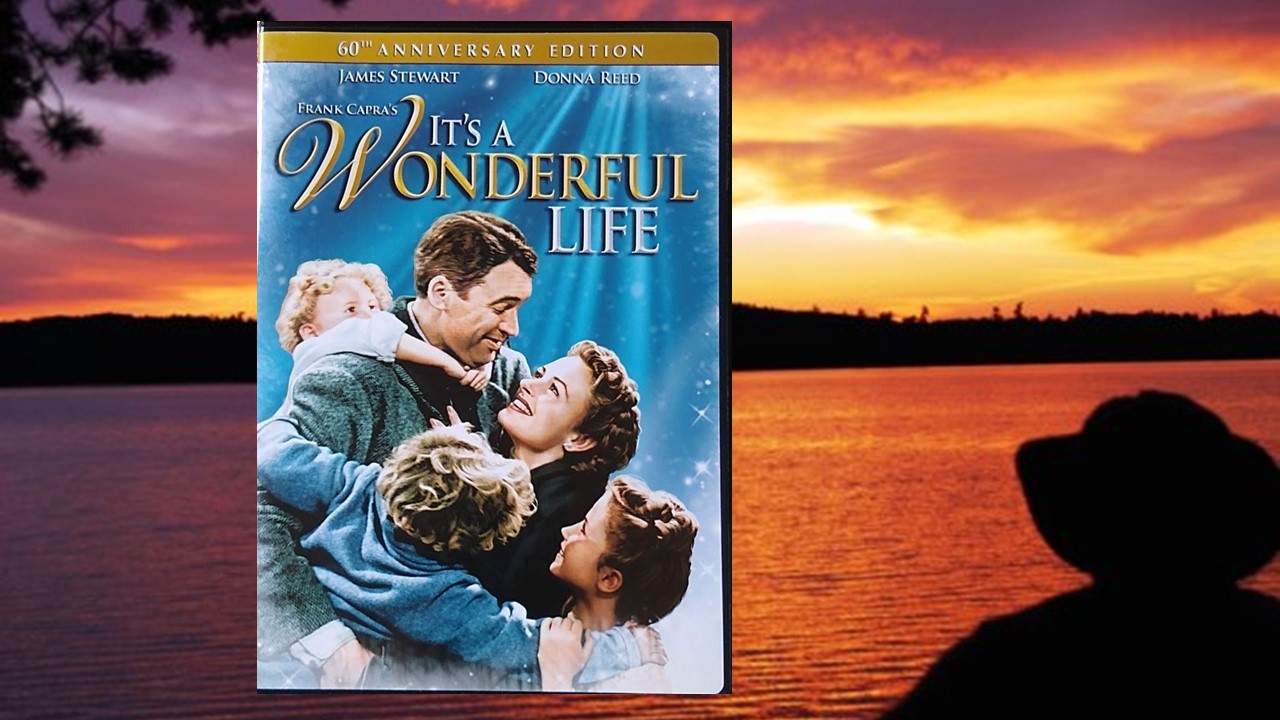 The characters in “It’s a Wonderful Life” provide us with archetypes for the many different ways we relate to life and we handle money. The book that goes with this series, Integrating Money and Meaning, uses these archetypes to explore our spiritual relationship with money.
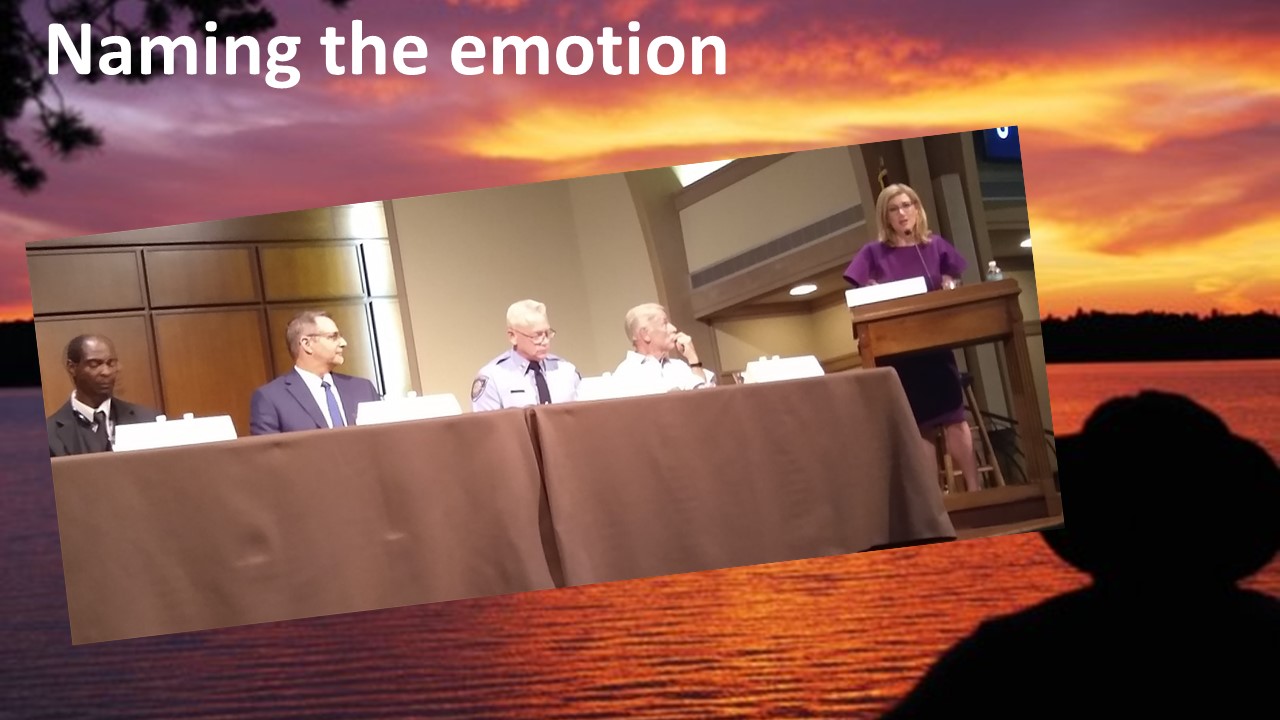 At our first forum on civility, Dr. Robert Pawlicki told of an incident when he was a psychiatrist and professor at a Medical School. A patient had gotten into an argument with a resident and he was called in by a nurse who was concerned the confrontation might become physical. Stepping between the two, he said to the patient, “You’re really angry, aren’t you?” By giving a name to what was happening and the emotions the patient showed, he opened a channel that helped the patient calm down. The situation de-escalated. This is good advice. Sometimes we need to go to the heart of the matter and, without increasing the confrontation, name the issue. But this is not what the Pharisees and the Herodians do in our morning text.
 It’s hard to understand this passage without explanation. The Pharisees are plotting to entrap Jesus, we’re told. How does Jesus know this? We could say that because he’s God, but that explanation doesn’t uphold the human side of Jesus. Instead, I think Jesus knew something was up when he saw the Pharisees walking hand to hand with the supporters of Herod.
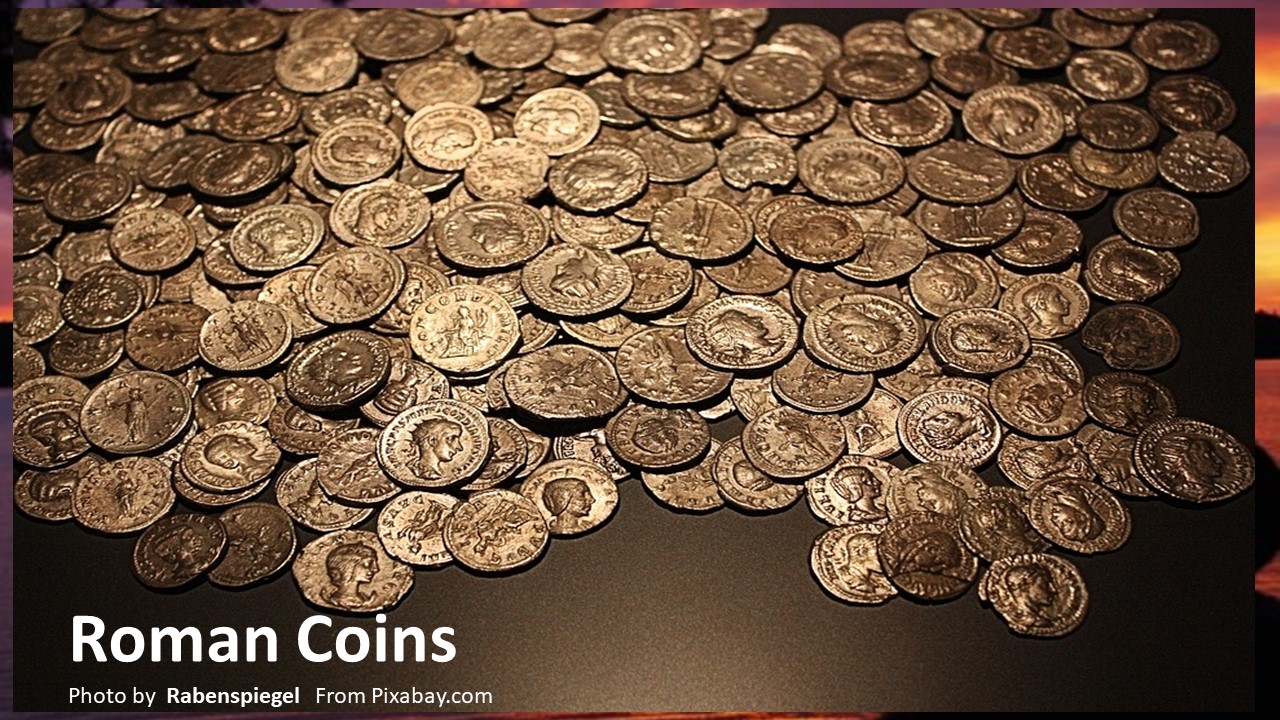 Jesus asks to see a coin. He has to be careful here. He doesn’t want the Pharisee’s to charge him with toting around an engraved image of the emperor. So Jesus has them to look at a coin they are carrying, and he asks them whose picture is on it…. They reply, “Caesar’s.” Jesus then tells them to give Caesar what is Caesar’s, and to give God what is God’s. The little band of tempters are astonished. Amazed and not knowing what to say, they leave…
 The coin had an image on it, Caesar, therefore give it to him. But remember, we’re created by God, in the image of God. The coin belongs to Caesar, it has his image; our lives belong to God, they contain God’s image. Caesar may have a lien on our possessions, but God has a lien on our total being. God is calling us to dedicate our lives to himself. God, in Jesus Christ, is like those old recruiting posters found the post office, with Uncle Sam saying, “I want you.” And you, and you, and you (point at myself last).
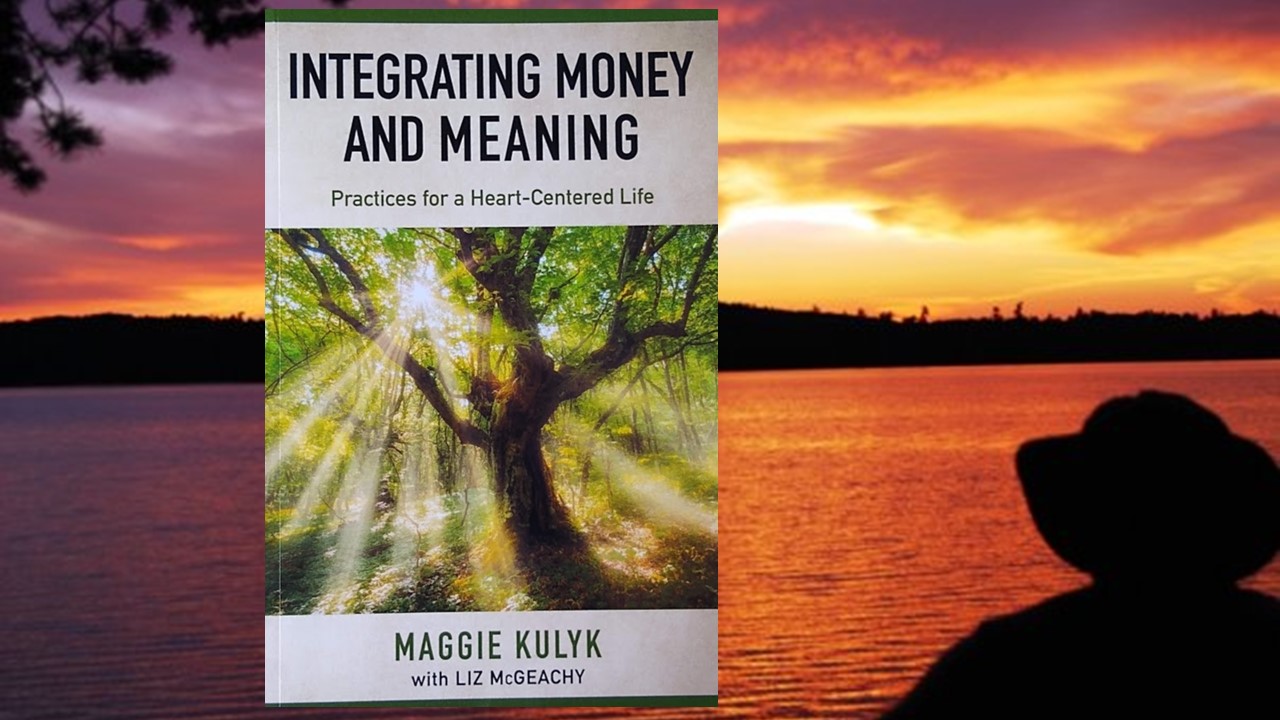 What Jesus does here is demonstrate the delicate balance that exists in our use of money. Money is necessary. It’s what we trade for the necessities of life. But, as is taught in the book Integrating Money and Meaning, we need to understand the power of money. If we don’t understand its lure in our own lives, it can bring out the worst in us. There’s a shadow side to money that’s pointed out in scripture. “The love of money is the root of evil,” we read in the First Letter to Timothy.
 Over my next four Sunday’s (we will skip next week with a guest preacher), we’ll look at how we spiritually relate to money. How do we balance things like paying taxes, buying what we need, and giving to God through the church? How much control does money have in our lives? What would we do if we experienced a windfall of money? Or what would you we do if suddenly your money was of no value? These are questions we should all be wrestling with as we come to understand, as Jesus taught, that money isn’t anything to fear. We’re not to fear money, but we’re warned that it contains power. If not understood, money can overtake our lives and become a dreadful master. Look back in your lives and ponder this question, “How do you spiritually relate to money?” “What kind of power does it play in your lives?”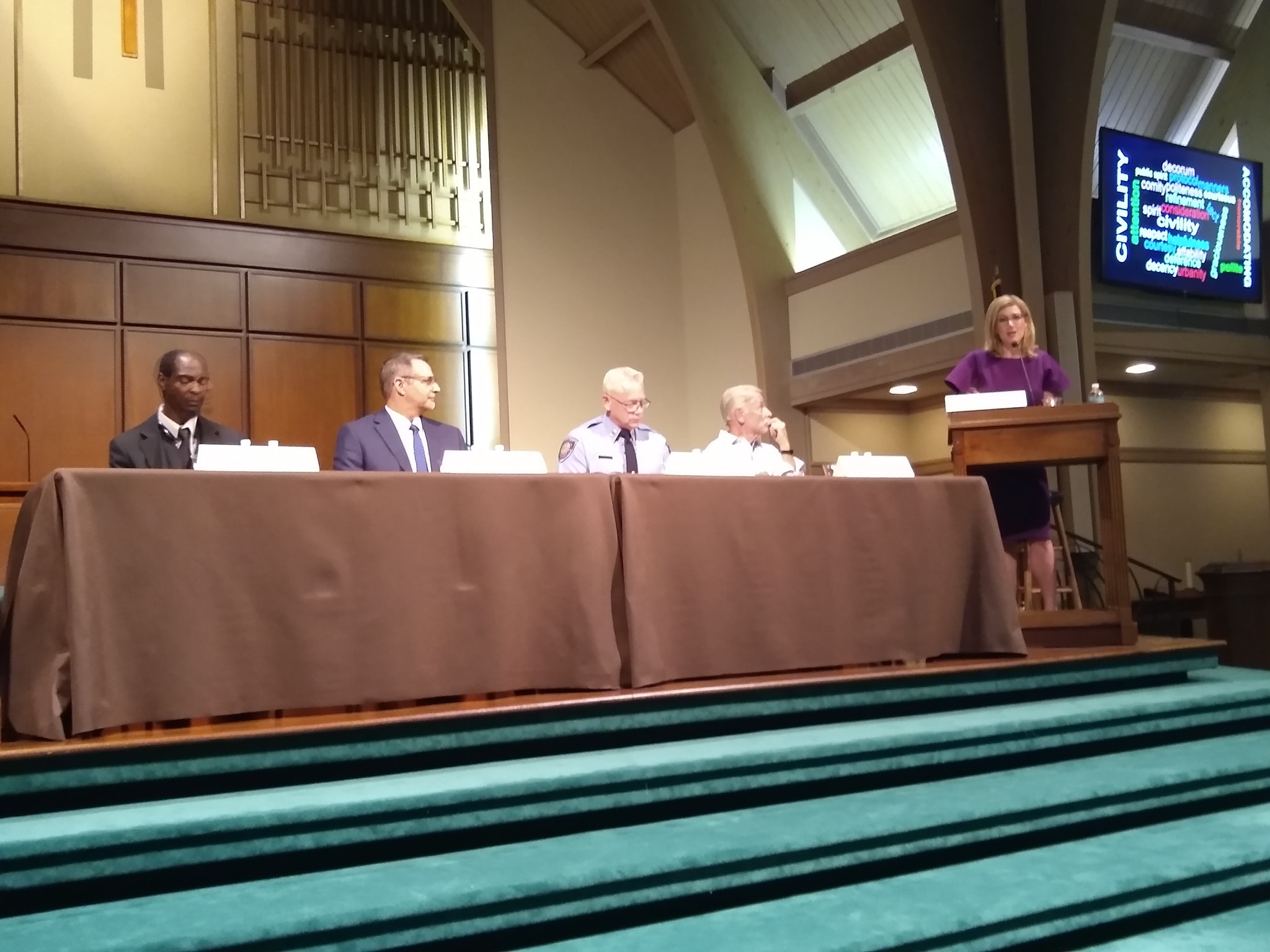




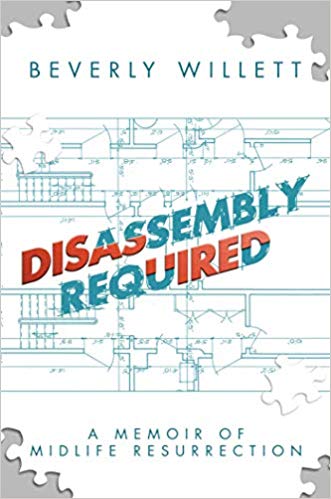 Beverly Willett, Disassembly Required: A Memoir of Midlife Resurrection (New York: Post Hill Press, 2019), 269 pages.
 Ben Sasse, Them: Why We Hate Each Other and How to Heal (New York: St. Martin’s Press, 2018), 272 pages including notes and an index.
 Jeff Garrison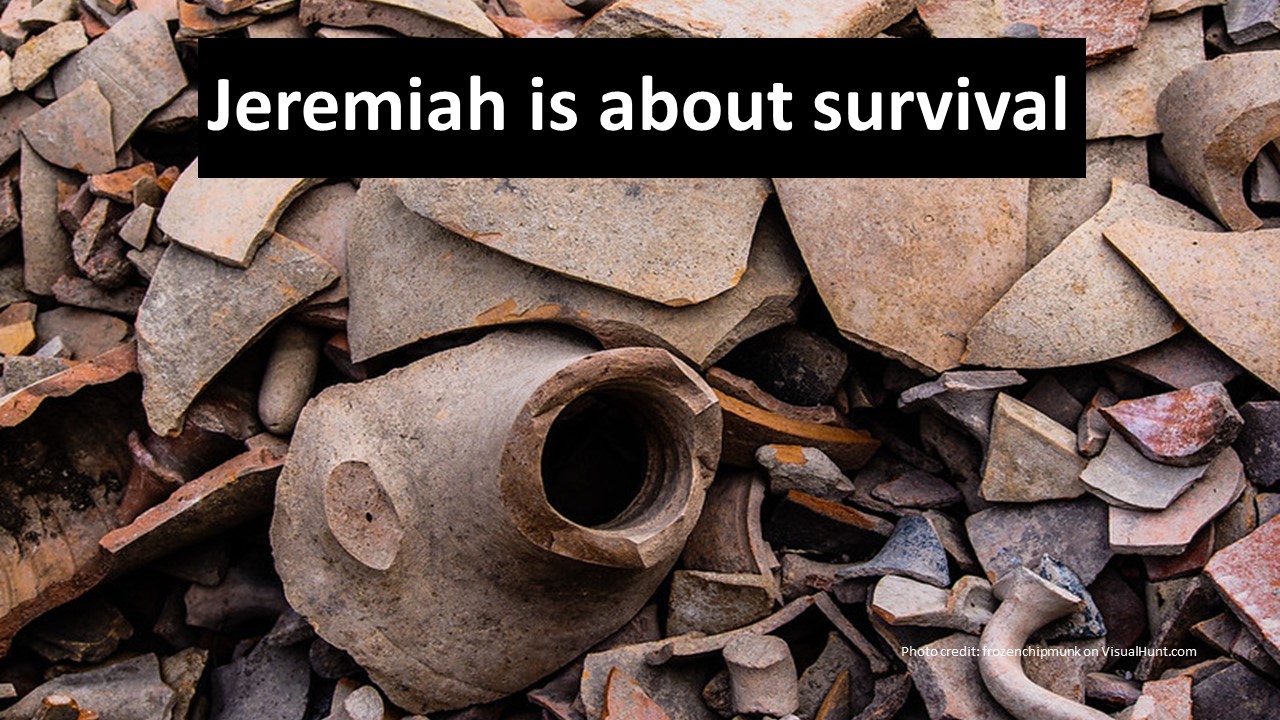
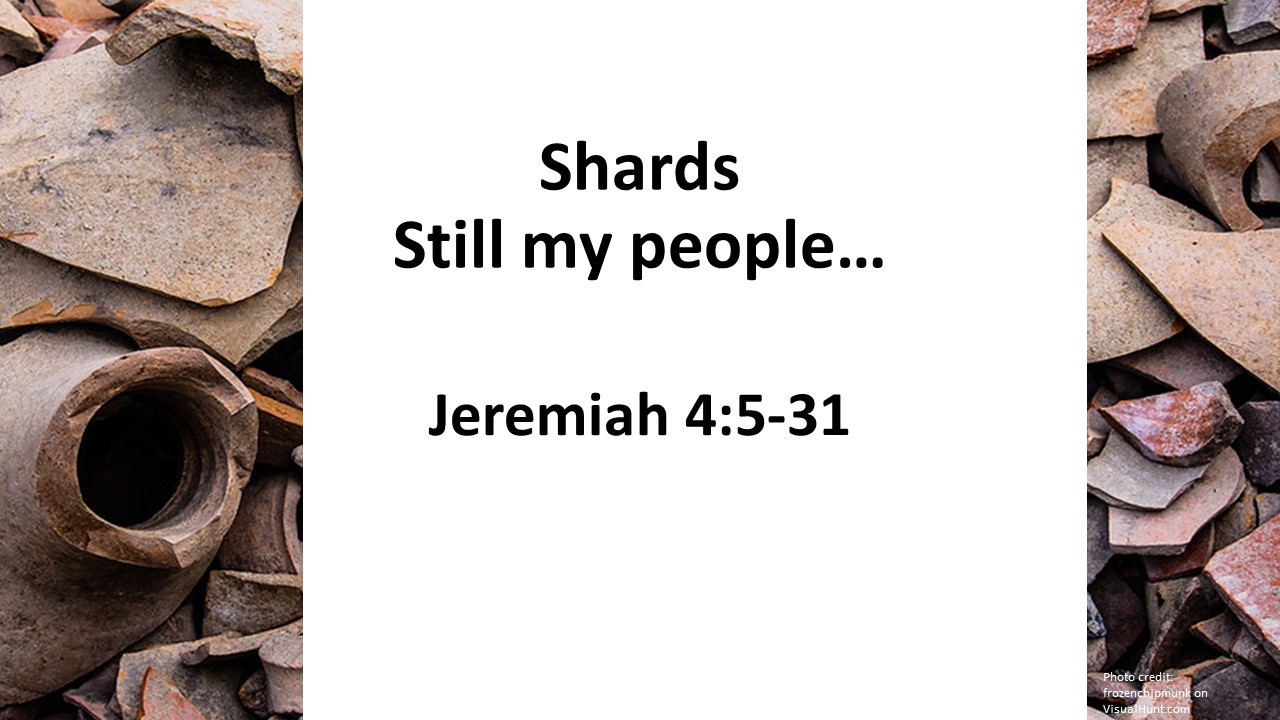
 Beautiful pottery breaks. Today, during the sermon, hold on to the shard you’ve been given, and ponder God’s judgment. Think about what it means to be broken, unfixable. But don’t throw away the shard. When the service is over, take it over to Liston hall, where we’ll attempt to put it back together and see what kind of design Sue Jones created for us.
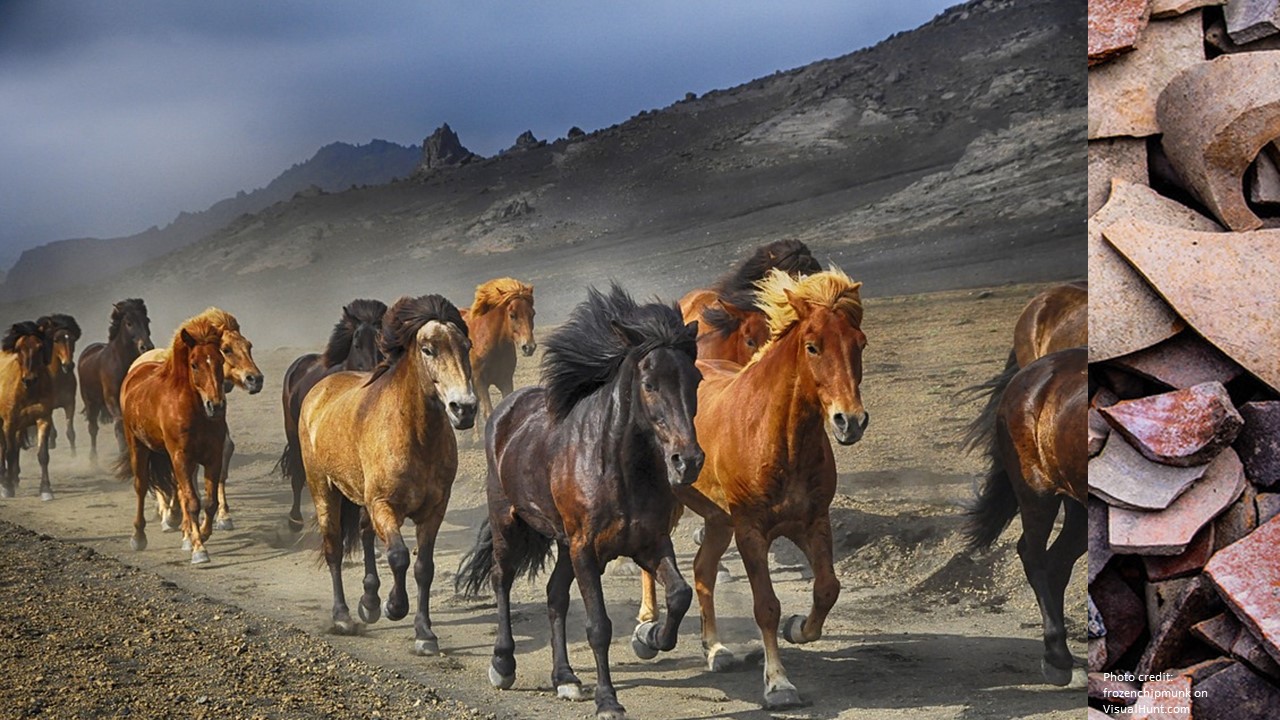 For the people of Jeremiah’s day, storm clouds are gathering. It’s not looking good. It’s kind of like that vision we get from the song “Ghost Riders in the Sky,” those wayward cowpokes who are eternally damned to chase the Devil’s herd. Storm clouds are always frightening. But let’s think about ourselves.
 You know, we have blessed as a nation in that no foreign army has invaded us for over 200 years. The last was during the War of 1812. It’s been a century and a half since those of us who are from the South experienced the horrors of having towns and cities burned, armies destroyed, and people suffering. We can only image what it was like for the people in Savannah during that Civil War, hearing the distant bombardments of Fort Pulaski and Fort MaAllister, and then, in 1864, the rumors building fear as Sherman’s army approaches.
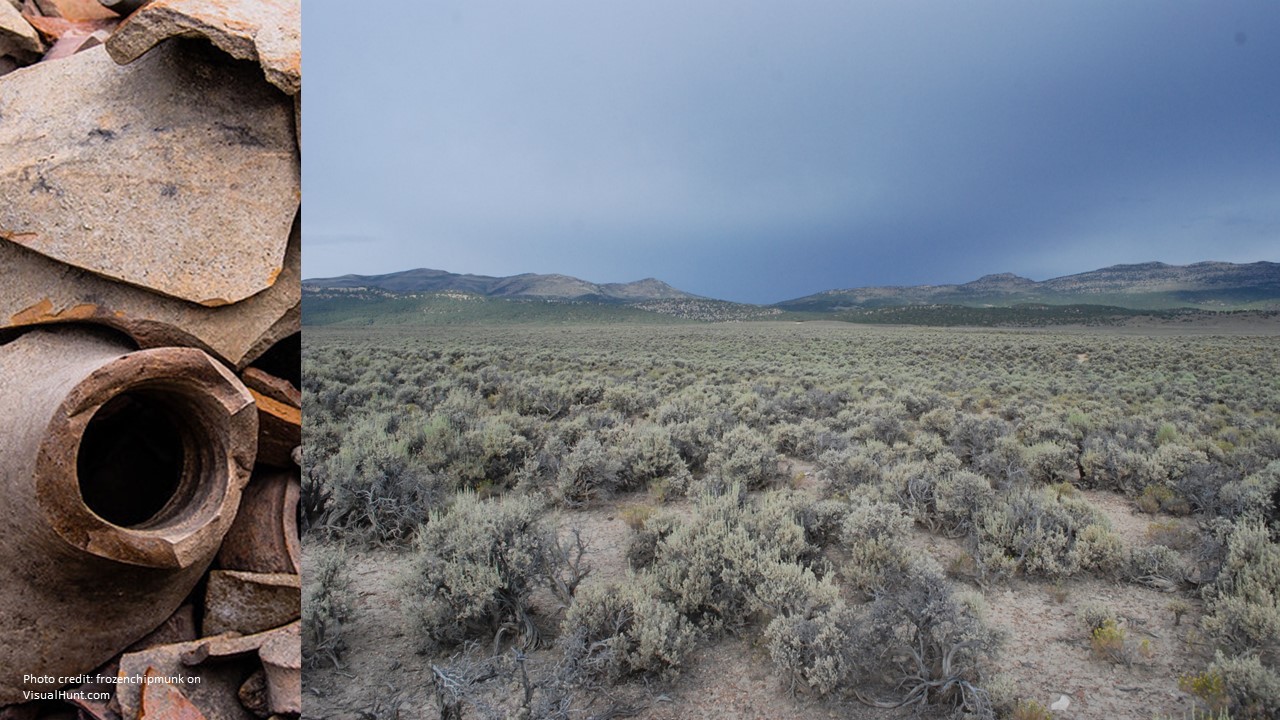 In this section of Jeremiah, the approaching Babylonian army is described as a hot wind blowing up a frightful dust cloud off the desert. This could be like the dust clouds off Africa that eventually turn into hurricanes that threaten our coastline. In the part I skipped, we hear how the rumors begin to filter down to Judah and Jerusalem, starting way to the north, above the Sea of Galilee, in the territories of Dan. We know a similar drill with hurricanes as they approach the Leeward Island and the Lesser Antilles and the Puerto Rico, Dominican Republic, Cuba, and the Bahamas as the storm makes its way across the South Atlantic. Sometimes these storms are like Jeremiah’s vision, bringing total destruction. Just as we hurt seeing the damage Dorian caused the Bahamas, we also worry what might happen to us if the storm doesn’t turn, Jeremiah is bothered by his vision. He can see it happening and cries out in anguish. But despite the heartache of what he sees, he faithfully proclaims God’s word.
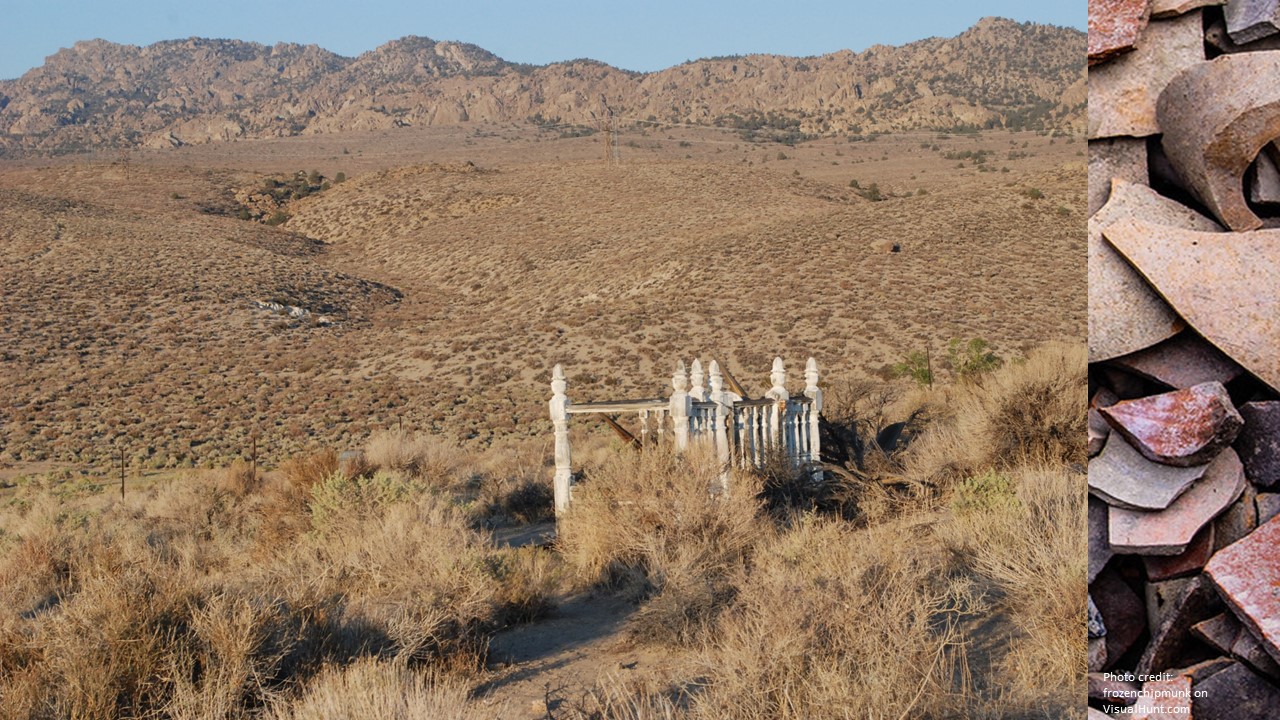 The second part of my reading describes the aftermath. Destruction is total. Starting with verse 23, the poem recalls the “dismantling of creation.”
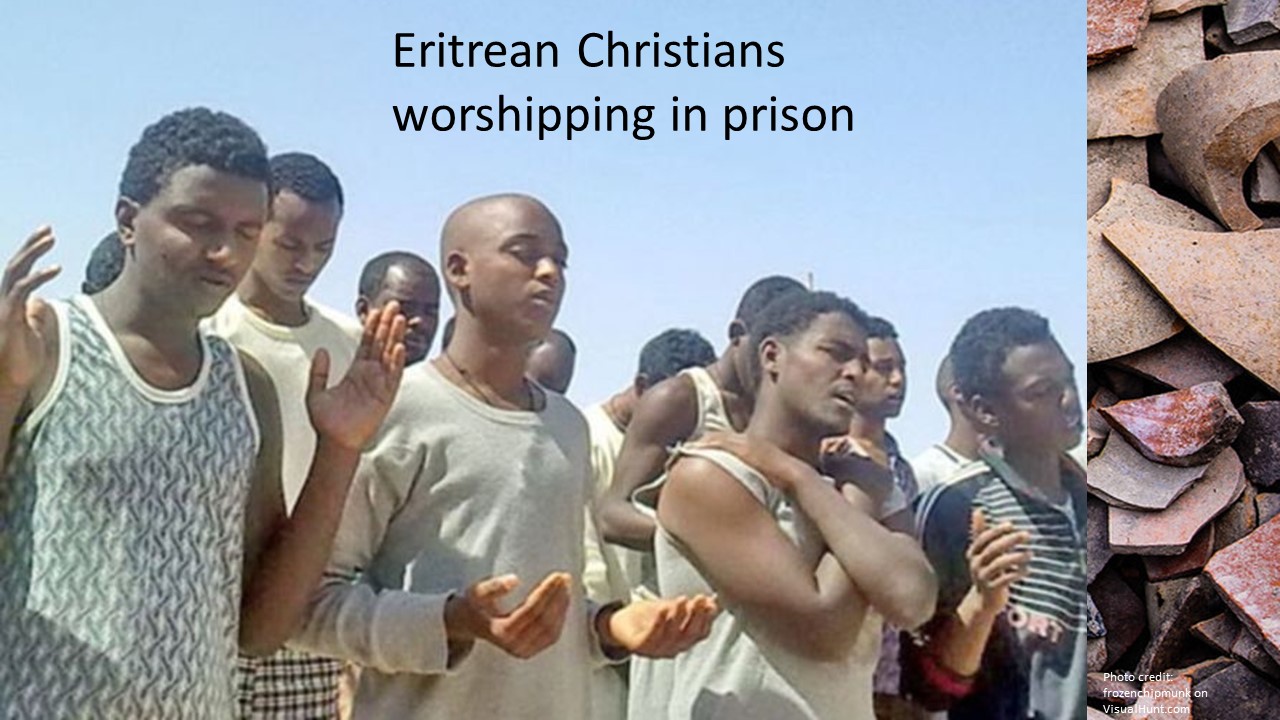 For Christians living in America, we may have a hard time relating to Jeremiah’s vision. But many Christians, those living around the globe in places where it’s dangerous to worship Jesus, recognize Jeremiah’s anguish as their own. For them, gathered around this table on World Communion Sunday, they are in danger. They know what it means to worship in fear, to experience the loss of jobs, of their homes and their land because of their faith. They know what it means to be locked up, to be tortured, and to watch loved ones be taken away and never return because of their faith. Christians are suffering in China, in Eritrea, in North Korea, in Iran and Iraq, in Syria and parts of India. We must stand by those who do not enjoy the freedom to worship as we enjoy it.
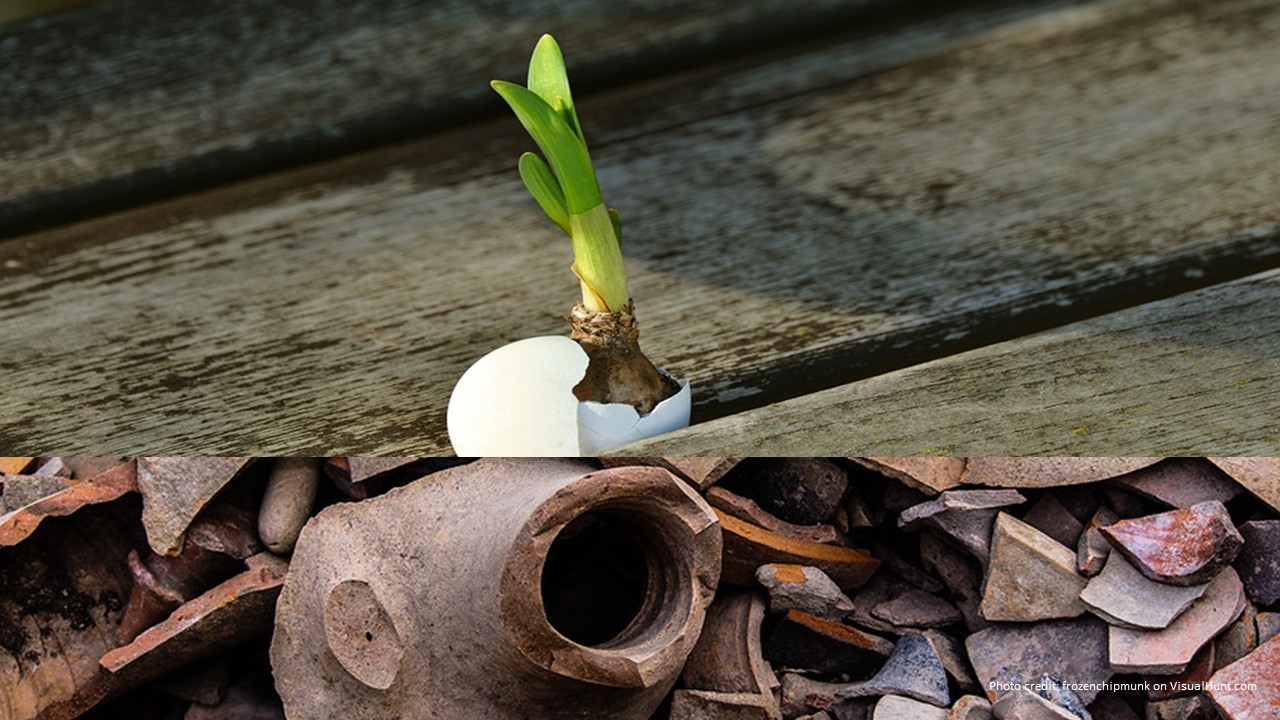 Remember, we have an insight Jeremiah didn’t have. We know about the resurrection, how the grave is not the end. Jeremiah knew that somehow God’s destruction wasn’t going to quite be total. We know that even if it appears total, as it does at death, as when we peer down into the grave, God is still God and the end is not the end.
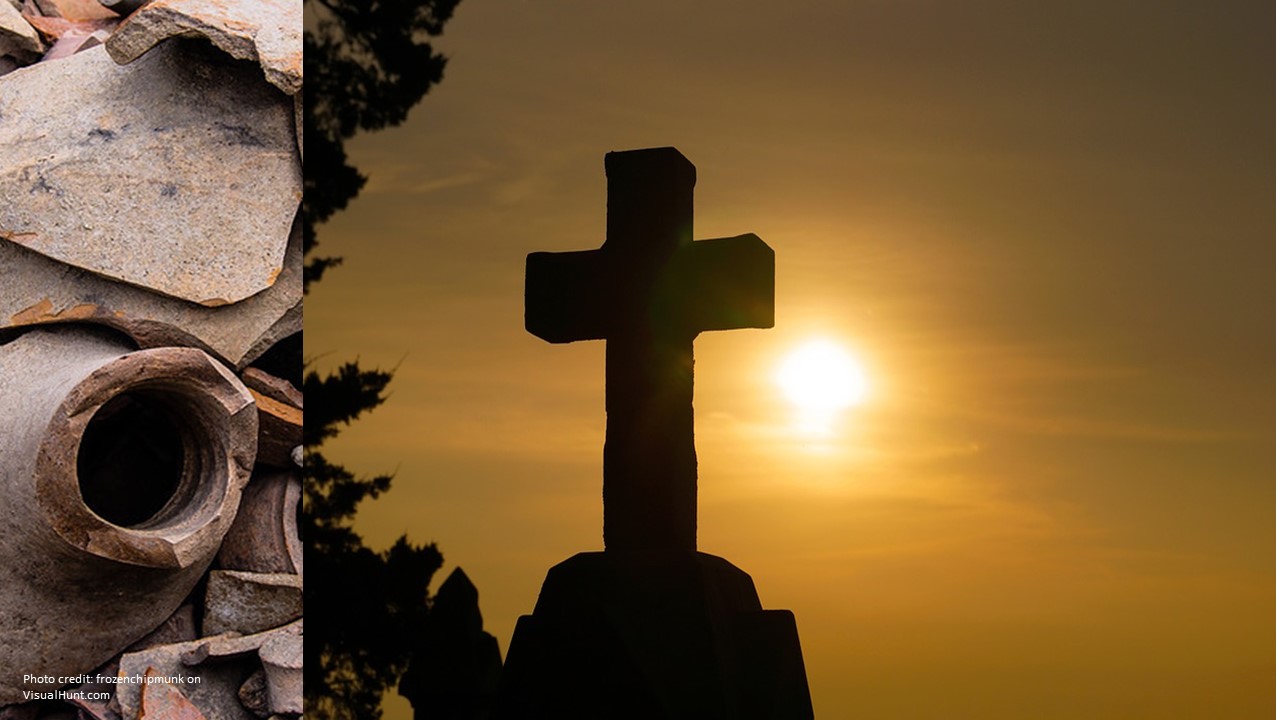 The center of the gospel is the hope we have in the resurrection to eternal life. And for that reason, we can face those storm clouds. We can face the stampede of Satan’s herd and the cowboys running roughshod across the skies, and know that as bad as things are, there’s hope. We may feel like we’re just broken shards of pottery, but God has the power to make what’s broken new and whole. Believe in God. Hold on to such hope. Amen.
 Jeff Garrison
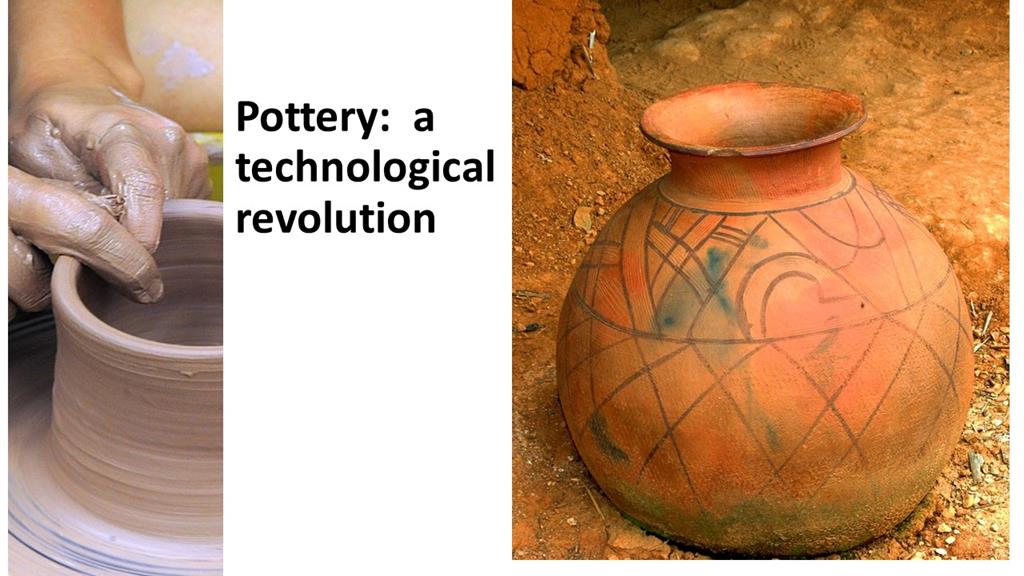 You might be wondering about all this emphasis on pottery as we look at the Prophet Jeremiah. Pottery was a revolutionary technology in the ancient world. It allowed more movement as people could store things in pots, such as water and grain.
 About twenty-five miles northwest of where I was born, where the Carolina Sandhills turn into clay hills, is a dot on the map known as Jugtown. It’s a place I like to visit when I am back in that part of the world. Today, the area around Jugtown and Seagrove is dotted with crafty potters who turn muck into beautiful and useful art. It’s a treat, as we’ve just seen on the video, to watch a potter turn a lump of clay on the wheel into something useful and beautiful.
 Jugtown received its name, as you can guess, from jugs. The law-abiding folks in the clay hills around there, I’m sure, intended their jugs to store molasses, honey, cane syrup, or something similar. Of course, it was also used to hold liquefied corn (also known as white lightning or moonshine). But with the advent of mason jars, such use of the jugs ceased. But early on, some of the potters had new ideas. In 1917, two of the potters began selling their wares in a store and tea shop in New York City. They emphasized utilitarian pots, things that could be used such as pie plates, crocks, mugs, and bowls. They stamped their unique mark on the bottom of each vessel. Over time, they began to teach new potters the craft and as one generation passed, another took up the wheel. Today, if you go to the area around Jugtown, you’ll find dozens or potters selling their wares. These artists have brought new life into that worthless clay that sticks to your shoes and gums up a plow.
 Jeremiah is called to the potter’s house where God uses a common image of the ancient world to make a profound message. God’s word comes to him as he watches the potter over and over start off one direction with clay, and it not working, so he reworks the clay into something more suitable. This sounds hopeful. God will continue to work with us until we become a vessel that serves some purpose. One preacher, writing about this text, said that it demonstrates a sovereign God, “not a God of absolute capricious control, but a gracious willingness to change his plan to benefit his flawed people. When God discovers this fatal flaw in his people, he does not simply destroy them; he offers to start over.”
  Jeremiah’s task is to preach impending judgment to God’s people. If they don’t shape up, if they don’t stop running around chasing foreign gods and idols, if they act like they’re in control and the God of the Universe is of no matter, they will be punished. Just as the potter can shape a vessel in a new way, they can be handled in a different manner. God can shape another nation to punish. There appears to still time, at this point, for the Hebrew people to change. Later prophecies of Jeremiah hold out no hope of repentance, but here, it’s not too late.
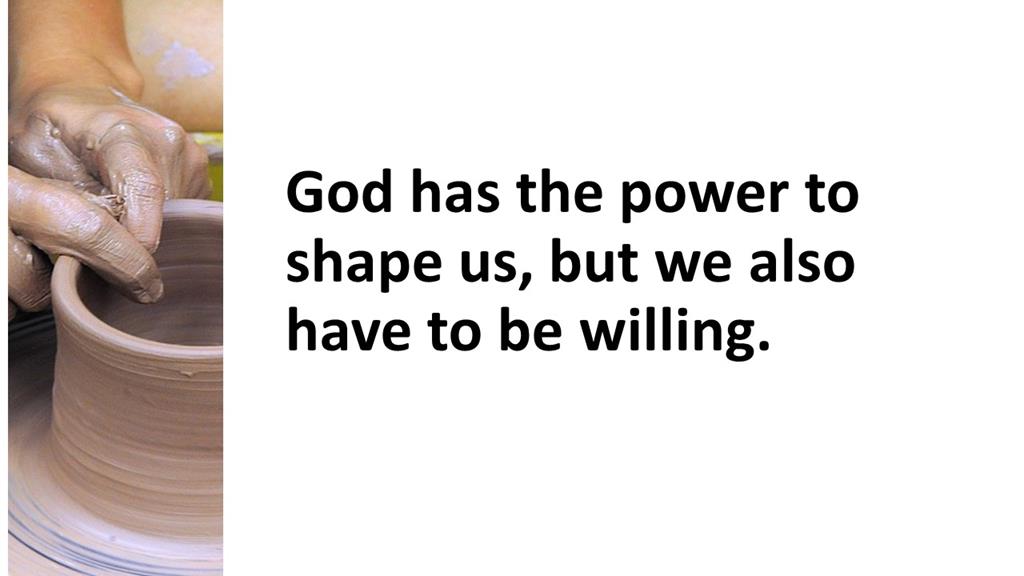 The message of this passage is that God has the power to reshape us, but we must let God work with us. If we resist God’s shaping, we may not be completely crushed, but we won’t fulfill the potential for which we were designed. The intention of our passage isn’t to be fatalistic and say we have no control. Instead, it’s a warning that we’re to work with God and not against him.
 When you leave this sanctuary today, ponder these questions: Where is God at work in the world? How can we participate? How can we be the clay that trusts the potter? Amen.

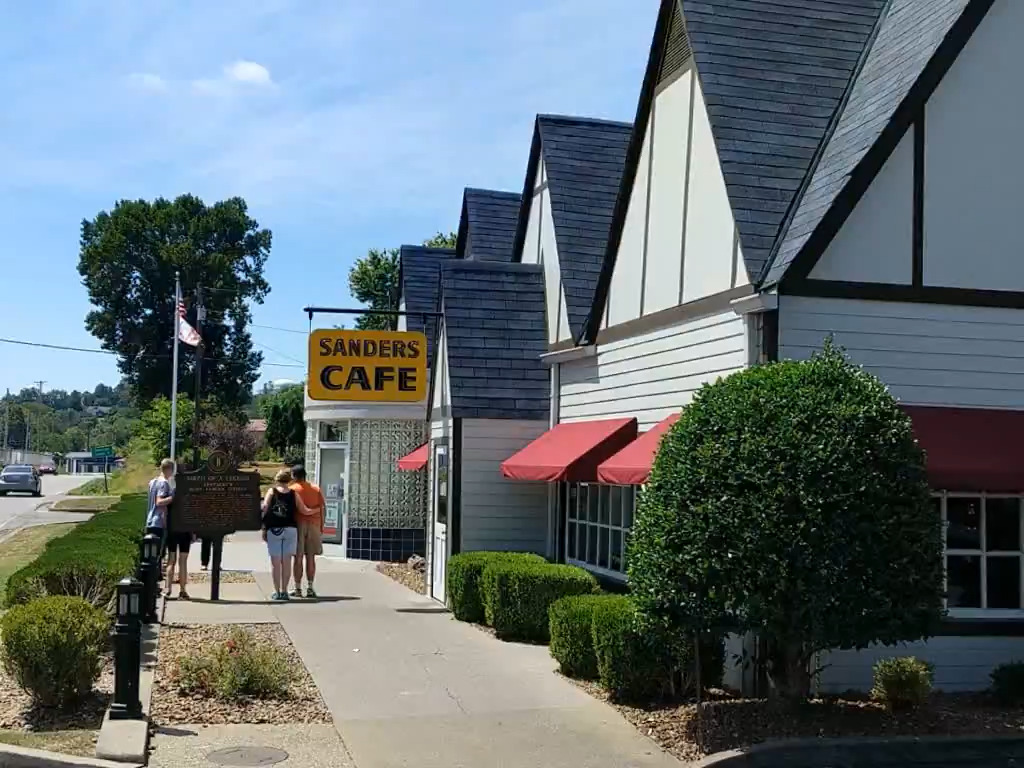




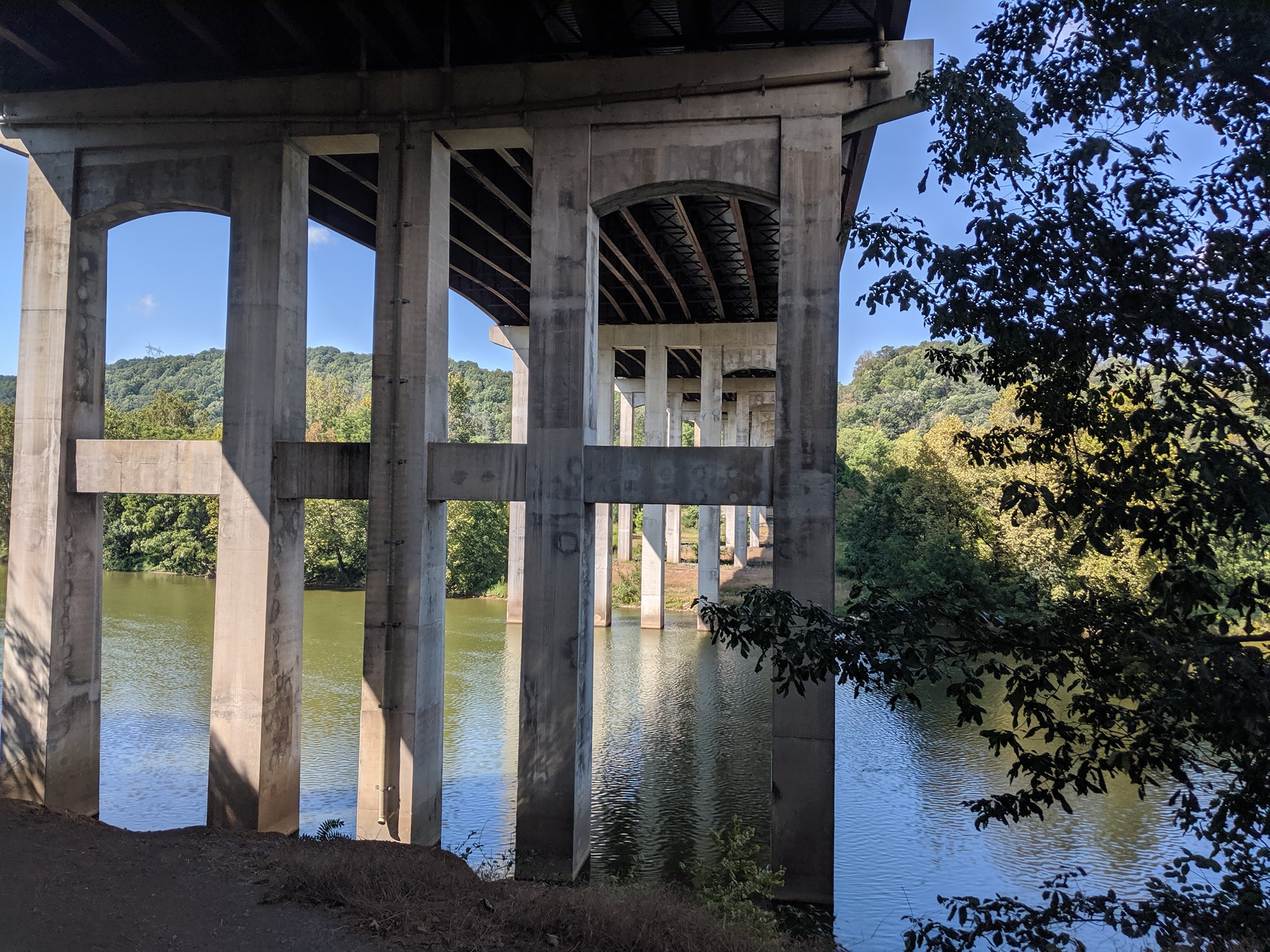
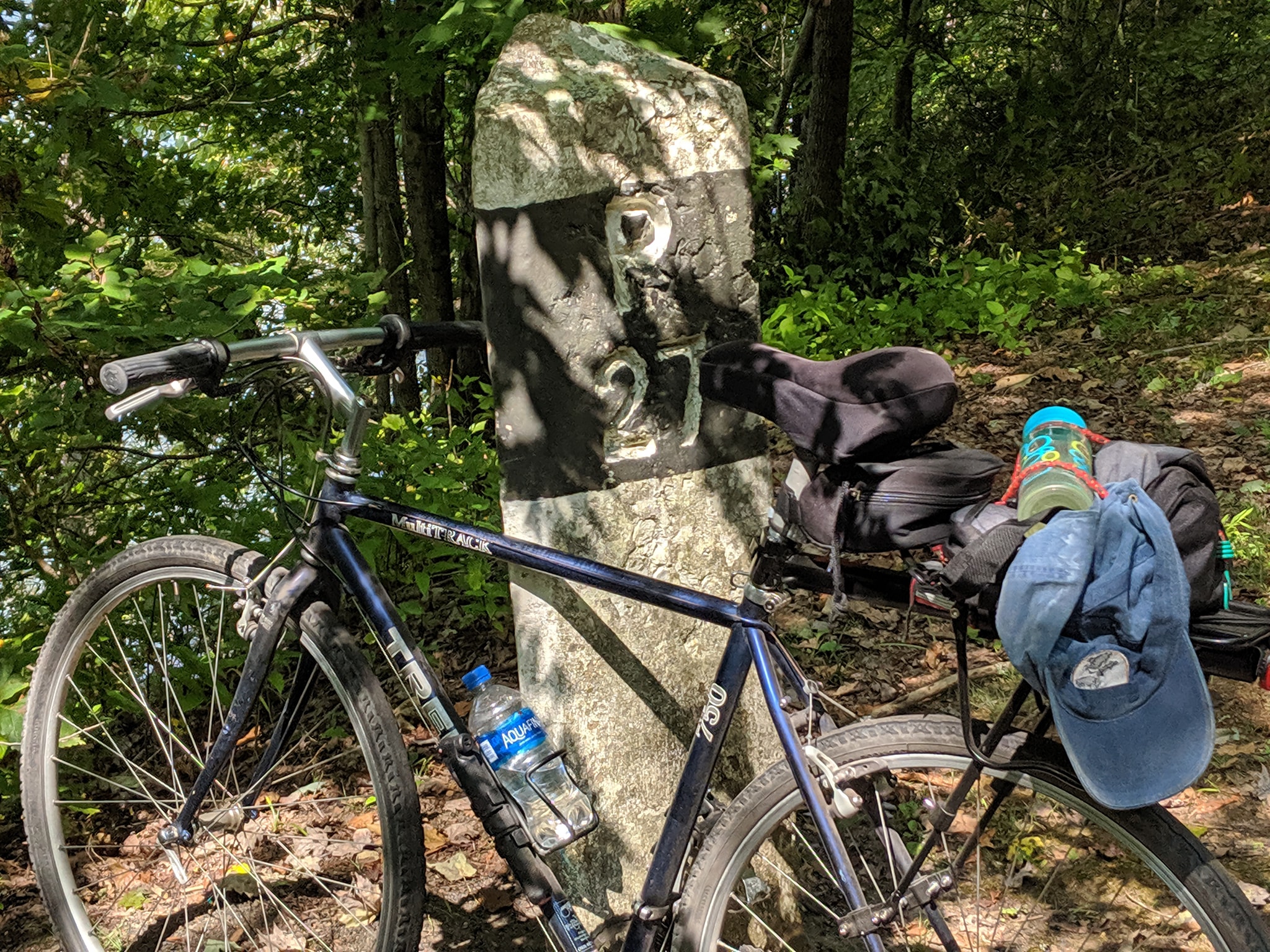
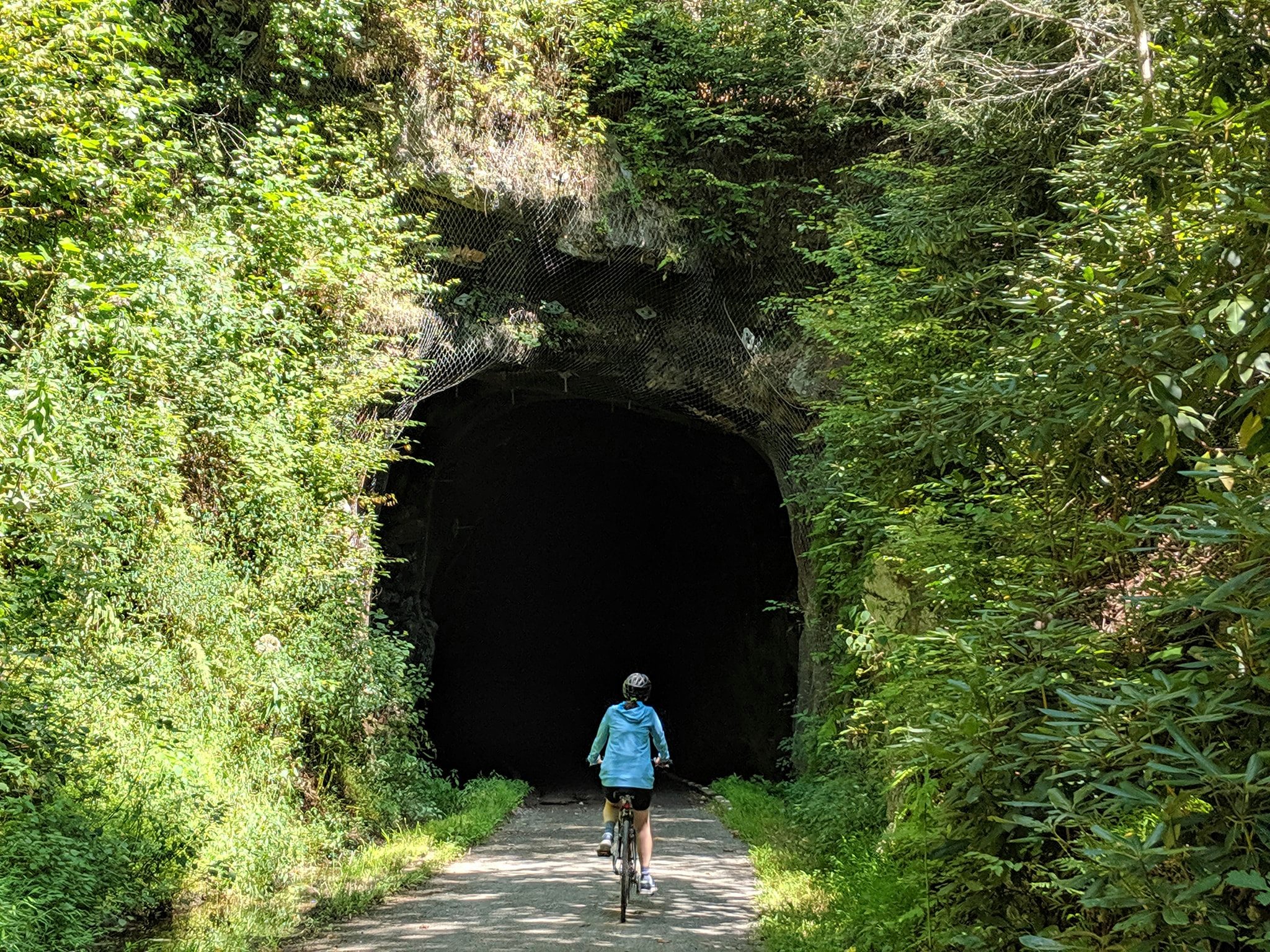
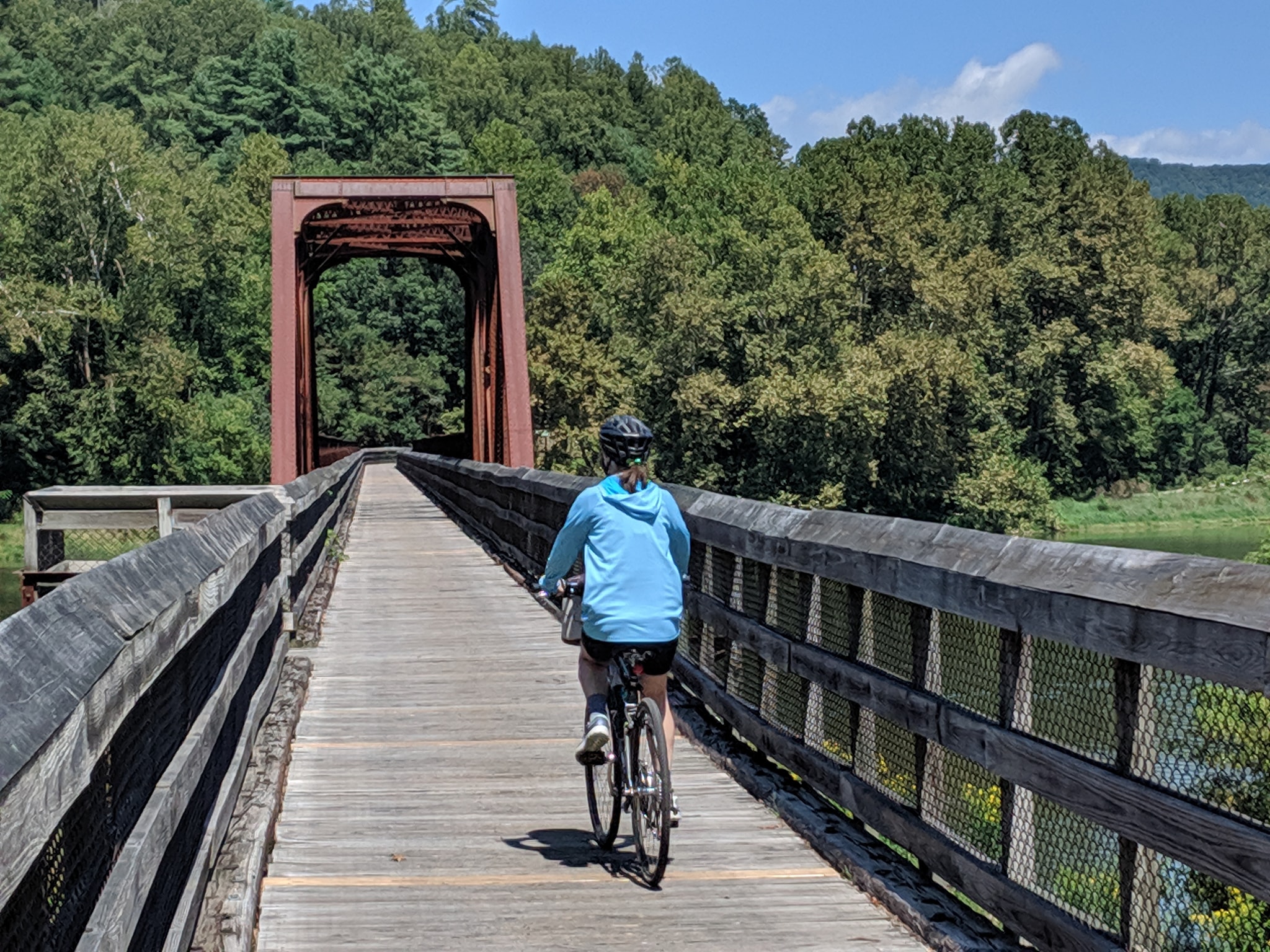
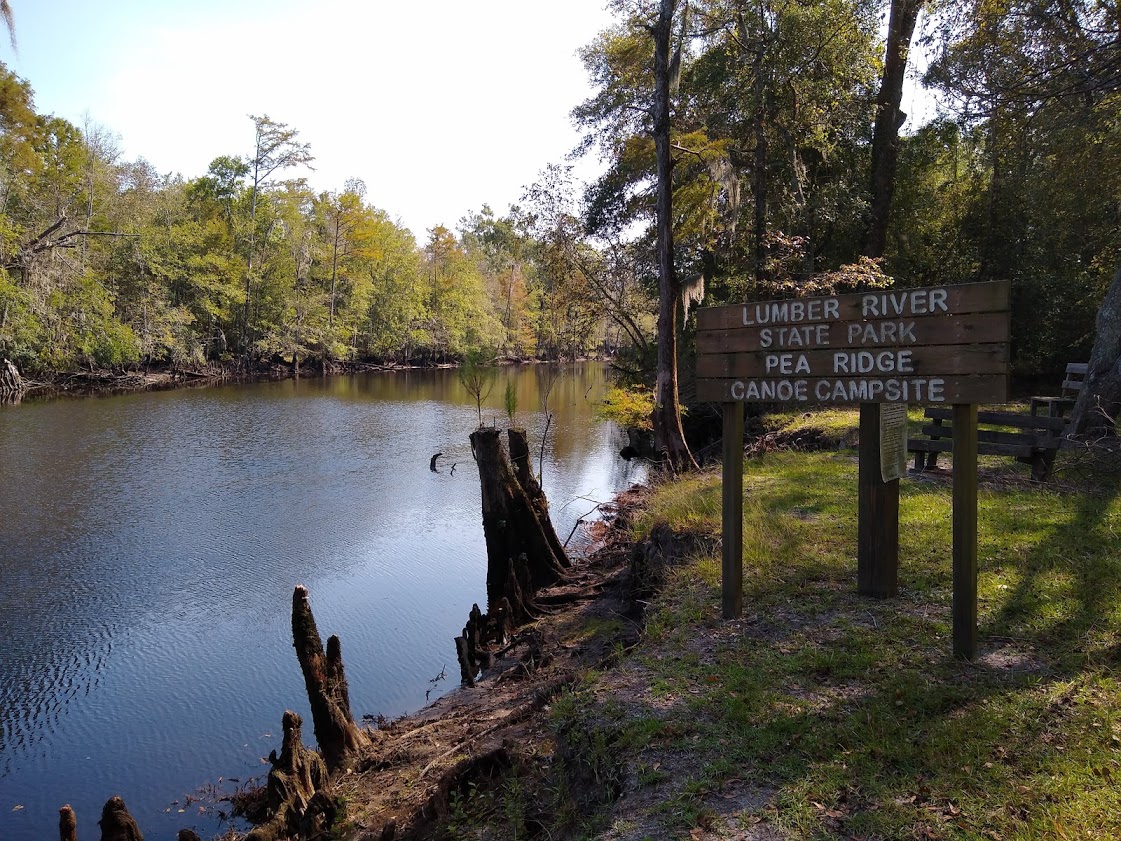
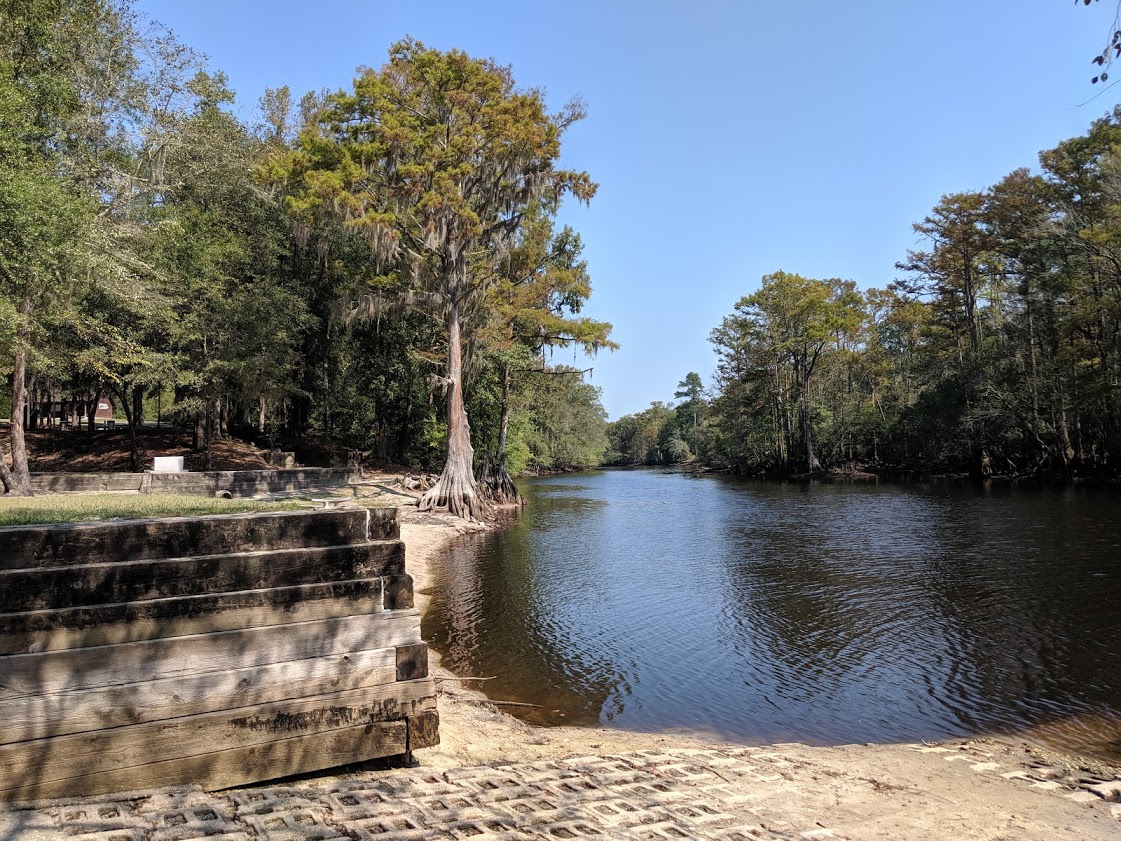
 The campsites are rather expensive for pit toilets and no showers ($25/night), but we loved our site. It was just steps from the river and we had the place to ourselves. We slept to the sound of water running over rocks (augmented by the sounds of birds, frogs, insects, and the wind). It was a wonderful place to camp. And every evening, I took a swim in the river.
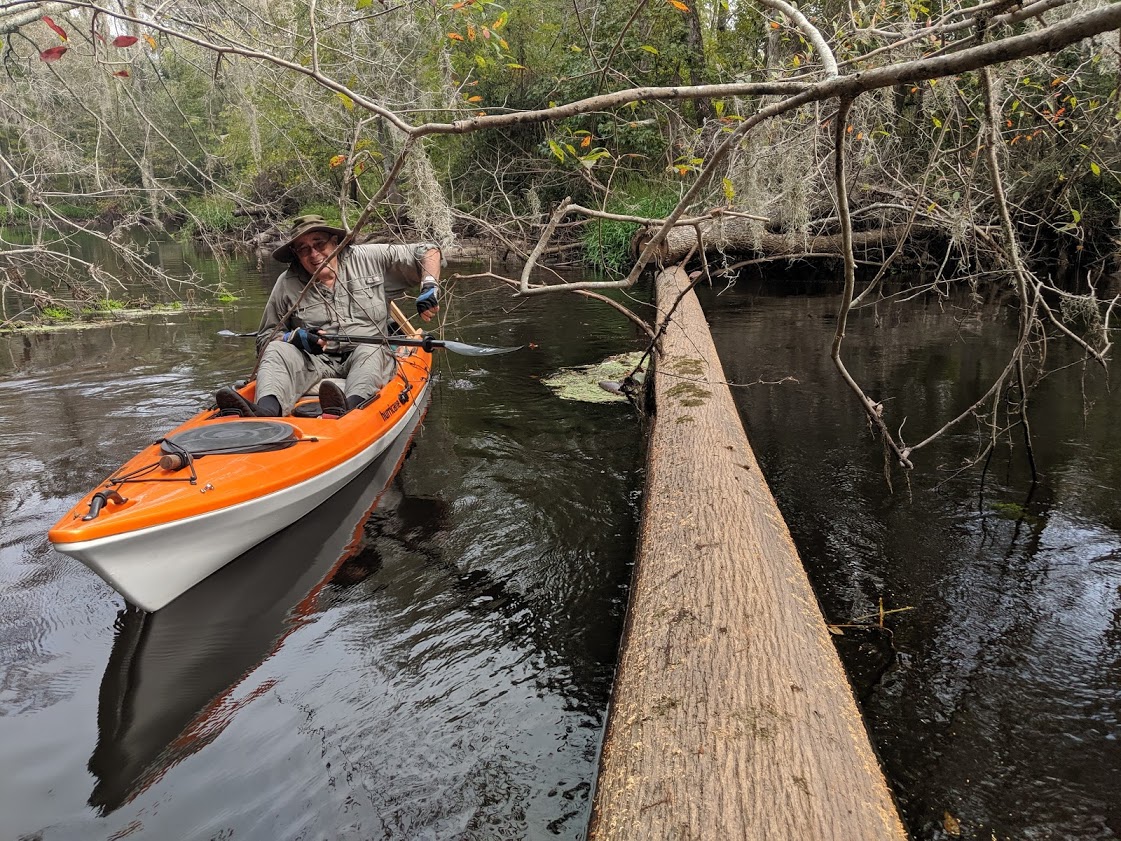
 After getting back and having a hurricane threaten, another full moon came around. This time, at home and on a semi-clear evening, I made the best of it by paddling around Pigeon Island (about 6 miles). It was a magical evening starting with incredibly red skies and then the beauty of the moon.