Remain at your post. Stay Awake!

Jeff Garrison
Bluemont and Mayberry Presbyterian Churches
Mark 13:24-37 (1 Samuel 28:3-16)
January 9, 2022

Comments at the beginning of worship:

I didnโ€™t stay up to midnight on New Years Eve. I was in bed by 10:30. I woke briefly at midnight when some in my fatherโ€™s neighborhood shot off fireworks, but quickly fell back asleep. Up before sunrise, I headed to the beach, enjoying the unseasonably warm weather before the sunโ€™s arrival. 

Watching the sunrise over the ocean seemed a good way to start a new year. The sun was scheduled to rise at 7:17 AM. But as the skies lightened, a deep fog bank appeared offshore. A fair number of folks came out to witness the first sunrise of the year, some with fancy cameras on tripods, in the hope theyโ€™d capture the moment. But all we saw was fog. 

โ€œThatโ€™s not a good omen for 2022,โ€ I quipped sarcastically. The night before a friend remarked on Twitter that after the last two years, his expectation for 2022 was so low that as long as the zombie apocalypse doesnโ€™t happen, heโ€™s good. 

But thereโ€™s another way of looking at that morningโ€™s fog. We canโ€™t see through the fog, nor can we see what will happen in the new year. As Paul reminds the Corinthians, โ€œwe walk by faith and not by sight.โ€[1]Living by faith means weโ€™re not given a road map for the future. Today, I want you to come away from this time of worship, understanding that there is much about the future we wonโ€™t know. We walk into it, trusting our Savior and accepting each day as a gift. 

A return to Daniel

Next week, I will resume my preaching from the Daniel. Weโ€™ll start with the seventh chapter, which begins the more apocalyptic section of the prophet. Many people attempt to use this part of Daniel to interpret the events leading to Christโ€™s return. Jesus makes it clear thatโ€™s beyond our understanding. Scripture teaches us that the future belongs, not to us, but to God. When attempting to understand Daniel, we need to interpret his prophecy through the lens of the rest of scripture. We donโ€™t have a roadmap to the future, we only know that in the end, God will be victorious, and we will share in such victory.

Before the Old Testament Reading

Our Old Testament reading may seem strange for todayโ€™s focus in worship. But I picked it for a reason. Let me explain. We learn that Saul, Israelโ€™s first king, worries about the future and so visits a medium or a witch (this text is often known as โ€œthe Witch of Endorโ€) to learn of his fate. And itโ€™s not good. Living by faith and accepting Godโ€™s providence is hard. Saul wants to see if there is some way to understand events so that he can take some control. 

Weโ€™re told that Saul had removed the wizards and mediums in the land. Godโ€™s law is clear. One should not consult with witches, mediums, or practice sorcery.[2] One should not attempt to control the future, for it belongs to God. Later prophets would condemn Israel and her kings when they practiced divination.[3] Such practices become tied to evil spirits as we see with Paul in Philippi. If you remember, Paul got himself in trouble for castings out the demons from a slave girl. The girl was freed, but the demon allowed her owner to make money from her by telling peopleโ€™s fortunes.[4]

What King Saul did was wrong. He knows it. Saul is a desperate politician, who will now try anything to stay in power.[5]ย Like too many politicians (along with the rest of us), he touts one thing and does another. Read 1 Samuel 28:3-16

Before the Gospel reading:

On the first Sunday of Advent, I preached from the parallel to this passage in Lukeโ€™s gospel. Both gospels tell of Jesus and the disciples being together on the temple grounds. Jesus points out the widow giving her mite, then he begins to talk about the future. First, Jesus covers things that will happen soon, such as the destruction of the temple. But then he continues, discussing the distant future, at the end of history, when he will return. While Jesus speaks of things happening, he emphasizes the futility of attempting to know the time of his return. Again, weโ€™re not to know the future, weโ€™re to live each day in faith, trusting that God has things under control.

Read Mark 13:24-37

After reading the gospel: Keep Awake

Keep awakeโ€ฆ As a child, staying awake was hard. Sermons were the worse. My eyes grew heavy. School wasnโ€™t much better, especially in a warm classroom in the days before air-conditioned schools. Keeping awake was hard, except for on Christmas Eve, when you were told to go to sleep. It was harder to fall asleep on Christmas Eve than it was when I planted a baby tooth under the pillow! You knew something magical was happening. The anticipation was high; too much was happening while we were asleep. Iโ€™d roll and roll and when my parents looked in on us, pretend to be asleep. The clocked ticked away.  

Keep awake, you donโ€™t know when this is all going to happen and when the Son of Man might appear. Itโ€™s been almost 2000 years since Christ leftโ€”that must be the reason thereโ€™s a lot of insomnia going around. But weโ€™re weary of waiting. Itโ€™s not something weโ€™re good at doing. We fret when we are in the doctorโ€™s office for too long. We stew when we get behind a slow driver. We brood if a waitress or waiter in a restaurant is inefficient. Waiting makes us feel out of control, unimportant, unwanted, and helpless. Yet, we must wait all the time. And the more we wait, the more our blood pressure rises. When is it going to all happen? 

Knowledge that exceeds what we can know

Sadly, Jesus doesnโ€™t provide a road map. Mark 13 begins with the disciples asking for a sign. While Jesus gives some โ€œsigns,โ€ he ends this discourse with a mystery. Knowledge about the end exceeds what we can know. It even exceeds what the angels and the Son of Man knows. The end isnโ€™t something we prepare for, such as going on a trip. Instead, the only thing we can do is to watch and to remain faithful.[6] So we waitโ€ฆ

However, most people probably donโ€™t mind waiting for Christโ€™s return. After all, we put off the important things in life, such as getting right with God, for another time. But thatโ€™s risky. Jesus is telling us thatโ€™s a gamble we shouldnโ€™t take.

Losing our map

Our passage begins with a description of terrible days. The sun and moon will darken, and stars will be fall out of the skyโ€ฆ 

Have you read Cormac McCartyโ€™s post-apocalyptic novel, The Road? The setting for the story is a horrible world, filled with smoke from a war long over. A nightmare has descended. A boy and his father try to make the way through this world without stars or a moon or even the sun, as they are all shielded from earth. Imagine, a sky without the sun or moon or starsโ€ฆ 

In the ancient world people believed that stars foretold things would happen (some people still believe this), so without the stars in the sky, theyโ€™re lost.[7] Itโ€™s as if their road map of the future has been destroyed.

A spotlight on the final drama of history

Perhaps we need to look at this passage in a less literal way. Whatโ€™s happening is that the lights need to be lowered so that all light can be focused on the one comingโ€”Jesus Christ. The removal of distractions helps everyone pay attention to whatโ€™s happening. The scene is scary and wonderful at the same time. Itโ€™s Godโ€™s great and final drama in history. 

Think about being in a theater. At the beginning of a play or concert, the house lights are dimmed so the audience can only see the performance. Youโ€™re not distracted by the guy to your left picking his nose or the teenagers making out two rows in front. Here, the lights are dimmed so that everyone will be focused on Christ. 

This return involves the gathering of the elect, the faithful, those chosen by God through Christ. The faithful are brought into Christโ€™s presence. 

The fig tree

Jesus then returns to the question that started this discourse, about when these things (such as the destruction of the temple) will occur. He uses a fig tree as a lesson. Just a day or two beforehand, Jesus had cursed a fig tree that was not providing fruit, and the tree shriveled up and died.[8]The fig tree was often used by the Prophets as a symbol of Israel.[9]

Now, instead of a fig tree withering, he speaks of when it blooms, which is later that most trees, in early summer. The budding of the fig tree is a sign of when this is happening, probably refers to Jesus the Messiah rising into prominence as the temple, which will soon be no more, fades from history. 

In the future, God will not be represented by the temple, With the temple gone, where does it leave God?  Of course, we know that in the world to come, as described in Revelation, there will be no temple. The temple isnโ€™t needed, for God is present.[10] The one we trust in this world even though we do not see, will be present so that faith gives way to love.[11]We weโ€™ll live in Godโ€™s visual presence. 

Parable of the Waiting Slaves

Our passage moves on to the final section where Jesus insists that whatโ€™s important isnโ€™t that we know when all this will take place (much of which took place before the end of the first century). Yet, we are still waiting for his return. Whatโ€™s important is that we are ready. โ€œKeep awake,โ€ this chapter ends, or as The Message translates the ending verse, โ€œStay at your post. Keep watch.โ€  As one commentator on this passage writes, โ€œvigilance, not calculation, is required.โ€[12]

The use of the story about the slaves or servants waiting on the master implies that they have assignments and must be willing to fulfill their calling while the Master is away. Interestingly, with this section in Markโ€™s gospel, relating to the Masterโ€™s return, there are no signs given. The slaves donโ€™t know, so they must continue with their tasksโ€ฆ Likewise, each member of the church has work to do. By the way, all of us have a calling. Thereโ€™s something each of us need to be doing for the kingdom. This is how we fulfill our obligation to โ€œwatch.โ€[13]

Conclusionย 

Christ has come, Christ will come again. But until he does, we are his hands and feet in the world, taking care of one another while telling his story so that others will catch a glimpse of the hope the world has in Jesus Christ and be ready. As The Message translation reminds us, โ€œStay at your post. Keep watch!โ€ There is no map. We walk into 2022 by faith, not foresight.  Amen. 


[1] 2 Corinthians 5:7. 

[2] Leviticus 19:31, 20:6, Deuteronomy 18:10, 19:26.

[3] See Jeremiah 27:9, 50:36; Micah 5:12, 2 Chronicles 33:6.

[4] Acts 16:16.

[5] See Walter Brueggemann, Interpretation: A Bible Commentary for Teaching and Preaching, First and Second Samuel (Louisville: John Knox Press, 1990), 192-193. 

[6]ย ย James R. Edwards,ย The Gospel According to Mark: The Pillar New Testament Commentary (Grand Rapids: Eerdmans, 2002), 406.

[7] Edwards, 403.

[8] Mark 11:12-14, 20-21.  Morna D. Hooker, Blackโ€™s New Testament Commentaries: The Gospel According to Saint Mark (London: A. C. Black Limited, 1991), 320. 

[9] See Jeremiah 8:13, Hosea 9:10, Joel 1:7, Micah 7:1.  See footnotes for Mark 11:12-14 in The New Interpreters Study Bible (Abingdon Press, 2003). 

[10] See Revelation 21:22ff. 

[11] 1 Corinthians 13:13.

[12]ย William L. Lane,ย The Gospel of Mark: The New International Commentary on the New Testamentย (Grand Rapids: Eerdmans, 1974), 482.

[13] Hooker 322. See also Lane, 484.
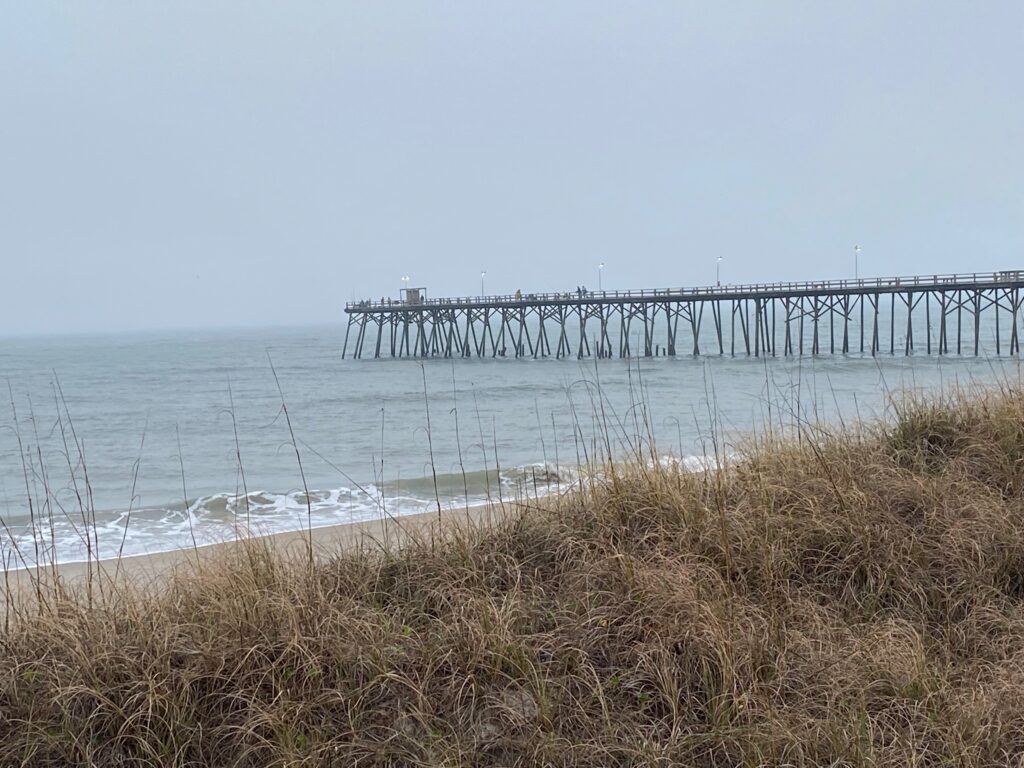
Kure Beach, North Carolina. New Year’s Day, 2022

Jesus at 12

Jeff Garrison
Bluemont and Mayberry Presbyterian Churches
December 26, 2021
Luke 2:41-5
2

Sermon taped at Bluemont Presbyterian Church on Sunday, December 26, 2021.

A few years ago, one of our missionaries in South Korea shared a story about a boy named Amos (obviously, thatโ€™s not his Korean name and for obvious reasons, the missionary didnโ€™t use real names). Amosโ€™ father was from North Korea and spent ten years in a labor camp before escaping to Russia. 

He lived there illegally and fell in love with a Russian woman. But they couldnโ€™t marry because of his status. If heโ€™d been discovered, he would have been sent back to North Korea, so they lived together and they had a son, Amos. The mother died when Amos was small, but because he was not legally linked to the father, he was taken to an orphanage. The father moved to be near the orphanage where he could visit his son and keep an eye on him. Then came the day that he learned his son was to be adopted. Fearing heโ€™d never see his son, the father gambled and called on the South Korean embassy. After some political wrangling, he was allowed to migrate with his son to South Korea. 

When we think things are difficult in our lives, we should remember Amos and his father.[1] The bond between a parent and a child is great and when threatened, itโ€™s heartbreaking, as weโ€™re going to find out in our text today.

Today, a day after we celebrated Jesusโ€™ birth, weโ€™re looking at his young life. We donโ€™t know much about his upbringing. The teachings of the Apostles focused chiefly on Jesusโ€™ public ministryโ€”from his baptism through the resurrection. Only two of the four gospels give us any detail about Jesusโ€™ birth, and they both provide only a fleeting glimpse of Jesusโ€™ life between his birth in Bethlehem and his baptism by John.  Matthew tells us the holy family spent time in Egyptโ€”as refugees. Luke tells us two things about Jesusโ€™ early lifeโ€”his circumcision on the 8th day and the familyโ€™s yearly visit to the temple with some more detail provided about this visit when Jesus was 12 years old. This is the passage Iโ€™m using for todayโ€™s message.

I wonder if Luke received his information about Jesusโ€™ birth and childhood from Jesusโ€™ mother Mary. Twice in the 2nd chapter, weโ€™re told that Mary pondered or treasured what happened to Jesus in her heart.[2]It seems quite probably that by mentioning Maryโ€™s pondering these thoughts, she was the source for Lukeโ€™s information.  

We have so little information about Jesusโ€™ early life and are left wonderingโ€ฆ At best, in Lukeโ€™s gospel, we can only account for a few weeks of Jesusโ€™ first thirty years. In our age where people focus on childhood experiences and their psychological impact on the rest of our lives, weโ€™re curious. And weโ€™re not the only ones. Even in the early church there was much curiosity about Jesusโ€™ upbringing, which led to the publication of many apocryphal and extra-biblical writings about what Jesus said and did as a child. But most of these accounts are so fantastic that they were easily dismissed.[3]

The Holy Spirit inspired what we have: the four gospels with their limited insight into Jesusโ€™ early life. So, we must be satisfied with these glimpses of Jesusโ€™ childhood. We can save any other questions for table talk at that great banquet in heaven. Letโ€™s now look at todayโ€™s text.

READ LUKE 2:41-52.

Probably one of the worst nightmares for a parent comes from the fear of losing a child. I told you the story about the Korean boy at the beginning of the sermon. It came from an article titled โ€œThe Shepherd of North Korea,โ€ written by a Presbyterian missionary in South Korea. 

The author recalls his real education on Godโ€™s shepherding. Shortly after he and his family moved to Seoul, they visited an open-air market. Iโ€™ve been in some of those crowed markets. You wind through alleyways, with way more people than space. He and his wife then realized that his daughter no longer had his hand. What happened next, he described, was โ€œfive minutes of hellโ€ as they searched for the small girl in the crowds of people speaking a strange language.[4] Luckily, they found their daughter, crying and terrified, but safe. Itโ€™s a horrifying thought; itโ€™s our worst nightmare, not knowing where a child is located and knowing there is no way you can help him or her. If we think about the emotions the thought of losing a child brings to us, we can empathize with Mary and Joseph.

Mary and Joseph are devoted Jews. In some ways, their actions go beyond the demands of the law, which required adult Jewish men to go to the temple for Passover. Those living around Jerusalem observed this requirement, but those living more than a dayโ€™s journey or roughly 20 miles from the city, were excused. For those living far away, the trip was made less frequently and, in some cases, was a once in a lifetime journey. The holy family, however, attended every year. Thatโ€™s devotion for the hard journey would have taken then four days of walking, each way. Even more remarkable, both Joseph and Mary attend!  Mary wasnโ€™t required. She could have stayed home. But Luke leaves us with a picture of devout parents raising Jesus.

The fact that this is Jesusโ€™ twelfth year is also telling, as perhaps he has gone through his bar mitzvah. Now Jesus is, in Jewish eyes, a โ€œson of the law.โ€ At this point, heโ€™s obeying the command to attend Passover.[5]

There is much speculation about what these journeys to and from Jerusalem were like. Most likely, the pilgrims traveled in caravans or groups of like-minded people. The men walked together and discuss theology briefly, before the talk switched to the World Series, Superbowl, business, how they are all hen-picked by their wives, or equivalent subjects of the first century. Likewise, women walked together. They talked about kids and school, celebrities, and the inattentiveness of their husbands. Children also gathered to play with each other, to sing, and keep each other company while complaining about their parents. Not much has changed. Since this was a male-dominated society, the children mostly hung out within sight of mom.

Perhaps this is how it happened. Leaving Jerusalem and heading north to their home, Joseph engaged in conversation with other men and thought that Jesus was with Mary. And Mary, knowing that Jesus is now 12, almost a man, assumed he was with his dad. And even if he wasnโ€™t with dad, he could have been traveling with some of his cousins. Jesus himself is at the in-between age; heโ€™s not quite an adult (thatโ€™ll happen according to their tradition on his next birthday), but heโ€™s also no longer a child and heโ€™s putting aside childish games. Being in this no-manโ€™s land, Jesus falls through the crack and itโ€™s not until that first night, when Mary and Joseph reunite, that they realize heโ€™s missing. Unable to find him among the pilgrimโ€™s camp, they worry. 

Theyโ€™re now a dayโ€™s journey from Jerusalem. They immediately turn around and hike back to the city and look for him. Not only are they devoted to their religious teachings, but they are also devoted to their child. 

Itโ€™s on the third day (a day traveling from Jerusalem, a day traveling back to the city, and a day of looking) that they find Jesus. Luke may be foreshadowing or hinting at the time between Jesusโ€™ death and his resurrection. Jesus is having an adult conversation with the intellectuals of the faith, but Mary isnโ€™t impressed. โ€œWhy have you treated us like this?โ€ she yells. โ€œYour father and I have been worried.โ€ Maryโ€™s response is natural; all of us who have children have probably said this or something very similar at some point in their upbringing.  

Jesus replies, asking why they were searching, as if he didnโ€™t know, and then, playing on words, asked if they didnโ€™t know that he would be in his Fatherโ€™s house. Mary and Jesus use the word Father, Jesus capitalizes his use, (or, itโ€™s capitalized in the English version due to our grammar). Mary of course, uses father to refer to Joseph while Jesus is talking about our heavenly Father. But Jesusโ€™ comments are not a rebuke of his parents, for weโ€™re told that he returned home with them and that he remained obedient.  

Thereโ€™s an unanswered question here. Had Mary forgotten about her pregnancy and Jesusโ€™ miraculous birth complete with angels and strangers bringing gifts? Luke doesnโ€™t say she had a brain lapse and suddenly snapped out of it, saying, โ€œOh silly me, I forget, we should have looked here first.โ€ Luke is doing two things. First heโ€™s showing that Jesus, even with his divine nature, was part of a normal family, one that cared for and worried about the kids.

Secondly, Luke sets up early in his gospel the tension that will later become more prominent in Jesusโ€™ ministryโ€”a tension between oneโ€™s family and God. Jesus himself faced this problem as we see here and later in his life as his brothers challenged his ministry.[6]  

Luke uses this story to illustrate Jesusโ€™ growing awareness. As Jesus matures, he begins to understand his destiny, as Luke points out in verse 52. Luke also shows the human dynamics of a family struggling with such a calling. Jesusโ€™ mother would stick by him, even being there at the cross. Certainly, Jesusโ€™ ministry caused her much heartbreak, of which this little blip in his childhood is only the beginning. Yet, she knows heโ€™s destined for something greater than she could ever imagine. She does her part, raising the child, but when the time comes, must let him go to do his Fatherโ€™s work.

Looking at this story from this angle, we can see it affirms both the role of the parents (after all, when they found Jesus, he obeyed them and returned home) and the need for a growing boy whoโ€™s almost a man to spread his wings, so to speak. The family, as well as the larger community present at Passover, did their parts in preparing Jesus for his life and ministry. Could we ask for more? Is there anything more important a community or a family can give the young people with whom they are entrusted? Therefore, when we baptize children, we require parents as well as the congregation, the childโ€™s worshipping family, to pledge their support.  

And when the parents and the community have faithfully raised a child, that child must then be given the freedom to follow his and her own path. Here, we see that ultimately the focus isnโ€™t on the family; itโ€™s on doing the work of the Heavenly Father. When this is kept in perspective, our priorities fall into place, just as they did for Joseph and Mary.  

Raising children is both a blessing and a responsibility that we share with Mary and all other parents. Like Mary and Joseph, it is easy for us to get busy about our own concerns and forget our role in preparing our children to be about the business of their Heavenly Father.  

As we end this year and begin the next, think about our responsibility to the children in our homes, our community and of the world. What might we do, in our homes and in our neighborhood, to help our children grow up wanting to serve their Heavenly Father? What might we do to support children around the globe? We have a responsibility and weโ€™re all in this together. Amen. 


[1] Samuel Weddington, โ€œThe Shepherd of North Korea,โ€ Presbyterian Outlook, 10 December 2012. See https://pres-outlook.org/2012/12/the-shepherd-of-north-korea/

[2] Luke 2:19 & 51.

[3] Norval Geldenhuys, The New International Commentary on the New Testament: The Gospel of Luke (Grand Rapids: Eerdmans, 1983), 125-126,

[4] Weddington, โ€œThe Shepherd of North Korea.โ€

[5] Fred B. Craddock, Luke: Interpretation, a Bible Commentary for Teaching and Preaching (Louisville: John Knox Press, 1990), 41.

[6] See John 7:1-5.

Mayberry Church on Christmas Eve (photo by Beth Ford)

Christmas Eve Homily

Jeff Garrison
Mayberry and Bluemont Presbyterian Churches
Christmas Eve 2021
Luke 2:1-20 (verse 19)

This video contains a whole service that includes music along with the homily

Growing up, I never felt like our Christmas tree was the real thing. Yeah, it was a live tree; weโ€™d never go for the artificial variety. But it was store bought, purchased from the Optimist Club, which was logical since they supported the local Little League program.

On the night we put up the tree, weโ€™d all wait patientlyโ€”or maybe not so patientlyโ€”for Dad to come home from work. When he arrived, weโ€™d pile in the car and drive to the lot on Oleander Drive. It was a makeshift operation, some bare bulbs hanging from wires overhead illuminating the lot that in summer was a putt-putt golf course. Trees stood up against wires running between poles. Weโ€™d go through the lot looking at 100s of them. None ever seem perfect. And the ones I liked, my brother or sister wouldnโ€™t like. Or it was too big. It was hard to get all of us to agree. After 15 minutes of this fruitless exercise, my parents assumed authority and picked out a tree. Dad paid for it. Then he tied it to the top of our car for the ride home. 

In some ways, itโ€™s odd that my dad purchased a tree instead of finding a place to cut one. Heโ€™s the type of man who never brought anything he could make, and that included our tree stand. Had the bomb dropped on our house, something kids worried about in the 60s, Iโ€™m sure Dadโ€™s tree stand would have been the only thing to survive. I was in Middle School before I could pick it up. It was constructed from a large flat piece of 3/8-inch plate steel with a four-inch steel tube welded to it. The trunk went into the tube. At the top of the tube, heโ€™d drilled holes and tapped it so the bolts could be tightened to hold the tree in place. It was hard to get water into the tube, so after the first year, he drilled a bunch of holes in the side of the tube and then welded a shorter eight-inch pipe over it. We could pour water into the larger tube, and it would seep into the trunk. This tree stand was so solid that the treeโ€™s trunk would have broken before it would have toppled. 

As a child, I wondered why we didnโ€™t have one of those red stands with green legs made of tin, like all other families. I was envious of those flimsy tree stands sold at J. C. Fields. As an adult, before moving to an artificial tree, I found myself wishing for Dadโ€™s old stand. The tree in that stand would have survived kids, dogs, cats, and rowdy guests, all of which have been known to topple a tree my living room.

My maternal grandparents still lived on a farm and never had a store-bought tree. For me, they had a real treeโ€”an Eastern Cedarโ€”thick and full and fragrant compared to the scrawny firs the Optimist Club imported from Canada. My mother, obviously trying to console us, said firs brought down from Canada were better because you had more room between branches on which to hang ornaments. She was trying to convince herself, Iโ€™m sure. Deep down, she knew that for a tree to be authentic, you had to select the one for the sacrifice, and cut it youโ€™re your own hands.  

Of all the trees Iโ€™ve seen in my life, the one that stands out as the ideal tree was the one my grandmother and grandfather Faircloth had for Christmas 1966. It was a full, well-shaped cedar my grandfather had cut near the branch that ran behind his tobacco barn. Although I didnโ€™t witness the harvesting of this tree, I imagine him, sitting on top of his orange Allis Chambers tractor, with the tree tied behind the seat, hauling it back home. This tree took up a quarter of their living room and its scent filled their home. Grandma decorated it simply: white lights, red bulbs, and silver icicles. And, of course, there were presents underneath along with boxes of nuts and fruit.

They gave me a Kodak Instamatic Camera, that year, the kind that used the drop-in 126-film cartridges and those square disposable flashes that mounted on top.  It was the closest thing to a foolproof camera ever built. I got good use out of that camera. Itโ€™d be nearly another decade before I replaced it with a 35 millimeter. My grandfather did not feel good that Christmas, but after some coaxing, I came outside so I could take a picture of him and my grandmother in front of the house. 

Even though I lost this picture years ago, I can still visualize the snapshot in my mind. Grandma and Granddad stood in front of their porch, by one of the large holly bushes that framed their steps. My slender grandmother, a bit taller than her husband, has her arm around him. Theyโ€™re both smiling. Granddad sports his usual crew cut. In the picture, my grandparents are a bit off-center and crooked, for the camera in the hands of a kid wasnโ€™t as foolproof as Kodak led everyone to believe. But the image was sharp. It still is, in my mind.

My granddad never raised another crop of tobacco. Although I donโ€™t know for sure, he may have never even driven his tractor again, for early that January, his heart gave out. Perhaps thatโ€™s why the memory is so vivid.  

Iโ€™m sure my Christmas memories are normal. You probably have similar onesโ€”some are good, and others are of Christmases that didnโ€™t live up to expectation. And then there are those sad Christmases in which we lost loved ones. Thereโ€™s nothing wrong with a normal Christmas, for if you look at the birth narrative in Lukeโ€™s gospel, thatโ€™s what the first one was all about. It was business as usual. Mary and Joseph have traveled to Bethlehem to do their civic duty, registering for the census. You have shepherds working the graveyard shift. Even birth itself is normal. Itโ€™s how we all came into this world. In this ordinary world God enters. Good news! God appears in an ordinary world, in an ordinary life, just like ours. We donโ€™t have to do anything special to experience God. The Almighty finds us waiting in line to meet a government bureaucrat or while working the nightshift. God finds us where we are, thatโ€™s one of the messages of Christmas.

The Good Book tells us that after the shepherds left the Baby Jesus, rejoicing and praising God, Mary pondered in her heart all the things sheโ€™d heard and experienced. The late Raymond Brown, a well-known scholar who wrote the most detailed commentary on the birth narratives of the Gospels, says the word โ€œponderedโ€ literally means โ€œthrown side by side.โ€[1] Mary brought together in her heart all the events occurring in Bethlehem and during her pregnancy and juggled them around in an attempt to understand. 

There must have been a variety of emotions of which we can only speculate. How much of her Sonโ€™s future did she really understand? Possibly not much. It would be thirty years before Jesusโ€™ ministry would begin. And even after he started his ministry, there were times Mary and her family tried to talk Jesus out of it.[2] A normal mother, trying to protect her son. The birth of any child is miraculous to the mother, so maybe Mary just thought all that happened that night in Bethlehem was normal. As the years went by forgot about the angels and the prophecies concerning her son.  

Mary is important to the story, not only because she is the mother of our Savior. Maryโ€™s the only person mentioned in the gospels whose presence bridge the life of Jesus. She gives birth, sheโ€™s at the cross with her heart heavy with sorry, probably still pondering and wondering, and on the first day of the week is there to experience the resurrection.[3]

Ever since that first Christmas some 2000 years ago in the small town of Bethlehem, the day has been one in which we ponder its meaning while creating our own memories. The picture etched in my mind of me photographing my grandparents reminds me of the family from which I sprung, a family who saw to it that I had a chance to know the Christ-child as someone more just a reason to receive gifts. 

Those trees I remember from my childhood, whose roots historically are pagan, have become a symbol for the life Christ brought into the world, the greatest gift we can receive. The impossibility of finding the perfect tree, a task so daunting for my family, always seemed so silly afterwards for even imperfect ones become perfect when decorated. And God works the same miracles in us, taking what is weak and imperfect and using it to carry out his mission in the world. And if I wanted to stretch it, I could even point to my Dadโ€™s Christmas tree stand as a metaphor for the solid foundation we all need in our lives! The memories of Christmas that stay with me are not of receiving gifts. It is the assurance of being loved, by parents and grandparents, and ultimately by God.  

Tonight, ponder what this all means. I suppose for most of us, our fondest Christmas memories are as children or when we had children of our own. In a profound way, Christmas is about children. Think of the possibilities that rest in an infant.

The birth of a child in Bethlehem, the joy of a child tearing into wrapped presents and then hugging a parent, the twinkle of candlelight in our eyes as we sing Silent Night help remind us what itโ€™s all about. And when we hear those words from Jesusโ€™ adult ministry, that unless we come as a child, we will never enter the kingdom of God,[4] we can think about how we viewed things as a child. Perhaps this is what we should be pondering as we once again recall and celebrate Godโ€™s entry into our world. How might we become child-like and accept our Savior into our heart?  Amen.  

Recently, I came across another wonderful mediation about Christmas and children from “The Plough,” a devotional site for Christmas. Click here to read it.


[1]Raymond E. Brown, The Birth of the Messiah: A Commentary on the Infancy Narratives in the Gospels of Matthew and Luke (New York: Doubleday, 1993), 406.

[2] In John 7:5, we see that Jesusโ€™ brothers did not believe in him.  Was this the reason his brothers and Mary were trying to see Jesus in Matthew 12:46 and Mark 3:31?

[3] Not only was Mary present at the death, sheโ€™s listed as being present with the early church.  See Acts 1:14.

[4] Luke 18:17.

Mary’s Song

Jeff Garrison
Bluemont and Mayberry Presbyterian Churches
December 18, 2021
Luke 1:39-56

At the beginning of worship

Itโ€™s the fourth Sunday of Advent. Out waiting is paying off. This week, weโ€™ll celebrate the birth of Jesus. But what does Jesusโ€™ coming mean? What will his return be like? Today, we hear from his mom. Jesus doesnโ€™t just come to provide for about individual salvation. Instead, God is doing something incredibly new in the world. Will we want to participate? 

Before the reading of Scripture

When I lived in Michigan, there was always a time, generally in March, that Iโ€™d wake to birds singing while it was still dark. It was a sign winter was almost over. Spring was on its way and the birds had made their trip back from their winter home. I imaged them singing a song of thanksgiving. 

Lukeโ€™s gospel opens similarly. Everyone sings. Weโ€™ll almost everyone. Old Zechariah, John the Baptistโ€™s father, was at a loss for words. That is, until he regained his speech. But I bet his heart sang. Joining in his heartโ€™s song is his pregnant wife, Elizabeth. And then Mary, pregnant with Jesus, joins the song. And after Jesusโ€™ birth, angels gather as a chorus. They all understand itโ€™s a new day. Godโ€™s promises are about to be fulfilled.

The last two Sundays, we explored John the Baptist. The last of the prophets of the old age, John points the way to Jesus, the one who ushers this new age.[1]ย Today, weโ€™re stepping back, to when John and Jesus were still in the womb. Our scripture tells of the two mothers, Elizabeth, and Mary, giving thanks to God.ย 

Read Luke 1:39-56ย ย 

Automobiles and control

I have a confession to make. I like to be in control. Didnโ€™t come as a surprise, did it? I like to know what Iโ€™m doing and where Iโ€™m going and how Iโ€™m going to get there. I donโ€™t like things I canโ€™t control, which is probably why I donโ€™t get excited over cars. Iโ€™m not impressed with how much horsepower one packs under the hood or the size of the tires. I just want the contraption to get me where Iโ€™m going.  

You see, with a car, you can be whizzing down the interstate at midnight with everything in orderโ€”cruise control set just a hair above the speed limit, the vehicleโ€™s interior climate comfortable, and just the right tune blaring from the stereo when, suddenly, a water pump breaks. You sit in the middle of nowhere, reminded once again that youโ€™re not in control. A little mechanical gadget that can only be found in an auto-parts store three counties over shatters any allusion of that. Moments before you were happy and content, now youโ€™re cranky and angry. Know the feeling? (That said, I hope none of us have car problems if youโ€™re travelling for the holidays.)

The desire for control is something instilled into our culture. Weโ€™re told to pull ourselves up by our bootlaces. We take care of ourselves, or at least we are under the mistaken belief we can take care of ourselves. But we didnโ€™t build the car. Nor did we build the highway or refine the oil to make the car run. We should keep in mind that we always depend on others and ultimately, we depend on God. 

The fantasy of control

We need to get this control fantasy out of our heads. The tornadoes to our west over the past two weeks, at the wrong time of the year, certainly reminded folks in places like Mayfield, Kentucky they werenโ€™t in control. That said, we need to accept ourselves for who we are. When we try to make ourselves out to be more than we are, we create an idol out of the self and set ourselves up for a fall. The higher we elevate ourselves, the further we fall.[2]

Yet, control is a desire we all share. But itโ€™s dangerous because it is incompatible with our faith in God. We desire to be rich, famous, powerful, popular, the type of individual who controls his or her surroundings. But itโ€™s a myth. As Christians, our desires should center on pleasing and fulfilling Godโ€™s will. If you question this, consider Mary, the women whom God chose to work through to bring about salvation to the world.  

Mary and women of the 1stย Century

Mary wasnโ€™t rich or famous or powerful or popular. According to worldly standards, she was the most unlikely candidate to be the mother of Jesus, the mother of God. She was young and unmarried, probably poor, from a second-rate town in an obscure corner of the world. As far as we know, she had no education and there was no royalty within her blood. She didnโ€™t seek fame. 

Mary depends on others. As with other women of the age, she depends on her father to find her a husband. Then sheโ€™ll depend on her husband to provide for her and their children. Later in life, sheโ€™ll depend on her children to take care of her. She had no control over her life. Absolutely none. A poor woman, like 1000s of other poor women, in a dirt-poor town in an obscure providence of the Roman Empire. 

Maryโ€™s troubles

Yes, Mary was like 1000s of other women, until sheโ€™s visited by the angel Gabriel. It almost sounds like a fairy tale story, does it, to be chosen as the mother of God?[3] Except Mary never inherits a castle. Her story goes downhill. She gives birth to her son in a stable, the family flees to Egypt where they live as political refugees, and three decades later sheโ€™s there by the cross watching her son die.[4] She is a woman of sorrow, but despite this her song is one of the most beautiful found in scripture as she praises God for what he has done and is doing.

Mary realizes her position. Sheโ€™s a lowly servant. Her honor comes from Godโ€™s action within her life. Everything is Godโ€™s doing, not hers. Sheโ€™s not the cause of redemption; sheโ€™s just a vessel God uses to bring the Savior into the world. Mary canโ€™t boast of her accomplishments. She doesnโ€™t line up book deals; she isnโ€™t saying, โ€œlook at me, Iโ€™m the mother of God.โ€ Instead, as Luke tells us at the end of the Christmas narrative, Mary ponders all that happens in her heart.[5] Sheโ€™s the model of true humility. She directs her praise, as well as her life, toward God.

Godโ€™s operation

Maryโ€™s song gives us an insight into how God operates. God chose her, an unlikely candidate, to be Jesusโ€™ mother. God lifts the lowly while pronouncing judgment upon the powerfulโ€”upon those who think they are in control. We Americans should take notice. 

Godโ€™s blessings are given to those who understand they have no control in their lives; God’s blessings are for those who, in their humble state, fear the Lord. At the same time, those who are not willing to acknowledge Godโ€™s sovereignty will not find salvation in Jesus Christ. Theyโ€™re too busy looking out for themselves and pretending their own resources will save them. Such folks may not even realize they need a Savior.

The poor and dependencyย 

Have you ever wondered why the poor appear to be special in Scripture? Think of the verses: Blessed are the poor.โ€[6] โ€œItโ€™s easier for a camel to get through the eye of a needle than a rich man to get into heaven.โ€[7] Why is it easier for the poor to accept Christ and find salvation?  

The poor are dependent. Those without money must depend upon others for food. Those without capital must depend upon others for jobs. And this doesnโ€™t just go for the economically poor. โ€œBlessed are the poor in spirit.โ€[8] Those who are depressed must depend upon others to cheer them up. The poor are dependent on others, they are not in control, and those who acknowledge their dependence have an easier time accepting Godโ€™s grace.  

All of us need to learn to depend upon God and, by doing so, we need to make Maryโ€™s song our own. Can we prescribe all our praise to God? (Or, do we want to save a little for ourselves?) Can we acknowledge Godโ€™s power and sovereignty in this world? (Or, do we believe in our individual grandeur?)

Mary is in no position to help herself, yet she so totally trusts God and sings his praises. Mary accepts Godโ€™s call and gives God thanks for choosing her, which is why her song is remembered.  

Maryโ€™s model of prayer

Maryโ€™s song provides us a model of a prayer of thanksgiving. If Mary, a woman of sorrow, can sing such a song, if the songbirds who struggle day after day for food and survival and make long journeys across a continent can sing such praise, why canโ€™t we? In all we do, we need to see how God is working in our lives and then give thanks.

We need to take Paul seriously when he says that weโ€™re to be praying without ceasing.[9] And our prayers need to mostly be prayers of thanksgiving, as we praise God for all that he has done for us. When we search our lives for Godโ€™s blessings and realize our blessings. Humbled, we become even more dependent upon the loving arms of the Almighty God. 

During this festive season, donโ€™t forget to give thanks. Take time to count your blessings. What has God given you to be thankful for? First off, heโ€™s given your life; Godโ€™s given you a chance.  Secondly, youโ€™re redeemed in Jesus Christ. Thatโ€™s a lot! And what has God done for our church for which we should be thankful. Heโ€™s given us a rich heritage, a church that has served this community for a hundred years,[10] people who work hard in the community to make it a better place for all people. Weโ€™re not perfect; for that weโ€™ll have to wait for the Second Advent. But God blesses us to be a part of Jesusโ€™ family and in such a community as this.  

Blessedness in a troubled world

Of course, as the news reminds us daily, we live in a world of violence. But so did Mary and Elizabeth. They lived in a world where those who disagreed with the occupying army were crucified and where Roman soldiers enforced the will of Caesar by spear and sword. And yet, they both praised God for what was happening. Both knew what God had done in the past and understood that a new age was dawning. Even John, in his motherโ€™s womb, knew and was excited about what God was doing.

Today, we can be cynical, when considering the violence and injustice in our world. Or we can realize the message of the cross, which is that violence and evil may have their day, but they are not the final answer. Be thankful, for the powers of death could not overcome Godโ€™s love for the world. Be thankful, for Jesus will return and establish his rule and every knee will bow in reverence and God will live among us in such an intimate way that heโ€™ll wipe our tears from our cheeks.[11]

Blessings and Hope

And be hopeful. For God works with us to bring about a marvelous eternity. This past week, I listed to Tim Keller talk on hope in a troubling time. Keller is the founder of Redeemer Presbyterian Church in the heart of New York City. Keller also suffers from cancer. (In the footnotes of my written sermon, I posted the link to this YouTube podcast.[12]) Keller reminds us of the depth of our hope. We are not just hoping God will take away whatever trouble we experience today. Thatโ€™s trivial hope. We place our hope in what God is doing in the world that will be eternal. And that starts with the coming of Christ.ย 

Conclusion

I encourage you in your prayers to be like Mary. Remember what God has done and what God is doing!  Paul tells us to rejoice always.  When we regularly give thanks to God, we live differently. Our lives will be more positive. Weโ€™ll be like the songbirds on a spring morning, sharing Godโ€™s hope to a hurting world. Come, Lord Jesus, Come!  Amen.  


[1] Fred B. Craddock, Luke: Interpretation, A Biblical Commentary for Teaching and Preaching (Louisville: JKP, 1990), 29.

[2] See Isaiah 14:12-14 and Luke 10:18

[3] Luke 1:26ff.

[4] See John 19:26.

[5] Luke 2:19

[6] Luke 6:20

[7] Matthew 19:24, Mark 10:25, and Luke 18:25

[8] Matthew 5:3

[9] 1 Thessalonians 5:17.

[10] Bluemont was 100 years old in 2019. While Mayberry will be a hundred in 2025, it existed as a Sunday School meeting in the school house before then. 

[11] Romans 14:11, Philippians 2:10, Isaiah 25:8, and Romans 21:4

[12]ย https://www.youtube.com/watch?v=iB2rS71FcUM

Another lighthouse ornament from my Christmas tree. Bald Head Light at the mouth of the Cape Fear River in North Carolina.

The Preaching of John the Baptist

Jeff Garrison
Bluemont and Mayberry Presbyterian Church
December 12, 2021
Third Sunday of Advent
Luke 3:7-20

Sermon recorded at Bluemont Church on Friday, December 10, 2021

At the beginning of worship

Weโ€™re at the third week of Advent. Christmas is coming. Have youโ€™ve been naughty or nice? Of course, that sounds like Iโ€™m emphasizing works. We often think the only thing that matters is a belief in Jesus. And while believing in Jesus is important, so is how we live our lives. Because of the love weโ€™ve experienced in Jesus Christ, we are to share such love with others. 

This week on Twitter, a seminary student witnessing an online debate over whatโ€™s the correct belief, responded: โ€œSome of yโ€™all need to stop studying apologetics (thatโ€™s the defense of our faith) and start studying apologies.โ€[1] She has a point. Jesus would probably agree.

Iโ€™ve been reading Makoto Fujimura new book, Art and Faith: A Theology of Making. The author challenges us at our โ€œbottom lineโ€.[2]What are we doing with our lives? How are we using the gifts God has given us to make this world a better place? Not only do we need to believe and love Jesus, but we must also shape our lives using him as a model. 

Before the Gospel Reading

Again, this week, weโ€™re dealing with John the Baptist. The man preaches a harsh sermon. Godโ€™s judgment is at hand! Johnโ€™s message when added to Zephaniahโ€™s (whom we heard in our Old Testament reading) blend into the sweet and sour of Godโ€™s word. Like sweet and sour sauce, the richness of tastes comes by combining both flavors. Godโ€™s ways are good for salvation, yet they are linked to judgment. Listen to what John says. Once he gets your attention, I think youโ€™ll then be surprised at what he says.  

READ LUKE 3:8-18

After the Reading of the Gospel

The Hound of Heaven

Francis Thompson depicted Jesus as the Hound of Heaven in his epic poem by the same nameโ€ฆ We, of course, are the ones portrayed in the poem as being chased by the hound. Out of fear, we run as fast as we can. 

I fled Him, down the nights and down the days;
I fled Him, down the arches of the years;
I fled Him, down the labyrinthine ways
Of my own mind; and in the mist of tears
I hid from Himโ€ฆ

But the hound pursues. He doesnโ€™t give up the chase. When he finally overtakes us, we find itโ€™s the not the deranged dog weโ€™ve feared.[3]Jesus is a loving hound, who chases us down because he cares about us. The Hound of Heaven is the type of dog that would jump all over us and lick us. 

At the risk of blasphemy, the hound of heaven is like my dog, Mia. As those of you who have met her knows, she barks and barks, but if you get to know her, sheโ€™s loving. Sheโ€™ll roll over and let you rub her belly. 

The Junkyard Dog 

But if Jesus is the loving hound of heaven, John the Baptist is the junkyard dog.[4] Wild and furious, John stands in our way. Interestingly, in all four gospels, before we get to the life of Jesus, we go through John. We endure Johnโ€™s preaching and hear about the vipers, wrath, and unquenchable fire. 

We want to get to the stable, where we feel safe and can see baby Jesus lying in a manger. We want to bring gifts for the child, to sit at the feet of a gentle Savior and draw in his words. But before we arrive, we must deal with this wild lunatic. The junkyard dog snaps at our heels, shouting repent, repent, for judgment is at hand.

John wasnโ€™t a preacher who spoke gently. He had no golden tongue or mild-manner ways. When the crowds came, he shouted at them, โ€œYou brood of vipers.โ€ Thatโ€™s not a line church growth consultants suggest we preachers use. Yet, they came. People came from all around. Somehow the word got out and people were intrigued, and they made their way to where John was holding his camp meeting. Why, what drew them?  Perhaps they needed an honest assessment of themselves. Or, more likely, they knew what John said was true, that deep down they were lost and to find the way to salvation, they had to be honest to themselves and to God.  

The Need to Confront Our Sin

Consider this: If we think things are okay, we have no need for a Savior. But when things arenโ€™t looking quite right, when weโ€™re in over our heads, we need a Savior. John prepares these folks for Jesusโ€™ arrival, getting them to understanding that just being children of Abraham isnโ€™t enough, they need something more. Itโ€™s no longer the โ€œgood old boy systemโ€ where you get special treatment because your daddy or uncle is so and so.

The Grace in Johnโ€™s Message

Although John has some rather unusual tactics and he preaches judgment as harsh as any fire and brimstone Puritan, his message really isn’t that tough. He gets the crowdโ€™s attention by harshly pointing out their sin and teaching that they couldn’t depend on the faith of their ancestors. Once heโ€™s got their attention, John demands they behave in a particular way. By then, they know they have not been living up to God standards for John doesnโ€™t command anything thatโ€™s not set out in the law.  

What Should We Do

What John does is to get his audienceโ€™s attention, convict them of their sins, and lead them to the point that they ask, โ€œWhat should we do?โ€ This question forms the centerpiece of this passage about Johnโ€™s ministry. What should we do? Itโ€™s asked three times in these few verses!

First the crowd asks the question. โ€œWhat should we do?โ€ And John says, โ€œBe generous.โ€ Share what you have.

Next, tax collectors come and ask what to do. Did you catch Lukeโ€™s irony? In the New Revised Standard version, the phrase reads, โ€œeven tax collectors came.โ€ No one expects them, but they came and asked what they should do. John tells them to only collect what they are supposed to collect. 

Luke sets the stage here for an event that will come later. In the 19thchapter, heโ€™ll tells us the story of Zacchaeus, the wee-little tax-collector who meets Jesus and doesnโ€™t have to ask what to do.[5] Instead, he gives half his possessions away and promises to give to those he defrauded four times what heโ€™d taken. Had Zacchaeus heard Johnโ€™s sermon? 

Perhaps more surprisingly than the tax collectors are the soldiers who make their way to Johnโ€™s revival meeting. These soldiers would not have been welcomed by the Jews of the day, for they were serving Imperial Rome.[6]

Remain Moral in Compromising Occupations

Surprisingly, John doesnโ€™t say the tax collectors or soldiers should find a more suitable occupation. Tax collectors can still collect taxes and soldiers can still do their duty. However, they are encouraged to be generous, honest, good, and content. In other words, theyโ€™re to be nice. Johnโ€™s teaching assumes that even in potentially compromising situations, people can still be moral.[7]

Nothing Radical About John, Mostly Mundane

Thereโ€™s nothing radical about whatโ€™s John calls people to do! As one scholar on this passage wrote, โ€œMuch of what it means to follow Christ into better ways of living seems so mundane.โ€ He goes on to note that mundane comes from the Latin word for world, and suggests that John 3:16 could also be translated as โ€œGod loves the mundane that sent his Son.โ€[8] Being a disciple isnโ€™t about making a being on a grandstand, itโ€™s what we do in the mundane encounters of life.

John comes to prepare the way and because of his message people expect something great to happen. The greater the demands, the greater the expectation. As the church, we need to remember that. The people of Israel now expect great things; after John, they are ready for Jesus. But are we?  Ponder that questionโ€ฆ

Those Not Wanting to Hear John

Of course, there are those who donโ€™t want to hear Johnโ€™s message. There are always those who donโ€™t want to play nice. One is Herod, the puppet ruler for Rome, who is one of historyโ€™s rotten characters. Herod canโ€™t stand the truth. In a classic example of shooting the messenger, he has John jailed and later beheaded. But it was too late, John has already spoken, the Savior is on his way, and soon Herod will only exist as a footnote in history.

John Challenges the Chosen

Itโ€™s interesting to me that John can pull off his message. After all he preaches to the chosen people, those who feel Godโ€™s hand-picked them to be special. Heโ€™s telling those who feel secure because they have a covenant with God to shape up. Some of us may feel this way. Yet, we should know God expects more of those who have been given more.[9]

Will Rogers, Americaโ€™s John the Baptist

Will Rogers may be the closest thing we’ve had in America to John the Baptist. Rogers didn’t pull any punches when attacking “sacred cows.” Like John, Rogers challenged society to live up the values they espouse and to change oneself before changing others. Pointing out the inconsistency in this nation of Christians, he once asked:

            What degree of egotism is it that makes a nation, or a religious organization think theirs is the very thing for the Chinese or the Zulus?  Why, we canโ€™t even Christianize our legislators!

On another occasion he said that we have “the missionary business turned around. We’re the ones that need converting.”[10]

We Need to be Converted

Rogers has a point. We need to be converted, and now is the time. Before we head off to Bethlehem, we need to realize our need for a Savior. Before we enter the stable, we need to get our act together so we can anticipate what our God can do for us as opposed to what it is we can do for ourselves. We need to be shaken out of our comfort zones, to be confronted by Johnโ€™s wrath, so that we too will seek out and clean up those places in our lives that are inconsistent with the gospel.

As harsh as we might think John came across, his preaching wasnโ€™t void of good news. Yes, John points to the ax at the tree not bearing fruit and he talks about the fire burning the chaff. But trees that have been pruned bear more fruit and though the chaff is burned, the kernels of wheat are saved. Johnโ€™s message encourages the Israelites (and us) to bare more fruit. And to be fruitful, we must put away those obstacles, those sins, which keep us from having a healthy relationship with God.  

Conclusion

Before rushing off to the manger to worship the Christ Child, pause long enough to hear Johnโ€™s warning. His bark may sound mean, but itโ€™s a loving warning. Repent and prepare a place in your hearts to receive the Messiah. Live so that your faith in a loving Savior is shown in a gentle life that is lived honestly and filled with kindness. Amen


[1]Laura Klenda, on Twitter, 9 December 2021

[2]Makoto Fujimura, Art and Faith: A Theology of Making (New Haven, CT: Yale, 2021), 62.

[3] Francis Thompson, The Hound of Heaven (Harrisburg, PA: Morehouse Publishing, nd).

[4] Idea from a sermon titled โ€œA Cure for Despairโ€ where John was portrayed as a Doberman pinscher.  See Barbara Brown Taylor, God in Pain: Sermons on Suffering (Nashville: Abingdon, 1998), 22ff.

[5] Luke 19:1-10

[6]James R. Edwards, The Gospel According to Luke (Grand Rapids, MI: Eerdmans, 2015), 112.  

[7] Edwards, 113.

[8] Scott Hoezee, โ€œRemembering the Futureโ€ in Reformed Worship #57 (September 2000), 9. 

[9] Luke 12:48.

      [10] The Best of Will Rogers, Bryan Sterling, editor (New York: MJF Books, 1979), 194.

Whitefish Point Lighthouse Ornament from my Christmas Tree. In a way, John the Baptist was like this lighthouse, that also boasted large fog horns that warned passing ships of the shoals around the point.

Advent 2: Preparation

Jeff Garrison
Bluemont and Mayberry Presbyterian Churches
Luke 3:1-6

December 5, 2021

Sermon recorded at Mayberry Church on Friday, December 3, 2021

At the beginning of worship


Christ has come, and Christ will come again. This truth of the Christian faith is why on our Advent journey. As we recall what happened and will happen again, (Christโ€™s coming), we find we must deal with a crazy man out in the wilderness.ย 

Weโ€™re going to spend two weeks with John the Baptist, today and next Sunday. John kind of reminds me John Brown, the fiery abolitionist, for neither of the two minced words. John called it as they saw it, yet people were drawn to him. Itโ€™s an interesting phenomenon that we still seeโ€”one who makes outrageous demands yet is still able to draw a crowd. Whatโ€™s that all about? 

Perhaps the appeal of John the Baptist has to do with us knowing that, deep down, that is something rotten in us and we need to change. John tells us to be ready, for one is coming who can help us make such changes. Today, our topic is preparation. How are we preparing to meet Jesus?

Before the reading of scripture:

Our reading today begins, not in the land by the Jordan in which John ministered, but in the halls of power as Luke tells us who was in charge in Rome and the various providences around Palestine and at the temple. The halls of power stand in contrast to the voice crying in the wilderness, far from where people live and work. 

Read Luke 3:1-6ย ย 

After the reading of scripture

Las Vegas as a metaphor

Some of you, I’m sure have been to Las Vegas. It’s a city that never sleeps. If you are up at 2 AM, which you might be if you have just arrived due to the 3-hour time change, you find the casinos still bright with the bells of slot machines ringing. Deserts are usually dry, dark, and sparsely populated places. But Las Vegas defies the desert. You’ll find magnificent fountains splashing water.ย 

When I lived in Southern Utah, a mere two-and-a-half-hour drive to Vegas, I often made the drive at night. Or, sometimes, I drove in the predawn early morning hours to catch a flight. I travelled down Interstate 15, through the darkness with bright stars overhead. Then, when I crested a ridge about twenty miles outside of Vegas, the entire valley before me lighted up. It appeared like Christmas, regardless of the season. 

And the crowds. Even in the darkness of early in the morning, Interstate 15 would be crowded.

In contrast to Vegas, deserts are quiet places, with the only sound being the wind blowing through a barren canyon or rattling dry yucca pods. In Vegas the sound of a carnival fills the air, especially downtown and along the strip. If you get out of Vegas, just twenty or so miles, you’re in a different world. 

The wilderness around Vegas

One of my favorite places to hike, on the times I was there in the winter, were the canyons that dissect the Black Canyon of the Colorado River. This area lies south of Hoover Dam. You never wanted to hike such canyons in the summer as the temperature will rise over 120 degrees. 

These dry waterways are dotted with an occasional hot sulfur spring. Because of danger of flash floods, you’d best stay out of the canyon when rain is forecasted. Deep inside one, you’d be more likely to come upon a desert bighorn sheep or a rattlesnake than another person. For those like me, who sometimes need a break for the commotion of a place like Vegas, these canyons provide opportunities for solitude. Itโ€™s hard to believe, when you are in such an isolated place that hundreds of thousands of folks are rushing around life just a dozen miles or so away, by the way the crow flies.    

From the busy world to the wilderness

Luke, in our reading today, provides us with a similar contrast, as he shifts our focus from the busy places of politics to the wilderness. This gospel writer is a stickler the details. Weโ€™re provided a historical setting, a whoโ€™s who of both the political and religious world.  

If I was to write the history of my ministry, using Lukeโ€™s model, I might tell the story of my ordination in Ellicottville New York in this manner: George H. W. Bush was in the White House, Mario Cuomo was the governor of New York, Price H. Gwynn III was the moderator of the Presbyterian General Assembly, and the Reverend Eunice Poethig was executive presbyter of the Presbytery of Western New York.  

By beginning with all the bigwigs of Rome and Jerusalem, which Luke inserts here as he also does in chapter two with the birth of Jesus,[1]weโ€™re surprised to learn that Godโ€™s word doesnโ€™t come to the city or to those in power. Instead, it comes through a strange fire-breathing prophet living out in the Jordan River wilderness. Those in power have no idea of John, but the changes he forecasts will change the world in which they live.

Ancient ties to John’s message

Johnโ€™s message is one of expectation, as he draws upon the ancient prophet Isaiah, emphasizing Godโ€™s on-going work of salvation.[2] I like how Eugene Peterson translates John’s preaching in The Message:

Thunder in the desert!
Prepare God’s arrival!
Make the road smooth and straight!
Every ditch will be filled in,ย 
every bump smoothed out
the detours straightened out
all the ruts paved over.ย ย 
Everyone will be there to see
The parade of God’s salvation

There are some that think this passage draws from an ancient practice of clearing a path for a royal procession. If a king traveled through his territories, there would be those who went ahead to smooth out the road so that the king could travel comfortably and speedily.[3]

Admitting our needs

Itโ€™s interesting to contemplate this passage considering the never-ending political season in which we now live. A friend, commenting on how Luke throws in the politics of the era into our text, wrote: โ€œIn the rarified circles of society where the Caesars dwell, folks donโ€™t like to admit they have problems. Politics is about solving other peopleโ€™s problems, not about admitting to your own.โ€ To such people, who โ€œlive on the mountaintop, such a call to repent is frightening,โ€ for they are to be made low. But to those โ€œliving in the low-lying margins of life, this great equalization, the mountains lowered as the valleys rise, is good news.โ€[4]

In a way, this appears to be just another example of that hard-to-comprehend truth found throughout Jesusโ€™ teachings that the last will be first.[5]

We must always remember that Godโ€™s ways are not our ways! God loves the world and is looking out for everyone, especially those often overlooked.

God is coming

Johnโ€™s message is that God, through Jesus Christ, is coming. People better get ready! To the Jewish listener of John in the first century, the thought of encountering God face-to-face was terrifying. They knew their own sinfulness, and that when compared to Godโ€™s holiness, it would lead to their demise. So, itโ€™s imperative that people prepare themselves by confessing their sins, just as we do early in nearly every worship service. 

Confession and repentance are necessary if we want to stand before God without fear.

Preparing for the holidays

We all get that Advent is a season of preparation. Many of us have begun decorating our homes with trees and lights. The Garrisons may get around to it this afternoon. The smells of sweets baking, and cider mulling fill our homes. Donna made gingerbread cookies this week. Our homes seem warmer and brighter this season even as the weather can be cooler (although, that hasnโ€™t been the case this year). At least the nights longer.ย 

Getting ready for Christmas, in this way, runs counter to the season. We prepare with optimism, reminding ourselves of a change thatโ€™s coming, as the days will be getting longer after Christmas. But our preparations, the ones that are really needed, have nothing to do with us creating a home that could be featured in Southern Living. We need to prepare our soulsโ€ฆ

Preparation by self-examination

The preparation for Christโ€™s coming, whether it was his first coming, his second coming at the end of history, or just preparing to celebrate Christmas, must involve self-examinations. Are our paths straight? Are their bumps on the roads of our lives? Are their mountains that we face or valleys we must cross? 

John wants us to do is to examine ourselves so that we might see what keeps us from being in full communion with God. Johnโ€™s role, by being out in the wilderness, draws our attention away from the busyness of life and refocuses us on whatโ€™s important.[6] What crooked ways do we need to straighten, what obstacles do we need to remove?

Now obviously, by ourselves, we canโ€™t move mountains. But God can. If thereโ€™s something like a metaphorical mountain blocking us from God, we need to confess and call out for help. We do this trusting God will hear our cries and respond with compassion. 

We need to enter the wilderness

This Advent season, take some time to go into the wilderness, at least metaphorically. Explore the rough places in your lives and see what might need to be done to make room for the coming of God, the coming of a Savior. Are there dark places in your heart which needs to be brought to light and confessed to God in repentance? Are their obstacles that keep you from accepting the gentle loving ways of Christ that need to be removed so that you can be filled with joy? 

Baptism is the symbol of our sins being washed away in Christ. Do you need to be baptized? Or maybe, we all need to rededicate ourselves to the baptism we experienced years ago.

An evening ritual

You know, before falling asleep at night, I try to think of the things for which Iโ€™m thankful and include them in my prayers. But there is another side to prayer. Before falling asleep at night, take time to examine your life using Jesus as an example and confess those sins that you realize youโ€™ve committed. And, in in the spirit of the season, if you find you have wronged someone, make a point the next day to apologize. And finally, repent too of those sins you may not uncover and need Godโ€™s help in weeding out from your heart. If we truly open ourselves up to Christ, there will be things we may be surprised of our need for repentance. 

Conclusionย 

Prepare, for not only has Christ come, but he is also coming again. Are we ready to meet him? Amen.


[1] Luke 2:1-2.

[2] Fred B. Craddock, Luke: Interpretation, A Bible-Commentary for Teaching and Preaching (Louisville: JKP, 1990), 47.

[3]ย โ€œTo You Is the Song: The 2015 Advent Devotionalโ€ published by The Fellowship Community (Louisville, KY), 12.

[4] Scott Hoezee, โ€œRemembering the Future,โ€ Reformed Worship Vo. 57 (September 2000), 7.  

[5] See Matthew 19:30, 20:8, 20:16; Mark 9:35, 10:31; Luke 13:30. 

[6]ย Norval Geldenhuys,ย The Gospel of Luke: The New International Commentary on the New Testamentย (Grand Rapids, MI: Eerdmans, 1983), 137.

Sunrise in the woods on December 3, 2021

Advent 1: The End is Near, But Don’t Worry

Jeff Garrison
Bluemont and Mayberry Presbyterian Churchย ย 

Luke 21:25-36
November 28, 2021

Sermon recorded on Friday, November 26, 2021, at Bluemont Church

At the Beginning of Worship

Today we begin our Advent journey: four weeks of preparation for Christโ€™s coming. Advent is about waiting. During this season we recall the centuries the Israelites longed for a Messiah. Itโ€™s also a season in which we are reminded that we, too, wait the return of the Messiah at the end of history. We wait in hope for what is to be. We wait because we know the future will be wonderful, kind of like a kid knowing that Christmas will be incredible when whatever present is the big one that year is found sitting under the tree.ย 

But there is a trap in such thinking. Yes, itโ€™ll be wonderful to be united for eternity with our Savior, but Jesus wants us to enjoy life, here and now. Weโ€™re not to just sit and wait for his return. Let me explainโ€ฆ 

If you havenโ€™t read Marshall Goldsmith, I recommend him. He is one of the worldโ€™s leading business gurus and advises leaders of multi-national companies. In one of his books, Goldsmith describes himself as a cultural Buddhist. This means he appreciates Buddhist philosophy but doesnโ€™t practice the religion. He describes what he gains from Buddhism as an antidote to what he labels our โ€œGreat Western Disease.โ€ We often think, โ€œIโ€™ll be happy whenโ€ฆโ€ Iโ€™ll be happy when I have a million dollars, or a new house, or sports car, or a boat, or a spouseโ€ฆ Weโ€™re like me as a boy waiting on Christmas, โ€œIโ€™ll be happy when I find that Daisy BB gun under the tree.โ€ 

Donโ€™t put your happiness into the future

The idea of achieving a goal to bring about happiness puts everything off into the future. Such thinking is very Western. We fixate โ€œon the future at the expense of the present.โ€[1]

Interestingly, Jesus says similar things about making the most of today and not worrying about the future, especially in his โ€œSermon on the Mount.โ€[2]ย But then, Jesusโ€™ way of thinking wasnโ€™t very Western. As weโ€™ll see in our morning text, Jesus reminds us that the near future may not even be all that nice. But we should have faith and not worry.ย ย 

Before Reading the Scripture

Weโ€™re exploring a passage from Lukeโ€™s gospel today, from the 21stchapter. During this Advent season, I will draw upon the scriptures from the lectionary. 

Let me give you some context. Jesus is finishing up his earthly ministry in Jerusalem. Our passage is the last of Jesusโ€™ public addresses recalled by Luke in his gospel.[3] The setting is the week between what we call Palm Sunday, when Jesus entered Jerusalem, and Good Friday, when he was crucified.  

Jesus and the disciples are on the temple grounds. The chapter opens with Jesus pointing out to the disciples the โ€œwidowโ€ giving her mite to the temple treasury. Then he begins to speak about the templeโ€™s forthcoming destruction. This shocked everyone. That structure was strong. I just learned recently that the temple foundation stones Herod used were 40 cubits in length, approximately 60 feet. Can you image moving such rock without modern equipment?[4]

 Yet, approximately 30 years after Jesus spoke these words, when Rome puts down the Jewish Rebellion, the Empire destroys both Jerusalem and the temple. Our passage is an example of eschatological literature. But Jesus uses a near event (the destruction of the temple) to foreshadow a distant event of which we still wait. 

Read Luke 21:20-36.

After the Reading of Scripture


I looked back in my files and found the last time I preach on this text was in December 2012. Iโ€™d made a note on this sermon. Five days earlier, I had a surgery to remove and biopsy a cyst from my forehead. The blood for the surgery drained down around my eyes and my cheeks. My right eye was almost swelled shut. I looked like I had gone twelve rounds with George Foreman. I provided the congregation a visual image of what one might look like dealing with the chaos Jesusโ€™ describes. I may not be the best thing to look at in the pulpit, but I look a lot better today than I did that day!ย ย 

Worrying about โ€œThe Endโ€

โ€œNothing lasts forever; even the earth and sky will pass away,โ€ Jesus tells us. Only his words will survive. Or, to put it another way, only God is eternal. Of course, we want to know when such things will happen. Weโ€™re no different that the disciples. 

Are the things Jesus speaks of in this chapter happening, now? Some will say yes, but thatโ€™s nothing new. And yet, Jesus, in other places, is adamant that weโ€™re not to worry about the tomorrow.[5] Furthermore, Jesus teaches that only the Father in Heaven knows when the world will end.[6] Whatโ€™s going on here? Is Jesus giving us a clue? I donโ€™t think so.

Whenever things start to go bad, people begin predicting the worldโ€™s demise. But so far, the world muddles along. Barry McGuire sang about โ€œThe Eve of Destructionโ€ in 1965 and with minor tweaks to the lyrics, the song would be just as relevant in 2021 as it was then. Prophets come and go, plagues come and gone, wars and come and go, but so far, the world remains. This doesnโ€™t mean the world we know wonโ€™t end, it will; but as for when, we have no idea. And weโ€™re not to worry. 

Avoid those who suggest the end is at hand

Jesus doesnโ€™t want us to worry whether today will be the day. After all, earlier in the chapter, Jesus warns the disciples not to run after those prophets who claim that the time is near.[7] Instead, I think this passage is more pastoral, about how we are to live our lives in the middle of chaos. As disciples, weโ€™re not exempt from suffering the tragedies mentioned. But instead, as Jesusโ€™ said earlier in this chapter, during all this trouble, we are to be Christโ€™s witnesses.[8]

Know you’re in God’s hands

Jesus begins with the cosmos (the heavens and the earth), then moves to the changing of the seasons, and concludes with words that speak to our hearts. Weโ€™re to live knowing that things are in Godโ€™s hands and are under control. So, it doesnโ€™t matter if the world ends today or a thousand years from today. God matters, and God has a lot more power and compassion than us. Weโ€™re not left to fend for ourselves, but to take hope in the power of a loving God.

Mayor Bob

One of the first individuals I met in Hastings, Michigan, as I was discerning the call to the Presbyterian Church there, was Bob. He was the mayor, and a good man but had never joined a church. We became friends. I think it took Bob five years before he attended a church service, even though we often talked about faith. Slowly, he began attending church and made a profession of faith. Around the same time, he was diagnosed with cancer. 

And then the strangest thing happened. In the months before he died, Mayor Bob ministered to me many times. It was like a role-reversal. Iโ€™d visit with Bob, sometimes in the hospital. I tried to help him make sense of things and to remind him of Godโ€™s presence despite evidence to the contrary. But Bob accepted what was probably going to happen. He would tell me that he desperately wanted to live. He had things he wanted to do in the city and community. But he also said that it doesnโ€™t matter what happens. Itโ€™s going to be okay. If he was given another reprieve from cancer, great! And if not, fine. Heโ€™d be in Jesusโ€™ hands. 

What an incredible testimony. Itโ€™s one thing to make such a testimony when things go well. But as Jesus reminds us in this passage, things wonโ€™t always go well. Bob had the kind of faith Jesus encourages. Do not worry about these things. At some point, in our lives all of us will have such signs. But instead of worrying, weโ€™re to live in the hope that such signs mean our redemption is near. Only someone assured of his or her faith can have that kind of trust.

Donโ€™t try to predict โ€œThe Endโ€

People have often tried to interpret when the end will be based on Jesusโ€™ words, but thatโ€™s a misinterpretation of what our Savior taught. Jesus taught us to not to worry about tomorrow, not to fear the end, but to live for today.

The danger of fear

Yet people misuse these texts to incite fear. Thatโ€™s not their purpose. Jesus doesnโ€™t want us to run around afraid. Jesus wants us to be assured when things look bad that God is with us. The 23rdย Psalm reminds us that the Lord is with us when we walk through the valley of the shadow of death. Jesus is not trying to scare us but to assure us when things look bad.ย 

I had a professor in seminary who spoke about hell-fire sermons. I think the same warning should be made about fearful preaching on these kinds of texts. He said that if we dangle the souls of our congregation over the fires of hell, we may cause more fear than salvation. In this case, our listeners may wind up hating evil more than loving the good. Such teachings result in disciples who donโ€™t necessarily follow Jesus. Instead, they become good haters who miss the whole point of Jesusโ€™ message. Sadly, we see this a lot!

Jesus tells us in this passage that when we see things happen which we canโ€™t explain, we should raise our heads because our redemption is drawing near. We are not to be afraid. Jesus doesnโ€™t say when this will happen, but that itโ€™s getting closer! Time marches on.

The near and distant future

In this passage, Jesus speaks of something that is soon, the destruction of Jerusalem and the temple. Such events were only a three or four decades in the future. They foreshadow the end of history when Jesus returns. So, we live in the in-between season, waiting for our Saviorโ€™s return. As one Biblical scholar writes, โ€œThe end cannot be prepared for by anticipating and forecasting, but by watchfulness and faithfulness in the present.โ€[9]

Know by the seasons

Weโ€™re now entering the winter season. Weโ€™ve had several hard freezes; on Friday morning, the winter wind howled. But we all know that come March there will begin to be signs of springs. In the swamps, even if there is still snow on the ground, skunk cabbage will appear. Itโ€™s a unique plant that creates its own heat and can melt enough snow to poke its head above the muck. In other areas, shoots of ramps will appear. Then buds on trees will start popping open and in places the ground will be covered with trillium and mayflowers.

Weโ€™ll know then that winter is on its way out and summer is approaching. Jesus says itโ€™s going to be the same way with his coming. So, we โ€œguard our heartsโ€ and avoid trying to ignore the signs by over-indulging ourselves or getting drunk, yet weโ€™re not to worry. Yes, we remain on guard and alert but donโ€™t be frightened. We have hope in the one in control.

Conclusionย 

By being alert, but not being overly concerned, our hearts wonโ€™t be weighed down. We accept today as a gift from God and rejoice in it, but we also realize that tomorrow will be a gift of God, whether the earth continues, or dissolves. But weโ€™re not to worry, weโ€™re to be concerned for today and that weโ€™re doing what we can to bring God glory.  

Let me end with a question. If God comes back today, what do you want to be doing? The work of a disciple? Or living in fear of what might happen? Amen.  


[1] Marshall Goldsmith, Mojo: How to Get It, How to Keep It, How to Get It Back If You Lose It (New York: Hyperion, 2009), 79-80. 

[2] Matthew 6:25ff. 

[3] James R. Edwards, The Gospel According to Luke (Grand Rapids: Eerdmans, 2015), 592

[4] Edwards, 593. Josephus gives the measurement of stones of 40 cubits. 

[5]ย Matthew 6:31-36

[6] Mark 13:32

[7] Luke 21:8

[8] Luke 21:12-19. See Fred B. Craddock, Luke: Interpretation: A Bible Commentary for Teaching and Preaching (Louisville, KY: John Knox Press, 1990), 244-245. 

[9]ย Edwards, 610.

Mayberry Church’s float (which took first place in the Meadows of Dan Christmas parade)

Sin as Idolatry

Jeff Garrison
Bluemont and Mayberry Presbyterian Churches
Deuteronomy 5:1-11
November 21, 2021

Sermon recorded at Mayberry Church on Friday, November 19, 2021. This may be slightly different from the text below.

At the beginning of Worship

Today, as Iโ€™ve been doing for the past three weeks, weโ€™re exploring key beliefs of what makes us a part of the Presbyterian and Reformed family. Taking sin seriously is one of these tenets. I am sorry to disappoint you, but when it comes to sin, weโ€™re all guilty. 

Sin as Idolatry

Sin finds its root in idolatry-the substituting of something for God. Sometimes we place ourselves in the position of God, as if we know enough to disregard Godโ€™s teachings. Other times, our idols can be our spouse, our parents, our children, our jobs, our politics, our country, or even the institutional church. As good as these other things may be, and they can be very good, they are not an acceptable substitute for God.ย 

Ulrich Zwingli

As I have done so far in this series, I am linking our topic to a theologian. Today, weโ€™ve prayed prayers written by Ulrich Zwingli, who was the first to reform the churches in Zurich.ย Zwingli was probably the most radical of the major first-generation reformers.[1]ย He strove to remove anything that which might be construed an idol. Thisled to a purging of the churches of any artwork. In this manner, the pendulum swung too far. Thankfully, not all art has been lost.ย 

Zwingli also had strong beliefs concerning the Lordโ€™s Supper, which separates him from both Luther and Calvin. Yet, he was a brilliant theologian who died early. With a short life, he did not have the time to produce the massive volumes of written material as did Calvin and Luther.ย 

Our text today will be from Deuteronomy 5:1-11

After the reading of Scripture

A salty old sailor sat through a sermon at the Seamanโ€™s mission on the Ten Commandments. Afterwards, he was visibly shaken. โ€œWhatโ€™s the matter,โ€ another asked. โ€œWell,โ€ he said pondering, โ€œat least I ainโ€™t made no graven images.โ€

Such is the attitude of many of us today. In these modern times, we often overlook the first couple commandments. The days of manufacturing idols of out metals, wood or clay are all gone, or so we suppose. Weโ€™re more sophisticated, or so we think. We donโ€™t believe God resides within an idol and therefore think we are safe from breaking this commandment, but are we? We would do best to realize what Calvin taught. Our hearts can be a factory for idols.[2]ย An idol isnโ€™t just something made to represent a make-believe deity.ย 

Three Reasons: #1. Commandment from God

In this passage from the beginning of the Ten Commandments, weโ€™re provided three reasons weโ€™re to have no other gods before the One True God.ย ย First, itโ€™s the Lord who gives this commandment. โ€œI am the Lord,โ€ the sixth verse begins.ย ย As Americans, we donโ€™t tend to like titles like Lord. But understand what is being said here. In ancient times a Lord controlled his lands and those who lived on it. Whatโ€™s implied here is that God, as Creator, rightful holds the title for the earth. โ€œThe world and they who dwell thereinโ€ belong to God, the Psalmist proclaims.[3]ย ย ย 

Who is God?

Who is this God? The Confessions of the Presbyterian Church bring together many of the attributes of God found in Scripture. We speak of God as โ€œa Spirit, infinite in being, glory, blessedness and perfection.โ€ God is โ€œall-sufficient, eternal, unchangeable, incomprehensible, all present, almighty, all knowing, most wise, most holy, most just, most merciful and gracious, long-suffering and abundant in goodness and truth.โ€[4]  

When we think about God, it is easy for us to be overwhelmed. As mere creatures, God is beyond our imaginations; therefore, God had to come to us in the person of Jesus Christ. Itโ€™s easy when contemplating God to give up and resign ourselves never to be able to fully understand God and therefore drop our quest to know God. 

OURย God

But God, as he lays out his commandments, encourages us. Weโ€™re reminded that not only is he Lord, heโ€™s also our God. โ€œI am the Lord, your God,โ€ he says in verse seven.  Not only is God the all-powerful creator, who rightfully claims ownership of Creation, he is also โ€œour God.โ€ God takes the initiative to come to us, to enter into a relationship with us, to be personally involved with us.

Three reasons: #2. Freedom from slavery

The second reason given to us to encourage our compliance with the first commandments is that God led our ancestors out of Egypt. Our Great God, the Creator of all, heard the cries of the Hebrew people as they labored, building pyramids and other sorts of monuments to the rulers of Egypt. 

Today we marvel over their work. We shouldnโ€™t forget that the construction of these ancient wonders was done by the backbreaking labor of an enslaved people. Sadly, the same can be said for our capitol or the White House.[5]ย But God heard the Hebrew prayers. Over the sound of cracking whips, God listened to their cries, just as he listens to us. Through the leadership of Moses and a host of special effects, God rescued his people. God is not a distant Creator, uninterested in what goes on in the world. Our God listens and answers prayers.

Three Reasons: #3. Out of Bondage

The third reason given for our obeying this commandment is that we were brought out of the house of slavery. The Hebrews were in the wilderness, but Moses reminds them theyโ€™re now from Egyptian Slavery. They (and their ancestors) had spent 400 years in bondage. But this isnโ€™t just for them. God can free us all.

Letโ€™s take a bit of liberty with its original meaning and see if we can come up with a meaning for us today. Think of the Exodus event as a model of how God rescues his people. Itโ€™s an archetype. With this understanding, we can make this third reason to obey the commandment apply to us personally. We obey because weโ€™ve experienced release from bondage, whatever the form of slavery it might have been. 

Has God helped you kick the smoking habit, beat drugs, get control over alcohol abuse, recover from an accident, a job loss, or a divorce, or regain self-esteem? Regardless of what the issue, if God helps us regain control, we owe him enough not to break this commandment.  

Let God be God and accept the life he offers

Having no other gods mean we let God be God and we trust and depend upon him. God is the giver of life. We need to remember this for whenever we put something between God, and us, we find our lifeline compromised. If you have difficulty breathing and are on oxygen, you want to be careful not to stand on the tubing between you and the oxygen tank. Otherwise, you wonโ€™t get the air you need. You might pass out or even die. Itโ€™s the same way when we block our access to God through idols.

You may remember the scene in the old comedy, โ€œAirplane,โ€ where a nun on the plane offers to cheer up a girl who is being transported for a life-giving surgery. The nun has a guitar and begins to sing. She really gets into the groove, singing away with the rest of the plane, while she stands on the girlโ€™s oxygen cord. Everyone is having a great time, but the girl struggles to breathe.[6]ย Weโ€™re like that. Sometimes even when trying to do good, we create idols that block us from God.ย 

Godโ€™s will for us is that we draw our life from him and to live abundantly. We donโ€™t want to cut off our supply of his life-giving breath, but we do this anytime we place something between God and us.  

The Second Commandment

The first commandment excludes all other gods. The second commandment forbids any physical representation of either another god or the one true God. At the time the commandments were given, this was a radical departure from the norm. In the Near East, the use of art to depict deities was ubiquitous. Everyone did it. Everyone was into idols. Israel stood alone and offered a new way of looking at God. God is holy and therefore not to be depicted in artwork. 

This doesnโ€™t mean that art is bad. Instead of knowing God through art, God is to be known through our experiences with him. Therefore, the Exodus event becomes so important for the Hebrew people. Through this deliverance, they encountered the living God, whose reality can be described, and then only partially, with language.[7]  

God, in the Second Commandment, goes to great lengths to stress the importance of not having idols: God insists that idols cannot be in any form, whether it comes from the heavens, the earth or the waters. Birds, animals, and fish are all off limits. God is the creator, not the creature. God is the artist, not the subject of art. God doesnโ€™t want to be objectified, for if we can objectify God, we will think we can handle him. Ours is a God thatโ€™s too hot to handle.ย 

God and Idols

Why does God get so upset over idols? I certainly donโ€™t think God is threatened by our misguided actions. God has power over all other make-believe gods, as shown by Elijah with the priests of Baal.[8]There is no danger of God losing his position to one of our idols. Instead of God taking this personally and being upset, God is concerned for our well-being. As a component of our created being, there is a restlessness, a longing, an emptiness within us which we try to fill. God created us this way so that we might see the need to have him fill our restless desire to worship something beyond ourselves. But God wants us to come freely, which means that we will also be tempted to create our own substitute for God. All of us have this desire for fulfillment; idolatry is when we try to satisfy it with something that is less than God.[9]ย ย ย 

Idols are impotent; they are without power, and they provide us nothing except empty promises. Idols rob us of the power we have within ourselves and from God through the Holy Spirit.[10] Our idolatry has gotten more sophisticated; weโ€™ve long given up on the golden calf and little miniature statues of Artemis so dear to the Ephesians.[11] But are we putting our trust in God, or in something else?  

The Incarnation

Surely this commandment means that we are not to depict God in any creaturely way. But as Christians, we acknowledge that 1400 years after the commandments were given, God came to us as a man. We need to understand these commandments in the light of the incarnation. In other words, God himself chose to relate to us in a way we can understand.ย 

Yet, itโ€™s interesting that weโ€™re not given a physical description of Jesus in the New Testament. The mystery of what God looks like continues! Instead, weโ€™re told that we will meet him when we reach out to someone in need and that weโ€™ll feel his presence when two or more are gathered in his name.[12] Godโ€™s incarnation in Jesus Christ means we should not worship a picture, even if we had one of Jesus. 

However, the incarnation gives us a better understanding of the nature of the God we worship and adore. Through Christ, we can have a more personal relationship with God, which is what God wants and we need. Think of it this way, you canโ€™t have a relationship with a piece of art; you can only have such a relationship with the living God. Worship the Lord with all your heart and mind, body and soul. Keep God in the forefront of your lives. And honor God by not using his name in vain. Amen. 


[1] Certainly, Zwingli was more radical than Luther and others within the Reformed Tradition. But other minor reformers, such as Thomas Muntzer, a leading figure in the Peasant Revolt and a major figure within the early Anabaptist movement, would have been even more radical. 

[2] John Calvin, Institutes of the Christian Faith 

[3] Psalm 98:7, KJV.

[4]ย Westminster Larger Catechism, Question 7.

[5] In the case of these, the government didnโ€™t own slaves, but the contractors who built the buildings did. See https://www.whitehousehistory.org/did-slaves-build-the-white-house

[6]ย Airplane,

produced by Paramount Pictures and released in 1980.

[7] Duane L. Christensen, Deuteronomy 1:1-21:9, Word Biblical Commentary (Nashville: Thomas Nelson, 2001), 114.

[8] 1 Kings 18:20-40

[9] cf, Ronald Rolheiser, The Holy Longing: The Search for A Christian Spirituality (NY: Doubleday, 1999), 3-5.

[10] Joy Davidman, Smoke on the Mountain: An Interpretation of the Ten Commandments in terms of today (London: Hodder and Stoughton, 1963), 38-39.

[11] Acts 19:23ff.

[12]ย See Matthew 18:20, 25:40.

Worship on the Isle of Iona, Scotland

The Role of Scripture

Jeff Garrison
Bluemont and Mayberry Churches
November 7, 2021
2 Timothy 3:10-17

Recorded on Friday, November 5, at Mayberry Church.

At the beginning of worship: Scripture

Today weโ€™re continuing looking at the key beliefs for those of us within the Reformed or Presbyterian tradition. Last Sunday, we began with God. Faith starts with the Almighty. I also looked at one of our important Reformers, John Calvin, and what he had to say about God. God has shown us his grace throughout history. God comes first, even before anything is written down.[1]

Our theme is Scripture. I will parallel my thoughts while drawing on the life of another Reformer, Martin Luther. But first, let me say something about Scripture and Theology. Some people think Scripture should come first, before a doctrine of God, but I disagree.[2] If we put the Bible before God, weโ€™re risk making an idol out of the Scripture. Idols, whether of a book or of stone, are forbidden. We donโ€™t worship the Bible. We worship God revealed in Jesus Christ, of whom we learn about through the Scriptures. 

Because Scripture teaches about God and our human condition, it plays an important role in our faith. The authority of the Bible comes from the one who inspired it. But it wasnโ€™t always this way. Before the great awakening of the church in the 16th Century, known as the Protestant Reformation, the Western Church held to multiple sources of truth: the Bible, the church, and tradition. In time, errors seeped into the church, leading Martin Luther to proclaim that only scripture held ultimate authority and that the pope and church councils are fallible. This didnโ€™t go over well in some corners.  However, Luther ideas spread throughout Europe challenged the established hierarchy. 

Introduction to Martin Luther 

Unintentionally, Luther began the church that now bears his name, but he also placed his stamp on the entire Protestant Reformation.  

Unlike the Swiss Reformers, such as Calvin whom I wove into my sermon last week, Luther didnโ€™t want to leave the Catholic Church. He believed if he could demonstrate the Pope the churchโ€™s errors, things would changed. But the church, it seems, always resist change and Luther found himself at the head of a new movement.  

Early in his ministry, Martin Luther had a troubled soul. It bothered him that he might forget and leave some sin unconfessed and thereby assigned to perdition. Lutherโ€™s early belief wasnโ€™t in a God of grace. In reading the book of Romans, a light flashed in his brain. He experienced Godโ€™s grace. Luther developed a faith in Godโ€™s goodness as opposed to his own good works. He understood that scripture, Godโ€™s revelation to us, trumped all human authority. 

The bumper sticker, if theyโ€™d had them in the 16th century, on Lutherโ€™s carriage would have read: โ€œGrace alone, Faith alone, and Scripture alone.[3] In other words, Scripture tells us weโ€™re saved by Godโ€™s grace through faithโ€ฆ This doesnโ€™t mean that things like tradition or the ordering of the church werenโ€™t important. They were and still are, itโ€™s just that theyโ€™re just not authoritative. Scripture, Godโ€™s revelation, is our source for authority. This concept united the German and Swiss Reformers. 

I should say one other thing about Luther and the Bible. Gutenberg had invited the moveable-type printing press only 70 years before Luther began his ministry. This was an era when literacy was on the rise and for the first time in the history of the world, books including Scriptures, were cheap enough that common people could own them. This technological change fed the Reformation. 

Today, my focus is on the role of Scripture and our text is from Paulโ€™s second letter to Timothy.

Read 2 Timothy 3:10-17.

After reading the Scripture

When I was a child, I idolized Dennis the Menace. In one cartoon, his Sunday School teacher asks him to name things found in the Bible.  Dennis ponders for a minute and then responds: โ€œmy baby picture, dried up flowers, anโ€™ a piece of bacon that Iโ€™ve been saving.โ€ I am sure we have all placed important things that we donโ€™t want to lose in the Bible, which in a way shows our reverence to this book even if it isnโ€™t its intended purpose. We know that such things are safe there! 

As a family, we always had such a Bible in the living room. It probably weighed twenty pounds. We read it on Christmas Eve. Lighter Bibles were used for general reading. However, I remember my mother remarking that we need to dust the Bible just in case the preacher came by (I can assure you I never look for dust on the Bible when I visit).  

And then there was a kid asked by his mom when the preacher visited to โ€œbring that big book Iโ€™m always looking at.โ€ To her horror, her son brought her Sears and Roebuckโ€™s catalog. Of course, itโ€™s been a while since there was a Sears โ€œBig Book.โ€ To liberally paraphrase Isaiah, โ€œcatalogues come, catalogues go, but the Word of God stands forever.โ€[4]

Luther and the Diet of Worms

Back to Luther. Did you hear about him and the Diet of Worms?[5]Thankfully it had nothing to do with weight loss. However, Iโ€™m sure such a diet would be an effective weight loss program, for everything but robins. 

The Diet of Worms was a meeting of the German princes with Martin Luther. There, he refused to recant his teachings. Luther was on the fast track to his own barbecue. To save Luther, Fredrick, one of Lutherโ€™s supporters, had him โ€œkidnappedโ€ and took him to the Wartburg Castle. There, disguised as a knight, Luther studied and wrote. He produced a German translation of the New Testament. He felt people needed to have access to Godโ€™s word in their own tongue.   

Suffering for God

Iโ€™m sure that during this period of his life, when the Reformation was young and the danger was real, Luther could identity with Paul when he writes about his persecutions and sufferings? Paul calls on Timothy to observe his teachings and actions, noting how he remained steadfast through his suffering, and then credits the Lord for rescuing him. Like Paul, it seems that early in the Reformation, the more Luther was attacked and the more danger he faced, the more certain he became of his beliefs. 

In Lutherโ€™s case, the Lord worked through a German prince to save his life and to allow him the freedom to expand the Reformation by the publication of a Bible in the vernacular, in the common language of the people. As we are reminded in verse 12, persecution may come to those who desire to live a godly life, yet we are to endure and to remain steadfast in our faith.

Timothyโ€™s background

In verses 14 and 15, we are informed that Timothy, to whom this letter was addressed, had a similar background to many of us. He had been brought up in the faith. He had attended church and Sunday School and the youth group or their equivalent. He knew the sacred writings. His training is credited to his mother and grandmother, Eunice and Lois.[6]We, too, have had others who have instructed us in the Scriptures and to them we should honor and give credit for the gift theyโ€™ve given us.

Scripture takes precedent over human authority

The highlight of this passage is in verses 15 and 16 which reminds us that Scripture leads us to faith in Jesus Christ. Scripture takes precedent over all human authority including the church. The Presbyterian Church proclaims this. The Bible trumps both the Book of Order and the Book of Confessions. Those other books arenโ€™t sacred.  They are referred to as โ€œsubordinate standards,โ€ โ€œsubject to the authority of Jesus Christ, the Word of God, as the Scriptures bear witness to him.โ€[7] The confessions can help us interpret Scripture but cannot replace it. 

The inspiration of Scripture

โ€œAll scripture is inspired by God,โ€ weโ€™re told in this passage. Letโ€™s unpack this a bit. For Timothy and his contemporaries in the middle of the first century, scripture was the Hebrew Bible or what we know as the Old Testament. The New Testament, such as this letter, was in the process of being written. But in time, the new canon came into being and the church applied this teaching to both the old and the new. Those of us within the Reformed Tradition see them as equally important. Both testaments contain revelation of God.  

This is the reason most Presbyterians have two candles on the communion table and our seal has two flames beside the cross. One candle (or flame) is for Godโ€™s revelation in the Old Testament as symbolized in the burning bush.  The other candle represents the New Testament and Godโ€™s ongoing revelation in Jesus Christ that continues with the Spirit which showed up on Pentecost as flames.   So, when we read all Scripture, we can assume this means the entirety of the Bible.

The second item in this phrase, โ€œinspired by God,โ€ also needs to be explored. The word โ€œinspiredโ€ comes from the Greek and can be literally translated as โ€œbreath.โ€[8] We read in the creation account of God giving breath to Adam. Through Scripture, God also gives a breath by inspiring those who wrote the Scriptures. Furthermore, through the inward work of Godโ€™s Spirit, the Bible is โ€œGodโ€™s Word in our hearts.โ€[9]  

The Purpose of Scripture

This passage concludes with a list of things for which scripture is to be used. It doesnโ€™t say that the Holy Book is a science textbook. The Bible doesnโ€™t give us all answers. And it certainly is not to be used as a weapon. Some Christians need to learn this. 

Instead, Scripture teaches us about God and ourselves.[10] It shows us where we are wrong so that we might realize our path and be brought into Godโ€™s grace. It helps us understand what God has done for us in Jesus Christ. Even after we have been brought into Godโ€™s fold through the forgiveness of our Savior, Scripture helps us along the path toward sanctificationโ€”as we strive to live in a manner that will honor and be pleasing to God. In the end, through the study of scripture, Scripture equips to do Godโ€™s good works in the world.  

The Bible is a gift from God. In it, we learn about Godโ€™s goodness and love and about our role in Godโ€™s world and coming kingdom. If we are to be truthful to our calling as Christ followers, we must study and struggle with Scripture, praying for Godโ€™s Spirit to guide us. 

The need for Bible Study

We should all be involved in a Bible study. The study of this Bible isnโ€™t something we only do by ourselves late at night as we try to fall asleep. It should also be done with others who seek out Godโ€™s will for their lives. Seek out such a study or start a new one. If you need resources or guidance, talk to me.ย Digging into Scripture is a way to encounter our gracious God and to learn our place in the world.

There was an old Jewish tradition that when a student starts to study the Scriptures, the rabbi drops a bit of honey on the studentโ€™s tongue as a reminder that Godโ€™s word is sweet. It is life! Itโ€™s the sweet life! Embrace it and live. Amen.    


A road in early November. By Jeff Garrison

[1] The classic case of this is the Exodus and the giving of the law at Sinai. The people experienced grace before God gave the rules of the covenant. 

[2] An example of putting Scripture first is the Westminster Confession of Faith, that begins with the canonical books of Scripture. Calvin, in his Institutes of the Christian Religion started with God. Karl Barth was even more clear, starting with Godโ€™s actions in Jesus Christ. 

[3] I adapted this joke from a comment made by Jack Rogers in a video on the โ€œEssential Tenetsโ€.

[4] Isaiah 40:8 (The grass withers, the flowers fade, but the Word of God stands forever.)

[5] Diet is the name of the German Legislative Assembly. Before modern German, the meeting consisted of princes. 

[6] 2 Timothy 1:5

[7] Presbyterian Church, USA, Book of Order, F-2.02

[8]J.N.D. Kelly, A Commentary on the Pastoral Epistles: Timothy 1 & 2 and Titus (Hendrickson, 1960), 203

[9] Presbyterian Church, USA, Westminster Confession of Faith, Book of Confession 6.005.

[10] The third question in the Westminster Shorter Catechism asks, โ€œWhat do the Scriptures principally teach?โ€  The answer: โ€œScriptures principally teach what we are to believe concerning God, and what duties God requires of us.โ€

Reformation Sunday: God as a Fountain of Goodness

Jeff Garrison
Bluemont and Mayberry Presbyterian Churches
October 31, 201
Isaiah 12

Sermon recorded at Mayberry Church on Friday, October 29, 2021

At the Beginning of Worship

Today is Reformation Sunday. 504 years ago, on this date, Martin Luther nailed up his 95 Thesis. This marked the beginning of the Protestant Reformation. I will use the gap between now and the beginning of Advent (as I donโ€™t have enough time to complete our study of Daniel) to give you a primer on our Presbyterian or Reformed heritage. Today, I am going to highlight the work of John Calvin and the important concept within our tradition, the sovereignty of God. 

The Reformed Tradition

Our tradition began in Switzerland, at approximately the same time as Lutherโ€™s Reformation in Germany. The first city to convert to a Protestant faith was Zurich under the leadership of Urich Zwingli. The Reformation spread to other cities within the Swiss Confederation. Geneva adopted the Protestant faith in 1535 under the leadership of William Farel. The next year, Farel encouraged John Calvin, a refugee traveling through Geneva, to join him in the work.  

Calvinโ€™s Influence

In many ways, the Protestant movement has never been the same since Calvin placed his imprint upon it. Foremost in his teaching is the sovereignty God. To understand Calvin, we must examine him in light of the 16th Century and get beyond the view of him being a grumpy old man.[1] He wasnโ€™t! Calvinโ€™s impact on our world is immense, far beyond theological and biblical studies. At the turn of the 21st Century, one survey identified Calvin as one of the ten top individuals within Western civilization that defined the previous millennium.[2] His writings, teachings, and sermons influences not only theology, but government and economics. You see vestiges of Calvinโ€™s thought in the founding of our nation. 

In this service in which we draw from Calvinโ€™s worship style, I hope that not only do you learn about him, but why he felt so strongly about his theological convictions which should strengthen our lives as followers of Jesus.

Calvinโ€™s Life

To be fair to Calvin, I should acknowledge heโ€™s probably rolling over in his grave at all the fuss made about him. Calvin was a simple man: a pastor and a teacher. He didnโ€™t seek publicity. Upon his death, he insisted he be buried in an unmarked grave. His wish was granted. But Calvinโ€™s influence is still felt. 

Born in France, on July 10, 1509, Calvin fled from his home country due to religious persecution. He ended up in Geneva, where he spent most of his life. Geneva, in the 16th Century, was far ahead of the rest of Europe, politically and economically. Then, as today, it was a banking capital. Compared to the rest of the continent, Geneva was a relatively tolerant city.[3] (Relative is the operative wordโ€”this was the 16th Century, after all.) Due to the turmoil of the times, Geneva attracted large numbers of refugees from all over Europe. Calvin was one of these refugees.   

In Calvinโ€™s ministry, he encouraged the city to take care of the poor. With so many refugees, the city was overwhelmed. Calvin had the church receive and give out an offering to the poor, a practice he tied to the Lordโ€™s Supper. Such gifts should remind us that after being nourished by God, we should consider the nourishment of others. But Calvin wasnโ€™t just content to take care of the poor. He also encouraged everyone to work, including refugees of noble birth, many of whom felt they were above such tasks.[4]

Calvin also turned the medieval usury laws on their head. He felt it was okay to charge interest if one made a loan to help someone start a businessโ€”the person who made the loan should benefit from the success of another. But he did not think it was okay to take advantage of the poor, loaning to them with high interest rates and forcing them into a subservient position.[5] Calvin would be quite critical of todayโ€™s โ€œpay day loans.โ€   

Education was another focus of both Calvin and the city of Geneva. The city required children to be educated, and it was provided free to the poor.[6] Calvin started the Academy, where he taught refugees about the Bible and the Christian life. When these refugees returned to their homes, they took with them Calvinโ€™s teachings which emphasized the importance of Godโ€™s Word. One such student was John Knox, who led the Reformation in Scotland, where the word โ€œPresbyterianโ€ was first used. 

Calvinโ€™s Worship Style

Calvin grounded his worship in two things: Godโ€™s word and prayer. Godโ€™s word was quoted at the beginning and end of worship and was used throughout. The Bible was also read right before the sermon. The Word was heard through music. Generally, like the Hebrews before them, the Psalms were put to music. In addition to Godโ€™s word, prayer was important and offered throughout the serviceโ€”starting with a prayer of confession. Calvin realized that it was important to come before God with a clean heart; therefore, worship began in confession. The Lordโ€™s Prayer was also important and often repeated three times in the service, a trick I wonโ€™t try today. [7]

Before the Reading of Scripture

For my sermon this morning, I want us to look at Isaiah 12. Itโ€™s a short chapter which will allow me to draw some conclusions about Calvinโ€™s theology and how it should influence our lives of faith. 

Read Isaiah 12

Calvinโ€™s Seal

The seal Calvin adopted for himself had a hand offering up a heart. The words around the seal read, โ€œMy heart I offer to you, Lord, promptly and sincerely.โ€[8] This symbol reflects Calvinโ€™s faith grounded in a sovereign and loving God. 

Todayโ€™s Text

The seal of Calvin University based upon Calvin’s seal

Isaiah 12 is a Psalm of Thanksgiving. Israel can rejoice because Godโ€™s anger has been turned away. In the face of such news, offering ourselves to Godโ€”heart and allโ€”is an appropriate response.[9]   

Verse one tells us that Godโ€™s anger has been removed which leads Isaiah in verse two to proclaim God to be his salvation! There is no longer a need to be afraid. When we are in bondage to sin, we are cut off from God, and there are plenty of reasons for us to fearful. 

John Calvin, writing on this passage, speaks of how sin clouds or fogs our mind. When we are away from God, we are filled with dread. But when the news of Godโ€™s salvation is heard, experienced in the coming of Christ, itโ€™s like the sun burning away the fog; and we can have confidence in Godโ€™s mercy. Drawing upon Colossians 3:15, Calvin continues saying that this confidence should fill our hearts and โ€œbanish all fear and dread.โ€ We are not โ€œfree from all distress,โ€ but we have the assurance that in the end we will be victorious.[10]

Calvin is realistic. Although we have confidence, we still battle sin.  Our hope is that because of Godโ€™s love and mercy, we will be successful and reunited with our Savior. There will be times in our lives when we are distressed. Those who suggest that the Christian life is free from all troubles donโ€™t know what they are talking about, but we can hold tight to the promises made in Scripture and have assurance and hope.  

God as a Fountain of Goodness

In the third verse, โ€œwith joy you will draw water from the wells of salvation,โ€ we come upon one of the two main metaphors Calvin uses for God. Calvin sees God as being a Father, and frequently uses the parent metaphor for the Almighty. The other metaphor that Calvin commonly uses for God is that of the fountain or a well.[11] This metaphor ties into our baptism; God is the fountain of all goodness. Isaiah refers to this fountain or well as a place from which we are nourished. โ€œThis is a very beautiful metaphor,โ€ Calvin writes, โ€œfor in this life nothing is more necessary than waterโ€ฆ Thus, by this figure of speechโ€ฆ [Isaiah] declares that everything necessary for supporting life flows to us from the underserved goodness of God. And since we are empty and destitute of goodness, he appropriately compares the mercy of God to a fountain.โ€[12]

Nathan Coulter

You know, when you are thirsty, there is nothing better than a good cold drink of water drawn from the depths of the earth. Wendell Berryโ€™s novel, Nathan Coulter, ends at such a place. Nathan and his grandpa have been out watching the men cut hay. As his grandpa is now too old to work the fields, Nathan escorts him back to his home. 

As they make their way across fields and pastures, they come upon the spring in a notch in the rock down by the brow of the hill. The old man sits down to rest. The boy goes and draws a cup of water for his grandpa. He takes the cup and cuddles it in his hand, looking at the spring and commenting that heโ€™d never known it to go dry. As he drinks from the cup, Nathan thinks of all whoโ€™ve drunk from the spring, his father, grandfather, and great-grandfather and of those who inhabited the land before them.[13]  

Spring as a Foundational Metaphor 

Berryโ€™s description of the spring reminds us of why the metaphor of a well (or spring or fountain) is foundational for John Calvin. Like the Coulters, we drink from this spring, generation after generation, as we are nurtured by the God of our salvation. We drink from the same well as Calvin and the believers in the church throughout the ages. God never changes and when we study scripture, we learn of Godโ€™s eternal truths. When we drink from this well, we will be strengthened and more confident. This new disposition will embolden us to sing Godโ€™s praises and to proclaim his great deeds. 

Concluding in Praise

Our chapter ends with Isaiah calling on Israel, who has experienced Godโ€™s salvation, to praise God and to tell othersโ€”all the earthโ€”about the goodness of the Lord. Weโ€™re not to just praise God as individuals; weโ€™re to draw others into our celebration. Weโ€™re a part of a world-wide community that praises the Lord. Here I think we see the essence of our faith. When we experience Godโ€™s love, we react in joyful obedience. By the way, worship is a form of work and yes, works are important. This isnโ€™t because our good deeds get God to notice us or because we can earn our salvation. Works are important because they are the consequences of our salvation.  

Having been freed from Godโ€™s anger, we rejoice and encourage others to rejoice. Having experienced the goodness of the Lord, we should also show goodness and mercy to others.

Be the Salt of the Earth

One final thing about Calvin: he encouraged believers to get involved, to be the salt of the earth.[14] Weโ€™re to work for the betterment of others, and in doing so, we praise God. All of life is worthy of our religious attention. Once weโ€™ve been freed from the bonds of sin, out of joy, we should praise God and share his love. Thatโ€™s the essence of this passage.  

The next time youโ€™re thirsty and go for a cold drink of water, pause for a moment, and think about how God is like a well that never goes dry, always refreshing us with crisp cold water that quenches our thirst. And then remember to give thanks.  Amen.  

ยฉ2021


[1] See Charles Partee, The Theology of John Calvin (Louisville: Westminster, 2008), especially his opening and concluding chapters.  

[2] Richard John Neuhaus, editor, The Second One Thousand Years: Ten People Who Defined a Millennium (Grand Rapids: Eerdman, 2001).

[3] For a discussion of Genevaโ€™s tolerance, see Marilynne Robinson, The Death of Adam: Essays on Modern Thought (NY: Picador, 1998), 198.

[4] Alister McGrath, โ€œCalvin and the Christian Calling,โ€, The Second One Thousand Years: Ten People Who Defined a Millennium, Richard John Neuhaus, editor (Grand Rapids: Eerdman, 2001), 73.

[5] McGrath, 70.

[6] Robinson, 199.

[7] For information on Calvinโ€™s worship style, see Larry Sibley, โ€œTen Worship Planning Ideas from John Calvin, Reformed Worship # 92 (June 2009), 34-35.

[8] For a background to this symbol, which is now used as the seal for Calvin University, see http://www.calvin.edu/about/history/calvin-seal.html.

[9] For the setting of this chapter, see Christopher R. Seitz, Interpretation: Isaiah 1-39 (Louisville, KY : John Knox Press, 1993), 111. 

[10] John Calvin, Commentary on Isaiah 12:2

[11] See B. A. Gerrish, Grace and Gratitude: The Eucharistic Theology of John Calvin (Minneapolis: Fortress, 1993), 25-28.

[12] John Calvin, Commentary on Isaiah 12:3

[13] Wendell Berry, Nathan Coulter (1960: New York: North Point Press, 1985), 179-180.

[14] McGrath, 75.