Jeff Garrison
Bluemont and Mayberry Churches
May 7, 2023
Psalm 119:9-32
Before the beginning of worship:
What do you think about the law? Most of us, I’m sure, think some laws are silly. I, for one, am troubled by states who forbid driving barefooted. Yet, there are also good reasons for some laws. If we don’t stop at a stop sign, we risk our life and lives of others. If we think the speed limit is only a suggestion, we become a hazard on the highway. Laws protect us and within such a framework, we can enjoy life.
Of course, if everyone thought about how our actions impact others before we act, we wouldn’t need laws. There would be no need for laws against littering, stealing, assault, or slander…. But since none of us live up to such high ideals, laws are needed. They set boundaries.
Freedom without law is chaos
We’re freedom loving people, but freedom without law isn’t more freedom, its chaos. Its anarchy. We need boundaries to protect us and our neighbors.
Today, we’re going to consider why a Psalmist felt such love the law that he wrote the longest Psalm in scripture.
Before the reading of scripture:
Psalm 119 is an epic poem. It would have found a good home in the 19th Century, when epic poems by the likes of Longfellow and Tennyson were celebrated. Today, few poets attempt to write poems that go beyond two pages. But it has not always been that way.
An acrostic poem
The 119 Psalm is an acrostic poem. You may know of these, if stayed awaked when they talked about poetry in English classes. An acrostic poem runs through the alphabet. Each new line starts with a word that begins with the next letter of the alphabet. There are eight or nine (depending on one’s definition) acrostic Psalms in the Bible.[1]
Unfortunately, it is impossible to capture the full meaning of an acrostic poem when translating it into another language. Part of the reason is that we have different alphabets. Hebrew only had 22 letters, all consonants. Even if we had the same alphabet, having a similar word that begins with the same letter would be nearly impossible.
The longest Psalm in scripture
Psalm 119 strays from the other acrostic Psalms by its length. Instead of only having 22 verses, each beginning with the next letter in the alphabet, it consists of 8 lines for each letter. If it was in English, it would be like having 8 lines beginning with “A” words, then 8 lines of “B” words, down through the alphabet. This makes a very long poem, 176 verses.
Interestingly, despite its size, Psalm 119 maintains focus on one theme: God’s law. But don’t think of the law as just ordnances, such as the general statues of the Commonwealth. God’s law is “The Torah,” which are also the first five books of the Bible. While they contain laws and the Ten Commandments, they’re also the essential Jewish teachings as to how we are to live together. Through the law, the Torah, God instructs God’s people.
I’m sure it’s to your delight that I will only read a small section of Psalm 119, for the poem often repeats itself. Essentially, if this poem had been constructed in English, I’d be reading the B-C-D sections. Since it was written in Hebrew, I’ll be reading the Beth, Gimel and Daleth sections.
Read Psalm 119:9
It is amazing to me the author of this Psalm didn’t have a thesaurus. I don’t think they’d yet been invented.[2] But like a good writer, he doesn’t repeatedly use the same word. In this section, instead of just using the word “law,” he also uses: your word, commandment, statutes, ordinances, decrees, precepts, and your works. And he mixes these words up, but they all refer to the word or law that comes from God. What can we learn from this “writing exercise” by the Psalmist?
The Psalmist desires more than knowledge
I suggest the Psalmist demonstrates to us that while knowing God’s word and law is important, we also need to mediation upon it. It’s not just enough to know the Bible, or believe the Bible, we must consider how Scripture should be understood and applied to our lives.
That said, the process of taking the 22 letters of the Hebrew alphabet and writing 8 verses for each letter while reflecting on God’s word to us is an example of extreme mediation. I don’t know too many people who have that kind of patience. I know I don’t. However, I bet after the Psalmist compiled this poem, understood well what it meant to follow God’s way. After all, he’d considered it from every angle.
Purpose behind the Psalm
Now let me ask another question. What is the purpose behind this Psalm? Walter Brueggemann, in his theological commentary on it suggests the author had three things in mind:
- The first purpose is didactic. The Psalm instructs the young on the ABC’s of torah obedience. By using the acrostic method, the Psalmist created a memory device for young students to see the importance of God’s word and law.
- The second reason for this Psalm is to make comprehensive statement of the adequacy of a torah-oriented life. In these 176 verses, the Psalmist seemingly covers all there is about why we should follow the torah or God’s law.
- And finally, Brueggemann suggests that Psalm shows us there can be a sense of reliability and order when we honor the torah, or God’s law.[3]
God’s law creates a boundary
I have always suggested that we, as Christians, should see God’s law as a boundary instead of a list of things to do and not to do. As a boundary, God says that if we just stay within these lines, we can have wonderful freedom and enjoy life.
Think of the Ten Commandments. Traditionally, we have understood the commandments as having two tables. The first table deals with how we relate to God. We are to have no other gods and we honor God by not creating images. We refuse to vainly use God’s name and keep the Sabbath.
The later six commandments deal with our relationship with one another. We keep family relationships in tack by honoring our parents. We respect the lives, property, and spouses of others, we tell the truth especially in legal matters, and we don’t want what is not ours.
The Ten Commandments provide us with boundaries. If we are content, we can have a good life. Of course, we know that not everyone will obey them. That’s why we have governments who maintain laws. We see this in the middle part of our reading this morning.
Psalmist as an alien
In verse 19, the Psalmist admits to being an alien in the land. I don’t think this means he’s from another country. Instead, he lives differently from others for he strives to keep God’s decrees while others have wandered away. He’s the odd-ball, for God’s word comes first in his life.
Let’s briefly consider the passages I read this morning.
The “Beth” section of the poem
Verses 9 to 16 focus on praise and supplication. He begins by offering God’s word as a way the young can strive for purity. Then he focuses on his own life and asks God to supply him with what he needs to keep from straying. Look at the verbs he uses to describe his focus on what God has taught: seek, treasure, declare, meditate, and delight (which he uses twice). The Psalmist emphasizes his devotion to the Torah, for he knows that it’s from God who gives us life.
The “gimel” section of the poem
The second set of verses, 17 to 24, concentrates on intercession and devotion. Not everyone is like the Psalmist. There are many who ignore God’s word, and he (and we) must live with such people in our world. So, the Psalmist prays that God will open his eyes, won’t hid his commandments, and will keep him free of the scorn and contempt others bring onto themselves. Finally, he pledges to continue to meditate on God’s statues even when princes, the political leaders of his day, plot against him. He’s all in with God.
The “Daleth” section of the poem
The final set of verses, 25-32, centers on his need of understanding God’s precepts. While this Psalm is not attributed to David, the Psalmist, whoever he was, like David, seeks God’s heart.[4] He desires God to help him understand his precepts, to strengthen him by the word, to teach him the law, to set God’s ordnances in front of him, and enlarge his understandings. The Psalmist knows life comes from God, and we can enjoy it fully only when we strive to listen to the Almighty.
How we relate to God’s word
Our passage calls us to seek out God’s word and will for our lives. We are not to approach God’s law from a legalist perspective, nor should we see following God’s word as required work to obtain entrance into heaven. Instead, like the Psalmist, we need to meditate upon God’s word, seeking God and allowing God to draw us closer.
In the Centered and Soaring Workshop held at Mayberry two Saturdays ago, Stan Ott discussed our need to dig into Scripture. We must be the people of God before we can do the work of God. We become the people of God by reading the Bible, but more importantly, by meditating upon what we read. We also pray for understanding. Finally, we discuss Scripture with others who are also on this journey so we might both be drawn closer to God. We can see the Psalmist fulfilling such efforts in this passage.
Conclusion: Spending time with the Word
I encourage you to regularly spend time in God’s word and prayer, so that you might also grow closer to our Lord. Take time to read a chapter or two each day out of the Old and New Testaments. Spend time in examen, reflecting on your day before falling asleep, giving God thanks for blessings received. If you have any questions or need help growing deeper, let’s talk. Amen.
For a sermon on the first 8 verses of Psalm 119, click here.
[1] See Psalms 9 & 10, 25; 34; 37; 111; 112; 119; 145. Acrostic structures also appear in Proverbs and Lamentations.
[2] The first Thesaurus is credited to Philo who published On Synonyms in the late first or early second century A.D. The first modern thesaurus was published by Peter Mark Roget in the mid-19th Century. https://www.rd.com/article/how-the-first-thesaurus-got-started/
[3] Walter Brueggemann, The Message of the Psalms: A Theological Commentary (Minneapolis: Augsburg Publishing, 1984), 40.
[4] 1 Samuel 13:14.





 Upcoming!
 We’ve just finished focusing on Jesus’ humble birth with the celebration of Christmas. Born in Bethlehem, God came into this world in like all of us. This morning, let’s for a moment contrast the humility of Jesus’ birth with a vision of God from the 29th Psalm. This Psalm, which lifts up God’s glory, orients us to the proper way to approach God. In God’s presence, like the wise men and shepherds, we can only stand in awe.
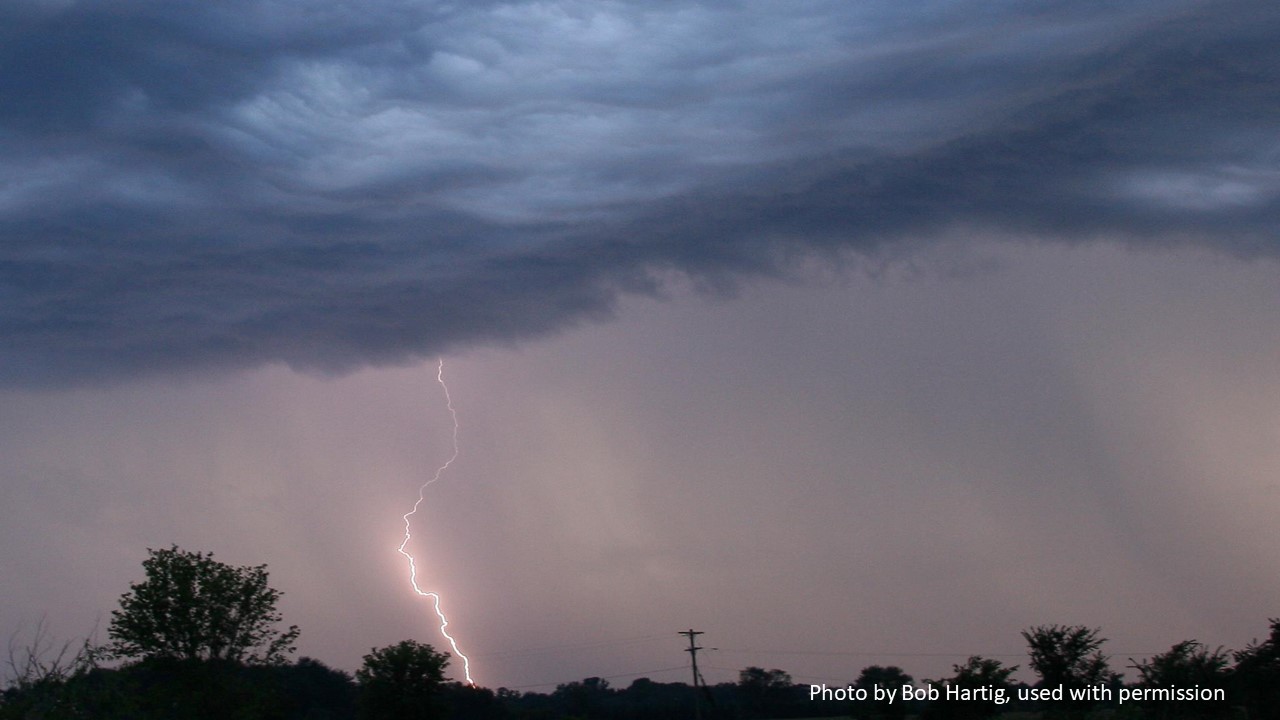 There is nothing like an electrical storm to remind us just how our lives are fragile. I’ve been caught in many such storms: hiking in the forested woods of the Appalachians, backpacking above tree-line in western mountains, in a boat offshore of North Carolina, paddling a kayak in our sounds, and even once—as a kid—playing golf with my grandfather on Pinehurst #2.
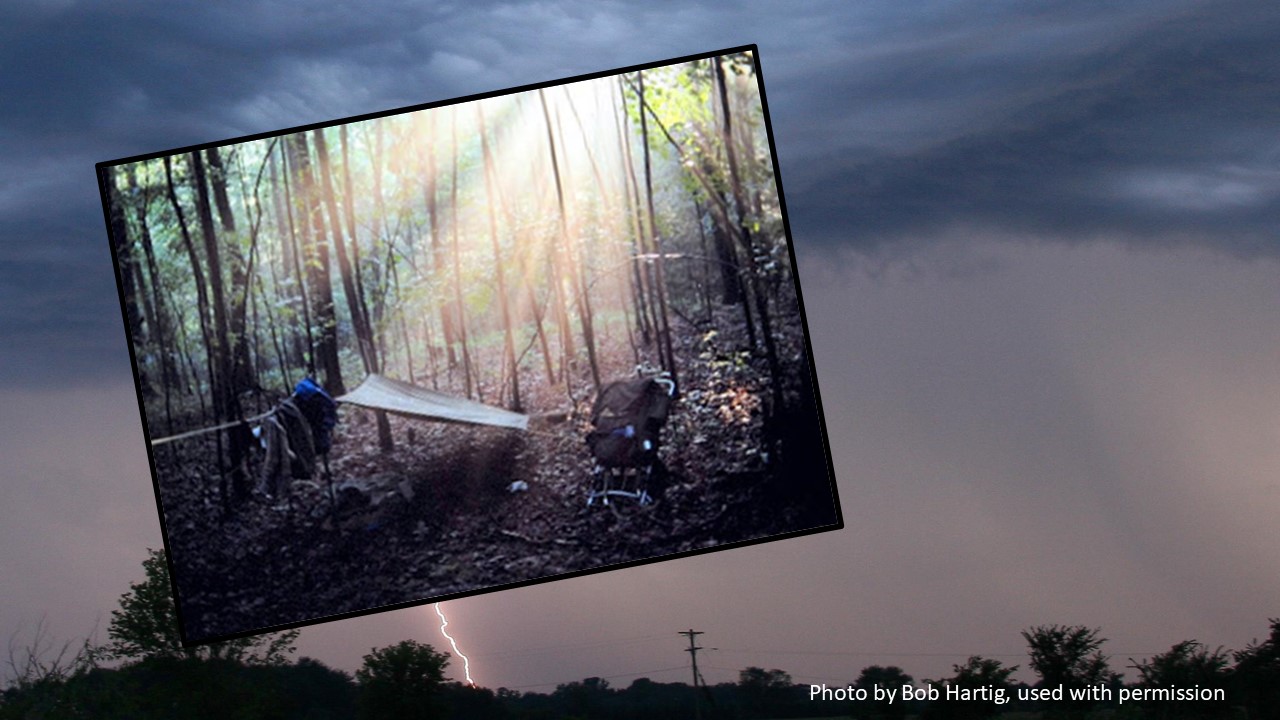 As the storm moves off eastward, each boom of thunder is a little less intense. It’s hard to tell when the rain stops as the leaves keep shedding their water a good thirty minutes after the storm has past, even after rays of sun break through the canopy, which provides another glimpse of awe. In a few minutes, the storm seems to be a distant dream. In camp that evening, you build a fire and attempt to dry out socks and boots as you discuss shared experiences. Everyone was scared, but are glad to have gone through it. Storms are awe-inspiring.
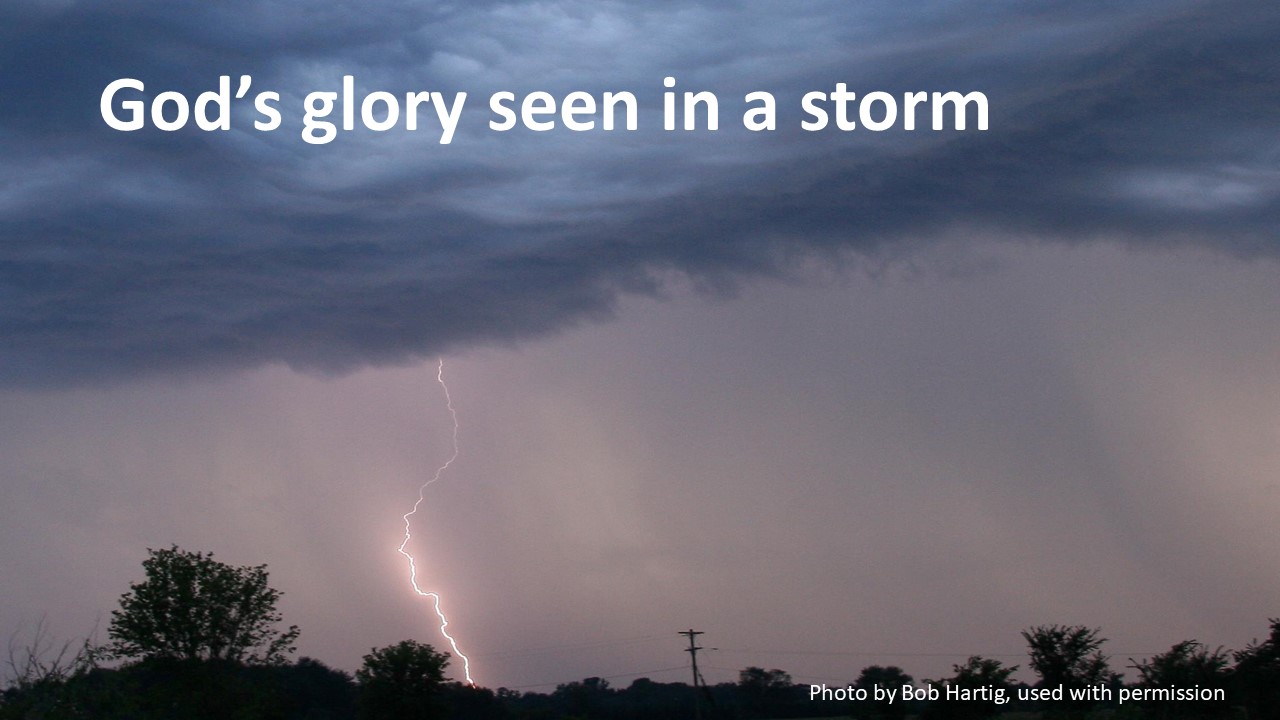 I love this Psalm! We live in a narcissistic world, yet the Psalm reminds us of our limited abilities. In the face of such a storm, in the presence of our God, all stand in awe. The power of this Psalm drowns the choruses of “me, me, me” and “I, I, I” that dominate the sound waves of our lives. We can’t think too much of ourselves when we truly contemplate the power and the glory of our God. When we truly consider the omnipotence of God, a God shown in the 29th Psalm to have power over creation, we are left nearly speechless. The majesty of God drives us to our knees.
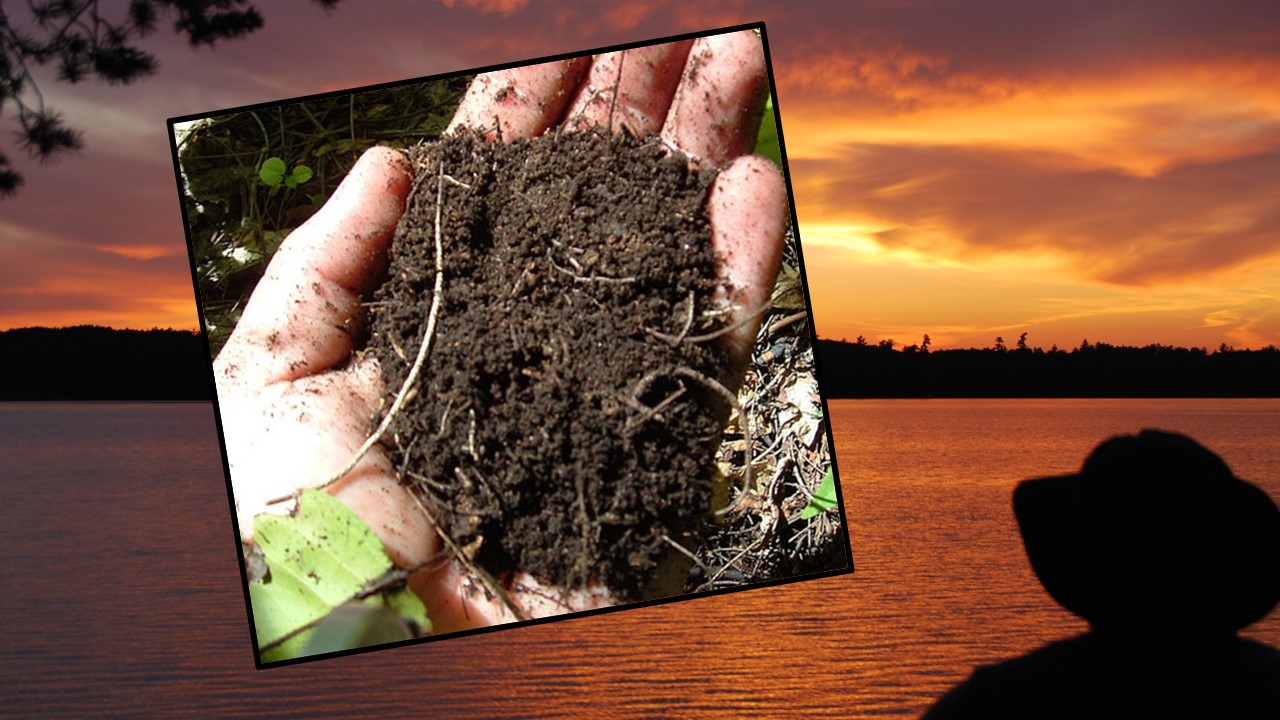 I may have told you before about the cocky scientist who thought it wouldn’t be too hard to create a human being. If God could do it, he could do it, or so he thought. So God issued a challenge. He accepted. On the day of the event, the scientist went down to a creek bank and dug out clay and rich dirt. He then began to mold it into a body. It was looking pretty good. But before he could try to blow life into his body, a lightning bolt shattered this creation and a voice from heaven boomed, “Hey you, Mr. Scientist, go get your own dirt.”
 You know, we are all on a journey in this world. We are here for only a short time. And while we are here, God has something for us to do. We refer to this as our calling and those of us in the Reformed Tradition understand this calling to be more than just what we do within the church. In fact, worship is more than just what we do here on Sunday morning. Our whole lives are to glorify God, so our vocation—whether in the church or in the secular world—is important to God and the furthering of his kingdom.
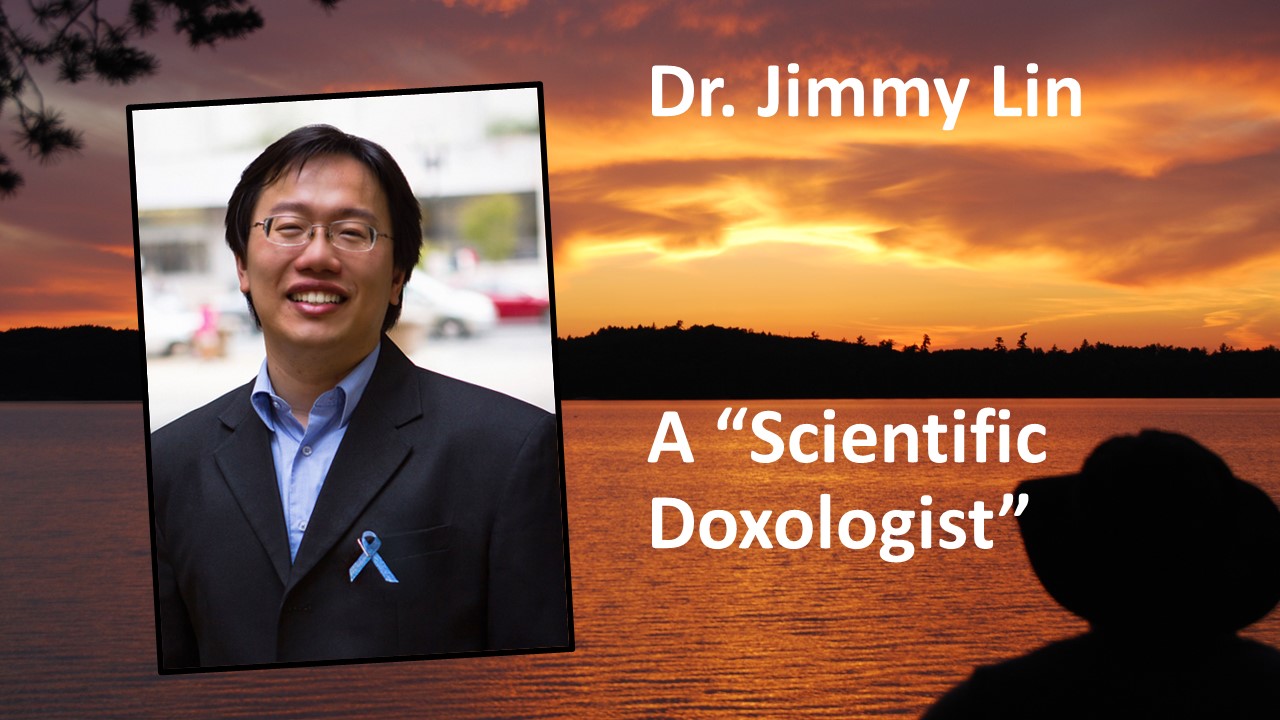 On Monday, in our Calvin January Series lecture, some of us were blessed to hear Dr. Jimmy Lin talk about the “good news” in the battle against cancer. Those who heard the lecture may have been shocked that before Lin talked about cancer, he discussed his relationship to God, referring to himself as a “scientific doxologist.” As you know, the doxology is a praise of God. Dr. Lin suggested that the most important thing for all of us to do is to praise God. In other words, we are all called to be a doxologists. Yet, we live out our lives in different ways. He is a scientist, so he calls himself a scientific doxologist. When we all think of the labels we place on ourselves for our journey through life, all of us should strive to include the title “doxologists” with our description. “I’m a business doxologist, an engineering doxologist, a banking doxologist, a lawyer doxologist, a retired doxologist, a preaching doxologist…” You get the idea, don’t you?
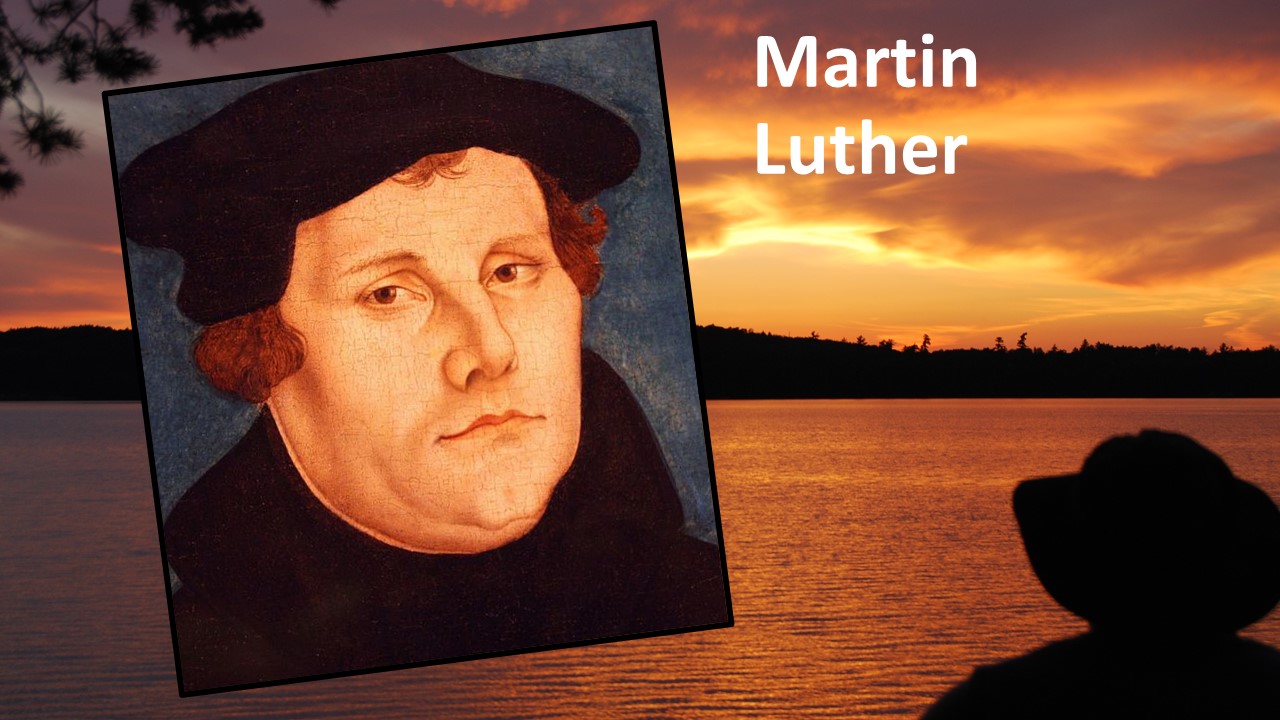 Interestingly, with all this discussion this morning about storms, Martin Luther, the great Reformer, religious vocation began with a thunderstorm. A nearby lightning strike threw him from his horse. Scared, he prayed and vowed that if saved, he would become a monk.